
SOC 2 Certification in Raleigh
SOC 2 Certification in Raleigh delivers documented, independently verified evidence of control effectiveness that supports multiple business objectives simultaneously. The benefits of SOC 2 attestation extend well beyond security assurance to include commercial, operational, and regulatory dimensions directly relevant to the Raleigh technology and financial services ecosystem. The following benefits reflect the practical outcomes of a completed SOC 2 examination conducted by a Licensed CPA Firm — not projected outcomes of control improvements or security investments alone.
OUR CLIENTS






SOC 2 Certification for Raleigh-Based Technology and Financial Organizations
SOC 2 Certification in Raleigh is conducted by a Licensed CPA Firm under the American Institute of Certified Public Accountants (AICPA) attestation standards, specifically AT-C Section 205. The examination evaluates whether an organization’s controls meet the applicable Trust Services Criteria (TSC), which cover Security, Availability, Processing Integrity, Confidentiality, and Privacy. SOC 2 attestation is not a self-declaration or internal checklist. It is an independently verified determination issued by a qualified third-party CPA firm following structured evidence collection, control testing, and professional judgment. The resulting attestation report provides enterprise customers, regulators, and business partners with an objective, audit-based determination of control effectiveness — a standard that self-assessments cannot replicate.
Raleigh occupies a distinctive position as the anchor of North Carolina’s Research Triangle, a regional innovation cluster encompassing Research Triangle Park (RTP), Durham, and Chapel Hill. This ecosystem hosts a dense concentration of SaaS providers, cloud platforms, life sciences and biotechnology firms, healthcare technology organizations, managed service providers (MSPs), and university-affiliated research enterprises. Organizations operating in this environment regularly process, transmit, and store sensitive customer data under service agreements that require documented, independently verified security controls. As a result, demand for SOC 2 Certification in Raleigh among tech companies, fintech organizations, and SaaS providers has grown substantially. Enterprise procurement teams and institutional clients now routinely require third-party audit evidence before approving vendor onboarding.
SOC 2 compliance in the Raleigh market is driven by contractual obligations, enterprise vendor due diligence requirements, and regulatory alignment across multiple sectors. Healthcare technology organizations must demonstrate alignment with HIPAA-adjacent security controls. Life sciences and biotech firms handling research data or clinical trial information face increasing pressure from institutional partners and federal agencies to provide independent audit evidence. Fintech and financial services organizations in Raleigh contend with procurement security reviews from regulated financial institutions that require SOC 2 Type 2 reports before entering into data processing or cloud infrastructure agreements. A Licensed CPA Firm conducting a SOC 2 examination in Raleigh evaluates control design and operating effectiveness against these sector-specific obligations and the applicable Trust Services Criteria, then issues a formal attestation report that satisfies enterprise and regulatory demands.
The SOC 2 audit Raleigh organizations undergo follows a structured, evidence-based methodology. It begins with defining the scope of the system under examination, identifying the applicable Trust Services Criteria, and establishing the observation period for Type 2 engagements. Unlike ISO 27001 — which certifies a management system — SOC 2 attestation focuses on the specific controls relevant to the services an organization provides to its customers. The AICPA’s Trust Services Criteria framework defines the standards against which controls are evaluated. The Licensed CPA Firm then determines whether those controls are suitably designed (Type 1) and operating effectively over a defined period (Type 2). Organizations in Raleigh that successfully complete the SOC 2 examination receive a formal attestation report — a document that carries professional liability and is issued under attestation standards, clearly distinguishing it from vendor self-assessments or questionnaire-based compliance declarations.

What Is SOC 2 Certification?
SOC 2 certification refers to the process by which a Licensed CPA Firm conducts a SOC 2 examination under AICPA attestation standards and issues a formal SOC 2 report attesting to whether an organization’s controls satisfy the applicable Trust Services Criteria. The term “SOC 2 certified” describes an organization that has received an unqualified — or clean — opinion from an independent CPA firm following a completed examination. The SOC 2 framework was developed by the AICPA specifically for service organizations: entities that provide services to other businesses and whose operations may affect the internal controls of their customers’ financial reporting or data environments. Understanding what SOC 2 certification entails is the first step for any Raleigh technology or financial services organization evaluating its compliance obligations.
SOC 2 Type 1 vs. SOC 2 Type 2 Reports
SOC 2 examinations produce one of two report types, each serving a distinct purpose. A SOC 2 Type 1 report addresses the design of controls at a specific point in time. The Licensed CPA Firm evaluates whether the controls described in the organization’s system description are suitably designed to meet the applicable Trust Services Criteria as of the report date. A SOC 2 Type 2 report addresses both the design and the operating effectiveness of controls over a defined observation period — typically a minimum of six months. The Type 2 examination includes control operation testing, evidence sampling, and evaluation of whether controls functioned consistently throughout the observation period. Enterprise customers and regulated institutions in Raleigh most commonly require SOC 2 Type 2 reports, as they provide evidence of sustained control performance rather than a single point-in-time snapshot.
| Report Type | Scope | Time Period | Primary Use Case |
|---|---|---|---|
| SOC 2 Type 1 | Control design suitability | Point in time | Initial vendor qualification, early-stage assurance |
| SOC 2 Type 2 | Control design and operating effectiveness | Minimum 6-month observation period | Enterprise procurement, regulated sector vendor reviews |
| SOC 2 + Privacy | Security plus Privacy TSC | Point in time or observation period | Organizations subject to CCPA, GDPR, or HIPAA-adjacent requirements |
Trust Services Criteria: The Evaluation Framework
The Trust Services Criteria (TSC), published by the AICPA, define the benchmarks against which a Licensed CPA Firm evaluates an organization’s controls during a SOC 2 examination. The Security criterion — also referred to as the Common Criteria — is mandatory in every SOC 2 engagement. It addresses logical and physical access controls, system operations, change management, and risk mitigation. The remaining four criteria — Availability, Processing Integrity, Confidentiality, and Privacy — are optional and selected based on the nature of services provided and the commitments made to customers. Raleigh organizations providing cloud infrastructure services, for example, typically include the Availability criterion. Healthcare technology firms handling protected health information often include both Confidentiality and Privacy. The applicable TSC categories are determined during the scoping phase of the SOC 2 audit and documented in the system description that accompanies the attestation report.
SOC 2 compliance differs from regulatory compliance in one critical respect: it is independently verified through a structured examination conducted by a Licensed CPA Firm, not self-assessed. An organization that claims SOC 2 compliance without a completed CPA firm examination has not undergone SOC 2 attestation and cannot legitimately represent itself as SOC 2 certified. This distinction matters significantly in enterprise vendor onboarding. Procurement teams increasingly require the actual SOC 2 report — including the auditor’s opinion — rather than a self-completed security questionnaire. The AICPA’s attestation standards impose professional obligations on the CPA firm conducting the examination, including independence requirements, evidence standards, and reporting obligations that do not apply to self-assessments.
SOC 2 Certification Audit Process in Raleigh
The SOC 2 audit process followed by a Licensed CPA Firm conducting a SOC 2 examination for Raleigh, NC organizations is structured, evidence-based, and governed by AICPA attestation standards. Each stage of the process produces documented outputs that form the evidentiary basis for the auditor’s opinion. This process is not advisory or consulting in nature — the Licensed CPA Firm’s role is to evaluate, test, and report, not to design or implement controls. Organizations seeking SOC 2 Certification in Raleigh must have their control environment fully established and operational before the examination begins.
The first stage of a SOC 2 audit Raleigh engagement involves defining the boundaries of the system under examination. The Licensed CPA Firm and the organization jointly establish which services, infrastructure components, software applications, data flows, and personnel fall within the scope. The system description — a narrative prepared by organization management — documents the services provided, system components, applicable Trust Services Criteria, control objectives, and controls in place. The Licensed CPA Firm reviews this description for completeness and accuracy, as it forms the foundation of the attestation report. Scope definition errors — such as excluding critical infrastructure or omitting key service components — can result in a qualified opinion or require scope revisions before the examination proceeds. Raleigh SaaS organizations and MSPs operating multi-tenant environments must carefully delineate which customer-facing systems and shared infrastructure components fall within the examination scope.
During the control testing phase of the SOC 2 examination, the Licensed CPA Firm selects and tests controls across each applicable Trust Services Criterion. For SOC 2 Type 2 engagements, the auditor applies sampling methodologies to evaluate whether controls operated effectively throughout the observation period. Evidence collection includes review of system configuration logs, access control records, change management tickets, incident response documentation, vulnerability scan results, vendor contracts, and employee training records — all artifacts that demonstrate control operation. The nature and extent of testing procedures are determined by the auditor’s professional judgment, guided by AICPA attestation standards. Control deficiencies identified during testing are classified as exceptions and disclosed in the report along with management’s responses. Organizations in Raleigh undergoing a SOC 2 audit must maintain organized, retrievable evidence archives aligned with their documented control activities to meet the evidentiary requirements of the examination.
Upon completing the SOC 2 examination, the Licensed CPA Firm issues a formal attestation report consisting of several components: the independent service auditor’s report containing the auditor’s opinion, the organization’s system description, and — for Type 2 reports — a description of the tests performed and their results. The auditor’s opinion may be unqualified (clean), qualified, adverse, or a disclaimer of opinion, depending on examination findings. An unqualified opinion indicates that the controls described in the system description are suitably designed (Type 1) and/or operated effectively (Type 2) to meet the applicable Trust Services Criteria. SOC 2 reports do not carry a defined regulatory expiration date. However, enterprise customers typically treat reports older than twelve months as outdated, making annual SOC 2 examination cycles the operational standard for Raleigh organizations maintaining active vendor relationships with enterprise clients.
| Audit Stage | Key Activities | Output |
|---|---|---|
| Scope Definition | System boundary identification, TSC selection, system description review | Documented examination scope and system description |
| Stage 1 Assessment | Documentation review, control design evaluation | Design suitability determination (Type 1 basis) |
| Observation Period | Control operation monitoring, evidence accumulation (Type 2 only) | Evidence archive covering minimum 6-month period |
| Control Testing | Sampling, attribute testing, evidence review, exception identification | Test results and exception documentation |
| Report Issuance | Auditor opinion formation, report drafting, management response | Formal SOC 2 attestation report with auditor’s opinion |
- ✓Scope Definition and System Description Development
- ✓Control Testing and Evidence Collection
- ✓Attestation Report Issuance and Report Validity
Why Organizations in Raleigh Pursue SOC 2 Certification
The demand for SOC 2 attestation that Raleigh organizations face originates from multiple converging forces: enterprise customer procurement requirements, regulatory alignment expectations, investor due diligence processes, and competitive positioning within technology and financial services markets. Unlike voluntary security frameworks that organizations can self-certify against, SOC 2 certification requires the independent evaluation of a Licensed CPA Firm — giving the resulting report a level of credibility that self-assessments and vendor questionnaires simply cannot replicate. The specific drivers vary by industry sector and organizational profile, but the common thread across Raleigh’s technology ecosystem is the increasing non-negotiability of third-party audit evidence in B2B service relationships.
Enterprise Vendor Due Diligence and Procurement Requirements
Enterprise organizations and regulated institutions in Raleigh — including pharmaceutical manufacturers, hospital systems, financial services firms, and federal contractors — conduct structured vendor security assessments before entering into agreements with SaaS providers, cloud platforms, and MSPs. These assessments routinely require a current SOC 2 Type 2 report as a condition of vendor qualification. A Raleigh SaaS company seeking to contract with a major health system or a regional bank, for example, will typically receive a vendor security questionnaire that includes a specific request for the organization’s most recent SOC 2 report. Without a completed SOC 2 examination conducted by a Licensed CPA Firm, the organization cannot satisfy this requirement through self-certification or alternative documentation. SOC 2 Certification in Raleigh for companies in the SaaS, data hosting, and managed services sectors has effectively become a table-stakes requirement for enterprise market access.
Regulatory Alignment in Life Sciences, Healthcare Technology, and Fintech
Raleigh’s Research Triangle hosts one of the largest life sciences and healthcare technology concentrations in the southeastern United States. Organizations in these sectors handle clinical trial data, electronic health records, genomic research data, and protected health information — categories that attract heightened regulatory scrutiny under HIPAA, FDA 21 CFR Part 11, and other applicable frameworks. While SOC 2 is not itself a regulatory requirement under these statutes, the SOC 2 examination provides independent, evidence-based documentation of security and privacy controls that regulators and institutional partners reference during oversight activities and contract negotiations. SOC 2 compliance that Raleigh fintech organizations achieve similarly serves as evidence of control effectiveness in relationships with banking regulators, payment networks, and institutional financial partners who conduct periodic vendor reviews. The SOC 2 attestation report functions as a standardized, auditor-verified reference document that regulatory reviewers and procurement teams can evaluate without conducting their own full security assessments.
Investor Due Diligence and International Market Expansion
Venture capital and private equity firms conducting due diligence on Raleigh technology companies increasingly review SOC 2 reports as part of security and operational risk assessments. A completed SOC 2 examination signals that the organization’s control environment has been independently evaluated, reducing the uncertainty investors associate with data security risk in early-stage and growth-stage technology companies. For Raleigh SaaS organizations expanding into international markets — particularly the European Union, the United Kingdom, and Canada — SOC 2 Certification in Raleigh provides evidence of control effectiveness that supports compliance representations under GDPR data transfer frameworks and similar international data protection regimes. While SOC 2 is a U.S.-origin framework, the independence of the Licensed CPA Firm examination process gives it broad international recognition among enterprise procurement and legal teams evaluating U.S.-based cloud vendors.
SOC 2 Certification Requirements and Evaluation Criteria
SOC 2 Certification in Raleigh is not awarded against a fixed checklist of prescriptive controls. Instead, the AICPA’s Trust Services Criteria framework defines outcomes and principles that an organization’s controls must collectively satisfy. The Licensed CPA Firm evaluates whether the organization has implemented controls that — in the auditor’s professional judgment — are suitably designed and, for Type 2 engagements, operating effectively to meet each applicable criterion. Because the SOC 2 examination is evaluative rather than checklist-based, the specific controls required will vary based on the organization’s technology environment, service commitments, risk profile, and the Trust Services Criteria selected for the engagement.
The Security criterion — mandatory in every SOC 2 examination — is organized around the AICPA’s Common Criteria, which address nine categories: Control Environment, Communication and Information, Risk Assessment, Monitoring of Controls, Control Activities, Logical and Physical Access Controls, System Operations, Change Management, and Risk Mitigation. Within each category, organizations must demonstrate controls that address the criterion requirements. Examples include multi-factor authentication for system access, role-based access provisioning and de-provisioning procedures, encryption of data at rest and in transit, intrusion detection monitoring, incident response procedures, and change management approval workflows. The Licensed CPA Firm evaluates each of these control areas during the SOC 2 audit — testing whether controls are designed to address the criterion requirements and, for Type 2 engagements, whether they operated consistently throughout the observation period. Raleigh cloud service providers and SaaS organizations with complex multi-tenant architectures must address Common Criteria requirements across both shared and dedicated infrastructure components.
Beyond the mandatory Security criterion, organizations select additional Trust Services Criteria based on their service commitments and customer contractual obligations. The Availability criterion addresses whether systems are available for operation and use as committed. Controls evaluated under this criterion typically include infrastructure redundancy, backup and recovery procedures, capacity monitoring, and service level agreement (SLA) tracking mechanisms. The Confidentiality criterion addresses whether information designated as confidential is protected as agreed — relevant for organizations handling trade secrets, proprietary research data, or non-public financial information. The Privacy criterion, the most detailed of the optional criteria, addresses the collection, use, retention, disclosure, and disposal of personal information in conformity with the organization’s privacy commitments. For Raleigh healthcare technology and life sciences organizations, Privacy criterion evaluation covers controls governing personally identifiable information (PII) and health data throughout its full lifecycle within the organization’s systems.
Most Raleigh technology organizations rely on third-party infrastructure providers — such as AWS, Microsoft Azure, or Google Cloud — to deliver their services. In SOC 2 terminology, these providers are referred to as subservice organizations. The Licensed CPA Firm conducting the SOC 2 examination must address how subservice organization controls are considered within the examination scope. Two methods exist: the inclusive method, which incorporates subservice organization controls directly into the examination, and the carve-out method, which excludes subservice organization controls from scope while describing their relevance in the system description. Additionally, the SOC 2 report may describe Complementary User Entity Controls (CUECs) — controls that customer organizations are expected to implement for the combined control environment to be effective. The SOC 2 examination that Raleigh, NC SaaS companies undergo typically employs the carve-out method for major cloud infrastructure providers, with the subservice organization’s own SOC 2 report referenced as complementary assurance evidence.
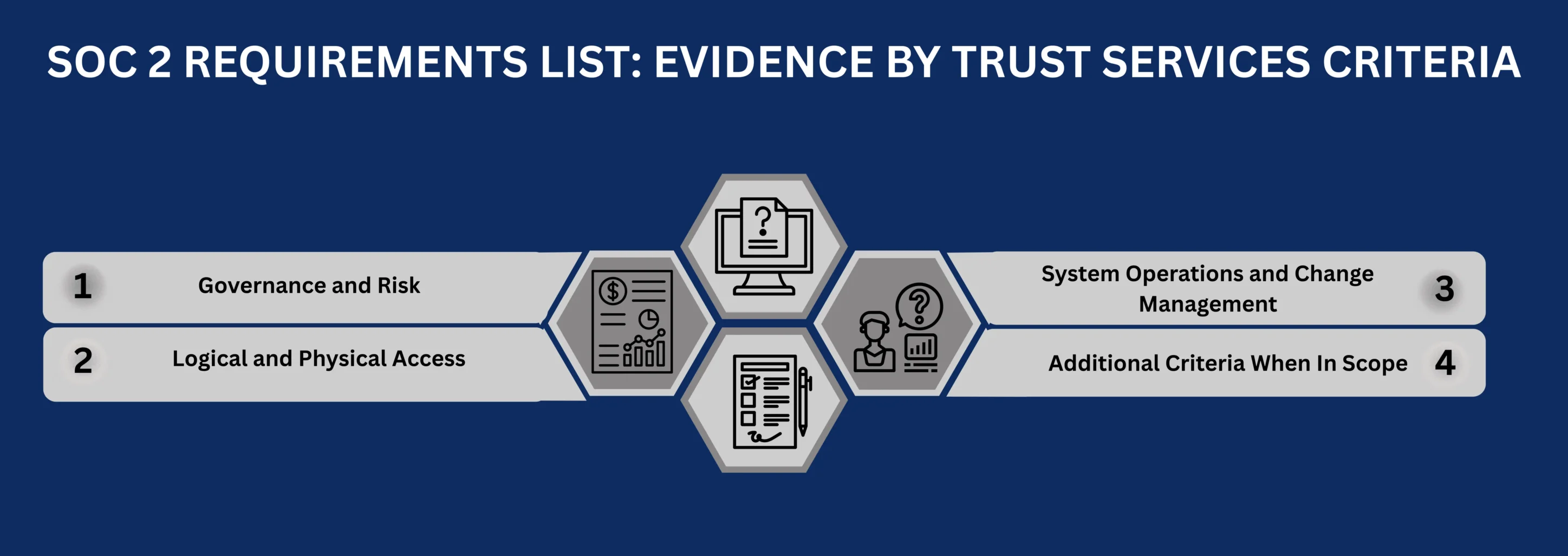
- ✓Security Criterion: Common Criteria Requirements
- ✓Additional Trust Services Criteria: Availability, Confidentiality, and Privacy
- ✓Subservice Organizations and Complementary User Entity Controls
Benefits of SOC 2 Certification for Raleigh-Based Organizations
SOC 2 Certification in Raleigh delivers documented, independently verified evidence of control effectiveness that supports multiple business objectives simultaneously. The benefits of SOC 2 attestation extend well beyond security assurance to include commercial, operational, and regulatory dimensions directly relevant to the Raleigh technology and financial services ecosystem. The following benefits reflect the practical outcomes of a completed SOC 2 examination conducted by a Licensed CPA Firm — not projected outcomes of control improvements or security investments alone.
- ✓Independent verification of control design and operating effectiveness against the AICPA Trust Services Criteria, providing enterprise customers with audit-based assurance rather than vendor self-assessments
- ✓Satisfaction of enterprise vendor qualification requirements in financial services, healthcare, life sciences, and federal contracting sectors where SOC 2 reports are a procurement prerequisite
- ✓Reduction in customer-conducted security assessments, as a current SOC 2 Type 2 report often substitutes for individual customer security questionnaires and on-site reviews
- ✓Documented evidence supporting regulatory alignment representations under HIPAA, GDPR data transfer frameworks, state privacy laws, and federal agency contractor security requirements
- ✓Structured audit methodology that identifies control gaps through the SOC 2 examination process, producing documented findings that inform control environment decisions
- ✓Competitive differentiation in the Raleigh SaaS and cloud services market, where SOC 2 certification signals security program maturity that enterprise buyers use to evaluate vendors
- ✓Support for investor due diligence processes, where a completed SOC 2 examination provides independent evidence of security and operational controls during funding rounds and M&A transactions
- ✓Annual examination cycle that maintains ongoing oversight of the control environment and provides current assurance documentation for continuous enterprise customer relationship management
The Research Triangle’s enterprise ecosystem — anchored by major employers in pharmaceutical manufacturing, financial services, defense contracting, and higher education — generates sustained demand for SOC 2 compliance that Raleigh SaaS and technology vendors must demonstrate. Large organizations headquartered in or near Raleigh, including those in the pharmaceutical, banking, and insurance sectors, conduct structured third-party risk management programs that require current SOC 2 Type 2 reports from their technology vendors. A Raleigh-based SaaS company serving a major Research Triangle Park pharmaceutical manufacturer, for example, will typically receive a vendor risk assessment request that includes a requirement for the most recent SOC 2 attestation report. That report — issued by a Licensed CPA Firm under attestation standards — gives the enterprise customer’s information security team a standardized, independently verified reference document. It satisfies their third-party risk management documentation requirements without necessitating a custom on-site audit.
SOC 2 certification is not a permanent status. Enterprise customers treat SOC 2 reports as current only when issued within the preceding twelve months, making annual SOC 2 examination cycles the operational standard for organizations maintaining active vendor relationships. The annual examination cycle serves as a recurring independent review of the control environment, evaluating whether controls have kept pace with changes in technology infrastructure, personnel, service offerings, and the evolving threat landscape. For Raleigh technology organizations experiencing rapid growth — including SaaS startups scaling from Series A to enterprise contracts — the annual SOC 2 audit cycle provides a structured mechanism for maintaining control environment documentation alongside business expansion. Organizations that allow their SOC 2 report to lapse beyond twelve months risk losing enterprise customer relationships where a current SOC 2 attestation is a contractual vendor maintenance requirement.
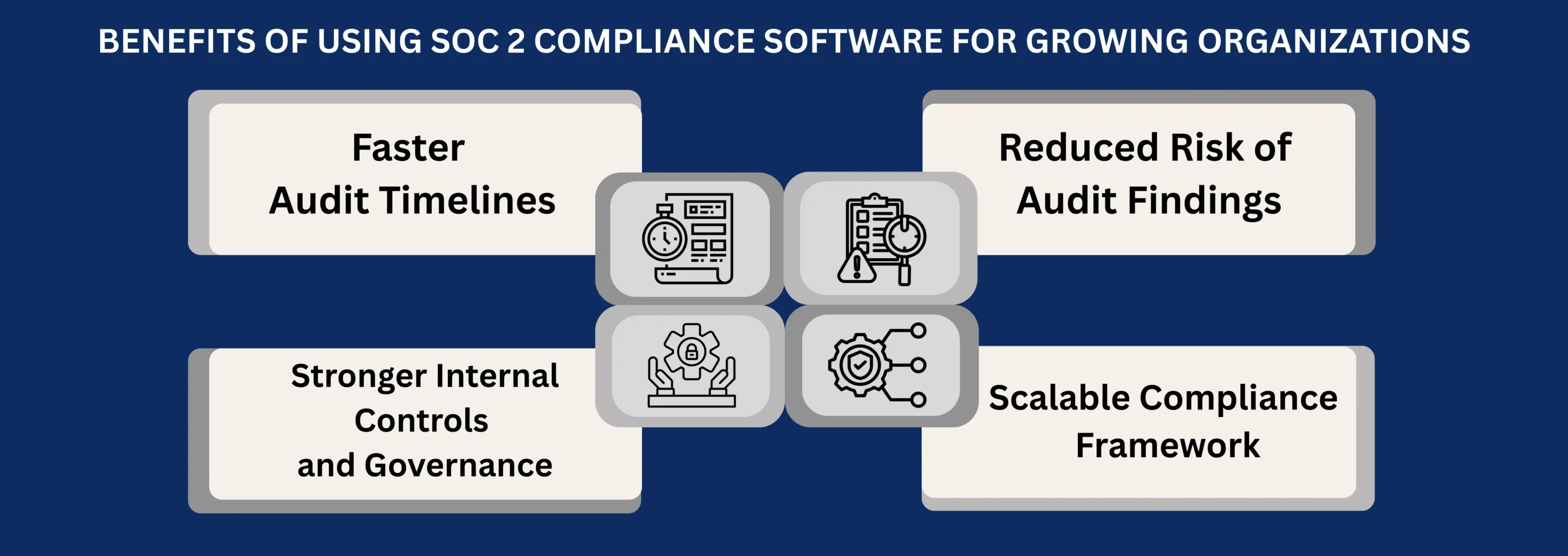
- ✓SOC 2 Certification and Enterprise Procurement in the Research Triangle
- ✓Ongoing Compliance Monitoring and Annual Examination Cycles
Business Sectors in Raleigh Seeking SOC 2 Certification
SOC 2 certification for Raleigh companies spans a broad range of industry sectors, reflecting the diversity of the Research Triangle’s technology and innovation ecosystem. The common characteristic across these sectors is the processing, transmission, or storage of customer data within service delivery environments where enterprise buyers require independent verification of security controls. The following sectors represent the primary recipients of SOC 2 examination engagements conducted by Licensed CPA Firms serving the Raleigh market.
SaaS Providers and Cloud Service Organizations
SOC 2 compliance that Raleigh SaaS organizations pursue most frequently reflects the enterprise customer requirements of their target markets. Raleigh hosts a growing cluster of SaaS companies across verticals including human resources technology, legal technology, supply chain management, marketing automation, and enterprise data analytics. These organizations deliver services through shared cloud infrastructure and multi-tenant application environments where customer data co-resides. Enterprise buyers in healthcare, financial services, and government contracting sectors require SOC 2 Type 2 reports from SaaS vendors before executing data processing agreements. The SOC 2 examination evaluates the security, availability, and confidentiality controls governing the SaaS platform, the underlying cloud infrastructure (typically addressed via subservice organization carve-out), and the administrative and operational procedures governing customer data handling throughout the service relationship.
Healthcare Technology, Life Sciences, and Managed Service Providers
Healthcare technology organizations in Raleigh — including electronic health record (EHR) vendors, telehealth platforms, population health analytics firms, and medical device software developers — handle protected health information and other sensitive data categories that attract heightened scrutiny from hospital systems, payer organizations, and state health agencies. SOC 2 attestation in this sector typically encompasses the Security, Confidentiality, and Privacy Trust Services Criteria, providing covered entity and business associate partners with independently verified evidence of control effectiveness. Life sciences organizations conducting clinical trials, genomic research, and drug development routinely handle data subject to FDA regulations and sponsor agreements that require documented data security controls. Managed service providers (MSPs) serving Raleigh’s enterprise market face SOC 2 requirements from clients across all regulated sectors, as MSPs typically have privileged access to client systems and data environments — creating material third-party risk that requires independent audit evidence.
Fintech, Financial Services Technology, and Data Hosting Organizations
SOC 2 certification that Raleigh fintech organizations obtain reflects the vendor security requirements of banking institutions, payment networks, insurance carriers, and investment management firms that rely on third-party technology providers for core operational functions. Financial technology companies providing payment processing, lending platforms, regulatory reporting tools, and treasury management systems must demonstrate control effectiveness through independent audit evidence. The SOC 2 examination Raleigh, NC fintech firms undergo evaluates controls over financial data processing, access to production systems handling transaction data, and change management procedures governing software updates that affect financial processing accuracy. Data hosting and colocation organizations serving Raleigh’s technology sector — including those operating within or near Research Triangle Park — pursue SOC 2 certification to satisfy the security requirements of enterprise customers who use hosted infrastructure to process regulated data categories.
SOC 2 vs. Other Security Frameworks: Positioning in the Raleigh Market
Raleigh technology organizations frequently evaluate SOC 2 alongside other security frameworks, including ISO 27001, NIST CSF, and HITRUST. Understanding the structural differences between these frameworks is essential for organizations determining which independent examination will satisfy their customer requirements and regulatory obligations. SOC 2 certification is conducted exclusively by a Licensed CPA Firm under AICPA attestation standards — distinguishing it fundamentally from certification bodies that issue ISO 27001 certificates under ISO/IEC 17021 accreditation requirements. This structural difference directly affects how resulting reports and certificates are evaluated in enterprise procurement processes.
SOC 2 vs. ISO 27001: Key Structural Differences
SOC 2 and ISO 27001 address overlapping security domains but differ significantly in structure, scope, and the nature of the assurance provided. ISO 27001 certifies that an organization has implemented and maintains an Information Security Management System (ISMS) conforming to the ISO/IEC 27001 standard — a management system certification. SOC 2 attestation evaluates whether specific controls relevant to the services provided to customers meet the Trust Services Criteria — a service control examination. SOC 2 is more directly customer-facing: it examines the controls governing the services an organization delivers to its customers, making it the preferred framework for U.S.-based SaaS and cloud service organizations whose enterprise customers require service-level security assurance. ISO 27001 holds broader international recognition and is often preferred by organizations pursuing European and Asia-Pacific market access. Raleigh technology organizations serving both U.S. enterprise markets and international customers increasingly pursue both SOC 2 certification and ISO 27001 certification concurrently, as the examination scopes are complementary rather than redundant.
SOC 2 vs. HITRUST and NIST CSF in Regulated Sectors
HITRUST CSF certification is prominent in the healthcare sector and incorporates requirements from HIPAA, NIST, ISO 27001, PCI DSS, and other frameworks into a consolidated control structure. Some Raleigh healthcare technology organizations pursue HITRUST certification rather than — or in addition to — SOC 2 certification, depending on their customer base and the specific frameworks their hospital system and payer customers require. NIST CSF (Cybersecurity Framework) is a voluntary framework widely referenced in federal contracting and defense sector vendor requirements. It does not produce a certification or attestation report, making it an insufficient standalone substitute for SOC 2 in enterprise procurement contexts that require independent audit evidence. The SOC 2 audit that Raleigh organizations elect to undergo — because their customers specifically request a CPA firm attestation report — represents a distinct and non-substitutable form of independent assurance that carries professional liability and AICPA standards compliance.
SOC 2 Attestation Report: Structure, Confidentiality, and Distribution
The SOC 2 attestation report issued by a Licensed CPA Firm following a completed examination is a confidential document — it is not publicly filed or registered with any government agency. SOC 2 reports are distributed under non-disclosure agreements (NDAs) or confidentiality provisions within customer contracts, limiting access to the organization’s existing and prospective customers, business partners, and authorized representatives. This confidentiality structure distinguishes SOC 2 from certain regulatory compliance filings and shapes how organizations manage report distribution within their commercial relationships.
Components of the SOC 2 Attestation Report
A complete SOC 2 attestation report contains five primary components. First, the Independent Service Auditor’s Report — the formal opinion issued by the Licensed CPA Firm — states whether the controls described in the system description present fairly and whether they meet the applicable Trust Services Criteria (Type 1) or operated effectively throughout the observation period (Type 2). Second, the organization’s system description provides a detailed narrative of the services, infrastructure, software, data flows, personnel, and controls within the examination scope. Third, for Type 2 reports, a section describing the service auditor’s tests of controls and the results of those tests documents the specific procedures performed and any exceptions noted. Fourth, management’s assertion states that the system description is accurate and that controls are suitably designed and operating effectively. Fifth, any supplementary information or management’s responses to exceptions may be included at management’s discretion. The Licensed CPA Firm’s opinion section is the definitive component that enterprise customers and procurement teams evaluate to determine the SOC 2 examination outcome.
Report Distribution, NDA Requirements, and Restricted Use
SOC 2 reports carry a restricted use provision — they are intended for use by specified parties with a sufficient understanding of the service organization and its controls. The Licensed CPA Firm’s report typically identifies the intended user categories, which include the service organization’s management, user entities (customers), and their auditors. Organizations distributing SOC 2 reports to prospective customers during sales processes typically require execution of a non-disclosure agreement before sharing the full report. Some organizations provide a summary or executive overview of their SOC 2 examination outcomes for marketing purposes, reserving the complete report for executed-NDA recipients. SOC 2 compliance that Raleigh organizations demonstrate through report distribution must be managed carefully to maintain the confidentiality provisions embedded in the AICPA’s reporting framework and the organization’s own contractual obligations to customers regarding information security.
FAQ
▶
What is SOC 2 Certification and how does it differ from SOC 2 compliance?
▶
Which organizations in Raleigh require SOC 2 Certification?
▶
What is the difference between a SOC 2 Type 1 and SOC 2 Type 2 report?
▶
How long does the SOC 2 audit observation period last?
▶
Who can conduct a SOC 2 examination in Raleigh?
▶
How long is a SOC 2 report valid?
▶
What Trust Services Criteria should a Raleigh SaaS company include in its SOC 2 examination?
▶
Is SOC 2 Certification required for HIPAA compliance?
SOC 1 VS SOC 2: WHICH REPORT YOUR CUSTOMERS ACTUALLY ASK FOR
If you sell SaaS or provide outsourced services, you have likely been asked for a SOC report. However, the follow-up question is rarely easy to answer…
SOC 2 Certified: What Does It Mean for Your Business
For companies that handle sensitive data or run cloud-based services, the question “Can you provide your SOC 2 report?” carries enormous weight. Yet, …
HOW SOC 2 AUDITORS REVIEW EVIDENCE OVER TIME
Most businesses pursuing a SOC 2 report spend months building security controls but overlook a fundamental reality: SOC 2 auditors do not just verify …
Get In Touch
have a question? let us get back to you.