
SOC 2 Certification in Seattle | CPA Firm Attestation
SOC 2 Certification in Seattle is conducted exclusively by a Licensed CPA Firm acting as an independent attestation body under AICPA AT-C Section 205. CertPro performs formal SOC 2 examinations that evaluate a service organization’s controls against the Trust Services Criteria — covering Security, Availability, Confidentiality, Processing Integrity, and Privacy. SOC 2 attestation is not a self-declaration. It is an independent, evidence-based evaluation resulting in a formal attestation report issued by a Licensed CPA Firm.
OUR CLIENTS









Executive Summary: SOC 2 Certification in Seattle
SOC 2 Certification in Seattle is conducted exclusively by a Licensed CPA Firm acting as an independent attestation body under AICPA AT-C Section 205. CertPro performs formal SOC 2 examinations that evaluate a service organization’s controls against the Trust Services Criteria — covering Security, Availability, Confidentiality, Processing Integrity, and Privacy. SOC 2 attestation is not a self-declaration. It is an independent, evidence-based evaluation resulting in a formal attestation report issued by a Licensed CPA Firm.
Seattle is one of North America’s foremost technology centers — home to global cloud infrastructure providers, SaaS companies, fintech enterprises, healthcare technology organizations, and software development firms. This concentration creates strong demand for SOC 2 Compliance Seattle organizations must demonstrate to enterprise customers, procurement teams, and regulated partners. SOC 2 Certification in Seattle is issued following a structured examination conducted under AICPA attestation standards and serves as valid evidence of control effectiveness for the period covered by the report.

What Is SOC 2 Certification?
SOC 2 (System and Organization Controls 2) is a formal attestation framework developed and governed by the American Institute of Certified Public Accountants (AICPA). SOC 2 certification confirms that a service organization’s information security controls have been independently examined and found to meet the requirements of the Trust Services Criteria (TSC). The framework applies to technology and cloud service providers that store, process, or transmit customer data on behalf of other organizations. SOC 2 Certification in Seattle is especially relevant for companies operating in cloud computing, SaaS delivery, managed IT services, healthcare technology, and financial services.
The Trust Services Criteria Framework
The Trust Services Criteria (TSC) form the evaluative foundation of every SOC 2 examination. The AICPA established five TSC categories against which a service organization’s controls are assessed. Security is the only mandatory category — it addresses how systems are protected against unauthorized access, both logical and physical. Availability addresses whether systems are available for operation and use as committed or agreed. Confidentiality covers how information designated as confidential is protected from unauthorized disclosure. Processing Integrity evaluates whether system processing is complete, accurate, timely, and authorized. Privacy governs the collection, use, retention, disclosure, and disposal of personal information in conformance with the organization’s privacy notice and AICPA Generally Accepted Privacy Principles.
Seattle service organizations may elect to include one or more additional TSC categories beyond the mandatory Security category, based on the nature of their services and contractual commitments to customers. A SaaS company providing mission-critical software platforms would typically include Availability alongside Security. A healthcare technology firm handling patient records may include Confidentiality and Privacy. A fintech organization processing payment transactions may include Processing Integrity. The TSC categories selected for a SOC 2 examination directly determine the scope of control testing performed by the Licensed CPA Firm conducting the audit.
| TSC Category | Primary Focus | Applicable Organizations |
|---|---|---|
| Security | Protection against unauthorized access and system vulnerabilities | All service organizations (mandatory) |
| Availability | System uptime, performance, and operational continuity | SaaS providers, cloud platforms, managed services |
| Confidentiality | Protection of information designated as confidential | Data processors, analytics firms, B2B platforms |
| Processing Integrity | Completeness, accuracy, and authorization of system processing | Fintech, payment processors, ERP providers |
| Privacy | Collection, use, and disposal of personal information | Healthcare technology, HR platforms, consumer apps |
SOC 2 Type 1 and Type 2 Reports Defined
SOC 2 examinations result in one of two distinct report types, each serving a different purpose and covering a different scope. A SOC 2 Type 1 report evaluates whether a service organization’s controls are suitably designed to meet the applicable Trust Services Criteria as of a specific point in time. The Type 1 report does not address whether controls operated effectively over a period — it addresses design suitability at a single date. A Type 1 audit is often pursued by Seattle organizations initiating their first formal attestation to establish a documented control baseline.
A SOC 2 Type 2 report — the more comprehensive and widely requested form of attestation — evaluates both the design suitability and the operating effectiveness of controls over a defined review period, typically six to twelve months. A SOC 2 Type 2 audit Seattle engagement requires the Licensed CPA Firm to perform extensive control testing across the full audit period, examining evidence that controls functioned as designed throughout that time. Enterprise customers, regulated procurement teams, and vendor risk management programs almost universally require SOC 2 Type 2 reports as the accepted standard for third-party security assurance. The Type 2 report delivers a materially higher level of assurance than a Type 1 report.
Who Requires SOC 2 Certification?
SOC 2 Certification is required or strongly expected by a broad range of customer segments that procure services from technology organizations. Enterprise customers with formal vendor risk management programs routinely require SOC 2 reports as a condition of vendor onboarding. Healthcare organizations subject to HIPAA require technology partners to demonstrate information security controls through third-party attestation — making SOC 2 certification a standard business requirement for Seattle healthcare technology firms. Financial services institutions and insurance companies require SOC 2 reports from SaaS vendors and cloud service providers as part of third-party risk management obligations.
Government and public sector procurement in Washington State increasingly references SOC 2 attestation in vendor qualification criteria. Seattle startups seeking to close enterprise sales contracts frequently identify SOC 2 certification as a prerequisite before prospects will execute agreements. Investors conducting due diligence on technology companies also review SOC 2 reports as evidence of information security governance maturity. SOC 2 Compliance Seattle organizations demonstrate is therefore driven by market demand, regulatory expectations, and institutional customer requirements — not solely by regulatory mandate.
SOC 2 Certification Audit Process in Seattle
The SOC 2 audit process follows a structured sequence of stages defined under AICPA attestation standards. A SOC 2 Audit Seattle engagement conducted by CertPro as a Licensed CPA Firm progresses through formally defined phases — from initial scoping through attestation issuance. Each phase produces documented outputs that form part of the audit record and the final SOC 2 report. Understanding this process enables Seattle service organizations to prepare their control environments, documentation, and evidence repositories before the examination begins.
Scope definition is the first formal stage of a SOC 2 Audit Seattle engagement. During this stage, the Licensed CPA Firm and the service organization establish the boundaries of the examination — determining which systems, services, infrastructure components, and organizational units fall within scope. The service organization prepares a System Description: a written document included in the final SOC 2 report that describes the nature of the services provided, the system used to deliver those services, and the controls implemented to meet the applicable Trust Services Criteria. The System Description must accurately represent the control environment as it existed during the audit period.
The scope definition stage for SOC 2 Certification in Seattle typically requires the service organization to identify all system components — including applications, infrastructure, data flows, third-party service providers, and personnel — relevant to the delivery of in-scope services. Subservice organizations (third-party vendors that provide components of the service) must also be addressed in the System Description, either through the inclusive method — where the subservice organization’s controls are included in scope — or the carve-out method — where they are excluded and addressed separately. The Licensed CPA Firm reviews the System Description for completeness and accuracy before audit testing commences.
Following scope definition, the Licensed CPA Firm develops the audit program — a structured plan identifying which controls will be tested, what testing procedures will be applied, and what evidence will be examined. The audit program maps the service organization’s stated controls to the applicable Trust Services Criteria points of focus. Each criterion includes multiple points of focus representing the control activities an organization should have in place. The audit program specifies how each relevant point of focus will be evaluated during the SOC 2 examination and guides all subsequent testing activities.
Control identification during this stage requires the service organization to provide the Licensed CPA Firm with documentation of all controls addressing the applicable Trust Services Criteria. Controls are identified across multiple domains — including logical and physical access, change management, risk assessment, monitoring, incident response, vendor management, and system operations. For a SOC 2 Type 2 audit Seattle engagement, the audit program will specify testing procedures that include inquiry, observation, inspection of documentation, and re-performance of control activities across the full audit period. The thoroughness of the audit program directly determines the quality and reliability of the resulting SOC 2 report.
Control testing is the most extensive stage of a SOC 2 Audit Seattle engagement. During this stage, the Licensed CPA Firm applies audit procedures from the audit program to evaluate whether controls are suitably designed (for Type 1) or both suitably designed and operating effectively (for Type 2). Testing procedures include four primary methods: inquiry — structured interviews with personnel responsible for controls; observation — direct observation of control activities being performed; inspection — review of documentation, configuration settings, logs, and records as evidence; and re-performance — independent execution of a control procedure to verify its operation.
For SOC 2 Type 2 audit Seattle engagements, control testing covers the entire audit period — typically six to twelve months. The Licensed CPA Firm selects evidence samples from across the period to evaluate whether controls functioned consistently. Sample sizes are determined by control frequency — daily controls require larger samples than annual controls. Evidence examined during testing may include system access logs, change management tickets, security configuration screenshots, incident response records, backup verification logs, user access review documentation, and vendor assessment records. All evidence is retained in the audit workpapers maintained by the CPA firm.
Following the completion of control testing, the Licensed CPA Firm reviews all findings and determines whether any identified control deficiencies constitute exceptions — instances where a control did not operate as described or did not meet the applicable Trust Services Criterion. The SOC 2 report includes the auditor’s opinion, the System Description provided by management, management’s assertion regarding control effectiveness, and a detailed description of the CPA firm’s tests of controls and their results. The opinion expressed by the Licensed CPA Firm reflects the overall conclusion of the examination, including whether controls met the criteria in the auditor’s professional judgment.
- Scope Definition: Establish system boundaries, in-scope services, infrastructure components, and subservice organizations
- System Description Preparation: Service organization documents the nature of services and control environment
- Audit Program Development: Licensed CPA Firm maps controls to Trust Services Criteria and defines testing procedures
- Control Identification: Service organization provides documentation of all controls addressing applicable TSC
- Control Testing — Inquiry: Auditors conduct structured interviews with personnel responsible for controls
- Control Testing — Inspection: Auditors review logs, configurations, tickets, and documentation as evidence
- Control Testing — Observation and Re-performance: Auditors observe and independently execute control procedures
- Findings Review: Licensed CPA Firm evaluates exceptions and determines their significance
- Management Assertion: Service organization management provides written assertion on control effectiveness
- Attestation Report Issuance: Licensed CPA Firm issues signed SOC 2 report under AICPA AT-C Section 205
- ✓Stage 1: Scope Definition and System Description
- ✓Stage 2: Audit Program Determination and Control Identification
- ✓Stage 3: Control Testing and Evidence Evaluation
- ✓Stage 4: Findings Review and Attestation Issuance
Benefits of SOC 2 Certification for Seattle-Based Organizations
SOC 2 Certification in Seattle delivers measurable organizational benefits that extend well beyond regulatory compliance. For technology companies, SaaS providers, cloud services organizations, and healthcare technology firms operating in Seattle’s competitive market, SOC 2 attestation serves as third-party verification of information security governance — directly influencing customer acquisition, contract execution, and enterprise sales outcomes. The benefits SOC 2 Compliance Seattle organizations achieve are both immediate and cumulative, strengthening security posture, market positioning, and operational discipline over time.
SOC 2 certification removes a primary barrier in enterprise sales cycles. Enterprise procurement teams and security officers at large organizations routinely require third-party security attestation from vendors before approving contracts. Without a current SOC 2 report, Seattle service organizations are frequently excluded from vendor qualification processes — regardless of the quality of their technical security controls. A SOC 2 Type 2 report issued by a Licensed CPA Firm provides the independent, evidence-based assurance that enterprise customers require to complete vendor risk assessments and approve onboarding.
SOC 2 certification that Seattle startups and growth-stage technology companies pursue often results in accelerated sales cycles. Security review stages — which can add weeks or months to contract timelines — can be satisfied by distributing an existing SOC 2 report under NDA rather than responding to extensive security questionnaires. Seattle companies report that SOC 2 attestation reduces the volume and complexity of vendor security questionnaires received from customers, since the report addresses the majority of questions procurement teams would otherwise submit. This operational benefit compounds over time as the organization’s customer base grows.
The SOC 2 examination process itself produces significant internal benefits for Seattle organizations by driving the formalization and documentation of security controls that may have existed informally or inconsistently. Preparing for a SOC 2 Audit Seattle engagement requires organizations to document access management procedures, change management processes, incident response plans, risk assessment methodologies, and vendor management practices. This documentation process creates institutional knowledge, reduces single points of failure in security operations, and establishes accountability structures that persist beyond the audit engagement.
Organizations that complete SOC 2 Type 2 audit examinations develop more mature information security programs as a result of the sustained control operation requirements over a twelve-month audit period. Controls must function consistently — not just at audit time — meaning security processes become embedded in daily operations rather than activated for audit events. This sustained control discipline reduces the likelihood of security incidents, improves detection capabilities through consistent monitoring, and creates a verifiable record of security governance that supports regulatory compliance, cyber insurance underwriting, and executive reporting.
Seattle’s technology sector is among the most competitive in the United States, with a dense concentration of SaaS companies, cloud service providers, and software development firms competing for the same enterprise customers. SOC 2 Certification in Seattle distinguishes organizations that have completed independent third-party attestation from those that have not — providing a verifiable competitive advantage in procurement processes where multiple vendors are evaluated simultaneously. When enterprise customers compare competing service providers, a current SOC 2 Type 2 report from a Licensed CPA Firm is a differentiating factor that directly influences vendor selection decisions.
- ✓Independent verification of security controls that satisfies enterprise vendor risk management requirements
- ✓Reduction in security questionnaire volume during customer onboarding and renewal processes
- ✓Accelerated contract execution by satisfying security review requirements with an existing report
- ✓Competitive differentiation in procurement processes where multiple vendors are evaluated
- ✓Strengthened information security governance through formalized, documented control frameworks
- ✓Cyber insurance qualification support through demonstrated security control maturity
- ✓Investor due diligence support providing evidence of information security program maturity
- ✓Regulatory alignment supporting compliance with HIPAA, PCI DSS, and Washington State privacy law requirements
- ✓Customer retention through sustained trust and annual renewal of attestation status
- ✓Support for international market expansion where SOC 2 is recognized as a security assurance standard
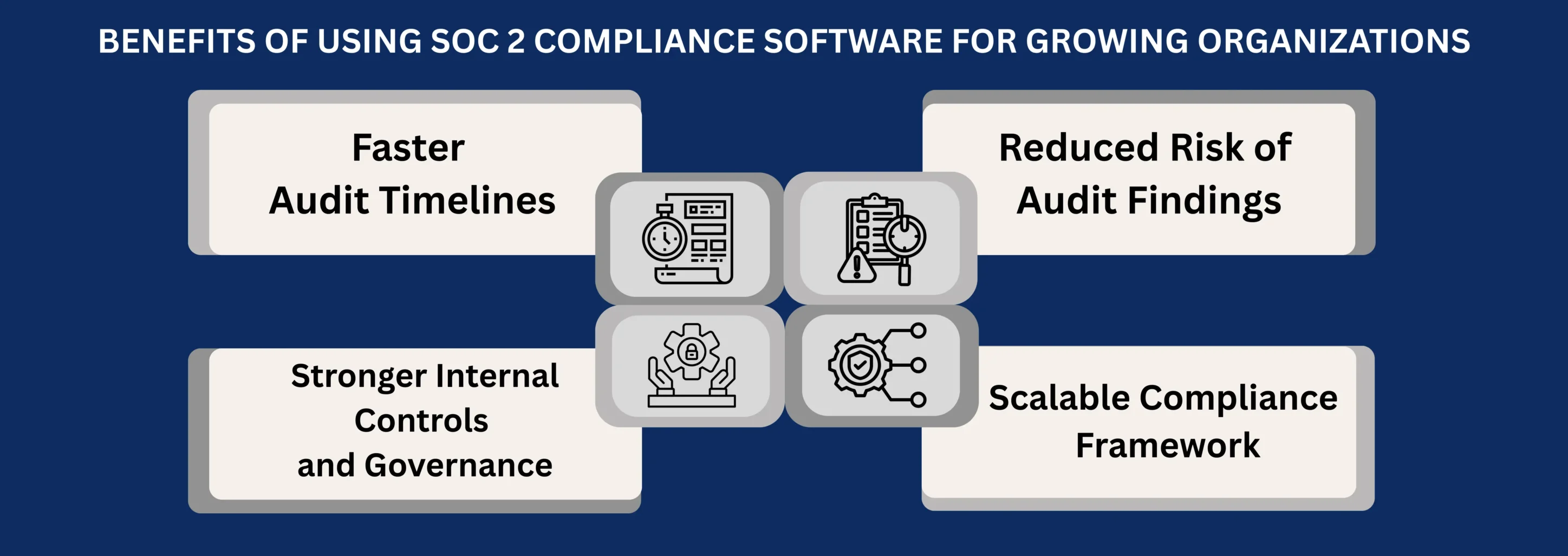
- ✓Enterprise Customer Trust and Sales Acceleration
- ✓Strengthened Information Security Governance
- ✓Competitive Differentiation in Seattle’s Technology Market
SOC 2 Requirements: Controls, Documentation, and Evidence Standards
SOC 2 certification requirements are defined by the AICPA Trust Services Criteria and the specific controls a service organization has identified as addressing those criteria. Unlike prescriptive compliance frameworks that specify exact control implementations, the Trust Services Criteria are principles-based — meaning organizations have flexibility in how they design controls, provided those controls are effective. A SOC 2 readiness assessment conducted prior to formal examination identifies whether existing controls are suitably designed and whether the organization has the documentation and evidence necessary to support an audit.
Documentation is a foundational requirement of SOC 2 compliance. Organizations pursuing SOC 2 Certification in Seattle must maintain written policies and procedures that describe how controls are designed and implemented across all applicable Trust Services Criteria. Information security policies must address access control, data classification, incident response, business continuity, change management, risk assessment, and vendor management at minimum. Procedures must be sufficiently detailed to demonstrate that personnel understand their responsibilities and that controls can be executed consistently — without reliance on undocumented institutional knowledge.
For a SOC 2 Type 2 audit Seattle engagement, documentation requirements extend beyond written policies to include evidence of control operation accumulated over the audit period. Evidence standards vary by control type: automated controls must be supported by system-generated logs or configuration exports; manual controls must be supported by completed checklists, approval emails, or signed authorization documents; and periodic controls such as quarterly access reviews must be supported by dated records demonstrating completion at each required interval. The Licensed CPA Firm evaluates the completeness and reliability of all evidence provided during the examination.
Technical controls form the operational core of a SOC 2 compliant environment. Under the Security Trust Services Criterion, organizations must implement logical access controls that restrict system access to authorized personnel based on the principle of least privilege. This requires documented user provisioning and deprovisioning processes, multi-factor authentication for systems processing customer data, privileged access management controls, and periodic access reviews that identify and remove unnecessary access rights. Configuration management controls must ensure system configurations meet security standards and that all configuration changes are authorized, tested, and documented.
Monitoring and logging controls are a specific technical requirement that the Licensed CPA Firm examines in detail during a SOC 2 audit. Centralized logging systems must capture security-relevant events — including authentication attempts, privileged access activities, configuration changes, and data access — and retain logs for a period sufficient to support security investigations. Log monitoring must include alert mechanisms that notify security personnel of anomalous activities in a timely manner. Vulnerability management programs must include regular system scanning for known vulnerabilities and documented processes for prioritizing and remediating findings within defined timeframes. Encryption controls must protect customer data in transit and at rest using industry-standard cryptographic protocols.
Organizational controls address the human and process dimensions of security governance. Risk assessment is a foundational organizational control requirement under the Trust Services Criteria — organizations must have a documented process for identifying, analyzing, and responding to information security risks on a periodic basis. The risk assessment process must be documented, results must be retained, and risk responses must be tracked to resolution. Personnel security controls must address pre-employment background screening, security awareness training, and role-specific training for personnel with elevated system access or responsibility for security controls.
Vendor and third-party management is an increasingly examined area in SOC 2 Compliance Seattle organizations must address. Service organizations that rely on third-party vendors — cloud infrastructure providers, software-as-a-service tools, managed security services — must have documented processes for assessing vendor security posture prior to onboarding and on a periodic basis. Vendor contracts must include security requirements, data protection obligations, and audit rights. For subservice organizations included in the SOC 2 scope, the service organization must obtain and review the subservice organization’s own SOC 2 reports as complementary evidence of control effectiveness. Incident response plans must define detection, containment, eradication, recovery, and post-incident review procedures with documented roles and responsibilities.
- ✓Documentation Requirements for SOC 2 Examination
- ✓Technical Control Requirements
- ✓Organizational and Process Control Requirements
SOC 2 Compliance in Seattle’s Technology Landscape
Seattle’s technology ecosystem is uniquely positioned within the national landscape for SOC 2 Compliance Seattle organizations must navigate. The city is home to Amazon Web Services, Microsoft Azure, and a dense cluster of cloud-native SaaS companies, software developers, and technology service providers that collectively serve enterprise customers across North America and globally. This concentration of technology organizations creates both high demand for SOC 2 attestation — as enterprise customers require it from vendors — and a sophisticated understanding of information security standards among Seattle’s technology workforce.
SOC 2 for Seattle SaaS and Cloud Services Companies
SOC 2 compliance for Seattle SaaS companies is driven primarily by enterprise customer requirements. SaaS organizations selling to enterprise customers — particularly in regulated industries such as healthcare, financial services, and government — encounter SOC 2 report requests as a standard component of vendor security assessments. SOC 2 certification that Seattle cloud services providers pursue establishes the technical credibility and independent assurance that large customers require before entrusting production workloads to a third-party platform. For Seattle-based cloud services organizations, SOC 2 Type 2 attestation covering both Security and Availability is the standard scope expected by enterprise customers.
The SOC 2 audit framework aligns particularly well with cloud-native architectures common among Seattle SaaS companies. Infrastructure-as-code environments, automated deployment pipelines, containerized workloads, and cloud provider security controls can all be incorporated into the SOC 2 control environment and documented as part of the System Description. The Licensed CPA Firm conducting a SOC 2 Audit Seattle engagement evaluates whether cloud configuration controls, identity and access management policies, and automated security monitoring tools meet the requirements of the applicable Trust Services Criteria. Evidence from cloud provider audit logs, infrastructure configuration repositories, and security tooling outputs is accepted as valid audit evidence.
SOC 2 for Seattle Fintech Organizations
SOC 2 certification that Seattle fintech companies pursue addresses the intersection of financial services security requirements and technology platform assurance. Fintech organizations in Seattle — including payment technology providers, lending platforms, wealth management software companies, and banking infrastructure vendors — serve financial institution customers with rigorous vendor risk management programs. SOC 2 Compliance Seattle fintech firms demonstrate is often required alongside PCI DSS compliance, with SOC 2 addressing security governance and operational controls that complement the payment card security requirements of PCI DSS.
For Seattle fintech organizations, the Processing Integrity Trust Services Criterion is frequently included in SOC 2 scope alongside the mandatory Security criterion. Processing Integrity examines whether system processing is complete, valid, accurate, timely, and authorized — directly relevant to financial transaction processing platforms where errors or unauthorized modifications carry significant financial and reputational consequences. The Licensed CPA Firm testing Processing Integrity controls will examine reconciliation procedures, error handling mechanisms, transaction validation controls, and authorization workflows to determine whether processing meets the commitments made to customers in service level agreements and system descriptions.
SOC 2 for Seattle Healthcare Technology Organizations
SOC 2 certification that Seattle healthcare technology firms pursue operates alongside HIPAA compliance requirements to provide comprehensive security assurance for healthcare customers. Healthcare technology organizations in Seattle — including electronic health record platforms, telemedicine services, healthcare analytics companies, and clinical data management firms — serve healthcare providers and payers that require both HIPAA Business Associate Agreement compliance and third-party security attestation. SOC 2 certification provides the independent, auditor-verified evidence of security controls that healthcare customers require beyond self-attestation of HIPAA compliance.
The Privacy Trust Services Criterion is particularly relevant for SOC 2 certification pursued by Seattle healthcare technology organizations that collect, use, and disclose personal health information. The Privacy criterion evaluates whether personal information is managed in accordance with the organization’s privacy notice and the AICPA’s Generally Accepted Privacy Principles — covering notice, choice and consent, collection, use and retention, access, disclosure to third parties, security, quality, and monitoring and enforcement. Healthcare technology organizations that include the Privacy criterion in SOC 2 scope provide customers with structured assurance that personal health information is governed by documented, independently verified privacy controls.
SOC 2 Attestation: Report Scope, Validity, and Distribution
A SOC 2 report issued following a formal examination by a Licensed CPA Firm is a restricted-use document governed by AICPA attestation standards. The SOC 2 report contains multiple components, each serving a specific purpose in communicating examination results to report users. Understanding the structure, validity, and proper distribution of SOC 2 reports is essential for service organizations managing customer requests and procurement relationships.
Components of a SOC 2 Report
A SOC 2 report issued under AICPA AT-C Section 205 contains five principal components. The first is the Independent Service Auditor’s Report — the formal opinion letter signed by the Licensed CPA Firm expressing the auditor’s conclusion regarding whether the service organization’s System Description is fairly presented and whether controls meet the applicable Trust Services Criteria. The opinion may be unqualified (all criteria met without material exception), qualified (one or more criteria not met), or adverse (controls systematically did not meet criteria). The auditor’s opinion is the most frequently reviewed section of the SOC 2 report by customers and their auditors.
The second component is Management’s Assertion — a written statement by service organization management confirming that the System Description is fairly presented and that controls met the applicable Trust Services Criteria. The third component is the System Description itself — a detailed narrative of the services provided, system components, control environment, and controls implemented for each applicable criterion. The fourth component — included only in Type 2 reports — is the Description of Tests of Controls and Results, documenting every control tested, the procedures applied, and the results including any exceptions. The fifth component includes supplemental information provided by the service organization, such as management responses to exceptions or descriptions of corrective actions taken.
SOC 2 Report Validity and Annual Audit Cycles
A SOC 2 report covers a defined period — typically twelve months for Type 2 reports. The report remains current as evidence of control effectiveness for the period it covers, but it does not provide assurance about the period after the report end date. Enterprise customers and vendor risk management programs generally require that SOC 2 reports be current — meaning the report end date should fall within twelve months of the date of customer review. Organizations must complete annual audit cycles to maintain current certified status and meet customer expectations for up-to-date security assurance evidence.
Seattle service organizations should plan SOC 2 audit cycles to ensure report issuance aligns with customer contract renewal timelines, investor due diligence schedules, and procurement qualification cycles. A SOC 2 report covering a twelve-month period ending in a given month will typically remain acceptable to customers through the same month of the following year — creating a rolling twelve-month window of coverage. Organizations that allow their SOC 2 reports to lapse — going more than twelve months without a new report — risk being unable to satisfy customer security requirements during the lapse period, potentially affecting contract renewals and new customer onboarding.
SOC 2 Report Distribution and Confidentiality
SOC 2 reports are restricted-use documents under AICPA standards, intended for use by the service organization’s management, current customers, and prospective customers who have agreed to maintain the confidentiality of the report’s contents. Service organizations sharing SOC 2 reports with customers should do so under Non-Disclosure Agreements that restrict further distribution and prohibit use of the report for purposes other than evaluating the service organization’s security controls. The service organization is responsible for establishing distribution controls that protect report confidentiality while meeting legitimate customer requests.
SOC 2 Examination: Control Areas and Testing Methodology
The SOC 2 examination conducted by a Licensed CPA Firm applies structured testing methodology across multiple control areas defined by the Trust Services Criteria. A thorough SOC 2 Audit Seattle engagement evaluates controls across logical and physical access, system operations, change management, risk management, and additional areas specific to the in-scope Trust Services Criteria categories. The testing methodology applied by the CPA firm determines the depth and reliability of the assurance provided by the resulting report.
Logical and Physical Access Controls Testing
Logical access control testing is the most extensive component of most SOC 2 examinations. The Licensed CPA Firm tests whether access to systems, applications, databases, and infrastructure components is restricted to authorized personnel based on documented authorization and the principle of least privilege. Testing procedures include inspection of user access lists to verify that access rights correspond to documented authorizations; inspection of provisioning records to confirm that access was granted following an approval process; inspection of deprovisioning records to confirm that access was removed promptly upon personnel termination or role change; and inspection of periodic access review documentation to confirm that access rights are reviewed and certified at defined intervals.
Multi-factor authentication testing is a specific logical access examination area. The Licensed CPA Firm inspects authentication system configuration settings to verify that multi-factor authentication is enforced for access to production systems and sensitive data environments. Privileged access management testing examines whether administrative and privileged accounts are subject to enhanced controls — including separate credentials for privileged activities, just-in-time access provisioning, and session recording. Physical access control testing — relevant for organizations with on-premises data center infrastructure — examines badge access records, visitor logs, and physical security configurations to verify that access to systems is restricted to authorized personnel.
Change Management and System Operations Testing
Change management control testing examines whether changes to production systems — including application code deployments, infrastructure configuration changes, and database modifications — follow a documented, authorized process. The Licensed CPA Firm selects a sample of production changes from the audit period and inspects change records to verify that each change was requested through the defined change management process, reviewed and approved by an authorized individual, tested in a non-production environment prior to deployment, and documented with a record of the change and its approval. Unauthorized changes or changes lacking adequate testing and approval documentation are identified as exceptions in the SOC 2 report.
System operations testing addresses the daily security monitoring and operational controls that maintain system integrity and detect security incidents. The Licensed CPA Firm tests whether security monitoring tools are configured to generate alerts for anomalous activities, whether alerts are reviewed by designated security personnel within defined timeframes, whether vulnerability scans are conducted on a defined schedule, whether scan results are reviewed and remediation actions tracked to completion, and whether backup procedures operate as described with restoration capabilities verified through periodic testing. For organizations including the Availability criterion in SOC 2 scope, system operations testing also covers capacity monitoring, incident response procedures, and business continuity planning.
SOC 2 Certified vs. SOC 2 Compliant: A Critical Distinction
The distinction between SOC 2 certified and SOC 2 compliant is a critical concept that Seattle service organizations, their customers, and procurement teams must clearly understand. These terms are not interchangeable, and the difference has significant implications for the reliability and validity of security assurance claims. SOC 2 Compliance Seattle organizations claim through self-assessment has a fundamentally different evidentiary value than SOC 2 Certification in Seattle obtained through independent third-party examination by a Licensed CPA Firm.
What SOC 2 Certified Means
SOC 2 certified — in the context of an organization that has received a SOC 2 attestation report — means that a Licensed CPA Firm has independently examined the organization’s controls against the Trust Services Criteria and issued a formal attestation report under AICPA AT-C Section 205. The certification is evidenced by the signed attestation report issued by the CPA firm, which contains the auditor’s professional opinion on whether the controls met the applicable criteria. SOC 2 certification cannot be obtained through self-assessment, automated compliance platforms alone, or internal audits — it requires engagement of a Licensed CPA Firm authorized to perform AICPA attestation engagements.
Compliance means following internal controls or regulatory requirements without independent verification. An organization that has implemented controls aligned with the Trust Services Criteria but has not engaged a Licensed CPA Firm for a formal examination is SOC 2 compliant in the sense that it follows SOC 2-aligned practices — but it is not SOC 2 certified because no independent attestation has been issued. The absence of independent verification means that compliance claims cannot be validated by third parties and do not carry the same evidentiary weight as a formal SOC 2 attestation report in customer security reviews, regulatory assessments, or procurement processes.
Why Independent Attestation Matters
Independent attestation by a Licensed CPA Firm provides an objective, professionally accountable evaluation of an organization’s controls. The CPA firm’s independence from the service organization means that the opinion expressed in the SOC 2 report is not influenced by management’s interest in a favorable outcome. Professional standards governing CPA firms — including AICPA attestation standards, quality control standards, and independence requirements — ensure that the examination is conducted with professional skepticism and that findings are reported accurately, including exceptions the service organization may prefer not to disclose.
Customers, investors, and regulators requesting SOC 2 reports understand that the assurance value of the report derives from this independence. A third-party SOC 2 audit Seattle examination performed by a Licensed CPA Firm with no financial or organizational relationship to the service organization provides higher-quality assurance than any form of self-certification. This is precisely why procurement teams and enterprise security officers specifically request SOC 2 reports issued by Licensed CPA Firms — rather than compliance attestations or security questionnaire responses. The independent examination process creates accountability and objectivity that self-assessments cannot replicate.
SOC 2 Audit Firms in Seattle: Selecting the Right Licensed CPA Firm
Selecting the appropriate SOC 2 audit firm is a consequential decision that directly affects the quality, rigor, and market acceptance of the resulting SOC 2 report. Not all firms offering SOC 2-related services are qualified to issue SOC 2 attestation reports. A licensed Certified Public Accountant or CPA firm authorized to conduct AICPA attestation engagements is required to perform a valid SOC 2 examination. Understanding the qualifications, independence requirements, and evaluation criteria for selecting a SOC 2 audit firm in Seattle enables organizations to make an informed decision when choosing their auditor.
Licensing and Authorization Requirements for SOC 2 Auditors
SOC 2 attestation reports can only be issued by a Licensed CPA Firm — a firm of Certified Public Accountants licensed under applicable state law and subject to AICPA professional standards. The firm must be enrolled in the AICPA Peer Review Program, which requires that the quality of the firm’s attestation engagements be periodically evaluated by an independent reviewer to ensure compliance with professional standards. CPA firms conducting SOC 2 engagements must comply with AICPA AT-C Section 205 (Examination Engagements) and the AICPA Code of Professional Conduct, including independence requirements that prohibit the firm from having financial interests in or management relationships with audit clients.
Technology companies, consulting firms, cybersecurity advisory organizations, and software vendors that are not Licensed CPA Firms cannot issue SOC 2 attestation reports — regardless of their technical expertise in information security. Organizations that engage non-CPA entities for SOC 2-branded assessments receive assessment or compliance reports that do not meet the AICPA attestation standards required for a valid SOC 2 report. Customers who request SOC 2 reports and receive non-CPA assessment reports may reject those documents as insufficient for vendor security qualification. Verifying that an SOC 2 audit firm is a Licensed CPA Firm is an essential step in the selection process for Seattle organizations seeking valid attestation.
Evaluating SOC 2 Audit Firm Qualifications
Beyond licensing, Seattle organizations evaluating SOC 2 audit firms should assess the firm’s demonstrated experience conducting SOC 2 examinations for organizations with similar technology architectures, industry sectors, and control environments. A SOC 2 audit firm engaged by Seattle technology companies should have established competency in evaluating cloud-native control environments, SaaS platform architectures, and the security tooling commonly deployed in Seattle’s technology ecosystem. The firm’s auditors should have technical knowledge sufficient to evaluate controls implemented using modern cloud infrastructure, DevSecOps practices, and automated security monitoring platforms.
| Evaluation Criterion | What to Verify | Why It Matters |
|---|---|---|
| CPA Licensing | Confirm the firm holds an active CPA license in the applicable state | Only Licensed CPA Firms can issue valid SOC 2 attestation reports |
| AICPA Peer Review | Confirm enrollment and passing status in the AICPA Peer Review Program | Peer review ensures the firm’s engagements meet AICPA quality standards |
| Independence | Confirm no financial interest, employment, or management relationship with the client | Independence is mandatory under the AICPA Code of Professional Conduct |
| SOC 2 Experience | Review the number and type of SOC 2 engagements completed | Experience with similar organizations improves examination quality |
| Technical Competency | Assess auditor knowledge of relevant technology platforms and security controls | Technical competency is required to evaluate modern control environments |
SOC 2 Certification for Specific Seattle Industries
SOC 2 Certification in Seattle spans multiple industry sectors, each with specific customer expectations, regulatory contexts, and control environment characteristics that shape the scope and focus of SOC 2 examinations. Seattle’s diverse technology economy — encompassing cloud infrastructure, SaaS platforms, healthcare technology, financial technology, e-commerce services, cybersecurity firms, and government technology providers — creates a broad base of organizations for which SOC 2 attestation is relevant and often required.
Technology Startups and Growth-Stage Companies
SOC 2 certification that Seattle startups pursue is often triggered by a specific enterprise sales opportunity where a prospective customer requires a SOC 2 report as a condition of contract execution. For early-stage technology companies, the SOC 2 examination process formalizes security controls that may have been implemented informally during the product development phase. The audit creates a structured baseline for the organization’s information security program — supporting both immediate customer requirements and the longer-term security governance needs of a growing technology company.
Seattle startups pursuing SOC 2 Certification in Seattle for the first time often begin with a SOC 2 Type 1 report covering the Security Trust Services Criterion to establish an initial attestation record, then progress to SOC 2 Type 2 attestation in the following audit cycle. This progression allows the organization to validate its control design through the Type 1 examination before committing to a twelve-month observation period for Type 2. However, many enterprise customers and investors specifically require SOC 2 Type 2 reports — making the timeline from Type 1 to Type 2 an important planning consideration for Seattle startups managing enterprise customer pipelines.
Managed Service Providers and IT Services Companies
Managed service providers (MSPs) and IT services companies operating in Seattle provide outsourced technology services to customer organizations and, in doing so, become custodians of customer systems, data, and security environments. SOC 2 Compliance Seattle MSPs demonstrate is evaluated by their customers as evidence that the provider’s internal controls meet security standards — since MSP personnel and systems have privileged access to customer environments. A SOC 2 Type 2 report covering Security and, where applicable, Confidentiality and Availability provides customers with assurance that the MSP’s access controls, personnel security practices, and security monitoring programs meet independent evaluation standards.
E-Commerce and Retail Technology Platforms
Seattle’s position as the headquarters city of major retail and e-commerce enterprises creates downstream demand for SOC 2 certification among the technology platform providers and service companies that support e-commerce operations. Technology vendors providing inventory management software, order management systems, customer data platforms, logistics technology, and digital marketing tools to e-commerce enterprises encounter SOC 2 report requests as part of enterprise vendor qualification. The Processing Integrity and Confidentiality Trust Services Criteria are particularly relevant for e-commerce technology providers that process order data, customer information, and financial transactions on behalf of retailer clients.
Maintaining SOC 2 Certification: Continuous Monitoring and Annual Audit Cycles
Maintaining SOC 2 Certification in Seattle requires a sustained organizational commitment to control operation, documentation maintenance, and annual examination cycles. SOC 2 attestation is not a one-time achievement — it is a continuous program that requires controls to operate effectively throughout each twelve-month audit period and to be re-examined annually by a Licensed CPA Firm. Organizations that treat SOC 2 as a periodic event rather than an ongoing program often encounter control gaps, evidence deficiencies, and audit findings that affect the quality of their SOC 2 reports.
Continuous Control Monitoring Programs
Effective maintenance of SOC 2 Compliance Seattle organizations sustain between annual audit cycles requires a continuous control monitoring program. Continuous monitoring involves the ongoing collection and review of control evidence — access logs, change management records, vulnerability scan results, security alert reviews, backup verification records — at the frequency defined in the organization’s control documentation. Automated security monitoring tools that generate consistent, timestamped evidence support the continuous monitoring program and reduce the manual effort required to compile evidence for annual SOC 2 examinations.
Centralized logging and monitoring systems are a critical component of sustainable SOC 2 compliance programs. By collecting security event data from all system components into a centralized platform, organizations create an auditable record of control operation that spans the entire audit period. Centralized log management systems that classify, index, and retain security logs provide the evidentiary foundation for auditor testing of monitoring controls during SOC 2 examinations. Alert management processes must ensure that security alerts generated by monitoring systems are reviewed by designated personnel within defined timeframes and that review activities are documented as evidence of ongoing monitoring control operation.
Annual SOC 2 Audit Cycle Planning
Planning annual SOC 2 audit cycles requires Seattle organizations to coordinate audit timing with customer contract cycles, report expiration timelines, and internal resource availability. Organizations should engage their Licensed CPA Firm several months before the desired report issuance date to allow sufficient time for audit planning, fieldwork scheduling, evidence collection, and report preparation. The standard timeline for a SOC 2 Type 2 audit Seattle engagement — from engagement initiation to report issuance — is typically two to four months following the close of the audit period, depending on the complexity of the control environment and the completeness of evidence provided by the organization.
Organizations maintaining active SOC 2 programs should establish internal processes for tracking control performance metrics, documenting exception events, and preparing management responses to any control deviations identified during the audit period. When control exceptions occur — a failed access review, a missed vulnerability scan cycle, or an unauthorized change — documenting the exception, its root cause, and the corrective action taken demonstrates the maturity of the organization’s internal control program. Transparent management responses to exceptions strengthen the credibility of the SOC 2 report rather than diminishing it.
Getting Started with SOC 2 Certification in Seattle
Initiating SOC 2 Certification in Seattle begins with a structured preparation process that aligns the organization’s control environment, documentation, and evidence practices with AICPA Trust Services Criteria requirements. A SOC 2 readiness assessment conducted prior to formal examination identifies existing controls, evaluates their design against applicable Trust Services Criteria, and determines whether documentation and evidence practices are sufficient to support an audit. The readiness assessment provides a structured baseline from which the organization can address identified control gaps before engaging a Licensed CPA Firm for the formal SOC 2 examination.
Determining SOC 2 Scope and Report Type
The first decision in initiating SOC 2 Certification in Seattle is determining the appropriate scope — which Trust Services Criteria categories to include and which report type (Type 1 or Type 2) to pursue. Scope determination should be driven by customer requirements, contractual obligations, and the nature of the services provided. Organizations should review existing customer contracts and vendor security questionnaires to identify which Trust Services Criteria their customers expect to see addressed. If customers are requesting SOC 2 Type 2 reports covering Security and Availability, those should be the primary scope parameters for the initial SOC 2 examination.
Report type selection — Type 1 or Type 2 — depends on the organization’s timeline requirements and the maturity of its existing control environment. Organizations with well-established control programs that have operated consistently for six or more months prior to engaging a Licensed CPA Firm may be positioned to pursue a SOC 2 Type 2 report directly, with the audit period beginning from the date controls were formally in operation. Organizations with recently established control programs may require an initial period of control operation before a meaningful Type 2 audit period can be defined. The Licensed CPA Firm can provide technical guidance on audit period parameters during the engagement planning phase.
Control Documentation and Evidence Preparation
Control documentation preparation is a prerequisite for a successful SOC 2 examination. Organizations pursuing SOC 2 Certification in Seattle should ensure that information security policies and procedures are current, formally approved by management, and accessible to personnel responsible for executing controls. Policies must address all applicable Trust Services Criteria domains and must describe controls with sufficient specificity for auditors to evaluate their design adequacy. Procedures must describe the steps for executing controls, the personnel responsible, the frequency of execution, and the documentation to be retained as evidence of control operation.
- ✓Determine applicable Trust Services Criteria based on customer requirements and service characteristics
- ✓Select SOC 2 report type (Type 1 or Type 2) based on timeline requirements and control maturity
- ✓Document information security policies covering all applicable TSC domains
- ✓Establish procedures for all identified controls with defined frequencies and responsible parties
- ✓Implement centralized logging and monitoring systems to generate continuous control evidence
- ✓Conduct periodic access reviews and retain documentation of completion
- ✓Establish change management processes with documented approval workflows
- ✓Implement a vulnerability management program with defined scan schedules and remediation tracking
- ✓Engage a Licensed CPA Firm authorized to conduct AICPA attestation engagements
- ✓Provide the Licensed CPA Firm with the System Description, control documentation, and evidence during audit fieldwork
Challenges and Solutions in Achieving SOC 2 Certification in Seattle
Organizations pursuing SOC 2 Certification in Seattle encounter predictable challenges that, if not addressed proactively, can extend audit timelines, introduce findings into the SOC 2 report, or require additional remediation before attestation can be issued. Understanding common challenges and their structured resolutions enables Seattle technology organizations to approach the SOC 2 examination with realistic expectations and effective preparation strategies.
Evidence Collection and Documentation Gaps
The most common challenge encountered during SOC 2 Audit Seattle engagements is insufficient evidence to support the operation of controls over the audit period. Organizations that implement controls but do not systematically document and retain evidence of their operation discover during the audit that they cannot demonstrate control effectiveness to the Licensed CPA Firm’s satisfaction. Automated controls that operate without generating audit-accessible logs, manual controls performed without creating records, and periodic controls whose completion dates cannot be verified are common sources of evidence gaps.
The solution to evidence gap challenges is to establish evidence retention practices from the beginning of the audit period — rather than attempting to reconstruct evidence retroactively. Automated controls should be configured to generate and retain audit logs accessible for auditor inspection. Manual controls should be accompanied by completion checklists or record templates. Periodic controls such as quarterly access reviews should be scheduled in advance, completed with documented evidence, and retained in a designated audit evidence repository. Organizations that establish disciplined evidence retention practices from audit period commencement significantly reduce the risk of evidence gaps during fieldwork.
Vendor and Third-Party Compliance Coordination
SOC 2 examinations increasingly scrutinize vendor and third-party control environments as a component of the service organization’s overall control framework. Organizations that rely on cloud infrastructure providers, software-as-a-service tools, and managed security services must obtain and provide to the Licensed CPA Firm evidence of the security controls implemented by those vendors. Obtaining current SOC 2 reports or equivalent attestation documentation from key vendors — and demonstrating a process for reviewing those reports — is a specific auditor expectation in modern SOC 2 examinations. Organizations that have not established vendor assessment processes may encounter audit findings related to third-party risk management.
Sustaining Control Consistency Across Audit Periods
A persistent challenge for organizations maintaining SOC 2 Compliance that Seattle auditors evaluate in subsequent annual examinations is sustaining control consistency throughout each audit period despite organizational changes, personnel turnover, system migrations, and business growth. Controls that operated effectively in an initial audit period may break down as the organization scales — access review processes that worked for a fifty-person organization may become inconsistent at two hundred people, and change management controls designed for a monolithic application may not adapt well to a microservices architecture. Annual SOC 2 audit cycles that maintain a continuous focus on control operation create accountability structures that help organizations identify and address sustainability challenges before they produce significant audit findings.
Future of SOC 2 Certification: Trends and Predictions for Seattle
SOC 2 Certification in Seattle continues to evolve in response to emerging technology architectures, regulatory developments, and shifting customer expectations for security assurance. Seattle’s position at the forefront of cloud computing, artificial intelligence, and platform technology development positions the city’s organizations as early adopters of both new security challenges and innovative approaches to meeting SOC 2 attestation requirements. Understanding emerging trends in SOC 2 certification enables Seattle technology organizations to maintain their attestation programs in alignment with evolving standards and market expectations.
Expanded Scope for AI and Machine Learning Systems
Artificial intelligence and machine learning systems are increasingly incorporated into the services provided by Seattle technology organizations. SOC 2 examinations are beginning to address AI system governance as an area of control evaluation — particularly for organizations where AI models influence consequential outputs such as credit decisions, healthcare recommendations, or automated access control determinations. The Processing Integrity and Confidentiality Trust Services Criteria are most directly applicable to AI system governance, addressing whether AI system outputs are accurate, authorized, and confidential. Seattle AI technology companies should anticipate that future SOC 2 examinations will increasingly include explicit evaluation of AI governance controls as the AICPA develops updated guidance for technology-enabled service environments.
Increasing Customer Demand for Continuous Attestation
Enterprise customers in Seattle and nationally are increasingly moving beyond annual SOC 2 report review toward requests for more frequent attestation evidence. Continuous control monitoring programs — where organizations provide customers with real-time or near-real-time evidence of control operation through shared dashboards or automated attestation feeds — are emerging as a complement to annual SOC 2 reports. The AICPA has developed the SOC for Service Organizations: Trust Services Criteria framework to accommodate continuous monitoring approaches, and Licensed CPA Firms are developing examination methodologies that incorporate automated evidence collection and analysis into the attestation process. Seattle technology organizations that invest in automated control monitoring platforms are better positioned to meet evolving customer demands for continuous security assurance.
Washington State Privacy Law and SOC 2 Privacy Controls
Washington State’s My Health My Data Act and the Washington Privacy Act create state-level privacy compliance requirements that intersect with SOC 2 Privacy Trust Services Criteria for Seattle technology organizations. Organizations subject to Washington State privacy law must implement specific data subject rights — including rights to access, correct, delete, and opt out of the sale or processing of personal data — that align with the consent, access, and monitoring components of the SOC 2 Privacy criterion. Seattle service organizations that include the Privacy Trust Services Criterion in their SOC 2 scope and align their privacy controls with Washington State statutory requirements create an integrated privacy compliance framework addressing both attestation and regulatory obligations. SOC 2 Audit Seattle engagements that include the Privacy criterion provide customers with structured, third-party verified evidence of privacy control effectiveness — supporting both customer trust and regulatory accountability.
FAQ
▶
What is SOC 2 certification?
▶
What is the difference between a SOC 2 Type 1 and Type 2 report?
▶
How long does a SOC 2 audit take for a Seattle organization?
▶
Who can issue a SOC 2 report in Seattle?
▶
Which Trust Services Criteria should a Seattle technology company include in its SOC 2 scope?
▶
How often must SOC 2 certification be renewed in Seattle?
▶
What is a SOC 2 readiness assessment and is it required?
▶
Can a Seattle startup achieve SOC 2 certification?
SOC 1 VS SOC 2: WHICH REPORT YOUR CUSTOMERS ACTUALLY ASK FOR
If you sell SaaS or provide outsourced services, you have likely been asked for a SOC report. However, the follow-up question is rarely easy to answer…

AICPA Issues New Guidance for Peer Reviewers Evaluating SOC 2 Engagements
AICPA SOC 2 guidance has been issued to help peer reviewers identify quality risks associated with SOC 2 engagements as the use of compliance automati…
SOC 2 Certified: What Does It Mean for Your Business
For companies that handle sensitive data or run cloud-based services, the question “Can you provide your SOC 2 report?” carries enormous weight. Yet, …
Get In Touch
have a question? let us get back to you.