
ISO 27001 Certification in Malaysia
CertPro is a Licensed CPA Firm providing independent ISO 27001 certification audits for organizations operating in Malaysia. The firm evaluates conformance to the ISO/IEC 27001:2022 standard through structured audit programs, assessing the design and operational effectiveness of an organization’s Information Security Management System (ISMS) across all defined scope boundaries within Malaysia’s regulatory and commercial environment.
OUR CLIENTS





Certification and Auditing Services by CertPro for ISO 27001 in Malaysia
CertPro delivers ISO 27001 certification and auditing services to organizations across Malaysia, functioning as an independent certification body rather than an advisory or consulting practice. The firm’s audit programs are designed to evaluate whether an organization’s Information Security Management System conforms to the requirements established in ISO/IEC 27001:2022, the internationally recognized standard for information security governance. Organizations operating in Malaysia’s technology, financial services, healthcare, and government sectors engage CertPro to obtain third-party certification that demonstrates verifiable conformance to the standard’s clauses and Annex A controls.
The audit process conducted by CertPro follows a structured, multi-stage methodology that begins with scope definition and proceeds through Stage 1 and Stage 2 audits, nonconformity resolution, and ultimately the issuance of an ISO 27001 certificate valid for three years, subject to annual surveillance audits. Each engagement is executed by auditors with demonstrated competence in information security management systems, risk assessment frameworks, and Malaysia-specific regulatory obligations including those set by the Malaysian Communications and Multimedia Commission (MCMC) and Bank Negara Malaysia (BNM) for financial institutions.
Scope of ISO 27001 Certification Audits in Malaysia
ISO 27001 certification audits conducted in Malaysia cover the full scope of an organization’s ISMS as defined in Clause 4.3 of the standard. The audit scope determines which organizational units, processes, locations, and information assets fall within the boundary of the certification. For Malaysian organizations, the scope may encompass a single office, multiple data centers, cloud environments, or the entire enterprise, depending on the nature of the organization’s operations and the sensitivity of the information it processes.
Malaysian companies in technology-intensive sectors — including fintech operators, e-commerce platforms, managed service providers, and data center operators — typically define ISMS scopes that encompass digital infrastructure, software development pipelines, third-party vendor relationships, and customer data handling processes. The audit evaluates each of these dimensions against the requirements of ISO 27001:2022, including the 93 controls organized across four Annex A domains: Organizational, People, Physical, and Technological.
CertPro’s Audit Methodology for Malaysian Organizations
CertPro’s audit methodology is built on evidence-based evaluation. Auditors review documented policies, procedures, risk registers, treatment plans, and control implementation records to assess whether the ISMS meets the normative requirements of Clauses 4 through 10 of ISO/IEC 27001:2022. The methodology is consistent with IAF guidelines and international accreditation body requirements, ensuring that certificates issued by CertPro carry recognition across Malaysia and international markets.
During audit fieldwork, CertPro auditors conduct interviews with key personnel, observe operational controls in action, and test the effectiveness of implemented security measures. Findings are classified according to conformance, nonconformities, or opportunities for improvement. Organizations are required to address nonconformities before a certification decision is issued, ensuring that the certificate accurately reflects the operational state of the ISMS at the time of audit completion.
Industries Served by CertPro in Malaysia
CertPro conducts ISO 27001 certification audits across a broad range of industries in Malaysia. Financial institutions regulated by Bank Negara Malaysia, including banks, insurance companies, and payment service providers, engage CertPro to satisfy both the ISO 27001 standard and the RMIT (Risk Management in Technology) policy requirements. Technology companies seeking to demonstrate security posture to enterprise clients and government procurement panels also constitute a significant portion of CertPro’s Malaysian client base.
Other sectors served include healthcare organizations handling patient data, logistics and supply chain companies managing sensitive commercial information, and multinational corporations with regional headquarters in Malaysia requiring group-level ISO 27001 certification coverage. For each sector, CertPro applies the same rigorous, evidence-based audit standard while accounting for sector-specific regulatory overlays that affect how certain Annex A controls are interpreted and evaluated.


What Is ISO 27001 Certification?
ISO 27001 certification is the formal recognition, issued by an accredited or qualified certification body, that an organization’s Information Security Management System (ISMS) conforms to the requirements of the ISO/IEC 27001 standard. The standard is published jointly by the International Organization for Standardization (ISO) and the International Electrotechnical Commission (IEC). The current version, ISO/IEC 27001:2022, supersedes the 2013 edition and introduced a restructured Annex A with updated control categories. Certification bodies worldwide, including those operating in Malaysia, were required to transition all new certifications to the 2022 version by October 31, 2023, with full transition of existing certificates by October 31, 2025.
ISO 27001 certification is distinct from ISO 27001 compliance. Compliance refers to an organization’s internal determination that it adheres to the standard’s requirements. Certification, by contrast, involves an independent third-party audit conducted by a qualified certification body that objectively evaluates the ISMS against the normative clauses and Annex A controls. For organizations in Malaysia seeking to demonstrate information security posture to clients, regulators, or contractual counterparts, third-party certification carries significantly greater credibility than a self-declared compliance statement.
Structure of ISO/IEC 27001:2022
ISO/IEC 27001:2022 is organized into ten clauses and one normative annex. Clauses 1 through 3 define the standard’s scope, normative references, and terms and definitions. Clauses 4 through 10 specify the mandatory requirements that organizations must satisfy to achieve certification. These clauses address the organizational context, leadership accountability, planning, support, operation, performance evaluation, and continual improvement of the ISMS. Auditors evaluate conformance against each of these clauses during the certification audit.
| Clause | Title | Key Requirement |
|---|---|---|
| Clause 4 | Context of the Organization | Define internal/external issues, interested parties, and ISMS scope |
| Clause 5 | Leadership | Top management commitment, information security policy, and roles |
| Clause 6 | Planning | Risk assessment, risk treatment plan, and Statement of Applicability |
| Clause 7 | Support | Resources, competence, awareness, communication, and documentation |
| Clause 8 | Operation | Implement risk treatment and manage operational security processes |
| Clause 9 | Performance Evaluation | Internal audit, management review, and monitoring of controls |
| Clause 10 | Improvement | Address nonconformities and drive continual improvement of the ISMS |
Annex A Controls in ISO 27001:2022
Annex A of ISO/IEC 27001:2022 contains 93 information security controls organized into four domains. This represents a reduction from the 114 controls across 14 domains present in the 2013 version. The four domains in the 2022 standard are: Organizational controls (37 controls), People controls (8 controls), Physical controls (14 controls), and Technological controls (34 controls). Organizations are required to select applicable controls based on their risk assessment results and document their decisions in a Statement of Applicability (SoA), which is a mandatory deliverable reviewed during the certification audit.
The 2022 revision introduced 11 new controls that were not present in the 2013 version, including controls addressing threat intelligence (Annex A 5.7), cloud service information security (Annex A 5.23), ICT readiness for business continuity (Annex A 5.30), data masking (Annex A 8.11), and data leakage prevention (Annex A 8.12). Malaysian organizations transitioning from ISO 27001:2013 to the 2022 standard must evaluate these new controls as part of their updated risk treatment process and update their Statement of Applicability accordingly before their transition audit.
ISO 27001 Conformance vs. Compliance: Key Distinction
In the context of ISO 27001, ‘conformance’ refers to satisfying the requirements of the standard as assessed by an external certification body, while ‘compliance’ is a broader term that encompasses adherence to laws, regulations, and contractual obligations. An organization can be ISO 27001 certified (i.e., conform to the standard) and simultaneously maintain compliance with Malaysia’s Personal Data Protection Act 2010 (PDPA), Bank Negara Malaysia’s RMIT policy, and other applicable regulations. ISO 27001 certification provides a structured framework that supports — but does not automatically guarantee — regulatory compliance.
For Malaysian organizations, particularly those in regulated sectors such as finance, telecommunications, and healthcare, ISO 27001 certification creates a documented, auditable foundation for demonstrating information security governance to regulators. Clause 6.1.3 of the standard specifically requires that the risk treatment plan and selected controls take into account legal, regulatory, and contractual requirements. This explicit linkage makes ISO 27001 a practical vehicle for organizations seeking to map their security controls to multiple regulatory frameworks simultaneously.
Why ISO 27001 Certification Is Required in Malaysia
ISO 27001 certification is required by Malaysian organizations for a range of regulatory, commercial, and contractual reasons. As Malaysia’s digital economy expands — driven by initiatives such as the Malaysia Digital Economy Blueprint and the growth of Cyberjaya as a regional technology hub — the demand for demonstrable information security assurance has intensified across both public and private sectors. Organizations that process sensitive data, operate critical infrastructure, or serve regulated industries face explicit or implicit requirements to hold ISO 27001 certification as a condition of market participation.
Regulatory Drivers in Malaysia
Bank Negara Malaysia’s Risk Management in Technology (RMIT) policy, effective January 1, 2020, establishes binding information security requirements for financial institutions, insurers, takaful operators, and payment system operators licensed in Malaysia. While RMIT does not explicitly mandate ISO 27001 certification, its requirements for technology risk management, access control, cryptography, and incident management closely align with ISO 27001 Annex A controls. As a result, many BNM-regulated entities use ISO 27001 certification as a structured mechanism for demonstrating compliance with RMIT obligations during regulatory examinations.
The Malaysian Communications and Multimedia Commission (MCMC) and the Department of Personal Data Protection (JPDP) also drive demand for ISO 27001 certification among telecommunications operators and organizations that handle personal data under the Personal Data Protection Act 2010 (PDPA). The PDPA’s security principle requires data processors to take practical steps to prevent unauthorized access, loss, misuse, or disclosure of personal data — requirements that are directly addressed by ISO 27001’s ISMS framework and Annex A controls including A.5.34 (privacy and protection of personal identifiable information).
Procurement and Vendor Requirements
ISO 27001 certification is increasingly mandated as a prerequisite in Malaysian government and enterprise procurement processes. The Malaysian government’s procurement framework, administered through the Ministry of Finance and Perbendaharaan Malaysia, routinely includes information security requirements in tender specifications for ICT projects. Vendors bidding for government contracts involving sensitive data, national infrastructure, or critical systems are frequently required to hold valid ISO 27001 certification as a qualification criterion.
In the private sector, multinational corporations with Malaysian subsidiaries or supply chain partners often require ISO 27001 certification as a condition of supplier onboarding. This is particularly prevalent in industries such as automotive manufacturing, semiconductors, and professional services, where global parent companies enforce group-level information security standards. Malaysian vendors unable to present a valid ISO 27001 certificate may be disqualified from supplier programs or subjected to additional security assessment requirements, creating a direct commercial incentive for certification.
Cybersecurity Risk Landscape in Malaysia
Malaysia’s cybersecurity threat environment reflects global patterns of increasing frequency and sophistication. The CyberSecurity Malaysia annual report consistently identifies phishing, ransomware, data breaches, and unauthorized access as the most prevalent incident types affecting Malaysian organizations. ISO 27001 certification addresses these threats systematically through its risk-based approach: Clause 6.1.2 requires organizations to identify information security risks, assess their likelihood and impact, and implement controls to reduce risk to acceptable levels.
The ISO 27001 framework provides Malaysian organizations with a structured mechanism for identifying vulnerabilities before they are exploited, establishing incident response processes under Annex A 5.26, and maintaining business continuity under Annex A 5.29 and 5.30. For organizations operating in Malaysia’s digital economy — where data breaches carry both regulatory consequences under the PDPA and reputational costs with clients — the risk management discipline embedded in ISO 27001 certification provides measurable organizational value beyond the certificate itself.
How to Get ISO 27001 Certification in Malaysia
Obtaining ISO 27001 certification in Malaysia involves a defined sequence of organizational activities and external audit stages. The process begins with an organization establishing and documenting its ISMS in accordance with ISO/IEC 27001:2022 requirements, and culminates with a certification body — such as CertPro — conducting a two-stage audit and issuing a certificate upon successful evaluation. The total duration from ISMS establishment to certificate issuance typically ranges from 6 to 18 months, depending on organizational size, complexity, and the scope of the ISMS being certified.
Establishing the ISMS Foundation
The first organizational requirement for ISO 27001 certification is the establishment of an ISMS that satisfies Clause 4 of the standard. This involves defining the organizational context (Clause 4.1), identifying interested parties and their requirements (Clause 4.2), and determining the ISMS scope (Clause 4.3). For Malaysian organizations, the context analysis should include applicable laws such as the Personal Data Protection Act 2010, the Computer Crimes Act 1997, the Communications and Multimedia Act 1998, and any sector-specific regulations from BNM, MCMC, or the Securities Commission Malaysia.
Following context definition, the organization must document an information security policy (Clause 5.2), assign roles and responsibilities (Clause 5.3), and establish the risk assessment and risk treatment processes (Clause 6.1). The risk assessment must systematically identify information security risks associated with the loss of confidentiality, integrity, and availability of information within the defined ISMS scope. Risk owners must be assigned, and treatment options — including application of Annex A controls — must be selected and documented in the Statement of Applicability.
Documentation and Operational Requirements
ISO 27001:2022 requires organizations to maintain a specific set of documented information as evidence of ISMS operation. Mandatory documented information includes the ISMS scope document, information security policy, risk assessment results and risk treatment plan, Statement of Applicability, information security objectives, evidence of competence and awareness programs, results of monitoring and measurement, internal audit program and results, and records of management reviews. These documents must be controlled, version-managed, and accessible for review during the certification audit.
Beyond mandatory documentation, organizations should maintain documented procedures for key operational processes such as access control management, incident management, supplier security, and change management. While the standard adopts a flexible approach — requiring organizations to determine what documented information is necessary for ISMS effectiveness — auditors will evaluate whether the level of documentation is sufficient to demonstrate that processes are consistently implemented and controlled. For Malaysian organizations with large workforces or complex IT environments, comprehensive operational documentation is typically essential to demonstrate control effectiveness.
Internal Audit and Management Review
Before engaging a certification body, organizations must complete at least one cycle of internal audits (Clause 9.2) and a management review (Clause 9.3). The internal audit program must cover all clauses of ISO 27001:2022 and all areas within the ISMS scope. Internal auditors must be competent and objective — typically meaning they do not audit processes they are directly responsible for. Internal audit findings must be documented, and nonconformities must be addressed through a formal corrective action process (Clause 10.1).
The management review is a formal meeting attended by top management at which the ISMS is evaluated against defined inputs, including internal audit results, risk treatment status, security incident trends, and stakeholder feedback. The outputs of the management review must include decisions on continual improvement opportunities and any resource changes needed. Certification auditors review management review records as evidence that top management is actively engaged in ISMS oversight — a requirement that is frequently assessed as a key indicator of ISMS maturity.
Steps for Obtaining ISO 27001 Certification
ISO 27001 certification follows a structured, sequential process that organizations must complete before a certificate is issued. The following steps represent the standard certification pathway applied by CertPro for organizations in Malaysia.
- Define the ISMS scope in accordance with Clause 4.3, identifying all organizational units, locations, information assets, and processes within the certification boundary.
- Conduct a formal information security risk assessment (Clause 6.1.2) to identify risks associated with the confidentiality, integrity, and availability of information assets within the defined scope.
- Develop and approve a risk treatment plan (Clause 6.1.3) that selects Annex A controls and other measures to address identified risks to acceptable levels.
- Complete and approve the Statement of Applicability (SoA), documenting the inclusion or exclusion of all 93 Annex A controls with justification for each decision.
- Implement selected controls and establish documented policies, procedures, and operational processes required by Clauses 7 and 8 of the standard.
- Build and deliver an information security awareness program (Clause 7.3) to ensure all relevant personnel understand their ISMS responsibilities.
- Conduct the internal audit program (Clause 9.2) covering all ISMS clauses and scope areas, and complete corrective actions for any identified nonconformities.
- Hold a formal management review (Clause 9.3) with top management, reviewing ISMS performance and documenting decisions on improvement and resource allocation.
- Engage CertPro to conduct the Stage 1 audit, which reviews ISMS documentation, scope adequacy, and organizational readiness for Stage 2.
- Complete the Stage 2 certification audit, during which CertPro auditors assess the operational effectiveness of ISMS controls through evidence review, interviews, and observation.
- Address any nonconformities identified during Stage 2 within the agreed timeframe, providing objective evidence of corrective actions to CertPro for review.
- Receive the ISO 27001 certificate following certification body review and approval of the audit findings and nonconformity closure evidence.
The Stage 1 audit, also known as the documentation review or preliminary assessment, is conducted at the organization’s premises or remotely. During Stage 1, CertPro auditors review the ISMS documentation to determine whether the organization has established the mandatory documented information required by ISO 27001:2022 and whether the ISMS scope and objectives are clearly defined. The Stage 1 audit also evaluates whether the organization is sufficiently prepared to proceed to Stage 2, and identifies any significant issues — termed ‘areas of concern’ — that must be addressed before Stage 2 commences.
Common Stage 1 findings for Malaysian organizations include incomplete Statements of Applicability, risk assessments that do not address all identified information assets within scope, and management review records that lack the required input and output elements specified in Clause 9.3. These findings are documented in the Stage 1 audit report, and the organization is given an opportunity to address them before the Stage 2 audit date is confirmed. Stage 1 and Stage 2 audits are typically conducted within three months of each other.
The Stage 2 audit is the main certification audit, during which CertPro auditors evaluate the operational effectiveness of the ISMS by examining objective evidence of control implementation. This includes reviewing access control logs, incident records, vulnerability management reports, supplier security assessments, and training completion records. Auditors conduct structured interviews with personnel across different organizational levels and functions, including IT operations, human resources, finance, and senior management, to verify that ISMS requirements are understood and consistently applied.
Nonconformities identified during Stage 2 are classified as either major or minor. A major nonconformity represents a significant failure of the ISMS to meet a requirement and must be resolved before the certificate can be issued. A minor nonconformity represents a less critical deviation that does not prevent certification but must be addressed within an agreed timeframe, typically before the first surveillance audit. CertPro documents all findings in the Stage 2 audit report, which forms the basis of the certification decision.
ISO 27001 certification is valid for a three-year period, during which annual surveillance audits are conducted by CertPro to verify that the ISMS continues to conform to the standard and that the certified organization maintains the controls and processes assessed during initial certification. Surveillance audits are shorter in duration than the initial certification audit and focus on changes to the ISMS, status of previous nonconformities, ISMS performance data, and any significant changes to the organization’s information security environment.
At the end of the three-year certification cycle, a recertification audit is conducted. The recertification audit is similar in scope to the initial Stage 2 audit and evaluates the continued conformance of the ISMS across all clauses and applicable Annex A controls. Organizations that fail to maintain their ISMS between surveillance audits — evidenced by lapsed internal audits, incomplete management reviews, or unresolved nonconformities — risk certificate withdrawal. Successful completion of the recertification audit results in the issuance of a new three-year certificate.
- ✓Stage 1 Audit: Documentation Review
- ✓Stage 2 Audit: Operational Effectiveness Assessment
- ✓Surveillance Audits and Recertification
Requirements for ISO 27001 Certification
ISO 27001 certification requirements are defined by the normative clauses of ISO/IEC 27001:2022 and must be satisfied in full for a certificate to be issued. Organizations in Malaysia seeking certification must demonstrate conformance to all mandatory requirements through documented evidence and operational practice. The requirements span leadership accountability, risk management, resource allocation, control implementation, performance monitoring, and continual improvement.
Clause 5 of ISO 27001:2022 establishes that top management must demonstrate leadership and commitment to the ISMS. This is not a procedural formality — auditors actively evaluate whether senior leadership is genuinely engaged in information security governance. Specific requirements include: the establishment and communication of an information security policy (Clause 5.2); the assignment of responsibilities and authorities for ISMS roles (Clause 5.3); and the demonstration that top management actively promotes continual improvement of the ISMS.
For Malaysian organizations, top management leadership requirements often translate to the appointment of a Chief Information Security Officer (CISO) or equivalent role with defined authority over information security decisions, the inclusion of information security as a standing agenda item in board or executive committee meetings, and the allocation of adequate budget for ISMS maintenance and control implementation. Auditors assess these elements through interviews with senior management and review of meeting minutes, organizational charts, and budget records.
Clause 6.1.2 requires organizations to define and apply an information security risk assessment process that produces consistent, valid, and comparable results. The process must include criteria for risk acceptance and risk assessment, identify information security risks and their owners, assess the likelihood and potential consequences of each risk, and evaluate identified risks against the defined acceptance criteria. The risk assessment must be documented and repeated or updated whenever significant changes occur within the ISMS scope.
The risk treatment process (Clause 6.1.3) requires organizations to select treatment options for each identified risk — which may include applying controls from Annex A, implementing additional controls, accepting the risk, or avoiding the risk entirely. The selected treatment must be documented in a risk treatment plan, and the organization must obtain authorization from risk owners for the residual risk remaining after treatment. The Statement of Applicability must document all 93 Annex A controls with justification for inclusion or exclusion, and must be directly traceable to the risk assessment results.
Clause 7 of ISO 27001:2022 establishes requirements for the resources, competence, awareness, communication, and documented information that support ISMS operation. Organizations must determine the competence required for personnel whose work affects information security performance, ensure those persons are competent on the basis of education, training, or experience, and retain documented evidence of competence. This requirement applies not only to IT security personnel but to all staff within the ISMS scope who perform tasks that could affect information security.
The awareness requirement (Clause 7.3) mandates that all persons performing work under the organization’s control are aware of the information security policy, their contribution to ISMS effectiveness, and the implications of not conforming to ISMS requirements. For Malaysian organizations with large and diverse workforces, satisfying this requirement typically involves structured security awareness training programs, documented training attendance records, and periodic testing of employee awareness through phishing simulations or knowledge assessments.
- ✓ISMS scope document (Clause 4.3)
- ✓Information security policy (Clause 5.2)
- ✓Information security risk assessment process and results (Clause 6.1.2)
- ✓Information security risk treatment plan (Clause 6.1.3)
- ✓Statement of Applicability covering all 93 Annex A controls (Clause 6.1.3d)
- ✓Information security objectives and plans to achieve them (Clause 6.2)
- ✓Evidence of competence for personnel with ISMS responsibilities (Clause 7.2)
- ✓Operational planning and control records (Clause 8.1)
- ✓Results of information security risk assessments (Clause 8.2)
- ✓Results of the information security risk treatment (Clause 8.3)
- ✓Internal audit program and audit results (Clause 9.2)
- ✓Evidence of management reviews (Clause 9.3)
- ✓Evidence of nonconformities and corrective actions (Clause 10.1)
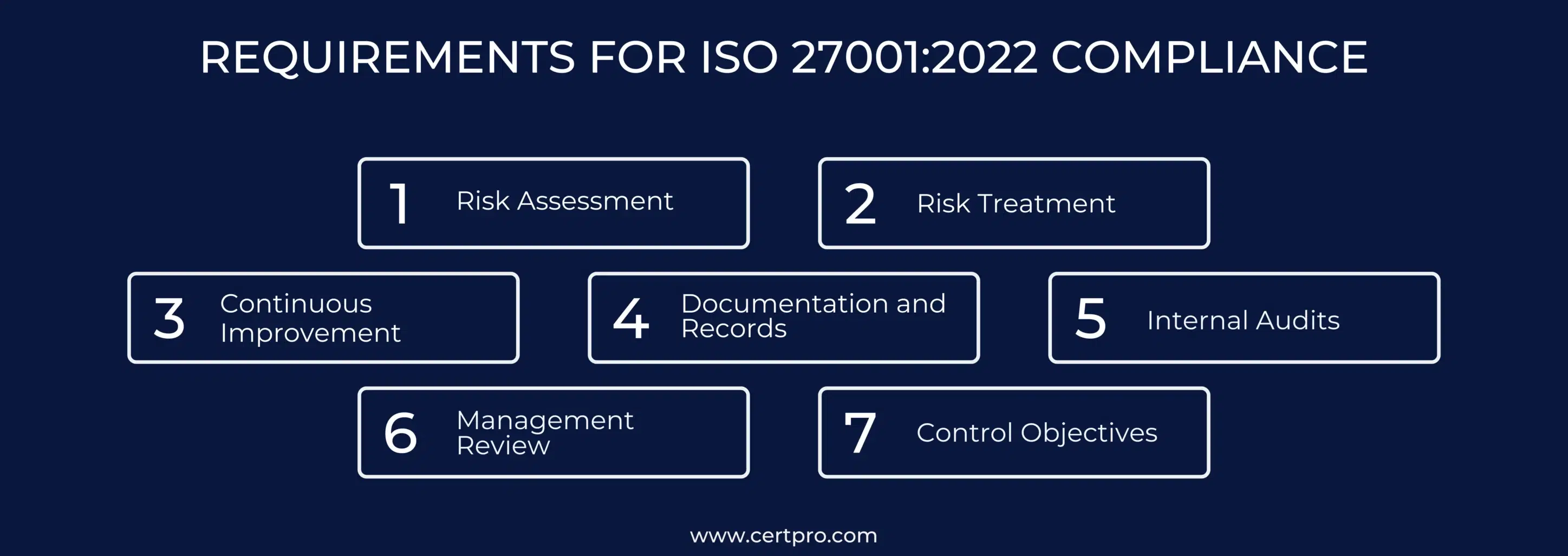
- ✓Leadership and Organizational Context Requirements
- ✓Risk Assessment and Treatment Requirements
- ✓Documentation and Competence Requirements
- ✓Mandatory Documented Information Summary
ISO 27001 Certification Cost in Malaysia
ISO 27001 certification cost in Malaysia varies based on multiple factors including the size of the organization, the complexity of its IT environment, the scope of the ISMS, and the number of audit person-days required to complete the Stage 1 and Stage 2 audits. Organizations should expect certification costs to reflect the scope of the independent audit program rather than a fixed-price package, as the audit effort required is directly proportional to the number of personnel, processes, locations, and systems within the ISMS boundary.
Factors Determining Certification Cost
The primary cost driver for ISO 27001 certification in Malaysia is the number of audit person-days required, which is determined by the scope and complexity of the ISMS. International accreditation body guidelines provide formulas for calculating minimum audit duration based on employee count within scope, number of locations, and the nature of business activities. A small Malaysian technology company with 50 employees and a single-site scope may require 4 to 6 person-days of certification audit effort, while a large financial institution with multiple locations and complex infrastructure may require 15 to 25 or more person-days.
Additional cost factors include travel and accommodation expenses for on-site audit activities at Malaysian locations, the technical complexity of the systems within scope (such as cloud environments, operational technology, or specialized industry systems), and whether the organization requires audit support in both English and Bahasa Malaysia. Organizations with previous ISO 27001 certifications or strong existing security documentation frameworks typically require fewer audit days than organizations implementing ISMS processes for the first time.
Three-Year Certification Cycle Cost Structure
ISO 27001 certification costs in Malaysia should be evaluated over the full three-year certification cycle, not just the initial certification audit. The cycle includes: the initial Stage 1 audit, the initial Stage 2 certification audit, a first-year surveillance audit (typically 12 months after initial certification), a second-year surveillance audit (typically 24 months after initial certification), and a recertification audit at the end of the three-year cycle. Surveillance audits are shorter than the initial audit — typically one-third to one-half the duration — but represent a recurring cost that organizations must budget for on an annual basis.
| Audit Stage | Timing | Relative Duration |
|---|---|---|
| Stage 1 (Documentation Review) | Before Stage 2 certification audit | Short (1-2 days typical) |
| Stage 2 (Certification Audit) | Initial certification | Full audit duration based on scope |
| Surveillance Audit 1 | 12 months after certification | Approximately 1/3 of Stage 2 duration |
| Surveillance Audit 2 | 24 months after certification | Approximately 1/3 of Stage 2 duration |
| Recertification Audit | 36 months after certification | Similar to Stage 2 audit duration |
Internal Costs of Maintaining an ISMS
In addition to certification body fees, Malaysian organizations pursuing ISO 27001 certification incur internal costs associated with ISMS development, operation, and maintenance. These internal costs include personnel time devoted to risk assessments, policy development, internal audits, and management reviews; technology investments such as security information and event management (SIEM) systems, identity and access management platforms, and vulnerability scanning tools; and training costs for security awareness programs and auditor competence development.
Organizations should also account for the cost of addressing nonconformities identified during certification audits, which may require investments in additional controls, process redesign, or system upgrades. For Malaysian organizations in regulated sectors, the cost of ISO 27001 certification should be contextualized against the cost of regulatory penalties for data breaches under the PDPA, reputational damage from security incidents, and the revenue impact of being disqualified from procurement processes that require certification as a prerequisite.
Benefits of ISO 27001 Certification
ISO 27001 certification delivers measurable benefits to Malaysian organizations across security, commercial, regulatory, and operational dimensions. The certification’s value extends beyond the certificate itself — the ISMS framework established to achieve certification creates enduring organizational capabilities for information security governance, risk management, and incident response. Organizations that maintain ISO 27001 certification over multiple certification cycles consistently report improvements in security posture, regulatory standing, and client trust.
ISO 27001 certification requires organizations to systematically identify, assess, and treat information security risks — a discipline that directly reduces the likelihood and impact of security incidents. The standard’s risk-based approach ensures that security investments are directed toward the threats and vulnerabilities that pose the greatest risk to the organization’s information assets, rather than being applied uniformly without regard for actual risk exposure. This targeted approach is particularly valuable for Malaysian organizations facing sector-specific threats such as financial fraud, data exfiltration, and ransomware.
The Annex A controls selected and implemented as part of the ISO 27001 certification process address a comprehensive range of security domains, from access control and cryptography to supplier relationships and incident management. By implementing these controls in a structured, audited manner, organizations create layered security defenses that are documented, tested, and continuously improved. Internal audits required under Clause 9.2 ensure that control effectiveness is periodically verified, preventing security drift that commonly occurs in organizations without formal ISMS governance.
For Malaysian organizations, ISO 27001 certification functions as a market access credential in an increasing number of procurement and contracting contexts. Government tenders, enterprise vendor onboarding programs, and international partnership agreements frequently list ISO 27001 certification as a mandatory or strongly preferred qualification. Organizations holding a valid certificate can respond to these requirements with objective third-party evidence of their security posture, reducing the time and cost associated with customer-driven security assessments.
ISO 27001 certification also supports business development with international clients and partners. For Malaysian companies seeking to expand into markets in Singapore, Japan, South Korea, the European Union, and the United States — where information security requirements are particularly stringent — a valid ISO 27001 certificate serves as a universally recognized indicator of security governance maturity. This is especially relevant for Malaysian technology companies and managed service providers targeting enterprise clients in regulated industries abroad.
ISO 27001 certification provides Malaysian organizations with a structured framework for mapping information security controls to regulatory and legal obligations. Clause 6.1.3 explicitly requires that the risk treatment plan take into account legal, regulatory, and contractual requirements. This means that a well-implemented ISO 27001 ISMS will systematically address requirements from Malaysia’s Personal Data Protection Act 2010, Bank Negara Malaysia’s RMIT policy, and other applicable frameworks, reducing the risk of regulatory penalties and enforcement actions.
For Malaysian organizations subject to international regulations — including those processing EU citizens’ data under GDPR or U.S. federal contractor requirements — ISO 27001 certification provides documented evidence of security controls that can be mapped to these external frameworks. While ISO 27001 certification does not automatically demonstrate compliance with GDPR or other specific regulations, it significantly reduces the compliance gap and provides regulators with tangible evidence of an organization’s commitment to information security governance.
- ✓Demonstrates verifiable conformance to an internationally recognized information security standard through independent third-party audit.
- ✓Reduces the likelihood and potential business impact of data breaches, ransomware incidents, and unauthorized access events.
- ✓Satisfies mandatory or preferred security certification requirements in Malaysian government and enterprise procurement processes.
- ✓Supports compliance with Malaysia’s Personal Data Protection Act 2010 and Bank Negara Malaysia’s RMIT policy through documented controls.
- ✓Provides a market access credential recognized by international clients, partners, and regulators in regulated industries.
- ✓Establishes documented incident response processes (Annex A 5.26) that reduce incident response time and operational disruption.
- ✓Creates an organizational culture of information security awareness through mandatory training and awareness programs.
- ✓Enables structured vendor and supplier security management through Annex A controls on supplier relationships (A.5.19 to A.5.22).
- ✓Provides a framework for business continuity planning and ICT readiness under Annex A 5.29 and 5.30.
- ✓Supports continuous improvement of security posture through annual surveillance audits and the Clause 10 improvement requirements.
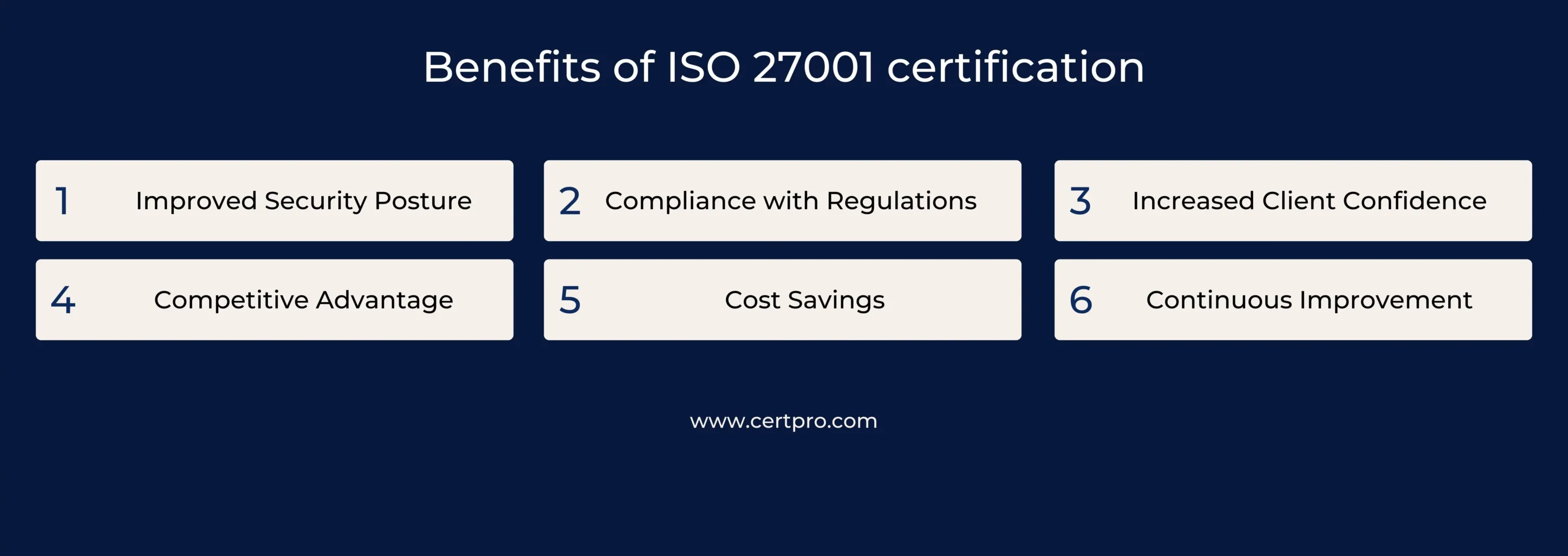
- ✓Security and Risk Management Benefits
- ✓Commercial and Market Access Benefits
- ✓Regulatory and Legal Compliance Benefits
- ✓Comprehensive Benefits Summary
ISO 27001 Certification for Malaysia’s Key Industries
ISO 27001 certification is particularly relevant to several of Malaysia’s most significant and rapidly growing industries. The standard’s applicability extends across any sector that processes, stores, or transmits sensitive information — a description that encompasses virtually every industry in Malaysia’s digital economy. However, certain sectors face intensified demand for ISO 27001 certification due to the nature of their data processing activities, their regulatory environment, or the security expectations of their clients and partners.
Financial Services and Fintech
Malaysia’s financial services sector — including commercial banks, investment banks, insurance companies, takaful operators, and the growing fintech ecosystem — represents one of the largest cohorts of ISO 27001 certified organizations in the country. Bank Negara Malaysia’s RMIT policy establishes detailed information security requirements for licensed financial institutions, and ISO 27001 certification provides a recognized framework for demonstrating satisfaction of these requirements. Payment system operators regulated under the Financial Services Act 2013 and Islamic Financial Services Act 2013 are particularly active participants in ISO 27001 certification programs.
Malaysian fintech companies — including digital payment providers, peer-to-peer lending platforms, robo-advisory services, and digital insurers — face client and investor expectations around information security governance that ISO 27001 certification directly addresses. For fintech companies seeking to partner with established financial institutions or expand into markets such as Singapore, where the Monetary Authority of Singapore similarly emphasizes information security standards, ISO 27001 certification is a frequently required qualification for partnership agreements and market access.
Technology and Managed Service Providers
Malaysia’s technology sector — including software development companies, managed service providers, cloud service providers, and data center operators — accounts for a substantial proportion of ISO 27001 certifications issued in Malaysia. Technology companies that process client data as part of their service delivery are frequently required by enterprise clients to hold ISO 27001 certification as a condition of contract. This requirement is particularly prevalent in outsourcing arrangements where a Malaysian technology company handles data on behalf of a client subject to its own regulatory obligations.
Data center operators in Malaysia — including facilities in Cyberjaya, Kuala Lumpur, and the growing digital infrastructure zones in Johor — are among the most active ISO 27001 certification participants in the country. ISO 27001 certification for data centers typically covers physical security controls (Annex A domain 3), environmental controls, access management, incident response, and business continuity processes. Certification provides data center clients — many of whom are themselves subject to information security regulatory requirements — with assurance that their data is housed in a facility that conforms to internationally recognized security standards.
Government Agencies and Public Sector Organizations
Malaysian government agencies and statutory bodies managing sensitive citizen data, critical national infrastructure, or classified information are increasingly subject to information security requirements that align with or reference ISO 27001. The Malaysian Administrative Modernisation and Management Planning Unit (MAMPU) has promoted the adoption of information security frameworks across federal agencies, and ISO 27001 certification provides a structured, internationally benchmarked approach to satisfying these requirements. Government-linked companies (GLCs) frequently pursue ISO 27001 certification to demonstrate security governance maturity consistent with their parent ministry’s expectations.
State government bodies and local authorities in Malaysia are also increasingly engaging with ISO 27001 certification as they digitize service delivery and expand their processing of citizen personal data. For these organizations, ISO 27001 certification serves both as an internal governance framework and as a mechanism for demonstrating to citizens and oversight bodies that information security is managed responsibly. The certification process also supports the implementation of Malaysia’s National Cyber Security Policy objectives, which identify government systems as critical national information infrastructure requiring robust security governance.
ISO 27001 Annex A Controls: Organizational and Technical Requirements
The 93 controls in Annex A of ISO/IEC 27001:2022 define the specific security measures that organizations may select and implement as part of their risk treatment process. These controls are not all mandatory — organizations select applicable controls based on the results of their risk assessment and document their selection decisions in the Statement of Applicability. However, all 93 controls must be considered during the risk treatment process, and any controls excluded from the SoA must be accompanied by documented justification for exclusion. Certification auditors review the SoA and verify that control selection decisions are consistent with the risk assessment results.
The Organizational controls domain contains 37 controls addressing information security policies, roles and responsibilities, threat intelligence, information security in project management, supplier relationships, incident management, business continuity, and legal compliance. Key controls in this domain include A.5.1 (Policies for information security), A.5.9 (Inventory of information and other associated assets), A.5.15 (Access control), A.5.19 through A.5.22 (Supplier and cloud service security), and A.5.26 through A.5.28 (Information security incident management). For Malaysian organizations, the supplier security controls are particularly relevant given the prevalence of outsourcing arrangements and cloud service adoption across all sectors.
Annex A 5.23 (Information security for use of cloud services) is one of the 11 new controls introduced in the 2022 revision. This control requires organizations to define and manage security risks associated with cloud service use, including establishing information security requirements for cloud service acquisition, use, and termination. For Malaysian organizations that have adopted cloud platforms such as Microsoft Azure, Amazon Web Services, or Google Cloud for business operations, this control is typically applicable and requires documented cloud security policies and supplier security assessment processes.
The People controls domain contains 8 controls addressing the information security responsibilities of personnel throughout their employment lifecycle. These controls span pre-employment screening (A.6.1), terms and conditions of employment (A.6.2), information security awareness and training (A.6.3), disciplinary processes (A.6.4), responsibilities after employment termination (A.6.5), confidentiality agreements (A.6.6), remote working security (A.6.7), and information security event reporting (A.6.8). Annex A 6.7 (Remote working) is particularly relevant for Malaysian organizations that adopted flexible and hybrid work arrangements following the COVID-19 pandemic and have since retained these arrangements as standard practice.
For Malaysian organizations with large contract or temporary workforces — common in manufacturing, technology services, and government-linked sectors — the People controls require particular attention to ensure that non-permanent staff within the ISMS scope are subject to equivalent screening, awareness, and information security obligations as permanent employees. Certification auditors specifically evaluate whether information security terms and conditions extend to contractors, outsourced workers, and third-party personnel who access the organization’s information systems and data.
The Technological controls domain is the most extensive in ISO 27001:2022, containing 34 controls that address user endpoint devices, privileged access rights, information access restriction, authentication, cryptography, secure development, vulnerability management, network security, and monitoring. New controls in this domain introduced in 2022 include A.8.9 (Configuration management), A.8.10 (Information deletion), A.8.11 (Data masking), A.8.12 (Data leakage prevention), A.8.16 (Monitoring activities), A.8.23 (Web filtering), and A.8.28 (Secure coding). These additions reflect the evolving threat landscape and the increased importance of cloud, DevSecOps, and data protection in modern information security programs.
For Malaysian technology companies and financial institutions, the Technological controls are frequently the most resource-intensive to implement and audit. Controls such as A.8.8 (Management of technical vulnerabilities), A.8.16 (Monitoring activities), A.8.25 through A.8.31 (Secure development and supporting processes), and A.8.34 (Protection of information systems during audit testing) require investments in security technology, skilled security operations personnel, and documented processes for managing technical security risks across complex IT environments. Certification auditors assess these controls through review of vulnerability scan reports, patch management records, SIEM configurations, and development security standards.
- ✓Organizational Controls (Annex A 5.1 to 5.37)
- ✓People Controls (Annex A 6.1 to 6.8)
- ✓Technological Controls (Annex A 8.1 to 8.34)
Why Choose CertPro for ISO 27001 Certification and Auditing in Malaysia
CertPro operates as a Licensed CPA Firm providing independent ISO 27001 certification audits to organizations across Malaysia. The firm’s positioning as an independent certification body — rather than a management consulting or advisory practice — is central to the integrity of the certification services it delivers. CertPro auditors evaluate ISMS conformance objectively, without prior involvement in the design or implementation of the systems being audited, ensuring that the certification outcome reflects an independent assessment of organizational security governance.
Independent Audit Expertise
CertPro’s audit team comprises professionals with demonstrated competence in information security management systems, ISO 27001:2022 requirements, and the Malaysia-specific regulatory environment. Auditors hold relevant qualifications including Certified Information Systems Auditor (CISA), Certified Information Security Manager (CISM), and ISO 27001 Lead Auditor certifications. This technical depth enables CertPro to conduct substantive evaluations of complex IT environments, including cloud architectures, DevOps environments, and operational technology systems, that are increasingly prevalent in Malaysian organizations seeking ISO 27001 certification.
CertPro’s audit programs are structured to provide organizations with clear, actionable audit findings that accurately reflect the state of ISMS conformance. The firm’s audit reports document findings with specific reference to clause and control requirements, enabling organizations to understand precisely which requirements are met and which require corrective action. This transparency in audit reporting is a key differentiator for organizations seeking certification from a body that provides meaningful assurance rather than a formulaic assessment process.
Malaysia-Specific Knowledge and Regulatory Understanding
CertPro’s understanding of Malaysia’s regulatory landscape — including the Personal Data Protection Act 2010, Bank Negara Malaysia’s RMIT policy, the Communications and Multimedia Act 1998, and the Computer Crimes Act 1997 — enables the firm to conduct ISO 27001 certification audits that account for the legal and regulatory context in which Malaysian organizations operate. When auditing Clause 4.1 (Understanding the organization and its context) and Clause 6.1.3 (Information security risk treatment), CertPro auditors assess whether the organization has identified and addressed applicable Malaysian legal and regulatory requirements within its ISMS framework.
CertPro’s experience with Malaysian organizations across sectors including financial services, technology, manufacturing, healthcare, and government enables the firm to apply the ISO 27001 standard with sector-appropriate judgment. The firm recognizes that control interpretation and implementation may vary appropriately across industries — for example, the physical security controls in Annex A domain 3 apply differently to a data center operator than to a professional services firm — and conducts audits that reflect these legitimate differences while maintaining consistent evaluation of conformance to the standard’s requirements.
Structured Certification Process and Timeline Transparency
CertPro provides organizations with a clearly defined certification process from initial scope definition through certificate issuance, with transparent timelines and deliverables at each stage. The firm’s structured audit program — encompassing Stage 1 documentation review, Stage 2 operational audit, nonconformity resolution, and certification decision — follows internationally recognized certification body practices. Organizations engaging CertPro receive a detailed audit plan before each audit stage, enabling them to prepare appropriate personnel and documentation for the audit activities specified.
Following each audit stage, CertPro issues formal audit reports that clearly document findings, nonconformities, and the basis for the certification decision. For organizations with major nonconformities, CertPro provides specific guidance on what objective evidence is required to demonstrate corrective action, enabling efficient resolution of findings within the timeframes required. The firm’s certification decisions are subject to independent review before issuance, ensuring that the certification outcome is based on objective audit evidence rather than auditor judgment alone.
ISO 27001 Transition from 2013 to 2022 in Malaysia
Malaysian organizations currently holding ISO 27001:2013 certification are required to transition to ISO/IEC 27001:2022 by October 31, 2025. This transition deadline was established by the International Accreditation Forum (IAF) and applies globally to all ISO 27001 certificates issued under the 2013 version. Organizations that do not complete their transition audit by this date will have their certificates withdrawn by their certification body. CertPro conducts transition audits for Malaysian organizations moving from the 2013 to the 2022 standard.
Key Changes from ISO 27001:2013 to ISO 27001:2022
The transition from ISO 27001:2013 to ISO 27001:2022 involves changes to both the main clauses and Annex A. At the clause level, the 2022 version introduces a new sub-clause — 6.3 Planning of changes — which requires organizations to plan ISMS changes in a controlled manner. Minor wording changes were also made to Clauses 4.2, 6.2, 8.1, 9.1, and 9.3 to align the standard with other ISO management system standards under the Harmonized Structure (formerly Annex SL). Organizations must review their documentation and processes against the updated clause requirements and amend them where necessary.
At the Annex A level, the transition requires organizations to reassess their Statement of Applicability against the new control structure. The 2022 Annex A reorganizes the 114 controls from 14 domains into 93 controls across 4 domains, with controls merged, renamed, or newly introduced. Organizations must map their existing controls to the 2022 Annex A, evaluate the 11 new controls against their risk assessment results, and update their SoA to reflect the new control numbering and structure. This mapping exercise should be documented to demonstrate to auditors that the transition assessment was systematic and complete.
Transition Audit Process
The transition audit conducted by CertPro evaluates whether the organization has addressed the changes introduced in ISO/IEC 27001:2022 relative to the 2013 version. The audit reviews updates to the ISMS documentation, the revised Statement of Applicability, the assessment of new Annex A controls, and any changes to operational processes required by the updated clause requirements. Organizations that can demonstrate a systematic and documented transition assessment will typically find the transition audit less resource-intensive than an initial certification audit, as the existing certification provides baseline evidence of ISMS maturity.
For Malaysian organizations, the October 31, 2025 transition deadline creates urgency for those that have not yet initiated their transition process. Organizations should plan to complete their updated documentation, conduct an internal audit against the 2022 standard requirements, and engage CertPro for a transition audit with sufficient lead time to address any nonconformities identified before the deadline. Certification bodies are experiencing high demand for transition audits as the deadline approaches, making early engagement essential to securing audit slots within the required timeframe.
FAQ
▶
What is ISO 27001 certification and why does it matter for Malaysian organizations?
▶
How long does ISO 27001 certification take in Malaysia?
▶
What is the difference between ISO 27001 Stage 1 and Stage 2 audits?
▶
Is ISO 27001 certification mandatory in Malaysia?
▶
How many controls are in ISO 27001:2022 and which are mandatory?
▶
What is a Statement of Applicability in ISO 27001?
▶
What happens during an ISO 27001 surveillance audit in Malaysia?
▶
How does ISO 27001 certification relate to Malaysia’s Personal Data Protection Act?
HOW COMPLIANCE AUDIT SOFTWARE IMPROVES AUDIT READINESS
Today, most companies deal with a growing number of compliance regulations. From data privacy standards to security frameworks like SOC 2 and ISO 2700…

THE ROLE OF GRC IN ISO 27001, SOC 2, AND OTHER FRAMEWORKS
The term GRC stands for Governance Risk and Compliance. It’s a system of integrated and centralized approaches used by organizations. This system comb…
HOW TO PREPARE FOR A MULTI-STANDARD AUDIT (SOC 2, ISO 27001, HIPAA) WITHOUT OVERLAPPING EFFORTS
The current regulatory landscape is no less than a proving ground for global businesses. Organizations are struggling to comply with the complex regul…
Get In Touch
have a question? let us get back to you.