
ISO 27001 Certification in Minnesota
ISO 27001 Certification in Minnesota is issued by CertPro, a Licensed CPA Firm operating as an independent third-party certification body. CertPro evaluates organizations against ISO/IEC 27001:2022 — the international standard governing Information Security Management Systems (ISMS) — through a structured, evidence-based audit methodology. The ISO 27001 audit process is objective, audit-framed, and fully independent of any consulting or implementation activity, ensuring the integrity of every certification decision.
OUR CLIENTS









Independent ISO 27001 Certification by a Licensed CPA Firm in Minnesota
ISO 27001 Certification in Minnesota is issued by CertPro, a Licensed CPA Firm operating as an independent third-party certification body. CertPro evaluates organizations against ISO/IEC 27001:2022 — the international standard governing Information Security Management Systems (ISMS) — through a structured, evidence-based audit methodology. The ISO 27001 audit process is objective, audit-framed, and fully independent of any consulting or implementation activity, ensuring the integrity of every certification decision.
ISO/IEC 27001:2022 as the Governing Standard for ISMS Certification
ISO/IEC 27001:2022 is the internationally recognized standard that defines requirements for establishing, implementing, maintaining, and continually improving an Information Security Management System. The standard is structured around management system clauses 4 through 10, which address organizational context, leadership commitment, planning, support, operation, performance evaluation, and continual improvement.
Annex A of the standard enumerates 93 controls organized into four domains: Organizational, People, Physical, and Technological. Organizations pursuing ISMS certification must demonstrate conformance with all applicable management system clauses and document a Statement of Applicability identifying which Annex A controls apply to their operating environment.
The 2022 revision reduced the total control count from 114 in the 2013 version and introduced new control categories addressing threat intelligence, cloud security, and data masking. Certification bodies worldwide have set October 31, 2025, as the transition deadline for organizations previously certified under ISO/IEC 27001:2013. Minnesota organizations across healthcare technology, SaaS, financial services, and cloud sectors are subject to this transition timeline and must ensure their ISMS documentation and audit evidence reflect the current standard.
Minnesota Regulatory Context for Information Security Certification
ISO 27001 Certification in Minnesota carries specific regulatory relevance shaped by the state’s dense concentration of healthcare, financial services, and technology organizations. Health technology organizations operating in Rochester and Minneapolis are subject to HIPAA Security Rule requirements governing the protection of electronic protected health information. ISO 27001 compliance provides a structured framework for mapping those obligations to documented ISMS controls.
Minnesota Statutes Chapter 325E imposes data security obligations on businesses that collect or process personal information of Minnesota residents, requiring reasonable security measures and breach notification protocols. Financial services and fintech vendors headquartered in the Twin Cities — including those serving regional banks, insurance carriers, and investment management firms — face multi-state data security requirements that ISO 27001 certification addresses through its risk-based control framework.
Organizations providing cloud infrastructure, SaaS platforms, or managed technology services to regulated entities in Minnesota increasingly encounter contractual requirements for ISO 27001 compliance as a condition of vendor approval. The independent, third-party nature of ISO 27001 Certification in Minnesota, issued by a Licensed CPA Firm, provides the evidentiary weight required to satisfy these regulatory and contractual obligations.
Independent Certification Body vs. Advisory Services
CertPro functions exclusively as an independent certification body conducting ISO 27001 audits. This structural position is distinct from consulting, implementation, or advisory services. An independent certification body evaluates an organization’s ISMS for conformance with ISO/IEC 27001:2022 — it does not design controls, develop policy documentation, define risk treatment plans, or prepare organizations for audit.
The certification decision is made by an independent certification committee based solely on audit evidence gathered during Stage 1 and Stage 2 assessments. This independence is a defining requirement for certification body credibility and ensures that the ISO 27001 audit process in Minnesota remains objective and free from conflicts of interest.
Minnesota organizations engaging CertPro for an ISO 27001 assessment receive an impartial evaluation of their existing ISMS controls and documentation, with findings communicated through formal audit reports. The certification issued reflects a verified state of conformance at the time of audit — not a consulting relationship or ongoing compliance management service.

What Is ISO 27001 Certification?
ISO 27001 certification is the formal recognition awarded to an organization that has demonstrated conformance with the requirements of ISO/IEC 27001:2022, the international standard for Information Security Management Systems. Certification is awarded by an independent, accredited certification body following a structured ISO 27001 audit that evaluates both the design and operating effectiveness of the organization’s ISMS.
It is not a self-assessment or a self-declaration — it requires third-party evaluation by a qualified audit body. For organizations in Minnesota, ISO 27001 Certification in Minnesota provides an internationally recognized credential verifying that the organization has implemented a systematic approach to managing information security risks across its people, processes, and technology environments.
Scope and Applicability of ISO 27001
ISO 27001 applies to any organization — regardless of size, industry, or sector — that processes, stores, or transmits information assets. The standard is applicable to private enterprises, public bodies, non-profits, and government contractors alike.
In Minnesota, organizations seeking ISMS certification span a wide range of sectors: SaaS companies serving enterprise clients, healthcare technology platforms handling patient data, financial services firms processing transactional records, insurance companies managing policyholder information, e-commerce retailers storing payment data, and cloud service providers offering infrastructure to regulated industries.
The scope of an ISO 27001 assessment is defined by the organization and documented in the ISMS scope statement. Scope may encompass the entire organization or a specific business unit, product line, data center, or technology platform. Audit evidence is evaluated only within the defined scope, and the certification certificate reflects that scope boundary explicitly.
Key ISMS Documentation Requirements Under ISO/IEC 27001:2022
ISO/IEC 27001:2022 requires organizations to maintain specific documented information as evidence of ISMS operation. The core documentation set includes:
Information Security Policy — establishes management’s commitment and direction for information security. Risk Assessment — identifies and evaluates information security risks within the defined scope. Risk Treatment Plan — documents decisions on how identified risks will be addressed through selected controls. Statement of Applicability — records which of the 93 Annex A controls are applicable, whether they have been implemented, and the justification for any excluded controls.
Additional documented information required under clauses 4 through 10 includes the ISMS scope statement, information security objectives, evidence of competence, internal audit results, management review records, and records of nonconformities and corrective actions.
During an ISO 27001 audit, the certification body reviews this documentation as part of the Stage 1 assessment and evaluates its completeness, accuracy, and alignment with the organization’s stated ISMS scope and risk profile.
Annex A Control Domains in ISO/IEC 27001:2022
Annex A of ISO/IEC 27001:2022 organizes 93 information security controls into four domains:
The Organizational controls domain (37 controls) covers policies, roles, responsibilities, threat intelligence, supplier relationships, and incident management. The People controls domain (8 controls) addresses personnel screening, terms of employment, security awareness, training, and confidentiality. The Physical controls domain (14 controls) covers physical security perimeters, entry controls, equipment protection, and secure disposal of media. The Technological controls domain (34 controls) encompasses access management, cryptography, network security, application security, vulnerability management, and data masking.
Organizations must evaluate each control against their risk assessment findings and document applicability decisions in the Statement of Applicability. During an ISO 27001 compliance evaluation, the certification body reviews control implementation evidence across all applicable Annex A domains, assessing both design adequacy and operational effectiveness over relevant time periods.
| Annex A Domain | Number of Controls | Key Focus Areas |
|---|---|---|
| Organizational | 37 | Policies, roles, threat intelligence, supplier security, incident management |
| People | 8 | Screening, awareness, training, confidentiality agreements |
| Physical | 14 | Physical perimeters, entry controls, equipment protection, media disposal |
| Technological | 34 | Access management, cryptography, network security, vulnerability management |
ISO 27001 Certification Audit Process in Minnesota
The ISO 27001 audit process in Minnesota follows a structured, multi-stage methodology that evaluates an organization’s ISMS for conformance with ISO/IEC 27001:2022. CertPro, as an independent certification body and Licensed CPA Firm, conducts this process through clearly defined stages: application review, audit program determination, Stage 1 audit, Stage 2 audit, nonconformity review, certification committee decision, and ongoing surveillance. Each stage produces specific audit outputs that form the basis of the final certification decision.
The Stage 1 audit is a documentation review conducted to assess the completeness and maturity of an organization’s ISMS documentation against ISO/IEC 27001:2022 requirements. During Stage 1, the certification body reviews the Information Security Policy, ISMS scope statement, risk assessment methodology, risk treatment plan, Statement of Applicability, and all other required documented information specified under clauses 4 through 10.
The auditor evaluates whether the documentation demonstrates that the organization has defined its ISMS boundaries, identified applicable information security risks, selected appropriate Annex A controls, and established processes necessary to operate and monitor the ISMS. Stage 1 findings are documented in an audit report identifying any areas where documentation is incomplete or does not meet standard requirements.
These findings directly inform the planning and focus areas of the Stage 2 audit. For organizations pursuing an ISO 27001 assessment in Minnesota, Stage 1 is typically conducted remotely, with submitted documentation reviewed prior to on-site or virtual Stage 2 fieldwork.
The Stage 2 audit evaluates the implementation and operational effectiveness of an organization’s ISMS controls across the defined certification scope. This is the substantive phase of the ISO 27001 audit, during which the certification body examines evidence that documented controls are functioning as described in the risk treatment plan and Statement of Applicability.
Auditors review access control logs, change management records, vulnerability scan reports, security incident records, internal audit reports, management review minutes, and other operational evidence. Interviews with relevant personnel are conducted to assess awareness, competence, and adherence to ISMS procedures.
The Stage 2 audit produces a formal audit report documenting conformances, observations, and any nonconformities identified. Nonconformities are classified and communicated to the organization with a defined timeframe for corrective action. The certification committee then reviews Stage 2 findings, corrective action evidence, and the complete audit record before issuing a certification decision. ISO 27001 Certification in Minnesota is issued upon successful completion of this full evaluation cycle.
ISO 27001 certification is valid for a three-year certification cycle, subject to annual surveillance audits conducted in years one and two following initial certification. Surveillance audits verify that the certified ISMS continues to conform with ISO/IEC 27001:2022 and that the organization is maintaining its information security controls and management system processes.
Surveillance audit scope typically focuses on areas of organizational change, findings from previous audits, continual improvement activities, internal audit results, and management review outputs. At the end of the three-year cycle, a recertification audit is conducted — a full reassessment of the ISMS comparable in scope to the initial certification audit.
Failure to maintain conformance during surveillance or recertification may result in suspension or withdrawal of the certificate. Organizations in Minnesota pursuing ongoing ISO 27001 compliance must plan for surveillance audit scheduling as a core component of their certification maintenance obligations.
| Audit Stage | Key Activities | Output |
|---|---|---|
| Application Review | Scope definition, audit program determination, conflict of interest check | Audit plan and program confirmation |
| Stage 1 Audit | Documentation review: ISMS policy, risk assessment, SoA, clause 4–10 records | Stage 1 audit report with identified documentation gaps |
| Stage 2 Audit | Control effectiveness testing, personnel interviews, evidence review across Annex A domains | Stage 2 audit report with conformances and nonconformities |
| Nonconformity Review | Organization submits corrective action evidence; auditor reviews adequacy | Corrective action closure or escalation |
| Certification Decision | Independent committee reviews full audit record and issues certification decision | ISO 27001 certificate (3-year validity) or rejection with rationale |
| Surveillance Audit | Annual review of ISMS maintenance, changes, internal audits, management reviews | Surveillance audit report confirming continued conformance |
| Recertification Audit | Full ISMS reassessment at end of 3-year cycle | Renewed certification or lapse of certificate |
- ✓Stage 1 Audit: Documentation and Readiness Review
- ✓Stage 2 Audit: ISMS Implementation and Control Effectiveness
- ✓Surveillance Audits and Recertification
ISO 27001 Certification Requirements for Minnesota Organizations
Achieving ISO 27001 Certification in Minnesota requires organizations to meet the full set of requirements specified in ISO/IEC 27001:2022, encompassing management system clauses 4 through 10 and all applicable controls identified in Annex A. The certification body evaluates conformance against these requirements through documented audit evidence — not through self-declaration or questionnaire-based assessments. The following sections identify the primary areas evaluated during an ISO 27001 assessment.
ISO/IEC 27001:2022 management system requirements are defined in clauses 4 through 10, each addressing a distinct dimension of ISMS governance:
Clause 4 requires organizations to define the internal and external context of the ISMS and identify interested parties and their requirements. Clause 5 establishes leadership obligations, including top management commitment, defined information security roles, and an approved Information Security Policy. Clause 6 addresses planning — including the risk assessment process, risk treatment decisions, and the definition of measurable information security objectives.
Clause 7 covers support requirements including resources, competence, awareness, communication, and documented information. Clause 8 governs the operational execution of ISMS processes, including the conduct of risk assessments and risk treatment activities. Clause 9 requires performance evaluation through internal audits, management reviews, and monitoring of ISMS objectives. Clause 10 mandates continual improvement, including the treatment of nonconformities and corrective actions.
During an ISO 27001 audit in Minnesota, each of these clauses is assessed for conformance through review of documented evidence and interviews with responsible personnel.
ISO/IEC 27001:2022 requires organizations to establish and apply a documented information security risk assessment process that produces consistent, valid, and comparable results. The risk assessment must identify information security risks associated with the loss of confidentiality, integrity, and availability of information assets within the ISMS scope; analyze the likelihood and consequence of those risks; and evaluate risks against defined criteria to determine which require treatment.
The risk treatment process requires organizations to select appropriate options for addressing identified risks — including applying relevant Annex A controls — and to document treatment decisions in the Risk Treatment Plan. The Statement of Applicability must then record all 93 Annex A controls, indicate which are applicable, confirm implementation status, and provide justification for any excluded controls.
During the ISO 27001 audit, the certification body reviews risk assessment records and risk treatment documentation to verify that control selection is traceable to identified risks and that the assessment has been conducted using a defined, documented methodology.
ISO/IEC 27001:2022 requires organizations to conduct internal audits of the ISMS at planned intervals to confirm whether the management system conforms to the organization’s own requirements and the requirements of the standard — and whether it is effectively implemented and maintained. Internal audit programs must define scope, frequency, methods, responsibilities, and reporting requirements. Internal audit results must be reported to relevant management and retained as documented evidence.
Management review is a separate requirement under Clause 9, obligating top management to review the ISMS at planned intervals to assess its continuing suitability, adequacy, and effectiveness. Management review inputs must include audit results, information security performance metrics, risk assessment status, and feedback from interested parties. Management review outputs must include decisions on continual improvement opportunities and any changes needed in the ISMS.
Evidence of both internal audit and management review is examined by the certification body as part of the ISO 27001 compliance assessment. The absence of either represents a potential major nonconformity that could prevent certification from being awarded.
- ✓Documented ISMS scope statement defining organizational and technological boundaries
- ✓Information Security Policy approved by top management
- ✓Completed risk assessment using a defined, repeatable methodology
- ✓Risk Treatment Plan documenting selected controls and treatment decisions
- ✓Statement of Applicability covering all 93 Annex A controls with justification
- ✓Internal audit program with documented results from at least one completed cycle
- ✓Management review records demonstrating top management engagement
- ✓Corrective action records evidencing treatment of identified nonconformities
- ✓Management System Requirements: Clauses 4 Through 10
- ✓Risk Assessment and Risk Treatment Requirements
- ✓Internal Audit and Management Review Requirements
Minnesota Business Sectors Seeking ISO 27001 Certification
ISO 27001 Certification in Minnesota is pursued by organizations across a wide range of industries driven by contractual requirements, regulatory obligations, and enterprise procurement expectations. Minnesota’s diverse economic base — anchored by financial services, healthcare, technology, retail, and manufacturing — creates broad demand for independent ISMS certification. The following sectors represent the primary drivers of ISO 27001 certification adoption across the state.
Healthcare Technology and Health Data Organizations
Minnesota is home to a significant concentration of healthcare technology organizations, including electronic health record platforms, clinical decision support vendors, health information exchanges, and medical device software providers located in Rochester, Minneapolis, and surrounding communities. These organizations process electronic protected health information subject to HIPAA Security Rule requirements and frequently serve hospital systems, health plans, and provider networks that require independent verification of information security controls as a condition of data sharing agreements or business associate contracts.
ISO 27001 compliance provides healthcare technology vendors with a structured mechanism for demonstrating HIPAA-aligned security controls through an independently audited ISMS. The Rochester healthcare ecosystem — anchored by major medical institutions — creates a localized concentration of health technology vendors for whom ISO 27001 Certification in Minnesota addresses intersecting health data security and vendor due diligence expectations.
Financial Services, Fintech, and Insurance Organizations
The Twin Cities region hosts a substantial financial services ecosystem comprising regional banks, credit unions, investment management firms, insurance carriers, and fintech companies. Financial services organizations in Minneapolis and Saint Paul operate under multi-state data security requirements — including the Gramm-Leach-Bliley Act Safeguards Rule, state insurance data security model law obligations, and enterprise vendor security assessment requirements imposed by large institutional clients.
ISO 27001 Certification in Minnesota provides financial services organizations with documented evidence of a formally structured ISMS and independently verified information security controls. Fintech companies serving regulated financial institutions face increasingly stringent vendor security assessments that reference ISO 27001 certification as a recognized standard. Insurance organizations managing actuarial data, claims records, and policyholder information similarly pursue ISMS certification to satisfy regulatory expectations and vendor security requirements applicable to technology providers operating in the Minnesota insurance market.
Technology Companies, SaaS Providers, and Cloud Services
Minnesota’s technology sector includes SaaS companies, cloud service providers, cybersecurity firms, AI startups, and enterprise software developers concentrated in the Twin Cities metropolitan area and emerging technology corridors in Bloomington and Minnetonka. These organizations frequently pursue ISO 27001 certification as a means of satisfying enterprise customer security requirements during procurement, accelerating security review cycles, and differentiating in competitive markets where information security credentials are evaluated alongside product functionality.
An ISO 27001 assessment provides SaaS vendors with an audit-based verification of their cloud security controls, access management practices, and data protection mechanisms across the Annex A Technological controls domain. Cybersecurity companies and managed security service providers may additionally seek ISMS certification to demonstrate that their internal security posture meets the same standard they represent externally to clients across Minnesota and beyond.
Retail, E-Commerce, and Manufacturing Organizations
Minnesota’s retail sector includes national e-commerce operators and brick-and-mortar retail organizations with significant digital operations — several headquartered in the Twin Cities — that process large volumes of consumer payment card data and personally identifiable information. These organizations face cybersecurity expectations from payment card brands, enterprise partners, and state consumer protection regulations.
Manufacturing and industrial technology companies in Minnesota increasingly operate connected production systems, supply chain management platforms, and IoT-enabled infrastructure that expands their information security exposure and creates demand for structured ISMS controls. For manufacturers supplying automotive, defense, aerospace, or government clients, ISO 27001 certification may be referenced as a baseline information security requirement in supplier qualification processes.
ISO 27001 compliance evaluation for these organizations addresses the intersection of operational technology security, supply chain risk management, and data protection obligations relevant to their specific industry contexts.
Benefits of ISO 27001 Certification for Minnesota-Based Organizations
ISO 27001 Certification in Minnesota delivers independently verified outcomes for organizations that complete the certification process. These outcomes are distinct from self-assessment or internal compliance programs because they result from third-party audit evaluation by a Licensed CPA Firm operating as an independent certification body. The following benefits reflect the direct results of achieving and maintaining ISMS certification under ISO/IEC 27001:2022.
ISO 27001 certification provides independently verified confirmation that an organization’s ISMS controls are designed appropriately and operating effectively within the defined certification scope. This verification carries evidentiary weight that internal security assessments, questionnaire responses, or vendor-completed security profiles cannot replicate.
For Minnesota organizations subject to vendor due diligence requirements from enterprise clients, financial institutions, or healthcare organizations, the ISO 27001 certificate represents a standardized, internationally recognized credential that reduces the burden of individual customer security assessments. Rather than responding to multiple security questionnaires with different formats and scope requirements, certified organizations can present their ISO 27001 certificate and corresponding audit scope as evidence of verified controls. This directly reduces the time and resources invested in recurring customer security reviews across the organization’s client base.
ISO 27001 compliance provides a structured framework for mapping legal and regulatory requirements to documented ISMS controls, enabling organizations to demonstrate alignment with HIPAA, Minnesota Statutes Chapter 325E, the Gramm-Leach-Bliley Act Safeguards Rule, and other applicable obligations through a single audited control set.
The risk assessment and risk treatment processes required by ISO/IEC 27001:2022 systematically identify and address information security risks before they materialize as security incidents — reducing the likelihood of data breaches and associated regulatory penalties. Internal audit and management review requirements embedded in the standard create structured mechanisms for ongoing monitoring and corrective action.
For organizations in Minnesota’s regulated industries, the risk reduction outcome of ISMS certification represents a direct operational benefit beyond the credential itself, establishing documented processes that reduce vulnerability exposure and improve incident response readiness.
ISO 27001 certification creates measurable competitive differentiation in procurement processes where information security credentials are evaluated as a qualifying criterion. Enterprise organizations in financial services, healthcare, and government contracting increasingly require or prefer vendors holding ISO 27001 certification as a condition of contract award or vendor approval.
For Minnesota technology companies and SaaS providers pursuing expansion into regulated markets — including federal government contracting, international enterprise sales, or partnerships with financial institutions — ISO 27001 certification provides a recognized baseline that accelerates security review and procurement timelines.
Organizations certified under ISO/IEC 27001:2022 can demonstrate commitment to information security through an objective, independently evaluated credential rather than marketing claims. This distinction is especially relevant in competitive technology markets where multiple vendors offer functionally comparable products and security posture becomes a differentiating factor in enterprise purchasing decisions.
- ✓Independent third-party verification of ISMS control design and operating effectiveness
- ✓Internationally recognized certification credential accepted in enterprise procurement processes
- ✓Structured framework for mapping regulatory obligations to documented ISMS controls
- ✓Systematic identification and treatment of information security risks
- ✓Reduced burden from recurring customer security questionnaires and vendor assessments
- ✓Structured internal audit and management review processes supporting continual improvement
- ✓Competitive differentiation in markets where ISO 27001 certification is a qualifying requirement
- ✓Three-year certification cycle with annual surveillance maintaining ongoing verification
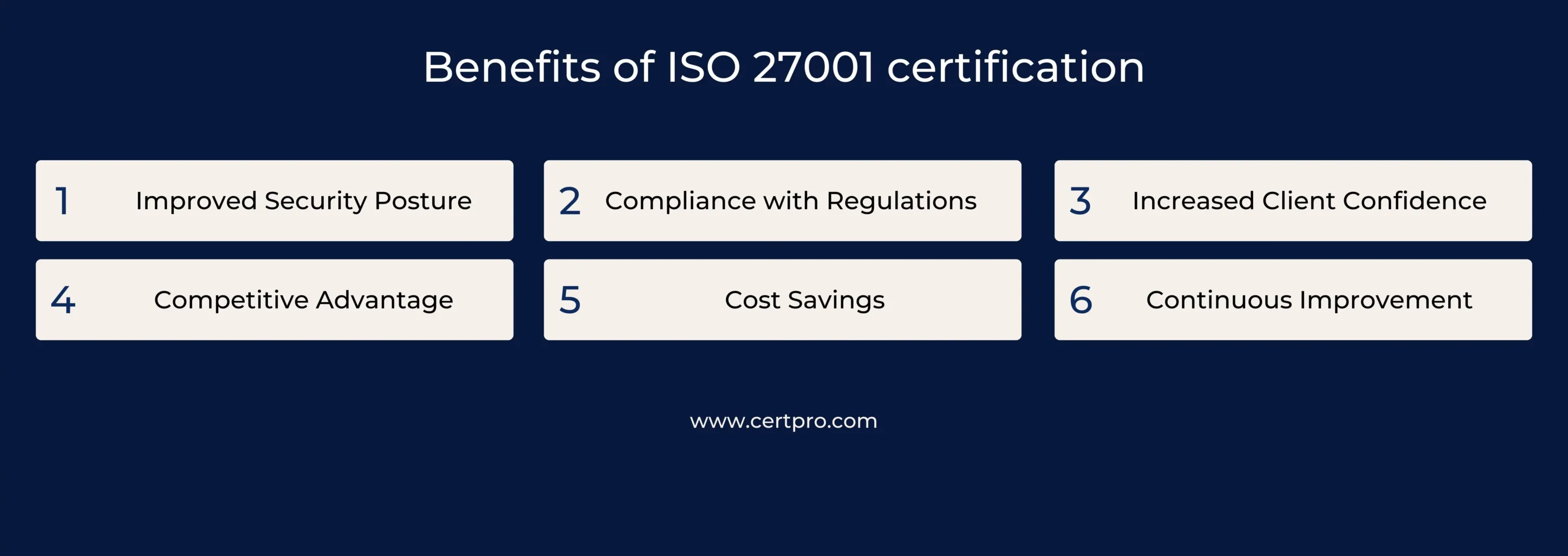
- ✓Independent Verification of Information Security Controls
- ✓Regulatory Alignment and Risk Reduction
- ✓Competitive Positioning and Market Access
Why Minnesota Organizations Pursue ISO 27001 Certification
ISO 27001 Certification in Minnesota is pursued for a combination of regulatory, contractual, and strategic reasons specific to the state’s industry composition and competitive dynamics. Understanding the primary drivers of ISO 27001 assessment adoption in Minnesota provides context for the certification decision and helps organizations align their ISMS scope with the requirements most directly relevant to their operating environment.
Enterprise Vendor Security Reviews and Procurement Requirements
A primary driver of ISO 27001 certification for Minnesota companies is the increasing prevalence of enterprise vendor security review requirements in procurement processes. Large organizations — including financial institutions, healthcare systems, retail enterprises, and government agencies operating in Minnesota — conduct third-party risk assessments of technology vendors and service providers before awarding contracts or extending system access. These assessments evaluate vendors’ information security controls, data protection practices, and security governance structures.
ISO 27001 certification provides a standardized, audit-based credential that satisfies these requirements efficiently. A Minneapolis-based SaaS vendor supplying a financial services client, for example, may be required to demonstrate ISO 27001 certification as part of the client’s vendor due diligence process. The certification body’s independent evaluation provides the client with objective evidence of the vendor’s ISMS conformance — reducing the need for the client to conduct its own detailed security assessment of the vendor’s environment.
International Expansion and Cross-Border Compliance Requirements
Minnesota technology companies, SaaS providers, and cloud service organizations pursuing international market expansion encounter information security requirements from clients and regulators in European, Asia-Pacific, and Middle Eastern markets that reference ISO 27001 certification as a recognized baseline or mandatory requirement. The European Union’s GDPR framework, while not explicitly mandating ISO 27001 certification, recognizes it as a demonstration of appropriate technical and organizational measures for personal data protection.
Organizations in sectors such as payment processing, cloud services, and enterprise software that operate across multiple jurisdictions benefit from ISO 27001’s international recognition as a mechanism for satisfying diverse, market-specific security expectations through a single audited certification. For Twin Cities-based technology exporters, ISO 27001 certification accelerates entry into procurement processes governed by international security standards and reduces friction in cross-border vendor approval workflows where ISMS certification is an evaluated criterion.
Cyber Insurance and Third-Party Risk Management
Minnesota organizations pursuing cyber liability insurance coverage increasingly encounter underwriters that reference ISO 27001 certification — or equivalent documented security frameworks — as a factor in coverage eligibility and premium determination. The structured risk assessment and control implementation requirements of ISO/IEC 27001:2022 align with the security posture evaluation criteria that cyber insurance underwriters apply when assessing organizational risk. Organizations with a certified ISMS can present audit evidence of their control environment as part of the underwriting process.
Additionally, organizations that manage third-party vendor relationships — including financial institutions, healthcare systems, and enterprise technology buyers — reference ISO 27001 certification as a qualification criterion in their third-party risk management programs. ISO 27001 compliance adoption in Minnesota is therefore driven not only by direct regulatory requirements, but also by the upstream risk management expectations of clients, insurers, and business partners operating within the state’s interconnected business ecosystem.
ISO 27001 Certification Scope and Independent Decision Framework
The certification scope and decision framework applied during ISO 27001 Certification in Minnesota reflect the requirements of ISO/IEC 27001:2022 and the independence principles governing third-party certification bodies. CertPro, operating as a Licensed CPA Firm, applies a structured evaluation methodology in which the certification decision is made by an independent committee based solely on documented audit evidence — separate from the audit team that conducted fieldwork.
Defining and Documenting the ISMS Certification Scope
The ISMS certification scope is defined by the organization at the outset of the certification process and documented in the ISMS scope statement. The scope must clearly identify the organizational units, locations, processes, systems, and information assets covered by the ISMS.
For a Minnesota SaaS company, the scope might encompass the production cloud environment, supporting development infrastructure, and the organizational units responsible for software development, customer support, and information security management. For a healthcare technology organization, the scope might include all systems processing electronic protected health information under defined business associate relationships.
The certification body reviews the scope statement during Stage 1 to assess whether it is clearly defined, internally consistent, and aligned with the risk assessment and Statement of Applicability. Any significant exclusions from scope — such as omitting a major operational system that processes in-scope data — would constitute a finding requiring resolution before ISO 27001 certification can be awarded.
Independent Certification Committee and Nonconformity Resolution
The certification decision for an ISO 27001 assessment is made by an independent certification committee that reviews the complete audit record — including Stage 1 and Stage 2 audit reports, nonconformity documentation, corrective action evidence, and the auditor’s summary — without participation from the auditors who conducted fieldwork. This structural separation ensures that the certification decision reflects an objective evaluation of audit evidence rather than the perspective of any individual auditor.
Nonconformities identified during Stage 2 must be addressed by the organization through documented corrective actions before certification is issued. Major nonconformities — those representing a failure to meet a fundamental requirement of the standard — require objective evidence of resolution, which is reviewed and verified by the certification body before the committee proceeds. Minor nonconformities may be resolved within a defined timeframe and verified at the next surveillance audit.
The committee issues a certification decision — either to award certification, request additional evidence, or decline to certify — based solely on the audit record.
Certificate Validity, Suspension, and Withdrawal
An ISO 27001 certificate issued upon successful completion of the certification audit is valid for three years, subject to satisfactory completion of annual surveillance audits in years one and two. The certificate covers the specific ISMS scope documented at the time of certification.
Significant changes to the organization’s scope — such as the acquisition of a new business unit, a change in cloud hosting environment, or a major restructuring of information security responsibilities — must be reported to the certification body and may require a scope extension audit or scope modification.
Circumstances that may result in certificate suspension include failure to conduct or pass surveillance audits, significant security incidents indicating ISMS breakdown, or withdrawal of the organization’s cooperation with the audit program. Certificate withdrawal may occur if a suspended certificate is not reinstated within the suspension period or if persistent nonconformance is established. These mechanisms ensure that ISO 27001 Certification in Minnesota reflects current, ongoing ISMS conformance rather than a static historical snapshot.
ISO 27001 Certification for Minnesota’s Technology Ecosystem
Minnesota’s technology ecosystem encompasses a broad range of organizations for which ISO 27001 certification represents a relevant and increasingly expected security credential. The state’s concentration of technology activity in the Twin Cities metropolitan area — spanning Minneapolis, Saint Paul, Bloomington, Eden Prairie, and Minnetonka — creates a localized ecosystem of SaaS providers, cloud service companies, cybersecurity firms, AI startups, and enterprise software developers for whom ISMS certification addresses specific market and client requirements.
SaaS and Cloud Service Providers in the Twin Cities
SaaS companies and cloud service providers operating from Minneapolis, Bloomington, and the broader Twin Cities technology corridor frequently serve enterprise clients in financial services, healthcare, retail, and government sectors that conduct formal vendor security assessments. These clients evaluate vendors’ information security controls as part of their procurement and vendor management processes, with ISO 27001 certification recognized as a substantive credential that reduces the depth and duration of individual security reviews.
ISO 27001 Certification in Minnesota is particularly relevant for SaaS and cloud vendors whose platforms process client data, host regulated information, or provide infrastructure services under a shared responsibility model. The Technological controls domain of Annex A addresses the specific control categories most relevant to cloud service environments — including access control, cryptography, network security, application security, and vulnerability management — all of which are evaluated during the Stage 2 ISO 27001 audit.
Cybersecurity Companies and AI Organizations in Minnesota
Cybersecurity companies and AI-focused organizations in Minnesota operate in markets where the organization’s own information security posture is directly scrutinized by clients who are themselves evaluating security solutions. A cybersecurity vendor that cannot demonstrate its own certified ISMS faces credibility challenges in enterprise sales processes. ISO 27001 certification provides an independently audited credential that validates the vendor’s internal security governance and control implementation.
AI organizations processing large volumes of sensitive training data, model outputs, or client-provided information face growing scrutiny over data handling practices and information security governance. ISO/IEC 27001:2022 Annex A controls addressing data classification, access control, cryptography, and supplier security relationships are directly applicable to AI organizations managing data pipelines and third-party data integrations. ISMS certification for these organizations demonstrates that security governance is embedded in operations rather than treated as a secondary concern.
FAQ
▶
What is ISO 27001 certification and why does it matter for Minnesota organizations?
▶
Who issues ISO 27001 certification in Minnesota?
▶
How long does the ISO 27001 audit process take in Minnesota?
▶
What documents are required for ISO 27001 certification?
▶
How long is ISO 27001 certification valid?
▶
What is the difference between Stage 1 and Stage 2 audits?
▶
What Minnesota-specific regulations does ISO 27001 compliance address?
▶
What is the Statement of Applicability in ISO 27001?
Get In Touch
have a question? let us get back to you.