
SOC 2 Certification in San Antonio
CertPro CPA LLC – Licensed CPA Firm conducts independent SOC 2 certification audits for organizations operating across San Antonio. SOC 2 certification evaluates the design and operating effectiveness of an organization’s controls against SOC 2 requirements and regulatory standards.
OUR CLIENTS










SOC 2 Certification for San Antonio-Based Financial and Technology Organizations
SOC 2 Certification in San Antonio is issued by a Licensed CPA Firm following an independent examination conducted under AICPA attestation standards and evaluated against the Trust Services Criteria. San Antonio supports a broad and expanding ecosystem of SaaS providers, cloud service organizations, cybersecurity firms, fintech businesses, financial institutions, healthcare technology companies, defense and aerospace technology organizations, biotechnology and life sciences companies, government technology providers, AI companies, telecommunications providers, e-commerce businesses, and energy sector enterprises — all of which face SOC 2 attestation requirements from enterprise customers, regulated sector counterparties, and third-party risk management programs.
The certification confirms that controls were independently assessed by a qualified third-party auditor — not self-reported — and that the attestation reflects an objective, evidence-based evaluation. Organizations operating across Downtown San Antonio, Stone Oak, Northwest San Antonio, and the Texas Research Park area increasingly encounter SOC 2 requirements embedded in vendor procurement, financial services contracting, and government technology engagements.
The SOC 2 examination evaluates an organization’s control environment against one or more of the five Trust Services Criteria: Security, Availability, Processing Integrity, Confidentiality, and Privacy. Security — referred to as the Common Criteria — is mandatory in every SOC 2 engagement. Additional criteria are included based on the nature of services provided and the commitments made to customers and user entities.
San Antonio organizations serving regulated industries such as healthcare, financial services, defense contracting, and government technology typically include multiple criteria to address the full scope of their service obligations. A Licensed CPA Firm conducts the SOC 2 audit, reviews documented evidence, tests control operation, and issues an attestation report recognized across enterprise vendor review programs, financial sector procurement processes, and third-party risk management frameworks. The report functions as independently verified documentation of control effectiveness during a defined examination period and cannot be issued through self-assessment or internal review processes.
SOC 2 Certification in San Antonio carries particular relevance in the context of Texas regulatory requirements. Organizations operating in San Antonio must account for the Texas Data Privacy and Security Act (TDPSA) and the Texas Identity Theft Enforcement and Protection Act as contextual considerations when defining their control environments. While SOC 2 attestation does not automatically establish compliance with Texas, U.S. federal, or industry-specific laws, the controls evaluated during a SOC 2 examination frequently address information security, data handling, access management, and privacy practices that align with the expectations embedded in Texas privacy and data security requirements.
Enterprises in the broader San Antonio metropolitan and South Texas business ecosystem pursuing SOC 2 compliance find that the examination process strengthens internal control discipline, supports regulatory alignment, and positions the organization to respond to vendor security review requirements from enterprise counterparties across financial services, healthcare, defense, government technology, and cloud services markets. SOC 2 Certification is recognized as a structured, evidence-based demonstration of control effectiveness that satisfies third-party assurance expectations at the enterprise level.

What Is SOC 2 Certification?
SOC 2 Certification refers to the formal attestation issued by a Licensed CPA Firm following an independent SOC 2 examination conducted under the American Institute of Certified Public Accountants (AICPA) attestation standards. The examination evaluates whether an organization’s controls over security, availability, processing integrity, confidentiality, and privacy are suitably designed — and, in the case of a Type 2 report, operating effectively — over a defined observation period.
SOC 2 compliance is not established through internal declarations or self-assessments. It requires an independent auditor to review documented evidence, test controls, and issue a formal attestation report reflecting the results of the examination. The SOC 2 attestation report communicates the scope of the examination, the criteria applied, and the auditor’s conclusions regarding control design and operating effectiveness.
SOC 2 Type 1 and Type 2 Reports Defined
A SOC 2 Type 1 report reflects the auditor’s evaluation of control design at a specific point in time. The examination assesses whether the controls described in management’s system description are suitably designed to meet the applicable Trust Services Criteria as of the report date. A Type 1 report does not evaluate whether controls operated effectively over time.
A SOC 2 Type 2 report covers an observation period — typically a minimum of six months — and evaluates both the design and the operating effectiveness of controls throughout that period. Enterprise customers and regulated sector counterparties in San Antonio and across Texas increasingly require SOC 2 Type 2 reports because operating effectiveness testing provides stronger assurance than a point-in-time design review. The Type 2 report is the standard expected in most vendor security review programs, financial services procurement processes, and government technology contracting engagements.
The distinction between SOC 2 Type 1 and Type 2 is material for organizations at different stages of their control program maturity. A Type 1 report may serve as an initial attestation milestone, documenting that controls are properly designed before an observation period commences. A Type 2 report demonstrates sustained control effectiveness and is the attestation format required by most enterprise vendor assurance programs, financial institutions, and regulated counterparties.
San Antonio technology companies, fintech firms, and SaaS providers pursuing enterprise contracts should evaluate which report type satisfies the specific assurance requirements of their customer base. The Licensed CPA Firm conducting the SOC 2 examination determines the appropriate examination scope, report type, and applicable criteria based on the organization’s service commitments and the nature of the systems in scope.
Trust Services Criteria: The Evaluation Framework
The Trust Services Criteria (TSC) established by the AICPA provide the evaluative framework applied during every SOC 2 examination. The Security criterion — known as the Common Criteria — is mandatory across all SOC 2 engagements and addresses logical and physical access controls, risk assessment procedures, change management, and incident response. Organizations include additional criteria based on service commitments:
Availability addresses system uptime and performance commitments. Processing Integrity evaluates whether system processing is complete, valid, accurate, timely, and authorized. Confidentiality covers the protection of information designated as confidential. Privacy addresses the collection, use, retention, disclosure, and disposal of personal information in accordance with the organization’s privacy notice and applicable regulations. Each criterion contains a set of points of focus that define the controls expected to be in place and operating during the examination period.
For San Antonio organizations operating in healthcare technology, defense contracting, financial services, or government technology sectors, the Privacy and Confidentiality criteria frequently appear in SOC 2 examination scopes. Healthcare technology providers handling protected health information, financial institutions managing customer financial data, and government technology contractors processing sensitive government information typically include Privacy and Confidentiality criteria to address specific data protection obligations embedded in their service agreements and applicable regulatory frameworks.
The selection of applicable Trust Services Criteria is part of the scope definition process conducted by the Licensed CPA Firm at the outset of the SOC 2 engagement. The criteria selected must reflect the nature of the services provided and the commitments made to user entities and customers.
| Trust Services Criterion | Primary Focus | Common Applicability |
|---|---|---|
| Security (Common Criteria) | Access controls, risk assessment, change management, incident response | All SOC 2 engagements — mandatory |
| Availability | System uptime, performance commitments, recovery capabilities | SaaS providers, cloud services, hosting organizations |
| Processing Integrity | Complete, valid, accurate, timely, and authorized processing | Fintech, payment processors, data processing organizations |
| Confidentiality | Protection of information designated as confidential | Healthcare IT, financial services, defense technology |
| Privacy | Collection, use, retention, disclosure, and disposal of personal information | Consumer-facing platforms, healthcare, HR technology |
SOC 2 Certification Audit Process for Organizations in San Antonio
The SOC 2 audit process follows a structured sequence of stages governed by AICPA attestation standards. Each stage produces defined outputs that collectively form the basis of the SOC 2 attestation report issued by the Licensed CPA Firm. For organizations pursuing SOC 2 Certification in San Antonio, understanding this structured sequence enables management to prepare documentation, designate responsible personnel, and coordinate evidence production across relevant systems and control areas.
The SOC 2 examination is conducted entirely by the Licensed CPA Firm and encompasses scope definition, documentation review, control testing, nonconformity identification, and report issuance. Each phase builds on the prior to ensure a thorough and defensible attestation outcome.
The SOC 2 examination begins with scope definition, during which the Licensed CPA Firm and the organization’s management establish the boundaries of the system under examination. This phase determines the applicable Trust Services Criteria, the report type (Type 1 or Type 2), and the observation period for Type 2 engagements. Scope definition documents the services covered, the infrastructure components included, the geographic locations relevant to the examination, and any subservice organizations relied upon by the service organization.
For San Antonio organizations operating across multiple locations, cloud environments, or third-party infrastructure providers, the scope boundary determines which systems, processes, and controls are subject to examination. The Licensed CPA Firm then develops the audit program to structure control testing procedures, evidence collection activities, and the evaluation methodology applied throughout the engagement.
The audit program determination phase also involves reviewing the organization’s system description — management’s written description of the system that includes the nature of services provided, the components of the system, the relevant Trust Services Criteria, the controls in place to address each criterion, and any subservice organizations. The system description forms a foundational document in the SOC 2 engagement because the Licensed CPA Firm evaluates management’s assertions about the system and its controls against evidence gathered during the examination.
Organizations in San Antonio pursuing SOC 2 compliance must ensure that the system description accurately reflects the control environment and does not omit material information regarding the infrastructure, software, personnel, data, or procedures within scope.
The Stage 1 audit consists of a documentation review conducted by the Licensed CPA Firm to evaluate whether the organization’s documented control environment is sufficiently developed to support a SOC 2 examination. During Stage 1, the auditor reviews the system description, relevant policies and procedures, risk assessment documentation, and control design evidence. The Stage 1 review determines whether documented controls are suitably designed to meet the applicable Trust Services Criteria and whether the engagement can proceed to Stage 2 control testing.
Identified documentation deficiencies or scope misalignments are communicated to management for resolution before Stage 2 commences. For San Antonio technology and financial services organizations, Stage 1 commonly surfaces gaps in formal documentation of access provisioning, change management procedures, and incident response protocols.
The Stage 2 audit constitutes the substantive control testing phase of the SOC 2 examination. The Licensed CPA Firm executes control testing procedures designed to evaluate whether controls operated as described in the system description and whether they met the applicable Trust Services Criteria throughout the observation period for Type 2 engagements. Control testing procedures include inspection of documents and records, inquiry of relevant personnel, observation of control operations, and re-performance of control activities.
Evidence collected during Stage 2 forms the basis for the auditor’s conclusions regarding control operating effectiveness. Nonconformities identified during testing are documented, assessed for materiality and impact, and reported to management. The SOC 2 examination culminates in the issuance of the attestation report by the Licensed CPA Firm, which communicates the auditor’s opinion on management’s assertions about the system and its controls.
| Audit Stage | Key Activities | Output |
|---|---|---|
| Scope Definition | Define system boundaries, applicable TSC, report type, observation period | Signed engagement letter, system boundary document |
| Audit Program Determination | Develop control testing procedures, review system description | Audit program and testing matrix |
| Stage 1 — Documentation Review | Review policies, procedures, risk assessment, control design evidence | Stage 1 findings report, readiness observations |
| Stage 2 — Control Testing | Inspect records, inquire of personnel, observe and re-perform controls | Evidence workpapers, nonconformity log |
| Nonconformity Review | Assess identified deficiencies for materiality and impact on opinion | Management letter, nonconformity disposition |
| Report Issuance | Issue SOC 2 attestation report with auditor’s opinion | SOC 2 Type 1 or Type 2 attestation report |
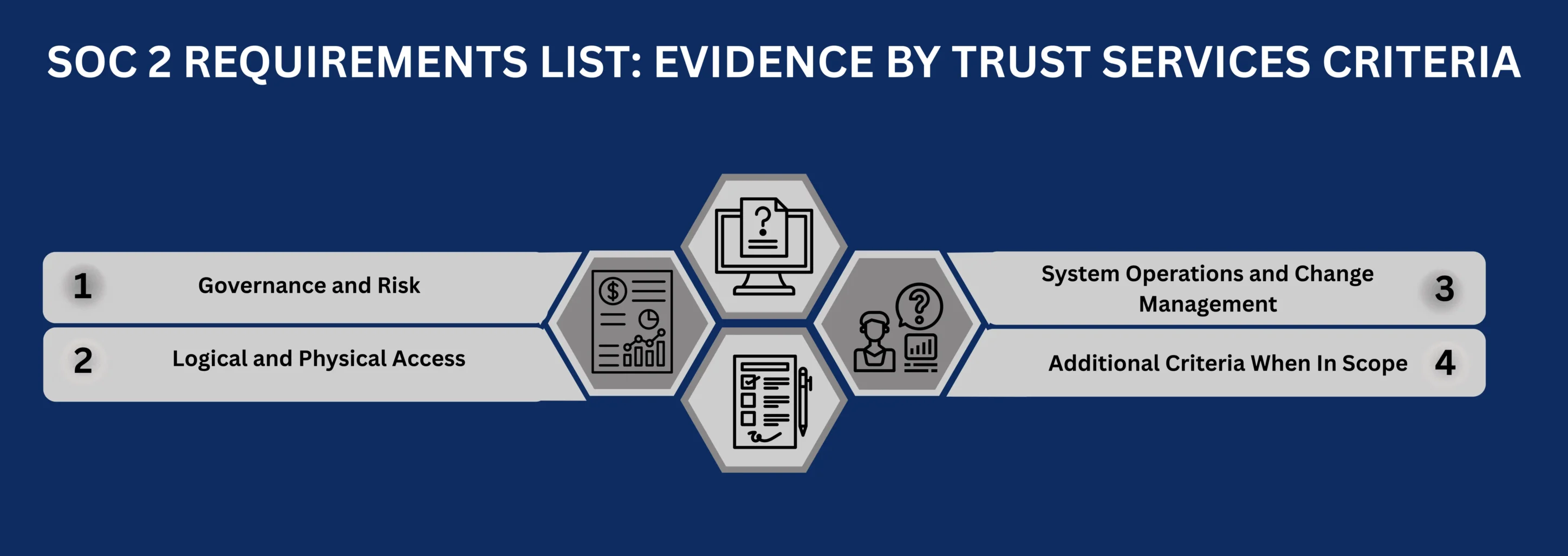
- ✓Scope Definition and Audit Program Determination
- ✓Stage 1 Documentation Review and Stage 2 Control Testing
- ✓SOC 2 Audit Process: Structured Stage Overview
Why Organizations in San Antonio Pursue SOC 2 Certification
SOC 2 Certification in San Antonio is driven by enterprise customer requirements, financial sector procurement standards, defense and government contracting expectations, and the vendor security review programs maintained by regulated industry counterparties. San Antonio’s technology ecosystem — spanning SaaS platforms, cloud infrastructure providers, cybersecurity firms, AI companies, and telecommunications organizations — generates substantial demand for independently verified assurance documentation.
Enterprise customers across financial services, healthcare, and government technology sectors embed SOC 2 attestation requirements directly into vendor contracts and procurement qualification criteria. Organizations that cannot produce a current SOC 2 report are frequently disqualified from vendor shortlists or subjected to extended, resource-intensive vendor due diligence reviews that a SOC 2 attestation would otherwise satisfy.
Enterprise Vendor Security Reviews and Financial Sector Procurement
Financial institutions operating in San Antonio — including banks, credit unions, insurance carriers, and investment management firms — maintain vendor management programs that require SOC 2 attestation from technology service providers. Fintech companies and cloud service providers serving San Antonio’s financial sector must produce SOC 2 Type 2 reports to satisfy third-party risk management requirements imposed by their financial institution customers.
SOC 2 compliance that San Antonio technology vendors demonstrate through a current attestation report enables financial sector counterparties to fulfill their own regulatory obligations regarding vendor due diligence. These obligations are defined under frameworks such as the Federal Financial Institutions Examination Council (FFIEC) IT examination guidance and applicable Office of the Comptroller of the Currency (OCC) third-party risk management standards. A completed SOC 2 audit positions San Antonio financial technology organizations to qualify for enterprise financial sector contracts that require documented, independently verified control assurance.
San Antonio’s defense and aerospace technology sector presents a distinct SOC 2 demand driver. Defense contractors and government technology providers operating in and around San Antonio — including those supporting Joint Base San Antonio, the largest military installation complex in the Department of Defense — frequently encounter security assurance requirements from prime contractors and government agency counterparties.
While defense contracting organizations may also be subject to CMMC, NIST SP 800-171, and other federal cybersecurity frameworks, SOC 2 attestation is increasingly referenced in subcontractor qualification requirements and commercial government technology procurements. SOC 2 Certification in San Antonio for companies operating in the defense technology sector provides independently verified documentation of security controls that complements other applicable assurance frameworks and satisfies commercial prime contractor vendor review requirements.
Healthcare Technology, Biotechnology, and Life Sciences Demand Drivers
San Antonio’s healthcare technology and biotechnology sectors generate significant SOC 2 attestation demand. Healthcare technology organizations serving hospital systems, physician groups, and health plans across the South Texas healthcare market process protected health information (PHI) and are subject to HIPAA Security Rule requirements. While HIPAA compliance is established through separate regulatory mechanisms, SOC 2 attestation that San Antonio healthcare technology companies obtain serves as independently verified documentation of the security controls protecting PHI. It also supports the Business Associate Agreement obligations these organizations carry.
Covered entity counterparties and health system procurement programs routinely require SOC 2 Type 2 reports from healthcare technology vendors as part of vendor onboarding and annual vendor risk review processes. Biotechnology and life sciences companies managing clinical trial data, genomic information, and proprietary research data also pursue SOC 2 certification to satisfy partner and investor expectations regarding data protection.
E-commerce businesses and consumer-facing technology platforms operating in San Antonio that handle customer payment data, personal information, and transaction records encounter SOC 2 requirements from enterprise retail partners, marketplace operators, and payment network counterparties. AI companies developing and deploying machine learning models that process sensitive customer or enterprise data are increasingly required to produce SOC 2 attestation reports to satisfy due diligence requirements from enterprise customers evaluating AI vendor risks.
Energy sector technology providers serving utilities, oil and gas companies, and renewable energy operators in the South Texas energy market face SOC 2 requirements from enterprise energy customers managing operational technology and information security risks across their vendor ecosystems. SOC 2 compliance that San Antonio fintech and energy technology organizations demonstrate positions them to satisfy a broad set of enterprise customer assurance expectations across regulated and commercial markets.
SOC 2 Certification Requirements and Examination Scope
SOC 2 examination requirements are defined by the AICPA’s Trust Services Criteria and the applicable attestation standards under AT-C Section 205 (Examination Engagements) and AT-C Section 320 (Reporting on an Examination of Controls at a Service Organization Relevant to User Entities’ Internal Control Over Financial Reporting). The SOC 2 examination scope is established based on the services provided, the systems involved, the commitments made to user entities, and the criteria applicable to those commitments.
Organizations pursuing SOC 2 Certification in San Antonio must document the boundaries of the system under examination, identify the applicable Trust Services Criteria, establish the observation period for Type 2 engagements, and maintain evidence of control operation throughout the examination period.
The control environment evaluated during a SOC 2 examination encompasses the policies, procedures, personnel, systems, and infrastructure that collectively constitute the organization’s approach to managing the risks addressed by the applicable Trust Services Criteria. Documentation requirements for a SOC 2 engagement include a written system description prepared by management, formal information security policies and procedures, risk assessment documentation, access control policies, change management procedures, incident response plans, vendor management documentation, and business continuity and disaster recovery plans where applicable.
Each document must reflect the actual control practices in operation during the examination period — not aspirational policies that have not been implemented. The Licensed CPA Firm tests the consistency between documented policies and actual operational evidence gathered during the Stage 2 audit.
Evidence requirements for a SOC 2 Type 2 examination are more extensive than for a Type 1 engagement because the auditor must evaluate control operation throughout the observation period, not merely at a point in time. Evidence types include system-generated access logs, change management tickets and approval records, vulnerability scan results, penetration testing reports, security monitoring alerts and response records, employee training completion records, background check documentation, vendor risk assessment records, and business continuity test results.
For San Antonio technology organizations operating in cloud environments — including AWS, Microsoft Azure, and Google Cloud — system-generated evidence must be extracted and preserved in a manner that allows the Licensed CPA Firm to assess control operation across the full observation period. Reliance on subservice organization controls must be documented and assessed in accordance with AICPA standards for carved-out or inclusive method treatment.
Management of the service organization carries defined responsibilities in a SOC 2 examination. Management is responsible for preparing the system description, asserting that the description is fairly presented, asserting that the controls are suitably designed to achieve the applicable Trust Services Criteria, and — for Type 2 engagements — asserting that the controls operated effectively throughout the observation period. Management’s assertions are included in the SOC 2 attestation report alongside the Licensed CPA Firm’s independent opinion.
The auditor’s opinion reflects an independent assessment of whether management’s assertions are fairly stated based on the evidence gathered during the examination. The SOC 2 attestation report communicates the conclusions of the independent auditor and does not represent management’s own view of control effectiveness.
SOC 2 examination scope boundaries determine what is and is not covered by the attestation. The scope is limited to the specific services, systems, and controls described in the system description and examined by the Licensed CPA Firm. Controls outside the defined scope — including controls at customer organizations (user entities) and third-party subservice organizations excluded under the carve-out method — are not covered by the SOC 2 attestation.
User entities relying on the SOC 2 report for their own internal control assessments must evaluate complementary user entity controls identified in the report. For San Antonio organizations that rely on cloud infrastructure providers or third-party managed services, the treatment of subservice organization controls is a material scoping decision that affects both the scope of the attestation and the evidence requirements for the engagement.
- ✓Control Environment and Documentation Requirements
- ✓Management Responsibilities and Attestation Scope Boundaries
SOC 2 Certification for San Antonio Technology and Financial Services Sectors
SOC 2 certification that San Antonio technology companies pursue reflects the assurance expectations of their enterprise customer base across multiple regulated and commercial sectors. San Antonio’s technology economy encompasses a diverse range of service organizations — from established enterprise software providers and cloud infrastructure companies to early-stage SaaS platforms, AI-driven analytics firms, and cybersecurity service organizations.
Each of these categories faces distinct SOC 2 demand patterns driven by customer type, industry vertical, and the nature of data processed. Understanding the sector-specific drivers of SOC 2 attestation demand enables organizations to scope their examinations appropriately and produce reports that satisfy the specific assurance requirements of their customer base.
SaaS Providers and Cloud Service Organizations
SaaS providers and cloud service organizations represent the largest single category of SOC 2 examination demand in San Antonio. These organizations process customer data — including enterprise operational data, employee information, customer records, and financial data — on behalf of user entities that hold the underlying data responsibility. Enterprise procurement programs across financial services, healthcare, retail, and government technology sectors require SOC 2 Type 2 reports from SaaS vendors as a standard vendor qualification requirement.
SOC 2 certification that San Antonio technology companies operating in the SaaS market obtain enables them to respond to enterprise vendor security questionnaires with a formal attestation report rather than through case-by-case security reviews. SOC 2 compliance that San Antonio cloud service organizations document through an annual Type 2 examination is recognized across enterprise vendor management programs as sufficient evidence of control effectiveness to satisfy standard third-party risk review requirements.
SOC 2 certification for San Antonio financial services technology organizations — including payment processors, banking software providers, insurance technology platforms, and investment management software companies — must address both the Security criterion and frequently the Availability, Processing Integrity, and Confidentiality criteria. Financial services customers impose stringent assurance requirements because the systems they procure are integrated directly into financial transaction processing, customer account management, and regulatory reporting workflows.
A SOC 2 Type 2 report issued by a Licensed CPA Firm provides the documented, independently verified assurance that financial institution vendor management programs require. SOC 2 attestation that San Antonio fintech companies obtain positions them to qualify for contracts with banks, credit unions, broker-dealers, and investment advisers subject to regulatory third-party risk management expectations under OCC, FDIC, and Federal Reserve guidance.
Cybersecurity Firms, AI Companies, and Telecommunications Providers
Cybersecurity service organizations operating in San Antonio — including managed security service providers (MSSPs), security operations center (SOC) operators, and vulnerability management firms — frequently pursue SOC 2 certification to demonstrate that the controls governing their own service delivery environments meet the same standards they help customers address. Enterprise customers apply the same third-party risk review standards to their security vendors as they do to all other technology vendors, making SOC 2 attestation a baseline expectation in cybersecurity vendor procurement.
AI companies processing enterprise data through machine learning models, training datasets, or inference pipelines are subject to SOC 2 requirements from enterprise customers evaluating the data governance and security practices of AI service providers. The SOC 2 examination evaluates the controls governing access to training data, model outputs, and customer-provided datasets within the AI organization’s operational environment.
Telecommunications providers operating in San Antonio that offer managed communications services, network infrastructure, cloud telephony, or unified communications platforms to enterprise customers encounter SOC 2 attestation requirements embedded in enterprise service agreements. Communications service providers that process voice records, message data, or network usage information on behalf of enterprise customers are evaluated under the Security and Confidentiality criteria in most SOC 2 engagements.
The SOC 2 examination that San Antonio telecommunications organizations complete provides the independently verified assurance documentation that enterprise IT procurement teams and third-party risk managers require before approving communications infrastructure investments. The SOC 2 attestation report issued by the Licensed CPA Firm serves as durable, transferable evidence of control effectiveness that satisfies multiple customer due diligence requirements simultaneously.
Benefits of SOC 2 Certification for San Antonio-Based Organizations
SOC 2 Certification in San Antonio delivers independently verified documentation of control effectiveness that satisfies enterprise vendor review requirements, financial sector procurement standards, and third-party risk management program expectations across multiple industry verticals. The SOC 2 attestation report functions as a structured, evidence-based record of control design and operating effectiveness that user entities and their auditors can rely upon when assessing the risk profile of a service organization.
Organizations that obtain SOC 2 attestation replace the resource-intensive cycle of responding to individual customer security questionnaires with a single, authoritative attestation document recognized across enterprise procurement programs.
The defining characteristic of SOC 2 attestation is independent third-party validation by a Licensed CPA Firm. This independence distinguishes the SOC 2 attestation from self-assessments, vendor-completed security questionnaires, and internal audit reports. Enterprise procurement programs across financial services, healthcare, defense contracting, and government technology sectors require independent attestation because the independence of the examining firm provides objective assurance that management’s assertions about control effectiveness have been evaluated against documented evidence by a qualified external auditor.
The SOC 2 audit that San Antonio organizations complete through a Licensed CPA Firm produces a formal attestation report that satisfies the documentary evidence requirements of enterprise vendor management frameworks — without requiring customer organizations to conduct their own independent testing of vendor controls.
SOC 2 certification for San Antonio companies pursuing international expansion and U.S. national enterprise contracts provides recognized assurance documentation that is broadly understood across corporate legal, IT security, and procurement functions. The SOC 2 report format — standardized under AICPA attestation standards — communicates control scope, examination period, applicable criteria, and auditor conclusions in a format that enterprise risk and compliance teams can evaluate consistently.
For San Antonio organizations competing for enterprise accounts against technology vendors in other major U.S. technology markets, a current SOC 2 Type 2 report issued by a Licensed CPA Firm removes a common procurement barrier and positions the organization to advance through enterprise vendor qualification processes that gate access to contract execution.
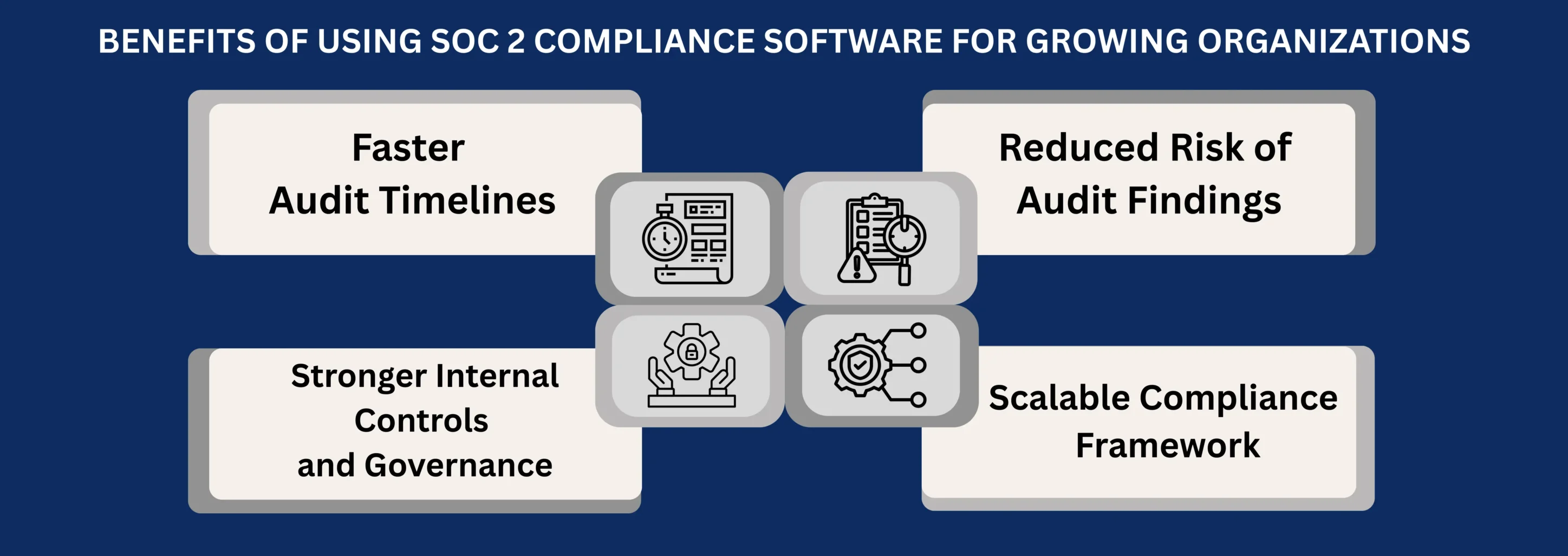
The SOC 2 examination process requires organizations to maintain documented controls, generate and preserve evidence of control operation, and sustain consistent performance across the observation period. This discipline strengthens internal control environments by establishing formal documentation requirements, evidence retention practices, and periodic control review activities that persist beyond the examination period.
Organizations that complete annual SOC 2 Type 2 examinations develop control monitoring programs capable of detecting control failures before they result in security incidents or service disruptions. The sustained attention to control operation required to maintain SOC 2 compliance reflects a structured approach to information security and service delivery management that benefits both the organization and its customer base — a standard that San Antonio organizations increasingly adopt to remain competitive in regulated enterprise markets.
- ✓Independently verified documentation of control effectiveness recognized in enterprise vendor review programs
- ✓Satisfaction of financial sector third-party risk management requirements without case-by-case security reviews
- ✓Formal attestation by a Licensed CPA Firm under AICPA attestation standards
- ✓Evaluation against Trust Services Criteria covering security, availability, processing integrity, confidentiality, and privacy
- ✓Annual examination cycle that maintains current SOC 2 attestation status for enterprise procurement qualification
- ✓Reduction in customer-initiated security questionnaire burden through a single authoritative attestation document
- ✓Support for regulatory alignment with Texas TDPSA, HIPAA, and applicable federal cybersecurity frameworks
- ✓Strengthened internal control monitoring disciplines sustained through ongoing evidence collection practices
- ✓Independent Third-Party Validation and Enterprise Procurement Recognition
- ✓Strengthened Control Environment and Ongoing Monitoring
SOC 2 Attestation Report: Structure, Validity, and Ongoing Maintenance
The SOC 2 attestation report issued by the Licensed CPA Firm following the examination comprises several structured components. The report includes the service auditor’s report containing the opinion, management’s assertion, the system description prepared by management, and the detailed control descriptions with associated test procedures and results (in Type 2 reports).
The system description covers the nature of services provided, the components of the system, the applicable Trust Services Criteria, the controls addressing each criterion, any complementary user entity controls, and any complementary subservice organization controls. For Type 2 reports, the system description also specifies the observation period — the dates during which controls were evaluated for operating effectiveness — which is typically a minimum of six months and commonly covers a twelve-month period for established SOC 2 programs.
Report Validity and Annual Examination Cycles
SOC 2 attestation reports do not carry a perpetual validity period. The SOC 2 examination covers a defined observation period, and the attestation report reflects conditions during that period only. Enterprise customers and vendor management programs treat SOC 2 reports older than twelve months as potentially stale, because changes to the organization’s control environment, infrastructure, personnel, or service offerings after the report date may not be reflected in the prior examination’s findings.
Organizations maintaining current SOC 2 certification status complete annual Type 2 examinations to produce reports with observation periods that remain within twelve months of the report date. Annual SOC 2 audits that San Antonio organizations complete sustain the currency of the attestation documentation and satisfy the ongoing assurance requirements of enterprise vendor management programs that conduct annual vendor risk reviews.
The annual SOC 2 examination cycle for established programs differs from initial Type 2 engagements in that subsequent examinations typically cover twelve-month observation periods and involve more efficient evidence collection processes as organizations develop mature evidence retention and control monitoring practices. The SOC 2 examination that San Antonio organizations undertake on an annual basis reinforces the structural discipline of the control environment, surfaces emerging risks or control gaps during the testing process, and produces updated attestation documentation that satisfies the annual vendor review cycles maintained by enterprise customers in financial services, healthcare, government technology, and other regulated sectors.
Organizations that allow SOC 2 certifications to lapse — by failing to complete annual examinations — risk disqualification from vendor programs that require current attestation documentation as a condition of continued qualification.
Nonconformity Treatment and Report Qualifications
Nonconformities identified during the SOC 2 examination are documented by the Licensed CPA Firm and assessed for their impact on the auditor’s opinion. A SOC 2 examination may result in an unqualified opinion (where controls are suitably designed and operating effectively), a qualified opinion (where specific criteria or controls are not met but the departure is not pervasive), or an adverse opinion (where controls fail to meet the applicable Trust Services Criteria in a pervasive manner).
The nature and severity of identified deficiencies determine the type of opinion issued. For San Antonio organizations pursuing SOC 2 attestation that enterprise customers rely upon, an unqualified opinion represents the standard expected outcome — the result that satisfies vendor qualification requirements without triggering additional due diligence reviews by customer procurement teams.
SOC 2 vs. Other Assurance Frameworks: Selecting the Appropriate Certification
San Antonio organizations evaluating information security assurance frameworks frequently consider SOC 2 alongside ISO/IEC 27001, HITRUST CSF, PCI DSS, and FedRAMP. Each framework serves distinct assurance purposes and is recognized differently across customer segments and regulatory contexts. SOC 2 certification is specifically designed for service organizations operating in the U.S. market and is the dominant assurance standard in enterprise technology, SaaS, cloud services, and financial technology vendor procurement.
ISO 27001 certification is an internationally recognized standard that addresses information security management system design and is required by some European and global enterprise customers in addition to — or instead of — SOC 2. HITRUST CSF is specifically relevant to healthcare organizations handling PHI and is required by certain health plan and hospital system procurement programs as a supplement to or replacement of HIPAA-only attestations.
SOC 2 Compared to ISO 27001 and HITRUST
SOC 2 differs from ISO 27001 in several important respects. SOC 2 is an attestation engagement conducted by a Licensed CPA Firm under AICPA attestation standards, producing a report that expresses an opinion on management’s assertions about control effectiveness. ISO 27001 is a certification standard administered by accredited certification bodies under ISO/IEC 17021 accreditation, producing a certificate that attests to conformance with the ISO/IEC 27001 standard for information security management systems.
SOC 2 examinations evaluate specific controls based on Trust Services Criteria and service commitments, while ISO 27001 audits assess the information security management system against the requirements of Clauses 4 through 10 and the Annex A control domains (Organizational, People, Physical, and Technological). Many San Antonio technology organizations pursuing global enterprise contracts obtain both SOC 2 certification and ISO 27001 certification to satisfy the assurance requirements of U.S. and international customers simultaneously.
HITRUST CSF certification addresses the specific assurance needs of the healthcare sector and incorporates requirements from HIPAA, NIST, ISO 27001, and other applicable frameworks into a single comprehensive control framework. Healthcare technology organizations in San Antonio that process PHI on behalf of covered entity customers may be required to obtain HITRUST certification in addition to — or instead of — a standalone SOC 2 examination.
FedRAMP authorization is required for cloud service providers serving U.S. federal government agencies and is distinct from SOC 2 in both its authorization process and the governing framework. SOC 2 compliance that San Antonio government technology providers demonstrate does not substitute for FedRAMP authorization when serving agencies that require FedRAMP-authorized cloud services, but SOC 2 attestation may complement FedRAMP documentation for commercial customer assurance purposes. The appropriate assurance framework for a San Antonio organization is determined by the specific requirements of its customer base and applicable regulatory obligations.
FAQ
▶
What is SOC 2 Certification and who issues it?
▶
What is the difference between a SOC 2 Type 1 and Type 2 report?
▶
How long does a SOC 2 Type 2 audit take?
▶
Which Trust Services Criteria are required for a SOC 2 examination?
▶
Does SOC 2 attestation establish compliance with Texas privacy laws?
▶
How long is a SOC 2 report valid?
▶
What types of San Antonio organizations typically pursue SOC 2 certification?
▶
What is the difference between SOC 2 compliant and SOC 2 certified?
SOC 1 VS SOC 2: WHICH REPORT YOUR CUSTOMERS ACTUALLY ASK FOR
If you sell SaaS or provide outsourced services, you have likely been asked for a SOC report. However, the follow-up question is rarely easy to answer…

AICPA Issues New Guidance for Peer Reviewers Evaluating SOC 2 Engagements
AICPA SOC 2 guidance has been issued to help peer reviewers identify quality risks associated with SOC 2 engagements as the use of compliance automati…
SOC 2 Certified: What Does It Mean for Your Business
For companies that handle sensitive data or run cloud-based services, the question “Can you provide your SOC 2 report?” carries enormous weight. Yet, …
Get In Touch
have a question? let us get back to you.