
ISO 27001 Certification in Boston
Executive Summary: CertPro is a Licensed CPA Firm delivering ISO 27001 certification audits for organizations across Boston. Conducting independent evaluations against ISO/IEC 27001:2022 requirements, CertPro issues certification decisions for Information Security Management Systems (ISMS) across financial services, healthcare, biotech, and technology sectors in the Greater Boston area. Whether your organization is pursuing initial ISO 27001 Certification in Boston or transitioning from the 2013 standard, CertPro provides the independent, accredited ISO 27001 audit your ISMS requires.
OUR CLIENTS










What Is ISO 27001 Certification?
ISO 27001 Certification is formal recognition that an organization’s Information Security Management System (ISMS) conforms to the requirements of ISO/IEC 27001:2022—the internationally recognized standard published by the International Organization for Standardization (ISO) and the International Electrotechnical Commission (IEC). Certification is issued by accredited third-party certification bodies following a structured audit process. That process evaluates the design, implementation, and operational effectiveness of an organization’s information security controls, producing an independently verified credential that clients, regulators, and business partners can rely upon.
The ISO/IEC 27001:2022 standard defines requirements for establishing, implementing, maintaining, and continually improving an ISMS. An ISMS is a systematic framework of policies, procedures, and controls designed to govern the confidentiality, integrity, and availability of an organization’s information assets. The standard applies to all types and sizes of organizations, regardless of industry sector or geographic location, making ISO 27001 Certification one of the most universally applicable information security credentials available globally.
ISO/IEC 27001:2022 Structure and Annex A Controls
ISO/IEC 27001:2022 is organized into ten clauses (Clauses 1 through 10) and a normative Annex A. Clauses 4 through 10 contain the mandatory requirements organizations must satisfy to achieve certification. These clauses address organizational context, leadership commitment, planning, support resources, operational activities, performance evaluation, and continual improvement. Every requirement within Clauses 4 through 10 is auditable and forms the basis of the ISO 27001 audit scope.
Annex A of ISO/IEC 27001:2022 contains 93 information security controls organized across four domains: Organizational Controls (37 controls), People Controls (8 controls), Physical Controls (14 controls), and Technological Controls (34 controls). This represents a reduction from the 114 controls across 14 domains in the previous ISO/IEC 27001:2013 version. Organizations must evaluate each Annex A control through a risk assessment process and document their decisions in a Statement of Applicability (SoA). The SoA declares which controls are applicable, which are excluded, and the justification for each decision.
The Statement of Applicability (SoA)
The Statement of Applicability is a mandatory document under ISO/IEC 27001:2022 and a critical artifact reviewed during the ISO 27001 audit. The SoA serves as the definitive record of which Annex A controls are applicable to the organization’s ISMS scope, whether each applicable control has been implemented, and the rationale for including or excluding controls based on risk assessment outcomes. Auditors use the SoA to verify alignment between the organization’s risk treatment decisions and the actual state of control implementation.
For organizations pursuing ISO 27001 Certification in Boston, the SoA must reflect the specific threat landscape and regulatory context of operating in Massachusetts. Boston-based organizations in financial services, healthcare, and technology sectors typically include controls related to access management, cryptography, supplier relationships, and incident response. This is especially relevant given the concentration of sensitive financial and patient data handled by companies across these industries. The SoA is a living document that must be reviewed and updated as the organization’s risk profile evolves.
How ISO 27001 Certification Is Issued
ISO 27001 Certification is issued by accredited certification bodies following a successful two-stage audit process. Stage 1 involves a documentation review and readiness assessment, during which auditors evaluate the organization’s ISMS documentation against the requirements of ISO/IEC 27001:2022. Stage 2 involves an on-site or remote operational audit that examines whether the documented ISMS controls are implemented and operating effectively. Upon successful completion, the certification body issues an ISO 27001 certificate valid for three years, subject to annual surveillance audits.
| ISO/IEC Version | Controls Count | Domains | Transition Deadline |
|---|---|---|---|
| ISO/IEC 27001:2013 | 114 controls | 14 domains | October 31, 2025 |
| ISO/IEC 27001:2022 | 93 controls | 4 domains | Current standard |

ISO 27001 Certification in Boston: Why Boston Organizations Pursue Certification
Boston is one of the United States’ most concentrated hubs for financial services, life sciences, healthcare, biotechnology, and technology innovation. The Greater Boston metropolitan area is home to major financial institutions, world-leading academic medical centers, global biotech companies, and a dense ecosystem of technology firms. All of these organizations handle substantial volumes of sensitive personal, financial, and intellectual property data. This concentration of high-value information assets makes ISO 27001 Certification in Boston a strategic priority for organizations seeking to demonstrate information security competence to clients, regulators, and business partners.
Massachusetts operates under a robust state-level data protection framework, including the Massachusetts Data Security Law (201 CMR 17.00), which mandates comprehensive written information security programs for organizations that handle personal information of Massachusetts residents. ISO 27001 compliance that Boston organizations achieve through certification directly supports conformance with 201 CMR 17.00, as well as federal regulations such as HIPAA for healthcare entities and the Gramm-Leach-Bliley Act (GLBA) for financial institutions. ISO 27001 Certification provides a structured, documented evidence base that demonstrates regulatory alignment across all of these frameworks simultaneously.
ISO 27001 Boston Financial Services
Boston’s financial services sector—encompassing asset management firms, insurance companies, investment banks, and fintech startups concentrated along the Financial District and Seaport Boulevard—faces stringent information security requirements from multiple regulatory bodies. ISO 27001 Boston financial services organizations use certification as an objective demonstration of ISMS effectiveness to the SEC, FINRA, and state banking regulators. ISO 27001 compliance that Boston fintech companies achieve is increasingly required as a contractual prerequisite by institutional clients and enterprise counterparties who mandate third-party security certifications as part of vendor due diligence processes.
Financial services organizations in Boston that achieve ISO 27001 Certification demonstrate to clients and regulators that their information security controls have been independently evaluated against an internationally recognized standard. This is particularly relevant for Boston-based firms managing pension funds, endowments, and institutional assets, where fiduciary duties extend to the protection of client data. An ISO 27001 certificate issued by an accredited certification body provides auditable, third-party-verified evidence of control effectiveness. That evidence satisfies client audit questionnaires, procurement security reviews, and regulatory examinations alike.
ISO 27001 Certification Boston Healthcare
Boston’s healthcare sector includes world-renowned academic medical centers such as Massachusetts General Hospital, Brigham and Women’s Hospital, and Boston Children’s Hospital, along with a dense network of research hospitals, specialty clinics, and digital health technology companies. ISO 27001 Certification that Boston healthcare organizations obtain provides a systematic framework for protecting protected health information (PHI) and electronic health records (EHR) beyond what HIPAA alone prescribes. While HIPAA establishes minimum security requirements, ISO 27001 Certification delivers a more comprehensive, risk-based approach that covers the full scope of an organization’s data assets.
Healthcare technology companies and medical device manufacturers operating in the Boston area increasingly seek ISO 27001 Certification in Boston to meet the requirements of hospital procurement departments and health system security committees. Major Boston-area health systems require technology vendors to demonstrate ISO 27001 compliance as a condition of contract award—particularly for software solutions that access or process patient data. ISO 27001 audit findings provide health system security officers with documented assurance regarding vendor ISMS controls, significantly reducing the burden of individual vendor security assessments.
ISO 27001 Boston Biotech Companies and Technology Firms
ISO 27001 Boston biotech companies operating in the Kendall Square and Cambridge biotech corridor use certification to protect proprietary research data, clinical trial information, and intellectual property representing billions of dollars in R&D investment. Biotech organizations that conduct clinical trials or handle genomic data have specific obligations under 21 CFR Part 11 (FDA electronic records regulations) and GDPR when processing data from European research subjects. ISO 27001 Certification provides a documented control framework that maps to these regulatory obligations and supports the overall data governance posture required by biopharmaceutical regulators.
ISO 27001 Certification that Boston technology firms achieve is a key differentiator in the highly competitive enterprise software, cloud services, and cybersecurity markets. Boston’s Route 128 technology corridor and the downtown innovation district host hundreds of technology companies serving enterprise clients that mandate ISO 27001 as a minimum security credential for cloud and SaaS providers. For Boston companies in the technology sector, ISO 27001 Certification signals to enterprise buyers that the vendor’s information security program has been independently evaluated and found to meet the requirements of the world’s most widely adopted information security management standard.
Requirements for ISO 27001 Certification
ISO 27001 Certification requires organizations to satisfy all mandatory requirements specified in Clauses 4 through 10 of ISO/IEC 27001:2022. These requirements are non-negotiable—an organization cannot achieve certification if any mandatory clause requirement remains unfulfilled. The requirements establish a comprehensive framework governing how organizations must identify, assess, treat, and monitor information security risks within a defined ISMS scope. ISO 27001 compliance is therefore not a point-in-time achievement but an ongoing operational discipline demonstrated through documented evidence reviewed during each ISO 27001 audit.
ISO/IEC 27001:2022 mandates specific documented information that organizations must produce and maintain as evidence of ISMS operation. Required documentation includes the ISMS scope statement, information security policy, risk assessment process and results, risk treatment plan, Statement of Applicability, information security objectives, competence records, operational planning documentation, monitoring and measurement results, internal audit program and results, management review records, and records of nonconformities and corrective actions. Each document must be controlled, versioned, and readily accessible for review during the ISO 27001 audit.
For Boston organizations, documentation must reflect the specific regulatory and contractual obligations applicable to their operating environment. Financial services firms must ensure their ISMS documentation addresses SEC cybersecurity disclosure rules and GLBA Safeguards Rule requirements. Healthcare organizations must align ISMS documentation with HIPAA Security Rule administrative, physical, and technical safeguard categories. Technology companies handling European personal data must incorporate GDPR Article 32 technical and organizational measures into their ISMS documentation. ISO 27001 compliance that Boston organizations achieve is significantly strengthened when documentation explicitly cross-references applicable legal and regulatory requirements.
ISO/IEC 27001:2022 requires organizations to establish and apply a formal information security risk assessment process. This process identifies risks associated with the loss of confidentiality, integrity, or availability of information within the ISMS scope. The risk assessment must produce consistent, valid, and comparable results and must assign risk owners accountable for each identified risk. Organizations must evaluate both the likelihood and potential consequences of identified risks using a defined risk criteria framework that establishes acceptable risk levels and risk appetite thresholds.
Following risk assessment, organizations must produce a risk treatment plan specifying the risk treatment options selected for each identified risk. ISO/IEC 27001:2022 recognizes four risk treatment options: risk modification (implementing controls), risk avoidance (eliminating the risk source), risk sharing (transferring risk to insurers or third parties), and risk retention (accepting the risk within defined tolerance levels). The selection of Annex A controls as risk treatment measures must be documented in the Statement of Applicability and linked to risk assessment results. This linkage is a primary area examined during any ISO 27001 audit that Boston organizations undergo.
ISO/IEC 27001:2022 Clause 5 establishes mandatory requirements for leadership commitment and organizational roles. Top management must demonstrate active engagement with the ISMS by establishing an information security policy, ensuring ISMS objectives align with organizational strategy, directing and supporting relevant roles, and integrating information security requirements into organizational processes. Evidence of top management commitment is reviewed during the ISO 27001 audit and evaluated through documentation, interview evidence, and management review records.
- ✓Defined ISMS scope covering all relevant assets, processes, and organizational units
- ✓Documented information security policy approved by top management
- ✓Completed information security risk assessment with documented results
- ✓Risk treatment plan with Annex A control selection justified in the Statement of Applicability
- ✓Defined information security objectives with measurement criteria and tracking
- ✓Documented competence and awareness records for personnel with ISMS roles
- ✓Operational controls addressing identified risks within the ISMS scope
- ✓Internal audit program with completed audit reports and corrective action records
- ✓Management review conducted at planned intervals with documented outputs
- ✓Nonconformity and corrective action procedures with evidence of implementation
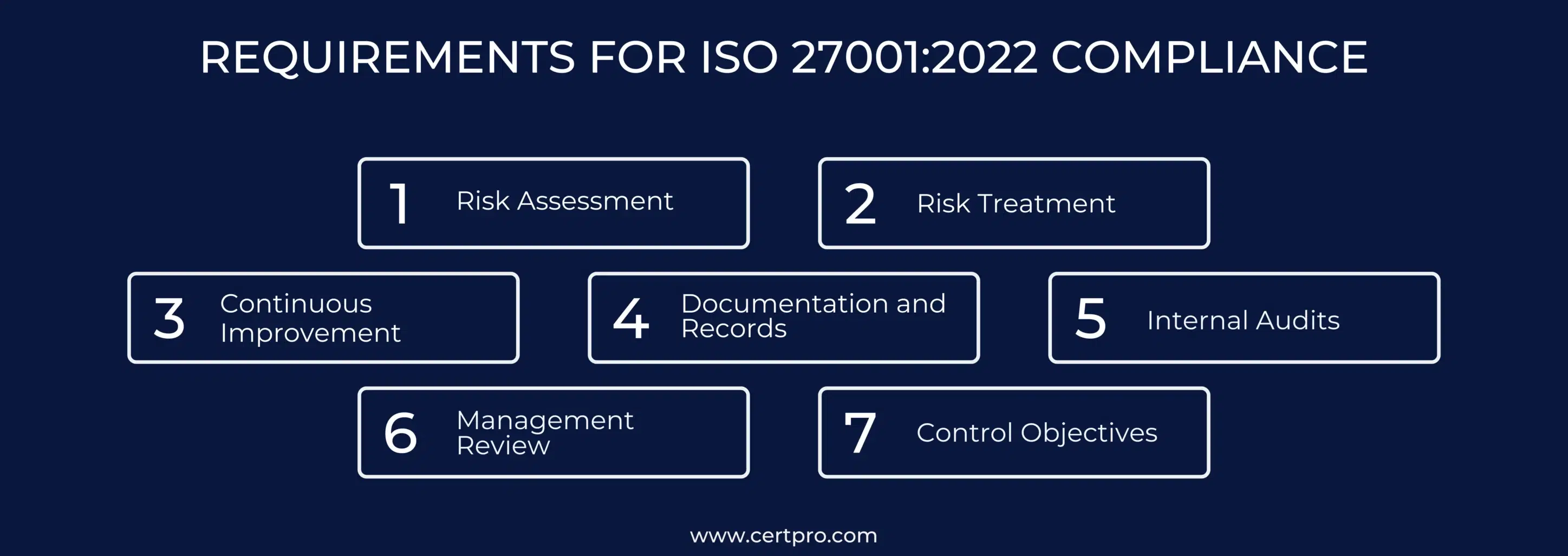
- ✓Documentation Requirements
- ✓Risk Assessment and Treatment Requirements
- ✓Leadership and Organizational Requirements
Steps for Obtaining ISO 27001 Certification in Boston
Obtaining ISO 27001 Certification in Boston involves a structured sequence of activities that organizations must complete before and during the certification audit. The process follows a defined lifecycle that begins with scope definition and concludes with the issuance of a certification decision by an accredited certification body. Organizations that understand the full sequence of required activities are better positioned to manage certification timelines and resource requirements effectively.
The first step in the ISO 27001 certification process is defining the ISMS scope. ISO/IEC 27001:2022 Clause 4.3 requires organizations to determine the boundaries and applicability of the ISMS, considering internal and external issues, the needs and expectations of interested parties, and the interfaces and dependencies between organizational activities and those performed by external parties. The scope definition determines which assets, processes, locations, and organizational units fall within the certification boundary—and directly influences the audit program scope.
For Boston-based organizations, scope definition must account for the geographic and operational complexity of a major metropolitan area with distributed offices, remote workforce arrangements, and cloud infrastructure hosted in data centers across New England and potentially other regions. Organizations with offices in the Boston Financial District, Cambridge research campuses, or suburban technology parks must clearly define whether each location falls within or outside the ISMS scope. Data center dependencies—including co-location facilities and cloud service provider arrangements—must be identified as part of the context analysis that precedes formal ISMS scope documentation.
Following scope definition, organizations must execute their formal information security risk assessment. This involves identifying all information assets within the ISMS scope, identifying threats and vulnerabilities applicable to each asset, evaluating the likelihood and impact of risk scenarios, and calculating risk levels against defined risk criteria. The risk assessment output must be documented in sufficient detail to demonstrate the analytical basis for control selection decisions that will be reviewed during the ISO 27001 audit.
Control selection from Annex A must follow directly from risk treatment decisions. Organizations select applicable controls, document their applicability or exclusion in the Statement of Applicability, and implement selected controls in accordance with documented procedures. Each excluded Annex A control must carry a documented justification supported by risk assessment evidence. The completeness and defensibility of control selection decisions is a primary focus during ISO 27001 certification reviews in Boston, as auditors examine the logical chain from identified risk to selected treatment to implemented control.
ISMS implementation requires that all controls documented in the risk treatment plan are operationalized within the organization. Implementation involves establishing policies and procedures, configuring technical controls, training personnel, establishing monitoring and measurement activities, and creating the operational infrastructure necessary for ongoing ISMS maintenance. Organizations must generate and retain evidence that controls are functioning as designed. This operational evidence forms the primary audit population sampled during the Stage 2 certification audit.
ISO/IEC 27001:2022 Clause 9.2 requires organizations to conduct internal ISMS audits at planned intervals to confirm whether the ISMS conforms to requirements and is effectively implemented. Internal audits must be planned, executed, and reported in accordance with a documented audit program. Internal auditors must be selected to ensure objectivity and impartiality. Internal audit results must be reported to top management and used to identify improvement opportunities before the formal ISO 27001 certification audit is conducted.
Management review, required under ISO/IEC 27001:2022 Clause 9.3, is a mandatory top-level evaluation of ISMS performance conducted at planned intervals. Management review inputs include internal audit results, risk assessment outcomes, performance against information security objectives, feedback from interested parties, monitoring and measurement results, and the status of corrective actions. Management review outputs must include decisions on continual improvement opportunities and any changes needed in the ISMS. Completed management review records are required artifacts in the ISO 27001 certification audit evidence package.
The formal ISO 27001 certification audit is conducted by an accredited certification body in two stages. Stage 1 is a documentation review during which auditors examine the ISMS documentation package—including the scope statement, information security policy, risk assessment, risk treatment plan, Statement of Applicability, and key procedures. Stage 1 concludes with a report identifying any significant deficiencies that must be resolved before Stage 2, and confirms the organization’s readiness for the operational audit.
Stage 2 of the ISO 27001 audit involves examination of the ISMS in operation, including sampling of control evidence, interviews with personnel, observation of processes, and testing of technical controls. Auditors issue findings categorized as major nonconformities (which prevent certification until resolved), minor nonconformities (which must be addressed within an agreed timeframe), or observations (which recommend improvement but do not affect the certification decision). Following successful completion of Stage 2 and resolution of any major nonconformities, the certification body issues an ISO 27001 certificate valid for three years.
- Define ISMS scope, boundaries, and organizational context under Clause 4
- Execute information security risk assessment and document results
- Develop risk treatment plan and complete Statement of Applicability
- Implement Annex A controls and establish operational procedures
- Train personnel and establish competence and awareness evidence
- Conduct monitoring, measurement, and performance evaluation activities
- Execute internal ISMS audit program and document results
- Conduct management review and document outputs
- Submit to Stage 1 certification audit (documentation review)
- Complete Stage 2 certification audit (operational assessment)
- Address any nonconformities identified during the audit
- Receive ISO 27001 certificate from accredited certification body

- ✓Stage 1: ISMS Scope Definition and Context Analysis
- ✓Stage 2: Risk Assessment Execution and Control Selection
- ✓Stage 3: ISMS Implementation and Operational Evidence Generation
- ✓Stage 4: Internal Audit and Management Review
- ✓Stage 5: Certification Audit and Certification Decision
ISO 27001 Audit: Structure, Scope, and Evaluation Activities
The ISO 27001 audit is the core evaluation mechanism through which an accredited certification body determines whether an organization’s ISMS satisfies the requirements of ISO/IEC 27001:2022. The audit process is governed by ISO 19011 (Guidelines for Auditing Management Systems) and the specific audit program requirements of the accredited certification body conducting the assessment. Understanding the structure and scope of the ISO 27001 audit is essential for Boston organizations preparing to undergo ISO 27001 Certification in Boston for the first time or through a recertification cycle.
Audit Program Determination and Planning
Prior to the ISO 27001 audit, the certification body conducts an audit program determination that establishes the scope, objectives, criteria, and timing of the audit. The audit program is based on the defined ISMS scope, the organization’s size and complexity, the number and nature of information assets within scope, the results of previous audits (for surveillance and recertification audits), and any specific risk areas identified through preliminary information review. The audit plan produced by the lead auditor specifies audit activities, assigned auditors, time allocations, and the sequence of evaluation activities.
For ISO 27001 audit engagements in Boston, the audit program typically addresses Boston-specific operational considerations such as the use of cloud infrastructure hosted in New England data centers, regulatory obligations under Massachusetts state law, and the information security requirements applicable to the organization’s specific industry sector. Auditors with sector-specific knowledge evaluate control effectiveness against both the generic requirements of ISO/IEC 27001:2022 and the risk environment particular to Boston-based organizations in financial services, healthcare, or technology industries.
Control Testing and Evidence Evaluation
During Stage 2 of the ISO 27001 audit, auditors test the operational effectiveness of implemented controls by examining documentary evidence, conducting personnel interviews, observing operational processes, and in some cases performing technical testing of security configurations. Control testing focuses on verifying that controls documented in the Statement of Applicability are functioning as designed and that evidence generated by control operation is consistent with ISMS documentation. Auditors sample from the population of control evidence to form conclusions about systemic ISMS performance rather than testing every individual control instance.
Key control areas typically examined during the ISO 27001 audit include access control management, cryptographic key management, physical and environmental security, supplier and third-party security management, incident detection and response, business continuity and availability controls, and information security awareness and training. For Boston organizations operating in regulated industries, auditors also evaluate the adequacy of controls addressing specific regulatory requirements—including data retention and destruction controls for organizations subject to Massachusetts data security regulations, and HIPAA breach notification requirements for healthcare entities.
Nonconformity Review and Certification Decision
Nonconformities identified during the ISO 27001 audit are classified as major or minor based on the severity and systemic nature of the finding. A major nonconformity indicates a fundamental failure of the ISMS to meet a mandatory requirement of ISO/IEC 27001:2022, the absence of an entire documented process, or evidence that implemented controls are systematically ineffective. Major nonconformities must be resolved and verified by the certification body before a certification decision can be issued. Minor nonconformities represent isolated failures or partial gaps that do not undermine overall ISMS integrity and are addressed through corrective actions within an agreed timeframe following certification.
The certification decision is made by a designated reviewer within the certification body who was not part of the audit team, ensuring independence between the audit and certification decision functions. The reviewer evaluates the complete audit file—including Stage 1 and Stage 2 reports, nonconformity records, and corrective action evidence—before issuing the certification decision. Upon a positive certification decision, the organization receives an ISO 27001 certificate specifying the certified ISMS scope, the standard version, the certification body’s identity and accreditation reference, and the certificate validity period.
Surveillance Audits and Recertification
ISO 27001 Certification is maintained through annual surveillance audits conducted in years one and two of the three-year certification cycle, followed by a recertification audit in year three that re-examines the full ISMS against all ISO/IEC 27001:2022 requirements. Surveillance audits focus on verifying the continued operation and improvement of the ISMS, examining corrective action completion, evaluating ISMS performance against objectives, and assessing the organization’s response to significant changes in its information security risk environment. Organizations that fail to maintain ISO 27001 compliance between surveillance audits risk suspension or withdrawal of their certification.
ISO 27001 Cost in Boston: Factors and Typical Ranges
ISO 27001 cost is a critical consideration for Boston organizations evaluating the certification investment. The total ISO 27001 cost that Boston organizations incur encompasses multiple categories: internal resource investment, certification body audit fees, and ongoing maintenance costs across the three-year certification cycle. ISO 27001 cost varies significantly based on organizational size, ISMS scope complexity, the number of physical locations included within scope, and the specific industry sector and regulatory context of the organization.
Certification Body Audit Fees
Certification body audit fees for ISO 27001 Certification in Boston are calculated based on the number of audit person-days required. That figure is determined by the organization’s size (measured in employee count and contractor scope), the complexity of the ISMS, the number of in-scope locations, and the industry sector risk profile. Accredited certification bodies typically use IAF Mandatory Document MD5 (Duration of QMS and EMS Audits) as a basis for calculating audit duration, with adjustments for ISMS-specific complexity factors.
For a small Boston technology firm with fewer than 50 employees and a focused ISMS scope, combined Stage 1 and Stage 2 audit fees from a reputable accredited certification body typically range from USD 8,000 to USD 15,000. Mid-sized organizations with 100–500 employees and more complex ISMS scopes can expect combined audit fees in the range of USD 15,000 to USD 35,000. Large Boston enterprises with global operations, multiple in-scope locations, and complex supply chain arrangements may face audit fees exceeding USD 50,000 for the initial certification audit. Annual surveillance audit fees are typically 30–40% of the initial certification audit cost.
Internal Resource and Implementation Costs
Beyond certification body fees, ISO 27001 cost includes the internal staff time invested in ISMS documentation development, risk assessment execution, control implementation, internal audit activities, and management review preparation. For Boston organizations, internal resource costs are influenced by local labor market conditions. Boston’s competitive technology and financial services labor markets command above-national-average salaries for information security professionals, which increases the internal cost burden for organizations that assign dedicated personnel to the ISMS program.
Technology investments required to implement Annex A controls represent another significant component of ISO 27001 cost. Organizations that lack mature identity and access management systems, security information and event management (SIEM) tools, vulnerability management platforms, or data loss prevention technologies may need to invest in these capabilities as part of ISMS implementation. Boston organizations operating in regulated sectors often find that ISO 27001 control investments are partially offset by the shared compliance value these technologies provide for HIPAA, GLBA, and Massachusetts data security obligations—distributing cost across multiple compliance programs.
Total Cost of Ownership Across the Certification Cycle
| Organization Size | Stage 1 + Stage 2 Audit Fees | Annual Surveillance Fees | Estimated 3-Year Total (Audit Fees Only) |
|---|---|---|---|
| Small (<50 employees) | $8,000 – $15,000 | $3,000 – $6,000 | $14,000 – $27,000 |
| Mid-size (100–500 employees) | $15,000 – $35,000 | $6,000 – $14,000 | $27,000 – $63,000 |
| Large (500+ employees, multi-site) | $35,000 – $80,000+ | $14,000 – $32,000+ | $63,000 – $144,000+ |
The total cost of ownership for ISO 27001 Certification over a three-year cycle includes initial certification audit fees, two surveillance audit fees, internal personnel time, technology investments, and training costs. Boston organizations should evaluate ISO 27001 cost in the context of the commercial value generated by certification: reduced vendor security questionnaire burden, qualification for enterprise procurement programs, demonstrated regulatory alignment, and potential cyber insurance premium reductions that accredited ISMS certification can support. For many Boston technology and financial services firms, the return on ISO 27001 investment is realized within the first major contract secured from a client that mandated ISO 27001 Certification in Boston as a procurement requirement.
Benefits of ISO 27001 Certification for Boston Organizations
ISO 27001 Certification delivers measurable, documented benefits across multiple dimensions of organizational performance for Boston companies operating in competitive, regulated environments. The benefits extend beyond information security risk reduction to encompass commercial advantage, regulatory standing, operational efficiency, and organizational culture. Boston organizations in financial services, healthcare, biotech, and technology sectors report significant value realization from ISO 27001 Certification across each of these dimensions.
The primary security benefit of ISO 27001 Certification is the systematic identification, assessment, and treatment of information security risks across the full ISMS scope. Organizations that implement the ISO/IEC 27001:2022 framework establish formal processes for threat identification, vulnerability management, and risk-based control selection—replacing ad hoc, reactive security approaches. The risk assessment requirement under Clause 6.1 ensures that information security investment is directed toward the risks with the greatest potential impact on organizational information assets, improving the efficiency and effectiveness of security spend.
Boston organizations in high-threat sectors benefit directly from the structured threat modeling and risk quantification activities required by ISO 27001 compliance. Financial services firms facing advanced persistent threat actors, healthcare organizations targeted by ransomware groups, and biotech companies subject to industrial espionage risks all benefit from the systematic risk identification and treatment disciplines embedded in the ISO/IEC 27001:2022 framework. The standard’s requirement for continual improvement under Clause 10 ensures that the ISMS adapts to the evolving threat landscape rather than becoming a static compliance exercise.
ISO 27001 compliance provides Boston organizations with a structured framework for mapping and satisfying obligations under multiple applicable legal and regulatory requirements. The standard’s requirement under Clause 4.2 to identify and address the needs and expectations of interested parties explicitly encompasses legal and regulatory obligations. Organizations that implement ISO 27001 compliance programs systematically document the mapping between their ISMS controls and applicable regulatory requirements—creating an audit-ready evidence base that supports regulatory examinations and enforcement inquiries.
For Boston-based organizations, ISO 27001 Certification supports compliance with Massachusetts 201 CMR 17.00 (which requires written information security programs), HIPAA Security Rule requirements for healthcare entities, GLBA Safeguards Rule obligations for financial institutions, SEC cybersecurity risk management disclosure requirements, and GDPR obligations for organizations processing personal data of EU residents. While ISO 27001 Certification does not constitute legal compliance with any specific regulation, it provides the documented control framework and evidence infrastructure that demonstrates good-faith compliance efforts to regulators and enforcement authorities.
ISO 27001 Certification for Boston companies generates direct commercial value by enabling access to enterprise procurement programs, government contracting opportunities, and international markets that require ISO 27001 Certification as a minimum security credential. Many of Boston’s largest employers and public institutions—including financial institutions, hospital networks, and universities—require ISO 27001 Certification from technology vendors and service providers as a standard procurement condition. Organizations without ISO 27001 Certification are systematically excluded from these opportunities, regardless of their actual security capabilities.
The ISO 27001 certificate also functions as a client-facing trust signal that differentiates certified organizations in competitive sales processes. When Boston technology companies, managed service providers, or SaaS vendors compete for enterprise contracts, ISO 27001 Certification reduces the client’s security due diligence burden by providing a standardized, third-party-verified assessment of information security controls. This reduces sales cycle length, decreases the volume and complexity of security questionnaires required during procurement, and gives client information security officers a documented basis to approve vendor engagements without conducting independent security assessments.
- ✓Systematic reduction of information security risk through structured risk assessment and treatment
- ✓Independent, third-party verification of ISMS control effectiveness through the ISO 27001 audit
- ✓Demonstrated regulatory alignment with Massachusetts 201 CMR 17.00, HIPAA, GLBA, and GDPR
- ✓Commercial qualification for enterprise procurement programs requiring ISO 27001 Certification
- ✓Reduced vendor security questionnaire burden through standardized certification evidence
- ✓Enhanced organizational security culture through awareness and competence requirements
- ✓Structured incident response capability through Annex A incident management controls
- ✓Improved business continuity and operational resilience through ISMS continuity controls
- ✓Potential cyber insurance premium reductions for certified organizations with documented ISMS
- ✓Competitive differentiation in Boston’s financial services, healthcare, and technology markets
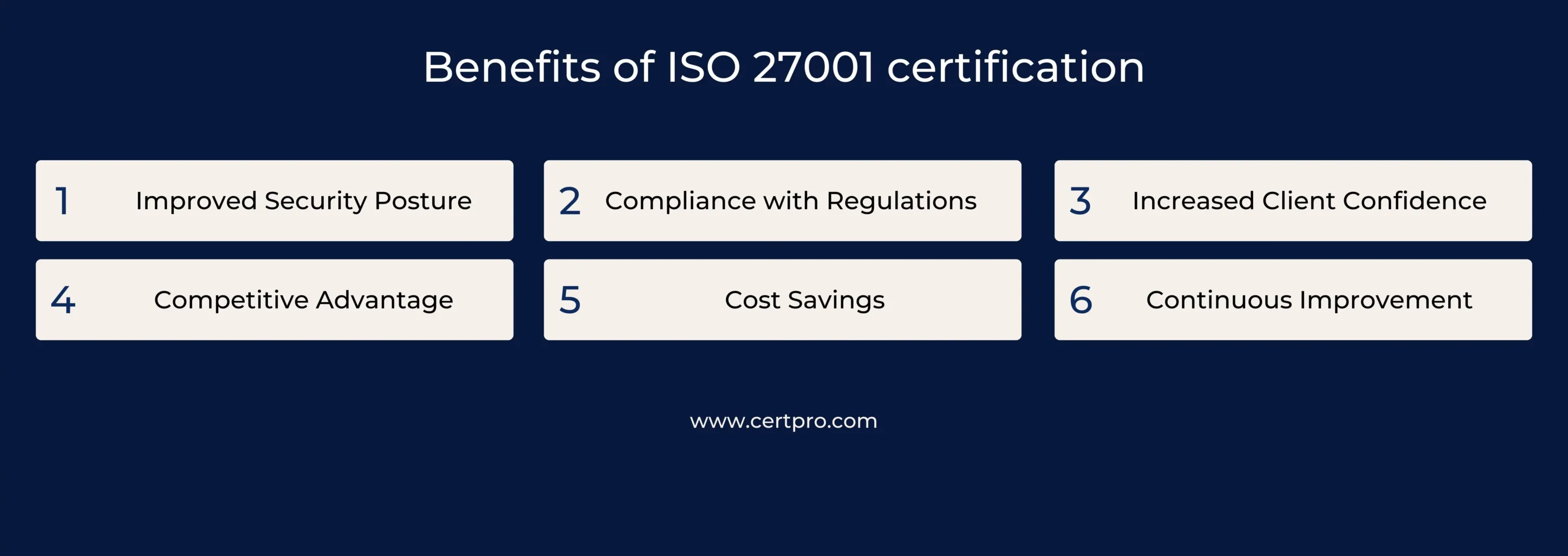
- ✓Risk Reduction and Security Posture Improvement
- ✓Regulatory Compliance and Legal Alignment
- ✓Commercial and Competitive Advantages
ISO 27001 Compliance: Ongoing Obligations and Continual Improvement
ISO 27001 compliance is not a one-time certification achievement but an ongoing operational commitment that requires continuous attention to ISMS performance, risk management, and control effectiveness. ISO/IEC 27001:2022 Clause 10 establishes mandatory requirements for continual improvement, obligating certified organizations to systematically enhance the suitability, adequacy, and effectiveness of their ISMS over time. Organizations that treat ISO 27001 compliance as a continuous operational discipline—rather than a periodic certification exercise—derive substantially greater security and commercial value from their ISMS investment.
Performance Monitoring and Measurement Requirements
ISO/IEC 27001:2022 Clause 9.1 requires organizations to evaluate the performance and effectiveness of the ISMS through defined monitoring, measurement, analysis, and evaluation activities. Organizations must determine what needs to be monitored and measured, the methods applicable for producing valid results, when monitoring and measurement shall be performed, when results shall be analyzed and evaluated, and who is responsible for performing these activities. Performance metrics must be documented and reviewed during management review, providing top management with objective evidence of ISMS effectiveness.
Boston organizations implementing ISO 27001 compliance programs typically establish ISMS performance dashboards tracking metrics such as security incident frequency and severity, vulnerability remediation cycle times, access review completion rates, security awareness training completion percentages, and audit finding closure rates. These metrics provide quantitative evidence of ISMS effectiveness for top management, board-level risk committees, and regulatory examiners. Structured performance measurement data also supports annual ISO 27001 audit engagements in Boston by providing a documented history of ISMS performance against defined objectives.
Nonconformity Management and Corrective Action
ISO/IEC 27001:2022 Clause 10.1 establishes requirements for nonconformity management and corrective action. When a nonconformity occurs—whether identified through internal audit, surveillance audit, incident investigation, or monitoring activities—the organization must react by taking action to control and correct it, evaluate the need to eliminate underlying causes and prevent recurrence, implement corrective actions, review their effectiveness, and update risks and opportunities as necessary. All nonconformity and corrective action activities must be documented as retained evidence of ISO 27001 compliance.
ISMS Transition Requirements: ISO/IEC 27001:2022 Deadline
Organizations currently certified to ISO/IEC 27001:2013 must transition to ISO/IEC 27001:2022 by October 31, 2025, as mandated by the International Accreditation Forum (IAF). After this date, certificates issued under the 2013 version will no longer be recognized as valid by accreditation bodies. Boston organizations that have not yet transitioned must conduct a gap analysis comparing their current ISMS against the revised requirements and new Annex A controls introduced in the 2022 version, update their Statement of Applicability to address the restructured 93-control framework, and undergo a transition audit to confirm conformance before the deadline.
The transition from ISO/IEC 27001:2013 to ISO/IEC 27001:2022 introduces 11 new controls that organizations must evaluate for applicability to their ISMS scope. New controls include threat intelligence (5.7), information security for use of cloud services (5.23), ICT readiness for business continuity (5.30), physical security monitoring (7.4), configuration management (8.9), information deletion (8.10), data masking (8.11), data leakage prevention (8.12), monitoring activities (8.16), web filtering (8.23), and secure coding (8.28). Boston organizations in cloud-dependent sectors must particularly evaluate the applicability of the cloud services and configuration management controls, given the widespread adoption of cloud infrastructure across the region’s technology ecosystem.
CertPro’s ISO 27001 Certification and Auditing Services in Boston
CertPro is a Licensed CPA Firm that conducts ISO 27001 certification audits for organizations across Boston and the Greater New England region. As an accredited certification body, CertPro evaluates organizations’ Information Security Management Systems against the requirements of ISO/IEC 27001:2022, issuing certification decisions based on independent, evidence-based audit findings. CertPro’s ISO 27001 audit engagements in Boston are conducted by qualified lead auditors with sector-specific experience in financial services, healthcare, biotechnology, and technology—the industries most central to Boston’s economic environment.
Audit Scope and Methodology
CertPro’s ISO 27001 audit methodology follows the two-stage certification structure defined by ISO 17021-1 (Requirements for bodies providing audit and certification of management systems) and ISO 17021-3 (Competence requirements for auditing and certification of information security management systems). Stage 1 documentation reviews are conducted as structured assessments of ISMS documentation packages against all mandatory requirements of ISO/IEC 27001:2022 Clauses 4 through 10 and applicable Annex A control documentation. Stage 2 operational audits involve on-site or remote evidence examination, personnel interviews, and technical control verification activities tailored to the specific ISMS scope.
CertPro’s lead auditors for ISO 27001 Certification in Boston maintain relevant professional credentials and documented competence in information security management system auditing. Audit teams are composed to ensure the necessary combination of information security domain knowledge, industry sector experience, and audit methodology competence required by ISO 17021-3. For Boston-based organizations in specialized sectors, CertPro assigns audit team members with demonstrable knowledge of sector-specific regulatory frameworks, ensuring that audit findings reflect both ISO/IEC 27001:2022 requirements and the applicable regulatory context of the organization’s industry.
Certification Decision Independence and Impartiality
CertPro maintains strict separation between audit activities and certification decision-making, in conformance with ISO 17021-1 impartiality requirements. The certification decision for each ISO 27001 audit engagement in Boston is made by a qualified reviewer who was not a member of the audit team. This ensures the certification outcome is an independent evaluation of the audit evidence rather than a validation of the audit team’s work. This structural separation protects the integrity of the certification decision and provides certified organizations with assurance that their ISO 27001 certificate reflects a genuinely independent assessment of ISMS conformance.
CertPro’s impartiality policy prohibits the provision of any consulting, advisory, or implementation services to organizations undergoing ISO 27001 certification audit. This prohibition ensures that CertPro’s certification decisions are made without commercial conflicts of interest that could compromise the objectivity of audit findings. Organizations seeking ISO 27001 Certification in Boston from CertPro receive an independent evaluation of their existing ISMS against ISO/IEC 27001:2022 requirements, with no financial interest on CertPro’s part in the outcome of the audit finding.
ISO 27001 Consulting Boston: What CertPro Does Not Provide
As a Licensed CPA Firm operating as an accredited certification body, CertPro does not provide ISO 27001 consulting Boston services that would create a conflict of interest with its certification audit function. ISO 27001 consulting services in Boston—involving ISMS design, documentation development, risk assessment facilitation, or control implementation—are provided by independent consulting firms and are explicitly separated from the certification audit function. Organizations seeking ISO 27001 consulting in Boston to prepare their ISMS for certification should engage qualified independent consultants, then engage CertPro or another accredited certification body to conduct the independent ISO 27001 certification audit.
ISO 27001 Certification Across Boston Industry Sectors
ISO 27001 Certification in Boston is pursued across a diverse range of industry sectors, each with specific information security risk profiles, regulatory obligations, and certification objectives. Boston’s economy is characterized by high concentrations of knowledge-intensive industries that handle sensitive personal, financial, and proprietary information. This makes ISO 27001 Certification particularly relevant across the region’s major employment sectors. Understanding sector-specific drivers and considerations enables Boston organizations to tailor their ISMS scope and control selection to their specific operational context.
Financial Services and Fintech
ISO 27001 compliance that Boston fintech companies and established financial institutions achieve positions them to meet the increasingly stringent information security requirements of financial regulators and institutional counterparties. The Massachusetts Division of Banks, the Federal Reserve Bank of Boston, and federal financial regulators increasingly reference ISO 27001 as a recognized information security management standard in examination guidance. Boston-area fintech startups that achieve ISO 27001 Certification accelerate enterprise customer acquisition by reducing the vendor security assessment burden for financial institution clients subject to third-party risk management requirements under OCC, FDIC, and Federal Reserve supervisory guidance.
Asset management firms, hedge funds, and private equity organizations in Boston’s investment management community use ISO 27001 Certification to demonstrate information security competence to institutional investors, pension fund allocators, and sovereign wealth fund clients who conduct operational due diligence assessments that include information security evaluations. ISO 27001 Certification provides a standardized, internationally recognized credential that satisfies ODD requirements across global investor bases—reducing the need for individual client security assessments and streamlining the capital-raising process for certified Boston investment managers.
Life Sciences and Pharmaceutical Research
ISO 27001 Boston biotech companies and pharmaceutical research organizations protect intellectual property representing billions of dollars in R&D investment through ISMS controls addressing data classification, access management, and third-party research collaboration security. Cambridge’s Kendall Square—home to global pharmaceutical companies, venture-backed biotech startups, and university spin-offs—has adopted ISO 27001 Certification as a recognized standard for protecting proprietary compound libraries, clinical trial data, and genomic research databases from competitive intelligence threats and cyber espionage activities.
Life sciences companies pursuing FDA approval for digital therapeutics, Software as a Medical Device (SaMD), or clinical decision support tools increasingly find that ISO 27001 Certification supports FDA cybersecurity guidance compliance requirements. FDA’s 2023 cybersecurity guidance for medical devices references international standards including ISO/IEC 27001 as frameworks for establishing software security practices. Boston medical device companies and digital health organizations that hold ISO 27001 Certification are positioned to demonstrate to FDA reviewers that their information security management practices conform to internationally recognized standards, supporting pre-market submission reviews.
Higher Education and Research Institutions
Boston’s exceptional concentration of research universities and academic medical centers creates a unique information security environment characterized by open academic culture, complex multi-stakeholder data sharing arrangements, and obligations under federal research security programs. Institutions managing federally funded research subject to requirements under NIST SP 800-171 (Protecting Controlled Unclassified Information), CMMC (Cybersecurity Maturity Model Certification), or NSF and NIH research security policies find that ISO 27001 Certification provides a documented, auditable foundation for demonstrating information security program maturity to federal funding agencies.
ISO 27001 and Related Frameworks: Understanding the Relationship
ISO 27001 Certification exists within a broader ecosystem of information security and privacy frameworks, regulations, and standards that Boston organizations must navigate. Understanding how ISO 27001 relates to other frameworks enables organizations to leverage certification investments across multiple compliance programs and avoid duplication of effort in their information security governance activities.
ISO 27001 and SOC 2: Key Differences
ISO 27001 Certification and SOC 2 attestation are the two most widely recognized information security assurance frameworks for technology service providers in the US market. ISO 27001 Certification is an international standard issued by accredited certification bodies, valid for three years with annual surveillance audits, and evaluated against the prescriptive requirements of ISO/IEC 27001:2022. SOC 2 is a US-based attestation framework governed by the AICPA, based on Trust Services Criteria, and typically covering a 12-month examination period. ISO 27001 is more commonly required by international clients and government procurement programs, while SOC 2 is more commonly required by US enterprise clients in technology procurement processes.
Boston technology companies serving both domestic and international clients frequently pursue both ISO 27001 Certification and SOC 2 attestation to satisfy the assurance requirements of their full client base. The control frameworks of ISO/IEC 27001:2022 and SOC 2 Trust Services Criteria have significant overlap, allowing organizations to leverage shared evidence and control infrastructure across both programs. Annex A controls related to access management, cryptography, incident response, and business continuity map to SOC 2 Trust Services Criteria for security, availability, and confidentiality—reducing the incremental compliance cost when organizations pursue both certifications.
ISO 27001 and GDPR
Boston organizations that process personal data of European Union residents are subject to GDPR Article 32, which requires implementation of appropriate technical and organizational measures to ensure security appropriate to the risk. ISO 27001 compliance provides a structured, documented demonstration of GDPR Article 32 compliance through its comprehensive control framework, risk assessment methodology, and independent third-party audit process. GDPR supervisory authorities across Europe recognize ISO 27001 Certification as evidence of appropriate information security measures, though certification does not constitute full GDPR compliance absent data protection impact assessments, data subject rights procedures, and other GDPR-specific obligations.
ISO 27001 and NIST Cybersecurity Framework
The NIST Cybersecurity Framework (CSF), widely used by US government agencies and regulated industries, shares significant conceptual overlap with ISO/IEC 27001:2022’s control framework and risk management approach. Boston organizations subject to NIST CSF requirements through federal contracts, critical infrastructure designations, or voluntary adoption find that ISO 27001 Certification provides a complementary, internationally recognized credential demonstrating alignment with the Identify, Protect, Detect, Respond, and Recover functions of the NIST CSF. The ISO 27001 risk assessment methodology aligns with NIST CSF Profile development processes, allowing organizations to use ISMS risk assessment outputs as inputs to NIST CSF current and target state evaluations.
| Framework | Type | Geographic Scope | Audit/Assessment Cycle |
|---|---|---|---|
| ISO/IEC 27001:2022 | Certification standard | International | 3-year certificate + annual surveillance |
| SOC 2 | Attestation report | US-focused | Annual examination period |
| GDPR Article 32 | Regulatory requirement | EU/global | Ongoing obligation |
| NIST CSF | Voluntary framework | US-focused | Periodic self-assessment |
| HIPAA Security Rule | US regulation | US healthcare | Ongoing obligation |
FAQ
▶
What is ISO 27001 Certification and who issues it?
▶
How long does it take to obtain ISO 27001 Certification in Boston?
▶
What is the ISO 27001 cost for a Boston-based organization?
▶
What does an ISO 27001 audit examine?
▶
Is ISO 27001 certification required by law in Massachusetts?
▶
What is the difference between ISO 27001 certification and ISO 27001 compliance?
▶
How does ISO 27001 certification support HIPAA compliance for Boston healthcare organizations?
▶
What is the transition deadline from ISO 27001:2013 to ISO 27001:2022?
Multi-Framework Compliance Guide: Best Practices and Strategies
Most compliance teams aren’t managing one framework. They’re managing three, four, sometimes five — simultaneously. A SaaS company selling to enterpri…
HOW COMPLIANCE AUDIT SOFTWARE IMPROVES AUDIT READINESS
Today, most companies deal with a growing number of compliance regulations. From data privacy standards to security frameworks like SOC 2 and ISO 2700…

THE ROLE OF GRC IN ISO 27001, SOC 2, AND OTHER FRAMEWORKS
The term GRC stands for Governance Risk and Compliance. It’s a system of integrated and centralized approaches used by organizations. This system comb…
Get In Touch
have a question? let us get back to you.