
ISO 27001 Certification in Charlotte | CertPro
The ISO 27001 certification audit process follows a defined sequence of stages — from initial application through certification issuance and ongoing surveillance. CertPro conducts each stage as an independent audit and assessment activity. The ISO 27001 audit is structured to evaluate both the design adequacy and operational effectiveness of the ISMS against ISO/IEC 27001:2022 requirements, including Annex A controls selected through the organization’s risk treatment process and documented in the Statement of Applicability (SoA).
OUR CLIENTS








What Is ISO 27001 Certification and Why Does It Matter for Charlotte Organizations?
ISO 27001 Certification in Charlotte is issued by CertPro CPA LLC, a Licensed CPA Firm operating as an independent third-party certification body. CertPro evaluates whether an organization’s Information Security Management System (ISMS) conforms to the requirements of ISO/IEC 27001:2022 — the internationally recognized standard for information security management. Certification is granted only after a structured, evidence-based audit process confirms that the ISMS is properly designed, implemented, operated, monitored, and continually improved in accordance with the standard’s requirements. ISO 27001 certification is not a self-declaration. It is a formal attestation issued by a recognized certification body following independent ISO 27001 audit and assessment activities.
Charlotte’s economy is anchored by financial services, fintech, healthcare technology, SaaS, cloud infrastructure, insurance, logistics, and emerging AI sectors. Organizations across Uptown, South End, Ballantyne, University City, and the broader Charlotte metropolitan area routinely handle sensitive customer, financial, healthcare, and proprietary data. ISO 27001 Certification in Charlotte provides independently verified evidence that an organization has identified its information security risks, assessed and treated those risks through documented controls, and embedded a structured management framework to sustain security performance over time. This verification carries significant weight with enterprise customers, institutional investors, regulatory bodies, and third-party risk management programs that require credible, audited security assurance rather than vendor self-attestation.
ISO/IEC 27001:2022 is published jointly by the International Organization for Standardization (ISO) and the International Electrotechnical Commission (IEC). The 2022 revision updated Annex A from 114 controls across 14 categories to 93 controls across four themes — Organizational, People, Physical, and Technological. Organizations certified under the 2013 version were required to transition to ISO/IEC 27001:2022 by October 31, 2025, as mandated by accreditation bodies. CertPro conducts all ISO 27001 certification audits against the current 2022 standard, ensuring that Charlotte organizations receive ISMS certification that reflects the latest international requirements and is recognized globally.
The standard applies to organizations of any size and sector that handle sensitive information. For Charlotte companies in financial services and fintech, ISO 27001 compliance demonstrates that customer financial data, transaction records, and payment infrastructure are protected within a documented, audited security framework. For healthcare technology organizations and health IT providers, ISMS certification supports data protection obligations relevant to patient information and clinical data systems. For SaaS providers, cloud service companies, and AI startups, ISO 27001 Certification in Charlotte enables credible responses to enterprise vendor security questionnaires, procurement requirements, and third-party risk assessments. Charlotte’s position as one of the Southeast’s most active technology and financial services hubs means that demand for independently verified information security assurance continues to grow across all industry sectors.
North Carolina’s information security landscape includes statutory requirements such as the North Carolina Identity Theft Protection Act, which imposes obligations on organizations that own or license personal information of North Carolina residents. ISO 27001 certification does not automatically establish compliance with North Carolina law, U.S. federal regulations, or industry-specific requirements such as HIPAA or PCI DSS. However, the documented controls, risk assessment processes, and management oversight embedded in ISO/IEC 27001:2022 create a structured foundation that organizations can map against applicable legal and regulatory obligations. Charlotte organizations seeking to demonstrate proactive information security governance to regulators, customers, and business partners consistently cite ISO 27001 certification as a foundational assurance mechanism within their broader compliance programs.

ISO 27001 Certification Audit Process in Charlotte
The ISO 27001 certification audit process follows a defined sequence of stages — from initial application through certification issuance and ongoing surveillance. CertPro conducts each stage as an independent audit and assessment activity. The ISO 27001 audit is structured to evaluate both the design adequacy and operational effectiveness of the ISMS against ISO/IEC 27001:2022 requirements, including Annex A controls selected through the organization’s risk treatment process and documented in the Statement of Applicability (SoA).
The Stage 1 ISO 27001 audit — sometimes called the documentation review or ISMS readiness review — assesses whether the organization’s documented ISMS meets the requirements of ISO/IEC 27001:2022. During Stage 1, the auditor examines the ISMS scope statement, information security policy, risk assessment methodology, risk treatment plan, Statement of Applicability, and all supporting documented information required by the standard. This stage identifies areas where documented requirements are absent, incomplete, or inconsistent before the Stage 2 field audit proceeds. Stage 1 findings are communicated in a formal audit report, and significant gaps must be addressed before Stage 2 commences. For Charlotte organizations, Stage 1 audits can be conducted on-site or remotely, depending on the ISMS scope and the auditor’s assessment of audit risk.
The Stage 2 ISO 27001 certification audit assesses whether the ISMS has been implemented and is operating effectively in conformity with ISO/IEC 27001:2022 and the organization’s own ISMS policies, objectives, and procedures. During Stage 2, auditors conduct personnel interviews, review evidence of control operation, observe physical and technical controls, and test whether risk treatment measures function as intended. Auditors assess all applicable Annex A controls identified in the Statement of Applicability, as well as all mandatory clauses — including leadership commitment, resource management, competence, communication, internal audit, management review, nonconformity management, and continual improvement. Nonconformities identified during Stage 2 are classified as major or minor. Major nonconformities must be resolved before certification is issued. Minor nonconformities require a corrective action plan with defined timelines.
Following successful completion of the Stage 2 audit and resolution of any major nonconformities, the certification decision is made by a CertPro reviewer independent of the audit team. Upon a positive certification decision, a formal ISO 27001 certificate is issued, valid for three years from the date of certification. The certificate confirms that the organization’s ISMS conforms to ISO/IEC 27001:2022 within the defined scope. Surveillance audits are conducted annually during the three-year certification cycle to verify ongoing ISMS conformance and effective remediation of identified nonconformities. At the end of the cycle, a recertification audit covers the full ISMS scope and evaluates continual improvement over the entire certification period. Charlotte organizations pursuing ISO 27001 Certification in Charlotte should plan for annual audit activities throughout the full certification lifecycle.
| Audit Stage | Purpose | Typical Duration |
|---|---|---|
| Stage 1 Audit | Documentation and ISMS readiness review against ISO/IEC 27001:2022 | 1–2 days |
| Stage 2 Audit | Implementation and effectiveness assessment of ISMS controls | 2–5 days |
| Surveillance Audit | Annual conformity verification and continual improvement review | 1–2 days |
| Recertification Audit | Full-scope ISMS re-evaluation at end of three-year certification cycle | 2–4 days |
- ✓Stage 1 Audit — Documentation and Readiness Review
- ✓Stage 2 Audit — Implementation and Effectiveness Assessment
- ✓Certification Decision, Issuance, and Surveillance
ISO/IEC 27001:2022 ISMS Requirements for Charlotte Organizations
ISO/IEC 27001:2022 specifies requirements for establishing, implementing, maintaining, and continually improving an ISMS. The standard is organized into ten clauses, with Clauses 4 through 10 containing the mandatory requirements that organizations must demonstrate conformance to during the ISO 27001 certification audit. Understanding these requirements is essential for Charlotte organizations preparing their ISMS for independent audit and ISMS certification.
Clause 4 requires organizations to understand their internal and external context, identify interested parties and their requirements, and define the ISMS scope. Clause 5 addresses leadership and commitment, requiring top management to establish an information security policy, assign roles and responsibilities, and demonstrate active governance of the ISMS. Clause 6 covers planning — including the risk assessment process, risk treatment planning, and the establishment of information security objectives. Clause 7 addresses resource requirements, competence, awareness, communication, and documented information management. Clause 8 requires the organization to operationalize its risk assessment and treatment plans and maintain documented evidence of these activities. Clause 9 covers performance evaluation, including monitoring, measurement, internal audit, and management review. Clause 10 addresses continual improvement and the management of nonconformities and corrective actions. Each clause is thoroughly evaluated during the ISO 27001 audit as part of the Stage 2 assessment.
Annex A of ISO/IEC 27001:2022 provides a reference set of 93 information security controls organized across four themes: Organizational controls (37), People controls (8), Physical controls (14), and Technological controls (34). Organizations are not required to implement all 93 controls. Instead, the risk treatment process determines which controls are applicable to address identified risks, and the Statement of Applicability (SoA) documents each Annex A control — indicating whether it is included or excluded, along with the justification for each decision. The SoA is a mandatory document under ISO/IEC 27001:2022 and serves as a primary reference during the ISO 27001 certification audit. Notable new controls introduced in the 2022 revision include threat intelligence (5.7), information security for cloud services (5.23), ICT readiness for business continuity (5.30), and data masking (8.11). Charlotte organizations in financial services, healthcare technology, and cloud infrastructure should pay particular attention to these controls given the data-intensive nature of their operations.
ISO/IEC 27001:2022 requires organizations to define and apply a documented information security risk assessment process. This process must establish risk acceptance criteria, identify information security risks associated with the loss of confidentiality, integrity, and availability of information within the ISMS scope, and analyze and evaluate those risks to produce a risk register. The risk treatment process requires organizations to select appropriate treatment options — risk modification, acceptance, avoidance, or sharing — and identify the Annex A controls needed to implement the chosen treatment. A risk treatment plan documents the actions, responsibilities, and timelines associated with these activities. During the ISO 27001 compliance audit, auditors verify that the risk assessment methodology is applied consistently, that risk treatment decisions are traceable to documented outputs, and that the Statement of Applicability accurately reflects the results of the risk treatment process.
- ✓Mandatory Clauses 4–10: Core ISMS Requirements
- ✓Annex A Controls and the Statement of Applicability
- ✓Risk Assessment and Risk Treatment Requirements
Benefits of ISO 27001 Certification for Charlotte-Based Organizations
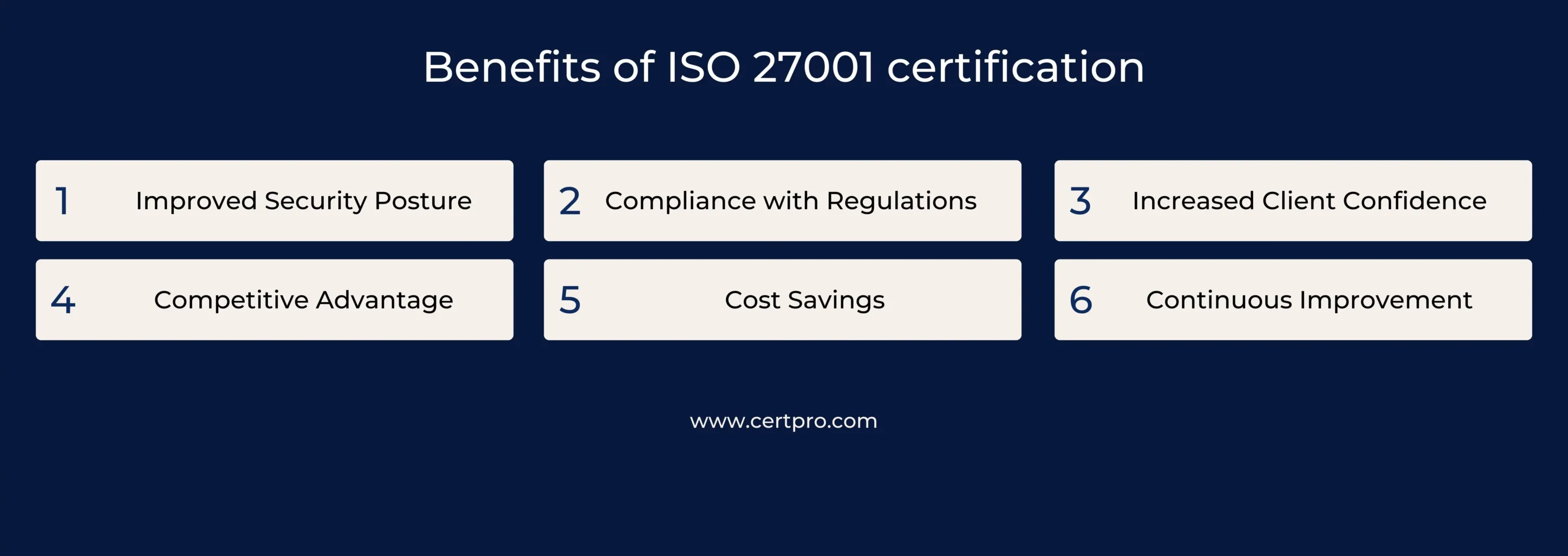
ISO 27001 Certification in Charlotte delivers measurable business and operational benefits for organizations across technology, financial services, healthcare, logistics, and professional services sectors. Certification provides independently verified evidence of information security governance that self-attestation and internal security programs simply cannot replicate. The following benefits reflect the specific value of ISMS certification for Charlotte organizations operating in competitive, regulated, and data-intensive environments.
- ✓Independently verified ISMS conformance that satisfies enterprise procurement and vendor security requirements without relying on self-attestation
- ✓Documented evidence of risk-based information security governance, supporting due diligence processes for investors, acquirers, and institutional partners
- ✓Structured Annex A control framework that maps to HIPAA, GDPR, PCI DSS, and North Carolina Identity Theft Protection Act obligations, enabling clear regulatory alignment documentation
- ✓Competitive differentiation in Charlotte’s financial services, fintech, SaaS, and healthcare technology markets where ISO 27001 compliance is increasingly a procurement prerequisite
- ✓Reduced third-party risk assessment burden through presentation of a current ISO 27001 certificate in response to vendor security questionnaires
- ✓Formal management review and internal audit requirements that embed executive accountability and continual improvement into information security governance
- ✓Internationally recognized ISMS certification accepted by clients, regulators, and business partners across North America, Europe, and global markets
- ✓Demonstrated alignment with ISO/IEC 27001:2022 Annex A controls for cloud security, threat intelligence, and ICT business continuity — areas of particular relevance for Charlotte cloud and technology organizations
Charlotte is the second-largest banking center in the United States by assets, hosting major financial institutions, regional banks, payment processors, insurance carriers, and a growing fintech ecosystem concentrated in South End and Uptown. Financial services organizations pursue ISO 27001 Certification in Charlotte to demonstrate structured information security governance over customer financial data, trading systems, payment infrastructure, and regulatory reporting environments. Fintech companies use ISO 27001 certification as a credible mechanism for addressing the security due diligence requirements of banking partners, payment networks, and enterprise clients. The ISO 27001 certification audit evaluates controls relevant to financial data classification, access management, encryption, incident response, and third-party supplier security — all areas of direct relevance to financial services and fintech operations in Charlotte’s banking corridor.
Charlotte’s healthcare technology sector includes health IT vendors, clinical data management platforms, telehealth providers, and health insurance technology organizations serving patients and payers across North Carolina and the Southeast. ISO 27001 Certification in Charlotte for healthcare technology companies demonstrates that patient data, clinical records, and health system integrations are managed within an audited information security framework. While ISO 27001 certification does not establish HIPAA compliance, the documented ISMS controls — including access control, cryptography, incident management, and supplier security — provide a structured foundation that organizations can reference in their HIPAA compliance documentation. SaaS providers in Charlotte’s University City and Ballantyne technology corridors similarly use ISO 27001 certification to accelerate enterprise sales cycles, respond efficiently to security questionnaires, and demonstrate information security maturity to clients across regulated industries.
- ✓ISO 27001 Certification for Charlotte Financial Services and Fintech
- ✓ISO 27001 Certification for Charlotte Healthcare Technology and SaaS Organizations
ISO 27001 ISMS Scope Definition for Charlotte Organizations
Defining the ISMS scope is one of the most consequential decisions in the ISO 27001 certification process. The scope determines which organizational units, locations, processes, systems, and information assets are covered by the ISMS and, therefore, evaluated during the ISO 27001 certification audit. Charlotte organizations must define scope carefully to ensure it reflects the boundaries within which information security risks are managed — and that it is not drawn so narrowly as to exclude significant risk areas that auditors and clients would expect to be covered.
Scope Factors: Context, Interfaces, and Dependencies
ISO/IEC 27001:2022 Clause 4.3 requires the ISMS scope to account for the organization’s context, the requirements of interested parties, and the interfaces and dependencies between activities performed by the organization and those performed by external parties. For Charlotte cloud service providers, this means the scope must address whether hosted customer data environments, shared infrastructure components, and third-party integrations fall within or outside the ISMS boundary — and if outside, how those interfaces are managed and documented. For financial services organizations, the scope typically includes core banking systems, customer data processing environments, and operational technology where applicable. Auditors evaluate scope statements during Stage 1 of the ISO 27001 audit to confirm that scope boundaries are clearly defined, documented, and consistent with the organization’s actual risk landscape. Scope statements that artificially exclude significant risk areas are subject to audit challenge and may result in required scope modifications before the ISO 27001 certification process proceeds.
Multi-Site and Cloud-Hosted ISMS Scopes
Charlotte organizations operating across multiple sites — including corporate headquarters in Uptown, technology campuses in University City, operational facilities in Ballantyne, or remote workforce environments — must ensure their ISMS scope and associated controls address information security requirements across all included locations. Where cloud-hosted environments are within scope, the organization must document how Annex A controls for cloud services (5.23) and supplier relationships (5.19–5.22) are applied to cloud service provider arrangements. The ISO 27001 certification audit will assess whether cloud security controls in the Statement of Applicability are implemented and operating effectively, and whether the organization maintains appropriate oversight mechanisms for cloud providers that process or store in-scope information assets. Charlotte organizations using AWS, Azure, Google Cloud, or other major cloud platforms must clearly delineate shared responsibility boundaries within their ISMS documentation to satisfy ISO 27001 compliance requirements.
Documented Information Requirements Under ISO/IEC 27001:2022
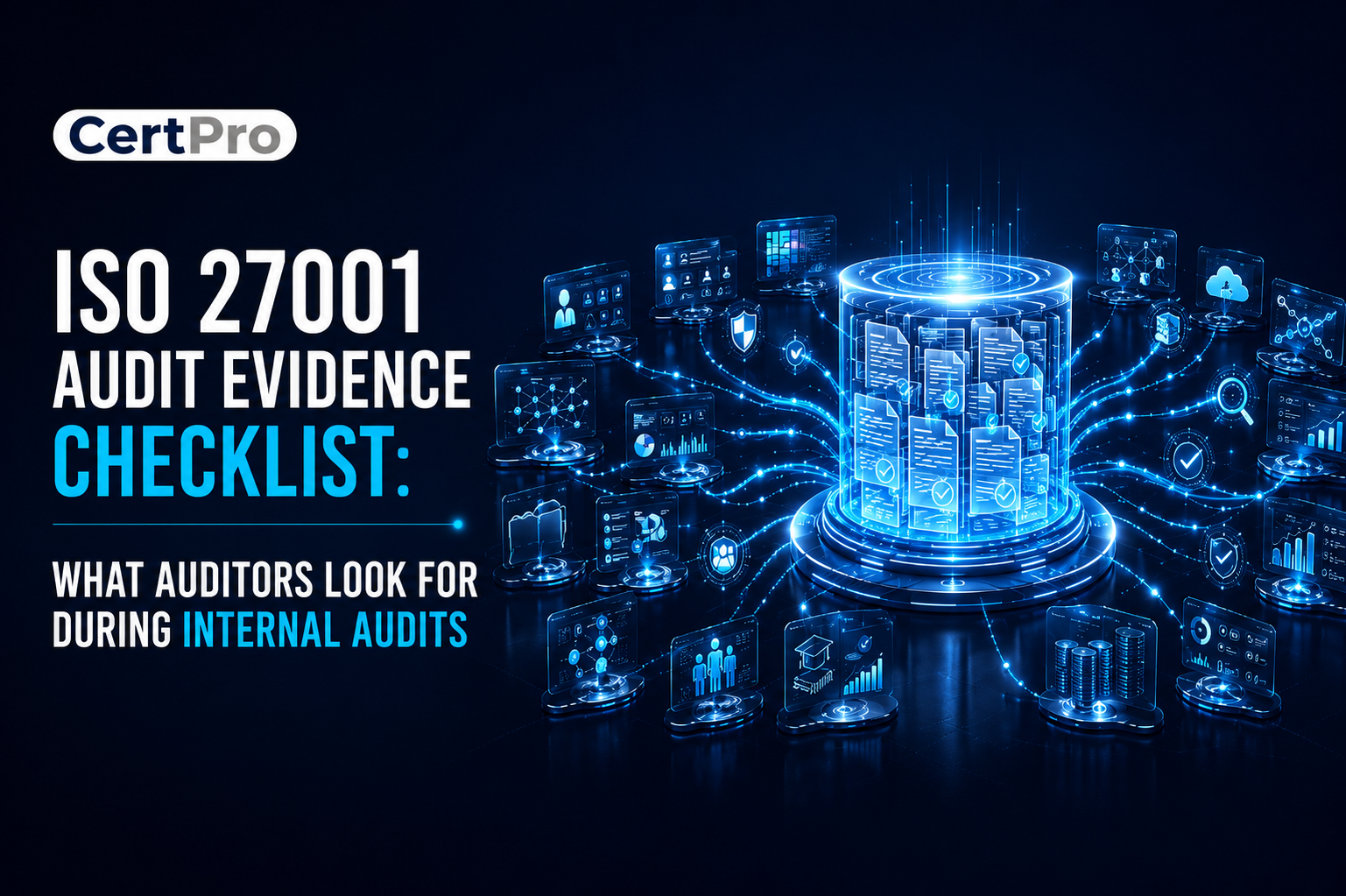
ISO/IEC 27001:2022 specifies mandatory documented information that organizations must maintain and retain as evidence of ISMS conformance. These requirements fall into two categories: documents that define how the ISMS operates (policies, procedures, methodologies) and records that provide evidence the ISMS has operated as intended (audit reports, management review minutes, risk assessment records, training records). During the ISO 27001 certification audit, auditors verify the existence, currency, and completeness of all mandatory documented information.
- ✓ISMS scope statement (Clause 4.3) — defining organizational boundaries, locations, and exclusions
- ✓Information security policy (Clause 5.2) — establishing management direction and commitment to information security
- ✓Risk assessment process and methodology documentation (Clause 6.1.2) — defining how risks are identified, analyzed, and evaluated
- ✓Risk treatment plan (Clause 6.1.3e) — documenting selected controls, responsibilities, and implementation timelines
- ✓Statement of Applicability (Clause 6.1.3d) — listing all 93 Annex A controls with applicability determinations and justifications
- ✓Information security objectives and plans to achieve them (Clause 6.2)
- ✓Internal audit program and audit reports (Clause 9.2)
- ✓Management review records (Clause 9.3) — documenting review inputs, outputs, and decisions
Beyond mandatory documents, ISO 27001 compliance requires organizations to maintain operational records that demonstrate controls are functioning as documented. These records include evidence of risk assessment results, competence records for personnel with information security responsibilities, monitoring and measurement results, nonconformity and corrective action records, and supplier assessment records where third parties are involved in in-scope processes. For Charlotte technology organizations with high employee turnover and rapid scaling — characteristics common across the city’s SaaS, fintech, and AI startup ecosystem — maintaining current and complete operational records is a frequent audit challenge. Auditors assess whether records management processes are systematic and sustainable, not dependent on individual staff knowledge or ad hoc documentation practices. Organizations that implement document management systems aligned with ISMS requirements demonstrate a higher level of operational maturity during the ISO 27001 certification audit.
- ✓Mandatory Documents Required by ISO/IEC 27001:2022
- ✓Operational Records and Evidence of Control Effectiveness
Surveillance Audits and Recertification Under ISO 27001
ISO 27001 certification is not a one-time event. The three-year certification cycle requires annual surveillance audits and a full recertification audit at the end of the cycle. These ongoing audit activities verify that the certified ISMS continues to conform to ISO/IEC 27001:2022 requirements, that nonconformities identified in previous audits have been resolved, and that the organization’s continual improvement processes are functioning as required by the standard. Charlotte organizations maintaining ISMS certification must plan for ongoing audit activities as a regular part of their information security governance calendar.
Annual Surveillance Audit Requirements
Surveillance audits are conducted at least once per calendar year during the three-year certification period, with the first surveillance audit typically scheduled within twelve months of the initial certification date. Surveillance audits are narrower in scope than the initial Stage 2 audit but must cover certain mandatory elements, including: changes to the organization and its ISMS since the last audit; the status of corrective actions from previous audits; ISMS performance against objectives; updates to the risk assessment and risk treatment plan; and the effectiveness of management review and internal audit processes. If significant changes to the organization’s structure, systems, or operating environment have occurred — such as a merger, acquisition, major technology platform migration, or significant cloud services expansion — the surveillance audit scope may be extended to address the changed risk landscape. Charlotte technology companies that grow rapidly or undergo significant operational changes should promptly notify their certification body to ensure audit planning remains aligned with organizational reality.
Recertification Audit at the End of the Three-Year Cycle
The recertification audit is a full reassessment of the ISMS conducted in the third year of the certification cycle, typically within three months of the certificate expiry date. This audit covers the full ISMS scope and evaluates the effectiveness of the ISMS over the entire certification period — including overall continual improvement performance, changes in context and risk profile, and the sustained effectiveness of management systems required by ISO/IEC 27001:2022. A successful recertification audit results in the issuance of a new three-year ISO 27001 certificate. If recertification is not completed before certificate expiry, the existing certification lapses and the organization must undergo a new initial certification process — including full Stage 1 and Stage 2 audits — before a new certificate can be issued. Charlotte organizations should build recertification timelines into their multi-year information security planning to avoid lapses that could disrupt client contracts or procurement processes that require a current certification status.
ISO 27001 Certification for Key Charlotte Industry Sectors
ISO 27001 Certification in Charlotte is pursued across a broad range of industry sectors reflecting the city’s diverse economy. The specific drivers, audit focus areas, and business value of certification vary by sector. The following table summarizes how ISO 27001 certification applies across Charlotte’s key industry sectors.
| Industry Sector | Key Information Assets | Primary Certification Drivers |
|---|---|---|
| Financial Services & Banking | Customer financial data, transaction records, trading systems | Regulatory expectations, institutional client requirements, third-party risk programs |
| Fintech & Payments | Payment data, API integrations, customer identity data | Banking partner security requirements, PCI DSS alignment, enterprise procurement |
| Healthcare Technology & Health IT | Patient records, clinical data, EHR integrations | HIPAA alignment documentation, health system vendor requirements, payer security programs |
| SaaS & Cloud Services | Customer data environments, application code, cloud infrastructure | Enterprise client security questionnaires, SOC 2 complementary coverage, vendor assessments |
| Logistics, Transportation & E-Commerce | Supply chain data, customer order data, operational systems | Retail and enterprise client requirements, third-party risk management programs |
ISO 27001 Certification for Charlotte Cybersecurity and AI Companies
Charlotte’s cybersecurity ecosystem includes managed security service providers, security software vendors, threat intelligence firms, and identity management companies serving clients across the Southeast and nationally. For cybersecurity organizations, the ISO 27001 certification audit carries particular weight because it provides independently verified evidence that the security firm’s own information security practices meet international standards — a critical consideration for clients entrusting cybersecurity vendors with access to sensitive networks, credentials, and operational data. AI companies and machine learning platform providers operating in Charlotte increasingly face enterprise security questionnaires that reference ISO 27001 compliance as a minimum security assurance threshold. Annex A controls relevant to AI and data-intensive environments include data classification (5.12), data masking (8.11), monitoring activities (8.16), and information transfer (5.14) — controls directly applicable to AI training pipelines, model data handling, and API-based service delivery.
FAQ
▶
What is ISO 27001 certification and how is it different from ISO 27001 compliance?
▶
How long does the ISO 27001 certification audit process take for a Charlotte organization?
▶
What is the Statement of Applicability and why is it required?
▶
Does ISO 27001 certification guarantee compliance with HIPAA, GDPR, or North Carolina law?
▶
How many Annex A controls are in ISO/IEC 27001:2022?
▶
What is a major nonconformity in an ISO 27001 audit?
▶
How does ISO 27001 certification differ from SOC 2 for Charlotte organizations?
▶
What is the validity period of an ISO 27001 certificate?
Get In Touch
have a question? let us get back to you.