
ISO 27001 Certification in Estonia
Executive Summary: CertPro is a Licensed CPA Firm conducting ISO 27001 certification audits for organizations across Estonia. Operating under internationally recognized Trust Services Criteria, CertPro delivers independent conformity assessments against ISO/IEC 27001:2022. We serve Estonian public institutions, fintech operators, digital service providers, and multinational enterprises requiring formal ISMS attestation.
OUR CLIENTS










ISO 27001 Certification in Estonia: An Overview
ISO 27001 Certification in Estonia is the formal, independent verification that an organization’s Information Security Management System (ISMS) conforms to the requirements of ISO/IEC 27001:2022. This internationally recognized standard defines the criteria for establishing, implementing, maintaining, and continually improving an ISMS. It provides a systematic, risk-based approach to protecting sensitive information assets within any organization operating in Estonia’s rapidly evolving digital economy.
Estonia occupies a unique position in the global digital landscape. As the birthplace of e-Residency, a pioneer in digital governance, and home to one of Europe’s most advanced public digital infrastructures, Estonia demands rigorous information security standards from both public institutions and private enterprises. Organizations processing sensitive data — whether operating e-governance platforms, fintech applications, cloud services, or data center infrastructure — must demonstrate verifiable compliance with recognized security frameworks.
ISO 27001 Certification in Estonia provides precisely that assurance. It delivers a globally respected attestation confirming that information security controls are operational, documented, tested, and independently verified.
CertPro, functioning as a Licensed CPA Firm, conducts ISO 27001 certification audits across Estonia’s public and private sectors. The firm’s audit methodology is structured around ISO/IEC 27001:2022 requirements and Annex A controls. Each engagement produces an independent attestation report grounded in objective evidence.
CertPro’s audit scope extends across all major Estonian industries, including financial services regulated by the Estonian Financial Supervision Authority (FSA), digital service providers subject to GDPR enforcement by the Data Protection Inspectorate (DPI), and IT infrastructure operators serving both domestic and international clients.
Estonia’s Digital Economy and the Role of ISO 27001
Estonia’s digital-first governance model has created a business environment where information security is not merely a compliance checkbox — it is a foundational operational requirement. The country’s X-Road data exchange layer, digital identity infrastructure, and e-Estonia ecosystem collectively process millions of sensitive transactions daily. This makes the integrity and confidentiality of information assets a national priority.
For private organizations operating within or alongside this infrastructure, ISO 27001 compliance in Estonia provides the structured assurance framework that regulators, procurement bodies, and international partners require.
Estonian startups — particularly in the fintech and cybersecurity sectors — increasingly pursue ISO 27001 Certification as a prerequisite for accessing EU-wide markets, securing institutional investment, and meeting contractual obligations imposed by enterprise clients. ISO 27001 Certification in Estonia is no longer simply a market differentiator; it is rapidly becoming a baseline expectation.
With Estonia hosting over 1,400 startups and a thriving unicorn ecosystem, demand for certified information security frameworks continues to grow at a measurable pace. CertPro’s Licensed CPA Firm status positions it to deliver credible, audit-grade attestations that satisfy these institutional demands.
Applicability Across Public and Private Sectors
ISO 27001 Certification applies to any organization that manages information assets, regardless of sector, size, or ownership structure. In Estonia, this includes central government ministries and agencies operating digital public services, commercial banks and payment institutions supervised by the Estonian FSA, healthcare providers managing electronic health records under the national e-Health system, logistics companies handling supply chain data, and telecommunications operators subject to the Electronic Communications Act.
The standard’s flexibility — achieved through a risk-based scope definition process — allows organizations to tailor the ISMS to their specific operational context while maintaining full compliance with all mandatory ISO 27001 requirements.
ISO 27001 information security certification is particularly prevalent among technology companies and digital service providers headquartered in Tallinn. As Estonia’s capital grows as a European technology hub — hosting multinational corporations alongside domestic champions — demand for internationally recognized security certifications has intensified.
CertPro conducts Stage 1 and Stage 2 audits at client premises in Tallinn and across all Estonian regions, ensuring that geographic location never limits certification access for organizations outside the capital.

What Is ISO 27001 Certification?
ISO 27001 Certification is the formal attestation — issued by an accredited or Licensed CPA Firm certification body — confirming that an organization’s Information Security Management System (ISMS) meets the requirements of ISO/IEC 27001:2022. This internationally recognized standard for information security management is published jointly by the International Organization for Standardization (ISO) and the International Electrotechnical Commission (IEC).
Certification confirms that the organization has established, implemented, maintained, and is continually improving a structured framework for managing information security risks across its defined scope.
ISO/IEC 27001:2022 — the most current version, superseding the 2013 edition — introduces an updated Annex A control set comprising 93 controls organized across four domains: Organizational Controls (37 controls), People Controls (8 controls), Physical Controls (14 controls), and Technological Controls (34 controls).
The 2022 revision reduced the total control count from 114 while introducing 11 new controls addressing contemporary security challenges, including threat intelligence, cloud security, data masking, and ICT readiness for business continuity. Organizations still certified under the 2013 standard must transition to ISO/IEC 27001:2022 by October 31, 2025, as mandated by international accreditation bodies.
The ISMS Framework Defined
An Information Security Management System (ISMS) is the collection of policies, procedures, processes, and controls that an organization uses to systematically manage information security risks. ISO 27001 establishes ISMS requirements through ten mandatory clauses: Clause 4 (Context of the Organization), Clause 5 (Leadership), Clause 6 (Planning), Clause 7 (Support), Clause 8 (Operation), Clause 9 (Performance Evaluation), and Clause 10 (Improvement).
Each clause contains specific requirements that an organization must demonstrate compliance with through documented evidence, operational records, and observable practices at the time of the ISO 27001 audit.
ISO 27001 distinguishes itself from other information security frameworks by requiring independent third-party verification of ISMS conformance. Unlike self-attestation models or internally managed compliance programs, ISO 27001 Certification demands that a certification body — such as CertPro, operating as a Licensed CPA Firm — conduct a structured audit to objectively evaluate whether the organization’s ISMS meets all standard requirements.
This independence is what gives ISO 27001 Certification its credibility with regulators, customers, and international business partners. The certification body evaluates not just documentation but the operational effectiveness of controls as implemented within the organization’s actual environment.
ISO 27001 and Trust Services Criteria Alignment
ISO 27001 aligns structurally with Trust Services Criteria (TSC) across several security and availability principles. This enables organizations to leverage ISMS documentation and control evidence across multiple certification frameworks simultaneously. The risk assessment methodology central to ISO 27001 — requiring organizations to identify, analyze, and evaluate information security risks before selecting appropriate treatment options — maps directly to the risk management requirements embedded in TSC-aligned audit frameworks.
CertPro’s audit teams are trained to identify these cross-framework mappings, reducing duplicative evidence collection for organizations pursuing multiple certifications concurrently.
ISO 27001 compliance also supports organizations’ obligations under the EU’s NIS2 Directive, which entered force in October 2024. NIS2 imposes mandatory cybersecurity risk management and incident reporting requirements on essential and important entities across the EU, including those operating in Estonia.
Organizations that achieve ISO 27001 Certification can demonstrate NIS2 compliance alignment across several mandatory measures — including access control, cryptography, supply chain security, and business continuity. This significantly reduces the regulatory burden of conforming to multiple overlapping frameworks.
ISO 27001 Requirements in Estonia
ISO 27001 requirements are defined in the mandatory clauses of ISO/IEC 27001:2022 and must be fully addressed by any organization seeking ISO 27001 Certification in Estonia. These requirements are universal — they do not vary by jurisdiction — but their implementation is shaped by the organization’s specific context. This includes the Estonian regulatory environment, applicable legal obligations under EU law and national legislation, and the nature of the information assets within scope. Every requirement in Clauses 4 through 10 is mandatory; no clause may be excluded from the ISMS scope.
ISO 27001 mandates a defined set of documented information that must be maintained and retained as evidence of ISMS operation. Mandatory documents include:
- ISMS scope statement
- Information security policy
- Risk assessment process and results
- Risk treatment plan
- Statement of Applicability (SoA)
- Information security objectives
- Evidence of personnel competence for security-affecting roles
- Results of monitoring and measurement
- Internal audit program results
- Management review records
Each document must be controlled — versioned, reviewed, approved, and accessible to authorized personnel — with clear retention and disposal procedures defined.
The Statement of Applicability (SoA) is a particularly critical document in the ISO 27001 audit process. It lists all 93 Annex A controls, indicates whether each control is applicable or not applicable to the organization’s context, provides justification for each determination, and references the implementation status of applicable controls.
During the Stage 1 audit, CertPro’s auditors review the SoA for completeness and logical consistency with risk assessment results. An incomplete or inconsistent SoA is one of the most common sources of major nonconformities identified during ISO 27001 certification audits in Estonia.
ISO 27001 requires organizations to establish and apply a formal information security risk assessment process. This process must identify risks associated with the loss of confidentiality, integrity, and availability of information within the ISMS scope. It must define risk acceptance and assessment criteria, ensure repeated assessments produce consistent and comparable results, and assign owners to each identified risk.
Risk analysis evaluates the likelihood and consequences of identified risks. Risk evaluation then compares assessed risk levels against defined criteria to determine treatment priorities.
Risk treatment options under ISO 27001 include applying Annex A controls or other sources to modify the risk, accepting the risk where it falls within defined tolerance levels, avoiding the risk by ceasing the activity that generates it, or transferring the risk through insurance or contractual mechanisms.
For Estonian organizations in regulated sectors — such as fintech firms supervised by the FSA or e-governance service providers — risk treatment decisions must account for regulatory expectations around minimum security control implementation, particularly as these intersect with NIS2 and GDPR obligations.
Annex A of ISO/IEC 27001:2022 provides a reference set of 93 information security controls that organizations select based on their risk assessment and treatment decisions. The four control domains — Organizational, People, Physical, and Technological — cover the full spectrum of information security considerations.
Organizational controls address information security policies, threat intelligence, supplier relationship security, and incident management. People controls govern security responsibilities across the employment lifecycle, including pre-employment screening, security awareness training, and confidentiality obligations.
Physical controls under ISO 27001 address physical security perimeters, access control to physical spaces, protection of physical media, and equipment maintenance and disposal. Technological controls — the largest domain with 34 controls — encompass access control systems, cryptography, network security, secure development practices, vulnerability management, monitoring and logging, data leakage prevention, and web filtering.
Estonian organizations operating data centers or cloud infrastructure face particular scrutiny of technological controls during the ISO 27001 audit, as these environments present elevated risk profiles requiring proportionately rigorous assessment.
| ISO 27001 Control Domain | Number of Controls | Key Areas Covered |
|---|---|---|
| Organizational Controls | 37 | Policies, threat intelligence, supplier security, incident management |
| People Controls | 8 | Screening, training, awareness, employment terms, remote working |
| Physical Controls | 14 | Physical perimeters, access control, equipment security, media disposal |
| Technological Controls | 34 | Access control, cryptography, monitoring, vulnerability management, secure development |
ISO 27001 Clause 5 requires top management to demonstrate leadership and commitment to the ISMS. This involves establishing an information security policy, assigning and communicating security roles and responsibilities, ensuring the ISMS achieves its intended outcomes, and promoting continual improvement.
Top management must conduct formal management reviews at planned intervals, covering ISMS performance, audit results, risk treatment status, and improvement opportunities. Evidence of management review — including documented meeting records, action items, and decisions — is examined by CertPro auditors during both Stage 1 and Stage 2 assessments as a mandatory conformance requirement.
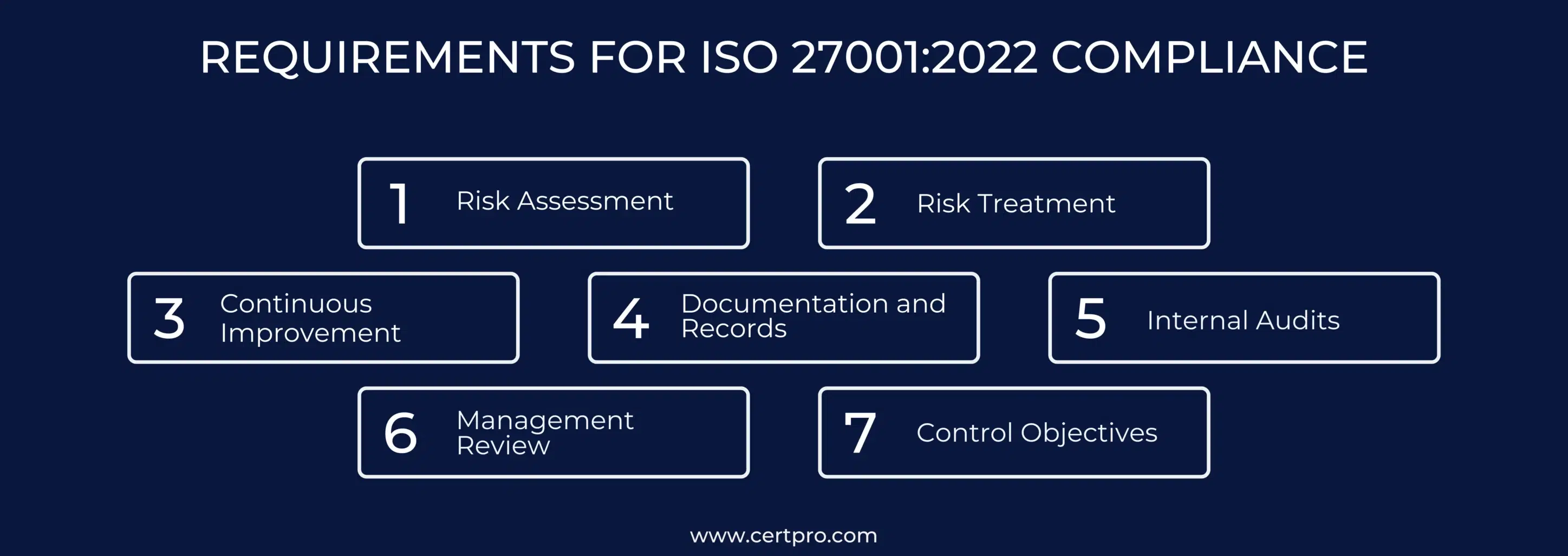
- ✓Documentation Requirements
- ✓Risk Assessment and Treatment Requirements
- ✓Annex A Control Requirements
- ✓Leadership and Organizational Context Requirements
ISO 27001 Certification Process in Estonia
The ISO 27001 certification process in Estonia follows a structured, sequential series of defined stages. Each stage produces documented outputs that feed into the next. CertPro, as a Licensed CPA Firm, administers this process according to ISO/IEC 17021-1 requirements for certification body operations and ISO/IEC 27006 requirements specifically governing ISO 27001 certification bodies.
Organizations seeking ISO 27001 Certification in Estonia can expect the full process to span several months, depending on organizational size, scope complexity, and the maturity of existing information security practices.
- Scope Definition: Determine the organizational units, processes, locations, and information assets included within the ISMS boundary.
- ISMS Design and Implementation: Establish the ISMS framework, including policies, risk assessment methodology, risk treatment plan, and Annex A control selection.
- Documentation Development: Produce all mandatory documented information required by ISO/IEC 27001:2022 Clauses 4–10 and Annex A.
- Internal Audit Program Execution: Conduct a complete internal audit of the ISMS against all applicable ISO 27001 requirements, identifying nonconformities and opportunities for improvement.
- Management Review Completion: Conduct a formal management review meeting, reviewing ISMS performance data, audit results, and risk treatment status.
- Certification Body Selection: Engage CertPro as the Licensed CPA Firm to conduct the independent ISO 27001 certification audit.
- Stage 1 Audit (Documentation Review): CertPro auditors assess ISMS documentation, scope appropriateness, and readiness for Stage 2.
- Stage 2 Audit (Certification Audit): CertPro auditors conduct an on-site evaluation of ISMS implementation and control effectiveness across the defined scope.
- Nonconformity Resolution: Address any major or minor nonconformities identified during Stage 2 within the timeframe specified by CertPro.
- Certification Decision: CertPro’s certification panel reviews audit findings and issues the ISO 27001 certificate upon confirmed conformance.
- Surveillance Audits: Annual surveillance audits conducted by CertPro to verify ongoing ISMS conformance within the three-year certification cycle.
- Recertification Audit: A full recertification audit conducted in year three to renew the ISO 27001 certificate for an additional three-year period.
The Stage 1 audit — also referred to as the documentation review or desk audit — is the first formal evaluation stage in the ISO 27001 certification process. During Stage 1, CertPro auditors review the organization’s ISMS documentation to assess whether all mandatory documented information required by ISO/IEC 27001:2022 is present, complete, and logically consistent.
Auditors evaluate the ISMS scope statement for appropriateness, review the information security policy for alignment with organizational objectives, assess the risk assessment methodology for repeatability and validity, and examine the Statement of Applicability for completeness and consistency with risk treatment decisions.
The Stage 1 audit also confirms that the organization is prepared for Stage 2 by verifying that the internal audit program has been executed, management reviews have been completed, and identified nonconformities have been addressed. CertPro auditors document Stage 1 findings in a formal report identifying any areas where documentation is deficient or where ISMS elements require further development before Stage 2 can proceed.
The Stage 1 audit typically requires one to two audit days depending on ISMS scope. It is normally conducted remotely for Estonian organizations, though on-site Stage 1 reviews can be arranged upon request.
The Stage 2 audit is the primary conformance evaluation in the ISO 27001 certification process — the certification audit proper. CertPro auditors conduct Stage 2 on-site at the organization’s premises in Estonia, visiting offices, data centers, server rooms, and any other location included within the ISMS scope.
During Stage 2, auditors evaluate the implementation and operational effectiveness of all applicable ISMS processes and Annex A controls through document review, personnel interviews, process observation, and technical inspection. The objective is to determine whether the ISMS functions as documented and whether information security risks within scope are managed in accordance with the organization’s risk treatment decisions.
Stage 2 audit findings are classified as major nonconformities, minor nonconformities, or observations. A major nonconformity indicates the absence of a required ISMS element or a systematic control failure that renders the ISMS non-conformant with ISO/IEC 27001:2022. A minor nonconformity indicates a partial implementation or isolated control failure that does not invalidate the ISMS but requires correction. Observations are improvement opportunities noted by the auditor without a conformance impact.
Organizations must resolve all major nonconformities before CertPro can issue the certification decision. Minor nonconformities must be addressed within the timeframe agreed with the certification body and verified at the next surveillance audit.
ISO 27001 certificates are valid for three years from the date of issue, subject to satisfactory completion of annual surveillance audits. CertPro conducts surveillance audits in years one and two of the certification cycle to verify that the ISMS continues to conform with ISO/IEC 27001:2022 requirements and that the organization is executing its continual improvement commitments.
Surveillance audits cover a rotating subset of the full ISMS scope, ensuring all areas receive scrutiny across the three-year cycle. The ISO 27001 audit that Estonian organizations undergo during surveillance is typically shorter than the initial Stage 2 audit — usually one to two days depending on scope and prior cycle findings.
The recertification audit in year three is a comprehensive re-evaluation of the full ISMS scope, conducted with the same rigor as the initial Stage 2 audit. Organizations that have maintained their ISMS effectively throughout the certification cycle — evidenced by consistent internal audit execution, management review records, and timely nonconformity resolution — typically experience efficient recertification audits with minimal new findings.
CertPro’s audit scheduling system provides advance notice of surveillance and recertification audit dates, supporting operational planning and evidence preparation for client organizations.

- ✓Stage 1 Audit: Documentation Review
- ✓Stage 2 Audit: Certification Audit
- ✓Surveillance and Recertification
ISO 27001 Compliance in Estonia
ISO 27001 compliance for Estonian organizations operates within a dense regulatory environment shaped by EU-wide legislation and national Estonian law. While ISO 27001 certification is voluntary in most sectors, ISO 27001 compliance increasingly functions as a de facto mandatory requirement for organizations seeking to operate in regulated markets, participate in government procurement, or satisfy contractual security obligations imposed by enterprise clients and international partners.
The regulatory intersections between ISO 27001 and binding legal obligations are particularly significant for Estonian organizations, given the country’s advanced digital governance ecosystem.
GDPR Alignment and the Data Protection Inspectorate
The General Data Protection Regulation (GDPR) — directly applicable across all EU member states including Estonia — imposes specific technical and organizational security requirements on data controllers and processors under Article 32. These requirements mandate appropriate security measures considering the risk to data subjects, including pseudonymization, encryption, confidentiality and integrity assurance, and the ability to restore data availability following incidents.
ISO 27001 compliance maps directly to these GDPR obligations. The ISMS risk assessment process addresses the ‘appropriate to the risk’ determination, while Annex A controls provide documented evidence of implemented organizational and technical measures.
Estonia’s Data Protection Inspectorate (Andmekaitse Inspektsioon) functions as the national supervisory authority for GDPR enforcement and has demonstrated an active enforcement posture, including investigations into data breaches affecting Estonian organizations.
For organizations under DPI scrutiny, ISO 27001 Certification provides documented evidence of systematic security governance that substantiates GDPR Article 32 compliance claims. The DPI does not formally recognize ISO 27001 as a GDPR compliance certification, but certification evidence is considered relevant in enforcement proceedings and demonstrates organizational good faith in implementing appropriate security measures.
NIS2 Directive Requirements for Estonian Organizations
The NIS2 Directive (EU 2022/2555), transposed into Estonian national law by the Küberturvalisuse seadus (Cybersecurity Act) amendments, imposes mandatory cybersecurity risk management obligations on essential entities (large organizations in critical sectors) and important entities (medium-sized organizations in the same sectors). Covered sectors include energy, transport, banking, financial market infrastructure, health, drinking water, digital infrastructure, and digital service providers.
Estonian organizations qualifying as essential or important entities must implement specific cybersecurity measures that align substantially with ISO 27001 Annex A controls across risk management, business continuity, supply chain security, and incident response.
ISO 27001 Certification in Estonia provides direct NIS2 compliance evidence across several Article 21 mandatory measures. The ISMS risk assessment process satisfies NIS2’s risk management requirements, while documented business continuity and incident response procedures address Article 21’s specific continuity and response obligations.
Estonian organizations subject to NIS2 that hold ISO 27001 Certification are better positioned to demonstrate regulatory conformance than those relying solely on internal security programs without third-party attestation. CertPro auditors identify NIS2 control mappings during ISO 27001 audits, providing cross-referenced attestation evidence applicable to both certification and regulatory contexts.
Estonian Financial Sector Compliance Requirements
Estonia’s financial sector — including credit institutions, payment institutions, and electronic money institutions supervised by the Estonian Financial Supervision Authority (FSA) — operates under European Banking Authority (EBA) guidelines on ICT and security risk management, as well as DORA (Digital Operational Resilience Act), which entered full application in January 2025.
ISO 27001 Certification for Estonian fintech organizations provides foundational documentation for DORA compliance, particularly across ICT risk management framework requirements, incident management protocols, and digital operational resilience testing obligations. The structured ISMS required by ISO 27001 corresponds directly to DORA’s ICT risk management framework, reducing duplicative compliance work for certified organizations.
Estonian payment institutions and e-money license holders must demonstrate robust information security governance to maintain regulatory authorization. The FSA evaluates security governance as part of licensing assessments and ongoing supervisory reviews. ISO 27001 Certification provides the FSA with independent third-party verification of an institution’s ISMS — carrying significantly more weight than self-attestation or internal audit reports alone.
CertPro’s certification reports are formatted to support regulatory submission requirements, enabling certified organizations to provide their supervisory authority with structured attestation evidence aligned with supervisory expectations.
ISO 27001 Cost in Estonia
ISO 27001 cost in Estonia is determined by a structured set of factors that collectively define the total investment required for certification. It is not a single fixed figure — it varies across organizations based on scope complexity, organizational size, number of locations, control maturity at the point of engagement, and the specific industries and regulatory contexts in which the organization operates.
CertPro, operating as a Licensed CPA Firm, applies a transparent, factors-based pricing model for ISO 27001 audit engagements in Estonia, enabling organizations to understand cost drivers before committing to the certification process.
Primary ISO 27001 Cost Factors
The certification audit fee — charged by CertPro as the certification body — constitutes the core component of ISO 27001 cost for Estonian organizations. This fee is calculated based on audit man-day requirements, which are in turn determined by the number of employees within scope, the number of physical and virtual locations included, the complexity of the technology environment, and the number of Annex A controls selected in the Statement of Applicability.
ISO/IEC 27006 provides a minimum audit day calculation methodology that certification bodies must follow, ensuring that audit fees reflect the time genuinely required to assess ISMS conformance with sufficient rigor to support a credible certification decision.
Beyond the certification audit fee, organizations seeking ISO 27001 Certification in Estonia should account for internal resource costs associated with ISMS development, documentation, internal audit execution, and management review coordination. These internal costs — including staff time, risk assessment tools, documentation management systems, and any technical security investments prompted by the risk treatment process — often exceed the certification audit fee itself.
This is especially true for organizations building an ISMS from a low maturity baseline. CertPro’s pre-engagement scope assessment provides organizations with an objective view of audit day requirements and associated fee estimates before formal engagement begins.
| ISO 27001 Cost Factor | Description | Relative Impact on Total Cost |
|---|---|---|
| Certification Audit Fee | Stage 1 and Stage 2 audit fees charged by CertPro based on calculated audit man-days | High |
| Surveillance Audit Fees | Annual surveillance audits in years 1 and 2 of the certification cycle | Medium |
| Internal Resource Costs | Staff time for ISMS documentation, risk assessment, internal audits, and management reviews | High |
| Technical Security Investments | Technology controls implementation required by risk treatment decisions | Variable |
| Recertification Audit Fee | Full re-audit in year 3 to renew the three-year certificate | Medium |
ISO 27001 Cost for Estonian Startups and SMEs
Estonian startups and small-to-medium enterprises (SMEs) often approach ISO 27001 cost with concern about proportionality — whether the investment required is justified given organizational size and revenue. The ISO 27001 standard’s risk-based, scalable approach means that smaller organizations with narrowly defined scopes can achieve certification with proportionately smaller audit day requirements and lower certification fees than large multinational enterprises.
A startup with fewer than 50 employees, a single location, and a well-defined technology scope may qualify for a Stage 2 audit of two to three days — corresponding to a significantly lower certification fee than a 500-person, multi-site organization.
ISO 27001 cost for Estonian startups is frequently offset by the commercial benefits certification unlocks — including access to enterprise procurement processes that require certified security programs, eligibility for EU public tender participation where security certification is mandated, and improved terms in cyber insurance negotiations.
Several Estonian startup founders report that ISO 27001 Certification materially shortened enterprise sales cycles by removing security questionnaire friction, enabling them to reference an independent audit report in lieu of completing multiple customer-specific security assessments. CertPro’s startup-oriented engagement model is structured to minimize unnecessary administrative complexity while maintaining full audit rigor.
Multi-Site and Multinational Cost Considerations
For multinational organizations operating in Estonia as part of a broader corporate group, ISO 27001 cost is influenced by the scope decision made at the corporate level. Organizations may choose to include their Estonian operations within a group-wide ISMS scope — with a single certificate covering all entities — or establish a standalone Estonian ISMS with its own certification scope and certificate.
The multi-site approach, where multiple Estonian locations or entities are included within a single certification scope, enables economies of scale in audit day calculation. ISO/IEC 27006 provides a sampling methodology for multi-site certifications that reduces per-location audit requirements for sites sharing common ISMS processes and controls.
Benefits of ISO 27001 Certification for Estonian Organizations
ISO 27001 Certification delivers verifiable, measurable benefits to Estonian organizations across commercial, regulatory, operational, and reputational dimensions. These benefits are grounded in the systematic security governance that the ISMS framework creates and the independent verification that certification provides.
Organizations that have obtained ISO 27001 Certification in Estonia report tangible improvements in security posture, procurement outcomes, and regulatory relationships, as well as reduced incident frequency and improved incident response capability.
- ✓Enhanced information security posture through systematic risk identification, assessment, and treatment across all organizational information assets.
- ✓Demonstrated GDPR compliance alignment, providing documented evidence of Article 32 technical and organizational security measures to Estonia’s Data Protection Inspectorate.
- ✓Competitive advantage in enterprise and public sector procurement, where ISO 27001 Certification in Estonia is increasingly a mandatory supplier qualification requirement.
- ✓Reduced cyber insurance premiums, as certified organizations demonstrate independently verified security governance that insurers recognize as materially reducing risk exposure.
- ✓Improved customer and partner confidence, providing clients with an independent audit report in lieu of completing multiple security questionnaires and assessments.
- ✓NIS2 Directive compliance support, with ISMS documentation and Annex A controls directly addressing mandatory cybersecurity risk management requirements for essential and important entities.
- ✓Structured incident response capability, with documented procedures, roles, and communication protocols that reduce incident resolution time and limit data breach impact.
- ✓Continual improvement framework, requiring annual surveillance audits and management reviews that prevent security governance decay over the certification cycle.
- ✓International market access, as ISO 27001 Certification is recognized globally and satisfies security requirements imposed by clients and partners in the US, UK, EU, and Asia-Pacific markets.
- ✓Alignment with Estonia’s national cybersecurity strategy, supporting the country’s objective of maintaining its position as a global digital trust leader.
ISO 27001 Certification in Estonia provides immediate commercial benefits by enabling organizations to meet security qualification requirements in enterprise and government procurement processes. Estonian government agencies — operating under the Public Procurement Act and guided by cybersecurity requirements embedded in IT procurement frameworks — increasingly specify ISO 27001 Certification as a mandatory supplier qualification criterion for contracts involving access to government data systems or critical infrastructure.
Private sector enterprises similarly impose ISO 27001 requirements through third-party risk management programs, requiring suppliers and service providers to demonstrate certified security governance before accessing client systems or data.
ISO 27001 Certification is particularly impactful for Estonian e-governance service providers, given Estonia’s position as a global model for digital public services. Organizations providing software, hosting, or integration services to Estonian government entities that hold ISO 27001 Certification are demonstrably better positioned in competitive tender processes than non-certified competitors.
Certification removes a significant evaluation uncertainty for procurement committees, who can rely on the independent audit report rather than conducting their own security assessments of each bidder.
The operational benefits of ISO 27001 Certification derive from the discipline that the ISMS framework imposes on information security governance. Organizations that implement ISO 27001 systematically identify previously unrecognized security risks, establish clear ownership and accountability for security controls, and create documented procedures that ensure consistent control operation regardless of personnel changes.
Internal audit programs required by the standard identify control gaps before they can be exploited, while management reviews ensure senior leadership maintains active oversight of security performance data rather than receiving only ad hoc, incident-driven updates.
Organizations certified to ISO 27001 demonstrate measurably improved incident response capability compared to non-certified peers. The standard’s requirements for documented incident management procedures — including defined response roles, escalation paths, evidence preservation practices, and regulatory notification obligations — ensure that when security incidents occur, organizations respond in a structured, legally compliant manner.
For Estonian organizations subject to GDPR’s 72-hour breach notification requirement to the Data Protection Inspectorate, having documented and tested incident response procedures is not merely a security benefit — it is a legal compliance necessity. ISO 27001’s incident management controls directly address this obligation.
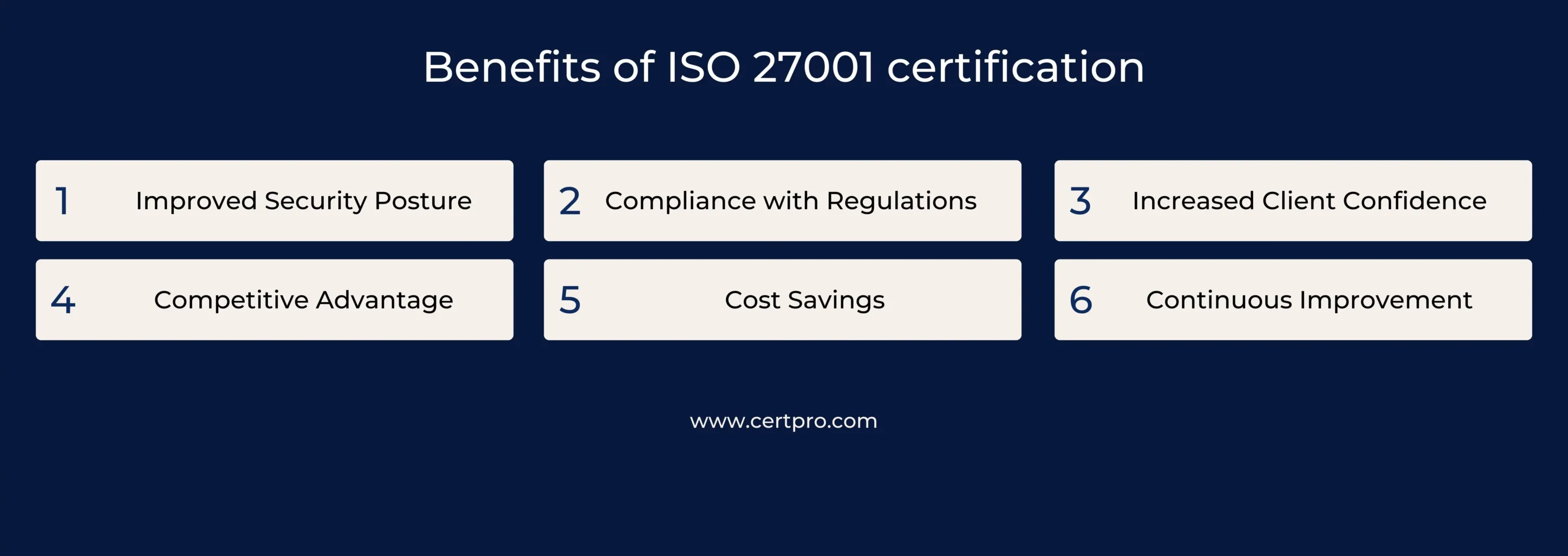
- ✓Commercial and Procurement Benefits
- ✓Operational and Security Benefits
Industries in Estonia Served by ISO 27001 Certification
ISO 27001 Certification in Estonia is applicable across all industries, but certain sectors face particularly acute information security risks and regulatory requirements that make certification especially relevant. CertPro conducts ISO 27001 audits across Estonia’s major economic sectors, with specialized audit expertise in the industries where information security risk is most concentrated and certification demand is highest.
Fintech and Financial Services
ISO 27001 Certification for Estonian fintech organizations reflects the sector’s elevated security risk profile and dense regulatory environment. Estonia is home to a significant concentration of payment institutions, cryptocurrency service providers, lending platforms, and insurtech companies — many operating EU-wide under Estonian licenses. These organizations process high volumes of sensitive personal and financial data, operate technology platforms targeted by sophisticated cyberattacks, and face overlapping regulatory frameworks including DORA, PSD2, EBA ICT guidelines, and GDPR.
ISO 27001 Certification provides the ISMS foundation that enables fintech organizations to address these overlapping obligations through a single, coherent security governance framework.
Estonian fintech unicorns and growth-stage companies frequently encounter ISO 27001 requirements as they expand into new European markets and attract institutional investment. Venture capital firms and private equity investors conducting security due diligence on Estonian fintech targets increasingly treat ISO 27001 Certification as a positive signal of security governance maturity. Non-certified organizations face additional due diligence scrutiny and potentially unfavorable valuation adjustments.
CertPro’s ISO 27001 audit process for fintech clients addresses the specific control areas most relevant to financial services — transaction processing security, data segregation, third-party payment provider oversight, and fraud detection controls.
E-Governance and Public Sector
ISO 27001 Certification for Estonian e-governance platforms and public sector organizations is integral to maintaining the trust that underpins Estonia’s digital state model. Government ministries, agencies, and local municipalities operating digital public services — from digital identity authentication systems to electronic tax filing platforms — are expected to demonstrate security governance commensurate with the sensitivity of the citizen data they process.
The Information System Authority (RIA) in Estonia, responsible for the development and management of the state information system, references ISO 27001 as a recognized security framework applicable to public sector information systems.
Private technology companies providing software, infrastructure, or integration services to Estonian government entities benefit directly from ISO 27001 Certification, as it satisfies the security assurance requirements that government procurement processes impose on IT suppliers. Estonia’s e-Residency program — which operates a global digital identity ecosystem trusted by over 100,000 e-residents from more than 170 countries — exemplifies the security stakes involved in government digital services, and the corresponding importance of certified security governance for organizations in the supply chain of such programs.
IT Services, Data Centers, and Cloud Providers
Estonia’s growing data center sector — driven by the country’s stable power infrastructure, cool climate, and EU data sovereignty advantages — has attracted significant investment in hyperscale and colocation facilities. Data center operators in Estonia face contractual security requirements from enterprise and government customers that universally include ISO 27001 Certification as a baseline requirement.
For cybersecurity and IT services firms, ISO 27001 Certification in Estonia is a market entry prerequisite in this environment. Organizations without current certification are effectively excluded from significant segments of the data center services market.
Cloud service providers operating in Estonia — including both domestic providers and local operations of international hyperscalers — apply ISO 27001 as the foundational security framework for their service offerings. Cloud-specific controls in ISO/IEC 27001:2022 Annex A, including cloud service customer security policies (Control 5.23) and ICT readiness for business continuity (Control 8.14), are particularly relevant for cloud providers undergoing an ISO 27001 audit in Estonia.
CertPro auditors with cloud infrastructure expertise evaluate these controls with reference to current cloud security best practices and the specific technology environments deployed by each client.
Healthcare, Logistics, and Other Sectors
Estonian healthcare organizations processing electronic health records under the national e-Health system manage information assets of the highest sensitivity. Data breaches in this context carry severe consequences for patient privacy and institutional reputation. ISO 27001 Certification provides healthcare providers — including hospitals, private clinics, and health data processors — with a structured framework for managing medical data security risks.
Logistics companies operating across Estonia’s transit and warehousing sectors handle supply chain data, commercial secrets, and personal data that require systematic protection. ISO 27001 compliance for Estonian logistics organizations is increasingly required by international supply chain partners operating under their own security governance frameworks.
ISO 27001 Certification and GDPR: A Unified Compliance Approach for Estonia
ISO 27001 and GDPR share a common objective — protecting sensitive information from unauthorized access, disclosure, alteration, and destruction — and their requirements are highly complementary for Estonian organizations that must satisfy both simultaneously. Implementing ISO 27001 compliance as a foundation for GDPR compliance is a recognized approach that reduces the overall compliance burden. It leverages a single risk assessment process, a unified control framework, and shared documentation structures to address both sets of obligations concurrently.
Control Mapping Between ISO 27001 and GDPR
GDPR Article 32 requires controllers and processors to implement appropriate technical and organizational measures to ensure a level of security appropriate to the risk of processing. ISO 27001 Annex A controls directly address each category of measure referenced in Article 32. Key mappings include:
- Encryption requirements map to Control 8.24 (Use of cryptography) and Control 5.33 (Protection of records).
- Access control obligations map to Controls 5.15–5.18 covering access control policies, identity management, and authentication.
- Confidentiality and integrity assurance maps to Controls 8.6 (Capacity management) and 8.7 (Protection against malware).
- Data backup and availability obligations map to Control 8.13 (Information backup).
For Estonian data processors — organizations processing personal data on behalf of controllers — ISO 27001 Certification provides documented evidence of the security measures that GDPR Article 28 requires processors to commit to contractually. Data processing agreements (DPAs) between controllers and processors frequently specify ISO 27001 Certification as the mechanism by which the processor demonstrates its security commitments.
An ISO 27001 certificate enables processors to satisfy DPA security requirements with a reference to the independent audit report, rather than providing voluminous security questionnaire responses for each controller relationship.
Breach Notification and Incident Management Alignment
GDPR Article 33 requires controllers to notify the supervisory authority of personal data breaches within 72 hours of becoming aware of the breach. Article 34 requires notification to affected data subjects where the breach is likely to result in a high risk to their rights and freedoms. ISO 27001’s mandatory incident management controls — specifically Control 5.24 (Incident management planning and preparation), Control 5.25 (Assessment and decision on information security events), and Control 5.26 (Response to information security incidents) — directly support GDPR breach notification compliance by ensuring organizations have documented processes for detecting, classifying, and escalating security events within the 72-hour reporting window.
Estonian organizations that have suffered personal data breaches and subsequently faced DPI investigations have found that documented ISO 27001 incident management procedures substantiate their response actions and demonstrate systematic, legally compliant behavior. While ISO 27001 Certification does not provide immunity from DPI enforcement action, it demonstrates organizational good faith and systematic security governance — factors that regulators consider when determining enforcement responses to breach incidents.
CertPro auditors evaluate incident management procedures during every ISO 27001 audit engagement in Estonia, verifying both documentation completeness and evidence of actual incident management execution.
Why CertPro for ISO 27001 Certification in Estonia
CertPro operates as a Licensed CPA Firm delivering independent ISO 27001 certification audits to organizations across Estonia. CertPro’s institutional positioning as a certification body — not an advisory or consulting firm — ensures that the certification attestations it issues carry the independence and objectivity that clients, regulators, and business partners require.
The firm’s audit teams combine technical expertise in information security management systems with deep familiarity with Estonia’s regulatory environment. This enables audit assessments that are both technically rigorous and contextually relevant to the specific compliance obligations Estonian organizations face.
Licensed CPA Firm Certification Authority
CertPro’s Licensed CPA Firm status underpins the credibility of its ISO 27001 certifications in Estonia. As a certification body subject to professional and regulatory oversight, CertPro operates under defined quality management requirements — including auditor competence standards, conflict of interest controls, certification decision independence protocols, and complaint and appeals procedures.
These operational controls ensure that CertPro’s ISO 27001 audit assessments in Estonia meet the professional standards that clients and relying parties expect from a credible certification body, and that certification decisions are made by qualified reviewers with appropriate independence from the audit teams.
CertPro’s audit teams assigned to ISO 27001 audit engagements in Estonia possess demonstrated competence in information security management systems, Estonian and EU regulatory frameworks, and the specific technical environments present in client organizations. Auditor assignments are made on the basis of competence matching — ensuring that auditors evaluating data center operations, fintech systems, or e-governance platforms have the relevant technical background to assess control effectiveness with appropriate depth.
CertPro maintains documented auditor competence records and conducts periodic competence assessments to ensure audit quality is maintained across all certification engagements.
CertPro’s ISO 27001 Audit Methodology
CertPro’s ISO 27001 audit methodology is structured around the requirements of ISO/IEC 27006 and applies evidence-based evaluation techniques across all audit stages. During Stage 2 certification audits, auditors collect evidence through document inspection, personnel interviews, system observation, and configuration review — triangulating evidence from multiple sources to form well-substantiated conformance determinations.
Audit findings are documented with specific references to the ISO/IEC 27001:2022 clauses and controls assessed, the evidence reviewed, and the auditor’s objective evaluation of conformance status. This documentation rigor ensures that audit reports are defensible and provide organizations with clear, actionable findings traceable to specific standard requirements.
CertPro’s fixed-scope audit program for each ISO 27001 audit engagement in Estonia is determined prior to audit commencement based on the organization’s confirmed ISMS scope, the Annex A controls selected in the Statement of Applicability, and the risk areas identified during the Stage 1 audit. This pre-engagement scoping ensures that audit time is allocated proportionally to risk and complexity — higher-risk control areas receive more intensive examination, while lower-risk areas are assessed with appropriate but proportionate scrutiny.
The audit program is shared with the client organization before the audit begins, ensuring full transparency about what will be assessed and what evidence will be requested.
Estonia-Specific Expertise and Local Presence
CertPro’s Estonia engagement model combines international certification standards expertise with in-depth knowledge of the specific regulatory, legal, and business context that shapes information security governance for Estonian organizations. The firm’s auditors are familiar with the Estonian legal framework — including the Küberturvalisuse seadus, the Personal Data Protection Act, the Electronic Communications Act, and their intersection with EU regulations — enabling audit assessments that account for the full range of compliance obligations Estonian organizations face.
CertPro provides ISO 27001 Certification for companies across all Estonian regions, with audit delivery capability in both English and Estonian to accommodate diverse organizational contexts — from startup technology firms to established public institutions.
FAQ
▶
What is ISO 27001 Certification and why does it matter for Estonian organizations?
▶
How long does the ISO 27001 certification process take in Estonia?
▶
What are the mandatory ISO 27001 audit stages?
▶
What does ISO 27001 cost in Estonia?
▶
Does ISO 27001 certification satisfy GDPR requirements in Estonia?
▶
Which industries in Estonia most commonly require ISO 27001 Certification?
▶
What is the ISO 27001 surveillance audit requirement?
▶
How does ISO 27001 Certification support NIS2 compliance for Estonian organizations?
Multi-Framework Compliance Guide: Best Practices and Strategies
Most compliance teams aren’t managing one framework. They’re managing three, four, sometimes five — simultaneously. A SaaS company selling to enterpri…
HOW COMPLIANCE AUDIT SOFTWARE IMPROVES AUDIT READINESS
Today, most companies deal with a growing number of compliance regulations. From data privacy standards to security frameworks like SOC 2 and ISO 2700…

THE ROLE OF GRC IN ISO 27001, SOC 2, AND OTHER FRAMEWORKS
The term GRC stands for Governance Risk and Compliance. It’s a system of integrated and centralized approaches used by organizations. This system comb…
Get In Touch
have a question? let us get back to you.