
ISO 27001 Certification in Minneapolis
The ISO 27001 certification audit process follows a defined sequence of stages — from initial application through certification issuance and ongoing surveillance. CertPro conducts each stage as an independent assessment, evaluating documented evidence against the requirements of ISO/IEC 27001:2022 without providing implementation guidance or remediation support. This structured process ensures that organizations operating in Minneapolis and across the Twin Cities region receive a consistent, objectively determined ISO 27001 certification outcome.
OUR CLIENTS









ISO 27001 Certification for Minneapolis-Based Financial and Technology Organizations
CertPro CPA LLC — a Licensed CPA Firm — conducts independent ISO 27001 certification audits for organizations operating across Minneapolis, Saint Paul, Bloomington, Edina, and the broader Twin Cities technology and business ecosystem. ISO 27001 Certification in Minneapolis is issued following a structured evaluation of an organization’s Information Security Management System (ISMS) against the requirements of ISO/IEC 27001:2022 — the internationally recognized ISO 27001 standard for information security governance. CertPro functions exclusively as an independent third-party certification body, evaluating documented controls, risk treatment decisions, and ISMS implementation evidence. The firm does not provide consulting, implementation, or advisory services of any kind.
Minneapolis as a Technology and Financial Services Center
Minneapolis anchors one of the most significant technology and financial services concentrations in the Midwest. The Twin Cities metropolitan area is home to major financial institutions, regional banks, insurance companies, SaaS providers, health technology organizations, fintech firms, cloud service providers, cybersecurity companies, AI-driven enterprises, logistics businesses, and large-scale retail and e-commerce operations. Organizations across this diverse ecosystem manage substantial volumes of sensitive customer data, proprietary financial records, and regulated health information.
As enterprise procurement processes in financial services and healthcare increasingly require verifiable information security credentials, ISO 27001 Certification in Minneapolis has become the recognized standard for demonstrating ISMS governance to clients, partners, and regulators. Minneapolis-based organizations serving national or global markets frequently cite ISO 27001 compliance as a prerequisite for vendor qualification in enterprise and government procurement contexts. The ISO 27001 standard provides the structured framework within which these organizations establish, implement, monitor, and continually improve information security controls across their operations.
Independent Certification by a Licensed CPA Firm
CertPro CPA LLC operates as an independent certification body, entirely distinct from consulting or implementation firms. ISO 27001 Certification in Minneapolis issued by CertPro reflects an objective, evidence-based evaluation of whether an organization’s ISMS satisfies the requirements of ISO/IEC 27001:2022 — including Clauses 4 through 10 and the applicable controls selected from Annex A. The certification decision is made by an independent certification committee that reviews audit findings, evaluates nonconformities, and determines whether the documented ISMS meets the standard’s requirements.
Licensed CPA Firm status reflects professional standards of independence, objectivity, and accountability that align with the institutional expectations of financial services organizations, regulated healthcare entities, and enterprise technology companies in the Minneapolis market. CertPro does not provide readiness assessments, control design, policy development, or remediation services. The firm’s scope is limited to conducting and certifying the outcome of independent ISO 27001 certification audits.
Minnesota Regulatory and Privacy Context
Organizations pursuing ISO 27001 Certification in Minneapolis operate within a regulatory environment that includes the Minnesota Consumer Data Privacy Act, federal requirements applicable to financial and healthcare organizations — such as the Gramm-Leach-Bliley Act and HIPAA — and contractual obligations imposed by enterprise clients and third-party risk management programs. The ISO 27001 standard supports organizations in structuring their information security controls consistently with legal and regulatory requirements. It does this by requiring documented risk assessments, defined risk treatment plans, and a Statement of Applicability that maps selected Annex A controls to identified risks and obligations.
ISO 27001 compliance, as evaluated through the ISO 27001 certification audit, does not automatically establish legal compliance with Minnesota, U.S., or industry-specific laws and regulations. Rather, ISO 27001 certification provides an independently assessed, structured framework for information security governance that organizations and their stakeholders can reference in the context of broader regulatory and contractual due diligence.

What Is ISO 27001 Certification?
ISO 27001 certification is the formal recognition that an organization’s Information Security Management System has been independently assessed and found to conform to the requirements of ISO/IEC 27001:2022, published by the International Organization for Standardization. The ISO 27001 standard specifies requirements for establishing, implementing, maintaining, and continually improving an ISMS within the context of an organization’s overall risk environment.
Certification is issued by an independent certification body — such as CertPro CPA LLC — following completion of a structured ISO 27001 certification audit that evaluates both the design and operating effectiveness of the ISMS. Organizations that achieve ISO 27001 certification demonstrate to clients, regulators, and procurement stakeholders that their information security controls are governed by a documented, risk-based management system subject to independent third-party review.
ISO/IEC 27001:2022 and the ISMS Framework
ISO/IEC 27001:2022 is the current version of the ISO 27001 standard, replacing the 2013 edition. Organizations holding ISO 27001 certifications issued under the 2013 standard are required to transition to the 2022 version, with a transition deadline of October 31, 2025, as established by accredited certification bodies. The 2022 standard restructures Annex A to reflect four control domains: Organizational Controls, People Controls, Physical Controls, and Technological Controls — consolidating and updating the 114 controls of the prior edition into 93 controls across these four categories.
Clauses 4 through 10 of ISO/IEC 27001:2022 define the management system requirements, covering organizational context, leadership and commitment, planning, support, operation, performance evaluation, and continual improvement. The ISMS framework requires organizations to document their information security policy, conduct a formal risk assessment, produce a risk treatment plan, and maintain a Statement of Applicability that records control selection decisions and justifications.
Key ISMS Documentation Requirements
ISO 27001 compliance requires organizations to maintain a defined set of documented artifacts that serve as evidence during the ISO 27001 certification audit. Core documentation evaluated during the audit includes the information security policy, the risk assessment methodology and results, the risk treatment plan specifying how identified risks are addressed, and the Statement of Applicability listing selected and excluded Annex A controls with documented justifications.
Additional documentation supporting ISMS operation includes management review records, internal audit reports, incident records, supplier agreements, and evidence of ongoing monitoring and measurement activities. Auditors assess whether these documents are current, consistently applied, and aligned with the organization’s stated ISMS scope. For Minneapolis-based organizations, the ISMS scope typically covers the systems, processes, and locations involved in handling customer data, financial records, health information, or other sensitive assets relevant to the organization’s operational context.
Annex A Control Domains Under ISO/IEC 27001:2022
Annex A of ISO/IEC 27001:2022 provides a reference set of 93 information security controls organized across four domains. Organizational Controls cover governance, policy management, information classification, supplier relationships, incident management, and business continuity. People Controls address personnel security, including screening, awareness training, and disciplinary processes. Physical Controls govern physical access to facilities and equipment, including clear desk policies, media handling, and equipment protection. Technological Controls encompass access management, cryptography, secure development, vulnerability management, network security, data masking, and monitoring.
Organizations are not required to implement all 93 controls. Instead, they must document in the Statement of Applicability which controls are applicable, which are excluded, and the justification for each decision. During the ISO 27001 audit, auditors evaluate whether selected controls are appropriately designed and consistently operating within the defined ISMS scope.
ISO 27001 Certification Audit Process for Organizations in Minneapolis
The ISO 27001 certification audit process follows a defined sequence of stages — from initial application through certification issuance and ongoing surveillance. CertPro conducts each stage as an independent assessment, evaluating documented evidence against the requirements of ISO/IEC 27001:2022 without providing implementation guidance or remediation support. This structured process ensures that organizations operating in Minneapolis and across the Twin Cities region receive a consistent, objectively determined ISO 27001 certification outcome.
| Audit Stage | Key Activities | Output |
|---|---|---|
| Application Review | Scope confirmation, ISMS boundary definition, audit program determination | Agreed audit scope and program |
| Stage 1 Audit | Review of ISMS documentation, information security policy, risk assessment, Statement of Applicability, and readiness indicators | Stage 1 findings report; Stage 2 readiness determination |
| Stage 2 Audit | On-site or remote evaluation of control implementation and operating effectiveness | Audit report with conformities and nonconformities identified |
| Nonconformity Review | Organization addresses identified nonconformities; corrective actions reviewed and verified by auditor | Verified corrective action evidence |
| Certification Decision | Independent certification committee reviews audit findings and issues certification determination | ISO 27001 certificate issued or withheld |
| Surveillance Audit | Annual review of continued ISMS conformance and improvement activities | Surveillance audit report; certificate maintained or suspended |
| Recertification Audit | Full ISMS reassessment at end of three-year certification cycle | Renewed ISO 27001 certificate |
The Stage 1 audit is conducted as a review of the organization’s ISMS documentation and declared scope. During this stage, auditors assess whether the organization has established the foundational elements required by ISO/IEC 27001:2022. This includes a documented information security policy, a completed risk assessment using a defined methodology, a risk treatment plan addressing identified risks, and a Statement of Applicability reflecting control selection decisions. Auditors also review the ISMS scope definition to confirm it is clearly bounded and consistent with the organization’s operational context.
The Stage 1 audit identifies any significant gaps in documentation or ISMS structure that would prevent a productive Stage 2 audit. Findings are communicated to the organization before Stage 2 proceeds. For Minneapolis-based organizations, the Stage 1 ISO 27001 audit may be conducted remotely or on-site, depending on the complexity and geographic distribution of the ISMS scope.
The Stage 2 audit evaluates whether the controls documented in the ISMS are implemented as described and operating effectively within the defined scope. Auditors examine evidence of control operation, interview personnel responsible for information security activities, and assess whether the organization’s risk treatment decisions have been carried out in practice. Evidence reviewed during the Stage 2 audit includes access control configurations, monitoring logs, supplier assessment records, training completion records, incident response documentation, and internal audit reports.
The ISO 27001 certification audit at Stage 2 also evaluates whether management review processes are functioning and whether the organization has mechanisms for identifying and addressing nonconformities and improvement opportunities. Nonconformities identified during Stage 2 are documented in the audit report and must be addressed through verified corrective actions before the certification decision is finalized by the independent certification committee.
ISO 27001 certification is valid for a three-year cycle, subject to annual surveillance audits conducted in the first and second years following initial certification. Surveillance audits assess whether the ISMS continues to conform to ISO/IEC 27001:2022 requirements, whether identified nonconformities have been addressed, and whether the organization’s information security objectives and management review processes remain active. Surveillance audits are scoped to evaluate a subset of ISMS elements, with full ISMS reassessment conducted at the recertification audit in year three.
Organizations that fail to maintain conformance during the surveillance period may have their certificate suspended or withdrawn by the certification committee. For Minneapolis-based organizations with dynamic technology environments — such as cloud service providers, SaaS companies, and fintech firms — the annual surveillance audit provides an ongoing mechanism for independent verification of ISMS effectiveness as the organization’s risk environment evolves.
- ✓Stage 1 Audit — Documentation and Readiness Review
- ✓Stage 2 Audit — Control Implementation and Operating Effectiveness
- ✓Surveillance Audits and Recertification
Why Organizations in Minneapolis Pursue ISO 27001 Certification
Organizations across the Minneapolis and Twin Cities business ecosystem pursue ISO 27001 Certification in Minneapolis in response to a range of market, regulatory, and operational drivers. The ISO 27001 standard has become a widely recognized credential in enterprise vendor qualification processes — particularly for organizations supplying technology services, data processing capabilities, or cloud infrastructure to financial institutions, healthcare organizations, and large enterprises. Understanding why Minneapolis-based organizations prioritize ISO 27001 compliance provides important context for the scope and depth of ISMS implementations evaluated during the certification audit.
Enterprise Vendor Security Reviews and Procurement Requirements
Large financial institutions and healthcare organizations headquartered in the Twin Cities — including regional banks, insurance companies, and health systems — conduct formal third-party risk assessments of technology vendors and service providers as part of their vendor management programs. ISO 27001 certification is increasingly cited as a qualifying credential in these procurement and vendor onboarding processes, giving procurement teams an independently assessed reference point for evaluating a vendor’s information security posture.
A Minneapolis-based SaaS provider or cloud service company holding a current ISO 27001 certification can reference audit findings as documented evidence of ISMS conformance. This reduces the volume of security questionnaires and assessments required by individual enterprise clients. This dynamic makes ISO 27001 Certification in Minneapolis a commercially significant credential for technology companies seeking to qualify for and retain contracts with regulated enterprise clients in the financial services and healthcare sectors.
International SaaS Expansion and Cross-Border Contracts
Minneapolis-based technology companies and SaaS providers expanding into European, Asia-Pacific, and other international markets frequently encounter procurement requirements that reference ISO 27001 certification as a recognized information security credential. The ISO 27001 standard’s international recognition enables Minneapolis organizations to demonstrate ISMS governance to overseas clients and partners without requiring separate country-specific security assessments for each market.
Fintech companies operating across U.S. and international jurisdictions, cybersecurity firms providing managed services to global clients, and AI companies processing data subject to international privacy frameworks all benefit from the cross-border recognition of ISO 27001 certification audit outcomes. For organizations in the Minneapolis technology ecosystem targeting enterprise sales in regulated sectors internationally, ISO 27001 Certification in Minneapolis provides a single, structured credential recognized across procurement processes in multiple countries and industries.
Sector-Specific Drivers Across the Twin Cities Ecosystem
Across the Twin Cities metropolitan area, distinct sector-specific drivers motivate organizations to pursue ISO 27001 audit evaluations. Health technology companies and digital health platforms managing protected health information pursue ISO 27001 compliance to demonstrate information security governance alongside their HIPAA obligations. Manufacturing and industrial technology companies in the Minneapolis and Bloomington corridors seek ISO 27001 certification to satisfy enterprise customer security requirements within their supply chains.
Logistics and supply chain technology providers handling sensitive shipment, inventory, and customer data use ISO 27001 certification to demonstrate control accountability to enterprise retail and distribution clients. Retail and e-commerce businesses operating from the Twin Cities that process customer payment and identity data reference ISO 27001 certification as evidence of structured information security management. Each of these use cases involves a distinct ISMS scope and risk environment that the ISO 27001 certification audit evaluates independently.
ISO 27001 Certification Requirements and Evaluation Criteria
The ISO 27001 standard establishes specific requirements that organizations must satisfy to achieve and maintain certification. These requirements span the management system clauses defined in ISO/IEC 27001:2022 — Clauses 4 through 10 — and the information security controls documented in Annex A. During the ISO 27001 certification audit, auditors evaluate conformance against each applicable clause and control based on documented evidence reviewed and tested at both Stage 1 and Stage 2.
Clauses 4 through 10 of ISO/IEC 27001:2022 define the mandatory management system requirements evaluated during the ISO 27001 certification audit. Clause 4 requires organizations to define the internal and external context of the ISMS, identify interested parties, and establish the ISMS scope. Clause 5 mandates leadership commitment, including an information security policy endorsed at the executive level and defined roles and responsibilities for ISMS governance. Clause 6 covers planning — including the risk assessment methodology, risk treatment decisions, and definition of measurable information security objectives.
Clause 7 addresses support requirements including resources, competence, awareness, communication, and documented information management. Clause 8 covers operational planning and control, including execution of the risk treatment plan. Clause 9 requires performance evaluation through monitoring, measurement, internal audit, and management review. Clause 10 mandates continual improvement, including processes for addressing nonconformities and implementing corrective actions.
The ISO 27001 standard requires organizations to conduct a formal information security risk assessment using a defined and repeatable methodology. The risk assessment must identify information security risks relevant to the loss of confidentiality, integrity, and availability of information assets within the ISMS scope. Risks are assessed for likelihood and impact, and risk owners are assigned accountability for treatment decisions.
The risk treatment plan documents how each identified risk is addressed — through control implementation, risk acceptance, risk transfer, or risk avoidance — and maps treatment decisions to applicable Annex A controls or other control frameworks. The Statement of Applicability records every Annex A control, indicating whether it is applicable or excluded and providing a justification for each decision. During the ISO 27001 audit, auditors verify that the risk assessment is current, that the risk treatment plan has been implemented, and that the Statement of Applicability is consistent with both the risk assessment results and the organization’s actual control environment.
ISO 27001 compliance is evaluated on the basis of documented evidence collected and assessed during the certification audit. Auditors examine records, system configurations, process outputs, and personnel interviews to determine whether ISMS requirements are met in practice — not merely in documentation. Where evidence is insufficient or absent, auditors identify nonconformities, which are documented in the audit report.
Nonconformities must be addressed through corrective actions verified by the auditor before the certification committee issues its determination. The independent certification committee at CertPro reviews the complete audit record — including all findings and corrective action evidence — before issuing or declining to issue the ISO 27001 certificate. The committee’s decision is independent of the audit team and reflects an objective assessment of conformance with the ISO 27001 standard based solely on the documented audit record.
- ✓Management System Clause Requirements
- ✓Risk Assessment and Risk Treatment Requirements
- ✓Evidence Standards and Nonconformity Classification
Benefits of ISO 27001 Certification for Minneapolis-Based Organizations
ISO 27001 Certification in Minneapolis delivers measurable organizational benefits that extend well beyond the formal recognition of ISMS conformance. The ISO 27001 certification audit process itself generates structured findings that reflect an organization’s information security governance maturity. The following benefits represent the direct outcomes of achieving and maintaining ISO 27001 certification, as observed across financial services, technology, healthcare, and logistics organizations operating throughout the Twin Cities region.
- ✓Independent third-party validation of ISMS design and operating effectiveness against ISO/IEC 27001:2022 requirements
- ✓Recognized ISO 27001 credential for enterprise vendor qualification processes in financial services, healthcare, and technology procurement
- ✓Structured risk assessment and risk treatment framework that documents information security decisions and assigns accountability
- ✓Demonstrated ISO 27001 compliance supporting contractual obligations and third-party risk management assessments
- ✓Annual surveillance audit providing ongoing independent verification of ISMS conformance as the organization’s risk environment evolves
- ✓Competitive differentiation in Minneapolis and Twin Cities technology markets where enterprise clients require verifiable security credentials
- ✓Cross-border recognition enabling Minneapolis-based SaaS, fintech, and technology companies to satisfy international procurement requirements
- ✓Documented Statement of Applicability and Annex A control mapping that supports regulatory alignment with Minnesota, federal, and sector-specific requirements
The ISO 27001 certification audit produces an independently verified assessment of whether an organization’s information security controls are designed appropriately and operating as intended. This verification extends beyond self-assessment or internal audit, providing stakeholders with an objective determination made by a qualified external auditor. For Minneapolis-based organizations managing sensitive customer data across cloud environments, mobile platforms, and distributed workforces, the ISO 27001 audit evaluates controls across the four Annex A domains — Organizational, People, Physical, and Technological — in the context of the organization’s specific risk profile.
Findings from the ISO 27001 certification audit identify areas where control gaps or weaknesses exist, enabling leadership to make informed decisions about resource allocation and risk treatment priorities. The structured ISMS required by the ISO 27001 standard also reduces reliance on informal or ad hoc security practices by embedding information security governance into documented organizational processes.
For ISO 27001 certification Minneapolis financial services technology vendors, certification provides a structured response to the security due diligence requirements imposed by institutional clients. A Minneapolis-based fintech company seeking a contract with a regional bank or insurance carrier will typically be required to complete a third-party security assessment or provide evidence of an independently assessed security program. An ISO 27001 certificate issued by a Licensed CPA Firm following a structured ISO 27001 certification audit satisfies many of these requirements more efficiently than point-in-time questionnaire responses.
Similarly, Minneapolis technology companies pursuing contracts with federal or state government agencies in Minnesota benefit from the standard’s recognition in government procurement frameworks. The certification’s three-year validity — supported by annual surveillance audits — means procurement stakeholders can reference a current, independently maintained credential rather than relying on periodic self-reported security assessments.
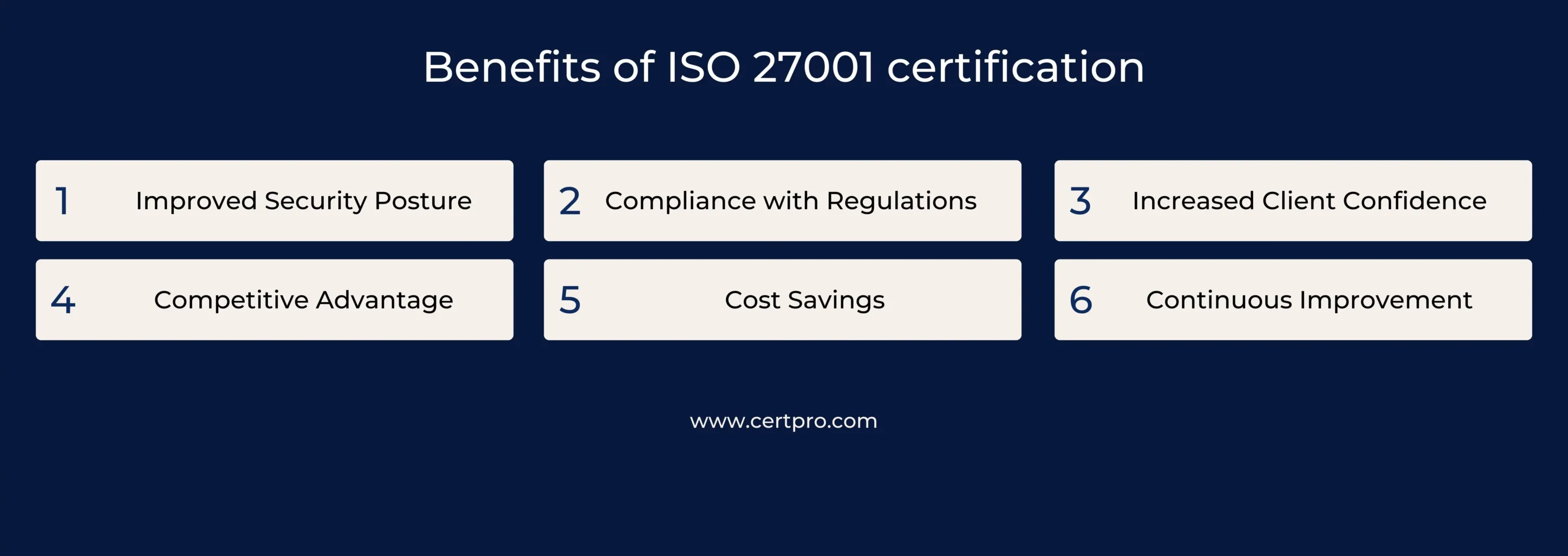
- ✓Verification of Controls and Improved Security Posture
- ✓Recognition in Financial Sector Procurement and Enterprise Sales
Industries Seeking ISO 27001 Certification in Minneapolis
ISO 27001 Certification in Minneapolis spans a wide range of industries operating across the Twin Cities metropolitan area. Each industry presents a distinct combination of information security risks, regulatory obligations, and client-driven assurance requirements that shape the scope and complexity of the ISMS evaluated during the ISO 27001 certification audit. The following table summarizes the primary industries pursuing ISO 27001 certification and the key information security considerations relevant to each sector.
| Industry Sector | Primary Information Security Considerations | Common ISMS Scope Elements |
|---|---|---|
| Financial Services and Fintech | Customer financial data, payment processing, regulatory requirements (GLBA, PCI DSS), fraud prevention controls | Core banking systems, payment platforms, customer portals, third-party integrations |
| Health Technology and Healthcare IT | Protected health information (PHI), HIPAA alignment, medical device data, clinical system access controls | Electronic health record platforms, patient-facing applications, cloud health data environments |
| SaaS and Cloud Service Providers | Multi-tenant data isolation, customer data confidentiality, availability commitments, access management controls | Cloud infrastructure, application environments, data processing pipelines, support systems |
| Insurance Organizations | Policyholder data, claims processing, underwriting data, regulatory compliance obligations | Policy management systems, claims platforms, agent portals, data analytics environments |
| Retail, E-Commerce, and Logistics | Customer payment and identity data, supply chain data, inventory systems, partner integrations | E-commerce platforms, fulfillment systems, third-party logistics integrations, customer databases |
Technology, AI, and Cybersecurity Organizations
Minneapolis and Bloomington host a growing concentration of technology companies, AI-driven platforms, and cybersecurity firms whose clients require verifiable information security governance. AI companies processing large volumes of training data, inference outputs, and customer interaction records face information security risks across data ingestion pipelines, model access controls, and output handling processes. ISO 27001 compliance for AI organizations requires an ISMS that addresses these technology-specific risks alongside the standard’s broader governance requirements.
Cybersecurity companies providing managed detection and response, vulnerability assessment, or security operations services to enterprise clients in regulated sectors frequently require ISO 27001 certification as a prerequisite for contracting with financial institutions or healthcare organizations. The ISO 27001 audit evaluates whether cybersecurity firms’ own ISMS — governing the security of their internal systems and client-facing infrastructure — meets the requirements of the standard independently of the security services they deliver to clients.
Manufacturing and Industrial Technology Companies
Manufacturing and industrial technology companies operating in the Minneapolis metropolitan area — including organizations in the Bloomington and Edina industrial and technology corridors — increasingly encounter ISO 27001 certification requirements from enterprise customers integrating digital systems into supply chains and production environments. Industrial technology platforms managing operational technology (OT) data, connected manufacturing systems, and supply chain partner integrations handle sensitive production, intellectual property, and partner information that falls within the ISMS scope.
ISO 27001 certification audit evaluations for manufacturing technology organizations assess controls governing IT/OT interface security, intellectual property protection, supplier information security, and physical access controls at production facilities. The four Annex A control domains — Organizational, People, Physical, and Technological — are each relevant to manufacturing and industrial technology environments, making the ISO 27001 standard a comprehensive framework for organizations managing both information technology and operationally integrated digital systems.
ISO 27001 Certification Scope and Independent Decision Framework
The scope of ISO 27001 Certification in Minneapolis is defined by the organization and confirmed during the Stage 1 audit. A clearly bounded ISMS scope is essential for producing a certification that accurately reflects the information security controls governing the specific systems, processes, and locations included within it. CertPro’s independent certification decision framework ensures that the ISO 27001 certification outcome reflects an objective, evidence-based determination rather than a commercial or advisory relationship with the organization under review.
Defining and Documenting ISMS Scope
The ISMS scope defines the organizational boundaries, information assets, systems, and locations to which the ISO 27001 standard applies and within which certification is sought. A precisely defined scope enables auditors to apply consistent evaluation criteria and ensures that the resulting certificate accurately represents the information security governance applicable to the scoped environment. For Minneapolis-based organizations with multi-site operations, cloud-hosted systems, or hybrid workforce arrangements, the scope definition must address which locations, systems, and data flows are included and how boundaries between in-scope and out-of-scope environments are controlled.
Scope creep — where the certified scope does not accurately reflect operational reality — is identified during the ISO 27001 certification audit and may result in scope clarification requirements or nonconformity findings. The ISMS scope is documented and reviewed at each surveillance and recertification audit to confirm that it remains current and accurately reflects the organization’s information security management boundaries.
Independent Certification Committee and Decision Process
CertPro’s certification decision is made by an independent certification committee that reviews the complete audit record, including the Stage 1 and Stage 2 audit reports, the auditor’s findings, and evidence of corrective actions taken in response to identified nonconformities. The committee is structurally separate from the audit team to preserve independence and objectivity in the certification determination. This independence is a foundational requirement of a credible ISO 27001 certification audit process and ensures that the certification outcome reflects conformance with the ISO 27001 standard rather than any commercial or relational consideration.
Organizations that do not satisfy all applicable requirements following corrective action review are not issued a certificate. The certification decision is binary and based entirely on the audit evidence. Certificates issued by CertPro reflect a point-in-time determination of conformance, subject to ongoing maintenance through the annual surveillance audit cycle.
Certificate Suspension, Withdrawal, and Maintenance
ISO 27001 certification is maintained through active ISMS operation and demonstrated conformance at each surveillance audit. Certificates may be suspended where an organization fails to address nonconformities identified during a surveillance audit within the specified timeframe, where the ISMS scope has materially changed without notification to the certification body, or where significant information security incidents indicate a breakdown in ISMS controls. Withdrawal of certification occurs when suspension conditions are not resolved within the allowable period or when an organization elects not to continue the certification cycle.
Organizations whose certificates are suspended or withdrawn must undergo a new ISO 27001 certification audit to reinstate certification status. For Minneapolis-based organizations in regulated sectors, certificate suspension can have material procurement and contractual consequences. This makes active ISMS maintenance and timely surveillance audit participation operationally critical — not just at initial certification, but throughout the three-year cycle.
ISO 27001 Compliance and Minnesota Privacy Considerations
Organizations pursuing ISO 27001 compliance in Minneapolis operate within a state and federal regulatory environment that shapes the information security obligations relevant to their ISMS. While ISO 27001 certification does not automatically establish legal compliance with applicable Minnesota or U.S. laws, the structured risk assessment and control documentation requirements of the ISO 27001 standard provide a strong foundation for mapping information security controls to regulatory obligations. Understanding the relationship between ISO 27001 compliance and Minnesota’s privacy and data security requirements is important context for organizations defining their ISMS scope and risk treatment priorities.
Minnesota Consumer Data Privacy Act and ISMS Design
The Minnesota Consumer Data Privacy Act (MCDPA) establishes requirements for organizations processing personal data of Minnesota residents, including obligations related to data minimization, purpose limitation, consumer rights, and data security. Organizations subject to the MCDPA that also pursue ISO 27001 certification may reference their ISMS documentation — including the risk assessment, risk treatment plan, and Statement of Applicability — as part of their documented data security program.
The Annex A controls applicable under ISO/IEC 27001:2022, particularly within the Organizational Controls and Technological Controls domains, address information classification, data handling procedures, access management, and incident response processes that align with information security components of MCDPA compliance programs. ISO 27001 certification does not constitute a legal determination of MCDPA compliance. Organizations remain responsible for independent legal analysis of their obligations under Minnesota and applicable federal law. However, the ISO 27001 standard’s documentation requirements do support organizations in maintaining structured records of their information security decisions.
HIPAA, GLBA, and Sector-Specific Regulatory Mapping
Minneapolis-based healthcare technology organizations subject to HIPAA and financial services firms subject to the Gramm-Leach-Bliley Act (GLBA) frequently reference ISO 27001 compliance as a component of their broader regulatory information security programs. The ISO 27001 standard requires organizations to map selected Annex A controls to identified risks and legal obligations — documented in the Statement of Applicability — which supports structured tracking of how ISMS controls relate to specific regulatory requirements.
Health technology organizations in the Twin Cities can reference Annex A controls addressing access management, cryptography, incident response, and supplier security as components of their HIPAA Security Rule administrative, physical, and technical safeguard implementations. Financial services organizations can similarly map Annex A controls to GLBA Safeguards Rule requirements. ISO 27001 certification audit findings provide an independently assessed reference point for these mapping exercises, though legal determination of regulatory compliance requires separate assessment by qualified legal and compliance counsel.
FAQ
▶
What is ISO 27001 certification and why is it relevant for Minneapolis organizations?
▶
Which types of Minneapolis organizations seek ISO 27001 certification?
▶
How does the ISO 27001 audit process work for organizations in Minneapolis?
▶
What documentation is required for an ISO 27001 certification audit?
▶
Does ISO 27001 certification establish compliance with the Minnesota Consumer Data Privacy Act?
▶
How long is an ISO 27001 certificate valid?
▶
What is the difference between the Stage 1 and Stage 2 ISO 27001 audits?
▶
What is the ISO/IEC 27001:2022 transition deadline and how does it affect Minneapolis organizations?
Get In Touch
have a question? let us get back to you.