
ISO 27001 Certification in Pennsylvania
ISO 27001 Certification in Pennsylvania is issued by CertPro, a Licensed CPA Firm providing independent third-party certification audits evaluated against the ISO/IEC 27001:2022 standard. The certification process assesses both the design and operating effectiveness of an organization’s Information Security Management System (ISMS). Certification decisions are made by an independent committee based solely on audit evidence — with no prior consulting relationship or implementation engagement with the audited organization.
OUR CLIENTS









Independent ISO 27001 Certification by a Licensed CPA Firm in Pennsylvania
ISO 27001 Certification in Pennsylvania is delivered through a structured, evidence-based audit process conducted by CertPro, a Licensed CPA Firm operating as an independent certification body. The certification scope is limited exclusively to audit and certification activities. No implementation, consulting, or readiness services are provided — preserving the independence required for an objective ISMS certification outcome under ISO/IEC 27001:2022.
Pennsylvania’s diverse and mature business environment creates substantial demand for internationally recognized information security credentials. Organizations operating in financial services, healthcare, life sciences, higher education, SaaS, cloud computing, manufacturing, and defense contracting regularly pursue ISO 27001 Certification in Pennsylvania to demonstrate conformance with internationally recognized information security management standards. The Commonwealth’s regulatory obligations — including the Pennsylvania Breach of Personal Information Notification Act, HIPAA requirements for healthcare entities, and federal cybersecurity frameworks applicable to defense contractors and federally regulated financial institutions — reinforce the need for structured, third-party-verified ISMS certification.
Certification Body Independence and Audit Scope
CertPro maintains strict certification body independence. The organization does not provide pre-audit consulting, implementation guidance, or remediation services to organizations seeking ISO 27001 Certification in Pennsylvania. This structural separation is essential to the integrity of the certification outcome. The certification decision is made by an independent review committee that evaluates audit findings and nonconformity reports — without any involvement from the audit team that conducted the fieldwork.
The ISO 27001 audit scope covers all clauses of ISO/IEC 27001:2022 — from Clause 4 (Context of the Organization) through Clause 10 (Improvement) — as well as Annex A controls selected and documented in the organization’s Statement of Applicability. The ISO 27001 assessment evaluates both the design adequacy of controls and their operating effectiveness over the defined audit period. Pennsylvania organizations are evaluated against the same internationally recognized standard used by certification bodies globally, ensuring that the resulting ISMS certification carries recognized credibility in enterprise procurement, regulatory reviews, and cross-border vendor assessments.
Pennsylvania’s Regulatory Environment and ISO 27001 Alignment
Pennsylvania’s regulatory framework creates specific obligations that ISO 27001 compliance directly addresses. The Pennsylvania Breach of Personal Information Notification Act (73 P.S. §§ 2301–2329) requires organizations that maintain computerized data containing personal information to notify affected Pennsylvania residents following a breach. An ISO 27001-certified ISMS provides the documented risk management, access control, incident management, and monitoring infrastructure needed to support compliance with this notification framework. Organizations that have completed an ISO 27001 audit in Pennsylvania can demonstrate to regulators that systematic security controls are in place and operating effectively.
Healthcare organizations in Pennsylvania subject to HIPAA Security Rule requirements benefit from ISO 27001’s structured approach to risk assessment and control implementation, which maps directly to the Administrative, Physical, and Technical safeguard categories of the HIPAA Security Rule. Pennsylvania defense contractors and subcontractors subject to CMMC (Cybersecurity Maturity Model Certification) requirements similarly find that ISO 27001 compliance establishes a documented ISMS foundation that supports CMMC preparation. Financial institutions regulated by the Pennsylvania Department of Banking and Securities — as well as those subject to federal oversight under OCC, FDIC, or NCUA — routinely pursue ISO 27001 Certification as a demonstration of enterprise-level information security governance.
Licensed CPA Firm Positioning and Institutional Authority
CertPro’s status as a Licensed CPA Firm reinforces the institutional credibility of ISO 27001 Certifications issued to Pennsylvania organizations. CPA firms are subject to professional standards, peer review requirements, and ethical obligations that govern the quality and independence of attestation and certification engagements. This professional accountability framework provides Pennsylvania organizations and their stakeholders — including customers, regulators, and board-level governance committees — with a higher level of confidence in the resulting ISMS certification outcome than may be offered by certification bodies without equivalent professional licensure or regulatory oversight.
The institutional positioning of a Licensed CPA Firm as the certification authority is particularly relevant for Pennsylvania financial institutions, publicly traded companies, and healthcare organizations operating under governance frameworks that require documented independent third-party oversight. ISMS certification issued by a Licensed CPA Firm satisfies independent verification requirements frequently specified in enterprise vendor agreements, financial sector procurement policies, and regulatory audit programs across the Commonwealth.

What Is ISO 27001 Certification?
ISO 27001 Certification is a formal third-party attestation that an organization’s Information Security Management System (ISMS) conforms to the requirements of ISO/IEC 27001:2022 — the internationally recognized standard for information security management published by the International Organization for Standardization (ISO) and the International Electrotechnical Commission (IEC). Certification confirms that the organization has established, implemented, maintained, and continually improved a documented ISMS capable of systematically managing information security risks.
Definition and Scope of ISO/IEC 27001:2022
ISO/IEC 27001:2022 is the most current version of the standard, superseding the ISO/IEC 27001:2013 edition. The 2022 revision reduced the number of Annex A controls from 114 controls organized across 14 domains to 93 controls organized across four control themes: Organizational Controls (37 controls), People Controls (8 controls), Physical Controls (14 controls), and Technological Controls (34 controls). Organizations certified under the 2013 version are required to transition to the 2022 standard, with the transition deadline set by accreditation bodies at October 31, 2025. ISO 27001 Certification in Pennsylvania conducted by CertPro is performed against the current ISO/IEC 27001:2022 requirements.
The ISMS framework defined in ISO 27001 is built on the Plan-Do-Check-Act (PDCA) cycle. It requires organizations to define the ISMS scope, establish an information security policy, conduct a systematic risk assessment, develop a risk treatment plan, select applicable Annex A controls, document a Statement of Applicability (SoA), implement and operate the controls, monitor and measure control performance, conduct internal audits, perform management reviews, and address nonconformities through corrective actions. Each of these elements is evaluated during an ISO 27001 audit to determine conformance with the standard’s requirements.
The Information Security Management System (ISMS) Framework
An Information Security Management System is the organizational framework through which information security risks are identified, assessed, treated, monitored, and continually improved. The ISMS is not solely a technical security program — it is a management system that integrates governance structures, documented policies and procedures, risk management processes, control implementation, performance monitoring, and continual improvement mechanisms. ISO 27001 defines the requirements an ISMS must meet to achieve certification, but does not prescribe the specific technical solutions an organization must deploy.
The four Annex A control domains in ISO/IEC 27001:2022 — Organizational, People, Physical, and Technological — address the full spectrum of information security risks an organization may face. Organizational controls cover policies, procedures, roles and responsibilities, supplier relationships, and incident management. People controls address security awareness, training, background screening, and remote work security. Physical controls govern physical access, equipment protection, and secure disposal. Technological controls address access management, cryptography, malware protection, network security, vulnerability management, and secure development practices. During an ISO 27001 assessment, auditors evaluate the organization’s control selections through the Statement of Applicability and assess evidence of control design and operation.
Core ISMS Documentation Requirements
ISO/IEC 27001:2022 requires organizations to maintain specific documented information as evidence of ISMS conformance. Core documentation includes: an information security policy, the ISMS scope statement, the risk assessment methodology and results, the risk treatment plan, the Statement of Applicability (SoA) documenting selected and excluded Annex A controls with justifications, information security objectives, evidence of competence and awareness training, results of internal audits and management reviews, and records of corrective actions. During an ISO 27001 audit, these documents are reviewed for completeness, currency, and alignment with the standard’s requirements. Pennsylvania organizations undergoing ISO 27001 Certification must ensure that all documented information is maintained, controlled, and available for auditor review.
| ISO/IEC 27001:2022 Clause | Requirement Area | Key Documentation |
|---|---|---|
| Clause 4 | Context of the Organization | ISMS scope, interested parties, internal/external issues |
| Clause 6 | Planning | Risk assessment results, risk treatment plan, Statement of Applicability |
| Clause 7 | Support | Competence records, awareness evidence, documented information controls |
| Clause 9 | Performance Evaluation | Internal audit results, management review records, monitoring data |
| Clause 10 | Improvement | Nonconformity records, corrective action evidence, continual improvement log |
ISO 27001 Versus Other Information Security Frameworks
ISO 27001 Certification differs from other information security frameworks in several important respects. Unlike NIST CSF or CIS Controls, ISO 27001 is a certifiable standard — organizations can be formally audited and issued a certificate of conformance by an accredited or licensed certification body. Unlike SOC 2, which is an attestation of controls relevant to the AICPA’s Trust Services Criteria, ISO 27001 Certification is issued against a management system standard and is recognized internationally — including in the European Union, Asia-Pacific, and Middle East markets. Pennsylvania organizations with international clients or cross-border operations frequently pursue ISO 27001 Certification in Pennsylvania specifically because of its global recognition in vendor security assessments and procurement due diligence processes.
ISO 27001 Certification Audit Process in Pennsylvania
The ISO 27001 certification audit process conducted by CertPro for Pennsylvania organizations follows a structured, multi-stage sequence designed to evaluate ISMS conformance against all applicable requirements of ISO/IEC 27001:2022. Each stage produces documented outputs that form the evidentiary basis for the certification committee’s decision. The process is strictly limited to audit and evaluation activities — no advisory, implementation, or remediation services are provided at any stage.
The Stage 1 audit is a documentation and readiness review conducted prior to the Stage 2 certification audit. During Stage 1, auditors review the organization’s ISMS documentation to assess whether the management system has been established and documented in accordance with ISO/IEC 27001:2022 requirements. The Stage 1 review evaluates the ISMS scope, the information security policy, the risk assessment methodology, the Statement of Applicability, the risk treatment plan, and key supporting documented information. The purpose of Stage 1 is not to evaluate the operational effectiveness of controls, but to determine whether ISMS documentation is sufficiently developed to proceed to Stage 2 fieldwork.
The Stage 1 audit typically produces a report identifying areas where documentation is incomplete, inconsistent, or not aligned with ISO/IEC 27001:2022 requirements. These findings are communicated to the organization before Stage 2 begins. Stage 1 findings do not constitute a certification decision — they inform the audit program for Stage 2. Pennsylvania organizations undergoing an ISO 27001 audit for the first time should ensure that core ISMS documentation is complete and internally reviewed before Stage 1 commences.
The Stage 2 audit is the certification assessment, during which auditors evaluate the implementation and operating effectiveness of the organization’s ISMS controls against the full requirements of ISO/IEC 27001:2022. Auditors conduct interviews with personnel in relevant roles, review process documentation and evidence records, observe security practices, and test the operational effectiveness of selected Annex A controls. The Stage 2 ISO 27001 assessment covers all applicable clauses from Clause 4 through Clause 10 and the Annex A controls documented in the Statement of Applicability as applicable and implemented.
During Stage 2, auditors assess whether the organization’s information security objectives have been established, whether risk assessment results are current and documented, whether the risk treatment plan has been implemented, whether monitoring and measurement activities are producing meaningful data, whether internal audits have been conducted and findings addressed, whether management reviews have occurred at planned intervals, and whether nonconformities have been identified and resolved through documented corrective actions. The Stage 2 fieldwork produces an audit report submitted to the independent certification committee for the final certification decision.
Nonconformities identified during the ISO 27001 audit are documented in the audit report with references to the specific ISO/IEC 27001:2022 clause or Annex A control requirement that was not met. The organization is required to respond with documented corrective actions. The certification committee then reviews the audit report, the nonconformity findings, and the organization’s corrective action responses before issuing a certification decision. The certification committee operates independently from the audit team that conducted the fieldwork, ensuring objectivity in the outcome.
The certification decision results in one of three outcomes: issuance of an ISO 27001 certificate, conditional certification pending resolution of identified nonconformities, or a decision not to certify where significant conformance gaps remain. Where certification is issued, the certificate documents the certified organization, the ISMS scope, the standard version (ISO/IEC 27001:2022), the certification date, and the certificate validity period. ISO 27001 certificates are typically valid for three years, subject to annual surveillance audits conducted in the intervening years.
Following initial ISO 27001 Certification, organizations are subject to annual surveillance audits during the three-year certification cycle. Surveillance audits are narrower in scope than the initial certification audit, focusing on the continuing effectiveness of the ISMS, resolution of previously identified nonconformities, changes to the organization or ISMS scope, progress on information security objectives, results of internal audits and management reviews, and the status of continual improvement activities. Material nonconformities identified during surveillance may result in certification suspension or withdrawal.
At the end of the three-year certification cycle, a recertification audit is conducted to renew the ISO 27001 certificate for a further three years. The recertification ISO 27001 audit covers the full ISMS scope and evaluates the organization’s performance across the entire certification period — including trends in nonconformity management, internal audit results, management review outcomes, and the effectiveness of the continual improvement process. Pennsylvania organizations seeking uninterrupted certification status must initiate the recertification process with sufficient lead time to complete the audit before the current certificate expires.
| Audit Stage | Key Activities | Output |
|---|---|---|
| Stage 1 Audit | Review of ISMS documentation, scope, SoA, and risk assessment records | Stage 1 report; identification of documentation findings |
| Stage 2 Audit | Control testing, personnel interviews, evidence review, operating effectiveness assessment | Audit report; nonconformity findings |
| Certification Decision | Independent committee review of audit report and corrective actions | ISO 27001 certificate or non-certification decision |
| Surveillance Audit (Year 1 & 2) | Focused review of ISMS effectiveness, changes, internal audits, and security objectives | Surveillance audit report; updated certification status |
| Recertification Audit (Year 3) | Full-scope re-evaluation of ISMS conformance and performance over the certification cycle | Certificate renewal or lapse |
- ✓Stage 1 Audit: Documentation and Readiness Review
- ✓Stage 2 Audit: Certification Assessment and Control Testing
- ✓Nonconformity Review and Certification Decision
- ✓Surveillance Audits and Recertification
ISO 27001 Certification Requirements and Evaluation Criteria
ISO 27001 Certification in Pennsylvania requires organizations to demonstrate conformance with all mandatory requirements specified in ISO/IEC 27001:2022, from Clauses 4 through 10, as well as the applicable controls documented in Annex A. The ISO 27001 assessment evaluates both the design of controls — whether each control is structured appropriately to address the identified risk — and the operating effectiveness of controls — whether each control is consistently applied and producing the intended security outcomes.
ISO/IEC 27001:2022 requires organizations to establish and apply a documented information security risk assessment process. This process must define risk acceptance criteria, identify risks associated with the loss of confidentiality, integrity, and availability of information assets, analyze and evaluate identified risks against the defined criteria, and prioritize risks for treatment. The risk assessment must be repeatable, documented, and reviewed at planned intervals or when significant changes occur. During an ISO 27001 audit, auditors review the risk assessment methodology, the risk register, and evidence that risk assessment activities have been conducted as documented.
The risk treatment plan documents the organization’s decisions about how to address each identified risk — whether through applying Annex A controls, implementing other controls, accepting the risk, avoiding the risk, or transferring the risk. The plan must reference applicable Annex A controls and must be consistent with the Statement of Applicability. Pennsylvania organizations in regulated industries — including healthcare, financial services, and defense contracting — must also ensure that their risk treatment decisions address sector-specific regulatory requirements, such as HIPAA Security Rule safeguards or DFARS cybersecurity obligations for defense contractors.
The Statement of Applicability (SoA) is one of the most critical documents in an ISO 27001-certified ISMS. The SoA lists all 93 Annex A controls from ISO/IEC 27001:2022 and documents for each control whether it is applicable or excluded, the justification for inclusion or exclusion, and the implementation status of each applicable control. Controls may be excluded from the SoA only with documented justification, and exclusions must not result in the ISMS failing to address identified risks. During an ISO 27001 audit in Pennsylvania, auditors review the SoA in detail to verify that control selections are consistent with risk assessment results and that applicable controls are implemented and operating.
The four Annex A control domains in ISO/IEC 27001:2022 — Organizational (37 controls), People (8 controls), Physical (14 controls), and Technological (34 controls) — each address distinct categories of information security risk. Organizational controls include policies, access control procedures, supplier security requirements, incident management, business continuity planning, and legal compliance. Technological controls include identity and authentication management, encryption, endpoint protection, network security, secure configuration, vulnerability management, web filtering, data leakage prevention, and secure development requirements. Auditors assess documentary evidence and operational artifacts for each applicable control during the Stage 2 ISO 27001 assessment.
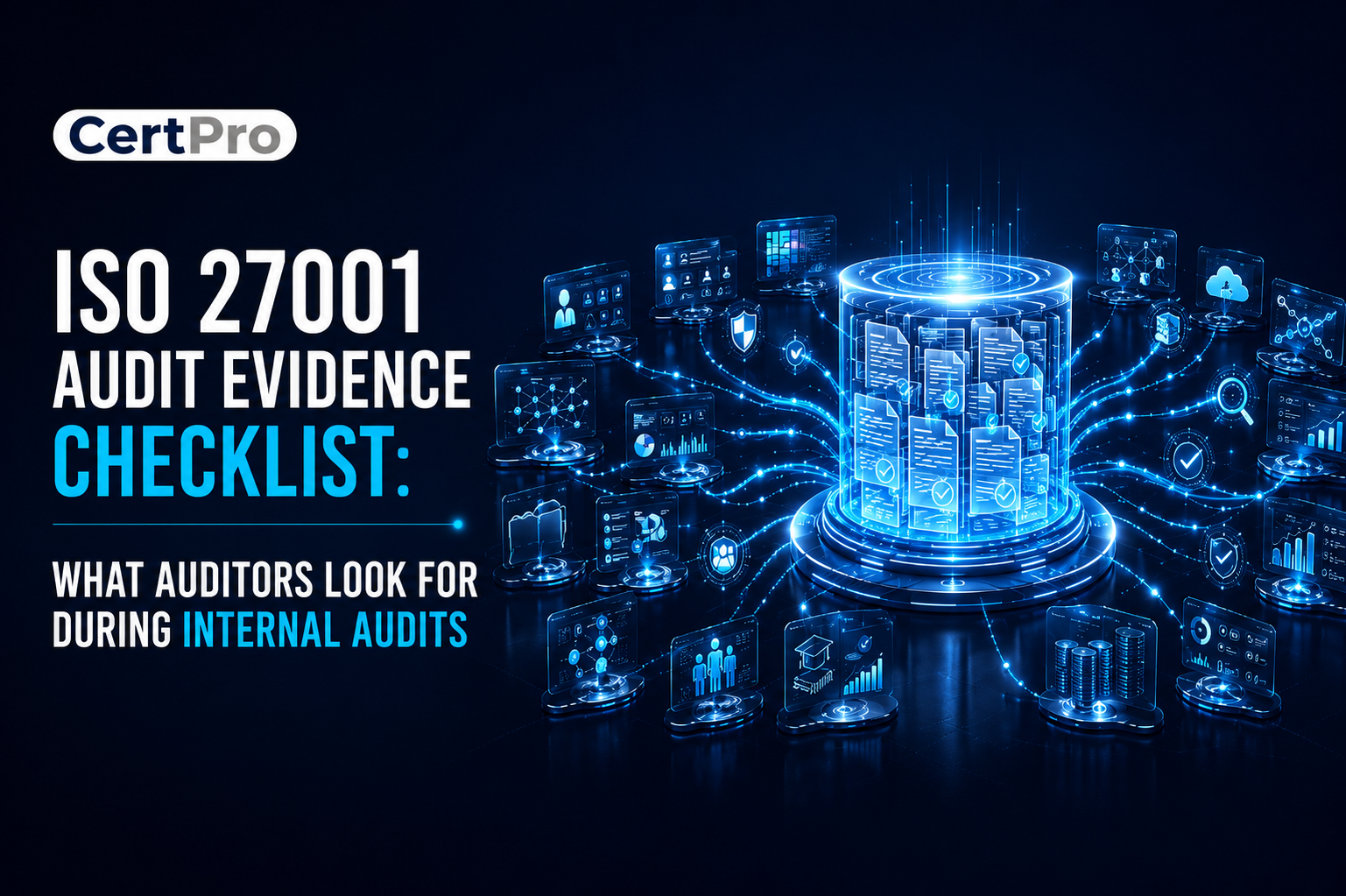
ISO/IEC 27001:2022 Clause 9.2 requires organizations to conduct internal audits of the ISMS at planned intervals. These audits provide information on whether the ISMS conforms to the organization’s own requirements and to the requirements of the standard, and whether it is effectively implemented and maintained. Internal audits must be conducted by auditors who are independent of the activities being audited, and results must be reported to relevant management. Evidence of internal audit planning, execution, findings, and follow-up is reviewed during the certification audit as evidence of the organization’s self-monitoring capability.
Clause 9.3 requires top management to review the ISMS at planned intervals to ensure its continuing suitability, adequacy, and effectiveness. Management review inputs must include the status of previous action items, changes in external and internal issues, security performance data, audit results, risk assessment findings, and opportunities for continual improvement. Management review outputs must include decisions on continual improvement opportunities and any changes needed to the ISMS. During an ISO 27001 assessment, auditors review management review records to verify that reviews are occurring with appropriate frequency, completeness, and documented follow-through on decisions.
ISO 27001 Certification may be suspended or withdrawn when an organization fails to maintain conformance with ISO/IEC 27001:2022 requirements between certification cycles. Specific conditions that may trigger suspension include: failure to undergo scheduled surveillance audits within the required timeframe, discovery of significant nonconformities during surveillance that are not remediated within agreed timelines, material changes to the ISMS scope that have not been reviewed by the certification body, or evidence of misrepresentation of the ISMS or the scope of certification. Certificate withdrawal may occur when suspension conditions are not resolved, or when the organization voluntarily surrenders its certification. Pennsylvania organizations must maintain ongoing ISMS operation, internal audit activity, and management review practices throughout the certification period to avoid suspension.
- ✓Risk Assessment and Risk Treatment Requirements
- ✓Statement of Applicability and Annex A Control Selection
- ✓Internal Audit and Management Review Requirements
- ✓Conditions for Certification Suspension or Withdrawal
ISO 27001 Certification for Pennsylvania’s Business Sectors
ISO 27001 Certification in Pennsylvania is pursued across a broad range of industry sectors. Pennsylvania’s economy includes major concentrations in financial services, healthcare and life sciences, technology and SaaS, manufacturing, higher education, and defense contracting — all sectors where information security governance and third-party-verified ISMS certification are increasingly expected by enterprise customers, regulators, and institutional partners.
Financial Services and Fintech Organizations
Pennsylvania’s financial services sector is anchored by major institutions headquartered in Philadelphia and Pittsburgh, including commercial banks, insurance companies, asset managers, and payment processors. ISO 27001 Certification is a recognized information security credential in financial sector procurement and vendor risk management programs. Financial institutions operating in Pennsylvania that process, transmit, or store sensitive customer financial information — including account data, payment card data, and personally identifiable financial information — use ISO 27001 compliance as a framework for managing information security risks systematically. Fintech companies in Pennsylvania’s growing financial technology ecosystem pursue ISO 27001 Certification to satisfy the vendor security assessment requirements of banking and insurance partners.
Pennsylvania financial institutions subject to the Gramm-Leach-Bliley Act (GLBA) Safeguards Rule — which requires financial institutions to develop, implement, and maintain a comprehensive information security program — find that ISO 27001’s ISMS framework directly addresses the Safeguards Rule’s programmatic requirements. The ISO 27001 Certification process in Pennsylvania documents risk assessments, access controls, encryption practices, incident response procedures, and vendor oversight activities — all components that align with GLBA compliance obligations. This allows financial services organizations to demonstrate to regulators and customers that their information security program meets a recognized international standard.
Healthcare, Life Sciences, and HIPAA-Regulated Entities
Pennsylvania is home to a substantial concentration of hospitals, health systems, academic medical centers, pharmaceutical companies, biotechnology firms, and healthcare technology vendors. ISO 27001 compliance for Pennsylvania healthcare organizations aligns closely with HIPAA Security Rule requirements for covered entities and business associates. The HIPAA Security Rule requires covered entities to implement administrative, physical, and technical safeguards to protect electronic protected health information (ePHI). ISO 27001 Certification addresses these safeguard categories through its Annex A control domains, providing a documented, independently audited framework for HIPAA-adjacent information security governance.
Pharmaceutical companies and life sciences organizations in Pennsylvania handling clinical trial data, proprietary research data, and intellectual property pursue ISO 27001 Certification as a mechanism for protecting high-value information assets from disclosure, theft, or unauthorized modification. Contract research organizations (CROs), laboratory information management system (LIMS) providers, and electronic data capture (EDC) vendors in Pennsylvania’s life sciences sector use ISO 27001 Certification to demonstrate to pharmaceutical and biotech clients that information security controls protecting clinical and research data meet internationally recognized standards.
Technology, SaaS, and Cloud Service Providers
ISO 27001 Certification in Pennsylvania for technology companies is among the most active certification categories in the Commonwealth. Pennsylvania’s technology sector includes enterprise software developers, SaaS platform providers, managed service providers (MSPs), cloud hosting companies, data center operators, and cybersecurity firms concentrated in Philadelphia, Pittsburgh, King of Prussia, and suburban technology corridors. SaaS companies serving enterprise clients in regulated industries — financial services, healthcare, government — are routinely required by customer procurement processes to demonstrate ISO 27001 Certification as a condition of vendor approval or contract renewal.
Cloud service providers operating data centers or delivering IaaS, PaaS, or SaaS offerings from Pennsylvania pursue ISO 27001 Certification to meet the information security due diligence requirements of enterprise and government customers. ISO/IEC 27017 (cloud security controls) and ISO/IEC 27018 (protection of personally identifiable information in public clouds) are supplementary standards that cloud service providers may pursue alongside ISO 27001 Certification to address cloud-specific security requirements. An ISO 27001 audit for a cloud service provider evaluates controls across all four Annex A domains, with particular focus on access management, cryptography, network security, vulnerability management, and data protection.
Manufacturing, Defense, and Higher Education Sectors
Pennsylvania’s manufacturing sector — including advanced manufacturing, precision components, aerospace, and defense supply chain participants — uses ISO 27001 Certification to demonstrate information security governance over operational technology (OT) networks, intellectual property, and controlled unclassified information (CUI). Defense contractors and subcontractors in Pennsylvania subject to DFARS clause 252.204-7012 and CMMC requirements find that ISO 27001 compliance establishes a documented ISMS that provides an organized foundation for the technical security requirements specified under CMMC Level 2 and Level 3.
Pennsylvania’s higher education sector — including major research universities in Philadelphia, Pittsburgh, University Park, and surrounding communities — pursues ISO 27001 Certification for units handling sensitive research data, export-controlled information, student records, and federally funded research data subject to FISMA and NIST SP 800-171 requirements. ISMS certification in higher education provides documented evidence that information security management practices are systematically applied across research computing environments and administrative information systems. The ISO 27001 assessment framework supports university IT governance teams in demonstrating institutional commitment to information security to federal funding agencies, research partners, and accreditation bodies.
Benefits of ISO 27001 Certification for Pennsylvania-Based Organizations
ISO 27001 Certification delivers specific, demonstrable benefits for Pennsylvania organizations across all sectors. These benefits extend beyond the formal certificate to the ongoing operational disciplines required to maintain a conforming ISMS. The following benefits are consistently demonstrated by organizations that have successfully completed ISO 27001 Certification in Pennsylvania and maintained certification through surveillance audit cycles.
- ✓Independent third-party verification of ISMS control design and operating effectiveness through structured ISO 27001 audit procedures
- ✓Demonstrated conformance with an internationally recognized information security management standard, strengthening credibility in enterprise vendor assessments
- ✓Structured risk identification, assessment, and treatment processes that systematically reduce the likelihood of information security incidents
- ✓Documented Annex A controls across Organizational, People, Physical, and Technological domains, providing evidence of comprehensive security governance
- ✓Alignment with Pennsylvania regulatory obligations including the Breach of Personal Information Notification Act and sector-specific requirements under HIPAA, GLBA, and DFARS
- ✓Enhanced position in competitive procurement processes where ISO 27001 Certification is a formal vendor qualification requirement
- ✓Structured internal audit and management review disciplines that create ongoing visibility into ISMS performance and emerging risks
- ✓Formal incident management and business continuity controls that reduce operational exposure to security events and service disruptions
- ✓Supplier security management processes that extend information security governance to third-party vendors handling sensitive organizational information
- ✓Continual improvement framework that systematically addresses identified nonconformities and evolving information security threats
ISO 27001 Certification is formally recognized in enterprise vendor security assessment programs across financial services, healthcare, technology, and government contracting sectors. Pennsylvania organizations that hold ISO 27001 Certification can present their certificate and audit report as evidence of ISMS conformance in response to vendor security questionnaires, request-for-proposal security requirements, and customer-initiated security reviews. This recognition reduces the administrative burden associated with repeated customer security assessments, since the ISO 27001 certificate provides third-party-audited evidence that can be relied upon across multiple customer relationships simultaneously.
For Pennsylvania SaaS providers, managed service providers, and cloud vendors serving enterprise clients, ISO 27001 Certification is increasingly a minimum qualification threshold rather than a differentiating factor. Enterprise procurement teams at financial institutions, healthcare systems, and large corporations routinely include ISO 27001 Certification as a pass/fail vendor qualification criterion in their vendor risk management programs. Pennsylvania technology companies that hold ISO 27001 Certification in Pennsylvania can reference the certificate in sales processes, contract negotiations, and regulatory due diligence reviews — reducing the time and cost associated with individual customer security assessments.
ISO 27001 compliance maps directly to numerous regulatory frameworks applicable to Pennsylvania organizations. The ISMS framework’s risk assessment, access control, encryption, incident management, and business continuity requirements align with HIPAA Security Rule safeguards, GLBA Safeguards Rule requirements, NIST SP 800-171 controls for CUI protection, and SOC 2 security criteria. Organizations that maintain a conforming ISMS can use their ISO 27001 documentation and audit evidence as a foundation for demonstrating compliance across multiple regulatory requirements — reducing duplication of compliance effort and associated organizational costs.
Pennsylvania organizations subject to both HIPAA and ISO 27001 Certification requirements can use a unified ISMS to address both frameworks. The ISO 27001 risk assessment process provides the foundation for HIPAA’s required risk analysis. ISO 27001 Annex A controls for access management, encryption, audit logging, and physical security correspond directly to HIPAA Technical and Physical safeguard requirements. Organizations that document their control mapping between ISO 27001 Annex A and the HIPAA Security Rule can present this mapping to healthcare customers and regulators as evidence of a systematic, risk-based approach to ePHI protection — a direct benefit that ISO 27001 compliance delivers for Pennsylvania healthcare entities in regulatory reviews.
The most operationally significant benefit of ISO 27001 Certification is the risk reduction achieved through systematic implementation and operation of ISMS controls. Organizations that maintain a conforming ISMS have documented their information assets, assessed the risks to those assets, implemented controls to reduce risks to acceptable levels, and established monitoring mechanisms to detect control failures or new threats. These operational disciplines — enforced through internal audit requirements and surveillance audit accountability — create a security posture that is materially more resilient than organizations without a structured information security management framework.
- ✓Vendor Qualification and Enterprise Procurement Recognition
- ✓Regulatory Alignment and Compliance Efficiency
- ✓Organizational Risk Reduction and Security Discipline
ISO 27001 Annex A Controls and ISMS Governance in Pennsylvania
ISO/IEC 27001:2022 Annex A defines 93 information security controls organized across four domains. These controls are not prescriptive solutions but represent a reference set of security measures from which organizations select applicable controls based on their risk assessment results. The Statement of Applicability documents which controls are applicable to the organization’s ISMS scope and provides the justification for each inclusion and exclusion decision. During an ISO 27001 audit in Pennsylvania, auditors evaluate the completeness of the SoA and assess evidence of implementation and operation for each applicable control.
Organizational Controls (Clause A.5)
The 37 Organizational Controls in Annex A of ISO/IEC 27001:2022 address policies, roles and responsibilities, threat intelligence, information security in project management, asset management, access control, supplier relationships, incident management, business continuity, and legal and regulatory compliance. These controls establish the governance framework within which technical and physical security measures operate. Key Organizational Controls evaluated during an ISO 27001 audit include the information security policy (A.5.1), information security roles and responsibilities (A.5.2), threat intelligence practices (A.5.7), information security in supplier agreements (A.5.19–A.5.22), and information security incident management planning (A.5.24–A.5.28).
Supplier security controls (A.5.19 through A.5.22) are particularly relevant for Pennsylvania organizations that rely on third-party vendors for cloud services, software development, data processing, or IT operations. The ISO 27001 standard requires organizations to assess information security risks in supplier relationships, establish security requirements in supplier agreements, monitor supplier security performance, and manage changes to supplier services. Auditors review supplier agreements, vendor risk assessment records, and supplier monitoring activities as part of the ISO 27001 assessment to verify that third-party information security risks are systematically managed within the ISMS scope.
Technological Controls (Clause A.8) and Security Monitoring
The 34 Technological Controls in Annex A include user endpoint devices (A.8.1), privileged access rights (A.8.2), information access restriction (A.8.3), source code access (A.8.4), secure authentication (A.8.5), capacity management (A.8.6), malware protection (A.8.7), technical vulnerability management (A.8.8), configuration management (A.8.9), information deletion (A.8.10), data masking (A.8.11), data leakage prevention (A.8.12), monitoring activities (A.8.16), web filtering (A.8.23), use of cryptography (A.8.24), and secure system development lifecycle controls (A.8.25–A.8.34). Technological controls are evaluated by auditors through review of technical configuration documentation, system logs, security monitoring reports, patch management records, and access control settings.
Security monitoring (A.8.16) requires organizations to monitor networks, systems, and applications for anomalous behavior and potential security events. Pennsylvania technology organizations operating cloud environments, SaaS platforms, or enterprise networks must demonstrate that monitoring controls are configured, that logs are retained for appropriate periods, and that security event alerting is operational. During an ISO 27001 assessment, auditors review monitoring architecture documentation, log management practices, SIEM configurations, and evidence of security event investigation and response activities.
Business Continuity and Incident Management Controls
ISO 27001 Annex A controls for information security incident management (A.5.24–A.5.28) and ICT continuity (A.5.29–A.5.30) are evaluated as part of the certification assessment. Incident management controls require organizations to establish a documented process for reporting, classifying, investigating, and responding to information security incidents — including security breaches, malware events, unauthorized access incidents, and service disruptions. Evidence reviewed during an ISO 27001 audit typically includes incident response plans, incident log records, post-incident review reports, and communications procedures for notifying affected parties and regulators.
Business continuity planning for information security (A.5.29) requires organizations to plan for the continuity of information security management during disruptive incidents. This includes defining recovery time objectives for critical information systems, establishing backup and recovery procedures, testing business continuity and disaster recovery plans at defined intervals, and documenting recovery test results. Pennsylvania organizations in regulated sectors — particularly healthcare, financial services, and critical infrastructure — must demonstrate that business continuity and disaster recovery capabilities have been tested and that results are documented and reviewed by management.
ISO 27001 Compliance in the Pennsylvania Regulatory Landscape
ISO 27001 compliance in Pennsylvania operates within a multi-layered regulatory environment that includes state-level data protection obligations, federal sector-specific cybersecurity requirements, and contractual security frameworks imposed by enterprise customers and institutional partners. Understanding how ISO 27001 compliance maps to Pennsylvania’s specific regulatory obligations is essential for organizations evaluating the strategic value of ISMS certification.
Pennsylvania Breach Notification Act and ISMS Controls
The Pennsylvania Breach of Personal Information Notification Act (Act 94 of 2005, as amended) requires any entity that maintains computerized data containing personal information of Pennsylvania residents to provide prompt notification to affected residents following discovery of a breach. The Act defines personal information to include combinations of name with Social Security number, driver’s license or state identification number, financial account numbers with access credentials, medical information, or usernames with passwords. An ISO 27001-certified ISMS provides the incident detection, incident classification, and notification workflow infrastructure required to respond to breach events in compliance with the Act’s requirements.
Organizations that experience a data breach while holding ISO 27001 Certification have documented evidence that systematic security controls were in place and operating at the time of the incident. This documented evidence is relevant to regulatory investigations, litigation defense, and customer communications following a breach event. ISO 27001 compliance provides Pennsylvania organizations with a certification record and audit documentation to demonstrate that information security obligations were taken seriously — and that controls were implemented and maintained in conformance with an internationally recognized standard — a substantive differentiator in post-breach regulatory and legal proceedings.
Federal Cybersecurity Frameworks and ISO 27001 Alignment
Pennsylvania organizations subject to federal cybersecurity requirements — including NIST SP 800-171 for CUI protection, FISMA for federal contractors, CMMC for defense contractors, and FFIEC cybersecurity guidance for financial institutions — find that ISO 27001 compliance establishes a documented ISMS that can be mapped to these frameworks. NIST SP 800-53 and ISO 27001 share substantial conceptual alignment across access control, audit and accountability, configuration management, incident response, risk assessment, and system and communications protection. Organizations that maintain ISO 27001 Certification can use their ISMS documentation, risk register, and control evidence as inputs to NIST SP 800-171 self-assessments or CMMC assessment preparations.
Cross-Border Compliance Considerations for Pennsylvania Organizations
Pennsylvania organizations with European Union customers, subsidiaries, or data processing operations subject to the General Data Protection Regulation (GDPR) face cross-border information security compliance requirements. ISO 27001 Certification is explicitly referenced in GDPR Article 42 as a certification mechanism that can be used to demonstrate compliance with GDPR security requirements under Article 32 (security of processing). While ISO 27001 Certification alone does not constitute GDPR compliance, an ISO 27001-certified ISMS that incorporates appropriate personal data protection controls — including data minimization, purpose limitation, retention management, and data subject rights procedures — provides documented evidence of a systematic approach to GDPR security obligations.
Pennsylvania pharmaceutical companies and clinical research organizations (CROs) with EU clinical trial operations or EU drug approval activities must navigate both FDA cybersecurity guidance and GDPR personal data protection requirements. ISO 27001 Certification provides a single documented ISMS framework that addresses information security risks across both regulatory contexts. Similarly, Pennsylvania financial technology companies processing payment transactions for European customers must address both PCI DSS card data security requirements and GDPR personal data obligations — an ISO 27001-certified ISMS provides a governance framework that supports both compliance programs through shared risk assessment and control documentation practices.
ISMS Certification Scope Definition and Boundary Setting
ISMS certification scope definition is one of the most strategically significant decisions in the ISO 27001 certification process. The scope defines the boundaries and applicability of the ISMS — which organizational units, information assets, processes, facilities, and technologies are included within the certified ISMS. The scope statement must be documented and must identify the external and internal issues, interested parties, and interfaces with other organizational activities relevant to the ISMS. An overly narrow scope may limit the commercial value of the certification; an overly broad scope may make the ISMS operationally difficult to maintain and increase the complexity of the ISO 27001 audit.
Defining ISMS Scope for Pennsylvania Organizations
Pennsylvania organizations typically define their ISMS scope around the organizational units, systems, and processes that handle the most sensitive information assets or that are subject to the highest customer or regulatory scrutiny. For a SaaS provider, the scope commonly encompasses the product development, operations, and support functions associated with the SaaS platform and its underlying infrastructure. For a healthcare IT vendor, the scope typically includes all systems and processes involved in the creation, processing, storage, transmission, and disposal of ePHI. For a financial services firm, the scope may cover all systems handling customer financial data, trading data, and regulated financial records.
During an ISO 27001 audit, auditors review the scope statement to verify that it accurately reflects the boundaries of the ISMS and that no material information security risks fall outside the scope without documented justification. Organizations that define a scope excluding significant operational units or information asset categories may receive audit findings related to incomplete scope definition. The certification certificate documents the certified scope, and customers reviewing the certificate will evaluate whether the scope covers the organizational activities most relevant to their vendor security assessment requirements.
Interfaces with Cloud Infrastructure and Third-Party Services
Pennsylvania organizations that rely on cloud infrastructure providers (AWS, Microsoft Azure, Google Cloud) within their ISMS scope must address the shared responsibility model in their ISMS documentation and scope definition. The cloud service provider’s security controls and certifications — such as the cloud provider’s own ISO 27001 Certification or SOC 2 Type 2 report — cover the underlying infrastructure. The Pennsylvania organization’s ISMS must address the security controls within its own area of responsibility under the shared responsibility model. During an ISO 27001 audit, auditors review how the organization has documented the boundaries of its ISMS in relation to cloud service provider responsibilities and how supplier security requirements are addressed in supplier agreements.
ISO 27001 Transition to ISO/IEC 27001:2022
Pennsylvania organizations that hold ISO 27001 Certification under the ISO/IEC 27001:2013 standard are required to transition to the ISO/IEC 27001:2022 version. The transition deadline established by accreditation bodies is October 31, 2025. After this date, certificates issued under the 2013 version will no longer be considered valid by major certification schemes. Organizations that have not completed the transition to the 2022 standard before this deadline must undergo a transition audit to update their certification to the current version.
Key Changes Between ISO/IEC 27001:2013 and ISO/IEC 27001:2022
The transition from ISO/IEC 27001:2013 to ISO/IEC 27001:2022 involves several substantive changes affecting ISMS documentation and control implementation. The most significant change is the restructuring of Annex A controls — from 114 controls across 14 domains in the 2013 version to 93 controls across four themes (Organizational, People, Physical, Technological) in the 2022 version. The 2022 version introduced 11 new controls covering areas such as threat intelligence (A.5.7), information security for use of cloud services (A.5.23), ICT readiness for business continuity (A.5.30), physical security monitoring (A.7.4), configuration management (A.8.9), information deletion (A.8.10), data masking (A.8.11), data leakage prevention (A.8.12), monitoring activities (A.8.16), web filtering (A.8.23), and secure coding (A.8.28).
Pennsylvania organizations transitioning from the 2013 to the 2022 standard must update their Statement of Applicability to reflect the new 93-control structure, assess whether the 11 new controls are applicable to their ISMS scope, update their risk treatment plan to address any gaps, and revise their ISMS documentation to align with the 2022 clause structure. The transition ISO 27001 audit reviews the updated SoA, risk assessment and risk treatment plan updates, and evidence of implementation for newly applicable controls. Organizations that completed initial ISO 27001 Certification under the 2013 standard and have not yet transitioned should prioritize the transition process to avoid certification lapse at the October 2025 deadline.
FAQ
▶
What is ISO 27001 certification and who issues it in Pennsylvania?
▶
How long does an ISO 27001 certification audit take in Pennsylvania?
▶
What organizations in Pennsylvania are required to obtain ISO 27001 certification?
▶
What is included in the ISO 27001 audit process?
▶
How does ISO 27001 certification differ from SOC 2 attestation for Pennsylvania organizations?
▶
What documentation must Pennsylvania organizations prepare for an ISO 27001 audit?
▶
What happens if nonconformities are identified during an ISO 27001 audit in Pennsylvania?
▶
When must Pennsylvania organizations transition from ISO/IEC 27001:2013 to ISO/IEC 27001:2022?
Get In Touch
have a question? let us get back to you.