
ISO 42001 Certification in Austin
The relationship between ISO 42001 and AI management mirrors the relationship between ISO 27001 and information security management. Just as ISO 27001 provides a structured, certifiable framework for protecting information assets, ISO 42001 provides a structured, certifiable framework for governing AI systems across their full lifecycle — from design and training through deployment, monitoring, and decommissioning. This parallel makes ISO 42001 Certification a natural complement to existing management system certifications held by technology organizations, enabling integrated governance without redundant infrastructure.
OUR CLIENTS










What Is ISO 42001 Certification?
ISO 42001 Certification is a formal, third-party attestation confirming that an organization has established, implemented, maintained, and continually improved an Artificial Intelligence Management System (AIMS) in conformance with the ISO/IEC 42001:2023 international standard. Published by the International Organization for Standardization (ISO) in 2023, ISO 42001 is the world’s first certifiable standard specifically governing the responsible development, deployment, and operational oversight of AI systems. ISO 42001 Certification is not a self-declaration — it requires a structured audit conducted by an accredited certification body, resulting in a formal certificate of conformance.
The relationship between ISO 42001 and AI management mirrors the relationship between ISO 27001 and information security management. Just as ISO 27001 provides a structured, certifiable framework for protecting information assets, ISO 42001 provides a structured, certifiable framework for governing AI systems across their full lifecycle — from design and training through deployment, monitoring, and decommissioning. This parallel makes ISO 42001 Certification a natural complement to existing management system certifications held by technology organizations, enabling integrated governance without redundant infrastructure.
CertPro, a Licensed CPA Firm, conducts ISO 42001 audits and issues ISO 42001 Certification in Austin and across the United States. CertPro’s role is strictly that of a certification body — performing structured evaluations, testing controls, reviewing documentation, and issuing attestations. CertPro does not provide consulting, advisory, or implementation services. Organizations that achieve ISO 42001 Certification in Austin through CertPro receive an independent, evidence-based attestation of their AI governance maturity, suitable for regulatory disclosure, enterprise procurement, and investor due diligence.
The ISO/IEC 42001:2023 Standard — Scope and Issuing Body
ISO/IEC 42001:2023 was jointly published by the International Organization for Standardization (ISO) and the International Electrotechnical Commission (IEC) in 2023. The standard applies to any organization — regardless of size, sector, or geography — that develops, provides, or uses AI-based products or services. Its scope encompasses the full organizational context of AI governance, including leadership accountability, risk assessment, operational controls, performance evaluation, and continual improvement of the AIMS. The standard explicitly addresses AI-specific risks such as algorithmic bias, lack of transparency, privacy violations, and unpredictable AI system behavior.
The standard is structured using the ISO High-Level Structure (HLS) — the same common framework used by ISO 27001, ISO 9001, and ISO 31000. This harmonized architecture allows organizations to integrate ISO 42001 compliance requirements into existing management systems without building entirely new governance infrastructure. Annex A of ISO 42001 defines 38 specific controls organized across eight control domains, covering areas such as AI system impact assessment, data governance, transparency obligations, and human oversight mechanisms. Annex B provides practical implementation guidance for applying those controls effectively.
AIMS — Artificial Intelligence Management System Defined
An Artificial Intelligence Management System (AIMS), as defined by ISO 42001, is the set of interrelated policies, processes, procedures, roles, responsibilities, and controls that an organization uses to direct and manage its AI-related activities in a responsible, transparent, and accountable manner. The AIMS is not a software platform or a technical tool — it is a governance architecture that wraps around an organization’s AI systems. It determines how those systems are evaluated for risk, approved for deployment, monitored in operation, and reviewed for both performance and ethical impact.
For Austin-based organizations, establishing a formally audited AIMS through ISO 42001 Certification in Austin represents a demonstrable commitment to responsible AI governance. This commitment carries significant weight in enterprise sales cycles, government procurement processes, and investor due diligence reviews — where AI accountability is increasingly a gating criterion. An AIMS certified under ISO 42001 signals that an organization’s AI governance is not merely aspirational. It has been rigorously evaluated, tested, and attested by an independent Licensed CPA Firm.

Why Austin Businesses Need ISO 42001 Certification
Austin has emerged as one of the United States’ premier technology and innovation ecosystems. The city hosts the headquarters or major operational centers of leading global technology firms, a dense concentration of AI-focused startups, a rapidly expanding venture capital infrastructure, and a growing cluster of data center and cloud computing facilities. This concentration of AI-driven economic activity creates both significant opportunity and accountability obligations — making ISO 42001 Certification in Austin strategically essential for organizations that want to compete and scale responsibly.
Austin’s AI-Driven Economy and Governance Pressures
Austin’s technology sector encompasses SaaS platforms, artificial intelligence and machine learning companies, financial technology firms, healthcare technology providers, semiconductor manufacturers, and defense and government contractors. Across all of these verticals, AI systems are embedded in core business operations — from credit decisioning and clinical diagnostics to autonomous systems and customer-facing recommendation engines. Each of these AI applications carries distinct risk profiles requiring structured governance, formal risk assessment, and documented operational controls. ISO 42001 compliance provides precisely this framework, making it the governance standard of choice for Austin’s most competitive organizations.
The regulatory environment surrounding AI governance is intensifying at federal, state, and international levels. U.S. federal agencies including the National Institute of Standards and Technology (NIST), the Federal Trade Commission (FTC), and sector-specific regulators have issued AI governance guidance and enforcement positions that align closely with ISO 42001’s requirements. For Austin companies with global customers or operations, the EU AI Act — which came into force in 2024 — creates additional compliance obligations that ISO 42001 Certification directly supports through its structured risk classification and control framework.
Competitive and Commercial Drivers for ISO 42001 Certification Austin
Enterprise procurement teams and institutional investors are increasingly requiring demonstrable AI governance credentials as a condition of engagement. ISO 42001 Certification in Austin provides organizations with a third-party attestation that satisfies these requirements in a standardized, internationally recognized format. For Austin tech companies competing for Fortune 500 contracts, government procurement awards, or Series B and later-stage investment rounds, ISO 42001 Certification eliminates friction in the vendor qualification process and signals governance maturity to sophisticated evaluators.
Austin startups face a distinctive challenge: they must demonstrate responsible AI governance with lean organizational structures and limited dedicated compliance resources. ISO 42001 Certification in Austin, conducted by CertPro as a Licensed CPA Firm with fixed, transparent pricing, provides startups with a credible, scalable path to certification. This approach does not require building a large internal compliance function before initiating the ISO 42001 audit process. The AIMS framework is designed to scale — it applies equally to early-stage startups and established enterprises at any stage of AI maturity.
ISO 42001 Compliance Austin — Regulatory Alignment
ISO 42001 compliance in Austin is increasingly relevant as state-level AI governance discussions accelerate and federal AI policy frameworks become more prescriptive. Texas-based organizations operating in regulated sectors — including financial services, healthcare, insurance, and education — face layered oversight from both federal regulators and industry bodies that reference AI risk management standards. Achieving ISO 42001 compliance in Austin provides a documented, audited response to these expectations. It establishes that the organization has assessed AI risks, implemented appropriate controls, and subjected its governance framework to independent third-party evaluation.
ISO 42001 AI Management System (AIMS) Framework
The ISO 42001 AI Management System framework is structured across ten clauses that follow the ISO High-Level Structure, ensuring compatibility with other management system standards. Clauses 1 through 3 establish scope, normative references, and definitions. Clauses 4 through 10 define the operational requirements of the AIMS, covering organizational context, leadership, planning, support, operation, performance evaluation, and continual improvement. Understanding this structure is fundamental to both implementing the AIMS and preparing for ISO 42001 assessment by a certification body.
Organizational Context and Leadership (Clauses 4–5)
Clause 4 requires organizations to determine the internal and external issues relevant to their AI governance objectives, identify interested parties and their requirements, and define the scope of the AIMS. For an Austin-based technology company, this means formally documenting which AI systems fall within scope, which stakeholders — including customers, regulators, employees, and affected communities — have relevant interests, and how the organization’s AI activities interact with its broader strategic context. This contextual analysis forms the foundation of the entire AIMS and is a primary focus of the ISO 42001 audit conducted by CertPro.
Clause 5 establishes leadership accountability requirements, mandating that top management demonstrate visible commitment to the AIMS. This includes establishing an AI policy, assigning roles and responsibilities, and ensuring that AI governance objectives are integrated into the organization’s strategic planning. The AI policy must articulate the organization’s principles for responsible AI, its commitments to transparency and fairness, and its approach to managing AI-related risks. Leadership accountability is a mandatory evaluation criterion in every ISO 42001 audit — certification bodies test not just the existence of policy documents, but whether leadership behaviors and resource allocation decisions reflect genuine AIMS commitment.
Risk Assessment and Planning (Clause 6)
Clause 6 defines planning requirements for the AIMS, with risk assessment at its core. Organizations must identify AI-related risks and opportunities, evaluate their potential impact on stakeholders and business objectives, and determine appropriate treatment strategies. ISO 42001’s risk assessment approach is specifically calibrated for AI-specific risk categories — including algorithmic bias and discrimination, model opacity and explainability deficits, data quality and provenance issues, adversarial attacks and model manipulation, privacy violations arising from training data or inference outputs, and unintended consequences of AI system behavior at scale.
The ISO 42001 assessment conducted by CertPro evaluates the completeness, rigor, and documentation quality of the organization’s risk assessment process. An effective risk assessment under ISO 42001 is not a one-time exercise — it is a recurring process that updates as AI systems evolve, as deployment contexts change, and as new risk information becomes available. Organizations must demonstrate through documented records that their risk assessment is both systematic and responsive to changes in their AI environment. This standard is explicitly tested during the ISO 42001 audit.
AI System Lifecycle, Operation, and Monitoring (Clauses 8–10)
Clause 8 governs operational planning and control, requiring organizations to establish processes for the full AI system lifecycle — from requirements definition and data acquisition through model development, testing, deployment, monitoring, and eventual decommissioning. This clause is where the AIMS connects directly to engineering and data science workflows, requiring that governance controls are embedded in technical processes rather than applied retrospectively. Annex A controls — including AI system impact assessments, transparency documentation, and human oversight mechanisms — are operationalized under Clause 8.
Clause 9 defines performance evaluation requirements, mandating that organizations monitor, measure, analyze, and evaluate AIMS effectiveness through defined metrics, internal audits, and management reviews. Clause 10 requires organizations to address nonconformities when they occur — both through corrective action for identified deficiencies and through proactive continual improvement initiatives that advance AIMS maturity over time. These clauses form the foundation of the surveillance and recertification audit cycle, which CertPro conducts annually to maintain the validity of ISO 42001 Certification in Austin for certified organizations.
| AIMS Clause | Topic | Key Requirement |
|---|---|---|
| Clause 4 | Organizational Context | Define AIMS scope, internal/external issues, interested parties |
| Clause 5 | Leadership | AI policy, roles, top management commitment |
| Clause 6 | Planning | Risk assessment, treatment, AI-specific objectives |
| Clause 8 | Operation | AI lifecycle controls, Annex A implementation |
| Clause 9–10 | Performance & Improvement | Monitoring, internal audit, corrective action, continual improvement |
ISO 42001 Certification Requirements
ISO 42001 Certification requires organizations to satisfy a defined set of documentation, operational, and governance requirements before and during the formal audit process. These requirements span the full AIMS framework and are evaluated by CertPro’s auditors through document review, personnel interviews, process observation, and control testing. Meeting ISO 42001 certification requirements is not a checkbox exercise — it requires evidence of genuine, embedded AI governance that functions consistently across the organization’s AI activities.
ISO 42001 mandates a specific set of documented information as a minimum requirement for AIMS conformance. Organizations must maintain documented policies, risk assessments, risk treatment plans, AI system lifecycle records, competency evidence, and internal audit records. The AI policy document must be formally approved by top management, communicated to all relevant personnel, and made available to interested parties as appropriate. Each AI system within scope must have associated documentation covering its intended use, training data provenance, performance metrics, impact assessment findings, and deployment authorization records.
Documentation quality is a primary evaluation criterion in the ISO 42001 audit. CertPro’s auditors assess whether documented information is current, controlled, complete, and reflective of actual organizational practices. A common finding in initial ISO 42001 assessments is a gap between documented procedures and actual operating practices — policies that describe processes not consistently followed, or operational records that are incomplete or inconsistently maintained. Organizations seeking ISO 42001 Certification in Austin must ensure their documentation accurately represents how the AIMS actually functions, not how it is aspirationally intended to function.
Beyond documentation, ISO 42001 Certification requires organizations to demonstrate that technical and operational controls are actively implemented across their AI systems. Annex A of ISO 42001 defines 38 controls across eight domains. Organizations must select and implement controls appropriate to their AI risk profile, documenting the rationale for any controls deemed not applicable. Required technical controls include mechanisms for bias detection and mitigation, model performance monitoring, data quality assurance, explainability and transparency provisions, and incident detection and response for AI system failures or unexpected behaviors.
Human oversight requirements are particularly significant under ISO 42001. The standard requires organizations to establish clear processes for human review of AI system outputs in contexts where decisions carry significant impact on individuals or communities. For Austin-based organizations in financial services, healthcare AI, or hiring and employment applications, these human oversight requirements align with existing regulatory expectations from federal agencies. They also provide a documented framework for demonstrating that AI decision-making is subject to appropriate human accountability structures — a key benefit of ISO 42001 compliance.
ISO 42001 requires organizations to determine the competencies necessary for effective AIMS operation and maintain evidence that personnel involved in AI governance activities possess those competencies. This includes technical competencies in AI development and risk assessment, as well as governance competencies in policy application, documentation management, and audit participation. Organizations must also demonstrate that all personnel whose work affects AI governance outcomes are aware of the AI policy, their individual contributions to AIMS effectiveness, and the implications of AIMS nonconformance.
- ✓Documented AI policy approved by top management
- ✓Formal AIMS scope statement defining covered AI systems and organizational boundaries
- ✓Risk assessment records covering all in-scope AI systems
- ✓Risk treatment plan with selected Annex A controls and documented justifications
- ✓AI system lifecycle documentation for each covered system
- ✓Competency records and awareness evidence for AIMS personnel
- ✓Internal audit records and management review minutes
- ✓Corrective action records for identified nonconformities
- ✓Performance monitoring metrics and measurement records
- ✓Supplier and third-party AI governance documentation where applicable
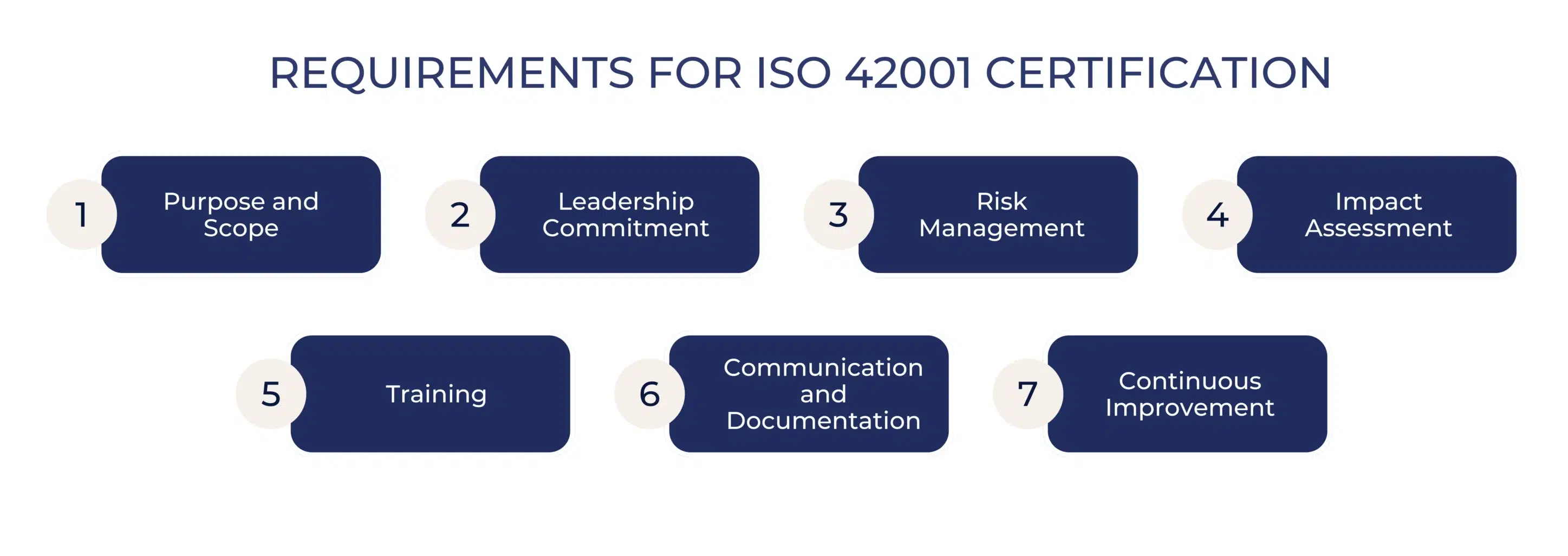
- ✓Documentation Requirements
- ✓Technical and Operational Requirements
- ✓Competency and Awareness Requirements
ISO 42001 Certification Process in Austin
The ISO 42001 Certification process in Austin follows a structured, multi-phase sequence that progresses from initial scoping through formal audit, certification decision, and ongoing surveillance. CertPro conducts each phase as an independent certification body, applying defined audit criteria to evaluate AIMS conformance without providing implementation guidance, advisory services, or consulting support. The following describes the complete certification pathway for organizations pursuing ISO 42001 Certification in Austin through CertPro.
The certification process begins with the organization formally defining its AIMS scope — specifying which AI systems, business units, geographic locations, and organizational functions fall within the certification boundary. Scope definition is a critical foundational step. An overly narrow scope may exclude material AI risks, while an impractically broad scope may create audit complexity that delays certification timelines. CertPro reviews the proposed scope as part of the initial application process to confirm it is appropriate for audit evaluation and consistent with ISO 42001’s requirements for scope completeness.
The Stage 1 audit is a structured review of the organization’s AIMS documentation against ISO 42001’s requirements. CertPro’s auditors evaluate the completeness and adequacy of the AI policy, risk assessment documentation, Annex A control selection and justification, and the organization’s readiness to proceed to the Stage 2 audit. The Stage 1 audit produces a formal finding report that identifies areas of conformance, areas requiring clarification, and any significant gaps that must be addressed before Stage 2 can proceed. The Stage 1 audit typically requires two to four weeks from commencement to report issuance.
The Stage 2 audit is the comprehensive operational evaluation of the AIMS, assessing whether documented policies and procedures are effectively implemented in practice across the certification scope. CertPro auditors conduct interviews with personnel at multiple organizational levels, observe operational processes, test control effectiveness, and review records of AIMS operation — including risk treatment activities, monitoring data, internal audit findings, and management review outcomes. The Stage 2 audit determines whether the organization’s AIMS achieves ISO 42001 compliance in its actual operations, not merely on paper.
The Stage 2 audit concludes with a formal audit report classifying all findings as conformances, observations, minor nonconformities, or major nonconformities. Major nonconformities must be resolved through documented corrective action before certification can be issued. Minor nonconformities are addressed through a corrective action plan, reviewed and accepted by CertPro before certificate issuance. The full Stage 1 and Stage 2 audit cycle for ISO 42001 Certification in Austin typically spans eight to sixteen weeks, depending on organizational complexity, AIMS maturity, and the number and nature of audit findings.
Following successful resolution of all nonconformities, CertPro’s certification decision panel reviews the complete audit record and issues a formal certification decision. Upon a positive decision, CertPro issues the ISO 42001 certificate of conformance — specifying the certified organization, the certification scope, the standard version (ISO/IEC 42001:2023), and the certificate validity period. ISO 42001 certificates are valid for three years, subject to satisfactory annual surveillance audits. The certificate is issued on CertPro letterhead as a Licensed CPA Firm and is suitable for disclosure to customers, regulators, and investors.
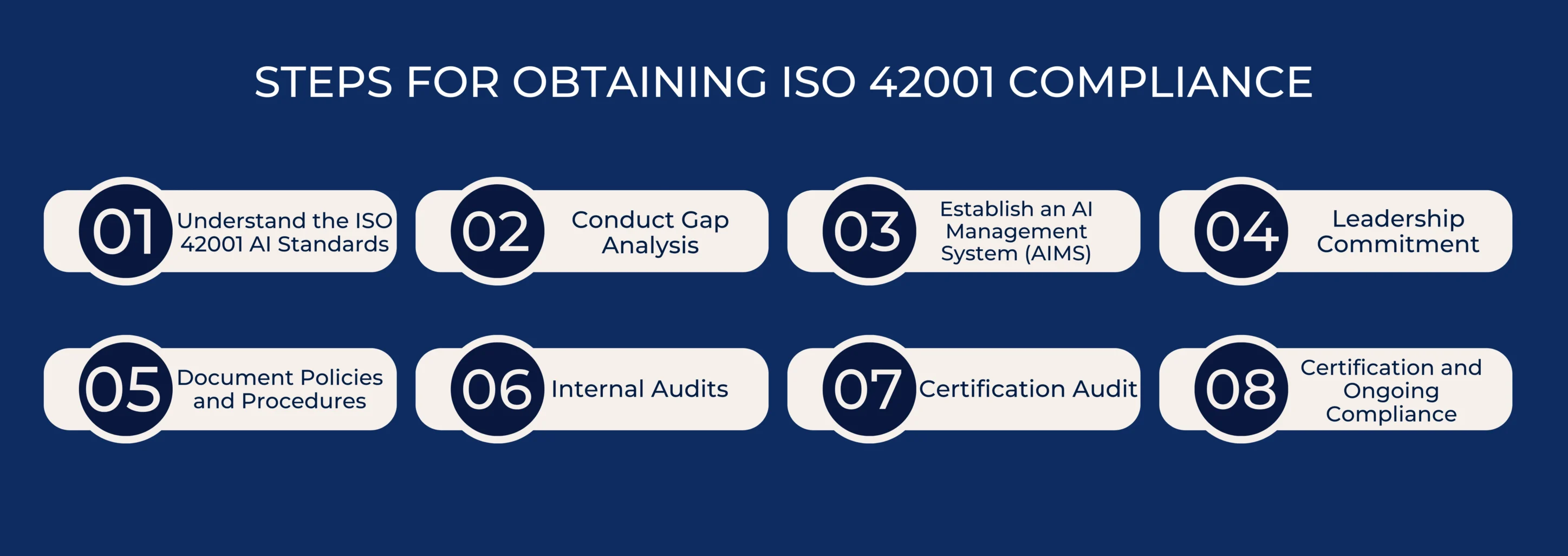
- ✓Phase 1 — Scope Definition and Application
- ✓Phase 2 — Stage 1 Audit (Documentation Review)
- ✓Phase 3 — Stage 2 Audit (Operational Conformance Evaluation)
- ✓Phase 4 — Certification Decision and Certificate Issuance
ISO 42001 Audit Process
The ISO 42001 audit process conducted by CertPro follows a structured sequence of discrete phases, each with defined objectives, evidence requirements, and output deliverables. Understanding the audit process enables organizations to prepare appropriate documentation, designate the right personnel for audit participation, and anticipate the evaluative criteria that CertPro’s auditors will apply. The ISO 42001 audit is an independent evaluation — CertPro does not provide implementation guidance at any point during the process.
Prior to commencing fieldwork, CertPro establishes the audit program — a documented plan specifying audit objectives, scope, criteria, methods, team composition, and schedule. The audit program is tailored to the organization’s size, AI system complexity, industry sector, and the maturity of its existing management system infrastructure. For a large Austin-based SaaS company with multiple AI-powered products, the audit program may span multiple site visits and involve interviews with engineering, data science, legal, and executive personnel. For an Austin startup with a single AI product, the ISO 42001 audit program may be completed in a more concentrated timeframe.
Control testing is the core technical activity of the ISO 42001 audit. CertPro auditors test each in-scope Annex A control by requesting evidence of implementation — including process records, system outputs, configuration documentation, training records, and personnel interview responses. Control testing assesses both the design adequacy of controls (whether the control, as designed, is capable of achieving its objective) and operational effectiveness (whether the control consistently functions as designed in actual practice). Both dimensions are required for a complete ISO 42001 compliance attestation.
The ISO 42001 assessment conducted during control testing places particular emphasis on AI-specific controls that have no direct analog in other management system standards. These include AI system impact assessment processes, which evaluate potential harms to individuals and communities before deployment; transparency and explainability controls, which assess whether the organization can explain AI outputs to affected parties; and bias monitoring controls, which test whether the organization systematically detects and addresses discriminatory patterns in AI system behavior. These controls are the distinguishing features of the ISO 42001 assessment and reflect the unique risk landscape of AI governance.
When the ISO 42001 audit identifies nonconformities — instances where the organization’s AIMS fails to meet a specific requirement of ISO/IEC 42001:2023 — CertPro classifies each finding by severity and documents the specific requirement that has not been met. The organization must then prepare a corrective action plan that addresses the root cause of each nonconformity, describes the corrective actions to be taken, and specifies timelines for implementation. CertPro reviews and accepts the corrective action plan before proceeding to the certification decision. For major nonconformities, CertPro may require evidence of corrective action implementation before issuing the certificate.
ISO 42001 Certification carries a three-year validity period, during which CertPro conducts annual surveillance audits to verify that the AIMS continues to function effectively and that the organization remains in conformance with ISO 42001’s requirements. Surveillance audits are more focused than the initial certification audit — they concentrate on areas of previous nonconformity, changes to the AI system landscape, management review outcomes, and internal audit findings since the previous surveillance visit. Organizations that introduce new AI systems, expand into new markets, or experience significant changes to their AI governance structure must notify CertPro, as these changes may require scope modification or interim audit evaluation.
Recertification occurs at the end of the three-year certification cycle. The recertification audit evaluates AIMS performance over the full certification period, assesses the effectiveness of continual improvement initiatives, and confirms ongoing conformance with ISO 42001’s requirements. Organizations that maintain robust AIMS documentation and conduct regular internal audits typically complete recertification efficiently. CertPro issues a new three-year certificate upon successful recertification, maintaining uninterrupted ISO 42001 Certification in Austin for the organization.
- ✓Audit Program Determination
- ✓Control Testing and Evidence Collection
- ✓Nonconformity Review and Corrective Action
- ✓Surveillance Audits and Recertification
Benefits of ISO 42001 Certification for Austin Organizations
ISO 42001 Certification in Austin delivers measurable, concrete benefits across multiple organizational dimensions — from regulatory positioning and commercial competitiveness to operational risk reduction and stakeholder trust. These benefits are not aspirational; they reflect the structural outcomes that flow from having an independently audited, formally attested AI governance framework. The following describes the primary benefits of ISO 42001 Certification for Austin-based organizations across key dimensions.
ISO 42001 Certification provides Austin organizations with a documented, audited foundation for demonstrating alignment with emerging AI governance regulations. The standard’s risk assessment and control framework maps directly to requirements embedded in the EU AI Act, NIST AI Risk Management Framework (AI RMF), and sector-specific AI governance guidance from regulators including the FDA (for AI-enabled medical devices), OCC and CFPB (for AI in financial services), and EEOC (for AI in employment decisions). For organizations subject to multiple regulatory regimes, ISO 42001 compliance provides a unified governance foundation that reduces duplicative compliance efforts across jurisdictions.
ISO 42001 Certification in Austin functions as a market access credential that removes friction from enterprise and government procurement processes. Many large enterprise customers, federal agencies, and regulated-industry procurement teams now include AI governance standards compliance as a vendor qualification criterion. An ISO 42001 certificate issued by CertPro as a Licensed CPA Firm satisfies these requirements with a recognized, internationally accepted attestation. This eliminates the need for customers to conduct their own AI governance due diligence — directly accelerating sales cycles and reducing the compliance burden on procurement teams evaluating Austin-based AI vendors.
Austin financial services organizations and fintech companies gain particular commercial advantages from ISO 42001 Certification. Financial services institutions face regulatory and investor scrutiny of AI governance across lending, fraud detection, investment management, and customer service applications. Demonstrating ISO 42001 compliance to banking regulators, insurance commissioners, and institutional investors provides a recognized standard of AI governance that supports regulatory approval processes, partner contracting, and capital raising activities.
The AIMS framework established through ISO 42001 Certification creates operational mechanisms that materially reduce the likelihood and severity of AI system failures. Systematic risk assessment processes identify potential failure modes before deployment. Bias monitoring controls detect discriminatory patterns before they generate regulatory findings or public incidents. Transparency and explainability controls ensure that when AI decisions are challenged — by customers, regulators, or litigants — the organization can provide a documented, auditable account of how the decision was reached. These operational protections carry direct financial value in avoided remediation costs, regulatory penalties, and reputational damage.
- ✓Independent, third-party attestation of AI governance maturity recognized internationally
- ✓Accelerated enterprise and government procurement qualification processes
- ✓Documented regulatory alignment with EU AI Act, NIST AI RMF, and sector-specific AI guidance
- ✓Reduced AI system failure rates through systematic risk assessment and control implementation
- ✓Enhanced investor and board confidence in AI governance accountability structures
- ✓Competitive differentiation in Austin’s concentrated AI technology market
- ✓Structured framework for managing AI incidents, corrective action, and continual improvement
- ✓Integration capability with ISO 27001, ISO 31000, and other existing management systems
- ✓Demonstrated ethical AI commitment supporting brand trust and customer confidence
- ✓Annual surveillance audit cadence ensuring governance remains current as AI systems evolve
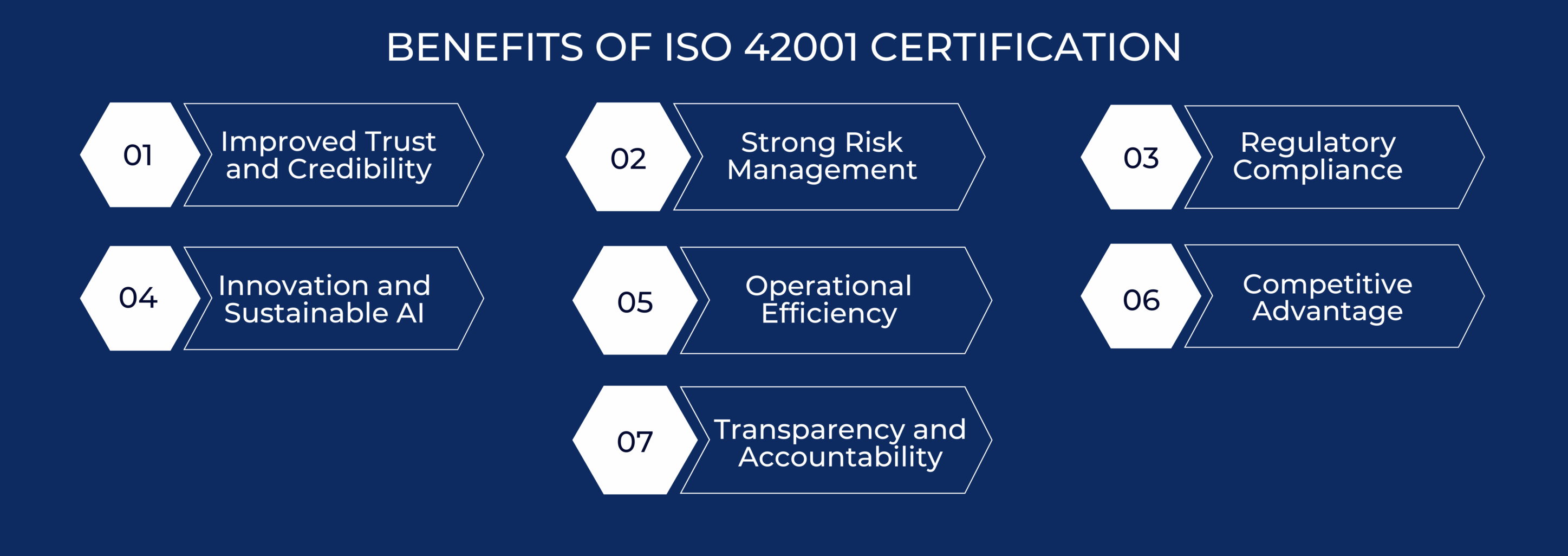
- ✓Regulatory Positioning and Compliance Alignment
- ✓Commercial and Market Access Benefits
- ✓Operational Risk Reduction and Incident Prevention
Industries Served in Austin
CertPro conducts ISO 42001 audits across the full spectrum of Austin’s technology-intensive industries. Austin’s diverse economy includes organizations whose AI applications span customer-facing products, internal operations, regulated professional services, and critical infrastructure — each carrying distinct AI risk profiles that the AIMS framework addresses with tailored control selection. ISO 42001 Certification in Austin is relevant to any organization that develops, deploys, or materially relies on AI systems in its operations.
Technology and SaaS Companies
Austin’s technology sector encompasses hundreds of SaaS platforms, AI-native product companies, and enterprise software vendors that embed machine learning and AI capabilities in their core products. For these organizations, ISO 42001 Certification in Austin provides a product governance credential that enhances customer trust, satisfies enterprise procurement requirements, and demonstrates responsible AI development practices to regulators and the public. Austin tech companies use their ISO 42001 Certification status to differentiate in competitive markets where AI accountability is a purchasing criterion for enterprise buyers.
Financial Services and Fintech
Austin’s growing fintech and financial services cluster uses AI for credit risk modeling, fraud detection, algorithmic trading, customer service automation, and regulatory reporting. The ISO 42001 AI management system framework provides the governance structure that financial services organizations need to demonstrate to the OCC, CFPB, SEC, and state banking regulators that their AI applications are subject to appropriate oversight, bias controls, and explainability standards. Austin fintech companies achieving ISO 42001 compliance can reference their certification in regulatory submissions, partner agreements, and investor disclosures as evidence of governance rigor.
Healthcare Technology and Life Sciences
Healthcare AI applications — including clinical decision support, diagnostic imaging analysis, patient risk stratification, and drug discovery — require the highest standards of AI governance due to the direct patient safety implications of AI system failures. ISO 42001 Certification provides healthcare AI companies in Austin with a structured framework for documenting AI system validation, managing clinical risk, establishing human oversight requirements, and maintaining the traceability records required for FDA regulatory submissions. The AIMS framework’s lifecycle management requirements align naturally with FDA’s Software as a Medical Device (SaMD) guidance, creating governance synergies for Austin’s health technology companies.
Government Contractors and Defense Organizations
Austin hosts a significant population of federal government contractors and defense technology companies whose AI systems are subject to Department of Defense AI ethics principles, NIST AI RMF requirements, and emerging federal procurement standards for AI governance. ISO 42001 Certification provides these organizations with a third-party attestation that maps to federal AI governance expectations, supporting contract qualification and compliance reporting requirements. For Austin organizations pursuing federal AI contracts or Department of Defense AI-related programs, ISO 42001 Certification in Austin provides documented evidence of structured AI governance that satisfies evolving federal acquisition criteria.
| Industry | Primary AI Applications | Key ISO 42001 Benefit |
|---|---|---|
| Technology / SaaS | AI-powered products, ML features, automation | Enterprise procurement qualification, product trust |
| Financial Services / Fintech | Credit risk, fraud detection, algorithmic trading | Regulatory alignment, investor confidence |
| Healthcare AI | Clinical decision support, diagnostics, patient risk | FDA alignment, patient safety governance |
| Government Contractors | Defense AI, federal agency applications | Federal procurement qualification, NIST AI RMF alignment |
| Education Technology | Adaptive learning, student assessment AI | Ethical AI use, regulatory compliance |
Why Choose CertPro for ISO 42001 Certification in Austin
CertPro is a Licensed CPA Firm that conducts ISO 42001 audits and issues ISO 42001 Certification in Austin through a structured, independent evaluation process. CertPro’s positioning as a Licensed CPA Firm — rather than a consulting firm, advisory practice, or managed services provider — is the defining characteristic of its certification services. This distinction matters because ISO 42001 Certification issued by a Licensed CPA Firm carries a level of institutional independence and professional accountability that is recognized by enterprise customers, government agencies, and regulated-industry oversight bodies.
Independence and Institutional Credibility
CertPro’s ISO 42001 audits are conducted with full independence from the organizations being evaluated. CertPro does not provide implementation services, gap consulting, or advisory support to organizations it certifies. This structural independence requirement ensures that certification decisions are based solely on evidence of AIMS conformance — not on the auditor’s familiarity with or investment in the organization’s implementation choices. Independence is a prerequisite for credible third-party certification and is the foundation of the attestation’s value to customers, investors, and regulators who rely on it.
As a Licensed CPA Firm, CertPro operates under professional standards that include independence requirements, quality control procedures, and professional ethics obligations governing audit conduct. These standards provide an additional layer of accountability beyond the ISO certification body accreditation framework, reinforcing the credibility of ISO 42001 Certification in Austin issued by CertPro. Organizations that disclose their certification to sophisticated relying parties — institutional investors, federal agencies, large enterprise procurement teams — benefit directly from the professional standing that CertPro’s Licensed CPA Firm status conveys.
Fixed, Transparent Pricing
CertPro provides fixed, transparent pricing for all ISO 42001 Certification services. This pricing model eliminates the uncertainty that open-ended hourly billing creates in certification engagements, enabling organizations to budget accurately for the full certification process without risk of cost overruns. Fixed pricing is particularly valuable for Austin startups and growth-stage companies that operate under capital constraints and require predictable compliance spending to maintain financial discipline throughout the ISO 42001 audit process.
Structured Audit Methodology and Experienced Auditors
CertPro’s ISO 42001 audit methodology is structured around the standard’s full clause-by-clause requirements and all 38 Annex A controls, ensuring comprehensive evaluation coverage for every certification engagement. CertPro auditors bring direct experience in AI governance, information security management, and enterprise risk management — the multidisciplinary expertise required to evaluate AI management systems effectively. Auditors assess not only documentation completeness, but the substantive quality of risk assessment reasoning, the appropriateness of control design for the organization’s AI risk profile, and the effectiveness of operational implementation across the ISO 42001 assessment scope.
ISO 42001 Certification Cost in Austin
ISO 42001 certification cost in Austin varies based on several objective factors: organizational size, the number and complexity of AI systems within the certification scope, the geographic footprint of the AIMS, and the maturity of existing management system infrastructure. CertPro provides fixed pricing for ISO 42001 Certification, determined through a structured scoping assessment that evaluates these factors before committing to a certification fee. This approach ensures that pricing reflects the actual complexity of each engagement — without contingent fees or variable billing that creates cost uncertainty for the certified organization.
Factors That Influence ISO 42001 Certification Cost
The primary cost drivers for ISO 42001 Certification in Austin include the number of AI systems within scope, the complexity of the risk assessment required for those systems, the number of Annex A controls applicable to the organization’s AI risk profile, the size of the organizational population involved in AIMS operations, and whether the organization has existing ISO management system infrastructure that can be leveraged in the audit. Organizations with mature ISO 27001 or ISO 9001 management systems typically incur lower ISO 42001 certification costs because they already have governance infrastructure — documented policies, internal audit processes, and management review cadences — that can be extended rather than built from scratch.
Annual surveillance audit costs are lower than initial certification costs because surveillance audits are targeted evaluations of specific AIMS components rather than comprehensive assessments of the full standard. Recertification costs, incurred at the end of the three-year certificate validity period, fall between initial certification and surveillance audit costs — reflecting the comprehensive but experience-informed nature of the recertification assessment. CertPro discloses all three cost components — initial certification, annual surveillance, and recertification — in the fixed pricing proposal provided at the outset of the engagement, providing complete three-year lifecycle cost visibility for organizations planning their ISO 42001 Certification investment.
Cost Efficiency Through Integration With Existing Certifications
Organizations that hold existing ISO 27001, ISO 9001, or ISO 31000 certifications can achieve meaningful cost efficiency in ISO 42001 Certification by leveraging the governance infrastructure already established for those standards. The ISO High-Level Structure shared by all three standards means that policies, procedures, roles, internal audit processes, and management review mechanisms developed for one standard require only targeted extension — not complete redevelopment — to satisfy ISO 42001’s requirements. CertPro’s audit approach for organizations with existing management system certifications recognizes this integration opportunity and focuses evaluation effort on AI-specific requirements rather than duplicating assessment of governance infrastructure already evaluated under other standards.
FAQ
▶
What is ISO 42001 Certification and who issues it?
▶
How long does the ISO 42001 certification process take in Austin?
▶
How does ISO 42001 differ from ISO 27001?
▶
Which Austin businesses need ISO 42001 Certification?
▶
What does an ISO 42001 audit evaluate?
▶
How long is an ISO 42001 certificate valid?
▶
Does ISO 42001 Certification help with EU AI Act compliance?
▶
What is the ISO 42001 certification cost in Austin?

MindSec Launches AI Compliance for Law 25 & ISO 42001
Excerpt from Barchart Article, Published on December 3, 2025 Today, Canadian organizations face increasing pressure to comply with stringent privacy a…

UNDERSTANDING ISO 42001: A GUIDE FOR RESPONSIBLE AI MANAGEMENT SYSTEMS
The invention of artificial intelligence (AI) has changed the operational processes of many industries. However, the rapid growth of technology increa…

ENSURING AI DATA PRIVACY COMPLIANCE WITH ISO 42001
According to Stanford’s AI report, the private AI investment in the U.S. alone reached more than $109 billion last year, which is equal to 12 times th…
Get In Touch
have a question? let us get back to you.