
ISO 42001 Certification in Bristol
CertPro is a Licensed CPA Firm delivering ISO 42001 certification audits and assessments for organisations in Bristol. Our certification scope encompasses AI Management System (AIMS) design, implementation, and operational effectiveness. All audit activities are conducted against ISO 42001 requirements and aligned with UK AI governance expectations and ICO regulatory frameworks applicable to Bristol-based entities.
OUR CLIENTS










Introduction to ISO 42001 Certification in Bristol
ISO 42001 Certification in Bristol represents the formal, third-party verification that an organisation’s Artificial Intelligence Management System (AIMS) meets the internationally recognised requirements established by the International Organization for Standardization. Published in December 2023, ISO/IEC 42001:2023 is the world’s first international standard specifically designed to govern the responsible development, deployment, and ongoing management of AI systems within organisations of every sector and scale. For Bristol-based entities operating in technology, aerospace, financial services, and research, this certification provides an authoritative, audited declaration of AI governance maturity.
Bristol has established itself as one of the United Kingdom’s most dynamic technology and innovation ecosystems. The city hosts a dense concentration of AI-driven enterprises — from early-stage startups in the Bristol Temple Quarter Enterprise Zone to established aerospace and engineering corporations operating alongside University of Bristol and University of the West of England research programmes. In this environment, demonstrating responsible AI governance through ISO 42001 compliance in Bristol has moved from an aspirational standard to an operational necessity. Procurement teams, public sector commissioners, and international partners increasingly require evidence of structured AI oversight before awarding contracts.
CertPro conducts ISO 42001 audits through a structured, evidence-based methodology aligned with the standard’s full clause structure. The audit programme evaluates the completeness and operational effectiveness of an organisation’s AIMS, examining documented policies, risk treatment records, AI system inventories, and continuous improvement mechanisms. CertPro’s audit activities are strictly certification-focused — not advisory or consultancy-oriented — ensuring that the resulting certificate carries the institutional credibility that regulators, clients, and stakeholders require.
Bristol’s AI Governance Landscape and the Role of ISO 42001
The UK Government’s pro-innovation approach to AI regulation — articulated through the AI Safety Institute and the Department for Science, Innovation and Technology (DSIT) — places significant responsibility on individual organisations to self-govern their AI activities within a principles-based framework. The Information Commissioner’s Office enforces UK GDPR obligations that directly intersect with AI system design, particularly around automated decision-making under Article 22 and data minimisation requirements. ISO 42001 Certification in Bristol provides organisations with a documented, independently verified governance structure that satisfies these converging regulatory expectations.
Bristol’s fintech corridor — concentrated along the Temple Meads to Redcliffe axis — includes firms processing consumer financial data through machine learning scoring models, fraud detection algorithms, and automated advisory tools. Each of these use cases carries explicit obligations under the Financial Conduct Authority’s AI governance guidance, the Bank of England’s machine learning supervisory statement, and UK GDPR. ISO 42001 compliance in Bristol provides a unified framework that addresses all of these obligations through a single, coherent management system. This eliminates the inefficiency of siloed compliance programmes and reduces the risk of governance gaps across intersecting regulatory regimes.
Scope of ISO 42001 Certification for Bristol Organisations
The scope of an ISO 42001 certification is defined by the organisation itself during the initial stage of the certification process, in agreement with the certifying body. Scope determination identifies which AI systems, business units, geographic locations, and operational processes fall within the certified boundary. For Bristol organisations, scope decisions are informed by the nature of AI deployment — whether the organisation develops AI products for third-party use, deploys AI internally for operational functions, or procures AI capabilities from external vendors. Each configuration carries different AIMS requirements under the standard, and the audit programme is calibrated accordingly.
Bristol’s aerospace sector — which includes major operations by Airbus, Leonardo, and the wider supply chain concentrated in Filton and Aztec West — presents unique scoping considerations for ISO 42001 certification. AI systems in this sector may govern predictive maintenance, quality assurance inspection, or autonomous flight system components, each carrying safety-critical implications that demand the highest standard of documented governance. The ISO 42001 AIMS framework provides a structured methodology for identifying, classifying, and controlling AI system risks within these complex engineering environments. CertPro’s ISO 42001 audit programme for Bristol organisations is designed to evaluate governance effectiveness across these technically demanding deployments.

What Is ISO 42001? Definitions and Framework Explained
ISO 42001 is the international standard that specifies requirements for establishing, implementing, maintaining, and continually improving an Artificial Intelligence Management System within an organisational context. The standard is formally designated ISO/IEC 42001:2023 and was developed jointly by the International Organization for Standardization (ISO) and the International Electrotechnical Commission (IEC) through Technical Committee JTC 1/SC 42. It applies to any organisation — regardless of size, type, or sector — that develops, provides, or uses AI-based products or services.
The AI Management System (AIMS), as defined by ISO 42001, is the collection of policies, processes, procedures, organisational structures, roles, responsibilities, and documented controls that collectively govern an organisation’s AI activities. The AIMS framework establishes accountability for AI decisions at the leadership level, defines risk assessment and treatment methodologies specific to AI systems, and creates documented records that demonstrate continuous improvement. Unlike technology-specific controls, the AIMS operates at the organisational governance level — making it applicable regardless of the specific AI technologies or platforms in use.
ISO 42001 Clause Structure and Core Requirements
ISO 42001 follows the High Level Structure (HLS) common to all modern ISO management system standards, comprising ten main clauses. Clauses 1 through 3 establish scope, normative references, and terms and definitions. Clause 4 requires organisations to understand their internal and external context, identify interested parties, and define the scope of the AIMS. Clause 5 assigns leadership responsibilities, requiring top management to demonstrate commitment to the AIMS through policy establishment, resource allocation, and integration of AI governance into organisational strategy. Clause 6 covers planning — including AI risk assessment, AI impact assessment, and the treatment of identified risks and opportunities.
Clauses 7 through 10 address support, operation, performance evaluation, and improvement respectively. Clause 8 is particularly significant for the ISO 42001 audit, as it governs the operational planning and control of AI systems — including the management of AI system lifecycle processes, supplier relationships, and data quality. Clause 9 requires organisations to monitor, measure, analyse, and evaluate the performance of their AIMS through internal audits and management review. Clause 10 mandates systematic nonconformity management and continual improvement. The ISO 42001 assessment evaluates compliance across all ten clauses, with documentary and operational evidence reviewed at each stage.
How ISO 42001 Differs from Other AI and Information Security Standards
ISO 42001 differs from ISO 27001 (information security management) and ISO 27701 (privacy information management) in that it specifically addresses the governance risks unique to AI systems — including algorithmic bias, explainability obligations, training data quality, model drift, and autonomous decision-making accountability. While ISO 27001 focuses on confidentiality, integrity, and availability of information assets, ISO 42001 introduces AI-specific risk categories requiring dedicated assessment methodologies. Organisations in Bristol that hold ISO 27001 certification will find that ISO 42001 extends — rather than duplicates — their existing governance frameworks, addressing a distinct risk domain that information security standards do not cover.
ISO 42001 also differs from the EU AI Act in that it is a voluntary management system standard rather than a binding legal regulation. However, the two instruments are designed to be complementary. The EU AI Act — which applies to UK organisations whose AI systems affect EU residents — establishes risk-based legal obligations. ISO 42001 certification provides documented evidence of the management system controls required to meet those obligations. For Bristol organisations with EU market exposure, holding ISO 42001 certification provides a structured basis for demonstrating EU AI Act conformity, reducing the regulatory burden of individual compliance demonstrations across multiple jurisdictions.
Annex A Controls and AI-Specific Risk Categories
ISO 42001 includes Annex A, which provides a structured reference set of AI-specific controls organised into ten control categories. These categories address AI policies, internal organisation, human resources, AI system impact assessment, AI system lifecycle, data management, third-party AI relationships, information security for AI, AI transparency and explainability, and AI system monitoring. Organisations are not required to implement every Annex A control. Instead, the ISO 42001 assessment examines whether the organisation has evaluated each control’s applicability, documented a Statement of Applicability recording inclusion or exclusion decisions with justifications, and implemented applicable controls effectively.
The AI System Impact Assessment (ASIA), referenced in Annex A and elaborated in ISO/IEC TR 42002, is a structured evaluation of the potential impacts of an AI system on individuals, communities, and society before deployment. For Bristol organisations operating in regulated sectors — financial services, healthcare, education, and the public sector — the ASIA provides a documented methodology for identifying and mitigating harms associated with AI decision-making. The ISO 42001 audit reviews ASIA documentation to verify that impact assessments are systematic, evidence-based, and connected to the organisation’s risk treatment decisions, rather than treated as a checkbox exercise.
Requirements for ISO 42001 Certification in Bristol
ISO 42001 certification requires organisations to demonstrate conformity across the standard’s full clause structure through documented evidence and operational effectiveness. The requirements span leadership commitment, documented policy, risk-based planning, operational controls, performance evaluation, and continual improvement. For Bristol organisations beginning the certification process, understanding the full requirements set is essential to structuring an AIMS that will withstand rigorous third-party audit scrutiny. The sections below identify the primary requirement categories that the ISO 42001 assessment addresses.
ISO 42001 requires that top management demonstrate active, documented commitment to the AIMS. This includes establishing and approving a formal AI policy that articulates the organisation’s commitment to responsible AI development and use, assigning roles and responsibilities for AI governance at senior levels, and integrating AIMS objectives into the organisation’s strategic planning processes. The AI policy must be communicated throughout the organisation and made available to relevant external parties. During the ISO 42001 audit in Bristol, CertPro evaluates evidence of leadership engagement — including board-level AI governance records, management review minutes, and policy distribution records.
Context understanding under Clause 4 requires organisations to conduct a structured analysis of internal factors — including organisational culture, existing governance structures, AI system portfolio, and technical capabilities — and external factors such as regulatory obligations, market expectations, competitive environment, and societal impacts of AI use. For Bristol organisations, external context analysis must address UK GDPR obligations enforced by the ICO, sector-specific AI governance guidance from relevant regulators, and the emerging UK AI governance framework. The ISO 42001 assessment reviews context analysis documentation to verify that it is comprehensive, current, and directly connected to the scope and objectives of the AIMS.
ISO 42001 requires organisations to establish, implement, and maintain an AI risk assessment process that identifies risks and opportunities associated with each AI system within scope. The risk assessment must define criteria for AI risk acceptability, systematically identify AI-specific risk categories — including bias, explainability failure, data quality degradation, and unintended harmful outputs — and produce risk treatment plans with assigned owners and implementation timelines. The risk assessment process must be repeatable, documented, and reviewed at defined intervals or when significant changes occur to the AI system or its operational context.
The risk treatment plan must specify the controls selected to address identified AI risks, justify the selection of controls by reference to Annex A or other control sources, and document residual risk acceptance decisions by authorised personnel. The Statement of Applicability is a mandatory document under ISO 42001 that records every Annex A control, indicates whether each control is applicable to the organisation’s context, and provides justification for exclusions. The ISO 42001 audit reviews the Statement of Applicability to verify that exclusion decisions are evidence-based and that no applicable controls have been omitted without documented justification.
Clause 8 of ISO 42001 establishes operational requirements for the planning, design, development, testing, deployment, monitoring, and decommissioning of AI systems. Organisations must document processes for managing the full AI system lifecycle — including version control, change management, model retraining procedures, and performance degradation detection. Data management requirements under Clause 8 address the provenance, quality, and representativeness of training data, validation datasets, and operational data inputs. For Bristol organisations using third-party AI platforms or cloud-based AI services, Clause 8 also requires documented supplier management processes that assess and monitor the AI governance practices of external AI providers.
- Documented AI policy approved by top management and communicated organisation-wide
- Completed AI system inventory identifying all AI systems within certification scope
- Formal AI risk assessment covering all identified AI-specific risk categories
- Risk treatment plan with assigned owners, timelines, and residual risk acceptance records
- Statement of Applicability documenting all Annex A control decisions with justifications
- AI System Impact Assessments (ASIA) for all AI systems with significant impact potential
- Documented AI system lifecycle processes covering design, development, testing, and deployment
- Data management procedures addressing training data quality, provenance, and representativeness
- Supplier AI governance assessment procedures for third-party AI products and services
- Internal audit programme covering all AIMS clauses with documented findings and corrective actions
- Management review records demonstrating top management engagement with AIMS performance
Clause 9 requires organisations to establish documented processes for monitoring and measuring AIMS performance, including defined metrics for AI system performance, governance effectiveness, and regulatory compliance status. Internal audits must be conducted at planned intervals to verify that the AIMS conforms to ISO 42001 requirements and is effectively implemented and maintained. Internal auditors must be competent, objective, and independent of the areas they audit. Management reviews must be held at planned intervals with documented inputs covering audit results, nonconformity status, stakeholder feedback, and AI risk environment changes. Documented outputs must include improvement decisions and resource allocation records.
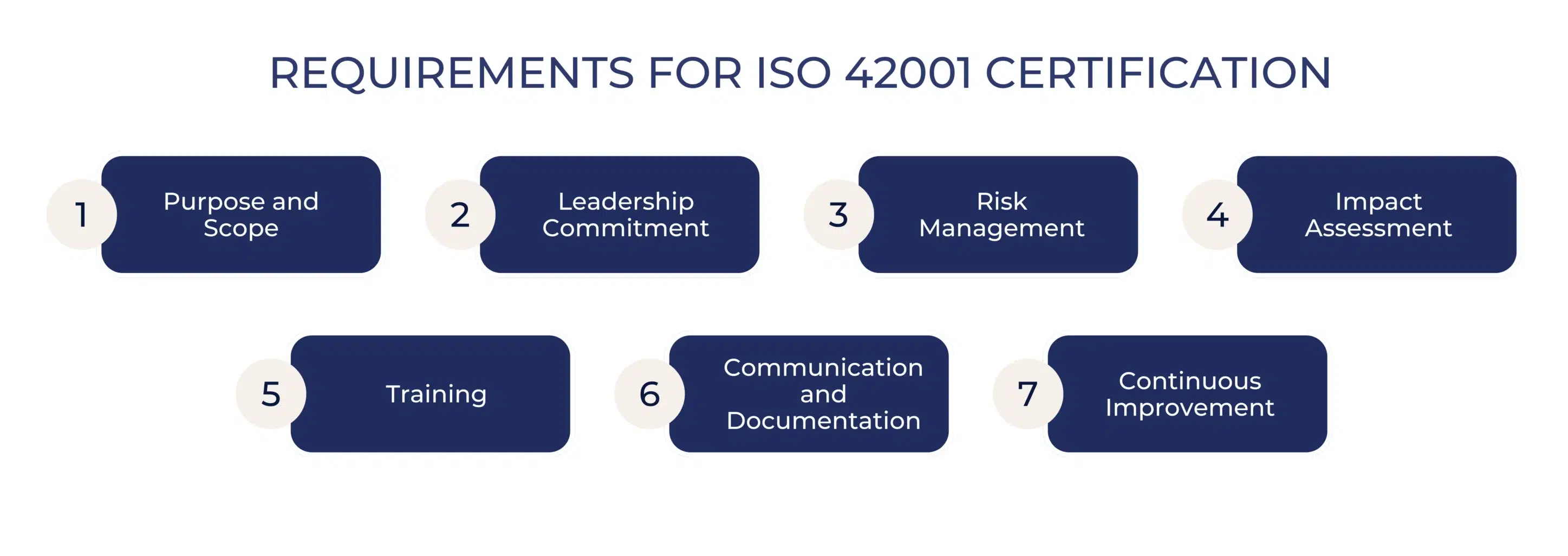
- ✓Leadership, Policy, and Organisational Context Requirements
- ✓AI Risk Assessment and Treatment Documentation Requirements
- ✓Operational Controls and AI System Lifecycle Requirements
- ✓Performance Evaluation and Continual Improvement Requirements
ISO 42001 Certification Process: Step-by-Step Audit Programme
The ISO 42001 certification process follows a structured, multi-stage audit programme conducted by CertPro as a Licensed CPA Firm. The programme is designed to evaluate both the design adequacy and operational effectiveness of an organisation’s AIMS against the full requirements of ISO/IEC 42001:2023. Each stage of the audit programme produces documented findings that inform the certification decision. The sections below describe the complete ISO 42001 certification process for Bristol organisations — from initial scope definition through to certificate issuance and ongoing surveillance.
The certification process begins with a formal scope definition engagement in which the organisation and CertPro jointly determine the boundaries of the AIMS subject to certification. Scope definition identifies the AI systems, business processes, organisational units, and geographic locations included within the certification boundary. The scope statement must be sufficiently specific to enable meaningful audit evaluation and must be consistent with the organisation’s documented AIMS scope. For multi-site Bristol organisations, scope may encompass all operating locations or a defined subset, with the audit programme calibrated accordingly.
Following scope definition, CertPro determines the audit programme — the detailed plan specifying audit objectives, criteria, methods, team composition, and scheduling for all stages of the certification audit. The audit programme is based on the complexity of the organisation’s AI system portfolio, the maturity of the AIMS, the number of sites included in scope, and the regulatory environment applicable to the organisation’s AI activities. The audit programme is communicated to the organisation in writing before Stage 1 audit activities commence, enabling the organisation to prepare and assemble the required documentary evidence for review.
The Stage 1 audit is a documentary review conducted to assess whether the organisation’s AIMS documentation meets the requirements of ISO 42001. During Stage 1, CertPro’s audit team reviews the AI policy, AIMS scope statement, AI system inventory, risk assessment records, Statement of Applicability, AI System Impact Assessments, and all other documented information required by the standard. The Stage 1 audit identifies areas where the AIMS documentation is complete and areas where documentation is absent, incomplete, or does not address specific ISO 42001 requirements. Stage 1 findings are recorded in a formal audit report and communicated to the organisation before Stage 2 activities proceed.
Stage 1 audit findings are classified as major nonconformities, minor nonconformities, or observations. Major nonconformities at Stage 1 indicate that the AIMS documentation does not satisfy fundamental ISO 42001 requirements and must be resolved before Stage 2 can proceed. Minor nonconformities identify specific gaps requiring corrective action within a defined timeframe. Observations are advisory notes that do not affect certification eligibility but indicate opportunities for improvement. The Stage 1 audit report provides Bristol organisations with a precise, structured map of documentation requirements that must be satisfied before the operational Stage 2 audit commences.
The Stage 2 audit evaluates the operational effectiveness of the AIMS — verifying that the controls, processes, and procedures documented in Stage 1 are actually implemented, functioning as intended, and producing the governance outcomes required by ISO 42001. The ISO 42001 audit Stage 2 programme for Bristol organisations involves on-site or remote activities including interviews with AI system owners, data scientists, compliance officers, and senior management. Auditors also observe AI system monitoring and management processes, review operational records including audit logs, performance metrics, incident records, and corrective action documentation, and sample AI risk treatment evidence to verify control implementation.
Control testing during Stage 2 examines whether individual AIMS controls are designed appropriately for their stated purpose and operating effectively over the audit period. For AI-specific controls, testing examines whether bias monitoring processes detect and respond to algorithmic performance disparities, whether explainability mechanisms satisfy regulatory obligations, whether data quality checks prevent degraded model inputs from entering production systems, and whether change management processes capture and evaluate the governance implications of model updates and retraining events. The ISO 42001 assessment at Stage 2 produces a comprehensive audit report with all findings classified and documented.
Following the Stage 2 audit, CertPro’s audit team completes a nonconformity review evaluating all findings against ISO 42001 requirements and classifying each finding as a major nonconformity, minor nonconformity, or observation. Major nonconformities must be closed — through documented corrective action verified by the audit team — before a positive certification decision can be made. Minor nonconformities must have accepted corrective action plans with defined timelines. The certification decision is made independently by a CertPro reviewer who was not part of the audit team, ensuring objectivity. Upon a positive certification decision, CertPro issues the ISO 42001 certificate specifying the organisation’s name, certified scope, and certificate validity period.
ISO 42001 certification is valid for three years from the date of certificate issuance, subject to satisfactory annual surveillance audits. Surveillance audits are conducted at approximately 12-month intervals and evaluate continued conformity with ISO 42001 requirements, the status of corrective actions from previous audits, and the continued appropriateness of the AIMS in the context of any significant changes to the organisation’s AI systems, regulatory environment, or business context. Surveillance audits are typically narrower in scope than the initial certification audit, focusing on high-risk AIMS elements and areas where previous findings were recorded.
Recertification audits are conducted in the third year of the certification cycle, before certificate expiry. The recertification audit follows a structure similar to the initial certification audit, evaluating the continued conformity and effectiveness of the full AIMS against ISO 42001 requirements. Successful recertification results in the issuance of a new three-year certificate. For Bristol organisations that have undergone significant changes — such as the introduction of new AI systems, expansion into new markets, or major regulatory developments — the recertification audit scope may be expanded accordingly. CertPro schedules surveillance and recertification audits in advance to ensure no gap in certification status.
| Audit Stage | Primary Activity | Key Output |
|---|---|---|
| Scope Definition | Determine AIMS certification boundary and audit programme | Signed scope statement and audit programme document |
| Stage 1 Audit | Documentary review of AIMS documentation against ISO 42001 clauses | Stage 1 audit report with classified findings |
| Stage 2 Audit | Operational effectiveness testing and control evaluation | Stage 2 audit report with nonconformity classification |
| Certification Decision | Independent review and certification determination | ISO 42001 certificate (3-year validity) |
| Surveillance Audit | Annual conformity verification and improvement monitoring | Surveillance audit report and certificate continuance |
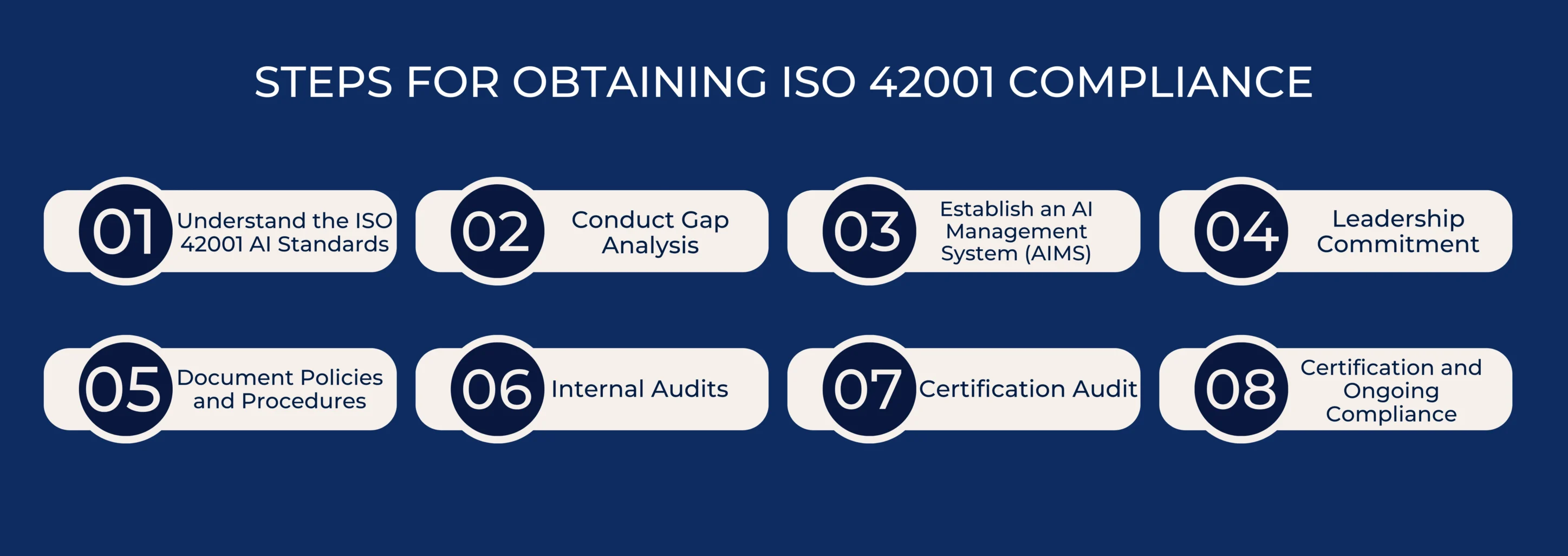
- ✓Stage 1: Scope Definition and Audit Programme Determination
- ✓Stage 2: Documentary Review and Stage 1 Audit
- ✓Stage 3: Operational Effectiveness Audit and Control Testing
- ✓Stage 4: Nonconformity Review, Certification Decision, and Certificate Issuance
- ✓Surveillance Audits and Recertification
Benefits of ISO 42001 Certification for Bristol Organisations
ISO 42001 Certification in Bristol delivers measurable, documented benefits across regulatory compliance, commercial performance, organisational resilience, and stakeholder trust. These benefits extend beyond the certificate itself, reflecting the organisational improvements produced by implementing a structured, audited AIMS. The sections below identify the principal benefit categories that Bristol organisations consistently realise through the certification process, with specific reference to the local business environment and regulatory context.
ISO 42001 compliance in Bristol provides organisations with a documented, independently verified governance framework that addresses multiple converging regulatory obligations simultaneously. UK GDPR Article 22 obligations regarding automated decision-making, the ICO’s AI and data protection guidance, the FCA’s machine learning supervisory expectations, and the emerging UK AI governance framework all share common governance requirements that the ISO 42001 AIMS is designed to satisfy. Holding an ISO 42001 certificate gives organisations an audited evidence base for demonstrating compliance to regulators, reducing the investigation burden when questions arise about AI governance practices.
The risk reduction benefits of ISO 42001 certification are substantial for Bristol organisations operating AI systems in high-stakes environments. Structured AI risk assessment processes identify and treat risks before they materialise as incidents, reducing the probability of AI-related harm, regulatory enforcement action, and reputational damage. The ISO 42001 audit provides external verification that risk assessment processes are systematic and effective — rather than based on internal assumptions that may be biased or incomplete. Organisations that have completed ISO 42001 certification typically report greater confidence in their AI risk posture and faster response times when AI system issues are detected.
ISO 42001 certification provides Bristol technology companies with a distinctive competitive differentiator in an increasingly crowded AI marketplace. Enterprise procurement teams and public sector commissioners in Bristol and across the UK are introducing AI governance requirements into supplier qualification processes, with certification to recognised international standards becoming a prerequisite for contract eligibility. Organisations holding ISO 42001 certification can satisfy these requirements with minimal additional effort — reducing the cost and time associated with individual client due diligence exercises and enabling faster procurement cycle completion.
For financial services firms and fintech organisations in Bristol, the commercial benefit extends to client acquisition and retention in a sector where trust and demonstrated governance are foundational to business relationships. Institutional clients — including pension funds, insurers, and corporate treasurers — are increasingly requiring evidence of AI governance frameworks from service providers whose algorithms influence investment decisions, risk assessments, or financial advice. ISO 42001 certification provides this evidence in a standardised, internationally recognised format, removing the need for bespoke governance attestations and reducing friction in client onboarding processes.
The process of implementing an ISO 42001-compliant AIMS produces significant organisational benefits independent of the certification outcome. AI system inventories created during scope definition provide leadership with complete visibility of the organisation’s AI footprint — often revealing undocumented or shadow AI deployments that carry unmanaged risk. Risk assessment processes applied consistently across the AI portfolio enable resource allocation decisions to be made on the basis of documented risk prioritisation rather than individual stakeholder preferences. Data management procedures introduced to satisfy Clause 8 requirements improve the quality and reliability of AI system outputs across the organisation.
- ✓Documented regulatory compliance evidence satisfying UK GDPR, ICO AI guidance, and sector-specific AI governance requirements
- ✓Reduced probability of AI-related incidents through systematic risk identification and treatment processes
- ✓Competitive advantage in procurement processes requiring evidence of AI governance maturity
- ✓Enhanced stakeholder trust through independent, third-party verification of AI governance practices
- ✓Complete AI system visibility enabling informed resource allocation and governance prioritisation
- ✓Improved AI system output quality through structured data management and quality assurance processes
- ✓Faster response capability to regulatory enquiries through maintained documentary evidence
- ✓Alignment with EU AI Act requirements enabling continued access to European markets
- ✓Staff awareness and competence improvement through structured AIMS training requirements
- ✓Continuous improvement culture embedding systematic performance monitoring and corrective action processes
Public trust in AI systems is a strategic asset for Bristol organisations operating consumer-facing AI applications. Survey data consistently indicates that consumers are more willing to engage with AI-powered products and services when they have evidence that the provider operates under a recognised governance framework. ISO 42001 certification provides Bristol organisations with an independently verified transparency signal that can be communicated through marketing materials, regulatory disclosures, and client communications. The certificate demonstrates that AI governance claims are subject to external audit scrutiny — not merely internal assertions — reinforcing confidence among customers, partners, and regulators alike.
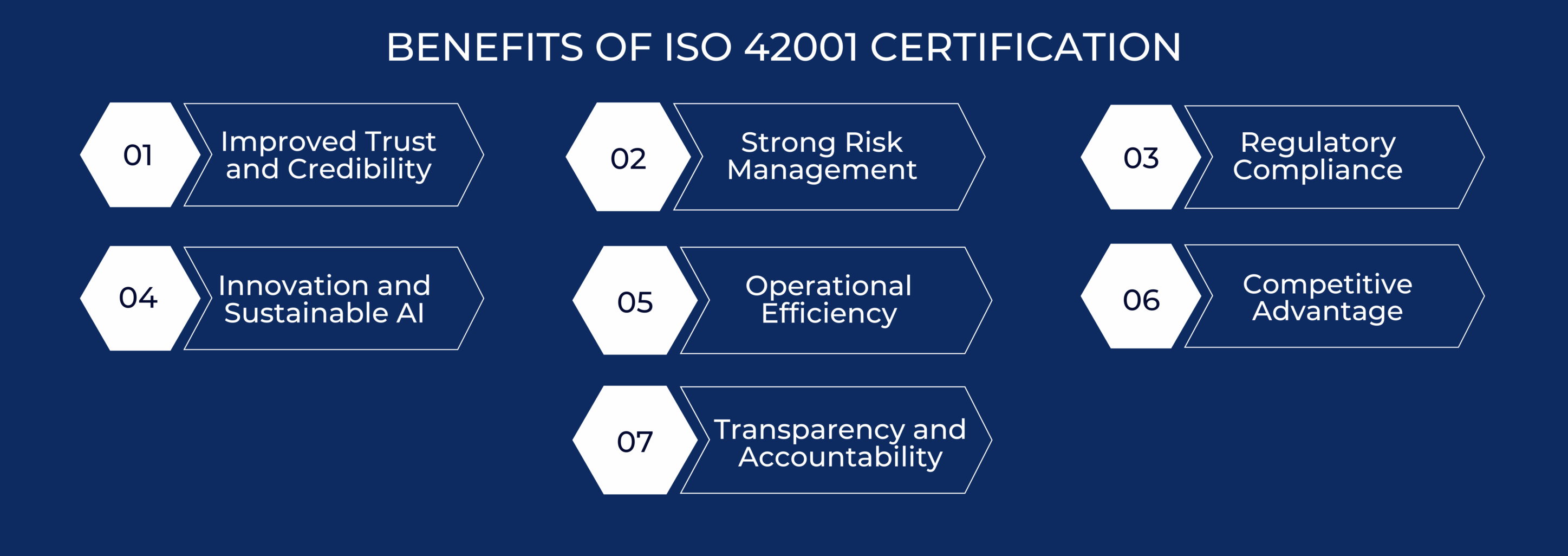
- ✓Regulatory Compliance and Risk Reduction Benefits
- ✓Commercial and Competitive Advantages
- ✓Organisational and Operational Benefits
- ✓Stakeholder Trust and Transparency Benefits
ISO 42001 Certification Cost in Bristol
ISO 42001 certification cost in Bristol is determined by several objective factors, including the size and complexity of the organisation, the number and technical complexity of AI systems within certification scope, the maturity of existing governance documentation, and the number of sites included in the certification boundary. CertPro provides fixed, transparent pricing for ISO 42001 certification in Bristol — eliminating variable cost uncertainty and enabling organisations to budget with precision. Fixed-fee pricing applies to the complete certification audit programme, including Stage 1 and Stage 2 audits, nonconformity review, certification decision, and certificate issuance.
Factors Influencing ISO 42001 Certification Investment
Smaller Bristol organisations with a limited AI system portfolio and a single operating location typically complete ISO 42001 certification within a narrower audit scope, which is reflected in a lower fixed fee. Larger organisations with complex AI portfolios spanning multiple business units, geographic locations, or technically sophisticated AI systems — such as those common in Bristol’s aerospace and defence sectors — require expanded audit programmes to ensure comprehensive coverage, and pricing is calibrated accordingly. Aerospace organisations in Bristol seeking ISO 42001 certification should note that the technical complexity of safety-critical AI systems may require specialised audit competencies that are factored into programme planning.
Bristol fintech organisations pursuing ISO 42001 compliance with existing ISO 27001 or other management system certifications often benefit from documented AIMS elements that partially satisfy ISO 42001 requirements, potentially reducing the overall audit effort required. CertPro’s fixed-fee pricing model accounts for integration opportunities with existing management system documentation, ensuring that organisations are not charged for duplicative audit work. Annual surveillance audits and triennial recertification audits are priced separately on a fixed-fee basis, with fees communicated at the time of initial certification to enable multi-year budget planning.
| Organisation Profile | Scope Complexity | Pricing Model |
|---|---|---|
| Small Bristol AI startup (1-50 employees) | Single AI system, single site, limited regulatory exposure | Fixed fee — entry-level programme |
| Mid-size Bristol tech company (51-250 employees) | Multiple AI systems, single or dual site, moderate regulatory obligations | Fixed fee — standard programme |
| Large Bristol financial services firm (250+ employees) | Complex AI portfolio, multi-site, significant regulatory requirements | Fixed fee — enterprise programme |
| Bristol aerospace/engineering organisation | Safety-critical AI systems, specialised technical audit requirements | Fixed fee — specialist programme |
| Bristol public sector or NHS-aligned body | High-impact AI, significant public accountability obligations | Fixed fee — public sector programme |
ISO 42001 and Bristol’s Business Landscape
Bristol’s business ecosystem is characterised by sector diversity and a strong innovation orientation that makes AI adoption both widespread and complex. The city’s economy encompasses aerospace and advanced engineering, financial and professional services, creative and digital industries, higher education and research, health and life sciences, and a growing clean technology sector. Each of these sectors deploys AI in different configurations, with different risk profiles, regulatory obligations, and stakeholder expectations. ISO 42001 Certification in Bristol provides a universal governance standard applicable across this sector diversity, while remaining flexible enough to address each sector’s specific AI governance challenges.
ISO 42001 for Bristol Technology and AI Startups
Bristol’s technology startup ecosystem — centred on the Engine Shed at Bristol Temple Meads and the expanding SETsquared Bristol network — includes a significant concentration of AI-native companies building products and platforms for enterprise, public sector, and consumer markets. For these organisations, ISO 42001 certification provides early-stage governance credibility that accelerates enterprise sales cycles and satisfies investor due diligence requirements. Enterprise clients procuring AI products increasingly include ISO 42001 compliance as a vendor qualification criterion, making certification a commercial enabler rather than a purely regulatory exercise for AI-focused startups in Bristol.
The ISO 42001 audit process for technology startups evaluates the governance structures built into AI product development workflows — including model documentation practices, testing and validation procedures, bias evaluation processes, and customer transparency mechanisms. For startups operating under agile development methodologies, the ISO 42001 assessment examines whether governance controls are embedded into sprint planning and release management processes, ensuring that AI governance is a continuous operational practice rather than a retrospective documentation exercise. CertPro’s ISO 42001 audit programme for Bristol organisations is calibrated to the operational realities of technology companies, examining evidence proportionate to organisational scale.
ISO 42001 for Bristol Financial Services and Fintech
Bristol’s financial services and fintech sector operates under a particularly demanding regulatory environment for AI governance. The FCA’s Guidance on Artificial Intelligence and Machine Learning, the Bank of England’s MLOS Discussion Paper, and the Joint Committee Discussion Paper on AI and Machine Learning collectively establish expectations for model risk management, explainability, fairness testing, and governance accountability — all of which map directly onto ISO 42001 AIMS requirements. ISO 42001 compliance in Bristol provides fintech organisations with a structured evidence base for demonstrating that these regulatory expectations are met through systematic, audited processes rather than ad hoc compliance activities.
Credit scoring algorithms, fraud detection systems, anti-money laundering transaction monitoring, and automated financial advice tools are among the AI applications prevalent in Bristol’s financial services sector. Each of these systems carries significant obligations under UK GDPR, the Equality Act 2010 (regarding algorithmic discrimination), and sector-specific FCA rules. The ISO 42001 assessment for financial services organisations examines whether AI impact assessments address equality and discrimination risks, whether explainability mechanisms satisfy Article 22 UK GDPR requirements for automated decisions affecting individuals, and whether model performance monitoring processes detect and respond to fairness metric degradation over time.
ISO 42001 for Bristol Aerospace, Healthcare, and Research Sectors
Bristol’s aerospace sector — anchored by Airbus, Leonardo, Rolls-Royce, and their extensive supply chains — increasingly deploys AI for predictive maintenance, quality inspection, design optimisation, and operational efficiency. These applications operate within strict safety and reliability frameworks established by the Civil Aviation Authority, the European Union Aviation Safety Agency, and international airworthiness standards. ISO 42001 certification for Bristol aerospace firms provides governance documentation that supports safety case arguments for AI systems, demonstrating that AI development and deployment processes are controlled, repeatable, and subject to systematic risk assessment. The ISO 42001 audit evaluates whether AI governance processes are integrated into existing safety management systems rather than operating in isolation.
Bristol’s health and life sciences sector — centred on the Bristol Royal Infirmary, Southmead Hospital, and the Bristol Health Partners academic health science network — is expanding its deployment of AI diagnostic tools, clinical decision support systems, and healthcare pathway optimisation algorithms. These applications fall within the scope of MHRA medical device regulations for AI-as-a-medical-device (AIaMD) and are subject to NHS AI governance guidance. ISO 42001 certification provides a documented AIMS framework that addresses the governance requirements common to both MHRA regulations and NHS AI governance expectations, supporting regulatory submission processes and NHS procurement requirements simultaneously.
Why Choose CertPro for ISO 42001 Certification in Bristol
CertPro’s institutional positioning as a Licensed CPA Firm distinguishes its ISO 42001 certification services from consultancy or advisory providers. CertPro conducts certification audits — formal, evidence-based evaluations against ISO 42001 requirements — rather than providing implementation guidance or advisory services. This distinction is fundamental: a certification issued by CertPro represents an independent third-party attestation of AIMS conformity, carrying the institutional credibility that regulators, enterprise procurement teams, and public sector commissioners require. CertPro’s audit teams are technically qualified ISO 42001 auditors with sector-specific expertise relevant to Bristol’s principal industry verticals.
CertPro’s Audit Methodology and Technical Expertise
CertPro’s ISO 42001 audit methodology follows a structured, clause-by-clause evaluation approach that examines documentary conformity at Stage 1 and operational effectiveness at Stage 2. Audit teams are assigned based on sector expertise — ensuring that auditors evaluating aerospace AI systems have aviation engineering knowledge, that auditors examining financial services AI have regulatory and risk management expertise, and that auditors reviewing healthcare AI understand clinical governance frameworks. This sector-matched audit team allocation ensures that technical AI governance evidence is evaluated by auditors capable of assessing its adequacy in context, not merely checking for documentation existence.
CertPro’s ISO 42001 assessment programme employs structured interview protocols, evidence sampling methodologies, and control testing procedures developed specifically for the AI management system domain. The audit programme addresses the full Annex A control set, with testing depth calibrated to the risk profile of each control area. High-risk AI applications — those with significant potential impacts on individual rights, safety, or equality — receive expanded audit coverage proportionate to the stakes involved. CertPro’s audit reports are structured to provide detailed, actionable findings that enable organisations to understand the precise nature of any nonconformities identified and the evidence basis for audit conclusions.
Fixed-Fee Transparency and Audit Programme Predictability
CertPro’s fixed-fee pricing model for ISO 42001 certification in Bristol provides complete cost certainty from programme initiation through certificate issuance. Unlike variable-fee models that adjust based on audit findings or additional work requirements, CertPro’s fixed fee encompasses the complete agreed audit programme — including Stage 1 and Stage 2 audits, all audit team travel within the Bristol area, nonconformity review, certification decision, and certificate issuance. This pricing transparency enables Bristol organisations to plan certification budgets with precision and eliminates the risk of cost escalation during the audit process.
CertPro also provides structured programme timelines at the outset of each certification engagement, specifying scheduled dates for Stage 1 audit delivery, Stage 2 audit commencement, nonconformity resolution windows, and certification decision completion. This timeline transparency enables Bristol organisations to align the certification process with business planning cycles, procurement deadlines, or regulatory submission timelines. CertPro’s ISO 42001 certification programme for Bristol companies is designed to be a predictable, professionally managed process that produces a definitive certification outcome within the agreed timeframe.
Regulatory Alignment and UK AI Governance Expertise
CertPro’s ISO 42001 audit programme is calibrated to the specific regulatory context applicable to Bristol-based organisations — incorporating the UK GDPR framework enforced by the ICO, sector-specific AI guidance from the FCA, CMA, MHRA, and other UK regulators, and the emerging UK AI governance framework articulated by DSIT and the AI Safety Institute. Audit criteria are updated as the UK regulatory AI landscape evolves, ensuring that ISO 42001 certification from CertPro reflects current governance expectations rather than a static snapshot of requirements at the time of standard publication. This regulatory alignment is particularly valuable for Bristol organisations navigating a rapidly changing AI governance environment.
Steps for ISO 42001 Certification in Bristol: Practical Guidance
Bristol organisations preparing for ISO 42001 certification follow a structured sequence of preparatory activities that establish the documentary and operational foundations required for the certification audit. The steps below represent the standard preparation pathway for organisations seeking ISO 42001 Certification in Bristol, based on the requirements of ISO/IEC 42001:2023 and CertPro’s audit programme structure. Organisations that complete these steps systematically and thoroughly are well-positioned for an efficient, focused certification audit with minimal nonconformity findings.
- Conduct a complete AI system inventory identifying all AI systems deployed, procured, or developed within the proposed certification scope boundary
- Define the AIMS scope statement specifying the organisational units, AI systems, processes, and locations subject to certification
- Establish the AI policy — a board-approved document articulating the organisation’s commitment to responsible AI development, deployment, and governance
- Appoint an AI management system owner with defined authority, responsibility, and resource access for AIMS operation
- Complete an AI risk assessment covering all AI systems in scope, identifying AI-specific risk categories and documenting risk treatment decisions
- Prepare the Statement of Applicability documenting all Annex A control decisions with explicit justifications for inclusion or exclusion
- Complete AI System Impact Assessments for all AI systems with significant potential impacts on individuals or communities
- Establish and document operational processes for AI system lifecycle management, data quality assurance, and supplier AI governance
- Implement and operate the documented AIMS controls for a sufficient period to generate operational evidence prior to Stage 2 audit
- Conduct an internal audit of the AIMS covering all clauses of ISO 42001, with documented findings and corrective action records
- Complete a management review of AIMS performance with documented outputs including improvement decisions
- Submit the certification application to CertPro with the completed AIMS scope statement and confirm the Stage 1 audit schedule
The time required to reach ISO 42001 certification readiness varies significantly based on the organisation’s starting position. Organisations with mature information security or quality management systems — particularly those holding ISO 27001 or ISO 9001 certifications — typically have existing governance infrastructure that can be extended to satisfy ISO 42001 requirements, reducing the time to certification readiness. Organisations without prior management system experience typically require a longer preparation period to establish the documentary foundations, operate the controls for a sufficient evidence-generation period, and complete the internal audit and management review cycle before the Stage 1 audit.
From Stage 1 audit commencement to certificate issuance, the ISO 42001 certification timeline for a Bristol organisation of moderate complexity typically spans three to six months — assuming no major nonconformities are identified at Stage 1 that require extended remediation. This timeline encompasses Stage 1 document review, any Stage 1 finding remediation, Stage 2 operational audit, nonconformity resolution window, and certification decision. CertPro communicates specific milestone dates at programme commencement, enabling organisations to plan internal resource allocation and external communications accordingly.
- ✓AIMS Implementation Timeline Considerations
Securing ISO 42001 Certification in Bristol with CertPro
ISO 42001 Certification in Bristol represents a strategic governance milestone for organisations that develop, deploy, or procure AI systems in any operational context. The certification delivers audited evidence of AIMS conformity that satisfies regulatory expectations, enables procurement qualification, builds stakeholder trust, and embeds systematic AI risk management into organisational operations. As Bristol’s AI ecosystem continues to expand across technology, aerospace, financial services, healthcare, and research sectors, ISO 42001 certification is increasingly recognised as a baseline governance requirement rather than a discretionary quality signal.
CertPro, as a Licensed CPA Firm, conducts ISO 42001 certification audits with institutional rigour, technical depth, and complete process transparency. The fixed-fee certification programme provides Bristol organisations with cost certainty, timeline predictability, and audit expertise aligned to the specific regulatory and sector context in which they operate. ISO 42001 audit programmes in Bristol are available for organisations across all sectors and scales, with audit team composition matched to the technical and regulatory characteristics of each organisation’s AI portfolio. Certification outcomes are documented in formal audit reports providing detailed, actionable findings and a definitive certification decision.
The ISO 42001 assessment conducted by CertPro produces a certification outcome recognised by enterprise procurement teams, UK regulators, and international partners as an authoritative, independent attestation of AI governance maturity. For Bristol organisations seeking to differentiate their AI governance posture in competitive markets, satisfy regulatory requirements with documented evidence, or build the internal governance infrastructure required to scale AI operations responsibly, ISO 42001 Certification in Bristol through CertPro provides the structured, credible pathway to achieving these objectives.
FAQ
▶
What is ISO 42001 certification and why does it matter for Bristol organisations?
▶
Which Bristol organisations need ISO 42001 certification?
▶
How long does the ISO 42001 certification audit process take in Bristol?
▶
What is the difference between an ISO 42001 audit and an ISO 42001 assessment?
▶
How does ISO 42001 compliance relate to UK GDPR and ICO requirements for AI?
▶
What does CertPro’s fixed-fee pricing model include for ISO 42001 certification in Bristol?
▶
Can ISO 42001 certification be integrated with existing ISO 27001 or ISO 9001 certifications?
▶
How does ISO 42001 align with the EU AI Act for Bristol organisations with EU market exposure?

MindSec Launches AI Compliance for Law 25 & ISO 42001
Excerpt from Barchart Article, Published on December 3, 2025 Today, Canadian organizations face increasing pressure to comply with stringent privacy a…

UNDERSTANDING ISO 42001: A GUIDE FOR RESPONSIBLE AI MANAGEMENT SYSTEMS
The invention of artificial intelligence (AI) has changed the operational processes of many industries. However, the rapid growth of technology increa…

ENSURING AI DATA PRIVACY COMPLIANCE WITH ISO 42001
According to Stanford’s AI report, the private AI investment in the U.S. alone reached more than $109 billion last year, which is equal to 12 times th…
Get In Touch
have a question? let us get back to you.