
ISO 42001 Certification in Edinburgh
ISO 42001 is the internationally recognised standard for Artificial Intelligence Management Systems (AIMS), published by the International Organization for Standardization and the International Electrotechnical Commission as ISO/IEC 42001:2023. It establishes requirements for organisations to design, implement, maintain, and continually improve a structured governance framework for responsible AI development and deployment. ISO 42001 Certification in Edinburgh provides organisations with a certifiable, third-party-verified demonstration that their AI systems operate within defined ethical, risk, and accountability boundaries.
OUR CLIENTS










What Is ISO 42001 Certification?
ISO 42001 is the internationally recognised standard for Artificial Intelligence Management Systems (AIMS), published by the International Organization for Standardization and the International Electrotechnical Commission as ISO/IEC 42001:2023. It establishes requirements for organisations to design, implement, maintain, and continually improve a structured governance framework for responsible AI development and deployment. ISO 42001 Certification in Edinburgh provides organisations with a certifiable, third-party-verified demonstration that their AI systems operate within defined ethical, risk, and accountability boundaries.
Definition and Scope of the ISO 42001 Standard
ISO/IEC 42001:2023 is the world’s first certifiable AI management system standard. It defines requirements applicable to any organisation that develops, provides, or uses AI-based products and services. The standard applies regardless of organisation size, sector, or geography, making it directly relevant to Edinburgh-based businesses operating in financial services, technology, healthcare, education, and public administration. Importantly, the standard’s scope explicitly includes organisations that are AI developers, AI deployers, or both — a distinction that determines which controls and annexes apply during the ISO 42001 audit process.
ISO 42001 follows the High-Level Structure (HLS) common to all modern ISO management system standards. This means it integrates directly with ISO 27001 for information security and ISO 31000 for risk management. Organisations in Edinburgh that already hold ISO 27001 certification can reuse documented policies, roles, risk registers, and management review processes — significantly reducing the effort required to achieve ISO 42001 compliance. This alignment is particularly valuable for Edinburgh’s fintech and financial services sector, where information security and AI governance are tightly interconnected operational requirements.
Core Clauses and Structural Requirements of ISO 42001
ISO 42001 is organised into ten numbered clauses. Clauses 1 through 3 define scope, normative references, and key terms. Clauses 4 through 10 contain the mandatory requirements for the AIMS. Specifically:
- Clause 4 addresses context of the organisation, including interested-party needs
- Clause 5 covers leadership and AI policy commitment
- Clause 6 covers planning, including risk and opportunity assessment
- Clause 7 addresses support requirements including competence and communication
- Clause 8 covers operational planning and AI impact assessment
- Clause 9 covers performance evaluation including internal audit and management review
- Clause 10 addresses continual improvement and nonconformity management
Each clause must be addressed in documentation and verified during the ISO 42001 audit.
ISO 42001 also includes Annex A, which provides a reference set of controls organised into eight categories: policies for AI, internal organisation, resources for AI systems, assessing AI systems, AI system life cycle, responsible involvement with AI systems, performance of AI systems, and third-party and customer relationships. Annex B provides implementation guidance for these controls. During an ISO 42001 assessment, the certification body evaluates which controls from Annex A are applicable to the organisation’s AI context — and whether they have been effectively implemented and documented in the Statement of Applicability.
Relationship Between ISO 42001 and UK Regulatory Frameworks
For organisations seeking ISO 42001 Certification in Edinburgh, the standard directly supports compliance with several UK regulatory obligations. The UK GDPR, enforced by the Information Commissioner’s Office (ICO), requires organisations using automated decision-making systems to demonstrate accountability, transparency, and data subject rights protection. ISO 42001 controls address all of these requirements. The standard’s AI impact assessment process under Clause 8.4 maps directly onto the Data Protection Impact Assessment (DPIA) requirements of UK GDPR Article 35, enabling organisations to satisfy both obligations through a single documented process.
ISO 42001 also aligns with the UK Government’s AI Governance framework and the principles set out in the National AI Strategy. The UK’s pro-innovation approach to AI regulation emphasises transparency, fairness, accountability, safety, and contestability — all directly addressed by ISO 42001’s Annex A controls. For Edinburgh organisations with EU operations or clients, ISO 42001 compliance also supports readiness for the EU AI Act. This is particularly relevant for high-risk AI system requirements including conformity assessments, technical documentation, and post-market monitoring obligations. This dual-jurisdiction relevance makes ISO 42001 Certification in Edinburgh a strategic compliance investment for internationally active organisations.

Why Edinburgh Organisations Need ISO 42001 Certification
Edinburgh occupies a unique position in the UK’s AI and technology landscape. As Scotland’s capital and the UK’s second-largest financial centre, Edinburgh hosts a dense concentration of financial services firms, fintech startups, university research centres, and technology companies actively developing and deploying AI systems. The city’s AI ecosystem includes institutions such as the University of Edinburgh — consistently ranked among the world’s top AI research universities — alongside major financial institutions, insurance firms, asset managers, and a rapidly growing cohort of AI-native startups concentrated in areas such as Leith, the Edinburgh Technopole, and the Old Town tech corridor.
Edinburgh’s Financial Services Sector and AI Governance Requirements
Edinburgh’s financial services sector manages assets exceeding £1 trillion and employs over 35,000 people directly. Firms in this sector — including fund managers, insurers, banks, and payment processors — are deploying AI systems for credit scoring, fraud detection, customer risk profiling, claims processing, and algorithmic trading. Each of these use cases carries significant regulatory and reputational risk. ISO 42001 Certification in Edinburgh provides financial services firms with a structured framework for demonstrating that these AI systems operate within defined governance boundaries, with documented risk assessments, human oversight protocols, and performance monitoring procedures that satisfy Financial Conduct Authority (FCA) expectations.
The FCA’s published guidance on AI and machine learning in financial services explicitly expects firms to demonstrate explainability, accountability, and ongoing model governance. ISO 42001 directly addresses these requirements through its Annex A controls on AI system transparency (Control A.6.2.6) and human oversight mechanisms (Control A.6.2.3). For Edinburgh financial services firms preparing for FCA model risk management reviews or ICO audits, ISO 42001 compliance provides documented evidence of systematic AI governance. Regulators can then evaluate this evidence against published standards rather than subjective assessments — a significant advantage during supervisory engagement.
Technology Companies and AI-Native Startups in Edinburgh
Edinburgh’s technology sector includes both established global firms with significant local presences and a growing ecosystem of AI-native startups commercialising research from the University of Edinburgh, Heriot-Watt University, and Edinburgh Napier University. ISO 42001 Certification in Edinburgh provides these organisations with a credible, internationally recognised signal of responsible AI practice. This supports enterprise sales cycles, investor due diligence processes, and public sector procurement requirements. Edinburgh-based technology companies competing for contracts with Scottish Government agencies, NHS Scotland, and local councils increasingly encounter AI governance requirements in tender documentation — requirements that ISO 42001 certification directly satisfies.
For AI-native startups in Edinburgh, achieving ISO 42001 certification demonstrates institutional maturity to enterprise customers and investors who require evidence of responsible AI governance before committing to commercial relationships. The certification process itself — particularly the documented AI impact assessment and risk treatment procedures — compels organisations to formalise governance structures that accelerate safe scaling. This structured approach to AI risk management is increasingly viewed by Edinburgh’s venture capital community as a quality signal comparable to SOC 2 or ISO 27001 in earlier technology cycles.
Regulatory Drivers for ISO 42001 Compliance in Edinburgh
Organisations operating in Edinburgh face an evolving matrix of AI-related regulatory obligations. The ICO’s guidance on AI and data protection requires organisations to document lawful bases for AI processing, conduct DPIAs for high-risk automated systems, and implement technical and organisational measures to ensure data quality and model fairness. ISO 42001 compliance provides a systematic mechanism for meeting these obligations with documented, auditable evidence. The standard’s Clause 8.4 AI impact assessment process generates the documentation required to demonstrate DPIA compliance to ICO auditors, while Clause 9.1 performance evaluation requirements address the ongoing monitoring obligations for automated decision-making systems.
| Regulatory Framework | Relevant ISO 42001 Clauses/Controls | Edinburgh Sector Applicability |
|---|---|---|
| UK GDPR / ICO Guidance on AI | Clause 8.4 (AI Impact Assessment), Annex A Controls A.6.2.6, A.6.2.3 | All sectors using automated decision-making |
| FCA Model Risk Management | Clause 9.1 (Performance Evaluation), Annex A Controls A.7.4, A.7.5 | Financial services, fintech, insurance |
| EU AI Act (for EU operations) | Clause 8 (Operations), Annex A Controls A.6.1, A.6.2 | Technology exporters, financial firms with EU clients |
| UK AI Governance Framework | Clause 5 (Leadership), Clause 6 (Planning), Clause 10 (Improvement) | All AI-developing and AI-deploying organisations |
| Scottish Government Procurement Requirements | Full AIMS certification with Statement of Applicability | Public sector suppliers, NHS Scotland, local councils |
Requirements for ISO 42001 Certification
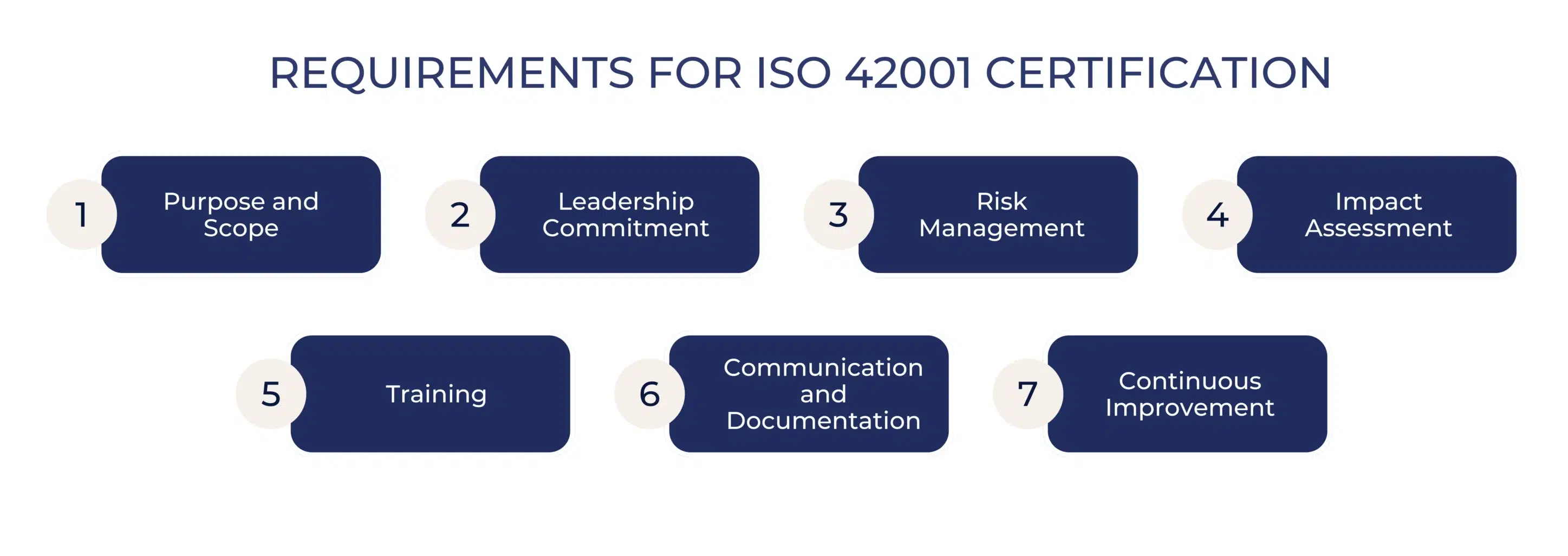
ISO 42001 Certification requires organisations to satisfy a comprehensive set of documented requirements spanning organisational context, leadership commitment, systematic planning, operational controls, and performance evaluation. The certification body’s auditors assess conformance against these requirements during the ISO 42001 audit process. Understanding these requirements precisely is essential for Edinburgh organisations to allocate resources effectively and build documentation structures that withstand third-party scrutiny. Requirements span both mandatory clauses (Clauses 4–10) and the applicable controls selected from Annex A based on the organisation’s specific AI context.
ISO 42001 mandates a specific set of documented information that must be created, maintained, and retained as evidence of AIMS operation. Mandatory documented information includes the AIMS scope statement, AI policy, AI objectives with measurable targets, AI impact assessment records, internal audit programme and results, nonconformity and corrective action records, management review minutes, and the Statement of Applicability for Annex A controls. These documents form the core evidence base that ISO 42001 audit teams evaluate during Stage 1 and Stage 2 assessments. Edinburgh organisations must ensure that all documentation is version-controlled, accessible to relevant personnel, and protected from unauthorised modification.
Beyond mandatory documents, organisations pursuing ISO 42001 compliance in Edinburgh typically maintain additional documented information to support operational controls. This includes:
- AI system inventories listing all in-scope systems with their intended purposes, risk classifications, and deployment contexts
- AI risk registers documenting identified risks, likelihood and impact assessments, and selected treatment options
- Training records demonstrating that personnel involved in AI development and oversight possess required competencies
- Supplier assessment records for third-party AI components and services
The depth and quality of this documented evidence directly affects the outcomes of the ISO 42001 assessment.
ISO 42001’s operational requirements address the technical governance of AI systems throughout their lifecycle. Clause 8.2 requires organisations to plan and control the processes needed to meet AIMS requirements, including establishing criteria for AI system acceptance. Clause 8.3 requires AI suppliers to conduct due diligence on AI-related concerns — for Edinburgh organisations, this typically means establishing contractual requirements and assessment procedures for AI vendors, cloud AI service providers, and open-source model providers. Clause 8.4 requires a documented AI impact assessment process that evaluates potential impacts on individuals, groups, and society both before and during AI system deployment.
Annex A technical controls require organisations to implement specific measures across the AI system lifecycle. Key controls include:
- Control A.7.1: Data governance procedures addressing data quality, provenance, and bias assessment
- Control A.7.2: Data acquisition and preparation procedures
- Control A.7.3: AI model design requirements including fairness and explainability considerations
- Control A.7.4: AI model testing and validation including performance benchmarking and robustness testing
- Control A.7.5: AI system deployment procedures
- Control A.7.6: Operation and monitoring requirements including drift detection and performance degradation alerts
- Control A.7.7: Decommissioning procedures for AI systems being retired
ISO 42001 Clause 5 places explicit requirements on top management that cannot be fully delegated to operational teams. Top management must demonstrate leadership commitment to the AIMS by establishing an AI policy signed at executive level, ensuring AIMS objectives align with the organisation’s strategic direction, providing adequate resources for AIMS operation, and actively participating in management reviews. For Edinburgh organisations, ISO 42001 audit teams will expect evidence of board-level or C-suite engagement with AI governance — not merely a delegated compliance programme. Meeting minutes, policy approval records, and resource allocation decisions serve as primary evidence of leadership commitment during the ISO 42001 assessment.
- ✓Documented AIMS scope statement defining which AI systems and organisational functions are covered
- ✓AI policy approved and signed by top management, communicated to all relevant personnel
- ✓Statement of Applicability documenting selected and excluded Annex A controls with justifications
- ✓AI impact assessment records for all in-scope AI systems with documented risk treatment decisions
- ✓AI objectives with measurable targets, assigned responsibilities, and progress tracking mechanisms
- ✓Internal audit programme covering all AIMS clauses on a defined frequency with documented results
- ✓Competence records demonstrating that AI development, oversight, and governance roles are filled by qualified personnel
- ✓Nonconformity register documenting identified gaps, root cause analyses, and corrective actions
- ✓Management review records documenting periodic senior leadership evaluation of AIMS performance
- ✓Supplier assessment records for third-party AI components, platforms, and services
- ✓Documentation Requirements for ISO 42001 Compliance
- ✓Technical and Operational Requirements
- ✓Leadership and Governance Requirements
ISO 42001 Certification Process in Edinburgh
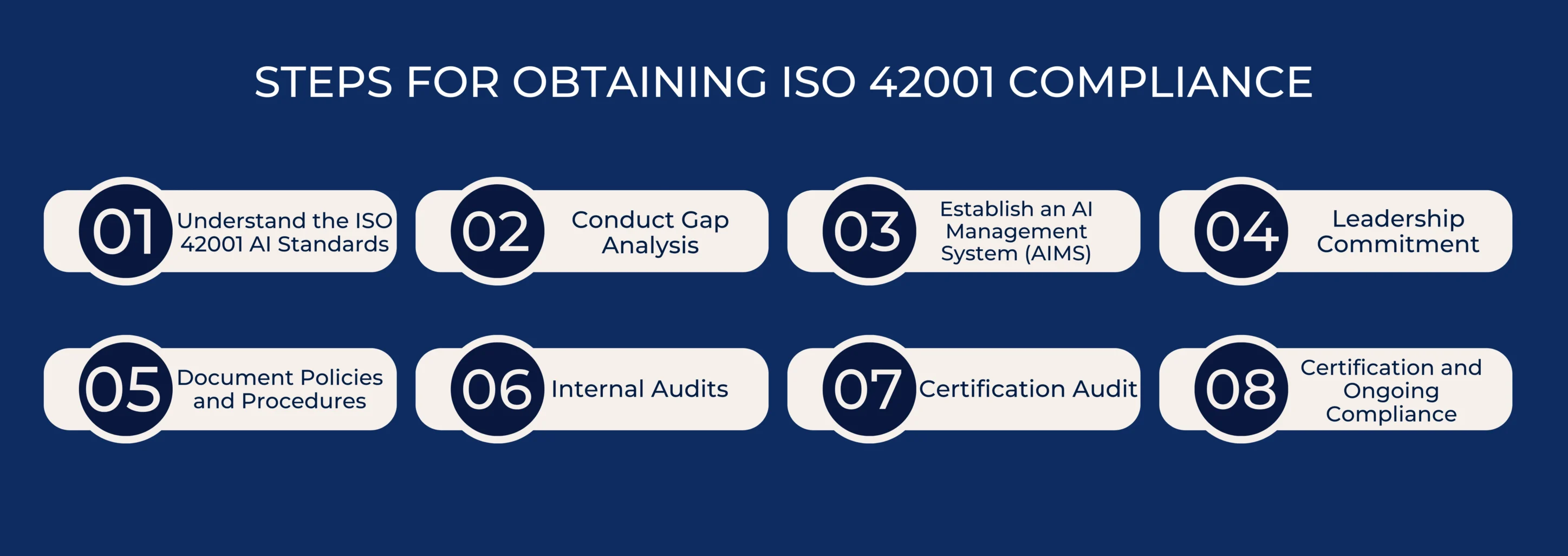
The ISO 42001 Certification process follows a defined audit programme structure common to all ISO management system certifications, adapted to address the specific requirements of AI governance. For Edinburgh organisations pursuing ISO 42001 Certification in Edinburgh, the process typically spans three to six months from initial scope definition to certification decision. The exact timeline depends on the size of the organisation, the number and complexity of AI systems in scope, and the maturity of existing governance documentation. The certification body conducts independent third-party evaluation — it does not provide implementation guidance, consulting, or advisory services as part of the certification audit.
Stage 1 of the ISO 42001 audit process is a documentation review conducted to assess whether the organisation has established the foundational requirements of the AIMS and is ready to proceed to Stage 2. During Stage 1, the audit team evaluates the AIMS scope statement, AI policy, Statement of Applicability, AI impact assessment methodology, internal audit programme design, and management review process. Stage 1 may be conducted on-site at the Edinburgh facility or remotely via document exchange and video conference. It typically takes one to two days for most Edinburgh organisations and produces a formal Stage 1 report identifying any areas where the documentation is insufficient to proceed.
The Stage 1 report categorises findings as either mandatory items that must be resolved before Stage 2 can proceed, or observations that represent opportunities for improvement but do not block progression. Edinburgh organisations that complete a structured internal audit of their AIMS documentation prior to Stage 1 typically encounter fewer mandatory findings. The interval between Stage 1 and Stage 2 is typically a minimum of one month, allowing time to address any mandatory findings. Stage 2 should be scheduled within three months of Stage 1 completion to avoid the need to repeat documentation review activities.
Stage 2 is the main certification audit, conducted on-site at the Edinburgh organisation’s premises or, for distributed operations, at the primary AIMS management location. During Stage 2, the ISO 42001 audit team evaluates the operational effectiveness of the AIMS by interviewing personnel in AI development, operations, risk management, and governance roles. Auditors also review documented evidence of AI impact assessments, risk treatment decisions, and performance monitoring; observe AI system development and deployment processes; and test selected Annex A controls against the Statement of Applicability. Stage 2 typically requires two to five days of on-site audit activity, depending on organisational size and AI system complexity.
The ISO 42001 audit team issues findings during Stage 2 classified as major nonconformities (systemic failures in meeting a mandatory requirement), minor nonconformities (isolated failures or gaps), or opportunities for improvement (observations not affecting conformance). Major nonconformities must be resolved before certification can be issued. Organisations typically have 90 days from the audit closing meeting to submit documented corrective actions and objective evidence of resolution. Minor nonconformities are tracked through the corrective action process and verified at the first surveillance audit. The certification decision is made by a reviewer independent of the audit team, based on the full audit report and any corrective action evidence submitted.
Upon successful completion of Stage 2 and resolution of any major nonconformities, the certification body issues an ISO 42001 certificate specifying the organisation’s name, the certified AIMS scope, the date of certification, and the certificate validity period. ISO 42001 certificates are valid for three years. Annual surveillance audits are conducted in years one and two to verify ongoing conformance, evaluate the status of corrective actions from previous audits, assess any changes to AI systems or organisational context, and confirm that the AIMS is being actively maintained and improved. Recertification audits are conducted in year three to renew the certificate for a further three-year cycle.
- ✓Stage 1: Scope Definition and Documentation Review
- ✓Stage 2: On-Site ISO 42001 Audit and Control Evaluation
- ✓Certification Issuance, Surveillance, and Recertification
Steps to Achieve ISO 42001 Certification in Edinburgh
Achieving ISO 42001 Certification in Edinburgh requires a structured sequence of organisational activities that establish, document, and operationalise the AIMS before engaging a certification body. The following steps represent the standard path followed by Edinburgh organisations that have successfully achieved ISO 42001 certification. Each step produces specific documented outputs that serve as audit evidence during the certification assessment. The total elapsed time from initial scoping to certification decision is typically three to six months for organisations with fewer than 500 employees, and between six and twelve months for larger or more complex organisations with multiple AI systems across different business units.
- Define the AIMS scope: Identify all AI systems and organisational functions to be included in certification, document the scope statement, and obtain top management approval.
- Conduct an AI system inventory: List all AI systems within scope with their intended purposes, inputs, outputs, data sources, technical architecture, and current governance status.
- Establish the AI policy: Draft and obtain top management approval for a documented AI policy that articulates the organisation’s commitments to responsible AI use, ethical principles, and continual improvement.
- Perform AI impact assessments: Complete documented AI impact assessments for each AI system within scope, evaluating potential impacts on individuals, groups, and society, and recording risk treatment decisions.
- Select and implement Annex A controls: Complete the Statement of Applicability selecting applicable controls from Annex A, document justifications for exclusions, and implement selected controls with documented evidence.
- Establish performance monitoring: Implement measurement processes for AI system performance, fairness, and reliability, and schedule management reviews with defined agenda items and attendance requirements.
- Execute the internal audit programme: Conduct internal audits covering all AIMS clauses using qualified internal auditors, document findings, and initiate corrective actions for identified nonconformities.
- Conduct management review: Hold a formal management review meeting at which AIMS performance data is evaluated, objectives are assessed, and decisions are recorded regarding resource allocation and improvement priorities.
- Engage the certification body: Submit the certification application with AIMS documentation, agree on audit scope and programme, complete Stage 1 documentation review, and schedule Stage 2 on-site audit.
- Address audit findings: Respond to any nonconformities identified during Stage 1 or Stage 2 with documented root cause analyses, corrective actions, and objective evidence of implementation within the specified timeframes.
ISO 42001 Certification Cost in Edinburgh
The cost of ISO 42001 Certification in Edinburgh varies based on several factors: the size of the organisation, the number and complexity of AI systems within the certification scope, the maturity of existing governance documentation, and the number of audit person-days required by the certification body. Understanding these cost components helps Edinburgh organisations budget accurately and plan the certification investment as a measurable business cost with a defined return through market access, regulatory standing, and risk management value.
Certification Body Audit Fees
Certification body fees for ISO 42001 audit engagements in Edinburgh are determined primarily by the number of audit person-days required. This is calculated based on employee count, the number of AI systems within scope, and the complexity of operational processes to be evaluated. For small Edinburgh organisations with fewer than 50 employees and one to three AI systems in scope, initial certification audit fees typically range from £3,500 to £6,000, covering both Stage 1 documentation review and Stage 2 on-site audit. For medium-sized organisations with 50 to 250 employees and multiple AI systems, fees typically range from £6,000 to £12,000. Annual surveillance audit fees are typically 30 to 40 percent of the initial certification fee.
Large Edinburgh organisations — particularly financial services firms with complex AI portfolios spanning credit risk, fraud detection, customer analytics, and trading systems — may require significantly more audit person-days. Initial certification fees for these organisations typically range from £12,000 to £25,000 or more. These organisations often benefit from phased certification approaches that certify initial AI systems within a defined scope boundary, then expand the scope at subsequent surveillance or recertification audits. The certification body will provide a formal audit programme quotation based on the documented AIMS scope and AI system inventory submitted as part of the certification application.
Internal Investment and Resource Requirements
Beyond certification body fees, Edinburgh organisations must account for internal investment in AIMS establishment. This includes staff time for documentation development, AI impact assessment completion, internal audit execution, and management review preparation. For organisations without existing ISO management system infrastructure, this internal investment typically represents the larger share of total certification cost. Organisations that already hold ISO 27001 or ISO 9001 certification can leverage existing process documentation, risk management frameworks, and internal audit competences — significantly reducing the incremental internal investment required for ISO 42001 compliance in Edinburgh.
| Organisation Size | AI Systems in Scope | Estimated Certification Audit Fee | Annual Surveillance Fee |
|---|---|---|---|
| Small (< 50 employees) | 1–3 AI systems | £3,500 – £6,000 | £1,200 – £2,400 |
| Medium (50–250 employees) | 3–8 AI systems | £6,000 – £12,000 | £2,400 – £4,800 |
| Large (250–1,000 employees) | 8–20 AI systems | £12,000 – £20,000 | £4,800 – £8,000 |
| Enterprise (> 1,000 employees) | 20+ AI systems | £20,000 – £30,000+ | £8,000 – £12,000+ |
Benefits of ISO 42001 Certification
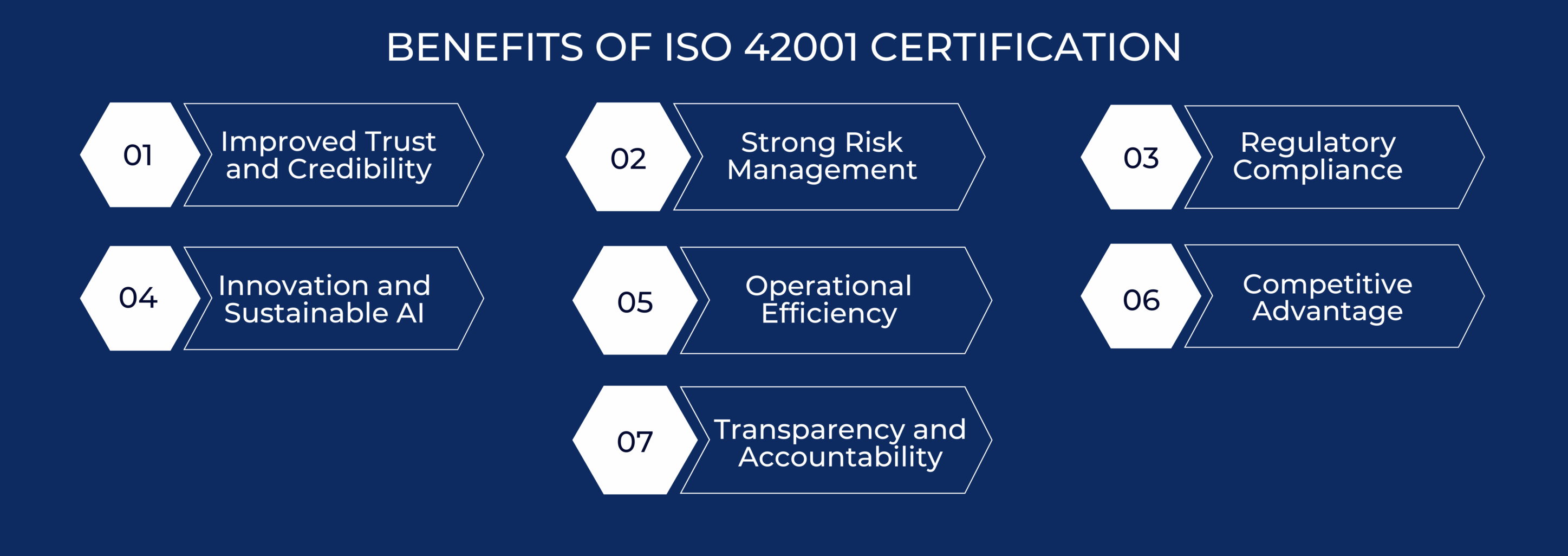
ISO 42001 Certification in Edinburgh delivers measurable benefits across regulatory compliance, commercial competitiveness, operational risk management, and stakeholder trust. These benefits are experienced both immediately upon certification and over the ongoing three-year certification cycle as the AIMS matures and embeds responsible AI governance into organisational culture. The following benefits reflect outcomes documented by organisations that have achieved ISO 42001 certification across financial services, technology, healthcare, and public sector contexts — all directly relevant to Edinburgh’s economic profile.
ISO 42001 certification provides Edinburgh organisations with documented, auditor-verified evidence of AI governance maturity that directly satisfies regulatory expectations. For organisations subject to ICO oversight, the documented AI impact assessments and performance monitoring processes produced through ISO 42001 compliance satisfy the ongoing accountability requirements under UK GDPR for automated decision-making systems. This evidence base significantly reduces the risk of ICO enforcement action and provides a structured basis for responding to regulatory information requests. The standard’s requirement for documented nonconformity management and corrective action processes also demonstrates the systematic approach to AI risk management that regulators expect from organisations with significant AI deployments.
For Edinburgh financial services firms under FCA supervision, ISO 42001 certification provides structured evidence of model governance processes that align with the FCA’s expectations for firms using AI in regulated activities. The certification’s documented audit trail — including AI impact assessments, risk treatment records, and performance evaluation results — provides the kind of contemporaneous evidence that FCA supervisors expect during model risk management reviews. Organisations holding ISO 42001 certification are demonstrably better positioned during FCA supervisory visits than those relying on undocumented or informal AI governance arrangements.
ISO 42001 Certification in Edinburgh provides certified organisations with a competitive differentiator in procurement processes where AI governance is evaluated. Scottish Government tender requirements for AI-enabled services increasingly reference AI governance standards, and ISO 42001 certification provides a directly verifiable response to these requirements. Large enterprise customers in financial services, healthcare, and public administration are similarly including AI governance requirements in their supplier qualification processes. ISO 42001 certification provides the most direct and credible form of compliance evidence in these contexts, enabling Edinburgh organisations to position themselves advantageously against uncertified competitors.
In international markets, ISO 42001 certification provides Edinburgh-based AI companies with a globally recognised governance credential that facilitates market entry in jurisdictions with AI governance requirements. For Edinburgh technology companies targeting EU customers — where the AI Act’s conformity assessment requirements apply to high-risk AI systems — ISO 42001 certification provides documented evidence of the technical documentation, risk management, and human oversight systems the EU AI Act requires. This cross-border recognition makes ISO 42001 Certification in Edinburgh a particularly valuable investment for the city’s internationally active AI ecosystem.
Beyond external regulatory and commercial benefits, ISO 42001 certification delivers internal operational improvements through the discipline of systematic AI lifecycle management. The standard’s requirements for AI system inventories, impact assessments, and performance monitoring create structured oversight mechanisms that reduce the risk of AI system failures going undetected. The internal audit requirement ensures that AI governance controls are periodically tested and gaps identified before they manifest as incidents. The management review process ensures that senior leadership maintains visibility of AI governance performance and makes informed resource allocation decisions based on objective performance data.
- ✓Documented compliance with UK GDPR automated decision-making requirements, reducing ICO enforcement risk
- ✓Structured evidence of AI model governance for FCA supervisory reviews and regulatory information requests
- ✓Competitive advantage in public sector procurement processes requiring AI governance certification
- ✓Demonstrated responsible AI practice for enterprise customer qualification and supplier due diligence processes
- ✓Reduced risk of AI bias incidents, model failures, and associated reputational damage
- ✓Structured AI system lifecycle management reducing operational costs of model maintenance and remediation
- ✓Enhanced investor confidence through demonstrated AI governance maturity for venture capital and institutional investors
- ✓Cross-border market access facilitation for EU AI Act conformity assessment requirements
- ✓Alignment with UK National AI Strategy principles supporting positioning in government-funded AI initiatives
- ✓Improved internal AI risk awareness and governance culture through systematic AIMS operation
- ✓Regulatory Compliance and Risk Mitigation Benefits
- ✓Commercial and Market Access Benefits
- ✓Operational and Reputational Benefits
ISO 42001 Audit Process: What Edinburgh Organisations Can Expect
The ISO 42001 audit process is a systematic, evidence-based evaluation conducted by independent third-party auditors accredited by a recognised accreditation body such as UKAS (United Kingdom Accreditation Service). Understanding the audit process in detail allows Edinburgh organisations to prepare effectively and engage constructively with the audit team. The ISO 42001 audit follows a defined programme that ensures consistent, objective evaluation against published standard requirements, producing findings that are graded, documented, and tracked through formal corrective action processes.
Before the audit commences, the certification body and the Edinburgh organisation agree on the formal audit programme. This document specifies the audit scope, the clauses and controls to be evaluated, the audit team composition, the audit dates, and the language of the audit report. The programme is based on the organisation’s submitted AIMS scope statement and AI system inventory, which the certification body uses to calculate the required number of audit person-days. Edinburgh organisations with multiple sites — for example, a financial services firm with operations in Edinburgh and London — may require multi-site audit arrangements, which affect both the programme and cost structure. The audit programme agreement is a formal document signed by both parties before audit activities commence.
During the ISO 42001 audit, auditors collect evidence through three primary methods: document review, personnel interviews, and process observation. Document review involves examining AIMS documentation against standard requirements and verifying that documents are current, approved, and accessible to relevant personnel. Personnel interviews are conducted with individuals in roles relevant to AIMS operation — including the AIMS owner, AI developers, risk managers, data scientists, legal and compliance officers, and top management representatives. Auditors assess whether interviewees understand their responsibilities and can articulate the AI governance processes that apply to their work, providing evidence of AIMS operationalisation beyond paper compliance.
Process observation during the ISO 42001 audit typically involves reviewing live examples of AI system development activities, accessing monitoring dashboards for operational AI systems, examining incident records and corrective action logs, and reviewing recent management review meeting records. Auditors are specifically looking for evidence that the AIMS is actively used to manage AI risks — rather than existing as a documentary artefact not integrated into operational practice. Edinburgh organisations whose AI governance processes are genuinely embedded in daily operations consistently perform better in the ISO 42001 assessment than those with documentation that does not reflect actual practice.
ISO 42001 audit findings are classified using a three-tier system. Major nonconformities represent systematic failures to meet a mandatory requirement of the standard — for example, the complete absence of AI impact assessments for systems within the certification scope, or a management review process that has never been executed. Minor nonconformities represent isolated or partial failures — for example, an AI impact assessment lacking documentation of the selected risk treatment option, or a competence record missing for one of several qualified personnel. Opportunities for improvement are observations that do not indicate nonconformity but suggest enhancements that could strengthen the AIMS.
- ✓Audit Programme Determination and Scope Agreement
- ✓Evidence Collection and Interview Process
- ✓Nonconformity Classification and Corrective Action Process
ISO 42001 Assessment: AIMS Controls and Annex A Framework
The ISO 42001 assessment evaluates an organisation’s AIMS against both the mandatory clause requirements (Clauses 4–10) and the applicable controls selected from Annex A. Understanding the Annex A control framework is essential for Edinburgh organisations preparing for certification, as these controls define the specific technical, organisational, and process-level measures that must be in place to demonstrate responsible AI governance. The ISO 42001 assessment does not apply all Annex A controls universally. Instead, organisations complete a Statement of Applicability that documents which controls apply given their specific AI development, deployment, and use context.
Annex A Control Categories and Their Assessment Criteria
Annex A of ISO 42001 organises controls into eight categories. Category A.5 covers policies for AI, requiring documented policies addressing responsible AI use, roles and responsibilities, and alignment with organisational values. Category A.6 covers internal AI organisation, including top management responsibilities, AI-related roles, and cross-functional governance structures. Category A.7 covers resources for AI systems, addressing data management, tooling, and personnel competence. Category A.8 addresses the assessment of AI systems, including impact assessment processes and risk evaluation criteria. Categories A.9 and A.10 address AI system lifecycle management from design through decommissioning. Categories A.11 and A.12 address responsible AI involvement and third-party relationships respectively.
During the ISO 42001 assessment, auditors evaluate each applicable Annex A control by examining documented procedures, reviewing implementation evidence, and interviewing responsible personnel. For Edinburgh financial services firms, controls related to AI system transparency (A.6.2.6), human oversight mechanisms (A.6.2.3), and bias detection and mitigation (A.7.4.3) typically receive particular scrutiny, given the regulatory sensitivity of AI applications in credit, fraud, and customer analytics contexts. For Edinburgh technology companies, controls related to AI model testing and validation (A.7.4) and operational monitoring (A.7.6) are typically the focus of the most intensive audit examination.
AI Impact Assessment Requirements in ISO 42001 Assessment
The AI impact assessment (AIIA) is one of the most substantive requirements evaluated during an ISO 42001 assessment. Clause 8.4 requires organisations to conduct and document AIIAs for all AI systems within the AIMS scope. The AIIA must evaluate potential impacts across multiple dimensions:
- Impacts on individuals (fairness, privacy, autonomy, wellbeing)
- Impacts on groups (discriminatory outcomes, representation)
- Impacts on society (economic effects, societal trust)
- Impacts on the organisation (reputational, legal, operational risks)
For each identified impact, the AIIA must document the probability and severity, the controls selected to mitigate it, and the residual risk acceptance decision made by appropriate management authority.
Edinburgh organisations that have previously conducted Data Protection Impact Assessments under UK GDPR can adapt their existing DPIA process to satisfy the AIIA requirements, given the significant overlap in methodology and documentation structure. However, the AIIA scope is broader than the DPIA. It extends beyond data protection impacts to include fairness, societal impacts, and AI system reliability considerations not addressed in the UK GDPR’s DPIA framework. Auditors evaluating ISO 42001 compliance will examine whether the AIIA methodology adequately captures this broader scope — and whether documented assessments reflect genuine consideration of AI-specific risks rather than a repurposed DPIA template with minimal adaptation.
ISO 42001 Certification for Edinburgh’s Key Industry Sectors
ISO 42001 certification in Edinburgh is pursued across a range of industry sectors that reflect the city’s diverse economic base. While the standard is sector-agnostic, the specific AI use cases, regulatory obligations, and stakeholder expectations vary significantly across Edinburgh’s key industries. Understanding how ISO 42001 requirements apply in specific sector contexts enables organisations to design their AIMS scope and control implementations in ways that address both the standard’s requirements and the sector-specific AI governance challenges their stakeholders most care about.
Financial Services and Fintech
Edinburgh’s fintech sector faces a particularly complex AI governance landscape. Fintech firms developing credit scoring algorithms, fraud detection models, anti-money laundering systems, and robo-advisory platforms must satisfy both FCA regulatory expectations and UK GDPR accountability requirements — while managing the inherent fairness and explainability challenges of machine learning models used in high-stakes financial decisions. ISO 42001 compliance in Edinburgh’s financial services sector provides these firms with a structured AIMS framework that documents the controls in place to ensure AI systems are tested for discriminatory outcomes, monitored for performance degradation, and subject to human oversight at appropriate decision points.
Edinburgh’s major financial institutions — including global asset managers, insurance conglomerates, and banking groups with significant local operations — are increasingly requiring ISO 42001 assessment evidence from AI vendors and technology partners as part of third-party supplier qualification processes. This cascading governance requirement means that Edinburgh fintech firms and AI technology companies supplying the financial services sector face commercial pressure to achieve ISO 42001 certification that goes beyond direct regulatory obligation. ISO 42001 Certification in Edinburgh provides the documented third-party verification that enterprise financial services customers require before onboarding AI-enabled services.
Healthcare and Life Sciences
Edinburgh’s healthcare and life sciences sector — anchored by NHS Lothian, the University of Edinburgh’s medical research programmes, and a cluster of medtech and healthtech companies — represents a significant and growing area of AI deployment. AI applications in medical imaging analysis, clinical decision support, patient risk stratification, and genomics data analysis present some of the most consequential AI use cases from an impact assessment perspective. ISO 42001’s Annex A controls related to AI system testing and validation (A.7.4), human oversight (A.6.2.3), and operational monitoring (A.7.6) are particularly critical in healthcare contexts where AI system failures can directly affect patient safety.
Public Sector and Scottish Government
Scottish Government agencies, Edinburgh City Council, and other public sector bodies in the Edinburgh region are deploying AI systems for service delivery optimisation, benefits eligibility assessment, planning decision support, and public safety analytics. These public sector AI deployments face heightened accountability requirements under UK GDPR, the Equality Act 2010, and the Scottish Public Finance Manual — all of which require documented evidence of fairness, transparency, and accountability. ISO 42001 assessment for public sector organisations provides a structured framework for satisfying these obligations through a single documented AIMS rather than multiple parallel compliance processes. Achieving ISO 42001 Certification in Edinburgh demonstrates to citizens, elected representatives, and oversight bodies that AI systems are governed responsibly.
Audit and Certification Services by CertPro for ISO 42001 in Edinburgh
CertPro is a Licensed CPA Firm providing independent ISO 42001 audit and certification services to organisations in Edinburgh and across the United Kingdom. CertPro’s ISO 42001 Certification in Edinburgh encompasses the full certification audit programme — from initial scope definition through Stage 1 documentation review, Stage 2 on-site audit, certification decision, annual surveillance audits, and recertification. CertPro’s audit team brings specialist competence in AI governance, information security, and risk management, with auditors holding relevant qualifications including Certified Information Systems Auditor (CISA), ISO 42001 Lead Auditor, and ISO 27001 Lead Auditor credentials.
CertPro’s ISO 42001 Audit Methodology
CertPro’s ISO 42001 audit methodology applies a structured, evidence-based evaluation approach that assesses both the design adequacy and operational effectiveness of the AIMS. The methodology follows ISO 19011:2018 guidelines for auditing management systems, adapted specifically for the AI governance context of ISO 42001. Audit procedures include document examination against standard requirements, structured personnel interviews using pre-defined question sets derived from each AIMS clause and applicable Annex A control, process walkthroughs for key AI lifecycle activities, and review of objective evidence including AI impact assessment records, performance monitoring data, and corrective action histories.
CertPro’s ISO 42001 audit engagements in Edinburgh are conducted by audit teams with demonstrated sector competence relevant to the organisation’s AI use cases. For Edinburgh financial services clients, audit teams include members with FCA regulatory knowledge and financial AI application experience. For healthcare clients, audit teams include members with NHS governance framework knowledge and medical device regulatory experience. This sector-specific competence ensures that audit findings are grounded in the regulatory and operational context relevant to Edinburgh organisations, rather than applying a generic ISO standard interpretation disconnected from real-world AI governance challenges.
CertPro’s Edinburgh-Specific Service Capabilities
CertPro maintains dedicated audit capacity for Edinburgh-based organisations, with local auditors familiar with Scotland’s regulatory environment, public sector procurement requirements, and the specific AI ecosystem characteristics of Edinburgh’s financial services and technology sectors. CertPro’s Edinburgh ISO 42001 audit programme includes flexible scheduling to accommodate the operational demands of the city’s active technology and financial services calendar, with on-site audit activities planned to minimise disruption to production AI system operations. CertPro provides formal audit reports in structured formats compatible with regulatory submission requirements, investor due diligence requests, and customer qualification documentation.
Why Choose CertPro for ISO 42001 Certification in Edinburgh
CertPro’s positioning as a Licensed CPA Firm providing independent certification audit services — distinct from consulting, advisory, or implementation services — ensures that ISO 42001 certifications issued by CertPro carry the institutional credibility that regulators, investors, and enterprise customers require. CertPro does not provide AI governance consulting or implementation services to the organisations it certifies, maintaining the independence required by ISO 17021-1 accreditation standards. This separation between audit and advisory functions is fundamental to the integrity of the ISO 42001 certification, ensuring that CertPro’s findings reflect objective evaluation rather than a certification of work previously performed by the auditor as a consultant.
CertPro offers flexible packages for ISO 42001 Certification in Edinburgh that are focused on the client’s specific AI governance context and certification objectives. The certification scope, audit programme, and fee structure are agreed in advance based on the organisation’s documented AI system inventory and AIMS boundary, providing cost certainty throughout the engagement. CertPro’s compliance auditors bring direct experience with Edinburgh’s regulatory environment — including FCA model risk management expectations, ICO enforcement priorities for automated decision-making, and Scottish Government AI procurement standards — enabling audit evaluations that are both technically rigorous and contextually informed.
Secure Your ISO 42001 Certification in Edinburgh with CertPro
Obtaining ISO 42001 Certification in Edinburgh demonstrates your organisation’s commitment to responsible AI leadership, systematic governance, and continuous improvement of AI management processes. For Edinburgh organisations in financial services, technology, healthcare, and the public sector, ISO 42001 certification provides the documented, third-party-verified evidence of AI governance maturity that regulators, customers, investors, and the public increasingly require. CertPro’s compliance auditors in Edinburgh will evaluate your AIMS against the full requirements of ISO/IEC 42001:2023, providing objective findings that enable your organisation to achieve and maintain certification with confidence.
CertPro’s ISO 42001 audit engagements in Edinburgh are structured to deliver clear, actionable findings within defined timeframes, with formal certification decisions made by qualified reviewers independent of the audit team. The ISO 42001 certification issued by CertPro as a Licensed CPA Firm carries the institutional weight of independent third-party verification, directly supporting your organisation’s regulatory standing with the ICO, FCA, and Scottish Government procurement authorities. To initiate your ISO 42001 certification assessment in Edinburgh, contact CertPro to discuss your organisation’s AI systems, AIMS scope, and certification timeline requirements.
FAQ
▶
What is ISO 42001 certification and why does it matter for Edinburgh organisations?
▶
How long does the ISO 42001 certification process take in Edinburgh?
▶
What AI systems need to be included in the ISO 42001 certification scope?
▶
Does ISO 42001 certification satisfy UK GDPR requirements for automated decision-making?
▶
What is the ISO 42001 audit structure and how many audit days are required?
▶
Can an Edinburgh organisation certify to ISO 42001 if it only uses third-party AI tools rather than developing its own AI?
▶
How does ISO 42001 relate to the EU AI Act for Edinburgh companies with EU operations?
▶
What happens if major nonconformities are found during the ISO 42001 audit?

MindSec Launches AI Compliance for Law 25 & ISO 42001
Excerpt from Barchart Article, Published on December 3, 2025 Today, Canadian organizations face increasing pressure to comply with stringent privacy a…

UNDERSTANDING ISO 42001: A GUIDE FOR RESPONSIBLE AI MANAGEMENT SYSTEMS
The invention of artificial intelligence (AI) has changed the operational processes of many industries. However, the rapid growth of technology increa…

ENSURING AI DATA PRIVACY COMPLIANCE WITH ISO 42001
According to Stanford’s AI report, the private AI investment in the U.S. alone reached more than $109 billion last year, which is equal to 12 times th…
Get In Touch
have a question? let us get back to you.