
ISO 42001 Certification in Manchester
ISO 42001 certification requirements are defined across Clauses 4 to 10 of the standard, with supplementary controls specified in Annex A. To achieve ISO 42001 Certification in Manchester, an organisation must satisfy all mandatory clause requirements within its defined certification scope. The requirements span leadership and governance, risk and impact management, operational controls, documentation, performance monitoring, and continual improvement. The following sections detail the principal requirement categories that organisations must address prior to their Stage 2 certification audit.
OUR CLIENTS









What Is ISO 42001 and Why It Matters for Manchester Organisations
ISO/IEC 42001:2023 is the first internationally recognised standard for Artificial Intelligence Management Systems (AIMS). Published by the International Organization for Standardization and the International Electrotechnical Commission in 2023, it establishes a structured organisational framework for the responsible development, deployment, operation, and continual improvement of AI systems. ISO 42001 Certification in Manchester is increasingly relevant as the city’s digital economy accelerates and organisations across sectors—from fintech and SaaS to healthcare technology and media—integrate AI into core business operations. The standard defines requirements for governing AI responsibly across organisational boundaries, making it applicable to any entity that uses, develops, or provides AI-powered products and services.
An AI Management System under ISO 42001 is not a technology platform. It is a structured organisational system—comprising policies, processes, roles, responsibilities, controls, and performance metrics—that governs how AI is used within an organisation. The AIMS framework requires organisations to identify their AI objectives, assess associated risks and impacts, implement appropriate controls, and continuously evaluate system performance. ISO 42001 compliance mandates that this governance system be documented, maintained, and subject to internal and external audit. For Manchester organisations, achieving ISO 42001 Certification signals a formal, auditable commitment to ethical and accountable AI use.
ISO 42001 as the Global AI Governance Standard
Prior to the publication of ISO/IEC 42001:2023, no single internationally recognised framework governed AI management at the organisational level. Various national initiatives, sector-specific guidelines, and voluntary codes of conduct existed, but none carried the formal weight or structural rigour of an ISO management system standard. ISO 42001 fills this gap by applying the familiar High-Level Structure (HLS) used across ISO 9001, ISO 27001, and ISO 14001. This enables organisations already certified under these standards to integrate AI governance into their existing management system architecture. For Manchester companies operating within complex multi-standard compliance environments, this integration significantly reduces duplication and administrative overhead.
The standard addresses the full lifecycle of AI systems within an organisation. This includes the context of AI use, stakeholder expectations, AI risk identification and treatment, transparency requirements, data governance, supplier and third-party AI risk, operational controls, performance evaluation, and continual improvement. ISO 42001 Certification therefore represents a comprehensive governance posture—not a narrow technical compliance exercise. Organisations that achieve certification demonstrate that their AI governance is systematic, repeatable, and externally validated. These attributes are increasingly demanded by procurement processes, regulatory frameworks, and institutional investors alike.
Manchester’s Digital Economy and the Rise of AI Governance
Manchester is the United Kingdom’s second-largest digital economy hub, with a technology and digital sector employing over 100,000 professionals across Greater Manchester. The city hosts a dense concentration of AI startups, established fintech firms, SaaS providers, media technology companies, and advanced manufacturing enterprises leveraging machine learning and predictive analytics. Manchester’s MediaCityUK development at Salford Quays has become a focal point for media technology and digital innovation. Meanwhile, the city’s university sector—including the University of Manchester, where graphene was discovered—continues to generate AI research and commercialisation activity. This concentration of AI-dependent organisations creates substantial local demand for ISO 42001 Certification in Manchester.
Manchester’s position as a regional headquarters for national and international firms means that AI governance decisions made locally often carry broader organisational implications. Financial services firms regulated by the Financial Conduct Authority (FCA), healthcare technology companies governed by NHS Digital standards, and public sector bodies subject to UK Government AI frameworks all operate in Manchester and face specific AI accountability requirements. ISO 42001 Certification in Manchester provides these organisations with a structured, audit-validated approach to demonstrating AI governance—one that satisfies the expectations of multiple regulatory and contractual stakeholders simultaneously.
UK Regulatory Context and ISO 42001 Alignment
The United Kingdom has adopted a sector-specific, principles-based approach to AI regulation, positioning existing regulators—including the Information Commissioner’s Office (ICO), the FCA, and the Medicines and Healthcare products Regulatory Agency (MHRA)—as the primary enforcement bodies for AI within their respective domains. The ICO’s guidance on AI and data protection, published under the UK GDPR framework, explicitly addresses automated decision-making, AI transparency, and data minimisation in AI systems. ISO 42001 compliance aligns directly with these ICO expectations, providing a structured mechanism for demonstrating accountability under UK GDPR Article 5 principles and the accountability obligation under Article 24. For Manchester organisations processing personal data through AI systems, ISO 42001 Certification provides documented evidence of data protection by design across AI operations.
The UK Government’s AI Regulation White Paper, published in March 2023, established five cross-sectoral principles for AI regulation: safety, security and robustness; appropriate transparency and explainability; fairness; accountability and governance; and contestability and redress. These five principles map directly onto the core requirements of ISO 42001, making the standard an effective instrument for operationalising compliance with the UK’s AI governance expectations. Organisations pursuing ISO 42001 Certification in Manchester therefore gain a governance framework aligned with both current and anticipated UK regulatory requirements. This reduces the risk of retroactive compliance remediation as the UK’s AI regulatory landscape continues to evolve.

Assessment and Certification Services for ISO 42001 in Manchester
CertPro delivers ISO 42001 assessment and certification services in Manchester as a Licensed CPA Firm, operating under a strict audit and evaluation mandate. The firm’s ISO 42001 audit Manchester services encompass the complete certification pathway—from initial scope determination through to certificate issuance and ongoing surveillance. CertPro’s approach is grounded in audit methodology, structured evaluation criteria, and documented evidence review. These activities produce objective, third-party-validated certification outcomes. The firm does not provide advisory, consulting, or implementation services; its mandate is the independent assessment of whether an organisation’s AI Management System conforms to the requirements of ISO/IEC 42001:2023.
Scope of ISO 42001 Certification Services
CertPro’s ISO 42001 certification services in Manchester cover organisations of all sizes and sectors that develop, deploy, or operate AI systems. The certification scope is determined during the initial assessment phase and formally documented in the Statement of Applicability. This document records which ISO 42001 controls are applicable to the organisation’s specific AI activities, use cases, and risk profile. Sectors served include financial services, healthcare technology, retail and e-commerce, manufacturing, education technology, public sector, and professional services. The scope determination process accounts for the full breadth of AI use across the organisation, including third-party and supplier AI systems that fall within the organisation’s operational control.
ISO 42001 assessment Manchester services are structured to evaluate the organisation’s AIMS against all mandatory clauses of the standard, including Clauses 4 through 10, which govern context, leadership, planning, support, operation, performance evaluation, and improvement. Annex A controls—which address AI system impact assessment, data governance, transparency, and human oversight—are evaluated for applicability and implementation effectiveness. The audit programme is designed to provide comprehensive coverage of the AIMS within the agreed scope. Audit findings are documented in formal nonconformity reports that specify the nature, evidence, and required corrective action for each identified gap.
Fixed Pricing and Transparent Cost Structure
CertPro’s ISO 42001 certification Manchester pricing is structured on a fixed-fee basis, calculated according to the organisation’s size, the complexity of its AI systems, the breadth of the certification scope, and the current maturity of its AI governance documentation. Fixed pricing eliminates commercial uncertainty and enables Manchester organisations to budget accurately for their certification investment. Pricing is disclosed at the proposal stage following an initial scope determination review, and no additional fees are incurred for standard audit activities within the agreed scope. Organisations can contact CertPro directly for a formal pricing proposal tailored to their specific ISO 42001 certification requirements.
| Organisation Type | Typical Scope Factors | Indicative Audit Duration |
|---|---|---|
| Small Enterprise (1–50 staff) | Single AI use case, limited data flows | 2–3 audit days |
| Mid-Size Company (51–250 staff) | Multiple AI applications, moderate data complexity | 4–6 audit days |
| Large Organisation (250+ staff) | Enterprise AI portfolio, complex supplier chain | 7–10 audit days |
| Multi-Site Organisation | Distributed AI governance across locations | 10–15 audit days |
| AI Product Vendor | AI development lifecycle plus operational deployment | 5–8 audit days |
What Is ISO 42001 Certification?
ISO 42001 Certification is the formal, third-party-validated confirmation that an organisation’s AI Management System conforms to the requirements of ISO/IEC 42001:2023. Certification is issued by an accredited certification body following a successful Stage 1 documentation audit and Stage 2 implementation audit. The certificate confirms that the organisation has established, implemented, maintained, and is continually improving an AIMS that satisfies all applicable requirements of the standard within the defined certification scope. ISO 42001 Certification in Manchester is valid for three years, subject to annual surveillance audits that verify ongoing conformance and system effectiveness.
The ISO 42001 standard differs from other AI-related frameworks by being a management system standard rather than a technical specification or a set of voluntary guidelines. As a management system standard, it requires organisations to demonstrate not only that they have implemented controls, but that their entire governance system—including leadership commitment, policy frameworks, resource allocation, competence management, and performance monitoring—is functioning effectively and producing measurable outcomes. This systemic approach distinguishes ISO 42001 compliance from point-in-time technical reviews or self-assessed AI ethics frameworks, providing a more robust and externally credible form of AI governance assurance.
Core Components of an AI Management System Under ISO 42001
An AI Management System certified under ISO 42001 comprises several interdependent components that collectively govern the organisation’s AI activities. The first component is the AI policy framework, which establishes the organisation’s intentions, commitments, and boundaries for AI use—approved and communicated by top management. The second component is the AI risk and impact assessment process, through which the organisation systematically identifies, analyses, evaluates, and treats risks associated with its AI systems, including risks to individuals, society, and the environment. The third component is the operational control structure, which translates risk treatment decisions into documented procedures, technical controls, and human oversight mechanisms.
The fourth component of the AIMS is the performance evaluation system, which monitors and measures the effectiveness of AI governance controls through internal audits, management reviews, and key performance indicators. The fifth component is the continual improvement mechanism, through which nonconformities, audit findings, and performance data drive systematic enhancement of the AIMS over time. ISO 42001 assessment evaluates all five components against the specific requirements of the standard, assessing both design adequacy and evidence of operational effectiveness. Organisations in Manchester pursuing certification must demonstrate that all five components are functioning as an integrated system—not as isolated administrative activities.
ISO 42001 Annex A Controls and Their Application
ISO 42001 Annex A contains 38 controls organised across nine control domains, including AI policies, internal organisation, resources for AI systems, assessing AI system impacts, AI system lifecycle, data for AI systems, information for interested parties about AI systems, use of AI systems, and supplier and customer relationships. These controls are referenced in the Statement of Applicability, where the organisation documents which controls are applicable, which are implemented, and the justification for any controls deemed not applicable. The ISO 42001 audit process includes a systematic review of the Statement of Applicability and evidence of control implementation across all applicable Annex A domains.
Specific Annex A controls of particular relevance to Manchester organisations include Control 6.1.4, which addresses the AI system impact assessment process; Control 8.4, which governs data acquisition and data quality management for AI systems; Control 8.6, which requires documentation and communication of AI system limitations; and Control 9.3, which mandates human oversight mechanisms for high-risk AI decisions. Financial services organisations in Manchester are especially affected by controls related to transparency, explainability, and human oversight, given the FCA’s focus on algorithmic accountability in lending, insurance, and investment decisions. ISO 42001 compliance in Manchester therefore requires sector-specific control interpretation and evidence tailored to the regulatory context in which the organisation operates.
Why Manchester Organisations Need ISO 42001 Certification
The business case for ISO 42001 Certification in Manchester is driven by four converging forces: regulatory pressure, commercial demand, reputational risk, and operational necessity. Manchester organisations that deploy AI systems without a structured governance framework face growing exposure across all four dimensions. Regulatory bodies including the ICO are increasingly scrutinising AI-related data processing activities, and organisations unable to demonstrate structured AI accountability face elevated enforcement risk. Commercially, enterprise procurement processes and public sector tender requirements are beginning to specify AI governance certifications as qualifying criteria, creating direct revenue implications for uncertified organisations.
Regulatory Drivers for ISO 42001 Compliance in Manchester
Manchester fintech firms, healthcare technology providers, and public sector technology suppliers face layered regulatory obligations that intersect with AI governance. Under UK GDPR, organisations must demonstrate that automated processing activities—including AI-driven decisions that significantly affect individuals—are subject to appropriate safeguards, meaningful human review mechanisms, and documented accountability structures. The ICO’s Explaining Decisions Made with AI guidance explicitly requires organisations to understand, document, and communicate how their AI systems reach decisions. These requirements align directly with ISO 42001 compliance obligations. ISO 42001 Certification in Manchester provides financial services organisations with documented audit evidence of these accountability structures, directly supporting regulatory defence positions.
The Financial Conduct Authority’s ongoing focus on algorithmic bias and model risk in regulated financial services has created specific governance expectations for Manchester’s substantial fintech sector. The FCA’s Model Risk Management Principles, published in 2023, require regulated firms to implement structured governance, validation, and monitoring frameworks for models used in decision-making. These requirements overlap significantly with ISO 42001 Annex A controls. For Manchester fintech companies, ISO 42001 compliance provides a structured mechanism to demonstrate alignment with FCA expectations through an independently audited framework, reducing supervisory risk and strengthening regulatory relationship management.
Commercial and Competitive Advantages
ISO 42001 Certification provides Manchester tech companies with a demonstrable competitive differentiator in markets where AI governance capability is increasingly evaluated as a selection criterion. Enterprise customers—particularly those in regulated sectors such as financial services, healthcare, legal, and insurance—are applying AI governance due diligence requirements to their technology suppliers as part of third-party risk management programmes. An ISO 42001 certificate provides objective evidence of governance maturity that can be included in tender responses, due diligence questionnaires, and supplier qualification processes. This reduces the burden of bespoke customer assurance requests and accelerates the commercial evaluation process.
International market access is also a material consideration for Manchester technology companies with global ambitions. The European Union AI Act, which entered into force in August 2024, establishes mandatory requirements for high-risk AI systems marketed or used within the EU. ISO 42001 alignment is widely anticipated to serve as a conformity demonstration mechanism under the EU AI Act’s harmonised standards framework. This means that Manchester organisations achieving ISO 42001 Certification in Manchester today are positioning themselves for smoother EU market access as the Act’s requirements come into full effect through 2026 and 2027. This cross-border regulatory leverage represents a significant strategic return on the certification investment.
Operational and Risk Management Benefits
Beyond regulatory and commercial drivers, ISO 42001 Certification delivers measurable operational benefits by imposing structured discipline on AI risk identification and treatment processes. Organisations that implement an AIMS discover and address AI-related risks that were previously unrecognised or informally managed. These include algorithmic bias, data quality deficiencies, model drift, explainability gaps, and supplier AI dependencies. Structured AI risk management reduces the probability of high-impact incidents—such as discriminatory AI decisions, AI-enabled data breaches, or reputational harm from unexplained AI outcomes—that can result in regulatory fines, litigation, and customer loss. The operational value of ISO 42001 assessment in Manchester therefore extends well beyond the certificate to the embedded governance capability that the AIMS creates.
Requirements for ISO 42001 Certification in Manchester
ISO 42001 certification requirements are defined across Clauses 4 to 10 of the standard, with supplementary controls specified in Annex A. To achieve ISO 42001 Certification in Manchester, an organisation must satisfy all mandatory clause requirements within its defined certification scope. The requirements span leadership and governance, risk and impact management, operational controls, documentation, performance monitoring, and continual improvement. The following sections detail the principal requirement categories that organisations must address prior to their Stage 2 certification audit.
Clause 5 of ISO 42001 establishes requirements for top management leadership and commitment to the AIMS. Top management must demonstrate active oversight of the AI Management System, including personal accountability for AI policy approval, integration of AIMS requirements into organisational strategy, and visible commitment to ethical and responsible AI use. The AI policy must articulate the organisation’s objectives for AI, its commitments to responsible AI principles, and the boundaries of acceptable AI use within the organisation. Management must assign clear roles, responsibilities, and authorities for AIMS governance, and must ensure that adequate resources—including personnel, technology, and training—are allocated to support the AIMS effectively.
Governance structures required under Clause 5 include an AI governance body or designated AI management function with defined authority over AI risk decisions, escalation pathways, and policy enforcement. For Manchester organisations with complex AI portfolios, this may require the establishment of a formal AI governance committee with representation from legal, technology, risk, and operational functions. The ISO 42001 audit process evaluates the effectiveness of these governance structures through review of meeting minutes, decision records, policy documents, and interviews with personnel in key governance roles. This assessment determines whether leadership commitment is substantive rather than merely documented.
Clause 6 of ISO 42001 requires organisations to establish and implement a structured process for identifying and addressing AI risks and opportunities. The AI risk assessment process must identify risks associated with each AI system within the certification scope, analyse the likelihood and potential impact of each risk, evaluate risk significance against defined criteria, and determine appropriate risk treatment measures. The standard specifically requires consideration of risks to individuals—including discrimination, privacy violation, and loss of human autonomy—as well as risks to the organisation and to the broader environment. This human-centred risk framing is distinctive to ISO 42001 and reflects the ethical dimensions of AI governance that distinguish it from purely technical security or quality management standards.
Annex B of ISO 42001 provides guidance on AI system impact assessment, which is a specific requirement for AI systems that may significantly affect individuals or groups. The impact assessment process must evaluate potential harms across categories including safety, privacy, non-discrimination, transparency, and accountability. It must also document the assessment outcomes and treatment decisions for each identified impact. ISO 42001 compliance requires these assessments to be conducted prior to deploying new AI systems and reviewed whenever material changes are made to existing systems. For Manchester organisations deploying AI in customer-facing applications, the impact assessment requirement is particularly substantive and requires careful documentation to withstand audit scrutiny.
ISO 42001 specifies extensive documented information requirements across both mandatory documents—such as the AI policy, Statement of Applicability, risk assessment records, and management review records—and records that must be retained as evidence of AIMS operation. Operational controls required under Clause 8 include documented procedures for AI system acquisition, development, and deployment; data governance procedures covering data quality, data provenance, and data lifecycle management; AI system monitoring and performance evaluation procedures; and incident response procedures for AI-related failures or adverse outcomes. The documentation framework must be version-controlled, accessible to relevant personnel, and subject to periodic review to ensure continued accuracy and relevance.
- ✓Documented AI policy approved by top management and communicated across the organisation
- ✓Defined certification scope with clear boundaries and exclusion justifications
- ✓Completed AI risk assessment with risk treatment plan and treatment records
- ✓Statement of Applicability referencing all Annex A controls with applicability decisions
- ✓AI system impact assessments for all systems with potential significant effects on individuals
- ✓Documented roles, responsibilities, and authorities for AI governance functions
- ✓Competence records demonstrating AI-related skills and training for relevant personnel
- ✓Internal audit programme with audit records covering all AIMS clauses
- ✓Management review records documenting AIMS performance evaluation and improvement decisions
- ✓Nonconformity and corrective action records from internal audits and operational findings
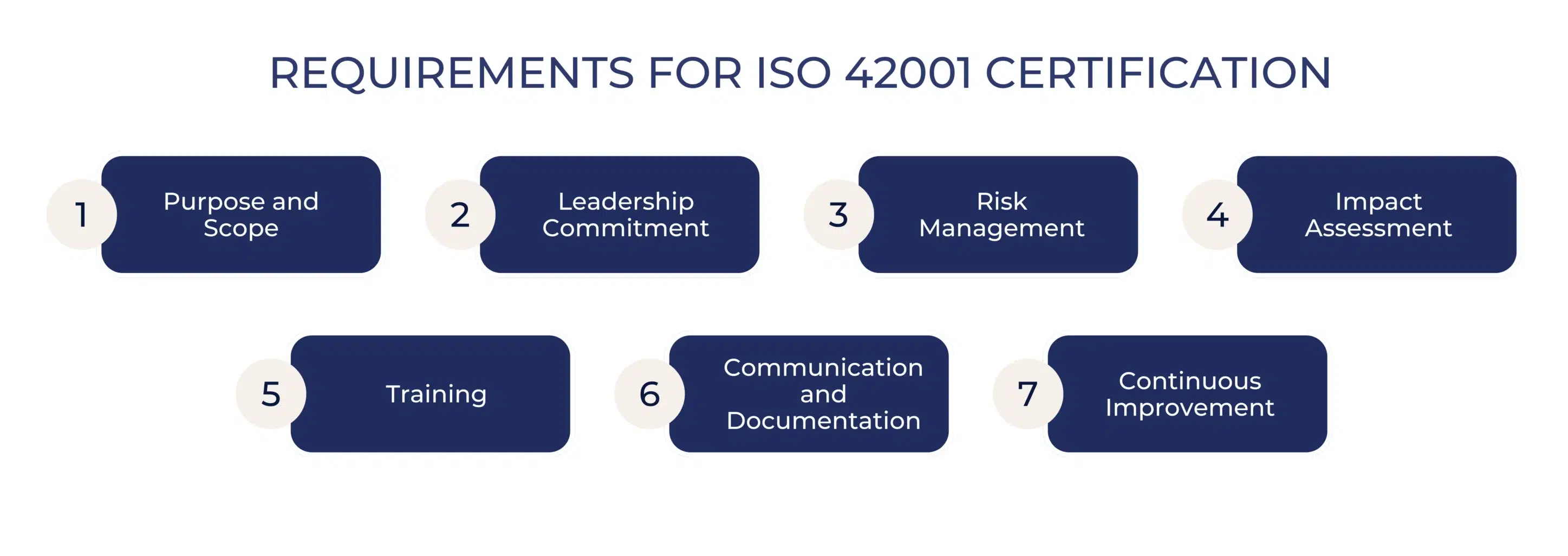
- ✓Leadership and Governance Requirements
- ✓AI Risk and Impact Assessment Requirements
- ✓Documentation and Operational Control Requirements
Steps for ISO 42001 Certification in Manchester
The pathway to ISO 42001 Certification in Manchester follows a structured eight-stage process aligned with the standard’s Plan-Do-Check-Act methodology and the requirements of ISO 17021, which governs the management system certification process. Each stage produces documented outputs that feed into subsequent stages, creating a coherent audit trail from initial scope determination to certificate issuance. The following sections describe each stage in detail, providing Manchester organisations with a clear understanding of what the certification process entails and what is required at each step.
The first stage of the ISO 42001 certification process is the formal definition of the AIMS scope. Scope definition determines which AI systems, organisational units, processes, and geographic locations are included within the certification boundary. The scope must be sufficiently precise to enable meaningful audit assessment and must not artificially exclude AI systems or activities integral to the organisation’s AI operations. The scope is documented in the AIMS scope statement, which references the organisation’s context, interested parties, and the nature of its AI activities. Following scope definition, the organisation submits a formal certification application to CertPro, which initiates the audit programme determination process.
CertPro’s audit team reviews the submitted scope statement and organisational information to determine the appropriate audit programme. The audit programme specifies the audit objectives, criteria, scope, duration, methods, and team composition for both the Stage 1 and Stage 2 audits. The programme is designed to ensure comprehensive coverage of all mandatory AIMS clauses and applicable Annex A controls within the defined scope. The audit programme determination also identifies any specific technical expertise required within the audit team—for example, expertise in machine learning systems, healthcare AI, or financial services algorithms—to ensure the team is competent to evaluate the specific AI systems within scope. The agreed audit programme is documented and communicated to the organisation prior to audit commencement.
The Stage 1 audit is a documentation review conducted at the organisation’s premises or remotely, focused on evaluating whether the AIMS documentation is sufficiently developed to proceed to the Stage 2 implementation audit. The Stage 1 audit assesses the completeness and adequacy of mandatory documented information, including the AI policy, scope statement, risk assessment records, Statement of Applicability, and operational procedures. The auditor evaluates whether the documented AIMS reflects a genuine understanding of the standard’s requirements and whether the documented controls are appropriate to the organisation’s AI risk profile. Stage 1 audit findings are classified as major nonconformities, minor nonconformities, or observations—each requiring a defined response before Stage 2 can proceed.
The Stage 2 audit is the primary implementation audit, conducted on-site at the organisation’s Manchester location or across relevant operational sites included within the certification scope. The Stage 2 ISO 42001 audit assesses whether the AIMS is fully implemented and operating effectively—not merely documented. Auditors collect and evaluate evidence through document review, process observation, system demonstration, and personnel interviews. Evidence of actual AI risk assessments, operational control execution, internal audit completion, management review conduct, and nonconformity management is examined against the standard’s requirements. Stage 2 audit findings are formally reported, with each nonconformity requiring documented corrective action within a defined timeframe.
Following the Stage 2 audit, any identified nonconformities must be addressed through documented corrective actions. Major nonconformities require root cause analysis, corrective action implementation, and evidence of effectiveness verification before certification can be recommended. Minor nonconformities may be accepted with a corrective action plan for verification at the first surveillance audit. Once all major nonconformities are resolved, the lead auditor prepares the audit report and makes a certification recommendation to CertPro’s certification decision panel. The panel independently reviews the audit evidence and recommendation, then issues the certification decision. Upon a positive decision, the ISO 42001 certificate is issued, valid for three years from the date of the certification decision.
Annual surveillance audits are conducted in years one and two of the three-year certification cycle to verify that the AIMS remains conformant and continues to improve. Surveillance audits focus on specific AIMS clauses and high-risk areas identified during previous audits, and include review of internal audit findings, management review records, and corrective action effectiveness. At the end of the three-year cycle, a full recertification audit is conducted—equivalent in scope to the initial Stage 2 audit—to renew the certificate for a further three-year period. Organisations that fail to maintain conformance during the surveillance cycle may have their certificate suspended or withdrawn, pending satisfactory corrective action.
| Certification Stage | Key Activity | Output |
|---|---|---|
| Stage 1 | Documentation audit and AIMS readiness review | Stage 1 audit report with findings |
| Stage 2 | On-site implementation and evidence audit | Stage 2 audit report with nonconformities |
| Nonconformity Resolution | Corrective action implementation and evidence submission | Closed nonconformity records |
| Certification Decision | Independent panel review and approval | Certification decision letter |
| Certificate Issuance | ISO 42001 certificate issued for 3-year cycle | Formal ISO 42001 certificate |
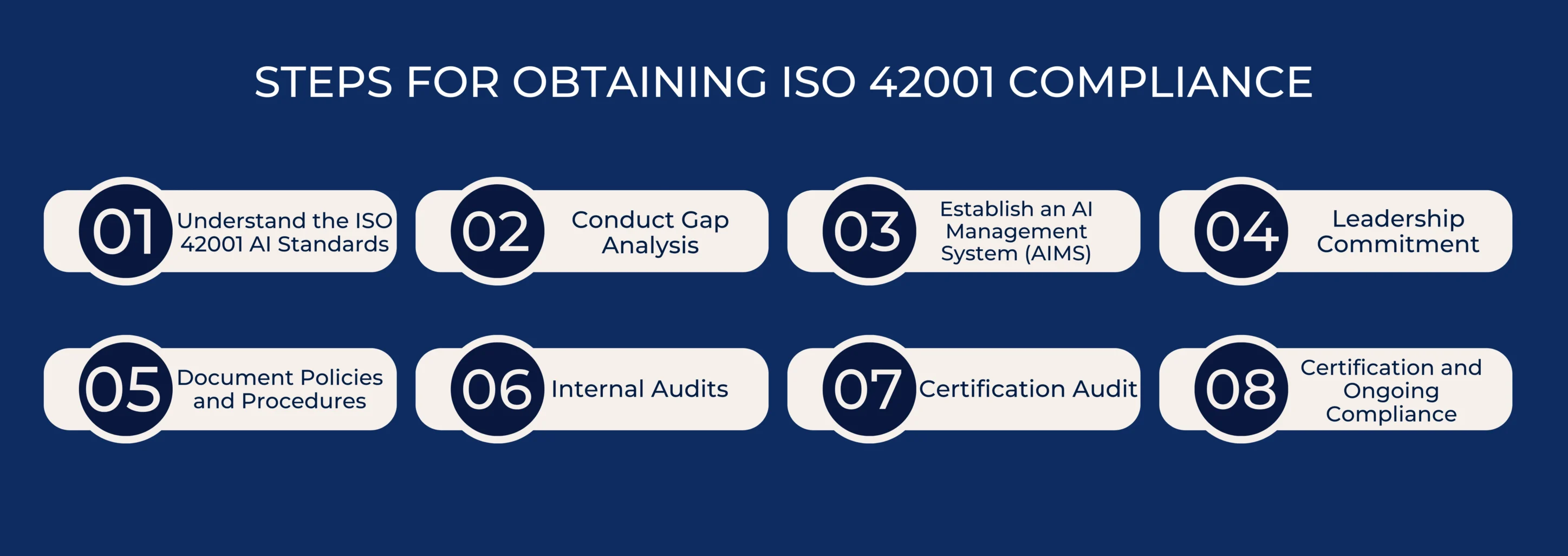
- ✓Stage 1: Scope Definition and Application
- ✓Stage 2: Audit Programme Determination
- ✓Stage 3: Stage 1 Documentation Audit
- ✓Stage 4: Stage 2 Implementation Audit
- ✓Stages 5–8: Nonconformity Resolution, Certification Decision, Issuance, and Surveillance
Benefits of ISO 42001 Certification for Manchester Businesses
The benefits of ISO 42001 Certification in Manchester extend across regulatory, commercial, operational, and reputational dimensions, providing Manchester organisations with a structured return on their certification investment. Unlike point-in-time compliance exercises, ISO 42001 Certification produces lasting organisational capability improvements through the AIMS framework—improvements that continue to generate value throughout the three-year certification cycle. The following benefits are consistently realised by organisations that achieve and maintain ISO 42001 certification, representing the substantive outcomes of the certification process rather than aspirational claims.
- ✓Externally validated evidence of AI governance maturity for regulatory, procurement, and investor audiences
- ✓Structured framework for identifying, assessing, and treating AI-related risks before they materialise as incidents
- ✓Alignment with UK GDPR accountability requirements for AI-driven automated processing activities
- ✓Competitive differentiation in enterprise procurement and public sector tendering processes
- ✓Reduced due diligence burden from enterprise customers through provision of a universally recognised certification
- ✓Facilitated access to EU markets under the anticipated harmonised standards framework of the EU AI Act
- ✓Improved internal AI governance discipline through systematic documentation, monitoring, and review processes
- ✓Demonstrated commitment to ethical AI principles, supporting trust with customers, employees, and the public
- ✓Integration capability with ISO 27001, ISO 9001, and other management system standards through shared HLS architecture
- ✓Board-level confidence in AI risk management through structured governance and independent audit validation
ISO 42001 Certification provides Manchester organisations with a recognised, independently verified signal of AI governance quality that builds stakeholder trust across multiple audiences. For customers who interact with AI-driven systems—whether through personalised recommendations, automated credit decisions, AI-assisted healthcare diagnostics, or algorithmic pricing—the certification provides assurance that the organisation has subjected its AI systems to rigorous governance scrutiny and external audit. This trust signal is particularly valuable in consumer-facing sectors where AI-related concerns about fairness, privacy, and transparency are prominent public issues.
For institutional stakeholders—including investors, non-executive directors, and regulators—ISO 42001 Certification provides structured, auditable evidence that AI governance is being managed systematically rather than informally. This is increasingly important as AI governance becomes a board-level consideration and institutional investors apply AI ethics criteria within their Environmental, Social, and Governance (ESG) evaluation frameworks. Manchester organisations certified under ISO 42001 can formally include their certification status within ESG disclosures, annual reports, and investor relations materials, providing a concrete governance data point that supports broader sustainability and responsibility narratives.
One of the most significant practical benefits of ISO 42001 for Manchester organisations that already hold ISO 27001 or ISO 9001 certifications is the integration opportunity afforded by the shared High-Level Structure. The HLS aligns clause structure, terminology, and core requirements across ISO management system standards, enabling organisations to build integrated management systems that address information security, quality, and AI governance within a single unified framework. Integrated audits conducted across ISO 27001 and ISO 42001 simultaneously reduce audit duration, minimise management disruption, and generate cost efficiencies compared to running separate certification programmes for each standard.
AI management system certification in Manchester for organisations operating ISO 27001 information security management systems will reveal that many documented information requirements, risk management processes, and internal audit mechanisms required for ISO 42001 compliance can be extended from their existing ISMS rather than built from scratch. Specifically, the information security risk assessment process, documented information controls, internal audit programme, and management review process can all be adapted to encompass AI-specific requirements. This significantly reduces the effort required to achieve ISO 42001 Certification. CertPro’s audit programme can be designed to cover both standards simultaneously, maximising efficiency for Manchester organisations.
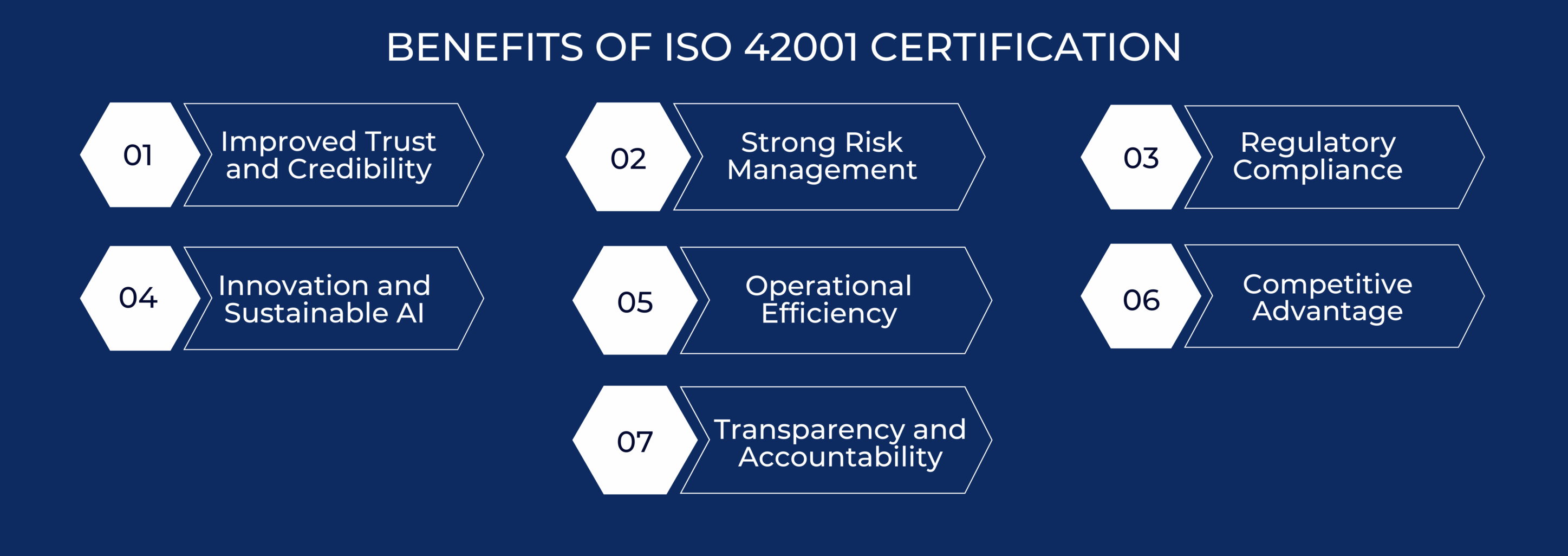
- ✓Stakeholder Trust and Reputational Capital
- ✓Integration With Existing Management Systems
ISO 42001 Audit Process in Manchester
The ISO 42001 audit process conducted by CertPro in Manchester follows the requirements of ISO/IEC 17021-1:2015, which governs the competence, consistency, and impartiality of management system certification bodies. The audit process is structured to provide objective, evidence-based evaluation of AIMS conformance without influence from commercial, advisory, or consulting relationships. CertPro’s ISO 42001 audit Manchester teams comprise lead auditors with specific competence in AI systems, AI governance frameworks, and the sector-specific regulatory context applicable to each organisation’s AI activities. Audit independence is maintained through strict conflict of interest controls and separation between audit and any other professional service relationships.
ISO 42001 audit methodology employs multiple evidence collection techniques to provide comprehensive AIMS coverage. Document review involves examination of all mandatory and supporting documented information against the standard’s requirements, assessing completeness, accuracy, and currency. Process interviews involve structured conversations with personnel at all relevant organisational levels—from top management to operational AI system users—to assess awareness, competence, and the practical effectiveness of AIMS implementation. System demonstrations involve direct observation of AI system operation, risk assessment execution, and governance process conduct to evaluate whether documented procedures reflect actual practice.
Audit sampling methodology is applied to select representative evidence across the AIMS scope, with sampling intensity calibrated to the risk profile of specific AI systems and process areas. High-risk AI applications—such as systems making automated decisions affecting individuals’ access to financial products, healthcare services, or employment—receive greater audit attention and more extensive evidence sampling than lower-risk AI applications such as internal productivity tools. The ISO 42001 assessment process produces a formal audit report documenting all evidence examined, findings identified, and the auditor’s conclusions regarding AIMS conformance, providing a transparent and reproducible basis for the certification decision.
Audit findings under the ISO 42001 audit process are classified into three categories: major nonconformities, minor nonconformities, and observations. A major nonconformity is a failure indicating the AIMS is absent, has completely failed to meet a requirement, or represents a systemic breakdown in the governance system. Major nonconformities preclude certification until they are resolved and their resolution verified. A minor nonconformity indicates a partial or isolated failure to meet a requirement that does not signal a systemic AIMS breakdown. Minor nonconformities are recorded and must be addressed within a defined period, typically verified at the first surveillance audit. Observations are noted areas for improvement that do not represent formal nonconformities but warrant management attention.
Corrective action for identified nonconformities requires root cause analysis, development and implementation of corrective measures, and evidence of effectiveness verification. Organisations must submit corrective action plans with defined timelines and responsible owners for each nonconformity, and must provide documentary evidence that corrective actions have been implemented and that the root cause has been eliminated. The ISO 42001 audit team reviews corrective action evidence before making the certification recommendation, ensuring that the AIMS demonstrated at certification genuinely conforms to all applicable requirements rather than achieving formal compliance through surface-level adjustments.
- ✓Audit Methodology and Evidence Collection
- ✓Nonconformity Classification and Corrective Action
ISO 42001 Certification Cost in Manchester
The cost of ISO 42001 Certification in Manchester is determined by a defined set of factors that CertPro evaluates during the initial scope determination review. These factors include the number of full-time equivalent employees within the certification scope, the number and complexity of AI systems covered, the number of sites included, the maturity of existing governance documentation, and whether the organisation is pursuing ISO 42001 as a standalone certification or as an integrated certification alongside ISO 27001 or other management system standards. CertPro provides fixed-fee pricing proposals following the scope determination review, with all audit activities within the agreed scope covered by the quoted fee.
Cost Factors and Pricing Transparency
The principal cost factors for ISO 42001 certification in Manchester are audit duration and audit team composition. Audit duration is calculated using standard audit time formulas derived from ISO 17021 guidelines, which specify minimum audit time requirements based on organisational size and complexity. Audit team composition is determined by the technical competencies required to audit the specific AI systems and sectors within scope. An organisation operating AI systems in regulated financial services, for example, requires an audit team with financial services AI competence. Travel and accommodation costs for Manchester-based organisations are typically minimal for CertPro’s UK-based audit teams.
For Manchester small and medium enterprises pursuing ISO 42001 certification, the total investment typically encompasses Stage 1 audit costs, Stage 2 audit costs, certificate issuance fees, and annual surveillance audit costs across the three-year cycle. Organisations that combine ISO 42001 with ISO 27001 certification through an integrated audit programme can achieve meaningful cost efficiencies relative to pursuing each certification separately. CertPro’s fixed pricing model ensures that Manchester organisations have complete cost visibility at the outset of the certification engagement, enabling accurate budget planning and return-on-investment assessment. No hidden fees, scope creep charges, or advisory service components are included in the certification pricing.
Why Choose CertPro for ISO 42001 Assessment and Certification in Manchester
CertPro is a Licensed CPA Firm providing ISO 42001 assessment and certification services in Manchester under a strict audit and certification mandate. The firm’s institutional positioning as a certification body—not a consulting firm—ensures that all ISO 42001 audit Manchester activities are conducted with the independence, objectivity, and rigour required for third-party certification. CertPro’s ISO 42001 assessment Manchester services are delivered by auditors with demonstrated competence in AI governance frameworks, UK regulatory requirements, and the sector-specific AI applications relevant to Manchester’s diverse economy. Certification decisions are made by an independent panel, separated from the audit team to maintain impartiality throughout the process.
Institutional Credibility and Audit Independence
CertPro’s institutional credibility as a Licensed CPA Firm is a material differentiator for Manchester organisations that require their ISO 42001 certification to carry weight with sophisticated stakeholders including regulators, enterprise customers, and institutional investors. A certification issued by a Licensed CPA Firm carries the professional accountability and institutional rigour associated with the CPA profession, giving stakeholders confidence in the independence and objectivity of the certification assessment. CertPro’s Manchester-based auditors—who operate strictly as auditors, not advisors—bring sector-specific AI knowledge and regulatory understanding to each engagement, ensuring that the ISO 42001 audit process is both technically credible and contextually relevant to the organisation’s specific AI governance challenges.
The firm’s strict prohibition on advisory, consulting, and implementation services eliminates the conflict of interest that arises when a single organisation both prepares an organisation for certification and then audits its conformance. CertPro’s ISO 42001 audit Manchester services are solely focused on objective assessment and certification, ensuring that the certification process is not compromised by commercial interests in generating ongoing advisory work. This separation is fundamental to the integrity of the certification outcome and is a requirement of ISO 17021 that CertPro rigorously upholds across all certification services.
Sector Expertise and Local Market Knowledge
CertPro’s ISO 42001 certification Manchester team includes auditors with specific expertise in the sectors that dominate Manchester’s AI economy, including financial services, healthcare technology, retail and e-commerce, media technology, and professional services. This sector-specific competence enables the audit team to evaluate AI governance controls in the context of the specific regulatory frameworks, business models, and AI applications relevant to each organisation. Rather than applying a generic audit approach that may miss sector-specific risks, CertPro’s auditors contextualise their assessment to the organisation’s operating environment. Sector expertise is particularly important for organisations in regulated industries where AI governance requirements intersect with specific sector regulatory obligations.
CertPro’s knowledge of Manchester’s AI ecosystem—including the city’s technology clusters, innovation districts, and regulatory environment—enables the audit team to contextualise findings appropriately and ensure that the certification process reflects the specific operating context of Manchester organisations. This local market knowledge, combined with the firm’s national and international ISO 42001 certification experience, positions CertPro to deliver high-quality ISO 42001 Certification in Manchester that is both technically rigorous and practically relevant to the challenges faced by AI-deploying organisations in the city’s dynamic digital economy.
ISO 42001 Certification for Manchester’s Key Industry Sectors
Manchester’s diverse economy encompasses several industry sectors with particularly significant AI governance requirements, each presenting specific ISO 42001 certification considerations. Understanding how the standard’s requirements apply to each sector’s AI use cases enables Manchester organisations to approach the certification process with appropriate sector-specific preparation. It also ensures that the ISO 42001 audit programme is calibrated to the most material governance risks within each industry context.
Financial Services and Fintech
Manchester is home to a significant and growing fintech sector, with companies operating across payments, lending, insurance technology, wealth management, and regulatory technology. AI is pervasive across these subsectors, applied to credit scoring, fraud detection, anti-money laundering, claims processing, investment recommendation, and customer service automation. ISO 42001 Certification in Manchester for financial services organisations addresses the governance of these AI applications within a framework that aligns with FCA expectations for algorithmic accountability, model risk management, and consumer protection. The standard’s requirements for AI transparency, human oversight, and impact assessment are directly relevant to the FCA’s focus on ensuring algorithmic systems do not disadvantage consumers or introduce systemic risks into financial markets.
For Manchester fintech companies seeking FCA authorisation or managing FCA supervisory relationships, ISO 42001 compliance provides structured documentation of AI governance that can be submitted as evidence in supervisory correspondence, variation of permission applications, and thematic review responses. The certification also supports compliance with the Consumer Duty requirements introduced in 2023, which require firms to demonstrate that their AI systems deliver good outcomes for customers and do not cause foreseeable harm. These requirements map directly onto ISO 42001’s impact assessment and human oversight control obligations.
Technology and SaaS Companies
ISO 42001 Certification for Manchester tech companies addresses the specific governance challenges faced by software-as-a-service providers that embed AI capabilities within their products and deliver those products to enterprise customers. For SaaS companies, the certification scope typically encompasses the AI development lifecycle—from data acquisition and model training through deployment and ongoing monitoring—as well as the governance of AI features within the product itself. Enterprise customers of Manchester SaaS companies are increasingly including ISO 42001 certification as a supplier qualification requirement, recognising that AI-enabled software products require governance assurance that extends beyond conventional security and privacy certifications such as ISO 27001 and SOC 2.
AI management system certification for Manchester SaaS providers enables these companies to give their enterprise customers a single, internationally recognised certification demonstrating comprehensive AI governance. This reduces the volume of customer-specific due diligence questionnaires and security assessments that consume significant management time. The certification also supports product differentiation in competitive SaaS markets where AI governance capability is an emerging selection criterion among sophisticated enterprise buyers—particularly in regulated sectors such as financial services, healthcare, and legal, where customer AI governance obligations extend to the AI-enabled tools their staff use.
Healthcare Technology and Life Sciences
Manchester’s healthcare technology sector—including companies developing AI diagnostic tools, clinical decision support systems, patient pathway optimisation software, and population health analytics platforms—faces particularly demanding AI governance requirements given the direct impact of AI failures on patient safety and clinical outcomes. ISO 42001 Certification for healthcare AI organisations in Manchester must address the intersection of AIMS requirements with MHRA medical device regulations, NHS Digital standards for data security and technology adoption, and the specific clinical risk management frameworks applicable to software as a medical device. The standard’s impact assessment and human oversight requirements are especially significant in this context, given the potential severity of harm from AI diagnostic or treatment recommendation errors.
Secure Your ISO 42001 Certification in Manchester With CertPro
ISO 42001 Certification in Manchester represents a strategic governance investment for organisations operating AI systems in the UK’s most dynamic digital economy hub. CertPro, as a Licensed CPA Firm specialising in management system certification, delivers rigorous, independent ISO 42001 audit Manchester services that produce certifications of the highest institutional credibility. The firm’s audit-only mandate, fixed-fee pricing, sector-specific competence, and deep familiarity with Manchester’s AI regulatory environment make it the appropriate choice for organisations seeking ISO 42001 Certification that genuinely satisfies the expectations of regulators, enterprise customers, and institutional stakeholders.
Organisations pursuing ISO 42001 Certification in Manchester should initiate the process with a formal scope determination review, which enables CertPro to assess the organisation’s AI activities, define an appropriate certification boundary, and provide a fixed-fee certification proposal. The scope determination review is the foundational step that ensures the subsequent audit programme is appropriately calibrated to the organisation’s specific AI governance context, maximising the efficiency and value of the certification process. Contact CertPro today to initiate the scope determination process and begin the pathway to ISO 42001 Certification for your Manchester organisation.
ISO 42001 compliance is not a future obligation—it is a present competitive and regulatory necessity for Manchester organisations that deploy AI in customer-facing, regulated, or commercially sensitive applications. The organisations that achieve certification earliest will hold a demonstrable first-mover advantage in the growing number of procurement and regulatory contexts where AI governance certification is a qualifying criterion. CertPro’s ISO 42001 assessment Manchester services are structured to deliver this advantage efficiently, rigorously, and at a transparent fixed price. The certification process begins with a single structured conversation about your organisation’s AI systems and governance objectives. Reach out to CertPro’s Manchester certification team today to take that first step towards ISO 42001 Certification in Manchester.
FAQ
▶
What is ISO 42001 and what does certification involve?
▶
Which Manchester organisations need ISO 42001 certification?
▶
How long does the ISO 42001 audit process take in Manchester?
▶
What documentation must a Manchester organisation prepare for ISO 42001 assessment?
▶
How does ISO 42001 differ from ISO 27001 for Manchester organisations?
▶
What are the main challenges in achieving ISO 42001 compliance in Manchester?
▶
Does ISO 42001 certification satisfy UK GDPR requirements for AI systems?
▶
How does ISO 42001 certification relate to the EU AI Act for Manchester exporters?
ISO 42001 CERTIFIED: WHY AI GOVERNANCE CERTIFICATION IS BECOMING A BOARD-LEVEL REQUIREMENT
AI is now an inevitable component of major business activities in the current corporate world. To elaborate, it is now part of product design, custome…

MindSec Launches AI Compliance for Law 25 & ISO 42001
Excerpt from Barchart Article, Published on December 3, 2025 Today, Canadian organizations face increasing pressure to comply with stringent privacy a…

UNDERSTANDING ISO 42001: A GUIDE FOR RESPONSIBLE AI MANAGEMENT SYSTEMS
The invention of artificial intelligence (AI) has changed the operational processes of many industries. However, the rapid growth of technology increa…
Get In Touch
have a question? let us get back to you.