
ISO 42001 Certification in Rotterdam
CertPro is a Licensed CPA Firm delivering independent ISO 42001 Certification in Rotterdam through structured audit evaluation, conformity assessment, and attestation issuance. Operating under internationally recognized audit standards, CertPro assesses Artificial Intelligence Management Systems (AIMS) against ISO/IEC 42001:2023 requirements for Rotterdam-based organizations across logistics, financial services, energy, and technology sectors.
OUR CLIENTS









Assessment and Certification Services by CertPro for ISO 42001 in Rotterdam
ISO 42001 Certification in Rotterdam is delivered by CertPro through a structured, stage-based audit process that evaluates an organization’s Artificial Intelligence Management System (AIMS) against the full requirements of ISO/IEC 42001:2023. As a Licensed CPA Firm, CertPro conducts independent ISO 42001 certification audits without advisory or consulting involvement, maintaining strict audit objectivity throughout every engagement. The certification scope covers AI governance structures, risk management frameworks, accountability mechanisms, and operational controls for AI systems deployed within Rotterdam-based organizations.
Rotterdam’s position as Europe’s largest port and a leading logistics and trade hub means its enterprises are early adopters of AI-driven systems for supply chain optimization, predictive analytics, cargo management, and financial modeling. The scale and complexity of AI deployment in Rotterdam’s industrial and commercial infrastructure demands a certified governance framework. ISO 42001 Certification addresses this need by establishing documented controls, defined accountability roles, and measurable compliance objectives for AI systems operating across Rotterdam’s economy.
CertPro’s ISO 42001 assessment in Rotterdam is conducted by qualified lead auditors with deep knowledge of AI governance requirements, EU regulatory frameworks including the EU AI Act and GDPR, and sector-specific AI applications relevant to Rotterdam industries. The assessment process is transparent, evidence-based, and aligned with international accreditation standards. Organizations that successfully complete the ISO 42001 audit receive a certificate of conformity valid for three years, subject to annual surveillance audits.
Scope of ISO 42001 Certification Services in Rotterdam
The scope of ISO 42001 Certification in Rotterdam covers all organizational units, processes, and systems that design, develop, deploy, or monitor artificial intelligence systems. CertPro’s ISO 42001 audit evaluates whether the defined AIMS scope accurately reflects the boundaries of the organization’s AI activities, including third-party AI tools, integrated AI modules, and internally developed algorithmic systems. Scope boundaries are documented during Stage 1 audit activities and validated against the organization’s AI inventory and risk register.
For Rotterdam companies operating across multiple sites or subsidiaries, CertPro can structure a multi-site ISO 42001 certification audit that evaluates AIMS conformity across all relevant locations within a single certification cycle. This approach is particularly relevant for Rotterdam’s large logistics operators, multinational financial institutions, and port technology firms that deploy AI systems across distributed operational environments. The multi-site audit scope is defined during the initial audit program determination stage based on AI system distribution and operational complexity.
CertPro’s Institutional Positioning for ISO 42001 Audits
As a Licensed CPA Firm registered under the AICPA peer review program, CertPro maintains the institutional independence required for credible ISO 42001 certification audits. CertPro does not provide consulting, advisory, or implementation services to organizations it certifies. This strict separation between audit and advisory activities ensures that CertPro’s ISO 42001 assessments reflect objective, evidence-based evaluation rather than guided preparation outcomes. Rotterdam organizations benefit from audit findings that accurately reflect the maturity and effectiveness of their AIMS.
CertPro’s audit methodology aligns with ISO/IEC 17021-1 requirements for certification bodies, ensuring the entire ISO 42001 certification process meets international accreditation standards. Audit reports issued by CertPro document findings against specific ISO 42001 clause requirements, providing Rotterdam organizations with clear evidence of conformity for regulatory submissions, customer due diligence, and corporate governance reporting. The certification decision is made by a qualified reviewer independent of the audit team, further reinforcing the objectivity and credibility of each certification outcome.
Rotterdam’s AI Landscape and Certification Demand
Rotterdam’s economy is undergoing significant digital transformation driven by AI adoption across its core industrial sectors. The Port of Rotterdam — one of the world’s most technologically advanced logistics hubs — uses AI for autonomous vessel navigation, predictive maintenance, container tracking, and customs optimization. Financial services firms deploy AI for credit scoring, fraud detection, and algorithmic trading, while energy companies apply machine learning to grid optimization, renewable energy forecasting, and predictive infrastructure management. This breadth of AI deployment creates substantial demand for ISO 42001 Certification in Rotterdam as organizations seek to demonstrate responsible AI governance to regulators, clients, and international partners.
The regulatory environment in the Netherlands adds urgency to ISO 42001 compliance for Rotterdam businesses. The Autoriteit Persoonsgegevens (Dutch Data Protection Authority) enforces GDPR requirements that intersect directly with AI data processing activities. The EU AI Act classifies AI systems by risk level and mandates specific governance requirements for high-risk applications, creating additional compliance obligations for Rotterdam organizations using AI in regulated domains such as employment, credit assessment, and critical infrastructure. ISO 42001 Certification in Rotterdam provides a structured framework for addressing these regulatory requirements through documented controls and verifiable governance mechanisms.

What Is ISO 42001 Certification?
ISO 42001 Certification is the formal recognition that an organization’s Artificial Intelligence Management System (AIMS) conforms to the requirements of ISO/IEC 42001:2023 — the international standard for AI governance published by the International Organization for Standardization. The standard provides a comprehensive framework for establishing, implementing, maintaining, and continually improving an AIMS within the context of an organization’s specific AI-related activities and risk environment. ISO 42001 Certification is achieved through an independent third-party ISO 42001 audit conducted by a qualified certification body.
ISO/IEC 42001:2023 was published in December 2023 as the world’s first international standard specifically designed for AI management systems. It addresses the unique governance challenges posed by artificial intelligence, including algorithmic transparency, bias detection and mitigation, data quality management, human oversight mechanisms, and the ethical implications of automated decision-making. The standard applies to any organization that develops, provides, or uses AI-based products and services, regardless of size, sector, or geographic location.
The AIMS Framework Defined by ISO 42001
An Artificial Intelligence Management System (AIMS) as defined by ISO 42001 is a structured set of policies, processes, roles, responsibilities, and controls that an organization establishes to govern its AI activities. The AIMS framework requires organizations to define the context of their AI operations, identify interested parties and their requirements, determine the scope of AI governance, and establish documented processes for AI risk assessment and treatment. Importantly, the AIMS is not a technical architecture for AI systems — it is a management governance layer that operates above the technical implementation level.
The ISO 42001 standard follows the High-Level Structure (HLS) common to modern ISO management system standards, sharing structural alignment with ISO 27001 (information security), ISO 9001 (quality management), and ISO 14001 (environmental management). This structural compatibility allows Rotterdam organizations that already hold certifications in these related standards to integrate ISO 42001 requirements into their existing management system documentation. The result is reduced duplication of policies, procedures, and internal audit activities. Organizations with mature ISO 27001 systems, for example, can leverage existing risk management processes, incident response procedures, and supplier management controls when building their AIMS.
ISO 42001 vs. Other Management System Standards
ISO 42001 differs from other management system standards in its specific focus on the ethical, social, and operational risks introduced by artificial intelligence. While ISO 27001 addresses information security risks broadly, ISO 42001 specifically targets AI-introduced risks such as model bias, lack of explainability, unintended AI behavior, and the misuse of AI outputs in decision-making processes that affect individuals or organizations. ISO 42001 also uniquely addresses AI objectives alignment, requiring organizations to document how their AI systems’ intended purposes align with organizational values and societal expectations.
| Standard | Focus Area | AI-Specific Controls | Relationship to ISO 42001 |
|---|---|---|---|
| ISO 42001 | AI Management Systems | Yes — core focus | Primary standard |
| ISO 27001 | Information Security | Partial — data protection | Integrates with AIMS controls |
| ISO 9001 | Quality Management | No — general quality | Process alignment possible |
| ISO 31000 | Risk Management | No — general risk | Risk methodology reference |
| EU AI Act | AI Regulation (EU) | Yes — risk classification | Regulatory complement |
Key Clauses of ISO/IEC 42001:2023
ISO/IEC 42001:2023 is structured across ten main clauses. Clauses 1 through 3 define the scope, normative references, and terms and definitions applicable to AI management systems. Clause 4 (Context of the Organization) requires organizations to identify internal and external factors affecting AI governance, determine interested parties and their requirements, and define the AIMS scope. Clause 5 (Leadership) mandates top management commitment to AI governance — including the establishment of an AI policy and the assignment of clear roles and responsibilities for AIMS operation.
Clause 6 (Planning) requires organizations to conduct AI risk assessments, establish AI objectives, and plan actions to address identified risks and opportunities. Clause 7 (Support) covers resource allocation, competence requirements, awareness programs, communication processes, and documented information management. Clauses 8 through 10 address operational planning and control, performance evaluation through internal audits and management reviews, and the continual improvement cycle that drives ongoing AIMS effectiveness. Together, these clauses define the Plan-Do-Check-Act cycle that underpins the ISO 42001 framework.
Why ISO 42001 Certification Is Essential for Rotterdam Companies
ISO 42001 Certification is essential for Rotterdam companies because the city’s economic profile — characterized by large-scale logistics operations, multinational financial services, advanced manufacturing, and a growing technology sector — creates significant AI governance obligations that extend beyond internal risk management. Rotterdam businesses operate in a highly regulated international environment where AI governance is increasingly a condition of market access, regulatory compliance, and counterparty trust. ISO 42001 Certification in Rotterdam provides verifiable, internationally recognized evidence of responsible AI governance that satisfies multiple stakeholder requirements simultaneously.
Regulatory Drivers for ISO 42001 Compliance in Rotterdam
The EU AI Act, which entered into force in August 2024 with phased implementation extending through 2026 and 2027, creates direct legal obligations for Rotterdam organizations that develop or deploy AI systems in high-risk categories. High-risk AI applications include systems used in critical infrastructure, employment and worker management, access to education, essential services such as credit and insurance, law enforcement, migration management, and administration of justice. Many Rotterdam enterprises in logistics, financial services, and energy operate AI systems that fall within these high-risk classifications. ISO 42001 compliance therefore provides a practical framework for demonstrating EU AI Act conformity.
GDPR enforcement by the Autoriteit Persoonsgegevens introduces additional AI governance requirements for Rotterdam organizations that process personal data through AI systems. Automated decision-making under Article 22 of GDPR requires specific safeguards, including the right to explanation, the right to human review, and documented assessments of the impact of automated processing on data subjects. ISO 42001 compliance equips Rotterdam organizations with the documented processes and controls necessary to demonstrate GDPR conformity for AI-driven data processing activities — reducing exposure to enforcement actions and administrative fines of up to €20 million or four percent of global annual turnover.
ISO 42001 Certification for Rotterdam Port Logistics Companies
ISO 42001 Certification for Rotterdam port logistics companies addresses the specific AI governance challenges of one of the world’s most AI-intensive logistics environments. The Port of Rotterdam processes over 400 million tonnes of cargo annually and relies on AI systems for berth planning, crane automation, traffic management, predictive maintenance of port infrastructure, and real-time cargo tracking. Each of these AI applications creates governance obligations related to system reliability, bias prevention, data accuracy, and the management of AI errors that could disrupt port operations or create safety hazards.
For Rotterdam port logistics operators, ISO 42001 Certification demonstrates to shipping lines, terminal operators, customs authorities, and international trade partners that AI systems governing critical logistics decisions are subject to documented governance controls and independent audit verification. This certification signal is increasingly required by international supply chain partners as part of their own AI risk management due diligence. Achieving ISO 42001 Certification in Rotterdam therefore serves as a genuine competitive differentiator in the global shipping market.
ISO 42001 Certification for Rotterdam Financial Services and Technology Firms
ISO 42001 Certification for Rotterdam financial services organizations addresses AI governance requirements in algorithmic trading, credit risk modeling, fraud detection, customer segmentation, and regulatory reporting automation. Financial regulators including De Nederlandsche Bank (DNB) and the Authority for the Financial Markets (AFM) have issued guidance on model risk management and AI governance that aligns closely with ISO 42001 requirements. Rotterdam financial institutions that achieve ISO 42001 Certification can use their certified AIMS documentation to support regulatory submissions to DNB and AFM, demonstrating systematic AI risk management aligned with supervisory expectations.
ISO 42001 compliance for Rotterdam technology companies operating in SaaS, AI platform development, and enterprise software markets provides a foundational governance credential for B2B market access. Enterprise buyers increasingly require AI governance certifications from technology vendors as part of procurement due diligence — particularly in sectors where AI systems will process customer data or support critical business decisions. ISO 42001 Certification enables Rotterdam technology companies to provide contractual evidence of systematic AI governance, accelerating sales cycles and reducing vendor due diligence friction in regulated enterprise markets.
Requirements for ISO 42001 Certification
To achieve ISO 42001 Certification in Rotterdam, organizations must demonstrate conformity with all applicable requirements of ISO/IEC 42001:2023. These requirements span organizational governance, documented management system processes, operational AI controls, and performance monitoring mechanisms. The ISO 42001 certification audit evaluates whether each requirement is not only documented in policy or procedure form but is actively implemented and maintained in the organization’s operational AI activities. Evidence of effective implementation is assessed through document review, interviews with AI system owners and governance personnel, and observation of AI management processes.
ISO 42001 requires demonstrable top management commitment to AI governance, evidenced by a formally approved AI policy that articulates the organization’s commitments to responsible AI development and use, compliance with applicable AI-related legal and regulatory requirements, and continual improvement of the AIMS. Top management must assign specific roles and responsibilities for AIMS operation — including an AI governance function with defined authority to enforce AI risk management requirements across the organization. For Rotterdam organizations, this governance function must account for the regulatory expectations of Dutch supervisory authorities and EU-level AI governance frameworks.
Organizational roles and responsibilities for AI governance must be documented and communicated to all relevant personnel. Key roles typically include an AI governance officer or equivalent function, AI system owners responsible for individual AI applications, data governance personnel responsible for training data quality and data protection compliance, and operational staff who interact with or rely on AI system outputs. The assignment of these roles must be traceable in organizational documentation reviewed during the ISO 42001 audit, and the authority and accountability of each role must be clearly defined.
ISO 42001 documentation requirements include a formally scoped AIMS, an AI policy, AI risk assessment methodology and results, AI risk treatment plans, AI objectives and plans for achieving them, operational procedures for AI system lifecycle management, records of AIMS monitoring and measurement activities, internal audit findings, and management review outputs. All documented information must be controlled under a document management process that defines version control, approval authority, distribution, and retention requirements. The completeness and currency of AIMS documentation is a primary focus area during Stage 1 of the ISO 42001 audit.
AI risk assessment under ISO 42001 requires organizations to identify AI-specific risks associated with each AI system within the AIMS scope. Organizations must assess the likelihood and potential impact of risk scenarios — including model failure, bias in AI outputs, misuse of AI systems, and unintended AI behavior — and select appropriate risk treatment options from a documented controls framework. ISO 42001 provides a normative controls annex (Annex A) containing reference controls organized across governance, data management, system development, and operational domains. Organizations must also produce a Statement of Applicability (SoA) documenting which Annex A controls have been selected, justified, and implemented.
Operational requirements under ISO 42001 address the lifecycle management of AI systems from conception through decommissioning. Organizations must establish processes for AI system design and development that incorporate requirements for transparency, fairness, human oversight, and privacy by design. AI training data must be managed under documented data governance processes that address data quality, data representativeness, bias detection, and data lineage traceability. AI system testing and validation procedures must verify that AI system behavior meets intended performance criteria and ethical requirements before deployment.
Post-deployment AI system monitoring is a specific operational requirement under ISO 42001 that demands continuous or periodic evaluation of AI system performance, output quality, and behavioral drift. Organizations must establish monitoring processes that can detect model degradation, emerging bias patterns, unexpected AI behavior, or changes in the operating environment that may affect AI system reliability. Incident management processes must define how AI-related incidents are identified, reported, investigated, and resolved — with records maintained for audit review. For Rotterdam organizations deploying AI in safety-critical or high-impact environments, these monitoring and incident management requirements carry particular regulatory significance.
- ✓Formally approved AI policy with top management signature and defined review cycle
- ✓Documented AIMS scope statement defining organizational boundaries and AI system inclusions
- ✓AI risk assessment methodology with documented results for all in-scope AI systems
- ✓Statement of Applicability (SoA) addressing all ISO 42001 Annex A controls
- ✓Defined roles and responsibilities for AI governance, AI system ownership, and data management
- ✓AI system lifecycle management procedures covering design, development, testing, deployment, and decommissioning
- ✓Training data governance processes addressing quality, representativeness, and bias detection
- ✓Post-deployment AI system monitoring and performance measurement processes
- ✓AI incident management and nonconformity reporting procedures
- ✓Internal AIMS audit program with documented findings and corrective action records
- ✓Management review process with records demonstrating leadership engagement in AIMS oversight
- ✓Continual improvement processes for AIMS effectiveness based on audit findings and performance data
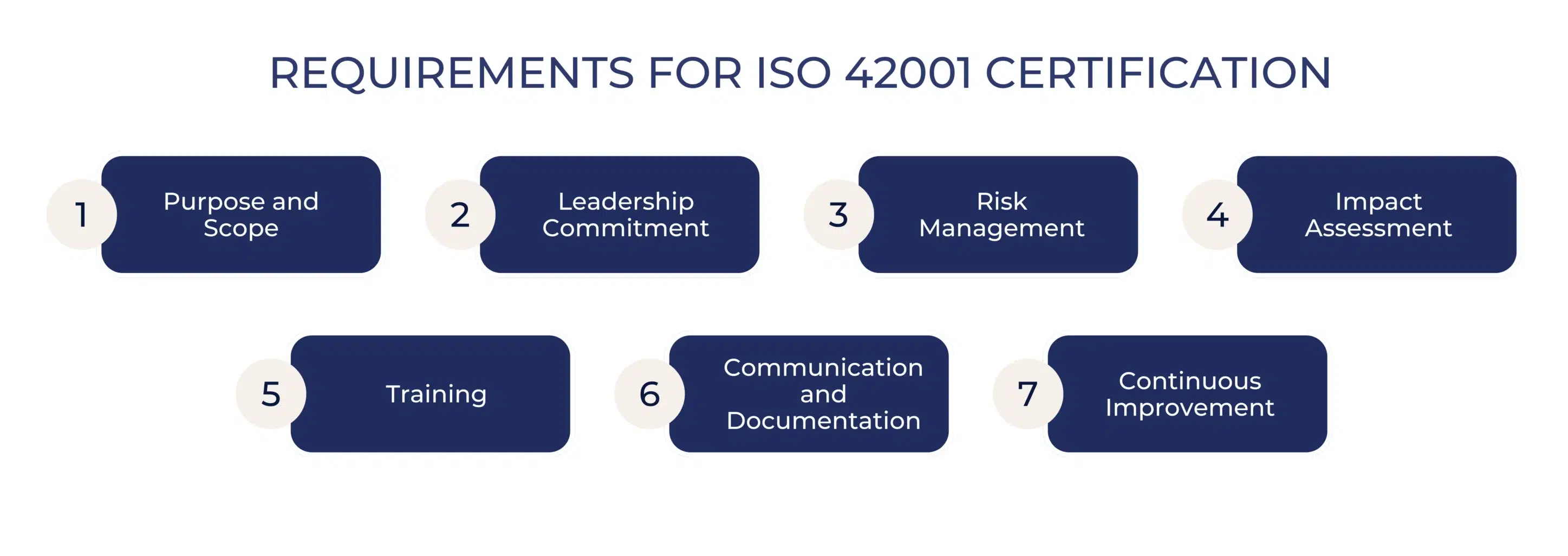
- ✓Governance and Leadership Requirements
- ✓Documentation and Risk Management Requirements
- ✓Operational AI System Requirements
Steps for ISO 42001 Certification in Rotterdam
The ISO 42001 Certification process in Rotterdam follows a structured, stage-based audit pathway that progresses from initial scope definition through certification decision and ongoing surveillance. Each stage involves specific activities, deliverables, and evidence requirements that must be satisfied before the process advances. Understanding this pathway allows Rotterdam organizations to allocate appropriate resources, prepare relevant documentation, and coordinate stakeholder participation in the ISO 42001 audit process effectively.
The ISO 42001 certification process begins with a formal scope definition exercise in which the organization documents the boundaries of its AIMS, identifying all AI systems, organizational units, locations, and processes to be included in the certification scope. CertPro’s audit team reviews the proposed scope against the organization’s AI inventory, operational documentation, and regulatory context to confirm that the scope is appropriate, complete, and accurately reflects the extent of the organization’s AI activities. Scope boundaries that exclude significant AI systems without documented justification are identified as nonconformities during the scope validation review.
Following scope validation, CertPro determines the audit program — specifying the audit days required for each certification stage, the audit team composition including lead auditor and technical expert assignments, the audit methods to be employed (document review, interviews, process observation, and sampling of AI system records), and the audit schedule timeline. The audit program accounts for the complexity of the organization’s AI portfolio, the number of AI systems within scope, the geographic distribution of AI operations, and the maturity of the organization’s existing management system documentation.
The Stage 1 audit evaluates the completeness and adequacy of the organization’s AIMS documentation against ISO 42001 clause requirements. CertPro auditors review the AI policy, AIMS scope documentation, risk assessment methodology and results, Statement of Applicability, AI objectives, and key operational procedures. The Stage 1 audit determines whether the organization’s documented AIMS is sufficiently developed to proceed to the Stage 2 conformity assessment. Significant documentation deficiencies identified during Stage 1 must be addressed before Stage 2 can commence, typically within an agreed corrective action timeframe of 30 to 90 days.
The Stage 1 audit also confirms the organization’s understanding of ISO 42001 requirements, validates that the internal audit program has been executed and management reviews have been conducted, and identifies any areas of particular complexity or risk that require additional audit focus during Stage 2. Stage 1 findings are documented in a written report provided to the organization before the Stage 2 audit date, giving decision-makers time to review the documented AIMS and ensure that all referenced evidence is accessible and complete for the Stage 2 assessment.
The Stage 2 audit is the primary conformity assessment that determines whether the organization’s AIMS is effectively implemented and maintained in accordance with ISO 42001 requirements. CertPro auditors conduct the Stage 2 audit through structured interviews with AI governance personnel, AI system owners, data scientists, operational staff, and senior management; detailed review of AIMS records including risk assessment results, risk treatment evidence, monitoring data, incident records, and corrective action documentation; and observation of operational AI governance processes where applicable. The Stage 2 audit typically spans two to five audit days depending on scope complexity.
During control testing, CertPro evaluates whether the controls selected in the organization’s Statement of Applicability are operationally effective — not merely documented in policy form. Evidence of control effectiveness is drawn from operational records such as data quality audit reports, AI system performance monitoring logs, bias detection assessment outputs, incident management records, and training completion records for AI governance personnel. Controls found to be documented but not operationally implemented result in major nonconformity findings that must be resolved before ISO 42001 certification can be issued.
Following the Stage 2 audit, CertPro issues a formal audit report documenting all nonconformity findings classified as major or minor. Major nonconformities represent systemic failures in AIMS implementation that directly compromise the system’s ability to achieve its intended AI governance outcomes. Minor nonconformities represent isolated deficiencies that do not compromise AIMS effectiveness but require corrective action within defined timeframes. Organizations must submit documented corrective action plans and evidence of resolution for all major nonconformities before the ISO 42001 certification decision is made. Minor nonconformities are typically addressed within the first surveillance audit cycle.
The certification decision is made by a qualified reviewer at CertPro who is independent of the audit team that conducted the assessment. This reviewer evaluates the completeness of the audit documentation, the adequacy of corrective actions for identified nonconformities, and the overall audit evidence to determine whether the organization’s AIMS demonstrates sufficient conformity with ISO 42001 requirements to merit certification. Upon a positive certification decision, CertPro issues the ISO 42001 certificate of conformity — valid for three years from the date of issuance — subject to annual surveillance audit completion.
- Scope Definition: Document AIMS boundaries, AI system inventory, and organizational coverage
- Audit Program Determination: Define audit days, team composition, methods, and schedule
- Stage 1 Audit: Review AIMS documentation completeness against ISO 42001 clause requirements
- Corrective Action Period: Address Stage 1 documentation findings within agreed timeframes
- Stage 2 Audit: Conduct conformity assessment through interviews, records review, and control testing
- Nonconformity Review: Evaluate audit findings, classify as major or minor, issue audit report
- Corrective Action Resolution: Submit evidence of corrective action completion for major findings
- Certification Decision: Independent reviewer evaluates audit evidence and issues certification decision
- Certificate Issuance: ISO 42001 certificate of conformity issued, valid for three years
- Annual Surveillance Audit: Verify continued AIMS conformity and address any new nonconformities
- Recertification Audit: Full AIMS reassessment conducted at three-year certification renewal
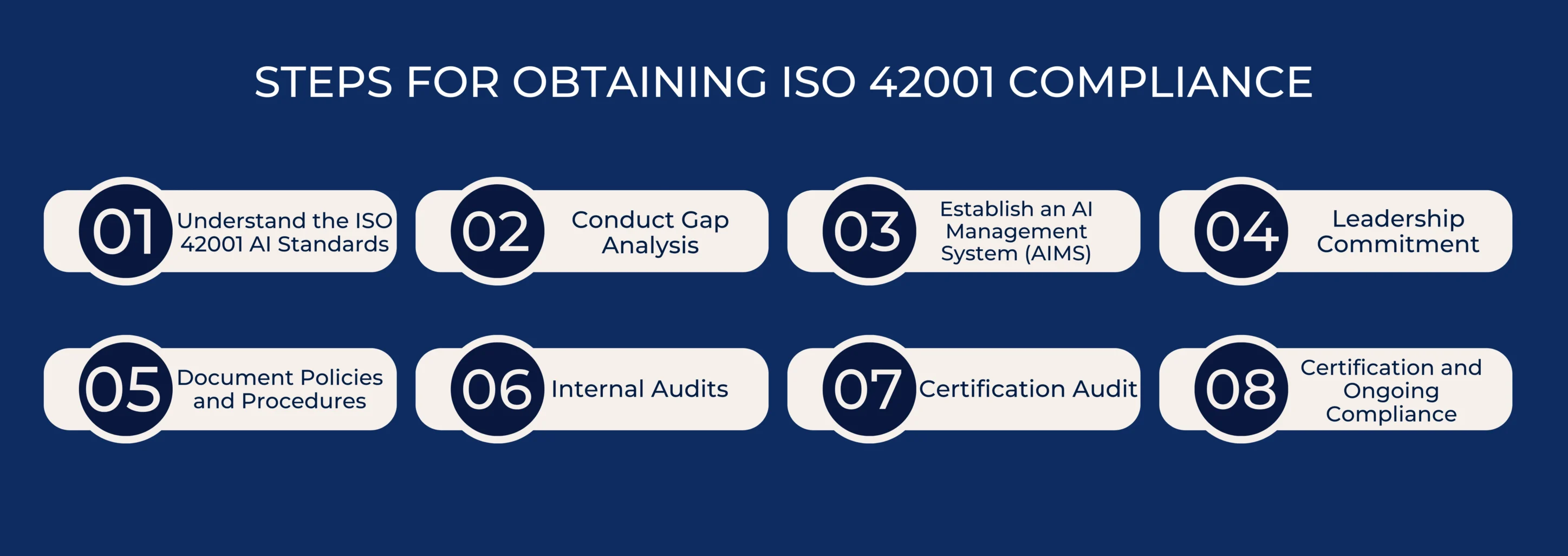
- ✓Stage 1: Scope Definition and Audit Program Determination
- ✓Stage 2: Stage 1 Audit — Documentation and Readiness Review
- ✓Stage 3: Stage 2 Audit — Conformity Assessment and Control Testing
- ✓Stage 4: Nonconformity Review and Certification Decision
ISO 42001 Assessment and Certification Cost in Rotterdam
The cost of ISO 42001 Certification in Rotterdam is determined by several factors that reflect the complexity and scope of the certification audit. CertPro provides transparent, fixed-scope pricing for ISO 42001 assessments, with costs calculated based on the number of AI systems within the certification scope, the size and complexity of the organization’s AI operations, the number of locations included in the audit scope, and the maturity of the organization’s existing management system documentation. Rotterdam organizations with well-documented management systems and limited AI system portfolios typically complete initial ISO 42001 certification at lower cost than organizations with complex, distributed AI deployments.
Cost Factors for ISO 42001 Certification Audits
The primary cost driver for ISO 42001 Certification is audit time, measured in auditor-days and calculated based on the organization’s size (number of employees involved in AI activities), the number and complexity of AI systems within scope, and the depth of control testing required for high-risk AI applications. Organizations operating AI systems in regulated sectors such as financial services, healthcare, or critical infrastructure typically require more extensive ISO 42001 audit time due to the additional regulatory context that must be evaluated. CertPro’s audit program determination documentation specifies the audit day allocation for each certification stage, providing Rotterdam organizations with full cost transparency before the engagement commences.
Integration with existing management system certifications is a significant cost reduction factor for Rotterdam organizations that already hold ISO 27001, ISO 9001, or other ISO management system certifications. Integrated audits that assess multiple management systems simultaneously leverage shared documentation, common organizational context, and overlapping control populations to reduce total audit days compared to separate certification engagements. Rotterdam organizations with existing ISO 27001 certification can typically achieve ISO 42001 Certification in a shorter audit cycle by demonstrating how existing information security controls support AIMS requirements — particularly in the areas of data management, access control, and incident management.
| Organization Profile | AI Systems in Scope | Estimated Audit Days | Certification Cycle |
|---|---|---|---|
| Small enterprise (< 50 AI staff) | 1-3 AI systems | 3-5 audit days | Initial + annual surveillance |
| Mid-size company (50-200 AI staff) | 4-10 AI systems | 6-10 audit days | Initial + annual surveillance |
| Large enterprise (200+ AI staff) | 10+ AI systems | 10-20+ audit days | Initial + annual surveillance |
| Multi-site Rotterdam operation | Multiple sites + AI systems | Customized program | Initial + annual surveillance |
Surveillance and Recertification Audit Costs
ISO 42001 Certification in Rotterdam requires annual surveillance audits in Years 1 and 2 of the three-year certification cycle, followed by a full recertification audit in Year 3. Surveillance audit costs are typically 30 to 50 percent of the initial certification audit cost, as they focus on verifying continued AIMS conformity in defined areas rather than conducting a full-scope assessment. Surveillance audits evaluate corrective action completion from previous audit findings, review changes to the organization’s AI systems or governance structures that may affect AIMS conformity, and assess the organization’s continual improvement activities.
Recertification audits at the end of the three-year cycle are comprehensive reassessments of the full AIMS scope, similar in depth to the initial Stage 2 certification audit. The recertification audit evaluates the cumulative effectiveness of the AIMS over the full certification cycle, assessing evidence of continual improvement, changes in AI risk profile, updates to the AI system portfolio, and the organization’s response to emerging AI governance requirements — including new regulatory obligations under the EU AI Act implementation timeline. Rotterdam organizations that maintain well-documented AIMS operations throughout the certification cycle typically complete recertification efficiently within the established audit program.
Benefits of ISO 42001 Certification
The benefits of ISO 42001 Certification in Rotterdam extend across regulatory compliance, commercial competitiveness, operational risk management, and organizational reputation. Certified organizations gain verifiable evidence of systematic AI governance that satisfies multiple stakeholder requirements simultaneously — from regulatory submissions to enterprise procurement due diligence to public accountability reporting. These benefits accrue throughout the certification lifecycle, with each annual surveillance audit reinforcing the organization’s AI governance maturity and providing updated evidence for stakeholder reporting.
ISO 42001 Certification provides Rotterdam organizations with a structured framework for demonstrating compliance with the EU AI Act’s governance requirements for high-risk AI systems. The EU AI Act requires providers and deployers of high-risk AI systems to implement quality management systems with specific AI governance components that align directly with ISO 42001 requirements. Organizations that hold ISO 42001 Certification can use their AIMS documentation and certification evidence to demonstrate EU AI Act conformity to notified bodies and national market surveillance authorities — significantly reducing the documentation burden associated with standalone EU AI Act compliance assessments.
GDPR risk mitigation is a direct operational benefit of ISO 42001 compliance for Rotterdam organizations processing personal data through AI systems. The documented data governance processes, bias detection mechanisms, transparency requirements, and human oversight controls required by ISO 42001 directly address the GDPR obligations most frequently cited in enforcement actions involving AI-driven data processing. Rotterdam organizations with ISO 42001 Certification can demonstrate to the Autoriteit Persoonsgegevens that AI data processing activities are subject to systematic governance controls — reducing the risk of enforcement actions and strengthening the organization’s position in regulatory inquiries.
ISO 42001 Certification provides Rotterdam organizations with a marketable credential that differentiates their AI governance posture in competitive B2B markets. Enterprise procurement teams in financial services, healthcare, government, and multinational corporations increasingly require AI governance certifications from technology vendors and AI service providers as a condition of supplier qualification. Rotterdam companies that hold ISO 42001 Certification can accelerate enterprise sales cycles by providing certification evidence that satisfies vendor due diligence requirements — without the time-consuming process of responding to customized AI governance questionnaires from individual procurement teams.
In Rotterdam’s competitive logistics and trade technology market, AI governance certification serves as a trust signal in tender responses, partnership negotiations, and regulatory interactions. Port authority procurement processes, government digital transformation programs, and EU-funded technology projects increasingly incorporate AI governance requirements into vendor selection criteria. ISO 42001 Certification positions Rotterdam organizations favorably in these competitive environments by providing a recognized, audited governance credential that internal governance declarations or self-assessment reports simply cannot replicate.
Beyond external compliance and commercial benefits, ISO 42001 Certification delivers measurable internal operational improvements for Rotterdam organizations. The AIMS framework requires organizations to systematically identify, document, and monitor all AI systems in operation — which frequently reveals AI deployments not previously captured in organizational risk registers or IT asset inventories. This comprehensive AI inventory provides senior management with accurate visibility into the organization’s AI footprint, enabling more informed resource allocation, risk-prioritized governance investment, and strategic AI portfolio management decisions.
The continual improvement requirement embedded in the ISO 42001 framework drives systematic enhancement of AI governance practices through successive audit cycles. Each internal audit, management review, and external ISO 42001 certification assessment generates findings and recommendations that feed into a documented improvement plan, creating a structured mechanism for organizational learning about AI governance effectiveness. Rotterdam organizations that maintain ISO 42001 Certification over multiple certification cycles typically demonstrate measurable improvements in AI risk identification rates, incident response times, data quality metrics, and AI governance personnel competency levels — reflecting the compounding value of a sustained AIMS implementation.
- ✓Regulatory compliance evidence for EU AI Act conformity assessments and GDPR enforcement inquiries
- ✓Reduced exposure to Autoriteit Persoonsgegevens enforcement actions for AI data processing activities
- ✓Accelerated enterprise vendor qualification through recognized AI governance certification
- ✓Competitive differentiation in Rotterdam’s logistics, financial services, and technology markets
- ✓Comprehensive AI system inventory providing management visibility into organizational AI footprint
- ✓Systematic AI risk identification and treatment reducing operational failures and reputational incidents
- ✓Structured framework for EU AI Act compliance documentation aligned with ISO 42001 requirements
- ✓Enhanced stakeholder trust with clients, partners, investors, and regulatory authorities
- ✓Integration efficiency for organizations with existing ISO 27001 or ISO 9001 certifications
- ✓Continual improvement mechanism driving measurable AIMS maturity gains across certification cycles
- ✓Supporting evidence for ESG and responsible technology reporting frameworks
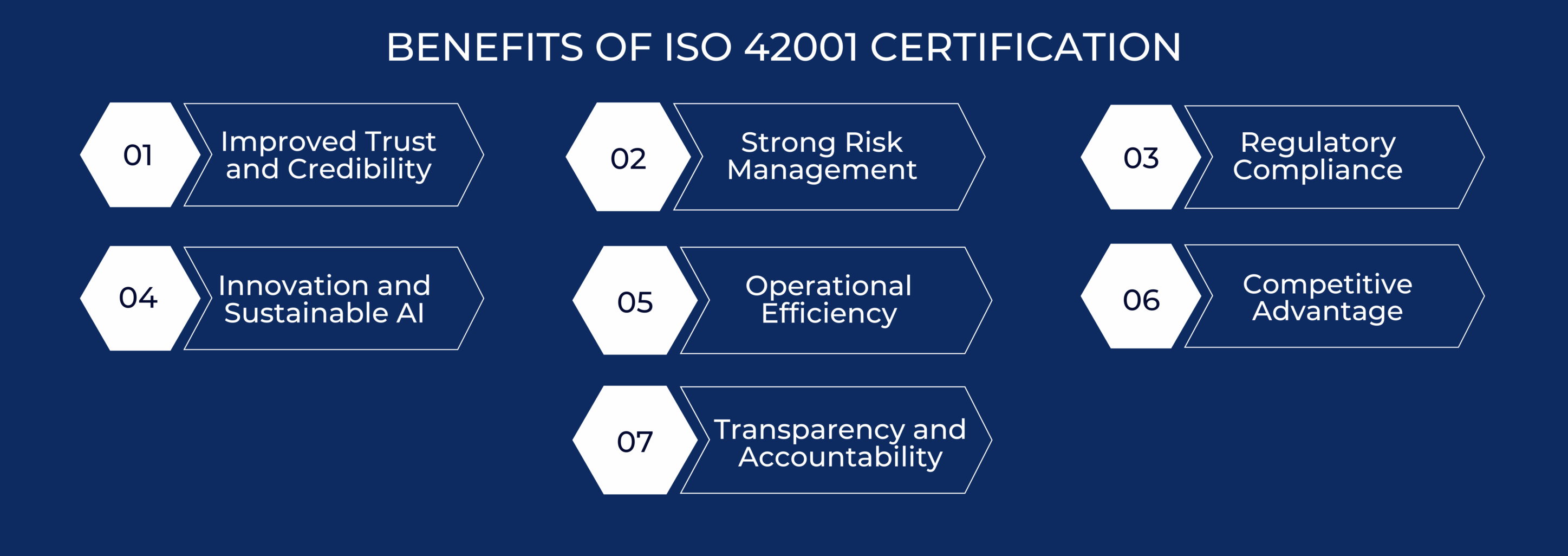
- ✓Regulatory Compliance and Risk Mitigation Benefits
- ✓Commercial and Competitive Benefits in Rotterdam Markets
- ✓Operational and Organizational Benefits
Why Choose CertPro for ISO 42001 Assessment and Certification?
CertPro’s approach to ISO 42001 assessment and certification in Rotterdam is grounded in institutional independence, technical expertise in AI governance, and a transparent audit methodology that produces certification outcomes with verifiable credibility. As a Licensed CPA Firm with documented audit methodology and peer review accountability, CertPro occupies a distinct institutional position among providers of ISO 42001 Certification in Rotterdam — differentiating itself through the rigor and independence of its audit processes rather than the speed or ease of the certification pathway.
Licensed CPA Firm Independence and Audit Credibility
CertPro’s status as a Licensed CPA Firm registered under the AICPA peer review program provides a level of institutional accountability rarely matched by other ISO 42001 certification service providers. The AICPA peer review program subjects CertPro’s audit methodology, quality control processes, and engagement documentation standards to independent external review — providing Rotterdam organizations with assurance that CertPro’s ISO 42001 assessments meet rigorous professional audit standards. This institutional accountability is particularly relevant for Rotterdam organizations in regulated financial services, healthcare, and critical infrastructure sectors where the credibility of third-party attestations is subject to regulatory scrutiny.
CertPro strictly separates certification audit activities from consulting and advisory services, maintaining the independence required for credible ISO 42001 assessment outcomes. Organizations that receive ISO 42001 Certification from CertPro can be confident that the certification reflects an objective evaluation of AIMS conformity, free from conflicts of interest that may arise when the same provider delivers both pre-audit preparation services and the certification audit itself. This independence is a foundational requirement for certification bodies under ISO/IEC 17021-1 and a core principle of CertPro’s engagement model for all ISO management system certifications.
Technical AI Governance Expertise
CertPro’s ISO 42001 audit teams include lead auditors with specialized technical knowledge of AI governance requirements, machine learning system architectures, data science practices, and the regulatory landscape for AI in the Netherlands and European Union. This technical expertise enables CertPro’s auditors to evaluate AI system governance controls with the depth and precision required to identify genuine conformity issues rather than surface-level documentation gaps. For Rotterdam organizations with sophisticated AI deployments in areas such as deep learning, natural language processing, or autonomous decision systems, this technical audit depth is essential for producing ISO 42001 certification findings that accurately reflect AI governance effectiveness.
CertPro’s audit teams maintain current knowledge of AI governance developments — including EU AI Act implementing regulations, GDPR enforcement trends related to AI processing, Dutch supervisory authority guidance on AI governance, and emerging international AI governance standards under development by ISO and other standards bodies. This regulatory currency ensures that CertPro’s ISO 42001 assessments account for the evolving compliance landscape that Rotterdam organizations must navigate, providing certification evidence that remains relevant to the organization’s regulatory obligations throughout the three-year certification cycle.
Rotterdam-Specific Audit Expertise
CertPro’s experience with ISO 42001 Certification in Rotterdam encompasses audit engagements across the city’s key economic sectors, providing audit teams with sector-specific knowledge of AI governance challenges in logistics, financial services, energy, and technology industries. This sector expertise enables more targeted and relevant audit evaluation of AI governance controls, as auditors understand the specific operational contexts, risk profiles, and regulatory requirements that shape AI governance obligations for Rotterdam enterprises. Sector-specific audit knowledge reduces the time required for organizational context-setting during audit interviews and improves the relevance of audit findings to the organization’s actual AI governance challenges.
CertPro’s familiarity with the Netherlands’ regulatory environment — including the enforcement approach of the Autoriteit Persoonsgegevens, the supervisory expectations of De Nederlandsche Bank and the AFM for AI governance in financial services, and the Netherlands’ implementation of EU AI Act requirements — ensures that ISO 42001 audit findings are contextualized within the specific regulatory framework that Rotterdam organizations must comply with. This regulatory contextualization makes CertPro’s ISO 42001 audit reports directly useful for Rotterdam organizations engaging with Dutch regulatory authorities, as findings are framed in terms relevant to the applicable supervisory requirements.
ISO 42001 Compliance and Its Relationship to EU AI Governance
ISO 42001 compliance occupies a critical position in Rotterdam organizations’ broader EU AI governance strategies, serving as a management system framework that operationalizes the governance requirements mandated by EU-level AI regulations. The relationship between ISO 42001 and the EU AI Act is particularly significant: while the EU AI Act defines risk categories and specific obligations for AI system providers and deployers, ISO 42001 provides the management system methodology for systematically meeting those obligations through documented processes, controls, and continuous monitoring. Rotterdam organizations that achieve ISO 42001 compliance are substantially positioned to demonstrate EU AI Act conformity through their certified AIMS documentation.
ISO 42001 and the EU AI Act Alignment
The EU AI Act requires providers of high-risk AI systems to establish a quality management system that includes an AI risk management system (Article 9), a data governance and management framework (Article 10), technical documentation demonstrating AI system characteristics (Article 11), record-keeping obligations for high-risk AI system operations (Article 12), and transparency provisions for deployers (Article 13). Each of these EU AI Act requirements maps directly to specific ISO 42001 requirements — meaning that an organization with an effectively implemented and certified AIMS has a documented basis for demonstrating EU AI Act conformity across multiple regulatory obligations simultaneously.
The EU AI Act’s requirement for a post-market monitoring system for high-risk AI applications (Article 72) aligns directly with ISO 42001’s operational monitoring and performance evaluation requirements. Rotterdam organizations that maintain ISO 42001 compliance through active post-deployment monitoring processes can use their AIMS monitoring documentation as the primary evidence base for EU AI Act post-market monitoring compliance. This documentation efficiency reduces the compliance overhead associated with maintaining separate monitoring frameworks for ISO certification and EU regulatory purposes — creating cost and resource savings that compound over the EU AI Act’s multi-year implementation timeline.
GDPR Intersection with ISO 42001 Compliance
ISO 42001 compliance reinforces GDPR compliance for Rotterdam organizations by institutionalizing the AI-specific data governance practices that GDPR requires for AI data processing activities. The GDPR’s accountability principle under Article 5(2) requires controllers to demonstrate compliance with data processing principles; ISO 42001’s documented AIMS provides the systematic, auditable framework necessary for this demonstration when AI systems are involved in personal data processing. Data Protection Impact Assessments (DPIAs) required by GDPR Article 35 for high-risk AI processing activities are directly supported by the AI risk assessment documentation maintained within an ISO 42001-compliant AIMS.
The intersection of GDPR and ISO 42001 compliance is particularly relevant for Rotterdam’s financial services and e-commerce sectors, where AI systems routinely process large volumes of personal data for credit assessment, behavioral analysis, fraud detection, and personalized marketing. Rotterdam organizations in these sectors can structure their AIMS documentation to address both ISO 42001 and GDPR requirements through integrated policies, procedures, and records — eliminating the redundancy of maintaining separate governance documentation for AI certification and data protection compliance purposes. This integrated approach is recognized in the compliance frameworks of both the Autoriteit Persoonsgegevens and ISO certification practice.
AI Governance Certification as a Market Access Requirement
AI governance certification is increasingly becoming a market access condition rather than a voluntary quality signal for Rotterdam organizations — driven by regulatory requirements, public sector procurement rules, and enterprise supply chain governance standards. The European Commission’s procurement guidelines for AI systems used in public services include AI governance requirements that align with ISO 42001 standards, creating a direct market access pathway for Rotterdam organizations seeking public sector contracts in the Netherlands and across the EU. Rotterdam’s position as a gateway to European markets amplifies the commercial significance of ISO 42001 Certification for technology firms and service providers seeking EU-wide market penetration.
ISO 42001 Audit Process: Detailed Evaluation Methodology
The ISO 42001 audit process conducted by CertPro follows a systematic evaluation methodology designed to produce objective, evidence-based findings about the conformity and effectiveness of an organization’s AIMS. The audit methodology applies established audit principles — including independence, integrity, fair presentation, confidentiality, evidence-based approach, and risk-based auditing — as defined in ISO 19011:2018 (Guidelines for Auditing Management Systems). For Rotterdam organizations subject to regulatory oversight, the rigor and documentation quality of the ISO 42001 audit process are critical factors in the credibility of the resulting certification.
CertPro’s ISO 42001 audit methodology employs three primary evidence collection methods: document and record review, personnel interviews, and observation of operational processes. Document review involves the systematic examination of AIMS documentation including policies, procedures, risk assessment records, monitoring logs, incident records, and training completion evidence. The review covers both the completeness of required documentation and the internal consistency of governance documents — verifying that policies, risk assessments, controls, and monitoring processes form a coherent and traceable governance chain across all AI systems within the certification scope.
Personnel interviews are conducted with individuals across multiple organizational levels and functional roles, including senior management responsible for AI strategy and governance, AI system owners and development teams, data science and machine learning personnel, compliance and legal personnel, and operational staff who interact with AI system outputs. Interview evidence is assessed against documentary evidence to evaluate consistency between documented governance requirements and actual operational practice. Discrepancies between documented procedures and actual behaviors are treated as potential nonconformities requiring further evidence gathering and evaluation.
Control testing for ISO 42001 audit purposes involves evaluating whether the AI governance controls documented in the organization’s Statement of Applicability are implemented and operating effectively. CertPro’s control testing approach for ISO 42001 assessments is organized around the four control domains defined in ISO 42001 Annex A: AI governance and leadership controls, AI risk management controls, AI system development and lifecycle controls, and AI operational monitoring and performance controls. Within each domain, CertPro tests specific controls using sampling methodologies that provide reasonable assurance of control effectiveness based on the volume and complexity of AI systems within scope.
AI system-specific control testing evaluates governance controls at the individual AI system level, examining evidence of AI impact assessments conducted before deployment, testing and validation records demonstrating performance against defined acceptance criteria, data quality assessment results for training and operational data, monitoring reports demonstrating ongoing performance evaluation, and escalation records for AI system issues or anomalies. For high-risk AI systems operating in Rotterdam’s regulated industries, the depth of control testing reflects the severity of potential AI governance failures and their consequences for the organization and affected stakeholders.
ISO 42001 audit findings are classified according to their significance and impact on AIMS conformity and effectiveness. Major nonconformities represent the absence of a required process, systematic failure of an implemented control, or evidence of AIMS elements that are documented but entirely non-operational. Major nonconformities prevent certification issuance until resolved with verified corrective action evidence. Minor nonconformities represent isolated deviations from requirements that do not indicate systemic AIMS failure — such as a single instance of a required record being incomplete or a specific monitoring activity conducted less frequently than the documented schedule requires. Minor nonconformities must be addressed within the next surveillance audit cycle.
CertPro’s corrective action evaluation process requires organizations to submit root cause analysis and corrective action plans for major nonconformities, demonstrating that the underlying cause of the conformity failure has been identified and addressed — rather than the surface manifestation alone. This root cause requirement ensures that corrective actions produce durable improvements in AIMS conformity rather than temporary documentation fixes that leave the underlying governance gap unresolved. The corrective action evaluation is completed by the lead auditor who conducted the Stage 2 assessment, ensuring continuity of audit judgment between the nonconformity identification and verification stages.
- ✓Audit Evidence Collection and Sampling Methods
- ✓AI-Specific Control Testing Approach
- ✓Nonconformity Classification and Corrective Action Evaluation
Secure Your ISO 42001 Assessment and Certification in Rotterdam with CertPro
ISO 42001 Certification in Rotterdam represents a strategic governance investment for organizations operating in an AI-intensive economy subject to rapidly evolving regulatory requirements. CertPro provides Rotterdam organizations with the independent, credentialed audit services required to achieve ISO 42001 Certification through a rigorous, transparent process that produces certification evidence recognized by regulators, enterprise customers, and international governance frameworks. As a Licensed CPA Firm with demonstrated expertise in AI governance auditing and Rotterdam’s specific regulatory and commercial context, CertPro is positioned to deliver ISO 42001 Certification outcomes that serve the organization’s compliance, commercial, and operational governance objectives.
Organizations seeking ISO 42001 Certification in Rotterdam should initiate the process by contacting CertPro to discuss certification scope, ISO 42001 audit program requirements, and timeline considerations. CertPro provides an initial scope consultation at no charge, during which the organization’s AI portfolio, existing management system infrastructure, and certification objectives are reviewed to determine the appropriate audit program structure and cost estimate. Initiating the ISO 42001 certification process positions Rotterdam organizations to meet emerging regulatory deadlines under the EU AI Act and to respond proactively to customer and partner AI governance requirements before these become contractual obligations.
The decision to pursue ISO 42001 Certification in Rotterdam through CertPro reflects a commitment to responsible AI governance that extends beyond immediate compliance requirements. Certified organizations signal to their markets, regulators, and the broader public that their AI systems operate within a framework of documented accountability, systematic risk management, and verified governance controls. In Rotterdam’s internationally connected business environment, this governance signal carries significant reputational value — positioning the organization as a credible participant in the global conversation about responsible AI development and deployment.
FAQ
▶
What is ISO 42001 Certification and who needs it in Rotterdam?
▶
How long does the ISO 42001 certification process take in Rotterdam?
▶
How does ISO 42001 compliance relate to the EU AI Act for Rotterdam organizations?
▶
What does an ISO 42001 audit evaluate in Rotterdam organizations?
▶
Can Rotterdam organizations with existing ISO 27001 certification integrate ISO 42001?
▶
What is the ISO 42001 assessment process for Rotterdam financial services companies?
▶
How does CertPro maintain independence in ISO 42001 certification audits?
▶
What are the annual surveillance requirements for maintaining ISO 42001 Certification in Rotterdam?

MindSec Launches AI Compliance for Law 25 & ISO 42001
Excerpt from Barchart Article, Published on December 3, 2025 Today, Canadian organizations face increasing pressure to comply with stringent privacy a…

UNDERSTANDING ISO 42001: A GUIDE FOR RESPONSIBLE AI MANAGEMENT SYSTEMS
The invention of artificial intelligence (AI) has changed the operational processes of many industries. However, the rapid growth of technology increa…
ENSURING AI DATA PRIVACY COMPLIANCE WITH ISO 42001
According to Stanford’s AI report, the private AI investment in the U.S. alone reached more than $109 billion last year, which is equal to 12 times th…
Get In Touch
have a question? let us get back to you.