SOUTH AFRICA
ISO 42001 CERTIFICATION IN SOUTH AFRICA
As South Africa’s digital evolution continues, it is slowly adopting artificial intelligence. As a result, AI is changing the way businesses work, from finance to farming. However, without clear governance, AI can create ethical and operational risks. Therefore, ISO 42001 certification in South Africa gives you a way to manage AI responsibly. This standard makes sure that your business puts safety, fairness, and openness first in all of its AI work. This certification shows you’re ready to meet public needs and follow more rules. Moreover, it proves your commitment to ethical AI practices and strong risk management. Additionally, as more organizations explore the Introduction to AI for operational efficiency, ISO 42001 provides a structured path to responsible adoption that supports both innovation and compliance.
Furthermore, getting ISO 42001 certification in South Africa gives your business an edge over the competition and helps build trust with the public and stakeholders. In today’s tech-driven world, this is a smart move for businesses that want to grow in a way that lasts. Notably, ISO 42001 certification in South Africa can help businesses avoid problems like data misuse, bias, and system failure. They also show that their use of AI is in line with both local laws and global best practices. Additionally, certification also makes your business better to trade, invest, and form strategic partnerships with other businesses around the world. This alignment is especially helpful for industries deploying advanced machine learning tools, where having an Artificial Intelligence certificate improves stakeholder confidence.
ASSESSMENT AND CERTIFICATION SERVICES BY CERTPRO FOR ISO 42001 IN SOUTH AFRICA
WHY CHOOSE CERTPRO FOR ISO 42001 ASSESSMENT AND CERTIFICATION?
With CertPro, your journey for ISO 42001 assessment and certification in South Africa is strategic and stress-free. We focus on your business’s unique structure, industry, and existing AI systems. Unlike generic services, our service goes beyond basic advice. Instead, we dig deep into your challenges, then create practical and measurable solutions. Our consultants begin with a structured gap analysis and readiness assessment. We then deliver prioritized recommendations to help your teams update policies and align systems for ISO 42001 compliance. Along the way, we provide advisory materials and readiness guidance your teams can use to prepare for implementation and certification. This includes helping organizations integrate Introduction to AI principles directly into governance processes so that innovation and compliance progress together.
Even after readiness support, we can continue to offer advisory updates on emerging regulatory changes and offer readiness reviews to help you prepare for future surveillance audits performed by accredited bodies. CertPro is a trusted assessment and certification support partner. We provide advisory and readiness services to help you align with global standards. Continued certification validity and surveillance remain the responsibility of your organisation and the accredited certification body; we provide guidance to help you prepare for those requirements.
WHAT IS ISO 42001 CERTIFICATION?
ISO 42001 certification in South Africa is the international standard for managing artificial intelligence systems responsibly. In essence, it guarantees the safe, ethical, and transparent application of AI in diverse sectors. For instance, from healthcare to logistics, this certification applies to any organization that uses or develops AI. The core of ISO 42001 lies in risk control, data protection, and clear policies. Consequently, the standard guides companies in the responsible use of AI while ensuring compliance with local laws and meeting global expectations. By achieving this certification, your business signals a proactive stance on AI safety and ethics.
Importantly, ISO 42001 certification in South Africa promotes continuous improvement. It’s not a one-time task but an ongoing journey. Whether you’re a small startup or a large corporation, ISO 42001 certification in South Africa helps you stay accountable, future-ready, and globally recognized. This makes it one of the most reliable pathways for organizations seeking an Artificial Intelligence certificate that demonstrates trustworthy AI governance.
ENQUIRE NOW
Related Links
SOC 2 in Canada
ISO 27701 in Canada
GDPR in Canada
ISO 27018 in Canada
HIPAA in Canada
CCPA in Canada
PIPEDA in Canada
ISO 17025 in Canada
ISO 13485 in Canada
CE Mark in Canada
GDP in Canada
GLP in Canada
ISO 9001 in Canada
ISO 14001 in Canada
ISO 45001 in Canada
ISO 22000 in Canada
HACCP in Canada
ISO 22301 in Canada
ISO 21001 in Canada
ISO 41001 in Canada
ISO 20000-1 in Canada

WHY DO WE NEED ISO 42001 CERTIFICATION?
AI is transforming the way South African businesses run. Automation and efficiency are two benefits, but there are also new risks. Algorithmic bias, lack of transparency, and improper use of data can result in legal problems or a decline in trust. This is where ISO 42001 certification in South Africa can provide assistance. This certification guarantees that your company has the resources necessary to monitor AI use, assess risks, and uphold moral principles. External audits verify your procedures, which increases client and partner trust.
Additionally, the ISO 42001 assessment also gets your company ready for the quick changes in AI regulations around the world. It also attracts investors, builds your reputation, and opens doors for international partnerships. In summary, ISO 42001 certification in South Africa promotes responsible growth and sustainable innovation by tackling present and upcoming issues. Moreover, companies that want to improve their technical skills often pair ISO certification with an Introduction to AI program to support safer development practices.
HOW TO GET ISO 42001 CERTIFICATION IN SOUTH AFRICA
A well-organized plan is necessary to begin ISO 42001 certification in South Africa. To begin with, start by determining how AI helps your company and where it needs to be improved. Next, thoroughly go over the ISO 42001 requirements. Pay attention to important areas such as data handling, performance metrics, leadership accountability, and risk tracking. Then, use a structured gap analysis to compare your procedures with ISO standards. This exercise makes your strengths and weaknesses more apparent. Based on these insights, implement an AI management system that takes into account your objectives, legal obligations, and industry best practices in light of the findings. Make sure you have solid documentation. Add policy statements, audit trails, and risk registers. Conduct routine internal audits to track system performance and find weaknesses.
This process also helps your organisation identify where ISO 42001 controls overlap with South African financial-sector compliance rules; CertPro’s assessment highlights these intersections for your internal teams to action. After making the required updates, get your team ready for the external audit. Finally, continue to comply with training and oversight. In this manner, your company is always flexible and prepared for an audit.
STEPS FOR ISO 42001 CERTIFICATION
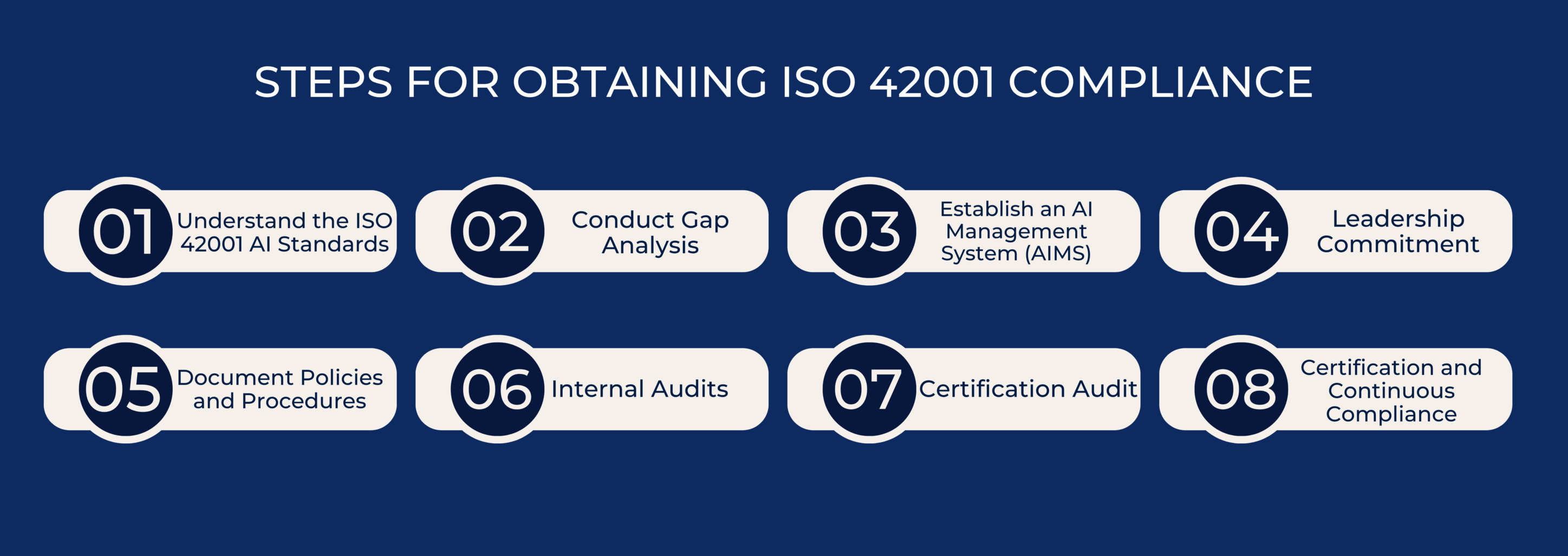
A methodical approach is necessary to obtain ISO 42001 certification in South Africa. A detailed guide to assist you in transitioning from preparation to complete certification is provided below:
Understand the AI Standards of ISO 42001: Find out how ISO 42001 applies to your company’s AI operations and how it conforms with South African laws. This process ensures that your company remains compliant and has a clear strategy for execution. Furthermore, a clearly defined scope will help focus your certification procedure from the beginning.
Conduct Gap Analysis: Next, compare your current AI procedures to the specifications of ISO 42001. Determine any inefficiencies, non-compliance areas, or possible hazards. Create a corrective action plan based on these findings to enhance your current systems and get them ready for certification.
Establish an AI Management System (AIMS): Next, create a thorough framework for AI governance. Verify that it covers stakeholder responsibilities, legal requirements, moral standards, and risk mitigation measures. Most importantly, the AIMS should be useful for day-to-day operations and customized for your company.
Leadership Commitment: Involving high management from the beginning is critical. Their direct assistance aids in resource allocation, goal clarification, and the advancement of moral AI use. As a result, your AI governance becomes more credible.
Document Policies and Procedures: Next, create thorough documentation that covers your AI practices, including risk assessments, policies, and operational controls. These records help audits run more smoothly and can be used as a guide for internal assessments and training.
Internal Audits: Conduct internal audits periodically to evaluate system performance and identify issues. Use audits to enhance and include leadership in corrective actions. This proactive measure boosts external audit success.
Certification Audit: Thereafter, external auditors will check your AIMS to make sure it complies with ISO 42001 requirements. You can effectively fill in any gaps and guarantee the audit’s success with CertPro’s assistance.
Certification and Continuous Compliance: Lastly, once you have obtained certification, keep your systems maintained by frequent staff training, control updates, and monitoring. This ongoing work assists your company in maintaining compliance and adjusting to changing AI standards.
REQUIREMENTS FOR ISO 42001 CERTIFICATION
Adherence to the requirements for ISO 42001 certification in South Africa is essential. Here are some your organization should do to prepare:
Purpose and Scope: Start by outlining your company’s use of AI in detail, taking into account all relevant departments, procedures, and systems. By doing this, you can make sure your AI implementation complies with legal requirements and strategic objectives. Furthermore, a clearly defined scope gives compliance efforts focus.
Leadership Commitment: Next, it’s critical to have strong leadership backing. Top management should specifically take the lead in the certification process by delegating responsibilities, authorizing required funding, and encouraging moral AI conduct. Consequently, this dedication cultivates an organizational culture of accountability.
Risk management: In addition, carry out a thorough AI risk assessment to find problems like bias, privacy issues with data, or safety hazards. After identifying these risks, implement appropriate controls to effectively manage and mitigate them. This proactive strategy reduces liability while enhancing trust.
Impact Assessment: Examine your AI systems’ wider effects on users, internal operations, and decision-making procedures. Utilize documentation and organized tools to track and assess results. Your company becomes more open and receptive to stakeholder concerns as a result.
Training: Additionally, equip your staff with the knowledge and abilities required for AI governance. Frequent training sessions improve internal awareness across departments, guarantee consistency in practice, and keep your team informed about compliance requirements.
Communication and Documentation: It’s equally critical to keep easily readable records of all decisions, policies, and actions pertaining to compliance. This process facilitates internal and external audits and helps guarantee transparency among teams.
Continuous Improvement: Finally, ISO 42001 is a living standard. Regularly update AI management systems based on user input, audit findings, and relevant laws. Thus, your organization maintains current industry standards and prepares for AI advances.
ISO 42001 CERTIFICATION COST IN SOUTH AFRICA
The size, industry, and level of AI complexity of your company all affect the cost of ISO 42001 certification in South Africa. For example, smaller businesses may pay less if they use fewer AI tools. Conversely, large businesses with intricate systems may require more time and financial resources. AI Risk Assessment, policy revisions, system audits, training, and documentation are typical expenses. If necessary, hiring legal and IT consultants may increase costs. Additionally, ongoing expenses like system upgrades and surveillance audits should also be taken into account.
Nonetheless, the expense of ISO 42001 certification is a worthwhile investment. It not only shields your company from legal dangers but also increases regulator and customer trust. Otherwise, due to noncompliance, missed sales, penalties, or harm to one’s reputation could arise. With that in mind, we assist you in effectively managing these expenses and turning certification into a decision that adds value with CertPro.
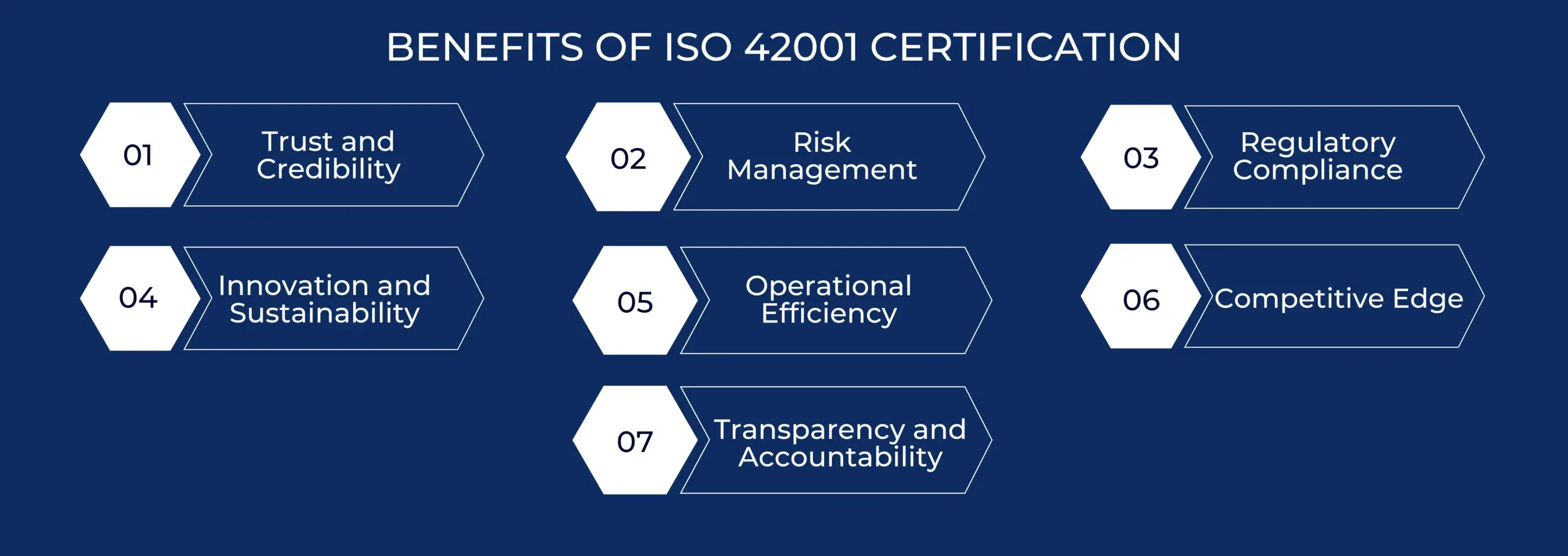
BENEFITS OF ISO 42001 CERTIFICATION
Getting ISO 42001 certification in South Africa offers long-term business benefits by aligning your company with global AI governance standards.
Trust and Credibility: Customers and partners prefer working with AI firms that demonstrate effectiveness and reliability. Therefore, obtaining certification not only strengthens brand image but also builds trust. Moreover, in today’s AI-driven era, strong ethical practices are vital for maintaining stakeholder confidence.
Risk management: Early AI risk assessments can also identify algorithmic bias and data exploitation. This lets you solve issues before they worsen and keep your business legal and ethical.
Regulatory Compliance: In addition, getting ISO 42001 certification makes sure that your AI systems follow the laws of both your country and the world. Because of this, it lowers the cost of compliance, makes the law clearer, and gets you ready for changes in the rules.
Innovation and Sustainability: Using AI in a safe and moral way also encourages new ideas. ISO 42001 encourages responsible technological progress and makes sure your systems are flexible enough to handle new problems as they come up. This means that your AI strategies are both original and effective for a long time.
Operational Efficiency: Also, using ISO 42001 makes your AI processes easier to manage. This lets you keep high performance standards while saving time, making fewer mistakes, and getting more work done overall.
Competitive Edge: Certification makes your business look like a forward-thinking leader in South Africa’s growing AI market, which is very competitive right now. This difference sets you apart and opens up new business opportunities at home and abroad.
Transparency and accountability: Lastly, ISO 42001 encourages transparent governance by making decisions, roles, and data usage extremely visible throughout the company. Because of this, it makes people more responsible and open, which builds trust between partners, customers, and regulators.
SECURE YOUR ISO 42001 CERTIFICATION IN SOUTH AFRICA WITH CERTPRO
Obtaining ISO 42001 certification in South Africa is a declaration about the future of your company, not just a compliance exercise. It demonstrates your commitment to using AI effectively, morally, and safely. Fortunately, this journey becomes clear and manageable with CertPro. We assist with ISO 42001 assessment and certification, providing readiness evaluations and advisory recommendations to inform your policy development and implementation efforts. Moreover, our customized support meets your growth objectives, budget, and industry. Whether you’re just getting started or upgrading your current AI systems, we will help you every step of the way.
Our assessment and certification support helps teams understand how ISO 42001 readiness aligns with broader AI assurance needs and organisational maturity. If you’re ready to begin ISO 42001 assessment and certification support in South Africa, visit CertPro.com to request an initial readiness assessment.
FAQ
How do I get ISO 27001 certified in South Africa?
To get ISO 27001 certified in South Africa, conduct a gap analysis, implement an Information Security Management System (ISMS), complete internal audits, and pass the certification audit with an accredited body.
What is the cost of ISO 42001 certification?
ISO 42001 certification costs vary based on company size, AI complexity, documentation readiness, and audit duration. Small firms may pay less, while large AI-driven companies require higher investment. Costs generally include audits, training, and system upgrades.
Is ISO 42001 mandatory for businesses?
ISO 42001 is not mandatory. However, it is increasingly preferred by regulators and industries adopting AI. It helps organizations reduce AI risks, meet ethical standards, and demonstrate responsible governance, making certification highly valuable for global credibility.
What are the requirements to take an artificial intelligence course in South Africa?
Requirements for AI courses in South Africa typically include basic computer skills, understanding of math or programming fundamentals, and access to a computer. Advanced programs may require Python knowledge or prior experience in data science or machine learning.
How much does an AI course cost in South Africa?
AI course fees in South Africa vary widely. Short beginner programs start at low cost, while advanced or university-linked AI and machine learning courses cost more. Prices depend on course duration, institution, and level of specialization.