
ISO 42001 Certification in Wilmington
ISO 42001 follows the High-Level Structure (HLS) common to ISO management system standards, aligning naturally with ISO 27001 for information security and ISO 31000 for risk management. This architectural compatibility allows organizations to integrate their AIMS with existing management systems, reusing policies, governance roles, and audit review processes rather than building entirely new frameworks.For Wilmington-based organizations already operating under ISO 27001 or SOC 2, this integration significantly reduces duplication of effort while extending AI-specific governance controls across the enterprise.
OUR CLIENTS


What Is ISO 42001 Certification?
ISO 42001 Certification is the internationally recognized credential issued to organizations whose Artificial Intelligence Management Systems (AIMS) have been independently audited and confirmed to conform with ISO/IEC 42001:2023. Published in December 2023, this standard establishes the first global framework specifically designed to govern the responsible development, deployment, and use of AI systems within organizations of any size or sector.
ISO 42001 Certification in Wilmington confirms that an organization’s AIMS meets the normative requirements of the standard as determined by an accredited third-party certification body. It is not a self-declaration or internal assessment outcome — it is an independently verified credential that carries institutional weight with regulators, clients, and board directors.
Scope and Purpose of the ISO/IEC 42001:2023 Standard
ISO/IEC 42001:2023 defines the requirements for establishing, implementing, maintaining, and continually improving an AI Management System. The standard’s scope encompasses any organization that develops, provides, or uses AI-based products or services. Its purpose is to ensure that AI systems operate within clearly defined governance structures, produce accountable and transparent outputs, and are subject to ongoing risk management and performance monitoring.
The standard directly addresses the unique characteristics of AI — including algorithmic decision-making, machine learning model behavior, and data dependency — that conventional IT governance frameworks do not fully capture. This specificity makes ISO 42001 Certification the purpose-built credential for organizations serious about AI governance.
ISO 42001 follows the High-Level Structure (HLS) common to ISO management system standards, aligning naturally with ISO 27001 for information security and ISO 31000 for risk management. This architectural compatibility allows organizations to integrate their AIMS with existing management systems, reusing policies, governance roles, and audit review processes rather than building entirely new frameworks.
For Wilmington-based organizations already operating under ISO 27001 or SOC 2, this integration significantly reduces duplication of effort while extending AI-specific governance controls across the enterprise.
The AIMS Framework: Core Concept Relationships
ISO 42001 requires organizations to establish an AIMS consisting of policies, objectives, governance structures, risk controls, and continual improvement mechanisms specific to AI development and deployment. The AIMS framework defines explicit relationships between these components: AI governance structures set organizational objectives and assign accountability; risk controls operationalize those objectives by identifying, evaluating, and treating AI-specific risks; and continual improvement mechanisms use performance data and audit findings to refine controls over time.
Each component is documented, monitored, and subject to both internal and external audit evaluation — ensuring that governance commitments translate into operational practice.
The AIMS framework specifically addresses AI system life cycle management, covering design, training, validation, deployment, and decommissioning phases. Organizations pursuing ISO 42001 Certification must demonstrate that governance controls are embedded at each life cycle stage — not applied retrospectively after AI systems are already operational. This requirement distinguishes the AIMS framework from generic technology governance approaches.
For Wilmington companies deploying AI in regulated environments such as financial services, healthcare, or insurance, this life cycle governance documentation is particularly critical during the ISO 42001 audit.
What ISO 42001 Certification Confirms
ISO 42001 Certification confirms three outcomes through independent third-party audit. First, the organization has established a documented AIMS consistent with the standard’s clause requirements. Second, the AIMS is operationally effective — meaning controls are implemented, monitored, and performing as intended. Third, the organization demonstrates a commitment to continual improvement through defined review cycles, corrective action processes, and management accountability.
The certification certificate is issued following a successful Stage 2 audit and remains valid for three years, subject to annual surveillance audits that verify continued conformance throughout the certification cycle.
| ISO 42001 Component | Definition | Audit Relevance |
|---|---|---|
| AIMS | AI Management System — the complete governance framework for AI | Audited for establishment, implementation, and effectiveness |
| AI Risk Controls | Documented measures to identify, evaluate, and treat AI-specific risks | Tested for design adequacy and operating effectiveness |
| AI Objectives | Measurable targets aligned with organizational AI strategy and ethics policy | Assessed for alignment with AIMS policy and monitored outcomes |
| Continual Improvement | Systematic processes to address nonconformities and enhance AIMS performance | Evaluated through corrective action records and management review outputs |
| Surveillance Audit | Annual audit to verify continued conformance within the 3-year certification cycle | Confirms ongoing AIMS operation post-certification |
Why ISO 42001 Certification Matters for Wilmington Businesses
Wilmington, Delaware occupies a unique position in the U.S. corporate landscape. Home to more than 60% of Fortune 500 companies by registration, a dense concentration of fintech firms, multinational financial institutions, insurance carriers, and professional services organizations, Wilmington operates at the intersection of corporate governance, regulatory compliance, and technology innovation.
As AI adoption accelerates across these sectors, the demand for structured, independently audited AI governance has moved from optional to operationally essential. ISO 42001 Certification in Wilmington directly addresses this demand by providing a recognized, internationally accepted credential for responsible AI governance — one that satisfies regulatory expectations, contractual requirements, and board-level scrutiny simultaneously.
Wilmington’s Financial Services and Fintech Sector
ISO 42001 Certification is particularly relevant for Wilmington financial services organizations given the sector’s heavy reliance on algorithmic decisioning, credit scoring models, fraud detection systems, and automated customer service platforms. Financial institutions operating in Wilmington — including major banking groups, card network processors, and specialty finance companies — deploy AI at scale across customer-facing and back-office functions.
ISO 42001 compliance demonstrates to regulators, institutional clients, and counterparties that AI systems are governed by documented controls, subject to independent audit, and aligned with emerging AI governance expectations from bodies including the Consumer Financial Protection Bureau and the Office of the Comptroller of the Currency.
The EU AI Act, which establishes binding obligations for AI systems deployed in EU markets, has direct relevance to Wilmington-based firms with European operations or client relationships. ISO 42001 Certification aligns with the EU AI Act’s risk-based governance requirements, providing a structured audit framework that maps to the Act’s high-risk AI system obligations.
For Wilmington’s multinational financial services companies, maintaining ISO 42001 Certification creates a documented compliance posture that supports regulatory reporting, client due diligence, and cross-border governance alignment simultaneously.
Delaware’s Regulatory Environment and AI Governance
Delaware’s regulatory environment — characterized by the Delaware General Corporation Law, robust corporate governance frameworks, and a Court of Chancery with deep expertise in corporate matters — creates a compliance culture where documented governance standards carry significant institutional weight. Organizations registered in Delaware face heightened expectations from institutional investors, board directors, and legal counsel regarding the adequacy of technology governance, including AI.
ISO 42001 assessment in Wilmington helps organizations satisfy board-level inquiries about AI governance adequacy, demonstrate due diligence in AI risk management, and establish documented audit trails that support corporate governance reporting under Delaware’s rigorous standards.
Beyond the financial sector, Wilmington’s healthcare networks, logistics companies, and professional services firms — including law firms and accounting practices adopting AI-assisted tools — face their own AI governance imperatives. Healthcare organizations deploying AI for clinical decision support, diagnostic assistance, or patient data analytics must demonstrate that these systems operate within documented governance frameworks that protect patient safety and data privacy.
ISO 42001 compliance provides the audit-backed governance structure that satisfies HIPAA-adjacent AI governance expectations while building internal accountability for AI system performance and outcomes.
Competitive and Contractual Drivers for Certification
ISO 42001 Certification for Wilmington companies operating in competitive B2B markets is increasingly becoming a contractual prerequisite rather than a differentiator. Enterprise procurement processes for AI-enabled vendors now routinely include AI governance assessments, and ISO 42001 Certification provides a recognized, audited credential that satisfies these requirements more efficiently than responding to individual client questionnaires.
For Wilmington startups and scale-ups competing for enterprise contracts, achieving ISO 42001 Certification signals AI governance maturity, accelerates sales cycles, and removes a common procurement barrier that can otherwise delay contract closure significantly.
ISO 42001 Certification Requirements
Organizations pursuing ISO 42001 Certification in Wilmington must satisfy requirements across ten clause areas defined in ISO/IEC 42001:2023. These requirements are evaluated during the certification audit and must be demonstrably implemented — not merely documented — to achieve conformance.
The following sections detail the primary requirement categories that auditors evaluate during ISO 42001 assessment and certification engagements, providing a clear roadmap for organizations preparing their AIMS for independent audit.
ISO 42001 requires organizations to determine the external and internal factors relevant to their AI activities and to understand the needs and expectations of interested parties — including regulators, customers, employees, and affected communities. For Wilmington organizations, this includes mapping the regulatory environment (Delaware state law, federal financial regulation, sector-specific AI governance expectations) and identifying stakeholder groups whose interests are materially affected by the organization’s AI systems.
This context determination must be documented and reviewed periodically to remain current as the regulatory and technological landscape evolves — a requirement that reflects the dynamic nature of both AI technology and AI governance expectations.
Leadership requirements under ISO 42001 are substantive and non-delegable. Top management must demonstrate commitment to the AIMS by establishing an AI policy, assigning governance roles and responsibilities, and integrating AIMS requirements into the organization’s strategic planning processes. The AI policy must address the organization’s AI objectives, ethical principles for AI use, and accountability structures.
For Wilmington-based financial institutions, this policy typically references regulatory obligations, customer protection commitments, and data governance standards alongside the broader AI governance framework required for ISO 42001 Certification.
ISO 42001 documentation requirements specify that organizations maintain documented information sufficient to demonstrate AIMS conformance and enable effective operation of AI governance processes. Required documented information includes the AI policy, AI objectives, AI risk assessment records, AI impact assessment records, AI system inventories, competence records for personnel with AI governance roles, and records of management review and internal audit outcomes.
Documentation must be controlled — meaning it is reviewed, approved, version-managed, and accessible to authorized personnel — and retained for defined periods that support ISO 42001 audit evidence requirements.
AI risk management under ISO 42001 requires organizations to establish and apply a systematic process for identifying AI-specific risks, evaluating their likelihood and impact, and selecting appropriate treatment options. Unlike generic enterprise risk management, ISO 42001 risk assessment must address AI-specific risk categories including: algorithmic bias and discriminatory outcomes; model opacity and explainability limitations; data quality and provenance issues; adversarial attacks and model robustness; and unintended AI system behavior.
Each identified risk must be linked to documented controls, risk owners, and monitoring mechanisms that are subject to review during the ISO 42001 audit process.
Operational requirements under ISO 42001 govern how AI systems are planned, designed, developed, deployed, and monitored in practice. Organizations must establish processes for AI impact assessment — evaluating the potential effects of AI systems on individuals and communities before deployment. They must also maintain AI system documentation that captures system purpose, training data sources, performance metrics, and known limitations.
For Wilmington organizations deploying AI in regulated contexts, AI impact assessment documentation provides the evidence base for demonstrating responsible AI governance to regulators and auditors during the ISO 42001 assessment process.
- ✓Documented AI policy approved by top management with defined AI governance objectives
- ✓AI system inventory identifying all AI systems in scope, their purpose, and deployment context
- ✓AI risk assessment records covering AI-specific risk categories with documented treatment decisions
- ✓AI impact assessment records for each deployed AI system, reviewed prior to deployment
- ✓Competence records for personnel with AI governance, development, and oversight roles
- ✓Internal audit program with records of AIMS internal audit findings and corrective actions
- ✓Management review records demonstrating top management engagement with AIMS performance data
- ✓Supplier and third-party AI governance controls for externally sourced AI components or services
- ✓Incident management records for AI system failures, unexpected behaviors, or governance breaches
- ✓Continual improvement records documenting how AIMS performance data drives control enhancements
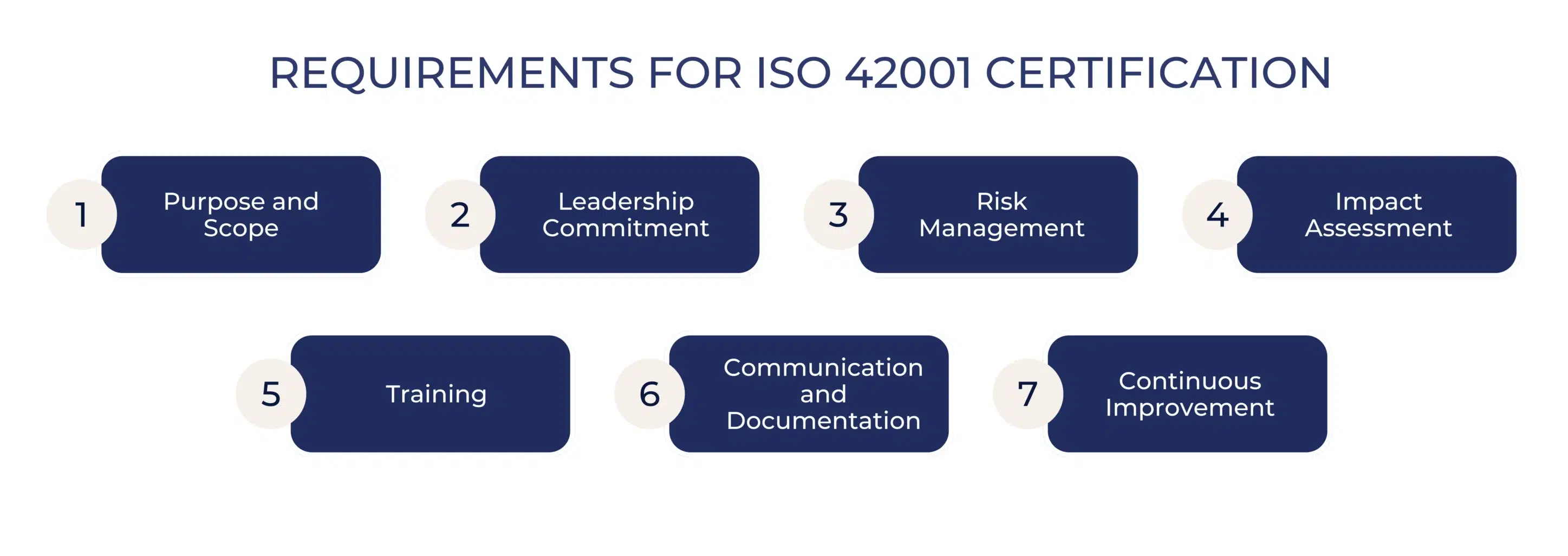
- ✓Organizational Context and Leadership Requirements
- ✓Documentation and Risk Management Requirements
- ✓Operational and Performance Evaluation Requirements
The ISO 42001 Certification Audit Process
The ISO 42001 audit process is a structured, multi-stage evaluation conducted by an accredited certification body. Each stage has defined objectives, activities, and outcomes that collectively determine whether an organization’s AIMS conforms with ISO/IEC 42001:2023 requirements.
CertPro, as a Licensed CPA Firm, conducts ISO 42001 assessment and certification engagements following a rigorous, evidence-based audit methodology. The sections below describe the complete ISO 42001 audit process for organizations seeking ISO 42001 Certification in Wilmington — from initial scope definition through certificate issuance and ongoing surveillance.
The ISO 42001 audit begins with scope definition — a precise determination of which AI systems, organizational units, locations, and functions are included within the AIMS boundary. Scope definition is critical because it establishes the boundaries within which all subsequent audit evidence must be collected and evaluated.
For Wilmington organizations with complex AI portfolios, scope decisions involve determining whether to certify all AI systems organization-wide or to begin with a defined subset — for example, customer-facing AI systems in a specific business unit — before expanding scope in subsequent certification cycles.
Following scope definition, the audit program is determined based on the organization’s size, AI system complexity, regulatory context, and AIMS maturity. The audit program specifies the Stage 1 and Stage 2 audit objectives, the sampling strategy for control testing, the audit team composition, and the timeline for the full certification cycle including surveillance audits.
For Wilmington’s large financial institutions, audit programs may require extended Stage 2 fieldwork across multiple locations and AI system categories. For smaller fintech firms, a focused audit program with concentrated control testing is typically appropriate and more efficient.
The Stage 1 audit evaluates the organization’s documented AIMS against ISO 42001 requirements. Auditors review the AI policy, AIMS scope documentation, AI system inventory, risk assessment records, AI impact assessment records, and the internal audit program to determine whether the documented system is sufficiently developed to proceed to Stage 2.
Stage 1 findings identify any significant gaps — areas where documentation is absent, incomplete, or does not address standard requirements — that must be resolved before Stage 2 commences. Stage 1 is typically conducted remotely for Wilmington organizations, though on-site review may be required in specific circumstances.
The Stage 2 audit is the primary conformance assessment, conducted on-site at the organization’s Wilmington facilities and any other locations within scope. During Stage 2, auditors evaluate whether AIMS controls are implemented as documented and operating effectively. This includes interviewing personnel with AI governance roles, reviewing control evidence, and testing the operation of specific AIMS controls through structured sampling.
Stage 2 findings are classified as major nonconformities (requiring resolution before certification), minor nonconformities (requiring corrective action within defined timelines), or observations (opportunities for improvement that do not affect certification eligibility). The ISO 42001 audit outcome at this stage determines the path to certification.
Following Stage 2 audit fieldwork, the audit team prepares a detailed audit report documenting all findings, evidence reviewed, and conformance determinations. Major nonconformities must be resolved — through documented corrective action plans and supporting evidence — before the certification decision is made.
The certification decision is made by a technical reviewer independent of the audit team, who evaluates the audit report and corrective action evidence to determine whether the AIMS meets ISO 42001 conformance requirements. This independence requirement ensures that the certification decision is based solely on audit evidence, not on commercial or relationship considerations — preserving the integrity of the ISO 42001 Certification credential.
Upon a positive certification decision, the ISO 42001 certificate is issued with a validity period of three years from the certification date. The certificate specifies the certified organization, AIMS scope, certification standard (ISO/IEC 42001:2023), and certificate validity dates. Annual surveillance audits are conducted in years one and two to verify that the AIMS continues to conform with ISO 42001 requirements and that continual improvement processes remain operational.
Surveillance audits are targeted — focusing on areas of previous concern, changes to AI systems or organizational context, and performance of key AIMS controls — and are typically shorter in duration than the initial ISO 42001 certification audit.
Recertification audit is conducted prior to certificate expiry at the end of the three-year cycle. The recertification audit is a comprehensive reassessment of the AIMS, similar in scope to the initial certification but enriched by the organization’s three-year operational history. Recertification evaluates AIMS evolution — how the organization has responded to changes in its AI environment, regulatory landscape, and internal findings — as well as sustained conformance with all standard requirements.
Successful recertification results in a new three-year certificate, continuing the organization’s ISO 42001 Certification in Wilmington without interruption and maintaining the governance credibility the certification provides.
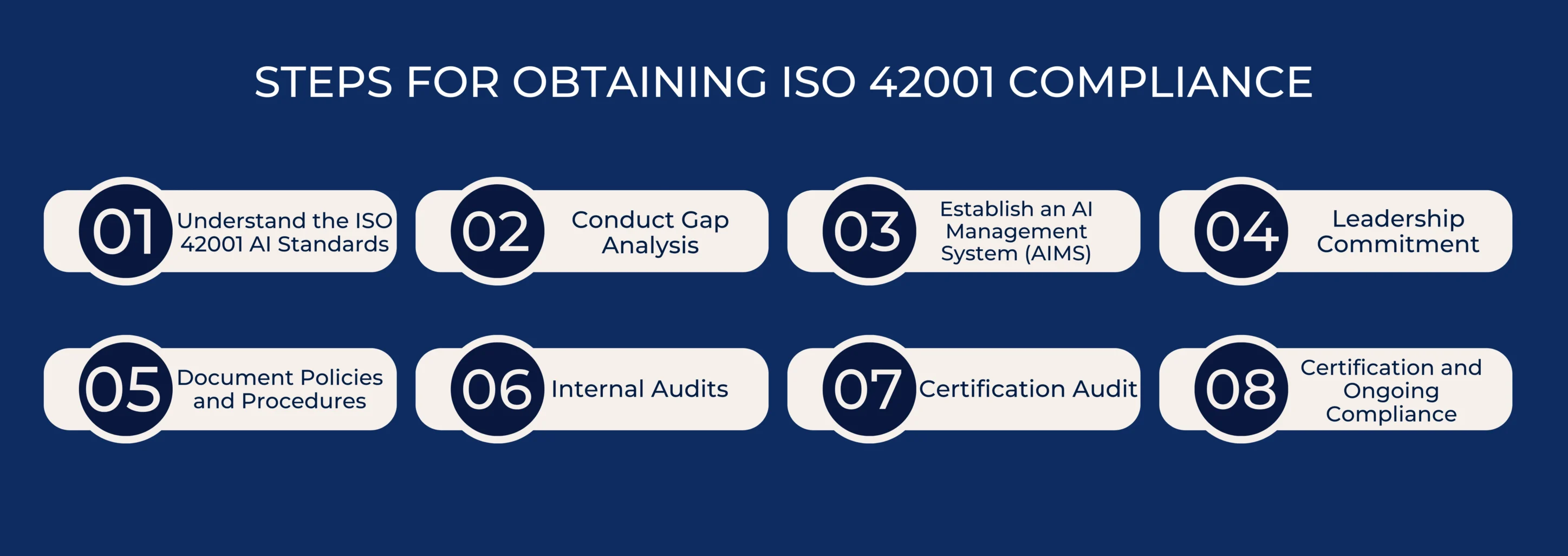
- ✓Stage 1: Scope Definition and Audit Program Determination
- ✓Stage 2: Documentation Review and Conformance Assessment
- ✓Nonconformity Review and Certification Decision
- ✓Certificate Issuance, Surveillance, and Recertification
Steps to Achieve ISO 42001 Certification in Wilmington
Organizations pursuing ISO 42001 Certification in Wilmington follow a defined sequence of preparatory and audit activities. The steps below represent the complete path from initial AIMS development through certificate issuance, structured for clarity and practical implementation. Each step has defined inputs, activities, and outputs that collectively produce a certification-ready AIMS capable of satisfying the full scope of the ISO 42001 audit.
- Determine organizational context: Identify internal and external factors affecting AI governance; map interested parties and their requirements; define the AIMS boundary and scope statement.
- Establish leadership commitment: Obtain top management approval for an AI policy; assign AI governance roles and responsibilities; integrate AIMS into organizational strategic planning.
- Conduct AI system inventory: Catalog all AI systems within the defined AIMS scope; document each system’s purpose, deployment context, data inputs, and decision outputs.
- Perform AI risk assessment: Apply a systematic risk identification and evaluation process to each AI system; document risk treatment decisions and link risks to specific AIMS controls.
- Complete AI impact assessments: Evaluate the potential effects of each AI system on individuals, communities, and regulated interests; document assessment findings and mitigation measures.
- Implement AIMS controls: Establish and operationalize the control set required by ISO 42001 Annex A; ensure controls are embedded in operational processes, not only documented.
- Execute internal AIMS audit: Conduct a systematic internal audit of the AIMS against all ISO 42001 clause requirements; document findings and initiate corrective actions for identified gaps.
- Conduct management review: Present AIMS performance data, internal audit findings, and risk treatment status to top management; document review outcomes and decisions.
- Engage accredited certification body: Submit AIMS scope and documentation for Stage 1 audit review; address any Stage 1 findings before proceeding to Stage 2.
- Complete Stage 2 certification audit: Facilitate on-site ISO 42001 audit activities including personnel interviews, control evidence review, and system observation; respond to audit findings with documented corrective actions.
- Receive certification decision and certificate issuance: Obtain the ISO 42001 certificate upon positive certification decision; maintain AIMS operation for annual surveillance audit cycles.
Benefits of ISO 42001 Certification for Wilmington Organizations
ISO 42001 Certification delivers measurable organizational benefits across governance, commercial, regulatory, and operational dimensions. For Wilmington-based organizations operating in the competitive, heavily regulated environment of Delaware’s corporate and financial services ecosystem, these benefits translate directly into risk reduction, market access, and governance credibility.
The following sections detail the primary benefits of ISO 42001 assessment and certification for organizations across Wilmington’s key sectors — from financial institutions and fintech companies to healthcare networks and professional services firms.
ISO 42001 Certification establishes a documented, audited governance structure for AI systems that addresses the accountability gaps commonly present in organizations deploying AI without formal governance frameworks. Certified organizations maintain clear AI system inventories, documented risk controls, and defined accountability chains — providing board directors, audit committees, and senior executives with the visibility needed to fulfill their governance obligations regarding AI.
For Wilmington’s Delaware-incorporated companies, this governance documentation supports director fiduciary duty compliance and provides the audit trail needed to respond to shareholder or regulatory inquiries about AI governance adequacy.
The risk management benefits of ISO 42001 Certification extend beyond governance documentation to operational risk reduction. Organizations that implement ISO 42001 controls systematically identify and treat AI-specific risks — algorithmic bias, model drift, data quality failures, adversarial vulnerabilities — before these risks materialize into incidents.
The documented risk treatment processes required by the standard create organizational memory about AI risk decisions, enabling consistent risk management across AI system life cycles and personnel changes. For Wilmington’s financial institutions, where model risk management is already a regulatory expectation, ISO 42001 compliance provides a complementary framework that strengthens model governance documentation and audit readiness.
ISO 42001 compliance positions Wilmington organizations advantageously relative to the evolving regulatory landscape for AI. The standard’s requirements align with the EU AI Act’s risk-based governance obligations, the NIST AI Risk Management Framework, and sector-specific AI guidance from U.S. financial regulators. By achieving ISO 42001 Certification, Wilmington organizations demonstrate a proactive, audit-backed compliance posture that anticipates regulatory requirements rather than reacting to enforcement actions.
This forward-looking compliance approach is particularly valuable for Wilmington’s multinational companies that must satisfy AI governance expectations across multiple jurisdictions simultaneously.
Market access benefits from ISO 42001 Certification are concrete and measurable. Enterprise procurement processes increasingly require AI governance credentials from technology vendors, and ISO 42001 Certification provides a recognized, internationally accepted credential that satisfies these requirements. Wilmington-based AI solution providers and technology companies that achieve certification can present their ISO 42001 certificate as verified evidence of AI governance maturity during RFP processes, client due diligence reviews, and partner onboarding evaluations.
This certification-as-credential approach removes a significant sales friction point and accelerates contract closure with governance-conscious enterprise buyers across Wilmington’s corporate ecosystem.
Operationally, ISO 42001 certified organizations benefit from improved AI system performance monitoring, clearer incident response processes, and more effective supplier governance for AI components sourced externally. The standard’s requirement for documented monitoring and measurement of AI system performance — against defined metrics and objectives — creates operational discipline that catches AI system degradation, unexpected behavior, or bias emergence earlier than ad hoc monitoring approaches.
For Wilmington’s healthcare and financial services organizations, where AI system failures can produce material harm to customers or patients, this early detection capability has direct and measurable risk mitigation value throughout the certification cycle.
- ✓Documented AI governance framework providing board-level visibility and accountability for all AI systems
- ✓Systematic AI risk identification and treatment reducing the likelihood of AI-related incidents and operational failures
- ✓Regulatory alignment with EU AI Act, NIST AI RMF, and sector-specific AI governance expectations
- ✓Competitive advantage in enterprise procurement processes where AI governance credentials are required
- ✓Accelerated vendor qualification and partner onboarding for Wilmington companies supplying AI services
- ✓Strengthened customer and public trust through independently audited AI responsibility commitments
- ✓Integration with existing ISO 27001 or SOC 2 governance frameworks, reducing duplication of compliance effort
- ✓Improved AI system performance monitoring detecting model drift, bias, and degradation systematically
- ✓Defensible audit trail for regulatory inquiries, litigation, or governance disputes involving AI system decisions
- ✓Talent attraction and retention benefits from demonstrating a structured, ethical approach to AI development
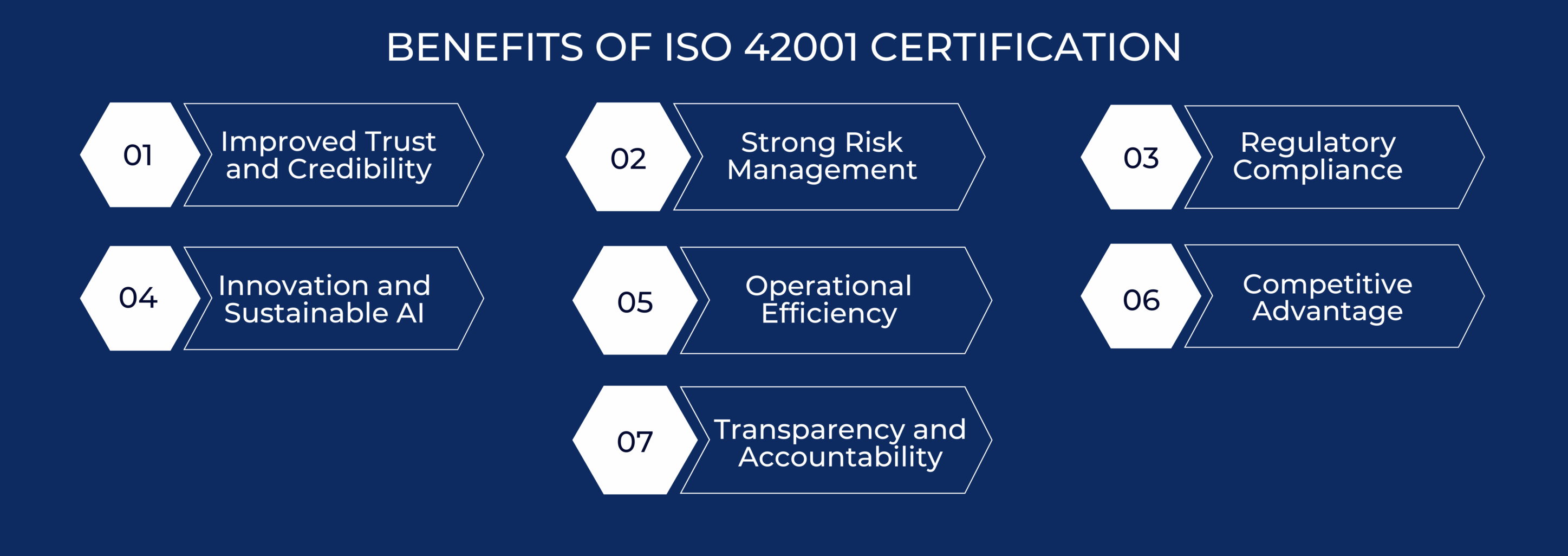
- ✓Governance and Risk Management Benefits
- ✓Regulatory Alignment and Market Access Benefits
- ✓Operational and Reputational Benefits
ISO 42001 Assessment and Certification Services by CertPro in Wilmington
CertPro is a Licensed CPA Firm providing ISO 42001 assessment and certification services to organizations in Wilmington, Delaware and across the United States. CertPro’s certification engagements are conducted by qualified lead auditors with AI governance expertise and sector-specific experience in financial services, healthcare, technology, and professional services — the industries that dominate Wilmington’s economic landscape.
ISO 42001 Certification in Wilmington conducted by CertPro follows a rigorous, evidence-based audit methodology that evaluates AIMS conformance against all normative requirements of ISO/IEC 42001:2023, producing certification outcomes that carry credibility with regulators, clients, and board directors.
CertPro’s Audit Authority and Methodology
As a Licensed CPA Firm, CertPro brings institutional audit authority to ISO 42001 certification engagements. CertPro’s auditors evaluate AIMS conformance through structured evidence collection — reviewing documented information, conducting personnel interviews, observing operational processes, and testing control evidence against defined ISO 42001 requirements.
Every finding is documented with specific evidence references, enabling organizations to understand precisely what the ISO 42001 audit evaluated, what evidence was examined, and what conclusions were reached. This transparency in audit methodology supports the integrity of the certification outcome and provides organizations with actionable documentation of their AIMS conformance status.
CertPro’s ISO 42001 audit engagements in Wilmington are structured to minimize disruption to organizational operations while achieving comprehensive AIMS coverage. Audit planning is coordinated with the organization’s compliance and technology teams to schedule audit activities efficiently, sequence evidence requests logically, and concentrate fieldwork within defined time windows.
For Wilmington’s banking and financial services organizations subject to multiple concurrent regulatory obligations, this scheduling discipline is essential to maintaining audit quality without creating operational disruption. CertPro’s audit teams have direct experience navigating the compliance complexity of Wilmington’s regulated industries.
Sector-Specific ISO 42001 Certification Expertise
ISO 42001 Certification for Wilmington banking sector organizations requires auditors with specific understanding of model risk management, algorithmic fairness requirements, and the intersection of AI governance with banking regulation. CertPro’s audit teams bring this sector-specific knowledge to every engagement, enabling more precise evaluation of AIMS controls in the context of the organization’s actual AI deployment environment.
This sector expertise extends to healthcare AI governance — where HIPAA-adjacent data protection requirements interact with AI system design decisions — and to logistics and supply chain AI applications common among Wilmington’s port-adjacent commercial operators.
CertPro’s positioning for ISO 42001 consulting in Wilmington is explicitly that of an independent certification audit provider, not an advisory or implementation firm. CertPro evaluates AIMS conformance; it does not design AIMS frameworks, draft AI policies, or implement control structures on behalf of the organizations it certifies. This independence is fundamental to the integrity of the ISO 42001 Certification outcome and is consistent with the institutional standards that govern accredited certification body operations.
Organizations seeking AIMS implementation support should engage specialist AI governance firms before engaging CertPro for the independent ISO 42001 audit.
Integrated Certification for Multi-Standard Environments
Many Wilmington organizations already hold ISO 27001 certification, SOC 2 attestations, or other management system certifications. CertPro offers integrated audit programs that assess ISO 42001 conformance in conjunction with existing certification cycles, leveraging shared evidence sets, common control overlaps, and coordinated audit scheduling to reduce the total audit burden.
For organizations with mature ISO 27001 ISMS frameworks, the integration of an ISO 42001 AIMS audit can be structured to evaluate AI-specific controls as an extension of the existing information security audit program — with separate conformance determinations and certificates issued for each standard. This integrated approach is particularly efficient for Wilmington’s technology companies and fintech firms managing multiple compliance frameworks concurrently.
Cost of ISO 42001 Certification in Wilmington
The cost of ISO 42001 Certification in Wilmington varies based on several determinant factors that define the scope and complexity of the certification audit. CertPro provides transparent, fixed pricing for ISO 42001 assessment and certification engagements, enabling organizations to budget accurately for the full certification cycle without exposure to open-ended hourly billing or scope creep charges.
Fixed pricing is determined based on an initial scope assessment that evaluates the factors described below — ensuring that every Wilmington organization receives a pricing proposal calibrated to its specific AI system inventory and organizational context.
Factors Determining Certification Cost
The primary cost determinants for ISO 42001 Certification are: organizational size (number of employees and sites within scope); AI system complexity (number, type, and interconnectedness of AI systems in the AIMS scope); AIMS maturity (the extent to which governance controls are already documented and operational at the time of audit engagement); and sector regulatory complexity (the additional audit depth required for organizations operating in heavily regulated industries such as banking, insurance, or healthcare).
For large Wilmington financial institutions with enterprise-scale AI portfolios, certification costs will be substantially higher than for a focused fintech startup certifying a single AI product line — reflecting the greater scope of the ISO 42001 audit required.
| Organization Profile | Typical Audit Scope | Relative Cost Range |
|---|---|---|
| Small fintech or technology startup (under 50 employees) | Single AI product or limited AI system set | Lower range — focused audit program |
| Mid-size financial services or professional services firm | Multiple AI systems across defined business units | Mid range — comprehensive audit with sector-specific depth |
| Large banking institution or multinational corporation | Enterprise AI portfolio across multiple locations | Higher range — extended fieldwork, multi-site audit program |
| Healthcare organization with clinical AI systems | Patient-facing and operational AI systems with HIPAA context | Mid-to-higher range — regulatory complexity increases audit depth |
| Technology company seeking integrated ISO 27001 + 42001 audit | Combined ISMS and AIMS scope with shared evidence sets | Efficiency pricing for integrated multi-standard audit |
CertPro’s fixed pricing model for ISO 42001 assessment and certification covers the complete certification cycle: Stage 1 documentation review, Stage 2 on-site audit, nonconformity review and corrective action evaluation, certification decision, and certificate issuance. Annual surveillance audit pricing is defined at the time of initial certification engagement, providing multi-year cost certainty for Wilmington organizations managing compliance budgets across the full three-year certification cycle.
Organizations are encouraged to contact CertPro directly to obtain a scoped pricing proposal based on their specific AI system inventory, organizational size, and sector regulatory context in Wilmington.
ISO 42001 Compliance and the Regulatory Landscape for Wilmington AI Deployments
ISO 42001 compliance occupies a specific position within the broader AI regulatory landscape that Wilmington organizations must navigate. Unlike mandatory regulations that impose legal obligations, ISO 42001 is a voluntary international standard — but its adoption is increasingly driven by regulatory expectations, contractual requirements, and governance best practices that make it effectively essential for many Wilmington organizations.
Understanding how ISO 42001 compliance relates to specific regulatory frameworks is critical for Wilmington compliance officers, legal teams, and board directors making AI governance investment decisions and preparing for the ISO 42001 audit process.
ISO 42001 and the EU AI Act
The EU AI Act, which entered into force in August 2024 and is being phased in through 2026, establishes binding obligations for organizations developing or deploying AI systems that interact with EU individuals or markets. The Act’s risk-based structure — classifying AI systems as unacceptable risk, high risk, limited risk, or minimal risk — creates differentiated compliance obligations that closely parallel the ISO 42001 governance approach.
For high-risk AI systems (including those used in credit scoring, employment decisions, and certain healthcare applications), the EU AI Act requires documented risk management systems, technical documentation, data governance practices, and human oversight mechanisms — all of which align directly with ISO 42001 AIMS requirements and are evaluated during the ISO 42001 assessment process.
Wilmington-based organizations with EU market exposure can use ISO 42001 Certification as a structured framework for satisfying EU AI Act governance obligations. While ISO 42001 Certification does not by itself constitute EU AI Act compliance for high-risk AI systems, the documented AIMS controls required by the standard provide the governance infrastructure that supports EU AI Act compliance activities.
Organizations that achieve ISO 42001 Certification in Wilmington before EU AI Act enforcement deadlines will be substantially better positioned to complete the additional conformity assessment steps required for high-risk AI system deployment in EU markets.
ISO 42001 and U.S. Federal AI Governance Frameworks
In the United States, AI governance is currently addressed through a combination of sector-specific regulatory guidance, executive orders, and voluntary frameworks rather than comprehensive federal AI legislation. The NIST AI Risk Management Framework (AI RMF), published in January 2023, provides the most comprehensive voluntary AI governance structure currently available and aligns substantially with ISO 42001’s risk-based approach.
Federal financial regulators — including the OCC, Federal Reserve, FDIC, and CFPB — have each issued guidance on AI use in financial services that creates de facto governance expectations for Wilmington’s banking and lending institutions. ISO 42001 compliance provides Wilmington financial services firms with a structured audit framework that addresses these regulatory expectations comprehensively and positions the organization for ongoing ISO 42001 assessment cycles.
Why Choose CertPro for ISO 42001 Certification in Wilmington
CertPro’s positioning as a Licensed CPA Firm conducting ISO 42001 assessment and certification services distinguishes it from advisory or consulting organizations that offer implementation support alongside certification claims. CertPro’s institutional authority derives from its audit independence, qualified lead auditor credentials, and commitment to evidence-based certification decisions that reflect actual AIMS conformance.
For Wilmington organizations making significant investments in AI governance, the integrity of the ISO 42001 Certification outcome depends entirely on the independence and rigor of the certifying body — and that is precisely what CertPro provides.
Independence, Rigor, and Transparent Pricing
CertPro maintains strict audit independence across all ISO 42001 certification engagements. Auditors assigned to a Wilmington organization’s certification audit have no prior advisory, consulting, or implementation relationship with that organization — a fundamental independence requirement that protects the credibility of the certification outcome. This independence standard ensures that ISO 42001 certificates issued by CertPro carry the evidentiary weight that stakeholders — including regulators, clients, and board directors — expect from a third-party certification credential.
CertPro’s fixed pricing model eliminates the pricing uncertainty that can make certification budget planning difficult for Wilmington organizations managing multiple compliance obligations simultaneously. By providing transparent, scope-based fixed pricing at the outset of each engagement, CertPro enables compliance officers and finance teams to accurately forecast the full cost of ISO 42001 Certification in Wilmington — including the initial certification audit and multi-year surveillance cycle — within the organization’s annual compliance budget.
This pricing transparency reflects CertPro’s commitment to straightforward, institutional certification services without hidden costs or scope expansion charges.
CertPro’s Track Record in AI Governance Certification
CertPro has conducted ISO 42001 assessment and certification engagements across diverse industry sectors, including financial services, technology, healthcare, and professional services — the core sectors of Wilmington’s economy. This cross-sector experience enables CertPro’s audit teams to evaluate AIMS controls with contextual understanding of how AI systems actually operate in each industry environment, producing ISO 42001 audit findings that are specific, actionable, and grounded in real-world AI governance practice.
Organizations that have completed ISO 42001 Certification in Wilmington with CertPro report that the audit process itself generates governance insights that improve AIMS effectiveness beyond the certification credential alone.
FAQ
▶
What is ISO 42001 certification and who needs it in Wilmington?
▶
How long does the ISO 42001 audit process take in Wilmington?
▶
What is the difference between ISO 42001 certification and ISO 42001 compliance?
▶
Does ISO 42001 certification satisfy EU AI Act requirements for Wilmington companies?
▶
How does ISO 42001 differ from ISO 27001 for Wilmington organizations?
▶
What documents does CertPro review during an ISO 42001 audit?
▶
How much does ISO 42001 certification cost for a Wilmington company?
▶
What sectors in Wilmington benefit most from ISO 42001 certification?

MindSec Launches AI Compliance for Law 25 & ISO 42001
Excerpt from Barchart Article, Published on December 3, 2025 Today, Canadian organizations face increasing pressure to comply with stringent privacy a…

UNDERSTANDING ISO 42001: A GUIDE FOR RESPONSIBLE AI MANAGEMENT SYSTEMS
The invention of artificial intelligence (AI) has changed the operational processes of many industries. However, the rapid growth of technology increa…
ENSURING AI DATA PRIVACY COMPLIANCE WITH ISO 42001
According to Stanford’s AI report, the private AI investment in the U.S. alone reached more than $109 billion last year, which is equal to 12 times th…
Get In Touch
have a question? let us get back to you.