
SOC 2 Certification in Arizona
SOC 2 Certification in Arizona is issued exclusively by a Licensed CPA Firm following an independent examination conducted under AICPA AT-C Section 205 attestation standards. The examination evaluates an organization’s internal controls against the Trust Services Criteria (TSC) governing Security, Availability, Processing Integrity, Confidentiality, and Privacy. The resulting SOC 2 report provides independent attestation of both control design and operating effectiveness — giving enterprise customers, financial institutions, and regulated entities a reliable basis for vendor qualification decisions.
OUR CLIENTS










What SOC 2 Certification in Arizona Actually Means
What Is SOC 2 Certification?
SOC 2 Certification is a formal attestation standard developed and governed by the American Institute of Certified Public Accountants (AICPA). It provides an independently verified record that an organization’s controls over security, availability, processing integrity, confidentiality, and privacy have been examined and found to operate effectively. SOC 2 Certification is not a self-assessment or an internal declaration — it is the output of a structured SOC 2 examination conducted by a Licensed CPA Firm qualified under AICPA attestation standards.
The term “SOC 2 certified” refers specifically to an organization that has received an attestation report from a Licensed CPA Firm following a formal SOC 2 audit. This distinguishes SOC 2 Certification from internal compliance programs, vendor questionnaire responses, or self-declared security frameworks. The SOC 2 audit process requires an independent auditor to evaluate whether controls are suitably designed and — in the case of a Type 2 report — whether they operated effectively over a defined observation period, typically six to twelve months.
For organizations operating in Arizona’s technology, healthcare, financial services, and cloud infrastructure sectors, SOC 2 Certification in Arizona carries significant weight in enterprise vendor procurement. When a SaaS company, data center operator, or managed service provider presents a SOC 2 report issued by a Licensed CPA Firm, it demonstrates that an independent third party has reviewed the organization’s control environment — not merely that the organization claims to follow security best practices. This distinction is critical for satisfying due diligence requirements from enterprise customers, regulated financial institutions, and healthcare entities operating under federal and state privacy obligations.
SOC 2 Certification vs. SOC 2 Compliance
A meaningful distinction exists between SOC 2 compliance and SOC 2 Certification. SOC 2 compliance refers to an organization’s internal adherence to security policies and control frameworks aligned with the Trust Services Criteria. SOC 2 compliance Arizona organizations pursue may involve internal audits, control self-assessments, and policy documentation — but none of these activities produce an independently issued SOC 2 attestation report. SOC 2 Certification, by contrast, requires independent examination by a Licensed CPA Firm and results in a formal SOC 2 report that enterprise customers and regulated institutions can rely upon.
Organizations that describe themselves as “SOC 2 compliant” without a Licensed CPA Firm attestation report are communicating an internal posture, not an externally verified certification. In Arizona’s enterprise technology market, procurement security teams increasingly require a formal SOC 2 report — not a compliance self-declaration — before approving new vendors. The SOC 2 examination conducted by a Licensed CPA Firm produces a report carrying the auditor’s opinion, which is the authoritative basis for third-party reliance. SOC 2 compliance Arizona organizations may achieve internally, but SOC 2 Certification in Arizona requires independent examination by a qualified CPA Firm.
Trust Services Criteria: The Evaluation Framework
The Trust Services Criteria (TSC) published by the AICPA form the foundational evaluation framework for every SOC 2 examination. The TSC encompasses five categories: Security (also called the Common Criteria), Availability, Processing Integrity, Confidentiality, and Privacy. Security is mandatory for all SOC 2 examinations. The remaining four categories are included based on the organization’s service commitments, system description, and the nature of data processed. A Licensed CPA Firm conducting a SOC 2 audit Arizona engagement evaluates the organization’s controls against each TSC category included in the examination scope.
Each Trust Services Criterion maps to specific control requirements. The Security criterion addresses logical and physical access controls, change management, risk assessment, incident response, and monitoring. The Availability criterion evaluates whether systems are available for operation and use as committed. The Confidentiality criterion assesses controls protecting information designated as confidential. The Privacy criterion evaluates controls over personal information collected, used, retained, disclosed, and disposed of. A SOC 2 examination Arizona conducted by a Licensed CPA Firm tests whether the organization’s controls address each applicable criterion and whether those controls operated effectively during the observation period.
| Trust Services Criterion | Scope Focus | Common Arizona Applicability |
|---|---|---|
| Security (Common Criteria) | Logical and physical access, change management, risk assessment, monitoring | All organizations — mandatory for every SOC 2 audit |
| Availability | System uptime, performance, and recovery commitments | Cloud service providers, SaaS platforms, data centers |
| Processing Integrity | Completeness, accuracy, and timeliness of data processing | Fintech, payment processors, healthcare data platforms |
| Confidentiality | Protection of information designated as confidential | Enterprise SaaS, professional services, defense contractors |
| Privacy | Collection, use, retention, and disposal of personal information | Healthcare organizations, consumer-facing applications, HR platforms |

SOC 2 Certification Audit Process in Arizona
The SOC 2 audit process follows a structured sequence of evaluation stages defined by AICPA attestation standards under AT-C Section 205. Each stage serves a distinct function — from initial scope definition through final report issuance. Organizations in Arizona pursuing SOC 2 Certification in Arizona should understand that the SOC 2 audit process is an independent evaluation conducted by a Licensed CPA Firm, not a consulting engagement or a preparation exercise. The auditor’s role is to examine, test, and render an independent opinion on the organization’s controls.
The SOC 2 examination begins with scope definition. The Licensed CPA Firm reviews the organization’s system description, service commitments, and the Trust Services Criteria categories applicable to its operations. Scope definition determines which systems, processes, data flows, and organizational units fall within the boundary of the SOC 2 audit. For Arizona-based organizations, scope may encompass cloud infrastructure hosted in regional data centers, SaaS application environments, customer data processing systems, and supporting operational processes such as human resources, vendor management, and change control.
Following scope definition, the Licensed CPA Firm determines the audit program — the specific procedures, control objectives, and evidence requirements governing the examination. The audit program is tailored to the organization’s system description and the selected Trust Services Criteria. At this stage, the auditor also determines whether the engagement will produce a SOC 2 Type 1 report or a SOC 2 Type 2 report, based on the organization’s objectives and the requirements of its customers or stakeholders.
A SOC 2 Type 1 report evaluates the design of an organization’s controls at a specific point in time. The Licensed CPA Firm examines whether the controls described in the system description are suitably designed to meet the applicable Trust Services Criteria as of the report date. A SOC 2 Type 1 report does not assess whether controls operated effectively over time — it is a design-sufficiency evaluation at a single point in time. Organizations seeking initial SOC 2 attestation or entering new markets where certification is required may pursue a Type 1 report as a strategic first step.
A SOC 2 Type 2 report evaluates both the design and the operating effectiveness of controls over a defined observation period — typically six to twelve months. During this period, the Licensed CPA Firm collects and evaluates evidence demonstrating that controls operated continuously and effectively. SOC 2 Type 2 Arizona examinations are the standard required by most enterprise customers, financial institutions, and regulated organizations seeking vendor assurance. A Type 2 report carries significantly greater weight than a Type 1 report because it demonstrates sustained control performance rather than a point-in-time design assessment.
During the evidence collection phase, the Licensed CPA Firm requests and reviews documentation, system-generated reports, configuration records, access logs, incident records, change management tickets, and other artifacts demonstrating control operation. For a SOC 2 Type 2 examination, evidence collection spans the full observation period. The auditor evaluates whether each control identified in the system description has been consistently applied and whether the evidence substantiates the control descriptions. Thorough evidence mapping to each Trust Services Criterion is essential for the auditor’s assessment.
Control testing methods in a SOC 2 examination include inquiry, observation, inspection of documentation, and re-performance. The Licensed CPA Firm applies these methods to assess whether controls operated as described. For example, testing logical access controls may involve reviewing user access lists, examining provisioning and de-provisioning records, and confirming that access is granted only upon documented authorization. Testing change management controls may involve sampling change records and verifying that each change followed the documented approval and testing process. The auditor documents all testing procedures and outcomes in the working papers supporting the final SOC 2 report.
Following evidence collection and control testing, the Licensed CPA Firm reviews any deviations, exceptions, or instances where controls were not operating as described. Nonconformities identified during the SOC 2 audit are documented in the examination report. The nature and scope of each nonconformity inform the auditor’s opinion. Where exceptions exist, the report describes them specifically, allowing report users to assess the significance of each deviation relative to the applicable Trust Services Criterion.
The certification decision involves the Licensed CPA Firm’s independent determination of the audit opinion. Possible opinions include an unqualified opinion (indicating controls are suitably designed and, for Type 2, operating effectively), a qualified opinion (indicating controls are generally effective except for specific exceptions), or an adverse opinion. The SOC 2 attestation — the formal output of the examination — takes the form of a written report issued under the auditor’s signature and professional license. The organization then shares the SOC 2 report with customers, prospects, and authorized relying parties under appropriate confidentiality agreements.
| Audit Stage | Key Activities | Output |
|---|---|---|
| Scope Definition | System description review, TSC category selection, boundary determination | Defined audit scope and examination objectives |
| Audit Program Determination | Control identification, evidence requirements, Type 1 or Type 2 determination | Structured audit program and testing procedures |
| Stage 1 Review | Documentation review, system description evaluation, readiness assessment | Documented findings informing Stage 2 testing |
| Evidence Collection and Control Testing | Artifact collection, inquiry, observation, inspection, re-performance | Testing workpapers and exception documentation |
| Report Issuance | Nonconformity review, auditor opinion, SOC 2 attestation report preparation | Signed SOC 2 Type 1 or Type 2 attestation report |
- ✓Stage 1: Scope Definition and Audit Program Determination
- ✓SOC 2 Type 1 vs. Type 2: Definitions and Differences
- ✓Stage 2: Evidence Collection and Control Testing
- ✓Nonconformity Review, Certification Decision, and Report Issuance
SOC 2 Certification for Arizona’s Technology and Financial Ecosystem
Arizona has emerged as one of the United States’ most significant technology and financial services hubs, with concentrated clusters of semiconductor manufacturers, aerospace and defense contractors, SaaS companies, cloud infrastructure providers, healthcare technology organizations, and fintech firms operating across the Phoenix metropolitan area, Tucson, Scottsdale, Tempe, and Chandler. This ecosystem generates substantial demand for SOC 2 Certification in Arizona as organizations serving enterprise customers, financial institutions, and regulated healthcare entities face increasing requirements to demonstrate independent verification of their security controls.
Arizona Technology Companies and SaaS Providers
Arizona’s technology sector includes a substantial population of SaaS companies, cloud-native application developers, and managed service providers. Many of these organizations serve enterprise customers in financial services, healthcare, retail, and government sectors where SOC 2 attestation is a standard vendor qualification requirement. SOC 2 Certification for Arizona technology companies enables these organizations to present independently examined evidence of their security and availability controls — rather than responding to individual customer security questionnaires. A SOC 2 Type 2 report issued by a Licensed CPA Firm streamlines enterprise vendor review processes and accelerates customer onboarding.
The Tempe, Scottsdale, and Phoenix technology corridors host a significant concentration of AI startups, data analytics platforms, and cybersecurity vendors. These organizations frequently process sensitive customer data, proprietary business information, or personally identifiable information on behalf of enterprise clients. SOC 2 Certification in Arizona allows these technology companies to demonstrate to prospective customers that their data processing environments have been independently examined against the Trust Services Criteria. SOC 2 certification Arizona technology companies obtain positions them competitively in sales cycles where security validation is a procurement gate.
Arizona Financial Services and Fintech Organizations
Arizona is home to a substantial financial services sector, including major banking institutions, credit unions, insurance companies, investment management firms, and a growing population of fintech organizations offering payment processing, digital lending, wealth management, and financial data services. SOC 2 compliance Arizona financial institutions impose on vendors reflects regulatory expectations under federal banking supervision, state financial services licensing requirements, and FFIEC guidance on third-party risk management. Vendors to Arizona financial institutions are routinely required to provide SOC 2 Type 2 reports as part of annual vendor review cycles.
SOC 2 compliance Arizona fintech firms pursue — to satisfy investor due diligence, bank partnership requirements, and enterprise customer security reviews — is most effectively demonstrated through a formal SOC 2 attestation. Arizona’s fintech ecosystem, which includes payment technology companies, digital banking platforms, and financial data aggregators, operates in a regulatory environment where independent control verification is increasingly non-negotiable. SOC 2 certification Arizona financial services organizations obtain provides independently examined evidence that security, confidentiality, and processing integrity controls meet the Trust Services Criteria applicable to financial data processing environments.
Healthcare Technology, Data Centers, and Defense Contractors in Arizona
Arizona’s healthcare technology sector encompasses electronic health record platforms, health information exchanges, telemedicine providers, medical device software companies, and healthcare data analytics organizations. Many healthcare technology organizations in Arizona that handle protected health information (PHI) under HIPAA also pursue SOC 2 Certification in Arizona as a complementary attestation addressing their broader security and availability control environment. SOC 2 attestation Arizona healthcare organizations obtain provides independent verification of controls beyond HIPAA’s minimum requirements — addressing enterprise customer expectations and business associate agreement obligations.
Arizona’s data center sector — including colocation facilities and hyperscale cloud infrastructure operators in the Phoenix and Mesa areas — serves cloud service providers, financial institutions, and government agencies requiring demonstrated physical and logical security controls. A SOC 2 examination Arizona data center operators undergo evaluates controls over physical access, environmental monitoring, availability, and capacity management. Arizona’s aerospace and defense sector, including organizations supporting government contracts with data security requirements, also pursues SOC 2 Certification to satisfy prime contractor vendor assurance requirements.
Why Organizations in Arizona Pursue SOC 2 Certification
The demand for SOC 2 Certification in Arizona is driven by a combination of enterprise vendor procurement standards, regulated industry requirements, financial institution third-party risk programs, and customer due diligence expectations. SOC 2 audit Arizona engagements address a fundamental requirement in Arizona’s enterprise market: independent, third-party verification that an organization’s controls over data security, system availability, and data confidentiality have been examined and found effective. Understanding the specific drivers behind SOC 2 demand in Arizona informs decisions about scope, report type, and examination timing.
Enterprise Vendor Security Reviews and Procurement Gates
Enterprise organizations operating in Arizona — including Fortune 500 companies headquartered in the Phoenix metropolitan area, major healthcare systems, and financial institutions — maintain formal vendor risk management programs that evaluate the security posture of technology vendors before granting access to sensitive data or critical systems. In a representative scenario, an Arizona-based SaaS company pursuing a contract with a major Phoenix-area financial institution or healthcare network is required to provide a current SOC 2 Type 2 report as part of the procurement qualification process. Without a SOC 2 attestation from a Licensed CPA Firm, the vendor may face an extensive security questionnaire process, a customer-conducted security assessment, or outright disqualification.
The SOC 2 Type 2 report functions as a standardized, independently verified security disclosure that enterprise procurement teams accept in lieu of conducting their own vendor audits. This standardization reduces the administrative burden on both the vendor and the customer organization, while providing a structured basis for security risk assessment. SOC 2 attestation Arizona vendors obtain from a Licensed CPA Firm carries the professional credibility of an independent auditor’s opinion — which enterprise security and legal teams recognize as a reliable basis for vendor qualification decisions.
Financial Sector Procurement Expectations and Third-Party Risk
Arizona’s financial services sector operates under federal regulatory frameworks — including OCC, FDIC, and Federal Reserve guidance on third-party risk management — that require financial institutions to assess and monitor the security controls of vendors with access to customer financial data, banking systems, or payment infrastructure. These regulatory expectations translate directly into vendor procurement requirements for SOC 2 Type 2 reports. SOC 2 compliance Arizona fintech and technology vendors demonstrate through independent attestation satisfies the due diligence documentation requirements that Arizona-based financial institutions must maintain for regulatory examination purposes.
International SaaS Expansion and Cross-Border Vendor Qualification
Arizona-based SaaS companies and cloud service providers increasingly serve customers in international markets — including financial institutions, healthcare organizations, and enterprise technology buyers in Canada, the United Kingdom, the European Union, and the Asia-Pacific region. In cross-border vendor qualification scenarios, SOC 2 attestation Arizona organizations obtain is recognized as a credible security assurance standard in markets where customers require independent verification of security controls. While SOC 2 is an AICPA standard applicable primarily to U.S. organizations, its recognition in international enterprise procurement enables Arizona-based technology companies to demonstrate control effectiveness to global customers without undergoing separate regional audits for each market.
SOC 2 Certification Requirements and Evaluation Criteria
SOC 2 Certification in Arizona requires an organization to demonstrate — through independently examined evidence — that its controls are suitably designed and operating effectively against the applicable Trust Services Criteria. The evaluation criteria are governed by the AICPA’s Trust Services Criteria for Security, Availability, Processing Integrity, Confidentiality, and Privacy, supplemented by the organization’s system description and service commitments. Understanding what the SOC 2 examination assesses gives Arizona organizations clarity on how to prepare their control environments effectively.
The Security criterion under the Trust Services Criteria requires organizations to demonstrate a defined control environment addressing logical and physical access controls, system monitoring, change management, risk assessment, and incident response. Control environment requirements evaluated during a SOC 2 audit Arizona engagement include policies governing access provisioning and de-provisioning, background screening for personnel with system access, vendor management controls for subservice organizations, and board or management-level oversight of information security. The Licensed CPA Firm evaluates whether the control environment provides a sufficient foundation for the specific controls described in the system description.
Risk assessment requirements under the SOC 2 examination include the organization’s process for identifying, analyzing, and responding to risks that could affect the achievement of its security, availability, processing integrity, confidentiality, or privacy commitments. The Licensed CPA Firm evaluates whether the organization conducts formal risk assessments, whether identified risks are addressed through implemented controls, and whether the risk assessment process is performed periodically. A documented and consistently executed risk assessment process is a fundamental requirement for SOC 2 Certification in Arizona.
Technical controls evaluated during a SOC 2 examination Arizona include logical access management, encryption standards for data in transit and at rest, vulnerability management processes, security monitoring and logging, network security architecture, and patch management procedures. The Licensed CPA Firm tests these controls against the Trust Services Criteria requirements. For example, logical access controls are tested by examining user access provisioning records, reviewing access certification procedures, and assessing whether privileged access is restricted and monitored. Encryption controls are tested by reviewing configuration documentation, key management procedures, and system-generated evidence confirming that required encryption standards are applied to data transmission and storage.
Vulnerability management requirements for a SOC 2 examination include documented scanning procedures, evidence of regular vulnerability scans, a defined process for triaging and remediating identified vulnerabilities, and records demonstrating timely remediation based on severity classification. Security monitoring requirements include log collection and review procedures, alerting configurations for anomalous activity, and evidence of monitoring activities during the observation period. Change management requirements include documented change request, review, approval, testing, and implementation procedures — with evidence that the process was followed consistently throughout the observation period.
A foundational requirement of the SOC 2 examination is the organization’s system description — a formal document describing the system in scope, the services provided, the components of the system (including infrastructure, software, people, processes, and data), and the controls implemented to meet the Trust Services Criteria. The Licensed CPA Firm evaluates whether the system description fairly presents the system as designed and implemented. Material omissions or inaccuracies in the system description constitute a finding in the SOC 2 report and may affect the auditor’s opinion.
Where an organization relies on subservice organizations — such as cloud infrastructure providers (e.g., AWS, Azure, Google Cloud), data center colocation facilities, or third-party software platforms — the SOC 2 examination addresses how the organization monitors and manages subservice organization controls. Subservice organizations may be included in scope under the inclusive method or excluded under the carve-out method. When the carve-out method is applied, the Licensed CPA Firm evaluates the organization’s monitoring controls over subservice organizations rather than directly testing the subservice organization’s controls. Organizations utilizing Arizona-based cloud infrastructure or data centers should clarify subservice organization treatment with the Licensed CPA Firm early in the examination planning process.
- ✓Control Environment and Risk Assessment Requirements
- ✓Technical Control Requirements Evaluated During SOC 2 Examination
- ✓System Description and Subservice Organization Requirements
SOC 2 Report Validity, Maintenance, and Ongoing Surveillance
SOC 2 Certification in Arizona does not represent a permanent status. A SOC 2 attestation report is valid for the period covered by the examination — typically twelve months for a Type 2 report. Organizations must undergo annual SOC 2 examination cycles to maintain current attestation and meet customer expectations for up-to-date independent verification. The ongoing nature of SOC 2 attestation reflects the dynamic control environments in which Arizona technology and service organizations operate, where systems, processes, personnel, and threat landscapes evolve continuously.
Annual SOC 2 Examination Cycles
Most organizations undergoing SOC 2 Certification in Arizona establish an annual examination cycle in which the Licensed CPA Firm conducts a Type 2 examination covering a twelve-month observation period. The annual cycle ensures that the SOC 2 report presented to customers reflects the current state of the organization’s control environment and that controls have been operating effectively throughout the year. Enterprise customers and regulated financial institutions typically require a current SOC 2 report — issued within the preceding twelve months — as part of their annual vendor review process.
Between annual SOC 2 examinations, organizations are responsible for maintaining the controls described in the system description, documenting evidence of control operation, and managing any changes to the control environment. Changes that materially affect the examination scope — such as significant system migrations, acquisition of new business lines, or changes to subservice organizations — should be communicated to the Licensed CPA Firm to assess their impact. Continuous evidence collection throughout the observation period strengthens the quality of the SOC 2 audit and reduces the time required for evidence gathering during the examination.
Bridge Letters and Report Coverage Periods
In circumstances where an organization’s most recent SOC 2 Type 2 report does not extend to the current date and the next examination cycle has not yet been completed, a bridge letter — also referred to as a gap letter — may be provided by organization management to attest that no material changes to the control environment have occurred since the report’s coverage end date. Bridge letters are not an audited attestation from the Licensed CPA Firm and carry less evidentiary weight than a current SOC 2 report. However, they are commonly accepted by enterprise customers as a temporary measure during the period between the end of one examination’s coverage and the issuance of the subsequent SOC 2 report.
Benefits of SOC 2 Certification for Arizona-Based Organizations
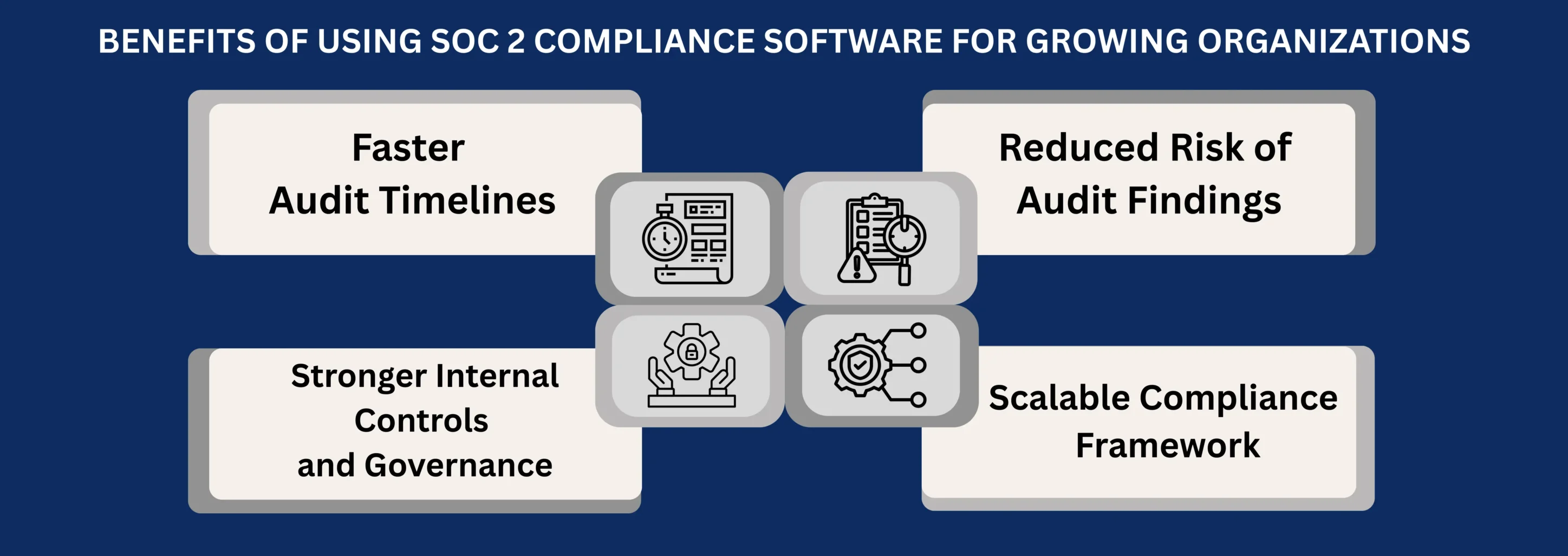
SOC 2 Certification provides Arizona-based organizations with independently verified evidence of control effectiveness that serves multiple organizational objectives. The benefits of SOC 2 Certification extend beyond satisfying a single customer’s security questionnaire. The SOC 2 attestation report functions as a reusable, independently issued document accepted across enterprise procurement processes, regulated industry vendor reviews, and financial institution third-party risk programs. The following benefits reflect the structured audit methodology and independent certification framework that a SOC 2 examination delivers.
- ✓Independent verification of security, availability, and confidentiality controls by a Licensed CPA Firm, providing a credible basis for customer reliance
- ✓Demonstrated alignment with AICPA Trust Services Criteria, satisfying enterprise vendor qualification requirements across multiple customers simultaneously
- ✓Structured SOC 2 attestation report accepted by financial institutions as evidence supporting third-party risk management documentation
- ✓Enhanced positioning in enterprise sales cycles where SOC 2 Certification in Arizona is a procurement gate
- ✓Recognition in regulated industry procurement processes, including healthcare, financial services, and defense contracting sectors
- ✓Structured SOC 2 audit methodology that identifies control deviations before customer-initiated security reviews discover them
- ✓Ongoing annual examination cycles maintaining current independent SOC 2 attestation status
- ✓Cross-border vendor qualification support for Arizona SaaS companies expanding into international enterprise markets
- ✓Independently examined evidence reducing reliance on customer-conducted vendor security assessments
- ✓Formal SOC 2 report as a due diligence artifact for investor reviews, merger and acquisition processes, and regulatory examinations
In Arizona’s competitive enterprise technology and financial services markets, SOC 2 Certification distinguishes organizations that have undergone independent control examination from those that have not. When enterprise procurement teams evaluate competing vendors for a cloud services contract, a SaaS platform engagement, or a managed security services relationship, the presence of a current SOC 2 Type 2 report from a Licensed CPA Firm provides a concrete, independently verified basis for security assessment that self-declared compliance positions cannot replicate. SOC 2 attestation Arizona vendors obtain provides a durable competitive advantage in markets where security verification is a purchase requirement.
Arizona’s active venture capital and private equity ecosystem — particularly in the Scottsdale and Phoenix technology markets — increasingly views SOC 2 Certification as a governance indicator relevant to investment due diligence. Technology companies pursuing Series A, B, or growth-stage funding rounds that can demonstrate current SOC 2 attestation provide investors with independently examined evidence of security governance maturity. In merger and acquisition contexts, an acquiring organization reviewing an Arizona-based SaaS company or cloud services provider will examine the target’s SOC 2 report as part of technology and security due diligence. A current SOC 2 Type 2 report reduces acquisition risk assessments and may positively influence valuation discussions.
- ✓Competitive Differentiation in Arizona’s Enterprise Market
- ✓Investor Due Diligence and M&A Positioning
SOC 2 Examination vs. Other Attestation Frameworks in Arizona
Arizona organizations evaluating information security attestation frameworks frequently compare SOC 2 examination to other standards, including ISO 27001, HITRUST, PCI DSS, and FedRAMP. Each framework serves distinct purposes, is governed by different standards bodies, and addresses different customer and regulatory requirements. Understanding how SOC 2 attestation relates to these alternative frameworks enables Arizona organizations to make informed decisions about which attestation or certification standards best align with their customer requirements and regulatory obligations.
SOC 2 Examination vs. ISO 27001 Certification
SOC 2 examination and ISO 27001 certification are both independent third-party assessments of information security controls, but they differ significantly in governing body, evaluation criteria, and report format. SOC 2 is governed by the AICPA and evaluates controls against the Trust Services Criteria based on the organization’s specific service commitments. ISO 27001 is an international standard governed by ISO/IEC that evaluates an organization’s Information Security Management System (ISMS) against Clauses 4 through 10 and Annex A control domains. SOC 2 attestation is the primary standard required by U.S. enterprise customers and financial institutions; ISO 27001 certification carries greater recognition in international markets and is often required for organizations pursuing contracts in Europe, the Middle East, and Asia-Pacific.
Arizona organizations serving both U.S. and international enterprise markets may pursue both SOC 2 examination and ISO 27001 certification to satisfy the attestation requirements of their full customer base. The two standards share meaningful overlap in control areas — particularly in access management, risk assessment, incident response, and change management — which may allow organizations to leverage common evidence and documentation across both examinations. The decision to pursue SOC 2, ISO 27001, or both depends primarily on customer requirements and target market composition.
SOC 2 and HIPAA: Complementary Frameworks for Arizona Healthcare Technology
HIPAA establishes minimum security, privacy, and breach notification requirements for covered entities and business associates handling protected health information. SOC 2 examination is not a HIPAA compliance assessment — it does not evaluate an organization’s compliance with HIPAA’s specific regulatory requirements. However, SOC 2 attestation and HIPAA compliance address overlapping control domains, and many Arizona healthcare technology organizations pursue both frameworks. A SOC 2 Type 2 report covering Security, Availability, Confidentiality, and Privacy Trust Services Criteria provides healthcare enterprise customers with independently examined evidence of controls relevant to the protection of sensitive health data, complementing the organization’s existing HIPAA compliance posture.
| Framework | Governing Body | Primary Arizona Market | Report Type |
|---|---|---|---|
| SOC 2 Examination | AICPA | Enterprise technology, financial services, healthcare technology | Attestation report (Type 1 or Type 2) |
| ISO 27001 | ISO/IEC | International enterprise, government, cross-border markets | Certification (valid 3 years with annual surveillance) |
| HIPAA Security Rule | U.S. HHS | Healthcare covered entities and business associates | Regulatory compliance — no standardized third-party report |
| PCI DSS | PCI Security Standards Council | Payment card processing organizations | Report on Compliance (ROC) or Self-Assessment Questionnaire |
SOC 2 Attestation Report: Structure, Use, and Distribution
The SOC 2 attestation report produced by a Licensed CPA Firm following a SOC 2 examination Arizona engagement is a structured document containing multiple sections, each serving a specific purpose in communicating the examination scope, methodology, auditor’s opinion, and control descriptions. Understanding the structure of the SOC 2 report enables Arizona organizations to present it effectively to customers, investors, and other relying parties — and to respond confidently to questions about its scope and conclusions.
Components of a SOC 2 Attestation Report
A SOC 2 report issued by a Licensed CPA Firm contains the following standard components: the independent service auditor’s report (the opinion letter), which states the auditor’s conclusions regarding the organization’s controls; the management’s assertion, in which the organization’s management formally asserts that the system description is fairly presented and that controls were suitably designed and operating effectively; the system description, which describes the service organization’s system, control environment, and the controls implemented to meet the Trust Services Criteria; and — for Type 2 reports — the description of tests of controls and results, which documents the auditor’s testing procedures and the outcome of each test, including any exceptions identified.
The independent service auditor’s report is the section of the SOC 2 attestation that carries the Licensed CPA Firm’s professional opinion. This section identifies the examination standards applied (AICPA AT-C Section 205), the Trust Services Criteria evaluated, the period covered by the examination, and the auditor’s conclusion. An unqualified opinion indicates that the Licensed CPA Firm found no material exceptions to the organization’s control descriptions or operating effectiveness. Exceptions or qualifications are disclosed in the opinion section and described in detail in the test results section, allowing report users to assess the nature and significance of any control deviations.
SOC 2 Report Confidentiality and Distribution Controls
SOC 2 Type 2 reports contain detailed descriptions of the organization’s control environment, system architecture, and testing results — all of which represent sensitive security information. Organizations sharing SOC 2 reports with customers, prospects, or investors typically do so under non-disclosure agreements or confidentiality provisions that restrict the report’s further distribution. The system description in the SOC 2 report should be reviewed to confirm that it does not disclose information that could assist a threat actor in exploiting system vulnerabilities. Some organizations produce a summary of their SOC 2 attestation for general distribution while sharing the full report only under a confidentiality agreement.
Selecting the Appropriate SOC 2 Examination Scope for Arizona Organizations
Determining the appropriate scope for a SOC 2 examination Arizona engagement involves evaluating the organization’s service commitments, customer contracts, regulatory obligations, and the nature of the data processed and stored. Scope decisions include selecting the applicable Trust Services Criteria categories, defining system boundaries, determining the observation period length, and identifying subservice organizations. These scope determinations are made in consultation with the Licensed CPA Firm during the audit program determination phase and directly affect the content and utility of the resulting SOC 2 report.
Trust Services Criteria Category Selection
Every SOC 2 examination must include the Security criterion (Common Criteria). The decision to include additional Trust Services Criteria categories — Availability, Processing Integrity, Confidentiality, and Privacy — is based on the organization’s service commitments and the nature of the data processed. Arizona SaaS providers with uptime SLAs and availability commitments in customer contracts typically include the Availability criterion. Organizations processing payment transactions or financial data include the Processing Integrity criterion. Organizations processing personal information subject to privacy disclosures or consumer rights obligations include the Privacy criterion.
Adding Trust Services Criteria categories expands the scope and complexity of the SOC 2 examination, as each category requires defined controls, documentation, and evidence. Arizona organizations should evaluate which criteria their customers actually require and whether their current control environment adequately addresses each criterion before including it in the examination scope. Including criteria that the organization’s controls do not yet fully address may result in exceptions being documented in the SOC 2 report. The Licensed CPA Firm evaluates the organization’s system description and service commitments to confirm that the selected Trust Services Criteria are appropriate for the scope of the examination.
Observation Period and Evidence Collection Planning
For SOC 2 Type 2 examinations, the observation period — the timeframe over which control operating effectiveness is assessed — is a critical determinant of the examination’s scope and the evidence required. A minimum observation period of six months is typical for initial Type 2 engagements, while twelve months is the standard for ongoing annual examinations. The selection of the observation period affects the volume of evidence required: a twelve-month observation period requires evidence demonstrating control operation across all twelve months, while a six-month initial period requires evidence spanning six months.
Evidence collection planning is integral to a successful SOC 2 Type 2 examination. Organizations should establish systematic evidence collection processes from the beginning of the observation period rather than attempting to collect evidence retrospectively at the end. Evidence types include system-generated logs and reports, configuration snapshots, access review records, change management tickets, vulnerability scan results, security incident records, training completion records, and vendor management documentation. Log aggregation platforms, configuration management tools, and workflow automation systems can support continuous evidence collection throughout the observation period — reducing the manual effort required during the SOC 2 audit.
Independent SOC 2 Certification in Arizona by a Licensed CPA Firm
SOC 2 Certification in Arizona is exclusively performed by a Licensed CPA Firm acting as an independent attestation body under AICPA AT-C Section 205. The examination evaluates an Arizona organization’s controls against the Trust Services Criteria through a structured, evidence-based SOC 2 audit conducted independently of the organization’s management. The resulting SOC 2 attestation report — including the auditor’s formal opinion — provides the independently verified documentation that enterprise customers, financial institutions, and regulated entities require for vendor qualification, third-party risk management, and procurement decision-making.
Organizations in Arizona’s technology, financial services, healthcare, and data infrastructure sectors seeking SOC 2 Certification in Arizona should initiate the process by engaging a Licensed CPA Firm qualified to conduct SOC 2 examinations under AICPA attestation standards. The SOC 2 audit process — from scope definition and audit program determination through evidence collection, control testing, nonconformity review, and final report issuance — is conducted entirely by the Licensed CPA Firm as an independent evaluation of the organization’s controls. The SOC 2 attestation report issued at the conclusion of the examination represents the definitive, independently verified record of the organization’s control design and operating effectiveness against the applicable Trust Services Criteria.
FAQ
▶
What is SOC 2 Certification in Arizona and who issues it?
▶
What is the difference between SOC 2 Type 1 and SOC 2 Type 2 in Arizona?
▶
Which Arizona organizations are required to obtain SOC 2 Certification?
▶
How long does a SOC 2 audit take for an Arizona organization?
▶
How long is a SOC 2 report valid for Arizona organizations?
▶
What Trust Services Criteria are evaluated in an Arizona SOC 2 examination?
▶
Can Arizona healthcare organizations use SOC 2 Certification to satisfy HIPAA requirements?
▶
What is the difference between SOC 2 and ISO 27001 for Arizona organizations?
SOC 1 VS SOC 2: WHICH REPORT YOUR CUSTOMERS ACTUALLY ASK FOR
If you sell SaaS or provide outsourced services, you have likely been asked for a SOC report. However, the follow-up question is rarely easy to answer…

AICPA Issues New Guidance for Peer Reviewers Evaluating SOC 2 Engagements
AICPA SOC 2 guidance has been issued to help peer reviewers identify quality risks associated with SOC 2 engagements as the use of compliance automati…
SOC 2 Certified: What Does It Mean for Your Business
For companies that handle sensitive data or run cloud-based services, the question “Can you provide your SOC 2 report?” carries enormous weight. Yet, …
Get In Touch
have a question? let us get back to you.