
SOC 2 Certification in Copenhagen
The SOC 2 audit process follows a structured sequence of evaluation stages defined by AICPA auditing standards. Each stage produces specific documentation and determinations that collectively form the basis of the attestation report. For organizations pursuing SOC 2 Certification in Copenhagen, understanding the audit process enables effective internal planning, resource allocation, and evidence management throughout the engagement period.
OUR CLIENTS



Introduction to SOC 2 Certification in Copenhagen
SOC 2 Certification in Copenhagen represents a formal, independently verified attestation that an organization’s information systems meet the security, availability, confidentiality, processing integrity, and privacy criteria established by the American Institute of Certified Public Accountants (AICPA). The SOC 2 framework is a globally recognized auditing standard applied specifically to service organizations that store, process, or transmit customer data using cloud-based or technology-driven systems. In Copenhagen, SOC2 Certification has become a foundational requirement for organizations operating in fintech, SaaS, cloud infrastructure, logistics technology, and professional services sectors.
What Is SOC 2?
SOC 2, or System and Organization Controls 2, is an auditing procedure developed by the AICPA to evaluate the internal controls of service organizations as they relate to data security and operational integrity. The framework is built around five Trust Services Criteria (TSC): Security, Availability, Processing Integrity, Confidentiality, and Privacy. The Security criterion — also known as the Common Criteria — is mandatory for all SOC 2 engagements, while the remaining four criteria are selected based on the nature of services provided and contractual obligations.
SOC 2 compliance is not a one-time checkbox exercise. It is an ongoing operational discipline supported by continuous monitoring, documented evidence, and periodic independent attestation. Organizations that treat SOC 2 as a continuous program — rather than a point-in-time effort — consistently achieve stronger audit outcomes and greater commercial value from their attestation reports.
SOC 2 differs from other frameworks such as ISO 27001 in its approach to evidence evaluation and reporting. While ISO 27001 certifies an organization against a defined set of controls through an accreditation body, SOC 2 attestation produces a formal audit report issued by a Licensed CPA Firm. This report communicates to customers, partners, and regulators the specific controls in place and the auditor’s independent opinion on whether those controls operate effectively.
For Copenhagen-based organizations, this distinction is commercially significant. Enterprise customers and procurement teams in the United States, United Kingdom, and across the European Union increasingly require a current SOC 2 attestation report as a condition of vendor onboarding and contract renewal. Achieving SOC 2 Certification in Copenhagen positions organizations to meet these expectations with independently verified documentation.
The Trust Services Criteria Framework
The Trust Services Criteria form the evaluative basis for every SOC 2 audit. Each criterion addresses a specific dimension of operational risk and data governance. The Security criterion evaluates whether systems are protected against unauthorized access, both physical and logical. Availability assesses whether systems are operational and accessible as committed to in service-level agreements. Processing Integrity examines whether system processing is complete, valid, accurate, timely, and authorized — a criterion particularly relevant to payment processors, financial data platforms, and logistics technology providers. Confidentiality controls evaluate whether information designated as confidential is protected during collection, processing, and storage. Privacy addresses the collection, use, retention, disclosure, and disposal of personal information in accordance with applicable privacy notices and regulations.
For Copenhagen technology companies, the selection of applicable Trust Services Criteria directly shapes the scope and depth of the SOC 2 audit engagement. A SaaS provider offering human resources management software, for example, would typically include Security and Confidentiality as primary criteria due to the sensitivity of employee data processed on behalf of enterprise clients. A cloud infrastructure provider might prioritize Security and Availability to demonstrate uptime commitments.
Organizations subject to GDPR obligations related to personal data processing may additionally incorporate the Privacy criterion to demonstrate alignment between their technical controls and data protection commitments. The scope selection process is a structured determination made at the outset of each SOC 2 audit engagement, and the right choices directly affect the commercial value of the resulting attestation report.
| Trust Services Criterion | Primary Focus | Relevant Industry Examples in Copenhagen |
|---|---|---|
| Security (Common Criteria) | Logical and physical access controls, threat detection, monitoring | All service organizations — mandatory |
| Availability | System uptime, performance, and operational continuity commitments | Cloud infrastructure, SaaS platforms, managed service providers |
| Processing Integrity | Accuracy, completeness, timeliness of data processing | Fintech, payment processors, financial data services |
| Confidentiality | Protection of designated confidential information | HR tech, legal tech, enterprise SaaS, healthcare IT |
| Privacy | Personal data collection, use, retention, and disposal | Marketing platforms, healthcare, B2C digital services |
SOC 2 Type 1 vs. Type 2: Definitions and Distinctions
SOC 2 engagements produce two distinct report types: Type 1 and Type 2. A SOC 2 Type 1 report provides an auditor’s opinion on whether an organization’s controls are suitably designed and implemented as of a specific point in time. This report does not evaluate whether those controls operated effectively over a period — it is a design-level assessment that establishes a baseline for organizations beginning their SOC 2 certification journey.
SOC 2 Type 1 certification in Copenhagen is commonly pursued by organizations that need to demonstrate a credible security posture quickly, particularly early-stage SaaS companies or those entering new enterprise markets where procurement teams require formal assurance documentation before awarding contracts.
A SOC 2 Type 2 audit evaluates not only the design of controls but also their operational effectiveness over a defined observation period, typically six to twelve months. SOC 2 Type 2 audit engagements in Copenhagen conducted by CertPro follow the full AICPA examination standard — including sampling of evidence across the observation period, testing of control performance, and evaluation of any exceptions identified.
Type 2 reports carry significantly greater market credibility than Type 1 because they demonstrate sustained operational discipline rather than a snapshot of control design. Enterprise customers and regulated organizations in Copenhagen’s financial services, healthcare technology, and logistics sectors consistently require current Type 2 reports from their service providers as part of third-party vendor risk management programs.

Why SOC 2 Certification Matters for Copenhagen Organizations
Copenhagen has established itself as one of Northern Europe’s most significant technology and innovation centers. The city hosts a growing ecosystem of SaaS companies, fintech providers, cloud-native startups, and enterprise software organizations that serve clients across Scandinavia, the European Union, and global markets. As these organizations mature and pursue enterprise-level contracts, the absence of a current SOC 2 attestation report increasingly represents a commercial barrier.
Procurement departments at enterprise organizations — particularly those headquartered in the United States or operating in regulated industries — treat SOC 2 Certification in Copenhagen documentation as a prerequisite for vendor evaluation rather than a differentiating factor. Organizations without a current report risk being eliminated from consideration before technical or commercial evaluations even begin.
Commercial and Competitive Positioning
SOC 2 certification for Copenhagen companies delivers tangible commercial outcomes beyond regulatory alignment. Organizations that hold a current SOC 2 Type 2 report are able to respond to enterprise vendor security questionnaires with documented, independently verified evidence rather than self-attestations. This reduces procurement cycle duration, eliminates friction in customer security review processes, and positions the certified organization as a trusted, audit-ready vendor.
In competitive bid situations where multiple vendors are evaluated simultaneously, a current SOC 2 attestation report can be the decisive factor in vendor selection — particularly when procurement specifications explicitly require third-party assurance documentation. SOC2 Certification signals operational maturity that many competitors without formal attestation cannot match.
For Copenhagen fintech companies and financial technology providers, SOC 2 Certification in Copenhagen carries additional weight within the financial services context. Organizations providing payment infrastructure, financial data aggregation, treasury management tools, or lending technology to regulated financial institutions must meet heightened vendor assurance expectations.
Danish and Nordic financial regulators expect regulated entities to conduct thorough due diligence on technology service providers. A SOC 2 Type 2 audit report from a Licensed CPA Firm is commonly accepted as satisfying vendor risk management requirements. This creates a direct commercial incentive for Copenhagen fintech organizations to pursue and maintain current SOC 2 attestation as part of their ongoing compliance programs.
GDPR Alignment and European Regulatory Context
SOC 2 compliance that Copenhagen organizations pursue is complementary to — but does not replace — GDPR compliance obligations. GDPR is a legally binding regulation enforced by the Danish Data Protection Authority (Datatilsynet) and imposes specific requirements on organizations that collect, process, or store personal data of EU residents. SOC 2 does not carry the force of law in the same manner, but the Privacy Trust Services Criterion within the SOC 2 framework addresses many of the same data governance principles — including notice, consent, use limitation, and data retention — that underpin GDPR accountability requirements.
Organizations that have achieved SOC 2 compliance with Privacy criterion inclusion are better positioned to demonstrate operational alignment with GDPR principles, though separate GDPR compliance programs remain necessary to satisfy all legal obligations.
European regulatory developments — including the EU’s NIS2 Directive on cybersecurity for critical infrastructure and the Digital Operational Resilience Act (DORA) applicable to financial entities — are increasing operational security baseline expectations for Copenhagen technology organizations. While these regulations do not mandate SOC 2 specifically, the security controls evaluated during a SOC 2 audit directly correspond to the control domains addressed by NIS2 and DORA. These include access management, incident response, change management, risk assessment, and vendor management.
Copenhagen technology companies that invest in SOC 2 Certification in Copenhagen are simultaneously building operational infrastructure that supports broader European regulatory compliance obligations — making the investment in SOC 2 audit readiness particularly efficient from a multi-framework governance perspective.
Copenhagen’s Technology Sector and SOC 2 Adoption
Copenhagen’s technology sector is characterized by a concentration of SaaS providers, cloud-native companies, and AI-driven platform businesses that handle substantial volumes of customer and operational data on behalf of enterprise clients. The city’s role as a regional headquarters location for multinational technology companies also means that Copenhagen-based entities often serve as data processors for global organizations with mature vendor risk management programs.
These enterprise clients conduct periodic vendor security assessments and expect service providers to maintain current audit documentation, including SOC 2 attestation reports. The frequency with which Copenhagen SaaS and cloud companies encounter SOC 2-related procurement requirements has increased significantly in recent years, reflecting the broader global adoption of SOC2 Certification as an enterprise vendor assurance standard. For organizations in this market, obtaining SOC 2 Certification in Copenhagen is no longer optional — it is a baseline commercial expectation.
SOC 2 Audit Process for Copenhagen Organizations
The SOC 2 audit process follows a structured sequence of evaluation stages defined by AICPA auditing standards. Each stage produces specific documentation and determinations that collectively form the basis of the attestation report. For organizations pursuing SOC 2 Certification in Copenhagen, understanding the audit process enables effective internal planning, resource allocation, and evidence management throughout the engagement period.
Every SOC 2 audit engagement begins with scope definition. The auditor and the organization jointly determine which Trust Services Criteria apply to the engagement, which systems and services fall within the system boundary, and what the observation period will be for Type 2 audits. The system boundary definition is a technically precise exercise: it identifies the infrastructure, software, people, procedures, and data that constitute the system being evaluated.
Systems and components outside the defined boundary are excluded from the audit opinion, while all systems and controls within the boundary are subject to full evaluation. Scope definition decisions made at this stage directly affect the depth and duration of the SOC 2 audit and the resulting attestation report — making this initial step one of the most consequential in the entire engagement.
Engagement planning also involves the determination of the audit program — the specific control activities, evidence types, and testing procedures the auditor will apply during fieldwork. For SOC 2 audit engagements in Copenhagen, the audit program is tailored to reflect the organization’s technology stack, data processing activities, and the Trust Services Criteria selected.
A cloud-native SaaS provider operating on AWS or Azure infrastructure, for example, requires audit program design that accounts for shared responsibility model boundaries, inherited controls from cloud service providers, and supplemental controls the organization maintains independently. The audit program is finalized before evidence collection begins to ensure methodological consistency throughout the engagement.
Following scope definition, the auditor evaluates the organization’s control environment by reviewing documented policies, procedures, system configurations, and organizational structures. This stage involves examination of written information security policies, access control procedures, change management workflows, incident response plans, vendor management protocols, and risk assessment documentation.
The auditor evaluates whether documented controls are logically aligned with the Trust Services Criteria requirements and whether the documentation reflects actual operational practices rather than aspirational statements. Gaps between documented procedures and operational reality identified at this stage are noted as findings that require resolution before the SOC 2 attestation opinion can be issued.
Documentation review for SOC 2 compliance engagements in Copenhagen typically encompasses a structured set of policy and procedure documents. Security policies must address areas including access management, encryption standards, incident response, business continuity and disaster recovery, vulnerability management, and physical security. Procedural documentation must demonstrate how these policies are operationalized through specific, repeatable activities performed by identified personnel.
Configuration documentation — including firewall rules, network architecture diagrams, system hardening standards, and cloud environment configurations — must be current and reflective of the in-scope system boundary. The completeness and accuracy of this documentation directly affects audit efficiency and the scope of substantive testing required during the SOC 2 audit.
Control testing is the core fieldwork phase of the SOC 2 audit. The auditor collects and evaluates evidence to determine whether identified controls operate as described and are effective in achieving their stated objectives. Evidence collection spans three primary categories.
Observational evidence consists of screenshots, system configurations, and real-time observations demonstrating controls in operation. Analytical evidence includes reports, dashboards, access review logs, and trend analyses showing control performance over time. Testimonial evidence encompasses attestations from personnel responsible for control execution, validating that documented procedures actually occur as described in practice.
For SOC 2 Type 2 audit engagements in Copenhagen, evidence collection spans the full observation period — typically six to twelve months. The auditor applies statistical or judgmental sampling techniques to select evidence samples from across the observation window, ensuring that control performance is evaluated throughout the period rather than only at its beginning or end.
Common control testing activities include reviewing access provisioning and deprovisioning records, evaluating change management ticket logs, examining security monitoring alerts and response documentation, testing encryption key management procedures, reviewing vendor risk assessments, and evaluating backup and recovery test results. Each tested control is assessed independently for both design adequacy and operational effectiveness.
Following control testing, the auditor evaluates any exceptions or control deficiencies identified during fieldwork. Exceptions are instances where a control did not operate as designed for one or more sampled items during the observation period. The auditor assesses the severity, frequency, and impact of each exception and determines whether it constitutes a material weakness, significant deficiency, or a control gap requiring disclosure in the attestation report.
Organizations are provided an opportunity to respond to identified exceptions and present compensating controls or remediation actions taken during the observation period. This nonconformity review phase ensures that the SOC 2 attestation report accurately reflects the state of controls throughout the evaluation period rather than at a single point in time.
The attestation decision culminates in the issuance of the SOC 2 attestation report by the Licensed CPA Firm. The report includes the auditor’s opinion, a description of the system prepared by management, the criteria used in the evaluation, and a detailed description of each control tested along with the auditor’s findings. SOC 2 attestation reports for Copenhagen organizations are structured in accordance with AICPA attestation standards and are intended for distribution to existing and prospective customers under non-disclosure agreements.
The report is not a public certification document but a confidential business-to-business assurance instrument shared at the discretion of the service organization. Annual recertification through renewed SOC 2 audit engagements is required to maintain current attestation status and preserve the commercial value of the certification.
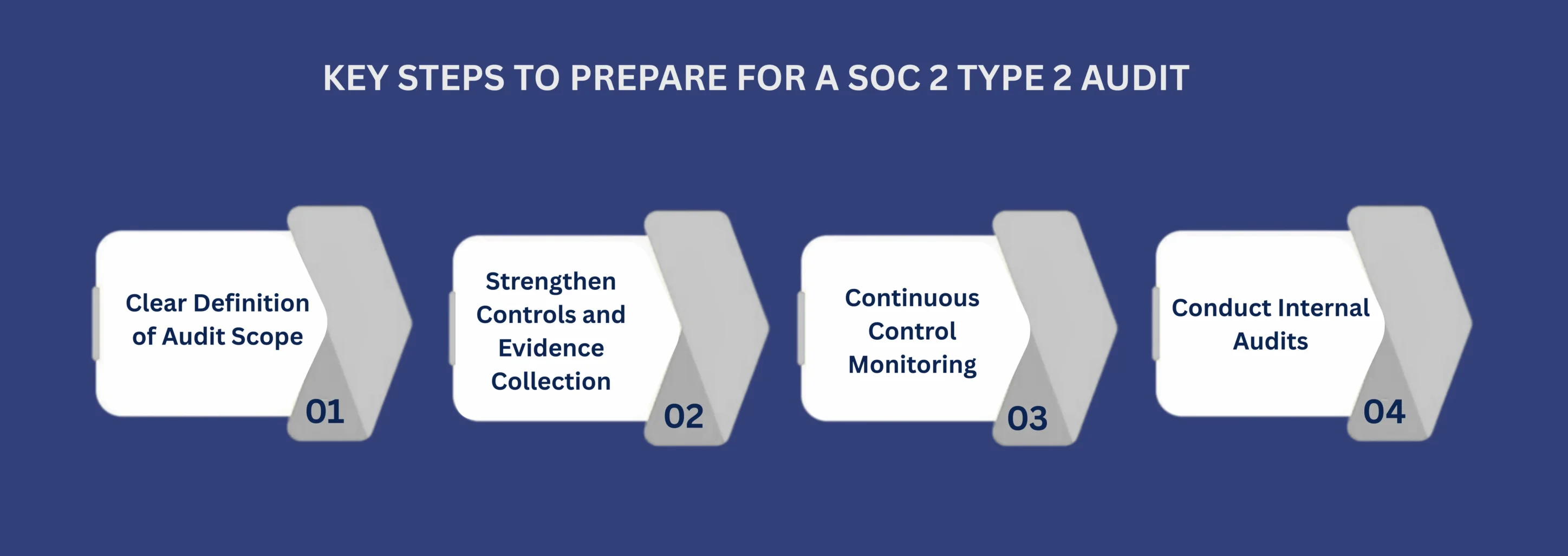
- ✓Stage 1: Scope Definition and Engagement Planning
- ✓Stage 2: Control Identification and Documentation Review
- ✓Stage 3: Control Testing and Evidence Collection
- ✓Stage 4: Nonconformity Review and Attestation Decision
SOC 2 Certification Requirements for Copenhagen Companies
Organizations pursuing SOC 2 Certification in Copenhagen must satisfy a defined set of operational, technical, and documentation requirements aligned with the selected Trust Services Criteria. These requirements are not prescriptive controls mandated by the AICPA but rather outcomes that the organization’s control environment must demonstrably achieve. The specific controls implemented to satisfy each requirement may vary based on the organization’s technology architecture, team structure, data processing activities, and risk profile.
The Security criterion, mandatory for all SOC 2 engagements, requires organizations to demonstrate effective controls across multiple security domains. Logical access controls must restrict system access to authorized users and enforce the principle of least privilege. Access provisioning and deprovisioning processes must be documented, followed consistently, and subject to periodic review. Multi-factor authentication must be implemented for access to production environments and systems containing sensitive customer data.
Network security controls — including firewall management, intrusion detection, and network segmentation — must be operational and continuously monitored. Vulnerability management programs must include regular scanning, patch management, and tracked remediation of identified vulnerabilities within defined timeframes. These requirements apply universally across all SOC 2 audit engagements, regardless of industry or organization size.
Security monitoring requirements under the Common Criteria include continuous monitoring of system logs, security event alerting, and documented incident response procedures. Organizations must maintain an incident response plan that defines roles, escalation paths, customer notification procedures, and post-incident review processes. Security awareness training must be conducted for all personnel with system access, and training completion records must be maintained as SOC 2 audit evidence.
Change management controls must ensure that all changes to production systems are authorized, tested, and documented prior to implementation. Risk assessment processes must be conducted at defined intervals to identify, evaluate, and address emerging threats to the security of the in-scope system. Together, these requirements form the operational foundation of any SOC 2 compliance program.
Documentation requirements for SOC 2 compliance are extensive and span both policy-level and procedural-level documentation. At the policy level, organizations must maintain current, approved versions of an information security policy, acceptable use policy, access control policy, data classification policy, encryption policy, incident response policy, business continuity and disaster recovery policy, and vendor management policy.
Each policy must be approved by senior management, communicated to relevant personnel, and reviewed at defined intervals — typically annually or following significant changes to the organization’s risk environment. Outdated or unapproved policy documents are a common source of audit findings during SOC 2 compliance reviews.
Procedural documentation must translate policy requirements into specific operational procedures followed by staff. Access provisioning procedures must specify how user accounts are created, modified, and terminated, including approval workflows and system-specific steps. Change management procedures must define the change request, approval, testing, and implementation process, including rollback procedures for failed changes. Vendor management procedures must address how third-party service providers are evaluated, contracted, monitored, and reviewed.
Backup and recovery procedures must define backup frequency, retention periods, storage locations, and recovery testing protocols. All procedural documents must be version-controlled, accessible to relevant personnel, and consistently followed — as evidenced by audit trails and activity logs reviewed during the SOC 2 audit.
Technical infrastructure requirements for SOC 2 certification vary based on the organization’s system architecture but consistently address encryption, access control, monitoring, and redundancy. Data at rest must be encrypted using industry-standard algorithms — AES-256 is the current accepted standard — across all systems storing customer data. Data in transit must be encrypted using TLS 1.2 or higher for all customer-facing interfaces and internal system communications.
Encryption key management must be documented, with key rotation schedules defined and evidence of rotation maintained. Production and non-production environments must be segregated, with separate access controls, to prevent unauthorized access to live customer data through development or testing environments. These technical controls are evaluated during every SOC 2 audit engagement, regardless of the specific Trust Services Criteria in scope.
- ✓Logical access controls with role-based permissions and least-privilege enforcement
- ✓Multi-factor authentication for all production system and administrative access
- ✓Continuous security event monitoring with defined alert thresholds and response procedures
- ✓Vulnerability scanning conducted at minimum quarterly, with tracked remediation
- ✓Encryption of data at rest (AES-256) and in transit (TLS 1.2+) across all in-scope systems
- ✓Change management process with authorization, testing, documentation, and rollback capability
- ✓Documented incident response plan with defined roles, escalation paths, and customer notification procedures
- ✓Business continuity and disaster recovery plan with tested recovery procedures and defined RTOs and RPOs
- ✓Third-party vendor risk assessments for all subservice organizations within the system boundary
- ✓Annual security awareness training with documented completion records for all personnel with system access

- ✓Security Control Requirements
- ✓Documentation Requirements
- ✓Technical Infrastructure Requirements
SOC 2 Certification Cost in Copenhagen
The cost of SOC 2 Certification in Copenhagen is determined by several structural factors specific to each organization’s engagement. Unlike commodity certifications with fixed fee schedules, SOC 2 audit costs reflect the complexity of the system being evaluated, the number of Trust Services Criteria included in scope, the size of the organization and its technology infrastructure, and whether the engagement is a Type 1 point-in-time assessment or a Type 2 operational effectiveness audit over an extended observation period.
Organizations with large, complex cloud environments, multiple product lines, or extensive third-party integrations will incur higher audit costs than smaller organizations with clearly bounded systems and fewer control domains. Understanding these cost drivers early helps organizations plan their SOC2 Certification investment effectively.
Type 1 vs. Type 2 Cost Considerations
SOC 2 Type 1 audits are generally less costly than Type 2 engagements because they evaluate control design at a single point in time rather than operational effectiveness over an observation period. Type 1 audits involve fewer evidence samples, shorter fieldwork duration, and less extensive control testing. Organizations that opt for a Type 1 assessment as an initial step can typically complete the engagement more quickly and at lower cost, while using the period following Type 1 issuance to build the operational evidence base required for a subsequent Type 2 audit.
Copenhagen organizations with time-sensitive procurement requirements — for example, those in active contract negotiations with enterprise customers requiring SOC 2 documentation — may pursue Type 1 first and then transition to Type 2 within twelve to eighteen months. This phased approach to SOC2 Certification balances speed-to-market with long-term attestation credibility.
SOC 2 Type 2 audits involve longer observation periods — minimum six months, commonly twelve months for full-year coverage — and more extensive evidence collection and control testing. The additional fieldwork, sampling, and review activities associated with Type 2 engagements result in higher professional fees compared to Type 1. However, the commercial value of a Type 2 report is substantially greater, as it satisfies the requirements of enterprise procurement programs that specifically require evidence of sustained operational effectiveness rather than design adequacy alone.
Annual recertification costs for Type 2 engagements are typically lower than initial engagement costs as organizational familiarity with SOC 2 audit processes, evidence collection procedures, and control monitoring matures over successive audit cycles.
Factors Affecting Audit Scope and Cost
| Cost Factor | Lower Cost Scenario | Higher Cost Scenario |
|---|---|---|
| Trust Services Criteria | Security only (Common Criteria) | Security + Availability + Confidentiality + Privacy |
| Audit Type | SOC 2 Type 1 (point-in-time) | SOC 2 Type 2 (12-month observation period) |
| System Complexity | Single product, defined boundary, limited integrations | Multiple products, complex cloud architecture, extensive third-party integrations |
| Organization Size | Small team, limited in-scope personnel | Large organization, multiple departments, international operations |
| Existing Control Maturity | Well-documented controls with audit trails | Undocumented processes requiring significant remediation before audit |
Benefits of SOC 2 Certification for Copenhagen Businesses
SOC 2 certification for Copenhagen companies delivers a structured set of operational, commercial, and strategic benefits that extend beyond the attestation report itself. The audit process drives internal operational improvements, creates documented security infrastructure, and produces an independently verified assurance instrument that directly supports business development, customer retention, and vendor relationship management.
Organizations that complete SOC 2 Certification in Copenhagen consistently report improvements in security posture, reduced time-to-close on enterprise sales cycles, and enhanced standing in competitive vendor evaluation processes. The value of SOC 2 attestation compounds over successive audit cycles as the organization’s control environment matures and its market reputation for security discipline strengthens.
The most immediate commercial benefit of SOC 2 attestation is the elimination of uncertainty in customer security assessments. Enterprise customers routinely send security questionnaires to service providers — documents that may contain hundreds of questions about access controls, encryption practices, incident response procedures, backup policies, and third-party risk management.
Without a current SOC 2 attestation report, each questionnaire must be answered manually by internal security personnel — a process that is time-consuming, inconsistent, and inherently self-attested. With a current SOC 2 Type 2 report, the organization can direct customers to the auditor’s independently verified assessment, which addresses most questionnaire topics with far greater credibility than self-reported responses.
For Copenhagen technology companies operating in sectors where data sensitivity is high — including healthcare technology, financial services, legal technology, and human resources platforms — customer trust is a foundational commercial asset. Clients entrusting sensitive personal, financial, or operational data to a service provider require confidence that appropriate safeguards are in place and verified by an independent authority.
SOC 2 compliance documentation provides this verification in a standardized, internationally recognized format. The ability to deliver a current SOC 2 report to prospective customers early in the sales process materially accelerates procurement timelines and reduces the probability of competitive displacement during security review phases. For Copenhagen organizations pursuing international enterprise growth, this benefit alone can justify the investment in SOC 2 Certification in Copenhagen.
Beyond external assurance, the SOC 2 audit process generates significant internal operational benefits. The requirement to document, implement, and consistently follow security controls creates a structured security program where informal or ad-hoc practices previously existed. Access control reviews conducted as part of SOC 2 preparation often reveal dormant user accounts, excessive permissions, or undocumented access pathways that represent genuine security risks.
Vendor management programs established for SOC 2 compliance provide ongoing visibility into the security posture of subservice organizations and cloud providers integrated into the in-scope system. Incident response plans developed for SOC 2 evidence create operational protocols that reduce response time and minimize impact when security incidents occur — delivering risk reduction value that extends well beyond the audit engagement itself.
- ✓Independent third-party verification of security controls reduces customer security review burden
- ✓Current SOC 2 attestation accelerates enterprise sales cycles and eliminates security questionnaire friction
- ✓Documented control environment reduces the risk of security breaches and data incidents
- ✓SOC 2 certification supports compliance with European regulatory frameworks including GDPR and NIS2
- ✓Periodic SOC 2 audit cycles drive continuous improvement of security controls and operational practices
- ✓SOC 2 attestation report satisfies vendor risk management requirements of enterprise and regulated-industry customers
- ✓SOC2 Certification differentiates Copenhagen organizations in competitive vendor evaluation processes
- ✓SOC 2 compliance builds internal security culture through documented procedures and training requirements
- ✓Type 2 audit evidence base provides operational documentation useful for internal governance and board reporting
- ✓Annual recertification maintains customer confidence through demonstrated commitment to ongoing security discipline
SOC 2 compliance establishes a documented, independently verified control environment that materially reduces an organization’s exposure to security incidents, data breaches, and the associated regulatory, financial, and reputational consequences. Controls evaluated during a SOC 2 audit — including encryption, access management, vulnerability management, and incident response — directly address the most common attack vectors and data exposure risks facing Copenhagen technology organizations.
Organizations that maintain current SOC 2 attestation status are better positioned to demonstrate due diligence in the event of a security incident. This can affect regulatory outcomes, litigation exposure, and customer notification obligations under GDPR. The combination of risk reduction and regulatory alignment makes SOC 2 Certification in Copenhagen one of the highest-value security investments available to Copenhagen technology organizations.
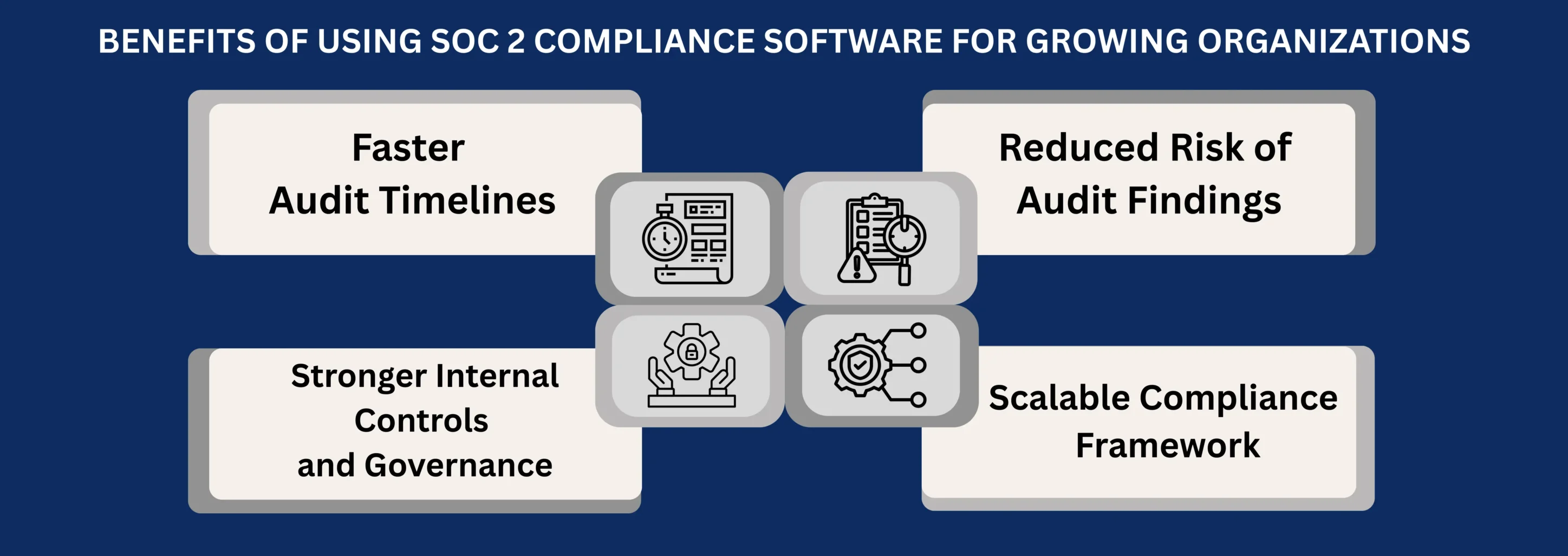
- ✓Customer Trust and Vendor Assurance
- ✓Internal Security and Operational Improvements
- ✓Risk Reduction and Regulatory Alignment
Steps to Obtain SOC 2 Certification in Copenhagen
The process of obtaining SOC 2 Certification in Copenhagen follows a defined sequence of preparatory and audit activities. Each step builds on the previous, creating a structured pathway from initial scope determination through final report issuance. Organizations that approach this process with clear internal accountability, documented evidence management procedures, and consistent operational practices throughout the observation period are best positioned for efficient SOC 2 audit completion and clean attestation outcomes.
- Determine applicable Trust Services Criteria based on services provided, customer contractual requirements, and organizational risk profile
- Define the system boundary — identify all infrastructure, software, personnel, data, and procedures included in the audit scope
- Review existing policies and procedures against SOC 2 requirements and establish documentation for any areas not currently addressed
- Implement required technical controls including access management, encryption, monitoring, and change management systems
- Establish evidence collection processes and assign internal ownership for control operation and documentation maintenance
- Engage a Licensed CPA Firm to conduct the SOC 2 audit engagement under AICPA attestation standards
- Complete audit fieldwork including document review, system walkthroughs, and control testing across the observation period
- Review and respond to auditor findings and any exceptions identified during control testing
- Receive and distribute the SOC 2 attestation report to customers, prospects, and partners under appropriate non-disclosure agreements
- Maintain controls continuously and initiate annual recertification to preserve current SOC 2 attestation status
One of the first and most consequential decisions in the SOC 2 certification process is determining whether to pursue a Type 1 or Type 2 engagement and, for Type 2, the length of the observation period. Organizations with mature, well-documented control environments may proceed directly to a Type 2 audit with a twelve-month observation period, maximizing the commercial credibility of the resulting report.
Organizations that are earlier in their security program development — or those that have recently implemented significant changes to their technology environment — may opt for a six-month Type 2 observation period. This approach reduces the complexity of initial evidence collection while still producing a SOC 2 attestation report that satisfies the majority of enterprise procurement requirements.
The observation period start date is also a strategic decision. For Copenhagen organizations with enterprise contracts up for renewal at specific calendar dates, aligning the observation period to conclude two to three months before the renewal date ensures that a current Type 2 report is available for the customer review process.
Organizations in active sales cycles with enterprise prospects that have specified SOC 2 requirements may consider pursuing a Type 1 report immediately — with a twelve to eighteen-month horizon for Type 2 — as an interim measure to maintain deal progression while the Type 2 observation period accumulates. This phased approach to SOC 2 Certification in Copenhagen is commonly adopted by SaaS and technology companies entering the enterprise market for the first time.
Effective evidence management is a critical operational discipline for organizations undergoing SOC 2 Type 2 audits. Evidence collection is not a terminal activity performed at the end of the observation period but rather an ongoing process that must capture control activities consistently from the observation period start date through its conclusion.
Organizations should establish centralized evidence repositories — typically using secure document management platforms or dedicated SOC 2 evidence management tools — and assign internal ownership for each control activity. Evidence should be timestamped, labeled with the corresponding control reference, and stored in a format accessible for auditor review during the SOC 2 audit fieldwork phase.
Common categories of evidence collected throughout a SOC 2 Type 2 observation period include monthly access review reports, quarterly vulnerability scan results and remediation tracking, change management tickets with approval and testing documentation, security incident logs and response records, vendor risk assessment reports, security awareness training completion records, backup success logs and recovery test results, and system configuration change documentation.
The consistency and completeness of evidence collected throughout the observation period directly affects the efficiency of SOC 2 audit fieldwork and the probability of exception-free control testing outcomes. Organizations that maintain evidence collection discipline from observation period day one consistently experience smoother audit processes than those that attempt retrospective evidence reconstruction near the audit fieldwork date.
- ✓Selecting the Right Audit Type and Observation Period
- ✓Evidence Management Throughout the Audit Period
SOC 2 Compliance vs. SOC 2 Certification: Understanding the Distinction
A common point of confusion among Copenhagen organizations approaching the SOC 2 framework for the first time is the distinction between SOC 2 compliance and SOC 2 certification. These terms are often used interchangeably in commercial contexts but carry distinct technical meanings within the AICPA attestation framework. Understanding this distinction is important for setting accurate expectations with customers, procurement teams, and internal stakeholders — and for avoiding misrepresentations that can create commercial or reputational risk.
What SOC 2 Compliance Means
SOC 2 compliance refers to an organization’s internal adherence to the control requirements specified under the selected Trust Services Criteria. An organization is SOC 2 compliant when it has implemented the policies, procedures, and technical controls necessary to satisfy the relevant TSC requirements and operates those controls consistently. However, SOC 2 compliance in this sense is self-assessed — the organization itself determines and declares that its controls meet the required standards without independent verification.
Compliance in this form does not produce an auditor’s opinion, does not result in a formal attestation report, and does not satisfy enterprise procurement requirements that specifically call for third-party verified SOC 2 documentation. Self-attested SOC 2 compliance is increasingly insufficient for organizations seeking to serve enterprise or regulated-industry customers who require formal SOC 2 attestation.
The critical distinction is that SOC 2 certification — more precisely referred to as SOC 2 attestation — requires independent examination by a Licensed CPA Firm and results in a formal report expressing the auditor’s opinion on whether the organization’s controls are suitably designed (Type 1) or both suitably designed and operating effectively (Type 2).
Organizations must complete annual SOC 2 audit cycles to maintain current certified status and meet customer expectations. An organization that has implemented all necessary controls but has not completed an independent audit engagement has achieved compliance in the operational sense but cannot credibly represent itself as SOC 2 certified or present a SOC 2 attestation report to customers or partners.
SOC 2 vs. ISO 27001: A Comparative Overview
Copenhagen organizations frequently evaluate SOC 2 certification alongside ISO 27001 certification as complementary or alternative frameworks for demonstrating information security governance. SOC 2 and ISO 27001 address overlapping security domains but differ significantly in their structure, geographic recognition, reporting format, and audit methodology.
ISO 27001 is an international standard certified through accredited certification bodies and produces a formal certificate with wide recognition across European, Asian, and global markets. SOC 2 is an AICPA standard that produces an attestation report — not a certificate — and is particularly recognized and required by enterprise organizations in North American markets, as well as multinational organizations with procurement teams familiar with the US auditing framework.
When deciding whether to pursue SOC 2 or ISO 27001 first, Copenhagen organizations should consider customer requirements and target markets primarily. Organizations serving primarily European enterprise customers and public sector entities may find ISO 27001 recognition more broadly applicable in their immediate market. Organizations targeting US-headquartered enterprise customers — or serving as subservice organizations in supply chains where SOC 2 reports are required — should prioritize SOC 2 Certification in Copenhagen.
Many mature Copenhagen technology companies ultimately pursue both certifications, as ISO 27001 and SOC 2 share a significant control overlap — making dual-certification programs operationally efficient for organizations with established security management systems. The two frameworks are complementary rather than redundant, addressing different audiences and serving different assurance purposes.
SOC 2 Attestation Report: Structure and Distribution
The SOC 2 attestation report issued by CertPro following a completed audit engagement is a structured, formal document produced in accordance with AICPA attestation standards. Understanding the structure of the report and appropriate distribution practices enables Copenhagen organizations to effectively leverage the SOC 2 report in commercial and regulatory contexts — and to maximize its value across sales, procurement, and vendor assurance processes.
Report Components and Structure
A complete SOC 2 attestation report contains several standard sections. The Independent Service Auditor’s Report presents the Licensed CPA Firm’s formal opinion on whether the organization’s controls are suitably designed (Type 1) or suitably designed and operating effectively (Type 2) based on the selected Trust Services Criteria. Management’s Description of the System is prepared by the service organization’s management and describes the system in scope — including the nature of services provided, the system components (infrastructure, software, people, processes, and data), the boundaries of the system, and the control objectives and related controls. This description is evaluated by the auditor for accuracy and completeness as part of the SOC 2 audit engagement.
The Description of Controls and Auditor’s Tests and Results section — present in Type 2 reports — provides detailed information about each control evaluated, the specific tests the auditor applied, the evidence examined, and the results of each test. This section is the most technically detailed portion of the report and is the primary reference document for customers conducting vendor risk assessments.
Exception disclosures, if any, appear in this section with descriptions of the exception, its frequency, and any management response or compensating controls. The report also includes the specific Trust Services Criteria requirements against which controls were assessed. SOC 2 attestation reports for Copenhagen organizations are typically between forty and one hundred and fifty pages depending on the complexity of the system and the number of criteria included.
Report Distribution and Confidentiality Practices
SOC 2 attestation reports are confidential business documents and are not published publicly. The service organization controls distribution of the report and is responsible for ensuring that recipients understand the confidential nature of its contents. Standard practice is to distribute the report under a mutual non-disclosure agreement or a report use agreement that restricts the recipient from redistributing the report to third parties.
Many Copenhagen organizations include a report distribution tracking process in their security governance procedures, maintaining records of which customers and partners have received the current SOC 2 report and under what terms. This tracking practice supports both confidentiality obligations and ongoing SOC 2 compliance program management.
Some organizations choose to share only a summary or executive overview of the SOC 2 report in early sales conversations, providing the full report only after executing an NDA. Others distribute the full report routinely as part of enterprise onboarding documentation — particularly in markets where SOC 2 review is a standard procurement step and full report review by the customer’s security team is expected.
Copenhagen organizations serving US-headquartered enterprise clients should be aware that US-based procurement teams frequently expect to receive the complete Type 2 report, including the controls description and test results section, rather than an executive summary alone. Annual report renewal is required as current SOC 2 attestation status expires upon the issuance of each new report — making continuous SOC 2 audit engagement planning essential for organizations that distribute reports as part of their commercial operations.
CertPro: Licensed CPA Firm for SOC 2 Certification in Copenhagen
CertPro is a Licensed CPA Firm delivering independent SOC 2 examination services to organizations across Copenhagen and the broader Nordic region. As an independent third-party audit firm, CertPro issues SOC 2 attestation reports evaluated against AICPA Trust Services Criteria, covering Security, Availability, Confidentiality, Processing Integrity, and Privacy. Engagements are structured for SaaS providers, cloud-native organizations, fintech companies, technology services firms, and data-intensive enterprises operating in Copenhagen’s digital economy. CertPro’s structured approach to SOC 2 Certification in Copenhagen ensures that every engagement delivers a defensible, commercially valuable attestation report aligned with enterprise and regulatory expectations.
Independent Audit Methodology and Engagement Structure
CertPro’s SOC 2 audit engagements follow the full AICPA attestation examination standard, applying structured audit methodologies that ensure consistent, defensible attestation outcomes. The firm’s audit approach encompasses formal scope determination, system boundary documentation, control identification, evidence collection planning, substantive control testing with appropriate sampling methodologies, exception evaluation, and formal report preparation and issuance. Each stage of the SOC 2 audit is documented in accordance with professional auditing standards, creating a complete and defensible audit file that supports the attestation opinion issued in the final report.
CertPro’s engagement model for SOC 2 Certification in Copenhagen is built around structured audit timelines and clearly defined deliverables at each engagement milestone. Organizations receive formal engagement documentation — including the audit scope statement, system description requirements, evidence request lists, and reporting timeline — at the outset of each engagement.
Audit fieldwork is conducted through a combination of document review, system configuration inspection, personnel interviews, and observation of control activities. All findings, including exceptions and control gaps, are communicated to management prior to report finalization. This provides organizations the opportunity to present context, compensating controls, or remediation evidence before the SOC 2 attestation opinion is formally issued.
Sector Experience in Copenhagen and the Nordic Region
CertPro’s SOC 2 audit engagements in Copenhagen span multiple sectors that reflect the city’s technology economy. SaaS providers delivering enterprise software across HR, finance, project management, and customer data platforms represent a significant portion of engagements, as these organizations consistently encounter SOC 2 requirements in US and European enterprise procurement processes. Cloud infrastructure and managed service providers operating in the Nordic region require SOC 2 audit coverage that addresses shared responsibility model boundaries and the inherited control framework provided by hyperscale cloud platforms such as AWS, Microsoft Azure, and Google Cloud Platform.
Fintech companies providing payment processing, open banking infrastructure, digital lending, and treasury management services to regulated financial institutions require SOC 2 attestation that addresses both Security and Processing Integrity criteria with the rigor expected by financial regulatory risk management standards.
SOC 2 compliance engagements conducted by CertPro in Copenhagen also address the specific needs of organizations subject to GDPR as data processors. For these organizations, the Privacy Trust Services Criterion provides an additional layer of attestation coverage that demonstrates operational alignment with data protection principles. While SOC 2 attestation does not satisfy GDPR compliance in a legal sense, it provides independently verified evidence of privacy control implementation that can be presented to EU data subjects, contractual controllers, and supervisory authorities as part of accountability documentation.
This dual-purpose value of SOC 2 attestation — serving both North American enterprise vendor assurance requirements and European data protection accountability expectations — makes SOC 2 Certification in Copenhagen a particularly efficient investment for organizations that operate across both market contexts.
FAQ
▶
What is SOC 2 certification and why is it important for Copenhagen businesses?
▶
What is the difference between SOC 2 Type 1 and SOC 2 Type 2?
▶
How long does a SOC 2 audit take for a Copenhagen organization?
▶
Is SOC 2 compliance the same as SOC 2 certification?
▶
Which Trust Services Criteria should a Copenhagen SaaS company include in its SOC 2 audit?
▶
Does SOC 2 certification satisfy GDPR compliance requirements?
▶
Who issues SOC 2 certification reports and what qualifications are required?
▶
How often must SOC 2 certification be renewed?
SOC 1 VS SOC 2: WHICH REPORT YOUR CUSTOMERS ACTUALLY ASK FOR
If you sell SaaS or provide outsourced services, you have likely been asked for a SOC report. However, the follow-up question is rarely easy to answer…
SOC 2 Certified: What Does It Mean for Your Business
For companies that handle sensitive data or run cloud-based services, the question “Can you provide your SOC 2 report?” carries enormous weight. Yet, …

NEW BLOG DESIGN
Ethical Hacking for SOC 2, ISO 27001, HIPAA Audit Readiness | CertPro CPA LLC HERO Dark bg, full width, padded Image as rounded card LEFT | Info panel…
Get In Touch
have a question? let us get back to you.