
SOC 2 Certification in Maryland
SOC 2 Certification in Maryland is issued exclusively by a Licensed CPA Firm following an independent examination conducted under AICPA AT-C Section 205 attestation standards. The attestation evaluates an organization’s controls against the AICPA Trust Services Criteria (TSC) and is never self-declared. Maryland’s technology, healthcare, financial services, defense, and biotechnology sectors increasingly require SOC 2 attestation as a condition of vendor approval and third-party risk management programs.
OUR CLIENTS










Independent SOC 2 Certification by a Licensed CPA Firm in Maryland
SOC 2 Certification in Maryland is issued exclusively by a Licensed CPA Firm following an independent examination conducted under AICPA AT-C Section 205 attestation standards. The attestation evaluates an organization’s controls against the AICPA Trust Services Criteria (TSC) and is never self-declared. Maryland’s technology, healthcare, financial services, defense, and biotechnology sectors increasingly require SOC 2 attestation as a condition of vendor approval and third-party risk management programs.
SOC 2 Certification in Maryland is governed by the AICPA’s Trust Services Criteria, which establish control requirements across five categories: Security, Availability, Processing Integrity, Confidentiality, and Privacy. The Security category — also called the Common Criteria — is mandatory for all SOC 2 examinations. Organizations may elect to include additional Trust Services Criteria categories based on the nature of their services, contractual obligations, and client risk management programs.
A Licensed CPA Firm performing the SOC 2 examination evaluates whether controls are suitably designed (Type 1) or both suitably designed and operating effectively over a defined observation period (Type 2). The attestation is objective and evidence-based. The resulting report is issued by the independent auditor — not by the organization under review.
Maryland’s business ecosystem spans Baltimore’s financial district and healthcare corridor, Bethesda’s biomedical research and defense contracting community, Rockville’s life sciences and biotechnology concentration, Silver Spring’s digital media and information technology organizations, and Columbia’s SaaS and cloud services sector. Organizations across these markets operate within enterprise procurement environments where SOC 2 compliance in Maryland is evaluated as part of vendor due diligence, third-party risk assessments, and information security reviews.
Federal agencies, financial institutions, health systems, and large enterprise customers routinely require SOC 2 attestation from technology vendors and cloud service providers as a condition of contract award or renewal. The Maryland Online Data Privacy Act — alongside federal requirements including HIPAA and FISMA — reinforces demand for independent security attestation. SOC 2 attestation does not automatically establish compliance with Maryland or federal law; however, controls evaluated during a SOC 2 examination frequently align with the information security and privacy requirements embedded in those regulatory frameworks.
The independent CPA firm performing a SOC 2 examination in Maryland operates under professional standards that require objectivity, evidence-based evaluation, and professional skepticism. The firm assesses whether management’s system description is fairly presented, whether controls are suitably designed to meet the applicable Trust Services Criteria, and — for a Type 2 report — whether those controls operated effectively throughout the observation period.
The certification decision is made by the Licensed CPA Firm based on the sufficiency of audit evidence gathered during the examination — not on the organization’s self-assessment or internal declarations. This independence is the defining characteristic of SOC 2 attestation and the reason it carries weight in enterprise vendor approval processes across Maryland’s regulated industries.

What Is SOC 2 Certification?
SOC 2 Certification is a formal attestation issued by a Licensed CPA Firm confirming that an organization’s controls meet the AICPA Trust Services Criteria. The term “SOC 2” stands for System and Organization Controls 2. The examination is defined under AICPA AT-C Section 205 standards. SOC 2 Certification differs from a self-certification or a compliance checklist in that the attestation is issued by an independent third party following a structured examination of the organization’s control environment, evidence documentation, and operational control effectiveness.
SOC 2 Type 1 vs. Type 2 Reports
A SOC 2 Type 1 report evaluates the design of controls at a single point in time. The Licensed CPA Firm assesses whether the organization’s controls are suitably designed to meet the applicable Trust Services Criteria as of the report date. A SOC 2 Type 2 report evaluates both the design and operating effectiveness of controls over a defined observation period — typically a minimum of six months. Type 2 reports are more widely accepted in enterprise procurement processes because they demonstrate sustained control performance, not merely a point-in-time snapshot of design intent.
| Report Type | Evaluation Focus | Time Frame | Common Use Case |
|---|---|---|---|
| SOC 2 Type 1 | Control design suitability | Point in time | Initial vendor qualification |
| SOC 2 Type 2 | Design and operating effectiveness | Defined observation period (minimum 6 months) | Ongoing vendor assurance and enterprise procurement |
Trust Services Criteria: The Evaluation Framework
The AICPA Trust Services Criteria provide the control framework against which a SOC 2 examination is conducted. The five TSC categories are Security (Common Criteria), Availability, Processing Integrity, Confidentiality, and Privacy. Security is mandatory in every SOC 2 examination. The remaining four categories are selected based on the organization’s service commitments, system description, and the criteria relevant to user entities’ risk management requirements. Each category contains specific criteria that define the control objectives the organization must demonstrate through evidence during the examination.
The Common Criteria under the Security category are organized around logical access controls, system operations, change management, and risk mitigation. These criteria map to control activities that govern how an organization protects information assets, manages access, monitors system performance, and responds to incidents.
Organizations in Maryland’s healthcare, fintech, and defense sectors frequently include the Availability and Confidentiality criteria in addition to Security, given the nature of their services and contractual commitments to regulated-industry clients. The Privacy category applies to organizations that collect, use, retain, or disclose personal information as part of their service delivery model.
SOC 2 Certification Audit Process in Maryland
The SOC 2 audit process in Maryland follows a structured methodology defined by AICPA attestation standards. The SOC 2 examination is conducted by a Licensed CPA Firm and proceeds through defined stages — from scope determination through report issuance and ongoing surveillance. Each stage involves specific audit activities, evidence requirements, and evaluative decisions made by the independent auditor.
The first stage of the SOC 2 examination involves defining the scope of the system under review. The Licensed CPA Firm and the organization jointly identify the system boundaries, the applicable Trust Services Criteria categories, and the services covered by the examination. The system description — prepared by management — defines the infrastructure, software, people, procedures, and data involved in delivering in-scope services.
The auditor reviews this description for completeness and fair presentation before developing the audit program. The audit program outlines the specific control testing procedures to be performed during the SOC 2 examination in Maryland.
The Stage 1 audit focuses on reviewing documentation that supports the organization’s control environment and assessing whether controls are suitably designed. The auditor reviews policies, procedures, system configurations, organizational charts, and risk assessment documentation to evaluate design suitability.
For a Type 2 examination, the Stage 2 audit involves testing the operating effectiveness of controls over the defined observation period. Testing methods include inquiry, observation, inspection of evidence, and re-performance. The auditor selects samples of control evidence across the observation period to assess whether controls functioned as designed on a consistent basis.
Evidence collected during a SOC 2 audit in Maryland includes access control logs, security monitoring records, incident response documentation, change management tickets, vendor assessment records, backup and recovery test results, and training completion records. The sufficiency and appropriateness of evidence is evaluated by the Licensed CPA Firm against the specific criteria being tested.
Where evidence gaps are identified, the auditor documents the finding and assesses its impact on the overall opinion. Nonconformities identified during the SOC 2 examination are communicated to management and addressed in the auditor’s report through exceptions noted in the description of tests and results.
| Audit Stage | Key Activities | Output |
|---|---|---|
| Scope Determination | System boundary definition, TSC category selection, system description review | Agreed scope and audit program |
| Stage 1 Audit | Documentation review, control design assessment, policy evaluation | Design suitability assessment |
| Stage 2 Audit | Control testing, evidence sampling, operating effectiveness evaluation | Test results and exceptions noted |
| Nonconformity Review | Identification of control gaps, management response evaluation | Findings communicated to management |
| Report Issuance | Independent auditor’s opinion, system description, test results | SOC 2 Type 1 or Type 2 Report |
Upon completion of the SOC 2 examination, the Licensed CPA Firm issues the SOC 2 report. This report includes the independent service auditor’s report, management’s assertion, the system description, and — for Type 2 reports — the description of tests and results. The auditor’s opinion states whether controls are suitably designed and, for Type 2 reports, whether they operated effectively.
SOC 2 reports do not carry a fixed expiration date. However, enterprise procurement and third-party risk management programs typically require reports covering observation periods ending within the prior twelve months. Annual SOC 2 examination cycles are standard practice for organizations in Maryland seeking to maintain current attestation status for enterprise customer requirements.
- ✓Scope Determination and Audit Program Development
- ✓Stage 1 and Stage 2 Audit Activities
- ✓Report Issuance, Validity, and Recertification
SOC 2 Certification Requirements for Maryland Organizations
SOC 2 compliance in Maryland requires organizations to establish, document, and operate a control environment that satisfies the applicable Trust Services Criteria. The SOC 2 examination evaluates both the existence and effectiveness of controls across the in-scope system. Requirements are not defined by a checklist. Instead, the Licensed CPA Firm evaluates the organization’s controls against the specific criteria and the organization’s own service commitments and system requirements.
Organizations pursuing SOC 2 Certification in Maryland must maintain documented policies and procedures that support the Trust Services Criteria applicable to their examination scope. Required documentation typically includes an information security policy, risk assessment documentation, an access control policy, an incident response plan, a change management policy, a business continuity and disaster recovery plan, and vendor management procedures.
The system description — prepared by management — must accurately reflect the infrastructure, software, people, processes, and data involved in delivering in-scope services. The Licensed CPA Firm evaluates the completeness and fair presentation of this description as part of the SOC 2 examination.
Evidence documentation is a critical requirement for the SOC 2 examination. Organizations must be able to produce evidence demonstrating that controls have been consistently applied over the observation period. Evidence commonly reviewed during a SOC 2 audit in Maryland includes access provisioning and de-provisioning records, security awareness training completion logs, vulnerability scan and penetration testing reports, incident response records, change approval documentation, and system monitoring alerts.
Organizations that fail to maintain contemporaneous evidence records during the observation period frequently encounter exceptions during the audit. The auditor cannot retroactively reconstruct control operation from memory or informal practice.
Technical controls evaluated during a SOC 2 examination in Maryland span logical access management, encryption, network security, monitoring and alerting, vulnerability management, and system change controls. The Common Criteria require organizations to demonstrate controls over logical access to systems and data — including multi-factor authentication, role-based access controls, privileged access management, and periodic access reviews.
Network segmentation, intrusion detection, security information and event management (SIEM) systems, and endpoint protection controls are evaluated under the monitoring and detection criteria. Organizations in Maryland’s cloud services and SaaS sectors must also address controls over shared infrastructure and tenant data separation where applicable to their system description.
- ✓Information security policy and risk assessment documentation
- ✓Access control policy covering provisioning, de-provisioning, and periodic review
- ✓Incident response plan with documented response and escalation procedures
- ✓Change management policy with approval and testing controls
- ✓Business continuity and disaster recovery plan with documented test results
- ✓Vendor management procedures covering third-party risk assessment
- ✓Security monitoring and alerting configuration with evidence of review
- ✓Encryption standards for data at rest and in transit
- ✓Documentation and Control Environment Requirements
- ✓Technical Control Requirements Across Trust Services Criteria
Business Sectors in Maryland Pursuing SOC 2 Certification
SOC 2 Certification in Maryland is pursued across a broad range of industry sectors driven by enterprise customer requirements, regulatory context, and third-party risk management expectations. Maryland’s diverse economy — anchored by federal government contracting, healthcare and life sciences, financial services, and technology — creates concentrated demand for independent security attestation across multiple market segments.
Technology, SaaS, and Cloud Service Providers
SaaS providers, cloud service providers, and technology companies operating in Maryland — particularly those headquartered in Columbia, Rockville, and the Baltimore metropolitan area — frequently pursue SOC 2 attestation as part of their enterprise sales process. Enterprise customers in regulated industries require SOC 2 Type 2 reports before approving new technology vendors, renewing contracts, or expanding the scope of data processed by a provider.
Maryland’s concentration of cybersecurity companies, AI organizations, and cloud-hosted platform providers serving federal and commercial markets makes SOC 2 Certification in Maryland a standard expectation in vendor qualification programs across the region.
Managed service providers (MSPs), data center operators, and infrastructure-as-a-service organizations serving Maryland enterprises also pursue SOC 2 examination to address the third-party risk management requirements of their clients. Federal contractors and sub-contractors operating in the Bethesda and Rockville corridor — many of whom handle sensitive government data — evaluate SOC 2 attestation alongside other federal security frameworks as part of their vendor assurance programs.
SOC 2 examination results inform procurement decisions and supply chain risk assessments for organizations operating across Maryland’s technology sector.
Healthcare, Life Sciences, Financial Services, and Defense
Healthcare technology organizations, biotechnology companies, and life sciences firms in Maryland — concentrated in the Baltimore-Washington corridor, Rockville’s bioscience park, and Johns Hopkins and University of Maryland affiliated enterprises — pursue SOC 2 Certification in Maryland to address information security requirements from hospital systems, research institutions, and pharmaceutical clients. While HIPAA establishes mandatory requirements for covered entities and business associates, SOC 2 attestation provides independent verification of the broader information security control environment that governs how health information is protected within technology platforms and hosted services.
Financial services organizations and fintech companies operating in Baltimore and Bethesda pursue SOC 2 Certification in Maryland to address bank and investment firm vendor due diligence programs. Insurance technology providers, payment processors, and financial data analytics firms serving Maryland-based financial institutions encounter SOC 2 Type 2 report requirements as standard conditions of vendor onboarding.
Defense and aerospace technology organizations operating near Fort Meade and the National Security Agency corridor evaluate SOC 2 compliance in Maryland alongside federal cybersecurity frameworks when competing for contracts with defense primes and federal agencies requiring evidence of third-party control assurance.
Why Organizations in Maryland Pursue SOC 2 Certification
SOC 2 audit examinations in Maryland are initiated by organizations responding to specific enterprise procurement requirements, third-party risk management programs, and client contractual obligations. The decision to pursue SOC 2 attestation is typically driven by external demand from enterprise customers, regulated-industry clients, or federal procurement programs — rather than by a voluntary internal initiative. Understanding the demand drivers specific to Maryland’s business environment clarifies why SOC 2 Certification in Maryland has become a standard requirement across the state’s technology and services sectors.
Enterprise Vendor Security Reviews and Procurement Requirements
Enterprise organizations in Maryland’s financial services, healthcare, and defense sectors operate formal vendor risk management programs that evaluate the security posture of technology providers before contract award. A SOC 2 Type 2 report is frequently the required evidence artifact in these programs, replacing or supplementing security questionnaires and self-attested certifications.
A Maryland-based SaaS organization seeking to onboard a Baltimore-area hospital system, a Bethesda investment management firm, or a federal government prime contractor will typically encounter a SOC 2 Type 2 report requirement as a condition of vendor approval. The SOC 2 examination in Maryland provides independent, auditor-verified evidence that replaces reliance on the vendor’s unverified self-assessment.
Maryland’s proximity to Washington, D.C., and the concentration of federal agencies, defense contractors, and intelligence community partners in the region creates a procurement environment where security attestation expectations are elevated above those in other markets. Organizations serving federal clients or regulated commercial enterprises in this corridor frequently encounter SOC 2 compliance requirements from multiple clients simultaneously — making annual SOC 2 examination cycles an operationally necessary practice rather than an optional investment.
SOC 2 audit firms in Maryland — specifically Licensed CPA Firms qualified to perform AICPA attestation engagements — conduct these examinations under professional standards that provide the objectivity and independence required by enterprise vendor programs.
Regulatory Context and Third-Party Risk Management
Maryland’s Online Data Privacy Act establishes requirements for organizations that collect and process personal data of Maryland residents. While SOC 2 attestation does not automatically establish compliance with the Maryland Online Data Privacy Act or other applicable state and federal laws, the Privacy Trust Services Criteria evaluated during a SOC 2 examination address controls over the collection, use, retention, disclosure, and disposal of personal information.
Organizations subject to HIPAA, GLBA, FISMA, or Maryland state privacy law find that the SOC 2 examination produces evidence of control effectiveness that supports broader regulatory compliance documentation and third-party risk disclosures.
Benefits of SOC 2 Certification for Maryland-Based Organizations
SOC 2 Certification in Maryland produces a defined set of outcomes for organizations that complete the examination process. These outcomes result directly from the attestation and the independent validation of the organization’s control environment by a Licensed CPA Firm. The following benefits reflect the practical consequences of completing a SOC 2 examination in Maryland under the AICPA Trust Services Criteria.
The primary benefit of SOC 2 Certification for Maryland organizations is the provision of independent, auditor-verified evidence of control effectiveness that satisfies enterprise vendor qualification requirements. A SOC 2 Type 2 report replaces security questionnaires and self-attested declarations in procurement processes conducted by Maryland’s financial institutions, healthcare systems, defense organizations, and enterprise technology buyers.
The attestation is issued by an independent Licensed CPA Firm whose professional standards require objectivity and evidence-based conclusions — characteristics that distinguish SOC 2 attestation from internal compliance declarations or vendor-managed certification programs.
Organizations completing a SOC 2 examination in Maryland develop and document a structured control environment that addresses the Common Criteria and any additional Trust Services Criteria in scope. This structured approach to control documentation, evidence collection, and ongoing monitoring establishes operational practices that support both the annual audit cycle and the organization’s internal risk management objectives.
The ongoing surveillance obligation associated with maintaining annual SOC 2 attestation status reinforces control discipline and evidence management practices that benefit the organization beyond the audit itself. Maryland technology companies have reported that the structured control environment developed for SOC 2 Certification also supports other information security management activities — including internal audit programs and security operations reviews.
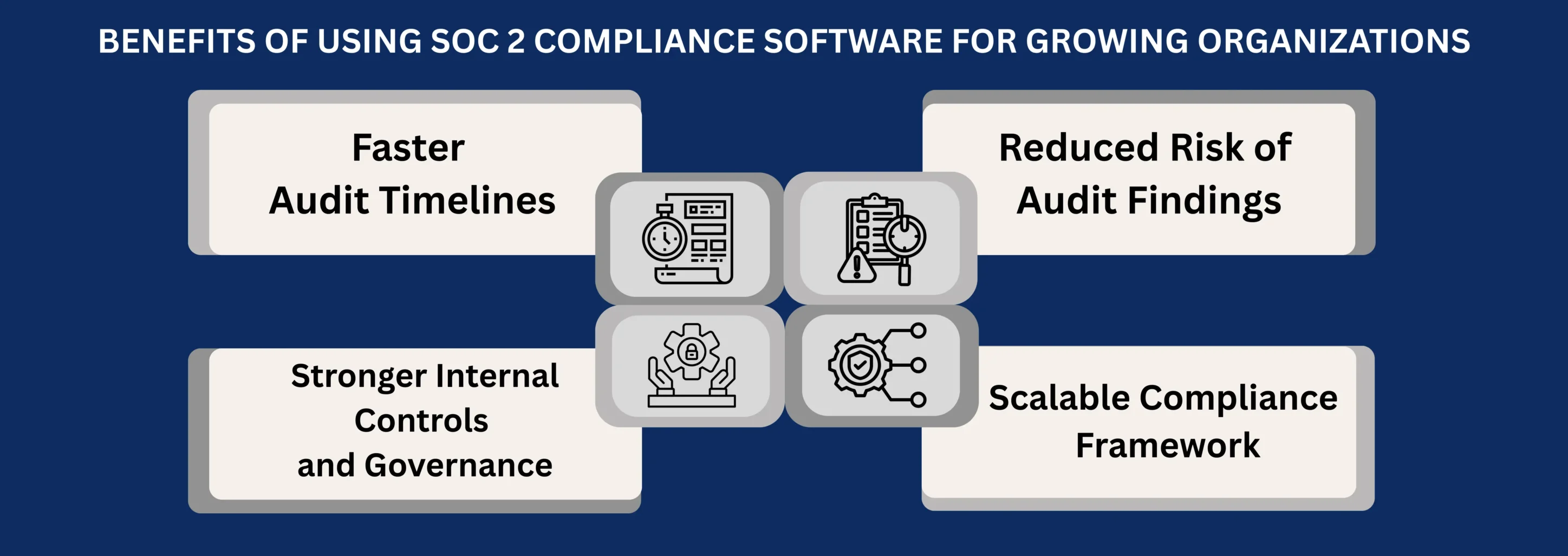
- ✓Independent verification of control design and operating effectiveness by a Licensed CPA Firm
- ✓Satisfaction of enterprise vendor qualification and third-party risk management requirements
- ✓Recognition in financial sector, healthcare, defense, and federal procurement processes
- ✓Structured evidence of control effectiveness supporting regulatory disclosure documentation
- ✓Annual SOC 2 examination cycle reinforcing consistent control operation and monitoring practices
- ✓Differentiation in competitive technology and SaaS markets where SOC 2 Certification is a standard expectation
- ✓Support for subcontractor qualification in federal and defense supply chains
- ✓Independent Verification and Vendor Qualification
- ✓Structured Control Environment and Ongoing Monitoring
SOC 2 Certification vs. SOC 2 Compliance: Key Distinctions
The distinction between SOC 2 Certification and SOC 2 compliance is significant for Maryland organizations communicating their security posture to enterprise customers and regulators. SOC 2 compliance refers to an organization’s internal adherence to control requirements aligned with the Trust Services Criteria, without independent verification by a Licensed CPA Firm. SOC 2 Certification — more precisely, SOC 2 attestation — refers to the formal report issued by an independent auditor following an examination conducted under AICPA standards. Only the latter carries the weight of independent third-party validation recognized in enterprise vendor programs.
Self-Assessment vs. Independent Attestation
An organization may internally assess its controls against the Trust Services Criteria and conclude that it is SOC 2 compliant. However, this self-assessment has no standing in enterprise procurement processes that require a SOC 2 examination conducted by an independent Licensed CPA Firm. The SOC 2 attestation — the formal report issued by the auditor — is the document that satisfies vendor qualification requirements in Maryland.
Organizations that represent themselves as SOC 2 certified without a current auditor-issued report risk misrepresentation in procurement processes. Customers who request the underlying report and discover it does not exist or is not current may impose contractual consequences.
SOC 2 vs. ISO 27001 and Other Frameworks
SOC 2 examination differs from ISO 27001 certification in scope, governing body, and market recognition. SOC 2 is governed by the AICPA and is primarily recognized in North American enterprise procurement markets. ISO 27001 is governed by the International Organization for Standardization and carries broader global recognition. SOC 2 tests specific controls against the Trust Services Criteria based on the organization’s service commitments, while ISO 27001 evaluates the information security management system against a comprehensive standard.
Maryland organizations serving both domestic enterprise customers and international clients may pursue both attestations based on customer requirements and target market considerations. SOC 2 Certification in Maryland is typically prioritized for U.S.-based enterprise and federal market access.
| Attribute | SOC 2 Attestation | ISO 27001 Certification |
|---|---|---|
| Governing Body | AICPA | ISO / IEC |
| Primary Market Recognition | North America (U.S. enterprise and federal) | Global |
| Evaluation Focus | Controls against Trust Services Criteria | Information security management system |
| Report Issuer | Licensed CPA Firm | Accredited certification body |
| Observation Period | Type 2: Defined period (min. 6 months) | Annual surveillance audits with 3-year recertification cycle |
Management Responsibilities in the SOC 2 Examination Process
The SOC 2 examination places specific responsibilities on the management of the organization under review. These responsibilities are distinct from the auditor’s role and must be fulfilled by the organization throughout the examination period. Understanding management’s obligations in the SOC 2 audit process is essential for Maryland organizations preparing for their first examination or maintaining an annual audit cycle.
Management is responsible for preparing the system description included in the SOC 2 report. The system description must accurately and completely describe the services provided, the system boundaries, the principal service commitments, the system requirements, and the controls in place. Management also provides a written assertion confirming that the description is fairly presented and that controls are suitably designed — and, for Type 2 reports, that controls operated effectively during the observation period.
The Licensed CPA Firm evaluates management’s assertion and the underlying system description as part of the SOC 2 examination and includes an opinion on whether management’s assertions are fairly stated based on the evidence examined.
Management is responsible for ensuring that controls operate as described throughout the observation period and that evidence of control operation is maintained and available for auditor review. The SOC 2 examination in Maryland requires management to produce evidence samples selected by the auditor, provide access to system configurations and logs, facilitate auditor inquiries with relevant personnel, and respond to nonconformity findings identified during fieldwork.
Evidence must be contemporaneous — created at the time the control was executed — and sufficient to support the auditor’s evaluation of operating effectiveness. Organizations that delegate evidence collection to a post-hoc documentation effort typically encounter significant audit exceptions due to insufficient or incomplete evidence records.
- ✓System Description and Management Assertion
- ✓Evidence Availability and Ongoing Control Operation
FAQ
▶
What is SOC 2 Certification in Maryland and who issues it?
▶
What is the difference between SOC 2 Type 1 and Type 2 in Maryland?
▶
Which Trust Services Criteria are required for SOC 2 examination in Maryland?
▶
How long does the SOC 2 Type 2 audit observation period last for Maryland organizations?
▶
Does SOC 2 attestation in Maryland establish compliance with state or federal law?
▶
How frequently must SOC 2 certification be renewed for Maryland organizations?
▶
Which Maryland industries most commonly require SOC 2 certification from vendors?
▶
What evidence is required for a SOC 2 audit in Maryland?
SOC 1 VS SOC 2: WHICH REPORT YOUR CUSTOMERS ACTUALLY ASK FOR
If you sell SaaS or provide outsourced services, you have likely been asked for a SOC report. However, the follow-up question is rarely easy to answer…

AICPA Issues New Guidance for Peer Reviewers Evaluating SOC 2 Engagements
AICPA SOC 2 guidance has been issued to help peer reviewers identify quality risks associated with SOC 2 engagements as the use of compliance automati…
SOC 2 Certified: What Does It Mean for Your Business
For companies that handle sensitive data or run cloud-based services, the question “Can you provide your SOC 2 report?” carries enormous weight. Yet, …
Get In Touch
have a question? let us get back to you.