
SOC 2 Certification in Missouri
SOC 2 Certification in Missouri is a formal attestation issued exclusively by a Licensed CPA Firm following an independent examination conducted under AICPA AT-C Section 205 attestation standards. The examination evaluates whether a service organization’s controls meet the applicable Trust Services Criteria across security, availability, processing integrity, confidentiality, and privacy domains. Organizations across Missouri’s technology, financial services, healthcare, and cloud services sectors obtain SOC 2 certification to demonstrate verified control effectiveness to enterprise customers and regulated institutions.
OUR CLIENTS










What Is SOC 2 Certification in Missouri?
SOC 2 Certification in Missouri is a structured attestation process governed by the American Institute of Certified Public Accountants (AICPA) under its System and Organization Controls framework. The certification is not a self-declaration or regulatory license — it is an independent examination performed by a Licensed CPA Firm that evaluates the design and operating effectiveness of an organization’s internal controls against the Trust Services Criteria (TSC). The resulting SOC 2 report constitutes the official attestation confirming that controls have been independently examined, tested, and verified by a qualified external party.
In Missouri, SOC 2 attestation applies to any service organization that stores, processes, or transmits customer data on behalf of other entities. This includes SaaS providers, cloud platform operators, managed service providers, fintech companies, healthcare technology firms, financial services organizations, and enterprise data processors operating across St. Louis, Kansas City, Springfield, Columbia, and throughout the state. The examination confirms that the organization’s stated system description accurately represents the controls in place — and that those controls function as designed.
Definition and Governing Framework
The SOC 2 framework is defined by the AICPA’s Trust Services Criteria, which establish the standards against which a service organization’s controls are evaluated. The SOC 2 examination is conducted under AICPA AT-C Section 205 — the attestation standard governing examination engagements. Only a Licensed CPA Firm acting as an independent attestation body is authorized under AICPA standards to issue a valid SOC 2 report. The report contains the auditor’s opinion, a description of the system under examination, and detailed findings on control design and operational effectiveness.
SOC 2 compliance in Missouri is distinguished from simple internal policy adherence by the requirement for independent third-party examination. An organization may implement robust security controls internally, but SOC 2 attestation requires that those controls be examined by a qualified external party — a Licensed CPA Firm — before the resulting report carries authoritative weight in enterprise procurement, vendor assurance programs, or regulatory due diligence. The SOC 2 examination produces either a Type 1 or Type 2 report, depending on whether the assessment covers control design at a point in time or operational effectiveness over a defined period.
Who Needs SOC 2 Certification in Missouri?
SOC 2 Certification in Missouri is required or expected across a broad range of service organizations that handle sensitive customer information. Enterprise customers — particularly in financial services, healthcare, government contracting, and regulated industries — routinely require SOC 2 attestation as a condition of vendor onboarding. Missouri-based SaaS companies seeking contracts with large financial institutions in Kansas City or St. Louis will frequently encounter SOC 2 Type 2 requirements during procurement. Similarly, managed service providers serving regulated industries must present current SOC 2 reports to demonstrate verified control effectiveness.
Missouri’s technology ecosystem includes a significant concentration of cloud service providers, healthcare IT firms, logistics technology companies, aerospace and defense contractors, and biotechnology organizations — all of which handle sensitive or proprietary data subject to customer due diligence requirements. For these organizations, SOC 2 attestation provides the independently verified evidence of control effectiveness that enterprise customers and regulated institutions require before establishing data-sharing or service relationships. SOC 2 certification for Missouri companies has become a baseline expectation in technology-sector vendor assurance programs.
- ✓SaaS providers and cloud platform operators serving enterprise customers
- ✓Managed service providers (MSPs) handling client infrastructure and data
- ✓Fintech and financial technology companies processing payment or financial data
- ✓Healthcare technology organizations managing protected health information
- ✓Logistics and transportation technology firms handling supply chain data
- ✓Aerospace and defense contractors managing controlled or sensitive information
- ✓Biotechnology and life sciences organizations processing research or clinical data
- ✓Cybersecurity service providers offering managed detection and response
- ✓Data hosting and colocation providers serving regulated industries
- ✓Enterprise software vendors with data processing obligations under customer contracts
SOC 2 Attestation vs. SOC 2 Compliance: A Critical Distinction
SOC 2 compliance refers to an organization’s internal adherence to security controls and policies aligned with the Trust Services Criteria. SOC 2 attestation, by contrast, is the formal output of an independent SOC 2 examination conducted by a Licensed CPA Firm — producing an official report and auditor opinion. Compliance without attestation cannot be independently verified and does not carry the authority of a SOC 2 report in enterprise procurement contexts. Missouri organizations operating in vendor assurance-intensive markets must understand that attestation — not self-declared compliance — is what enterprise customers require.
The SOC 2 examination produces a formal report that enterprise customers, procurement teams, and third-party risk management programs review as objective evidence of control effectiveness. This distinction is particularly important for Missouri-based technology companies competing for contracts with large regional employers, federal agencies with Missouri operations, and multinational corporations that impose standardized vendor security requirements. The SOC 2 attestation report — not internal documentation or questionnaire responses — constitutes the authoritative evidence of control verification in these contexts.

AICPA Trust Services Criteria: The Foundation of SOC 2 Certification
The Trust Services Criteria (TSC), established by the AICPA, define the control categories against which SOC 2 examinations are conducted. The TSC comprises five distinct domains: Security, Availability, Processing Integrity, Confidentiality, and Privacy. The Security criterion — also called the Common Criteria — is mandatory for all SOC 2 examinations. The remaining four criteria are selected based on the nature of services provided and the commitments made to customers. Each criterion maps to specific control activities, policies, procedures, and monitoring mechanisms that the Licensed CPA Firm evaluates during the SOC 2 audit.
The Security criterion — universally included in every SOC 2 examination — addresses the protection of system resources against unauthorized access. Under the Common Criteria, the Licensed CPA Firm evaluates controls related to logical and physical access management, threat detection, vulnerability management, incident response, change management, and risk assessment. The Security criterion is organized into Common Criteria categories (CC1 through CC9) covering control environment, communication, risk assessment, monitoring, logical access, system operations, change management, and risk mitigation. All other TSC domains build upon this Security foundation.
For Missouri-based organizations undergoing a SOC 2 audit, the Security criterion evaluation includes examination of access provisioning and deprovisioning procedures, multi-factor authentication implementation, encryption standards, network monitoring configurations, and security incident response protocols. The auditor collects and evaluates evidence demonstrating that these controls are not only appropriately designed but also operate effectively throughout the examination period. Evidence types include system-generated logs, configuration reports, access review records, and documented policy enforcement activities.
The Availability criterion evaluates whether the system is available for operation and use as committed in service level agreements and customer contracts. This criterion is particularly relevant for cloud service providers, SaaS companies, and data hosting organizations in Missouri that make uptime or performance commitments. Controls examined under Availability include infrastructure redundancy, disaster recovery planning, backup and restoration procedures, and performance monitoring. The auditor assesses whether controls are designed and operating to support the organization’s availability commitments.
The Processing Integrity criterion addresses whether system processing is complete, valid, accurate, timely, and authorized. This criterion applies to organizations performing transaction processing, data transformation, or computational services — including payment processors, financial data aggregators, and logistics technology firms in Missouri. The auditor evaluates controls that detect and correct processing errors, validate input and output accuracy, and ensure transactions are processed only with proper authorization. Processing Integrity is a critical SOC 2 criterion for Missouri’s fintech sector and financial services technology providers.
The Confidentiality criterion evaluates controls that protect information designated as confidential in accordance with organizational policy and customer agreements. This criterion covers data classification, access restrictions on confidential data, encryption of confidential information in transit and at rest, and data retention and disposal procedures. The Privacy criterion addresses the collection, use, retention, disclosure, and disposal of personal information in accordance with the organization’s privacy notice and applicable privacy requirements — including alignment with U.S. privacy frameworks relevant to Missouri organizations handling consumer data.
| Trust Services Criterion | Primary Focus | Typical Applicability |
|---|---|---|
| Security (Common Criteria) | Access control, threat detection, incident response, risk management | All SOC 2 examinations — mandatory |
| Availability | System uptime, disaster recovery, performance monitoring | Cloud providers, SaaS platforms, data hosting organizations |
| Processing Integrity | Accuracy, completeness, and timeliness of data processing | Payment processors, financial data firms, logistics technology |
| Confidentiality | Protection of confidential data per policy and agreements | Organizations handling proprietary, trade secret, or contractually protected data |
| Privacy | Personal information lifecycle management | Organizations collecting or processing consumer personal information |
Scope determination — identifying which Trust Services Criteria apply to a specific SOC 2 examination — is a critical early step in the audit process. Scope is defined based on the services the organization provides, the commitments made to customers in contracts and service agreements, and the systems and controls that support service delivery. A Missouri-based SaaS company providing cloud storage and data processing services may include Security, Availability, and Confidentiality criteria in its SOC 2 examination scope, while a payment processing firm may additionally include Processing Integrity.
The scope of the SOC 2 examination also defines which organizational systems, infrastructure components, personnel, and third-party service providers fall within the audit boundary. Subservice organizations — third-party vendors whose services affect the primary organization’s control environment — are addressed within the report either through the inclusive method (where their controls are also examined) or the carve-out method (where their controls are excluded and described separately). Accurate scope definition is essential to producing a SOC 2 report that accurately represents the control environment and satisfies customer expectations.
- ✓Security (Common Criteria)
- ✓Availability, Processing Integrity, and Confidentiality
- ✓Criteria Selection and Scope Determination
SOC 2 Type 1 vs. SOC 2 Type 2 Reports in Missouri
SOC 2 examinations in Missouri produce one of two report types: Type 1 or Type 2. The distinction between these report types is fundamental to understanding what the SOC 2 examination evaluates and what the resulting attestation confirms. Both report types are issued by a Licensed CPA Firm following an independent examination, but they differ in scope, examination period, and the nature of the auditor’s opinion. Missouri organizations selecting between Type 1 and Type 2 examinations must consider their customer requirements, operational maturity, and the specific assurance objectives of the engagement.
SOC 2 Type 1: Point-in-Time Assessment
A SOC 2 Type 1 report evaluates the design of an organization’s controls at a specific point in time. The Licensed CPA Firm examines whether the controls described in the system description are suitably designed to meet the applicable Trust Services Criteria as of a defined report date. The Type 1 report does not assess whether controls have operated effectively over time — it confirms only that, as of the report date, controls are appropriately designed to achieve their stated objectives. This assessment involves evidence review, documentation evaluation, and interviews with control owners.
SOC 2 Type 1 reports are appropriate for organizations establishing a SOC 2 program for the first time and seeking an initial attestation of control design before undertaking the longer observation period required for a Type 2 examination. In Missouri’s technology sector, newly established SaaS companies and startups entering enterprise markets often obtain a Type 1 report as a first attestation milestone. However, many enterprise procurement teams — particularly in financial services and healthcare — require a SOC 2 Type 2 report as a condition of vendor qualification, making the Type 1 an interim rather than a final attestation objective for most organizations.
SOC 2 Type 2: Operational Effectiveness Over Time
A SOC 2 Type 2 report evaluates both the design and the operating effectiveness of controls over a defined observation period. The Licensed CPA Firm examines evidence demonstrating that controls not only exist and are appropriately designed, but also functioned consistently and as intended throughout the examination period. The observation period for a SOC 2 Type 2 examination is typically a minimum of six months, with twelve-month periods being standard for organizations maintaining annual renewal cycles. During the observation period, the auditor collects evidence from actual system operations, log records, access reviews, and control monitoring activities.
SOC 2 Type 2 reports carry significantly greater weight in enterprise vendor assurance programs because they demonstrate that controls have operated effectively over an extended period — not just that they were correctly designed at a single point in time. Missouri organizations in financial services, healthcare technology, cloud services, and managed services that serve enterprise customers will typically be required to present a current SOC 2 Type 2 report as evidence of sustained control effectiveness. The Type 2 examination is the standard attestation expected for enterprise-facing service organizations pursuing SOC 2 compliance in Missouri.
| Characteristic | SOC 2 Type 1 | SOC 2 Type 2 |
|---|---|---|
| Examination Scope | Control design at a specific point in time | Control design and operating effectiveness over a defined period |
| Observation Period | None — single report date | Minimum 6 months; typically 12 months for annual cycles |
| Auditor Opinion | Suitability of control design | Suitability of design and operating effectiveness |
| Enterprise Acceptance | Accepted as initial attestation; often an interim step | Required by most enterprise customers and regulated institutions |
| Evidence Requirements | Documentation, design review, interviews | Documentation, design review, plus operational evidence over the observation period |
Selecting the Appropriate Report Type
The selection between SOC 2 Type 1 and Type 2 examinations is driven primarily by customer requirements and the organization’s operational history. Missouri organizations entering enterprise procurement processes for the first time may begin with a Type 1 examination to establish an initial attestation baseline, with the expectation of transitioning to annual Type 2 examinations as the control environment matures. Organizations with established control programs that have been operating consistently for six months or more are well-positioned to proceed directly to a Type 2 examination.
For Missouri financial services clients and other highly regulated sectors, a SOC 2 Type 2 report covering a twelve-month period is typically the minimum acceptable attestation for vendor qualification. Missouri-based managed service providers, cloud security firms, and healthcare IT organizations serving regulated customers should plan examination timelines to align with customer contract cycles — ensuring that current, valid Type 2 reports are available throughout vendor relationship periods. Annual renewal of the SOC 2 Type 2 examination maintains the attestation currency that enterprise customers require.
SOC 2 Certification Audit Process in Missouri
The SOC 2 audit process in Missouri follows a structured methodology governed by AICPA attestation standards. The Licensed CPA Firm conducting the examination follows a defined sequence of stages — from initial scope definition through final report issuance. Each stage produces specific outputs that form the basis of the auditor’s opinion. The SOC 2 audit process in Missouri is rigorous, evidence-based, and conducted entirely by the independent attestation body. The Licensed CPA Firm does not participate in designing or implementing the controls being examined, maintaining strict independence throughout the engagement.
The audit process begins with scope definition, during which the Licensed CPA Firm reviews the organization’s system description to understand the services provided, the infrastructure components in scope, the applicable Trust Services Criteria, and the boundaries of the examination. The system description — prepared by the service organization — must accurately characterize the systems, personnel, processes, and third-party relationships within the examination scope. The auditor evaluates whether the system description is complete, accurate, and consistent with the actual operating environment before proceeding to control evaluation.
During scope definition, the Licensed CPA Firm also determines the applicable Trust Services Criteria based on the organization’s service commitments and the nature of data processed. For Missouri-based organizations providing cloud infrastructure services, Security and Availability criteria are typically included. Healthcare technology firms may additionally scope Privacy criteria. The auditor reviews service-level agreements, customer contracts, and privacy notices to confirm which TSC domains are relevant to the SOC 2 examination. Scope definition directly determines the breadth and depth of the audit engagement.
Following scope definition, the Licensed CPA Firm develops the audit program — the structured plan governing which controls will be evaluated, what evidence types will be collected, and what testing procedures will be applied. The audit program maps each control to the applicable Trust Services Criteria and defines the specific audit procedures — inquiry, observation, inspection, and re-performance — used to evaluate control design and operating effectiveness. The audit program serves as the technical blueprint for the SOC 2 examination and directly influences the depth and rigor of the evaluation.
Control identification involves cataloging the specific control activities the service organization has implemented to address the Trust Services Criteria requirements. Controls may include technical configurations such as firewall rules and access permissions, procedural controls such as access review procedures and change management workflows, and management controls such as security awareness programs and vendor management processes. The auditor evaluates whether the identified controls are sufficient in design to address the applicable TSC requirements before proceeding to operating effectiveness testing in a Type 2 examination.
Evidence collection is the core activity of the SOC 2 examination. The Licensed CPA Firm collects and evaluates evidence from multiple sources to assess control design and — in a Type 2 examination — operating effectiveness over the observation period. Evidence types include system-generated logs, configuration screenshots, access review records, ticketing system outputs, policy and procedure documentation, training completion records, and vendor contracts. The auditor applies sampling methodologies to evaluate evidence from throughout the observation period, assessing consistency of control operation across the full examination window.
Control testing procedures used in the SOC 2 examination include inquiry (structured interviews with control owners and personnel), observation (direct observation of control activities), inspection (review of documents, records, and reports), and re-performance (independent execution of control procedures to verify results). The auditor applies professional judgment to determine the appropriate combination of testing procedures for each control, based on the control’s nature, the risk associated with its failure, and the available evidence. Testing results are documented in the auditor’s working papers and form the evidentiary basis for the audit opinion.
Following evidence collection and control testing, the Licensed CPA Firm reviews findings for nonconformities — instances where controls are not designed or operating in conformance with the applicable Trust Services Criteria. Identified nonconformities are documented and communicated to the service organization as part of the examination process. The nature and significance of nonconformities influence the auditor’s opinion, which may be unqualified (clean opinion), qualified (opinion with exceptions noted), or adverse (opinion that controls do not meet the criteria). The auditor’s opinion is the definitive certification decision and is included in the final SOC 2 report.
| Audit Stage | Key Activities | Output |
|---|---|---|
| Scope Definition | System description review, TSC determination, boundary identification | Defined examination scope and applicable criteria |
| Audit Program Determination | Control identification, procedure mapping, evidence planning | Structured audit program with testing procedures |
| Evidence Collection & Testing | Inquiry, observation, inspection, re-performance; sampling | Documented control testing results and working papers |
| Nonconformity Review | Finding evaluation, significance assessment, auditor judgment | Classified findings and auditor opinion determination |
| Report Issuance | System description, auditor opinion, control testing results | Final SOC 2 Type 1 or Type 2 attestation report |
- ✓Stage 1: Scope Definition and System Description Review
- ✓Stage 2: Audit Program Determination and Control Identification
- ✓Stage 3: Evidence Collection and Control Testing
- ✓Stage 4: Nonconformity Review and Certification Decision
The SOC 2 Observation Period: Definition and Requirements
The observation period is a defining characteristic of the SOC 2 Type 2 examination. It represents the duration over which the Licensed CPA Firm evaluates the operating effectiveness of an organization’s controls. Unlike the Type 1 report — which assesses control design at a single point in time — the Type 2 report requires that controls be examined across a continuous period of operation. The observation period provides evidence that controls function consistently and reliably over time, not merely that they exist or are correctly designed at the moment of examination.
The AICPA recommends a minimum observation period of six months for SOC 2 Type 2 examinations, though twelve-month periods are standard for organizations maintaining annual audit cycles. The observation period begins when the service organization’s controls are operating consistently and concludes at the report date. For Missouri organizations undergoing their first Type 2 examination, a six-month observation period may be appropriate to establish an initial attestation. Subsequent annual examinations typically cover twelve-month periods, providing enterprise customers with continuous coverage of control effectiveness.
During the observation period, the service organization must maintain consistent control operations and thorough documentation of control activities. The Licensed CPA Firm collects evidence from throughout the observation period — not just from a single point in time — applying sampling techniques to evaluate control performance across the full window. Evidence collected during the observation period includes access review records from each review cycle, change management tickets, security monitoring reports, backup verification records, and training completion logs. The breadth of evidence collected directly reflects the length and nature of the observation period.
The observation period directly determines the currency and relevance of the resulting SOC 2 Type 2 report. Enterprise customers typically expect that a service organization’s SOC 2 report covers a period ending within the last twelve months. A report with an observation period ending more than twelve months ago is generally considered stale in enterprise vendor assurance programs and may not satisfy current procurement requirements. Missouri organizations serving enterprise customers must maintain ongoing annual SOC 2 examination cycles to ensure that current, valid attestation reports are available throughout vendor relationship periods.
The SOC 2 Type 2 examination process in Missouri requires that control activities be documented consistently throughout the observation period. Gaps in documentation — such as missing access review records for a particular month or undocumented changes to system configurations — can result in exceptions noted in the auditor’s opinion. Organizations with annual SOC 2 Type 2 programs structure their internal control documentation practices to ensure continuous evidence availability across each twelve-month observation period, supporting complete and accurate evidence collection by the Licensed CPA Firm.
- ✓Observation Period Duration and Standards
- ✓Impact of Observation Period on Report Currency
SOC 2 Report Structure and Issuance
The SOC 2 report issued by the Licensed CPA Firm following the completion of the examination is a structured attestation document containing several defined components. The report structure is governed by AICPA standards and must include specific elements to constitute a valid SOC 2 attestation. Understanding the structure of the SOC 2 report is important for Missouri organizations preparing to share it with enterprise customers, prospective clients, or regulatory stakeholders.
Components of the SOC 2 Attestation Report
The SOC 2 report contains five primary sections: (1) the independent service auditor’s report, which contains the auditor’s opinion; (2) management’s assertion, in which the service organization’s management asserts that the system description is fairly presented and controls meet the applicable Trust Services Criteria; (3) the system description, which describes the organization’s systems, infrastructure, software, personnel, processes, and data; (4) the description of the tests of controls and results, documenting the specific controls evaluated and testing procedures applied; and (5) other information provided by management, if applicable.
The independent service auditor’s report — the first and most authoritative section — contains the Licensed CPA Firm’s professional opinion on whether the system description is fairly presented, whether controls are suitably designed to meet the Trust Services Criteria (Type 1), and whether controls operated effectively throughout the observation period (Type 2). The auditor’s opinion may be unqualified, indicating controls met the applicable criteria; qualified, noting specific exceptions; or adverse, indicating that controls failed to meet the criteria in material respects. The auditor’s opinion is the definitive output of the SOC 2 examination.
Report Distribution and Confidentiality
SOC 2 reports are restricted-use documents — intended for distribution to specified parties, including the service organization, its management, and current or prospective customers who have agreed to use the report for the purposes specified therein. Unlike SOC 3 reports — which are general-use summaries — SOC 2 reports contain detailed control descriptions and testing results that are not suitable for unrestricted public distribution. Missouri organizations distributing SOC 2 reports to enterprise customers typically do so under non-disclosure agreements or as part of vendor qualification processes.
The restricted-use nature of the SOC 2 report is an important consideration for Missouri-based service organizations managing multiple customer relationships. Each enterprise customer requesting a copy of the SOC 2 report should receive the full report — including the auditor’s opinion, system description, and control testing results — rather than a summary or extract. Providing incomplete reports or selectively disclosing portions of the SOC 2 attestation may not satisfy customer procurement requirements and could undermine the credibility of the attestation in vendor assurance reviews.
Report Validity and Ongoing SOC 2 Compliance Monitoring in Missouri
A SOC 2 report does not carry permanent validity. Enterprise customers and third-party risk management programs expect Missouri service organizations to maintain current, annually renewed SOC 2 attestations. The report reflects the control environment as evaluated during the specified observation period — it does not certify the state of controls at any point after the report date. Maintaining continuous SOC 2 compliance in Missouri requires organizations to plan and execute annual examination cycles with the Licensed CPA Firm, ensuring that current attestation reports are available throughout the year.
Report Validity Period and Renewal Expectations
Most enterprise vendor assurance programs treat a SOC 2 Type 2 report as current for twelve months from the end of the observation period. A report issued in January 2025 covering an observation period ending December 31, 2024, would typically be considered current through December 2025 — by which point a new examination covering calendar year 2025 should be in progress or completed. Missouri organizations operating in financial services, healthcare technology, or other compliance-intensive sectors are expected to maintain annual SOC 2 examination cycles without gaps in attestation coverage.
The renewal cycle for SOC 2 certification in Missouri requires the Licensed CPA Firm to conduct a new examination covering the subsequent observation period, collect updated evidence of control effectiveness, and issue a new attestation report. Controls that have changed, been added, or been retired between examinations must be accurately reflected in the new system description and evaluated in the new SOC 2 examination. Organizations that have modified system infrastructure, acquired new technology platforms, or expanded service scope must ensure these changes are incorporated into the subsequent examination scope.
Continuous Monitoring and Control Documentation
Continuous monitoring of control effectiveness between SOC 2 examinations supports the organization’s ability to produce consistent, high-quality evidence during subsequent audit cycles. Organizations that maintain systematic documentation of access reviews, change management activities, security incident records, backup verification results, and vulnerability management activities throughout the year are well-positioned to support rigorous evidence collection during the next examination. Continuous monitoring also enables timely identification of control gaps before they affect the observation period record.
For Missouri organizations undergoing annual SOC 2 Type 2 examinations, the period between report issuance and the commencement of the next observation period represents an opportunity to address exceptions noted in the prior report and strengthen the control environment before the next examination cycle begins. Organizations that receive qualified opinions identifying specific control exceptions should ensure that the underlying deficiencies are remediated before the next observation period commences — so that the subsequent SOC 2 Type 2 report reflects a fully effective and operational control environment.
Missouri Industry Applications: Who Requires SOC 2 Attestation?
SOC 2 attestation is applicable across a broad range of Missouri industry sectors. The common denominator is the handling, processing, or storing of sensitive customer data on behalf of other organizations. Missouri’s diverse economic base — spanning technology, financial services, healthcare, logistics, aerospace, manufacturing, and biotechnology — generates significant demand for SOC 2 compliance attestation across multiple service categories. Enterprise customers in each of these sectors maintain vendor assurance programs that require current SOC 2 reports from service providers with access to sensitive systems or data.
Financial Services and Fintech
Missouri’s financial services sector is concentrated primarily in St. Louis and Kansas City, which together host a substantial base of banking institutions, insurance companies, investment management firms, and financial technology providers. Missouri financial services organizations — particularly technology vendors and cloud service providers serving banks and insurance carriers — are routinely required to produce current SOC 2 Type 2 reports as part of vendor qualification processes. Regulatory expectations from banking supervisors and financial regulators reinforce customer demand for independently verified attestation of security and availability controls.
Missouri’s fintech sector includes payment processing companies, digital banking platform providers, loan origination technology firms, and financial data analytics organizations. These entities handle payment card data, account credentials, transaction records, and personally identifiable financial information — all subject to stringent security requirements from their banking and financial institution customers. SOC 2 Type 2 attestation is a standard requirement in fintech vendor qualification programs. Missouri fintech companies seeking contracts with regional banks or national financial institutions must maintain current SOC 2 reports to compete effectively.
Healthcare Technology and Life Sciences
Missouri’s healthcare sector — anchored by major health systems in St. Louis and Kansas City, as well as academic medical centers and regional hospital networks — generates significant demand for SOC 2 attestation from healthcare technology vendors. Electronic health record platforms, healthcare data analytics firms, telemedicine technology providers, revenue cycle management companies, and clinical data management organizations serving Missouri health systems are frequently required to produce SOC 2 reports demonstrating security and privacy controls governing access to protected health information.
Biotechnology and life sciences organizations in Missouri — concentrated in the St. Louis research corridor and including pharmaceutical companies, clinical research organizations, and genomics technology firms — also benefit from SOC 2 attestation when handling proprietary research data, clinical trial records, or patient-derived biological data. Research partners, pharmaceutical sponsors, and regulatory bodies increasingly expect documented evidence of security controls governing access to sensitive research information. SOC 2 attestation provides independently verified confirmation of those controls.
Technology, SaaS, Cloud Services, and Managed Service Providers
Missouri’s technology sector spans a diverse range of SaaS companies, cloud infrastructure providers, cybersecurity firms, and managed service providers across St. Louis, Kansas City, Columbia, and Springfield. Missouri technology companies face increasing customer demand for independently verified security attestation, particularly as enterprise procurement programs have standardized on SOC 2 Type 2 as the baseline security assurance document for cloud service vendors. Missouri-based SaaS companies that cannot produce current SOC 2 reports are frequently excluded from enterprise procurement processes — regardless of the quality of their internal security programs.
Managed service providers (MSPs) operating in Missouri serve a critical role in the regional technology ecosystem, providing IT infrastructure management, cloud migration services, cybersecurity monitoring, and help desk support to small and mid-market businesses. Because MSPs have privileged access to customer networks, systems, and data, their enterprise customers — and increasingly their mid-market customers — require SOC 2 Type 2 attestation as evidence that the MSP’s internal controls govern access to customer environments appropriately. SOC 2 audit engagements for MSPs represent a growing category of examination demand across Missouri.
Logistics, Manufacturing, Aerospace, and Defense
Missouri’s logistics and transportation sector — centered around major freight hubs, rail networks, and the St. Louis metropolitan distribution infrastructure — includes technology providers offering supply chain visibility platforms, transportation management systems, and logistics data analytics tools. These technology vendors handle sensitive operational data, shipping records, and sometimes controlled commercial or government-adjacent information. Enterprise logistics customers and federal agencies increasingly require SOC 2 attestation from technology vendors with access to supply chain data systems.
Missouri’s aerospace and defense sector — including major defense contractors and their technology supply chains operating in the St. Louis area — creates demand for security attestation frameworks demonstrating control effectiveness over sensitive operational and contractual data. While some defense-specific frameworks apply to classified information environments, SOC 2 attestation addresses commercial and unclassified sensitive information domains where standard enterprise security assurance requirements apply. Manufacturing technology providers and industrial IoT platform vendors serving Missouri’s manufacturing base similarly encounter SOC 2 requirements from enterprise customers with global vendor assurance programs.
Missouri Market Context: Technology and Business Ecosystem
Missouri’s technology and business ecosystem provides the geographic and economic context within which SOC 2 certification demand operates. The state’s four major metropolitan markets — St. Louis, Kansas City, Springfield, and Columbia — each host distinct concentrations of technology companies, financial institutions, healthcare organizations, and enterprise customers. Understanding the Missouri market context clarifies why SOC 2 attestation engagements have grown in volume and why Missouri-based organizations increasingly prioritize independent attestation as a commercial necessity.
St. Louis: Financial Services, Healthcare, and Technology
St. Louis is Missouri’s largest metropolitan area and hosts a significant concentration of financial services firms, healthcare systems, technology companies, and aerospace and defense organizations. The St. Louis financial services sector — including major banking institutions, insurance companies, and investment management firms — maintains structured vendor assurance programs requiring current SOC 2 reports from technology service providers. The St. Louis healthcare ecosystem, anchored by major academic medical centers and regional health systems, creates substantial demand for SOC 2 attestation from healthcare IT vendors, EHR platform providers, and clinical data management organizations.
The St. Louis technology sector includes a growing base of SaaS companies, cybersecurity firms, and data analytics organizations serving regional and national enterprise customers. St. Louis-based technology companies competing for contracts with financial institutions, healthcare systems, and enterprise organizations headquartered in the region will routinely encounter SOC 2 Type 2 requirements during vendor qualification processes. The SOC 2 examination demand in St. Louis reflects the concentration of large enterprise customers with established vendor risk management programs.
Kansas City: Fintech, Financial Services, and Cloud Services
Kansas City is Missouri’s second-largest metropolitan area and hosts a dynamic financial services and fintech ecosystem — including regional banking institutions, payments technology companies, and financial data service providers. The Kansas City metropolitan area spans the Missouri-Kansas state line, creating a cross-border business environment in which Missouri-based service organizations serve enterprise customers operating in both states. Kansas City’s fintech concentration — including firms focused on digital payments, embedded finance, and banking-as-a-service platforms — drives significant demand for SOC 2 Type 2 attestation in the region.
Kansas City’s cloud services and managed IT sector has expanded significantly, driven by the growth of regional data centers, cloud computing adoption among mid-market businesses, and the relocation of technology-focused enterprises to the region. Missouri-based cloud service providers and MSPs serving Kansas City’s financial services, healthcare, and corporate sectors face consistent SOC 2 attestation requirements from their enterprise customer bases. Licensed CPA Firms serving Kansas City organizations across multiple sectors conduct SOC 2 audits addressing the region’s diverse service organization landscape.
Springfield and Columbia: Regional Technology Markets
Springfield, Missouri’s third-largest city, hosts a growing technology and healthcare services sector — including regional health systems, insurance technology companies, and business process outsourcing firms. Springfield-based technology service providers serving enterprise customers in healthcare and financial services encounter SOC 2 requirements consistent with statewide trends. Columbia — home to the University of Missouri and a growing technology and research ecosystem — hosts technology companies, life sciences organizations, and research data management firms that handle sensitive information subject to enterprise and institutional security requirements.
Both Springfield and Columbia represent growing markets for SOC 2 certification in Missouri, as regional businesses expand their enterprise customer bases and encounter vendor assurance requirements for the first time. The growth of remote-work-enabled technology companies — many headquartered in smaller Missouri markets but serving national enterprise customers — has extended SOC 2 attestation demand beyond Missouri’s largest metropolitan areas. Missouri organizations across the state’s geographic footprint can access SOC 2 examination services from Licensed CPA Firms operating nationally with expertise in Missouri-based service organization audits.
Benefits of SOC 2 Certification for Missouri-Based Organizations
SOC 2 Certification in Missouri provides service organizations with independently verified evidence of control effectiveness that addresses a broad range of commercial, operational, and competitive requirements. The benefits of SOC 2 attestation extend across vendor assurance, customer trust, regulatory alignment, third-party risk management, and market access dimensions. These benefits are grounded in the independent, evidence-based nature of the SOC 2 examination — they derive from the credibility of the Licensed CPA Firm attestation, not from self-declaration or internal compliance programs.
SOC 2 Type 2 attestation is a prerequisite for vendor qualification at a significant and growing number of enterprise organizations. Missouri-based service organizations without a current SOC 2 report are frequently excluded from vendor shortlists during procurement processes — regardless of the quality of their services or the strength of their internal security programs. The SOC 2 report functions as an objective, independently verified credential that satisfies the security assurance requirements of enterprise procurement teams without requiring organization-specific security audits or extended vendor review processes.
For Missouri-based SaaS companies and technology service providers, SOC 2 attestation enables access to enterprise customer segments that are otherwise inaccessible due to vendor security requirements. Financial institutions, healthcare systems, and large enterprise organizations maintain structured vendor risk management programs that require documentary evidence of security control effectiveness — typically in the form of a current SOC 2 Type 2 report. Obtaining and maintaining annual SOC 2 attestation directly expands the addressable customer market for Missouri technology companies competing at the enterprise level.
SOC 2 attestation provides customers with independently verified assurance that the service organization’s controls governing data security, availability, and privacy have been examined by a qualified external party. This independently verified assurance is qualitatively different from questionnaire-based vendor assessments or self-reported security documentation — it reflects the professional judgment of a Licensed CPA Firm that has examined actual control evidence. For Missouri service organizations serving customers with mature third-party risk management programs, providing a current SOC 2 report streamlines the vendor review process and demonstrates a commitment to verified control effectiveness.
Third-party risk management (TPRM) programs at enterprise organizations use SOC 2 reports as the primary evidence source for evaluating vendor security posture. A current SOC 2 Type 2 report with an unqualified auditor opinion satisfies the security assurance requirements of most enterprise TPRM programs — without requiring additional security questionnaires, on-site audits, or independent security assessments. Missouri service organizations that provide current SOC 2 reports to customers reduce friction associated with vendor onboarding and periodic re-qualification reviews, strengthening commercial relationships and reducing the likelihood of disqualification during vendor rationalization exercises.
SOC 2 attestation supports regulatory alignment for Missouri organizations operating in regulated industries where customer or supervisory expectations include evidence of third-party security oversight. Banking regulators, healthcare regulators, and state privacy authorities increasingly expect regulated entities to maintain oversight programs covering their technology service providers — and SOC 2 reports serve as the primary evidence instrument in these oversight frameworks. Missouri organizations that can produce current SOC 2 attestations facilitate their customers’ own regulatory compliance demonstrations, adding additional commercial value to the attestation.
In competitive markets where multiple service providers offer comparable technical capabilities, SOC 2 attestation provides a meaningful differentiator during enterprise sales processes. Missouri technology companies that maintain current SOC 2 Type 2 reports signal verified security maturity — a factor that enterprise procurement teams weigh heavily when evaluating vendors with access to sensitive systems or data. The competitive differentiation provided by SOC 2 Certification in Missouri is particularly significant in market segments where smaller regional providers compete against national or global vendors that have long maintained SOC 2 attestations.
- ✓Independent verification of control design and operating effectiveness by a Licensed CPA Firm
- ✓Qualification for enterprise vendor assurance programs requiring SOC 2 Type 2 attestation
- ✓Streamlined vendor onboarding with enterprise customers through accepted attestation credentials
- ✓Structured SOC 2 audit methodology that evaluates controls against defined Trust Services Criteria
- ✓Ongoing attestation currency maintained through annual examination cycles
- ✓Third-party risk management program satisfaction without additional vendor-specific security audits
- ✓Regulatory alignment supporting customers’ third-party oversight program requirements
- ✓Competitive differentiation in enterprise procurement processes against non-attested competitors
- ✓Recognition in financial sector procurement as a qualifying security assurance credential
- ✓Systematic documentation of control activities supporting consistent internal security governance
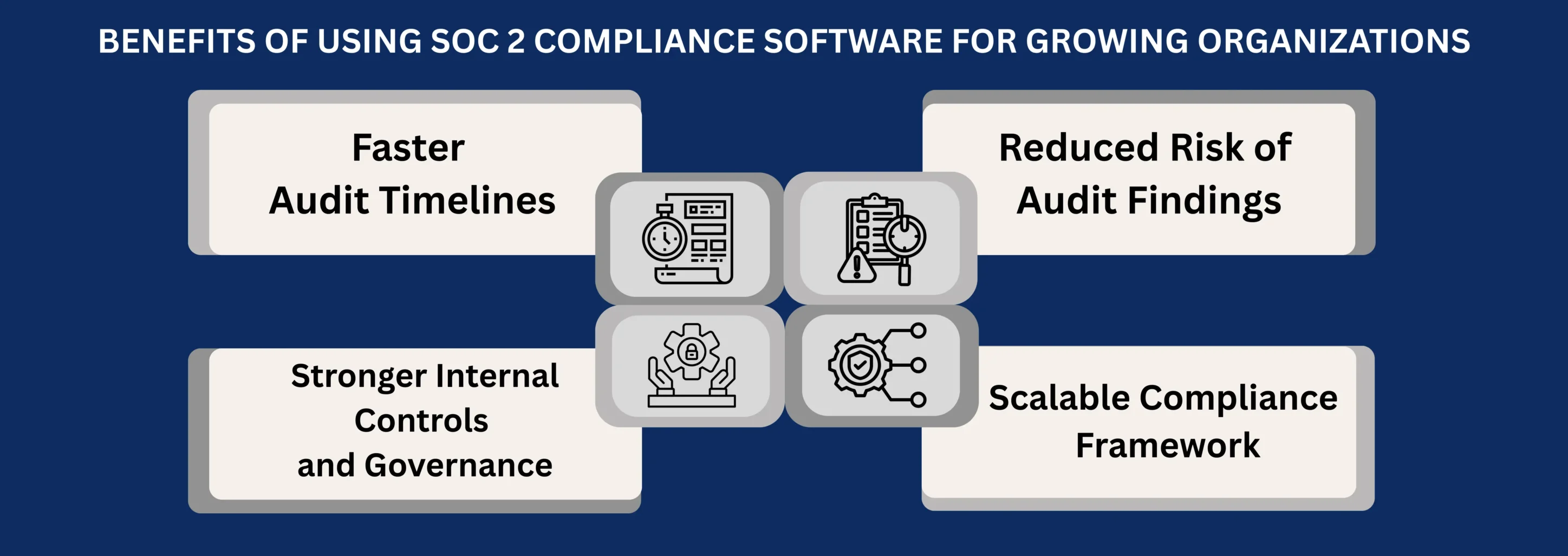
- ✓Enterprise Vendor Qualification and Procurement Access
- ✓Customer Trust and Third-Party Risk Management
- ✓Regulatory Alignment and Competitive Differentiation
CertPro: Independent SOC 2 Audit and Attestation Services in Missouri
CertPro is a Licensed CPA Firm providing independent SOC 2 audit and attestation services to organizations across Missouri. As an independent attestation body, CertPro conducts SOC 2 examinations under AICPA AT-C Section 205 attestation standards — evaluating service organizations’ controls against the applicable Trust Services Criteria and issuing SOC 2 Type 1 and Type 2 reports. CertPro’s scope of services is limited to examination, audit, and attestation activities. The firm does not provide advisory, consulting, implementation, or control design services, maintaining the strict independence required for SOC 2 attestation engagements.
Licensed CPA Firm and Independent Attestation Authority
AICPA standards require that SOC 2 examinations be conducted by a Licensed CPA Firm acting as an independent attestation body. CertPro satisfies this requirement as a Licensed CPA Firm with professional qualifications and independence standards governing its attestation engagements. The independence of the Licensed CPA Firm is essential to the credibility and authority of the SOC 2 report — enterprise customers and regulated institutions accept SOC 2 reports as authoritative evidence of control effectiveness specifically because they are issued by an independent, professionally qualified attestation body, not by the service organization itself.
CertPro’s SOC 2 examination services cover the full examination lifecycle — from scope definition and audit program development through evidence collection, control testing, nonconformity review, and final report issuance. The firm’s examination methodology is structured in accordance with AICPA attestation standards and Trust Services Criteria requirements, ensuring that resulting SOC 2 reports are consistent with AICPA reporting requirements and accepted by enterprise customers, regulated institutions, and third-party risk management programs. CertPro serves Missouri organizations across St. Louis, Kansas City, Springfield, Columbia, and throughout the state.
Scope of SOC 2 Examination Services
CertPro’s SOC 2 examination services encompass SOC 2 Type 1 and Type 2 examinations across all five Trust Services Criteria domains — Security, Availability, Processing Integrity, Confidentiality, and Privacy. The firm conducts SOC 2 audits for service organizations across Missouri’s technology, financial services, healthcare, logistics, aerospace, manufacturing, and managed services sectors. Each examination is scoped and executed based on the service organization’s specific system description, applicable Trust Services Criteria, and examination objectives. The resulting SOC 2 attestation report reflects the findings of a rigorous, independently conducted examination by a Licensed CPA Firm.
CertPro’s SOC 2 attestation engagements in Missouri are conducted by experienced attestation professionals with deep familiarity with the Trust Services Criteria, AICPA attestation standards, and the control environments common across Missouri’s primary industry sectors. The firm’s examination approach is evidence-based and structured, producing SOC 2 reports that are clear, complete, and consistent with AICPA reporting requirements. Missouri organizations seeking SOC 2 Certification in Missouri from a Licensed CPA Firm with demonstrated attestation expertise can engage CertPro for independent examination and report issuance services.
Multi-Sector Examination Expertise Across Missouri
CertPro’s examination experience spans Missouri’s diverse industry sectors, including SaaS and cloud technology companies, financial services and fintech organizations, healthcare IT and life sciences firms, logistics technology providers, managed service providers, and cybersecurity organizations. This multi-sector experience enables the firm’s attestation professionals to accurately evaluate the control environments relevant to each industry context, understand the Trust Services Criteria requirements most applicable to each service type, and produce SOC 2 reports that address the specific assurance needs of each sector’s enterprise customer base.
For Missouri organizations engaging CertPro for SOC 2 examination services, the firm’s institutional knowledge of Missouri’s business ecosystem — including the vendor assurance expectations of major financial institutions in Kansas City and St. Louis, the healthcare IT requirements of Missouri’s major health systems, and the technology sector procurement norms of Missouri’s enterprise customer base — informs the examination approach and report structure. CertPro’s SOC 2 audit engagements in Missouri are conducted with the rigor and independence required to produce attestation reports accepted across Missouri’s enterprise procurement landscape.
SOC 2 Certification Requirements and Evaluation Criteria
SOC 2 Certification in Missouri requires service organizations to demonstrate that their controls are designed and — in the case of Type 2 examinations — operating effectively in accordance with the applicable Trust Services Criteria. The evaluation criteria are defined by the AICPA and applied consistently across all SOC 2 examinations. Understanding the specific requirements that the Licensed CPA Firm will evaluate during the SOC 2 audit enables Missouri service organizations to maintain well-documented, consistently operating control environments that support rigorous attestation engagements.
Control design requirements under the SOC 2 framework address whether the controls an organization has implemented are appropriately structured to address the risks they are intended to mitigate. The Licensed CPA Firm evaluates control design by reviewing policy documentation, technical configuration specifications, procedural documentation, and organizational structure — determining whether the controls, as designed, are capable of meeting the applicable Trust Services Criteria requirements. Deficiencies in control design, where a control is not structured to address the applicable criterion, are identified as design exceptions in the SOC 2 report.
Control design evaluation encompasses both the existence of controls and their logical construction. A control that exists in policy documentation but lacks technical implementation or procedural enforcement mechanisms is considered deficiently designed. For Missouri service organizations, control design requirements span access control policies and their technical implementation, change management procedures and their enforcement mechanisms, incident response plans and their activation procedures, and data classification policies and their operational application. Each control must be designed with sufficient specificity to address the applicable Trust Services Criteria requirement.
Operating effectiveness requirements — applicable exclusively to SOC 2 Type 2 examinations — address whether controls have functioned as designed throughout the observation period. The Licensed CPA Firm evaluates operating effectiveness by examining evidence of control activities drawn from throughout the observation period, applying sampling techniques to assess consistency of control performance. Operating effectiveness exceptions occur when controls are appropriately designed but not consistently executed, documented, or enforced during the observation period. Common exceptions include missed access review cycles, undocumented change approvals, and gaps in security monitoring records.
For Missouri organizations maintaining annual SOC 2 Type 2 examination cycles, operating effectiveness requirements translate into an ongoing obligation to execute control activities consistently, document evidence of control performance throughout the observation period, and maintain records that support the auditor’s evidence collection. Organizations that rely on automated control monitoring tools — such as security information and event management (SIEM) platforms, privileged access management (PAM) systems, and configuration management tools — generate systematic evidence of control operation that supports rigorous operating effectiveness evaluations during the SOC 2 audit.
The system description — prepared by the service organization and included in the SOC 2 report — must accurately and completely represent the organization’s systems, infrastructure, personnel, processes, and subservice organizations. The Licensed CPA Firm evaluates whether the system description fairly presents the control environment as it actually operates, identifying any material omissions, inaccuracies, or misrepresentations that would affect a reader’s understanding of the controls in place. A system description that overstates control capabilities or omits significant system components will result in exceptions in the auditor’s report.
Missouri service organizations must ensure their system descriptions accurately reflect the current state of their technology infrastructure, organizational structure, and control activities. System descriptions that reference retired controls, omit recently acquired technology platforms, or fail to identify material subservice organization relationships will be flagged as inaccurate during the SOC 2 examination. Maintaining accurate, current system descriptions is a foundational requirement of the SOC 2 audit process and directly affects the quality and scope of the resulting attestation report.
- ✓Control Design Requirements
- ✓Operating Effectiveness Requirements
- ✓System Description Accuracy Requirements
FAQ
▶
What is SOC 2 Certification in Missouri?
▶
Who is authorized to issue a SOC 2 report in Missouri?
▶
What is the difference between SOC 2 Type 1 and Type 2?
▶
How long does the SOC 2 Type 2 observation period last?
▶
How long is a SOC 2 report valid in Missouri?
▶
Which Missouri industries require SOC 2 attestation?
▶
What Trust Services Criteria are included in a SOC 2 examination?
▶
What does the SOC 2 report contain?
SOC 1 VS SOC 2: WHICH REPORT YOUR CUSTOMERS ACTUALLY ASK FOR
If you sell SaaS or provide outsourced services, you have likely been asked for a SOC report. However, the follow-up question is rarely easy to answer…

AICPA Issues New Guidance for Peer Reviewers Evaluating SOC 2 Engagements
AICPA SOC 2 guidance has been issued to help peer reviewers identify quality risks associated with SOC 2 engagements as the use of compliance automati…
SOC 2 Certified: What Does It Mean for Your Business
For companies that handle sensitive data or run cloud-based services, the question “Can you provide your SOC 2 report?” carries enormous weight. Yet, …
Get In Touch
have a question? let us get back to you.