
SOC 2 Certification in Nevada
The Stage 1 audit focuses on the review of documentation supporting the organization’s control environment and the assessment of whether controls are suitably designed to meet the applicable Trust Services Criteria. The Licensed CPA Firm reviews policy documents, control matrices, risk assessment outputs, vendor agreements, system architecture documentation, and management’s system description. The Stage 1 assessment determines whether the control design provides a reasonable basis for meeting TSC requirements before the CPA firm proceeds to operating effectiveness testing.
OUR CLIENTS










Independent SOC 2 Certification by a Licensed CPA Firm in Nevada
SOC 2 Certification in Nevada is a formal attestation issued exclusively by a Licensed CPA Firm following an independent examination conducted under AICPA AT-C Section 205. The examination determines whether an organization’s controls satisfy the applicable Trust Services Criteria (TSC) as established by the American Institute of Certified Public Accountants (AICPA). Importantly, the SOC 2 examination is not a certification in the traditional ISO sense — it is an attestation engagement. This means a licensed, independent CPA firm reviews and opines on the effectiveness of controls within a defined scope, lending the report its credibility and third-party weight.
Nevada’s business environment spans a broad range of industries that regularly handle sensitive customer data, financial records, payment information, and personally identifiable information. Organizations in Las Vegas, Reno, Henderson, and surrounding areas — from hospitality technology and gaming platforms to SaaS providers, fintech companies, cloud service operators, and logistics platforms — face increasing vendor assurance expectations from enterprise customers, financial institutions, and government contractors. SOC 2 compliance Nevada requirements stem not from a single state mandate, but from the cumulative contractual, regulatory, and procurement expectations placed on service organizations operating across these sectors.
Nevada’s regulatory environment adds important context to SOC 2 attestation obligations. Nevada Revised Statutes Chapter 603A governs the security and privacy of personal information, establishing data protection requirements for businesses that collect or maintain personal information from Nevada residents. Organizations subject to NRS 603A, payment card industry requirements, or federal privacy frameworks such as GLBA, HIPAA, or FedRAMP find that SOC 2 attestation in Nevada aligns with and reinforces their existing compliance posture. The SOC 2 attestation does not replace these regulatory frameworks — instead, it provides an independently verified, structured control assessment that satisfies vendor due diligence requirements across multiple frameworks simultaneously.
AICPA Attestation Standards Governing SOC 2 Examinations
The SOC 2 examination is governed by AICPA AT-C Section 205, which establishes the professional standards applicable to examination-level attestation engagements. Under these standards, the Licensed CPA Firm serves as the practitioner — independently evaluating management’s assertion that controls are suitably designed and operating effectively against the applicable Trust Services Criteria. The practitioner collects and evaluates evidence, identifies exceptions or nonconformities, and issues a written opinion in the form of a SOC 2 report. Depending on examination findings, that opinion may be unqualified, qualified, adverse, or a disclaimer of opinion.
AT-C Section 205 requires the CPA firm to maintain independence from the examined organization, plan and perform the examination to obtain reasonable assurance, and evaluate the sufficiency and appropriateness of all evidence obtained. These professional obligations ensure that the SOC 2 report carries the weight of independent third-party validation — not self-assessment or internal audit. For Nevada-based organizations presenting SOC 2 reports to enterprise customers, financial institutions, or procurement review committees, this independence is the foundational element that gives the attestation its credibility and market value.
Trust Services Criteria as the Evaluation Framework
The Trust Services Criteria (TSC) provide the structured evaluation framework against which controls are assessed during a SOC 2 examination. The AICPA established five TSC categories: Security (Common Criteria), Availability, Processing Integrity, Confidentiality, and Privacy. Security is the mandatory category for all SOC 2 engagements. The remaining four are selected based on the service commitments and system requirements of the examined organization. Each criterion within the TSC contains specific points of focus that inform evidence collection and control testing procedures performed by the Licensed CPA Firm during the SOC 2 audit.
For Nevada-based technology companies, SaaS providers, and data center operators, the Security criteria address logical and physical access controls, system operations, change management, and risk mitigation. Availability criteria apply to organizations with uptime or service-level commitments. Confidentiality and Privacy criteria are particularly relevant to organizations handling sensitive customer data, personal health information, financial records, or payment card data. Processing Integrity criteria apply to organizations performing transaction processing, financial calculations, or data transformation services. The selection of applicable TSC categories is documented during the scope definition stage and directly shapes the evidence requirements and audit program for the SOC 2 examination.
Nevada’s Cross-Sector Regulatory Environment and SOC 2 Relevance
Nevada’s position as a major center for gaming, hospitality, tourism, financial services, and emerging technology creates a cross-sector regulatory environment where SOC 2 attestation serves multiple compliance functions. Gaming and hospitality technology providers handling payment card data and patron personal information face obligations under PCI DSS, Nevada gaming regulations, and enterprise customer vendor assurance programs. SOC 2 compliance Nevada, when achieved through a Licensed CPA Firm examination, provides an independently verified control report that satisfies vendor questionnaire requirements across multiple regulated customer segments at once.
Nevada’s growing fintech ecosystem — concentrated in Las Vegas and Reno — includes organizations providing payment processing, lending platforms, digital banking infrastructure, and financial data analytics. These organizations serve regulated financial institutions subject to OCC, FDIC, and CFPB oversight, institutions that conduct rigorous third-party risk management programs requiring SOC 2 attestation from their technology service providers. Similarly, Nevada’s expanding data center industry, which benefits from the state’s favorable tax environment and geographic positioning, frequently hosts cloud and colocation services that must demonstrate availability and security controls to enterprise tenants through SOC 2 examination reports.

What Is SOC 2 Certification?
SOC 2 Certification refers to the successful completion of a SOC 2 examination conducted by a Licensed CPA Firm, resulting in the issuance of a formal attestation report under AICPA standards. The term ‘SOC 2’ stands for System and Organization Controls 2. The framework was developed by the AICPA to provide a structured, independent evaluation methodology for service organizations that store, process, or transmit customer data. Unlike regulatory compliance certifications issued by government bodies, SOC 2 certification is an attestation issued by a CPA firm following an evidence-based examination of internal controls.
SOC 2 differs from SOC 1, which focuses on controls relevant to financial reporting, and from SOC 3, which is a general-use summary report. SOC 2 reports are restricted-use documents provided to specified parties — typically customers, prospects, and their auditors — who have agreed to the confidentiality terms governing report distribution. This restricted-use nature reflects the level of detail contained in the report, which includes descriptions of the service organization’s system, the applicable Trust Services Criteria, management’s assertion, the CPA firm’s opinion, and a full description of tests performed and results obtained.
SOC 2 Type I vs. SOC 2 Type II Reports
SOC 2 examinations produce one of two report types: Type I or Type II. A SOC 2 Type I report assesses whether controls are suitably designed to meet the applicable Trust Services Criteria as of a specific point in time. A SOC 2 Type II report assesses both design suitability and the operating effectiveness of controls over a defined observation period — typically a minimum of six months, and commonly twelve months. The Type II report is the more rigorous and market-preferred format because it demonstrates sustained control operation, not merely design intent at a single date.
For Nevada organizations newly pursuing SOC 2 Certification in Nevada, a Type I examination may serve as an initial milestone — establishing that controls are appropriately designed before the Type II observation period begins. However, enterprise customers, financial institutions, and procurement programs that require SOC 2 attestation Nevada typically specify Type II reports in their vendor agreements and third-party risk management policies. Type II Nevada SOC 2 reports carry greater evidentiary weight because the CPA firm has observed and tested control operation across the full review period, providing assurance that controls function consistently rather than being implemented specifically for an audit date.
| Report Type | Scope | Time Period | Primary Use Case |
|---|---|---|---|
| SOC 2 Type I | Design suitability of controls | Point in time | Initial attestation milestone for Nevada organizations |
| SOC 2 Type II | Design suitability and operating effectiveness | Minimum 6-month observation period | Enterprise vendor due diligence, regulated sector procurement |
| SOC 2 + Privacy | TSC Security plus Privacy criteria | Defined observation period | Organizations subject to CCPA, GDPR, NRS 603A obligations |
| SOC 2 Bridge Letter | Interim control confirmation | Gap period between reports | Customer procurement between annual SOC 2 audit cycles |
Difference Between SOC 2 Certification and SOC 2 Compliance
SOC 2 compliance refers to an organization’s internal state of adhering to controls and practices aligned with the Trust Services Criteria, without independent third-party verification. SOC 2 certification — more precisely, SOC 2 attestation — refers to the independently verified status conferred by a Licensed CPA Firm following a formal examination. An organization may implement security controls consistent with the TSC and describe itself as compliant, but without an independent SOC 2 examination and the resulting attestation report, that compliance assertion carries no third-party validation and cannot be verified by customers or regulators.
For Nevada-based organizations responding to enterprise RFPs, financial institution vendor questionnaires, or government procurement requirements, the distinction between self-declared SOC 2 compliance and an independently issued SOC 2 attestation report is material. Procurement reviewers specifically request the SOC 2 report issued by the CPA firm — not internal policy documents or self-assessments. The SOC 2 examination report, including the CPA firm’s opinion, description of tests performed, and results obtained, provides the evidence basis that procurement reviewers, customer auditors, and regulators rely on when evaluating vendor control environments.
Applicable Trust Services Criteria Categories for Nevada Organizations
The Trust Services Criteria applicable to a specific SOC 2 examination depend on the nature of the service organization’s operations, the commitments made to customers, and the types of data processed. For Nevada technology companies and SaaS providers, the Security (Common Criteria) category is universally applicable and mandatory. Availability criteria apply to organizations providing infrastructure, cloud hosting, or platform services with defined uptime obligations. Confidentiality criteria apply where the organization processes or stores information designated as confidential under customer contracts or applicable law.
The Privacy criteria are particularly relevant for Nevada organizations processing personal information subject to NRS 603A, the California Consumer Privacy Act (applicable to Nevada organizations with California customers), HIPAA, or COPPA. Processing Integrity criteria apply to organizations performing data processing services where the accuracy, completeness, and timeliness of processing outputs are material to customer operations — including payment processors, financial data platforms, and logistics management systems. The determination of which TSC categories apply is made during the scope definition phase of the SOC 2 examination and is documented in the engagement letter and system description prepared by management.
SOC 2 Certification Audit Process in Nevada
The SOC 2 audit process for Nevada organizations follows a structured, multi-stage methodology defined by AICPA attestation standards and the engagement requirements of the Licensed CPA Firm performing the examination. The process spans from initial scope determination through evidence collection, control testing, nonconformity review, and final report issuance. Each stage produces documented outputs that form the basis of the CPA firm’s opinion and the contents of the final SOC 2 report. The SOC 2 audit Nevada process is consistent in structure regardless of the organization’s size, industry, or technology stack — the scope and depth of testing are calibrated to the applicable Trust Services Criteria and the complexity of the control environment.
| Audit Stage | Key Activities | Output |
|---|---|---|
| Scope Definition | Identify applicable TSC categories, system boundaries, and in-scope services | Engagement letter, scope documentation |
| Audit Program Determination | Develop control testing procedures based on TSC and system description | Audit program, evidence request list |
| Stage 1 — Documentation Review | Evaluate system description, policy documentation, and control design | Design suitability assessment, identified gaps |
| Stage 2 — Control Testing | Test operating effectiveness of controls over the observation period | Test results, exception documentation |
| Nonconformity Review | Evaluate identified exceptions, assess materiality and impact | Nonconformity report, management response |
| Certification Decision | CPA firm issues opinion based on SOC 2 examination findings | SOC 2 Type I or Type II attestation report |
Scope definition is the foundational stage of the SOC 2 audit process. During this stage, the organization and the Licensed CPA Firm establish which services, systems, infrastructure components, and organizational units fall within the examination boundary. The scope determines which Trust Services Criteria apply, which controls will be tested, and which third-party service providers or subservice organizations are relevant to the examination. An accurately defined scope ensures that the resulting SOC 2 report reflects the actual control environment relevant to customer commitments and that the CPA firm’s opinion addresses the controls most material to report users.
The system description is a management-prepared document that describes the service organization’s system, including the infrastructure, software, people, procedures, and data involved in delivering services covered by the SOC 2 examination. For Nevada-based SaaS companies and cloud providers, the system description typically covers application architecture, data flows, access control frameworks, change management procedures, incident response processes, and vendor management practices. The system description is included in the final SOC 2 report and reviewed by the CPA firm to assess its completeness and accuracy relative to the actual system examined.
The Stage 1 audit focuses on the review of documentation supporting the organization’s control environment and the assessment of whether controls are suitably designed to meet the applicable Trust Services Criteria. The Licensed CPA Firm reviews policy documents, control matrices, risk assessment outputs, vendor agreements, system architecture documentation, and management’s system description. The Stage 1 assessment determines whether the control design provides a reasonable basis for meeting TSC requirements before the CPA firm proceeds to operating effectiveness testing.
For a SOC 2 Type I examination, the Stage 1 assessment constitutes the primary basis for the CPA firm’s opinion — evaluating design suitability as of the specified report date. For a SOC 2 Type II examination, Stage 1 findings inform the audit program for operating effectiveness testing conducted across the observation period. Design deficiencies identified during Stage 1 are documented and communicated to management, who must address them before the examination can proceed to a favorable opinion. This stage is critical for establishing a complete and accurate documentation foundation before control testing begins.
Stage 2 of the SOC 2 audit involves testing control operating effectiveness across the defined observation period. For SOC 2 Type II reports, this period spans a minimum of six months and typically covers twelve months for annual attestation cycles. The Licensed CPA Firm performs evidence-based testing procedures — including inquiry of personnel, inspection of documents and records, observation of processes, and re-performance of control activities. Each test determines whether the control functioned as described in the system description and as designed to meet the applicable Trust Services Criterion throughout the entire observation period.
Evidence collection during Stage 2 encompasses a wide range of artifacts depending on the controls being tested. Access control testing requires user provisioning and deprovisioning records, multi-factor authentication logs, privileged access reviews, and access termination documentation. Change management testing requires change request records, approval workflows, testing documentation, and deployment logs. Incident response testing requires incident records, response timelines, escalation procedures, and post-incident reviews. For Nevada organizations using cloud infrastructure — AWS, Azure, GCP — the CPA firm evaluates complementary user entity controls and subservice organization controls alongside the primary organization’s evidence.
Following control testing, the Licensed CPA Firm conducts a nonconformity review to evaluate identified exceptions or control failures. Nonconformities are documented in the report’s description of tests and results section, and management is given the opportunity to respond. The CPA firm then assesses the nature, frequency, and impact of identified exceptions to determine whether they are pervasive enough to affect the overall opinion or sufficiently isolated to be noted without modifying the overall conclusion. This nonconformity review process is a critical quality control mechanism ensuring the final SOC 2 report accurately reflects examination findings.
The final SOC 2 report is issued by the Licensed CPA Firm and includes the CPA firm’s opinion letter, the system description, management’s assertion, a description of the Trust Services Criteria tested, and detailed test results. SOC 2 Type II reports are typically valid for twelve months from the report date, after which organizations must complete a new examination to maintain a current attestation. Nevada organizations providing SOC 2 reports to customers, financial institutions, or procurement reviewers should ensure the report covers the period most relevant to their vendor review timeline. Annual SOC 2 audit cycles are the standard practice for maintaining continuous attestation coverage and meeting ongoing customer expectations.
- ✓Scope Definition and System Description
- ✓Stage 1 Audit — Documentation and Design Assessment
- ✓Stage 2 Audit — Operating Effectiveness Testing and Evidence Collection
- ✓Nonconformity Review, Report Issuance, and Ongoing Surveillance
Why Organizations in Nevada Pursue SOC 2 Certification
Nevada organizations pursue SOC 2 Certification in Nevada for a range of interconnected reasons — driven by enterprise customer requirements, regulatory alignment, market positioning, and third-party risk management obligations imposed by their own customers and partners. Demand for SOC 2 attestation Nevada has grown substantially as technology services penetrate regulated sectors including financial services, healthcare, gaming, government contracting, and retail, all sectors with significant concentrations in Nevada’s major metropolitan areas.
Enterprise Vendor Security Reviews and Procurement Requirements
Enterprise customers in Nevada’s financial services, healthcare, gaming, and government contracting sectors maintain formal vendor security review programs requiring third-party service providers to demonstrate independently verified security controls. A SOC 2 Type II report issued by a Licensed CPA Firm is the primary document requested in these reviews. When a Nevada-based SaaS company, data center operator, or managed service provider responds to an enterprise RFP, the SOC 2 report replaces hundreds of pages of security questionnaire responses with a single, independently verified attestation that addresses the same control areas systematically.
Consider a representative Nevada vendor review scenario: a Las Vegas-based payment technology provider seeking to onboard a major hotel-casino group is presented with a vendor security questionnaire covering 200+ control questions across access management, encryption, incident response, business continuity, and subcontractor oversight. Rather than answering each question independently — a process that consumes significant internal resources and yields only self-attested responses — the payment technology provider presents its current SOC 2 Type II report covering the relevant Trust Services Criteria. The customer’s procurement team reviews the report alongside the system description and test results, satisfying the vendor due diligence requirement through independent attestation.
Financial Sector and Fintech Procurement Expectations
Nevada’s fintech ecosystem — which includes payment processors, digital lending platforms, cryptocurrency exchanges, and financial infrastructure providers — operates in a regulatory environment shaped by OCC guidance on third-party risk management, FDIC supervisory expectations for bank technology service providers, and state-level financial services regulations administered by the Nevada Financial Institutions Division. Financial institutions subject to these frameworks conduct annual third-party risk assessments of their technology service providers, and SOC 2 Type II attestation is the standard evidence format requested for cloud-based and SaaS technology vendors.
SOC 2 compliance Nevada fintech requirements reflect the intersection of federal banking regulators’ third-party risk guidance and Nevada’s state-chartered financial institution oversight. A Reno-based fintech company providing automated loan processing services to Nevada state-chartered banks must satisfy the bank’s vendor management program, which typically requires a current SOC 2 Type II report covering Security and Availability criteria at minimum. The SOC 2 attestation Nevada provides the bank’s internal audit and risk management teams with the independently verified evidence base needed to satisfy regulatory examination expectations regarding vendor oversight.
Gaming, Hospitality Technology, and Tourism Sector Demand
Nevada’s gaming and hospitality technology sector represents a distinctive SOC 2 demand driver unique to the state. Casino management systems, player loyalty platforms, sports betting technology providers, hotel property management systems, and resort-integrated payment platforms handle large volumes of patron personal information, payment card data, and behavioral data. These are subject to Nevada Gaming Control Board regulations, PCI DSS requirements, and enterprise customer vendor assurance programs. Technology vendors serving this sector are routinely required to demonstrate SOC 2 attestation as part of gaming operator vendor approval processes.
The Nevada Gaming Control Board’s technical standards and the compliance requirements of major gaming operators create a vendor assurance environment that aligns closely with SOC 2 Trust Services Criteria. Security controls over access to gaming systems, availability of critical gaming infrastructure, and confidentiality of patron data are all addressed within the SOC 2 framework. Technology providers seeking approval as vendors to licensed gaming establishments benefit from SOC 2 certification Nevada as part of their overall compliance documentation — particularly when demonstrating control environments that protect against unauthorized access, data breaches, and system manipulation.
SOC 2 Certification Requirements and Evaluation Criteria
SOC 2 Certification in Nevada requires an organization to establish, document, and operate controls that satisfy the applicable Trust Services Criteria as evaluated by an independent Licensed CPA Firm. There is no prescriptive list of specific technologies or software tools required to achieve SOC 2 attestation — the framework is principles-based, evaluating whether controls achieve the outcomes specified in the TSC rather than mandating specific implementation methods. This principles-based approach allows organizations of varying sizes, technology stacks, and operating models to pursue SOC 2 examination without conforming to a rigid technical checklist.
The SOC 2 examination requires organizations to maintain comprehensive documentation supporting the existence, design, and operation of each control within scope. Core documentation categories include information security policies, access control procedures, risk assessment outputs, vendor management records, incident response procedures, business continuity and disaster recovery plans, change management records, and monitoring and logging configurations. For each control tested by the Licensed CPA Firm, documentation must demonstrate that the control was in place and operating throughout the observation period — not merely that it exists as a written policy.
A common documentation challenge for Nevada organizations undergoing their first SOC 2 audit is the gap between policy existence and operational evidence. An organization may have a documented access control policy but lack systematic records of user access reviews, terminated employee account deactivations, or privileged access approvals. The SOC 2 examination requires evidence that controls operated consistently throughout the observation period. Organizations must establish evidence collection practices — audit logs, screenshots, workflow records, approval emails — that generate a contemporaneous evidence trail aligned with each control’s testing requirements before the audit period begins.
The Security (Common Criteria) category of the Trust Services Criteria addresses controls across nine logical groupings: CC1 (Control Environment), CC2 (Communication and Information), CC3 (Risk Assessment), CC4 (Monitoring Activities), CC5 (Control Activities), CC6 (Logical and Physical Access Controls), CC7 (System Operations), CC8 (Change Management), and CC9 (Risk Mitigation). Each grouping contains specific criteria and points of focus that the Licensed CPA Firm evaluates through documentation review, inquiry, and operating effectiveness testing during the SOC 2 audit Nevada process.
Technical controls commonly examined under the Security criteria include multi-factor authentication for system access, role-based access control frameworks, network segmentation and firewall configurations, encryption of data in transit and at rest, vulnerability scanning and penetration testing programs, security information and event management (SIEM) implementations, endpoint detection and response (EDR) solutions, and configuration management processes. Nevada-based cloud service providers and SaaS companies typically rely on cloud-native security controls from AWS, Azure, or GCP — supplemented by organization-specific controls — both of which are evaluated during the SOC 2 examination.
The observation period for a SOC 2 Type II examination is the defined timeframe over which the Licensed CPA Firm evaluates operating effectiveness. Standard observation periods are six months (for organizations completing their first Type II examination), nine months, or twelve months (for mature organizations on annual audit cycles). The observation period is established in the engagement scope and must be consistently maintained — controls must operate as described throughout the entire period, not selectively or periodically.
Evidence generated during the observation period must be retained and organized to support the CPA firm’s testing procedures. For access control testing, this includes identity and access management logs, provisioning tickets, quarterly access review records, and termination confirmations. For change management testing, this includes change request records, approval documentation, test results, and deployment confirmations spanning the entire observation period. Organizations using automated compliance platforms to collect and organize evidence must ensure that the platform’s artifacts are accepted by the Licensed CPA Firm as sufficient and appropriate under AT-C Section 205 standards — the CPA firm, not the platform, determines evidence acceptability.
- ✓Documentation Requirements for SOC 2 Examination
- ✓Technical Control Requirements Across TSC Categories
- ✓Evidence Requirements and Observation Period Management
Business Sectors in Nevada Pursuing SOC 2 Certification
SOC 2 certification Nevada technology companies and organizations across multiple sectors pursue attestation in response to customer requirements, regulatory alignment, and market positioning objectives. Nevada’s diversified economy — anchored by gaming, hospitality, and tourism but expanding rapidly into technology, financial services, healthcare, logistics, and renewable energy — produces a broad range of organizations that process sensitive customer data and face third-party risk management expectations from enterprise customers and regulated institutions.
SaaS Providers and Cloud Technology Companies
Nevada’s technology startup ecosystem — with concentrations in Las Vegas’s emerging tech district and Reno’s growing technology corridor — includes a significant population of SaaS companies providing CRM, ERP, HR technology, project management, and vertical-specific software solutions. These organizations host customer data in cloud environments and are universally subject to SOC 2 examination requests from enterprise customers. SOC 2 Certification in Nevada for SaaS providers demonstrates that the organization’s security, availability, and confidentiality controls have been independently verified — a requirement in virtually every enterprise software procurement process.
Cloud service providers and managed service providers (MSPs) operating in Nevada face SOC 2 examination requirements from both enterprise and mid-market customers. MSPs managing IT infrastructure for Nevada businesses in regulated sectors — healthcare providers subject to HIPAA, financial institutions subject to GLBA, government contractors subject to CMMC — must demonstrate that their own control environments satisfy security and availability requirements. SOC 2 Type II attestation gives MSPs a marketable, independently verified credential that satisfies customer due diligence requirements across multiple regulated verticals simultaneously.
Financial Services and Fintech Organizations
Nevada’s financial services sector includes state-chartered banks, credit unions, insurance companies, mortgage lenders, and a growing population of fintech companies providing digital financial services. Technology service providers to these regulated entities face mandatory SOC 2 examination requirements driven by their financial institution customers’ regulatory obligations. Banking institutions regulated by the Nevada Financial Institutions Division, OCC, or FDIC must conduct third-party risk assessments of technology service providers — assessments that require a current SOC 2 Type II report as primary evidence of vendor control effectiveness.
Cryptocurrency exchanges, digital asset custody providers, and blockchain infrastructure companies operating in Nevada’s regulatory environment face both state-level money transmission requirements and enterprise customer SOC 2 demands. As these organizations serve institutional investors, corporate treasury functions, and regulated financial entities, SOC 2 attestation Nevada covering Security, Availability, and Confidentiality criteria becomes a threshold requirement for accessing enterprise market segments. The SOC 2 examination provides institutional customers with independent verification of the digital asset provider’s control environment — a critical factor in sound fiduciary decision-making.
Data Centers, Healthcare Technology, and Logistics Providers
Nevada’s data center industry benefits from favorable state tax incentives, low electricity costs, and geographic positioning that supports disaster recovery and business continuity use cases for organizations across the western United States. Data center operators and colocation providers in the Las Vegas and Reno metro areas host infrastructure for healthcare systems, financial institutions, retailers, and government agencies — customer categories that universally require SOC 2 Type II attestation as a condition of hosting agreements. Availability and Security criteria are the primary TSC categories examined for data center operators, addressing uptime commitments, physical security controls, and environmental protection systems.
Healthcare technology providers operating in Nevada — including electronic health record (EHR) systems, telehealth platforms, health information exchanges, and medical device software companies — face SOC 2 examination requests alongside HIPAA compliance obligations. While HIPAA governs protected health information security requirements, SOC 2 attestation covering Security, Availability, and Confidentiality criteria provides an independently verified control assessment that satisfies healthcare system vendor management programs. Nevada logistics and supply chain technology providers handling sensitive customer inventory data, financial information, and personally identifiable information similarly face SOC 2 attestation requirements from enterprise retail and manufacturing customers.
Benefits of SOC 2 Certification for Nevada-Based Organizations
SOC 2 Certification in Nevada provides organizations with independently verified evidence of control effectiveness, a structured audit methodology, and broad recognition in enterprise procurement processes. The benefits of SOC 2 attestation are tangible and measurable — reducing vendor questionnaire burden, satisfying regulatory alignment requirements, and establishing a documented control baseline for ongoing security management. The benefits outlined below apply to organizations across Nevada’s diverse technology and business ecosystem.
- ✓Independent third-party verification of control design and operating effectiveness by a Licensed CPA Firm under AICPA attestation standards
- ✓Structured evidence of security, availability, processing integrity, confidentiality, and privacy controls aligned to the AICPA Trust Services Criteria
- ✓Satisfaction of enterprise vendor security review requirements across multiple customer sectors simultaneously through a single SOC 2 attestation report
- ✓Recognition in financial sector procurement processes, enabling access to banking, insurance, and regulated financial institution customer segments
- ✓Alignment with Nevada’s data privacy requirements under NRS 603A and federal frameworks including GLBA, HIPAA, and applicable FTC regulations
- ✓Reduction of vendor questionnaire burden — the SOC 2 report replaces extensive security questionnaire responses in enterprise RFP processes
- ✓Demonstration of ongoing control effectiveness through annual SOC 2 Type II examination cycles, reflecting continuous operational discipline
- ✓Support for international SaaS expansion — SOC 2 attestation is recognized by enterprise customers in the US, Canada, UK, and APAC markets
- ✓Structured baseline for organizational risk management and internal control monitoring between annual SOC 2 audit cycles
- ✓Competitive differentiation in Nevada’s SaaS, fintech, gaming technology, data center, and managed services markets where SOC 2 is increasingly a threshold requirement
The SOC 2 examination provides organizations with a structured, evidence-based assessment of their control environment conducted by an independent Licensed CPA Firm. This independent assessment identifies control weaknesses, operational gaps, and documentation deficiencies that internal reviews may not surface. The structured audit methodology — encompassing control design evaluation, operating effectiveness testing, exception documentation, and CPA firm opinion — provides a reproducible, defensible framework for demonstrating control effectiveness to customers, auditors, and regulators without relying on self-assessment or internal representations.
For Nevada organizations experiencing rapid growth — particularly technology startups scaling from Series A to enterprise market segments, or gaming technology providers expanding from regional to national customer bases — the SOC 2 examination provides an external validation point that supports internal control maturity development. The CPA firm’s test results and any identified exceptions serve as an objective reference for internal security teams and leadership to prioritize control improvements, resource allocation decisions, and technology investments in security infrastructure.
Unlike point-in-time certifications, SOC 2 Type II attestation is inherently continuous — the annual audit cycle requires organizations to maintain control effectiveness throughout each twelve-month observation period, not merely prepare for a scheduled audit date. This ongoing surveillance structure creates organizational discipline around evidence collection, access reviews, vulnerability management, and incident response that is maintained year-round. Enterprise customers and regulated institutions recognize this structural difference between SOC 2 Type II attestation and point-in-time security assessments, which is why SOC 2 Type II reports carry greater procurement weight.
Organizations that maintain annual SOC 2 audit cycles establish a documented historical record of control effectiveness across multiple reporting periods. This multi-year attestation history is increasingly requested in enterprise procurement processes and regulatory due diligence reviews. Nevada organizations that have maintained SOC 2 attestation for three or more consecutive years demonstrate institutional commitment to information security governance that single-period attestations cannot convey. The continuity of attestation also facilitates smoother annual audit cycles as control processes, evidence collection systems, and documentation practices become embedded in organizational operations.
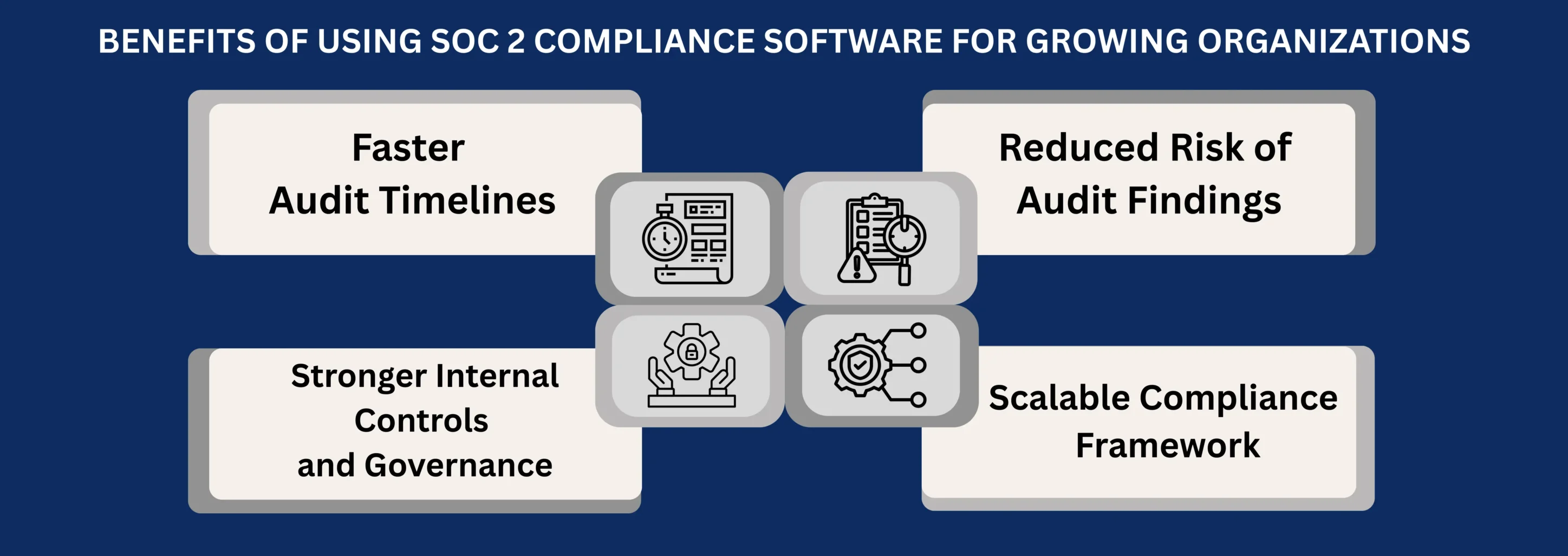
- ✓Verification of Controls and Structured Audit Methodology
- ✓Ongoing Surveillance and Annual Attestation Cycle
SOC 2 Type I and Type II Reports — Detailed Comparison for Nevada Organizations
The distinction between SOC 2 Type I and Type II reports is central to understanding what SOC 2 Certification in Nevada entails and how organizations should plan their examination approach. Both report types result from a formal SOC 2 examination conducted by a Licensed CPA Firm, but they differ in scope, rigor, observation period, and market acceptance. Nevada organizations must evaluate which report type aligns with their current control maturity and customer requirements before initiating the SOC 2 audit process.
SOC 2 Type I — Point-in-Time Design Suitability Assessment
A SOC 2 Type I examination assesses whether controls are suitably designed to meet the applicable Trust Services Criteria as of a specified date. The Licensed CPA Firm reviews the organization’s system description, control documentation, and policy framework to determine whether, as of the examination date, the controls in place are designed in a manner that would — if operating effectively — satisfy the applicable TSC requirements. Importantly, the Type I report does not evaluate whether controls actually operated throughout a period; it evaluates design intent at a single point in time.
SOC 2 Type I examinations are appropriate for organizations completing their first SOC 2 audit and seeking to establish a formal attestation milestone before undertaking the longer observation period required for a Type II report. For Nevada technology startups entering enterprise sales processes for the first time, a Type I report demonstrates that a Licensed CPA Firm has independently reviewed and attested to the design of the organization’s control environment — a meaningful credential, though one that enterprise security reviewers recognize as less rigorous than Type II. Some Nevada customers and procurement reviewers accept a Type I report as an interim measure while the organization’s Type II observation period accumulates.
SOC 2 Type II — Operating Effectiveness Assessment Over Time
A SOC 2 Type II examination assesses both the design suitability and operating effectiveness of controls over a defined observation period. The Licensed CPA Firm performs substantive testing of controls throughout the period — not just as of a date — to determine whether controls functioned consistently and as described in the system description. The minimum observation period for a SOC 2 Type II report is six months; twelve-month periods are standard for annual attestation cycles. The Type II report provides report users with evidence that controls operated continuously, not merely that they were designed appropriately at one point in time.
SOC 2 Type II Nevada is the preferred and most widely required format for enterprise vendor due diligence, financial institution third-party risk programs, and regulated sector procurement. Nevada SaaS companies, fintech providers, data center operators, gaming technology vendors, and healthcare technology organizations that serve enterprise customers almost universally receive Type II report requests. The Type II report’s description of tests performed and results obtained provides procurement reviewers with specific evidence of how controls were tested, what exceptions were identified, and how the CPA firm formed its opinion — detail that Type I reports do not include in the same depth.
SOC 2 Examination Standards and CPA Firm Independence Requirements
The SOC 2 examination is subject to professional standards governing the conduct, independence, and reporting obligations of the Licensed CPA Firm performing the attestation engagement. These standards, established by the AICPA, ensure that SOC 2 reports carry the weight of independent professional opinion rather than advisory assessment or internal review. Understanding the professional framework governing SOC 2 attestation helps Nevada organizations evaluate the credibility and market acceptance of SOC 2 reports issued by different CPA firms.
AICPA AT-C Section 205 establishes the professional standards for examination-level attestation engagements, which include SOC 2 examinations. Under AT-C Section 205, the practitioner — the Licensed CPA Firm — must plan and perform the examination to obtain reasonable assurance about whether the subject matter (the organization’s controls) conforms to the applicable criteria (the Trust Services Criteria). The standard requires the practitioner to evaluate the sufficiency and appropriateness of evidence obtained, identify and evaluate risks of material misstatement, and form an opinion based on examination findings.
The SOC 2 attestation engagement under AT-C Section 205 is distinct from a review or agreed-upon procedures engagement — it requires the highest level of assurance among attestation engagement types, making CPA firm independence and professional skepticism the foundational requirements. The practitioner must be independent of the examined organization, both in fact and in appearance, under AICPA independence rules and applicable state CPA licensing requirements. This independence requirement is why SOC 2 examination cannot be performed by the organization’s own internal auditors or by a consulting firm without CPA licensure — it must be conducted by a Licensed CPA Firm operating as an independent third party.
Licensed CPA firms performing SOC 2 examinations are subject to AICPA peer review requirements, which evaluate the quality of the firm’s attestation practice. The AICPA has issued specific guidance for peer reviewers evaluating SOC 2 engagements, reflecting the technical complexity and quality risks associated with SOC 2 attestation — particularly as compliance automation platforms and technology-enabled audit workflows have become more common in the field. Nevada organizations selecting a Licensed CPA Firm for SOC 2 examination should confirm that the firm’s attestation practice is subject to AICPA peer review and that the firm has demonstrated SOC 2 examination competency.
Quality control in SOC 2 attestation engagements encompasses engagement planning, evidence evaluation standards, documentation practices, partner review procedures, and report issuance controls. CPA firms with established SOC 2 attestation practices maintain quality control systems that ensure examination procedures are sufficient, evidence evaluation is consistent, and report conclusions are defensible. For Nevada organizations presenting SOC 2 reports to enterprise customers, financial institution regulators, or public company auditors, the quality and defensibility of the CPA firm’s examination procedures directly affects the credibility and acceptance of the attestation report.
- ✓AT-C Section 205 and the Examination Engagement Standard
- ✓AICPA Peer Review and Quality Control for SOC 2 Engagements
Nevada Privacy Law and SOC 2 Compliance Alignment
Nevada’s privacy regulatory landscape has developed significantly in recent years, creating a state-level data protection framework that intersects directly with SOC 2 compliance Nevada obligations. Nevada Revised Statutes Chapter 603A, the Nevada Privacy of Information Collected on the Internet from Consumers Act (SB 220), and the Nevada Consumer Health Data Privacy Law collectively establish data privacy obligations for organizations collecting or processing personal information from Nevada residents. SOC 2 examination covering the Privacy Trust Services Criteria provides an independently verified assessment of privacy-related controls that aligns with Nevada’s state privacy requirements.
Nevada Revised Statutes Chapter 603A and Data Security Requirements
NRS 603A requires businesses that maintain personal information of Nevada residents to implement and maintain reasonable security measures to protect that information from unauthorized access, acquisition, destruction, use, modification, or disclosure. The statute defines personal information broadly, encompassing names combined with social security numbers, financial account numbers, driver’s license numbers, and medical information. Organizations subject to NRS 603A — which includes virtually any business collecting Nevada resident data — must also provide notice of security breaches affecting personal information within a defined timeframe.
SOC 2 certification Nevada, particularly when covering the Security and Privacy Trust Services Criteria, provides an independently verified framework that addresses the ‘reasonable security measures’ standard of NRS 603A. While SOC 2 attestation does not constitute legal compliance with NRS 603A, the independently verified control environment demonstrated by a SOC 2 Type II report provides evidence of security practices that align with the statute’s protective intent. Nevada organizations responding to regulatory inquiries or customer due diligence requests regarding NRS 603A compliance can reference their SOC 2 attestation as supporting evidence of their security control framework.
SOC 2 Privacy Criteria and Consumer Data Protection
The Privacy Trust Services Criteria within the SOC 2 framework address the collection, use, retention, disclosure, and disposal of personal information in conformity with the organization’s privacy notice and applicable privacy principles. For Nevada organizations processing consumer personal information — including e-commerce platforms, health technology providers, marketing analytics companies, and data brokers — the Privacy criteria examination evaluates whether privacy notices are accurate, consent mechanisms are operational, data retention practices are consistent with stated policies, and data subject rights processes are functional.
Nevada’s SB 220 amendment to NRS 603A established a consumer right to opt out of the sale of personal information — a requirement similar to the California Consumer Privacy Act’s opt-out provisions. Organizations subject to both Nevada and California privacy laws that process personal information for commercial purposes may include Privacy criteria in their SOC 2 examination scope to demonstrate that opt-out mechanisms, data processing records, and consumer request fulfillment processes operate as described in their privacy frameworks. The SOC 2 examination provides a structured, independent assessment of these privacy control operations that satisfies the documentation and verification expectations of privacy-conscious enterprise customers.
SOC 2 vs. Other Security Frameworks for Nevada Organizations
Nevada organizations evaluating SOC 2 Certification in Nevada frequently consider how it compares to other information security frameworks, including ISO 27001, PCI DSS, HIPAA, and NIST CSF. Each framework serves distinct purposes, addresses different audiences, and produces different forms of assurance. Understanding the comparative positioning of SOC 2 attestation helps Nevada organizations determine whether a SOC 2 examination is the appropriate response to their specific customer requirements and regulatory environment — or whether multiple frameworks must be addressed concurrently.
SOC 2 vs. ISO 27001 — Attestation vs. Management System Certification
SOC 2 and ISO 27001 are the two most commonly compared information security frameworks in enterprise procurement contexts. SOC 2 is a US-developed attestation framework governed by AICPA standards, producing a restricted-use report issued by a Licensed CPA Firm. ISO 27001 is an international management system standard producing a certification issued by an accredited certification body. SOC 2 tests specific controls based on the Trust Services Criteria, service commitments, and contractual requirements. ISO 27001 certifies an Information Security Management System (ISMS) against the requirements of ISO/IEC 27001 clauses 4–10 and Annex A control domains.
For Nevada-based SaaS companies primarily serving US enterprise customers, SOC 2 is the dominant framework requested in vendor due diligence processes. For Nevada organizations targeting European enterprise customers or multinational corporations with internationally standardized vendor programs, ISO 27001 certification may be equally or more relevant. Some Nevada organizations pursue both frameworks concurrently, recognizing that SOC 2 attestation satisfies US-centric procurement requirements while ISO 27001 certification satisfies international vendor programs. The two frameworks are complementary, and evidence generated for one frequently supports the other.
SOC 2 and PCI DSS for Nevada Payment Technology Organizations
Payment Card Industry Data Security Standard (PCI DSS) compliance is a mandatory requirement for organizations that store, process, or transmit payment card data — a category encompassing a significant portion of Nevada’s gaming, hospitality, retail, and e-commerce technology providers. PCI DSS compliance is assessed through Qualified Security Assessors (QSAs) or self-assessment questionnaires, depending on transaction volume. SOC 2 audit Nevada and PCI DSS assessment are separate and distinct frameworks — PCI DSS does not satisfy SOC 2 examination requirements, and SOC 2 attestation does not satisfy PCI DSS assessment requirements.
Nevada payment technology providers frequently maintain both PCI DSS compliance and SOC 2 attestation because enterprise customers in the gaming, hospitality, and retail sectors require both forms of assurance — PCI DSS for payment card data security and SOC 2 for broader organizational security controls. The controls established for PCI DSS compliance — including access control, encryption, logging, monitoring, and vulnerability management — frequently satisfy or support the Security criteria tested in a SOC 2 examination, creating operational efficiencies when both frameworks are maintained concurrently.
FAQ
▶
What is SOC 2 Certification in Nevada and who issues it?
▶
What is the difference between SOC 2 Type I and SOC 2 Type II for Nevada companies?
▶
Which Trust Services Criteria apply to Nevada technology and SaaS companies?
▶
How long does the SOC 2 audit process take for Nevada organizations?
▶
Is SOC 2 attestation required under Nevada law?
▶
How long is a SOC 2 report valid for Nevada organizations?
▶
What evidence is required for a SOC 2 audit in Nevada?
▶
Can Nevada gaming and hospitality technology companies use SOC 2 for vendor approval?
SOC 1 VS SOC 2: WHICH REPORT YOUR CUSTOMERS ACTUALLY ASK FOR
If you sell SaaS or provide outsourced services, you have likely been asked for a SOC report. However, the follow-up question is rarely easy to answer…

AICPA Issues New Guidance for Peer Reviewers Evaluating SOC 2 Engagements
AICPA SOC 2 guidance has been issued to help peer reviewers identify quality risks associated with SOC 2 engagements as the use of compliance automati…
SOC 2 Certified: What Does It Mean for Your Business
For companies that handle sensitive data or run cloud-based services, the question “Can you provide your SOC 2 report?” carries enormous weight. Yet, …
Get In Touch
have a question? let us get back to you.