
SOC 2 Certification in Pittsburgh
SOC 2 Certification in Pittsburgh is pursued primarily in response to enterprise customer requirements, financial sector procurement standards, and the due diligence expectations of regulated-industry clients. Pittsburgh’s diverse economy — encompassing financial services, healthcare and life sciences, robotics and AI, energy technology, and a growing SaaS ecosystem — creates a vendor landscape where organizations regularly face security questionnaires, vendor risk assessments, and contractual requirements for independently verified attestation reports before enterprise agreements are finalized.
OUR CLIENTS










SOC 2 Certification for Pittsburgh-Based Financial, Technology, and Healthcare Organizations
SOC 2 Certification in Pittsburgh is conducted by a Licensed CPA Firm as an independent, evidence-based examination of an organization’s control environment against the AICPA Trust Services Criteria (TSC). The SOC 2 examination produces a formal attestation report — either a Type 1 or Type 2 report — documenting control design and, in the case of Type 2, operating effectiveness over a defined observation period. SOC 2 Certification is not a self-certification or internal assessment. It is the outcome of a structured audit performed under AICPA attestation standards (AT-C Section 205), and the resulting report is recognized in enterprise vendor reviews, financial sector procurement, and regulated-sector contracting across Pittsburgh and the broader Western Pennsylvania region.
Pittsburgh’s business ecosystem generates substantial demand for independent SOC 2 attestation. SaaS providers operating from Oakland and East Liberty, fintech firms and financial institutions headquartered in the Pittsburgh CBD, healthcare technology companies aligned with the city’s major medical centers, biotechnology and life sciences organizations, robotics and autonomous systems companies emerging from Carnegie Mellon University and the broader Pittsburgh technology corridor, AI businesses, cybersecurity firms, energy technology companies, manufacturing and industrial technology companies, cloud service providers, and e-commerce businesses across Western Pennsylvania — all operate in environments where enterprise customers, institutional partners, and regulated-sector clients require independently verified evidence of control effectiveness before entering or maintaining vendor relationships.
The SOC 2 examination evaluates controls relevant to security, availability, processing integrity, confidentiality, and privacy — the five Trust Services Criteria categories established by the AICPA. Security (the Common Criteria) is required in every SOC 2 engagement. The remaining four criteria are included based on the nature of the services provided and the contractual commitments made to customers. A Licensed CPA Firm determines the applicable scope, evaluates control design and operating effectiveness, collects documentary evidence, and issues an independent attestation report reflecting the findings of the examination. The attestation report is signed by a licensed CPA and carries the full authority of an independent third-party evaluation.
For Pittsburgh organizations handling sensitive customer data, financial records, health information, proprietary intellectual property, or other regulated information, SOC 2 Certification provides a structured mechanism for demonstrating control effectiveness to external stakeholders. Pittsburgh’s concentration of financial services institutions, health systems, robotics and AI technology developers, and SaaS businesses creates a procurement environment where SOC 2 attestation is frequently a prerequisite for enterprise contracting. Where applicable, SOC 2 attestation also provides contextual documentation relevant to Pennsylvania’s Breach of Personal Information Notification Act and related information security expectations — though SOC 2 attestation does not automatically establish compliance with Pennsylvania, federal, or industry-specific laws and regulations.
CertPro CPA LLC operates as a Licensed CPA Firm providing independent SOC 2 examination services for organizations across Pittsburgh and the Western Pennsylvania metropolitan region. Engagements are structured under AICPA attestation standards and produce audit reports suitable for submission in enterprise vendor security review programs, financial institution due diligence processes, healthcare technology procurement evaluations, and international SaaS expansion requirements. The SOC 2 audit process is structured throughout: evidence is collected, controls are evaluated against defined criteria, findings are documented, and an independent attestation decision is rendered by a licensed CPA in accordance with applicable professional standards.

SOC 2 Certification Audit Process for Organizations in Pittsburgh
The SOC 2 audit process follows a structured sequence of stages governed by AICPA attestation standards. For organizations pursuing SOC 2 Certification in Pittsburgh, each stage produces defined outputs that collectively form the evidentiary foundation of the attestation report. The process is consistent whether the engagement is a Type 1 examination — evaluating control design at a point in time — or a Type 2 examination, which additionally assesses operating effectiveness over an observation period typically ranging from six to twelve months.
The SOC 2 audit begins with a scope definition phase in which the Licensed CPA Firm and the organization’s management establish the boundaries of the examination. Scope determination identifies the systems, services, infrastructure components, and organizational units subject to evaluation. The applicable Trust Services Criteria categories are confirmed at this stage based on the nature of the services delivered, the data processed, and the commitments made to customers in service agreements. For Pittsburgh technology and SaaS organizations, scope frequently encompasses cloud-hosted environments, third-party infrastructure dependencies, and data processing systems handling customer or regulated information.
Following scope definition, the audit program is established. The audit program documents the specific control objectives, control activities, and evidence requirements the examination will address. For SOC 2 compliance engagements in Pittsburgh, the audit program is tailored to the organization’s control environment, service commitments, and selected Trust Services Criteria categories. The audit program serves as the governing document for evidence collection, control testing, and findings documentation throughout the examination. Management is responsible for providing a formal management assertion — a written statement confirming that controls are suitably designed and, for Type 2 engagements, operating effectively during the examination period.
The Stage 1 audit involves a structured review of the organization’s documentation to confirm that policies, procedures, and control descriptions are formally documented, appropriately scoped, and aligned with the applicable Trust Services Criteria. The Licensed CPA Firm reviews system description documentation — the narrative description of the organization’s system that accompanies the SOC 2 report — along with information security policies, access control documentation, risk assessment records, incident response procedures, and vendor management documentation. Stage 1 provides the audit team with a foundational understanding of the control environment before evidence collection and control testing begin.
For Pittsburgh organizations in healthcare technology, fintech, and AI sectors, Stage 1 documentation review frequently identifies the breadth of third-party service provider dependencies that must be addressed in the system description and vendor management controls. Organizations operating on AWS, Azure, or Google Cloud infrastructure are required to document the boundaries between their own controls and those provided by the cloud service provider — typically by referencing the cloud provider’s own SOC 2 report. The Stage 1 output informs the scope and evidence requirements for Stage 2 control testing and operating effectiveness assessment.
Stage 2 of the SOC 2 audit examines control operating effectiveness over the defined observation period. The Licensed CPA Firm collects and evaluates evidence through inquiry, observation, inspection of records, and re-performance of control procedures. Evidence types include system-generated logs, access provisioning and deprovisioning records, vulnerability scan results, penetration testing reports, change management tickets, backup verification records, incident response logs, security awareness training completion records, and vendor review documentation. Each control activity mapped to the applicable Trust Services Criteria is tested against the evidence to assess whether the control operated as designed throughout the observation period.
| Audit Stage | Key Activities | Output |
|---|---|---|
| Scope Definition | Define system boundaries, select Trust Services Criteria, confirm management assertion requirements | Scoped audit program |
| Stage 1 Documentation Review | Review system description, policies, risk assessment records, and third-party documentation | Documented control environment baseline |
| Stage 2 Control Testing | Collect evidence, test control operating effectiveness over observation period | Control testing workpapers and findings |
| Nonconformity Review | Evaluate identified exceptions, assess materiality, document management responses | Exception and findings report |
| Attestation Issuance | Independent CPA renders opinion; SOC 2 attestation report issued to management | Signed SOC 2 Type 1 or Type 2 report |
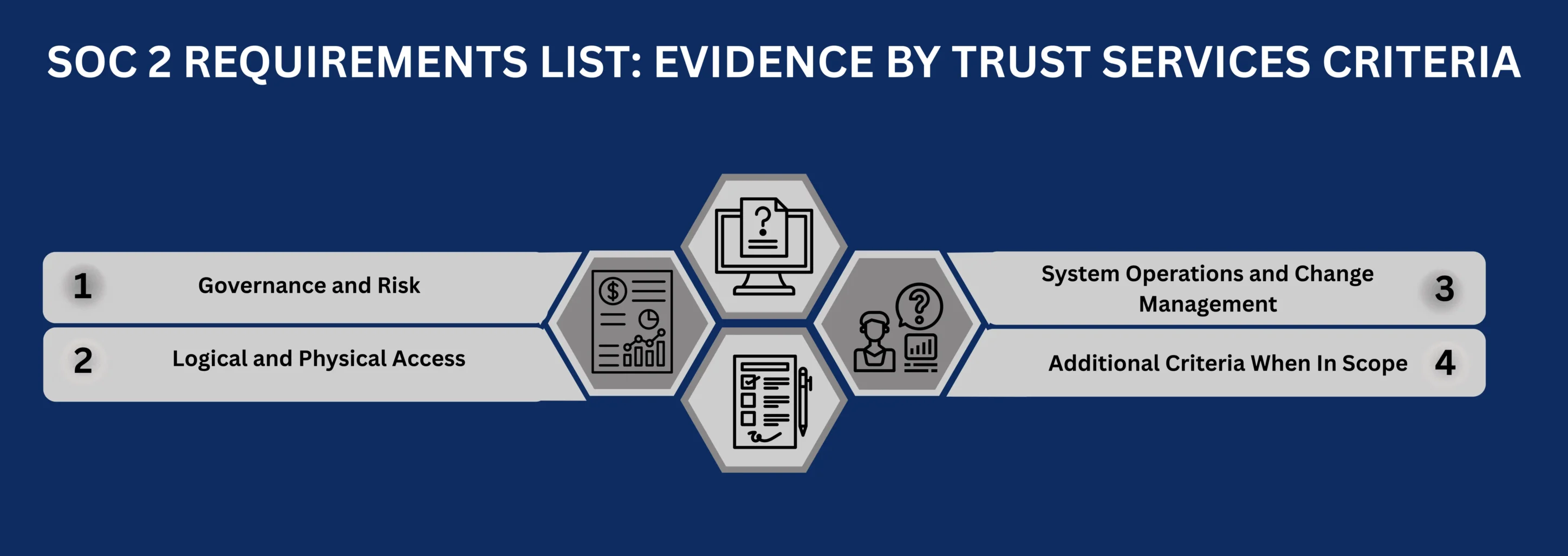
- ✓Scope Definition and Audit Program Determination
- ✓Stage 1 Documentation Review and Readiness Assessment
- ✓Stage 2 Control Testing and Evidence Collection
Why Organizations in Pittsburgh Pursue SOC 2 Certification
SOC 2 Certification in Pittsburgh is pursued primarily in response to enterprise customer requirements, financial sector procurement standards, and the due diligence expectations of regulated-industry clients. Pittsburgh’s diverse economy — encompassing financial services, healthcare and life sciences, robotics and AI, energy technology, and a growing SaaS ecosystem — creates a vendor landscape where organizations regularly face security questionnaires, vendor risk assessments, and contractual requirements for independently verified attestation reports before enterprise agreements are finalized.
Enterprise Vendor Security Reviews and Financial Sector Procurement
Enterprise organizations — particularly financial institutions, insurance companies, and large healthcare systems operating across Pittsburgh and Western Pennsylvania — require technology vendors and SaaS providers to submit current SOC 2 attestation reports as part of vendor onboarding and periodic vendor risk reviews. A SOC 2 Type 2 report from a Licensed CPA Firm provides the enterprise customer with independently verified evidence that the vendor’s controls operated effectively over a defined period, reducing the need for the customer to conduct its own on-site audit. For Pittsburgh fintech companies and cloud service providers seeking contracts with PNC Financial Services Group, BNY Mellon, or regional community banks and credit unions, SOC 2 attestation is frequently a non-negotiable procurement requirement.
SOC 2 audit engagements in Pittsburgh are also driven by healthcare sector procurement requirements. Pittsburgh’s concentration of major health systems — including UPMC, Allegheny Health Network, and associated healthcare technology partners — creates significant demand for SOC 2 attestation from health IT vendors, health data analytics platforms, and digital health companies. Healthcare technology organizations handling protected health information (PHI) or electronic health records frequently receive formal requests for SOC 2 Type 2 reports during vendor due diligence processes, alongside HIPAA compliance documentation. SOC 2 attestation provides structured evidence of security and confidentiality controls that complements, but does not replace, HIPAA compliance obligations.
SaaS Expansion and International Market Access
Pittsburgh-based SaaS companies and cloud service providers expanding into national and international enterprise markets encounter SOC 2 attestation requirements from prospective customers across North America, the United Kingdom, and the European Union. Organizations pursuing SOC 2 compliance in Pittsburgh often find that enterprise sales cycles in regulated industries — financial services, healthcare, insurance, legal, and government contracting — cannot advance without a current SOC 2 Type 2 report. For AI technology companies, robotics firms, and autonomous systems developers emerging from Pittsburgh’s university research ecosystem, SOC 2 attestation provides a recognized framework for demonstrating data security and privacy controls to enterprise and government procurement officers.
Energy technology companies and manufacturing and industrial technology organizations in the Pittsburgh region — particularly those offering IoT platforms, industrial control system monitoring, or operational technology data services — increasingly receive SOC 2 attestation requests from energy sector utilities, industrial conglomerates, and critical infrastructure operators conducting third-party risk assessments. Cybersecurity firms providing managed detection and response, security operations center services, or vulnerability management platforms to Pittsburgh-area clients are similarly expected to hold current SOC 2 attestation reports as evidence that their own security controls meet the standards they apply to customer environments.
SOC 2 Trust Services Criteria and Certification Scope
The SOC 2 examination evaluates an organization’s controls against the AICPA Trust Services Criteria (TSC), a framework of control requirements organized across five categories: Security, Availability, Processing Integrity, Confidentiality, and Privacy. The Security category — also referred to as the Common Criteria — is mandatory in every SOC 2 engagement. The remaining four categories are included in the scope of the SOC 2 examination based on the nature of the services provided and the commitments documented in the organization’s system description and customer agreements.
The Security criterion requires controls that protect the system against unauthorized access — both physical and logical — and addresses logical and physical access controls, system operations, change management, risk mitigation, and monitoring. Availability addresses whether the system is available for operation and use as committed in service level agreements. Processing Integrity evaluates whether system processing is complete, valid, accurate, timely, and authorized. Confidentiality addresses controls protecting information designated as confidential, including encryption, access restrictions, and data handling procedures. Privacy governs the collection, use, retention, disclosure, and disposal of personal information in accordance with the organization’s privacy notice and AICPA privacy management criteria.
For Pittsburgh-based organizations, the applicable TSC categories depend on the nature of the services delivered. A SaaS platform processing financial transactions for enterprise customers would typically include Security, Availability, and Processing Integrity. A health data analytics company handling personal health information would typically include Security, Confidentiality, and Privacy. A cloud hosting provider offering uptime-critical infrastructure services would typically include Security and Availability. The SOC 2 examination scope is formally documented in the system description, and the Licensed CPA Firm’s attestation report reflects only the criteria included in the agreed examination scope.
SOC 2 attestation produces one of two report types. A SOC 2 Type 1 report evaluates the suitability of control design at a specific point in time. It answers one key question: are the controls described in the system description suitably designed to meet the applicable Trust Services Criteria as of the report date? A SOC 2 Type 2 report evaluates both the suitability of control design and the operating effectiveness of those controls over a defined observation period — typically six to twelve months. Type 2 reports provide a higher level of assurance because they demonstrate that controls were not only designed appropriately but actually operated as intended throughout the covered period.
Enterprise customers and financial sector procurement programs in Pittsburgh and nationally typically require SOC 2 Type 2 reports, as these provide evidence of sustained control effectiveness rather than a point-in-time snapshot. A SOC 2 Type 1 engagement in Pittsburgh may serve as an initial step for organizations that have recently formalized their control environment and are not yet in a position to demonstrate operating effectiveness over an extended observation period. Organizations typically progress from Type 1 to Type 2 attestation as their control environments mature and annual SOC 2 audit cycles are established. Both report types are issued under AICPA attestation standards and signed by a licensed CPA.
| Report Type | Evaluation Scope | Observation Period | Common Use Case |
|---|---|---|---|
| SOC 2 Type 1 | Control design suitability at a point in time | None (point in time) | Initial attestation; new control environments |
| SOC 2 Type 2 | Control design and operating effectiveness | Typically 6–12 months | Enterprise procurement; ongoing vendor assurance |
| SOC 2 + HIPAA | Security, Confidentiality, Privacy + HIPAA criteria | Typically 6–12 months | Health IT vendors; organizations handling PHI |
- ✓The Five Trust Services Criteria Categories
- ✓SOC 2 Type 1 vs. SOC 2 Type 2 Reports
SOC 2 Certification Requirements for Pittsburgh Organizations
SOC 2 Certification requires organizations to establish, document, and operate a control environment that addresses the applicable Trust Services Criteria. The examination evaluates both the design and, for Type 2 engagements, the operating effectiveness of controls across the defined scope. Organizations pursuing SOC 2 certification for Pittsburgh technology or financial services operations must satisfy documentation requirements, technical control requirements, and management responsibility obligations before and during the examination.
The SOC 2 examination requires formal documentation of the organization’s information security policies, risk assessment processes, and control procedures. Core documentation requirements include an information security policy, access control policy, incident response plan and procedures, change management procedures, vendor and third-party management policy, business continuity and disaster recovery documentation, and a formally prepared system description. The system description is a critical component of the SOC 2 report. It describes the system’s infrastructure, software, people, procedures, and data — and forms the basis against which the Licensed CPA Firm evaluates control design.
Risk assessment documentation is required to demonstrate that the organization has identified risks to the security, availability, confidentiality, processing integrity, or privacy of its systems and data, and has implemented controls to address those risks. For Pittsburgh organizations operating in regulated industries, risk assessment processes may also need to address sector-specific threat scenarios — including financial fraud risks for fintech companies, patient data exposure risks for health IT vendors, and intellectual property protection requirements for robotics and AI technology developers. Management is responsible for maintaining current risk assessment records and ensuring that documented controls accurately reflect the organization’s actual operating environment.
Technical controls subject to evaluation in the SOC 2 examination include logical access controls (user provisioning, access reviews, multi-factor authentication), network security controls (firewalls, intrusion detection, network segmentation), encryption controls for data in transit and at rest, vulnerability management processes (regular scanning and patching), logging and monitoring systems, change management controls governing system modifications, and backup and recovery procedures. For cloud-hosted environments — common among Pittsburgh SaaS providers — the organization must document the shared responsibility model and demonstrate that controls within its own responsibility boundary are both designed and operating effectively.
- ✓Logical access controls: user provisioning, deprovisioning, access reviews, and multi-factor authentication
- ✓Network security: firewall configurations, intrusion detection systems, and network segmentation documentation
- ✓Encryption: documented encryption standards for data in transit and data at rest
- ✓Vulnerability management: regular vulnerability scanning, patch management records, and penetration testing reports
- ✓Logging and monitoring: centralized log management, alerting configurations, and log review procedures
- ✓Change management: documented change request, review, approval, and deployment processes
- ✓Backup and recovery: backup schedules, restoration testing records, and recovery time objective documentation
- ✓Vendor management: third-party risk assessment records and subservice organization monitoring procedures
Management of the organization being examined is required to provide a formal management assertion — a written statement included in the SOC 2 report affirming that controls are suitably designed to meet the applicable Trust Services Criteria as of the report date (Type 1), or that controls were suitably designed and operated effectively during the observation period (Type 2). The management assertion is a substantive component of the SOC 2 report and reflects management’s direct responsibility for the design, implementation, and operation of the control environment. The Licensed CPA Firm’s opinion is rendered independently of and in direct relation to management’s assertion.
- ✓Documentation and Policy Requirements
- ✓Technical Control Requirements
- ✓Management Responsibilities and Assertion Requirements
Benefits of SOC 2 Certification for Pittsburgh-Based Organizations
SOC 2 Certification delivers independently verified documentation of control effectiveness that serves multiple organizational objectives — from enterprise sales enablement to regulatory due diligence and ongoing risk management. For organizations pursuing SOC 2 Certification in Pittsburgh, the attestation report provides structured, third-party validated evidence suitable for submission in vendor security reviews, financial sector procurement processes, and regulated-industry contracting requirements across Pittsburgh and the broader Western Pennsylvania market.
A SOC 2 attestation report from a Licensed CPA Firm provides independent, third-party validation that an organization’s controls meet the AICPA Trust Services Criteria. Unlike internal security assessments or self-reported compliance attestations, a SOC 2 report is signed by a licensed CPA operating under professional attestation standards. The opinion expressed in the report carries the weight of independent professional judgment. Enterprise customers, institutional investors, and regulated-sector procurement officers recognize the distinction between self-reported security claims and independently attested control effectiveness documented in a formal SOC 2 examination report.
For Pittsburgh technology companies operating in competitive enterprise sales environments, possession of a current SOC 2 Type 2 report reduces the friction associated with security due diligence during customer procurement cycles. Prospective enterprise customers that would otherwise require lengthy security questionnaires or on-site audits may accept a current SOC 2 Type 2 report as sufficient evidence of control effectiveness — accelerating vendor onboarding and reducing the administrative burden on both parties. SOC 2 attestation engagements in Pittsburgh thus deliver measurable enterprise sales process benefits alongside their primary function as independent control assurance documents.
SOC 2 Certification is maintained through annual examination cycles. Organizations are expected to undergo annual SOC 2 audit engagements to produce updated Type 2 reports that reflect the current observation period. Annual recertification ensures that the attestation report presented to enterprise customers and procurement officers reflects current control effectiveness rather than a historical point-in-time assessment. Enterprise customers typically require that SOC 2 reports submitted in vendor security reviews were issued within the prior twelve months; reports older than twelve months are generally considered outdated for procurement purposes.
The annual SOC 2 examination cycle provides Pittsburgh organizations with a structured framework for ongoing control monitoring and continuous improvement of their control environments. Each annual examination produces a new observation period, updated evidence collection, and a refreshed independent attestation. Control exceptions identified during one examination cycle provide documented findings that management addresses through formal remediation actions, with the effectiveness of those remediation actions evaluated in the subsequent cycle. This annual audit rhythm aligns with the information security maturity expectations of enterprise customers in financial services, healthcare, and technology sectors.
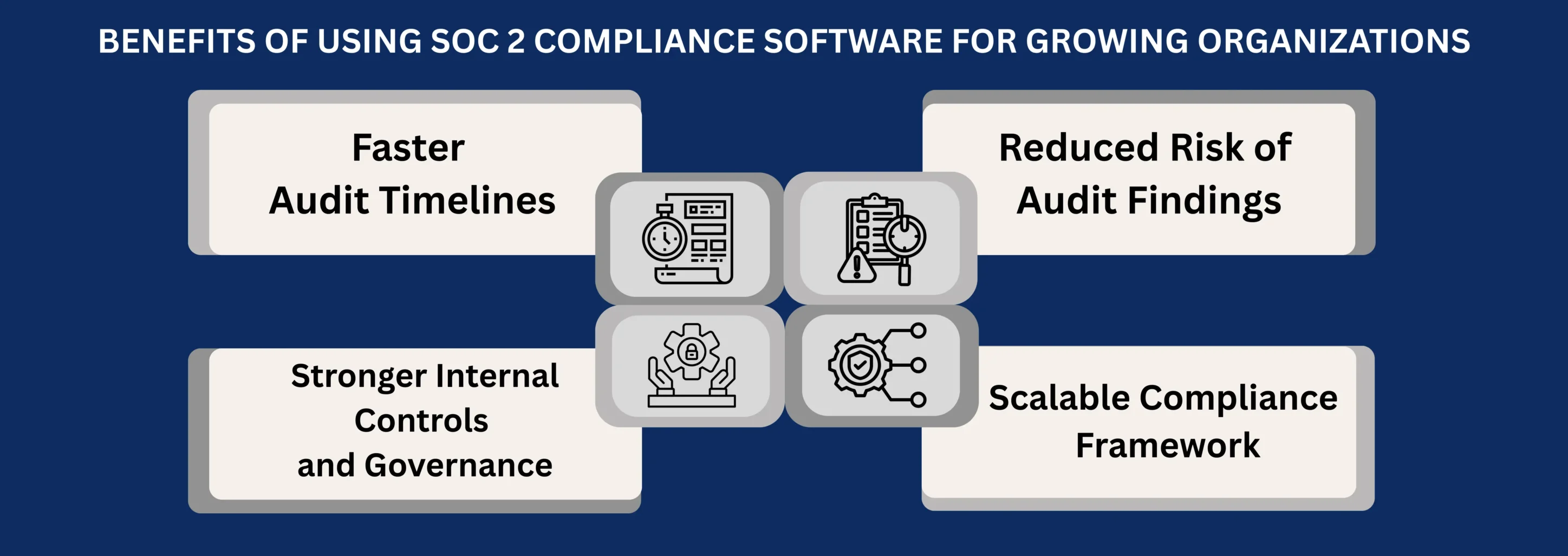
- ✓Independent attestation by a Licensed CPA Firm under AICPA professional standards
- ✓Formal SOC 2 examination report recognized in enterprise vendor security review programs
- ✓Reduced vendor onboarding friction in financial services, healthcare, and technology procurement
- ✓Structured evidence of control effectiveness for regulated-sector contracting in Pittsburgh and Western Pennsylvania
- ✓Annual examination cycle providing current, dated attestation documentation
- ✓Documented control environment baseline supporting ongoing risk management activities
- ✓Independently verified assurance relevant to Pennsylvania data security and privacy obligations
- ✓Support for international SaaS market access where SOC 2 attestation is a procurement prerequisite
- ✓Independent Third-Party Validation of Control Effectiveness
- ✓Ongoing Surveillance and Annual Recertification
SOC 2 Certification for Pittsburgh’s Key Industry Sectors
SOC 2 Certification in Pittsburgh is relevant across a broad range of industry sectors, each with distinct control environment requirements and attestation drivers. Pittsburgh’s economic structure — anchored by financial services, healthcare and life sciences, robotics and AI technology, energy, and an expanding technology startup ecosystem — creates diverse demand for SOC 2 examination engagements tailored to sector-specific risk profiles, regulatory contexts, and enterprise customer expectations.
Financial Services, Fintech, and Banking Technology
SOC 2 certification engagements in Pittsburgh’s financial services sector address the control environment requirements of banks, insurance companies, wealth management firms, payment processors, and fintech organizations operating in the Pittsburgh metropolitan area. Pittsburgh hosts significant financial sector activity, with major institutions including PNC Financial Services Group and BNY Mellon maintaining substantial operations in the city. Technology vendors and SaaS providers serving these institutions — including treasury management platforms, banking software providers, financial data analytics companies, and payment infrastructure vendors — are routinely required to maintain current SOC 2 Type 2 attestation reports as a condition of vendor approval.
SOC 2 compliance for Pittsburgh fintech organizations typically encompasses Security, Availability, Confidentiality, and Processing Integrity criteria, reflecting the transaction processing, data sensitivity, and uptime requirements of financial services use cases. Fintech companies providing lending platforms, investment management tools, regulatory reporting services, or financial data aggregation services must demonstrate controls addressing data accuracy, transaction completeness, fraud prevention, and access restriction to financial records. SOC 2 attestation provides fintech organizations with a recognized, independently verified framework for communicating control effectiveness to financial institution clients and institutional investors.
Healthcare Technology, Life Sciences, and Biotechnology
Pittsburgh’s healthcare technology sector — supported by UPMC’s technology and innovation programs, Allegheny Health Network, the University of Pittsburgh Medical Center’s extensive clinical operations, and a growing ecosystem of digital health startups — generates significant demand for SOC 2 attestation. Health IT vendors, clinical data platforms, electronic health record integrators, telehealth providers, and health data analytics companies processing patient information or supporting clinical operations face SOC 2 attestation requirements from health system procurement officers and institutional partners. SOC 2 attestation report requests in healthcare technology contexts typically include Security, Confidentiality, and Privacy criteria, reflecting the sensitivity of personal health information and clinical data.
Biotechnology and life sciences organizations in Pittsburgh — particularly those conducting clinical trials, managing research data, or operating laboratory information management systems — increasingly encounter SOC 2 attestation requirements from pharmaceutical partners, contract research organizations, and institutional review boards evaluating data security and integrity controls. SOC 2 examination for life sciences organizations may also address processing integrity controls relevant to data accuracy and completeness in research and clinical data environments. Biotechnology companies developing AI-assisted drug discovery platforms or genomic data analysis tools face heightened scrutiny of confidentiality and privacy controls protecting proprietary research data and participant health information.
Robotics, AI, Cybersecurity, and Emerging Technology
Pittsburgh’s internationally recognized robotics and AI technology ecosystem — anchored by Carnegie Mellon University’s robotics and computer science programs, the National Robotics Engineering Center (NREC), and a growing network of autonomous systems and AI startups — produces technology organizations that increasingly require SOC 2 attestation to access enterprise and government markets. Robotics software platforms, AI model hosting services, autonomous vehicle data management systems, and machine learning infrastructure providers face SOC 2 attestation requirements from enterprise customers in manufacturing, logistics, defense, and healthcare sectors. SOC 2 certification for Pittsburgh tech companies in the robotics and AI space typically encompasses Security and Confidentiality criteria, addressing the protection of proprietary algorithms, training data sets, and customer operational data.
Cybersecurity firms operating in Pittsburgh — providing managed security services, threat intelligence platforms, security operations center services, or vulnerability assessment tools — face a particularly direct demand for SOC 2 attestation, as enterprise clients evaluate whether their security service providers maintain the same standard of control effectiveness they apply to client environments. Energy technology companies providing grid management software, industrial IoT platforms, or operational technology monitoring services to utility operators and industrial conglomerates in Western Pennsylvania encounter SOC 2 attestation requirements as part of critical infrastructure vendor risk management programs. SOC 2 examination engagements in these sectors frequently address Security and Availability criteria, reflecting uptime and operational continuity requirements.
Nonconformity Review, Certification Decision, and Report Issuance
Following Stage 2 control testing and evidence collection, the Licensed CPA Firm conducts a nonconformity review to evaluate any exceptions or control deviations identified during the examination. The nonconformity review assesses the nature, cause, and materiality of identified exceptions and determines their impact on the overall opinion to be expressed in the attestation report. Organizations are provided the opportunity to review identified exceptions and provide management responses documenting remediation actions taken or planned.
Independent Certification Decision and Attestation Opinion
The SOC 2 certification decision is rendered independently by the Licensed CPA Firm’s engagement partner — a licensed CPA who reviews the complete audit file, evaluates the findings documented during the examination, and determines the appropriate attestation opinion. The opinion expressed in the SOC 2 report may be unmodified — indicating that controls are suitably designed and, for Type 2 reports, operating effectively — or modified, indicating that one or more control deviations prevent an unmodified opinion. The certification decision is independent of management’s preferences and is governed by AICPA attestation standards and the licensed CPA’s professional judgment.
The completed SOC 2 examination report is issued to management and is typically distributed to existing and prospective customers under non-disclosure agreements, as the report contains detailed descriptions of the organization’s control environment. The SOC 2 report is a confidential document; the organization controls its distribution. Some organizations also obtain a SOC 2 bridge letter — a management representation letter confirming that no significant changes to the control environment have occurred since the report period end date — for use during the gap between the completion of one annual examination and the issuance of the next. SOC 2 attestation engagements in Pittsburgh follow this distribution and bridge letter practice consistent with national SOC 2 engagement standards.
Report Validity and Annual Recertification Cycle
A SOC 2 Type 2 report covers a defined observation period and is considered current for the twelve months following the period end date. Enterprise customers and financial sector procurement programs generally treat SOC 2 reports older than twelve months as expired for vendor assurance purposes and will request an updated report before proceeding with vendor approval or renewal. Organizations maintaining SOC 2 Certification in Pittsburgh therefore initiate annual examination engagements to ensure that a current report is available for distribution to enterprise customers, procurement officers, and institutional partners throughout the year. The annual examination cycle aligns the end of one observation period with the beginning of the next, providing continuous coverage of control effectiveness.
SOC 2 vs. Other Information Security Certifications
Pittsburgh organizations evaluating information security certification frameworks frequently assess SOC 2 alongside ISO 27001 and, for healthcare-sector organizations, HITRUST CSF. Each framework serves distinct purposes and is recognized in different market contexts. Understanding the differences between SOC 2 and alternative frameworks enables organizations to select the certification path best aligned with their customer requirements, target markets, and regulatory environment.
SOC 2 vs. ISO 27001
SOC 2 and ISO 27001 are both information security assurance frameworks but differ in their structure, geographic recognition, and examination focus. SOC 2 is a U.S.-centric attestation framework developed by the AICPA and is most widely recognized in North American enterprise procurement. SOC 2 tests specific controls based on the Trust Services Criteria, the organization’s service commitments, and contractual requirements. ISO 27001 is an internationally recognized certification standard that evaluates the design and implementation of an Information Security Management System (ISMS) against a defined set of Annex A control domains. ISO 27001 is more commonly required in European and global enterprise markets, while SOC 2 is the dominant vendor assurance requirement in the United States.
For Pittsburgh SaaS and technology companies with primarily North American enterprise customer bases, SOC 2 Certification is generally the higher-priority certification, as it directly addresses the attestation format requested in most U.S. vendor risk management programs. Organizations pursuing international expansion — particularly into the United Kingdom, European Union, or Asia-Pacific markets — may benefit from holding both SOC 2 and ISO 27001 certifications to satisfy the distinct requirements of North American and global enterprise procurement programs. The decision between SOC 2 and ISO 27001, or the pursuit of both, is determined primarily by the geographic distribution of the organization’s customer base and the certification requirements specified in enterprise contracts and vendor due diligence questionnaires.
SOC 2 Compliance vs. SOC 2 Certification
A fundamental distinction relevant to organizations in Pittsburgh is the difference between SOC 2 compliance and SOC 2 Certification. SOC 2 compliance refers to the internal state of having implemented controls that align with the Trust Services Criteria requirements — a condition that can be achieved through internal control implementation activities without independent verification. SOC 2 Certification, by contrast, is the outcome of an independent SOC 2 examination conducted by a Licensed CPA Firm that produces a formally attested SOC 2 report. Only the SOC 2 examination process produces an attestation report that can be provided to enterprise customers as independent third-party evidence of control effectiveness. Self-reported compliance claims are not equivalent to independently attested SOC 2 examination reports for enterprise procurement purposes.
FAQ
▶
What is SOC 2 Certification and why do Pittsburgh organizations need it?
▶
What is the difference between a SOC 2 Type 1 and Type 2 report?
▶
How long does the SOC 2 audit process take for a Pittsburgh organization?
▶
Which Trust Services Criteria apply to Pittsburgh SaaS and technology companies?
▶
Is SOC 2 attestation required for Pittsburgh healthcare technology companies?
▶
How often must Pittsburgh organizations renew their SOC 2 Certification?
▶
What is a SOC 2 bridge letter and when is it used in Pittsburgh?
▶
Does SOC 2 attestation establish compliance with Pennsylvania data security laws?
SOC 1 VS SOC 2: WHICH REPORT YOUR CUSTOMERS ACTUALLY ASK FOR
If you sell SaaS or provide outsourced services, you have likely been asked for a SOC report. However, the follow-up question is rarely easy to answer…

AICPA Issues New Guidance for Peer Reviewers Evaluating SOC 2 Engagements
AICPA SOC 2 guidance has been issued to help peer reviewers identify quality risks associated with SOC 2 engagements as the use of compliance automati…
SOC 2 Certified: What Does It Mean for Your Business
For companies that handle sensitive data or run cloud-based services, the question “Can you provide your SOC 2 report?” carries enormous weight. Yet, …
Get In Touch
have a question? let us get back to you.