
SOC 2 Certification in Washington
SOC 2 Certification in Washington is issued exclusively by a Licensed CPA Firm following an independent examination conducted under AICPA AT-C Section 205 attestation standards. The examination evaluates an organization’s controls against the Trust Services Criteria (TSC) and results in a formal SOC 2 attestation report — Type 1 or Type 2 — accepted by enterprise clients, regulated institutions, and procurement officers across Washington’s technology, cloud, and life sciences sectors.
OUR CLIENTS










SOC 2 Certification for Washington’s Technology, Cloud, and Life Sciences Sectors
SOC 2 Certification in Washington is issued exclusively by a Licensed CPA Firm following an independent examination conducted under AICPA AT-C Section 205 attestation standards. The examination evaluates an organization’s controls against the Trust Services Criteria (TSC) and results in a formal SOC 2 attestation report — Type 1 or Type 2 — accepted by enterprise clients, regulated institutions, and procurement officers across Washington’s technology, cloud, and life sciences sectors.

What Is SOC 2 Certification?
SOC 2 Certification is a formal attestation standard developed and governed by the American Institute of Certified Public Accountants (AICPA). It provides independent, third-party confirmation that an organization’s internal controls over security, availability, processing integrity, confidentiality, and privacy meet the requirements defined in the AICPA’s Trust Services Criteria (TSC).
SOC 2 is not a product certification or a checkbox compliance exercise. It is a structured examination performed by a Licensed CPA Firm under established attestation standards, resulting in a formal written report that relying parties can reference as documented audit evidence. For organizations pursuing SOC 2 Certification in Washington, this independent examination is the foundation of credible vendor qualification.
The AICPA Trust Services Criteria Framework
The Trust Services Criteria (TSC) form the evaluative foundation of every SOC 2 audit. The AICPA defines five TSC categories: Security (Common Criteria), Availability, Processing Integrity, Confidentiality, and Privacy. Security is mandatory in every SOC 2 engagement. The remaining four categories are included based on the nature of the services provided and the commitments made to customers.
Each TSC category contains specific criteria describing the control objectives an organization must satisfy. The Licensed CPA Firm conducting the SOC 2 examination tests whether the organization’s controls are designed to meet those criteria — and, in a Type 2 engagement, whether those controls operated effectively over a defined observation period.
The Security TSC, also called the Common Criteria, is the broadest and most foundational category. It addresses logical and physical access controls, system operations, change management, risk mitigation, and monitoring processes. Organizations that handle sensitive customer data — a characteristic common to cloud service providers, SaaS companies, and data processors operating throughout Washington — typically include the Confidentiality and Privacy TSC categories in addition to Security.
Availability criteria apply when uptime and system performance are contractual commitments. Processing Integrity applies when the accuracy and completeness of data processing must be assured. The scope of applicable TSC categories is determined during the audit planning phase and documented in the system description included in the final SOC 2 report.
SOC 2 Type 1 Report Versus SOC 2 Type 2 Report
A SOC 2 Type 1 report evaluates the design of an organization’s controls at a specific point in time. The Licensed CPA Firm reviews the system description and assesses whether the controls described are suitably designed to meet the applicable Trust Services Criteria as of the report date. A SOC 2 Type 1 report does not include testing of operating effectiveness over time — it is a snapshot assessment.
Organizations in Washington frequently pursue a Type 1 report when entering enterprise markets for the first time, or when establishing a documented baseline of their control environment before progressing to a Type 2 engagement.
A SOC 2 Type 2 report evaluates both the design and the operating effectiveness of controls over an observation period, typically six to twelve months. During a SOC 2 Type 2 audit, the Licensed CPA Firm reviews evidence that controls functioned as designed throughout the entire observation period — not just at a single point in time.
This distinction is critical. A SOC 2 Type 2 report provides substantially stronger assurance than a Type 1 report and is the standard most commonly required by enterprise clients, financial institutions, regulated organizations, and government procurement processes. For organizations operating in Washington’s competitive technology and cloud markets, the SOC 2 Type 2 report is the primary attestation sought by relying parties.
| Report Type | Evaluation Scope | Time Dimension | Typical Use Case |
|---|---|---|---|
| SOC 2 Type 1 | Control design assessment | Point in time | Initial market entry, baseline documentation |
| SOC 2 Type 2 | Design and operating effectiveness | Observation period (6–12 months) | Enterprise procurement, regulated sectors, ongoing vendor assurance |
SOC 2 Compliance Versus SOC 2 Certification
SOC 2 compliance refers to an organization’s internal state of adhering to security and privacy controls that align with the Trust Services Criteria. SOC 2 Certification, by contrast, signifies that an independent Licensed CPA Firm has examined and attested to those controls through a formal audit process.
The distinction is fundamental: controls that exist internally are not equivalent to controls that have been independently tested and confirmed through audit evidence. SOC 2 attestation — the formal output of a SOC 2 audit — is the document that enterprises, regulated institutions, and procurement officers accept as authoritative third-party evidence. Self-declared compliance carries no equivalent evidentiary weight in enterprise vendor assessments or due diligence processes.
For organizations pursuing SOC 2 Certification in Washington, the audit process is governed by AICPA AT-C Section 205, which establishes professional standards for examination engagements. The Licensed CPA Firm must hold appropriate licensure and maintain independence from the organization under examination.
The resulting SOC 2 attestation report is a formal professional document subject to AICPA quality standards and peer review requirements. This regulatory structure ensures that SOC 2 reports issued by Licensed CPA Firms carry consistent evidentiary credibility across Washington’s technology, cloud, and life sciences sectors.
SOC 2 Certification Audit Process in Washington
The SOC 2 audit process in Washington follows a structured sequence defined by AICPA attestation standards. Each stage produces specific outputs that contribute to the final SOC 2 attestation report.
Organizations operating in Washington’s technology and cloud sectors must understand this process to set accurate internal expectations, allocate resources for evidence collection, and align the audit observation period with enterprise sales cycles and procurement timelines.
Scope definition is the first critical stage of the SOC 2 audit process. The Licensed CPA Firm works with the organization to identify which systems, services, and infrastructure components fall within the audit boundary. This determination directly affects which Trust Services Criteria apply, which controls will be tested, and which organizational units and technology components are subject to examination.
Scope definition errors — whether through over-inclusion or under-inclusion — affect the relevance and utility of the resulting SOC 2 report for relying parties. For Washington-based cloud service providers and SaaS companies, scope typically encompasses the production environment, data handling systems, access management infrastructure, and supporting operational processes.
Following scope definition, the Licensed CPA Firm develops the audit program — a structured plan identifying which controls will be tested, what evidence is required, what testing procedures will be applied, and what the observation period will cover for a Type 2 engagement. The audit program is specific to the organization’s systems and services; it is not a generic template.
For organizations engaging in a SOC 2 audit in Washington for the first time, the audit program stage also involves reviewing the system description — a formal narrative describing the organization’s services, infrastructure, and control environment — to ensure it accurately represents all systems within scope.
The documentation review stage involves the Licensed CPA Firm examining the organization’s written policies, procedures, control documentation, and system configurations. This review assesses whether documented controls are suitably designed to meet the applicable Trust Services Criteria.
For a SOC 2 Type 1 engagement, this stage — combined with scope and system description review — forms the primary basis for the attestation opinion. For a SOC 2 Type 2 engagement, documentation review is preparatory to the operating effectiveness testing phase. Key documentation examined at this stage includes information security policies, access control procedures, incident response plans, change management records, vendor management frameworks, and business continuity documentation.
Evidence collection is a continuous activity throughout the SOC 2 audit observation period for Type 2 engagements. Organizations must produce evidence demonstrating that controls operated consistently throughout the entire observation period — not just at the time of the auditor’s fieldwork.
Common evidence categories include access log exports, system configuration screenshots, change ticket records, security alert documentation, employee training completion records, vulnerability scan outputs, and business continuity test results. Organizations pursuing SOC 2 Certification in Washington must establish systematic evidence collection practices when controls are implemented — not retroactively — to ensure that audit evidence is complete and traceable for the observation period under examination.
During the control testing phase of a SOC 2 Type 2 audit, the Licensed CPA Firm applies testing procedures to assess whether each in-scope control operated effectively throughout the observation period. Testing procedures include inquiry of personnel responsible for control execution, observation of control activities, inspection of documentary evidence, and reperformance of control procedures where applicable.
The Licensed CPA Firm applies professional judgment in selecting the nature, timing, and extent of testing based on the risk profile of each control and the significance of the Trust Services Criteria it supports. For high-risk controls — such as privileged access management, encryption key management, and incident detection — testing typically involves larger evidence samples and more intensive reperformance procedures.
Control testing in a SOC 2 audit Washington engagement produces findings documented in the working papers supporting the attestation report. When testing reveals that a control did not operate as designed during the observation period — for example, a required access review was not performed on schedule, or a security patch was not applied within the organization’s documented timeframe — the examiner identifies a deviation.
The nature and pervasiveness of deviations inform the Licensed CPA Firm’s attestation opinion. Organizations must understand that the SOC 2 audit process is an independent examination, not a collaborative assessment — the examiner’s findings are based on evidence, not representations.
Upon completion of control testing, the Licensed CPA Firm prepares the SOC 2 attestation report. The report includes the service auditor’s opinion, the system description, the description of controls, and — for Type 2 reports — the results of control testing including any identified deviations.
The attestation opinion states whether, in the Licensed CPA Firm’s professional judgment, the controls were suitably designed (Type 1) and operated effectively (Type 2) in relation to the applicable Trust Services Criteria throughout the observation period. The report is issued to the organization and may be shared with relying parties — typically enterprise clients, regulated institutions, and procurement officers — under a non-disclosure agreement or as part of vendor due diligence processes.
SOC 2 reports are generally considered current for twelve months from the end of the observation period. Enterprise clients and procurement officers in Washington’s technology sector typically expect organizations to undergo annual SOC 2 Type 2 audits to maintain current attestation status.
Annual audit cycles ensure that the SOC 2 attestation reflects the organization’s control environment as it currently exists — accounting for system changes, personnel changes, and evolving threat environments. Organizations that allow their SOC 2 report to lapse beyond twelve months without renewal may face challenges in enterprise vendor reviews, financial institution procurement processes, and regulated sector contract renewals.
| Audit Stage | Key Activities | Output |
|---|---|---|
| Scope Definition | System boundary identification, TSC category selection, audit program development | Documented scope and audit plan |
| Documentation Review | Policy review, system description assessment, control design evaluation | Design suitability determination (Type 1 opinion basis) |
| Control Testing | Evidence collection, inquiry, inspection, reperformance | Operating effectiveness findings |
| Report Issuance | Attestation opinion drafting, report finalization, relying party distribution | SOC 2 Type 1 or Type 2 attestation report |
| Annual Renewal | Updated observation period audit, control retesting | Renewed SOC 2 attestation report |
- ✓Stage 1: Scope Definition and Audit Program Determination
- ✓Stage 2: Documentation Review and Control Evidence Assessment
- ✓Stage 3: Control Testing and Operating Effectiveness Evaluation
- ✓Stage 4: Report Issuance, Attestation, and Ongoing Surveillance
SOC 2 Certification Requirements and Evaluation Criteria in Washington
SOC 2 Certification requirements are defined by the AICPA’s Trust Services Criteria and the attestation standards under AT-C Section 205. Every organization pursuing SOC 2 Certification in Washington must satisfy a defined set of control requirements across the applicable TSC categories.
The evaluation criteria are objective — they are not subject to negotiation or interpretation by the organization under examination. The Licensed CPA Firm assesses compliance with these criteria through structured testing and professional judgment, producing findings documented in the attestation report.
The Security TSC Common Criteria are mandatory for every SOC 2 examination and encompass the broadest range of control requirements. The Common Criteria are organized into nine logical groupings: CC1 (Control Environment), CC2 (Communication and Information), CC3 (Risk Assessment), CC4 (Monitoring Activities), CC5 (Control Activities), CC6 (Logical and Physical Access Controls), CC7 (System Operations), CC8 (Change Management), and CC9 (Risk Mitigation).
Each grouping contains specific criteria — for example, CC6.1 requires that logical access controls restrict system access to authorized users, while CC7.2 requires that system incidents are detected and reported through defined procedures. The Licensed CPA Firm evaluates evidence demonstrating that controls exist and function for each applicable criterion throughout the SOC 2 audit.
For Washington-based technology organizations, the Common Criteria evaluation typically addresses access management systems, multi-factor authentication implementation, network segmentation configurations, vulnerability management programs, security monitoring tools, incident response procedures, and change control systems.
Each operational area must be supported by documentary evidence demonstrating both design suitability and — for Type 2 engagements — consistent operation throughout the observation period. The examiner tests each criterion against the organization’s actual control environment, not against stated intentions or planned future implementations. Controls that are planned but not yet operational at the time of the audit cannot be credited toward TSC compliance.
The Availability TSC criteria apply when organizations make uptime or performance commitments to customers. These criteria require that systems are available for operation and use as committed — including controls over system capacity, monitoring, disaster recovery, and business continuity.
For cloud service providers and managed service providers in Washington that offer service level agreements (SLAs) guaranteeing uptime percentages, the Availability TSC is typically included in the SOC 2 scope. The Licensed CPA Firm evaluates whether availability monitoring, incident detection, failover procedures, and recovery testing have been implemented and operated effectively throughout the observation period.
The Confidentiality TSC applies when organizations collect, store, or process information designated as confidential — including contractual confidentiality obligations covering customer data, proprietary business information, and regulated data types. The Privacy TSC applies when organizations collect, use, retain, disclose, and dispose of personal information in accordance with their privacy notice commitments and applicable legal frameworks.
Washington-based organizations subject to the Washington My Health MY Data Act, contractual data protection obligations, or HIPAA business associate agreements frequently include both Confidentiality and Privacy TSC categories in their SOC 2 scope. The Licensed CPA Firm evaluates whether the organization’s privacy and confidentiality controls are designed and operating in accordance with its stated commitments and applicable requirements.
SOC 2 compliance requires organizations to maintain comprehensive documentation of their control environment. Foundational documentation includes an information security policy, risk assessment methodology and outputs, risk treatment decisions, access control procedures, incident response plans, change management procedures, vendor management policies, and business continuity and disaster recovery plans.
These documents must be current, formally approved, version-controlled, and accessible for auditor review. Documentation that exists in draft form or has not been formally approved does not satisfy the evidentiary requirements of a SOC 2 audit in Washington.
- ✓Information security policy (current, formally approved, and version-controlled)
- ✓Risk assessment methodology and completed risk assessment outputs
- ✓Risk treatment plan documenting accepted, mitigated, transferred, and avoided risks
- ✓Access control procedures including user provisioning, deprovisioning, and periodic review
- ✓Incident response plan with defined detection, containment, and notification procedures
- ✓Change management procedures covering application, infrastructure, and configuration changes
- ✓Vendor management policy and active vendor inventory with risk classifications
- ✓Business continuity and disaster recovery plans with documented testing results
- ✓Employee background check and security training completion records
- ✓Encryption and key management procedures for data at rest and in transit
- ✓Security Common Criteria Requirements
- ✓Availability, Confidentiality, and Privacy Criteria Requirements
- ✓Documentation and Evidence Requirements for SOC 2 Compliance
Washington’s Technology Ecosystem and SOC 2 Certification Demand
Washington state is home to one of the most significant technology ecosystems in the United States. The greater Seattle area anchors a concentration of multinational technology companies, cloud computing platforms, enterprise software providers, artificial intelligence research organizations, aerospace firms, and life sciences institutions that collectively drive substantial demand for SOC 2 attestation.
Organizations operating in this ecosystem encounter SOC 2 audit requirements through enterprise vendor security reviews, financial institution procurement due diligence, federal contracting requirements, and international client onboarding processes. SOC 2 Certification in Washington is not an optional enhancement for most technology organizations — it is a functional prerequisite for enterprise market participation.
SOC 2 Certification for Washington Technology and Cloud Services Companies
The SOC 2 certification Washington technology companies pursue most frequently is the SOC 2 Type 2 report, reflecting the enterprise procurement requirements of large technology buyers based in the region. Washington’s technology sector includes a high concentration of B2B SaaS providers, cloud infrastructure companies, enterprise data analytics firms, and platform-as-a-service organizations whose customer contracts routinely require current SOC 2 attestation.
When a SaaS provider based in Bellevue or Redmond seeks to onboard a Fortune 500 enterprise client, that client’s information security team will typically require a current SOC 2 Type 2 report as a condition of contract execution. Without a current report, the vendor review process stalls — creating tangible business risk.
SOC 2 certification that Washington cloud services organizations obtain through a Licensed CPA Firm examination directly addresses the third-party risk management requirements that enterprise buyers impose on their vendor networks. Cloud infrastructure providers, data center operators, and managed cloud service firms operating in Washington are frequently included in the vendor risk programs of regulated financial institutions, healthcare organizations, and government agencies.
These regulated buyers require SOC 2 Type 2 reports as documentation that the cloud service provider’s controls have been independently tested and confirmed effective — not merely stated to be in place. The SOC 2 attestation report serves as the primary instrument for satisfying these requirements in enterprise procurement contexts.
SOC 2 Compliance Washington Fintech and Financial Services Organizations
SOC 2 compliance that Washington fintech organizations must demonstrate is increasingly driven by banking institution vendor programs and regulatory expectations. Washington’s financial services sector includes payment processors, digital banking platforms, investment technology firms, insurance technology organizations, and financial data providers that operate under significant vendor scrutiny from regulated financial institutions.
Banks and credit unions subject to federal banking regulations — including OCC guidance on third-party risk management and Federal Reserve supervisory expectations — are required to assess the control environments of their technology service providers. A current SOC 2 Type 2 report is the primary instrument fintech organizations provide to satisfy these assessments.
Beyond banking institution requirements, Washington fintech organizations that process payment card data, handle consumer financial information, or operate under state money transmitter licenses face layered compliance obligations. SOC 2 attestation complements — but does not replace — PCI DSS compliance for organizations handling cardholder data, and SOC 2 Privacy criteria address consumer data handling expectations consistent with Washington state privacy law requirements.
For fintech organizations expanding into federal government contracting or pursuing partnerships with federally regulated institutions, the SOC 2 Type 2 report represents a foundational document in the vendor qualification process.
SOC 2 Attestation for Washington Life Sciences and Healthcare Technology Organizations
Washington’s life sciences sector — encompassing biotechnology firms, pharmaceutical research organizations, medical device companies, clinical research organizations, and digital health platforms — generates significant demand for SOC 2 attestation. Life sciences organizations that develop, host, or transmit electronic protected health information (ePHI) on behalf of covered entities operate as HIPAA business associates and face detailed security and privacy requirements.
While SOC 2 and HIPAA address overlapping but distinct control domains, enterprise healthcare clients frequently require current SOC 2 Type 2 reports as part of their vendor due diligence and business associate management programs.
Digital health platforms and health technology organizations operating in Washington additionally encounter SOC 2 requirements from health system procurement offices, health plan vendor programs, and academic medical center information security reviews. These organizations must demonstrate that patient data and clinical research data are protected by independently verified controls.
The SOC 2 attestation Washington life sciences organizations obtain through a Licensed CPA Firm directly satisfies this requirement. The structured independence of the SOC 2 examination process provides health system security reviewers with an authoritative, evidence-based assessment that internal attestations cannot replicate.
SOC 2 Audit Process for Washington Organizations: A Structured Overview
The SOC 2 audit process for Washington organizations follows AICPA attestation standards throughout each stage. Understanding the structured sequence of activities — from initial engagement through report issuance — enables organizations to allocate internal resources accurately, maintain appropriate audit timelines, and ensure that evidence collection aligns with the observation period requirements of a Type 2 examination.
The following structured overview describes each phase of the SOC 2 audit process in Washington as conducted by a Licensed CPA Firm.
- Engagement Initiation: The organization and Licensed CPA Firm establish the examination engagement terms, including scope, applicable TSC categories, report type (Type 1 or Type 2), observation period dates, and professional standards under which the examination is conducted.
- System Description Review: The Licensed CPA Firm reviews the organization’s system description — a formal narrative of services, infrastructure, and control environment — to verify accuracy, completeness, and alignment with the defined audit scope.
- Control Design Assessment: The examiner evaluates whether the organization’s documented controls are suitably designed to meet each applicable Trust Services Criterion. Design deficiencies identified at this stage are documented.
- Observation Period Monitoring (Type 2): For Type 2 engagements, the observation period — typically six to twelve months — begins. Evidence of control operation must be collected and maintained throughout this period.
- Evidence Collection and Submission: The organization produces evidence demonstrating that each in-scope control operated throughout the observation period. Evidence categories include logs, configurations, tickets, approvals, training records, and test results.
- Control Operating Effectiveness Testing: The Licensed CPA Firm applies testing procedures — inquiry, inspection, observation, and reperformance — to each in-scope control, assessing whether controls functioned consistently during the observation period.
- Deviation Assessment and Documentation: Testing findings are documented. Deviations — instances where controls did not operate as designed — are assessed for nature and pervasiveness relative to the applicable Trust Services Criteria.
- Attestation Report Drafting: The Licensed CPA Firm prepares the SOC 2 attestation report, including the service auditor’s opinion, system description, control descriptions, and — for Type 2 reports — testing results and identified deviations.
- Report Issuance and Distribution: The final SOC 2 attestation report is issued and provided to the organization for distribution to relying parties under applicable confidentiality terms.
- Annual Renewal Cycle: Organizations maintain current SOC 2 attestation status through annual Type 2 audit cycles, ensuring continuous relying-party assurance.
Why Organizations in Washington Pursue SOC 2 Certification
Organizations across Washington’s technology, cloud, financial services, and life sciences sectors pursue SOC 2 Certification for a combination of market access, risk management, and regulatory alignment reasons. The decision to undertake a SOC 2 audit is typically driven by specific enterprise client requirements, procurement gatekeeping by regulated institutions, or expansion into markets where independent attestation is a baseline qualification requirement.
These markets include federal government contracting, international enterprise sales, and regulated sector partnerships. Understanding the specific demand drivers that motivate SOC 2 pursuit among Washington organizations clarifies why SOC 2 attestation has become a standard feature of vendor qualification in this market.
Enterprise Vendor Security Reviews and Third-Party Risk Management
Enterprise organizations based in Washington — including multinational technology companies, global aerospace firms, and large financial institutions — maintain structured vendor risk management programs that assess the security posture of their technology service providers. These programs routinely require current SOC 2 Type 2 reports from SaaS vendors, cloud service providers, data processors, and managed service providers as a condition of onboarding and annual contract renewal.
For a technology startup in Seattle seeking to onboard a large enterprise client headquartered in the same metropolitan area, the information security questionnaire process will typically reach a point where a SOC 2 report is required — and where its absence blocks the transaction.
Third-party risk management programs in regulated sectors impose the most stringent SOC 2 requirements. Financial institutions subject to OCC third-party risk management guidance, healthcare organizations managing HIPAA business associate networks, and federal agencies assessing technology vendor security postures all reference SOC 2 Type 2 reports as documentary evidence of vendor control effectiveness.
The SOC 2 audit Washington technology vendors complete enables them to satisfy these structured third-party risk requirements with a single, authoritative document — rather than responding to each enterprise client’s security questionnaire through ad hoc self-assessment processes that carry no independent validation.
International SaaS Expansion and Cross-Border Due Diligence
Washington-based SaaS providers and cloud service companies frequently expand into international markets — including Canada, the European Union, Australia, and the Asia-Pacific region — where enterprise clients conduct structured vendor due diligence. SOC 2 attestation that Washington organizations obtain through a U.S.-based Licensed CPA Firm is recognized internationally as a credible independent security assessment, particularly among enterprise technology buyers in markets with developed vendor risk management practices.
For organizations expanding from Washington into international enterprise markets, a current SOC 2 Type 2 report reduces the volume and complexity of security questionnaires that individual enterprise clients would otherwise require.
International enterprise buyers in the European Union frequently require both SOC 2 attestation and confirmation of alignment with General Data Protection Regulation (GDPR) requirements. While SOC 2 does not certify GDPR compliance, the Privacy TSC criteria address data handling practices that map to several GDPR principles — including purpose limitation, data minimization, and data subject rights management.
Washington-based organizations that include the Privacy TSC in their SOC 2 scope are better positioned to respond to international data protection due diligence requirements, reducing friction in cross-border enterprise sales processes.
Federal Contracting and Government Procurement Requirements
Washington’s proximity to federal government agencies — including Department of Defense installations, federal research institutions, and civilian agency procurement offices — creates demand for SOC 2 attestation among technology organizations pursuing federal contracts. While federal procurement increasingly references NIST SP 800-53 and CMMC frameworks for classified and controlled unclassified information environments, SOC 2 Type 2 reports remain relevant evidence of baseline control effectiveness in commercial technology procurement and civilian agency vendor assessments.
SOC 2 audit firms in Washington with experience in both commercial and public sector attestation engagements are well positioned to address the specific evidence and documentation requirements of federal vendor qualification processes.
Benefits of SOC 2 Certification for Washington-Based Organizations
SOC 2 Certification in Washington delivers specific, measurable benefits to organizations operating in technology, cloud services, financial services, life sciences, and other sectors where independent control assurance is a market expectation. The following benefits are derived from the independent examination and attestation process conducted by a Licensed CPA Firm — they reflect the objective value of third-party verification, not promotional claims about the certification process itself.
- ✓Independent verification of control design and operating effectiveness against AICPA Trust Services Criteria, providing relying parties with authoritative audit evidence
- ✓Qualification for enterprise vendor onboarding processes that require current SOC 2 Type 2 attestation as a condition of contract execution
- ✓Reduction in security questionnaire volume and complexity — a single SOC 2 report satisfies multiple enterprise client information security review requirements simultaneously
- ✓Demonstrated control effectiveness to regulated institution vendor programs — including banking, healthcare, and insurance sector procurement offices — that conduct annual vendor assessments
- ✓Structured audit methodology that produces documented findings, enabling organizations to maintain systematic awareness of their control environment’s performance against defined criteria
- ✓Recognition in international enterprise procurement processes as a credible, U.S.-based third-party security assessment accepted by enterprise buyers in major global markets
- ✓Annual recertification cycle that provides ongoing assurance to existing clients and current evidence for new client onboarding throughout the year
- ✓Alignment with federal government vendor qualification processes where SOC 2 attestation provides baseline control evidence for civilian agency procurement assessments
- ✓Differentiation in competitive procurement processes where multiple vendors are evaluated and SOC 2 attestation status is a scored qualification criterion
The most fundamental benefit of SOC 2 Certification is the independent verification of controls that the examination provides. Organizations can document their security controls internally, conduct self-assessments, and generate internal compliance reports — but these activities do not produce the independent audit evidence that enterprise clients and regulated institutions require.
The SOC 2 attestation issued by a Licensed CPA Firm following a structured examination is a professional opinion — subject to AICPA quality standards and peer review — that the organization’s controls are designed and operating as described. This independence is not replicable through any internal process, and it is precisely this independence that makes the SOC 2 attestation valuable to relying parties.
For organizations that have invested in building security control environments — implementing multi-factor authentication, deploying endpoint detection and response tools, establishing incident response procedures, and maintaining access review programs — SOC 2 attestation transforms that investment into documented, independently verified evidence.
The attestation report communicates to enterprise clients not only that controls exist, but that a qualified, independent examiner has reviewed and tested them and found them to be operating effectively. This transformation of internal security investment into externally recognized attestation evidence is the core value proposition of the SOC 2 certification process for Washington organizations.
The structured audit methodology of a SOC 2 examination provides organizations with a disciplined framework for evaluating their control environment against defined, objective criteria on an annual basis. Annual SOC 2 Type 2 audits create a cadence of independent control assessment that produces documented findings — including any deviations identified during testing — that the organization’s management can use to address control gaps and strengthen the control environment over successive audit cycles.
This structured annual review cycle is distinct from any internal monitoring activity because it is conducted by an independent professional applying objective testing standards, producing findings that reflect the actual state of the control environment rather than management’s perception of it.
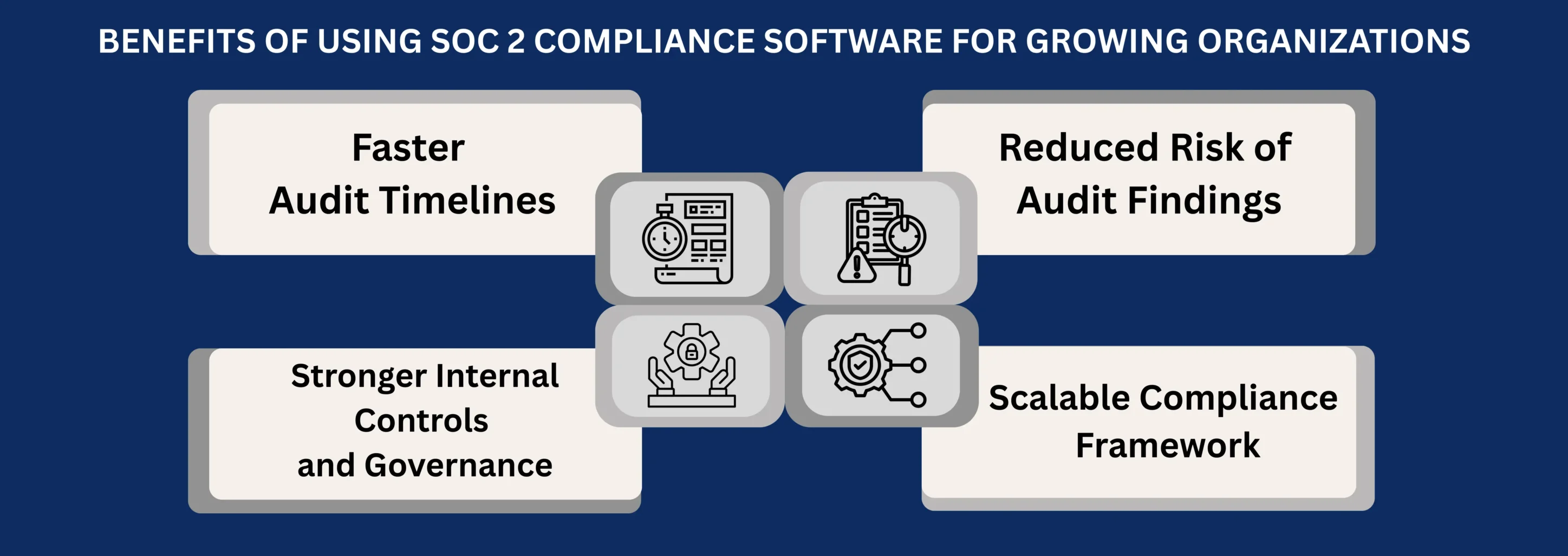
- ✓Verification of Controls Through Independent Examination
- ✓Structured Audit Methodology and Ongoing Compliance Monitoring
SOC 2 Certification Scope and Trust Services Criteria Selection
Scope determination is one of the most consequential decisions in the SOC 2 audit process. The scope defines which systems, services, data flows, and organizational units are subject to examination. An accurately defined scope ensures that the SOC 2 attestation report is relevant and credible to relying parties — specifically, that the systems and services described in the report are the same systems and services that enterprise clients rely upon when engaging the organization.
An overly narrow scope that excludes critical production systems, or an overly broad scope that includes systems irrelevant to the service, both undermine the utility of the resulting attestation report.
The system boundary for a SOC 2 audit encompasses all infrastructure, software, people, procedures, and data that comprise the service being examined. For a Washington-based SaaS provider, the system boundary typically includes the production application environment (including cloud infrastructure components), data storage systems, authentication and identity management systems, network infrastructure, operational support processes, and the personnel responsible for operating and maintaining those systems.
The system description — the formal narrative included in the SOC 2 report — must accurately represent all components within the defined boundary. Misrepresentations or omissions identified during the audit may result in qualifications or scope limitations in the attestation opinion.
Subservice organizations — third-party vendors whose services are components of the system under examination — must be addressed in the SOC 2 scope definition. For Washington cloud service companies that rely on hyperscale cloud infrastructure providers (such as AWS, Azure, or Google Cloud), the subservice organization relationship must be documented and appropriately addressed in the system description.
The Licensed CPA Firm applies either the carve-out method (excluding subservice organization controls from testing) or the inclusive method (including subservice organization controls in testing, requiring the subservice organization’s own SOC report) based on the nature and significance of the subservice relationship.
The selection of applicable Trust Services Criteria categories beyond the mandatory Security TSC is determined by the nature of the services provided and the commitments made to customers in service agreements, privacy notices, and other formal representations. Organizations should evaluate each optional TSC category against their actual service commitments — not against aspirational control objectives.
Including a TSC category that does not correspond to a genuine service commitment creates audit scope that may not be relevant to relying parties. Conversely, excluding a TSC category that corresponds to a material commitment creates a gap in the attestation that enterprise clients may identify during vendor review.
| TSC Category | Applicable When | Example Washington Sector |
|---|---|---|
| Security (Mandatory) | All SOC 2 engagements | All technology and cloud sectors |
| Availability | Uptime or performance SLAs exist | Cloud infrastructure, managed services, SaaS |
| Processing Integrity | Accuracy and completeness of data processing is a service commitment | Payment processing, data analytics, AI platforms |
| Confidentiality | Contractual confidentiality obligations cover customer data | Enterprise software, legal tech, healthcare IT |
| Privacy | Personal information is collected, used, retained, or disclosed | Digital health, consumer tech, fintech, HR platforms |
- ✓Defining the System Boundary for Washington Organizations
- ✓Trust Services Criteria Category Selection Logic
SOC 2 Type 2 Audit Washington: Observation Period and Evidence Standards
The SOC 2 Type 2 audit Washington organizations undergo requires a defined observation period during which the Licensed CPA Firm assesses whether controls operated effectively over time. The observation period is a foundational element of the Type 2 examination — it is the duration during which control operation must be evidenced, and it determines the temporal relevance of the resulting attestation report.
Understanding the observation period structure, the evidence standards applied during that period, and the implications for report currency is essential for Washington organizations planning their SOC 2 audit timelines.
Observation Period Duration and Timing Considerations
The observation period for a SOC 2 Type 2 audit is typically six to twelve months. A six-month observation period is common for organizations completing their first Type 2 engagement, while twelve-month observation periods are standard for organizations in annual renewal cycles. The observation period must be a continuous period during which the organization’s in-scope controls were operational.
Controls implemented after the start of the observation period are evaluated only from the date of implementation forward — they cannot be credited for the period prior to their implementation. This means that organizations must have their control environments fully operational before the observation period begins, not during it.
For Washington organizations aligning their SOC 2 audit timelines with enterprise sales cycles, the observation period end date and report issuance date are strategically important. Enterprise clients typically require reports issued within the past twelve months. An organization whose SOC 2 Type 2 report covers an observation period ending in March will have a report that remains current through March of the following year.
Organizations engaged in active enterprise sales processes should plan their observation period timing to ensure that a current, recently issued report is available throughout the sales cycle — rather than entering a critical sales period with an expired or near-expiring report.
Evidence Collection Standards and Documentation Integrity
Evidence submitted to the Licensed CPA Firm during a SOC 2 Type 2 audit must be authentic, complete, and traceable to the observation period under examination. The examiner evaluates evidence authenticity as part of the testing process — evidence that cannot be traced to a specific date, system, or control activity does not satisfy audit requirements.
Organizations must establish evidence collection disciplines at the time controls are implemented, not at the time of the audit. Retroactively assembled evidence — for example, access review records reconstructed from memory rather than generated contemporaneously by the access management system — typically fails to satisfy the examiner’s evidence standards.
Automated evidence collection — using security information and event management (SIEM) systems, identity and access management (IAM) platforms, vulnerability management tools, and ticketing systems — significantly strengthens the completeness and authenticity of evidence produced during a SOC 2 audit. Washington technology organizations that leverage infrastructure-as-code environments, cloud-native monitoring tools, and automated compliance platforms generate evidence that is system-generated, timestamped, and traceable.
These characteristics align well with the evidentiary standards of SOC 2 Type 2 examination. By contrast, manual controls supported only by informal records are more susceptible to evidence completeness issues during auditor testing.
SOC 2 Report Validity, Distribution, and Relying Party Use
A SOC 2 attestation report is a restricted-use professional document issued by a Licensed CPA Firm and intended for distribution to specified relying parties. Understanding the validity period, appropriate distribution practices, and intended use of the SOC 2 report enables organizations to manage their attestation assets effectively and address enterprise client requests accurately.
SOC 2 report management is an operational function for Washington organizations that undergo annual audit cycles and maintain active vendor qualification programs with multiple enterprise clients simultaneously.
Report Validity Period and Currency Requirements
SOC 2 Type 2 reports are generally considered current for twelve months from the end of the observation period. Enterprise clients and procurement officers typically require that the SOC 2 report they review covers an observation period ending no more than twelve months prior to the vendor review date. A report whose observation period ended more than twelve months ago is considered stale — it does not reflect the organization’s current control environment and is generally not accepted as satisfactory evidence in active vendor due diligence processes.
Organizations must plan their annual audit cycles carefully to ensure that a current report is available throughout the year without gaps in coverage.
Restricted Use and Relying Party Distribution
SOC 2 reports are classified as restricted-use documents under AICPA standards. The report is intended for distribution to the organization (the service organization), its user entities (enterprise clients who rely on the services described), and in some cases, prospective user entities conducting vendor due diligence. Distribution outside these defined relying parties is restricted.
In practice, Washington organizations distribute their SOC 2 Type 2 reports to enterprise clients under non-disclosure agreements as part of vendor onboarding and annual vendor review processes. Some organizations maintain a secure portal through which qualified relying parties can request access to the current report, streamlining distribution while maintaining appropriate access controls.
The SOC 2 Type 1 report Washington organizations issue for initial market entry is similarly restricted in distribution but is typically superseded by a Type 2 report within twelve to eighteen months. Relying parties that accept a Type 1 report for initial vendor qualification often require a Type 2 report for annual renewal.
Organizations should plan their attestation roadmap accordingly — treating the Type 1 report as a bridge to full Type 2 attestation rather than as a permanent attestation instrument. SOC 2 audit firms in Washington with experience across multiple industry sectors can provide accurate guidance on the attestation expectations of specific enterprise client segments.
SOC 2 Versus Other Security Frameworks: Washington Context
Washington organizations operating in regulated sectors frequently encounter requirements referencing multiple security frameworks — including SOC 2, ISO 27001, NIST SP 800-53, PCI DSS, HIPAA, and CMMC. Understanding how SOC 2 Certification relates to these other frameworks enables organizations to structure their compliance programs efficiently and respond accurately to enterprise client inquiries about framework alignment.
SOC 2 is not a substitute for all other frameworks, nor is it superseded by them — each framework addresses distinct requirements and relying-party audiences.
SOC 2 Versus ISO 27001 Certification
SOC 2 and ISO 27001 are both internationally recognized information security frameworks that involve independent third-party assessment, but they differ in scope, methodology, and relying-party recognition. SOC 2 is a U.S.-developed AICPA attestation standard that tests specific controls against the Trust Services Criteria based on the organization’s service commitments. ISO 27001 is an international management system standard that certifies the design and implementation of an information security management system (ISMS) against defined requirements.
SOC 2 evaluates control operating effectiveness through a structured examination; ISO 27001 certifies that the ISMS is implemented and conforms to the standard’s requirements. SOC 2 carries deeper recognition in U.S. enterprise procurement and financial sector vendor programs; ISO 27001 offers broader recognition in European and Asia-Pacific markets.
Washington organizations expanding into international markets frequently pursue both SOC 2 and ISO 27001 certifications to address the distinct requirements of U.S. and international enterprise buyers. The control frameworks underlying both standards share significant overlap — particularly in the domains of access control, incident management, risk assessment, change management, and physical security — enabling organizations to build control environments that satisfy both frameworks efficiently.
The decision to pursue SOC 2 or ISO 27001 first should be based on primary market focus. U.S.-centric organizations with enterprise technology clients should prioritize SOC 2, while organizations with significant European or international operations should evaluate ISO 27001 requirements as a parallel or sequential priority.
SOC 2 and HIPAA Compliance for Washington Healthcare Technology Organizations
SOC 2 and HIPAA address overlapping but distinct compliance domains. HIPAA establishes specific administrative, physical, and technical safeguard requirements for covered entities and business associates handling protected health information (PHI). SOC 2 evaluates control effectiveness against the AICPA Trust Services Criteria, addressing security, availability, processing integrity, confidentiality, and privacy from a service commitment perspective.
Many SOC 2 control requirements — particularly in the Security and Privacy TSC categories — align with HIPAA safeguard requirements, making a well-designed SOC 2 control environment supportive of HIPAA compliance. However, SOC 2 attestation does not constitute HIPAA compliance certification, and Washington healthcare technology organizations must address HIPAA requirements through separate compliance activities.
FAQ
▶
What is SOC 2 Certification in Washington and who issues it?
▶
What is the difference between a SOC 2 Type 1 and SOC 2 Type 2 report?
▶
How long does a SOC 2 Type 2 audit take for Washington organizations?
▶
Which Trust Services Criteria categories should Washington organizations include in their SOC 2 scope?
▶
How long is a SOC 2 report valid for Washington organizations?
▶
What types of Washington organizations require SOC 2 Certification?
▶
What is the difference between SOC 2 compliance and SOC 2 attestation?
▶
Can a SOC 2 report be shared with all clients and prospects?
SOC 1 VS SOC 2: WHICH REPORT YOUR CUSTOMERS ACTUALLY ASK FOR
If you sell SaaS or provide outsourced services, you have likely been asked for a SOC report. However, the follow-up question is rarely easy to answer…

AICPA Issues New Guidance for Peer Reviewers Evaluating SOC 2 Engagements
AICPA SOC 2 guidance has been issued to help peer reviewers identify quality risks associated with SOC 2 engagements as the use of compliance automati…
SOC 2 Certified: What Does It Mean for Your Business
For companies that handle sensitive data or run cloud-based services, the question “Can you provide your SOC 2 report?” carries enormous weight. Yet, …
Get In Touch
have a question? let us get back to you.