
SOC 2 Certification in Denver
Executive Summary: CertPro is a Licensed CPA Firm performing formal SOC 2 Attestation engagements for organizations in Denver, Colorado. SOC 2 audits are conducted under AICPA Trust Services Criteria, evaluating security, availability, processing integrity, confidentiality, and privacy controls. CertPro issues SOC 2 Type 1 and Type 2 attestation reports as part of SOC 2 Certification in Denver for technology companies, SaaS platforms, fintech firms, and cloud service providers operating in the region.
OUR CLIENTS









What Is SOC 2 Certification?
SOC 2 Certification in Denver refers to the formal attestation process through which a Licensed CPA Firm evaluates and reports on an organization’s information security controls as defined by the American Institute of Certified Public Accountants (AICPA). The SOC 2 framework — formally titled System and Organization Controls 2 — was established by the AICPA to give service organizations a standardized mechanism for demonstrating the effectiveness of their internal controls. These controls span five categories: security, availability, processing integrity, confidentiality, and privacy. Unlike regulatory mandates such as HIPAA or PCI-DSS, SOC 2 is a voluntary attestation standard. However, it has become a de facto requirement for technology companies, cloud service providers, and SaaS platforms operating in enterprise markets across the United States.
The SOC 2 standard is built upon the Trust Services Criteria (TSC) — a set of principles and criteria published by the AICPA that govern how organizations design, implement, and operate their control environments. The Security criterion, also referred to as Common Criteria, is mandatory for all SOC 2 engagements. The remaining four criteria (Availability, Processing Integrity, Confidentiality, and Privacy) are optional. Organizations select them based on the nature of their services and the commitments they make to customers. The resulting report is an attestation document issued exclusively by a Licensed CPA Firm — not a self-certification or vendor-issued credential. This distinction is central to what makes SOC 2 Attestation credible and commercially recognized.
SOC 2 Type 1 Report: Point-in-Time Attestation
A SOC 2 Type 1 report evaluates whether an organization’s system and controls are suitably designed to meet the applicable Trust Services Criteria as of a specific point in time. SOC 2 Type 1 reporting in Denver is commonly pursued by organizations early in their compliance journey that need to demonstrate a formally designed control environment to customers or partners. The Type 1 report does not assess operational effectiveness over time — it evaluates design adequacy at a single date. This makes it a faster engagement to complete, typically requiring four to eight weeks from the commencement of fieldwork to report issuance, depending on organizational readiness and the number of Trust Services Criteria in scope.
The Type 1 report is particularly valuable for Denver-based startups and emerging technology companies that have recently implemented formal security controls and need to provide an initial attestation to enterprise customers before completing a full audit observation period. While a Type 1 report does not carry the same evidentiary weight as a Type 2 report, it serves as a recognized interim credential and establishes the control baseline against which future Type 2 audits are measured. Many organizations pursuing SOC 2 Certification in Denver complete a Type 1 report first, then transition to a Type 2 engagement after accumulating a minimum observation period of six to twelve months.
SOC 2 Type 2 Report: Operational Effectiveness Over Time
A SOC 2 Type 2 audit in Denver evaluates both the design suitability and the operational effectiveness of an organization’s controls over a defined observation period. The standard observation period is a minimum of six months, although twelve-month periods are common for annual audit cycles. During a Type 2 engagement, the Licensed CPA Firm performs detailed control testing — including evidence sampling, walkthroughs, inquiry, and document inspection — to evaluate whether controls operated consistently and effectively throughout the entire review period. The resulting SOC 2 Type 2 report provides significantly greater assurance than a Type 1 report and is the format most commonly requested by enterprise customers, financial institutions, and government agencies.
SOC 2 Type 2 reports are the gold standard in third-party security attestation for service organizations. For Denver-based organizations — particularly those serving healthcare systems, financial services firms, or large enterprise clients — a SOC 2 Type 2 report is often a contractual prerequisite for vendor onboarding. The report is issued by a Licensed CPA Firm and contains the auditor’s opinion, a description of the service organization’s system, the Trust Services Criteria being evaluated, specific control activities tested, and the results of control testing including any noted exceptions. Annual re-attestation is required to maintain a current SOC 2 Certification in Denver status.
SOC 2 as a Formal Attestation Engagement
SOC 2 is classified as an attestation engagement under the AICPA’s attestation standards, specifically AT-C Section 205 (Examination Engagements). This classification distinguishes SOC 2 from internal audits, vendor questionnaires, or self-assessments. Only a Licensed CPA Firm is authorized to issue a SOC 2 attestation report. The auditor examines management’s description of the service organization’s system and evaluates whether the controls stated in that description are fairly presented, suitably designed, and — in the case of a Type 2 engagement — operating effectively. The final report includes the CPA’s opinion and is issued under professional standards that carry legal and regulatory weight.
The distinction between SOC 2 compliance and SOC 2 Attestation is important to understand. SOC 2 compliance refers to an organization’s internal adherence to security controls aligned with Trust Services Criteria, without independent verification by a CPA. SOC 2 Attestation — the formal outcome of SOC 2 Certification in Denver — is achieved when a Licensed CPA Firm completes a formal examination engagement and issues an attestation report with an auditor’s opinion. Organizations that refer to themselves as SOC 2 certified have undergone this independent examination process. Customers and enterprise procurement teams universally require the formal attestation report rather than a self-reported compliance declaration.

SOC 2 Certification in Denver: Local Context and Industry Relevance
Denver, Colorado has emerged as one of the most rapidly growing technology and innovation ecosystems in the United States. The metropolitan area is home to a significant concentration of SaaS companies, cloud infrastructure providers, health technology organizations, financial services firms, and cybersecurity companies. This growth has driven increasing demand for formal security attestation, as enterprise customers — both locally and nationally — require SOC 2 reports as part of their vendor due diligence processes. SOC 2 Certification in Denver has become a standard expectation across industry verticals, not merely a competitive differentiator.
Denver’s technology sector is characterized by its diversity — from early-stage startups to mid-market SaaS platforms and established enterprise software companies. Many of these organizations handle sensitive customer data, including personal health information, financial account data, and confidential enterprise records. SOC 2 Compliance Denver is not only a business development requirement for these organizations but also a foundational element of responsible data stewardship. Organizations that process data on behalf of their customers carry inherent fiduciary obligations, and SOC 2 Attestation provides independent verification that those obligations are being met through formally evaluated controls.
Denver SaaS Companies and SOC 2 Requirements
SOC 2 certification for Denver tech companies — particularly software-as-a-service providers — has become a baseline expectation for those seeking to sell into enterprise accounts. Enterprise procurement teams at large organizations routinely require SOC 2 Type 2 reports before approving new software vendors, and many include SOC 2 Attestation as a contractual requirement in vendor agreements. For Denver-based SaaS companies, the inability to produce a current SOC 2 report can result in lost sales cycles, delayed contract execution, or disqualification from procurement processes entirely. The SOC 2 Audit Denver process, when completed by a Licensed CPA Firm, produces a report that satisfies these enterprise procurement requirements.
Denver’s SaaS ecosystem spans a wide range of verticals, including HR technology, project management, customer relationship management, legal technology, and supply chain software. Regardless of the vertical, the common thread is that these platforms store, process, or transmit customer data on behalf of their clients. Enterprise customers in regulated industries — particularly financial services, healthcare, and government — will not onboard new software vendors without a current SOC 2 Attestation report. Denver SaaS companies that complete SOC 2 Certification in Denver eliminate a major barrier to enterprise sales and accelerate contract cycles with security-conscious customers.
SOC 2 Compliance Denver: Fintech and Financial Services
SOC 2 Compliance Denver requirements for fintech companies are particularly stringent, as financial technology organizations operate at the intersection of sensitive financial data and technology infrastructure. Denver’s fintech sector includes payment processing platforms, lending technology providers, investment management software companies, and cryptocurrency infrastructure firms. These organizations handle financial account numbers, transaction records, personally identifiable information, and other data categories subject to regulatory oversight under frameworks such as the Gramm-Leach-Bliley Act (GLBA) and applicable state financial regulations. SOC 2 Attestation provides independent verification of the security controls protecting this data and is commonly requested by bank partners, institutional investors, and enterprise customers.
Financial services organizations that use third-party technology providers — a category that includes virtually every bank, credit union, and investment firm operating in Denver — are required under OCC guidance and bank regulatory expectations to conduct thorough vendor due diligence. A SOC 2 Type 2 report issued by a Licensed CPA Firm is the most widely accepted form of third-party security attestation in the financial services sector. Denver fintech companies that complete SOC 2 Compliance Denver attestation are better positioned to establish bank partnerships, pass vendor risk assessments, and satisfy due diligence requirements imposed by institutional customers.
SOC 2 Certification Denver Healthcare IT
SOC 2 Certification in Denver is particularly relevant for healthcare IT organizations given the intersection of HIPAA requirements and technology vendor obligations. Healthcare IT companies — including electronic health record (EHR) platforms, telehealth providers, medical billing software companies, and health data analytics firms — handle protected health information (PHI) on behalf of covered entities. While HIPAA itself does not require SOC 2 Attestation, healthcare organizations conducting vendor due diligence increasingly request SOC 2 reports as evidence of a formally evaluated security control environment. A SOC 2 report addressing the Privacy criterion provides direct alignment with HIPAA’s privacy and security rule requirements.
Denver’s healthcare technology sector is substantial, with major health systems, academic medical centers, and insurance carriers all operating in the region. Technology vendors serving these institutions must demonstrate rigorous data security practices. The SOC 2 Audit Denver process evaluates controls relevant to data access management, encryption, audit logging, incident response, and vendor risk management — all directly relevant to HIPAA compliance. Healthcare IT companies that complete SOC 2 Certification in Denver can present their attestation report to hospital systems and health plans as independent verification of their security posture, streamlining vendor onboarding processes that would otherwise require extensive questionnaire completion and on-site reviews.
SOC 2 Trust Services Criteria Explained
The Trust Services Criteria (TSC) represent the evaluative framework used in all SOC 2 engagements. Published by the AICPA, the TSC consists of five categories of criteria against which a service organization’s controls are evaluated. The Security criterion is mandatory in every SOC 2 engagement. The remaining four criteria — Availability, Processing Integrity, Confidentiality, and Privacy — are optional and are selected based on the nature of the services provided and the commitments the organization makes to its customers in service agreements and system descriptions. The scope of an engagement determines which criteria are evaluated and documented in the resulting SOC 2 Attestation report.
The Security criterion — referred to as the Common Criteria — is the only Trust Services Criterion required in every SOC 2 engagement. It addresses the protection of system resources against unauthorized access, both logical and physical. The Common Criteria evaluates controls across nine control categories: Control Environment; Communication and Information; Risk Assessment; Monitoring of Controls; Control Activities; Logical and Physical Access Controls; System Operations; Change Management; and Risk Mitigation. These categories encompass a wide range of security controls, including identity and access management, network security architecture, encryption practices, physical security, background screening, and security awareness training.
For Denver-based organizations undergoing SOC 2 Certification in Denver, the Common Criteria evaluation is the most comprehensive and demanding portion of the audit. Auditors examine evidence across all nine control categories — including access provisioning and de-provisioning records, firewall and network security configurations, vulnerability management programs, incident response procedures, and change management logs. The breadth of the Common Criteria means that even organizations pursuing only the Security criterion will undergo a rigorous evaluation of their entire security control environment. Organizations that fail to maintain consistent evidence of control operation throughout the audit period may receive qualified opinions or noted exceptions in the final SOC 2 Audit Denver report.
The Availability criterion evaluates whether systems are available for operation and use as committed or agreed upon in service level agreements. This criterion is relevant to organizations that provide hosted services, cloud infrastructure, or platforms where system uptime is a contractual commitment. Availability controls include infrastructure redundancy, disaster recovery planning, backup procedures, capacity management, and performance monitoring. During a SOC 2 Audit Denver, the Licensed CPA Firm examines evidence of availability commitments, documented recovery time objectives (RTOs), recovery point objectives (RPOs), and the operational results of infrastructure redundancy mechanisms over the audit observation period.
Denver-based cloud service providers, managed service providers, and SaaS platforms that commit to specific uptime guarantees in their customer agreements are strong candidates for including the Availability criterion in their SOC 2 scope. The criterion requires organizations to demonstrate not only that availability commitments exist, but also that monitoring systems are in place to measure performance against those commitments and that corrective actions are taken when availability targets are missed. Evidence requirements typically include system monitoring dashboards, incident logs, disaster recovery test results, and infrastructure architecture documentation that demonstrates redundancy design.
The Processing Integrity criterion evaluates whether system processing is complete, valid, accurate, timely, and authorized. This criterion is most relevant to organizations whose services include data processing functions — such as payment processors, financial calculation platforms, healthcare claims processors, and data transformation service providers. Processing integrity controls include input validation mechanisms, processing reconciliation procedures, error handling protocols, and output verification processes. The criterion ensures that data processed by the service organization is handled in accordance with established procedures, and that errors or anomalies are detected, logged, and corrected in a timely manner.
The Confidentiality criterion evaluates whether information designated as confidential is protected as committed or agreed. Confidential information includes business data, trade secrets, financial information, and other data that an organization commits to protect under contractual or legal obligations. Confidentiality controls include data classification programs, encryption of confidential data at rest and in transit, access restrictions based on need-to-know principles, and data retention and disposal procedures. For Denver-based professional services firms, technology companies handling proprietary customer data, and organizations managing intellectual property, the Confidentiality criterion provides formal attestation that contractual data protection commitments are backed by independently evaluated controls — a core benefit of SOC 2 Compliance Denver.
The Privacy criterion evaluates whether personal information is collected, used, retained, disclosed, and disposed of in conformity with the organization’s privacy notice and applicable privacy regulations. The AICPA’s privacy criteria align with Generally Accepted Privacy Principles (GAPP) and address the full lifecycle of personal information management. Privacy controls include consent management, data subject rights fulfillment, privacy notice accuracy, third-party disclosure management, and privacy incident response. For Denver-based organizations serving consumers or operating under state privacy laws such as the Colorado Privacy Act (CPA), including the Privacy criterion in a SOC 2 engagement demonstrates independent verification of privacy control effectiveness to customers and regulators.
The Colorado Privacy Act, which became effective July 1, 2023, grants Colorado consumers rights regarding their personal data and imposes obligations on businesses that process personal data. Denver organizations subject to the CPA may find that including the Privacy criterion in their SOC 2 scope provides a structured framework for evaluating and evidencing compliance with these state-level privacy obligations. While SOC 2 Privacy criterion attestation does not constitute legal compliance certification under the CPA, it provides meaningful independent verification of privacy control design and operation that can support an organization’s broader privacy compliance program.
| Trust Services Criterion | Mandatory / Optional | Primary Relevance |
|---|---|---|
| Security (Common Criteria) | Mandatory | All service organizations |
| Availability | Optional | Cloud platforms, SaaS, managed services |
| Processing Integrity | Optional | Payment processors, data processors |
| Confidentiality | Optional | B2B data handlers, professional services firms |
| Privacy | Optional | Consumer data handlers, healthcare IT organizations |
- ✓Security (Common Criteria) — Mandatory
- ✓Availability Criterion
- ✓Processing Integrity Criterion
- ✓Confidentiality Criterion
- ✓Privacy Criterion
SOC 2 Type 1 vs. SOC 2 Type 2: Choosing the Right Audit for Denver Organizations
The distinction between SOC 2 Type 1 and SOC 2 Type 2 is one of the most consequential decisions in planning a SOC 2 engagement. Both report types are issued under the same AICPA attestation standards and reference the same Trust Services Criteria, but they differ fundamentally in scope, observation period, evidentiary requirements, and the level of assurance they provide to report users. Understanding these differences allows Denver-based organizations to make informed decisions about which report type best serves their current customer requirements and SOC 2 Compliance Denver objectives.
| Characteristic | SOC 2 Type 1 | SOC 2 Type 2 |
|---|---|---|
| Evaluation Scope | Design suitability at a point in time | Design suitability and operational effectiveness over a defined period |
| Observation Period | None (single date) | Minimum 6 months (12 months typical for annual cycles) |
| Audit Timeline | 4–8 weeks from fieldwork commencement | 6–14 weeks from fieldwork commencement |
| Customer Acceptance | Interim or early-stage credential | Preferred by enterprise and regulated-industry customers |
| Report Frequency | One-time or pre-Type 2 milestone | Annual re-attestation required to maintain current status |
SOC 2 Type 1 differs from SOC 2 Type 2 in that it does not require an audit observation period and does not involve testing of control operation over time. A Type 1 report is appropriate when an organization has recently implemented its control environment and needs to provide customers with documented evidence of control design before completing a full audit cycle. The Type 1 report answers the question: ‘Are the controls suitably designed as of this date?’ The Type 2 report answers the more demanding question: ‘Did the controls operate effectively throughout the entire review period?’ Enterprise customers in regulated industries almost universally require a Type 2 report, as it provides the evidentiary depth needed to satisfy their own regulatory obligations and vendor risk management programs.
For Denver organizations in the early stages of implementing formal security controls, the recommended path is to complete a SOC 2 Type 1 report first, then transition to an annual SOC 2 Type 2 audit cycle. This approach allows the organization to present a current attestation report to customers while accumulating the observation period required for a Type 2 engagement. CertPro conducts both SOC 2 Type 1 and Type 2 engagements for Denver-based organizations, with the audit scope, observation period, and Trust Services Criteria selection determined through a formal scoping process conducted prior to engagement commencement. This staged approach to SOC 2 Certification in Denver is the most practical path for organizations entering the attestation process for the first time.
SOC 2 Audit Process at CertPro
CertPro conducts SOC 2 Audit Denver engagements as formal attestation examinations under AICPA AT-C Section 205. The audit process is structured as a sequential series of defined stages, each with specific objectives, deliverables, and evaluation activities. The following describes CertPro’s standard SOC 2 audit process for Denver-based organizations — from initial scope definition through final report issuance and annual re-attestation.
- Scope Definition: CertPro and the client organization formally define the boundaries of the SOC 2 engagement, including the services in scope, the applicable Trust Services Criteria, the audit period (for Type 2), and the system boundaries. Scope definition is documented in an engagement letter executed prior to audit commencement.
- System Description Review: Management prepares a description of the service organization’s system, including infrastructure components, software, people, procedures, and data. CertPro evaluates whether the description fairly presents the system as designed and implemented.
- Audit Program Determination: CertPro develops a tailored audit program specifying the control objectives, control activities, and testing procedures to be applied based on the selected Trust Services Criteria and the organization’s control environment.
- Stage 1 Assessment (Walkthrough and Inquiry): CertPro conducts walkthroughs of key control processes, performing inquiry with process owners and reviewing initial evidence to understand how controls are designed and implemented. This stage validates the audit program and identifies areas requiring additional testing.
- Control Testing (Fieldwork): CertPro performs detailed substantive testing of control activities, including evidence sampling, document inspection, system configuration review, and observation of control procedures. For Type 2 engagements, testing covers the entire audit observation period.
- Nonconformity Review and Management Response: CertPro communicates testing observations to management. Where control exceptions are identified, management provides responses and context. Factual accuracy of the draft report is confirmed with management prior to finalization.
- Auditor Opinion Formation: CertPro’s Licensed CPA evaluates aggregate testing results against the Trust Services Criteria and forms an opinion regarding whether controls are suitably designed (Type 1) and operating effectively (Type 2).
- Issuance of SOC 2 Attestation Report: CertPro issues the formal SOC 2 Attestation report, including the auditor’s opinion, system description, control matrices, and testing results. The report is issued under the CPA’s signature and professional credentials.
- Surveillance and Annual Recertification: SOC 2 attestation reports cover defined periods and must be renewed annually. CertPro conducts subsequent Type 2 engagements on an annual cycle to maintain currency of the attestation and ensure continuous SOC 2 Compliance Denver coverage.
Scope definition is the foundational stage of any SOC 2 Audit Denver engagement and has direct implications for the cost, complexity, and duration of the audit. During scoping, CertPro and the client organization identify the specific services to be covered by the SOC 2 report, the infrastructure and technology components that support those services, the applicable Trust Services Criteria, and the audit period for Type 2 engagements. A well-defined scope produces a report that is relevant to the organization’s customer base and addresses the specific security assurances that enterprise customers require. Overly broad scope increases audit complexity without proportional benefit, while overly narrow scope may produce a report that fails to satisfy customer requirements.
The system description is a management-prepared document that describes the service organization’s system in sufficient detail for report users to understand the nature of the services provided, the control environment, and the boundaries of the system under evaluation. The description must address five components: infrastructure, software, people, procedures, and data. CertPro evaluates whether the system description fairly presents the system as designed and implemented. For Denver organizations new to SOC 2 Certification in Denver, preparing an accurate and complete system description is one of the most time-intensive pre-audit activities. It requires detailed input from technical, operational, and management personnel across the organization.
Evidence collection and control testing represent the core fieldwork activities of a SOC 2 engagement. CertPro auditors review documentary evidence, conduct system inquiries, perform technical inspections, and sample transactions or records to evaluate whether controls operate as described. Evidence types commonly examined during a SOC 2 Audit Denver include access control reports, change management tickets, security awareness training completion records, vulnerability scan results, penetration test reports, backup verification logs, vendor security assessments, incident response records, and business continuity test documentation. The quality, completeness, and consistency of evidence collected during the audit period is a primary determinant of whether the auditor issues an unqualified opinion.
SOC 2 auditors evaluate evidence over time, not merely at a single snapshot. For Type 2 engagements, CertPro’s audit approach involves sampling evidence across the entire observation period to verify that controls operated consistently and without significant exception throughout the review window. Organizations that implement controls shortly before the audit period ends — but lack evidence of consistent operation throughout — will receive noted exceptions in the testing results section of the report. This is why evidence management practices are critical to achieving a clean SOC 2 Attestation report. Systematic collection, organization, and retention of control evidence throughout the year directly affects audit outcomes.
The SOC 2 Attestation report is issued by CertPro’s Licensed CPA upon completion of fieldwork, review of management responses, and finalization of the auditor’s opinion. The report structure follows AICPA guidance and includes the independent service auditor’s report (containing the auditor’s opinion), management’s description of the system, the applicable Trust Services Criteria and related control activities, and the results of control testing including any noted exceptions. The SOC 2 Attestation report is a restricted-use document intended for use by the service organization and its customers who have sufficient knowledge of the system to understand it in the context of their business relationship.
Denver-based organizations that receive SOC 2 Attestation reports from CertPro distribute those reports to customers, prospects, and partners as part of their vendor risk management and security disclosure processes. Many organizations include the SOC 2 report in their security documentation portal, provide it under NDA during enterprise sales processes, or reference it in customer-facing security pages and trust centers. The report remains valid for the period it covers, and customers typically expect updated annual reports to maintain their own vendor risk management files. Annual re-engagement with CertPro ensures continuity of SOC 2 Compliance Denver coverage without gaps in the audit period.
- ✓Scope Definition and System Description
- ✓Evidence Collection and Control Testing
- ✓Report Issuance and SOC 2 Attestation
SOC 2 Certification Requirements for Denver Organizations
SOC 2 Compliance Denver requires organizations to demonstrate that formal controls are in place, operating effectively, and supported by sufficient documentary evidence across the applicable Trust Services Criteria. While the AICPA does not prescribe specific technical controls or mandate specific technologies, it defines the criteria that controls must satisfy. Organizations have flexibility in how they implement controls to meet those criteria, but the controls must be formally defined, consistently operated, and evidenced throughout the audit observation period. The following outlines the key requirements across documentation, technical controls, and organizational processes for achieving SOC 2 Certification in Denver.
Documentation is the evidentiary foundation of any SOC 2 audit. Organizations must maintain formal, up-to-date policies and procedures covering all areas addressed by the applicable Trust Services Criteria. For the Security criterion, this includes an information security policy, access control policy, change management policy, incident response plan, business continuity and disaster recovery plan, vendor management policy, and acceptable use policy. These documents must be formally approved by management, communicated to relevant personnel, and reviewed on a defined schedule. Policies that exist only informally or have not been reviewed and updated within the past year are frequently identified as exceptions during SOC 2 Audit Denver engagements.
Beyond policies, organizations must maintain operational documentation that demonstrates the execution of control activities. This includes records of user access reviews conducted during the audit period, change management tickets and approval records, security awareness training completion logs, vulnerability scan reports and remediation tracking, penetration test reports and management responses, vendor risk assessment records, and incident response logs. Operational documentation must cover the entire audit observation period for Type 2 engagements. Organizations that conduct control activities but fail to maintain contemporaneous documentation will be unable to provide adequate evidence during fieldwork — often resulting in audit exceptions that affect the final SOC 2 Attestation opinion.
Technical controls are the technology-implemented safeguards that protect system resources and data. For SOC 2 Certification in Denver, the Common Criteria require organizations to demonstrate effective technical controls across several key domains. Identity and access management controls must ensure that access to systems and data is granted based on least-privilege principles, that access provisioning and de-provisioning are performed promptly with documented authorization, and that user access reviews are conducted on a defined schedule. Multi-factor authentication (MFA) is expected for remote access and for access to systems containing sensitive data, and its consistent application is commonly tested during SOC 2 Audit Denver fieldwork.
Network security controls must demonstrate that system boundaries are protected by appropriately configured firewalls and network segmentation, that intrusion detection or prevention systems are deployed and monitored, and that network traffic is reviewed for anomalous activity. Encryption controls must demonstrate that sensitive data is encrypted in transit using current transport security protocols (TLS 1.2 or higher) and encrypted at rest using industry-standard encryption algorithms. Vulnerability management programs must demonstrate that systems are regularly scanned for vulnerabilities, that identified vulnerabilities are tracked and remediated within defined timeframes based on risk rating, and that penetration tests are conducted at least annually by qualified third parties.
Organizational controls address the human and process elements of the control environment. The Common Criteria require organizations to demonstrate an effective control environment, which includes a defined organizational structure with clear roles and responsibilities for information security, a formal risk assessment process conducted at least annually, and a security awareness training program that covers all employees. Background screening procedures for personnel in sensitive roles, formal employee onboarding and offboarding processes, and documented disciplinary procedures for security policy violations are also evaluated during SOC 2 Audit Denver engagements. These organizational controls are as critical to a successful SOC 2 Compliance Denver outcome as any technical safeguard.
- ✓Formal information security policy suite covering all applicable Trust Services Criteria
- ✓Documented risk assessment program conducted at least annually
- ✓Identity and access management controls with formal provisioning and de-provisioning procedures
- ✓Multi-factor authentication for privileged and remote access
- ✓Network security architecture with documented firewall and segmentation configurations
- ✓Encryption of sensitive data at rest and in transit using current industry standards
- ✓Vulnerability management program with defined remediation timeframes based on risk severity
- ✓Annual third-party penetration testing with formal management response and remediation tracking
- ✓Security awareness training program with completion tracking for all employees
- ✓Vendor risk management program with third-party security assessments
- ✓Incident response plan with defined roles, escalation procedures, and notification requirements
- ✓Business continuity and disaster recovery program with documented RTO and RPO targets and annual testing
- ✓Documentation Requirements
- ✓Technical Control Requirements
- ✓Organizational and Process Requirements
Benefits of SOC 2 Certification for Denver Organizations
SOC 2 Certification in Denver delivers measurable business, operational, and competitive benefits for organizations that complete the formal attestation process. Beyond the immediate customer requirement of producing a SOC 2 report on demand, the certification process itself drives improvements in security control design, operational consistency, and organizational risk awareness. The following describes the primary categories of benefit that Denver-based organizations realize from completing SOC 2 Certification in Denver through a Licensed CPA Firm such as CertPro.
The most immediate and tangible benefit of SOC 2 Certification in Denver for technology companies is the removal of security-related barriers in enterprise sales cycles. Enterprise procurement teams routinely issue vendor security questionnaires as part of their due diligence process, and a current SOC 2 Type 2 report answers the vast majority of standard questionnaire items with independently verified evidence. Organizations holding a current SOC 2 Attestation report can dramatically reduce time spent completing vendor questionnaires, accelerate procurement approval timelines, and avoid disqualification from RFPs that list SOC 2 certification as a mandatory requirement. In highly competitive enterprise software markets, the presence or absence of a SOC 2 report can be a decisive factor in vendor selection.
Customer trust extends well beyond the procurement process. Enterprise customers that receive a current SOC 2 Type 2 report from their technology vendors gain assurance that an independent Licensed CPA Firm has evaluated and attested to the security of the systems handling their data. This assurance reduces the need for customers to conduct their own on-site security assessments — which are resource-intensive for both parties. For Denver-based SaaS and cloud service providers serving multiple enterprise customers, a single SOC 2 Attestation report serves as a scalable assurance mechanism that simultaneously satisfies the security due diligence requirements of the entire customer base.
Denver’s technology market is competitive, with a growing number of SaaS companies, cloud service providers, and technology platforms competing for enterprise contracts. SOC 2 Certification in Denver provides a formal, independently verified security credential that differentiates certified organizations from competitors relying solely on self-asserted security claims. Organizations that prominently feature their SOC 2 Attestation status in marketing materials, security pages, and sales presentations signal to prospects that their security posture has been independently evaluated — a meaningful distinction that carries weight with security-conscious buyers. For Denver-based organizations competing against both local and national vendors, SOC 2 certification for Denver tech companies is increasingly a table-stakes credential rather than simply a differentiating feature.
The control framework established during the SOC 2 Compliance Denver process provides a structured foundation for broader regulatory compliance. Organizations operating in regulated industries — including healthcare, financial services, and government contracting — find that the security controls implemented and evaluated during SOC 2 Certification in Denver create meaningful overlap with requirements under HIPAA, GLBA, the Colorado Privacy Act, and other applicable frameworks. While SOC 2 Attestation does not constitute compliance certification under these separate regulatory frameworks, the independently evaluated control environment reduces the organization’s exposure to regulatory enforcement actions, data breach liability, and contractual indemnification claims.
- ✓Removal of security-related barriers in enterprise vendor qualification processes
- ✓Reduction in time spent completing customer security questionnaires
- ✓Acceleration of procurement approval timelines for enterprise contracts
- ✓Formal credential demonstrating independently verified security control effectiveness
- ✓Competitive differentiation against vendors without SOC 2 Attestation
- ✓Structured control framework supporting alignment with HIPAA, GLBA, and the Colorado Privacy Act
- ✓Potential reduction in cyber liability insurance premiums (some insurers recognize SOC 2 Attestation)
- ✓Improved internal security discipline through formal evidence management requirements
- ✓Annual re-attestation cycle that supports continuous security control improvement
- ✓Scalable assurance mechanism satisfying the due diligence requirements of multiple enterprise customers simultaneously
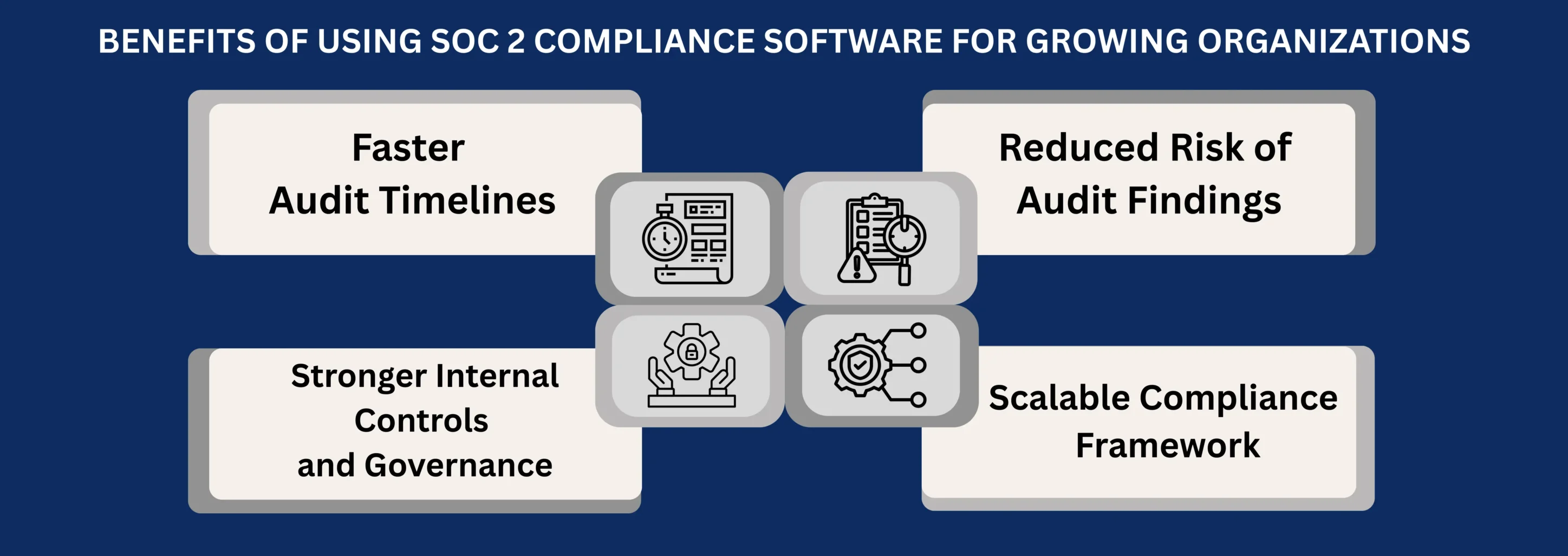
- ✓Enterprise Sales Enablement and Customer Trust
- ✓Competitive Differentiation in Denver’s Technology Market
- ✓Regulatory Alignment and Risk Reduction
Why Choose CertPro for SOC 2 Audit in Denver
CertPro is a Licensed CPA Firm performing formal SOC 2 Attestation engagements exclusively — without consulting, advisory, or implementation services that could create conflicts of interest in audit independence. As a dedicated SOC 2 audit firm serving Denver, Colorado, CertPro operates under AICPA professional standards for attestation engagements, maintaining the independence and objectivity required to issue credible, defensible SOC 2 Attestation reports. The firm’s exclusive focus on audit and attestation — as opposed to the dual-service model of firms that both consult on control implementation and audit the same controls — ensures that CertPro’s opinions are free from the conflicts of interest that independence standards are designed to prevent.
Licensed CPA Firm Credentials and AICPA Standards
CertPro’s authorization to issue SOC 2 Attestation reports derives from its status as a Licensed CPA Firm operating under AICPA attestation standards. The AICPA restricts the issuance of SOC 2 reports to Licensed CPA Firms — a requirement that distinguishes SOC 2 from self-certification programs or vendor-issued security credentials. CertPro’s auditors maintain the professional qualifications, continuing professional education requirements, and peer review obligations mandated by AICPA standards. The AICPA has issued specific guidance for peer reviewers evaluating SOC 2 engagements, reinforcing the quality standards that Licensed CPA Firms must maintain when conducting these specialized attestation examinations. CertPro’s practice is subject to peer review under AICPA standards, providing an additional layer of quality assurance for Denver clients.
The requirement that SOC 2 reports be issued by a Licensed CPA Firm is not merely a procedural formality — it is the foundation of the report’s credibility and market acceptance. Enterprise customers, institutional investors, and regulatory bodies accept SOC 2 reports as authoritative because they are issued by independent professionals subject to professional licensing, ethical standards, and peer review. A SOC 2 Attestation report from CertPro carries the same professional authority as any other CPA-issued attestation. Denver organizations can present their reports to any audience — domestic or international — with full confidence in the report’s credibility and defensibility.
SOC 2 Audit Firm Denver Colorado: Fixed Pricing and Transparency
As a SOC 2 audit firm serving Denver, Colorado, CertPro operates on a fixed pricing model that provides Denver-based organizations with complete pricing transparency prior to engagement commencement. Fixed pricing eliminates the uncertainty associated with hourly billing models common among larger audit firms, allowing organizations to accurately budget for their SOC 2 engagement without exposure to cost overruns from scope creep or extended fieldwork timelines. The scope, deliverables, and fixed fee are all documented in the engagement letter executed before audit activities begin. Organizations can plan their SOC 2 Certification in Denver with certainty regarding the full financial commitment required.
Audit-Only Firm: Independence and Objectivity
CertPro’s exclusive focus on audit and attestation services — without consulting or implementation services — ensures that the firm’s auditors maintain complete independence from the organizations they audit. Firms that provide both security implementation consulting and SOC 2 auditing to the same clients face inherent independence conflicts: the auditor is evaluating the effectiveness of controls that the firm’s own consultants recommended and implemented. AICPA independence standards strictly limit the scope of non-attest services that a CPA firm can provide to an audit client. CertPro’s audit-only model eliminates this structural conflict entirely, ensuring that SOC 2 Attestation opinions are based solely on objective evaluation of evidence — not influenced by prior implementation work.
SOC 2 Readiness Assessment Denver: Preparing for the Formal Audit
A SOC 2 readiness assessment in Denver is a structured evaluation conducted prior to the formal SOC 2 attestation engagement to identify the current state of an organization’s control environment relative to the applicable Trust Services Criteria. The readiness assessment is distinct from the formal audit — it does not produce an attestation report and is not required by AICPA standards. However, for organizations new to SOC 2 Compliance Denver, completing a structured readiness evaluation before the formal audit period begins allows management to identify control gaps, prioritize remediation activities, and enter the formal audit period with greater confidence in control completeness.
A SOC 2 readiness assessment in Denver typically covers a review of existing policies and procedures against Trust Services Criteria requirements, an evaluation of technical control implementation including access management, encryption, and vulnerability management programs, an assessment of evidence management practices and documentation completeness, and identification of control areas where formal controls have not yet been implemented or documented. The output is an internal management document — not an attestation report — that describes current control status and identifies areas requiring attention before the formal audit observation period commences. Organizations that address significant control gaps before the audit period begins are better positioned to receive unqualified opinions in their subsequent SOC 2 Attestation reports.
Third-party SOC 2 Audit Denver engagements benefit from advance preparation. Organizations that invest time in understanding the Trust Services Criteria requirements, implementing formal controls, establishing evidence collection processes, and preparing management’s system description before the audit observation period begins consistently produce stronger audit outcomes. CertPro’s scoping process includes a discussion of organizational readiness and the current state of the control environment, allowing CertPro to advise clients on the appropriate timing for commencing the formal audit observation period based on the maturity of their control environment.
SOC 2 Certification Cost and Timeline in Denver
The cost and timeline of SOC 2 Certification in Denver vary based on several factors, including the number of Trust Services Criteria in scope, the complexity of the organization’s technology environment, the maturity of the existing control environment, and whether the engagement is a Type 1 or Type 2 audit. CertPro operates on a fixed pricing model for all SOC 2 engagements, providing complete cost transparency before audit activities begin. The following describes the primary factors affecting SOC 2 Audit Denver scope, cost, and timeline for Denver organizations.
Factors Affecting SOC 2 Audit Scope and Cost
The primary drivers of SOC 2 audit scope and corresponding cost are the number of Trust Services Criteria included in the engagement, the number and complexity of in-scope systems and infrastructure components, the size of the organization’s user population and the volume of access management evidence required, and the number of third-party service providers that must be evaluated as part of the vendor management control assessment. Whether the engagement is a Type 1 or Type 2 audit also significantly affects scope. Type 2 engagements are inherently more resource-intensive than Type 1 engagements due to evidence sampling requirements across the audit observation period. Longer observation periods — such as twelve months compared to six — also increase the volume of evidence examined and the breadth of control testing required.
Typical SOC 2 Audit Timelines for Denver Organizations
A SOC 2 Type 1 report in Denver can typically be completed within four to eight weeks from the commencement of fieldwork, assuming the organization has a complete system description and organized evidence available at the start of the engagement. A SOC 2 Type 2 Audit Denver follows a different timeline structure: the audit observation period itself (minimum six months, typically twelve months for annual reports) runs independently of the audit fieldwork timeline. Fieldwork for a Type 2 engagement typically commences after the observation period has concluded and requires six to fourteen weeks from fieldwork commencement to report issuance, depending on the scope of the engagement and the organization’s responsiveness in providing evidence during fieldwork.
| Engagement Type | Observation Period | Fieldwork Duration | Total Elapsed Time |
|---|---|---|---|
| SOC 2 Type 1 | None | 4–8 weeks | 4–8 weeks from engagement commencement |
| SOC 2 Type 2 (6-month period) | 6 months | 6–10 weeks | 7–8 months from observation period start |
| SOC 2 Type 2 (12-month period) | 12 months | 8–14 weeks | 13–15 months from observation period start |
Denver organizations planning their first SOC 2 audit should account for total elapsed time — from control implementation through report issuance — when setting customer expectations about when a SOC 2 Attestation report will be available. Organizations that have committed to providing a SOC 2 report within a specific timeframe should discuss timing requirements with CertPro during the scoping process. In many cases, a Type 1 engagement can satisfy the immediate requirement while a Type 2 observation period accumulates concurrently. This sequenced approach — Type 1 first, Type 2 annually thereafter — is the most common path for Denver organizations entering the SOC 2 Certification in Denver process for the first time.
SOC 2 Compliance Denver: An Expert Framework
SOC 2 Compliance Denver is most effectively achieved through a structured, phased approach that aligns control implementation, evidence management, and audit preparation in a logical sequence. The following expert framework describes the recommended approach for Denver organizations pursuing SOC 2 Certification in Denver for the first time, drawing on established best practices for SOC 2 Attestation preparation.
Phase 1: Scope and Control Inventory
The first phase of SOC 2 compliance preparation involves defining the audit scope, selecting the applicable Trust Services Criteria, and conducting a comprehensive inventory of existing controls relative to the criteria requirements. Organizations should map their existing security policies, technical controls, and operational procedures to the specific control requirements of each selected criterion. This mapping exercise identifies which control requirements are already satisfied by existing practices and which require formal implementation, documentation, or enhancement. The control inventory becomes the foundation for prioritizing remediation activities and establishing a realistic timeline for achieving SOC 2 Audit Denver readiness.
Phase 2: Control Implementation and Evidence Management
Following the control inventory, organizations implement any controls identified as missing or insufficient and establish formal evidence management processes for all control activities. Evidence management is the systematic practice of collecting, organizing, and retaining documentation that demonstrates control operation throughout the audit period. Effective evidence management includes defining evidence owners for each control activity, establishing collection schedules aligned with control frequencies (daily, weekly, monthly, quarterly, and annual controls each require different cadences), and maintaining a centralized evidence repository organized by control category and time period. Organizations that establish disciplined evidence management practices at the start of the audit observation period arrive at SOC 2 Audit Denver fieldwork with organized, complete evidence packages that facilitate efficient and clean audit execution.
Phase 3: System Description Preparation and Audit Commencement
Management’s description of the service organization’s system is a critical audit deliverable that must be prepared by the organization — not the auditor — and must accurately represent the system as designed and implemented throughout the audit period. The system description should be drafted during the audit observation period and reviewed for accuracy and completeness before fieldwork commences. Common deficiencies include inaccurate descriptions of infrastructure components (particularly in cloud environments where architecture evolves rapidly), incomplete descriptions of user access provisioning processes, and failure to describe complementary user entity controls (CUECs) — controls that customers of the service organization must implement to achieve the control objectives described in the report. CertPro reviews management’s system description during fieldwork and evaluates whether it fairly presents the system as part of the SOC 2 Certification in Denver engagement.
FAQ
▶
What is A SOC 2 Type 1 audit typically takes four to?
▶
What is SOC 2 certification and who issues it?
▶
Which Denver organizations need SOC 2 certification?
▶
How long does a SOC 2 audit take in Denver?
▶
What is the difference between SOC 2 Type 1 and Type 2?
▶
What Trust Services Criteria must be included in a SOC 2 audit?
▶
Does SOC 2 certification expire?
▶
What is SOC 2 attestation and how does it differ from SOC 2 compliance?

AICPA Issues New Guidance for Peer Reviewers Evaluating SOC 2 Engagements
AICPA SOC 2 guidance has been issued to help peer reviewers identify quality risks associated with SOC 2 engagements as the use of compliance automati…

Rippling Launches Automated Compliance Platform for SOC 2 Audits
Excerpt from Rippling Blog Article, Published on April 28, 2026 Rippling has announced the launch of Rippling Automated Compliance, a new compliance a…

Rippling Enters the Compliance Automation Market with SOC 2 Solution
Rippling has officially entered the compliance automation market with the launch of its Automated Compliance platform, starting with support for SOC 2…
Get In Touch
have a question? let us get back to you.