
ISO 27001 Certification in Denver
ISO 27001 Certification in Denver is issued by CertPro, a Licensed CPA Firm operating as an independent third-party certification body. CertPro evaluates organizations’ Information Security Management Systems (ISMS) against the requirements of ISO/IEC 27001:2022 through a structured, evidence-based audit process. ISO 27001 Certification is awarded following a formal two-stage audit — not upon completion of internal activities or self-assessments. This distinction ensures that every certificate reflects an objective, auditor-verified determination of ISMS conformance.
OUR CLIENTS









What Is ISO 27001 Certification?
ISO 27001 Certification is a formal, third-party attestation confirming that an organization’s Information Security Management System (ISMS) conforms to the internationally recognized requirements of ISO/IEC 27001:2022. The standard specifies criteria for establishing, implementing, maintaining, and continually improving an ISMS — a systematic framework for managing information security risks across people, processes, and technology. ISO 27001 Certification cannot be self-declared. It is issued exclusively by accredited or recognized third-party certification bodies following a rigorous, structured audit process.
For Denver-based organizations, ISO 27001 Certification in Denver provides independently verified evidence that information security risks are systematically identified, assessed, treated, and monitored within a documented management framework. Denver’s economy includes a substantial concentration of technology companies, SaaS providers, cloud computing firms, healthcare organizations, financial services entities, aerospace and defense contractors, telecommunications providers, and energy technology companies. All of these sectors handle sensitive information subject to regulatory, contractual, and operational information security requirements. ISO 27001 Certification serves as a globally recognized signal that an organization has implemented and actively maintains a disciplined, risk-based ISMS.
The ISO/IEC 27001:2022 Standard
ISO/IEC 27001:2022 is the current version of the standard, published by the International Organization for Standardization (ISO) and the International Electrotechnical Commission (IEC). It supersedes the 2013 edition and introduced significant structural and content updates, including a reorganized Annex A aligned with ISO/IEC 27002:2022. The 2022 version consolidates controls from 114 to 93 and reorganizes them into four thematic categories: Organizational Controls, People Controls, Physical Controls, and Technological Controls. Organizations certified under the 2013 edition are required to transition to the 2022 standard by October 31, 2025, as mandated by international accreditation bodies.
The standard follows a Plan-Do-Check-Act (PDCA) management cycle and is structured around the ISO High-Level Structure (HLS), enabling integration with other management system standards such as ISO 9001 (Quality Management) and ISO 22301 (Business Continuity Management). The core clauses of ISO/IEC 27001:2022 — Clauses 4 through 10 — define mandatory requirements for context establishment, leadership commitment, planning, support, operation, performance evaluation, and continual improvement. Annex A provides a reference set of information security controls that organizations select and implement based on their risk assessment outcomes and Statement of Applicability (SoA).
ISMS Certification Defined
ISMS certification refers specifically to the formal recognition that an organization’s Information Security Management System satisfies the requirements of ISO/IEC 27001. The term ISMS encompasses the full scope of policies, procedures, processes, organizational structures, and technical controls that collectively manage information security risk. ISMS certification is distinct from a compliance statement or internal audit finding. It represents an external, independent determination made by a qualified certification body following evaluation of documented evidence, interviews, and control observations across the defined ISMS scope.
For Denver organizations pursuing ISMS certification, the certification body evaluates whether the ISMS scope is appropriately defined, whether risk assessment and risk treatment processes are systematic and documented, whether Annex A controls are selected and justified through the Statement of Applicability, and whether management review and continual improvement mechanisms are operational. ISMS certification is valid for three years, subject to annual surveillance audits that confirm the ISMS remains effective and conformant throughout the certification cycle.
ISO 27001 and Information Security Risk Management
At its core, ISO 27001 is a risk management standard. It requires organizations to establish a formal information security risk assessment process that identifies risks to the confidentiality, integrity, and availability of information assets within the defined ISMS scope. Each identified risk must be analyzed — considering likelihood and potential impact — and assigned a risk treatment option: acceptance, avoidance, transfer, or mitigation through the application of Annex A controls or other controls deemed appropriate by the organization.
Denver organizations in sectors such as healthcare, financial services, and cloud computing face distinct risk profiles driven by regulatory requirements — including HIPAA, GLBA, and Colorado’s HB 22-1240 privacy law — as well as contractual obligations with enterprise clients and threats specific to their technology environments. ISO 27001’s risk-based framework requires that controls be selected in proportion to identified risks rather than applied uniformly. This ensures the ISMS is calibrated to the organization’s actual threat landscape. This risk-proportionate approach differentiates ISO 27001 from prescriptive compliance frameworks and makes ISMS certification particularly valuable for organizations with complex or evolving security environments.

ENQUIRE NOW
Related Resources
Related Services in Denver
ISO 27001 Certification Requirements
ISO 27001 Certification requires organizations to satisfy mandatory requirements across ten clauses of the standard (Clauses 4–10) and to select and implement applicable controls from Annex A, documented in a Statement of Applicability (SoA). Requirements span documentation, risk management, operational controls, management commitment, and performance evaluation. During the ISO 27001 audit, auditors evaluate conformance against each mandatory clause and assess whether Annex A control selections are appropriately justified and evidenced.
ISO/IEC 27001:2022 specifies mandatory documented information that organizations must maintain and retain as evidence of ISMS conformance. Required documents include the ISMS scope statement, information security policy, risk assessment methodology and results, risk treatment plan, Statement of Applicability (SoA), information security objectives, evidence of competence and awareness activities, operational planning and control documentation, internal audit program and results, management review records, and records of nonconformities and corrective actions. Each document must be controlled — meaning it is subject to version management, access controls, and defined retention periods.
The Statement of Applicability is a particularly critical document for ISO 27001 compliance. The SoA lists all 93 Annex A controls, identifies which controls are applicable to the organization, provides justification for inclusion or exclusion of each control, and references the implementation status of applicable controls. Auditors scrutinize the SoA during the ISO 27001 audit to verify that control selections are logically derived from risk assessment outcomes and that exclusions are justified without compromising ISMS integrity. For Denver technology companies and cloud service providers, the SoA typically includes all controls within the Technological Controls category and a substantial portion of Organizational Controls.
| Clause | Requirement Area | Key Deliverables |
|---|---|---|
| Clause 4 | Context of the Organization | ISMS scope, interested parties, internal and external issues analysis |
| Clause 5 | Leadership | Information security policy, defined roles and responsibilities, demonstrated management commitment |
| Clause 6 | Planning | Risk assessment, risk treatment plan, Statement of Applicability, measurable security objectives |
| Clause 8 | Operation | Operational controls, risk treatment implementation, supplier and third-party security management |
| Clause 9 | Performance Evaluation | Internal audit program, management review records, monitoring and measurement activities |
ISO/IEC 27001:2022 Annex A contains 93 information security controls organized across four categories. Organizational Controls (37 controls) address policies, roles, responsibilities, threat intelligence, information security in projects, supplier relationships, and incident management. People Controls (8 controls) cover personnel screening, employment terms, awareness, training, disciplinary processes, and remote working. Physical Controls (14 controls) address physical security perimeters, equipment security, clear desk and screen policies, and secure disposal. Technological Controls (34 controls) encompass access management, encryption, malware protection, backup, logging and monitoring, network security, secure development, and vulnerability management.
ISO/IEC 27001:2022 introduced five new controls not present in the 2013 edition: Threat Intelligence (5.7), Information Security for Use of Cloud Services (5.23), ICT Readiness for Business Continuity (5.30), Physical Security Monitoring (7.4), and Data Masking (8.11). For Denver organizations operating cloud infrastructure, SaaS platforms, or hybrid environments, controls 5.23 (cloud services security) and 8.11 (data masking) are frequently applicable and closely scrutinized during the ISO 27001 audit. The certification body evaluates not only whether controls exist but whether they are operating effectively within the defined ISMS scope.
The ISMS scope defines the boundaries and applicability of the Information Security Management System within the organization. The scope must identify the organizational units, locations, information assets, systems, processes, and services included within certification coverage. Scope definition is a critical early step in the certification process because it determines which assets, risks, and controls fall within the audit boundary. Auditors evaluate whether the scope is clearly documented, appropriately justified based on organizational context, and whether any scope exclusions are defensible and do not compromise the organization’s information security obligations.
Denver organizations frequently define their ISMS scope around specific products or service lines. For example, a SaaS company may scope its ISO 27001 Certification in Denver to the production cloud environment and associated development and operations functions, while excluding unrelated business units. Scope exclusions are permissible under ISO 27001 but must be documented and justified. Auditors evaluate whether any exclusions compromise the organization’s ability to meet information security objectives or fulfill contractual and regulatory obligations. Overly narrow scopes that exclude material information assets or systems processing sensitive data are subject to challenge during the Stage 1 audit.
- ✓Documentation Requirements
- ✓Mandatory ISMS Clauses and Controls
- ✓Annex A Controls Overview
- ✓Scope Definition and Boundary Setting
ISO 27001 Certification Process in Denver
The ISO 27001 Certification process in Denver follows a structured, two-stage audit methodology conducted by CertPro as an independent third-party certification body. The process is designed to evaluate ISMS design adequacy, implementation effectiveness, and operational conformance against ISO/IEC 27001:2022 requirements. ISO 27001 Certification in Denver is issued only after both audit stages are completed successfully and any identified nonconformities are resolved. The full certification cycle spans three years, with annual surveillance audits required to maintain certificate validity.
The Stage 1 audit — also referred to as the documentation review or ISMS readiness audit — evaluates whether the organization has established the documented foundation necessary to proceed to the Stage 2 certification audit. During Stage 1, auditors review mandatory documented information including the ISMS scope, information security policy, risk assessment methodology and results, risk treatment plan, Statement of Applicability, and evidence of internal audit and management review completion. The Stage 1 audit also confirms that the ISMS has been operational for a sufficient period — typically a minimum of three months — to generate meaningful evidence of operating effectiveness.
Stage 1 findings are documented in a formal audit report identifying any areas where documentation is incomplete, inconsistent, or does not satisfy mandatory requirements. Minor observations and opportunities for improvement may be noted without preventing progression to Stage 2. However, major nonconformities identified during Stage 1 — such as an absent or inadequate risk assessment, undefined ISMS scope, or missing Statement of Applicability — must be resolved before the Stage 2 audit commences. For Denver organizations, the Stage 1 audit is typically conducted remotely, with document review and auditor interviews conducted via secure video conferencing platforms.
The Stage 2 audit constitutes the certification audit proper. Auditors evaluate the operational effectiveness of the ISMS by examining evidence of control implementation, interviewing personnel across relevant functions, testing control operation through system observation and log review, and assessing whether the ISMS is operating as documented. The Stage 2 audit covers all mandatory clauses of ISO/IEC 27001:2022 and assesses a representative sample of Annex A controls listed as applicable in the Statement of Applicability. Audit sampling is risk-based, meaning auditors prioritize controls that address the organization’s highest-rated information security risks.
For Denver technology companies, the Stage 2 audit typically involves evaluation of access control mechanisms, encryption implementations, vulnerability management programs, security incident response procedures, logging and monitoring configurations, supplier security assessment processes, and business continuity arrangements. Physical security controls are evaluated at Denver office locations or data center facilities within the defined ISMS scope. Auditors assess the consistency between documented policies, implemented procedures, and actual operational practice — identifying any gaps that constitute nonconformities requiring corrective action before the certification decision can proceed.
Nonconformities identified during the Stage 2 ISO 27001 audit are classified as major or minor. A major nonconformity represents a systemic failure or absence of a required element — for example, no evidence that risk assessment has been conducted, no internal audit program, or a fundamental gap in a critical control area. A major nonconformity must be fully resolved before the certification decision can be made. Minor nonconformities represent isolated failures that do not indicate a systemic ISMS breakdown. These require documented corrective action plans and evidence of resolution, typically within 90 days of the audit.
Upon satisfactory resolution of all nonconformities, the audit findings and supporting evidence are submitted to CertPro’s independent certification decision function for review. The certification decision is made by a qualified reviewer who was not involved in conducting the audit — ensuring objectivity and independence in the final determination. If the certification decision is positive, CertPro issues the ISO 27001 certificate, specifying the organization’s name, registered location, ISMS scope, the applicable standard version (ISO/IEC 27001:2022), and the certificate validity period.
ISO 27001 Certification is valid for a three-year cycle. Annual surveillance audits are conducted in Year 1 and Year 2 following initial certification to verify that the ISMS remains conformant and continues to operate effectively. Surveillance audits are narrower in scope than the initial certification audit, focusing on key ISMS elements including internal audit results, management review records, corrective action effectiveness, changes to the ISMS or its context, and a rotating sample of Annex A controls. Failure to maintain conformance during the surveillance period — or failure to schedule and complete surveillance audits within required timeframes — may result in suspension or withdrawal of certification.
At the end of the three-year certification cycle, organizations must undergo a full recertification audit to renew their ISO 27001 Certification. The recertification audit is similar in scope to the initial Stage 2 audit. It evaluates the cumulative effectiveness of the ISMS over the certification period, including trends in internal audit results, management review outcomes, corrective action history, and continual improvement activities. Denver organizations that maintain disciplined ISMS operations — including regular internal audits, management reviews, and timely corrective actions — typically encounter fewer findings during recertification audits.
- ✓Stage 1 Audit: Documentation Review and Readiness Evaluation
- ✓Stage 2 Audit: On-Site Control Effectiveness Assessment
- ✓Nonconformity Classification and Corrective Action
- ✓Surveillance Audits and Recertification
ISO 27001 Audit — What Denver Businesses Need to Know
The ISO 27001 audit is the formal evaluation activity through which an independent certification body determines whether an organization’s ISMS conforms to ISO/IEC 27001:2022 requirements. For Denver businesses, understanding the audit structure, evidence requirements, and auditor expectations is essential for accurate ISMS planning and scoping. The ISO 27001 audit Denver organizations undergo is conducted by CertPro auditors with demonstrated competence in information security management systems and relevant sector-specific knowledge.
Audit Evidence and Sampling Methodology
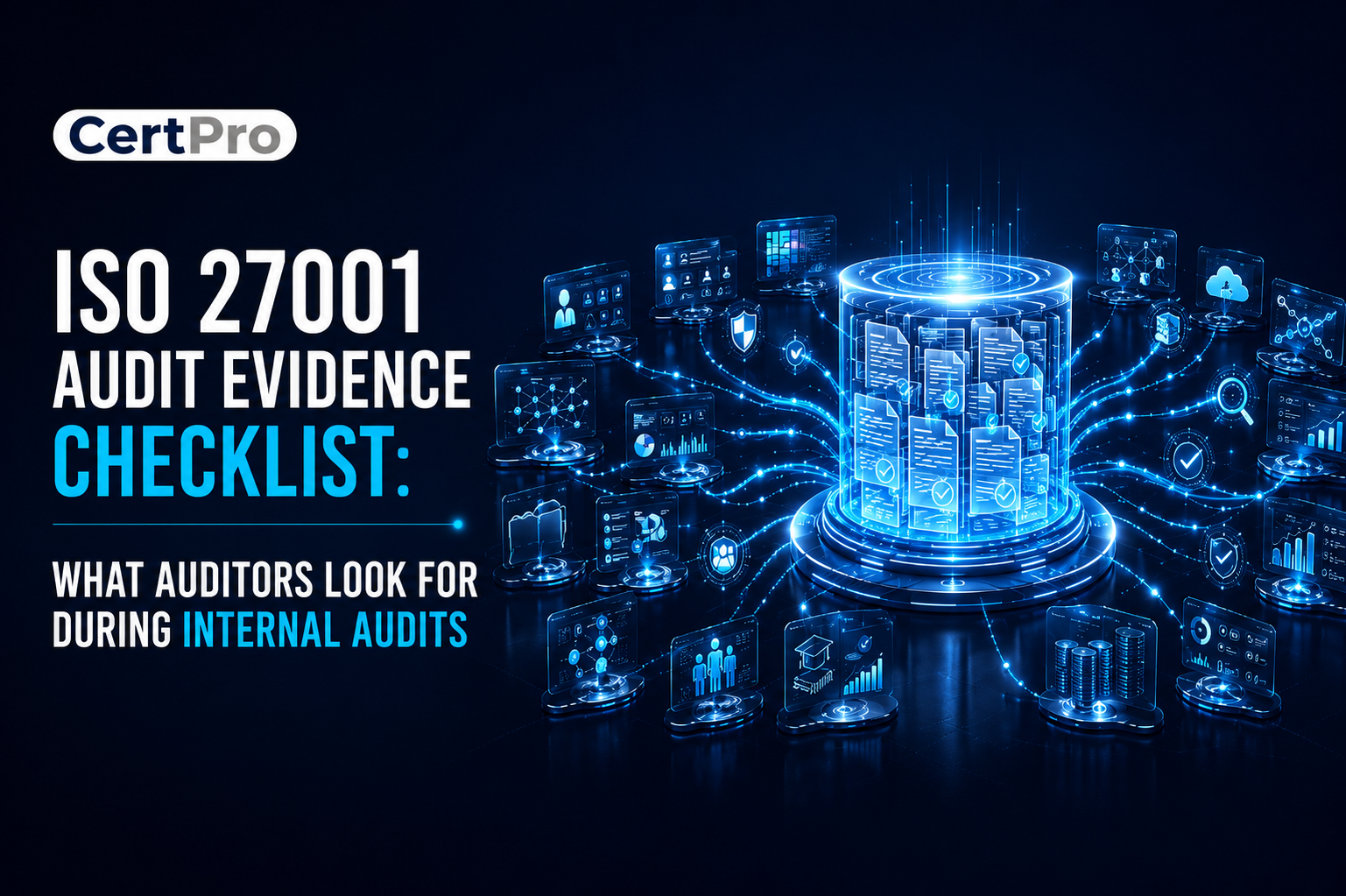
ISO 27001 auditors collect evidence through three primary methods: document review, personnel interviews, and direct observation or technical testing. Document review encompasses examination of policies, procedures, risk registers, asset inventories, audit logs, training records, incident reports, supplier contracts, and management review minutes. Personnel interviews are conducted with information security personnel, IT operations staff, senior management, and process owners to verify that documented procedures reflect actual practice and that staff demonstrate appropriate security awareness and competence. Direct observation includes review of system configurations, access control settings, physical security measures, and security monitoring dashboards.
Audit sampling is a structured process by which auditors select a representative subset of controls, systems, and personnel for evaluation. Sampling decisions are documented and justified in the audit plan, with higher-risk areas receiving greater audit attention. For Denver financial services and healthcare organizations, auditors typically allocate significant sampling to access management controls, encryption implementations, audit logging configurations, and incident response procedures — areas where regulatory and contractual requirements impose the most stringent expectations. Auditors may request system-generated reports, configuration screenshots, or live demonstrations of control operation as evidence of ISMS conformance.
Auditor Competence and Independence Requirements
ISO 27001 audit quality depends directly on auditor competence. CertPro assigns ISO 27001 auditors who possess formal qualifications in information security management systems auditing, demonstrated knowledge of ISO/IEC 27001:2022 and ISO/IEC 27002:2022, and relevant experience in the industry sectors of the organizations being audited. Auditors performing ISO 27001 audit engagements in Denver maintain independence from the organizations they audit — meaning auditors cannot have provided consulting, implementation, or advisory services to the same organization within a defined exclusion period. This independence requirement is fundamental to the integrity of the ISO 27001 certification process.
CertPro’s audit team includes professionals with backgrounds in information security, cybersecurity, cloud architecture, software development, healthcare IT, financial systems, and enterprise risk management — enabling sector-appropriate audit depth for Denver’s diverse business community. The audit team composition for each engagement is documented in the audit plan, along with auditor competence evidence, conflict of interest declarations, and the scope of each team member’s evaluation responsibilities. This structured approach to auditor assignment ensures that the ISO 27001 assessment Denver organizations receive reflects current technical standards and industry-specific security expectations.
Remote and Hybrid Audit Delivery
CertPro delivers ISO 27001 audits for Denver organizations using remote, on-site, or hybrid audit formats, selected based on ISMS scope, control types, and operational context. Remote audits are conducted using secure video conferencing and document sharing platforms, enabling auditors to review documentation, conduct interviews, and observe system configurations without requiring physical presence at the organization’s facilities. Remote audit delivery is particularly effective for Denver technology and SaaS companies where the majority of information assets and controls are implemented in cloud environments accessible via secure remote connection.
On-site audit activities are required when the ISMS scope includes physical security controls, data center facilities, hardware assets, or other elements that cannot be adequately evaluated remotely. For Denver organizations with physical offices, server rooms, or operational technology environments within the ISMS scope, CertPro auditors visit the designated facilities to observe physical access controls, environmental protections, equipment security measures, and clear desk policy compliance. Hybrid audits combine remote document review and interviews with targeted on-site visits to physically bound control areas, optimizing audit efficiency while maintaining evaluation depth for the ISO 27001 assessment.
ISO 27001 Compliance for Denver Organizations
ISO 27001 compliance Denver organizations achieve through ISMS implementation represents conformance with the structured requirements of ISO/IEC 27001:2022 across all mandatory clauses and applicable Annex A controls. ISO 27001 compliance is distinct from certification — compliance describes the internal state of conformance, while certification is the external, third-party attestation of that conformance. Organizations in Denver pursuing ISO 27001 Certification must first achieve and document compliance before submitting to an independent ISO 27001 audit.
ISO 27001 Compliance and Colorado Regulatory Alignment
Colorado has enacted several privacy and data security laws that create compliance obligations for Denver organizations handling personal information. The Colorado Privacy Act (CPA), effective July 1, 2023, establishes rights for Colorado consumers and imposes obligations on controllers and processors of personal data — including requirements for data security assessments, privacy notices, data processing records, and consumer rights fulfillment. ISO 27001 compliance supports CPA obligations by establishing systematic controls for data classification, access management, data subject rights processes, and vendor security management.
Colorado House Bill 22-1240 (Colorado’s Protecting Personal Data Act) extended notification requirements and strengthened consumer data protection obligations for organizations operating in Colorado. ISO 27001’s Annex A controls for incident management (5.25, 5.26), data masking (8.11), and information deletion (8.10) directly support compliance with Colorado data security requirements. Denver organizations in regulated industries — healthcare (HIPAA), financial services (GLBA, PCI DSS), and federal contracting (CMMC, FedRAMP) — benefit from ISO 27001’s framework for mapping regulatory requirements to documented controls, creating a unified compliance posture across multiple applicable frameworks.
ISO 27001 Compliance for Denver Fintech and Financial Services
ISO 27001 compliance Denver fintech organizations achieve provides a structured framework for managing information security risks across digital payment systems, financial data processing environments, customer account management platforms, and API-based financial services integrations. Denver’s fintech sector includes payment processors, lending platforms, investment technology firms, digital banking providers, and financial data analytics companies — all of which handle sensitive financial information subject to regulatory scrutiny from the SEC, FINRA, CFPB, and Colorado Division of Banking. ISO 27001 compliance establishes documented evidence that information security controls are risk-proportionate and systematically managed.
For Denver financial services organizations, ISO 27001 compliance maps effectively to Gramm-Leach-Bliley Act (GLBA) Safeguards Rule requirements, which mandate information security programs for financial institutions. The GLBA Safeguards Rule requires covered entities to designate a qualified individual to oversee the information security program, conduct risk assessments, implement and monitor safeguards, oversee service provider arrangements, and report to the board. These requirements align directly with ISO 27001 Clauses 5 (Leadership), 6 (Planning), 8 (Operation), and 9 (Performance Evaluation). ISO 27001 Certification provides documented, audited evidence of Safeguards Rule program implementation that regulators and clients can independently verify.
Vendor and Supply Chain Security Requirements
ISO 27001 compliance requirements extend to the management of third-party vendors and supply chain relationships. Annex A controls 5.19 through 5.22 address information security in supplier relationships, requiring organizations to establish supplier security policies, include security requirements in supplier agreements, monitor supplier security performance, and manage changes to supplier services. For Denver organizations in technology, healthcare, and financial services, third-party risk management is a significant compliance obligation — particularly where cloud service providers, software vendors, payroll processors, or managed service providers have access to systems or data within the ISMS scope.
ISO 27001 compliance for supplier management requires documented supplier security assessment processes, contractual security requirements in vendor agreements, periodic review of supplier conformance, and defined procedures for handling security incidents involving third parties. During the ISO 27001 audit, auditors evaluate whether the organization has identified all suppliers with access to information within the ISMS scope, whether security requirements are embedded in supplier contracts, and whether supplier performance is monitored through defined mechanisms such as security questionnaires, audit rights provisions, or review of supplier certifications such as ISO 27001 itself.
ISO 27001 Certification Requirements — Industries in Denver
ISO 27001 Certification in Denver is pursued across a broad range of industry sectors, each with distinct information security requirements, regulatory contexts, and client-driven certification demands. Denver’s economy encompasses technology, healthcare, financial services, aerospace and defense, energy, telecommunications, professional services, and government contracting — sectors where ISO 27001 Certification for Denver companies is increasingly a formal requirement in enterprise procurement processes, regulatory frameworks, and client security assurance programs.
ISO 27001 Certification Denver technology companies pursue addresses the information security requirements inherent in software development, cloud infrastructure management, data processing, and customer-facing application delivery. Technology companies and SaaS providers in Denver frequently process sensitive customer data — including personal information, financial records, healthcare data, and proprietary business information — creating significant information security obligations. Enterprise clients, particularly in regulated industries, increasingly mandate ISO 27001 Certification as a vendor qualification requirement, making ISMS certification a commercial prerequisite for market access.
For Denver SaaS and cloud technology companies, the ISMS scope typically encompasses software development environments, production cloud infrastructure (AWS, Azure, Google Cloud), DevOps pipelines, customer data processing systems, API management platforms, and associated organizational functions including IT operations, information security, and human resources. ISO 27001’s Annex A Technological Controls — including secure development lifecycle controls (8.25–8.31), vulnerability management (8.8), penetration testing (8.29), and cloud security (5.23) — are particularly relevant to Denver technology organizations and receive detailed auditor attention during the ISO 27001 audit.
Denver’s healthcare sector — including health systems, hospital networks, health insurance providers, digital health platforms, and healthcare IT vendors — operates under the Health Insurance Portability and Accountability Act (HIPAA), which establishes mandatory administrative, physical, and technical safeguard requirements for protected health information (PHI). ISO 27001 Certification provides healthcare organizations with a structured, externally validated ISMS framework that maps effectively to HIPAA Security Rule requirements. The overlap between ISO 27001 Annex A controls and HIPAA technical safeguards — particularly in access management, encryption, audit controls, and incident response — enables healthcare organizations to demonstrate HIPAA compliance posture through ISO 27001 Certification evidence.
Digital health companies and health IT vendors based in Denver that process PHI on behalf of covered entities operate as HIPAA Business Associates, subject to Business Associate Agreement (BAA) requirements and direct HIPAA Security Rule obligations. ISO 27001 Certification provides Business Associates with documented, audited evidence of their information security management practices — supporting BAA compliance and demonstrating due diligence to covered entity clients. During the ISO 27001 audit, healthcare-sector organizations are evaluated on PHI access controls, encryption of PHI at rest and in transit, audit log maintenance, incident response for PHI breaches, and training and awareness programs specific to HIPAA obligations.
Denver’s aerospace and defense sector includes Lockheed Martin, Boeing, Raytheon, United Launch Alliance, and numerous smaller defense contractors and subcontractors operating in and around the Denver metropolitan area. Organizations in this sector handling Controlled Unclassified Information (CUI) are subject to DFARS cybersecurity requirements and the Cybersecurity Maturity Model Certification (CMMC) framework. ISO 27001 Certification provides a documented ISMS foundation that supports CMMC compliance, with significant control overlap between ISO 27001 Annex A and CMMC Level 2 practices derived from NIST SP 800-171.
Denver’s energy sector — including oil and gas companies, renewable energy providers, energy technology firms, and utility operators — handles operationally critical information and industrial control system (ICS) environments. ISO 27001 Certification for energy sector organizations addresses information security in corporate IT environments, SCADA and operational technology network interfaces, vendor and contractor access management, and physical security at operational facilities. Energy companies in Colorado increasingly pursue ISO 27001 Certification in Denver to demonstrate information security maturity to regulators, grid operators, and enterprise clients in response to heightened cybersecurity expectations from NERC CIP standards and Department of Energy guidance.
- ✓ISO 27001 for Denver Technology and SaaS Companies
- ✓ISO 27001 for Denver Healthcare Organizations
- ✓ISO 27001 for Denver Aerospace, Defense, and Energy Sectors
ISO 27001 Assessment Process and Methodology
The ISO 27001 assessment conducted by CertPro follows a documented, structured methodology aligned with ISO/IEC 17021-1 (Requirements for Bodies Providing Audit and Certification of Management Systems) and ISO/IEC 27006-1 (Requirements for Bodies Providing Audit and Certification of Information Security Management Systems). The ISO 27001 assessment Denver organizations undergo encompasses ISMS scope evaluation, documentation review, risk assessment validation, control effectiveness testing, and conformance determination against all mandatory standard requirements.
A central component of the ISO 27001 assessment is evaluation of the organization’s information security risk assessment process. ISO/IEC 27001:2022 Clause 6.1.2 requires organizations to define and apply an information security risk assessment process that identifies risks to the confidentiality, integrity, and availability of information within the ISMS scope. The risk assessment must produce consistent, valid, and comparable results — meaning the methodology must be documented, applied consistently, and yield risk ratings that are reproducible. Auditors evaluate whether the risk assessment process is formally documented, whether all relevant assets and threat scenarios have been considered, and whether risk owners have been clearly assigned.
During the ISO 27001 assessment, auditors also evaluate the risk treatment plan — the documented output specifying which treatment options have been selected for each identified risk and which Annex A controls have been applied. The risk treatment plan must be linked to the Statement of Applicability, demonstrating a traceable connection between identified risks, selected controls, and ISMS implementation. Auditors check whether risk treatment decisions are justified, whether residual risks after treatment have been evaluated, and whether risk owners have formally accepted those residual risks. This traceability between risk assessment, risk treatment, and control implementation is a fundamental requirement of ISO 27001 compliance.
ISO/IEC 27001:2022 Clause 9.2 requires organizations to conduct internal audits at planned intervals to determine whether the ISMS conforms to the organization’s own requirements and the requirements of the standard, and whether the ISMS is effectively implemented and maintained. The ISO 27001 assessment evaluates the organization’s internal audit program by reviewing the audit schedule, audit criteria, audit scope documentation, auditor competence and independence from audited activities, audit findings and reports, and the status of corrective actions raised in response to internal audit findings.
For Denver organizations new to ISO 27001, establishing an effective internal audit program is frequently an area requiring careful attention. Internal auditors must be competent to audit against ISO 27001 requirements and must be independent from the activities they audit — meaning the information security manager cannot audit their own controls without oversight from an independent reviewer. Internal audit results must be reported to management and must feed into the management review process. Auditors performing the ISO 27001 certification assessment examine at least one full cycle of internal audit activity as evidence that the ISMS self-monitoring mechanism is operational.
ISO/IEC 27001:2022 Clause 9.3 requires top management to review the ISMS at planned intervals to ensure its continuing suitability, adequacy, and effectiveness. Management review inputs must include the status of actions from previous reviews, changes in external and internal issues relevant to the ISMS, feedback on information security performance (including trends in nonconformities, monitoring results, audit results, and fulfillment of information security objectives), opportunities for continual improvement, and changes in the needs and expectations of interested parties.
During the ISO 27001 assessment, auditors review management review meeting minutes or equivalent records to verify that management review has occurred, that all required inputs were considered, and that management review outputs — including decisions on continual improvement opportunities and resource needs — were documented and tracked. Management review is a key indicator of organizational commitment to the ISMS. Organizations where management review is perfunctory, incomplete, or disconnected from actual ISMS performance data typically exhibit broader ISMS effectiveness issues identified during control testing phases of the ISO 27001 assessment.
- ✓Risk Assessment Validation
- ✓Internal Audit Program Evaluation
- ✓Management Review Evaluation
Benefits of ISO 27001 Certification for Denver Businesses
ISO 27001 Certification delivers quantifiable, strategic, and operational benefits for Denver businesses across all sectors. Beyond the foundational value of a systematically managed information security posture, certification provides market access advantages, regulatory compliance support, risk reduction, and independently verified assurance for customers, partners, investors, and regulators. The benefits of ISO 27001 Certification for Denver businesses are particularly significant given the competitive dynamics of the local technology, financial services, and healthcare markets.
- ✓Third-party verified evidence of ISMS conformance demonstrating security maturity to enterprise clients and procurement evaluators
- ✓Competitive differentiation in Denver’s technology and SaaS markets where ISO 27001 Certification is increasingly a vendor qualification requirement
- ✓Support for regulatory compliance across HIPAA, GLBA, Colorado Privacy Act, DFARS, and other applicable frameworks through documented control evidence
- ✓Reduced information security incident frequency and severity through systematic risk identification, assessment, and treatment
- ✓Strengthened vendor and supply chain security through defined supplier security requirements and monitoring mechanisms
- ✓Enhanced investor and board confidence through demonstrated governance and accountability for information security risk
- ✓Streamlined responses to client security questionnaires and due diligence requests referencing the ISO 27001 certificate
- ✓Defined incident response procedures enabling faster, more effective response to security events and data breaches
- ✓Continual improvement culture embedded through annual surveillance audits, internal audit programs, and management reviews
- ✓Alignment with international information security standards enabling cross-border business operations and global client relationships
ISO 27001 Certification has become a procurement prerequisite across enterprise technology buying processes. Large organizations in financial services, healthcare, government, and multinational corporations routinely require their technology vendors, SaaS providers, and professional services firms to demonstrate ISO 27001 Certification as a condition of vendor onboarding or contract renewal. For Denver technology companies and software providers, holding a current ISO 27001 certificate eliminates a significant barrier to enterprise sales cycles, reduces the time and resource burden of responding to vendor security questionnaires, and signals organizational maturity to procurement evaluators comparing multiple competing vendors.
Denver’s proximity to major federal government agencies — including the Department of Defense installations at Buckley Space Force Base, Peterson Space Force Base, and Schriever Space Force Base — creates significant market opportunities for technology companies holding recognized security certifications. While federal contracts involving classified information require specific government security clearances, ISO 27001 Certification in Denver demonstrates a baseline of information security discipline relevant to civilian federal agency procurement and subcontracting. Combined with other compliance frameworks such as FedRAMP or CMMC, ISO 27001 Certification supports Denver companies’ positioning in the federal technology marketplace.
Organizations that achieve and maintain ISO 27001 Certification demonstrate systematically lower information security incident rates compared to organizations without formal ISMS frameworks. This risk reduction derives from the standard’s mandatory requirements for ongoing risk assessment, control monitoring, incident response, and corrective action — creating a self-reinforcing cycle of continuous security improvement. For Denver organizations, reducing the frequency and impact of information security incidents directly reduces operational costs associated with incident response, breach notification, regulatory investigation, litigation, and reputational damage management.
ISO 27001 Certification also strengthens organizational resilience by requiring integration of business continuity considerations into the ISMS framework. Annex A control 5.30 (ICT Readiness for Business Continuity) requires organizations to plan, implement, verify, and review ICT continuity measures as part of business continuity management. For Denver organizations — which may face operational disruption risks from severe weather events (blizzards, wildfires), power outages, and other regional disruptions — documented ICT continuity plans tested through the ISMS framework provide structured resilience capability supported by audit evidence.
- ✓Market Access and Commercial Advantages
- ✓Risk Reduction and Operational Resilience
ISO 27001 Certification Requirements — Denver Sector Comparison
| Industry Sector | Key ISO 27001 Control Areas | Relevant Regulatory Alignment |
|---|---|---|
| Technology / SaaS | Secure development (8.25–8.31), cloud security (5.23), access management (8.2–8.5), vulnerability management (8.8) | SOC 2, CCPA, Colorado Privacy Act |
| Healthcare / Health IT | PHI access controls, encryption (8.24), audit logging (8.15), incident response (5.26), supplier security (5.19) | HIPAA Security Rule, Colorado HB 22-1240 |
| Financial Services / Fintech | Access management, data classification (5.12), cryptography (8.24), business continuity (5.30), supplier oversight (5.22) | GLBA Safeguards Rule, PCI DSS, Colorado Banking Regulations |
| Aerospace / Defense | CUI controls, access management, network security (8.20–8.22), physical security (7.1–7.5) | DFARS, CMMC Level 2, NIST SP 800-171 |
| Energy / Utilities | ICS/OT interface security, network segregation (8.22), physical security monitoring (7.4), incident response (5.26) | NERC CIP, Department of Energy Cybersecurity Guidance |
Why Denver Businesses Choose CertPro for ISO 27001 Certification
CertPro is a Licensed CPA Firm providing independent third-party ISO 27001 audit and certification services to organizations across Denver and Colorado. CertPro operates exclusively as a certification body — evaluating ISMS conformance through structured, evidence-based audits without providing consulting, implementation, or advisory services to the organizations it certifies. This structural independence ensures that CertPro’s certification decisions are objective, auditor-driven, and free from conflict of interest. ISO 27001 Certification in Denver issued by CertPro reflects an independent determination of ISMS conformance, not a collaborative compliance exercise.
Licensed CPA Firm Positioning and Audit Objectivity
CertPro’s status as a Licensed CPA Firm provides Denver organizations with a certification provider that operates under professional standards governing independence, objectivity, and quality assurance — standards that are foundational to credible attestation services. CPA-firm governance frameworks require documented quality management systems, peer review processes, and professional ethics obligations that reinforce the integrity of certification decisions. For Denver organizations that simultaneously require SOC 2 attestations and ISO 27001 Certification, CertPro’s dual capability as a CPA firm providing both services enables coordinated, efficient audit planning that minimizes organizational disruption while satisfying multiple stakeholder assurance requirements.
The ISO 27001 audit Denver organizations undergo through CertPro is conducted by auditors with demonstrated competence in ISO/IEC 27001:2022, ISO/IEC 27002:2022, and relevant sector-specific information security requirements. CertPro auditors maintain current knowledge of Denver’s regulatory environment — including Colorado Privacy Act obligations, HIPAA requirements applicable to Colorado healthcare organizations, and cybersecurity expectations in the defense industrial base — enabling audit activities calibrated to the actual risk and compliance context of each organization. CertPro’s audit methodology is documented, consistent, and subject to internal quality review to ensure the reliability of ISO 27001 certification decisions across all engagements.
Structured Certification Process and Transparent Audit Methodology
CertPro’s ISO 27001 certification process follows a structured, documented methodology from initial scope determination through certificate issuance and ongoing surveillance. Organizations receive a detailed audit plan specifying audit objectives, scope, criteria, team composition, audit schedule, and evidence requirements before audit commencement — enabling appropriate preparation of relevant personnel and documentation. Audit findings are communicated through formal written reports that clearly identify conformant practices, nonconformities, and observations, providing organizations with actionable, evidence-referenced findings rather than general commentary.
The certification decision function at CertPro is independent from audit delivery — meaning the auditors who conduct the Stage 1 and Stage 2 assessments do not make the final certification determination. This separation of audit execution from certification decision is a fundamental quality assurance mechanism ensuring that ISO 27001 Certification is based on objective review of audit evidence rather than auditor relationship factors. Denver organizations pursuing ISO 27001 Certification through CertPro can expect a transparent, professionally managed process that culminates in a certification decision grounded in documented evidence and consistent application of ISO/IEC 27001:2022 requirements.
Continual Support Through the Certification Cycle
CertPro’s engagement with Denver organizations does not conclude at initial certificate issuance. The three-year certification cycle includes annual surveillance audits that verify continued ISMS conformance and provide organizations with independent, periodic assessments of their information security management practices. Surveillance audits conducted by CertPro follow a documented program that rotates through Annex A control areas over the three-year cycle, ensuring comprehensive coverage of the ISMS while focusing each surveillance audit on areas of highest risk significance and any changes to the ISMS or its operational context since the previous audit.
Organizations maintaining ISO 27001 Certification in Denver through CertPro receive surveillance audit scheduling notifications in advance of required audit windows, formal audit reports documenting surveillance findings, and nonconformity tracking through the certification management system. At recertification, CertPro conducts a comprehensive ISO 27001 assessment of ISMS performance across the full certification period — reviewing trends in internal audit results, corrective action effectiveness, changes in risk profile, and continual improvement outcomes. This structured, ongoing relationship ensures that ISO 27001 Certification remains a meaningful and current reflection of each Denver organization’s information security management maturity.
ISO 27001 Certification in Denver — Key Process Steps
- Scope Definition: Document the ISMS scope identifying organizational units, locations, information assets, systems, and services included within ISO 27001 Certification coverage, with clear justification for any exclusions.
- Audit Program Determination: Establish the audit plan specifying audit objectives, scope, criteria, team composition, evidence requirements, and schedule for Stage 1 and Stage 2 audits.
- Stage 1 Audit: CertPro auditors review mandatory documented information — including the ISMS scope, information security policy, risk assessment results, risk treatment plan, Statement of Applicability, and evidence of internal audit and management review — to assess readiness for Stage 2.
- Stage 2 Audit: On-site or remote evaluation of ISMS operational effectiveness through document review, personnel interviews, and direct control observation across all mandatory clauses and applicable Annex A controls.
- Nonconformity Review: Identified nonconformities are classified as major or minor, with corrective action plans required and resolution verified by auditors before the certification decision proceeds.
- Certification Decision: CertPro’s independent certification decision function reviews the complete audit file — findings, evidence, and corrective action resolution — and determines whether ISO 27001 Certification requirements are satisfied.
- Issuance of Certificate: Upon a positive certification decision, CertPro issues the ISO 27001 certificate specifying organization name, registered location, ISMS scope, standard version (ISO/IEC 27001:2022), and three-year validity period.
- Year 1 Surveillance Audit: Conducted within 12 months of certification to verify continued ISMS conformance and operational effectiveness, with focused review of internal audit results, management review records, and a rotating control sample.
- Year 2 Surveillance Audit: Second annual surveillance confirming ongoing conformance and addressing any changes to the ISMS, organizational context, or risk environment since the previous audit.
- Recertification Audit: Full ISO 27001 assessment at the end of the three-year cycle evaluating cumulative ISMS performance and renewing the ISO 27001 Certification for a further three-year period.
ISO 27001 Certification in Denver — Summary and Next Steps
ISO 27001 Certification in Denver is a formal, independently verified attestation that an organization’s Information Security Management System conforms to the requirements of ISO/IEC 27001:2022. For Denver-based technology companies, healthcare organizations, financial services firms, aerospace and defense contractors, energy companies, and professional services providers, ISO 27001 Certification provides a globally recognized, auditor-verified demonstration of information security management discipline. The certification is issued by CertPro, a Licensed CPA Firm, following a structured two-stage audit that evaluates ISMS design adequacy, implementation effectiveness, and operational conformance.
The ISO 27001 assessment Denver organizations complete through CertPro encompasses risk assessment validation, documentation review, Annex A control effectiveness testing, internal audit program evaluation, and management review assessment — producing a comprehensive, evidence-based determination of ISMS conformance. ISO 27001 compliance Denver organizations achieve through the certification process supports alignment with Colorado Privacy Act obligations, HIPAA, GLBA, CMMC, and other applicable regulatory frameworks. The three-year certification cycle, maintained through annual surveillance audits, ensures that ISO 27001 Certification remains a current, credible reflection of each organization’s information security posture.
Denver organizations seeking to initiate the ISO 27001 Certification process through CertPro begin with scope definition and audit planning — establishing the ISMS boundaries, identifying audit objectives, and scheduling the Stage 1 documentation review. CertPro’s team of qualified ISO 27001 auditors brings sector-specific competence, a documented methodology, and institutional independence to every engagement, ensuring that ISO 27001 Certification in Denver is issued on the basis of rigorous, evidence-based audit evaluation. Organizations interested in pursuing ISMS certification are encouraged to contact CertPro to discuss scope parameters, audit timelines, and the ISO 27001 certification process in the context of their specific operational and regulatory environment.
FAQ
▶
What is ISO 27001 Certification?
▶
How long does the ISO 27001 certification process take for Denver organizations?
▶
What is the difference between ISO 27001 compliance and ISO 27001 certification?
▶
How many controls are required under ISO/IEC 27001:2022 Annex A?
▶
Is ISO 27001 certification required for Denver technology companies?
▶
What is the validity period of an ISO 27001 certificate?
▶
How does ISO 27001 relate to SOC 2 for Denver organizations?
▶
What happens if nonconformities are found during the ISO 27001 audit?
Get In Touch
have a question? let us get back to you.