
SOC 2 Certification in Amsterdam
SOC 2 Certification in Amsterdam is issued in two distinct report forms — Type 1 and Type 2 — each serving different assurance purposes and addressing different questions about an organization’s control environment. Understanding the structural and evidential differences between these report types is essential for Amsterdam organizations selecting the appropriate examination scope and for stakeholders interpreting the assurance value of a received SOC 2 report.
OUR CLIENTS










What Is SOC 2 Certification and What Does It Mean for Amsterdam Organizations?
SOC 2 Certification in Amsterdam is an independent third-party attestation engagement conducted by a Licensed CPA Firm under the American Institute of Certified Public Accountants (AICPA) attestation standards and Trust Services Criteria (TSC). The engagement examines whether an organization’s controls related to security, availability, processing integrity, confidentiality, and privacy are suitably designed, implemented, and — in a Type 2 examination — operating effectively over a defined period. The outcome is a formal attestation report documenting the auditor’s findings. This report provides evidence-based assurance to customers, enterprise buyers, regulators, and business partners that the organization’s stated control objectives are functioning as described.
For organizations headquartered in Amsterdam, operating across the Amsterdam Metropolitan Area, or serving customers throughout the Netherlands and the broader European Union, SOC 2 attestation has become a foundational requirement in enterprise procurement, financial services partnerships, and cross-border technology contracts. Amsterdam’s position as one of Europe’s premier technology and financial hubs — home to a dense concentration of SaaS providers, fintech companies, cloud service operators, AI businesses, data centers, and multinational enterprises — creates strong market demand for independently verified control assurance. Enterprise customers, institutional investors, and regulated counterparties increasingly require a current SOC 2 report before establishing or renewing service relationships.
SOC 2 Certification differs critically from self-certification or internal compliance assessments: it is performed exclusively by a Licensed CPA Firm authorized to issue attestation reports under AICPA standards. This independence requirement means an organization cannot self-issue a SOC 2 report or obtain one from a consulting firm lacking Licensed CPA Firm standing. CertPro operates as a Licensed CPA Firm providing independent SOC 2 audit and attestation services to Amsterdam-based organizations across all eligible sectors. Every SOC 2 audit engagement follows a structured methodology governed by AT-C Section 205 and the AICPA’s Trust Services Criteria, ensuring each report reflects a rigorous, evidence-based evaluation rather than a documentation review or advisory assessment.
Amsterdam organizations operating in regulated environments should understand that SOC 2 attestation is complementary to — but distinct from — obligations arising under the EU General Data Protection Regulation (GDPR), the Dutch GDPR Implementation Act (Uitvoeringswet AVG), the NIS2 Directive, and the Digital Operational Resilience Act (DORA). A SOC 2 report documents control effectiveness as evaluated against the AICPA Trust Services Criteria; it does not establish legal compliance with Dutch or EU regulatory frameworks. Organizations may reference SOC 2 examination findings as supporting evidence in broader regulatory contexts, but each regulatory framework carries its own independent obligations and assessment requirements. Understanding this distinction is essential for Amsterdam organizations structuring their assurance programs accurately and communicating their control posture to stakeholders with precision.
The AICPA Trust Services Criteria Framework
The AICPA Trust Services Criteria constitute the evaluative framework against which all SOC 2 examinations are conducted. The TSC consists of five categories: Security, Availability, Processing Integrity, Confidentiality, and Privacy. Security — formally designated the Common Criteria — is mandatory in every SOC 2 engagement. The remaining four categories are selected based on the nature of the services provided and the commitments made to customers and other stakeholders.
Security criteria address logical and physical access controls, system monitoring, change management, risk mitigation, and incident response. Availability criteria evaluate whether systems are operational as committed. Processing Integrity criteria assess whether system processing is complete, accurate, timely, and authorized. Confidentiality criteria examine protections applied to information designated as confidential. Privacy criteria evaluate the collection, use, retention, disclosure, and disposal of personal information in accordance with the organization’s privacy notice and applicable privacy principles.
Amsterdam organizations must carefully determine which Trust Services Criteria categories are relevant to their service commitments before initiating a SOC 2 examination. A SaaS provider handling personal data of European customers would typically include Security and Privacy criteria at minimum. A cloud infrastructure operator whose customers depend on continuous system availability would add Availability criteria. A payment processing company or financial technology firm would likely include Processing Integrity criteria to demonstrate accurate and authorized transaction processing.
Selecting the appropriate categories is a scoping determination made by management in consultation with the Licensed CPA Firm prior to the SOC 2 audit. Criteria selected during scoping define the boundaries of the examination and the corresponding sections of the issued report.
SOC 2 Attestation Versus Other Assurance Frameworks
SOC 2 attestation is specifically designed for technology and cloud service providers and differs structurally from other assurance frameworks operating in Amsterdam’s regulatory environment. ISO 27001 is a certifiable management system standard that evaluates the design and implementation of an information security management system (ISMS) against ISO/IEC 27001 requirements. SOC 2 compliance, by contrast, tests specific controls against the AICPA Trust Services Criteria and — in Type 2 form — evaluates operational effectiveness over a defined observation period.
ISO 27001 carries broad recognition across European markets, while SOC 2 attestation is particularly valued by customers in the United States and by US-headquartered enterprises contracting with Amsterdam-based service providers. Many Amsterdam organizations pursue both frameworks simultaneously to satisfy diverse customer requirements across North American and European markets.
SOC 1 and SOC 3 reports, also issued under AICPA standards, serve different purposes and should not be confused with SOC 2 Certification. SOC 1 examinations evaluate internal controls over financial reporting (ICFR) and are relevant for organizations whose services affect customers’ financial statements. SOC 3 reports present the auditor’s conclusions on the same subject matter as a SOC 2 examination but in a general-use format suitable for public distribution — without the detailed control descriptions and test results contained in a full SOC 2 report.
Amsterdam organizations seeking to communicate control assurance to a broad market audience may distribute a SOC 3 report publicly while restricting SOC 2 report distribution to named parties under non-disclosure agreements.

ENQUIRE NOW
Related Resources
Related Services in Amsterdam
SOC 2 Type 1 and Type 2 Reports: Definitions, Differences, and Use Cases
SOC 2 Certification in Amsterdam is issued in two distinct report forms — Type 1 and Type 2 — each serving different assurance purposes and addressing different questions about an organization’s control environment. Understanding the structural and evidential differences between these report types is essential for Amsterdam organizations selecting the appropriate examination scope and for stakeholders interpreting the assurance value of a received SOC 2 report.
SOC 2 Type 1: Point-in-Time Design Assessment
A SOC 2 Type 1 report reflects an examination of the design and implementation of an organization’s controls as of a specific date. The Licensed CPA Firm evaluates whether the controls described in management’s system description are suitably designed to meet the applicable Trust Services Criteria as of the report date. Type 1 examinations do not assess whether controls operated effectively over time; they provide a point-in-time conclusion about design suitability.
For Amsterdam organizations newly implementing control environments — particularly SaaS startups, emerging fintech companies, or organizations entering enterprise sales cycles for the first time — a Type 1 report demonstrates that a structured control framework is in place. It provides an initial basis for customer assurance while the organization accumulates the operating history required for a Type 2 examination.
SOC 2 Type 2: Operational Effectiveness Over an Observation Period
A SOC 2 Type 2 report covers an observation period — typically six to twelve months — during which the Licensed CPA Firm examines evidence that controls were operating effectively throughout the period, not merely designed and implemented at a single point in time. The auditor performs control testing using samples drawn from across the observation period, evaluating whether controls functioned consistently and as described.
Type 2 reports carry substantially greater assurance value than Type 1 reports because they demonstrate sustained operational performance of controls over time. Enterprise customers, institutional clients, and regulated counterparties in Amsterdam’s financial services and technology markets typically require a Type 2 report — and may specify a minimum observation period of twelve months — as a condition of vendor qualification or contract renewal.
The observation period for a SOC 2 Type 2 examination begins after controls have been implemented and are operating, and ends on the report date. A minimum observation period of six months is generally required by AICPA standards, though twelve-month periods are the market standard for established organizations. Amsterdam organizations undergoing their first SOC 2 examination may elect a six-month initial observation period and transition to annual twelve-month periods in subsequent cycles.
The selection of observation period start and end dates is a scoping decision made prior to examination commencement. It directly affects the volume of evidence required, the number of control testing samples drawn, and the period covered by the auditor’s opinion.
| Attribute | SOC 2 Type 1 | SOC 2 Type 2 |
|---|---|---|
| Evaluation Focus | Control design and implementation at a specific date | Control operating effectiveness over a defined observation period |
| Time Coverage | Point-in-time (single date) | Six to twelve months (or longer) |
| Assurance Level | Design suitability | Design suitability and operational effectiveness |
| Primary Use Case | Initial market entry, early-stage control demonstration | Enterprise procurement, vendor qualification, ongoing assurance |
| Report Validity | Typically accepted for 12 months post-report date | Typically accepted for 12 months post-period end date |
SOC 2 Certification Requirements for Amsterdam Organizations
SOC 2 compliance requirements are defined by the AICPA Trust Services Criteria and the attestation standards governing the examination. Amsterdam organizations must satisfy a structured set of prerequisites — spanning management responsibilities, documentation, control implementation, and evidence readiness — before a Licensed CPA Firm can conduct and conclude a SOC 2 examination. These requirements apply uniformly regardless of the organization’s size, sector, or the specific Trust Services Criteria categories included in scope.
Management of the organization seeking SOC 2 Certification in Amsterdam bears responsibility for preparing an accurate and complete system description. This description must define the boundaries of the system in scope, the services provided, the principal service commitments and system requirements, the components of the system (infrastructure, software, people, procedures, and data), and the controls implemented to meet applicable Trust Services Criteria.
This system description forms the subject matter of the SOC 2 examination and is included in the issued report alongside the auditor’s opinion. Management must assert that the system description is fairly presented, that controls are suitably designed (Type 1 and Type 2), and that controls operated effectively (Type 2) throughout the observation period. These management assertions are formally stated in writing and subject to examination by the Licensed CPA Firm.
The system description must address all five components of the COSO internal control framework as mapped to the AICPA Trust Services Criteria: the control environment, risk assessment process, control activities, monitoring activities, and information and communication processes. Amsterdam organizations must document how their organizational structure, governance practices, and management philosophy support the control environment.
Risk assessment documentation must reflect a systematic process for identifying, analyzing, and responding to risks relevant to the achievement of service commitments. Deficiencies in the system description — including omissions, inaccuracies, or inconsistencies with actual control operations — represent findings in the auditor’s report and may result in a qualified or adverse opinion on the description criterion.
SOC 2 compliance requires that Amsterdam organizations maintain comprehensive documentation of all controls included in the examination scope. Documentation requirements include written policies and procedures describing how controls operate, system configuration records demonstrating technical controls are implemented as described, access control matrices showing authorization structures and privilege assignments, change management logs recording system modifications and approvals, incident response records documenting detection and response activities, and monitoring logs demonstrating continuous oversight of control effectiveness.
Each control must be supported by retrievable evidence demonstrating its operation throughout the observation period for Type 2 examinations. Evidence is collected by the Licensed CPA Firm during fieldwork and tested against the applicable Trust Services Criteria to determine whether controls operated as described and met the criteria requirements.
- ✓Written information security policies covering all applicable Trust Services Criteria domains
- ✓Access control documentation including user provisioning, deprovisioning, and periodic access review records
- ✓Change management procedures and approval records for system modifications
- ✓Incident response plans and evidence of incident detection and response activities during the observation period
- ✓Vendor and subservice organization management documentation for outsourced control functions
- ✓Risk assessment records identifying and evaluating threats to service commitments
- ✓Monitoring and logging configurations demonstrating continuous oversight of security and operational controls
- ✓Business continuity and disaster recovery plans with evidence of periodic testing
Amsterdam organizations frequently rely on subservice organizations — cloud infrastructure providers, data center operators, identity management platforms, and other third-party service providers — to deliver components of the services covered by the SOC 2 examination. The Licensed CPA Firm must understand the extent to which controls at subservice organizations are relevant to the examination scope and how those controls are addressed in the system description.
Two methods are available: the inclusive method, which includes subservice organization controls within the examination scope, and the carve-out method, which excludes them while documenting their existence and the complementary user entity controls expected of customers. Most Amsterdam organizations use the carve-out method and reference the subservice organization’s own SOC 2 report as evidence of control effectiveness at that layer.
- ✓Management Responsibilities and System Description
- ✓Control Documentation and Evidence Requirements
- ✓Subservice Organizations and Complementary User Entity Controls
The SOC 2 Audit Process in Amsterdam
The SOC 2 audit process in Amsterdam follows a defined sequence of stages established under AICPA attestation standards. Each stage produces specific outputs that feed into subsequent phases, culminating in the issuance of the attestation report. The Licensed CPA Firm conducting the SOC 2 examination operates independently of management and performs procedures designed to obtain sufficient, appropriate evidence to support the audit opinion.
The total duration of a SOC 2 audit — from scope definition through report issuance — typically ranges from three to six months for a Type 1 engagement and six to fourteen months for a Type 2 engagement inclusive of the observation period.
The first stage of the SOC 2 audit process involves defining the scope of the examination in precise terms. Scope definition encompasses identifying the system boundaries — the specific services, infrastructure components, software applications, data types, and organizational units subject to examination — and determining which Trust Services Criteria categories apply based on the organization’s service commitments. The Licensed CPA Firm develops an audit program mapping each applicable Trust Services Criteria point of focus to specific controls identified in the organization’s system description.
This audit program specifies the nature, timing, and extent of procedures to be performed, including inquiry, observation, documentation inspection, and control re-performance where applicable. The audit program is finalized before fieldwork commences and serves as the authoritative reference for all subsequent examination activities.
For Amsterdam-based organizations, scope definition must account for the geographic distribution of systems and personnel, the involvement of European and non-European cloud infrastructure providers, data residency requirements affecting system architecture, and any organizational boundaries defining which entities and functions are included in the examination. Organizations operating across multiple legal entities within the Amsterdam Metropolitan Area or the broader Netherlands must clearly delineate which entities and functions fall within scope and document the rationale for any exclusions.
Ambiguous or poorly defined scope boundaries are a common source of examination findings and can result in qualified opinions on the system description criterion.
During the fieldwork phase of the SOC 2 audit, the Licensed CPA Firm collects and evaluates evidence supporting management’s assertions about control design and operating effectiveness. Evidence collection procedures include structured inquiry sessions with control owners, observation of control activities, inspection of policy documents and configuration records, examination of access control lists and system-generated logs, and re-performance of control procedures where necessary.
For Type 2 examinations, the auditor selects samples from across the observation period for each control subject to testing. Sample sizes are determined based on the frequency of the control (e.g., daily, weekly, monthly, annually) and the auditor’s risk assessment. Each sample is evaluated against the applicable Trust Services Criteria to determine whether the control operated as described.
Control testing findings — identified when a control sample fails to demonstrate expected operation — are documented as exceptions. The auditor evaluates each exception to determine whether it represents a deviation affecting the overall conclusion on control effectiveness. A single exception does not automatically result in a qualified opinion; the auditor considers the nature, frequency, and potential impact of each exception, as well as whether compensating controls mitigate its effect.
Exceptions that the auditor concludes are significant result in qualified or adverse opinions on the relevant Trust Services Criteria. The Licensed CPA Firm communicates exceptions to management during fieldwork, allowing management to provide additional context or clarification before the draft report is issued.
Upon completion of fieldwork and resolution of outstanding matters, the Licensed CPA Firm issues the SOC 2 attestation report. A complete SOC 2 report contains several distinct sections: the independent service auditor’s report expressing the auditor’s opinion; management’s assertion about the system description and control effectiveness; the system description prepared by management; and — for Type 2 reports — the description of tests of controls and results, documenting each control tested, the testing procedures performed, and the results of each test.
The auditor’s opinion may be unqualified (no material exceptions), qualified (one or more material exceptions in specific criteria), or adverse (pervasive exceptions across criteria). Amsterdam organizations receiving a qualified or adverse opinion should review the exceptions section carefully to understand the specific controls and criteria affected.
- ✓Scope Definition and Audit Program Determination
- ✓Fieldwork, Evidence Collection, and Control Testing
- ✓Report Issuance and Structure
Industries Pursuing SOC 2 Certification in Amsterdam
SOC 2 Certification in Amsterdam is pursued across a broad and growing range of industry sectors, reflecting the city’s status as a leading European technology and financial services hub. The Amsterdam Metropolitan Area hosts significant concentrations of organizations in sectors where independent control assurance has become a standard procurement requirement. SOC 2 examination is particularly prevalent among organizations that process, store, or transmit sensitive customer data on behalf of enterprise clients, financial institutions, healthcare organizations, or government agencies.
Technology, SaaS, and Cloud Service Providers
SaaS providers and cloud service operators represent the largest cohort of organizations pursuing SOC 2 Certification in Amsterdam. These organizations typically process customer data on a continuous basis across multi-tenant infrastructure, creating inherent risks around data segregation, access control, and availability that enterprise customers require to be independently verified. SOC 2 attestation provides SaaS companies with a credible, auditor-verified assurance document that can be shared with prospective enterprise customers during vendor due diligence, included in security questionnaire responses, and referenced in data processing agreements.
AI businesses and machine learning platform providers based in Amsterdam are increasingly subject to SOC 2 compliance requirements as their enterprise customers apply the same vendor assurance standards to AI service providers as to traditional cloud software vendors.
Data center operators and managed infrastructure providers in the Amsterdam Metropolitan Area — one of Europe’s most significant data center clusters due to the AMS-IX internet exchange and the region’s robust connectivity infrastructure — frequently hold SOC 2 Type 2 reports covering Security and Availability criteria to demonstrate the reliability and security of their physical and logical infrastructure.
Cybersecurity companies providing managed detection and response, security operations, or vulnerability management services to enterprise clients in Amsterdam also routinely pursue SOC 2 Certification to demonstrate that their own security controls meet the standards they advise their customers to achieve.
Financial Services, Fintech, and Healthcare Organizations
SOC 2 certification for Amsterdam fintech organizations is a particularly active market segment. Amsterdam hosts a substantial fintech ecosystem including payment processors, digital banking platforms, cryptocurrency exchanges, regulatory technology providers, and financial infrastructure companies. These organizations frequently serve clients in the United States and other markets where SOC 2 attestation is a standard requirement in financial services vendor programs.
Amsterdam financial services organizations — including asset managers, insurance technology providers, and financial data platforms — face SOC 2 compliance requirements from enterprise customers and institutional counterparties performing third-party risk assessments. The intersection of SOC 2 compliance with DORA obligations creates additional reporting considerations for financial entities designated as critical third-party ICT service providers under the Digital Operational Resilience Act.
Healthcare and life sciences organizations in Amsterdam — including health technology providers, clinical data management platforms, electronic health record vendors, and medical device software companies — pursue SOC 2 Certification to demonstrate control assurance to hospital networks, research institutions, pharmaceutical companies, and health insurance organizations. While HIPAA applies specifically to covered entities and business associates under United States jurisdiction, many Amsterdam-based health technology companies serving US customers are required to hold a current SOC 2 report as a contractual condition.
Telecommunications providers and gaming companies handling large volumes of user data also constitute active segments of the Amsterdam SOC 2 market, particularly where services extend to North American or multinational customer bases.
Benefits of SOC 2 Certification for Amsterdam-Based Organizations
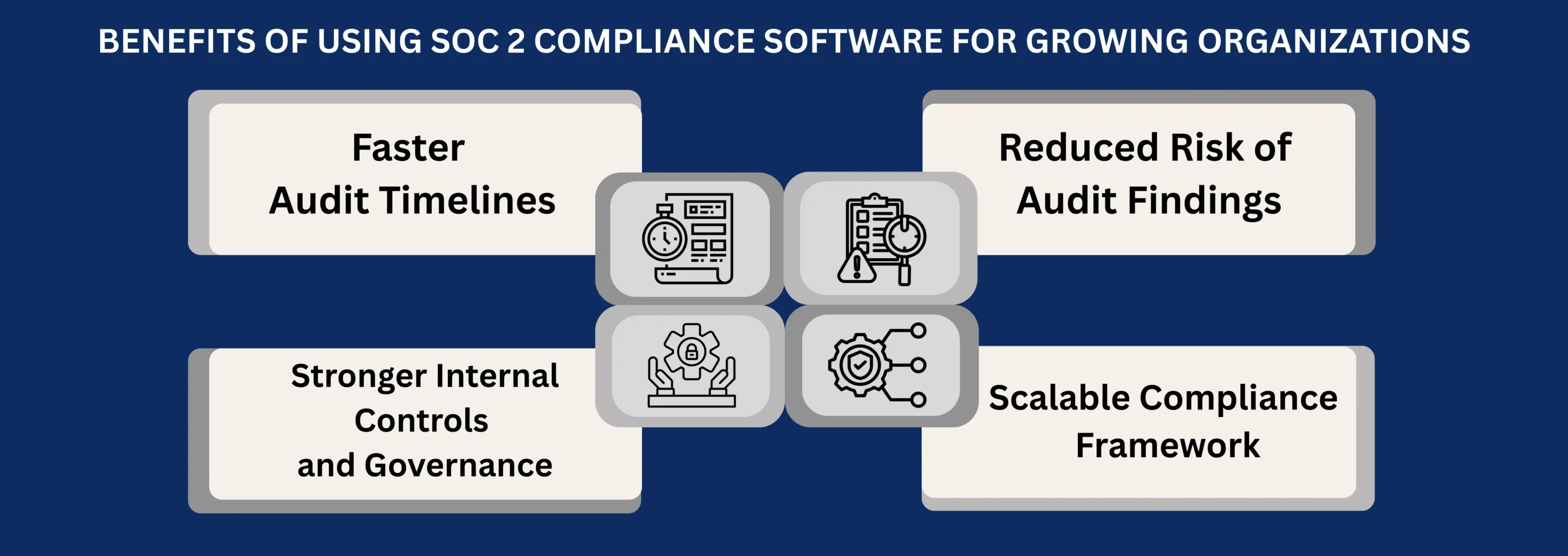
SOC 2 compliance in Amsterdam delivers measurable and demonstrable value across commercial, operational, and risk management dimensions for organizations that obtain and maintain a current attestation. The benefits of SOC 2 attestation extend beyond the report document itself to encompass the organizational improvements that result from operating within a structured, independently verified control environment.
A current SOC 2 Type 2 report is a prerequisite for entry into enterprise sales cycles across US-headquartered companies, major financial institutions, healthcare networks, and government-affiliated organizations. Amsterdam organizations without a current SOC 2 report are frequently disqualified from procurement processes or subjected to extended security review periods that delay contract execution.
Holding a current SOC 2 attestation eliminates or substantially reduces the burden of responding to individual customer security questionnaires, as the report provides standardized, auditor-verified responses to the control questions most commonly posed by enterprise security teams. For Amsterdam companies seeking to expand into North American markets or scale relationships with US-based enterprises, a SOC 2 Type 2 report is typically the single most important vendor assurance document requested.
SOC 2 attestation also supports competitive differentiation in European markets where security and data protection assurance is increasingly valued in vendor selection processes. Organizations operating in the Amsterdam SaaS ecosystem report that holding a current SOC 2 report accelerates sales cycles with European enterprise customers who apply US-standard vendor due diligence practices and recognize the independent auditor’s report as a more credible form of assurance than vendor-prepared security documentation.
The report’s structure — including the detailed description of tests of controls and results — provides a level of transparency about control operations that internal security certifications and self-assessments cannot replicate.
The process of preparing for and undergoing a SOC 2 audit produces internal operational benefits that extend well beyond the report itself. Organizations that implement the documentation, monitoring, and control structures required for SOC 2 compliance typically achieve improvements in incident detection response times, more consistent enforcement of access control policies, better-defined change management procedures, and more systematic vendor oversight practices.
These operational improvements reduce the probability and potential impact of security incidents and contribute to more stable, reliable service delivery — outcomes that benefit both the organization and its customers independently of the attestation itself.
- ✓Accelerated enterprise sales cycles by eliminating extended vendor security review periods
- ✓Reduction in security questionnaire burden through standardized, auditor-verified control documentation
- ✓Competitive differentiation in Amsterdam SaaS, fintech, and cloud services markets
- ✓Strengthened third-party risk management practices through subservice organization oversight requirements
- ✓Improved access control discipline through periodic access review and provisioning requirements
- ✓Enhanced incident response maturity through documented detection and response procedures
- ✓Demonstrated control assurance to regulators, institutional investors, and enterprise counterparties
- ✓Foundation for concurrent or sequential pursuit of complementary frameworks including ISO 27001
- ✓Commercial and Market Access Benefits
- ✓Operational and Risk Management Benefits
SOC 2 Report Validity, Ongoing Monitoring, and Recertification
A SOC 2 report does not carry an indefinite validity period. The market convention — reflecting the point-in-time or period-specific nature of the examination — is that a SOC 2 report remains current and acceptable to most enterprise customers and procurement programs for twelve months following the report date (Type 1) or the end of the observation period (Type 2). After twelve months, the report is considered stale, and customers requesting current assurance will require a new SOC 2 examination covering a more recent period. Amsterdam organizations that allow their SOC 2 report to lapse risk loss of vendor qualification status, delays in contract renewal, and reputational exposure in markets where continuous assurance is expected.
Annual Examination Cycles and Continuous Control Monitoring
Maintaining current SOC 2 attestation requires Amsterdam organizations to operate on an annual examination cycle. Each annual cycle produces a new Type 2 report covering the most recent twelve-month observation period. Between examination cycles, organizations must maintain the control environment documented in the prior report, respond to any exceptions or findings noted in the prior examination, and continuously collect the evidence — logs, access review records, change approvals, incident records — that will be required for testing in the subsequent SOC 2 audit.
Continuous control monitoring practices, including automated log collection, real-time access control alerting, and scheduled access certification campaigns, support the evidence collection requirements of annual SOC 2 examinations and reduce the operational burden of audit preparation.
Significant changes to the system in scope — including migration to new cloud infrastructure, introduction of new services, material changes to organizational structure, or implementation of new control technologies — must be evaluated for their effect on the existing control environment and reported to the Licensed CPA Firm. Changes that materially alter the system description or the control activities being examined may require an updated scoping determination or a supplemental examination.
Amsterdam organizations undergoing rapid growth, architectural changes, or mergers and acquisitions should initiate dialogue with their Licensed CPA Firm well in advance of the examination period to assess whether scope adjustments are required and how material changes will be addressed in the report.
Exceptions, Remediation Tracking, and Subsequent Examinations
Exceptions identified during a SOC 2 examination are documented in the tests of controls and results section of the Type 2 report with full transparency. Management may include a management response in the report addressing each exception, describing corrective actions taken or planned. Enterprise customers reviewing a SOC 2 report with exceptions will evaluate the nature and severity of each exception and the adequacy of management’s response.
Exceptions that recur across annual examination cycles without evidence of remediation are viewed negatively by customers and may affect vendor qualification decisions. Amsterdam organizations should treat exceptions as actionable findings requiring documented remediation plans, assigned ownership, target completion dates, and verifiable evidence of correction in the subsequent SOC 2 audit cycle.
SOC 2 Examination and Regulatory Context in the Netherlands
SOC 2 examination operates within Amsterdam’s broader regulatory and compliance environment as a complementary assurance mechanism rather than a substitute for Dutch or EU regulatory obligations. Amsterdam organizations subject to GDPR, the Uitvoeringswet AVG, NIS2, or DORA must satisfy those frameworks through their own required processes. SOC 2 attestation documents the operation of technical and organizational controls that may be referenced as supporting evidence in regulatory contexts, but it does not establish compliance with any statutory framework.
SOC 2 and GDPR: Complementary Frameworks
The GDPR requires data controllers and processors operating in the Netherlands and across the EU to implement appropriate technical and organizational measures to ensure a level of security appropriate to the risk. SOC 2 Privacy criteria examinations evaluate controls over the collection, use, retention, disclosure, and disposal of personal information — topics that overlap substantially with GDPR Article 5 data protection principles and Article 32 security of processing requirements.
Amsterdam organizations can reference their SOC 2 Type 2 report as documented evidence of security control effectiveness when demonstrating accountability under GDPR Article 5(2), but must recognize that GDPR compliance encompasses legal, governance, and data subject rights obligations that fall outside the scope of a SOC 2 Privacy criteria examination. The Dutch Data Protection Authority (Autoriteit Persoonsgegevens) does not accept SOC 2 attestation as a substitute for GDPR compliance assessment.
The NIS2 Directive, transposed into Dutch law, imposes cybersecurity risk management and incident reporting obligations on operators of essential services and important entities across sectors including energy, transport, finance, health, digital infrastructure, and ICT service management. SOC 2 Security and Availability criteria examinations address control domains — access management, incident detection and response, change management, business continuity — that are directly relevant to NIS2 cybersecurity risk management requirements.
Amsterdam organizations designated as essential or important entities under NIS2 may find that operating a SOC 2-compliant control environment provides a structured foundation for NIS2 risk management obligations. However, NIS2 compliance itself requires engagement with Dutch competent authorities and sector-specific regulatory processes beyond the scope of SOC 2 attestation.
DORA and SOC 2 for Amsterdam Financial Services Organizations
The Digital Operational Resilience Act (DORA), which became applicable across EU member states in January 2025, establishes binding ICT risk management, incident classification, operational resilience testing, and third-party ICT risk management requirements for financial entities and designated critical ICT third-party service providers. Amsterdam financial services organizations — including banks, investment firms, insurance undertakings, payment institutions, and electronic money institutions regulated by De Nederlandsche Bank (DNB) and the Netherlands Authority for the Financial Markets (AFM) — are subject to DORA’s full requirements.
SOC 2 certification for Amsterdam financial services providers who also serve EU financial entities as ICT third-party service providers must account for DORA’s oversight regime, which may require engagement with the Lead Overseer framework established under the regulation. SOC 2 Type 2 reports covering Security, Availability, and Processing Integrity criteria align substantively with DORA’s ICT risk management and operational resilience requirements, though DORA compliance is independently assessed under its own regulatory framework.
CertPro: Licensed CPA Firm for SOC 2 Certification in Amsterdam
CertPro is a Licensed CPA Firm providing independent SOC 2 audit and attestation services to organizations based in Amsterdam, across the Netherlands, and throughout the European Union. As a Licensed CPA Firm, CertPro is authorized to conduct SOC 2 examinations and issue attestation reports under AICPA standards — a qualification that distinguishes independent audit providers from consulting firms, advisory organizations, and certification bodies operating outside the attestation standards framework. SOC 2 Certification in Amsterdam issued by CertPro reflects an independent, evidence-based examination conducted in strict accordance with AT-C Section 205 and the AICPA Trust Services Criteria.
Examination Methodology and Sector Coverage
CertPro’s SOC 2 examination methodology follows the structured sequence prescribed by AICPA attestation standards: scope definition, audit program development, evidence collection and control testing, exception evaluation, draft report review, and final report issuance. The methodology is applied consistently across all Amsterdam sectors — including SaaS providers, fintech companies, cloud infrastructure operators, healthcare technology organizations, e-commerce platforms, cybersecurity firms, and multinational enterprises — with scope customization reflecting the specific Trust Services Criteria categories, system boundaries, and control environments relevant to each organization.
CertPro auditors bring sector-specific knowledge of the control environments common to Amsterdam-based technology and financial services organizations, enabling efficient and targeted SOC 2 audit procedures without compromising the independence and rigor required by attestation standards.
CertPro conducts both SOC 2 Type 1 and Type 2 examinations and issues reports covering all five Trust Services Criteria categories. The firm also conducts SOC 2 examination engagements in conjunction with SOC 1 and SOC 3 examinations where organizations require multiple report types to satisfy diverse customer and regulatory requirements.
All SOC 2 reports issued by CertPro include the full suite of required report sections — the independent auditor’s report, management’s assertion, system description, and (for Type 2) the description of tests and results — in formats that meet AICPA reporting standards and the distribution requirements of Amsterdam-based organizations sharing reports with customers under non-disclosure agreements or through trust assurance portals.
SOC 2 Audit Amsterdam: Engagement Process and Timeline
A SOC 2 audit Amsterdam engagement with CertPro begins with an initial scoping meeting in which the organization’s service commitments, system boundaries, and applicable Trust Services Criteria categories are defined. Following scope confirmation, CertPro develops a customized audit program specifying the controls to be tested, the evidence to be collected, and the testing procedures to be performed.
For Type 2 engagements, the observation period start date is established at this stage, and the organization begins accumulating evidence from that date forward. Fieldwork is conducted at the conclusion of the observation period, typically over four to eight weeks depending on scope complexity. The draft report is issued to management for review, a management response period is provided for any exceptions noted, and the final SOC 2 attestation report is issued following completion of the review process.
FAQ
▶
What is SOC 2 Certification and who needs it in Amsterdam?
▶
What is the difference between SOC 2 Type 1 and SOC 2 Type 2?
▶
What are the Trust Services Criteria and which categories are required?
▶
How long does the SOC 2 audit process take in Amsterdam?
▶
What evidence is required for a SOC 2 examination?
▶
How long is a SOC 2 report valid?
▶
Does SOC 2 attestation establish compliance with GDPR or other Dutch regulations?
▶
What are management’s responsibilities in a SOC 2 examination?
SOC 1 VS SOC 2: WHICH REPORT YOUR CUSTOMERS ACTUALLY ASK FOR
If you sell SaaS or provide outsourced services, you have likely been asked for a SOC report. However, the follow-up question is rarely easy to answer…

AICPA Issues New Guidance for Peer Reviewers Evaluating SOC 2 Engagements
AICPA SOC 2 guidance has been issued to help peer reviewers identify quality risks associated with SOC 2 engagements as the use of compliance automati…
SOC 2 Certified: What Does It Mean for Your Business
For companies that handle sensitive data or run cloud-based services, the question “Can you provide your SOC 2 report?” carries enormous weight. Yet, …
Get In Touch
have a question? let us get back to you.