
ISO 42001 Certification in Arizona
CertPro is a Licensed CPA Firm providing independent ISO 42001 Certification in Arizona through third-party conformity assessment audits conducted against the requirements of ISO/IEC 42001:2023. Every ISO 42001 certification audit is governed by a structured program in which certification decisions are issued by an independent certification committee — based exclusively on objective evidence gathered during the audit. No advisory, consulting, or implementation relationship influences the outcome, ensuring the integrity of every ISO 42001 assessment.
OUR CLIENTS



Independent ISO 42001 Certification by a Licensed CPA Firm in Arizona
CertPro is a Licensed CPA Firm providing independent ISO 42001 Certification in Arizona through third-party conformity assessment audits conducted against the requirements of ISO/IEC 42001:2023. Every ISO 42001 certification audit is governed by a structured program in which certification decisions are issued by an independent certification committee — based exclusively on objective evidence gathered during the audit. No advisory, consulting, or implementation relationship influences the outcome, ensuring the integrity of every ISO 42001 assessment.
ISO 42001 Certification in Arizona addresses a growing and formally recognized governance requirement across the state’s most AI-active industries. Arizona has established itself as a significant hub for semiconductor manufacturing, aerospace and defense, advanced manufacturing, healthcare systems, financial services, cloud computing, cybersecurity, autonomous systems, and SaaS development. Organizations across these sectors are increasingly required to demonstrate responsible AI governance to enterprise customers, federal procurement authorities, and third-party risk management programs.
ISO/IEC 42001:2023 — the international standard for Artificial Intelligence Management Systems — provides the structured framework against which this conformity is evaluated. ISO 42001 Certification in Arizona verifies that an organization’s AIMS satisfies the standard’s requirements through an evidence-based ISO 42001 audit conducted by an independent certification body.
The ISO 42001 AIMS standard establishes requirements for establishing, implementing, maintaining, and continually improving an Artificial Intelligence Management System within the context of an organization’s AI-related activities. The standard addresses AI risk management, AI policy, AI objectives, AI impact assessment, data governance, transparency, human oversight, and the full system lifecycle of AI applications.
It applies to any organization that develops, provides, or uses AI systems — a scope that encompasses the substantial and expanding concentration of AI-active organizations throughout Arizona’s technology and enterprise ecosystem. ISO 42001 compliance under this standard is both practical and operationally relevant across a wide range of organizational sizes and sectors.
Arizona’s regulatory and enterprise risk environment reinforces the relevance of ISO 42001 compliance. U.S. federal AI governance expectations — including the NIST AI Risk Management Framework and Executive Order directives on responsible AI use — have established a baseline expectation for documented AI governance programs. Federal contractors in Arizona’s aerospace and defense sector face vendor qualification requirements that increasingly reference structured AI governance standards.
Healthcare organizations subject to HIPAA face heightened scrutiny when deploying AI systems that interact with protected health information. Financial services firms and fintech companies in the Phoenix metropolitan area encounter enterprise vendor risk programs that evaluate third-party AI governance as a condition of procurement. ISO 42001 Certification in Arizona provides the independent, third-party attestation that satisfies these enterprise and regulatory expectations.
CertPro’s role is strictly that of an independent evaluation body. The organization under assessment bears full responsibility for establishing, operating, and maintaining its Artificial Intelligence Management System in conformance with ISO/IEC 42001:2023. CertPro’s certified auditors evaluate whether the AIMS — as designed and operated by the organization — satisfies the standard’s requirements through structured documentary review, personnel interviews, process observation, and control testing.
The certification committee reviews all ISO 42001 audit findings and issues the certification decision independently of any relationship with the auditee. This structural independence is fundamental to the credibility of ISO 42001 Certification in Arizona and clearly distinguishes third-party certification from self-assessment or supplier declarations of conformity.

What Is ISO 42001 Certification?
ISO 42001 certification is the formal, third-party attestation that an organization’s Artificial Intelligence Management System conforms to the requirements of ISO/IEC 42001:2023. Published by the International Organization for Standardization in 2023, this standard establishes the first internationally recognized framework specifically designed for managing AI-related risks, governance obligations, and responsible AI practices at the organizational level.
ISO 42001 certification confirms — through an independent ISO 42001 audit — that the AIMS is operational, that documented requirements are satisfied, and that AI risk management and control processes function as intended within the defined certification scope. The resulting certificate serves as credible, auditable evidence of ISO 42001 compliance for procurement, regulatory, and enterprise risk purposes.
The ISO/IEC 42001:2023 Standard and AIMS Framework
The ISO 42001 AIMS standard is structured around the ISO High Level Structure common to all major management system standards, covering Clauses 4 through 10. Clause 4 requires organizations to understand their context and the needs of interested parties. Clause 5 establishes leadership and AI governance policy obligations. Clause 6 addresses AI-related risk and opportunity management, including AI impact assessment requirements. Clause 7 covers support requirements, including documentation and competence management.
Clauses 8, 9, and 10 address operational planning, performance evaluation through internal audit and management review, and continual improvement. This structured architecture ensures that AI governance is embedded in organizational management — not treated as a standalone compliance exercise — making the ISO 42001 certification audit a meaningful evaluation of operational maturity rather than a paperwork review.
Annex A of ISO/IEC 42001:2023 contains 38 controls organized into nine control domains. These domains address AI policy, internal organization, AI risk management resources, AI system impact assessments, AI system lifecycle considerations, data governance for AI, third-party and supplier relationships, transparency and provision of information to AI subjects, and responsible and ethical AI use.
Organizations select applicable controls based on their AI impact assessment and risk treatment decisions. During the ISO 42001 certification audit, auditors evaluate whether selected controls are implemented effectively and whether any exclusions are justified within the AIMS scope. The Annex A controls provide the operational substance against which much of the ISO 42001 assessment evidence is evaluated.
Who Requires ISO 42001 Certification?
ISO 42001 certification is applicable to any organization that develops, deploys, or uses AI systems — regardless of size, sector, or geographic location. In the Arizona context, this includes semiconductor manufacturers embedding AI into design and manufacturing processes, aerospace and defense contractors integrating AI into mission-critical systems, healthcare organizations deploying clinical decision support tools, fintech firms using AI for fraud detection and credit modeling, SaaS providers delivering AI-enabled products, cloud service providers hosting AI workloads, and cybersecurity companies applying machine learning to threat detection.
Any organization facing enterprise vendor qualification requirements, federal procurement conditions, or contractual obligations referencing AI governance standards will find ISO 42001 Certification in Arizona directly relevant to its procurement and risk management program.
ISO 42001 compliance requirements extend beyond AI developers. Organizations that procure and deploy AI systems from third-party vendors — including healthcare networks, financial institutions, and government contractors — are equally subject to the standard’s requirements when those AI systems are deployed within the organization’s operational context.
The standard’s scope is intentionally broad, recognizing that AI governance responsibilities exist across the full spectrum of AI-related organizational activity: from initial AI system design through deployment, monitoring, and decommissioning. This breadth reflects the ISO 42001 AIMS standard’s design as a management system standard rather than a purely technical specification, making it applicable across virtually every AI-active industry in Arizona.
ISO 42001 Certification Audit Process in Arizona
The ISO 42001 certification audit process conducted by CertPro for Arizona-based organizations follows a structured, multi-stage program aligned with internationally recognized conformity assessment practices. Each stage produces documented outputs that form the evidentiary basis for the independent certification committee’s decision.
The process is designed to assess conformity — not to advise on implementation. Every audit activity is conducted by qualified auditors operating under CertPro’s certification body procedures, ensuring that each ISO 42001 audit delivers objective, defensible findings suitable for enterprise and regulatory review.
| Audit Stage | Key Activities | Output |
|---|---|---|
| Application Review | Scope definition, audit program determination, auditor assignment | Audit plan and program |
| Stage 1 Audit | Documentary review of AIMS documentation and readiness assessment for Stage 2 | Stage 1 audit report, identified gaps |
| Stage 2 Audit | Evidence collection, control testing, personnel interviews, process observation | Stage 2 audit report, nonconformity findings |
| Nonconformity Review | Evaluation of corrective action evidence submitted by the organization | Closure or escalation determination |
| Certification Decision | Independent committee review of the complete ISO 42001 audit record | ISO 42001 certificate issuance or deferral |
| Surveillance Audit | Annual review of continued AIMS conformity | Surveillance audit report |
| Recertification Audit | Full reassessment at the end of the three-year certification cycle | Renewed ISO 42001 certificate |
The Stage 1 ISO 42001 audit is a structured documentary review conducted to evaluate the organization’s AIMS documentation against the requirements of ISO/IEC 42001:2023 and to confirm that the organization is sufficiently prepared for the Stage 2 audit. Auditors review the AI policy, AI objectives, documented risk assessment outputs, AI impact assessment records, the AIMS scope statement, and the organization’s selection of Annex A controls.
The Stage 1 audit may be conducted remotely or on-site, depending on the audit program, and produces a formal Stage 1 audit report identifying any areas requiring resolution before Stage 2 proceeds. Importantly, the Stage 1 audit does not constitute a conformity finding — it is a readiness evaluation for audit program management purposes only.
Key documentation evaluated during the Stage 1 ISO 42001 audit includes the AIMS scope, AI governance policy, AI risk register, AI impact assessments, documented objectives and performance indicators, evidence of management review, records of internal AIMS audits, and the organization’s statement of Annex A control applicability.
For Arizona-based organizations whose AI systems interact with regulated data — such as protected health information, financial records, or defense-related information — the scope confirmation stage also identifies interfaces with other management system standards, including ISO/IEC 27001 information security requirements. These interfaces inform the audit program and the allocation of audit time during Stage 2.
The Stage 2 ISO 42001 audit is the primary conformity assessment stage. Auditors conduct on-site or remote evidence collection through structured interviews with AI governance personnel, process observation, records review, and testing of implemented controls against ISO/IEC 42001:2023 requirements and applicable Annex A controls.
The ISO 42001 assessment at Stage 2 evaluates both design effectiveness — whether controls are appropriately designed to address identified AI risks — and operating effectiveness — whether those controls have functioned consistently over the audit period. Auditors document findings and raise nonconformities wherever objective evidence indicates that a requirement of the standard is not met.
During the Stage 2 ISO 42001 audit, auditors evaluate AI risk management processes, AI impact assessment records, data governance controls, AI system lifecycle documentation, human oversight mechanisms, transparency practices, and supplier management for AI-related third parties. For Arizona’s aerospace and defense sector, auditors examine controls related to AI used in safety-critical or mission-critical contexts. For healthcare organizations, the audit evaluates controls governing AI systems that interact with patient data.
All audit findings are documented in the Stage 2 audit report, which serves as the primary input to the certification committee’s independent review and ISO 42001 certification decision.
Following the Stage 2 ISO 42001 certification audit, the complete audit record — including both Stage 1 and Stage 2 reports, nonconformity findings, and corrective action evidence — is reviewed by CertPro’s independent certification committee. The committee reviews this record without involvement from the auditing team, maintaining structural independence in the certification decision.
Where all nonconformities have been resolved and the audit record supports a conformity determination, the committee issues the ISO 42001 certificate confirming that the organization’s AIMS conforms to ISO/IEC 42001:2023 within the defined scope. The certificate is valid for three years, subject to satisfactory annual surveillance.
Surveillance audits are conducted annually during the three-year certification cycle to verify that the AIMS continues to conform to ISO/IEC 42001:2023 requirements and that the organization is addressing nonconformities and maintaining continual improvement activities. Each surveillance audit reviews a defined subset of AIMS requirements, with specific focus areas determined by the audit program.
At the end of the three-year cycle, a full recertification ISO 42001 audit reassesses conformity across all requirements of the standard. Failure to maintain conformity during the surveillance period may result in suspension or withdrawal of the certificate — as determined by the certification committee based on audit findings and the organization’s corrective actions.
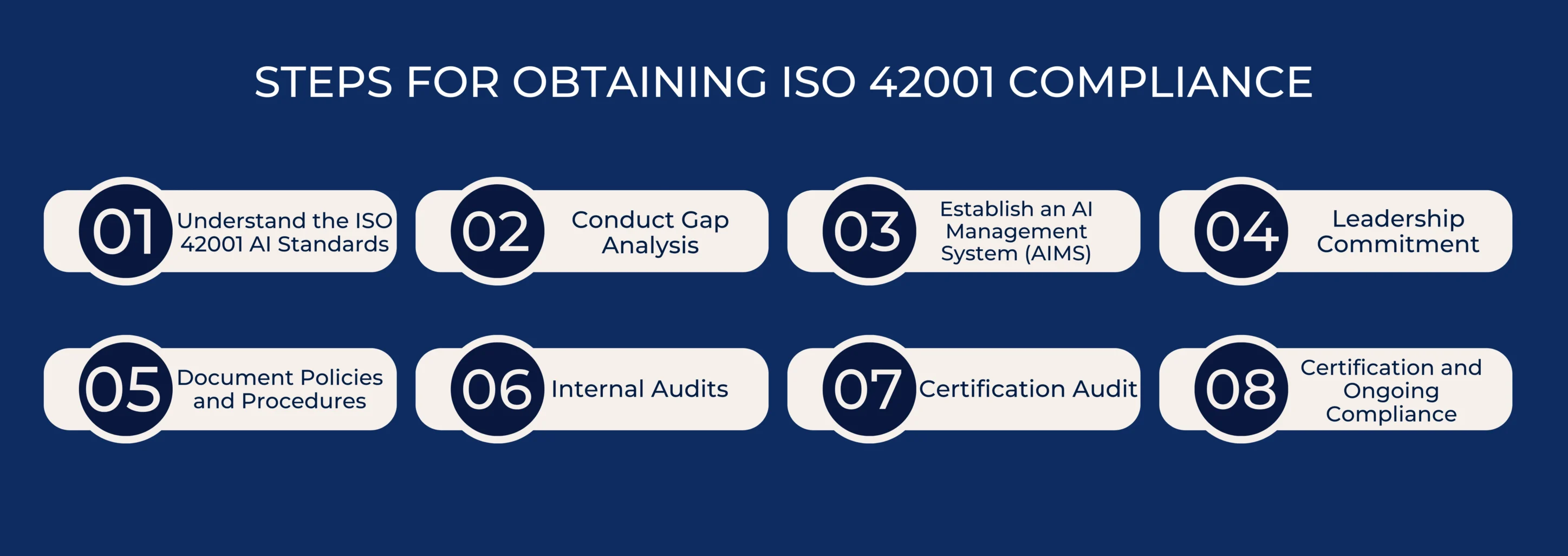
- ✓Stage 1 Audit: Documentary Review and Scope Confirmation
- ✓Stage 2 Audit: Evidence Evaluation and Control Testing
- ✓Certification Decision, Certificate Issuance, and Ongoing Surveillance
ISO 42001 Requirements Evaluated During the Certification Audit
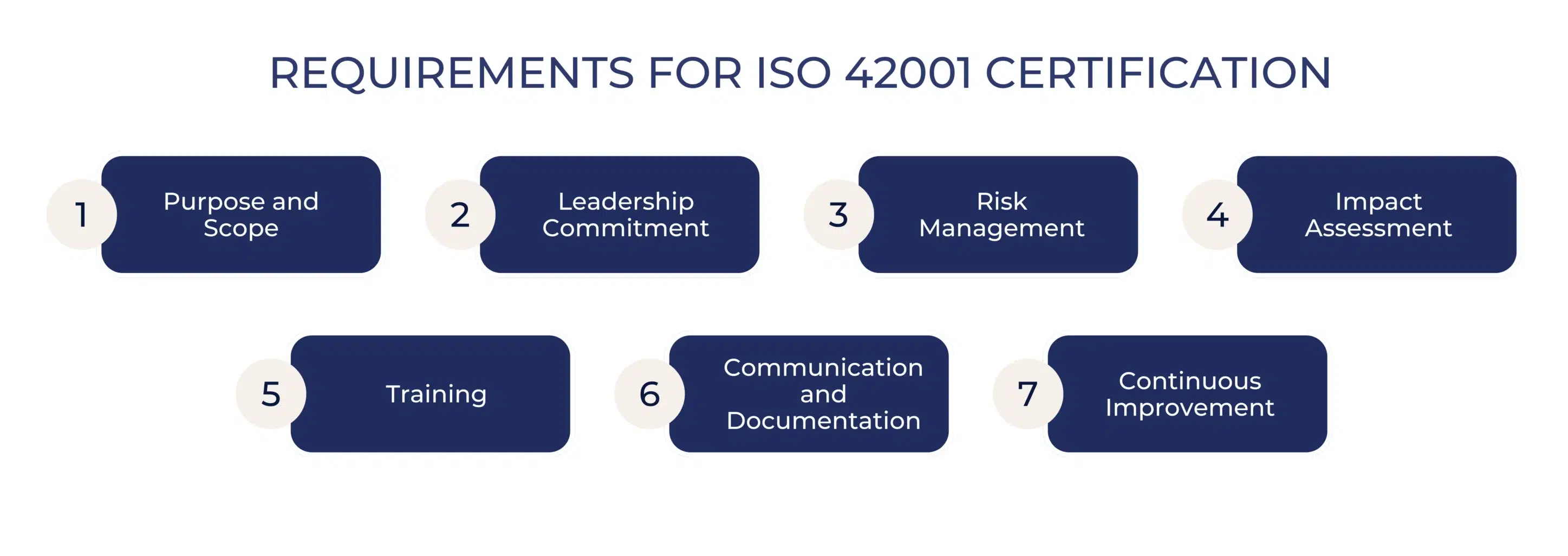
The ISO 42001 certification audit evaluates conformity against the full set of requirements established in ISO/IEC 42001:2023, spanning the management system clauses and all applicable Annex A controls selected by the organization. Understanding these requirements helps organizations determine whether their AIMS is appropriately designed and documented before engaging an independent certification body for a formal ISO 42001 assessment.
The following sections describe the principal areas evaluated during an ISO 42001 certification audit for Arizona-based organizations.
The management system requirements of ISO/IEC 42001:2023 are evaluated across Clauses 4 through 10. Clause 4 requires documented understanding of the organization’s internal and external context — including the nature of AI systems deployed and the needs of interested parties such as regulators, customers, and affected individuals. Clause 5 requires top management to demonstrate leadership through an established AI governance policy, defined roles and responsibilities, and integration of AI management system requirements into organizational processes.
Clause 6 requires documented processes for identifying and treating AI-related risks and opportunities, including a formal AI impact assessment process. During the ISO 42001 assessment, auditors review evidence that these obligations are fulfilled through documented information and verifiable operational records.
Clauses 7 through 10 address the operational and evaluative dimensions of the AIMS. Clause 7 requires documented support structures, including competence management for AI governance personnel, awareness programs, and communication protocols. Clause 8 requires documented operational planning and the execution of AI impact assessments for applicable AI systems. Clause 9 requires a formal internal AIMS audit program and management review processes that evaluate AIMS performance. Clause 10 requires nonconformity management and documented continual improvement activities.
ISO 42001 compliance with Clauses 4 through 10 is assessed through review of documented procedures, evidence of execution, and interviews with personnel responsible for AIMS operation — producing findings that reflect whether each clause requirement is met with objective, verifiable evidence.
Annex A of ISO/IEC 42001:2023 provides 38 controls across nine control domains. These controls are evaluated during the ISO 42001 certification audit to the extent that they are selected as applicable within the organization’s AIMS scope. The nine domains cover AI policy and governance structures, internal organizational responsibilities for AI management, resources required for responsible AI operation, AI impact assessment processes, AI system lifecycle controls from design through decommissioning, data governance practices for AI training and operational data, management of AI-related third-party and supplier relationships, transparency obligations to affected parties, and responsible AI use controls addressing ethics and societal impacts.
Auditors evaluate whether selected controls are implemented, documented, and operating effectively through evidence testing and detailed process review — forming a core component of every ISO 42001 assessment.
For Arizona organizations in regulated industries, specific Annex A control domains receive elevated audit focus. Healthcare organizations deploying AI in clinical contexts are assessed on data governance controls for AI training datasets, human oversight controls ensuring clinical review of AI-generated outputs, and transparency controls informing patients and clinicians of AI involvement in care decisions. Aerospace and defense organizations are evaluated on AI system lifecycle controls governing design validation, testing, and change management for safety-critical AI applications.
Fintech firms are assessed on AI risk management controls governing model fairness, explainability, and regulatory reporting. The ISO 42001 audit assesses controls within the context of the organization’s specific AI systems and risk profile — producing findings that reflect actual operational conformity rather than theoretical control design.
AI impact assessment is a core requirement of ISO/IEC 42001:2023 and a primary area of evaluation during the ISO 42001 certification audit. The standard requires organizations to identify and assess the potential impacts of their AI systems on individuals, groups, and society — including harms related to bias, privacy, safety, and autonomy.
During the ISO 42001 audit, reviewers examine documented impact assessment procedures, records produced for each assessed AI system, the criteria applied in determining impact severity, and the treatment decisions made in response to identified impacts. For Arizona-based organizations deploying AI systems at scale — including AI-driven healthcare diagnostics, autonomous vehicle systems, or credit decisioning models — the rigor and completeness of AI impact assessments is a critical area of ISO 42001 compliance evidence.
- ✓AIMS Management System Requirements: Clauses 4 Through 10
- ✓Annex A Controls Evaluated During the ISO 42001 Audit
- ✓AI Impact Assessment and Risk Management Evaluation
Arizona Industries Seeking ISO 42001 Certification
ISO 42001 Certification in Arizona spans a broad range of industries reflecting the state’s diverse and technology-intensive economy. Arizona’s position as a national leader in semiconductor manufacturing, aerospace and defense, healthcare systems, financial technology, and SaaS development creates significant demand for independent AI governance certification across multiple enterprise contexts.
The following sections describe the primary industry sectors engaging ISO 42001 certification audit programs in Arizona and the specific AI governance obligations driving certification demand in each sector.
Semiconductor, Aerospace, Defense, and Advanced Manufacturing
Arizona is home to a significant concentration of semiconductor manufacturers and aerospace and defense contractors that operate AI systems in design automation, manufacturing quality control, predictive maintenance, and mission-critical applications. Organizations in these sectors face stringent federal contracting requirements, including Defense Federal Acquisition Regulation Supplement provisions that increasingly reference AI governance controls.
ISO 42001 certification for Arizona companies in the semiconductor and defense supply chain provides documented evidence that AI systems used in production, design, and logistics processes are governed by a conforming AIMS. This supports prime contractor qualification requirements and export control compliance programs. Advanced manufacturing companies applying AI to industrial automation similarly use ISO 42001 Certification in Arizona to satisfy enterprise vendor qualification demands from automotive and electronics OEM customers.
The autonomous systems sector in Arizona — encompassing autonomous vehicle testing programs centered in the Phoenix metropolitan area, unmanned aerial vehicle development, and robotics — represents a particularly high-stakes context for AI governance certification. AI systems governing autonomous vehicle behavior or UAV navigation present significant safety and liability implications.
For organizations in this sector, the ISO 42001 AIMS standard provides the governance framework that regulators, insurance underwriters, and enterprise partners evaluate when assessing organizational maturity in responsible AI operation. ISO 42001 certification audit findings in this sector focus heavily on AI system lifecycle controls, human oversight mechanisms, and incident management procedures — areas directly relevant to public safety obligations.
Healthcare, Fintech, SaaS, and Cloud Service Providers
Arizona’s healthcare sector — anchored by major health systems, research hospitals, and a growing health technology startup ecosystem — is one of the most active areas for ISO 42001 certification audit engagements in the state. Healthcare organizations deploying AI in clinical decision support, radiology, medical imaging, remote patient monitoring, and population health management face regulatory expectations under HIPAA, the 21st Century Cures Act, and emerging FDA guidance on AI-based Software as a Medical Device.
ISO 42001 compliance provides the documented AI governance framework that healthcare organizations reference in regulatory submissions, vendor assessments, and board-level AI risk reporting. The ISO 42001 certification audit evaluates data governance controls for AI training datasets, transparency obligations for AI-assisted clinical decisions, and human oversight requirements for high-risk AI applications.
Arizona’s fintech corridor and Phoenix’s established financial services community generate significant demand for ISO 42001 Certification in Arizona among companies operating AI systems in credit decisioning, fraud detection, anti-money laundering, and customer service automation. Financial regulators — including the Office of the Comptroller of the Currency and the Consumer Financial Protection Bureau — have issued guidance on model risk management and AI fairness that aligns closely with ISO/IEC 42001:2023 requirements.
SaaS providers and cloud service providers serving regulated industries use ISO 42001 certification alongside ISO/IEC 27001 to satisfy enterprise vendor security and AI governance review programs. The ISO 42001 certification audit for SaaS organizations typically covers the organization’s AI development, training, and deployment pipeline as the defined AIMS scope — providing a clear and auditable boundary for enterprise procurement review.
Benefits of ISO 42001 Certification for Arizona-Based Organizations
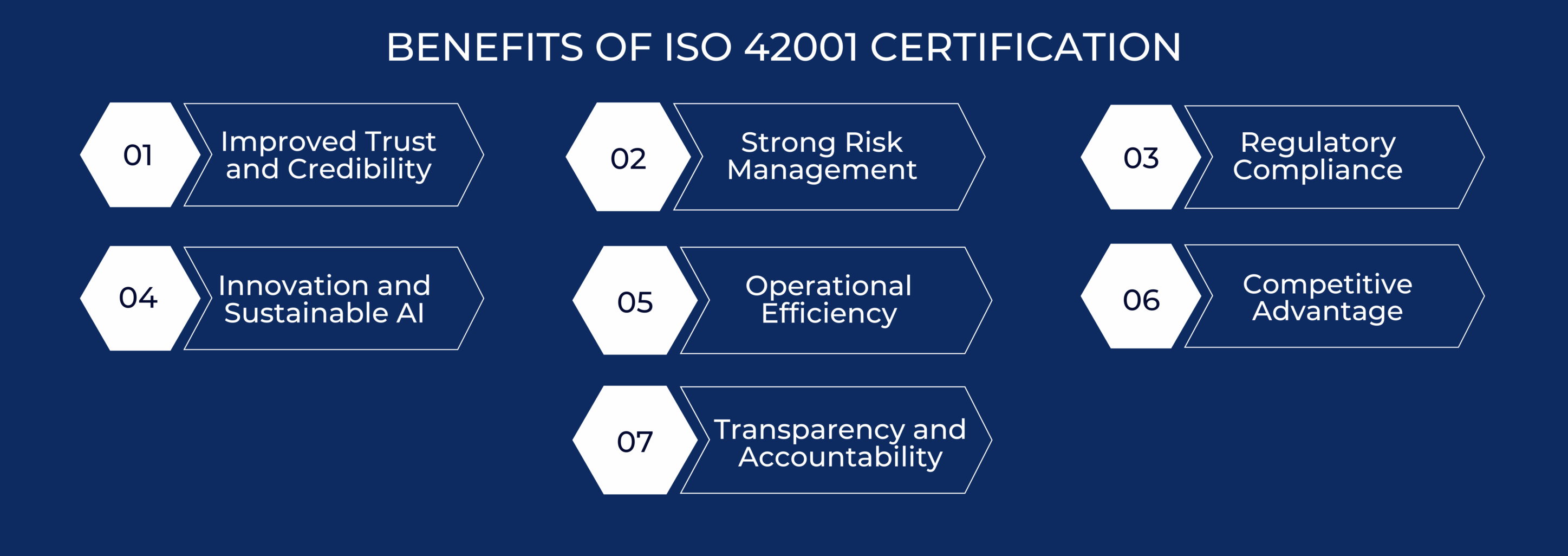
ISO 42001 Certification in Arizona delivers structured, independently verified governance outcomes that address the specific procurement, regulatory, and risk management pressures facing the state’s AI-active industries. Achieving and maintaining ISO 42001 compliance through an independent third-party audit program produces tangible operational and commercial outcomes — not just a compliance certificate. The following describes the principal benefits associated with ISO 42001 Certification in Arizona.
- ✓Independent third-party verification that the AIMS conforms to ISO/IEC 42001:2023 requirements, providing objective evidence for enterprise vendor qualification and procurement reviews
- ✓Structured documentation of AI risk management, AI impact assessment, and Annex A control implementation that satisfies regulatory and contractual AI governance disclosure requirements
- ✓Recognition in federal, state, and enterprise procurement processes requiring documented AI governance standards — particularly relevant to Arizona’s defense and healthcare contracting communities
- ✓Ongoing surveillance audit oversight that maintains continuous conformity assurance and supports management reporting on AI governance program effectiveness
- ✓Competitive differentiation in SaaS and cloud service markets where enterprise buyers evaluate AI governance certifications as part of third-party risk management due diligence
- ✓Alignment with international AI governance expectations, supporting cross-border contracts and multinational enterprise relationships that reference ISO/IEC 42001:2023 compliance
- ✓Documented accountability framework supporting board-level AI risk reporting and governance disclosure obligations to shareholders, regulators, and institutional stakeholders
- ✓Audit-validated evidence of human oversight and transparency controls, directly addressing regulatory expectations for explainable and auditable AI in financial services, healthcare, and defense
Enterprise procurement programs in Arizona’s financial services, healthcare, and technology sectors increasingly include AI governance as a vendor qualification criterion. A SaaS provider in the Tempe or Scottsdale technology corridor seeking a contract with a major Arizona health system, for example, may be required to demonstrate that its AI systems are governed by a documented and independently verified management framework.
ISO 42001 certification for Arizona companies in this position provides the third-party attestation — issued by a Licensed CPA Firm following a structured ISO 42001 certification audit — that satisfies this procurement requirement. The certificate and audit scope documentation are submitted as part of the vendor qualification package, replacing or supplementing questionnaire-based self-assessments that carry lower evidentiary weight in enterprise risk management processes.
For Arizona technology companies pursuing federal government contracts, ISO 42001 certification provides documented evidence relevant to AI governance provisions in federal acquisition regulations and agency-specific AI use policies. Federal departments including the Department of Defense, the Department of Health and Human Services, and the Department of Homeland Security have issued AI strategy documents and acquisition guidance that emphasize responsible AI use, governance accountability, and third-party verification.
ISO 42001 compliance documentation produced through a formal certification audit program provides the structured, independently verified record that federal contracting officers and prime contractors reference when evaluating AI governance maturity across the defense and civilian agency supply chains active throughout Arizona.
ISO 42001 compliance through a certified AIMS provides Arizona organizations with a documented risk management framework that aligns with multiple regulatory expectations — without requiring separate compliance programs for each. The NIST AI Risk Management Framework, the EU AI Act’s risk-based governance requirements for organizations with cross-border AI deployments, FDA guidance on AI-based Software as a Medical Device, and OCC model risk management guidance for financial institutions all share structural similarities with the ISO/IEC 42001:2023 requirements framework.
Organizations that achieve ISO 42001 Certification in Arizona through a structured audit program can reference the certified AIMS as evidence of systematic AI risk governance across these regulatory contexts. This approach reduces duplicative compliance activities and provides a single, audited reference point for AI governance obligations — a meaningful operational and cost benefit for Arizona organizations navigating multiple regulatory environments simultaneously.
- ✓Enterprise Procurement and Vendor Risk Management Outcomes
- ✓Regulatory Alignment and Risk Reduction
ISO 42001 Certification Scope and Independent Decision Framework
The scope of ISO 42001 Certification in Arizona defines the boundaries within which the AIMS is assessed and certified. Scope definition is one of the first activities in the audit program and directly determines which AI systems, processes, organizational units, and geographic locations are included in the certification. The scope statement must be documented and available to interested parties, providing clarity on what is and is not covered by the ISO 42001 certificate — an important consideration for enterprise customers reviewing certification documentation in vendor risk management programs.
Defining and Documenting the AIMS Certification Scope
The AIMS certification scope is defined by the organization based on its AI-related activities, organizational boundaries, and risk profile. For Arizona-based organizations, scope definitions may encompass a single AI product or platform, a specific business unit developing and deploying AI systems, or the organization’s entire AI-related operations. The scope must be documented with sufficient specificity to enable auditors to determine what evidence is required to assess conformity.
Scope definitions that exclude significant AI systems or organizational units where AI is actively deployed may be subject to auditor challenge during the Stage 1 review. The certification committee also reviews scope adequacy as part of the ISO 42001 certification decision process, ensuring that the certified scope accurately reflects the organization’s AI management system boundaries.
For Arizona organizations operating across multiple facilities — such as semiconductor manufacturers with fabrication plants in multiple locations or healthcare systems with facilities across the Phoenix metropolitan area and Tucson — the AIMS scope must address whether all locations are included or whether site-specific exclusions apply. Multi-site certification programs require audit coverage of each included site to verify consistent AIMS implementation.
The audit program is designed to provide sufficient coverage of all in-scope sites and processes, with audit time allocated proportionally to the complexity and AI risk profile of each location. The resulting ISO 42001 certificate references the specific scope to which conformity has been assessed, giving enterprise customers and regulatory reviewers a precise understanding of the certification’s boundaries.
Certificate Maintenance, Suspension, and Withdrawal
ISO 42001 certificates issued following a successful ISO 42001 certification audit remain valid for three years from the date of issue, subject to satisfactory completion of annual surveillance audits. The certification committee may suspend a certificate where surveillance audit findings indicate significant nonconformities that have not been resolved within the required corrective action timeframe, where the organization’s AIMS scope has changed materially without notification to the certification body, or where the organization has failed to fulfill its surveillance audit obligations.
Certificate suspension is a formal finding requiring documented notification to the certificate holder and, where applicable, to regulated parties or procurement authorities that reference the certification in vendor qualification programs.
Certificate withdrawal occurs where suspended certificates are not restored within the specified period, or where audit findings identify fundamental AIMS nonconformity that cannot be addressed through corrective action within the certification cycle. Organizations whose certificates are withdrawn must undergo a full recertification audit — including both Stage 1 and Stage 2 assessments — before a new ISO 42001 certificate can be issued.
For Arizona organizations that reference ISO 42001 Certification in Arizona in federal contracts, healthcare vendor qualification programs, or financial services due diligence submissions, certificate suspension or withdrawal carries material procurement implications. This reinforces the operational importance of maintaining ongoing AIMS conformity rather than treating certification as a one-time compliance event.
ISO 42001 Certification Versus Related Standards and Frameworks
ISO 42001 Certification in Arizona is frequently evaluated alongside other information security and governance certifications that Arizona organizations may already hold or pursue. Understanding the relationship between ISO/IEC 42001:2023 and related standards is essential for organizations determining the appropriate scope of their certification program — and for procurement professionals evaluating certification portfolios in vendor risk management processes.
ISO 42001 and ISO 27001: Complementary Management Systems
ISO/IEC 42001:2023 and ISO/IEC 27001:2022 are complementary management system standards that address distinct but overlapping governance domains. ISO 27001 addresses information security management, including the confidentiality, integrity, and availability of information assets. ISO 42001 addresses AI governance — including AI risk management, AI impact assessment, transparency, human oversight, and the responsible use of AI systems.
Organizations that develop or deploy AI systems handling sensitive information — a common scenario for Arizona healthcare, fintech, and SaaS organizations — benefit from operating certified management systems under both standards. The ISO High Level Structure common to both standards facilitates integrated implementation, though each standard requires a separate ISO 42001 certification audit or ISO 27001 audit conducted against its own distinct requirements.
ISO 42001 differs from ISO 27001 in its specific focus on AI system governance rather than broader information security. Where ISO 27001 addresses controls governing information assets generally, ISO 42001 addresses the unique characteristics of AI — including training data usage, model behavior under distribution shift, algorithmic fairness, and the societal impacts of AI-driven decisions.
For Arizona organizations already certified to ISO 27001, adding ISO 42001 certification audit coverage addresses the AI-specific governance gaps that ISO 27001 alone does not fully assess. Together, the two certifications provide enterprise customers and regulators with documented assurance across both information security and AI governance dimensions — an increasingly standard expectation in enterprise vendor qualification programs across Arizona’s regulated industries.
ISO 42001 and the NIST AI Risk Management Framework
The NIST AI Risk Management Framework, published in January 2023 and widely referenced in U.S. federal AI governance policy, shares structural alignment with ISO/IEC 42001:2023 — but it is not a certifiable standard. The NIST AI RMF is a voluntary framework providing guidance on AI risk identification, measurement, management, and governance, organized around Govern, Map, Measure, and Manage functions.
ISO/IEC 42001:2023 incorporates similar functional requirements within a certifiable management system structure, providing the documented audit trail and independent third-party verification that the NIST AI RMF alone does not produce. For Arizona organizations seeking to demonstrate AI governance maturity to federal agencies, ISO 42001 compliance through a certified AIMS provides the auditable, third-party verified evidence that supplements voluntary NIST AI RMF alignment statements. The ISO 42001 assessment produces documented audit findings that constitute objective evidence of AI governance program conformity — a standard of evidence that self-declarations against the NIST AI RMF simply cannot achieve.
FAQ
▶
What is ISO 42001 certification and what does it certify?
▶
Which Arizona organizations need ISO 42001 certification?
▶
How does the ISO 42001 audit process work in Arizona?
▶
What documentation is required for the ISO 42001 certification audit?
▶
How long is an ISO 42001 certificate valid?
▶
What is the difference between a Stage 1 and Stage 2 ISO 42001 audit?
▶
Does ISO 42001 certification cover all AI systems in an organization?
▶
How does ISO 42001 certification relate to ISO 27001 for Arizona organizations?
ISO 42001 CERTIFIED: WHY AI GOVERNANCE CERTIFICATION IS BECOMING A BOARD-LEVEL REQUIREMENT
ISO 42001 Certified: Board-Level AI Governance Guide | CertPro CPA LLC HERO ══════════════════════════════ –> src=”https://certpro.com/wp-content/uplo…

Get In Touch
have a question? let us get back to you.