
ISO 42001 Certification in Atlanta
CertPro is a Licensed CPA Firm providing independent, third-party ISO 42001 Certification in Atlanta through conformity assessment audits conducted under ISO/IEC 42001:2023. CertPro evaluates organizations against the standard’s Artificial Intelligence Management System (AIMS) requirements and issues certification decisions through an independent certification committee—not through consulting or advisory engagements. This structure ensures that every ISO 42001 assessment reflects genuine, arms-length verification of an organization’s AI governance posture.
OUR CLIENTS




ISO 42001 Certification for Atlanta-Based Financial Technology, AI, and Enterprise Organizations
CertPro is a Licensed CPA Firm providing independent, third-party ISO 42001 Certification in Atlanta through conformity assessment audits conducted under ISO/IEC 42001:2023. CertPro evaluates organizations against the standard’s Artificial Intelligence Management System (AIMS) requirements and issues certification decisions through an independent certification committee—not through consulting or advisory engagements. This structure ensures that every ISO 42001 assessment reflects genuine, arms-length verification of an organization’s AI governance posture.
Atlanta occupies a distinctive position in the United States technology economy. The city serves as headquarters or major operational base for some of the country’s most significant financial technology and payment processing organizations—firms that collectively process a substantial share of U.S. electronic payment transactions annually. Beyond fintech and payments, Atlanta’s technology sector encompasses cybersecurity companies, logistics and supply chain technology providers, healthcare IT organizations, media and entertainment technology platforms, SaaS providers, cloud service operators, and a growing base of enterprise organizations deploying AI systems across business-critical functions.
This concentration of technology-driven industries creates measurable demand for ISO 42001 Certification in Atlanta, particularly as enterprise procurement processes and regulatory expectations increasingly require independent verification of AI governance controls. Organizations across every major sector of Atlanta’s tech economy are turning to ISO 42001 compliance as a recognized, auditable baseline for responsible AI deployment.
ISO/IEC 42001:2023 is the international standard that specifies requirements for establishing, implementing, maintaining, and continually improving an Artificial Intelligence Management System within an organization. The standard applies to any organization that develops, provides, or uses AI-based products or services, and it is relevant regardless of organizational size, type, or sector.
For Atlanta-based organizations, ISO 42001 compliance provides an independently verified framework for managing AI-related risks—including risks associated with AI transparency, accountability, fairness, safety, and privacy. The standard establishes a structured approach to AI governance that aligns with U.S. regulatory expectations around third-party risk management, vendor assurance, and responsible AI deployment.
The demand for ISO 42001 Certification in Atlanta is driven by several converging factors specific to the city’s ecosystem. Atlanta’s fintech and payment processing sector operates under intense vendor due diligence scrutiny from financial institutions, card networks, and enterprise clients that increasingly require evidence of structured AI governance as a condition of procurement. Cybersecurity companies serving regulated industries face client expectations that their AI-assisted detection and response tools operate within a documented and audited management system.
Healthcare IT organizations and logistics technology providers deploying AI in operational workflows must demonstrate accountability and risk management practices to institutional clients and, in certain cases, to federal oversight frameworks. AI management system certification that Atlanta-based organizations pursue through CertPro addresses these specific procurement, contractual, and regulatory drivers in a structured and independently verified manner.
CertPro conducts ISO 42001 assessments exclusively as an independent certification body. The certification process involves no consulting, implementation guidance, policy drafting, or control design activities. CertPro’s role is limited to auditing an organization’s AIMS against the requirements of ISO/IEC 42001:2023, identifying conformities and nonconformities through evidence-based examination, and issuing a certification decision through a committee independent of the audit team.
This separation of audit and decision functions is fundamental to the integrity of the certification. It distinguishes third-party ISO 42001 Certification in Atlanta from internal assessments or vendor self-attestations. Organizations in Atlanta’s financial technology, cybersecurity, healthcare IT, logistics technology, and SaaS sectors rely on this independent structure to demonstrate credible AI governance to clients, partners, and regulators.

What Is ISO 42001 Certification?
ISO 42001 Certification is a formal, independent attestation that an organization’s Artificial Intelligence Management System conforms to the requirements of ISO/IEC 42001:2023. The certification is issued by an accredited or independent certification body following a structured audit process that evaluates the organization’s AIMS design, documentation, implementation, and operational effectiveness.
ISO 42001 Certification differs from self-attestation or internal audits in that it requires an external, independent examiner to assess evidence and issue a certification decision. The standard was published in December 2023 as the first international standard specifically addressing AI management systems, providing a universally recognized framework for organizations to demonstrate responsible AI governance.
Scope and Applicability of ISO/IEC 42001:2023
ISO/IEC 42001:2023 applies to any organization that develops, deploys, monitors, or retires AI systems as part of its products, services, or internal operations. The standard is sector-neutral and size-neutral, meaning it applies equally to a large Atlanta-based payment processing platform and to a mid-sized SaaS startup deploying machine learning models for customer analytics.
The standard defines the scope of the AIMS as covering the organization’s AI systems within a defined boundary, which the organization determines based on its AI-related activities, stakeholder expectations, and risk profile. ISO 42001 compliance requires that the organization demonstrate it has established policies, objectives, risk assessments, and controls that collectively govern how AI systems are designed, deployed, and monitored across this defined scope.
The standard is structured around the Plan-Do-Check-Act (PDCA) management system model, consistent with other ISO management system standards such as ISO 27001 and ISO 9001. This structural alignment means organizations already operating certified management systems can integrate ISO 42001 requirements into existing governance frameworks without duplicating foundational elements such as leadership commitment, internal audit, and management review.
For Atlanta-based organizations operating in regulated industries, this compatibility reduces the structural burden of ISO 42001 assessment while enabling a coherent enterprise governance posture that addresses both information security and AI-specific risks. The AIMS must address AI-specific concerns including AI risk management, impact assessments, data governance for AI, transparency and explainability, and AI system performance monitoring.
Key Requirements of the ISO 42001 Standard
ISO/IEC 42001:2023 is organized into ten clauses, with Clauses 4 through 10 containing the normative AIMS requirements. Clause 4 requires the organization to understand its context—including internal and external factors relevant to AI—and to identify interested parties and their AI-related expectations. Clause 5 establishes leadership and commitment requirements, including an AI policy and defined roles and responsibilities for AI governance. Clause 6 addresses planning, encompassing AI risk assessment and treatment, AI impact assessment, and AIMS objectives.
Clause 7 covers support requirements including resources, competence, awareness, communication, and documented information. Clauses 8 through 10 address operational planning, performance evaluation, and continual improvement respectively. Annex A of the standard provides a reference set of AI-specific controls organized across objectives related to AI policies, internal organization, resources for AI systems, AI system life cycle, data for AI, and information security for AI systems.
The ISO 42001 assessment conducted by CertPro evaluates an organization’s conformance with each applicable clause requirement and, where the organization has selected controls from Annex A, the implementation and effectiveness of those controls. The organization is required to produce a Statement of Applicability (SoA) that documents which Annex A controls have been selected, which have been excluded, and the justification for each decision.
This SoA becomes a primary audit document during the ISO 42001 AIMS audit and forms the basis for evaluating whether the organization’s control environment is appropriately scoped and implemented. Additional documented information required under the standard includes the AI risk assessment, the AI impact assessment, the AI policy, AIMS objectives, and records of management review and internal audit.
ISO 42001 Certification Audit Process for Organizations in Atlanta
The ISO 42001 audit process conducted by CertPro for Atlanta-based organizations follows a structured, multi-stage program designed to assess AIMS conformance against ISO/IEC 42001:2023 requirements. Each stage involves defined activities, outputs, and decision points executed independently of any advisory or implementation function.
The table below summarizes the principal stages of the ISO 42001 AIMS audit as conducted by CertPro for organizations seeking ISO 42001 Certification in Atlanta, from initial application review through the ongoing surveillance cycle.
| Audit Stage | Key Activities | Output |
|---|---|---|
| Application Review | Scope confirmation, organizational context review, audit program determination | Confirmed audit scope and program plan |
| Stage 1 Audit | Documentation review, AIMS readiness evaluation, identification of areas for Stage 2 focus | Stage 1 audit report, readiness determination |
| Stage 2 Audit | Evidence collection, control testing, AIMS operational effectiveness assessment | Stage 2 audit report, nonconformity findings |
| Nonconformity Review | Evaluation of corrective action evidence submitted by the organization | Nonconformity closure determination |
| Certification Decision | Independent committee review of audit findings, certification issuance or deferral | ISO 42001 certificate (3-year validity) |
| Surveillance Audit | Annual review of AIMS maintenance, continual improvement evidence, and control operation | Surveillance audit report, continued certification status |
The Stage 1 audit is a documentation-focused review conducted to assess whether the organization’s AIMS is sufficiently developed and documented to proceed to the Stage 2 field audit. During the Stage 1 audit, the CertPro audit team reviews the organization’s AI policy, AI risk assessment, AI impact assessment, Statement of Applicability, AIMS objectives, and the documented scope of the management system.
The audit team evaluates whether the documented AIMS addresses the requirements of ISO/IEC 42001:2023 Clauses 4 through 10 and whether the organization’s control selections in Annex A are appropriately justified and documented. The Stage 1 audit also identifies specific areas or processes that will receive focused attention during Stage 2, based on risk, complexity, and the maturity of the documented AIMS.
For Atlanta-based organizations, the Stage 1 audit is typically conducted remotely or at the organization’s principal place of business, depending on the scope and complexity of the AIMS. The output of the Stage 1 audit is a written report identifying the degree to which the documented AIMS meets ISO/IEC 42001:2023 requirements, and noting any documentation gaps that must be addressed before Stage 2.
The Stage 1 report does not constitute a pass or fail determination. It informs the audit program for Stage 2 and provides the organization with a clear understanding of where its documented AIMS is complete and where additional evidence will be required. The interval between Stage 1 and Stage 2 audits reflects the time needed for the organization to address any documentation findings identified in the Stage 1 review.
The Stage 2 audit is the primary conformance assessment in which the CertPro audit team evaluates the operational effectiveness of the organization’s AIMS. During Stage 2, auditors collect and examine evidence demonstrating that the AIMS is not only documented but is functioning as intended across the defined scope.
Evidence collection activities during the Stage 2 ISO 42001 audit include interviews with personnel responsible for AI governance, review of AI system records and logs, examination of AI risk treatment records, review of AI impact assessment outputs, evaluation of supplier and third-party AI governance documentation, and testing of selected Annex A controls. For Atlanta-based technology organizations, Stage 2 audits commonly involve examination of AI model documentation, data governance practices, AI monitoring and incident records, and the organization’s processes for managing AI-related transparency and accountability obligations.
Nonconformities identified during the Stage 2 ISO 42001 audit are classified and documented in the audit report. A major nonconformity indicates the absence of a required AIMS element or a systemic failure of an implemented control and must be resolved before certification can be issued. A minor nonconformity indicates a partial failure or isolated lapse that does not represent a systemic control breakdown; it may be resolved through corrective action review at or before the first surveillance audit.
The audit team does not provide corrective action plans or implementation guidance—resolution of nonconformities is the organization’s responsibility. The Stage 2 audit report is then submitted to CertPro’s independent certification committee, which reviews the findings and makes the certification decision separately from the audit team.
The ISO 42001 certification decision is made by CertPro’s certification committee, which is independent of the audit team that conducted the Stage 1 and Stage 2 assessments. The committee reviews the complete audit file—including Stage 1 and Stage 2 reports, nonconformity records, and corrective action evidence—and determines whether the organization’s AIMS meets the requirements of ISO/IEC 42001:2023 across the defined scope.
If the certification decision is favorable, CertPro issues an ISO 42001 certificate with a validity period of three years from the date of issuance. The certificate identifies the organization, the defined scope of the AIMS, and the standard version against which conformance was assessed. This separation between audit team and certification committee is a structural requirement of the independent certification model and is fundamental to the credibility of ISO 42001 Certification in Atlanta issued by CertPro.
Certified organizations are subject to annual surveillance audits throughout the three-year certificate validity period. Surveillance audits are narrower in scope than the initial certification audit and focus on verifying that the AIMS continues to operate effectively, that changes to the organization’s AI systems or governance structure have been addressed within the AIMS, and that continual improvement activities are underway.
The ISO 42001 AIMS audit conducted during surveillance also reviews whether any nonconformities from prior audit cycles have been appropriately resolved. At the end of the three-year certification cycle, the organization undergoes a full recertification audit that reassesses AIMS conformance across the complete scope. This ongoing surveillance oversight structure provides Atlanta-based organizations and their clients with continuous assurance of AIMS conformance—rather than a point-in-time attestation.
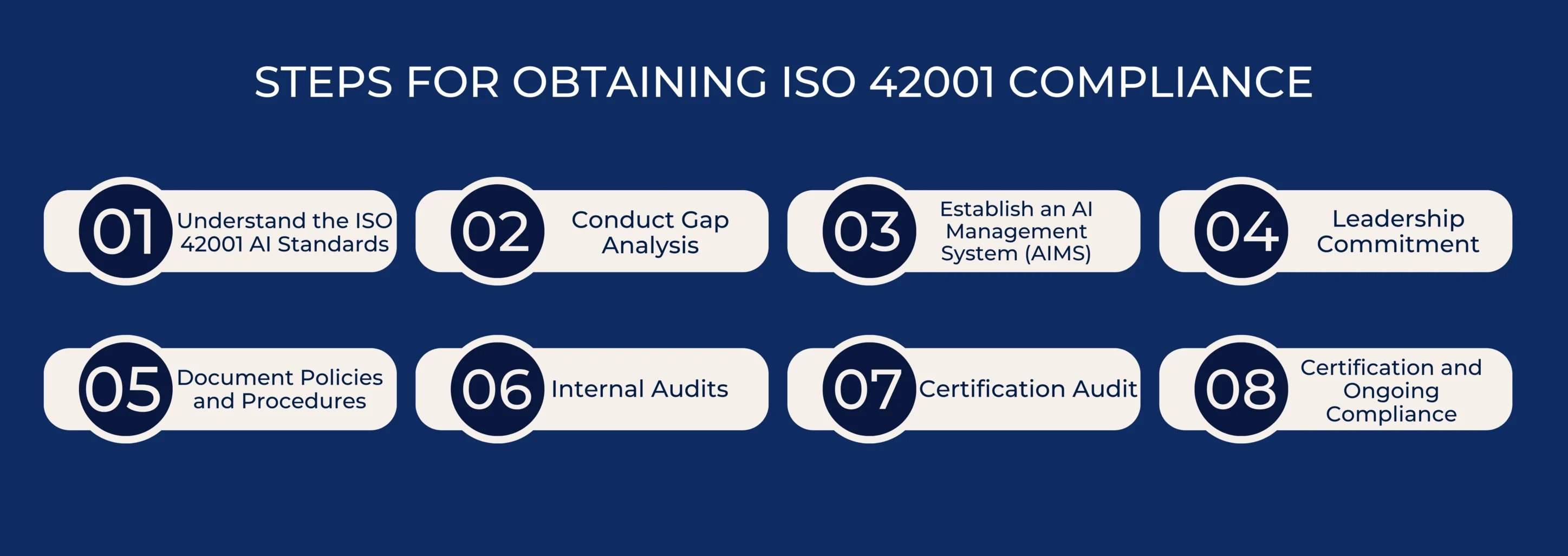
- ✓Stage 1 Audit: Documentation and AIMS Readiness Review
- ✓Stage 2 Audit: AIMS Operational Effectiveness Assessment
- ✓Certification Decision, Certificate Issuance, and Surveillance Cycle
Why Organizations in Atlanta Pursue ISO 42001 Certification
The drivers for ISO 42001 Certification in Atlanta are rooted in the specific characteristics of the city’s technology and financial services ecosystem. Atlanta’s status as a global center for payment technology—combined with its concentration of cybersecurity firms, healthcare IT organizations, logistics technology providers, and SaaS companies—creates a set of client, procurement, and regulatory pressures that make independent AI management system certification directly relevant to a wide range of organizations.
ISO 42001 certification for Atlanta companies addresses procurement requirements, enterprise vendor risk management expectations, and the increasing expectation from institutional clients that AI systems used in their supply chain or service ecosystem operate within a documented and audited governance framework.
Fintech, Payment Processing, and Financial Services Sector Demand
ISO 42001 certification that Atlanta fintech and financial services organizations pursue is driven by the procurement and vendor assurance requirements of the financial sector. Atlanta is home to a concentration of payment technology companies, card networks, merchant acquirers, and financial technology platforms that collectively process a significant volume of U.S. and international financial transactions. These organizations operate within a vendor ecosystem that includes banks, credit unions, institutional investors, and payment card brands—all of which apply rigorous third-party risk management and vendor due diligence frameworks.
As these frameworks increasingly incorporate AI governance assessments—reflecting the deployment of AI in fraud detection, credit decisioning, customer service automation, and transaction monitoring—ISO 42001 certification that Atlanta financial services organizations hold provides a recognized, independently verified credential that directly addresses these assessment requirements.
For Atlanta-based fintech organizations seeking to expand into international markets, ISO 42001 Certification carries additional weight as a globally recognized standard under ISO/IEC governance. Financial institutions and enterprise clients in the European Union, the United Kingdom, Asia-Pacific, and other regions with active AI governance regulatory frameworks increasingly request or require evidence of AI management system certification as part of vendor onboarding and ongoing assurance reviews.
An ISO 42001 certificate issued by CertPro—a Licensed CPA Firm operating as an independent certification body—provides Atlanta fintech and payment technology organizations with a credential that is structured for recognition across these international procurement contexts.
Cybersecurity, Healthcare IT, and Logistics Technology Demand
Atlanta’s cybersecurity sector encompasses a significant number of companies providing AI-assisted security operations, threat intelligence, endpoint detection, and managed detection and response services. These organizations deploy AI systems as core components of their service delivery and are subject to vendor assessments from clients in financial services, healthcare, government, and critical infrastructure sectors.
ISO 42001 compliance demonstrated through independent certification provides cybersecurity companies with evidence that their AI-driven tools and platforms operate within a governed, risk-assessed, and independently audited management system. This is a materially different level of assurance than vendor self-attestation or marketing claims about AI safety and accuracy.
Healthcare IT organizations in Atlanta face a distinct set of drivers for ISO 42001 assessment. The deployment of AI in clinical decision support, diagnostic imaging analysis, patient flow optimization, and revenue cycle management creates accountability and transparency obligations that extend beyond standard information security requirements. Institutional healthcare clients and health system partners applying vendor assurance frameworks increasingly evaluate whether AI system vendors have documented AI governance controls, impact assessments, and risk management processes—requirements that map directly to ISO/IEC 42001:2023.
Similarly, logistics and supply chain technology companies deploying AI in route optimization, demand forecasting, and warehouse automation serve enterprise clients whose procurement requirements increasingly include AI governance verification. ISO 42001 certification for these Atlanta-based organizations provides structured, independently verified evidence of AIMS conformance that meets these expectations.
SaaS Providers, Cloud Vendors, and Enterprise AI Deployments
Atlanta’s SaaS and cloud service provider community includes organizations serving regulated industries such as financial services, healthcare, government, and retail. For these providers, ISO 42001 Certification in Atlanta serves as a vendor assurance credential that addresses client due diligence requirements related to the AI components embedded in their platforms.
Enterprise procurement teams at large organizations increasingly require SaaS vendors to demonstrate AI governance maturity as a condition of contract renewal or expansion—particularly where the platform uses AI for data analysis, automated decision-making, or predictive modeling. ISO 42001 compliance demonstrated through certification provides these vendors with a structured response to due diligence questionnaires and security review requests, reducing friction in enterprise sales cycles and vendor qualification processes.
ISO 42001 Certification Requirements and Evaluation Criteria
The ISO 42001 assessment conducted by CertPro evaluates organizations against the normative requirements of ISO/IEC 42001:2023 using an evidence-based examination methodology. The evaluation framework encompasses both management system requirements (Clauses 4–10) and the AI-specific controls documented in Annex A.
The assessment is structured to evaluate not only the existence of documented controls but their design suitability and operational effectiveness within the organization’s defined AIMS scope. The following sections describe the principal evaluation criteria applied during the ISO 42001 AIMS audit.
The ISO 42001 audit evaluates the completeness and adequacy of the organization’s AIMS documentation as a foundational requirement. Core documented information required under ISO/IEC 42001:2023 includes the AI policy, AI risk assessment records, AI impact assessment records, Statement of Applicability, AIMS objectives and plans to achieve them, management review records, internal audit records, and records of nonconformities and corrective actions.
The audit team reviews each documented element for conformance with the specific requirements of the relevant standard clause and assesses whether the documented information is maintained, controlled, and accessible in accordance with Clause 7.5 requirements. For Atlanta-based organizations, the audit team also evaluates whether the documented AIMS scope accurately reflects the organization’s AI system activities and whether the AI policy addresses the organization’s context and stakeholder expectations as required under Clause 5.2.
The Statement of Applicability (SoA) is a particularly important document in the ISO 42001 assessment. The SoA documents which Annex A controls have been selected by the organization, the justification for each selection, whether each control has been implemented, and the justification for any controls excluded from the AIMS scope. The audit team examines the SoA for logical consistency with the organization’s AI risk assessment and risk treatment plan, and evaluates whether controls identified as implemented are in fact operating as described.
Discrepancies between the SoA and observed control operation are recorded as nonconformities. The SoA provides the audit team with a structured map of the organization’s intended control environment and serves as the primary reference document for planning Stage 2 control testing activities.
ISO/IEC 42001:2023 requires organizations to establish and maintain an AI risk assessment process that identifies risks associated with their AI systems, evaluates the likelihood and consequence of those risks, and determines appropriate risk treatment options. The ISO 42001 assessment reviews the organization’s AI risk assessment for methodological adequacy, completeness of risk identification, and the logical connection between identified risks and selected risk treatments.
The assessment also evaluates the organization’s AI impact assessment process, which addresses the potential societal, ethical, and operational impacts of the organization’s AI systems on affected individuals and communities. For Atlanta organizations deploying AI in healthcare, financial services, or public-facing applications, the scope and rigor of the AI impact assessment is a significant evaluation criterion during the ISO 42001 audit.
Control evaluation during the ISO 42001 AIMS audit addresses both design and operating effectiveness. Design effectiveness refers to whether a control is structured to achieve its stated objective if it operates as intended. Operating effectiveness refers to whether the control actually functions as designed over the assessment period, evidenced by records, observations, and interviews.
The audit team tests a representative selection of Annex A controls within the defined AIMS scope, with the selection informed by risk assessment results, areas of complexity identified during Stage 1, and any prior nonconformity findings. Controls commonly evaluated during ISO 42001 compliance audits for Atlanta-based technology organizations include AI system life cycle controls, data governance for AI, AI supplier assessment controls, AI system monitoring and logging controls, and controls related to AI transparency and human oversight mechanisms.
ISO 42001 certification issued by CertPro is subject to suspension or withdrawal under defined conditions. Suspension may be applied when the certified organization fails to resolve major nonconformities identified during a surveillance audit within the agreed corrective action timeframe, when the organization makes significant changes to its AI systems or AIMS scope without notifying CertPro, or when the organization fails to conduct or permit the annual surveillance audit within the required period.
Withdrawal of certification occurs when the grounds for suspension are not resolved within the suspension period or when the organization voluntarily surrenders the certificate. These conditions are communicated to the organization as part of the certification agreement and are consistent with international certification body practices. Maintaining ISO 42001 Certification in Atlanta requires ongoing AIMS operation, annual surveillance, and demonstrated continual improvement across the three-year certificate cycle.
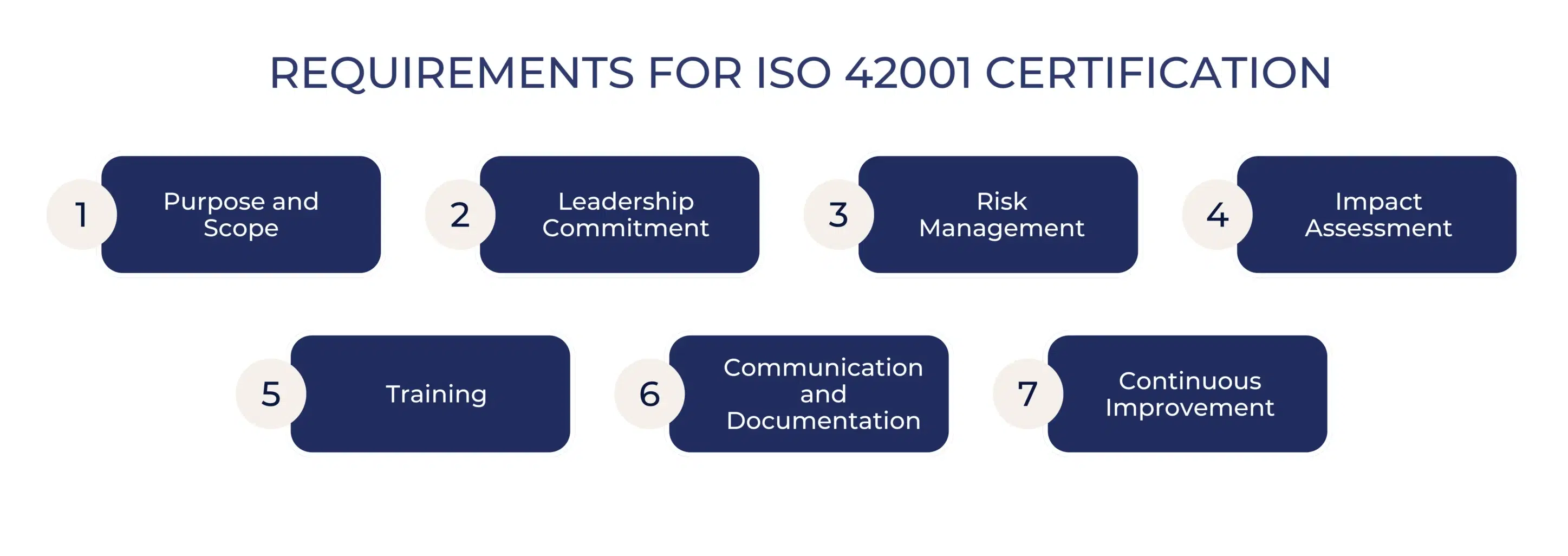
- ✓AIMS Documentation and Governance Structure
- ✓AI Risk Assessment, Impact Assessment, and Control Evaluation
- ✓Conditions for Certification Suspension or Withdrawal
Benefits of ISO 42001 Certification for Atlanta-Based Organizations
ISO 42001 Certification in Atlanta provides organizations with independently verified evidence of AIMS conformance that addresses a range of procurement, regulatory, and operational objectives. The benefits described below reflect outcomes of the certification process itself—not advisory or consulting outcomes. They are grounded in the structure of the ISO/IEC 42001:2023 standard and the nature of independent third-party certification as conducted by a Licensed CPA Firm.
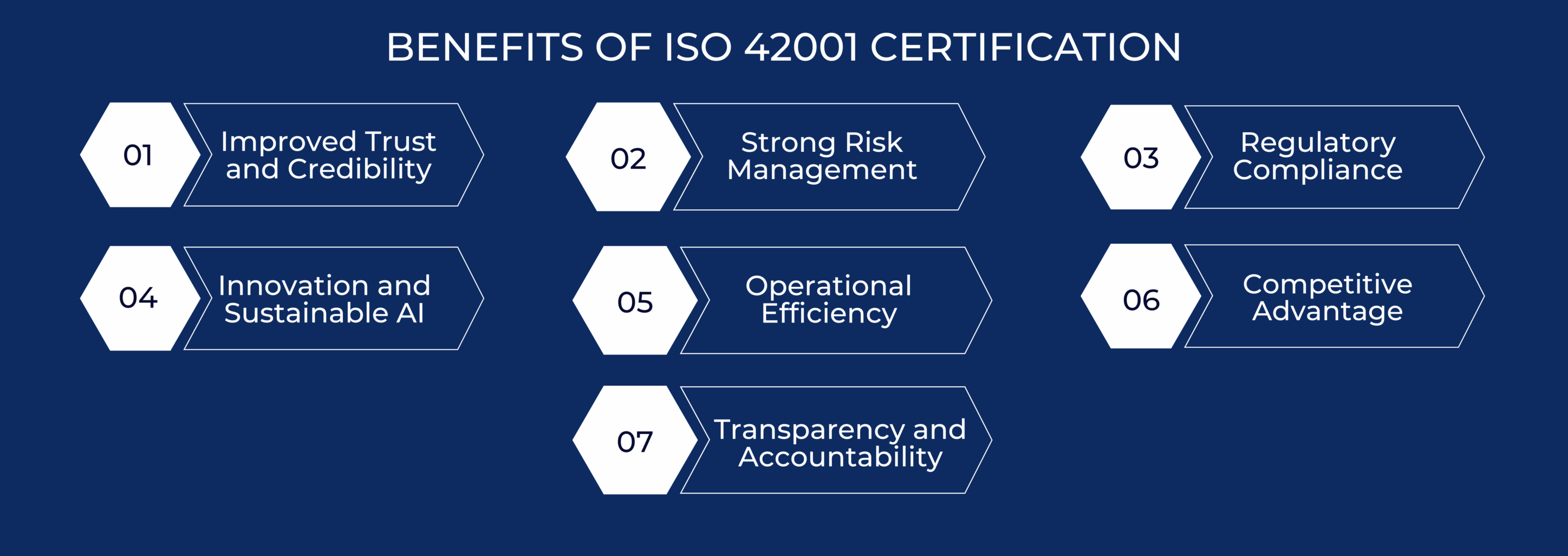
- ✓Independent verification of AI governance controls against an internationally recognized standard, addressing enterprise vendor due diligence requirements in Atlanta’s financial technology, healthcare IT, and SaaS sectors
- ✓Structured documentation of AI risk assessments, AI impact assessments, and control selections that can be referenced in response to client due diligence questionnaires and regulatory inquiries
- ✓Recognition in procurement processes for enterprise clients, financial institutions, and regulated industry operators that require evidence of AI management system certification
- ✓Annual surveillance oversight that provides ongoing assurance of AIMS conformance rather than a point-in-time attestation—relevant for organizations with continuous AI system development and deployment
- ✓Alignment with international AI governance regulatory frameworks, supporting Atlanta-based fintech and technology organizations expanding into markets with active AI regulation
- ✓Differentiation from competitors through independent third-party ISO 42001 certification, as distinct from self-assessment or vendor attestation in competitive enterprise sales and RFP processes
- ✓Demonstrated organizational commitment to AI accountability, transparency, and risk management through an audited and certified management system structure
A primary operational benefit of ISO 42001 Certification for Atlanta organizations is its recognition within vendor assurance and third-party risk management frameworks applied by enterprise clients and financial institutions. Large organizations in Atlanta’s financial services, healthcare, and retail sectors maintain third-party risk management programs that assess vendors on information security, data privacy, operational resilience, and—increasingly—AI governance.
ISO 42001 certification provides a standardized, independently audited credential that can be submitted in response to vendor security questionnaires, security review requests, and ongoing vendor monitoring requirements. For Atlanta-based SaaS providers and technology vendors serving multiple enterprise clients across regulated industries, the ability to reference a current ISO 42001 certificate reduces the burden of responding to duplicative client-specific AI governance inquiries.
In the context of Atlanta’s payment technology ecosystem—where vendor assessments by card networks and financial institution partners are structured and recurring—ISO 42001 Certification provides a documented basis for addressing AI governance components of these assessments. The certificate demonstrates that an independent audit body has examined the organization’s AIMS against international requirements, providing a level of assurance that internal policies or self-attestations cannot replicate.
For organizations subject to periodic vendor reassessment, the three-year certification cycle with annual surveillance provides clients with current, audited evidence of AIMS conformance without requiring the vendor to complete a new full-scope assessment each year—reducing operational overhead for both vendor and client.
- ✓Vendor Assurance and Third-Party Risk Management Recognition
ISO 42001 Compliance Monitoring and Certificate Maintenance
ISO 42001 compliance is not a static state achieved at the point of initial certification. The standard requires certified organizations to operate their AIMS on an ongoing basis, conduct periodic management reviews and internal audits, address identified nonconformities, and demonstrate continual improvement of the AIMS. CertPro’s surveillance audit program provides external verification that these ongoing requirements are being met, ensuring that the ISO 42001 certificate continues to reflect the organization’s current AIMS posture rather than a historical assessment.
For Atlanta-based organizations operating in dynamic technology environments—where AI systems are regularly updated, retrained, or deployed in new contexts—the ongoing ISO 42001 compliance requirements of ISO/IEC 42001:2023 and the associated surveillance audit cycle are particularly relevant to maintaining credible AI governance.
Internal Audit and Management Review Requirements
ISO/IEC 42001:2023 Clause 9 requires certified organizations to conduct internal audits of the AIMS at planned intervals to determine whether the AIMS conforms to the organization’s own requirements and to the standard’s requirements, and whether it is effectively implemented and maintained. Internal audit results must be reported to relevant management, and nonconformities identified during internal audits must be addressed through the organization’s corrective action process.
The CertPro surveillance audit reviews internal audit records, audit plans, and corrective action records as evidence that the organization is maintaining AIMS conformance between external audit cycles. Management review requirements under Clause 9.3 similarly require that senior leadership periodically reviews AIMS performance—including internal and external audit results, AI risk status, AI incident records, and the status of AIMS objectives—to confirm the system’s continuing suitability and effectiveness.
For Atlanta-based technology organizations, the internal audit and management review requirements of ISO/IEC 42001:2023 provide a governance cadence that aligns AI management system oversight with broader corporate governance and risk management activities. Organizations in Atlanta’s fintech and payment processing sector that already conduct periodic information security management reviews under ISO 27001 or SOC 2 frameworks can integrate ISO 42001 management review activities into existing governance structures, leveraging established meeting cadences and reporting mechanisms.
The evidence of these integrated reviews—meeting minutes, action logs, AI risk register updates—is examined during the ISO 42001 compliance surveillance audit as part of the ongoing conformance assessment, reinforcing the value of an integrated management system approach.
Changes to AI Systems and AIMS Scope Notifications
Organizations holding ISO 42001 Certification in Atlanta are required to notify CertPro of significant changes to their AI systems, AIMS scope, or organizational structure that may affect the certified scope. This notification requirement ensures that the certificate continues to accurately represent the organization’s AIMS and that any material changes are assessed for conformance implications before the next scheduled surveillance audit.
Significant changes may include the deployment of new AI systems within the certified scope, material changes to existing AI system design or training data, acquisition or divestiture of business units with AI system responsibilities, or changes to the governance structure responsible for AI risk management. CertPro evaluates notified changes to determine whether an unscheduled audit activity is required to maintain the integrity of the certification or whether the change can be addressed as part of the next scheduled surveillance audit.
Atlanta Business Sectors Seeking ISO 42001 Certification
ISO 42001 Certification in Atlanta is relevant across a broad range of industry sectors, reflecting the diversity of the city’s technology economy. The table below identifies the principal Atlanta industry sectors seeking ISO 42001 Certification, the AI applications most commonly associated with each sector, and the primary demand driver for certification in each context.
| Atlanta Industry Sector | Common AI Applications | Primary ISO 42001 Demand Driver |
|---|---|---|
| Fintech and Payment Processing | Fraud detection, transaction monitoring, credit decisioning, customer authentication | Financial institution vendor assurance and card network procurement requirements |
| Cybersecurity | Threat detection, anomaly detection, automated response, behavioral analytics | Client security assessments in financial services, healthcare, and government sectors |
| Healthcare IT | Clinical decision support, diagnostic AI, patient flow optimization, revenue cycle AI | Health system vendor qualification and HIPAA-adjacent AI accountability requirements |
| Logistics and Supply Chain Technology | Route optimization, demand forecasting, warehouse automation, predictive maintenance | Enterprise client procurement requirements and supply chain resilience assessments |
| SaaS Providers | Embedded AI features, automated analytics, recommendation engines, NLP tools | Enterprise vendor due diligence and international market expansion requirements |
| Media and Entertainment Technology | Content recommendation, automated moderation, audience analytics, personalization AI | Platform operator requirements and advertiser brand safety assessments |
Atlanta as a Technology and AI Governance Hub
Atlanta’s development as a major U.S. technology hub is supported by a combination of institutional infrastructure, talent supply, and industry concentration. The presence of Georgia Tech and other research universities in the Atlanta metropolitan area contributes to a pipeline of AI and machine learning talent that supports both technology startups and established enterprises developing AI systems. Atlanta’s technology corridor extends from Midtown through Buckhead and into surrounding metropolitan areas, hosting technology campuses, innovation centers, and co-working environments that house organizations across the AI development and deployment lifecycle.
This ecosystem creates a concentration of organizations for which ISO 42001 assessment is directly applicable—ranging from early-stage AI startups seeking certification for market access to large enterprises deploying AI at scale across regulated business functions.
The City of Atlanta and the State of Georgia have both signaled interest in responsible AI deployment through policy statements and technology investment programs. As federal AI governance frameworks continue to develop following the AI Executive Orders and NIST AI Risk Management Framework guidance, Atlanta-based organizations operating in regulated industries are positioning ISO 42001 Certification as part of their response to anticipated regulatory requirements.
ISO 42001 compliance that Atlanta organizations achieve through certification provides a documented, audited governance baseline that positions them to address emerging U.S. federal and state AI governance requirements as these frameworks mature. The structured nature of the ISO/IEC 42001:2023 standard—with its defined clauses, Annex A controls, and audit trail requirements—makes it well-suited to serve as a pre-positioning governance credential for Atlanta’s technology sector.
FAQ
▶
What is ISO 42001 Certification and why is it relevant for Atlanta organizations?
▶
Who provides ISO 42001 Certification in Atlanta?
▶
What does the ISO 42001 audit process involve for Atlanta-based organizations?
▶
What documentation is required for an ISO 42001 assessment?
▶
How long does ISO 42001 Certification remain valid?
▶
Which Atlanta industries most commonly pursue ISO 42001 Certification?
▶
How does ISO 42001 Certification differ from ISO 27001 Certification?
▶
What are the ISO 42001 audit surveillance requirements in Atlanta?
ISO 42001 CERTIFIED: WHY AI GOVERNANCE CERTIFICATION IS BECOMING A BOARD-LEVEL REQUIREMENT
ISO 42001 Certified: Board-Level AI Governance Guide | CertPro CPA LLC HERO ══════════════════════════════ –> src=”https://certpro.com/wp-content/uplo…
Get In Touch
have a question? let us get back to you.