
ISO 42001 Certification in San Diego
ISO 42001 Certification in San Diego is conducted by CertPro, a Licensed CPA Firm operating exclusively as an independent third-party certification body. CertPro evaluates organizational conformity with ISO/IEC 42001:2023 — the international standard for Artificial Intelligence Management Systems (AIMS) — through structured, evidence-based ISO 42001 certification audits. Certification decisions are made independently, based solely on audit findings, without advisory or implementation involvement.
OUR CLIENTS










ISO 42001 Certification for San Diego’s AI, Defense, Biotech, and Technology Organizations
ISO 42001 Certification in San Diego is conducted by CertPro, a Licensed CPA Firm operating exclusively as an independent third-party certification body. CertPro evaluates organizational conformity with ISO/IEC 42001:2023 — the international standard for Artificial Intelligence Management Systems (AIMS) — through structured, evidence-based ISO 42001 certification audits. Certification decisions are made independently, based solely on audit findings, without advisory or implementation involvement.
San Diego’s technology and innovation ecosystem generates specific, measurable demand for independent ISO 42001 Certification. The region encompasses one of the largest biotechnology and life sciences concentrations in the United States, a defense and aerospace sector anchored by major federal contractors and military installations, a nationally recognized cybersecurity industry, and a rapidly expanding base of AI companies, SaaS providers, and cloud service providers.
Healthcare organizations, research institutions, telecommunications companies, and advanced manufacturers across San Diego County are actively developing and deploying AI systems that require structured governance, independent evaluation, and demonstrated conformity with internationally recognized standards — making ISO 42001 Certification in San Diego a critical business priority across sectors.
ISO/IEC 42001:2023 establishes requirements for organizations to establish, implement, maintain, and continually improve an Artificial Intelligence Management System. The ISO 42001 standard addresses AI-specific risks including bias, lack of transparency, privacy risks, security vulnerabilities, and accountability gaps. It applies to any organization — regardless of size, sector, or AI maturity level — that develops, provides, or uses AI-based products or services.
For San Diego organizations operating within regulated industries or supplying to enterprise and federal customers, independent ISO 42001 Certification provides verifiable, third-party evidence of structured AI governance that procurement teams and regulators increasingly require.
The Southern California enterprise and federal procurement environment increasingly incorporates AI governance verification into vendor qualification, third-party risk management programs, and supply chain due diligence. San Diego biotechnology and life sciences companies utilizing AI for drug discovery, clinical data analysis, or regulatory submissions face scrutiny from partners, regulators, and enterprise customers regarding the integrity and accountability of their AI systems.
Defense contractors operating within the region’s substantial aerospace and defense ecosystem encounter procurement requirements reflecting U.S. government AI governance expectations. SaaS providers and AI companies serving regulated industries — including financial services, healthcare, and telecommunications — are evaluated against third-party risk criteria that ISO 42001 compliance directly addresses.
CertPro’s ISO 42001 certification audit evaluates an organization’s AIMS against the full requirements of ISO/IEC 42001:2023, including documented information, risk management processes, AI impact assessments, operational controls, Annex A controls addressing transparency, accountability, and bias management, internal audit performance, and management review activities.
The ISO 42001 certification process involves a Stage 1 documentary review and a Stage 2 on-site or remote evidence evaluation. Audit findings are reviewed by an independent certification committee, and certification decisions reflect solely the evidence collected during the audit. CertPro does not provide implementation guidance, control design support, or AIMS development services — the organization seeking certification bears full responsibility for establishing and operating its AI management system prior to audit.

What Is ISO 42001 Certification?
ISO/IEC 42001:2023 — The AI Management System Standard
ISO/IEC 42001:2023 is the first international standard establishing requirements for an Artificial Intelligence Management System. Published by the International Organization for Standardization (ISO) and the International Electrotechnical Commission (IEC), the ISO 42001 standard provides a certifiable framework for responsible AI governance. It covers organizational leadership and accountability, AI policy development, risk-based planning, operational controls, performance evaluation, and continual improvement.
Unlike AI ethics guidelines or voluntary frameworks, ISO 42001 is a structured management system standard against which organizations can be independently audited and formally certified. The standard applies to organizations of any size and sector that develop, deploy, or use AI-based products and services, making ISO 42001 Certification in San Diego relevant across the region’s diverse technology and innovation landscape.
ISO/IEC 42001:2023 follows the High Level Structure (HLS) common to ISO management system standards, covering Clauses 4 through 10: organizational context, leadership, planning, support, operation, performance evaluation, and improvement. This structure allows organizations to integrate AIMS requirements with existing management systems, including ISO 27001 for information security or ISO 9001 for quality management.
Annex A of the ISO 42001 standard specifies AI-specific controls addressing transparency, human oversight, accountability, AI system impact assessment, data governance, and bias mitigation. Annex B provides implementation guidance for these controls. Together, the clauses and annexes form a comprehensive framework for managing AI systems responsibly throughout their lifecycle.
ISO 42001 Certification vs. Other AI Governance Frameworks
ISO 42001 Certification differs from other AI governance frameworks in one critical respect: it is independently verifiable through a formal third-party audit process. Voluntary frameworks such as the NIST AI Risk Management Framework (AI RMF) or EU AI Act compliance guidelines provide structure and guidance, but they do not produce a formal, independently issued certificate of conformity.
ISO 42001 Certification, issued following a structured ISO 42001 certification audit by a qualified third-party body such as CertPro, provides documentary evidence that an organization’s AIMS has been evaluated against the full requirements of ISO/IEC 42001:2023 and found to conform. This distinction is material for enterprise procurement, federal vendor qualification, and third-party risk management programs that require independently verified AI governance evidence rather than self-reported compliance statements.
ISO 42001 compliance also integrates with existing regulatory obligations relevant to San Diego organizations. Biotechnology companies operating under FDA oversight, defense contractors subject to CMMC requirements, healthcare organizations governed by HIPAA, and financial services firms managing AI decision-making under consumer protection regulations can align their AIMS with these frameworks.
The ISO 42001 standard does not replace regulatory compliance obligations, but it provides a structured management system that addresses AI-specific risks in a manner that supports broader regulatory alignment. Independent ISO 42001 Certification documents this alignment through objective evidence evaluation rather than self-assessment.
Who Needs ISO 42001 Certification?
Any organization that develops, provides, or uses AI-based products or services may pursue ISO 42001 Certification. The standard explicitly addresses both AI providers — organizations that build or supply AI systems — and AI users — organizations that deploy AI within their operations.
In San Diego’s context, this encompasses AI software developers, machine learning platform providers, SaaS companies embedding AI capabilities, healthcare organizations deploying AI diagnostics, defense contractors using AI-enabled systems, biotech companies applying AI to research workflows, and financial services firms using AI for risk modeling or customer interaction. Research institutions and universities engaged in applied AI research also fall within the scope of ISO 42001 Certification in San Diego when their activities involve AI system development or operational deployment.
ISO 42001 Certification Audit Process in San Diego
The ISO 42001 certification audit process conducted by CertPro follows a defined two-stage structure consistent with internationally recognized conformity assessment practice. The Stage 1 audit involves a documentary review of the organization’s AIMS documentation — including the AI policy, risk assessment records, AI impact assessment documentation, Annex A control implementation evidence, internal audit reports, and management review records.
The Stage 1 ISO 42001 audit determines whether the organization’s documented AIMS is sufficiently developed and implemented to proceed to Stage 2 evaluation. Findings are communicated to the organization, and any areas requiring clarification or additional documentation are identified before Stage 2 commences. The Stage 1 audit does not constitute a conformity determination — it is a readiness review for the evidence-evaluation phase.
The Stage 2 ISO 42001 certification audit involves an in-depth, evidence-based evaluation of the organization’s AIMS against the full requirements of ISO/IEC 42001:2023. CertPro auditors examine objective evidence that controls are not only documented but operationally effective — including records of AI risk assessments, impact assessments, training records for personnel with AI governance responsibilities, incident records, monitoring outputs, and evidence of management review activities.
Personnel interviews, review of system configurations, and assessment of operational procedures are all conducted during Stage 2. The ISO 42001 audit at this stage produces documented findings, including identification of any nonconformities requiring resolution prior to the certification decision.
| Audit Stage | Key Activities | Output |
|---|---|---|
| Application Review | Scope definition, audit program determination, auditor assignment | Audit program confirmed |
| Stage 1 Audit | AIMS documentation review, AI policy and planning records evaluation | Stage 1 findings report |
| Stage 2 Audit | Evidence-based evaluation of operational controls, Annex A controls, AI impact assessments, and management review | Stage 2 audit report with findings |
| Nonconformity Review | Organization submits evidence of corrective action; auditor confirms resolution | Nonconformity closure confirmation |
| Certification Decision | Independent certification committee reviews audit report and issues certification decision | ISO 42001 certificate issued |
Following the Stage 2 ISO 42001 audit, all findings — including any identified nonconformities — are documented in the audit report. Nonconformities represent instances where the organization’s AIMS does not conform to a specific requirement of ISO/IEC 42001:2023. The organization must address identified nonconformities by providing objective evidence of corrective action.
CertPro auditors review this evidence to confirm that nonconformities have been adequately resolved before the audit report is submitted to the independent certification committee. The committee reviews the complete audit record and makes a certification decision based solely on audit findings. CertPro’s certification committee operates independently from the audit team, maintaining the objectivity required for accredited conformity assessment practice.
Upon a positive certification decision, CertPro issues an ISO 42001 certificate documenting the organization’s confirmed conformity with ISO/IEC 42001:2023. The certificate specifies the certification scope — defining the AI systems, organizational units, and activities covered — along with the certification period.
ISO 42001 Certification is valid for three years, subject to annual surveillance audits that evaluate the ongoing effectiveness and maintenance of the organization’s AIMS. At the conclusion of the three-year cycle, a recertification audit evaluates continued conformity and renews the certificate. Certification may be suspended or withdrawn if surveillance audits identify significant nonconformities or if the organization fails to maintain the conditions of certification.
Annual surveillance audits are a mandatory component of ISO 42001 Certification maintenance. These audits evaluate whether the certified organization continues to conform with ISO/IEC 42001:2023 requirements, whether the AIMS remains effectively implemented, and whether significant changes to AI systems, organizational structure, or operational context have been addressed within the management system.
Surveillance audits conducted by CertPro are evidence-based and focus on areas identified during initial certification, significant AI system changes, and the continued effectiveness of key Annex A controls. Organizations in San Diego’s dynamic technology sector — where AI systems and deployment contexts evolve rapidly — should expect surveillance audits to examine changes to AI system risk profiles and the adequacy of updated impact assessments.
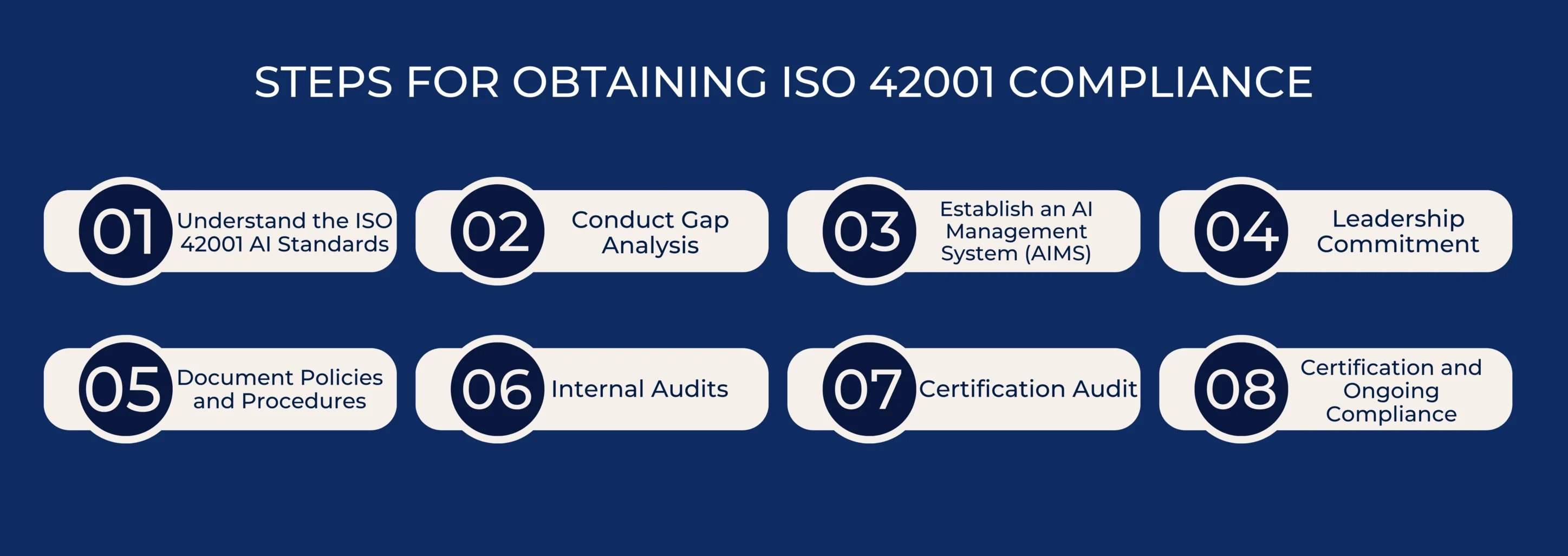
- ✓Stage 1 and Stage 2 Certification Audit Structure
- ✓Nonconformity Review and Certification Decision
- ✓Surveillance Audits and Recertification
ISO 42001 Requirements — What the Standard Evaluates
ISO/IEC 42001:2023 requires organizations to establish documented information that defines the scope of their AIMS, articulates the organizational context within which AI systems are developed or deployed, and identifies interested parties and their requirements. Clause 4 requires organizations to determine internal and external issues relevant to AI governance — including regulatory environment, stakeholder expectations, and the organization’s AI system portfolio.
For San Diego organizations pursuing ISO 42001 Certification, this may include documentation reflecting sector-specific considerations such as FDA AI regulatory guidance for life sciences companies, Department of Defense AI ethics principles for defense contractors, or HIPAA-relevant AI use cases for healthcare organizations. Clause 4 documentation forms the foundational evidence reviewed during a Stage 1 ISO 42001 audit.
Documented information requirements under ISO/IEC 42001:2023 extend well beyond policy documents to include operational records demonstrating that the AIMS is functioning as designed. Required documentation includes the AI policy, AIMS scope statement, AI risk assessment records, AI impact assessment records, Annex A control implementation evidence, internal audit program and reports, management review records, and nonconformity and corrective action records.
During the ISO 42001 certification audit, CertPro auditors evaluate the completeness, accuracy, and currency of this documented information as objective evidence of AIMS conformity. Absence of required documented information constitutes a nonconformity against specific clauses of the ISO 42001 standard.
ISO/IEC 42001:2023 requires organizations to conduct and document AI risk assessments identifying risks associated with their AI systems — including risks to individuals, groups, society, and the organization itself. Risk assessment must address both the likelihood and potential impact of AI-related harms, including bias, discrimination, privacy violations, security vulnerabilities, and loss of human control. The process must be systematic, repeatable, and documented in a manner that supports audit verification.
For San Diego biotech companies applying AI to clinical data, risk assessments must address patient safety, data integrity, and regulatory compliance. For defense contractors, risk assessments must address AI system reliability, security, and alignment with applicable government AI governance requirements — all of which are evaluated during the ISO 42001 certification audit.
AI impact assessments, addressed in Annex A of ISO/IEC 42001:2023, evaluate the potential effects of AI systems on individuals, communities, and the operating environment — both prior to deployment and at defined intervals throughout the system lifecycle. Impact assessments differ from risk assessments in that they focus specifically on the effects of AI system outputs and decisions on affected parties.
CertPro’s ISO 42001 audit evaluates whether impact assessments have been conducted in accordance with organizational procedures, whether findings have been documented, and whether identified impacts have been addressed through operational controls or system design decisions. Evidence of completed impact assessments is a key item reviewed during Stage 2 ISO 42001 certification audit activities.
Annex A of ISO/IEC 42001:2023 specifies controls specific to AI management that organizations must evaluate for applicability and implement where relevant. Key control areas include: AI policy and objectives, human oversight mechanisms, transparency and explainability of AI systems, accountability assignment for AI governance, data governance for AI training and operational data, AI system lifecycle management, third-party AI system management, and bias testing and mitigation processes.
Organizations must document a Statement of Applicability — similar to that required under ISO 27001 — identifying which Annex A controls apply to their context, which are implemented, and the justification for any exclusions. The Statement of Applicability is a primary document reviewed during the Stage 1 ISO 42001 certification audit, and its completeness directly influences audit readiness.
- ✓AI governance policy and organizational objectives for responsible AI
- ✓Human oversight mechanisms and intervention capabilities for AI system operations
- ✓Transparency and explainability controls for AI-generated outputs and decisions
- ✓Accountability structures and role assignments for AI governance responsibilities
- ✓Data governance controls for AI training datasets, validation data, and operational data
- ✓AI system lifecycle controls covering design, development, testing, deployment, and decommissioning
- ✓Third-party AI supplier and partner management controls
- ✓Bias evaluation and mitigation processes applied across AI system development and operation
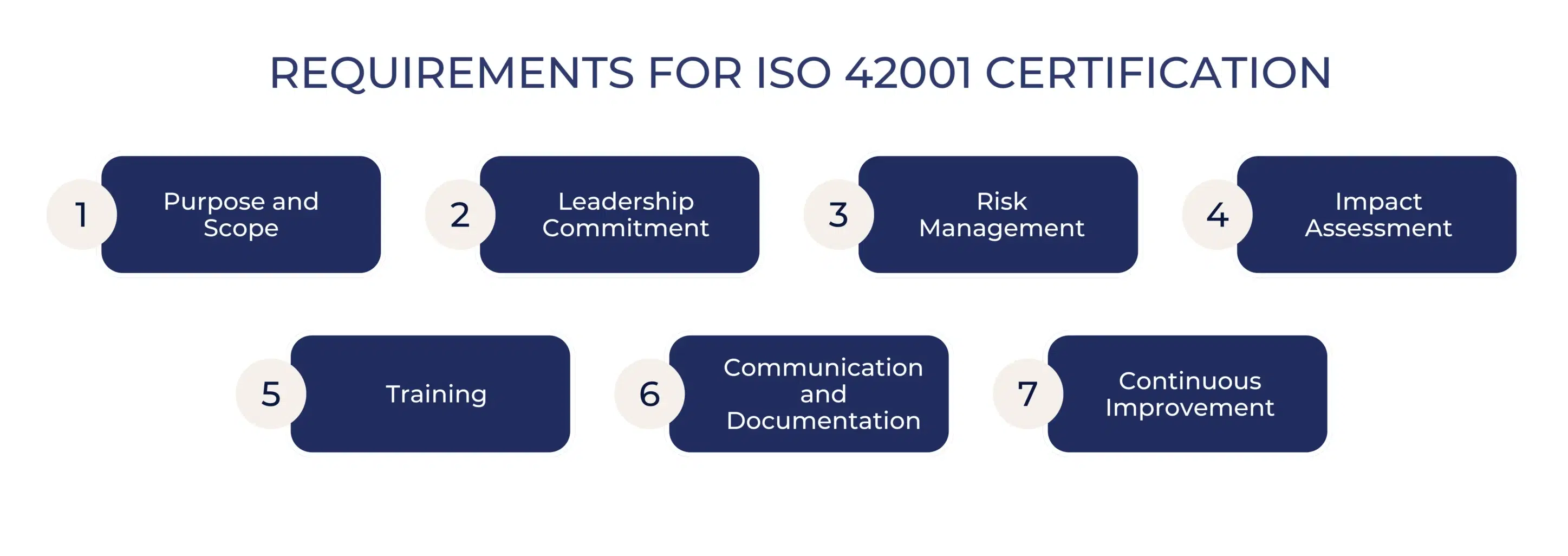
- ✓AIMS Documentation and Organizational Context
- ✓AI Risk Assessment and AI Impact Assessment
- ✓Annex A Controls — AI-Specific Requirements
Benefits of ISO 42001 Certification for San Diego-Based Organizations
ISO 42001 Certification for San Diego companies provides independently verified evidence that an organization’s AI management system has been evaluated against the internationally recognized requirements of ISO/IEC 42001:2023. This third-party validation is material in enterprise and government procurement contexts, where self-reported AI governance statements are insufficient.
San Diego defense contractors supplying AI-enabled systems to federal agencies, SaaS providers serving regulated industries, and AI companies seeking enterprise adoption in financial services or healthcare markets all benefit from the objective credibility that ISO 42001 Certification delivers. The certificate documents that an independent, qualified certification body has reviewed evidence of AI governance controls and found the organization’s AIMS to conform — a distinction that self-assessments and voluntary framework attestations cannot provide.
The ISO 42001 standard’s structured audit methodology — requiring evidence of AI risk assessments, impact assessments, Annex A control implementation, internal audits, and management review — means that organizations completing ISO 42001 Certification have demonstrated not only that governance policies exist, but that they are operationally effective.
This operational effectiveness verification is the substantive difference between ISO 42001 Certification and policy-level AI governance statements. For San Diego healthcare AI companies, biotech organizations, and cybersecurity firms operating in markets where enterprise and institutional customers conduct structured vendor AI risk reviews, the operational evidence requirement embedded in the ISO 42001 compliance evaluation is directly aligned with customer due diligence expectations.
ISO 42001 Certification that San Diego tech companies obtain through independent audit creates a verifiable competitive differentiator in markets where AI governance credibility is increasingly evaluated during vendor selection. San Diego’s SaaS ecosystem includes hundreds of companies competing for enterprise contracts with large corporations, government agencies, and regulated institutions across Southern California and nationally.
ISO 42001 Certification provides these organizations with documentary evidence of structured AI governance that can be presented in RFP responses, vendor qualification questionnaires, and enterprise security review processes. As procurement organizations institutionalize AI governance requirements in their third-party risk management programs, certification against the ISO 42001 standard positions organizations ahead of this emerging procurement threshold.
ISO 42001 Certification that San Diego biotech and life sciences organizations pursue also addresses specific commercial considerations within that sector. Biotechnology companies deploying AI in clinical trial design, genomic analysis, drug discovery, or regulatory data management face increasing scrutiny from pharmaceutical partners, contract research organizations, and institutional investors regarding AI system governance.
Independent ISO 42001 Certification documents that the organization’s AIMS meets the requirements of the international standard, supporting due diligence processes and providing a recognized governance benchmark across international partnerships where multiple regulatory frameworks intersect. San Diego’s position as a global biotechnology hub amplifies the cross-jurisdictional relevance of ISO 42001 Certification for organizations in this sector.
U.S. federal AI governance expectations — reflected in Executive Order 14110 on Safe, Secure, and Trustworthy AI, NIST AI RMF guidance, and sector-specific regulatory direction from FDA, DoD, and financial regulators — align substantively with the requirements of ISO/IEC 42001:2023. ISO 42001 Certification that San Diego defense contractors pursue demonstrates structured AI risk management, documented governance processes, and independently verified control effectiveness that reflect the accountability and transparency expectations embedded in federal AI policy.
While ISO 42001 Certification does not constitute regulatory approval under specific federal programs, the documented AIMS evidence generated through the ISO 42001 certification audit process contributes meaningfully to regulatory engagement and procurement qualification activities.
- ✓Independently verified conformity with ISO/IEC 42001:2023 requirements for AI management systems
- ✓Documentary evidence of operational AI governance controls for enterprise and government procurement processes
- ✓Structured AI risk assessment and impact assessment records supporting regulatory engagement
- ✓Annex A control implementation evidence addressing transparency, bias, and human oversight requirements
- ✓Annual surveillance audit oversight maintaining ongoing AIMS effectiveness and ISO 42001 Certification validity
- ✓Recognized international certification applicable to cross-border commercial relationships
- ✓Differentiation in enterprise vendor qualification and third-party risk management evaluations
- ✓Alignment with U.S. federal AI governance expectations and sector-specific regulatory frameworks
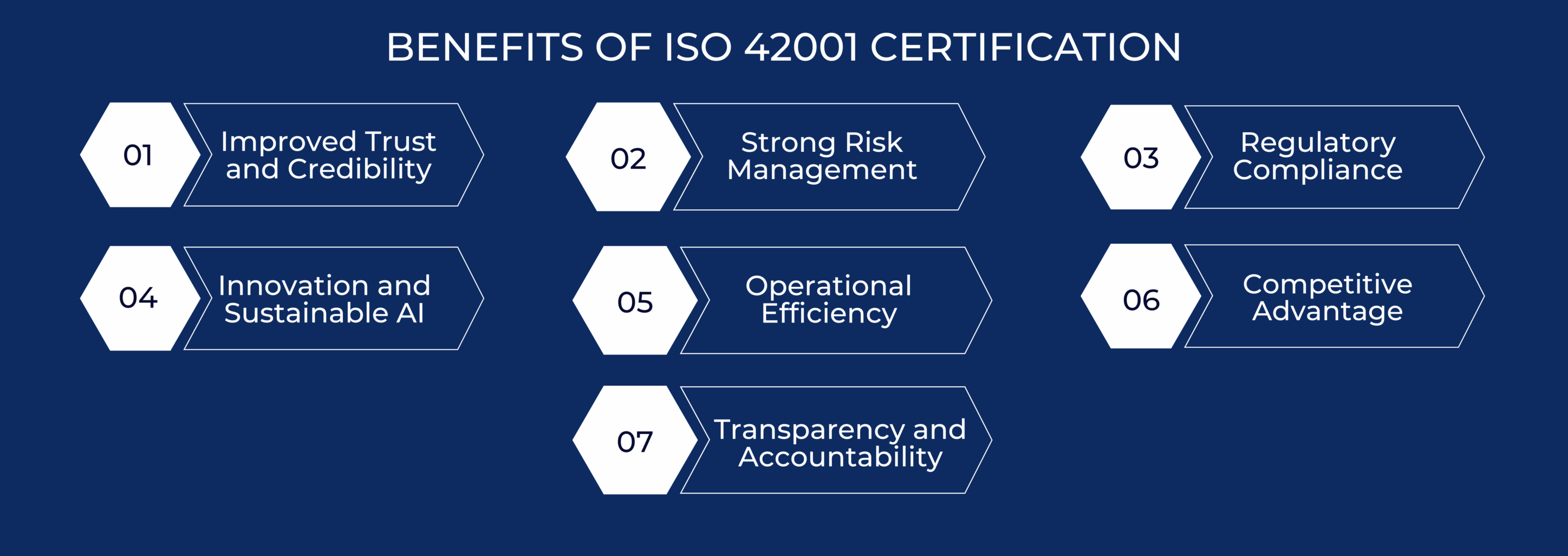
- ✓Third-Party Validation of AI Governance Controls
- ✓Competitive Positioning in San Diego’s AI and Technology Markets
- ✓Alignment with U.S. AI Governance and Regulatory Expectations
ISO 42001 Certification for San Diego’s Key Industry Sectors
Biotechnology, Life Sciences, and Healthcare AI
ISO 42001 Certification that San Diego healthcare AI and life sciences organizations pursue reflects the sector’s specific AI governance requirements. San Diego is home to more than 1,000 life sciences and biotechnology companies, many of which are integrating AI into research, development, clinical operations, and commercial activities. AI applications in this sector include genomic data analysis, drug candidate screening, clinical trial optimization, medical imaging interpretation, and regulatory submission automation.
The ISO 42001 standard requires organizations to assess the risks associated with these AI applications — including risks to patient safety, data integrity, and regulatory compliance — and to implement documented controls addressing identified risks. An independent ISO 42001 certification audit evaluates whether these risk-based controls are both designed and operationally effective.
Healthcare organizations in San Diego — including health systems, digital health companies, and medical device manufacturers incorporating AI capabilities — face converging governance requirements from HIPAA, FDA Software as a Medical Device (SaMD) guidance, and AI-specific regulatory direction. ISO 42001 compliance provides a structured management system framework that addresses the accountability, transparency, and human oversight requirements common across these regulatory expectations.
During an ISO 42001 certification audit, CertPro auditors evaluate evidence that healthcare AI governance controls — including data governance for protected health information used in AI training, human oversight mechanisms for clinical AI outputs, and incident management processes for AI system failures — are implemented and maintained in accordance with the ISO 42001 standard.
Defense, Aerospace, and Cybersecurity Organizations
ISO 42001 Certification that San Diego defense contractors pursue addresses the AI governance requirements embedded in U.S. Department of Defense AI ethics principles and increasingly reflected in federal acquisition requirements. San Diego’s defense and aerospace sector — anchored by organizations supporting Naval Air Systems Command, Space and Naval Warfare Systems Command, and multiple major defense primes — involves significant AI system development and deployment across autonomous systems, intelligence analysis, logistics optimization, and cybersecurity applications.
The ISO 42001 standard’s requirements for AI risk assessment, human oversight controls, and documented accountability structures align directly with DoD responsible AI expectations. Independent ISO 42001 Certification provides defense contractors with structured, verifiable evidence of AI governance maturity for use in federal acquisition processes and program office reviews.
San Diego’s cybersecurity sector — recognized nationally for its concentration of cybersecurity companies, threat intelligence providers, and security technology developers — increasingly incorporates AI into threat detection, vulnerability assessment, and automated response capabilities. ISO 42001 Certification for cybersecurity AI systems documents that the AI governance controls surrounding these sensitive applications — including controls addressing AI system reliability, bias in threat classification, and human oversight of automated security actions — have been independently evaluated.
For cybersecurity companies seeking enterprise and government contracts, ISO 42001 certification audit evidence complements existing security certifications such as ISO 27001 or SOC 2, demonstrating that AI-specific governance requirements have been addressed through a structured management system approach consistent with the ISO 42001 standard.
SaaS Providers, AI Companies, and Technology Enterprises
The San Diego technology ecosystem includes a substantial and growing population of SaaS providers, AI-native companies, cloud service providers, and technology enterprises developing AI-powered products and services. For these organizations, ISO 42001 Certification in San Diego provides a structured certification framework that demonstrates AI governance maturity to enterprise customers, investors, and institutional partners.
Enterprise technology procurement increasingly includes AI governance criteria in vendor qualification processes — reflecting third-party risk management expectations from regulated customers in financial services, healthcare, government, and energy. ISO 42001 certification audit documentation provides a structured, independently verified response to these criteria that self-assessment questionnaires cannot match in credibility or objectivity.
| Industry Sector | Key AI Governance Context | ISO 42001 Relevance |
|---|---|---|
| Biotechnology & Life Sciences | AI in drug discovery, clinical trials, genomic analysis | Risk assessment, data governance, and impact assessment controls under the ISO 42001 standard |
| Healthcare Organizations | Clinical AI, medical imaging, digital health platforms | Human oversight, transparency, and HIPAA-aligned data governance per ISO 42001 compliance requirements |
| Defense & Aerospace | Autonomous systems, intelligence analysis, logistics AI | Accountability, human oversight, and DoD AI ethics alignment supported by ISO 42001 Certification |
| Cybersecurity Companies | AI-powered threat detection and automated response | AI reliability controls, bias management, and incident management evaluated through ISO 42001 audit |
| SaaS & AI Providers | AI-embedded products serving regulated enterprise customers | Third-party AI governance, transparency, and lifecycle management verified by ISO 42001 Certification |
ISO 42001 Certification Scope — Defining What Is Certified
Scope Definition and Boundary Setting
The scope of ISO 42001 Certification defines precisely which AI systems, organizational units, processes, and locations are covered by the certificate. Scope definition is a critical activity conducted during the application and audit program determination phase of the ISO 42001 certification process. Organizations must document the scope statement clearly, identifying the AI systems included, the organizational boundaries, and any exclusions with justification.
During the Stage 1 ISO 42001 audit, CertPro auditors evaluate whether the documented scope accurately reflects the organization’s AI activities and whether any scope exclusions are justified under the standard’s requirements. Scope limitations that appear to avoid scrutiny of significant AI systems are documented as audit findings requiring resolution before the certification process can advance.
For San Diego organizations operating multiple AI systems across different business units — common in larger biotechnology companies, defense contractors, and enterprise technology firms — scope decisions involve determining whether to certify all AI systems organization-wide or to define a more limited scope covering specific systems or organizational units.
The ISO 42001 standard does not prescribe scope breadth, but the ISO 42001 certification audit evaluates whether the defined scope is coherent, accurately documented, and that the AIMS adequately addresses all AI systems within its boundaries. Organizations seeking ISO 42001 Certification in San Diego with multi-site or multi-system environments should ensure that scope documentation reflects the actual distribution of AI governance responsibilities across their structure.
Internal Audit and Management Review Requirements
ISO/IEC 42001:2023 Clause 9 requires organizations to establish, implement, and maintain an internal audit program that evaluates whether the AIMS conforms to the standard’s requirements and is effectively implemented and maintained. Internal audit findings must be documented, reported to management, and addressed through the corrective action process.
During the ISO 42001 certification audit, CertPro auditors review internal audit records as objective evidence that the organization is conducting meaningful self-evaluation of its AI governance system. Absent internal audits, perfunctory audit records, or audit findings with no documented corrective action represent nonconformities under Clause 9 of the ISO 42001 standard.
Management review, required under Clause 9.3 of ISO/IEC 42001:2023, documents that senior leadership is actively engaged in evaluating AIMS performance and making decisions regarding AI governance objectives, resource allocation, and continual improvement. Management review records must demonstrate that leadership has reviewed internal audit results, AI risk assessment outputs, AI incident records, stakeholder feedback, and AIMS performance metrics.
For organizations pursuing ISO 42001 Certification in San Diego, management review documentation provides critical evidence that AI governance is a leadership-level accountability — not purely a technical function. CertPro auditors evaluate management review records during Stage 2 to confirm that this requirement is met through genuine leadership engagement rather than formal documentation alone.
CertPro — Independent ISO 42001 Certification Body
Licensed CPA Firm and Independent Certification Body
CertPro operates as a Licensed CPA Firm providing independent third-party ISO 42001 certification audit services to organizations in San Diego, across the United States, and internationally. As a Licensed CPA Firm, CertPro applies evidence-based, audit-methodology-grounded evaluation practices to ISO 42001 conformity assessment — reflecting the professional standards of independence, objectivity, and documentation rigor inherent in CPA practice.
CertPro does not provide consulting, implementation, advisory, or AI governance development services. The organization’s exclusive function in relation to the ISO 42001 standard is independent evaluation of an organization’s AIMS against the requirements of ISO/IEC 42001:2023, culminating in a certification decision made by an independent certification committee.
The independence of CertPro’s certification function is a foundational characteristic of the ISO 42001 audit process. Organizations seeking ISO 42001 Certification in San Diego engage CertPro solely for the purpose of independent evaluation — not for guidance on how to establish their AIMS, design controls, or address identified deficiencies. This independence preserves the integrity of the certification decision and ensures that the certificate reflects genuine third-party evaluation rather than a consulting relationship that could compromise objectivity.
The CertPro certification committee that makes final ISO 42001 Certification decisions operates separately from the audit team, providing an additional layer of independence in the evaluation process.
Audit Methodology and Evidence Evaluation Standards
CertPro’s ISO 42001 audit methodology is structured around objective evidence collection, evaluation of documented information, personnel interviews, observation of operational processes, and review of technical records related to AI system governance. Audit evidence is evaluated against the specific clause requirements of ISO/IEC 42001:2023 and the applicable Annex A controls identified in the organization’s Statement of Applicability.
The ISO 42001 certification audit does not evaluate whether an organization’s AI systems are commercially effective, technically advanced, or algorithmically optimal. The evaluation is strictly limited to whether the AIMS meets the requirements of the ISO 42001 standard through demonstrated governance processes, documented controls, and operational evidence.
For San Diego organizations subject to multiple conformity assessment obligations — such as biotechnology companies managing ISO 13485 and ISO 27001 alongside ISO 42001, or defense contractors managing CMMC alongside AI governance requirements — CertPro’s audit methodology is structured to focus specifically on the ISO 42001 standard’s requirements without conflating evaluation criteria from other frameworks.
The ISO 42001 certification audit produces findings and a certification decision specific to ISO/IEC 42001:2023 conformity, documented in a manner that supports independent review, regulatory engagement, and enterprise vendor qualification processes.
ISO 42001 Compliance — Organizational Responsibilities and AIMS Operation
Organization’s Responsibility for AIMS Establishment and Operation
ISO 42001 compliance is the organization’s responsibility — not the certification body’s. The organization seeking certification bears full responsibility for establishing the AIMS, implementing required controls, conducting AI risk assessments and impact assessments, maintaining documented information, performing internal audits, conducting management reviews, and operating the AIMS effectively on an ongoing basis.
CertPro’s role is strictly limited to independently evaluating whether the organization has met these responsibilities through an evidence-based ISO 42001 certification audit. The distinction between organizational responsibility for AIMS operation and CertPro’s responsibility for independent evaluation is fundamental to the integrity of the certification process and the credibility of the resulting ISO 42001 certificate.
Organizations in San Diego pursuing ISO 42001 Certification must ensure that their AIMS is fully operational — not merely documented — before engaging in the certification audit process. The Stage 2 ISO 42001 audit evaluates operational evidence, meaning that AI risk assessments, impact assessments, Annex A control activities, internal audits, and management reviews must have been conducted and documented under the organization’s own authority prior to audit.
Organizations that present documentation developed in anticipation of audit rather than in the course of genuine AIMS operation will encounter audit findings reflecting this gap. ISO 42001 compliance requires embedded AI governance practices, not certification-oriented documentation exercises.
AI System Lifecycle Governance Requirements
ISO/IEC 42001:2023 requires organizations to address AI system governance across the full system lifecycle — from initial concept and design through development, testing, deployment, operation, monitoring, and decommissioning. Lifecycle governance controls include requirements for AI system design documentation, testing and validation records, deployment authorization processes, operational monitoring records, and procedures for managing AI system changes.
For San Diego AI companies and technology firms with active AI development pipelines, lifecycle governance documentation must demonstrate that AI governance is applied at each stage of system development, not only at deployment. CertPro auditors evaluate lifecycle documentation as part of the Stage 2 ISO 42001 certification audit, examining evidence that governance activities have occurred at defined lifecycle points in accordance with the ISO 42001 standard.
FAQ
▶
What is ISO 42001 certification?
▶
Who needs ISO 42001 certification?
▶
How long does ISO 42001 certification take?
▶
What are the benefits of ISO 42001 certification?
▶
What is the cost of ISO 42001 certification?
▶
How do I prepare for ISO 42001 certification?
▶
What happens after ISO 42001 certification?
▶
How long does the ISO 42001 certification process take?
ISO 42001 CERTIFIED: WHY AI GOVERNANCE CERTIFICATION IS BECOMING A BOARD-LEVEL REQUIREMENT
ISO 42001 Certified: Board-Level AI Governance Guide | CertPro CPA LLC HERO ══════════════════════════════ –> src=”https://certpro.com/wp-content/uplo…

Get In Touch
have a question? let us get back to you.