
ISO 42001 Certification in Jacksonville
ISO 42001 Certification in Jacksonville is conducted by CertPro, a Licensed CPA Firm operating exclusively as an independent third-party certification body. CertPro evaluates whether an organization’s Artificial Intelligence Management System (AIMS) conforms to the requirements of ISO/IEC 42001:2023, issuing certification based solely on objective audit evidence — without providing consulting, advisory, implementation, or readiness services of any kind. Organizations seeking ISO 42001 Certification in Jacksonville can rely on CertPro’s fully independent process to deliver credible, recognized conformity assessment.
OUR CLIENTS






ISO 42001 Certification for Jacksonville’s AI and Technology Organizations
ISO 42001 Certification in Jacksonville is conducted by CertPro, a Licensed CPA Firm operating exclusively as an independent third-party certification body. CertPro evaluates whether an organization’s Artificial Intelligence Management System (AIMS) conforms to the requirements of ISO/IEC 42001:2023, issuing certification based solely on objective audit evidence — without providing consulting, advisory, implementation, or readiness services of any kind. Organizations seeking ISO 42001 Certification in Jacksonville can rely on CertPro’s fully independent process to deliver credible, recognized conformity assessment.
Jacksonville as an AI Governance and Technology Hub
Jacksonville holds a strategically significant position in the Southeast United States as a hub for logistics and transportation, maritime and port operations, healthcare and health technology, financial services and fintech, insurance, aerospace and defense, advanced manufacturing, and a rapidly expanding software and technology ecosystem. The Port of Jacksonville is one of the most active deepwater ports on the East Coast, supporting complex supply chain and logistics networks that increasingly rely on AI-driven systems for route optimization, cargo tracking, predictive maintenance, and demand forecasting.
Healthcare organizations across Northeast Florida deploy AI applications for clinical decision support, patient risk stratification, and revenue cycle automation. Financial services firms and insurers use machine learning models for underwriting, fraud detection, credit scoring, and regulatory compliance monitoring. This breadth of AI adoption across high-stakes sectors makes structured AI governance — and independent certification — an operational priority.
The Jacksonville technology ecosystem has grown substantially, with SaaS providers, AI companies, cloud computing firms, cybersecurity organizations, data analytics platforms, and aerospace and defense contractors establishing operations across the region. These organizations develop, procure, or deploy AI systems that interact with sensitive personal data, critical infrastructure, regulated information, and high-stakes decision-making processes.
Enterprise clients, government contractors, and international trading partners increasingly require documented, independently verified evidence that AI systems are governed through a structured management system addressing risk, transparency, human oversight, and accountability. ISO 42001 Certification in Jacksonville directly addresses this demand by providing third-party conformity assessment against a recognized international standard for AI governance.
CertPro’s Role as an Independent ISO 42001 Certification Body
CertPro functions exclusively as an independent third-party certification and audit body. As a Licensed CPA Firm, CertPro applies structured audit methodology, evidence-based evaluation, and objective conformity assessment to determine whether an organization’s AIMS satisfies the requirements of ISO/IEC 42001:2023.
CertPro does not design, implement, or remediate AI management systems, does not provide gap assessments, policy development, or control design, and does not operate as a consulting or advisory firm. This independence is foundational to the integrity of every ISO 42001 certification decision. Organizations pursuing ISO 42001 Certification in Jacksonville engage CertPro specifically for independent audit and conformity assessment — not for preparation services. The certification body’s role begins with audit program scoping and concludes with the certification committee’s formal conformity determination, based entirely on documented objective evidence collected during the ISO 42001 audit.
ISO/IEC 42001:2023 Standard Overview
ISO/IEC 42001:2023 is the first international standard establishing requirements for an Artificial Intelligence Management System. Published jointly by the International Organization for Standardization (ISO) and the International Electrotechnical Commission (IEC), the ISO 42001 standard provides a structured framework for organizations to govern AI development, deployment, operation, monitoring, and decommissioning through defined policies, objectives, risk-based controls, impact assessments, and management system disciplines.
The standard follows the ISO High Level Structure (HLS), aligning with the clause structure used in ISO 27001, ISO 9001, and ISO 14001 — which facilitates integrated management system certification for organizations already operating under these frameworks. ISO 42001 compliance requires organizations to establish an AIMS scope, document AI policies and objectives, conduct AI risk and impact assessments, implement appropriate Annex A controls, execute internal audits, conduct management reviews, and maintain documented information sufficient to demonstrate conformity during an independent ISO 42001 certification audit.

What Is ISO 42001 Certification?
Definition and Scope of ISO/IEC 42001:2023
ISO 42001 certification is a formal third-party conformity assessment process through which an accredited or independent certification body evaluates an organization’s Artificial Intelligence Management System against the requirements of ISO/IEC 42001:2023. Certification is awarded when the certification body determines — based on objective audit evidence — that the organization’s AIMS satisfies all applicable mandatory clauses of the standard and that selected Annex A controls are appropriately justified, implemented, and operating effectively.
The ISO 42001 standard applies to any organization, regardless of size, sector, or geography, that develops AI systems, deploys AI systems created by third parties, or provides AI-enabled products or services. In the context of ISO 42001 Certification in Jacksonville, this includes logistics operators using AI for supply chain optimization, health technology companies applying AI in clinical settings, financial services organizations using machine learning for underwriting or fraud detection, and software companies building AI-powered platforms for enterprise clients.
Key Elements Evaluated During ISO 42001 Certification
The ISO 42001 standard requires organizations to address a defined set of management system elements, each of which is evaluated during the ISO 42001 certification audit. These elements include:
The organizational context and AIMS scope definition; leadership commitment and AI policy documentation; objectives and planning for AI risk management; resource allocation and competence for AI governance; operational planning and control over AI system development and deployment; AI risk assessment and treatment processes; AI impact assessment procedures; performance evaluation through internal audit and management review; and documented corrective action processes for nonconformities.
The ISO 42001 certification audit assesses both the design of these elements — whether documented policies, procedures, and controls are appropriate to the organization’s AI context — and their operational effectiveness, meaning whether controls function as intended and produce evidence of consistent application. This dual assessment of design and operating effectiveness distinguishes ISO 42001 certification from a simple documentation review.
Annex A Controls Under the ISO 42001 Standard
ISO/IEC 42001:2023 includes a normative Annex A containing 38 controls organized across nine control categories: policies related to AI; internal organization; resources for AI systems; assessing AI system impacts; AI system lifecycle management; data for AI systems; third-party and customer relationships; information for interested parties about AI systems; and use of AI systems.
Organizations must produce a Statement of Applicability (SoA) documenting which Annex A controls are applicable to their AI scope, which are implemented, and the justification for any excluded controls. The SoA is a primary document reviewed during the ISO 42001 certification audit. Auditors evaluate whether the organization’s control selections are appropriate given its AI risk profile, whether controls are implemented as documented, and whether operating evidence supports the claimed control effectiveness.
Organizations in Jacksonville with diverse AI use cases — spanning healthcare, logistics, finance, and defense — typically demonstrate broader Annex A applicability than those with narrowly scoped AI deployments, making the SoA a particularly important artifact in the ISO 42001 audit process.
ISO 42001 Certification Audit Process in Jacksonville
The ISO 42001 certification audit process conducted by CertPro for organizations pursuing ISO 42001 Certification in Jacksonville follows a structured, stage-based methodology consistent with ISO/IEC 17021-1 requirements for management system certification bodies. Each stage is defined by specific audit objectives, evidence collection activities, and documented outputs.
The process is entirely independent of any implementation or preparation services and begins only after the organization has established its AIMS and is ready to submit to independent evaluation. The structured nature of the ISO 42001 audit ensures that every certification decision rests on a complete, documented record of objective evidence.
| Audit Stage | Key Activities | Output |
|---|---|---|
| Application Review | Scope confirmation, conflict of interest check, audit program determination | Audit plan and program agreement |
| Stage 1 Audit | AIMS documentation review, scope evaluation, readiness determination | Stage 1 findings report, Stage 2 readiness confirmation |
| Stage 2 Audit | On-site or remote evidence collection, control testing, personnel interviews | Nonconformity report, audit findings |
| Nonconformity Review | Evaluation of corrective action evidence submitted by the organization | Closure determination or follow-up audit requirement |
| Certification Decision | Independent certification committee review of full audit record | ISO 42001 certificate issuance or deferral |
The Stage 1 ISO 42001 audit is a structured review of the organization’s AIMS documentation and management system design. During Stage 1, the auditor reviews the AIMS scope statement, AI policy documentation, risk assessment records, AI impact assessment outputs, the Statement of Applicability, internal audit records, and management review minutes.
The objective is to assess whether the organization has established a management system that is documentarily complete and sufficiently structured to proceed to Stage 2 evidence testing. Stage 1 confirms that required documented information exists, is appropriately structured, and reflects the organization’s declared AI scope — it does not confirm operational effectiveness.
For Jacksonville-based organizations with complex AI environments spanning multiple operational domains, Stage 1 frequently surfaces documentation gaps or scope ambiguities that must be resolved before Stage 2 proceeds. Stage 1 outputs include a findings report and a formal determination of Stage 2 readiness.
The Stage 2 ISO 42001 certification audit constitutes the principal conformity assessment activity. Auditors collect objective evidence through document examination, records review, system observation, and structured interviews with personnel responsible for AI governance, AI risk management, AI system lifecycle management, data governance, and internal audit functions.
The Stage 2 ISO 42001 audit evaluates whether Annex A controls are operating as documented, whether AI risk treatments are executed consistently, whether AI impact assessments have been conducted for applicable AI systems, and whether the organization’s internal audit and management review processes function as required. Nonconformities identified during Stage 2 are classified and documented. The organization must provide evidence of corrective action prior to the certification committee’s final determination.
The Stage 2 ISO 42001 audit for Jacksonville organizations is structured to match the declared AIMS scope and the complexity of the organization’s AI system portfolio, ensuring the audit program is proportionate and thorough.
ISO 42001 certification is valid for a three-year certification cycle, subject to annual surveillance audits conducted in the first and second years following initial certification. Surveillance audits evaluate the continued effectiveness of the AIMS, assess whether corrective actions from prior audits remain closed, review significant changes to the AI environment or scope, and confirm that internal audit and management review activities are being conducted as required.
A recertification audit is conducted in the third year to determine continued conformity and reissue the certificate for a subsequent three-year cycle. Organizations that experience significant changes to their AI systems, organizational structure, or AIMS scope between scheduled surveillance audits may be required to notify CertPro and could be subject to additional audit activities.
Maintaining ISO 42001 compliance in Jacksonville across the full certification cycle requires sustained AIMS operation — not merely conformity at the point of initial certification.
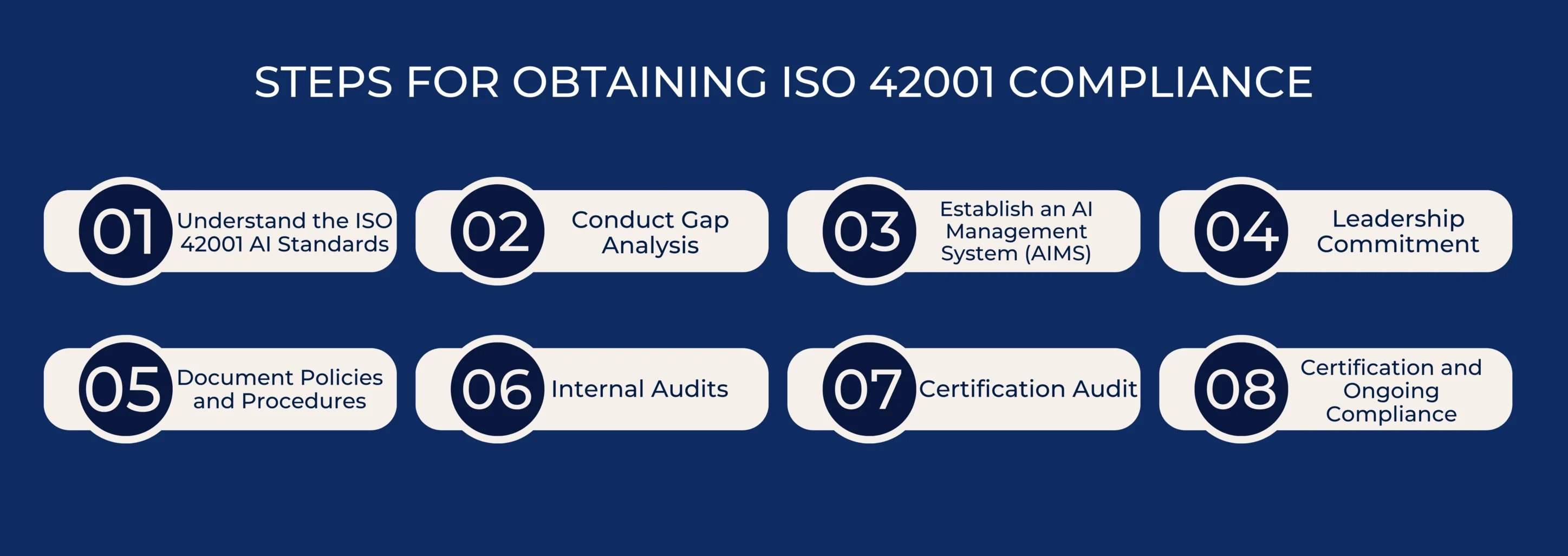
- ✓Stage 1 Audit: Documentation and Scope Evaluation
- ✓Stage 2 Audit: Evidence Collection and Control Testing
- ✓Surveillance Audits and Recertification
ISO 42001 Requirements: What Jacksonville Organizations Must Demonstrate
ISO/IEC 42001:2023 establishes mandatory requirements across ten clauses (Clauses 4 through 10 contain normative requirements), as well as normative Annex A controls. Organizations seeking ISO 42001 Certification in Jacksonville must demonstrate conformity with each applicable requirement through documented information and objective operational evidence evaluated during the ISO 42001 certification audit. Meeting these requirements is the foundation of sustained ISO 42001 compliance.
ISO 42001 compliance requires organizations to maintain a defined set of documented information forming the evidentiary foundation of the AIMS. Core documentation includes:
The AIMS scope statement, which defines the boundaries and applicability of the management system relative to the organization’s AI activities; the AI policy, expressing top management’s commitments regarding AI governance, ethics, risk management, and responsible AI use; AI objectives and plans for achieving them; AI risk assessment records documenting identified risks, likelihood and consequence ratings, and risk treatment decisions; AI impact assessment records for AI systems that could produce significant effects on individuals or groups; and the Statement of Applicability documenting Annex A control selections.
Internal audit schedules and results, management review records, and corrective action logs are also required. During the ISO 42001 audit, auditors verify that these documents exist, are maintained, are appropriate to the declared scope, and are accessible to relevant personnel.
The ISO 42001 standard requires organizations to establish, implement, and maintain a documented AI risk assessment process that identifies risks associated with AI systems across their full lifecycle — including design, data sourcing, model training, validation, deployment, monitoring, and decommissioning. Risk assessments must address risks to individuals, groups, society, and the organization itself, including risks arising from bias, inaccuracy, opacity, unintended outputs, and misuse.
In addition to risk assessment, ISO/IEC 42001:2023 introduces the AI impact assessment as a distinct requirement. AI impact assessments evaluate the potential effects of AI systems on individuals and society, considering fairness, privacy, safety, security, and human rights implications.
For Jacksonville organizations in healthcare, financial services, and logistics — sectors where AI outputs directly affect patient care, creditworthiness determinations, and safety-critical operations — the rigor and documented evidence of these assessments are primary focal points during the ISO 42001 certification audit.
ISO/IEC 42001:2023 requires organizations to conduct internal audits of the AIMS at planned intervals to assess conformity with the standard’s requirements and the organization’s own AI policies and objectives. Internal audit programs must be documented, executed by competent auditors who are objective with respect to the areas being audited, and their results must be reported to top management.
Management reviews must be conducted at planned intervals by top management to evaluate AIMS performance, review audit findings and nonconformity status, assess AI risk and impact assessment results, consider changes in the organization’s AI context, and make decisions regarding resource allocation and AIMS improvements.
Evidence of internal audit execution and management review conduct — including agendas, attendance records, inputs reviewed, decisions made, and action items assigned — is collected and evaluated during the ISO 42001 audit process. Absence of documented internal audit or management review activity constitutes a significant nonconformity under the ISO 42001 standard.
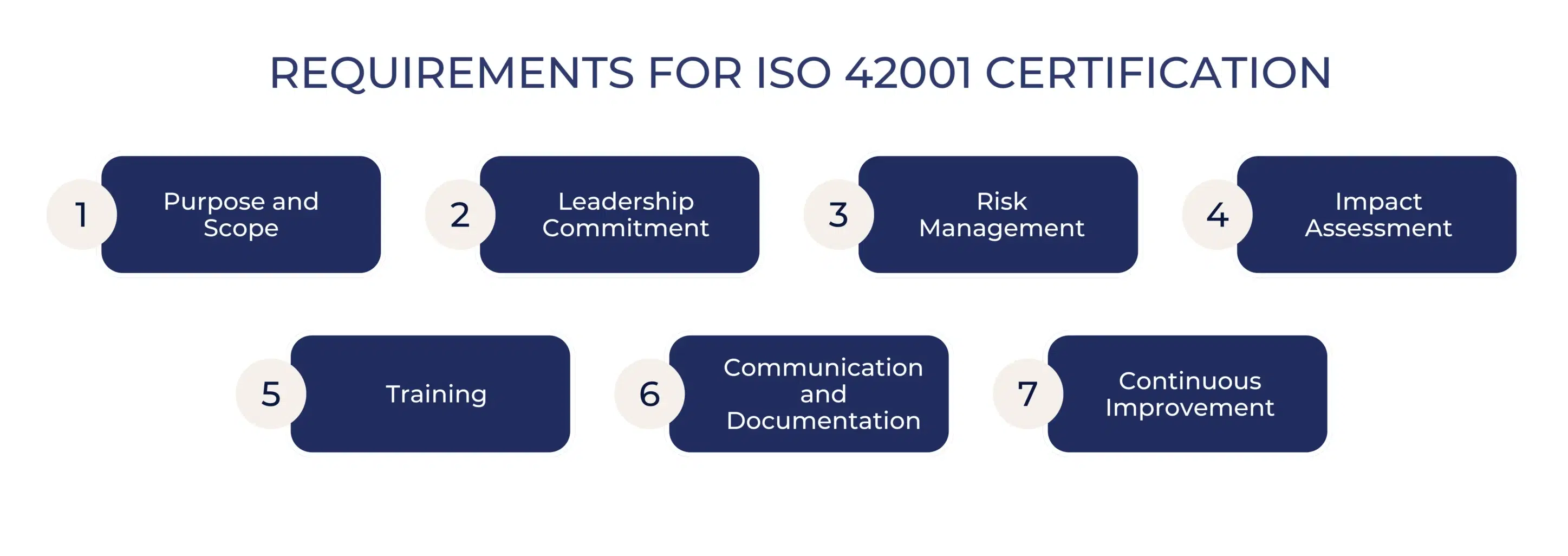
- ✓Management System Documentation Requirements
- ✓AI Risk Assessment and Impact Assessment Requirements
- ✓Internal Audit and Management Review Requirements
Why Jacksonville Organizations Pursue ISO 42001 Certification
ISO 42001 Certification in Jacksonville is pursued by organizations across multiple industries in response to specific demand drivers rooted in Jacksonville’s economic and regulatory landscape. These drivers include enterprise vendor assurance requirements, sector-specific regulatory expectations, international market access conditions, and internal governance imperatives.
Understanding these localized drivers clarifies why ISO 42001 certification has become a clear priority for Jacksonville’s diverse, AI-deploying business community — and why independent certification through an ISO 42001 audit carries greater weight than self-attestation.
Enterprise Vendor Assurance and Procurement Requirements
Jacksonville-based technology companies, SaaS providers, AI platform developers, and data analytics firms regularly undergo vendor security and governance reviews initiated by large enterprise clients in financial services, healthcare, insurance, and defense. These procurement processes increasingly include requirements for documented AI governance frameworks and, in some cases, independently certified AIMS conformity.
A Jacksonville-based SaaS company supplying an AI-enabled analytics platform to a major health system or financial institution may encounter contractual requirements to demonstrate ISO 42001 compliance as a condition of vendor approval or contract renewal. ISO 42001 Certification in Jacksonville provides organizations with audit-verified evidence that their AIMS meets an internationally recognized standard — directly addressing the documentation and assurance requirements embedded in enterprise vendor management programs.
This positions certified organizations favorably in competitive procurement evaluations without relying on self-attestation, which carries significantly lower credibility in third-party risk management reviews.
Sector-Specific Regulatory and Contractual Context in Jacksonville
Jacksonville’s healthcare sector operates under HIPAA, the 21st Century Cures Act information-blocking provisions, and CMS conditions of participation — all of which have implications for AI systems used in clinical, administrative, and billing contexts. Organizations deploying AI in healthcare must demonstrate that AI governance controls address data integrity, patient safety, and algorithmic transparency.
Financial services firms in Jacksonville are subject to OCC guidance on model risk management (SR 11-7), CFPB fair lending expectations, and state insurance regulatory requirements — each creating demand for structured AI governance documentation. Aerospace and defense contractors developing or using AI must address DFARS and CMMC cybersecurity requirements, some of which intersect directly with AI system governance.
ISO 42001 Certification for Jacksonville companies provides an independently evaluated framework that supports regulatory alignment across these sectors. It is important to note that ISO 42001 certification does not constitute regulatory approval or legal compliance certification under any specific regulation.
International Market Access and Global AI Governance Alignment
Jacksonville’s role as an international port city and its connection to global trade networks means that many local organizations maintain commercial relationships with European, Asian, and Latin American partners subject to their own AI governance regulations. The EU AI Act — which entered force in August 2024 — applies risk-based obligations to organizations whose AI systems are used in EU markets, and its framework aligns structurally with ISO/IEC 42001:2023.
Organizations in Jacksonville’s logistics, maritime, financial services, and technology sectors that operate internationally may find that ISO 42001 standard compliance supports their ability to demonstrate AI governance alignment to European clients, regulators, and trading partners. ISO 42001 Certification in Jacksonville also supports alignment with the NIST AI Risk Management Framework (AI RMF), which the U.S. federal government has positioned as a complementary voluntary framework.
Together, these frameworks create a coherent AI governance posture that is recognizable and credible across multiple jurisdictions — a meaningful competitive advantage for Jacksonville organizations engaged in international commerce.
Benefits of ISO 42001 Certification for Jacksonville-Based Organizations
ISO 42001 Certification in Jacksonville produces independently verified, documented evidence of AIMS conformity that delivers measurable operational, commercial, and governance outcomes for certified organizations. The benefits below reflect the direct consequences of achieving and maintaining certification through independent ISO 42001 audit — not claims about implementation outcomes or advisory service results.
- ✓Independent verification of AIMS conformity to ISO/IEC 42001:2023, replacing self-attestation with third-party audit evidence in vendor assurance and procurement contexts
- ✓Structured documentation of AI risk assessment, AI impact assessment, and Annex A control implementation, providing an auditable record of AI governance activities
- ✓Demonstrated alignment with international AI governance expectations, including the EU AI Act’s risk-based framework and the NIST AI Risk Management Framework
- ✓Competitive differentiation in Jacksonville’s enterprise technology and SaaS market, where ISO 42001 certification is increasingly evaluated in vendor selection processes
- ✓Ongoing AIMS effectiveness verification through annual surveillance audits, maintaining current evidence of control operation rather than a single point-in-time attestation
- ✓Support for internal accountability and governance reporting, as the certification record provides senior leadership with audited evidence of AIMS performance
- ✓Reputational positioning as a responsible AI organization in Jacksonville’s logistics, healthcare, financial services, and technology markets
- ✓Facilitation of international commercial relationships requiring documented ISO 42001 compliance from U.S.-based technology and service providers
The ISO 42001 certification audit process itself generates structured findings that reflect independent evaluation of the organization’s AI governance controls, risk management processes, and AIMS documentation. Nonconformities identified and documented during the ISO 42001 audit provide the organization with specific, evidence-based information about gaps between its AIMS and the standard’s requirements.
This structured feedback — produced through an independent process rather than internal review — is inherently more credible to external stakeholders such as board members, regulators, and enterprise clients than internal assessments alone. Organizations that have addressed audit-identified nonconformities and maintained certification through surveillance audits demonstrate not only that their AIMS was conformant at a point in time, but that it has been independently re-evaluated on an ongoing basis. This continuous assurance posture provides a more robust foundation than initial ISO 42001 certification alone.
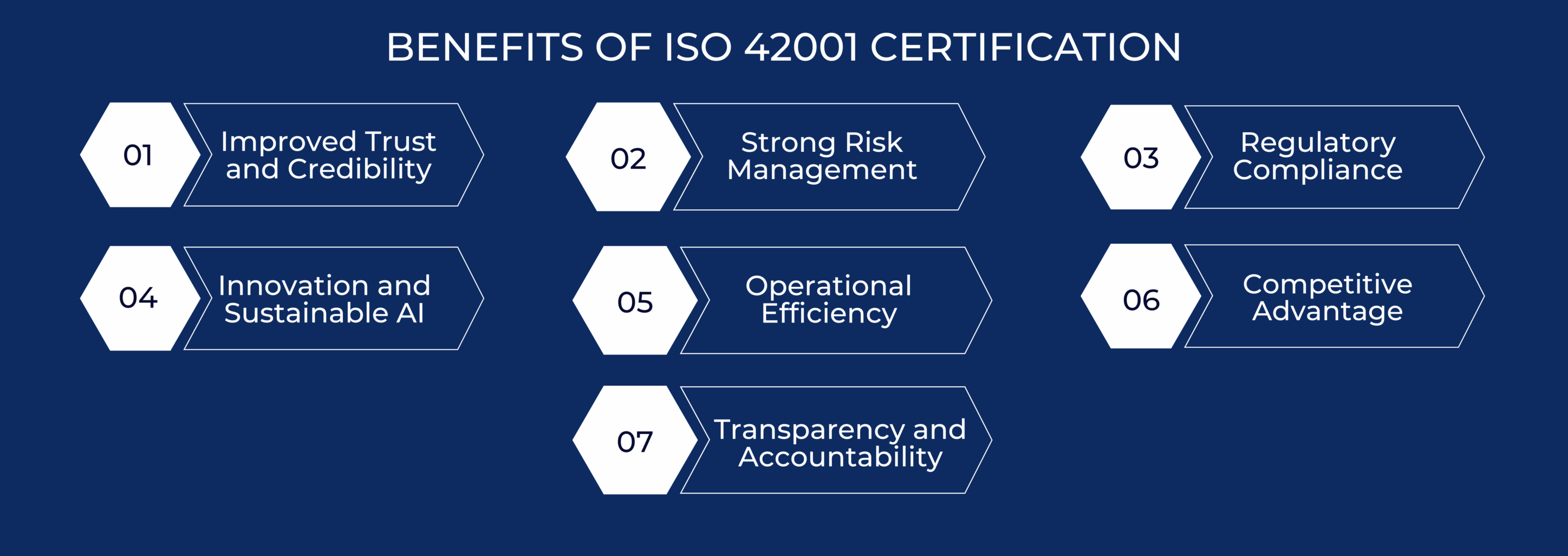
- ✓Operational Value of Independent ISO 42001 Audit Findings
ISO 42001 Certification Scope: Industries and AI Use Cases in Jacksonville
ISO 42001 Certification in Jacksonville is applicable to organizations across all sectors that develop, deploy, or procure AI systems in connection with their business operations. Jacksonville’s diverse economy encompasses multiple sectors with distinct AI use cases, each presenting specific AI governance requirements that ISO/IEC 42001:2023 is designed to address through the AIMS framework. The table below outlines the ISO 42001 standard’s relevance by industry sector across Jacksonville’s economy.
| Jacksonville Sector | Representative AI Use Cases | ISO 42001 Governance Relevance |
|---|---|---|
| Logistics and Transportation | Route optimization, predictive maintenance, cargo tracking AI | AI risk assessment, lifecycle management, transparency controls |
| Healthcare and Health Technology | Clinical decision support, patient risk scoring, diagnostic AI | AI impact assessment, human oversight controls, data governance |
| Financial Services and Fintech | Credit scoring, fraud detection, AML transaction monitoring | Fairness assessment, model governance, third-party AI controls |
| Aerospace and Defense | Predictive analytics, autonomous systems, AI-assisted design | Security controls, human oversight, AI system lifecycle management |
| SaaS and Technology Providers | AI-enabled platforms, automation tools, analytics services | Organizational AI policy, customer disclosure, supplier AI controls |
Logistics, Maritime, and Port Operations
The Port of Jacksonville and the broader logistics and transportation ecosystem represent one of the largest concentrations of AI-deploying organizations in Northeast Florida. Port operations, freight brokerage, third-party logistics providers, and maritime services companies deploy AI systems for vessel scheduling optimization, container management, predictive maintenance of port equipment, customs compliance screening, and real-time cargo visibility.
These AI systems interact with safety-critical infrastructure, trade compliance data, and complex operational environments where AI errors carry significant financial and regulatory consequences. ISO 42001 certification for Jacksonville companies in logistics and maritime sectors evaluates whether AI governance controls — including AI risk assessments, operational controls, human oversight mechanisms, and lifecycle management procedures — are structured and operating effectively for these high-consequence AI applications.
Certification evidence from an independent ISO 42001 audit is increasingly relevant in supply chain partner due diligence processes conducted by global shippers and logistics operators, reinforcing the business case for ISO 42001 compliance in this sector.
Healthcare, Financial Services, and Insurance
Jacksonville’s position as a major healthcare hub — home to leading health systems, specialty providers, health technology companies, and medical research institutions — creates substantial demand for structured AI governance. Healthcare AI applications that influence clinical decisions, patient triage, diagnostic imaging interpretation, or medication management require documented AI impact assessments, human oversight controls, and data quality governance consistent with ISO/IEC 42001:2023 requirements.
The financial services and insurance sectors, with significant concentrations in Jacksonville, deploy AI for underwriting, actuarial modeling, claims processing, investment management, and regulatory reporting. These organizations face heightened scrutiny from regulators and enterprise clients regarding the governance of algorithmic decision-making systems.
ISO 42001 compliance in Jacksonville provides a recognized framework through which financial services and insurance organizations demonstrate structured, independently audited AI governance — addressing both internal risk management expectations and external assurance requirements from regulators and counterparties.
ISO 42001 Compliance: Maintaining Certification in Jacksonville
ISO 42001 compliance in Jacksonville requires organizations to sustain the operation of their AIMS across the full three-year certification cycle — not merely at the point of initial certification. Maintaining ISO 42001 certification involves executing internal audit programs, conducting management reviews, managing corrective actions, and engaging in surveillance audits conducted by CertPro at annual intervals. The following elements characterize an organization’s ongoing ISO 42001 compliance posture and inform how CertPro structures its surveillance ISO 42001 audit engagements.
Conditions for Certificate Suspension or Withdrawal
ISO 42001 certification may be suspended or withdrawn if the organization fails to demonstrate continued conformity during surveillance audits, fails to submit required corrective action evidence within established timeframes, undergoes significant changes to its AI scope or organizational structure without notifying the certification body, or is found to have misrepresented information during the certification process.
Suspension periods allow organizations to address identified nonconformities before certification is formally withdrawn. Withdrawal results in the organization losing the right to represent itself as ISO 42001 certified and requires a new full ISO 42001 certification audit to reinstate certification status.
Organizations that maintain consistent AIMS operation, document internal audit and management review activities, and engage proactively with surveillance audit scheduling are well-positioned to maintain continuous ISO 42001 certification across the three-year cycle without interruption.
Scope Changes and AIMS Updates During the Certification Cycle
Jacksonville organizations that expand their AI system portfolio, enter new markets, acquire AI-deploying businesses, or significantly modify existing AI systems during the certification cycle must assess whether these changes affect their declared AIMS scope and the applicability of Annex A controls. Material changes to the AI environment — such as the introduction of a new high-risk AI application, a change in third-party AI system providers, or a significant modification to data governance practices — must be communicated to CertPro and may trigger an interim audit or scope amendment process.
The ISO 42001 standard requires organizations to update risk assessments, impact assessments, and the Statement of Applicability in response to changes in their AI context. Surveillance audits review the organization’s process for managing these changes. Auditors assess whether documented AIMS updates accurately reflect changes in the AI environment and whether appropriate controls have been extended to cover new or modified AI systems — a core dimension of sustained ISO 42001 compliance.
ISO 42001 Standard: AI Governance Framework Elements Evaluated in Certification
The ISO 42001 standard establishes a governance framework for AI management systems that auditors evaluate during the ISO 42001 certification audit. Understanding the specific framework elements — and how they are assessed — clarifies what organizations must demonstrate to achieve ISO 42001 Certification in Jacksonville through CertPro’s independent audit process. Two of the most operationally significant framework areas are AI lifecycle management with data governance, and transparency with human oversight controls.
AI Lifecycle Management and Data Governance Controls
ISO/IEC 42001:2023 Annex A requires organizations to establish controls across the full AI system lifecycle — from initial concept and data sourcing through model development, validation, deployment, monitoring, and decommissioning. AI lifecycle management controls address how the organization defines AI system objectives, selects and governs training data, validates model performance against defined criteria, manages model updates and versioning, monitors deployed AI systems for performance degradation or drift, and manages secure decommissioning at end of life.
Data governance controls — covering data sourcing, quality assessment, data labeling, and access controls — are evaluated as integral components of the AIMS. For Jacksonville organizations in data-intensive sectors such as healthcare analytics, financial services modeling, and logistics optimization, the rigor of data governance controls and the documented evidence of their application are assessed as primary indicators of AIMS operational effectiveness during the ISO 42001 audit evaluation process.
Transparency, Explainability, and Human Oversight Controls
Among the Annex A controls most distinctively associated with AI governance — as distinguished from general information security management — are those addressing AI system transparency, explainability, and human oversight. The ISO 42001 standard requires organizations to establish controls governing how information about AI systems is communicated to affected parties, including disclosures regarding AI system purpose, capability limitations, and the basis for AI-generated outputs.
Explainability controls address the organization’s ability to provide meaningful explanations of AI decision or recommendation outputs to relevant stakeholders, including those affected by AI-driven decisions. Human oversight controls specify the conditions under which AI system outputs are subject to human review before action is taken — particularly critical in high-stakes applications across healthcare, finance, and safety-critical operations.
During the ISO 42001 certification audit, auditors evaluate whether these controls are documented, implemented with appropriate specificity for the organization’s AI use cases, and supported by operational evidence demonstrating consistent application across the declared AIMS scope.
FAQ
▶
What is ISO 42001 certification?
▶
Who needs ISO 42001 certification?
▶
How long does ISO 42001 certification take?
▶
What are the benefits of ISO 42001 certification?
▶
What is the cost of ISO 42001 certification?
▶
How do I prepare for ISO 42001 certification?
▶
What happens after ISO 42001 certification?
▶
How long does the ISO 42001 certification process take?
ISO 42001 CERTIFIED: WHY AI GOVERNANCE CERTIFICATION IS BECOMING A BOARD-LEVEL REQUIREMENT
ISO 42001 Certified: Board-Level AI Governance Guide | CertPro CPA LLC HERO ══════════════════════════════ –> src=”https://certpro.com/wp-content/uplo…
Get In Touch
have a question? let us get back to you.