
ISO 42001 Certification in Western Australia
The ISO 42001 certification audit process in Western Australia follows a structured sequence of defined stages, each with specific objectives, activities, and outputs. The process is conducted by CertPro as an independent certification body and is governed by the requirements of ISO/IEC 42001:2023 and applicable conformity assessment principles. The stages below describe the complete ISO 42001 audit cycle — from application through certificate issuance and ongoing surveillance — providing clarity on what Western Australian organisations can expect at each phase.
OUR CLIENTS








Independent ISO 42001 Certification by a Licensed CPA Firm in Western Australia
ISO 42001 Certification in Western Australia is conducted by CertPro, a Licensed CPA Firm operating exclusively as an independent third-party certification body. CertPro evaluates whether an organisation’s Artificial Intelligence Management System (AIMS) conforms to the requirements of ISO/IEC 42001:2023 — the international standard for AI management systems. Certification decisions are made independently of the organisation being assessed. No advisory, consulting, implementation, or readiness services are provided. CertPro’s role is strictly that of an independent conformity assessment body, ensuring each ISO 42001 certification audit is objective and credible.
ISO/IEC 42001:2023 was published by the International Organization for Standardization and the International Electrotechnical Commission as the first international standard specifically addressing Artificial Intelligence Management Systems. The ISO 42001 standard establishes requirements for organisations that develop, provide, or use AI systems — enabling them to institute governance frameworks, manage AI-related risks, and demonstrate responsible AI practices through independently verified conformity assessment. ISO 42001 Certification in Western Australia provides this independent verification, issuing a formal certificate of conformity upon successful completion of the certification audit process.
Western Australia operates one of Australia’s most economically significant and technology-intensive industry bases. Perth functions as the primary commercial, technology, and services hub for the state, anchoring financial services, technology, cybersecurity, and professional services alongside the state’s globally significant mining and resources sector. Organisations across mining and resources, oil and gas, energy and utilities, engineering and advanced manufacturing, healthcare and life sciences, agriculture and agribusiness, logistics, maritime operations, and education and research are increasingly developing or deploying AI systems. These operational contexts carry material governance, risk, and compliance obligations — making ISO 42001 compliance in Western Australia a growing priority.
The Australian regulatory environment creates direct relevance for ISO 42001 compliance in Western Australia. The Australian Privacy Act 1988 governs the handling of personal information and applies to AI systems that collect, process, or use personal data — a common feature of predictive analytics, automated decision-making, and AI-driven operational tools deployed across Western Australian industries. The Australian Government’s ongoing AI governance developments, including voluntary AI ethics frameworks and emerging federal regulatory considerations, reinforce the expectation that organisations deploying AI systems maintain documented governance structures. ISO 42001 certification provides an independently verified mechanism for demonstrating that an organisation’s AIMS meets an internationally recognised standard for responsible AI governance.
A practical cross-border scenario illustrates the real-world demand for ISO 42001 Certification in Western Australia. A Perth-based AI software provider supplying predictive maintenance or operational optimisation tools to international mining conglomerates or global energy companies may be required to demonstrate independent AI governance certification as a condition of vendor qualification. Similarly, a Western Australian technology company seeking to supply AI-enabled services to a government procurement authority or an international financial institution may encounter vendor due diligence requirements specifying ISO 42001 certification as a qualifying criterion. In these contexts, ISO 42001 Certification in Western Australia serves as objective, third-party evidence of AIMS conformity — issued by an independent Licensed CPA Firm following a structured ISO 42001 certification audit.
CertPro’s certification activities are governed by the requirements of ISO/IEC 42001:2023 and conducted in accordance with applicable conformity assessment principles. The ISO 42001 audit process encompasses Stage 1 and Stage 2 audits, evaluation of documented information and objective evidence, identification of nonconformities, and an independent certification committee decision. Upon successful completion, a certificate of conformity is issued specifying the certified scope of the organisation’s AIMS. Surveillance audits are conducted during the three-year certification cycle to verify ongoing conformity, with recertification audits conducted prior to certificate expiry.

What Is ISO 42001 Certification?
ISO 42001 certification is the formal process by which an independent third-party certification body evaluates and confirms that an organisation’s Artificial Intelligence Management System conforms to the requirements of ISO/IEC 42001:2023. The ISO 42001 standard specifies requirements for establishing, implementing, maintaining, and continually improving an AIMS within any organisation that develops, provides, or uses AI systems. Certification is the outcome of a structured ISO 42001 certification audit conducted by an independent body — it is not self-declared and cannot be issued by the organisation itself.
The ISO/IEC 42001:2023 Standard Explained
ISO/IEC 42001:2023 follows the High-Level Structure (HLS) common to ISO management system standards, organised across Clauses 4 through 10. These clauses govern context of the organisation, leadership, planning, support, operation, performance evaluation, and improvement. The ISO 42001 standard additionally incorporates Annex A, which specifies AI-specific controls covering AI policy, internal organisation, AI risk management, AI system lifecycle considerations, data governance, third-party relationships, transparency and explainability, human oversight, and AI impact assessment. Annex B provides guidance on Annex A controls. A Statement of Applicability documents which controls apply to the organisation’s AIMS and the justification for any exclusions.
The ISO 42001 standard distinguishes between an organisation’s role in relation to AI systems — whether as a developer, provider, or deployer — and requires that the AIMS scope reflect the actual AI systems and activities within the organisation’s control. AI impact assessment is a specific requirement under the standard. Organisations must evaluate the potential impacts of AI systems on individuals, society, and the organisation itself before deployment and during the system lifecycle. This assessment must be documented and integrated into the AI risk management process, creating an auditable record that forms part of the objective evidence evaluated during the ISO 42001 certification audit.
Who Needs ISO 42001 Certification in Western Australia?
ISO 42001 Certification in Western Australia is relevant to any organisation that develops, provides, or uses AI systems and is subject to governance, procurement, regulatory, or contractual expectations regarding responsible AI. This encompasses AI software developers, SaaS and cloud service providers, technology startups, enterprise AI teams, mining technology and automation companies, engineering firms deploying AI-driven operational tools, healthcare organisations using AI in clinical or administrative functions, financial services firms applying AI in credit, risk, or compliance contexts, and government agencies or contractors subject to AI governance requirements. Any organisation for which AI system risk, transparency, or accountability is a material consideration has sound grounds for pursuing ISO 42001 certification.
Organisations that have already achieved ISO 27001 certification for information security management frequently pursue ISO 42001 certification as a complementary governance credential, given the overlap between information security controls and AI-related data governance requirements. Both standards share the High-Level Structure, making integrated management system audits a structured option. However, ISO 42001 addresses AI-specific governance dimensions — including AI system lifecycle management, AI impact assessment, algorithmic transparency, and human oversight — that fall outside the scope of ISO 27001. These AI-specific requirements make ISO 42001 a distinct and independent certification, not a subset of information security certification.
AIMS Documentation Requirements Under ISO/IEC 42001:2023
ISO/IEC 42001:2023 requires organisations to maintain documented information across a range of AIMS elements. Core documentation evaluated during the ISO 42001 certification audit includes the AI policy, AIMS scope statement, AI risk assessment records, AI risk treatment plan, AI impact assessment records, Statement of Applicability, internal audit records, management review records, and operational documentation for AI system lifecycle activities. Each document constitutes objective evidence reviewed by the certification auditor to determine whether the organisation’s AIMS has been established and is operating in conformity with the ISO 42001 standard’s requirements. Adequacy of documented information is assessed at Stage 1 of the ISO 42001 audit.
ISO 42001 Certification Audit Process in Western Australia
The ISO 42001 certification audit process in Western Australia follows a structured sequence of defined stages, each with specific objectives, activities, and outputs. The process is conducted by CertPro as an independent certification body and is governed by the requirements of ISO/IEC 42001:2023 and applicable conformity assessment principles. The stages below describe the complete ISO 42001 audit cycle — from application through certificate issuance and ongoing surveillance — providing clarity on what Western Australian organisations can expect at each phase.
| Audit Stage | Key Activities | Output |
|---|---|---|
| Application Review | Review of organisation profile, AIMS scope, AI systems in scope, and initial eligibility determination for ISO 42001 certification | Audit programme confirmed |
| Stage 1 Audit | Review of AIMS documentation, AI policy, risk assessment records, Statement of Applicability, AI impact assessment records, and readiness for Stage 2 of the ISO 42001 audit | Stage 1 findings report; Stage 2 readiness determination |
| Stage 2 Audit | On-site or remote evaluation of AIMS implementation, Annex A controls, evidence of operation, AI system lifecycle activities, and management review records during the ISO 42001 certification audit | Stage 2 audit report; nonconformity findings |
| Certification Committee Decision | Independent review of ISO 42001 audit findings by certification committee; determination of AIMS conformity | Certificate of conformity issued or withheld |
| Surveillance Audit | Periodic evaluation of continued AIMS conformity during the three-year ISO 42001 certification cycle | Surveillance audit report; continued certification confirmed or suspended |
The Stage 1 audit involves a structured review of the organisation’s documented AIMS information to determine whether the management system has been established in accordance with ISO/IEC 42001:2023 requirements and whether the organisation is ready for Stage 2 field evaluation. The auditor examines the AI policy, AIMS scope document, AI risk assessment methodology and records, AI risk treatment plan, AI impact assessment records, Statement of Applicability, and documented internal audit and management review records. The Stage 1 audit may be conducted remotely or on-site and results in a written report identifying any areas requiring attention before Stage 2 proceeds. Importantly, the Stage 1 audit is an evaluation activity — it does not constitute preparation assistance or guidance on corrective action.
Where the Stage 1 audit identifies deficiencies in the documented AIMS — such as incomplete AI impact assessment records, an inadequately scoped Statement of Applicability, or absence of documented management review outcomes — these are recorded as findings in the Stage 1 report. The organisation is responsible for addressing all findings before the Stage 2 ISO 42001 audit proceeds. The timing of Stage 2 scheduling is determined following completion of the Stage 1 audit and review of the organisation’s response to any findings. CertPro does not provide direction on how findings should be addressed; that responsibility rests entirely with the organisation and its own resources.
The Stage 2 audit constitutes the principal conformity assessment activity of the ISO 42001 certification audit process. During Stage 2, the auditor evaluates whether the organisation’s AIMS is implemented, operational, and effective in accordance with ISO/IEC 42001:2023 requirements. This involves examination of objective evidence across the clauses of the ISO 42001 standard and the applicable Annex A controls identified in the organisation’s Statement of Applicability. Evidence evaluated during Stage 2 includes records of AI system lifecycle activities, data governance practices, AI risk treatment records, human oversight mechanisms, transparency and explainability documentation, third-party AI-related agreements, training records, and outputs of internal audits and management reviews.
The ISO 42001 audit at Stage 2 also involves interviews with personnel responsible for AIMS-related functions and observation of relevant processes where applicable. Nonconformities identified during Stage 2 are classified and recorded in the audit report. The organisation must respond to nonconformities and provide evidence of corrective action before the certification committee makes its determination. The Stage 2 audit report, together with the organisation’s responses to any nonconformities, forms the basis of the certification committee’s independent review and decision. CertPro’s certification committee operates independently of the audit team that conducted the field evaluation, preserving the integrity of the ISO 42001 certification process.
ISO 42001 certification is valid for a three-year period, subject to satisfactory completion of annual surveillance audits. Surveillance audits are conducted approximately every twelve months following initial certificate issuance and evaluate whether the certified AIMS continues to conform to ISO/IEC 42001:2023 requirements. These audits assess continued AIMS operation, any changes to AI systems or organisational context, outcomes of internal audits and management reviews conducted since the previous audit, and the status of corrective actions for previously identified nonconformities. Failure to satisfy surveillance audit requirements may result in suspension or withdrawal of the ISO 42001 certificate.
Recertification audits are conducted prior to expiry of the three-year certificate and involve a comprehensive re-evaluation of the organisation’s AIMS against ISO/IEC 42001:2023 requirements. The recertification process mirrors the initial ISO 42001 certification audit in scope and rigour, ensuring that continued certification reflects current AIMS conformity rather than historical performance. Organisations operating in sectors where AI systems and related risks evolve rapidly — such as mining technology, AI software development, or healthcare AI — should anticipate that recertification audits will require updated AI impact assessments, revised risk treatment records, and current evidence of Annex A control operation to reflect changes in the AI system landscape since the previous certification cycle.
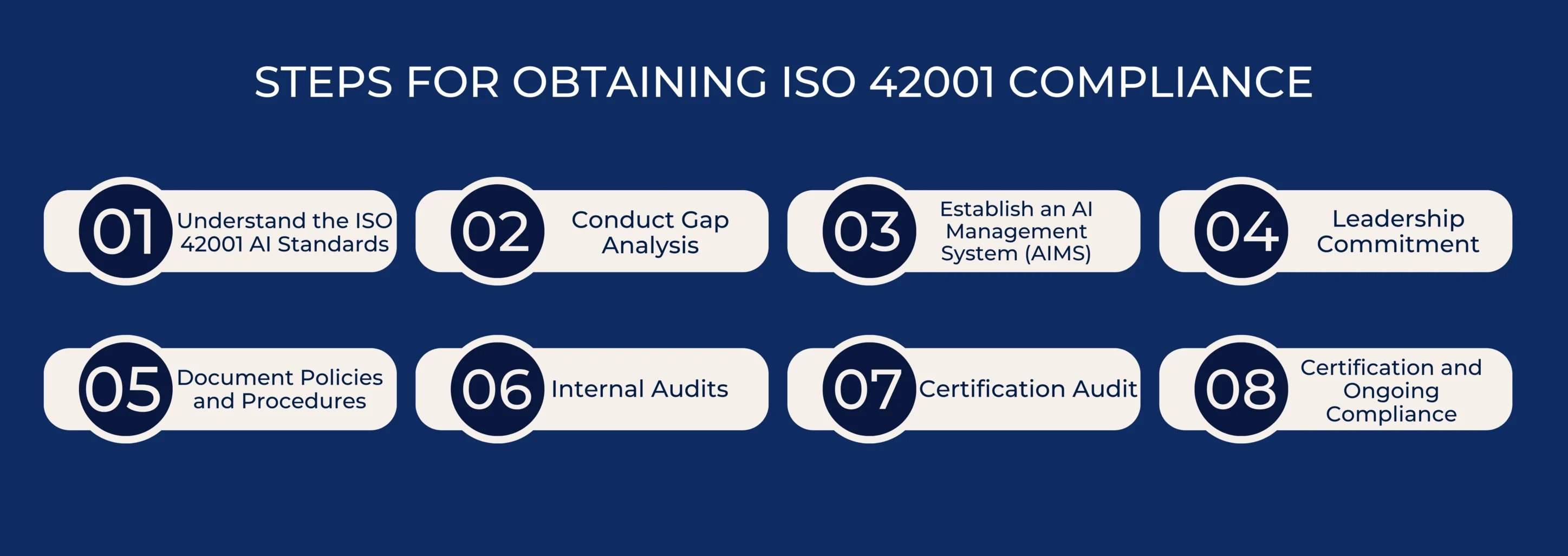
- ✓Stage 1 Audit: Documentation and Readiness Review
- ✓Stage 2 Audit: Implementation and Control Effectiveness Evaluation
- ✓Surveillance Audits and Recertification
ISO 42001 Requirements: What the Standard Evaluates
Understanding ISO 42001 requirements is essential for organisations preparing to undergo the ISO 42001 certification audit. The ISO 42001 standard is structured across management system clauses (Clauses 4–10) and AI-specific controls (Annex A). The certification audit evaluates conformity across all applicable requirements, with the scope of evaluation determined by the organisation’s Statement of Applicability and the nature of the AI systems within the certified AIMS scope. Together, these elements define the full breadth of what the ISO 42001 audit assesses.
Clauses 4 through 10 of ISO/IEC 42001:2023 establish the management system requirements that apply to the AIMS as a whole. Clause 4 requires organisations to determine internal and external context relevant to their AI activities, identify interested parties, and define the AIMS scope. Clause 5 establishes leadership obligations, including the AI policy and assignment of AIMS-related roles and responsibilities. Clause 6 addresses planning — encompassing AI risk assessment, AI risk treatment, AI impact assessment, and AIMS objectives. Clause 7 covers support requirements including competence, awareness, communication, and documented information. Clause 8 governs operational planning and control, including AI system lifecycle management. Clauses 9 and 10 address performance evaluation — internal audit and management review — and improvement, including nonconformity and corrective action management.
During the ISO 42001 certification audit, each clause is evaluated against objective evidence. For Clause 6, the auditor reviews AI risk assessment records to determine whether AI-related risks have been systematically identified and assessed, and whether AI impact assessments have been conducted for relevant AI systems in scope. For Clause 9, the auditor reviews internal audit records to verify that the organisation has conducted structured internal audits of its AIMS and that management has reviewed AIMS performance at planned intervals. The quality and completeness of records across all clauses directly determines the sufficiency of objective evidence available for the auditor’s ISO 42001 compliance assessment.
Annex A of ISO/IEC 42001:2023 specifies AI-specific controls that organisations must consider in the context of their AIMS. The Annex A control domains include: AI policies (governance framework and overarching AI principles); internal organisation (roles, responsibilities, and governance structures for AI); AI risk management (processes for identifying and treating AI-related risks); AI system lifecycle (controls addressing design, development, testing, deployment, monitoring, and decommissioning); data management for AI (data governance, quality, and provenance controls); third-party and customer relationships (AI-related supply chain and customer obligations); and transparency and explainability (controls ensuring AI system behaviour can be understood by relevant stakeholders). Each of these domains is assessed during the ISO 42001 certification audit.
Human oversight is a specifically addressed control area under Annex A, requiring organisations to define and maintain mechanisms through which human review, intervention, and accountability are preserved in AI-driven processes. This is particularly significant for Western Australian organisations in mining and resources, where autonomous and semi-autonomous AI systems operate in safety-critical environments, and in healthcare, where AI-assisted clinical decision support tools carry patient safety implications. The ISO 42001 certification audit evaluates the design and operational effectiveness of human oversight controls as part of the Annex A assessment, requiring organisations to demonstrate that oversight mechanisms are documented, operational, and subject to ongoing monitoring.
AI impact assessment is a mandatory requirement under ISO/IEC 42001:2023 and constitutes a distinct element of the ISO 42001 certification audit evaluation. Organisations must assess the potential impacts of AI systems on individuals, groups, and society — including consideration of bias, discrimination, privacy, safety, and security implications — before deployment and at defined intervals during the AI system lifecycle. The assessment must be documented and integrated into the AI risk treatment process, with evidence of review and approval by appropriate organisational authority. During the ISO 42001 audit, auditors evaluate AI impact assessment records for completeness, currency, and integration with the broader AI risk management framework.
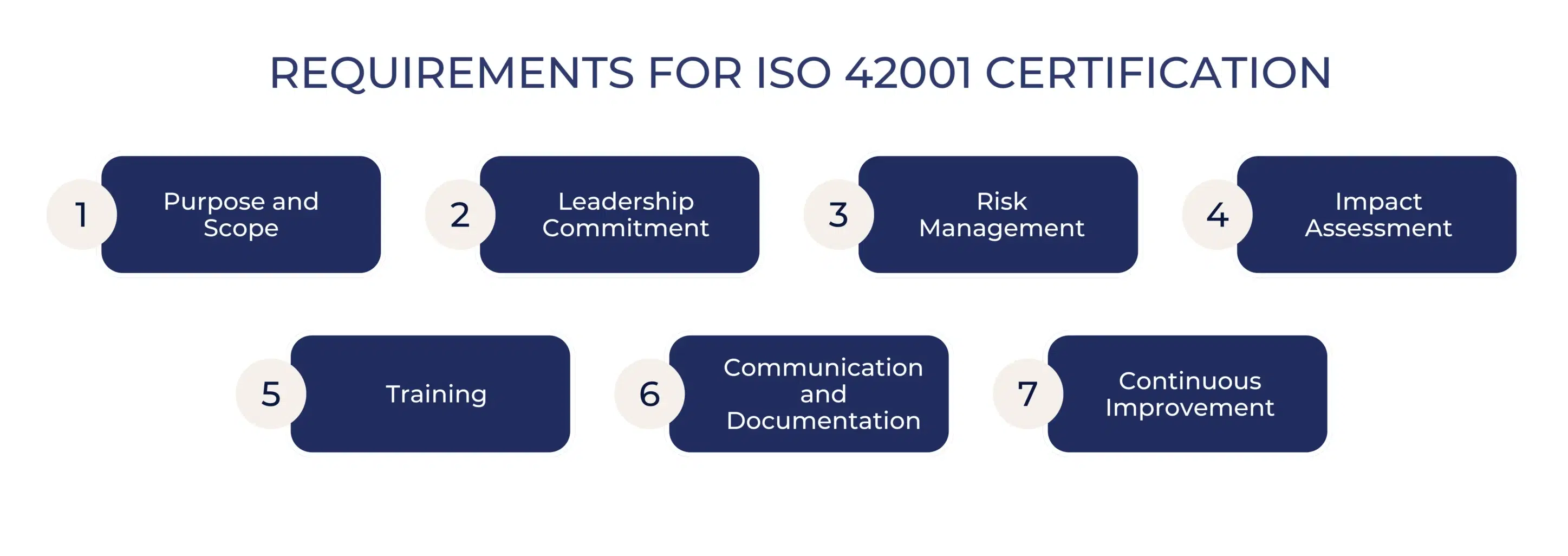
- ✓Management System Clauses: Clauses 4 Through 10
- ✓Annex A Controls: AI-Specific Governance Requirements
- ✓AI Impact Assessment Requirements
Business Sectors in Western Australia Pursuing ISO 42001 Certification
ISO 42001 certification for Western Australia businesses spans a broad range of industry sectors reflecting the state’s diverse and technology-intensive economy. The sectors below represent the primary areas from which demand for ISO 42001 Certification in Western Australia is observed, each driven by distinct governance, procurement, or regulatory factors that make ISO 42001 compliance a strategic priority.
Mining, Resources, Energy, and Engineering
Western Australia’s mining and resources sector is one of the most significant in the world, encompassing iron ore, gold, lithium, nickel, and liquefied natural gas operations across the Pilbara, Goldfields-Esperance, and Mid West regions. AI and autonomous systems are extensively deployed across mining operations — including autonomous haulage systems, predictive maintenance platforms, drill optimisation tools, and remote operations centres — creating material AI governance obligations. Mining companies and mining technology providers in Western Australia increasingly require ISO 42001 Certification in Western Australia to satisfy internal governance standards, meet enterprise customer requirements, and demonstrate responsible AI deployment to regulators and communities.
Energy and utilities organisations — including those involved in renewable energy generation, gas processing, electricity networks, and resource infrastructure — deploy AI systems for demand forecasting, grid management, asset health monitoring, and operational optimisation. Engineering and advanced manufacturing firms developing AI-enabled design tools, simulation platforms, or industrial automation systems similarly fall within the scope of ISO 42001 certification relevance. For organisations in these sectors supplying AI-integrated products or services to major resource companies, government-owned utilities, or international energy clients, ISO 42001 compliance in Western Australia may constitute a vendor qualification requirement or a condition of contract.
Technology, SaaS, AI Companies, and Financial Services
Perth’s technology ecosystem encompasses a growing concentration of SaaS providers, AI companies, cybersecurity firms, cloud computing providers, and data analytics companies. Many of these organisations supply services to enterprise customers in regulated sectors — financial services, healthcare, government, and resources — where vendor assurance expectations are material. ISO 42001 Certification in Western Australia provides technology companies with independently verified evidence of AIMS conformity, presentable to enterprise procurement teams, information security functions, and third-party risk management processes as part of vendor due diligence. This is particularly relevant for Perth-based AI software providers seeking to supply services to clients across the Asia-Pacific region, the United Kingdom, or North America.
Financial services organisations in Western Australia — including banks, credit unions, insurance companies, and investment managers — use AI systems across credit assessment, fraud detection, customer analytics, and compliance monitoring functions. The Australian Prudential Regulation Authority and the Australian Securities and Investments Commission have both signalled increasing attention to model risk governance and algorithmic decision-making in regulated financial services. ISO 42001 certification provides financial services organisations with a structured, internationally recognised framework for AIMS governance that is independently verified through the ISO 42001 certification audit, supporting both internal risk management objectives and demonstrable compliance with emerging regulatory expectations.
Healthcare, Agriculture, Logistics, and Education
Healthcare and life sciences organisations in Western Australia — including hospitals, diagnostic imaging providers, medical technology companies, and clinical research organisations — deploy AI systems in areas such as medical image analysis, patient risk stratification, clinical decision support, and genomic analysis. These applications carry significant patient safety, privacy, and regulatory implications, making AI governance certification of direct relevance. Agriculture and agribusiness operations use AI for precision agriculture, yield forecasting, and supply chain optimisation. Logistics and maritime organisations in Fremantle and across the state’s port network use AI for cargo management, vessel scheduling, and fleet operations. Education and research institutions conducting AI research or deploying AI systems in educational contexts also represent a growing segment of ISO 42001 Certification in Western Australia demand.
Benefits of ISO 42001 Certification for Western Australia-Based Organisations
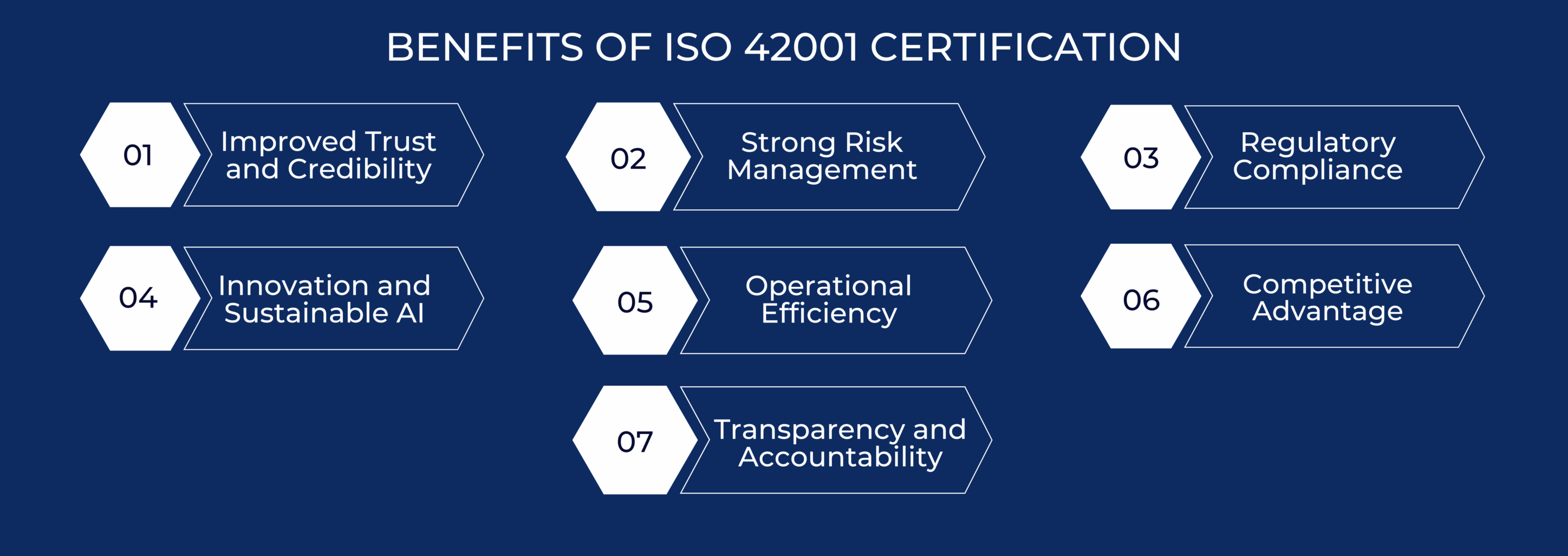
ISO 42001 certification delivers independently verified evidence of AIMS conformity that produces tangible outcomes for organisations across Western Australia’s diverse industry sectors. The benefits below reflect the practical and strategic value of holding an independently issued ISO 42001 certificate — distinct from any internal AI governance activities the organisation may undertake. Each benefit is directly linked to the rigour of the ISO 42001 certification audit process.
- ✓Independent verification of AIMS conformity with ISO/IEC 42001:2023, demonstrating that the organisation’s AI governance framework has been objectively assessed by a Licensed CPA Firm through a structured ISO 42001 certification audit
- ✓Recognition in enterprise vendor qualification and third-party risk management processes, particularly in mining, financial services, healthcare, and government procurement contexts in Western Australia
- ✓Structured evidence of AI risk management, AI impact assessment, and Annex A control implementation for presentation to regulators, customers, and business partners as part of ISO 42001 compliance
- ✓Alignment with Australian Privacy Act 1988 obligations in AI contexts, particularly where AI systems process personal information of Australian residents
- ✓Support for cross-border market access where international clients — including financial institutions and government procurement authorities — require ISO 42001 certification as a vendor qualification criterion
- ✓Demonstrated commitment to responsible AI governance and human oversight in sectors such as mining technology, healthcare AI, and autonomous systems
- ✓A defined three-year certification cycle with annual surveillance audits, providing ongoing independent oversight of AIMS conformity under the ISO 42001 standard
- ✓Differentiation in competitive procurement processes where ISO 42001 certified companies in Western Australia are evaluated alongside non-certified competitors
Australia’s approach to AI governance has been shaped by the Australian Government’s AI Ethics Framework, the voluntary AI Safety Standard released in 2024, and the broader Digital Economy Strategy. While Australia does not yet have mandatory AI-specific legislation equivalent to the European Union AI Act, the trajectory of Australian AI governance indicates increasing regulatory attention to transparency, accountability, and risk management for AI systems — particularly those with potential impacts on individuals and critical systems. ISO 42001 certification provides Australian organisations with an internationally recognised, independently verified governance credential that positions them ahead of anticipated regulatory developments, while also satisfying current procurement and contractual expectations from international clients in more advanced regulatory jurisdictions.
For Western Australian organisations, the intersection of the Australian Privacy Act 1988 and AI system deployment is particularly material. Automated decision-making systems, AI-driven profiling tools, and data analytics platforms that process personal information are subject to Privacy Act obligations regardless of whether AI-specific legislation exists. ISO 42001 compliance in Western Australia — achieved through the independent certification audit — supports organisations in demonstrating that their AIMS incorporates data governance controls, privacy-by-design considerations, and AI impact assessments that address Privacy Act-relevant risks. This is directly relevant to technology companies, financial services organisations, healthcare providers, and government contractors across Western Australia that develop or deploy AI systems handling personal information.
- ✓ISO 42001 Certification and Australian AI Governance Context
ISO 42001 Standard: Key Requirements and Evaluation Criteria
The ISO 42001 standard establishes a comprehensive set of requirements that an organisation’s AIMS must satisfy to achieve and maintain certification. The ISO 42001 certification audit evaluates conformity against these requirements through structured evidence review and assessment. The following subsections address the principal evaluation criteria applied during the certification audit, with specific reference to elements that are frequently determinative of ISO 42001 audit outcomes.
The AIMS scope defines the boundaries and applicability of the organisation’s AI management system and must clearly identify the AI systems, organisational units, geographic locations, and activities included within the certified scope. The scope statement is evaluated for completeness and accuracy against the organisation’s actual AI activities during the Stage 1 audit. The AI policy must be approved by top management, address the organisation’s commitment to responsible AI, establish principles guiding AI development and deployment, and be communicated to all relevant personnel. The governance framework — encompassing roles, responsibilities, and authority structures for AIMS-related decisions — is evaluated against Clause 5 and Annex A requirements for internal organisation and oversight as part of the ISO 42001 certification audit.
The Statement of Applicability is a critical document in the ISO 42001 certification audit. It lists all Annex A controls, indicates which controls are applicable to the organisation’s AIMS, provides justification for any controls determined to be not applicable, and states whether each applicable control has been implemented. The auditor evaluates the Statement of Applicability for completeness, internal consistency, and alignment with the AI risk assessment and risk treatment records. Unjustified exclusions — for example, excluding human oversight controls for an organisation operating autonomous AI systems in safety-critical environments — constitute a potential nonconformity that must be resolved before ISO 42001 certification can be granted.
AI risk assessment under ISO/IEC 42001:2023 requires organisations to establish and apply a documented methodology for identifying, analysing, and evaluating AI-related risks associated with their AI systems. The risk assessment must address risks arising from the nature of the AI system itself — including risks related to bias, accuracy, robustness, security, and unintended outputs — as well as risks arising from the organisational context in which the AI system operates. Risk assessment records must be retained as documented information and updated when relevant changes occur. The ISO 42001 audit evaluates the completeness and methodological consistency of AI risk assessment records, as well as the linkage between identified risks and the risk treatment measures selected in the risk treatment plan.
The AI risk treatment plan documents the controls and other measures selected to address identified AI risks, identifies responsible parties, and specifies the expected risk treatment outcomes. The plan must be consistent with the Statement of Applicability and must be approved by appropriate organisational authority. During the ISO 42001 certification audit, the auditor evaluates whether risk treatment measures have been implemented as planned, whether residual risks have been assessed and accepted, and whether the risk treatment process is subject to ongoing monitoring and review. Organisations that cannot demonstrate a traceable connection between their AI risk assessment, risk treatment plan, and Annex A control implementation are likely to receive nonconformity findings during the ISO 42001 audit.
ISO/IEC 42001:2023 requires organisations to conduct internal audits of the AIMS at planned intervals to determine whether the management system conforms to the organisation’s own requirements and the ISO 42001 standard’s requirements, and is effectively implemented and maintained. Internal auditors must be selected to ensure objectivity and impartiality — they must not audit their own work. Internal audit records, including audit plans, checklists, findings, and corrective action records, are reviewed during the ISO 42001 certification audit as evidence that the organisation has sustained an operational internal audit programme. Absence of documented internal audits, or audits that are superficial in scope, constitutes a nonconformity against Clause 9.2 of the ISO 42001 standard.
- ✓AIMS Scope, Policy, and Governance Framework
- ✓AI Risk Assessment and Risk Treatment Evaluation
- ✓Internal Audit and Management Review Requirements
ISO 42001 Certification Versus Other AI Governance Frameworks
ISO 42001 certification is the only internationally recognised, independently verifiable certification standard specifically designed for Artificial Intelligence Management Systems. It differs from self-assessment frameworks, voluntary guidelines, and internal AI ethics policies in that it requires independent third-party evaluation and results in a formally issued certificate of conformity. Understanding how ISO 42001 compares to related frameworks helps organisations position the certification within their broader governance and ISO 42001 compliance architecture.
ISO 42001 and the Australian AI Ethics Framework
The Australian Government’s AI Ethics Framework identifies eight principles for responsible AI — including human, societal, and environmental wellbeing; human-centred values; fairness; privacy protection and security; reliability and safety; transparency and explainability; contestability; and accountability. These principles are voluntary and do not carry a formal certification mechanism. ISO 42001 certification, by contrast, provides a structured management system standard with independently audited requirements and a formally issued certificate of conformity. Organisations in Western Australia that have adopted the Australian AI Ethics Framework as an internal governance reference may find that pursuing ISO 42001 Certification in Western Australia provides the independent verification mechanism that the voluntary framework cannot supply.
The ISO 42001 standard’s Annex A controls address governance areas that directly correspond to the Australian AI Ethics Framework principles — including transparency and explainability, human oversight, fairness and bias considerations, and privacy in AI contexts. This alignment means that organisations that have structured their internal AI governance around the Australian framework are likely to find significant overlap with ISO/IEC 42001:2023 requirements. However, the formal ISO 42001 certification audit evaluates conformity against the standard’s specific requirements rather than the voluntary framework’s principles. ISO 42001 compliance in Western Australia therefore represents both a formalisation and an independent verification of commitments that many organisations have already made through voluntary AI ethics initiatives.
ISO 42001 and ISO 27001: Complementary Standards for AI and Information Security
ISO 27001 and ISO 42001 address distinct but complementary governance domains. ISO 27001 governs information security management and specifies requirements for protecting information assets through confidentiality, integrity, and availability controls. ISO 42001 governs AI management and specifies requirements for responsible AI development, deployment, and use. Both standards use the High-Level Structure, enabling integrated management system audits where an organisation seeks both certifications. However, the ISO 42001 standard addresses AI-specific dimensions — AI impact assessment, AI system lifecycle management, algorithmic transparency, human oversight, and AI risk management — that fall outside the scope of ISO 27001. Organisations in Western Australia seeking to demonstrate both information security and AI governance credibility to enterprise customers and regulators typically pursue both certifications as complementary credentials.
FAQ
▶
What is ISO 42001 certification and who issues it?
▶
Which organisations in Western Australia should pursue ISO 42001 certification?
▶
How does the ISO 42001 audit process work?
▶
What documentation is required for the ISO 42001 certification audit?
▶
How long does ISO 42001 certification remain valid?
▶
What are Annex A controls under ISO 42001?
▶
How does ISO 42001 certification relate to Australian Privacy Act obligations?
▶
Can the ISO 42001 certification audit be conducted remotely for Western Australian organisations?
ISO 42001 CERTIFIED: WHY AI GOVERNANCE CERTIFICATION IS BECOMING A BOARD-LEVEL REQUIREMENT
ISO 42001 Certified: Board-Level AI Governance Guide | CertPro CPA LLC HERO ══════════════════════════════ –> src=”https://certpro.com/wp-content/uplo…
Get In Touch
have a question? let us get back to you.