
ISO 27018 Certification in Germany
CertPro is a Licensed CPA Firm conducting ISO 27018 certification audits for cloud service providers and PII processors operating in Germany. Audit evaluations are structured against ISO/IEC 27018 controls, aligned with GDPR and BDSG obligations, and delivered through accredited certification processes covering organizations across Hamburg, Düsseldorf, Cologne, Stuttgart, and all major German commercial centers.
OUR CLIENTS










Introduction to ISO 27018 Certification in Germany
ISO 27018 certification in Germany establishes a recognized framework for protecting personally identifiable information (PII) within public cloud computing environments. The standard, formally designated ISO/IEC 27018:2019, extends the information security controls defined in ISO/IEC 27001 by applying specific privacy-oriented controls to cloud service providers acting as PII processors. In Germany, where data protection obligations under the General Data Protection Regulation (GDPR) and the Federal Data Protection Act (Bundesdatenschutzgesetz, BDSG) impose stringent requirements on organizations handling personal data, ISO 27018 certification provides a structured mechanism for demonstrating compliance with internationally recognized PII protection standards.
Germany’s cloud services sector is among the most active in Europe, with significant adoption across financial services, healthcare, manufacturing, logistics, and technology industries. Organizations in these sectors process substantial volumes of PII on behalf of customers, employees, and business partners. The legal landscape governing PII processing in Germany is defined by GDPR Article 28, which establishes obligations for data processors, and by the BDSG, which supplements GDPR with additional national requirements. ISO 27018 certification audits evaluate whether cloud service providers maintain controls that satisfy these regulatory expectations, making the certification directly relevant to organizations seeking to demonstrate regulatory alignment.
What Is ISO 27018?
ISO/IEC 27018 is an international standard published by the International Organization for Standardization (ISO) and the International Electrotechnical Commission (IEC). The standard was first published in 2014 and updated in 2019 to reflect evolving cloud privacy practices. ISO 27018 defines a code of practice for protecting PII in public cloud environments, specifying controls that cloud service providers must implement when processing PII on behalf of their clients. The standard is built upon the Annex A controls framework of ISO/IEC 27001 and introduces additional cloud-specific privacy controls addressing consent, transparency, data subject rights, and accountability.
ISO 27018 defines PII as any information that can be used to identify a natural person, either directly or in combination with other data. The standard applies specifically to public cloud service providers that process PII under instructions from cloud customers, positioning these providers as PII processors in the data protection terminology used by GDPR. ISO 27018 differs from other information security certifications by its exclusive focus on PII protection in cloud environments, its alignment with data protection legislation across multiple jurisdictions, and its inclusion of controls specifically designed for the cloud processing relationship between providers and their clients.
ISO 27018 and Its Relationship with ISO 27001
ISO 27018 certification is structured as an extension of ISO 27001, meaning organizations pursuing ISO 27018 certification must first establish an Information Security Management System (ISMS) conforming to ISO 27001 requirements. ISO 27001 provides the foundational framework for managing information security risks, defining requirements for risk assessment, control selection, and continual improvement. ISO 27018 builds upon this foundation by introducing PII-specific controls that address the unique risks associated with cloud-based personal data processing.
The relationship between ISO 27001 and ISO 27018 means that organizations certified to ISO 27001 are well-positioned to pursue ISO 27018 certification, as many foundational controls are already in place. However, ISO 27018 requires additional documentation, control implementation, and audit evidence specific to PII processing in cloud environments. In Germany, organizations that hold ISO 27001 certification and are subject to GDPR PII processing obligations frequently pursue ISO 27018 certification as a logical progression, demonstrating not only general information security management but also cloud-specific PII protection capabilities.
Applicability to German Cloud Service Providers
ISO 27018 certification applies to any organization that operates as a public cloud service provider processing PII on behalf of customers. In Germany, this includes Infrastructure as a Service (IaaS) providers, Platform as a Service (PaaS) providers, and Software as a Service (SaaS) providers. German companies providing cloud services to enterprise clients across the European Union are subject to GDPR data processing obligations, and ISO 27018 certification provides an internationally recognized mechanism for demonstrating that these obligations are met through structured control implementation and independent audit verification.
The standard is also relevant to German organizations that outsource PII processing to cloud service providers, as these organizations retain responsibility as data controllers under GDPR. When selecting cloud vendors, German data controllers benefit from ISO 27018-certified providers, as the certification provides assurance that the provider’s PII protection controls have been independently evaluated. This is particularly important in sectors such as financial services, healthcare, and public administration, where PII processing involves sensitive categories of data subject to heightened regulatory scrutiny.

Why ISO 27018 Certification Is Required in Germany
ISO 27018 certification in Germany addresses a specific regulatory and market demand created by the convergence of cloud adoption, GDPR compliance obligations, and customer expectations for data privacy accountability. German organizations operating in regulated industries face explicit requirements to demonstrate that PII processing activities meet defined security and privacy standards. ISO 27018 certification provides an audited, independently verified attestation that cloud-based PII processing controls satisfy recognized international standards, supporting regulatory compliance demonstrations and contractual due diligence requirements.
GDPR and BDSG Compliance Alignment
GDPR Article 28 requires data controllers to engage only data processors that provide sufficient guarantees to implement appropriate technical and organizational measures to protect PII. ISO 27018 certification directly addresses this requirement by providing documented evidence that a cloud service provider has implemented and maintained PII protection controls that have been independently evaluated by a qualified audit body. For German cloud service providers, ISO 27018 certification strengthens contractual positions with EU-based clients by demonstrating compliance with recognized PII processing standards.
The BDSG supplements GDPR with specific national provisions governing data processing in Germany, including requirements for technical and organizational measures (TOMs) under Section 64 BDSG. ISO 27018 controls map directly to these TOM requirements, providing a structured approach to demonstrating BDSG compliance in cloud environments. Organizations subject to audits by the Bundesbeauftragte für den Datenschutz und die Informationsfreiheit (BfDI) or state-level data protection authorities benefit from ISO 27018 certification as documented evidence of PII protection control implementation.
Industry-Specific Requirements in Germany
German financial services organizations regulated by the Bundesanstalt für Finanzdienstleistungsaufsicht (BaFin) are subject to cloud outsourcing guidelines that require documented evidence of data protection controls from cloud service providers. ISO 27018 certification provides a recognized framework for satisfying these requirements, particularly for fintech companies and digital banking platforms processing customer financial data in cloud environments. BaFin’s Circular 10/2018 (BA) on outsourcing requirements explicitly references the need for appropriate contractual and technical safeguards, which ISO 27018 certification directly supports.
German healthcare organizations processing patient data in cloud environments are subject to requirements under the Social Code Book V (SGB V) and the Hospital Future Act (KHZG), both of which establish technical and organizational requirements for health data protection. ISO 27018 certification provides healthcare cloud service providers with an audited framework for demonstrating that patient PII is protected according to recognized international standards. Similarly, German manufacturing companies processing employee and customer data through industrial IoT and enterprise resource planning platforms benefit from ISO 27018 certification as evidence of cloud PII protection control maturity.
Market Trust and Competitive Positioning
ISO 27018 certification provides German cloud service providers with a verifiable trust signal that differentiates them in competitive procurement processes. Enterprise clients across Germany and the broader European Union increasingly require cloud vendors to demonstrate ISO 27018 certification as a prerequisite for contract award, particularly in public sector procurement and regulated industry supply chains. The certification functions as an independent validation of PII protection controls, reducing the need for customers to conduct their own audits of vendor practices and accelerating due diligence processes.
German technology companies competing for contracts with multinational enterprises frequently encounter ISO 27018 certification requirements in request for proposal (RFP) documentation. Holding ISO 27018 certification eliminates a common barrier to contract award and positions certified organizations as mature, accountable PII processors. For German SaaS providers expanding into international markets, ISO 27018 certification provides a globally recognized credential that supports market entry into North America, Asia-Pacific, and other regions where cloud data privacy standards are increasingly required by enterprise procurement teams.
ISO 27018 Certification Requirements
ISO 27018 certification requirements encompass a structured set of controls, documentation standards, and organizational commitments that cloud service providers must satisfy to achieve and maintain certification. The requirements are organized around the core principles of PII protection in public cloud environments, including consent, transparency, purpose limitation, data minimization, accuracy, storage limitation, security, and accountability. Organizations seeking ISO 27018 certification in Germany must demonstrate that these principles are operationalized through documented policies, technical controls, and audit-ready evidence.
ISO 27018 certification requires organizations to maintain comprehensive documentation of their PII processing activities, control implementations, and privacy management procedures. Required documentation includes a PII processing register identifying all categories of PII processed, the legal basis for processing, data retention schedules, and data flow maps showing how PII moves through cloud infrastructure. Organizations must also maintain documented policies addressing PII protection, consent management, data subject rights fulfillment, and incident response procedures specific to PII breaches.
Documentation requirements extend to contractual arrangements with cloud customers, requiring cloud service providers to maintain data processing agreements (DPAs) that clearly define the scope of PII processing, the technical and organizational measures in place, and the rights of data subjects. In Germany, DPAs must satisfy GDPR Article 28 requirements, including specific clauses on sub-processor management, data subject rights assistance, and audit rights. ISO 27018 certification audits evaluate whether these contractual documents are complete, consistent with implemented controls, and maintained in current versions.
ISO 27018 technical control requirements address the specific measures needed to protect PII within cloud infrastructure. These controls include encryption of PII at rest and in transit, access control mechanisms limiting PII access to authorized personnel, audit logging of PII access and processing activities, and data isolation controls preventing unauthorized access by cloud provider personnel. Technical requirements also address the secure deletion of PII upon contract termination or at the direction of the cloud customer, ensuring that PII is not retained beyond its authorized processing period.
Cloud service providers seeking ISO 27018 certification must demonstrate that their technical infrastructure supports PII processing transparency, including the ability to provide cloud customers with audit logs of PII access, processing records, and incident notifications. Technical controls must also address the segregation of PII processing environments, preventing the commingling of different customers’ PII and ensuring that processing activities remain within defined geographic boundaries where contractually required. For German organizations, geographic processing restrictions are particularly relevant given GDPR requirements for data transfers outside the European Economic Area.
ISO 27018 organizational requirements mandate that cloud service providers establish defined roles and responsibilities for PII protection, including designation of a Data Protection Officer (DPO) where required by GDPR Article 37. Organizations must maintain a privacy governance structure that includes regular review of PII processing activities, risk assessments addressing PII-specific threats, and defined escalation procedures for privacy incidents. Staff training requirements mandate that all personnel with access to PII receive regular training on privacy obligations, data handling procedures, and incident reporting protocols.
Process requirements under ISO 27018 include defined procedures for responding to data subject rights requests, including the right of access, rectification, erasure, and data portability under GDPR Articles 15 through 20. Cloud service providers must demonstrate that these procedures are operationalized, with defined response timeframes, escalation paths, and documentation of fulfilled requests. Sub-processor management processes must ensure that third-party processors engaged by the cloud service provider maintain equivalent PII protection standards, with contracts and audit rights in place to verify compliance.
| ISO 27018 Control Category | Key Requirements | GDPR Alignment |
|---|---|---|
| Consent and Purpose Limitation | PII processed only for specified, explicit purposes with documented legal basis | GDPR Articles 5, 6 |
| Transparency | Clear disclosure of PII processing activities, sub-processors, and data flows | GDPR Articles 13, 14 |
| Data Subject Rights | Documented procedures for access, rectification, erasure, and portability requests | GDPR Articles 15–20 |
| Security Controls | Encryption, access control, audit logging, and incident response for PII | GDPR Article 32 |
| Accountability | Documented policies, DPAs, DPO designation, and audit evidence | GDPR Article 24, 28 |

- ✓Documentation Requirements
- ✓Technical Control Requirements
- ✓Organizational and Process Requirements
ISO 27018 Certification Process in Germany
The ISO 27018 certification process in Germany follows a structured audit methodology conducted by accredited certification bodies. The process evaluates the completeness and effectiveness of an organization’s PII protection controls against ISO/IEC 27018:2019 requirements, producing a certification decision based on documented audit evidence. For German organizations, the certification process is aligned with the accreditation requirements of the Deutsche Akkreditierungsstelle (DAkkS), ensuring that certification outcomes are recognized by regulatory authorities, customers, and international counterparts.
The certification process begins with a formal scope definition that identifies the specific cloud services, systems, and processes subject to the ISO 27018 audit. Scope definition includes identification of all PII categories processed within the defined cloud environment, the cloud service delivery models covered (IaaS, PaaS, SaaS), the geographic locations of data processing infrastructure, and the organizational units responsible for PII processing activities. A clearly defined scope ensures that the certification audit evaluates the controls most relevant to the organization’s PII processing activities and that the resulting certification accurately represents the scope of evaluated controls.
Following scope definition, the audit program is determined based on the complexity of the organization’s cloud environment, the volume and sensitivity of PII processed, and the maturity of existing ISO 27001 controls. The audit program specifies the audit stages, the audit team composition, the sampling approach for control testing, and the timeline for audit execution. For German organizations with complex multi-cloud environments or those processing sensitive categories of PII such as health data or financial data, the audit program is typically more extensive, reflecting the heightened risk profile and regulatory requirements associated with these data categories.
The documentation review stage evaluates the completeness and adequacy of the organization’s PII protection documentation against ISO 27018 requirements. Auditors review PII processing registers, privacy policies, data processing agreements, sub-processor contracts, incident response procedures, and training records. The documentation review identifies whether required policies and procedures exist, whether they address all applicable ISO 27018 control requirements, and whether they reflect the organization’s actual PII processing activities. Documentation deficiencies identified during this stage are recorded as nonconformities requiring remediation before or during the control assessment stage.
The control assessment stage evaluates the operational effectiveness of implemented PII protection controls through evidence review, interviews, and technical testing. Auditors examine audit logs, access control configurations, encryption implementations, and incident records to verify that controls operate as documented. Staff interviews assess whether personnel understand their PII protection responsibilities and can demonstrate the application of documented procedures in practice. Technical testing may include review of encryption key management practices, access control configurations, and data deletion verification procedures to confirm that technical controls function as intended.
Following the control assessment, identified nonconformities are classified as major or minor based on their significance and impact on PII protection. Major nonconformities represent failures to meet fundamental ISO 27018 requirements that could result in significant PII protection risks, and they must be remediated before a certification decision can be made. Minor nonconformities represent partial compliance or isolated control weaknesses that do not fundamentally compromise PII protection, and they may be addressed through a corrective action plan implemented within a defined timeframe following certification issuance.
The certification decision is made by the certification body based on the complete audit record, including the control assessment findings, nonconformity classifications, and evidence of remediation for identified issues. A positive certification decision results in the issuance of an ISO 27018 certificate specifying the certified scope, the applicable standard version, and the certificate validity period. ISO 27018 certificates are typically valid for three years, subject to annual surveillance audits that verify the continued effectiveness of PII protection controls and the absence of significant changes to the certified cloud environment.
ISO 27018 certification maintenance requires annual surveillance audits conducted by the certifying body to verify that PII protection controls remain effective and that the certified organization continues to meet ISO 27018 requirements. Surveillance audits evaluate a subset of controls, focusing on areas where changes have occurred, where nonconformities were previously identified, and where evolving PII processing activities introduce new risks. Organizations must notify the certification body of significant changes to their cloud environment, PII processing scope, or organizational structure that may affect the validity of the existing certification.
Recertification audits are conducted at the end of the three-year certification cycle and involve a comprehensive re-evaluation of all ISO 27018 controls against the current standard requirements. Recertification provides an opportunity to assess the maturity progression of PII protection controls, identify emerging risks in the cloud environment, and confirm that the certified scope accurately reflects the organization’s current PII processing activities. For German organizations, recertification audits also evaluate alignment with any updates to GDPR enforcement guidance, BDSG amendments, or sector-specific regulatory requirements issued by German supervisory authorities during the certification period.
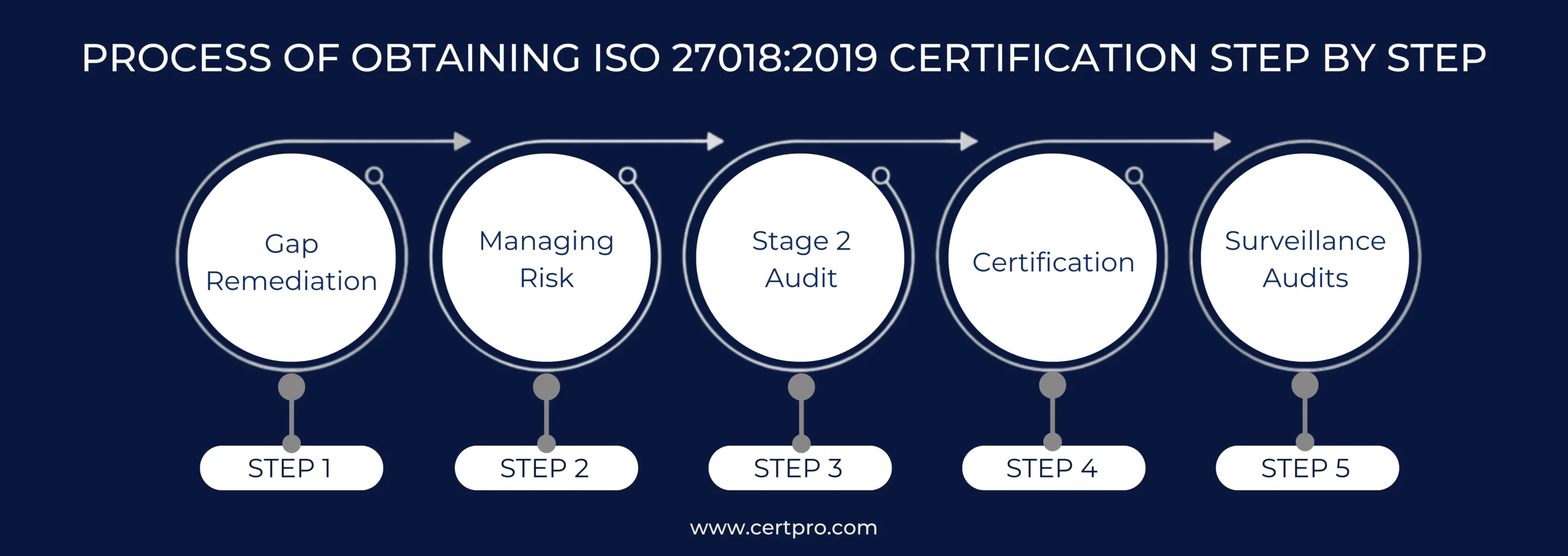
- ✓Stage 1: Scope Definition and Audit Program Determination
- ✓Stage 2: Documentation Review and Control Assessment
- ✓Stage 3: Nonconformity Review and Certification Decision
- ✓Stage 4: Surveillance Audits and Recertification
Steps for Obtaining ISO 27018 Certification
Organizations pursuing ISO 27018 certification in Germany follow a defined sequence of preparatory and audit activities that culminate in the issuance of a certification by an accredited body. The steps described below represent the structured pathway from initial organizational assessment through to certification issuance and ongoing maintenance, providing a clear framework for organizations planning their ISO 27018 certification program.
- Confirm ISO 27001 ISMS baseline: Verify that an existing ISO 27001-compliant Information Security Management System is in place or establish one, as ISO 27018 certification requires this foundational framework.
- Define the certification scope: Identify the specific cloud services, data processing systems, organizational units, and PII categories to be included within the ISO 27018 certification boundary.
- Conduct a PII processing inventory: Document all categories of PII processed within the defined scope, including processing purposes, legal bases, data flows, retention schedules, and sub-processor relationships.
- Map existing controls to ISO 27018 requirements: Evaluate current technical and organizational measures against the ISO 27018 control set to identify gaps requiring remediation before the certification audit.
- Implement missing PII protection controls: Deploy required technical controls such as encryption, access management, and audit logging, and establish required organizational procedures including DPO designation, data subject rights processes, and DPA templates.
- Prepare and review required documentation: Compile and review all documentation required for the certification audit, including privacy policies, PII processing registers, DPAs, incident response procedures, and training records.
- Engage an accredited certification body: Select a DAkkS-accredited certification body with demonstrated competence in ISO 27018 audits and schedule the audit program including Stage 1 documentation review and Stage 2 control assessment.
- Complete Stage 1 documentation review: Submit documentation to the certification body for review and address any deficiencies or nonconformities identified before the Stage 2 on-site audit.
- Undergo Stage 2 control assessment: Participate in the on-site audit covering evidence review, staff interviews, and technical verification of PII protection controls across the defined scope.
- Address identified nonconformities: Remediate major nonconformities before the certification decision and submit corrective action plans for minor nonconformities, providing documented evidence of remediation to the certification body.
The first and most critical step in pursuing ISO 27018 certification is confirming the existence of a conforming ISO 27001 ISMS. ISO 27018 is structured as an extension of ISO 27001, and its controls are designed to supplement rather than replace the ISO 27001 control framework. Organizations without an existing ISO 27001 certification must complete the full ISO 27001 implementation and certification process before pursuing ISO 27018, as the foundational risk management, control selection, and documentation requirements of ISO 27001 are prerequisites for ISO 27018 control implementation.
For German organizations that hold ISO 27001 certification under the 2013 version of the standard, the transition to ISO/IEC 27001:2022 is required by October 31, 2025, as established by the International Accreditation Forum (IAF). Organizations planning ISO 27018 certification should ensure that their ISO 27001 ISMS is aligned with the 2022 standard before initiating the ISO 27018 audit process, as the updated control framework of ISO 27001:2022 provides improved alignment with ISO 27018 PII protection requirements and reduces the gap between the two standards.
A comprehensive PII inventory is a foundational requirement for ISO 27018 certification and a prerequisite for effective control implementation. The inventory must identify all PII categories processed within the cloud environment, including the source of PII collection, the processing purposes, the parties with access to PII, the data retention schedules, and the locations of data storage and processing. For German organizations, the PII inventory must also document the legal basis for each processing activity under GDPR Article 6, as this information is required for both the ISO 27018 audit and GDPR compliance documentation.
Data flow mapping extends the PII inventory by documenting how PII moves through the cloud environment, from collection through processing, storage, transfer, and deletion. Data flow maps are essential for identifying where PII protection controls are required, where PII may be exposed to unauthorized access, and where processing activities cross organizational or geographic boundaries. For German organizations with multi-cloud or hybrid cloud environments, data flow maps must identify all cloud service providers involved in PII processing and verify that appropriate data processing agreements are in place with each provider.
- ✓Establishing the ISO 27001 Foundation
- ✓PII Inventory and Data Flow Mapping
ISO 27018 Certification Cost in Germany
The cost of ISO 27018 certification in Germany varies based on several organizational and operational factors, including the size of the organization, the complexity of the cloud environment, the volume and sensitivity of PII processed, and whether the organization holds an existing ISO 27001 certification. Organizations should evaluate certification costs as a structured investment in PII protection capability and regulatory compliance, recognizing that the audit fees represent a component of the total cost alongside internal resource requirements for documentation, control implementation, and audit preparation.
Primary Cost Components
ISO 27018 certification costs in Germany consist of several distinct components. Certification body fees constitute the primary direct cost and include charges for the Stage 1 documentation review, Stage 2 control assessment, annual surveillance audits, and the three-year recertification audit. Certification body fees for German organizations typically range based on organization size and audit scope, with small and medium enterprises (SMEs) with focused cloud service scopes incurring lower fees than large enterprises with complex multi-service environments. Organizations should obtain detailed fee schedules from multiple DAkkS-accredited certification bodies to compare costs and audit approaches.
Internal resource costs represent a significant component of the total certification investment and include the time and effort required by internal personnel to prepare documentation, implement missing controls, and support the audit process. For organizations without an existing ISO 27001 ISMS, internal resource costs are substantially higher as they must encompass full ISMS establishment activities. Organizations with mature ISO 27001 programs pursuing ISO 27018 as an extension can leverage existing documentation and control frameworks, significantly reducing internal preparation time and associated costs.
Factors Influencing Certification Investment
Several factors directly influence the total ISO 27018 certification investment for German organizations. The complexity of the cloud service portfolio being certified affects audit scope and duration, with organizations offering multiple cloud service types (IaaS, PaaS, SaaS) requiring more extensive control evaluations than single-service providers. The geographic distribution of cloud infrastructure also influences costs, as multi-location environments require broader audit coverage and may necessitate remote or on-site visits to multiple data center locations.
The maturity of existing PII protection controls at the time of the initial certification audit significantly affects the total investment, as organizations with immature controls may require multiple audit cycles before achieving certification or may need to invest in technical upgrades before the audit. Organizations that proactively evaluate their control maturity against ISO 27018 requirements before engaging a certification body are better positioned to control audit costs by ensuring that remediable deficiencies are addressed in advance of the formal audit process, reducing the likelihood of nonconformity findings that extend the certification timeline.
| Cost Component | Description | Influence Factors |
|---|---|---|
| Certification Body Audit Fees | Stage 1, Stage 2, surveillance, and recertification audit fees | Organization size, cloud scope complexity, number of locations |
| Internal Resource Costs | Staff time for documentation, control implementation, and audit support | Existing ISO 27001 maturity, PII processing complexity |
| Technical Control Implementation | Costs for deploying encryption, access controls, audit logging systems | Gaps between current and required control state |
| Annual Surveillance Audits | Annual review audits required to maintain certification validity | Scope changes, nonconformities from prior cycles |
| Recertification (3-Year Cycle) | Full re-evaluation at end of certification period | Standard updates, scope changes, organizational growth |
Benefits of ISO 27018 Certification for German Organizations
ISO 27018 certification delivers concrete, measurable benefits for German cloud service providers and PII processors operating in the German and European market. These benefits extend across regulatory compliance, commercial positioning, operational risk management, and organizational accountability, providing certified organizations with a comprehensive return on their certification investment.
- ✓Regulatory compliance demonstration: Provides audited evidence of GDPR and BDSG technical and organizational measure requirements, supporting compliance with Article 28 data processor obligations and reducing regulatory enforcement risk.
- ✓Customer trust and market differentiation: Delivers an independently verified trust signal that differentiates certified providers in competitive procurement processes and accelerates enterprise client due diligence.
- ✓Reduced contractual risk: Strengthens contractual positions with EU clients by providing documented evidence of PII protection control maturity, reducing liability exposure under GDPR data processing agreements.
- ✓BaFin and regulatory alignment: Satisfies cloud outsourcing control requirements applicable to financial services providers under BaFin circulars, supporting regulated industry market access.
- ✓Operational PII risk reduction: Systematic control implementation reduces the likelihood of PII breaches, unauthorized access incidents, and data subject rights failures that could result in GDPR enforcement actions.
- ✓International market access: Provides a globally recognized PII protection credential supporting market entry into North American, Asia-Pacific, and other markets requiring cloud privacy certification.
- ✓Sub-processor accountability: Establishes clear standards for managing third-party sub-processors, reducing the risk of PII protection failures in the cloud supply chain.
- ✓Data subject rights fulfillment: Documented procedures for handling access, rectification, erasure, and portability requests reduce the risk of GDPR Article 15–20 compliance failures.
- ✓Organizational accountability culture: Certification process establishes privacy governance structures, staff training programs, and incident response capabilities that strengthen organizational PII protection culture.
- ✓Insurance and liability positioning: ISO 27018 certification may support favorable terms in cyber liability insurance policies by demonstrating documented PII protection control maturity.
ISO 27018 certification provides German cloud service providers with documented evidence of PII protection control implementation that can be presented to data protection supervisory authorities during regulatory inquiries or enforcement proceedings. German data protection authorities, including the BfDI and state-level authorities such as the Bayerisches Landesamt für Datenschutzaufsicht (BayLDA), have the authority to conduct audits of data processors and impose significant fines for GDPR violations. ISO 27018 certification provides a structured defense against enforcement actions by demonstrating that systematic PII protection controls were in place and operating effectively at the time of any alleged violation.
GDPR Article 83 establishes maximum fines of €20 million or 4% of global annual turnover for the most serious violations, with the adequacy of implemented technical and organizational measures explicitly referenced as a factor in determining fine amounts. Organizations that can demonstrate ISO 27018 certification at the time of a data breach or PII processing incident are positioned to argue that appropriate measures were in place, potentially mitigating the severity of regulatory sanctions. This legal risk reduction benefit is particularly significant for large German cloud service providers processing high volumes of sensitive PII across multiple EU jurisdictions.
ISO 27018 certification creates direct commercial value for German cloud service providers by enabling participation in procurement processes that require documented PII protection credentials. Public sector procurement in Germany increasingly requires cloud vendors to demonstrate data protection certifications as a condition of contract award, reflecting the German government’s commitment to data sovereignty and privacy protection. ISO 27018 certification positions providers for government cloud contracts, public sector SaaS deployments, and regulated industry supply chains where uncertified providers are systematically excluded.
Enterprise clients across Germany’s financial services, healthcare, automotive, and manufacturing sectors apply ISO 27018 certification requirements in their vendor qualification processes, recognizing the certification as evidence of mature PII protection practices. For German SaaS providers and managed service providers competing for enterprise contracts, ISO 27018 certification reduces the sales cycle by eliminating lengthy vendor security assessment questionnaires and providing clients with audited evidence of control maturity. This commercial efficiency benefit translates directly into reduced time-to-contract and improved competitive win rates in certified provider markets.
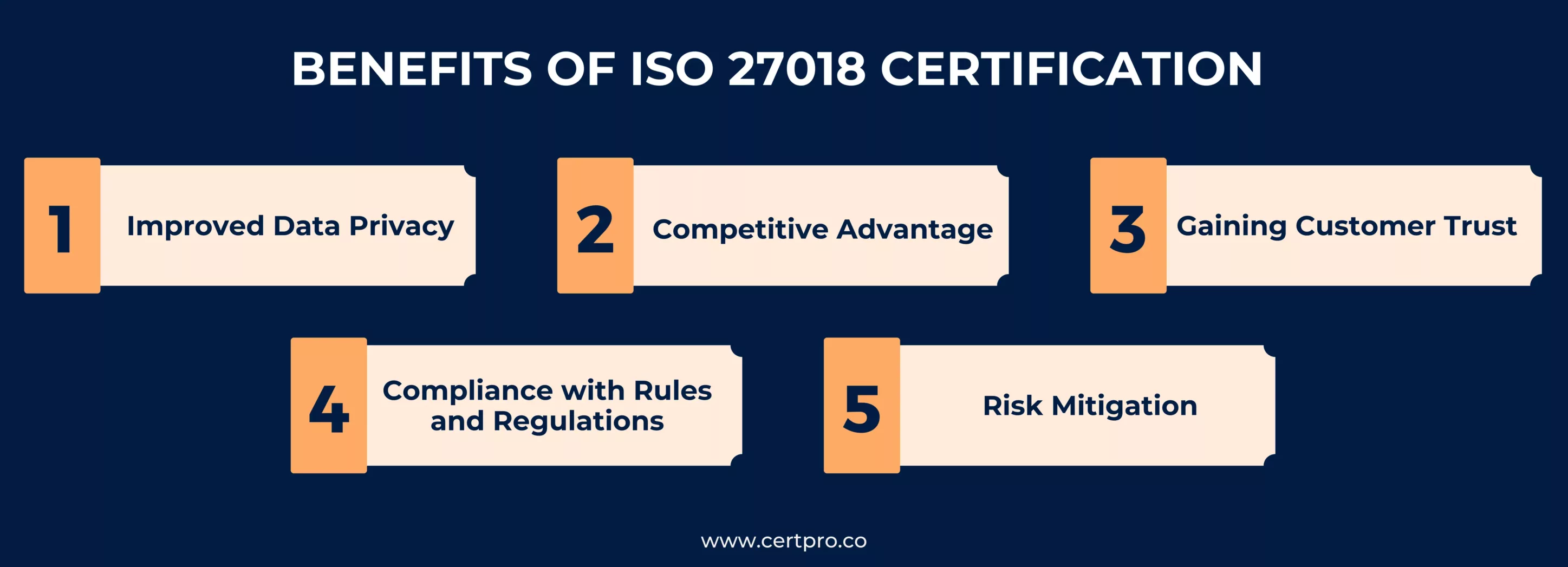
- ✓Regulatory and Legal Risk Reduction
- ✓Commercial and Procurement Benefits
ISO 27018 Certification for German Financial Services and Technology Sectors
ISO 27018 certification in Germany holds particular relevance for the financial services and technology sectors, where the intersection of cloud adoption, PII processing obligations, and regulatory requirements creates a strong demand for independent PII protection validation. German financial institutions, fintech companies, insurance providers, and technology firms operating cloud platforms face specific regulatory and market-driven requirements that ISO 27018 certification directly addresses.
Financial Services and Fintech Applications
German financial services organizations regulated by BaFin are subject to specific cloud outsourcing requirements that overlap significantly with ISO 27018 certification controls. BaFin’s Minimum Requirements for Risk Management (MaRisk) and the Banking Act (KWG) require financial institutions to maintain documented oversight of material outsourcing relationships, including cloud service arrangements involving customer PII. ISO 27018 certification provides financial institutions with an audited framework for meeting these oversight requirements, demonstrating that cloud service providers engaged for PII processing maintain controls that satisfy regulatory expectations.
German fintech companies operating as cloud-native businesses frequently process substantial volumes of customer financial data, including payment information, credit history, transaction records, and identification documents. These data categories are subject to both GDPR and Payment Services Directive 2 (PSD2) requirements, creating a complex compliance environment that ISO 27018 certification helps navigate. Fintech providers holding ISO 27018 certification can demonstrate to banking partners, institutional clients, and regulatory authorities that their cloud PII processing controls satisfy recognized international standards, supporting partnership agreements and regulatory licensing applications.
Technology Companies and SaaS Providers
German technology companies and SaaS providers serving enterprise clients across Europe operate in a market where cloud data privacy certification is increasingly a standard procurement requirement. ISO 27018 certification provides these organizations with a recognized credential that supports enterprise sales processes, partner agreements, and international market expansion. For SaaS providers processing HR data, CRM data, or customer analytics data on behalf of clients, ISO 27018 certification demonstrates that the provider operates as a responsible PII processor, maintaining controls that protect client data in accordance with GDPR and international privacy standards.
German technology clusters in Munich, Berlin, Hamburg, and Frankfurt contain significant concentrations of cloud-native companies that compete for enterprise contracts requiring ISO 27018 certification. Organizations in these centers that achieve ISO 27018 certification differentiate themselves within competitive technology ecosystems, gaining access to enterprise procurement opportunities that are closed to non-certified providers. ISO 27018 certification also supports due diligence processes for venture capital and private equity investment, as investors increasingly evaluate portfolio companies’ data protection credentials as part of investment risk assessments.
Healthcare and Life Sciences Cloud Providers
Healthcare cloud service providers operating in Germany process some of the most sensitive categories of PII regulated under GDPR Article 9, which imposes heightened obligations for special category data processing. ISO 27018 certification provides healthcare SaaS providers, electronic health record platforms, and medical device cloud services with an audited framework for demonstrating that special category PII is protected through controls that satisfy GDPR Article 9 requirements. German healthcare institutions selecting cloud vendors for patient data processing are increasingly requiring ISO 27018 certification as a vendor qualification criterion, reflecting the regulatory sensitivity of health data.
ISO 27018 Compliance Germany: Regulatory Context
ISO 27018 compliance in Germany operates within a comprehensive regulatory context defined by European and national data protection legislation, sector-specific regulations, and enforcement guidance from German supervisory authorities. Understanding the regulatory environment in which ISO 27018 compliance is evaluated is essential for organizations planning their certification programs and for understanding the scope of protections that certification demonstrates.
GDPR Enforcement in Germany
Germany implements GDPR through a decentralized enforcement structure, with 16 state-level data protection authorities (Landesdatenschutzbehörden) and the federal BfDI responsible for enforcement in their respective jurisdictions. German data protection authorities have demonstrated consistent willingness to impose significant GDPR fines for PII processing failures, with notable enforcement actions targeting both data controllers and data processors for failures to maintain adequate technical and organizational measures. ISO 27018 compliance provides a structured approach to meeting the Article 32 requirements that are frequently cited in enforcement actions.
The Hamburg Commissioner for Data Protection and Freedom of Information, the Bavarian State Office for Data Protection Supervision (BayLDA), and the Berlin Commissioner for Data Protection have each published guidance on cloud data processing that references international standards including ISO 27018 as appropriate frameworks for demonstrating compliance with GDPR data processor obligations. This regulatory acknowledgment of ISO 27018 as a relevant compliance framework reinforces the value of certification for German organizations seeking to demonstrate regulatory alignment to supervisory authorities.
BSI Cloud Computing Compliance Criteria Catalogue (C5)
The German Federal Office for Information Security (Bundesamt für Sicherheit in der Informationstechnik, BSI) publishes the Cloud Computing Compliance Criteria Catalogue (C5), a framework specifically designed for cloud security assurance in Germany. C5 includes requirements that overlap significantly with ISO 27018 controls, particularly in the areas of data protection, access management, cryptography, and transparency. German cloud service providers that hold both BSI C5 attestation and ISO 27018 certification demonstrate a comprehensive commitment to cloud security and privacy that satisfies both national and international standards.
The BSI C5 framework is increasingly recognized in German public sector procurement as a baseline requirement for cloud services handling government data, with ISO 27018 serving as a complementary certification for PII-specific controls. Organizations pursuing both certifications benefit from the significant overlap between the two frameworks, as control implementations satisfying C5 requirements frequently address ISO 27018 control requirements for the same domains. German cloud providers targeting both public sector and enterprise markets are well-served by pursuing both frameworks in a coordinated certification program that maximizes the efficiency of audit investments.
CertPro’s ISO 27018 Audit Services in Germany
CertPro conducts ISO 27018 certification audits for cloud service providers and PII processors operating across Germany as a Licensed CPA Firm specializing in information security and privacy certification. CertPro’s audit services are structured around the ISO/IEC 27018:2019 control framework, with audit methodologies designed to evaluate PII protection controls against both international standard requirements and the specific regulatory obligations applicable to German organizations under GDPR and BDSG.
Audit Scope and Methodology
CertPro’s ISO 27018 audit methodology evaluates the complete lifecycle of PII protection within the defined cloud service scope, from initial data collection through processing, storage, transfer, and deletion. The audit methodology incorporates documentation review, control testing, staff interviews, and technical verification activities to produce a comprehensive assessment of PII protection control effectiveness. Audit procedures are designed to generate extractable, evidence-based findings that clearly document the basis for each control evaluation conclusion, supporting certification body decision-making and providing organizations with actionable audit records.
CertPro conducts ISO 27018 audits across all major German commercial centers, including Hamburg, Düsseldorf, Cologne, Stuttgart, Munich, Frankfurt, and Berlin, with audit teams that combine ISO 27018 technical expertise with direct knowledge of German regulatory requirements under GDPR and BDSG. For organizations with distributed cloud infrastructure, CertPro’s audit program can accommodate multi-location assessments, providing consistent evaluation standards across all components of the certified cloud environment.
Sector-Specific Audit Expertise
CertPro’s audit teams include specialists with direct experience in the regulatory requirements applicable to German financial services, healthcare, technology, and manufacturing sectors. This sector-specific knowledge enables audit procedures to be calibrated to the particular PII processing risks and regulatory expectations relevant to each organization’s industry context. For financial services organizations subject to BaFin cloud outsourcing requirements, CertPro’s audits evaluate ISO 27018 controls against both standard requirements and sector-specific regulatory expectations, providing a comprehensive assessment that addresses multiple compliance frameworks simultaneously.
CertPro’s ISO 27018 audit reports are structured to provide maximum utility for German organizations’ regulatory compliance programs, with findings documented in formats that can be presented to data protection supervisory authorities, BaFin examiners, and enterprise procurement teams. The declarative, evidence-based audit report format facilitates direct reference in regulatory inquiries and vendor qualification processes, maximizing the return on organizations’ ISO 27018 certification investments.
Integrated ISO 27001 and ISO 27018 Audit Programs
CertPro offers integrated audit programs that combine ISO 27001 and ISO 27018 certification audits for organizations seeking both certifications in a coordinated program. Integrated audit programs leverage the significant overlap between the two standards’ control frameworks to reduce total audit time and cost while maintaining the independence and rigor required for separate certification decisions. Organizations pursuing integrated programs benefit from a unified audit team that understands the interdependencies between ISO 27001 ISMS requirements and ISO 27018 PII-specific controls, producing coherent findings across both certification scopes.
FAQ
▶
What is ISO 27018 certification and why does it matter for German cloud providers?
▶
Which organizations in Germany require ISO 27018 certification?
▶
How long does ISO 27018 certification take in Germany?
▶
What is the audit structure for ISO 27018 certification?
▶
Does ISO 27018 certification satisfy GDPR Article 28 requirements in Germany?
▶
What are the costs associated with ISO 27018 certification in Germany?
▶
How does ISO 27018 certification relate to BSI C5 in Germany?
▶
Can ISO 27018 certification be pursued simultaneously with ISO 27001 in Germany?


More articles about ISO 27018 are coming soon. Check back for updates!
More articles about ISO 27018 are coming soon. Check back for updates!
Get In Touch
have a question? let us get back to you.