
SOC 2 Certification in Germany
SOC 2 examinations are conducted in two distinct report types — Type 1 and Type 2 — each serving different assurance purposes and requiring different audit structures. German organizations selecting between a SOC 2 Type 1 audit in Germany and a SOC 2 Type 2 audit in Germany must understand the scope, timeline, and assurance value differences to align their SOC 2 Certification strategy with customer requirements and organizational readiness.
OUR CLIENTS









What Is SOC 2 Certification?
SOC 2 Certification is an independent attestation issued by a Licensed CPA Firm following a structured examination of an organization’s information security controls under the American Institute of Certified Public Accountants (AICPA) Trust Services Criteria. Unlike ISO 27001 — a certification standard issued by accredited certification bodies — SOC 2 Certification is an attestation engagement governed by AICPA AT-C Section 205 attestation standards. The resulting SOC 2 report is not a certificate but a formal attestation opinion issued by a qualified CPA practitioner who has independently evaluated whether the subject organization’s controls meet the applicable Trust Services Criteria.
Trust Services Criteria: The Framework Behind SOC 2
The Trust Services Criteria (TSC) are the evaluative standards published by the AICPA against which a SOC 2 examination is conducted. The TSC are organized into five principal categories: Security, Availability, Processing Integrity, Confidentiality, and Privacy. Security is the only mandatory category and serves as the Common Criteria applicable to all SOC 2 examinations. The remaining four categories are optional and are included in scope based on the nature of the organization’s services and the commitments made to its customers. Each category contains specific criteria addressing risk assessment, logical access, change management, incident response, and operational monitoring, among other control domains.
The Security category — formally designated as the Common Criteria (CC) — spans nine logical groupings covering organizational and governance controls, communication and information, risk assessment, monitoring activities, control environment, logical and physical access controls, system operations, change management, and risk mitigation. Organizations electing to include Availability criteria must demonstrate that their systems are available for operation and use as committed. Processing Integrity criteria apply where the accuracy, completeness, validity, and timeliness of system processing is material to customers. Confidentiality criteria govern the protection of designated confidential information, while Privacy criteria address the collection, use, retention, disclosure, and disposal of personal information consistent with the organization’s privacy notice and applicable regulatory requirements.
| Trust Services Category | Scope Application | Common for German Sectors |
|---|---|---|
| Security (Common Criteria) | Mandatory for all SOC 2 examinations | All technology, SaaS, and cloud organizations |
| Availability | Optional — systems uptime and performance | Cloud providers, SaaS, data centers, fintech |
| Processing Integrity | Optional — accuracy and completeness of processing | Fintech, payroll processors, ERP providers |
| Confidentiality | Optional — protection of confidential information | Legal tech, healthcare, enterprise software |
| Privacy | Optional — personal information lifecycle management | Healthcare, HR platforms, consumer data handlers |
SOC 2 Attestation vs. SOC 2 Compliance: A Critical Distinction
A foundational distinction in understanding SOC 2 Certification is the difference between SOC 2 attestation and SOC 2 compliance. SOC 2 compliance refers to an organization’s internal adherence to controls aligned with the Trust Services Criteria without independent third-party verification. SOC 2 attestation, by contrast, is the outcome of a formal SOC 2 examination conducted by a Licensed CPA Firm, which issues an independent opinion on whether the organization’s controls are suitably designed and — in the case of a Type 2 report — operating effectively over a defined observation period. Only SOC 2 attestation produces a report that can be shared with customers and counterparties as credible, independent assurance evidence.
This distinction is particularly relevant for German organizations responding to customer due diligence requests, enterprise procurement requirements, or vendor assurance questionnaires. Customers seeking third-party assurance require a SOC 2 attestation report — not a self-declaration of compliance. The SOC 2 report contains the auditor’s opinion, a description of the system under examination, management’s assertion, and detailed test results. Together, these components provide customers with meaningful, independently verified information about the organization’s control environment. For organizations pursuing SOC 2 Certification in Germany, understanding that the engagement is an attestation examination — not a self-certification — is essential to communicating its value accurately to stakeholders.
Institutional Authority: The Role of the Licensed CPA Firm
Under AICPA attestation standards, only a Licensed CPA Firm is authorized to conduct a SOC 2 examination and issue a SOC 2 attestation report. This institutional requirement reflects the statutory authority of CPA practitioners to perform attestation engagements and sign attestation opinions. Organizations pursuing a SOC 2 audit in Germany must retain a CPA firm that holds appropriate licensure, maintains independence from the subject organization, and applies AICPA professional standards throughout the examination. The CPA firm’s attestation opinion carries legal and professional accountability — distinguishing it from assessments conducted by IT security firms, consultancies, or certification bodies that lack CPA licensure.

ENQUIRE NOW
Related Resources
Related Services in Germany
Introduction to SOC 2 Certification in Germany
SOC 2 Certification in Germany addresses a specific and growing demand among German organizations that provide technology services, cloud infrastructure, software platforms, and data processing capabilities to enterprise customers. Germany is Europe’s largest economy and hosts a concentration of multinational corporations, SaaS providers, financial technology companies, automotive technology firms, industrial software vendors, and managed service providers — many of which process sensitive customer data on behalf of international clients. These organizations are frequently subject to rigorous vendor assurance requirements from customers in the United States, the United Kingdom, and across the European Union, making SOC 2 attestation in Germany a critical component of any market access strategy.
The demand for SOC 2 compliance in Germany has intensified as German enterprises face converging pressures from GDPR obligations, the German Federal Data Protection Act (BDSG), evolving EU cybersecurity regulatory requirements, and the increasing expectations of enterprise customers who require independent assurance of their vendors’ control environments. SOC 2 attestation in Germany provides a structured, internationally recognized mechanism for demonstrating that an organization’s controls are independently verified — enabling German companies to compete effectively in markets where SOC 2 reports are a standard procurement requirement.
Germany’s Technology and Services Landscape
Germany’s technology sector encompasses a diverse range of organizations that regularly encounter SOC 2 audit requirements. The country is home to major cloud service providers, enterprise software vendors, cybersecurity technology firms, fintech companies operating under BaFin oversight, healthcare data processors, automotive technology suppliers integrated into global supply chains, and industrial IoT platform providers. Frankfurt serves as a major European financial hub with a high concentration of financial technology firms, payment processors, and banking infrastructure providers. Berlin has developed into a leading startup and scale-up ecosystem, with SaaS companies and digital platform providers that frequently serve U.S. and U.K. enterprise clients requiring SOC 2 attestation as a procurement prerequisite.
Munich and Hamburg also host substantial concentrations of enterprise software companies, logistics technology providers, and healthcare information systems vendors operating at the intersection of German regulatory requirements and international customer assurance expectations. For these organizations, completing a SOC 2 examination conducted by a Licensed CPA Firm is an authoritative demonstration of control maturity that can satisfy vendor assurance requirements across multiple jurisdictions simultaneously. SOC 2 Certification in Germany is therefore not merely a compliance exercise — it is a strategic credential that supports business development, contract retention, and risk governance objectives.
Regulatory Environment: GDPR, BDSG, and SOC 2 Alignment
Germany operates within a comprehensive data protection and cybersecurity regulatory framework that creates natural alignment with SOC 2 Trust Services Criteria. The General Data Protection Regulation (GDPR) establishes binding requirements for the processing, storage, and transfer of personal data affecting all organizations operating in or serving individuals within the European Union. The German Federal Data Protection Act (BDSG) supplements GDPR with national-level specifications applicable to German organizations. While SOC 2 is not a legal requirement under German or EU law, the controls evaluated during a SOC 2 examination — including access management, data encryption, incident response, audit logging, and vendor management — directly support an organization’s ability to demonstrate GDPR and BDSG compliance.
The NIS2 Directive, which EU member states including Germany have transposed into national law, imposes cybersecurity risk management obligations on essential and important entities — including requirements for incident handling, supply chain security, and information security governance. SOC 2 compliance in Germany, when documented through a formal attestation, provides evidence relevant to demonstrating NIS2 compliance posture to regulators and customers. Similarly, the EU Cyber Resilience Act and DORA (Digital Operational Resilience Act) for financial entities create additional demand for third-party assurance mechanisms. SOC 2 attestation in Germany serves as a recognized instrument for meeting the vendor assurance components of these regulatory frameworks.
SOC 2 Type 1 vs. SOC 2 Type 2 in Germany
SOC 2 examinations are conducted in two distinct report types — Type 1 and Type 2 — each serving different assurance purposes and requiring different audit structures. German organizations selecting between a SOC 2 Type 1 audit in Germany and a SOC 2 Type 2 audit in Germany must understand the scope, timeline, and assurance value differences to align their SOC 2 Certification strategy with customer requirements and organizational readiness.
SOC 2 Type 1: Point-in-Time Design Assessment
A SOC 2 Type 1 audit in Germany evaluates whether an organization’s controls are suitably designed to meet the applicable Trust Services Criteria as of a specific point in time — the report date. The Type 1 examination does not include testing of control operating effectiveness over a period; it addresses the design and existence of controls on the specified date. The Licensed CPA Firm reviews system descriptions, control documentation, policies, procedures, and design evidence to determine whether the controls, if operating as described, would satisfy the relevant TSC requirements. A Type 1 report provides customers with assurance that controls are appropriately structured, even if their sustained operation has not yet been independently evaluated.
SOC 2 Type 1 reports are commonly used by German organizations that are new to SOC 2 attestation and wish to demonstrate initial control maturity to prospective customers while preparing for a subsequent Type 2 examination. A Type 1 report can often be completed in a shorter timeframe than a Type 2 engagement because it does not require an observation period during which controls must operate and be tested continuously. Many German SaaS companies and technology startups use Type 1 as an initial market entry credential — particularly when responding to enterprise procurement requirements that accept a Type 1 report as interim assurance while the organization builds toward a full SOC 2 Type 2 attestation.
SOC 2 Type 2: Operating Effectiveness Over an Observation Period
A SOC 2 Type 2 audit in Germany evaluates both the suitability of control design and the operating effectiveness of controls over a defined observation period — typically a minimum of six months and commonly twelve months. During this period, the Licensed CPA Firm collects and tests evidence of control operation, including system-generated logs, access review records, security monitoring outputs, incident response documentation, change management records, and vendor management evidence. The SOC 2 examination tests whether controls operated consistently and effectively throughout the observation period, not just whether they were appropriately designed at a single point in time.
SOC 2 Type 2 reports carry substantially greater assurance weight than Type 1 reports and are the standard requirement for most enterprise procurement processes — particularly those involving U.S.-headquartered customers. For German organizations serving multinational enterprises, financial institutions, healthcare organizations, or government entities, a SOC 2 Type 2 audit in Germany is typically the expected level of assurance. The observation period requirement means that organizations must maintain consistent control operation throughout the audit window, making control sustainability and operational discipline critical factors in achieving a clean Type 2 attestation opinion.
| Attribute | SOC 2 Type 1 | SOC 2 Type 2 |
|---|---|---|
| Evaluation Scope | Control design at a point in time | Control design and operating effectiveness over a period |
| Observation Period | Not applicable — single report date | Minimum 6 months, typically 12 months |
| Assurance Level | Design assurance only | Design and operational assurance |
| Typical Timeline | 2–4 months from scope definition | 6–14 months including observation period |
| Common Use Case | Initial market entry, interim procurement credential | Enterprise contracts, ongoing vendor assurance programs |
Selecting the Appropriate Report Type for German Market Requirements
The selection between Type 1 and Type 2 should be driven primarily by customer requirements and the organization’s current control maturity. German organizations that already maintain documented, operational controls aligned with TSC requirements may elect to proceed directly to a Type 2 examination — bypassing the Type 1 stage entirely. Organizations that have recently implemented or restructured their information security programs may find that a Type 1 examination provides an appropriate initial assurance milestone before committing to the sustained observation period required for Type 2. Licensed CPA Firms conducting a SOC 2 audit in Germany will typically assess organizational readiness during scope definition to determine which report type is appropriate given the control environment and customer-facing commitments.
SOC 2 Audit Process in Germany
The SOC 2 audit process in Germany follows a structured sequence of examination stages governed by AICPA AT-C Section 205 attestation standards. Each stage of the SOC 2 examination serves a distinct evaluative purpose, and the Licensed CPA Firm applies professional judgment and evidence-based testing throughout. German organizations pursuing SOC 2 Certification in Germany should understand each stage to manage timelines effectively, prepare evidence, and engage appropriately with the examining CPA firm.
Scope definition is the initial and most consequential stage of the SOC 2 audit process. The Licensed CPA Firm and the subject organization jointly determine which Trust Services Criteria will be included in the examination, which organizational systems and services are within scope, and what boundaries define the system under evaluation. Scope definition for SOC 2 Certification in Germany must account for the organization’s service commitments to customers, system components (including infrastructure, software, data, people, and procedures), and any subservice organizations or subprocessors whose activities are relevant to the controls being evaluated. The system description produced at this stage forms the foundational document against which the auditor’s opinion is rendered.
For German organizations operating under GDPR, the system description must accurately reflect how personal data is processed within the scope of services — as customers will scrutinize this description for consistency with their own data processing agreements. Management is responsible for preparing the system description, which must cover the nature of services provided, infrastructure components, software systems, data categories processed, personnel roles, procedures, and relevant subservice organization relationships. The auditor evaluates the completeness and accuracy of the system description as a formal part of the SOC 2 examination process.
Following scope definition, the Licensed CPA Firm develops the audit program, which specifies the examination procedures, evidence requirements, sampling approach, and testing methods to be applied to each in-scope control. The audit program is designed to gather sufficient, appropriate evidence to support the auditor’s opinion on whether controls are suitably designed (Type 1) and operating effectively (Type 2). For a SOC 2 audit in Germany, the audit program will typically include control inquiries with relevant personnel, inspection of policies and procedure documents, observation of control activities, reperformance of control procedures, and analysis of system-generated evidence such as access logs, monitoring alerts, and configuration records.
The fieldwork stage constitutes the substantive examination activity in which the Licensed CPA Firm collects and evaluates evidence of control design and operation. For a SOC 2 Type 2 audit in Germany, fieldwork spans the entire observation period and includes both point-in-time testing and continuous evidence collection. Evidence gathered during fieldwork includes documented security policies, access provisioning and deprovisioning records, vulnerability scan and penetration test reports, security incident logs, change management approvals, business continuity and disaster recovery test results, third-party vendor assessments, and employee security training records.
Control testing during the SOC 2 examination involves both design testing — confirming that controls are structured to prevent or detect the risks they are intended to address — and operating effectiveness testing, which evaluates whether controls consistently functioned as designed throughout the observation period. The CPA firm applies statistical sampling methods to test populations of transactions, access events, change requests, and other control activities. For German organizations with large volumes of system events, the auditor will define appropriate sample sizes consistent with AICPA attestation standards and professional judgment about risk and materiality.
When the SOC 2 examination identifies control deviations, exceptions, or failures during testing, the Licensed CPA Firm documents these as exceptions within the audit report. Exceptions do not automatically result in an adverse attestation opinion. The auditor evaluates the nature, frequency, and severity of exceptions relative to the overall control population and the risk they represent to the Trust Services Criteria. Management has the opportunity to review identified exceptions and provide written responses explaining mitigating controls, compensating measures, or remediation actions. The examination concludes with the issuance of the SOC 2 attestation report, which includes the auditor’s opinion, the description of tests and results, and any identified exceptions with their characterization.
Upon completion of the examination, the Licensed CPA Firm issues the SOC 2 attestation report — the formal output of the SOC 2 examination and the document shared with customers and counterparties as independent assurance evidence. The SOC 2 report does not have a statutory expiration date, but industry practice recognizes SOC 2 Type 2 reports as current for twelve months following the end of the observation period. Organizations maintaining continuous SOC 2 compliance in Germany are expected to conduct annual audit cycles to maintain a current, uninterrupted sequence of attestation reports. Enterprise customers and procurement programs typically require reports dated within the preceding twelve months to consider them current for vendor assurance purposes.
- Scope Definition: Identify applicable Trust Services Criteria, system boundaries, and in-scope services
- System Description Preparation: Management documents the system, services, controls, and subservice organizations
- Audit Program Development: Licensed CPA Firm designs examination procedures, evidence requirements, and testing methods
- Observation Period Commencement (Type 2): Controls operate under examination conditions for a minimum of six months
- Fieldwork and Evidence Collection: CPA firm collects documentation, system logs, and control evidence throughout the observation period
- Control Testing: Auditor applies design and operating effectiveness tests to each in-scope control
- Exception Identification and Management Response: Exceptions are documented; management provides written responses where applicable
- Draft Report Review: Management reviews the draft attestation report for factual accuracy
- Final SOC 2 Attestation Issuance: Licensed CPA Firm issues the signed attestation report with auditor’s opinion
- Annual Recertification: Organizations initiate the subsequent audit cycle to maintain continuous SOC 2 attestation coverage
- ✓Stage 1: Scope Definition and System Description
- ✓Stage 2: Audit Program Determination
- ✓Stage 3: Fieldwork, Evidence Collection, and Control Testing
- ✓Stage 4: Nonconformity Review and Management Response
- ✓Stage 5: Attestation Report Issuance and Report Validity
SOC 2 Compliance Requirements for German Organizations
SOC 2 compliance requirements for German organizations are defined by the AICPA Trust Services Criteria and the specific control objectives established within each TSC category selected for examination. Unlike prescriptive regulatory frameworks that mandate specific technical controls, the TSC are principle-based — allowing organizations flexibility in how they implement controls to satisfy criteria. The SOC 2 examination evaluates whether controls in place are suitably designed and operating effectively to meet the organization’s stated commitments and system requirements, which include service commitments made to customers, system requirements defined in contracts and service level agreements, and applicable laws and regulations.
Documentation requirements for a SOC 2 audit in Germany center on the organization’s ability to produce evidence that controls exist, are formally defined, and have been consistently applied. Required documentation typically includes an information security policy and subordinate policies covering access control, encryption, incident response, change management, vendor management, business continuity, and data classification. Procedures documents that specify how each policy is operationalized, role definitions for personnel with security responsibilities, and formal records of control activities — such as access review completion records, security awareness training completions, and vulnerability assessment reports — are all subject to examination during the SOC 2 audit process.
German organizations must ensure that documentation is maintained in a format that enables independent review by the Licensed CPA Firm. Documentation gaps — where controls are operating but not formally documented — are a common source of exceptions in SOC 2 examinations. Organizations that process personal data under GDPR are often already required to maintain Records of Processing Activities (RoPA) under Article 30, data protection impact assessments (DPIAs) for high-risk processing, and data processing agreements (DPAs) with processors. These existing documentation requirements create natural alignment with SOC 2 evidence expectations, reducing the incremental documentation burden for organizations already maintaining robust GDPR compliance documentation.
Technical control requirements evaluated during a SOC 2 examination address the specific mechanisms through which the organization enforces information security policies at the system level. Under the Security (Common Criteria) category, examined technical controls include logical access controls such as multi-factor authentication, role-based access provisioning, privileged access management, and periodic access reviews. Infrastructure security controls include network segmentation, firewall configurations, intrusion detection and prevention systems, vulnerability management programs, and patch management processes. Encryption controls governing data at rest and in transit are evaluated for consistency with the organization’s confidentiality and privacy commitments.
Monitoring and logging controls are among the most technically demanding requirements in a SOC 2 examination. Organizations must demonstrate that security events are logged, that logs are centrally aggregated and protected from tampering, that alerts are configured for anomalous activity, and that monitoring activities are reviewed by qualified personnel. For SOC 2 compliance in Germany, organizations operating cloud infrastructure — whether on AWS, Microsoft Azure, Google Cloud, or other platforms — must demonstrate that cloud-native monitoring capabilities are configured, that cloud provider logs are accessible and reviewed, and that responsibilities between the organization and its cloud provider are clearly delineated in the system description.
Organizations undergoing a SOC 2 audit in Germany that rely on subservice organizations — third-party vendors providing services relevant to the controls being examined — must address these relationships in the system description and control documentation. AICPA attestation standards provide two methods for handling subservice organizations: the carve-out method, which excludes the subservice organization’s controls from the examination scope and references them separately, and the inclusive method, which incorporates the subservice organization’s controls within the examination. The carve-out method is more commonly used and requires the subject organization to demonstrate that it monitors its subservice organizations through complementary user entity controls and obtains assurance reports (such as SOC 2 reports) from relevant subservice organizations where available.
- ✓Formal information security policy approved by senior management and reviewed annually
- ✓Role-based access control with documented provisioning and deprovisioning procedures
- ✓Multi-factor authentication for all systems processing in-scope data
- ✓Privileged access management with separation of duties for administrative functions
- ✓Vulnerability management program with defined scanning frequency and remediation timelines
- ✓Security incident response plan with documented escalation procedures and post-incident review
- ✓Business continuity and disaster recovery plan with tested recovery procedures
- ✓Change management process with approval workflows and rollback procedures
- ✓Security awareness training program with documented completion records
- ✓Third-party vendor risk management program with periodic review of critical vendors
- ✓Encryption standards for data at rest and in transit consistent with GDPR requirements
- ✓Centralized logging and monitoring with defined alert thresholds and review procedures
- ✓Documentation Requirements
- ✓Technical Control Requirements
- ✓Vendor and Subservice Organization Requirements
Benefits of SOC 2 Certification for German Businesses
SOC 2 Certification in Germany delivers tangible business benefits that extend beyond regulatory compliance into competitive differentiation, customer trust, and operational risk management. For German organizations serving enterprise customers, technology buyers, and regulated industries, the SOC 2 attestation report functions as a market credential that independently validates the organization’s information security maturity. The benefits of SOC 2 Certification for German businesses are measurable across sales cycles, contract negotiations, risk governance programs, and enterprise vendor management processes.
Enterprise procurement processes at large corporations, financial institutions, and regulated entities routinely require independent assurance of vendor security controls before contracts can be finalized. For German technology companies and SaaS providers competing for contracts with U.S.-headquartered enterprises or multinational corporations, the absence of a current SOC 2 Type 2 report is frequently an automatic disqualifier in vendor qualification questionnaires. Possession of a SOC 2 attestation report enables sales teams to respond definitively to security questionnaires, reduces the time required for customer security reviews, and accelerates contract execution timelines by removing a common bottleneck in enterprise procurement processes.
German organizations operating as vendors within enterprise supply chains face increasing scrutiny from customers’ third-party risk management (TPRM) programs. Under both GDPR Article 28 (processor obligations) and the NIS2 Directive’s supply chain security provisions, organizations responsible for processing customer data or providing critical digital services are subject to vendor assurance requirements. A SOC 2 attestation report satisfies the independent assurance requirement within TPRM programs by providing customers with a structured, independently verified assessment of the vendor’s control environment. This positions SOC 2 Certification for German companies as a supply chain security credential that satisfies multiple customers’ risk management requirements simultaneously — reducing the administrative burden of responding to individual security questionnaires from each customer.
The process of preparing for and undergoing a SOC 2 examination produces measurable improvements in an organization’s internal control environment. Organizations that formalize their access management procedures, implement centralized logging, establish documented incident response workflows, and operationalize vendor risk management programs as part of SOC 2 audit preparation experience reductions in security incidents, faster incident detection and response times, and improved operational consistency. The annual recertification cycle — required to maintain continuous SOC 2 compliance in Germany — creates a structured mechanism for ongoing control evaluation and improvement that strengthens the organization’s overall security posture over time.
- ✓Independent validation of security controls by a Licensed CPA Firm, recognized by enterprise customers globally
- ✓Accelerated vendor qualification and reduced sales cycle friction with enterprise and regulated-sector customers
- ✓Satisfaction of third-party risk management requirements from multiple customers through a single SOC 2 attestation report
- ✓Demonstrated alignment with GDPR and BDSG data protection obligations through documented control evidence
- ✓Competitive differentiation in markets where SOC 2 Type 2 attestation is a standard procurement requirement
- ✓Strengthened contract negotiation position, particularly for SaaS, cloud, and data processing agreements
- ✓Structured annual control review cycle supporting continuous improvement of the information security program
- ✓Reduced insurance underwriting scrutiny for cyber liability and technology errors and omissions policies
- ✓Enhanced investor and board confidence in information security governance and risk management
- ✓Foundation for pursuing complementary frameworks such as ISO 27001, HIPAA, or PCI DSS
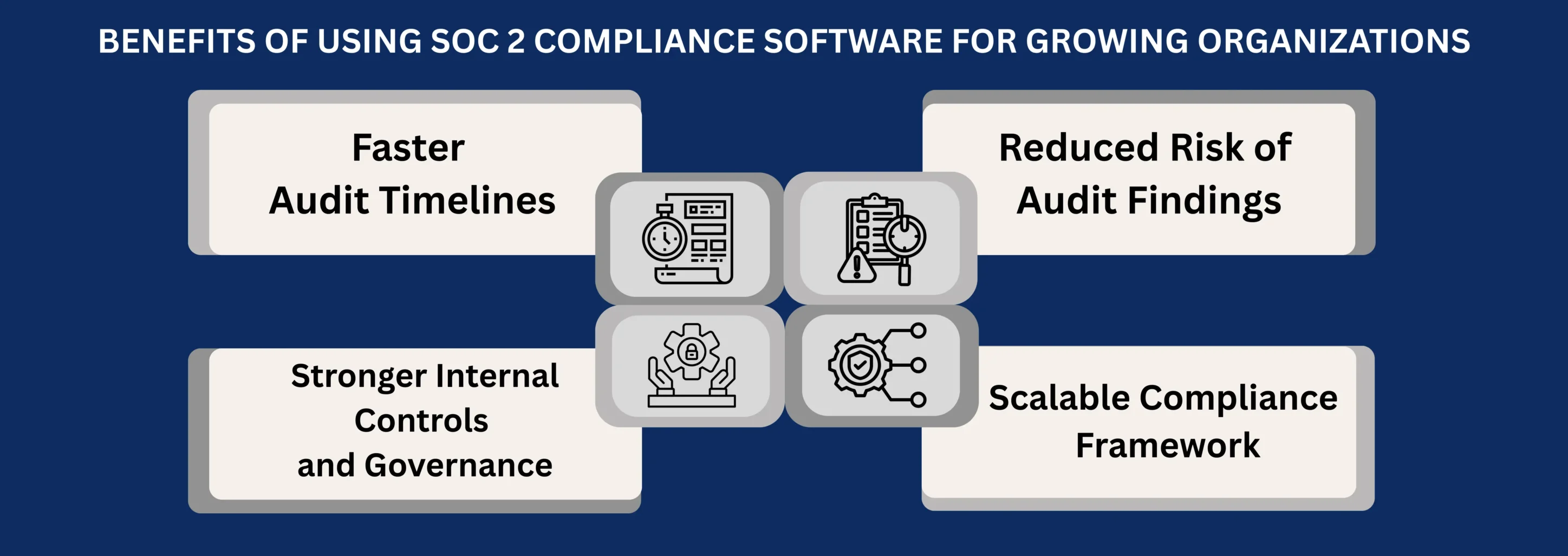
- ✓Accelerated Enterprise Sales and Vendor Qualification
- ✓Third-Party Risk Management and Supply Chain Assurance
- ✓Internal Control Maturity and Operational Risk Reduction
Germany-Specific Context for SOC 2 Attestation
The context for SOC 2 attestation in Germany is shaped by Germany’s position as Europe’s largest technology market, its deep integration into global enterprise supply chains, and the convergence of German and EU regulatory requirements that create demand for independent third-party assurance. German organizations face a unique combination of domestic regulatory rigor, EU-level cybersecurity obligations, and international customer expectations that collectively make SOC 2 attestation a strategically important credential across multiple industry sectors.
SOC 2 and GDPR: Complementary Assurance Frameworks
While GDPR and SOC 2 operate under different legal and institutional authorities, the two frameworks share substantial overlap in the control domains they address. GDPR Article 32 requires organizations to implement appropriate technical and organizational measures to ensure a level of security appropriate to the risk — including pseudonymization and encryption, confidentiality and integrity assurance, system availability and resilience, and regular testing and evaluation of security measures. These requirements map directly onto the Security, Availability, and Privacy criteria within the SOC 2 Trust Services framework. Organizations that have implemented controls to satisfy GDPR Article 32 obligations are therefore well positioned for a SOC 2 examination, since the SOC 2 audit evaluates many of the same controls through the lens of independent attestation.
For German organizations acting as data processors under GDPR Article 28, customer contracts require demonstrating that appropriate technical and organizational measures are in place to protect personal data. A SOC 2 attestation report provides customers with independently verified evidence that these measures exist and — in the case of a Type 2 report — have operated effectively over time. This makes SOC 2 attestation in Germany a practical mechanism for fulfilling the assurance obligations embedded in GDPR data processing agreements, particularly for organizations serving customers across multiple EU member states or internationally.
SOC 2 in the Context of German Financial Regulation
German financial services organizations and fintech companies operating under BaFin (Bundesanstalt für Finanzdienstleistungsaufsicht) oversight face specific operational risk and outsourcing requirements that create direct demand for SOC 2 attestation. BaFin’s Minimum Requirements for Risk Management (MaRisk) and Supervisory Requirements for IT in Financial Institutions (BAIT) establish expectations for IT security governance, outsourcing risk management, and third-party assurance. SOC 2 compliance in Germany positions fintech technology service providers as having independently verified controls — satisfying the third-party assurance component of BaFin-regulated entities’ vendor management obligations.
The Digital Operational Resilience Act (DORA), applicable to financial entities and their critical ICT third-party service providers across the EU from January 2025, introduces mandatory ICT risk management and third-party risk oversight requirements for financial sector organizations. SOC 2 attestation — while not explicitly mandated under DORA — provides financial sector customers with independent assurance documentation referenced in DORA’s third-party risk management requirements. German fintech companies and ICT service providers to financial institutions that hold current SOC 2 attestation reports are better positioned to satisfy the third-party assurance expectations of DORA-regulated customers.
Automotive Technology and Industrial Sectors
Germany’s automotive technology sector — encompassing OEM software platforms, connected vehicle services, telematics providers, and automotive supply chain management systems — increasingly requires SOC 2 attestation as automotive manufacturers integrate digital services into vehicle and manufacturing operations. Automotive OEMs and Tier 1 suppliers conducting vendor assessments of digital service providers frequently evaluate information security maturity through independent attestation reports. SOC 2 Certification in Germany enables automotive technology vendors to demonstrate control maturity within the OEM procurement process, which is increasingly demanding third-party assurance as vehicles become connected, software-defined products handling customer data and safety-critical systems.
Industries Served: SOC 2 Audit Services Germany
SOC 2 audit services in Germany address a broad range of industries and organizational types, reflecting the diverse structure of Germany’s technology economy. The SOC 2 examination framework is sector-neutral — any organization that provides services involving the processing, storage, or transmission of customer data can pursue SOC 2 attestation. However, certain industries in Germany exhibit particularly high demand for SOC 2 Certification based on their customer profiles, regulatory environment, and international market exposure.
SaaS Providers and Cloud Service Organizations
Software-as-a-Service providers and cloud service organizations represent the largest category of German organizations pursuing SOC 2 Certification in Germany. SaaS companies delivering HR management, enterprise resource planning, customer relationship management, project management, collaboration, or industry-specific software solutions to enterprise customers are frequently required to provide SOC 2 Type 2 reports as a condition of enterprise contract execution. German SaaS companies serving U.S. or U.K. enterprise customers encounter SOC 2 requirements with particular frequency, as these markets have established SOC 2 Type 2 as the de facto standard for third-party assurance in technology procurement.
Cloud infrastructure providers, managed cloud services organizations, and cloud hosting platforms operating in Germany serve as subservice organizations for their customers’ SOC 2 examinations — creating additional demand for their own SOC 2 attestation reports. When a German cloud hosting provider holds a current SOC 2 Type 2 report, its customers can reference the provider’s report within their own SOC 2 examination and rely on complementary user entity controls. This simplifies the examination process and reduces audit scope complexity for both parties.
Financial Technology and Payment Processing
Germany’s fintech sector — centered in Frankfurt, Berlin, and Munich — encompasses payment processing platforms, open banking infrastructure providers, digital banking technology vendors, investment technology companies, and insurtech organizations. These entities process highly sensitive financial data on behalf of regulated financial institutions and individual consumers, making independent security assurance a critical component of customer confidence and regulatory compliance. Fintech organizations achieving SOC 2 compliance in Germany can satisfy the third-party assurance requirements of their banking and financial institution customers while demonstrating alignment with BaFin operational risk management expectations.
Healthcare, Life Sciences, and Medical Technology
Healthcare information systems vendors, electronic health record platforms, medical device software providers, clinical data management organizations, and pharmaceutical technology companies operating in Germany face stringent data protection requirements for health data under GDPR (which classifies health data as a special category subject to enhanced protections under Article 9) and the Digital Health Act (Digitale-Versorgung-Gesetz). Organizations providing digital health services or processing patient data on behalf of healthcare providers require independent assurance mechanisms demonstrating appropriate security controls. SOC 2 attestation — particularly with Privacy criteria included in scope — provides healthcare technology organizations with a structured assurance report that supports both customer contracts and regulatory compliance obligations.
| Industry Sector | SOC 2 Driver | Typical TSC Categories |
|---|---|---|
| SaaS and Cloud Providers | Enterprise procurement requirements | Security, Availability, Confidentiality |
| Fintech and Payment Processors | BaFin vendor assurance, DORA compliance | Security, Availability, Processing Integrity |
| Healthcare and Life Sciences | GDPR Article 9 health data, customer contracts | Security, Confidentiality, Privacy |
| Automotive Technology | OEM vendor qualification, connected vehicle data | Security, Availability, Confidentiality |
| Managed Service Providers | Enterprise customer TPRM requirements | Security, Availability |
Managed Service Providers and IT Outsourcing Organizations
Managed service providers (MSPs) and IT outsourcing organizations operating in Germany that manage customer infrastructure, endpoints, networks, or security operations on behalf of enterprise clients are frequently subject to SOC 2 audit requirements. Enterprise customers outsourcing IT functions to MSPs are subject to their own third-party risk management obligations, and a current SOC 2 Type 2 report from the MSP provides customers with independent assurance that the MSP’s controls are operating effectively. For German MSPs serving regulated industries — including financial services, healthcare, or critical infrastructure — SOC 2 attestation in Germany provides a structured mechanism for demonstrating control maturity across a diverse customer portfolio through a single, reusable report.
SOC 2 Certification Cost in Germany
The investment associated with SOC 2 Certification in Germany is determined by multiple factors related to examination scope, the complexity of the organization’s control environment, the number of Trust Services Criteria categories included, the type of report pursued (Type 1 or Type 2), and the duration of the observation period. Understanding the factors that influence examination scope and complexity enables German organizations to structure their SOC 2 audit engagements efficiently and set accurate expectations for the resources required to complete the examination.
Factors Influencing SOC 2 Examination Scope and Investment
The primary determinants of SOC 2 examination scope include the number of TSC categories selected, the number of in-scope systems and services, the complexity of the technology infrastructure (including cloud platforms, on-premises systems, and subservice organizations), the number of personnel subject to testing, and the volume of control activities requiring evidence collection and testing. Organizations with highly automated control environments — where access reviews, vulnerability scans, and change management approvals are executed and logged systematically — typically require less auditor time for evidence collection than organizations relying on manual control procedures with limited audit trail documentation.
For a SOC 2 Type 2 audit in Germany, the observation period duration also influences examination scope. While a six-month observation period is the recognized minimum for a Type 2 report, many customers prefer or require twelve-month observation periods for annual reporting continuity. Longer observation periods require the auditor to test larger populations of control activities, which increases evidence collection and testing effort. Organizations electing a twelve-month observation period for their initial SOC 2 Type 2 examination should plan accordingly for a proportionally greater evidence preparation requirement compared to a six-month engagement.
Annual Recertification and Ongoing SOC 2 Compliance
Maintaining continuous SOC 2 compliance in Germany requires annual audit cycles, as customers and enterprise procurement programs expect an uninterrupted sequence of current SOC 2 attestation reports. Organizations that have completed their initial SOC 2 examination typically find that subsequent annual audit cycles are more efficient — the control documentation, evidence collection processes, and audit workflows established during the initial examination can be systematically maintained and updated. Annual recertification engagements evaluate the period since the previous report’s end date, ensuring continuous attestation coverage without gaps that could raise questions during customer due diligence reviews.
What is SOC 2 Certification? Definitions and Framework Overview
SOC 2 Certification is formally defined as a System and Organization Controls 2 attestation — an independent examination engagement conducted under AICPA AT-C Section 205 attestation standards, through which a Licensed CPA Firm issues an attestation opinion on the suitability of design and, for Type 2 reports, the operating effectiveness of controls relevant to the AICPA Trust Services Criteria. The SOC 2 framework was developed by the AICPA to address the growing need for independent assurance over the security and privacy controls of service organizations — those that provide IT-related services to user entities (customers) that rely on those services to execute their own business processes.
The AICPA SOC Framework: SOC 1, SOC 2, and SOC 3 Explained
The AICPA’s System and Organization Controls (SOC) framework comprises three distinct report types, each serving different assurance purposes. SOC 1 reports address controls relevant to user entities’ internal control over financial reporting (ICFR) — applicable to service organizations whose services affect their customers’ financial statements, such as payroll processors or loan servicing organizations. SOC 2 reports address controls relevant to the Trust Services Criteria for security, availability, processing integrity, confidentiality, and privacy — applicable to a broad range of technology and data service organizations. SOC 3 reports are general-use versions of SOC 2 reports that contain the auditor’s opinion and management’s assertion but omit detailed system descriptions and test results, making them suitable for public distribution as marketing-oriented assurance documents.
For German organizations, SOC 2 is the most commonly requested report type because it directly addresses the information security and data protection control domains that enterprise customers evaluate during vendor qualification. The SOC 2 examination — as distinguished from SOC 1 — focuses on the controls that protect the security and availability of the organization’s systems and the confidentiality and privacy of the data processed within those systems. These are the specific domains of concern for technology buyers, data controllers, and enterprise procurement organizations conducting thorough vendor due diligence.
SOC 2 vs. ISO 27001: Key Differences for German Organizations
German organizations frequently evaluate SOC 2 Certification alongside ISO 27001 certification when determining their information security assurance strategy. The two frameworks differ fundamentally in their institutional authority, geographic recognition, and technical scope. ISO 27001 is a management system standard issued by the International Organization for Standardization, with certification conducted by accredited certification bodies operating under national accreditation frameworks (including DAkkS in Germany). SOC 2 is an attestation engagement under AICPA standards, conducted exclusively by Licensed CPA Firms.
ISO 27001 is globally recognized and well understood in European markets, while SOC 2 is the predominant assurance requirement in U.S. and Canadian enterprise markets. German organizations serving U.S. enterprise customers will typically encounter SOC 2 requirements first and most frequently. Organizations serving primarily European customers may encounter ISO 27001 more commonly. Organizations serving both markets often pursue both frameworks, as the control domains overlap substantially — the information security controls required for ISO 27001 certification provide a strong foundation for a SOC 2 examination, and vice versa. The primary differentiator is that SOC 2 tests specific controls against TSC requirements and provides detailed test results, while ISO 27001 evaluates the organization’s information security management system at a management system level.
The SOC 2 Report Structure and Its Components
A completed SOC 2 attestation report contains several standardized components that customers and counterparties review during vendor due diligence. The report begins with the independent service auditor’s report — the formal attestation opinion signed by the Licensed CPA Firm — which states whether, in the auditor’s opinion, the description of the system is fairly presented, controls are suitably designed, and (for Type 2) controls operated effectively throughout the examination period. The report also contains management’s assertion, in which management takes formal responsibility for the accuracy of the system description and the design and effectiveness of controls. The system description section provides a detailed narrative of the organization’s services, infrastructure, controls, and subservice organization relationships. Finally, the report includes a description of tests of controls and results, documenting the specific procedures performed by the auditor for each control and the results of those procedures — including any identified exceptions.
Why CertPro for SOC 2 Certification in Germany
CertPro operates as a Licensed CPA Firm conducting independent SOC 2 examination and attestation engagements under AICPA AT-C Section 205 standards. CertPro’s SOC 2 examination services are structured to provide German organizations with rigorous, independently credentialed attestation that satisfies the requirements of enterprise customers, regulated industry counterparties, and third-party risk management programs globally. CertPro’s positioning as an independent attestation provider — not a consulting or advisory organization — ensures that the attestation opinion is independent, objective, and suitable for reliance by customer organizations conducting vendor assurance reviews.
Independent Attestation Authority Under AICPA Standards
CertPro’s authority to conduct SOC 2 examinations and issue SOC 2 attestation reports derives from its licensure as a CPA firm under AICPA professional standards. This institutional authority distinguishes CertPro from cybersecurity firms, technology consultancies, or non-CPA organizations that may offer security assessments but are not authorized to issue SOC 2 attestation opinions. When German organizations retain CertPro for a SOC 2 audit in Germany, the resulting attestation report carries the institutional weight of a CPA firm opinion — the same credential recognized by enterprise procurement programs, financial institutions, regulators, and enterprise risk management teams as authoritative evidence of independently verified control maturity.
CertPro applies AICPA AT-C Section 205 attestation standards throughout each SOC 2 examination, ensuring that examination procedures, evidence collection methods, exception evaluation, and report issuance conform to the professional standards that give the SOC 2 attestation report its institutional credibility. For German organizations that will share their SOC 2 report with customers, investors, or regulatory counterparties, having the report issued by a Licensed CPA Firm under recognized attestation standards is a non-negotiable quality requirement — one that CertPro satisfies through its institutional structure and professional credentials.
Structured Audit Methodology for German Organizations
CertPro’s SOC 2 examination methodology is structured to address the specific characteristics of German organizations’ technology environments, regulatory context, and customer requirements. The examination process accounts for GDPR-related control documentation, cloud infrastructure configurations common among German SaaS providers, and the multi-jurisdictional customer requirements faced by German technology exporters. CertPro’s examination teams apply the Trust Services Criteria systematically, documenting the rationale for each control design and effectiveness determination in a manner that produces a SOC 2 report suitable for reliance by sophisticated enterprise customers across global markets.
Transparent Fixed-Price Examination Structure
CertPro structures its SOC 2 examination engagements with transparent, fixed-price arrangements that enable German organizations to plan and budget for the SOC 2 Certification process with certainty. Fixed-price examination structures are defined based on scope parameters established during scope definition — including the number of TSC categories, the complexity of in-scope systems, and the observation period selected. This approach ensures that organizations can commit to the SOC 2 audit process with a clear understanding of the engagement structure and avoid variable-cost arrangements that can create uncertainty during the audit period.
FAQ
▶
What is SOC 2 Certification?
▶
What is SOC 2 Certification in Germany and who issues it?
▶
How long does the SOC 2 audit process take in Germany?
▶
What is the difference between SOC 2 Type 1 and SOC 2 Type 2 in Germany?
▶
Is SOC 2 certification legally required in Germany?
▶
How does SOC 2 attestation relate to GDPR compliance?
▶
Which Trust Services Criteria should German organizations include in their SOC 2 scope?
▶
How long is a SOC 2 attestation report valid?
SOC 1 VS SOC 2: WHICH REPORT YOUR CUSTOMERS ACTUALLY ASK FOR
If you sell SaaS or provide outsourced services, you have likely been asked for a SOC report. However, the follow-up question is rarely easy to answer…

AICPA Issues New Guidance for Peer Reviewers Evaluating SOC 2 Engagements
AICPA SOC 2 guidance has been issued to help peer reviewers identify quality risks associated with SOC 2 engagements as the use of compliance automati…
SOC 2 Certified: What Does It Mean for Your Business
For companies that handle sensitive data or run cloud-based services, the question “Can you provide your SOC 2 report?” carries enormous weight. Yet, …
Get In Touch
have a question? let us get back to you.