
ISO 42001 Certification in Germany
CertPro is a Licensed CPA Firm conducting independent third-party ISO 42001 certification audits for organizations deploying Artificial Intelligence systems across Germany. Our ISO 42001 audit scope encompasses AI governance structures, lifecycle management controls, risk and impact assessment mechanisms, transparency obligations, and accountability frameworks — all aligned with ISO/IEC 42001:2023 requirements. Every ISO 42001 certification assessment is performed by accredited auditors operating under internationally recognized audit standards, ensuring credible, defensible certification outcomes.
OUR CLIENTS







What Is ISO 42001 Certification?
ISO 42001 certification is the formal process by which an independent, accredited certification body evaluates and confirms that an organization’s Artificial Intelligence Management System (AIMS) conforms to the requirements of ISO/IEC 42001:2023. Published by the International Organization for Standardization (ISO) in collaboration with the International Electrotechnical Commission (IEC), this standard establishes the first globally recognized framework for governing AI systems throughout their full operational lifecycle. ISO 42001 Certification in Germany is increasingly sought by enterprises, public institutions, and technology providers that design, deploy, operate, or oversee AI-driven processes and products. Achieving this certification signals a credible, auditable commitment to responsible AI governance in one of Europe’s most regulated markets.
The standard defines an Artificial Intelligence Management System as a structured set of policies, procedures, roles, controls, and governance mechanisms that an organization uses to direct and oversee AI-related activities. ISO/IEC 42001:2023 specifies requirements for establishing, implementing, maintaining, and continually improving an AIMS within the context of an organization’s specific objectives, risk appetite, and regulatory environment. The ISO 42001 certification process verifies that these systems are not only documented but operationally effective, and that they are subject to ongoing measurement and review — ensuring governance substance, not just paperwork.
Structural Alignment with ISO Management System Standards
ISO 42001 follows the High-Level Structure (HLS) common to all modern ISO management system standards. Its clause architecture mirrors ISO 27001 for information security and ISO 31000 for risk management. This structural alignment enables organizations that already hold other ISO certifications to integrate AIMS governance into existing management frameworks — without duplicating policies, roles, or internal review processes. For organizations in Germany that have already achieved ISO 27001 certification, incorporating ISO 42001 compliance requirements is substantially more efficient, because foundational elements such as internal audit programs, management review procedures, and document control systems are already in place.
The standard’s ten-clause structure covers context of the organization, leadership and commitment, planning, support, operation, performance evaluation, and improvement. Annex A of ISO/IEC 42001:2023 provides a reference control set that organizations select and apply based on their AI risk profile. Annex B offers implementation guidance on establishing AI policies, defining roles and responsibilities, managing AI system objectives, and monitoring performance indicators. Together, these normative and informative provisions give organizations a comprehensive, structured basis for responsible AI governance — one that is independently auditable and certifiable under ISO 42001 assessment procedures.
Key Components of an AI Management System (AIMS)
An AI Management System certified under ISO 42001 encompasses several distinct governance components, each independently assessed during an ISO 42001 audit. The first component is AI governance structure, which defines the organizational hierarchy, decision-making authority, and accountability lines for AI-related activities. This includes board-level oversight mechanisms, designated AI roles such as AI system owners and risk officers, and documented escalation paths for AI incidents or performance deviations. In Germany, where corporate governance obligations are codified under frameworks such as the German Corporate Governance Code (DCGK), an AIMS governance structure must integrate seamlessly with existing board reporting obligations.
The second major component is AI lifecycle management, covering the systematic control of AI systems from initial concept through design, development, testing, deployment, operation, monitoring, and decommissioning. ISO 42001 requires documented lifecycle procedures that include quality gates, acceptance criteria, and version control mechanisms. The third component is AI risk and impact assessment, which mandates that organizations identify, evaluate, and treat risks associated with AI system outputs — including risks to individuals, groups, and society arising from algorithmic bias, erroneous predictions, or unintended automation decisions. The fourth component addresses transparency and explainability obligations, requiring that stakeholders can obtain meaningful information about how AI systems make decisions affecting them.
Relationship to the EU AI Act and GDPR
ISO 42001 certification supports — but does not replace — compliance obligations under the EU AI Act or the General Data Protection Regulation (GDPR). The EU AI Act, which began its phased application in August 2024, establishes binding risk-based requirements for AI systems deployed in the European Union, with Germany subject to full enforcement as a member state. High-risk AI systems under the EU AI Act must demonstrate conformity with requirements covering risk management, data governance, transparency, human oversight, accuracy, and robustness. ISO 42001 certification provides a structured governance framework that maps directly to many of these requirements, making it a practically valuable tool for organizations building evidence of EU AI Act conformity.
Similarly, GDPR Article 22 governs automated decision-making and profiling, requiring organizations to implement suitable safeguards when decisions with significant legal effects are made solely by automated means. ISO 42001’s transparency and human oversight controls directly support GDPR Article 22 compliance by documenting the conditions under which human review is required, the mechanisms by which data subjects can contest automated decisions, and the technical and organizational safeguards applied to automated processing. Organizations pursuing ISO 42001 Certification in Germany should treat the standard as a governance layer that operates alongside — and provides structured evidence of conformity to — their existing regulatory obligations under both GDPR and the EU AI Act.

ISO 42001 Certification in Germany: Sectoral Context and Adoption
Germany is Europe’s largest economy and a global leader in manufacturing, automotive engineering, industrial technology, financial services, healthcare, and logistics. AI adoption is accelerating across all these sectors, driven by Industry 4.0 initiatives, digital transformation programs, and growing integration of machine learning and predictive analytics into core business processes. ISO 42001 Certification in Germany has emerged as a credible governance credential for organizations that need to demonstrate accountable, auditable AI management to customers, regulators, investors, and business partners operating within the German and broader European market.
Germany’s regulatory environment reinforces demand for ISO 42001 compliance. The Federal Office for Information Security (BSI), Germany’s national cybersecurity authority, has published AI security guidelines that emphasize risk-based AI governance. The German Federal Data Protection and Freedom of Information Commissioner (BfDI) has issued guidance on automated decision-making under GDPR that aligns directly with ISO 42001 transparency requirements. Additionally, Germany’s position as a founding EU member state means that EU AI Act requirements apply directly to German-registered organizations and are enforced through national market surveillance authorities. These converging regulatory expectations make ISO 42001 compliance in Germany a strategic priority — not merely an optional governance enhancement.
Automotive and Manufacturing Sector Applications
Germany’s automotive and manufacturing sectors are among the most advanced AI adopters in the world. Companies such as Volkswagen, BMW, Mercedes-Benz, Siemens, Bosch, and BASF have integrated AI into quality control, predictive maintenance, supply chain optimization, and autonomous vehicle development programs. For these organizations, ISO 42001 certification in Germany provides a framework for governing AI systems that directly interact with safety-critical processes, production lines, and customer-facing autonomous functions. An ISO 42001 audit in an automotive context assesses whether AI systems used in driver assistance, factory automation, or predictive quality management are governed under documented risk controls, human oversight mechanisms, and lifecycle management procedures.
Under the EU AI Act, many AI systems deployed in automotive and manufacturing contexts qualify as high-risk systems — particularly those operating in safety components of vehicles, industrial machinery, or critical infrastructure management. ISO 42001 assessment provides automotive manufacturers and their Tier 1 and Tier 2 suppliers with a structured, auditable basis for demonstrating that their AI governance practices satisfy the risk management, quality management, and transparency requirements applicable to high-risk AI systems. ISO AIMS certification in Germany is therefore increasingly incorporated into supplier qualification criteria and procurement requirements within major German industrial supply chains.
Financial Services and Fintech Applications
Germany’s financial services sector — centered on Frankfurt as Europe’s primary financial hub — has deployed AI extensively in credit scoring, fraud detection, algorithmic trading, customer due diligence, anti-money laundering (AML) monitoring, and automated financial advice. ISO 42001 certification for German financial services organizations provides a governance framework specifically suited to managing AI systems that make or inform high-stakes financial decisions with direct impact on individuals and market stability. An ISO 42001 audit in a financial services context evaluates whether AI-driven credit decisions, fraud alerts, and customer classification systems are subject to documented risk controls, bias monitoring, explainability provisions, and human review escalation procedures.
For Germany’s growing fintech sector, ISO 42001 compliance is becoming an increasingly important credential when engaging with major banking partners, institutional investors, and enterprise clients that require evidence of responsible AI governance before entering commercial relationships. BaFin, Germany’s Federal Financial Supervisory Authority, has published guidance on AI use in financial services that emphasizes model risk management, explainability, and governance documentation — all areas directly addressed by ISO 42001’s control requirements. ISO AIMS certification for German fintech organizations demonstrates to BaFin, banking counterparties, and enterprise clients that AI systems are governed under an independently audited, internationally recognized management framework.
Healthcare and Logistics Applications
Healthcare organizations in Germany deploying AI for diagnostic imaging analysis, clinical decision support, patient risk stratification, and hospital operations management face stringent regulatory requirements under the Medical Device Regulation (MDR), GDPR, and the EU AI Act. ISO 42001 assessment in the healthcare sector evaluates AI governance controls specific to clinical environments. This includes requirements for data quality in training datasets derived from patient records, validation procedures for AI-assisted diagnostic recommendations, human oversight requirements ensuring clinical professionals retain decision authority, and post-market surveillance mechanisms for monitoring AI system performance in real-world clinical settings.
Germany’s logistics sector — which encompasses major operators including Deutsche Post DHL, DB Schenker, Kuehne+Nagel, and numerous regional providers — has integrated AI into route optimization, demand forecasting, warehouse automation, and last-mile delivery management. ISO 42001 compliance in logistics contexts ensures that AI systems affecting workforce scheduling, delivery commitments, and operational safety are governed under documented controls that address algorithmic fairness, system reliability, and accountability for automated operational decisions. ISO AIMS certification for German logistics organizations provides auditable evidence that AI-driven operational systems meet the governance standards increasingly required by enterprise customers and public-sector contracting authorities.
ISO 42001 Requirements: AIMS Framework Components
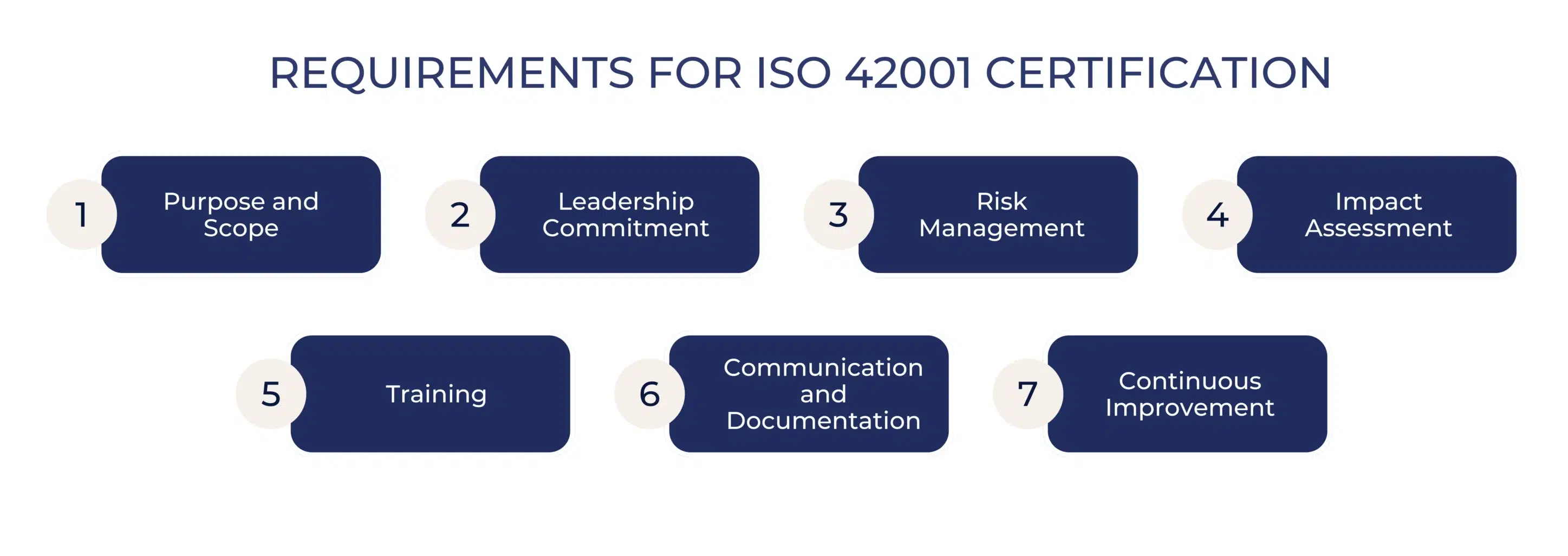
ISO/IEC 42001:2023 establishes specific requirements that organizations must satisfy to achieve and maintain ISO 42001 certification. These requirements span organizational context, leadership commitment, planning, operational controls, and performance evaluation. Understanding these requirements is essential for organizations in Germany preparing for an ISO 42001 audit, as each requirement corresponds to specific audit evaluation criteria that an independent certification body will assess during the certification process. Meeting these criteria with documented, operational evidence is the foundation of a successful ISO 42001 assessment.
Clause 4 of ISO 42001 requires organizations to determine the external and internal factors that influence their AI management system, including regulatory requirements, stakeholder expectations, and organizational objectives. Organizations must identify interested parties relevant to the AIMS — including employees, customers, data subjects, regulators, and business partners — and understand their requirements and expectations regarding AI governance. The AIMS scope must be formally documented, defining which AI systems, processes, organizational units, and geographic locations are included within the certification boundary.
For German organizations, the external context determination must account for Germany’s specific regulatory landscape — including GDPR obligations, BSI cybersecurity guidance, BaFin AI guidance for financial institutions, and EU AI Act requirements applicable to AI system risk classifications. The scope documentation must be sufficiently specific to enable an ISO 42001 audit team to clearly identify the boundary of systems and activities under assessment. Any exclusion of AI systems or processes material to the organization’s AI risk profile must be supported by documented justification, or auditors may raise a nonconformity during the ISO 42001 assessment.
Clause 5 of ISO 42001 establishes leadership requirements, mandating that top management demonstrate commitment to the AIMS by establishing an AI policy, assigning roles and responsibilities, and ensuring that AI governance objectives are integrated into organizational strategy. The AI policy must address the organization’s commitment to responsible AI development and use, ethical principles governing AI deployment, compliance obligations, and continual improvement of the AIMS. This policy must be communicated throughout the organization and made available to relevant interested parties as part of the ISO 42001 compliance framework.
Leadership requirements also mandate the designation of specific roles with defined authority and responsibility for AI governance activities. In practice, this typically includes an AI governance function or officer responsible for AIMS oversight, AI system owners accountable for specific AI applications, and an internal audit function capable of independently evaluating AIMS effectiveness. For organizations pursuing ISO 42001 Certification in Germany, evidence of leadership commitment is a critical audit evaluation area. Auditors will review board-level AI governance documentation, management review records, and resource allocation decisions to assess whether top management is genuinely engaged with AI governance — rather than treating it as a compliance formality.
Clause 6 of ISO 42001 requires organizations to establish and maintain a systematic AI risk assessment process that identifies risks associated with AI system development, deployment, and operation. The risk assessment must evaluate the likelihood and potential impact of identified risks — considering both technical risks such as model degradation, data quality failures, and adversarial manipulation, and ethical and societal risks such as discriminatory outputs, privacy violations, and disproportionate impacts on vulnerable populations. For each identified risk, the organization must determine and implement appropriate risk treatment measures from the Annex A control set, or additional controls as required by the specific risk context.
AI impact assessment is a distinct but related requirement under ISO 42001, addressing the potential consequences of AI system deployment on individuals, communities, and broader society. During an ISO 42001 assessment, certification auditors will examine whether organizations have conducted documented impact assessments for each AI system within scope, whether these assessments have informed design and deployment decisions, and whether impact monitoring mechanisms are in place to detect unintended consequences during system operation. For German organizations, AI impact assessment documentation provides direct evidence of conformity with EU AI Act fundamental rights impact assessment requirements applicable to deployers of high-risk AI systems.
ISO 42001 requires comprehensive documented information as evidence of AIMS conformity. Mandatory documented information includes the AIMS scope, AI policy, AI risk assessment results and treatment plans, evidence of management review, internal audit results, and records of corrective actions. Organizations must also maintain documented information describing AI systems within scope — including their purpose, technical architecture, training data sources, performance metrics, and applicable controls. This documentation portfolio forms the primary evidence base examined during every ISO 42001 audit engagement.
- ✓AIMS scope statement and boundary documentation
- ✓Organizational AI policy signed by top management
- ✓AI risk assessment methodology and results
- ✓AI impact assessment records for each in-scope system
- ✓Annex A Statement of Applicability with control justifications
- ✓AI system inventory with technical descriptions and data governance records
- ✓Internal audit program, plans, and findings
- ✓Management review meeting minutes and decisions
- ✓Corrective action records and nonconformity tracking
- ✓Training and competence records for AI governance roles
Competence requirements under Clause 7 mandate that personnel performing AI governance roles possess appropriate knowledge, skills, and experience. Organizations must determine required competencies for AI-related roles, assess current competency levels, address gaps through training or recruitment, and retain evidence of competency. For German organizations, this requirement intersects with workforce development obligations under German labor law and collective bargaining agreements. AI governance roles frequently require multidisciplinary expertise spanning data science, legal compliance, ethics, and operational management — making structured competence planning an essential part of ISO 42001 compliance in Germany.
- ✓Organizational Context and Scope Requirements
- ✓Leadership, Policy, and Accountability Requirements
- ✓AI Risk Assessment and Treatment Requirements
- ✓Documentation, Competence, and Support Requirements
The ISO 42001 Audit Process in Germany
The ISO 42001 audit process follows a structured, multi-stage methodology conducted by accredited, independent certification bodies. An ISO 42001 audit in Germany proceeds through defined stages, each with specific objectives, activities, and outputs. Understanding this process enables organizations to prepare effectively and ensures that the certification evaluation is conducted systematically and transparently. CertPro conducts ISO 42001 audits under internationally recognized audit standards, with each stage documented in formal audit records that provide a clear, defensible evidence trail.
Stage 1 of the ISO 42001 audit process focuses on evaluating the organization’s documented AIMS against ISO/IEC 42001:2023 requirements. Auditors review the AIMS scope statement, AI policy, organizational context documentation, risk assessment methodology, and all documented information required by the standard. Stage 1 determines whether the organization’s documentation is sufficiently developed to proceed to Stage 2 operational assessment. Auditors identify any areas where documentation is incomplete, inconsistent, or misaligned with ISO 42001 requirements, and communicate these findings to the organization before Stage 2 is scheduled.
Stage 1 also includes an evaluation of organizational readiness for Stage 2, assessing whether the AIMS has been implemented and operational for a sufficient period to generate meaningful performance evidence. ISO 42001 certification requirements specify that the AIMS must have completed at least one full cycle of internal audit and management review before Stage 2 assessment can be conducted. For most organizations pursuing ISO 42001 Certification in Germany for the first time, Stage 1 typically identifies several areas requiring documentation enhancement before Stage 2 can proceed. All findings are formally documented in the Stage 1 audit report.
Stage 2 of the ISO 42001 audit is an on-site or remote operational assessment that evaluates whether the organization’s AIMS is effectively implemented and operational in practice. Auditors conduct interviews with personnel in AI governance roles, AI system owners, data teams, compliance officers, and senior management to assess understanding of and adherence to AIMS policies and procedures. Auditors also examine operational records, system logs, monitoring data, incident reports, and corrective action records to verify that AI governance controls are functioning as designed — and that the AIMS is generating measurable improvements in AI management performance.
Control testing during Stage 2 focuses on verifying that Annex A controls selected in the organization’s Statement of Applicability are operationally effective. For example, if an organization has selected controls related to AI system performance monitoring, auditors will examine monitoring records, alert thresholds, response procedures, and evidence of management action taken when performance deviations are detected. If transparency and explainability controls are selected, auditors will assess whether documentation provided to stakeholders about AI decision-making processes is accurate, accessible, and consistent with actual system behavior. Nonconformities identified during Stage 2 are classified as major or minor based on their significance and must be addressed before or after ISO 42001 certification issuance depending on their classification.
Following completion of Stage 2 and resolution of any major nonconformities, the certification body conducts a certification review to determine whether the organization’s AIMS satisfies all requirements of ISO/IEC 42001:2023. The certification decision is made by a qualified reviewer who was not part of the audit team — ensuring independence between audit and certification decision functions. Upon a positive certification decision, the organization is issued an ISO 42001 certificate specifying the certification scope, the certified standard and version, the certification date, and the validity period. ISO 42001 certificates are valid for three years from the date of the certification decision.
Surveillance audits are conducted annually during the three-year certification cycle to verify that the AIMS remains effective and continues to conform to ISO 42001 requirements. Surveillance audits are typically shorter than initial certification audits and focus on specific elements of the AIMS, including internal audit results, management review outcomes, corrective action effectiveness, and any changes to AI systems or organizational context that may affect the AIMS. Recertification audits are conducted in the third year of the certification cycle to renew the certificate for a further three-year period. Organizations that fail surveillance audit requirements risk suspension or withdrawal of their ISO AIMS certification.
| Audit Stage | Primary Activities | Typical Duration | Output |
|---|---|---|---|
| Stage 1 – Documentation Review | AIMS documentation assessment, scope verification, readiness evaluation | 1–2 days | Stage 1 Audit Report with findings |
| Stage 2 – Operational Assessment | Control testing, personnel interviews, records review, nonconformity identification | 2–5 days | Stage 2 Audit Report with nonconformities |
| Certification Decision | Independent review of audit evidence and nonconformity closure | 1–3 weeks | ISO 42001 Certificate (3-year validity) |
| Annual Surveillance Audit | Targeted review of AIMS effectiveness and conformity maintenance | 1–2 days | Surveillance Audit Report |
| Recertification Audit | Full AIMS reassessment for certificate renewal | 2–4 days | Renewed ISO 42001 Certificate |
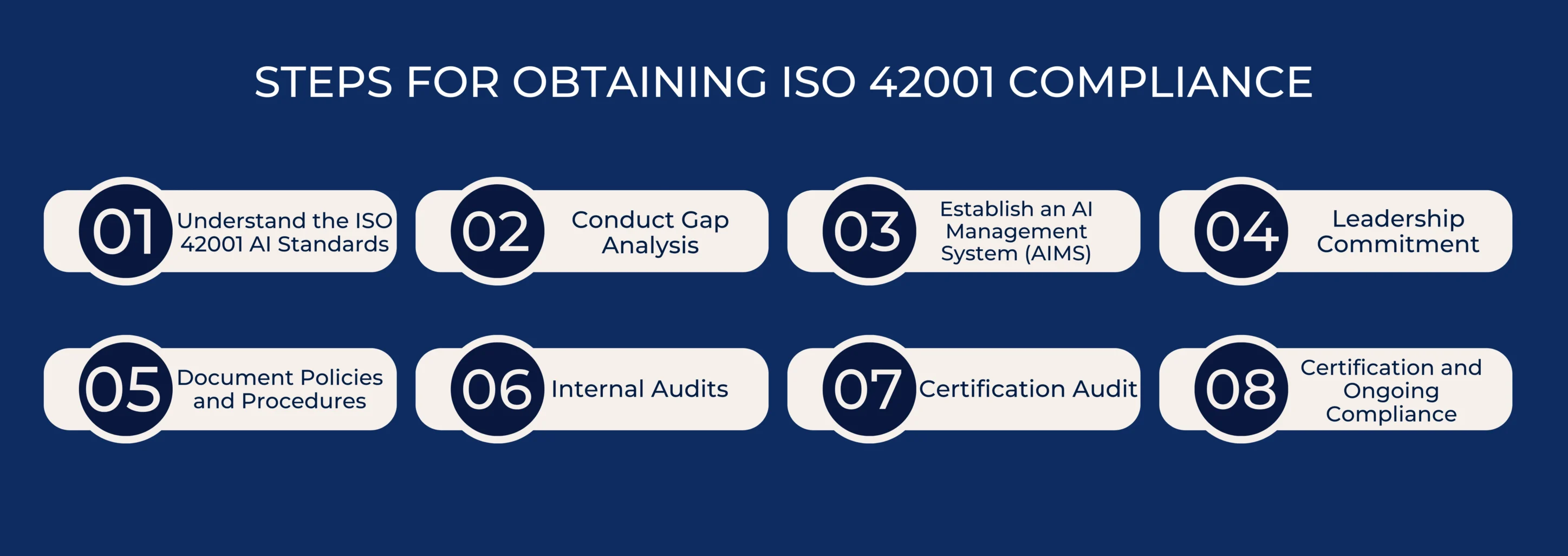
- ✓Stage 1: Scope Definition and Documentation Review
- ✓Stage 2: Operational Assessment and Control Testing
- ✓Certification Decision, Issuance, and Surveillance
ISO 42001 Assessment: Evaluation Criteria and Evidence Standards
ISO 42001 assessment is conducted against specific evaluation criteria derived from ISO/IEC 42001:2023 clauses and Annex A controls. Auditors evaluate conformity by examining documentary evidence, interviewing personnel, and observing operational activities. Understanding what auditors assess — and what evidence standards apply — is essential for organizations preparing for ISO 42001 certification in Germany. All evidence must be objective, verifiable, and directly linked to the requirements being evaluated. Organizations that approach the ISO 42001 audit with well-organized, operationally grounded evidence are significantly better positioned for a positive certification outcome.
Auditors conducting an ISO 42001 audit in Germany assess AI governance by reviewing documented policies, organizational structures, role definitions, and decision-making records. Evidence of effective AI governance includes board or executive committee meeting minutes that demonstrate active engagement with AI governance matters, records of AI governance committee meetings with attendance and decision logs, documented AI-related incident reports and management responses, and evidence that AI governance considerations have been integrated into strategic planning and investment decisions.
The quality and completeness of governance documentation is a primary determinant of ISO 42001 assessment outcomes. Organizations that have established AI governance solely as a documentation exercise — without operational substance — are likely to receive major nonconformities relating to leadership commitment, AIMS effectiveness, and management review requirements. Auditors are specifically trained to distinguish between organizations where AI governance is embedded in operational culture and decision-making, versus organizations where governance documentation exists but is not reflected in actual management behavior and system oversight practices.
ISO 42001 assessment of risk management requires auditors to evaluate both the methodology used for AI risk assessment and the quality of risk assessment outputs. The risk assessment methodology must be documented, consistently applied, and capable of producing comparable and reproducible results. Risk assessment records must demonstrate that the organization has systematically identified AI risks across all systems within the certification scope, evaluated each risk using defined criteria, and determined appropriate treatment measures aligned with the organization’s risk appetite and the treatment options available under Annex A.
Risk treatment implementation evidence must demonstrate that selected controls are operationally active — not merely planned or documented. Auditors examine control implementation records, system configurations, process documentation, and operational monitoring data to verify that risk treatment measures are functioning as intended. For organizations undergoing ISO 42001 compliance assessment in regulated sectors such as financial services, healthcare, or critical infrastructure in Germany, risk assessment evidence must also address sector-specific regulatory risk categories identified in applicable national and EU regulatory guidance.
ISO 42001 requires organizations to establish, implement, and maintain monitoring, measurement, analysis, and evaluation processes for their AIMS. This includes defining what will be monitored, the methods and tools used for monitoring, the frequency of monitoring activities, and who is responsible for analysis and evaluation. AI system performance metrics — such as accuracy, fairness indicators, drift detection results, and incident rates — must be regularly collected, analyzed against defined targets, and reported to management as part of the overall performance evaluation process.
Internal audit evidence must demonstrate that the organization has conducted systematic, planned evaluations of AIMS conformity covering all clauses and controls within the certification scope, that audit findings have been formally communicated to management, and that identified nonconformities have been addressed through root-cause analysis and corrective action. Management review records must show that top management has reviewed AIMS performance data, audit results, risk assessment updates, and stakeholder feedback — and has made documented decisions about resource allocation, policy updates, and improvement priorities. This evidence of active management engagement with AIMS performance is a critical differentiator in ISO 42001 certification assessments across Germany.
- ✓AI Governance Evidence Requirements
- ✓Risk Assessment and Treatment Evidence
- ✓Performance Evaluation and Continual Improvement Evidence
Benefits of ISO 42001 Certification in Germany
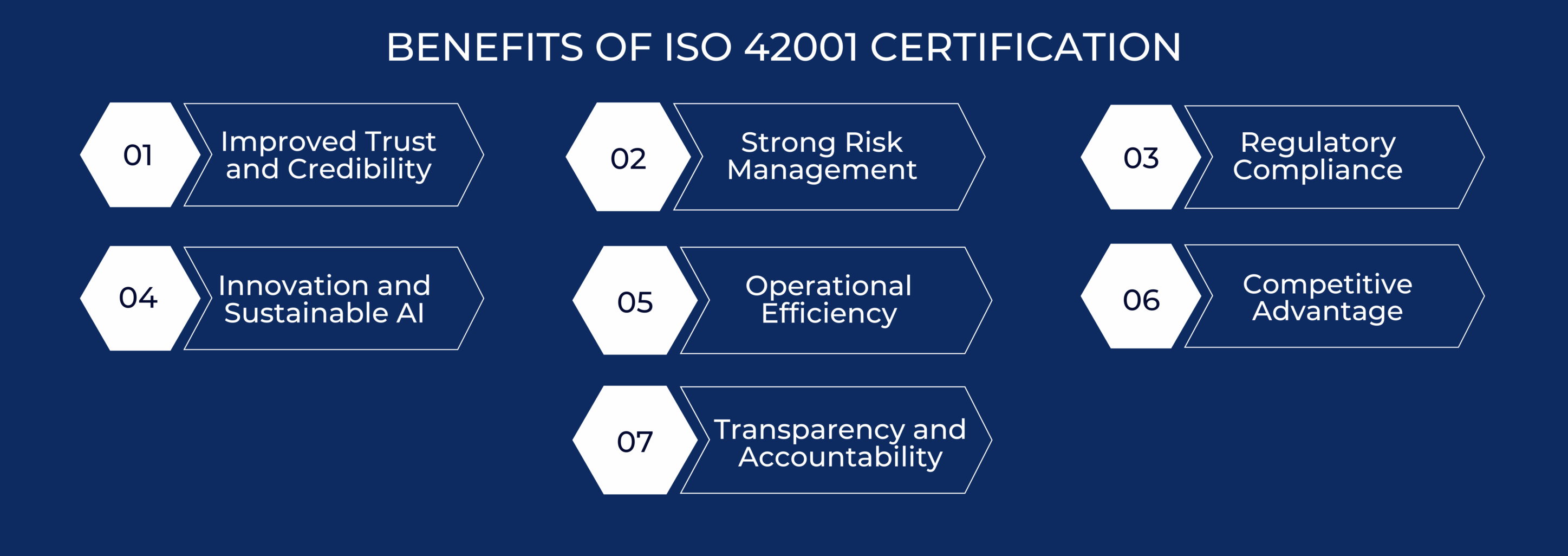
ISO 42001 Certification in Germany delivers measurable organizational benefits spanning regulatory positioning, commercial competitiveness, operational risk management, and stakeholder trust. Organizations that have achieved ISO AIMS certification in Germany report tangible improvements in AI governance maturity, regulatory examination performance, and enterprise client acquisition. The following benefits reflect outcomes documented across organizations that have pursued structured AI management system certification under internationally recognized audit frameworks.
- ✓Demonstrated conformity with ISO/IEC 42001:2023 requirements, providing auditable evidence of responsible AI governance to regulators, customers, and business partners
- ✓Structured alignment with EU AI Act conformity requirements, reducing regulatory examination risk for organizations deploying high-risk AI systems in Germany and across the EU
- ✓Enhanced GDPR compliance posture through documented AI transparency, explainability, and human oversight controls addressing automated decision-making requirements
- ✓Competitive differentiation in enterprise procurement processes where ISO 42001 compliance in Germany is increasingly required as a supplier qualification criterion
- ✓Improved AI risk management effectiveness through systematic risk identification, assessment, and treatment processes governed by internationally recognized standards
- ✓Strengthened board-level AI governance with documented accountability structures, decision records, and performance reporting mechanisms satisfying corporate governance requirements
- ✓Reduced liability exposure through demonstrable due diligence in AI system oversight, lowering organizational exposure to regulatory enforcement actions and civil claims
- ✓Access to public sector contracts in Germany where AI governance certification is increasingly required by federal and state procurement authorities
- ✓International market credibility enabling German organizations to demonstrate AI governance maturity to partners and customers across EU member states and global markets
- ✓Operational efficiency improvements through standardized AI lifecycle management processes, reducing redundant governance activities across multiple AI systems and business units
Beyond these direct organizational benefits, ISO 42001 Certification in Germany contributes to the country’s broader national AI governance ecosystem. As more German organizations achieve ISO AIMS certification, the overall level of AI accountability and transparency in the German market increases — creating positive network effects for regulatory compliance, consumer trust, and Germany’s competitive position in responsible AI development. The German government’s National AI Strategy explicitly supports the development of trustworthy AI, and ISO 42001 certification provides a concrete, internationally recognized measure of trustworthy AI governance that aligns directly with national AI policy objectives.
How to Achieve ISO 42001 Certification: Step-by-Step Process
Organizations in Germany seeking ISO 42001 certification should follow a structured process that ensures systematic AIMS development, documented conformity, and successful independent certification audit outcomes. The following steps describe the pathway to achieving ISO 42001 Certification in Germany under an independently conducted audit program. Each step builds on the previous, creating a coherent governance foundation that withstands rigorous ISO 42001 assessment scrutiny.
- Determine AIMS Scope: Define the organizational boundary, AI systems, business units, processes, and geographic locations to be included within the ISO 42001 certification scope, taking into account material AI risks and applicable regulatory requirements.
- Conduct Organizational Context Analysis: Identify external regulatory requirements including GDPR, EU AI Act, BSI guidance, and sector-specific regulations, and internal factors including AI strategy, risk appetite, and existing management system frameworks.
- Establish AI Governance Structures: Designate AI governance roles and responsibilities, establish an AI policy signed by top management, and integrate AI governance into existing organizational governance frameworks and reporting structures.
- Perform AI Risk and Impact Assessment: Systematically identify, evaluate, and document AI risks and impacts for each AI system within scope using a documented methodology, and determine appropriate risk treatment measures from Annex A or additional controls.
- Develop and Implement AIMS Controls: Implement selected Annex A controls and any additional controls required by the risk assessment, establishing documented procedures, technical configurations, and operational processes as required.
- Build Documentation Portfolio: Develop all mandatory documented information required by ISO/IEC 42001:2023, including scope documentation, AI policy, risk assessment records, Statement of Applicability, system inventory, and operational procedures.
- Conduct Internal Audit: Execute a planned internal audit program covering all AIMS clauses and controls, document findings, and initiate corrective actions for identified nonconformities.
- Complete Management Review: Conduct a formal management review with top management participation, reviewing AIMS performance data, audit results, risk assessment status, and stakeholder feedback, and documenting decisions and actions.
- Engage Independent Certification Body: Contract an accredited certification body to conduct Stage 1 documentation review and Stage 2 operational audit, addressing any findings and nonconformities identified during the ISO 42001 audit process.
- Achieve Certification and Maintain Surveillance: Upon successful certification decision, maintain AIMS effectiveness through annual surveillance audits and recertification every three years.
The typical timeline for achieving initial ISO 42001 Certification in Germany ranges from six to eighteen months, depending on organizational size, AI system complexity, existing management system maturity, and documentation readiness at the outset of the certification program. Organizations that already hold ISO 27001 or ISO 9001 certifications benefit from existing management system infrastructure and typically achieve ISO 42001 certification at the shorter end of this range. Foundational elements such as internal audit programs, management review processes, and document management systems are already operational, reducing the setup burden considerably.
Resource requirements for ISO 42001 certification vary based on scope but typically include dedicated AI governance personnel time for documentation development and system implementation, training investment for personnel in AI governance roles, technology investment for AI monitoring and logging systems if not already in place, and certification body fees for Stage 1, Stage 2, and ongoing surveillance audits. Organizations should plan for sustained resource commitment beyond initial certification. Maintaining ISO AIMS certification in Germany requires ongoing operational investment in internal audit activities, management review processes, and continuous AIMS improvement throughout the three-year certification cycle.
- ✓Timeline and Resource Planning
ISO 42001 Compliance Germany: Regulatory Alignment and Legal Context
ISO 42001 compliance in Germany operates within a multilayered regulatory environment that spans European Union law, German federal legislation, and sector-specific regulatory frameworks. Organizations seeking ISO 42001 Certification in Germany must understand how the standard’s requirements relate to and interact with applicable legal obligations. Certification auditors will evaluate whether the AIMS adequately addresses the organization’s full compliance context — rather than treating ISO 42001 as an isolated governance framework disconnected from real-world regulatory obligations.
EU AI Act Alignment
The EU AI Act establishes a risk-based regulatory framework for AI systems deployed in the European Union, with requirements varying by risk classification. Prohibited AI systems include those using subliminal manipulation, social scoring, and certain biometric identification applications. High-risk AI systems — including those used in critical infrastructure, education, employment, essential services, law enforcement, migration management, and administration of justice — must satisfy mandatory requirements covering risk management systems, data governance, technical documentation, transparency, human oversight, accuracy, robustness, and cybersecurity. ISO 42001 compliance provides a structured, auditable pathway toward meeting many of these obligations.
ISO 42001 compliance in Germany provides a governance framework that maps directly to EU AI Act high-risk AI system requirements. Organizations that have achieved ISO 42001 certification can use their AIMS documentation, risk assessment records, and control evidence as supporting materials in EU AI Act conformity assessments. While ISO 42001 certification does not automatically constitute EU AI Act conformity, the standard’s risk management, documentation, transparency, human oversight, and monitoring requirements substantially overlap with mandatory EU AI Act provisions — significantly reducing the additional compliance burden for certified organizations.
German National Regulatory Context
Germany’s national regulatory context for AI governance includes several important frameworks beyond EU-level regulation. The BSI has published the AI Cloud Service Compliance Criteria Catalogue (AIC4), which addresses AI security requirements for cloud-hosted AI services and aligns with ISO 42001 risk and control requirements. The German Data Ethics Commission (Datenethikkommission) has published principles for ethical AI governance that inform national policy and public procurement requirements. Germany’s Digital Services Act implementation authority also applies additional transparency and risk assessment obligations for large online platforms using AI-driven recommendation systems — all of which intersect with ISO 42001 assessment criteria.
For organizations operating in Germany’s financial sector, BaFin’s guidance on algorithms and AI emphasizes model risk management, explainability requirements for AI-assisted credit decisions, and governance requirements for AI systems used in supervisory reporting. BaFin has also indicated that financial institutions should be able to demonstrate that AI governance practices meet standards comparable to internationally recognized frameworks — making ISO AIMS certification for German financial services organizations a practically significant credential in regulatory examinations. Organizations subject to BaFin supervision should ensure that their ISO 42001 assessment scope explicitly includes AI systems used in regulated financial activities.
CertPro’s ISO 42001 Certification Services in Germany
CertPro conducts ISO 42001 certification audits in Germany as a Licensed CPA Firm operating under internationally recognized audit standards. CertPro’s ISO 42001 audit methodology follows the structured evaluation process defined by ISO/IEC 17021-1 accreditation requirements, ensuring that certification decisions are based on objective, independently gathered evidence and are free from conflicts of interest. Organizations in Germany engaging CertPro for ISO 42001 certification receive a rigorous, professionally documented audit experience — producing certifications recognized across international markets and trusted by regulators, enterprise clients, and procurement authorities.
Audit Methodology and Professional Standards
CertPro’s ISO 42001 audit engagements in Germany are conducted by auditors with demonstrated competence in AI governance, AI system development and deployment practices, relevant regulatory frameworks including the EU AI Act and GDPR, and management system audit methodology. Auditors are selected based on technical competence relevant to the industry sector and AI application types within the certification scope. This ensures that audit findings reflect substantive expertise in the technical and operational contexts being evaluated — rather than generic management system audit experience alone.
Each ISO 42001 audit conducted by CertPro produces a comprehensive audit report documenting audit objectives, scope, evidence reviewed, findings, nonconformities with specific clause references, and the certification recommendation. Audit reports are prepared in both English and German language as required, facilitating use in regulatory submissions, board reporting, and enterprise client qualification processes. CertPro maintains audit records in accordance with accreditation body requirements, ensuring that certification evidence is available for impartial review and that the integrity of the ISO 42001 certification process can be independently verified at any time.
Cost-Effective and Transparent Certification Process
CertPro offers transparent, fixed-fee pricing for ISO 42001 certification audits in Germany, with costs determined based on organizational size, AIMS scope complexity, number of AI systems within scope, and audit duration requirements. Fixed-fee pricing eliminates uncertainty in certification budget planning and enables organizations to accurately forecast the total cost of ISO 42001 Certification in Germany before audit commencement. CertPro’s pricing structure is communicated in full before any engagement begins, with no hidden charges or scope-expansion fees beyond agreed parameters.
For organizations that hold existing ISO management system certifications, CertPro offers integrated audit programs that combine ISO 42001 assessment with surveillance or recertification audits for co-certified standards such as ISO 27001 or ISO 9001. Integrated audit programs reduce total audit days and associated organizational costs by leveraging common audit activities across multiple standards — while maintaining the independence and rigor of each individual certification assessment. This approach makes ISO AIMS certification in Germany more cost-accessible for organizations managing multiple compliance obligations simultaneously.
Germany-Specific Audit Experience and Sector Coverage
CertPro has conducted ISO 42001 assessment engagements across Germany in multiple sectors including manufacturing and automotive, financial services and fintech, healthcare and life sciences, logistics and supply chain, energy and utilities, and enterprise technology and software. This cross-sector experience enables CertPro auditors to apply the ISO 42001 standard with appropriate technical depth in the specific AI application contexts relevant to each organization’s certification scope — producing audit findings that are technically substantive and operationally meaningful, rather than generically formatted against standard clauses.
CertPro’s German market experience includes familiarity with German-language regulatory documentation, BSI and BaFin regulatory guidance, German corporate governance requirements, and the operational characteristics of AI deployment in Germany’s industrial and commercial environments. ISO 42001 certification for Germany-based companies conducted by CertPro reflects this local market knowledge, ensuring that audit evaluations account for the specific regulatory context and business environment in which German organizations operate their AI systems. Certification decisions and audit reports produced by CertPro carry institutional weight in German regulatory, procurement, and commercial contexts.
ISO 42001 Certification Cost Factors in Germany
The cost of ISO 42001 Certification in Germany varies based on several determinative factors that affect the scope and duration of the certification audit. Organizations seeking to budget for ISO 42001 assessment in Germany should understand these cost factors to obtain accurate cost estimates and plan certification investments effectively. CertPro provides detailed cost breakdowns based on the following key parameters before any audit engagement is confirmed — ensuring complete financial transparency from the outset.
| Cost Factor | Description | Impact on Cost |
|---|---|---|
| Organization Size | Number of employees and locations involved in AI governance activities within scope | Larger organizations require more audit days and personnel interviews |
| Number of AI Systems | Count of distinct AI systems included within the AIMS certification scope | Each additional system requires additional technical assessment time |
| Industry Sector Complexity | Regulatory complexity and technical AI application types in the sector | Highly regulated sectors with complex AI applications require specialist auditors |
| Existing Certification Status | Whether the organization holds other ISO certifications enabling integrated audit programs | Integrated audits reduce total cost through shared audit activities |
| Geographic Distribution | Number of sites or locations requiring on-site audit visits in Germany | Multi-site audits require travel and additional audit days per location |
In addition to certification body fees, organizations should account for internal resource costs — including personnel time for audit preparation and participation, costs of any additional documentation or system configuration required to address Stage 1 findings before Stage 2 can proceed, and ongoing surveillance audit costs across the three-year certification cycle. CertPro’s transparent pricing model provides full cost visibility across the initial ISO 42001 certification and subsequent surveillance audit program, enabling accurate multi-year compliance investment planning for organizations across Germany.
FAQ
▶
What is ISO 42001 certification and why does it matter for German organizations?
▶
Which organizations in Germany need ISO 42001 certification?
▶
How long does an ISO 42001 audit take in Germany?
▶
How does ISO 42001 certification relate to EU AI Act compliance?
▶
What is the difference between ISO 42001 and ISO 27001 for German organizations?
▶
What documentation is required before an ISO 42001 audit can commence?
▶
How does ISO 42001 compliance address AI bias and fairness in German business contexts?
▶
Can small and medium-sized enterprises (SMEs) in Germany achieve ISO 42001 certification?
ISO 42001 CERTIFIED: WHY AI GOVERNANCE CERTIFICATION IS BECOMING A BOARD-LEVEL REQUIREMENT
AI is now an inevitable component of major business activities in the current corporate world. To elaborate, it is now part of product design, custome…

MindSec Launches AI Compliance for Law 25 & ISO 42001
Excerpt from Barchart Article, Published on December 3, 2025 Today, Canadian organizations face increasing pressure to comply with stringent privacy a…

UNDERSTANDING ISO 42001: A GUIDE FOR RESPONSIBLE AI MANAGEMENT SYSTEMS
The invention of artificial intelligence (AI) has changed the operational processes of many industries. However, the rapid growth of technology increa…
Get In Touch
have a question? let us get back to you.