
ISO 42001 Certification in Barcelona
ISO 42001 Certification in Barcelona is issued by a Licensed CPA Firm operating as an independent certification body. The process follows a structured audit of an organization’s AI Management System (AIMS) against the requirements of ISO/IEC 42001:2023. The resulting certification documents that an organization’s governance, risk management, accountability structures, transparency practices, and responsible AI use controls have been independently evaluated and confirmed to conform with the standard.
OUR CLIENTS








ISO 42001 Certification for Barcelona-Based Technology and AI-Driven Organizations
ISO 42001 Certification in Barcelona is issued by a Licensed CPA Firm operating as an independent certification body. The process follows a structured audit of an organization’s AI Management System (AIMS) against the requirements of ISO/IEC 42001:2023. The resulting certification documents that an organization’s governance, risk management, accountability structures, transparency practices, and responsible AI use controls have been independently evaluated and confirmed to conform with the standard.
Barcelona functions as one of Southern Europe’s leading centers for technology development and AI deployment. The city hosts a concentrated ecosystem of mobile technology firms, SaaS providers, e-commerce platforms, digital media companies, cloud service providers, and enterprise AI developers. Organizations operating within this ecosystem increasingly encounter procurement requirements, international client due diligence, and regulatory expectations that call for formal, independently audited AI governance documentation. ISO 42001 Certification in Barcelona directly addresses this demand by providing a structured, internationally recognized attestation of AI management system conformance.
ISO/IEC 42001:2023 is the first international standard specifically designed to govern the management of artificial intelligence within organizational contexts. It establishes requirements for organizations that develop, deploy, or operate AI systems to implement documented controls spanning AI risk assessment, impact evaluation, data governance, system transparency, human oversight, and lifecycle management. The standard applies across industries and organization sizes, making it relevant to Barcelona’s diverse technology landscape — from early-stage AI startups to established enterprise software providers and cloud infrastructure companies.
CertPro operates exclusively as an independent audit and certification provider. The firm conducts ISO 42001 audits against the standard’s defined requirements and issues certification decisions based on audit evidence. This positioning is distinct from advisory, consulting, implementation, or readiness services. Organizations that engage CertPro for ISO 42001 Certification in Barcelona receive an independent, evidence-based assessment of their AIMS — not preparation services or control design recommendations. This independence is the foundation of certification credibility in enterprise procurement evaluations and international vendor due diligence processes.
Barcelona’s technology sector maintains significant business relationships with U.S.-based enterprises, financial institutions, and platform operators. These relationships frequently involve vendor assurance reviews, third-party risk management assessments, and procurement qualification processes that require documented evidence of AI governance conformance. ISO 42001 Certification in Barcelona provides organizations with a recognized, audited credential that can be presented in response to these requirements. The certification satisfies the expectations of international enterprise procurement frameworks — including those applied by U.S. technology companies, financial services firms, and regulated industry operators that assess AI governance as part of their supplier qualification programs.
ISO 42001 shares structural alignment with ISO 27001 for information security management and ISO 31000 for risk management. Organizations in Barcelona that have already established management system infrastructure under these frameworks can leverage existing documentation, risk assessment processes, policy structures, and governance roles when scoping their AIMS for an ISO 42001 audit. This alignment reduces redundant documentation effort and supports integrated management system approaches across AI governance, information security, and enterprise risk. The standard also maps directly to the EU AI Act’s governance expectations and reinforces GDPR data governance obligations — dimensions of particular regulatory relevance for Barcelona-based organizations operating within European legal frameworks.
ISO/IEC 42001:2023 Standard Structure and Scope
ISO/IEC 42001:2023 is structured in alignment with the High-Level Structure (HLS) common to ISO management system standards, covering Clauses 4 through 10: organizational context, leadership, planning, support, operation, performance evaluation, and improvement. Annex A provides a reference control set addressing AI-specific domains — including AI system impact assessment, data governance for AI, AI transparency and explainability, human oversight mechanisms, and AI system monitoring. Annex B provides guidance on controls for AI system development and deployment. Organizations pursuing ISO 42001 Certification in Barcelona must demonstrate that their AIMS addresses all mandatory clauses and implements controls appropriate to the scope and nature of their AI activities.
The standard applies to organizations in the role of AI developer, AI deployer, or both. Barcelona-based SaaS providers that embed AI capabilities into their products, cloud service providers that host AI workloads, and enterprise software companies that deploy AI-driven decision systems each fall within distinct roles under the standard. The ISO 42001 audit scope is defined to reflect the organization’s specific role, the AI systems within scope, and the associated risk profile. Certification scope documentation must clearly identify the AI systems, organizational units, and geographic boundaries covered by the AIMS assessment.
Applicability to Barcelona’s AI and Technology Ecosystem
Barcelona’s technology ecosystem encompasses a broad range of AI-active organizations. Mobile technology companies developing AI-driven personalization engines, fintech platforms using machine learning for credit scoring or fraud detection, e-commerce operators deploying recommendation algorithms, and digital media companies using AI for content moderation or audience targeting are all subject to AI governance obligations under ISO/IEC 42001:2023. ISO 42001 Certification in Barcelona provides each of these organization types with a structured framework for documenting, auditing, and certifying the governance controls applied to their specific AI systems and use cases.
Barcelona’s role as a hub for European technology scale-ups and international SaaS expansion means that many organizations must demonstrate AI governance conformance to clients, investors, and regulators across multiple jurisdictions simultaneously. ISO 42001 Certification in Barcelona provides a single, internationally recognized attestation that can satisfy multi-jurisdictional vendor assurance requirements. The standard’s alignment with EU AI Act governance principles further positions ISO 42001 compliance as a foundational element of regulatory preparedness for Barcelona organizations operating under European law.

ISO 42001 Certification Audit Process for Organizations in Barcelona
The ISO 42001 audit process for organizations in Barcelona follows a structured, multi-stage methodology applied by the Licensed CPA Firm as the independent certification body. Each stage produces documented audit outputs that form the evidentiary basis for the certification decision. The process is conducted exclusively by qualified auditors and does not include advisory, consulting, or implementation activities. The table below summarizes the primary stages of the ISO 42001 audit process.
| Audit Stage | Key Activities | Output |
|---|---|---|
| Application Review | Scope definition, organizational context assessment, audit program determination | Confirmed audit scope and program |
| Stage 1 Audit | Documentation review, AIMS readiness evaluation, identification of audit focus areas | Stage 1 audit report |
| Stage 2 Audit | Evidence collection, control effectiveness testing, nonconformity identification | Stage 2 audit report with findings |
| Nonconformity Review | Review of corrective actions against identified nonconformities | Closure confirmation or escalation |
| Certification Decision | Independent committee review of audit evidence and findings | Certificate issuance or deferral |
| Surveillance Audit | Periodic conformance verification against AIMS controls | Surveillance audit report |
| Recertification Audit | Full-cycle reassessment at three-year certificate expiry | Renewed certification or lapse |
The Stage 1 audit consists of a structured review of the organization’s AIMS documentation and an assessment of whether the management system has been sufficiently established to proceed to Stage 2 evidence testing. During the Stage 1 ISO 42001 audit, auditors examine the organization’s AI governance policy, AI risk assessment documentation, AI system inventory, impact assessment records, and the scope statement defining which AI systems and organizational units are included within the AIMS boundary. The Stage 1 audit identifies documentation gaps or structural deficiencies that may affect the Stage 2 assessment.
For Barcelona-based organizations, the Stage 1 audit also evaluates whether the AIMS scope statement accurately reflects the organization’s AI activities within the local operating environment. This includes confirming that AI systems deployed for local market functions — such as AI-driven customer service tools, automated content moderation systems, or machine learning-based analytics platforms — are appropriately included within the defined scope. Auditors review documentation in the language of the engagement and assess whether the organization’s AI governance structures align with the standard’s requirements for leadership commitment, resource allocation, and management review.
The Stage 2 audit constitutes the substantive assessment phase of the ISO 42001 examination. Auditors collect and evaluate evidence of control design and operating effectiveness across the AIMS control environment. This includes reviewing AI risk assessment outputs, examining AI system impact assessment records, testing data governance controls, evaluating human oversight mechanisms, and assessing whether AI transparency and explainability requirements are operationally implemented. The Stage 2 audit produces a formal report identifying conformities, observations, and any nonconformities against the standard’s requirements.
Nonconformities identified during the Stage 2 ISO 42001 audit are classified and communicated to the organization for corrective action. Major nonconformities — those indicating a systemic failure to meet a mandatory clause requirement — must be resolved and verified before the certification decision proceeds. Minor nonconformities are documented and tracked through the surveillance cycle. The audit team’s findings are consolidated into a formal submission to the independent certification committee, which makes the final certification decision based solely on the audit evidence presented. Auditors do not participate in the certification decision, preserving the independence of the process.
ISO 42001 certification is issued with a three-year validity period, subject to annual surveillance audits conducted in the intervening years. Surveillance audits verify that the organization’s AIMS continues to conform with the standard’s requirements and that previously identified nonconformities have been effectively addressed. The surveillance audit scope may focus on specific control domains, high-risk AI systems, or areas of change within the organization’s AI activities. Significant changes to the AIMS scope — such as the addition of new AI systems, organizational restructuring, or changes to AI use cases — may trigger an unscheduled surveillance review.
Recertification audits are conducted prior to the expiry of the three-year certificate to determine whether ISO 42001 certification should be renewed. The recertification audit follows a structure similar to the initial certification process, including documentation review and evidence testing across the full AIMS scope. Organizations that have maintained effective AIMS controls and addressed surveillance findings in a timely manner typically present a stronger evidence base during recertification. Certificate suspension or withdrawal may occur where an organization fails to respond to nonconformities within defined timeframes or where audit access is denied.
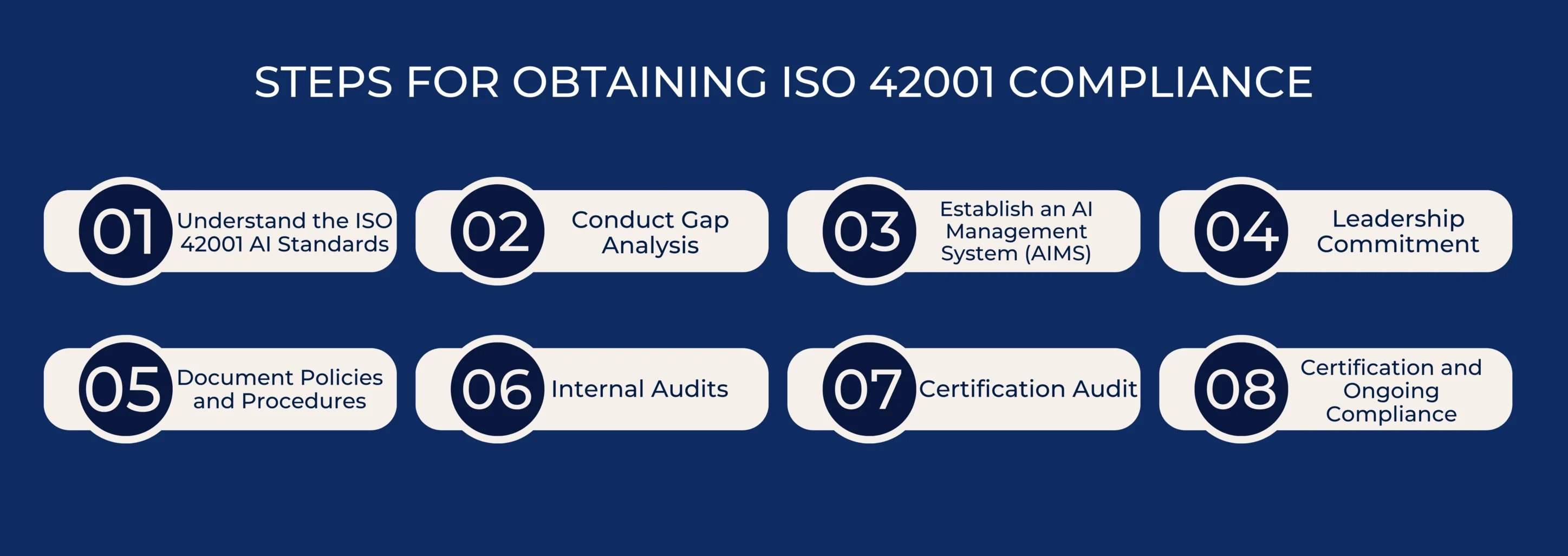
- ✓Stage 1 Audit: Documentation and Readiness Review
- ✓Stage 2 Audit: Evidence Collection and Control Testing
- ✓Surveillance Audits and Recertification
Why Organizations in Barcelona Pursue ISO 42001 Certification
ISO 42001 Certification in Barcelona is pursued by organizations across multiple technology sectors for reasons that reflect both commercial necessity and regulatory preparation. The demand for formal AI governance attestation is driven by a convergence of factors: international enterprise procurement requirements, EU regulatory developments, investor due diligence expectations, and the competitive dynamics of Barcelona’s technology market. Understanding these demand drivers clarifies why ISO 42001 certification has become a procurement and compliance priority for AI-active organizations across the region.
Enterprise Vendor Qualification and Third-Party Risk Management
Barcelona-based technology companies frequently supply AI-enabled services to large enterprise clients in the United States, the United Kingdom, and across the European Union. These clients apply structured third-party risk management frameworks that include AI governance as a formal assessment category. A Barcelona-based SaaS provider supplying AI-driven analytics to a U.S. financial services firm, for example, may be required to demonstrate that its AI systems operate under a documented, independently audited governance framework before passing the client’s vendor qualification review. ISO 42001 Certification in Barcelona provides the audited attestation required to satisfy these third-party risk management inquiries.
ISO 42001 compliance that Barcelona tech companies pursue is often triggered by a specific procurement event — a request for proposal from an enterprise client, a vendor security questionnaire, or a due diligence review initiated by a strategic partner or acquirer. Rather than responding to each inquiry with ad hoc documentation, organizations holding ISO 42001 certification can reference their independently issued certificate and associated audit report as structured evidence of AI governance conformance. This positions the certificate as a reusable procurement asset across multiple client relationships and sales cycles.
EU AI Act Alignment and Regulatory Preparedness
The EU AI Act establishes risk-based governance requirements for AI systems deployed within the European Union, introducing obligations that overlap significantly with ISO/IEC 42001:2023 control requirements. Barcelona-based organizations developing or deploying AI systems classified as high-risk under the EU AI Act — including AI used in employment decisions, credit assessment, education access, or critical infrastructure — face mandatory governance documentation, conformity assessment, and registration obligations. ISO 42001 compliance provides a structured, auditable framework that supports conformity with EU AI Act governance obligations, reducing the documentation burden of parallel compliance programs.
ISO 42001 certification that Barcelona fintech organizations pursue is particularly relevant given the financial sector’s exposure to AI risk. Fintech companies using AI for credit scoring, fraud detection, anti-money laundering monitoring, or customer onboarding automation operate AI systems with direct impact on individuals’ financial access. These systems attract regulatory scrutiny from both Spanish financial authorities and EU financial regulators. ISO 42001 attestation provides fintech organizations with documented evidence that their AI governance controls have been independently audited — a credential that reinforces regulatory engagement and supports responses to supervisory inquiries.
International Market Access and Competitive Differentiation
Barcelona’s technology organizations operate in competitive international markets where AI governance credentials are increasingly used as differentiators in sales processes, partnership discussions, and investor presentations. The ISO 42001 examination and certification process provides a recognized, independently issued credential that signals organizational maturity in AI risk management. For Barcelona-based startups and scale-ups expanding into North American or Asia-Pacific markets, ISO 42001 Certification in Barcelona functions as a market access enabler by satisfying AI governance documentation requirements in regulated industry procurement processes. The certification is recognized across international markets and does not require jurisdiction-specific equivalence assessments.
ISO 42001 Certification Requirements and AIMS Control Environment
ISO 42001 compliance requires organizations to establish, implement, maintain, and continually improve an AI Management System that addresses the mandatory requirements of ISO/IEC 42001:2023 Clauses 4 through 10. Organizations must also implement controls from Annex A that are appropriate to their AI risk profile. The following requirements constitute the core AIMS control environment evaluated during the ISO 42001 audit.
Organizations seeking ISO 42001 Certification in Barcelona must maintain documented information demonstrating AIMS conformance across defined areas. Core documentation requirements include: an AI governance policy endorsed by senior leadership; an AI system inventory identifying all AI systems within the certification scope; AI risk assessment records documenting identified risks and their evaluation; AI impact assessment records for each in-scope AI system; and a risk treatment plan specifying the controls selected to address identified AI risks. The Statement of Applicability — identifying which Annex A controls are applicable, implemented, or excluded, along with justification for any exclusions — is a mandatory document required for the Stage 1 ISO 42001 audit review.
Management review records documenting leadership’s periodic evaluation of AIMS performance, internal audit records, and documented corrective action procedures are also required. Organizations must demonstrate that documented information is controlled, current, and accessible to relevant personnel. For Barcelona-based organizations operating across multiple jurisdictions or deploying AI systems in multiple markets, documentation must accurately reflect the full scope of AIMS coverage and identify any exclusions with appropriate justification. Auditors assess the completeness and currency of documented information as a primary focus of the Stage 1 audit.
ISO/IEC 42001:2023 requires organizations to conduct structured AI risk assessments covering the risks associated with each AI system within scope. Risk assessment must address potential harms to individuals, groups, and society arising from AI system outputs — including discriminatory outcomes, privacy violations, safety risks, and erosion of human autonomy. For each AI system, organizations must complete an AI impact assessment evaluating the system’s intended purpose, potential adverse impacts, and the controls implemented to mitigate identified risks. These assessments form a central body of evidence reviewed during Stage 2 ISO 42001 audit engagements in Barcelona.
The standard requires risk assessments to be repeated when AI systems are materially changed, when new use cases are introduced, or when the risk environment shifts in ways that affect an AI system’s risk profile. Barcelona-based organizations that deploy AI systems subject to rapid iteration — such as recommendation engines, generative AI tools, or automated decision systems — must demonstrate that their risk assessment processes are responsive to system changes and not limited to static, one-time exercises. Auditors review the frequency and completeness of risk assessment updates as part of the operating effectiveness evaluation.
- ✓AI system transparency documentation: organizations must document the intended purpose, capabilities, and limitations of each AI system within scope
- ✓Explainability mechanisms: controls must enable affected individuals or operators to understand AI system outputs where required by the risk assessment
- ✓Human oversight procedures: defined processes must ensure human review of AI decisions in high-risk or high-impact contexts
- ✓Data governance controls: organizations must manage the quality, provenance, and appropriateness of data used to train and operate AI systems
- ✓AI system monitoring: ongoing monitoring of AI system performance, drift, and output quality must be documented and periodically reviewed
- ✓Incident management: procedures for identifying, responding to, and recording AI system incidents or adverse outcomes must be established
- ✓Supplier and third-party AI governance: controls over third-party AI components or AI services procured from external providers must be addressed within the AIMS
- ✓Continual improvement: organizations must demonstrate processes for identifying and addressing AIMS performance gaps throughout the certification cycle
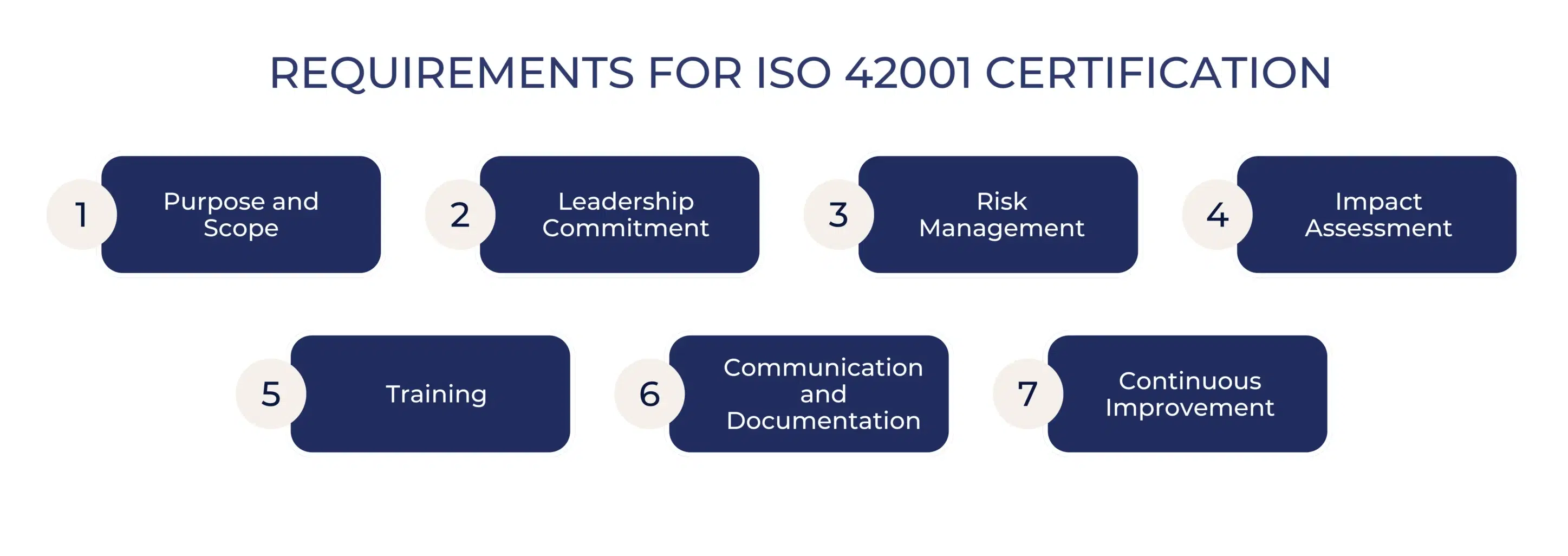
- ✓Mandatory AIMS Documentation Requirements
- ✓AI Risk Assessment and Impact Evaluation Controls
- ✓AI Transparency, Human Oversight, and Lifecycle Controls
Business Sectors in Barcelona Seeking ISO 42001 Certification
ISO 42001 Certification in Barcelona is relevant across a broad range of industry sectors that develop or deploy AI systems as part of their core operations. Barcelona’s technology ecosystem is characterized by sector diversity, with significant concentrations in mobile technology, fintech, e-commerce, SaaS, cloud infrastructure, and digital media. Each of these sectors presents distinct AI use cases and associated governance requirements that ISO 42001 certification directly addresses.
SaaS Providers, Cloud Service Companies, and Managed Service Providers
Barcelona hosts a substantial concentration of SaaS providers that embed AI functionality into their product offerings. These companies supply AI-enabled software to enterprise clients across Europe and North America, typically through subscription-based models that involve ongoing data processing and AI-driven output delivery. ISO 42001 Certification in Barcelona positions SaaS providers as having independently audited AI governance controls — a qualification increasingly required in enterprise software procurement processes. Cloud service providers and managed service providers operating AI workloads on behalf of clients similarly benefit from ISO 42001 attestation, which documents that AI systems within their infrastructure are subject to structured governance oversight.
For managed service providers in Barcelona that supply AI-enabled services to regulated industry clients — including healthcare operators, financial institutions, and public sector organizations — ISO 42001 compliance demonstrates that AI governance controls meet internationally recognized standards. This is particularly relevant where the managed service provider operates AI systems that process sensitive personal data or generate outputs that affect regulated decisions, such as automated eligibility determinations or AI-assisted clinical documentation tools.
Fintech, E-Commerce, and Digital Media Organizations
Barcelona’s fintech sector deploys AI systems across a wide range of financial functions, including automated credit assessment, transaction fraud detection, Know Your Customer (KYC) automation, algorithmic trading systems, and AI-driven investment advisory tools. These AI applications operate in regulatory contexts governed by Spanish financial authorities, the European Banking Authority, and the EU AI Act’s high-risk AI category framework. ISO 42001 certification that Barcelona fintech organizations pursue documents that these AI systems operate under independently audited governance frameworks — supporting regulatory engagement and enterprise client qualification processes alike.
E-commerce companies in Barcelona deploy AI systems for product recommendation, dynamic pricing, inventory forecasting, and automated customer service. Digital media companies use AI for content moderation, audience segmentation, and programmatic advertising optimization. Both sectors face growing regulatory scrutiny over AI system transparency, algorithmic bias, and the potential for AI-driven decisions to affect consumer welfare. The ISO 42001 examination and certification process provides these organizations with documented evidence that AI governance controls addressing bias mitigation, transparency, and human oversight are operationally implemented and independently verified.
Mobile Technology and Enterprise AI Developers
Barcelona has established itself as a global center for mobile technology, hosting major telecommunications companies and a dense ecosystem of mobile application developers. Organizations in this sector increasingly integrate AI capabilities into mobile platforms — including AI-driven personalization, voice recognition, predictive text, and behavioral analytics. ISO 42001 Certification in Barcelona enables mobile technology companies to document that their AI governance frameworks address the full lifecycle of AI features embedded in consumer-facing applications, from development and testing through deployment and ongoing monitoring. Enterprise AI developers — companies building AI models, platforms, or tools used by other organizations — similarly benefit from ISO 42001 attestation, which demonstrates that the AI systems supplied to downstream users are governed by audited, independently verified controls.
Benefits of ISO 42001 Certification for Barcelona-Based Organizations
ISO 42001 Certification in Barcelona delivers verifiable organizational benefits through independent audit verification of AI Management System conformance. The following benefits reflect the direct outcomes of certification for Barcelona-based organizations operating in technology, fintech, SaaS, e-commerce, and AI development sectors.
ISO 42001 attestation provides independently verified documentation that an organization’s AI governance controls have been assessed against the requirements of ISO/IEC 42001:2023. This verification is conducted by a Licensed CPA Firm operating as an independent certification body — not by the organization itself or its advisors. The resulting certificate and audit report constitute objective, third-party evidence of AIMS conformance that can be presented to clients, regulators, investors, and business partners without self-assessment bias. For Barcelona organizations operating AI systems with significant stakeholder impact, this independent verification builds trust in AI governance disclosures.
The structured audit methodology applied during ISO 42001 audit engagements in Barcelona ensures that the verification process follows a defined, repeatable evaluation framework. Auditors assess control design and operating effectiveness using documented evidence collected during the Stage 2 audit — including interview records, system documentation reviews, process observations, and output sampling. This evidence-based approach produces audit findings that are specific, traceable, and grounded in objective assessment rather than subjective evaluation. The resulting audit documentation provides organizations with a structured record of their AIMS conformance status at the time of certification.
- ✓ISO 42001 certification satisfies AI governance documentation requirements in enterprise vendor qualification processes across U.S., EU, and UK procurement frameworks
- ✓The certificate provides a recognized credential for responses to client security questionnaires and third-party risk management inquiries
- ✓ISO 42001 compliance documentation supports regulatory engagement with EU AI Act supervisory authorities and national competent authorities
- ✓Certification reinforces GDPR data governance compliance by documenting AI-related data processing controls within the AIMS
- ✓ISO 42001 attestation supports investor due diligence processes by providing independently verified AI risk management evidence
- ✓Annual surveillance audits provide ongoing assurance that AIMS controls remain effective between recertification cycles
- ✓ISO 42001 Certification in Barcelona positions organizations competitively in international SaaS and AI platform sales processes
The ISO 42001 certification process requires organizations to implement a structured, documented AI risk management cycle that extends well beyond the initial certification audit. Ongoing risk assessment, management review, internal audit, and corrective action processes are maintained throughout the three-year certification period and verified during annual surveillance audits. This continuous cycle supports improvement in AI governance maturity — not as a consulting outcome, but as a structural requirement of maintaining ISO 42001 compliance. Organizations that actively manage their AIMS over time develop stronger institutional knowledge of AI risk across their operations, creating a governance advantage that deepens with each certification cycle.
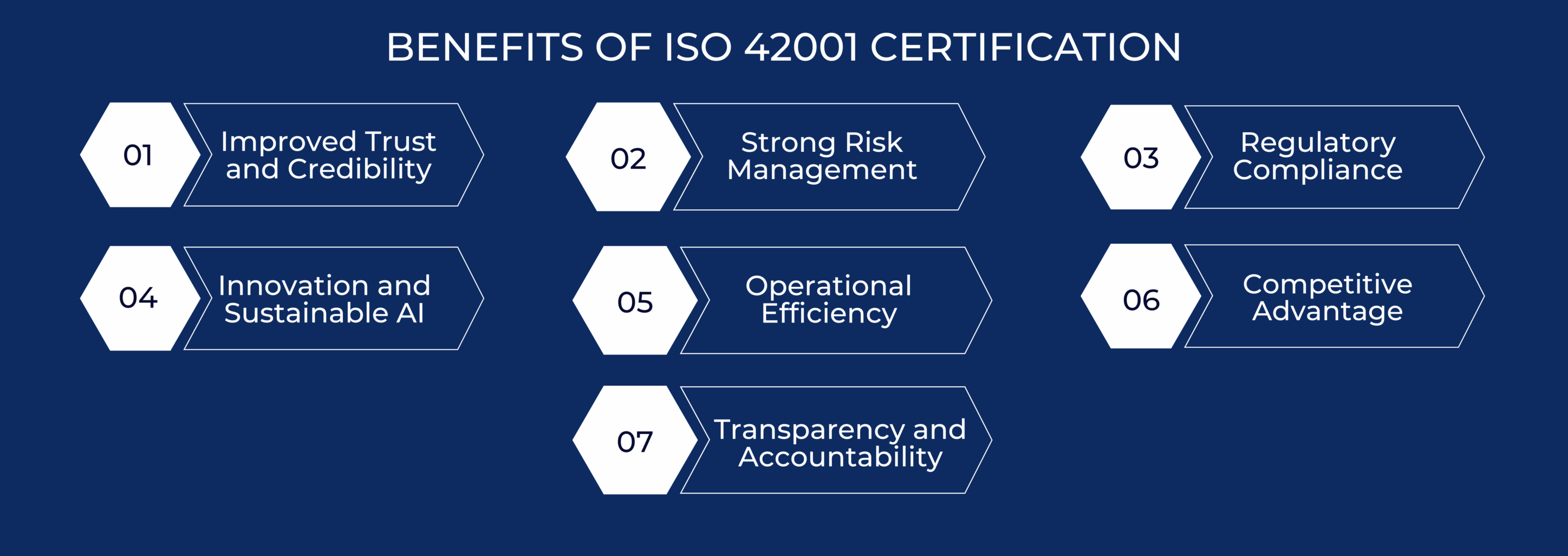
- ✓Independent Verification of AI Governance Controls
- ✓Recognition in Enterprise Procurement and Regulatory Frameworks
- ✓Structured AI Risk Management and Continual Improvement
ISO 42001 Certification Scope and Independent Certification Decision Framework
The scope of ISO 42001 Certification in Barcelona is defined during the application review phase and confirmed through the Stage 1 audit. Scope definition is a critical step in the certification process because it determines which AI systems, organizational units, functions, and geographic locations are covered by the AIMS assessment and the resulting certificate. Incorrectly scoped certifications — those that exclude significant AI activities to avoid audit scrutiny — may not satisfy the requirements of enterprise procurement frameworks that require comprehensive AI governance attestation.
Defining the AIMS Certification Scope
AIMS scope for ISO 42001 Certification in Barcelona must identify the AI systems subject to certification, the organizational roles involved (developer, deployer, or both), the physical and logical boundaries of the AI governance framework, and any exclusions with documented justification. For Barcelona-based organizations operating AI systems across multiple product lines or serving multiple client markets, the scope statement must clearly delineate which AI systems are included and provide a coherent rationale for the defined boundaries. Auditors evaluate the scope statement for accuracy and completeness during the Stage 1 audit and may require scope revisions where the defined scope does not accurately reflect the organization’s AI activities.
Organizations operating AI systems under third-party supply arrangements — for example, a Barcelona-based company deploying an AI model developed by an external provider — must address the governance boundaries between their own AIMS and the external provider’s AI governance framework within the scope definition. The standard requires organizations to document their approach to managing AI supply chain risk, including the governance controls applied to third-party AI components that fall within the certification scope. This requirement is particularly relevant for Barcelona technology companies that integrate third-party foundation models, AI APIs, or pre-trained machine learning components into their own AI-enabled products.
Independent Certification Committee and Decision Process
The certification decision for ISO 42001 Certification in Barcelona is made by an independent certification committee that operates separately from the audit team. The committee reviews the complete audit record — including Stage 1 and Stage 2 audit reports, nonconformity findings, and evidence of corrective actions — and determines whether the audit evidence supports certification. The committee may certify, defer pending corrective action completion, or decline certification based on the documented evidence. This separation between audit execution and certification decision is a structural safeguard that preserves the independence and integrity of the overall process.
Certificate issuance follows the committee’s affirmative decision and includes a formal ISO 42001 attestation document identifying the certified organization, the certification scope, the applicable standard (ISO/IEC 42001:2023), the certificate issue date, and the certificate expiry date. The certificate is valid for three years from the date of issuance, subject to continued conformance demonstrated through annual surveillance audits. Conditions for certificate suspension include failure to resolve major nonconformities within defined timeframes, material changes to the AIMS scope that have not been audited, or refusal of audit access during scheduled surveillance engagements.
ISO 42001 Examination: Evidence Collection and Audit Methodology
The ISO 42001 examination conducted during the Stage 2 audit applies a structured evidence collection methodology to assess the design and operating effectiveness of AIMS controls. Auditors use multiple evidence collection techniques to build a comprehensive picture of the organization’s AI governance control environment. This multi-method approach ensures that audit findings are grounded in objective evidence rather than management representations alone.
Evidence Collection Techniques and Control Testing
During the ISO 42001 examination, auditors collect evidence through documentation review, personnel interviews, process observation, system walkthrough procedures, and output sampling. Documentation review encompasses AI governance policies, risk assessment records, impact assessment documentation, training records, management review minutes, and internal audit reports. Personnel interviews are conducted with individuals responsible for AI governance functions — including AI system owners, data governance roles, risk management personnel, and senior leadership — to assess the operational implementation of documented controls and the level of organizational understanding of AIMS requirements.
Process observation involves auditors directly observing AI-related operational processes — such as AI system deployment procedures, change management workflows, or AI incident response activities — to verify that documented procedures are applied in practice. Output sampling may include reviewing AI system output logs, incident records, monitoring dashboards, or performance metrics to assess whether monitoring controls are operating as documented. The combination of these evidence collection techniques supports a comprehensive assessment of control operating effectiveness that extends well beyond documentation review alone.
Nonconformity Identification and Corrective Action Review
Nonconformities identified during the ISO 42001 examination are documented in the Stage 2 audit report with specific reference to the standard clause or Annex A control requirement that has not been met. Each nonconformity is described with sufficient detail to enable the organization to identify the root cause and implement appropriate corrective action. The audit team reviews corrective action evidence submitted by the organization prior to the certification committee’s review. Where corrective action evidence is insufficient to demonstrate effective resolution, the nonconformity remains open and may affect the certification decision timeline. This structured nonconformity management process ensures that ISO 42001 certification is issued only where audit evidence demonstrates genuine conformance with the standard’s requirements.
FAQ
▶
What is ISO 42001 Certification and why is it relevant for Barcelona organizations?
▶
Which Barcelona organizations are required to obtain ISO 42001 Certification?
▶
What does the ISO 42001 audit process involve for a Barcelona-based company?
▶
What is the difference between a Stage 1 and Stage 2 ISO 42001 audit?
▶
How long is an ISO 42001 certificate valid in Barcelona?
▶
What documentation is required for ISO 42001 Certification in Barcelona?
▶
Does ISO 42001 Certification in Barcelona cover the EU AI Act?
▶
What is an ISO 42001 surveillance audit and when does it occur?
ISO 42001 CERTIFIED: WHY AI GOVERNANCE CERTIFICATION IS BECOMING A BOARD-LEVEL REQUIREMENT
ISO 42001 Certified: Board-Level AI Governance Guide | CertPro CPA LLC HERO ══════════════════════════════ –> src=”https://certpro.com/wp-content/uplo…
Get In Touch
have a question? let us get back to you.