
ISO 42001 Certification in Brisbane
ISO 42001 Certification in Brisbane is conducted by CertPro, a Licensed CPA Firm operating exclusively as an independent third-party certification body. CertPro does not provide consulting, advisory, implementation, or readiness services. Its role is strictly limited to the independent evaluation of an organisation’s Artificial Intelligence Management System (AIMS) against the requirements of ISO/IEC 42001:2023, culminating in an objective certification decision.
OUR CLIENTS





ISO 42001 Certification in Brisbane for Financial, Technology, and AI-Driven Organisations
ISO 42001 Certification in Brisbane is conducted by CertPro, a Licensed CPA Firm operating exclusively as an independent third-party certification body. CertPro does not provide consulting, advisory, implementation, or readiness services. Its role is strictly limited to the independent evaluation of an organisation’s Artificial Intelligence Management System (AIMS) against the requirements of ISO/IEC 42001:2023, culminating in an objective certification decision.
Brisbane is one of Australia’s most significant business, technology, research, and innovation hubs. Across Southeast Queensland, organisations in financial services, banking, fintech, SaaS, artificial intelligence, cybersecurity, healthcare, life sciences, advanced manufacturing, mining and resources, energy and utilities, construction, engineering, logistics, telecommunications, education, research, and government technology are actively developing and deploying AI systems.
These AI systems support credit decisioning, clinical decision support, predictive maintenance, fraud detection, automated document processing, natural language processing, and a broad range of enterprise automation applications. As the scale and complexity of AI deployment grows, regulators, enterprise customers, and procurement teams increasingly expect AI governance to meet a recognised international standard such as ISO/IEC 42001:2023.
ISO/IEC 42001:2023 is the first internationally recognised standard specifying requirements for an Artificial Intelligence Management System. It establishes a structured framework through which organisations can demonstrate that AI systems are developed, deployed, operated, monitored, and retired in a manner that is accountable, transparent, and aligned with responsible AI principles.
ISO 42001 Certification in Brisbane provides organisations with independent, third-party verification that their AIMS conforms to these requirements. The certification is issued following a structured audit process conducted entirely by CertPro as a Licensed CPA Firm, independent of the organisation being audited.
The Australian regulatory environment places increasing emphasis on AI governance. The Australian Privacy Act 1988 establishes obligations around the collection, use, and storage of personal data — many of which intersect directly with AI system operations. APRA-regulated entities, including banks, insurers, and superannuation funds headquartered in or operating from Brisbane, face prudential expectations around technology and operational risk governance that extend to AI and automated decision systems.
Australia’s AI Ethics Framework and ongoing federal AI governance developments further reinforce demand for structured, independently verified AI management systems. ISO 42001 compliance provides a recognised path for Brisbane organisations to meet these expectations.
ISO 42001 Certification in Brisbane distinguishes between two distinct responsibilities. The organisation is responsible for establishing, implementing, operating, monitoring, reviewing, maintaining, and continually improving its AIMS. CertPro, as the certification body, is responsible for independently evaluating whether that AIMS conforms to the ISO/IEC 42001:2023 standard through evidence-based audit activities.
CertPro does not design, build, remediate, or advise on the AIMS. This clear separation of roles preserves the independence and integrity of the ISO 42001 certification audit, ensuring that the resulting certificate reflects an objective assessment rather than a facilitated outcome.
Brisbane-based organisations seeking ISO 42001 Certification include SaaS providers integrating machine learning into their platforms, financial institutions deploying AI in credit and fraud functions, healthcare organisations using AI-assisted diagnostics, research universities developing AI applications, and government technology providers building automated service delivery systems.
Across each of these sectors, the ISO 42001 standard provides a consistent, internationally recognised framework for demonstrating AI governance maturity. CertPro’s independent ISO 42001 certification audits deliver the third-party verification that enterprise procurement processes, financial sector vendor assurance reviews, and international client due diligence requirements expect.

What Is ISO 42001 Certification?
ISO 42001 Certification is the formal, independent confirmation that an organisation’s Artificial Intelligence Management System conforms to the requirements of ISO/IEC 42001:2023. Published by the International Organization for Standardization in 2023, the ISO 42001 standard defines requirements for the governance, risk management, control, transparency, and continual improvement of AI systems across their full lifecycle. Certification is issued by an accredited or licensed certification body following a structured, evidence-based ISO 42001 certification audit process.
The ISO/IEC 42001:2023 Standard Explained
ISO/IEC 42001:2023 follows the High-Level Structure (HLS) common to ISO management system standards, covering clauses 4 through 10: context of the organisation, leadership, planning, support, operation, performance evaluation, and improvement. In addition to these management system clauses, the standard includes Annex A, which specifies AI-specific controls covering areas such as AI policy, AI risk management, AI impact assessment, data governance, transparency and explainability, human oversight, and AI system lifecycle management.
An organisation implementing the ISO 42001 standard must address both the management system requirements of clauses 4–10 and the applicable controls drawn from Annex A, documented in a Statement of Applicability.
The ISO 42001 standard is designed to apply to any organisation, regardless of size, sector, or the type of AI systems it develops or uses. It addresses AI systems used internally and those delivered as products or services to customers. The standard recognises that AI systems may be developed in-house, procured from third-party vendors, or built on open-source foundations.
In each case, the organisation bears responsibility for governing the AI system within its scope — including how it manages AI-related risks, ensures appropriate human oversight, and maintains transparency with affected stakeholders. ISO 42001 compliance requires that these responsibilities be documented, implemented, and maintained through a functioning AIMS.
Artificial Intelligence Management System (AIMS) Requirements
An Artificial Intelligence Management System is the set of interrelated policies, processes, procedures, roles, responsibilities, documented information, and controls through which an organisation manages its AI-related activities. Under ISO/IEC 42001:2023, the AIMS must be established with a defined scope, supported by leadership commitment, and maintained through documented policies, objectives, and risk treatment activities.
Key documented information required by the ISO 42001 standard includes an AI policy, an AI risk assessment, an AI risk treatment plan, a Statement of Applicability for Annex A controls, and records of AI impact assessments where applicable. These documents form the foundation of evidence reviewed during an ISO 42001 certification audit.
The AIMS must also include operational processes for AI system design, development, deployment, monitoring, and decommissioning. Annex A controls address specific AI governance domains, including the organisation’s AI objectives and policies, processes for managing AI-related risks and impacts, controls for data quality and data governance, measures for transparency and explainability of AI outputs, mechanisms for human oversight and intervention, and processes for managing third-party AI providers.
The ISO 42001 certification audit evaluates whether each applicable control is implemented as documented and operating effectively to manage identified AI risks. Organisations bear full responsibility for the design and operation of these controls; CertPro’s role is limited to independent evaluation and the certification decision.
Who Needs ISO 42001 Certification in Brisbane?
ISO 42001 Certification in Brisbane is relevant to any organisation that develops, deploys, or uses AI systems in a material capacity. This includes Brisbane-based financial institutions using AI for credit risk scoring, fraud detection, or customer service automation; healthcare providers deploying AI-assisted diagnostic or clinical decision support tools; SaaS companies embedding machine learning models in their products; government technology providers building AI-driven service delivery platforms; and advanced manufacturers using AI for predictive maintenance or quality control.
Research universities and AI-focused startups in Brisbane’s growing technology ecosystem also pursue ISO 42001 Certification to demonstrate governance maturity to investors, partners, and enterprise customers.
ISO 42001 Certification Audit Process for Organisations in Brisbane
The ISO 42001 certification audit process in Brisbane follows a defined sequence of evaluation stages conducted by CertPro as a Licensed CPA Firm. Each stage involves specific audit activities, documentation review, and evidence evaluation procedures. The process is structured to ensure independence, consistency, and objectivity in the resulting certification decision.
Organisations are responsible for maintaining their AIMS and providing the objective evidence required at each stage. CertPro’s auditors then evaluate that evidence against the requirements of ISO/IEC 42001:2023 to reach an independent ISO 42001 audit finding.
| Audit Stage | Key Activities | Output |
|---|---|---|
| Application Review | Scope determination, conflict of interest check, audit program planning | Confirmed audit scope and program |
| Stage 1 Audit | Review of AIMS documentation, AI policy, risk assessments, Statement of Applicability, readiness evaluation | Stage 1 findings report; confirmation to proceed |
| Stage 2 Audit | Evidence-based testing of AIMS controls, Annex A control evaluation, interviews, records review | Audit report with conformity findings |
| Nonconformity Review | Review of identified nonconformities, evaluation of corrective action evidence | Corrective action disposition |
| Certification Decision | Independent certification committee review; issuance of ISO 42001 certificate if conformity is confirmed | ISO 42001 certificate (3-year validity) |
| Surveillance Audits | Annual surveillance to verify ongoing AIMS conformity and continual improvement | Surveillance audit reports |
| Recertification Audit | Full AIMS re-evaluation prior to certificate expiry | Renewed ISO 42001 certificate |
The Stage 1 audit is a structured review of the organisation’s AIMS documentation and the adequacy of its management system design against the requirements of ISO/IEC 42001:2023. CertPro auditors review the AI policy, AI risk assessment, AI risk treatment plan, Statement of Applicability, AI impact assessment records, and other documented information required by the ISO 42001 standard.
The Stage 1 audit determines whether the organisation’s documented AIMS is sufficiently developed to proceed to Stage 2 evidence testing. Auditors identify any areas where documentation is absent, incomplete, or inconsistent with the standard’s requirements, and communicate these observations to the organisation before the Stage 2 ISO 42001 audit begins.
The Stage 1 ISO 42001 audit also confirms the defined scope of the AIMS, including which AI systems, organisational units, processes, and geographic locations fall within the certification boundary. For Brisbane-based organisations with operations across Southeast Queensland or interstate, scope determination at Stage 1 is critical to ensuring the certification audit covers all relevant AI systems and activities.
CertPro auditors document the agreed scope in the audit program, and any subsequent changes to scope must be reviewed and approved before the process continues. The Stage 1 report provides a clear basis for planning the Stage 2 audit, including the sampling strategy for control testing.
The Stage 2 ISO 42001 certification audit is the primary evidence-based evaluation of the organisation’s AIMS. CertPro auditors assess objective evidence — including records, system outputs, logs, meeting minutes, training records, and process documentation — to determine whether the AIMS is implemented as documented and whether Annex A controls are operating effectively.
The Stage 2 audit covers all clauses 4–10 of ISO/IEC 42001:2023 and all applicable Annex A controls identified in the organisation’s Statement of Applicability. Auditors conduct interviews with relevant personnel, review AI system documentation, and examine records of AI risk assessments, impact assessments, human oversight activities, and continual improvement actions.
The ISO 42001 audit at Stage 2 may identify nonconformities where evidence demonstrates that one or more requirements of the standard are not met. Nonconformities are documented in the audit report and communicated to the organisation. The organisation is then required to provide evidence of corrective action within a defined timeframe before the certification committee can issue a decision.
CertPro’s certification committee independently reviews the complete audit record — including Stage 1 and Stage 2 findings, nonconformity dispositions, and corrective action evidence — before making its ISO 42001 certification decision. This committee review is conducted independently of the audit team to preserve full objectivity.
ISO 42001 certificates issued by CertPro are valid for three years, subject to satisfactory annual surveillance audits. Surveillance audits are conducted at least once per year during the three-year certification cycle and verify that the organisation’s AIMS continues to conform to ISO/IEC 42001:2023 requirements.
Surveillance audits are narrower in scope than the initial ISO 42001 certification audit but must cover key AIMS processes — including AI risk management activities, internal audit results, management review outcomes, and any changes to AI systems or the organisation’s context that affect the AIMS. Findings from surveillance audits are documented and reported to the organisation.
Prior to certificate expiry, CertPro conducts a recertification audit that re-evaluates the full AIMS against ISO/IEC 42001:2023. The recertification process follows a similar structure to the initial ISO 42001 certification audit, including a Stage 1 documentation review and a Stage 2 evidence-based evaluation. Successful completion results in a renewed ISO 42001 certificate for a further three-year period.
Organisations that fail to maintain conformity during the surveillance cycle, or that do not complete recertification prior to expiry, may have their certificate suspended or withdrawn. This decision is made independently by CertPro’s certification committee based on audit evidence.
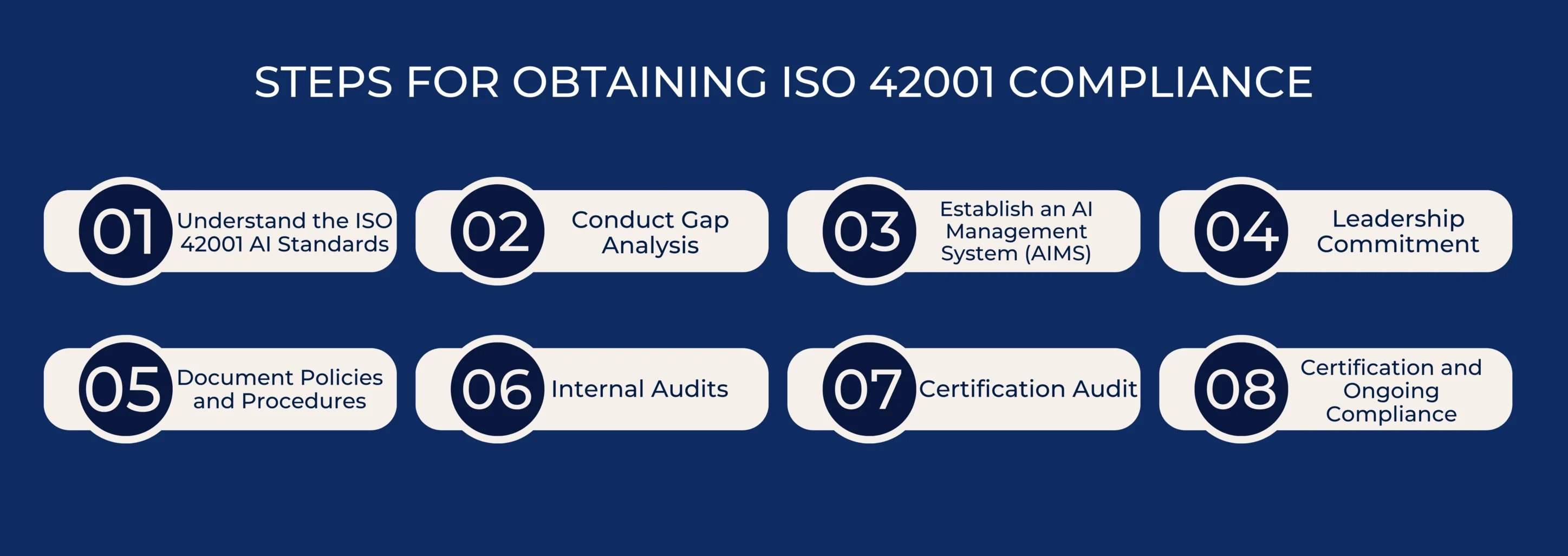
- ✓Stage 1 Audit: Documentation and Readiness Review
- ✓Stage 2 Audit: Evidence-Based AIMS Evaluation
- ✓Surveillance Audits and Recertification
Why Brisbane Organisations Pursue ISO 42001 Certification
Demand for ISO 42001 Certification in Brisbane is driven by a combination of regulatory expectations, enterprise procurement requirements, international market access conditions, and sector-specific AI governance obligations. Brisbane’s position as Queensland’s primary financial, technology, and research centre creates concentrated demand across multiple industry verticals simultaneously.
Understanding the specific drivers within each sector clarifies why independent ISO 42001 certification has become a material consideration for a growing range of organisations across the city and the broader Southeast Queensland region.
Financial Services and Fintech AI Governance Expectations
Brisbane’s financial services sector includes banks, insurers, superannuation funds, mortgage brokers, and a growing concentration of fintech companies. APRA-regulated entities operating from Brisbane face prudential standards — including CPS 230 on operational risk management — that require sound governance of technology and AI systems used in material business processes.
When a Brisbane bank deploys an AI model to assess home loan applications or detect fraudulent transactions, APRA’s operational risk framework expects that model to be governed within a documented risk management system. ISO 42001 compliance provides a structured framework for meeting these expectations. Where independently certified, it delivers objective evidence to APRA, auditors, and enterprise partners that AI governance has been formally evaluated through an ISO 42001 certification audit.
Fintech companies based in Brisbane that supply AI-powered products or data services to APRA-regulated institutions frequently encounter vendor assurance questionnaires and third-party risk management requirements that specifically assess AI governance maturity. A certified ISO 42001 AIMS provides a structured, internationally recognised response to these requirements.
When a Brisbane fintech is included in an enterprise bank’s vendor review, an ISO 42001 certificate issued by an independent Licensed CPA Firm carries greater evidentiary weight than self-assessed AI governance documentation. This dynamic is accelerating ISO 42001 certification adoption among fintech providers in Brisbane’s River City Labs and other technology precincts.
Technology, SaaS, and AI Company Requirements
Brisbane’s technology sector includes established SaaS providers, AI-native startups, cybersecurity firms, cloud service providers, and enterprise software developers. Many of these organisations embed AI capabilities — including machine learning models, natural language processing, computer vision, and predictive analytics — into their products and platforms.
As enterprise customers in regulated industries apply vendor security and AI governance assessments, SaaS providers face increasing pressure to demonstrate conformity with recognised AI management standards. ISO 42001 Certification for Brisbane technology companies provides an independently verified signal of AI governance maturity that supports enterprise sales cycles, particularly into financial services, healthcare, and government customers.
Brisbane-based AI companies expanding into international markets — particularly the European Union, United Kingdom, Canada, or Singapore — encounter AI governance requirements that reference or align with the ISO 42001 standard. The EU AI Act, which entered into force in 2024, establishes tiered AI governance obligations, and ISO 42001 certification is widely recognised as a relevant conformity demonstration for high-risk AI system categories under that regulation.
For Brisbane AI firms targeting EU markets, ISO 42001 Certification in Brisbane provides a credible, internationally portable evidence base for AI governance conformity. The ISO 42001 certification audit conducted by CertPro as a Licensed CPA Firm generates documented audit evidence that can be referenced in international due diligence processes.
Healthcare, Research, and Government Technology Drivers
Healthcare organisations in Brisbane — including hospital networks, pathology providers, medical imaging companies, and digital health platforms — are deploying AI for clinical decision support, medical image analysis, patient risk stratification, and administrative automation. The Therapeutic Goods Administration (TGA) has issued guidance on Software as a Medical Device that intersects with AI system governance expectations.
ISO 42001 Certification provides a structured framework for demonstrating that AI systems used in clinical contexts are governed with appropriate risk management, human oversight, and transparency controls. Independent certification by CertPro supports clinical governance reviews, health system procurement processes, and patient safety accountability frameworks — making ISO 42001 compliance increasingly relevant across Brisbane’s healthcare sector.
ISO 42001 Requirements and Annex A Controls
The ISO/IEC 42001:2023 standard specifies requirements across two primary dimensions: the management system clauses (4–10) and the Annex A controls. An organisation pursuing ISO 42001 Certification in Brisbane must address both dimensions. The management system clauses establish the governance framework — covering leadership, policy, planning, risk management, resources, and continual improvement — while Annex A specifies the AI-specific controls that operationalise that framework across AI system activities.
Together, these requirements define what must be in place for an AIMS to conform to the ISO 42001 standard and pass an independent ISO 42001 certification audit.
Clause 4 requires the organisation to define the context of its AIMS, including internal and external factors relevant to its AI activities, the needs and expectations of interested parties (regulators, customers, employees, affected individuals), and the defined scope of the management system. Clause 5 establishes leadership requirements, including top management commitment to the AIMS, an AI policy statement, and defined roles and responsibilities for AI governance. Clause 6 addresses planning, covering AI risk assessment processes, AI objectives, and plans to address identified risks.
Clause 7 covers support requirements, including resources, competence, awareness, communication, and documented information. Clauses 8, 9, and 10 address operation, performance evaluation, and improvement respectively — including internal audit, management review, and the handling of nonconformities under the ISO 42001 standard.
For Brisbane organisations undergoing an ISO 42001 certification audit, each clause must be substantiated with objective evidence. Top management commitment is demonstrated through documented AI policy approvals, management review records, and resource allocation decisions. AI risk assessment is evidenced through documented methodologies, risk registers, and risk treatment records. Internal audit is evidenced through audit plans, audit reports, and records of corrective actions.
The ISO 42001 certification audit evaluates whether each clause requirement is addressed through documented, implemented processes — not merely stated intentions. CertPro’s auditors assess this evidence systematically across the defined scope of the AIMS.
Annex A of ISO/IEC 42001:2023 specifies controls across multiple AI governance domains. These include controls for establishing AI objectives and policies, managing AI-related risks and impacts, conducting AI impact assessments, ensuring data quality and governance, maintaining transparency and explainability in AI systems, implementing human oversight mechanisms, managing the AI system lifecycle from design through decommissioning, and governing third-party AI providers and supply chain risks.
Each Annex A control must be evaluated for applicability by the organisation. The resulting decisions — including justifications for any controls deemed not applicable — must be documented in the Statement of Applicability, a key artefact reviewed during the ISO 42001 certification audit.
The ISO 42001 certification audit at Stage 2 evaluates the design and operating effectiveness of implemented Annex A controls. For a Brisbane healthcare organisation, this might involve reviewing evidence that AI impact assessments were conducted prior to deploying a clinical decision support algorithm, that human oversight procedures are documented and followed, and that transparency disclosures to patients and clinicians meet defined requirements.
For a Brisbane fintech company, auditors would review evidence of data governance controls applied to training datasets, risk assessments covering model bias and fairness, and processes for monitoring deployed AI model performance over time. The specific controls evaluated reflect the organisation’s Statement of Applicability and defined AIMS scope.
ISO/IEC 42001:2023 requires organisations to conduct AI impact assessments for AI systems that may have significant effects on individuals, groups, or society. The AI impact assessment is a documented process that identifies potential harms — including privacy harms, discriminatory outcomes, safety risks, and autonomy impacts — evaluates the likelihood and severity of those harms, and specifies controls or mitigations.
For Brisbane organisations operating AI systems that affect individuals’ access to services, financial products, employment decisions, or healthcare outcomes, AI impact assessments are a central component of AIMS operation and ISO 42001 compliance. The ISO 42001 certification audit reviews AI impact assessment records as objective evidence of the organisation’s risk management discipline.
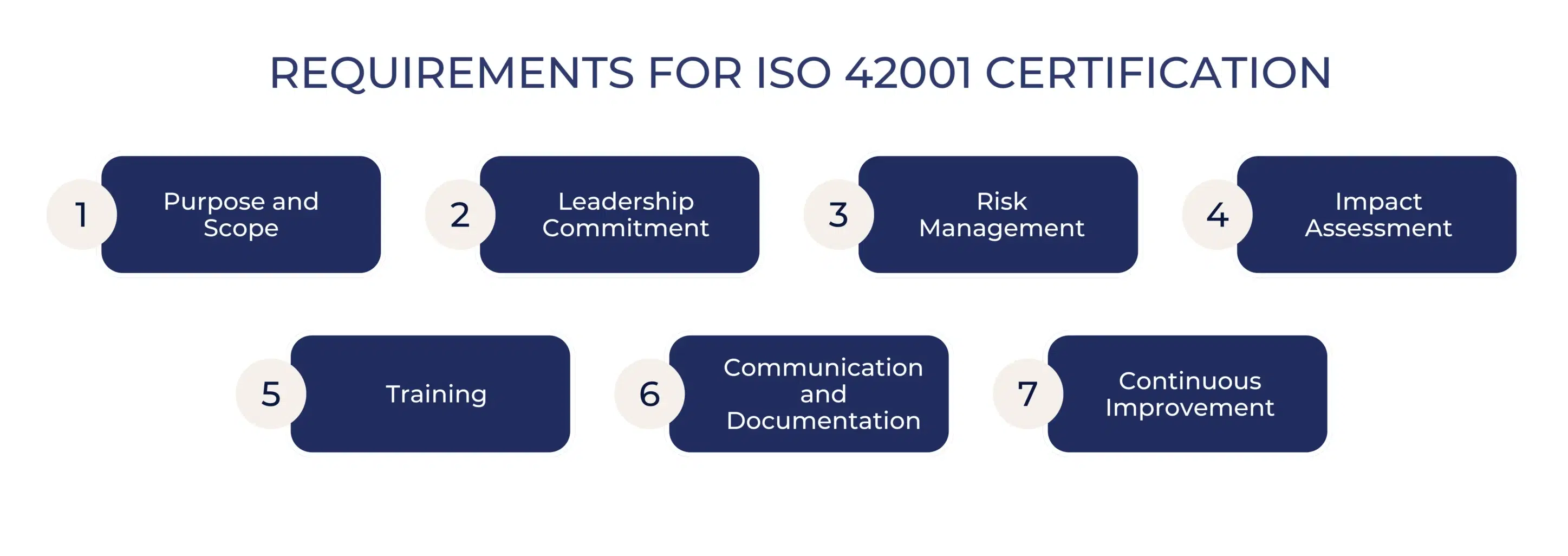
- ✓Management System Clauses 4 to 10
- ✓Annex A AI-Specific Controls
- ✓AI Impact Assessment and Risk Management Requirements
Benefits of ISO 42001 Certification for Brisbane-Based Organisations
ISO 42001 Certification delivers measurable, independently verified outcomes for Brisbane-based organisations that develop or deploy AI systems. The benefits extend across regulatory positioning, enterprise procurement, market access, internal governance, and stakeholder accountability. Each benefit reflects a specific, evidence-based outcome of independent ISO 42001 certification rather than a promotional assertion.
The following summarises the principal benefits recognised by organisations holding ISO 42001 Certification in Brisbane across financial services, technology, healthcare, and related sectors.
- ✓Independent, third-party verification that the organisation’s AIMS conforms to ISO/IEC 42001:2023 requirements, providing objective assurance to regulators, customers, and stakeholders
- ✓Structured documentation of AI risk management, AI impact assessments, and Annex A controls that supports regulatory inquiries, audit reviews, and procurement due diligence
- ✓Recognition in enterprise vendor assurance processes, including financial sector third-party risk management assessments, healthcare procurement reviews, and government technology supplier evaluations
- ✓Demonstration of AI governance maturity to international customers and partners, particularly in markets where ISO 42001 certification is a procurement or contract prerequisite
- ✓Alignment with Australian Privacy Act 1988 obligations, APRA operational risk standards, and Australian AI Ethics Framework principles, evidenced through an independently audited AIMS
- ✓Ongoing surveillance audit coverage that provides continuous verification of AIMS conformity throughout the three-year ISO 42001 certification cycle
- ✓Support for international market access, including demonstrating AI governance conformity relevant to EU AI Act obligations for organisations expanding into European markets
- ✓Board-level and executive assurance that AI systems are governed within a documented, independently evaluated management system
A specific and material benefit of ISO 42001 Certification for Brisbane companies is its recognition in enterprise procurement and vendor assurance processes. When a Brisbane SaaS provider responds to a Request for Proposal from a Queensland government agency or a major financial institution, the procurement panel’s AI governance assessment typically includes questions about AI risk management frameworks, AI impact assessment practices, and third-party AI governance verification.
An ISO 42001 certificate issued by CertPro as a Licensed CPA Firm provides a structured, internationally recognised response to these requirements. It reduces the procurement team’s evaluation burden and positions the certified organisation as having undergone independent scrutiny of its AI governance controls through a rigorous ISO 42001 certification audit.
Consider a Brisbane-based AI analytics company supplying automated reporting tools to a major Queensland hospital network. The hospital’s vendor assurance process requires evidence of AI governance maturity, human oversight procedures, and data quality controls applicable to AI systems processing patient data. An ISO 42001 certification audit conducted by CertPro evaluates each of these domains against ISO/IEC 42001:2023 and produces a certification decision based on objective evidence.
The resulting certificate demonstrates to the hospital’s procurement and clinical governance teams that these controls have been independently assessed — addressing vendor assurance requirements without relying on self-attestation. This type of procurement scenario is increasingly common across Brisbane’s regulated sectors, making ISO 42001 compliance a practical competitive advantage.
ISO 42001 compliance through a certified AIMS positions Brisbane organisations to respond more effectively to regulatory inquiries, data protection assessments, and audit requests. The Australian Privacy Act 1988 applies to many AI systems that process personal information, including customer data used to train or operate AI models.
Where an APRA-regulated entity or healthcare provider faces a regulatory review of its AI systems, the existence of a certified AIMS provides documented evidence that AI-related risks have been assessed, controls implemented, and governance reviewed through internal audit and management review processes. This structured evidentiary record — produced through an ISO 42001 certification audit — supports the organisation’s regulatory response and reduces the risk of enforcement action arising from undocumented or ungoverned AI operations.
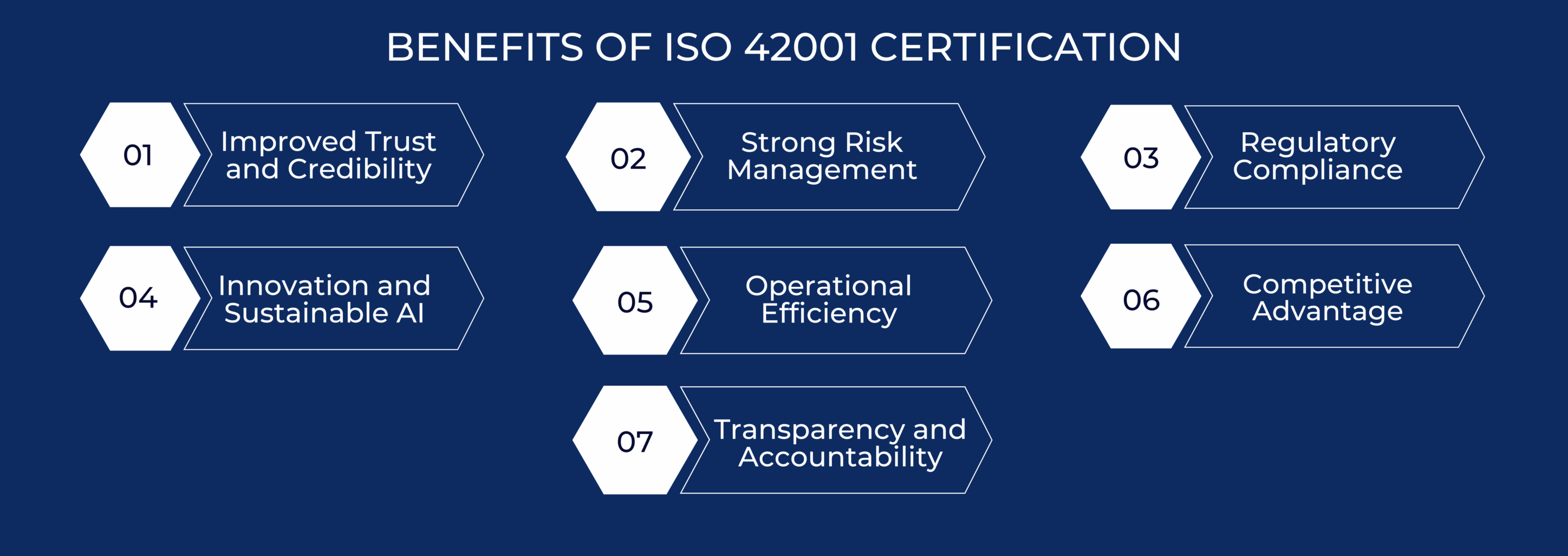
- ✓Procurement and Vendor Assurance Recognition
- ✓Regulatory Alignment and Risk Reduction
ISO 42001 Certification Scope and Independent Decision Framework
The scope of ISO 42001 Certification defines the boundaries within which the certified AIMS operates and within which the ISO 42001 certification audit is conducted. Scope definition is a joint activity that occurs during the application and Stage 1 audit phases. The scope must accurately reflect the AI systems, organisational functions, geographic locations, and processes governed by the AIMS.
For Brisbane organisations, this may encompass a single AI system, a portfolio of AI products, or the organisation’s entire AI development and deployment function across its Brisbane and interstate operations. Accurate scope definition is foundational to a credible ISO 42001 certification outcome.
Evidence-Based Assessment and Nonconformity Management
The ISO 42001 certification audit is conducted using an evidence-based assessment methodology. CertPro auditors collect and evaluate objective evidence — documents, records, system data, interview responses, and process observations — against each applicable requirement of ISO/IEC 42001:2023. Evidence is assessed for sufficiency, appropriateness, and consistency with the documented AIMS.
Where evidence is insufficient or contradicts documented controls, auditors record nonconformities in the audit report. Nonconformities require documented corrective action by the organisation, supported by evidence that the root cause has been addressed. CertPro’s certification committee reviews the disposition of all nonconformities before issuing a certification decision, ensuring that only organisations demonstrating full AIMS conformity receive ISO 42001 certification.
The independence of CertPro’s certification committee from the audit team is a structural control that preserves the objectivity of the ISO 42001 certification decision. The committee reviews the complete audit record without involvement from the auditors who conducted the fieldwork, applying a consistent evaluation framework to the evidence presented. This structure prevents audit team bias from influencing the certification outcome.
For Brisbane organisations, this independent certification decision carries the institutional weight required for regulatory, procurement, and stakeholder assurance purposes — ensuring the ISO 42001 certificate reflects a genuine, objective determination of AIMS conformity.
Certificate Validity, Suspension, and Withdrawal
An ISO 42001 certificate issued by CertPro is valid for three years from the date of issue, subject to satisfactory completion of annual surveillance audits. Certificate suspension may occur if a surveillance audit reveals significant nonconformities not addressed within the defined corrective action timeframe, if the organisation fails to facilitate a scheduled surveillance audit, or if material changes to the AIMS are made without notification to CertPro.
Certificate withdrawal occurs when conformity cannot be demonstrated following suspension, or when the organisation voluntarily surrenders the certificate. All decisions regarding suspension and withdrawal are made independently by CertPro’s certification committee based on audit evidence and documented nonconformity records — consistent with the integrity requirements of the ISO 42001 standard.
Brisbane Industry Sectors and ISO 42001 Compliance
ISO 42001 Certification in Brisbane spans a broad range of industry sectors, each with distinct AI governance drivers, AI system applications, and regulatory contexts. The diversity of Brisbane’s economy — encompassing financial services, resources and mining, healthcare, construction, agriculture, logistics, telecommunications, education, and government — means that ISO 42001 compliance is relevant across a wider cross-section of organisations than might initially be apparent.
The common denominator is the use of AI systems in material business operations, not the sector itself. Any organisation in Brisbane deploying AI in a meaningful capacity has reason to consider an ISO 42001 certification audit.
| Industry Sector | AI System Applications | ISO 42001 Relevance |
|---|---|---|
| Financial Services & Fintech | Credit scoring, fraud detection, algorithmic trading, AML monitoring | APRA CPS 230 compliance, vendor assurance, AIMS certification |
| Healthcare & Life Sciences | Clinical decision support, medical imaging AI, patient risk stratification | TGA SaMD guidance, clinical governance, data protection |
| SaaS & Technology | Embedded ML models, NLP, predictive analytics, automation | Enterprise procurement, EU AI Act alignment, customer due diligence |
| Mining & Resources | Predictive maintenance, autonomous equipment, geological analysis AI | Operational risk management, safety governance, supply chain assurance |
| Government Technology | Automated service delivery, document processing AI, fraud analytics | Public sector AI policy, procurement standards, accountability frameworks |
Mining, Resources, and Advanced Manufacturing
Brisbane serves as a headquarters and operational hub for major mining and resources companies with operations across Queensland. These organisations are deploying AI systems for predictive maintenance of mine site equipment, autonomous vehicle navigation, geological data analysis, and environmental monitoring. The safety and operational integrity implications of AI system failures in these contexts are significant.
ISO 42001 compliance within a certified AIMS provides a framework for managing AI-related risks in high-consequence operational environments. For mining companies seeking ISO 42001 Certification in Brisbane, the certification audit evaluates controls over AI system design validation, human oversight mechanisms, and the management of AI system performance degradation in operational settings.
Advanced manufacturers in Brisbane’s industrial precincts — including aerospace component manufacturers, defence suppliers, and food processing operations — are integrating AI for quality inspection, production optimisation, and supply chain management. These organisations face supply chain assurance requirements from prime contractors and government defence procurement agencies that increasingly include AI governance dimensions.
ISO 42001 Certification provides manufacturers with an independently verified AI governance credential that supports defence and aerospace supplier qualification processes. The ISO 42001 certification audit standard evaluates the organisation’s AI system lifecycle management, data governance, and human oversight controls as they apply to manufacturing AI applications.
Education, Research, and AI Innovation Ecosystem
Brisbane hosts several major research universities — including the University of Queensland, Queensland University of Technology, and Griffith University — that conduct significant AI research and develop AI-powered applications in areas ranging from health informatics to environmental science. Research organisations applying AI in human subject research, clinical trials, or public health contexts face ethics board requirements and data governance obligations that align directly with ISO 42001 requirements.
AI research spinouts and university commercialisation ventures in Brisbane’s innovation ecosystem also pursue ISO 42001 Certification to demonstrate governance maturity to venture capital investors and commercial partners. CertPro’s ISO 42001 audit process evaluates these organisations’ AIMS against the same standard applied across commercial sectors, ensuring consistency of independent assessment regardless of organisational type.
ISO 42001 Standard Brisbane: Australian Regulatory Context
ISO 42001 compliance in Brisbane operates within a distinct Australian regulatory and policy environment. Understanding the interaction between the ISO 42001 standard and Australian legal and regulatory frameworks is essential for organisations assessing the scope and relevance of AIMS certification.
Several key regulatory instruments and policy frameworks directly inform AI governance expectations for Brisbane-based organisations. The ISO 42001 certification audit evaluates AIMS controls in the context of these applicable requirements, helping organisations demonstrate structured, evidence-based compliance across multiple regulatory dimensions simultaneously.
Australian Privacy Act 1988 and AI System Obligations
The Australian Privacy Act 1988 establishes obligations for organisations that collect, use, disclose, or store personal information — including personal information processed by AI systems. AI systems that use personal data for training, inference, or decision-making must be governed in a manner consistent with the Australian Privacy Principles (APPs). Relevant obligations include requirements for transparency about how personal information is used, limitations on secondary use of personal data, and obligations to protect personal information from misuse.
The ISO 42001 standard’s requirements for AI transparency, data governance, and AI impact assessment directly support compliance with these Privacy Act obligations. The ISO 42001 certification audit evaluates whether the organisation’s AIMS addresses these data protection dimensions through documented controls.
The Australian Government’s proposed Privacy Act reforms — which include provisions addressing automated decision-making and individuals’ right to seek human review of AI-generated decisions affecting them — further reinforce the relevance of ISO 42001 for Brisbane organisations. Where automated or AI-assisted decisions materially affect individuals in credit assessments, insurance underwriting, employment screening, or benefits eligibility, the organisation’s AIMS must include controls for human oversight and review mechanisms.
ISO 42001 Annex A controls specifically address human oversight requirements, and the ISO 42001 certification audit evaluates whether these controls are implemented and operating as documented across the organisation’s AI system portfolio.
APRA Standards and AI Governance for Regulated Entities
The Australian Prudential Regulation Authority’s CPS 230 Operational Risk Management standard, which took effect for APRA-regulated entities in July 2025, requires robust operational risk management frameworks that encompass technology and AI systems used in material business processes. Brisbane-based banks, insurers, and superannuation funds subject to APRA oversight must demonstrate that AI systems operating in material processes are governed within an adequate risk management framework.
ISO 42001 certification provides a structured, independently audited framework for demonstrating this governance. The ISO 42001 certification audit in Brisbane generates documented audit evidence of AIMS conformity that can be referenced in APRA operational risk reviews, regulatory returns, and prudential supervisory interactions — making it a practical tool for ISO 42001 compliance within Australia’s financial sector.
FAQ
▶
What is ISO 42001 Certification and what does it certify?
▶
Who conducts ISO 42001 Certification audits in Brisbane?
▶
How long does the ISO 42001 certification audit process take for a Brisbane organisation?
▶
What is the difference between the Stage 1 and Stage 2 ISO 42001 audit?
▶
What documents does an organisation need for an ISO 42001 certification audit?
▶
How long is an ISO 42001 certificate valid for Brisbane organisations?
▶
Does ISO 42001 Certification replace other compliance requirements for Brisbane organisations?
▶
Which Brisbane industries benefit most from ISO 42001 Certification?
ISO 42001 CERTIFIED: WHY AI GOVERNANCE CERTIFICATION IS BECOMING A BOARD-LEVEL REQUIREMENT
ISO 42001 Certified: Board-Level AI Governance Guide | CertPro CPA LLC HERO ══════════════════════════════ –> src=”https://certpro.com/wp-content/uplo…
Get In Touch
have a question? let us get back to you.