
ISO 42001 Certification in Cambridge
The ISO 42001 audit process for Cambridge-based organizations follows a structured, stage-based examination methodology conducted by CertPro as an independent Licensed CPA Firm. Each audit stage is designed to evaluate specific aspects of the organization’s Artificial Intelligence Management System against the requirements of ISO/IEC 42001:2023. The process begins with an application review and culminates in a certification committee decision, with ongoing surveillance audits maintaining certificate validity throughout the three-year certification cycle.
OUR CLIENTS








ISO 42001 Certification for Cambridge-Based AI, Biotech, and Technology Organizations
ISO 42001 Certification in Cambridge is issued by CertPro, a Licensed CPA Firm operating as an independent certification body. Certification is conducted through a structured, stage-based audit methodology evaluated against the requirements of ISO/IEC 42001:2023 — the international standard for Artificial Intelligence Management Systems (AIMS). CertPro conducts independent ISO 42001 audits without advisory, consulting, or implementation involvement, maintaining full separation between certification activities and any readiness support. This independence ensures that each ISO 42001 attestation reflects an objective, evidence-based determination of AIMS conformance.
Cambridge occupies a singular position in the United Kingdom’s technology and research landscape. The city’s deep concentration of artificial intelligence and deep tech firms, university-affiliated research spinouts from the University of Cambridge, biotechnology and life sciences organizations, SaaS providers, cloud service companies, and enterprises deploying AI across regulated sectors creates distinct and growing demand for ISO 42001 Certification in Cambridge. Organizations across these sectors face increasing procurement requirements, regulatory expectations under frameworks such as the EU AI Act, and enterprise vendor due diligence processes that reference AIMS certification as a condition of commercial engagement.
ISO/IEC 42001:2023 establishes requirements for organizations that develop, deploy, or use AI systems to design, implement, maintain, and continually improve an Artificial Intelligence Management System. The standard addresses AI governance, risk management, transparency, accountability, human oversight, and responsible AI use. For Cambridge-based organizations — from early-stage AI and machine learning startups to established biotech and life sciences companies integrating AI into research pipelines and fintech providers deploying algorithmic decision-making — ISO 42001 Certification provides independently verified confirmation that the organization’s AIMS meets internationally recognized requirements. This independently verified status is increasingly central to commercial and regulatory credibility.
CertPro’s ISO 42001 audit in Cambridge evaluates both the design adequacy and operational effectiveness of an organization’s AI Management System controls. The ISO 42001 examination covers governance structures, AI risk assessment processes, policy documentation, operational procedures, monitoring mechanisms, and continual improvement processes — all assessed against the full clause structure of ISO/IEC 42001:2023. Evidence collected during the audit informs an objective certification decision made by an independent certification committee. The resulting ISO 42001 attestation provides formal, third-party confirmation of AIMS conformance, carrying measurable weight in enterprise procurement, regulatory engagement, and stakeholder trust-building across Cambridge’s technology and research ecosystem.
Cambridge-based AI companies, university spinouts, biotech firms, and technology enterprises increasingly encounter ISO 42001 Certification requirements in enterprise procurement processes, public sector contracts, and international market entry assessments. The standard’s alignment with ISO 27001 for information security and ISO 31000 for risk management allows organizations that have already implemented management system frameworks to leverage existing policy structures, governance roles, and review processes within the AIMS audit. ISO 42001 compliance that Cambridge organizations demonstrate through certification reflects a structured, evidence-based approach to AI governance — one that satisfies both internal accountability requirements and external stakeholder expectations.

ISO 42001 Certification Audit Process in Cambridge
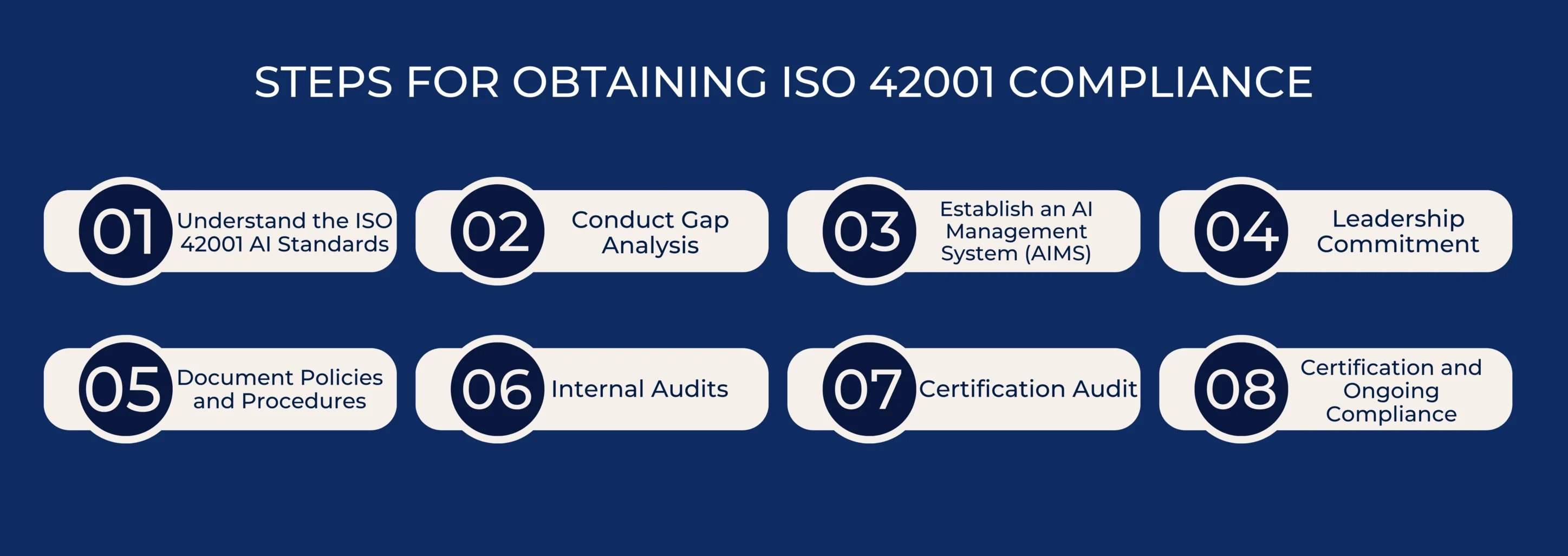
The ISO 42001 audit process for Cambridge-based organizations follows a structured, stage-based examination methodology conducted by CertPro as an independent Licensed CPA Firm. Each audit stage is designed to evaluate specific aspects of the organization’s Artificial Intelligence Management System against the requirements of ISO/IEC 42001:2023. The process begins with an application review and culminates in a certification committee decision, with ongoing surveillance audits maintaining certificate validity throughout the three-year certification cycle.
The Stage 1 ISO 42001 audit constitutes a structured review of the organization’s AIMS documentation, scope definition, and readiness indicators. During Stage 1, the auditor examines the AI management system policy, the organization’s AI risk assessment methodology and documented outputs, the AI risk treatment plan, the Statement of Applicability for ISO 42001 controls, and the defined scope of the management system — including the AI systems and use cases covered. The Stage 1 audit for Cambridge organizations evaluates whether documented processes are sufficient and whether the management system scope accurately reflects the organization’s full AI activities, covering development, deployment, procurement, and use of AI systems as applicable.
Stage 1 findings are documented and communicated to the organization before Stage 2 proceeds. Where documentation gaps or scope inconsistencies are identified, these are recorded as observations or nonconformities that must be addressed before the Stage 2 audit begins. Importantly, Stage 1 does not constitute an assessment of operational control effectiveness — that evaluation occurs exclusively in Stage 2. For Cambridge technology organizations, Stage 1 typically examines AI governance documentation structures, the organizational context analysis required under Clause 4 of ISO/IEC 42001:2023, and the documented objectives established for the AIMS.
The Stage 2 ISO 42001 audit evaluates the operational effectiveness of the organization’s implemented AIMS controls against ISO/IEC 42001:2023 requirements. Auditors collect and assess evidence demonstrating that AI risk management processes are operating as documented, that AI governance structures function as designed, and that controls for transparency, accountability, human oversight, and AI system impact assessment are operationally effective. The Stage 2 audit for Cambridge AI companies, biotech organizations, and SaaS providers involves interviews with personnel holding AIMS responsibilities, observation of operational processes, and examination of records demonstrating control operation over the audit period.
Evidence examined during Stage 2 includes AI risk assessment records, AI impact assessments, incident and nonconformity logs, internal audit reports, management review records, training and competency records for personnel with AI governance responsibilities, and operational records demonstrating control execution. Nonconformities identified during Stage 2 are classified and documented in the audit report. The organization must address nonconformities within defined timeframes before the certification committee proceeds to a certification decision. The ISO 42001 examination at Stage 2 is evidence-based and objective, drawing conclusions directly from documented and observed system operation rather than self-assessment responses.
Following completion of Stage 2 and resolution of any identified nonconformities, the audit findings and supporting evidence are reviewed by CertPro’s independent certification committee. The committee evaluates whether the organization’s AIMS demonstrates conformance with ISO/IEC 42001:2023 requirements across all clauses and applicable controls. The certification decision is made independently of the audit team. Upon a positive determination, the ISO 42001 attestation is issued, confirming the scope, standard version, and certificate validity period. ISO 42001 Certification in Cambridge is valid for three years, subject to satisfactory completion of annual surveillance audits and a full recertification audit at the end of the three-year cycle.
| Audit Stage | Key Activities | Output |
|---|---|---|
| Application Review | Scope definition, audit program determination, conflict-of-interest assessment | Audit program confirmed |
| Stage 1 Audit | AIMS documentation review, scope evaluation, policy and risk assessment examination | Stage 1 findings report |
| Stage 2 Audit | Control effectiveness assessment, evidence collection, personnel interviews, record review | Stage 2 audit report with nonconformities identified |
| Nonconformity Review | Review of corrective actions and supporting evidence submitted by the organization | Nonconformity closure confirmation |
| Certification Decision | Independent committee review, ISO 42001 certification determination | ISO 42001 attestation issued |
| Surveillance Audit | Annual review of AIMS operation and control effectiveness | Surveillance audit report; certificate maintained |
| Recertification Audit | Full AIMS review at three-year certification cycle end | Certificate renewed or withdrawn |
- ✓Stage 1 Audit: Documentation and Scope Review
- ✓Stage 2 Audit: Control Effectiveness and Evidence Assessment
- ✓Certification Decision, Attestation, and Surveillance Cycle
ISO/IEC 42001:2023 Standard Requirements Evaluated in the Cambridge Audit
ISO/IEC 42001:2023 is structured around the ISO High-Level Structure (HLS), making it compatible with other management system standards including ISO 27001 and ISO 9001. The standard contains ten clauses covering organizational context, leadership, planning, support, operation, performance evaluation, and improvement, supplemented by normative Annex A controls specific to AI management. The ISO 42001 audit that Cambridge organizations undergo evaluates conformance with all applicable clauses and controls within the defined AIMS scope, with evidence requirements established for each clause during audit program determination.
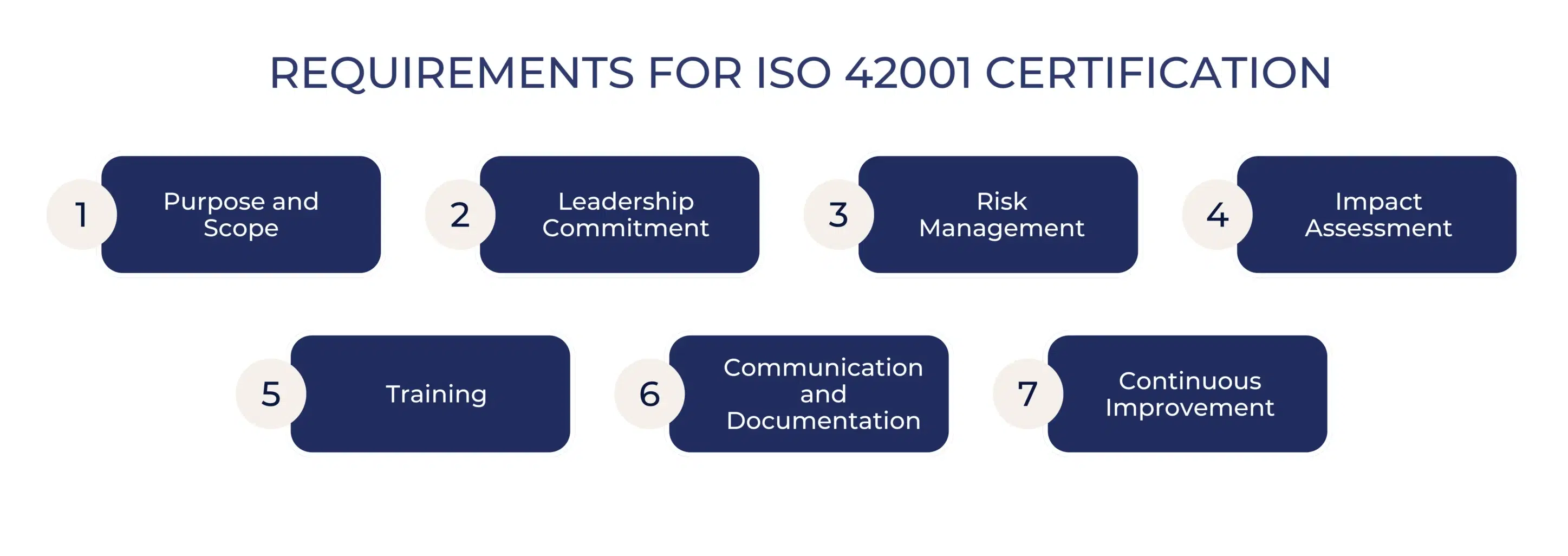
Clauses 4 through 10 of ISO/IEC 42001:2023 establish the management system framework requirements that form the structural basis of any conformant AIMS. Clause 4 requires the organization to document its internal and external context, identify interested parties and their requirements, and define the scope of the AI management system. Clause 5 addresses leadership, requiring top management commitment, AI policy establishment, and clear assignment of roles and responsibilities for AIMS governance. Clause 6 addresses planning — including AI risk and opportunity assessment — and the setting of measurable AI management objectives aligned with the organization’s AI strategy and activities.
Clauses 7 through 10 address operational requirements, support resources, performance evaluation, and continual improvement. Clause 7 requires documented competency, awareness, and communication processes for all personnel involved in AI development, deployment, or governance. Clause 8 covers operational planning and control, including AI risk treatment implementation and documented AI impact assessments. Clause 9 requires internal audit and management review processes with documented outputs. Clause 10 addresses nonconformity management and continual improvement mechanisms. CertPro’s ISO 42001 examination assesses each of these clauses through document review, personnel interviews, and operational evidence examination for Cambridge-based organizations across all applicable sectors.
Annex A of ISO/IEC 42001:2023 contains AI-specific controls organized into domains addressing policies for AI, internal organization, resources for AI systems, assessing AI system impacts, AI system life cycle, data for AI systems, information for interested parties about AI systems, and use of AI systems. These controls extend the management system framework with operational requirements directly tied to AI development and deployment activities. The Statement of Applicability documents which Annex A controls apply within the defined AIMS scope and provides justification for any exclusions — forming a key document reviewed during the Stage 1 ISO 42001 audit for Cambridge organizations.
For Cambridge AI companies, biotechnology organizations, and university spinouts integrating AI into research, product development, and customer-facing services, Annex A controls relevant to AI system impact assessment, data governance for AI training datasets, transparency and explainability, human oversight mechanisms, and supplier AI system management are typically within scope. Auditors evaluate whether selected controls have been implemented and are operating effectively, with evidence drawn from AI system documentation, data management records, operational logs, and supplier assessment processes. ISO 42001 compliance for Cambridge organizations is assessed across the full set of applicable Annex A controls during Stage 2 of the ISO 42001 audit.
- ✓Clauses 4–10: Management System Framework Requirements
- ✓Annex A Controls: AI-Specific Governance and Risk Requirements
Why Cambridge Organizations Pursue ISO 42001 Certification
Demand for ISO 42001 Certification in Cambridge is driven by a convergence of regulatory developments, enterprise procurement requirements, and the specific characteristics of Cambridge’s AI and technology ecosystem. Organizations across the Cambridge cluster — from early-stage AI startups and university spinouts to established biotech and life sciences companies and enterprise software providers — face increasing requirements to demonstrate structured, independently verified AI governance as a condition of commercial and institutional engagement. ISO 42001 Certification provides the formal mechanism for meeting these requirements.
Regulatory Drivers: EU AI Act and GDPR Alignment
The EU AI Act, which entered into force in August 2024, establishes risk-based requirements for AI systems deployed or affecting users within the European Union. Cambridge-based organizations developing or supplying AI systems for EU markets — including biotech companies conducting AI-assisted clinical research, fintech providers deploying algorithmic decision-making, and SaaS companies serving European enterprise clients — face substantive obligations under the Act for high-risk AI system categories. ISO 42001 Certification in Cambridge provides documented evidence of an AIMS that addresses risk management, transparency, human oversight, and impact assessment requirements aligned with EU AI Act obligations, supporting organizations in demonstrating a structured compliance posture.
GDPR compliance obligations for Cambridge organizations processing personal data through AI systems intersect with ISO 42001 requirements for data governance, AI impact assessment, and transparency. ISO 42001 controls addressing data for AI systems, AI system impact assessments, and information provided to interested parties complement GDPR data protection impact assessment (DPIA) requirements. ISO 42001 compliance that Cambridge organizations demonstrate through certification supports an integrated approach to AI governance and data protection — without implying that AIMS certification itself constitutes GDPR compliance. Auditors evaluate these management system elements independently against ISO/IEC 42001:2023 requirements.
Enterprise Procurement and Vendor Due Diligence Requirements
Cambridge technology organizations supplying AI-powered software, data analytics, or machine learning services to large enterprises, financial institutions, public sector bodies, or global technology companies increasingly encounter ISO 42001 Certification requirements in vendor assessment and procurement processes. Enterprise procurement teams in the UK and internationally apply ISO 42001 certification as a screening criterion in third-party risk management, AI vendor due diligence, and supplier qualification processes. Organizations holding ISO 42001 Certification can evidence their AIMS conformance directly through the certificate and audit report, rather than completing multiple bespoke AI governance questionnaires for each separate procurement engagement.
ISO 42001 Certification that Cambridge tech startups pursue often reflects the requirements of enterprise sales cycles. Startups and scale-ups in Cambridge’s AI cluster — particularly those targeting financial services, healthcare, and public sector clients — encounter AI governance certification as an expectation in request-for-proposal (RFP) processes and vendor onboarding assessments. ISO 42001 Certification that Cambridge university spinouts obtain similarly supports commercialization activities, particularly when licensing technology or entering supply chain relationships with established industry partners. The certification provides independent third-party validation that accelerates procurement approval processes and reduces friction in commercial negotiations.
Cambridge’s AI and Deep Tech Ecosystem: Sector-Specific Demand
Cambridge’s concentration of AI and deep tech organizations creates sector-specific demand patterns for ISO 42001 Certification. ISO 42001 Certification that Cambridge AI companies pursue reflects the sector’s maturity in deploying complex machine learning models across regulated and safety-sensitive applications. Biotech and life sciences organizations in Cambridge integrating AI into drug discovery, clinical trial analysis, medical imaging, and genomics research face rigorous requirements for AI system validation, auditability, and risk management — requirements that align directly with ISO/IEC 42001:2023 control requirements. ISO 42001 Certification for Cambridge companies in these sectors demonstrates that AI governance structures meet internationally recognized management system standards.
- ✓AI and machine learning companies developing foundational models, applications, or AI-enabled software products
- ✓Biotechnology and life sciences organizations integrating AI into research, clinical, and regulatory workflows
- ✓University spinouts commercializing AI-based technologies from Cambridge research institutions
- ✓SaaS providers deploying AI features within cloud-hosted software platforms
- ✓Fintech and financial services organizations using algorithmic decision-making or AI-driven analytics
- ✓Cloud service companies providing AI infrastructure, platforms, or services to regulated industries
- ✓Managed service providers incorporating AI-based monitoring, automation, or decision-support tools
- ✓Enterprise technology organizations procuring or deploying third-party AI systems across operations
ISO 42001 Certification Scope and Independent Decision Framework
The scope of ISO 42001 Certification in Cambridge is defined by the organization during the application and Stage 1 audit phases. Scope definition determines which AI systems, use cases, organizational units, and geographic locations are included within the certified AIMS boundary. The scope statement is evaluated for accuracy and completeness during Stage 1, with auditors assessing whether the defined scope reflects the organization’s actual AI activities and whether any exclusions from the management system are appropriately justified within the requirements of ISO/IEC 42001:2023. A well-defined, accurate scope is foundational to a credible ISO 42001 attestation.
Evidence-Based Assessment Methodology
CertPro’s ISO 42001 audit methodology is evidence-based throughout every stage. Auditors collect objective evidence through document review, personnel interviews, observation of processes, and examination of operational records to assess conformance with each applicable clause and Annex A control within the defined scope. Evidence sufficiency and relevance are evaluated against the specific requirements of ISO/IEC 42001:2023. The ISO 42001 examination does not rely on self-assessment declarations or questionnaire responses alone — each material conformance determination is supported by independent evidence obtained during the audit. This rigorous approach ensures that the resulting ISO 42001 attestation reflects actual AIMS operation rather than documented intentions.
For Cambridge organizations with complex AI system landscapes — such as biotech companies operating multiple AI-assisted research platforms or SaaS providers integrating AI across distributed cloud infrastructure — the audit program is structured to provide sufficient evidence coverage across the entire defined scope. Sampling methodologies are applied where complete testing of all AI system instances or control occurrences is not practicable. The audit program, including the sampling approach and specific evidence requirements, is determined before Stage 1 commences and communicated to the organization as part of audit planning, ensuring full transparency throughout the process.
Independent Certification Committee and Certificate Validity
The certification decision for ISO 42001 Certification in Cambridge is made by CertPro’s independent certification committee, which is entirely separate from the audit team that conducted Stage 1 and Stage 2. The committee reviews the complete audit record — including documented evidence, nonconformity reports, closure confirmations, auditor conclusions, and scope documentation — before determining whether the organization’s AIMS meets the requirements of ISO/IEC 42001:2023. This separation of audit and certification decision functions is a fundamental principle of third-party certification body operation, ensuring that the ISO 42001 attestation reflects an independent and objective determination free from audit team influence.
ISO 42001 certificates issued by CertPro are valid for a three-year certification cycle. Certificate maintenance is conditional on satisfactory annual surveillance audits conducted during years one and two of the cycle. Surveillance audits review ongoing AIMS operation, changes to AI systems or scope, internal audit and management review execution, and continued effectiveness of key controls. A recertification audit is conducted before the end of the three-year cycle to confirm continued conformance and renew the certificate. Certificates may be suspended or withdrawn if surveillance audit findings or organizational changes indicate that AIMS conformance can no longer be confirmed, in accordance with established certification maintenance policies.
Benefits of ISO 42001 Certification for Cambridge-Based Organizations
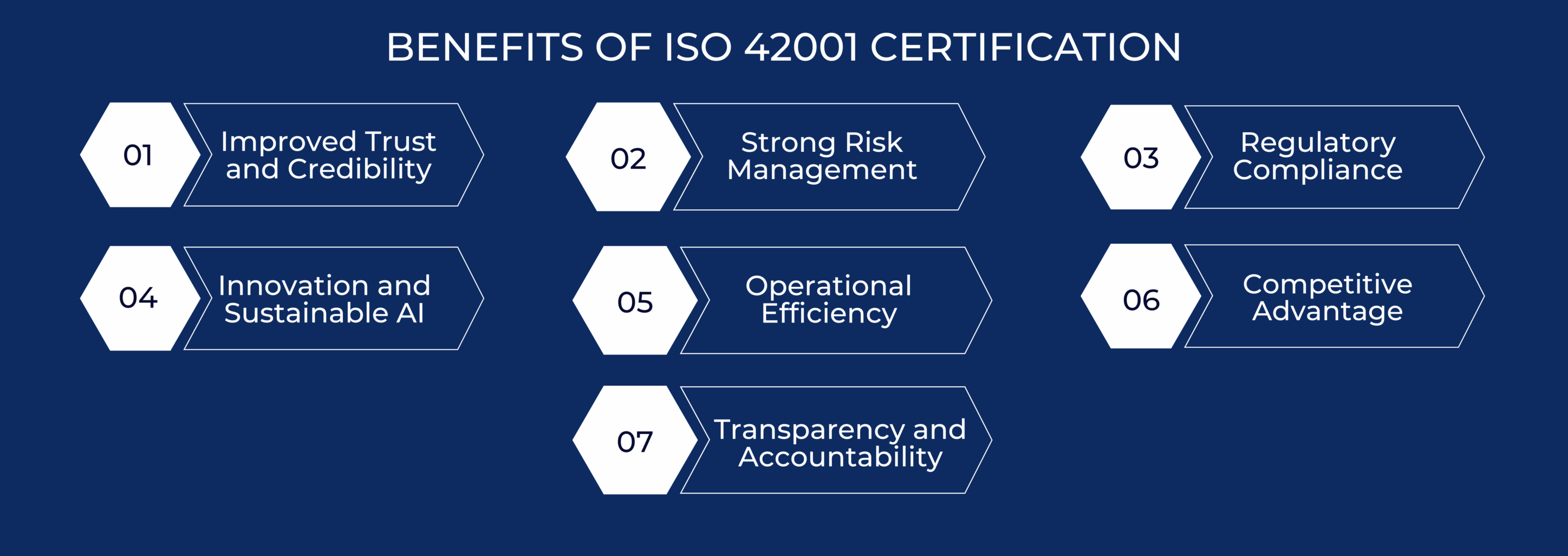
ISO 42001 Certification in Cambridge delivers measurable benefits for organizations across the AI, biotech, technology, and research sectors. These benefits reflect the value of independent third-party validation of an organization’s AI Management System — both in terms of internal governance effectiveness and external stakeholder recognition. The following benefits are directly associated with the certification outcome and the structured ISO 42001 audit process through which it is obtained.
ISO 42001 Certification provides Cambridge organizations with independent, third-party verification that their Artificial Intelligence Management System controls are both designed appropriately and operating effectively against internationally recognized requirements. Unlike internal assessments or self-declarations, the ISO 42001 audit is conducted by an independent Licensed CPA Firm applying a structured, evidence-based methodology. The resulting ISO 42001 attestation carries the credibility of independent examination — providing boards, executive leadership, investors, regulators, and enterprise customers with objective confirmation of the organization’s AI governance posture. For Cambridge AI companies operating in markets where stakeholder scrutiny of AI governance is intensifying, this independent verification holds substantial commercial and reputational value.
The structured audit methodology applied in the ISO 42001 examination identifies control gaps and nonconformities against the standard’s requirements, providing organizations with a documented picture of their AIMS conformance status. Nonconformities identified during the audit are documented with the specific requirement they breach and the evidence that supported each finding. Organizations address nonconformities through their own management processes before the certification committee completes its review. This process drives documented, independently verified improvement in AIMS controls — strengthening the reliability of the organization’s AI governance documentation and operational processes over time.
ISO 42001 Certification for Cambridge companies provides recognized evidence of AI governance conformance in enterprise vendor assessments, public sector procurement processes, and international market qualification. Procurement teams at large enterprises, financial institutions, and government bodies increasingly reference ISO 42001 Certification as a qualification criterion for AI system suppliers. Cambridge organizations holding ISO 42001 Certification can submit the certificate and accompanying scope documentation in response to vendor questionnaires, RFP AI governance sections, and third-party risk management assessments — reducing the time and resource investment required to satisfy multiple separate procurement requirements. ISO 42001 compliance that Cambridge fintech organizations demonstrate through certification also supports regulatory engagement with the Financial Conduct Authority and other oversight bodies regarding AI governance practices.
- ✓Independent third-party validation of AI Management System design and operating effectiveness
- ✓Formal ISO 42001 attestation recognized in enterprise procurement and vendor due diligence processes
- ✓Structured identification and documented resolution of AIMS nonconformities against ISO/IEC 42001:2023
- ✓Ongoing surveillance audit oversight maintaining certificate validity and AIMS accountability
- ✓Alignment with EU AI Act, GDPR, and international AI governance regulatory expectations
- ✓Accelerated qualification in financial services, public sector, and global enterprise supply chains
- ✓Credible AI governance evidence for investor, board, and regulatory stakeholder communications
- ✓Differentiation in Cambridge’s competitive AI and technology marketplace through certified AIMS conformance
- ✓Independent Verification of AIMS Control Effectiveness
- ✓Recognition in Enterprise Procurement and Regulatory Engagement
ISO 42001 Compliance Requirements for Cambridge AI and Technology Organizations
ISO 42001 compliance for Cambridge organizations requires the design, implementation, and operation of an Artificial Intelligence Management System that addresses all applicable requirements of ISO/IEC 42001:2023. Compliance is assessed against the standard’s clause structure and Annex A controls during the audit process. Organizations must establish documented processes, maintain operational records, and demonstrate that controls are functioning as intended across the defined AIMS scope. The following documentation and operational requirements are assessed during the ISO 42001 audit that Cambridge organizations undergo.
ISO/IEC 42001:2023 mandates specific documented information as a condition of conformance. Core documentation requirements include an AI management system policy endorsed by top management, a documented AIMS scope statement, AI risk assessment methodology documentation with recorded outputs, an AI risk treatment plan documenting selected controls and treatment decisions, and a Statement of Applicability listing all Annex A controls with applicability determinations and justifications for any exclusions. These documents form the foundation reviewed during Stage 1 of the ISO 42001 audit for Cambridge organizations and are examined for completeness, accuracy, and alignment with the organization’s actual AI activities and risk profile.
Operational documentation requirements extend beyond the core AIMS documents to include records demonstrating that management system processes are executing as documented. Required operational records include internal audit reports, management review meeting records and outputs, competency and training records for personnel with AIMS responsibilities, AI impact assessment records for applicable AI systems, incident and nonconformity records with documented corrective actions, and records demonstrating continual improvement activities. For Cambridge organizations in complex regulatory environments — such as biotech and life sciences companies or fintech organizations pursuing ISO 42001 compliance — auditors assess whether operational records provide adequate evidence of control execution across the audit period.
ISO/IEC 42001:2023 requires organizations to conduct AI risk assessments that identify risks associated with the development, deployment, and use of AI systems within the AIMS scope. The risk assessment methodology must be documented, applied consistently, and produce recorded outputs identifying AI-specific risks — including risks related to data quality and bias, algorithmic transparency and explainability, human oversight adequacy, unintended AI system behaviors, and third-party AI system supply chain risks. Risk treatment decisions and the implementation of selected controls must be documented in the AI risk treatment plan and linked to specific Annex A controls in the Statement of Applicability.
AI impact assessments, addressed in ISO/IEC 42001:2023 Annex A controls, require organizations to evaluate the potential impacts of AI systems on individuals, groups, and society before deployment and during ongoing operation. For Cambridge biotech organizations applying AI in clinical contexts, or fintech organizations using AI in credit assessment or fraud detection, AI impact assessment requirements encompass evaluation of potential harms arising from AI system errors, biased outputs, privacy violations, and failure modes. Auditors review AI impact assessment records during Stage 2 of the ISO 42001 audit to confirm that assessments were conducted for applicable AI systems, that findings were documented, and that identified risks were addressed through management system controls or operational mitigations.
- ✓Core AIMS Documentation Requirements
- ✓AI Risk Assessment and Impact Assessment Requirements
ISO 42001 Certification for Specific Cambridge Sectors
Cambridge’s distinctive innovation ecosystem creates sector-specific ISO 42001 Certification considerations. The city’s leadership in biotechnology, artificial intelligence, deep tech, university commercialization, and financial technology means that organizations pursuing ISO 42001 Certification in Cambridge span a wide range of AI application domains, organizational structures, and regulatory contexts. The ISO 42001 audit scope and control applicability are tailored to each organization’s specific AI activities, though sector-specific patterns in AIMS design and control selection are clearly evident across Cambridge’s technology clusters.
Biotech, Life Sciences, and AI-Assisted Research Organizations
Cambridge’s biotechnology and life sciences sector represents one of the most substantive demand centers for ISO 42001 Certification in Cambridge. Organizations applying AI to drug discovery, protein structure prediction, genomics analysis, clinical trial design, medical imaging interpretation, and digital pathology face requirements for documented AI system validation, auditability, human oversight, and risk management that align directly with ISO/IEC 42001:2023 control requirements. The AIMS scope for biotech organizations typically encompasses AI systems used in research pipeline stages where AI outputs influence scientific conclusions, regulatory submissions, or clinical decisions. Auditors assess whether governance structures address AI-specific risks including data quality for training datasets derived from biological or clinical sources, model drift monitoring, and explainability requirements for AI-assisted research conclusions.
University spinouts from the University of Cambridge commercializing AI-based research technologies — including those operating in computational biology, materials science AI applications, and clinical decision support — encounter ISO 42001 Certification requirements as they transition from research environments to commercial and regulated markets. ISO 42001 Certification that Cambridge university spinouts obtain supports the establishment of formal AI governance structures appropriate for commercial operations. It also provides potential acquirers, licensees, and enterprise customers with independent confirmation that AI systems developed from academic research are managed within a documented and audited governance framework, strengthening commercial credibility at a critical growth stage.
SaaS Providers, Cloud Companies, and AI Platform Organizations
Cambridge’s established SaaS and cloud services sector includes organizations providing AI-enabled software platforms to enterprise, financial services, healthcare, and public sector customers across the UK and internationally. ISO 42001 Certification for these organizations addresses the AIMS requirements applicable to AI systems embedded within software products and cloud platforms. This includes controls for AI system design and development processes, data governance for AI training and inference pipelines, customer-facing transparency about AI system capabilities and limitations, and supplier management for third-party AI model providers and data services. The Stage 2 ISO 42001 audit for Cambridge SaaS and cloud organizations examines operational evidence spanning software development lifecycle processes, AI model governance documentation, and customer disclosure practices.
ISO 42001 Certification that Cambridge tech startups in the SaaS and platform categories pursue often reflects the requirements of enterprise sales cycles. The ISO 42001 audit that Cambridge SaaS organizations undergo evaluates AIMS controls across the full AI product development and operation lifecycle — including controls addressing AI system testing and validation before deployment, monitoring of AI system performance in production, handling of AI system incidents and errors, and communication of AI system updates or changes to affected customers. These controls are assessed against documented operational records and evidence of systematic execution, not solely against policy documentation, ensuring the ISO 42001 examination reflects real-world control operation.
Maintaining ISO 42001 Certification: Surveillance and Recertification
ISO 42001 Certification in Cambridge is maintained through a structured surveillance and recertification cycle over the three-year certificate validity period. This certification maintenance framework ensures that Cambridge organizations holding ISO 42001 Certification continue to operate their AIMS in conformance with ISO/IEC 42001:2023 requirements as their AI systems, organizational structures, and operating environments evolve. Surveillance audits and recertification audits are mandatory components of the certification cycle. Failure to complete them within required timeframes, or unsatisfactory outcomes, may result in certificate suspension or withdrawal.
Annual Surveillance Audit Requirements
Annual surveillance audits are conducted in years one and two of the three-year certification cycle for organizations holding ISO 42001 Certification in Cambridge. Surveillance audits are shorter in scope than initial certification audits but are conducted against the same evidence-based methodology. Surveillance audit scope typically covers the continuing operation of the internal audit and management review processes required under ISO/IEC 42001:2023 Clauses 9.2 and 9.3, progress against AI management objectives, changes to the AI system landscape or organizational context that may affect AIMS scope or control effectiveness, and any significant AI incidents or nonconformities that occurred since the previous audit. Organizations must demonstrate that their AIMS has continued to operate effectively across the entire surveillance period.
Changes to an organization’s AI systems, product offerings, or organizational structure during the certification cycle must be communicated to CertPro and assessed for their impact on the certified AIMS scope and control framework. Cambridge organizations introducing new AI models, expanding into new application domains, or making significant changes to AI development or deployment infrastructure are required to notify the certification body. Where changes are material, an unscheduled audit or scope amendment assessment may be required before the next planned surveillance audit. This change management requirement ensures that the ISO 42001 attestation continues to accurately reflect the organization’s certified AIMS throughout the entire certificate validity period.
Recertification Audit at Three-Year Cycle End
A recertification audit is conducted before the expiry of the three-year certificate to assess continued conformance with ISO/IEC 42001:2023 and to renew the ISO 42001 attestation for a further three-year cycle. The recertification audit is a full review of the AIMS, comparable in scope to the original Stage 2 certification audit. It evaluates the effectiveness of the management system across the complete certification period — including any changes made, nonconformities identified and resolved, and improvements implemented. The recertification audit also considers the current version of ISO/IEC 42001 applicable at the time of recertification, accounting for any standard updates or revisions. For Cambridge organizations, recertification provides an independently verified checkpoint of ongoing ISO 42001 compliance against the standard’s current requirements.
FAQ
▶
What is ISO 42001 Certification?
▶
Who conducts the ISO 42001 audit for Cambridge organizations?
▶
What types of Cambridge organizations require ISO 42001 Certification?
▶
What is the difference between Stage 1 and Stage 2 of the ISO 42001 audit?
▶
How long is an ISO 42001 certificate valid?
▶
What documents are required for ISO 42001 compliance?
▶
How does ISO 42001 Certification relate to the EU AI Act?
▶
What is an ISO 42001 attestation?
ISO 42001 CERTIFIED: WHY AI GOVERNANCE CERTIFICATION IS BECOMING A BOARD-LEVEL REQUIREMENT
ISO 42001 Certified: Board-Level AI Governance Guide | CertPro CPA LLC HERO ══════════════════════════════ –> src=”https://certpro.com/wp-content/uplo…
Get In Touch
have a question? let us get back to you.