
ISO 42001 Certification in Charlotte
ISO 42001 Certification demand in Charlotte spans multiple sectors reflecting the city’s diverse economic base. The following table identifies key industry categories pursuing ISO 42001 Certification in Charlotte and the primary AI governance drivers relevant to each sector. Organizations across all categories rely on ISO 42001 compliance to satisfy client, regulatory, and procurement requirements.
OUR CLIENTS










ISO 42001 Certification for Charlotte-Based Financial, Technology, and AI-Deploying Organizations
CertPro is a Licensed CPA Firm providing independent, third-party ISO 42001 Certification in Charlotte through conformity assessment audits conducted under ISO/IEC 42001:2023. The certification evaluation examines the design and operating effectiveness of an organization’s Artificial Intelligence Management System (AIMS) against the published requirements of the standard. CertPro issues certification decisions through an independent certification committee — not through consulting or advisory engagement — based solely on documented audit evidence collected during structured Stage 1 and Stage 2 audits. This approach ensures that every ISO 42001 Certification decision reflects objective, evidence-based evaluation.
Charlotte occupies a distinctive position in the U.S. economy as a top-tier financial services hub. The city is home to major banking institutions — including Bank of America’s headquarters and regional operations of Wells Fargo, Truist, and dozens of additional financial enterprises. Beyond banking, Charlotte hosts a rapidly expanding fintech corridor, energy technology firms operating across the Southeast, healthcare organizations deploying predictive analytics and clinical decision-support tools, and a concentrated ecosystem of SaaS providers, cloud platforms, and technology startups integrating AI systems across client-facing and internal operations. Each of these sectors creates specific demand for ISO 42001 Certification in Charlotte, particularly as enterprise procurement processes, vendor security reviews, and regulatory expectations increasingly require independent verification of AI governance controls.
ISO 42001 Certification in Charlotte is not a consulting engagement. CertPro does not design controls, prepare policy documentation, or advise organizations on how to structure their AIMS. The certification body evaluates evidence of what organizations have already implemented — a distinction that is fundamental to the independence and credibility of the certification outcome. Organizations operating in Charlotte’s financial services sector, technology ecosystem, or AI development pipeline obtain ISO 42001 Certification to demonstrate — through independent audit — that their AI management systems meet the structured requirements of ISO/IEC 42001:2023. These requirements include risk-based AI policy frameworks, accountability structures, transparency mechanisms, and documented operational controls governing the development, deployment, and monitoring of AI systems.
Charlotte-based organizations pursuing ISO 42001 Certification include financial institutions integrating AI-driven credit decisioning and fraud detection, fintech companies building AI-powered payment processing platforms, healthcare networks deploying diagnostic AI tools, energy technology firms using machine learning for grid optimization, managed service providers offering AI-enabled infrastructure, and cloud service providers hosting regulated workloads. Each of these organizations operates in an environment where enterprise clients, institutional counterparties, and procurement committees increasingly evaluate third-party AI governance controls as part of vendor due diligence. ISO 42001 Certification in Charlotte provides independently verified evidence that an organization’s AIMS has been examined against internationally recognized requirements — satisfying procurement expectations across both domestic and cross-border business relationships.

What Is ISO 42001 Certification?
ISO 42001 Certification is an independent, third-party attestation confirming that an organization’s Artificial Intelligence Management System conforms to the requirements of ISO/IEC 42001:2023 — the first internationally published standard specifically governing AI management systems. Published by the International Organization for Standardization in 2023, the standard establishes a structured framework for organizations that develop, provide, or use AI-based products and services. ISO 42001 Certification is issued following a conformity assessment audit conducted by an accredited certification body. It is distinct from self-attestation, internal audits, or advisory assessments. Certification requires documented evidence of AIMS design, implementation, and operating effectiveness across the management system clauses and applicable Annex A controls defined within the standard.
Structure of ISO/IEC 42001:2023
ISO/IEC 42001:2023 follows the High-Level Structure (HLS) common to ISO management system standards, organized across Clauses 4 through 10. Clause 4 addresses organizational context and interested parties relevant to AI governance. Clause 5 covers leadership and AI policy commitments. Clause 6 defines planning obligations, including AI risk assessment and treatment. Clause 7 addresses support structures such as competence, awareness, and documentation. Clause 8 governs operational planning and control. Clause 9 requires performance evaluation, including internal audit and management review. Clause 10 addresses improvement obligations, including nonconformity and corrective action. Annex A of the standard provides a reference control set addressing AI-specific domains — including AI risk management, data governance, AI impact assessment, and transparency and accountability mechanisms — evaluated during every ISO 42001 audit.
The Annex A control domains within ISO/IEC 42001:2023 cover a broad range of AI governance areas: policies for AI, internal organization of AI responsibilities, resources for AI system lifecycle management, impact assessment for AI systems, AI system risk management, data management for AI, AI system design and development controls, AI system verification and validation, AI deployment and operation controls, documented information related to AI, supplier relationships involving AI, incident and problem management for AI, business continuity for AI systems, and compliance obligations specific to AI. Organizations pursuing ISO 42001 Certification in Charlotte must demonstrate documented controls across applicable Annex A domains in proportion to their defined AIMS scope — covering the specific AI systems, processes, and organizational units within the certification boundary.
How ISO 42001 Differs from Other AI Frameworks
ISO 42001 Certification differs from other AI governance frameworks in several structurally important ways. Unlike the NIST AI Risk Management Framework — which provides voluntary guidance and self-assessment tools — ISO 42001 requires independent third-party certification through a formal conformity assessment audit. Unlike the EU AI Act, which establishes regulatory compliance obligations enforced through governmental authority, ISO 42001 Certification is a voluntary market-facing standard. That said, procurement expectations and contractual requirements frequently make it functionally mandatory for vendors serving regulated sectors. Unlike SOC 2, which evaluates security and availability controls under the AICPA Trust Services Criteria, ISO 42001 assessment evaluates AI-specific governance controls — including AI impact assessments, AI lifecycle management, and organizational accountability for AI decision-making. Charlotte-based organizations may maintain both SOC 2 and ISO 42001 Certification simultaneously, with each serving distinct assurance purposes for different stakeholder audiences.
ISO 42001 Certification Audit Process for Organizations in Charlotte
The ISO 42001 audit process conducted by CertPro for Charlotte-based organizations follows a structured, multi-stage conformity assessment methodology. Each stage serves a defined evaluation purpose, and the sequence is not modified based on the type or size of the organization under review. The ISO 42001 AIMS audit is evidence-driven: auditors collect, examine, and evaluate documented records, control outputs, process evidence, and organizational documentation against the applicable requirements of ISO/IEC 42001:2023. Nonconformities identified during the audit process are reported to the organization and must be fully addressed before the certification committee issues a certification decision.
| Audit Stage | Key Activities | Output |
|---|---|---|
| Application & Scope Review | Intake of organizational scope documentation, AIMS boundary definition, audit program determination | Confirmed scope and audit plan |
| Stage 1 Audit | Documentation review, AIMS policy examination, readiness evaluation against Clauses 4–10 | Stage 1 findings report, readiness determination |
| Stage 2 Audit | On-site or remote evidence collection, control testing, Annex A evaluation, personnel interviews | Stage 2 audit report with identified nonconformities |
| Nonconformity Review | Organization submits corrective action evidence; auditor verifies closure of all findings | Confirmed closure or escalation to certification committee |
| Certification Decision | Independent certification committee reviews full audit record and issues certification determination | ISO 42001 Certificate (3-year validity) |
| Surveillance Audits | Annual surveillance audits verify continued AIMS conformance and ongoing control effectiveness | Surveillance audit reports |
| Recertification Audit | Full-scope recertification audit conducted before certificate expiration at the three-year mark | Renewed ISO 42001 Certificate |
The Stage 1 audit in the ISO 42001 AIMS audit process is a structured review of the organization’s documented AIMS against the requirements of ISO/IEC 42001:2023. During this stage, CertPro auditors examine the organization’s AI policy, AIMS scope documentation, risk assessment methodology, AI impact assessment records, organizational context analysis, and documented operational controls. The Stage 1 audit evaluates whether the management system documentation demonstrates sufficient design to meet the standard’s requirements — and whether the organization is prepared to proceed to Stage 2 evidence testing. Findings are reported in a formal Stage 1 findings report that identifies areas requiring attention before Stage 2 commences. For Charlotte organizations, the Stage 1 audit may be conducted remotely or on-site depending on the defined audit program.
The Stage 2 audit constitutes the primary conformity assessment examination within the ISO 42001 audit process. During Stage 2, CertPro auditors evaluate the operating effectiveness of AIMS controls by collecting and examining documented evidence — including AI system logs, impact assessment outputs, risk treatment records, training and competence documentation, internal audit reports, management review records, and supplier AI governance documentation. Auditors also conduct structured interviews with personnel responsible for AI system design, deployment, monitoring, and governance. The Stage 2 audit evaluates conformance against all applicable Clauses 4 through 10 and the selected Annex A controls within the defined AIMS scope. Nonconformities identified during the Stage 2 ISO 42001 audit are classified and formally reported. The organization must provide documented corrective action evidence before the certification committee proceeds to a certification determination.
ISO 42001 certificates issued by CertPro carry a three-year validity period, subject to satisfactory completion of annual surveillance audits. Surveillance audits are conducted annually during the certificate validity period and examine continued AIMS conformance — including any changes to AI systems, organizational scope, control environment, or risk profile that occurred since the previous audit. Charlotte-based organizations are required to notify CertPro of material changes to their AIMS scope, AI system inventory, or organizational structure that may affect the certificate. At the conclusion of the three-year certification cycle, a full-scope recertification audit is conducted to renew the ISO 42001 Certificate. Failure to maintain conformance during the surveillance audit cycle may result in certificate suspension or withdrawal, as determined by the independent certification committee.
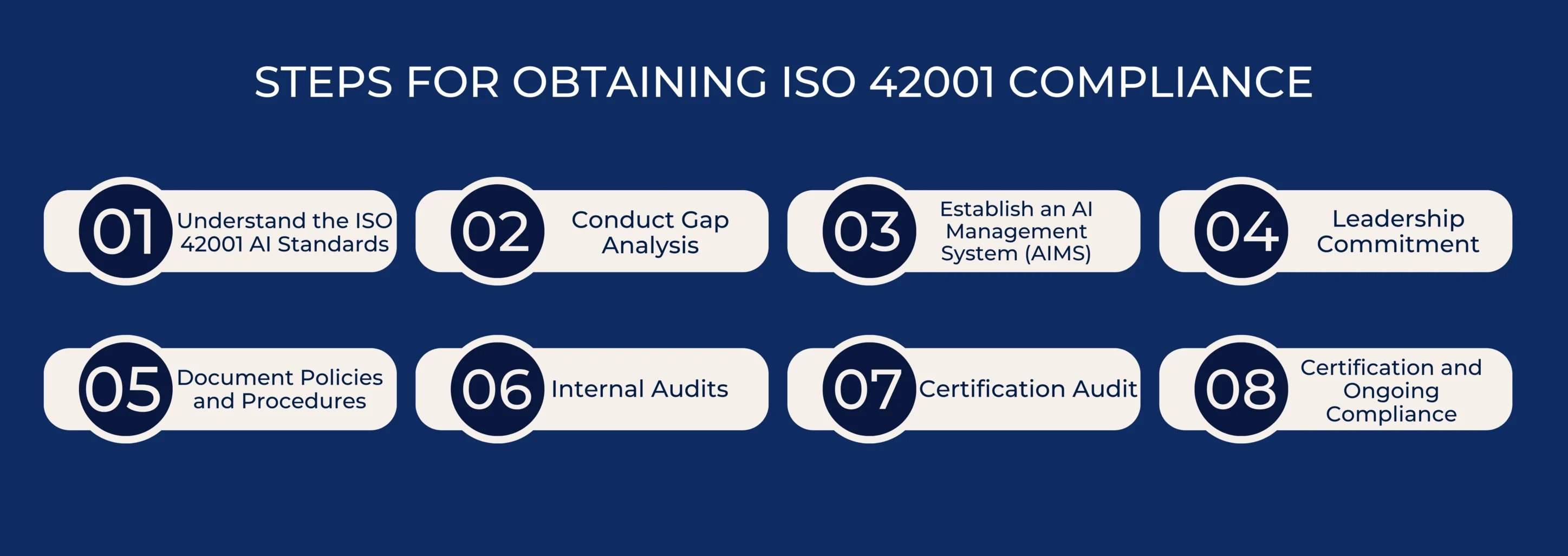
- ✓Stage 1 Audit: Documentation and Readiness Review
- ✓Stage 2 Audit: Evidence Collection and Control Testing
- ✓Surveillance Audits and Certificate Maintenance
ISO 42001 Certification Requirements for Charlotte Organizations
ISO 42001 compliance requires Charlotte-based organizations to establish, implement, maintain, and continually improve a documented Artificial Intelligence Management System conforming to ISO/IEC 42001:2023. The standard’s requirements address both the management system structure under Clauses 4 through 10 and the AI-specific operational controls referenced in Annex A. The ISO 42001 assessment evaluates whether the organization has implemented controls appropriate to its defined AIMS scope, AI risk profile, and the nature of the AI systems it develops, deploys, or uses. The following core documentation categories are examined during every ISO 42001 assessment conducted for Charlotte organizations.
- ✓AI Policy: A documented organizational commitment to responsible AI management, approved by senior leadership and communicated across the organization
- ✓AIMS Scope Documentation: A formal definition of the organizational units, AI systems, processes, and geographic boundaries included within the certification scope
- ✓AI Risk Assessment Records: Documented methodology and outputs for identifying, analyzing, and evaluating AI-related risks — including safety, fairness, transparency, and security risks
- ✓AI Impact Assessment Documentation: Records demonstrating evaluation of potential impacts of AI systems on individuals, groups, and society prior to deployment
- ✓Risk Treatment Plan: Documented controls selected to address identified AI risks, with evidence of implementation and ongoing monitoring
- ✓Objectives and Performance Records: Documented AI management objectives and measured performance indicators demonstrating ongoing evaluation of AIMS effectiveness
- ✓Internal Audit Records: Evidence of completed internal AIMS audits, findings, and corrective actions
- ✓Management Review Records: Documentation of senior leadership review of AIMS performance, including review inputs and outputs
ISO 42001 compliance requires organizations to maintain a documented AI risk assessment process that identifies risks associated with the AI systems within the defined AIMS scope. The risk assessment must address risks arising from AI system behavior, data quality and bias, algorithmic transparency, accountability gaps, and AI system interactions with external parties. For Charlotte financial services organizations, AI risk assessment documentation must address AI systems used in credit decisioning, fraud detection, customer segmentation, and regulatory reporting — categories where AI system errors carry material regulatory and reputational consequences. The ISO 42001 assessment examines whether the risk assessment methodology is applied consistently, whether outputs are documented and retained, and whether identified risks are addressed through the risk treatment process with evidence of control implementation and effectiveness monitoring.
AI impact assessment requirements within ISO 42001 address the organization’s obligation to evaluate the potential effects of AI systems on individuals, groups, and the broader social context before deployment. Impact assessment documentation examined during an ISO 42001 assessment must demonstrate that the organization has evaluated fairness considerations, potential discriminatory outcomes, privacy implications, safety risks, and accountability structures before AI systems enter operational use. For Charlotte healthcare organizations deploying AI diagnostic tools, impact assessment documentation must specifically address patient safety implications, clinical validation evidence, and escalation procedures when AI recommendations conflict with clinical judgment. The ISO 42001 audit examines impact assessment records as evidence of responsible AI governance — not as a design consultation activity.
The ISO 42001 assessment evaluates applicable controls from Annex A of ISO/IEC 42001:2023, which organizations select based on their AI risk profile, AIMS scope, and the nature of their AI activities. The Annex A domains cover a comprehensive range of governance areas: organizational policies and accountability structures for AI, internal organization of AI governance responsibilities, human oversight mechanisms for AI systems, responsible disclosure and transparency obligations, data governance controls for AI training and operational data, AI system lifecycle controls covering design through decommissioning, AI system performance monitoring and drift detection, supplier and third-party AI governance requirements, and AI incident management procedures. During the ISO 42001 audit, auditors evaluate whether selected controls are implemented and operating effectively — not merely documented in policy without operational evidence — and whether the organization’s Statement of Applicability accurately reflects the control selection rationale.
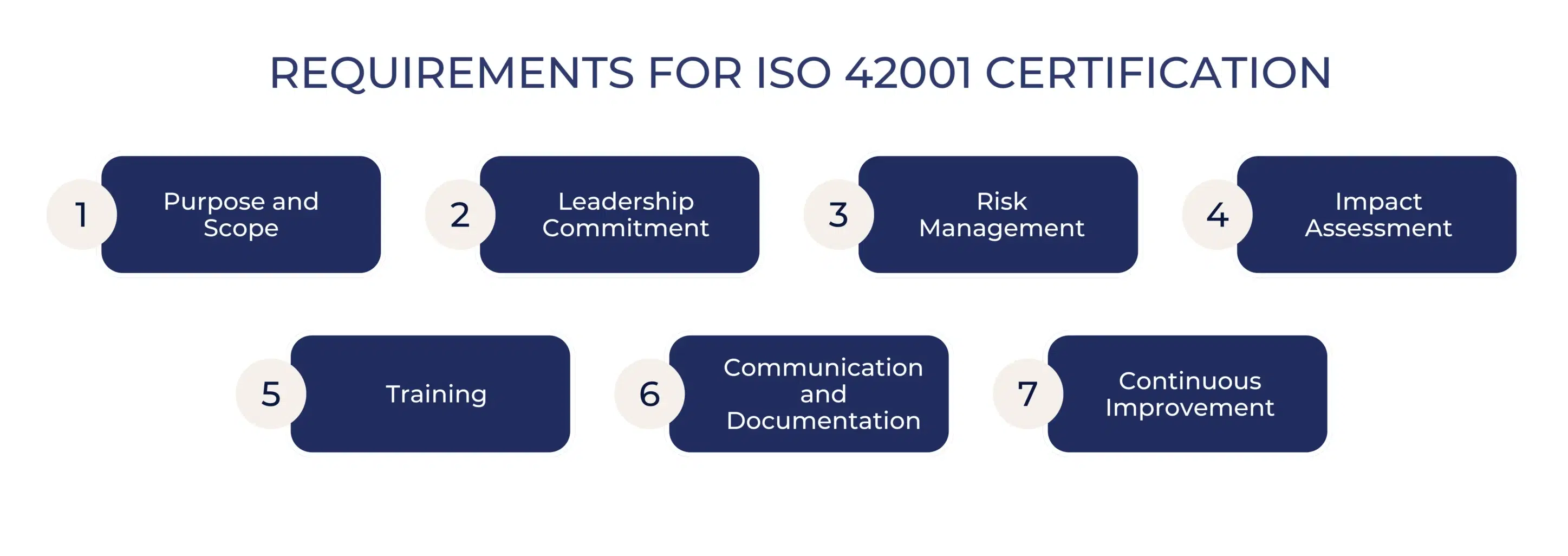
- ✓AI Risk Assessment and Impact Evaluation Requirements
- ✓Annex A Control Domains Evaluated During ISO 42001 Assessment
Why Charlotte Organizations Pursue ISO 42001 Certification
Demand for ISO 42001 Certification among Charlotte companies is driven by a combination of enterprise procurement expectations, financial sector vendor assurance requirements, international SaaS expansion obligations, and the concentration of AI-deploying organizations across Charlotte’s core economic sectors. Charlotte’s position as the second-largest banking center in the United States — with significant operations from Bank of America, Wells Fargo, Truist, and numerous regional banks and credit unions — creates a procurement environment where AI vendors and technology service providers face structured third-party risk management reviews. These reviews increasingly include evaluation of AI governance controls, making ISO 42001 Certification in Charlotte a competitive necessity for many technology suppliers.
Financial Sector Vendor Assurance and Procurement Requirements
Charlotte’s financial services ecosystem creates a localized procurement dynamic where SaaS providers, cloud service providers, fintech platforms, and managed service organizations serving banking institutions face structured vendor due diligence requirements. These requirements evaluate AI governance alongside information security controls. A Charlotte-based fintech company providing AI-powered loan origination software to community banks, for example, may encounter procurement questionnaires that explicitly request evidence of independent AI management system certification. ISO 42001 Certification in Charlotte provides a structured, independently verified response to these procurement requirements — replacing incomplete self-attestation with documented audit evidence reviewed by a Licensed CPA Firm and confirmed through an independent certification committee decision. This positions certified organizations favorably in financial sector procurement evaluation processes across Charlotte’s banking concentration.
Technology Sector Demand: SaaS, Cloud, and AI Development Organizations
Charlotte’s technology sector includes a growing concentration of SaaS companies, cloud infrastructure providers, and AI development organizations serving regulated industries across the Southeast United States. For these organizations, ISO 42001 Certification in Charlotte addresses enterprise client requirements for structured AI governance verification — particularly when serving clients in financial services, healthcare, and government-adjacent sectors. SaaS organizations seeking to expand internationally, especially into EU markets where AI governance requirements are increasingly formalized under the EU AI Act, find that ISO 42001 Certification provides an internationally recognized framework that supports market entry and client assurance. Charlotte-based cloud service providers hosting AI workloads for regulated clients similarly encounter contractual AI governance requirements that ISO 42001 Certification addresses through independent audit verification rather than customer-specific assessments.
Healthcare and Energy Technology AI Governance
Charlotte’s healthcare sector — encompassing major health systems, academic medical centers, and health technology companies deploying AI across clinical operations, revenue cycle management, and population health analytics — represents a growing segment of organizations seeking ISO 42001 Certification in Charlotte. AI systems used in clinical decision support, predictive deterioration monitoring, and diagnostic imaging analysis carry accountability and transparency obligations that align directly with the AIMS requirements of ISO/IEC 42001:2023. Charlotte’s energy technology organizations — including firms using machine learning for grid load forecasting, predictive maintenance, and energy optimization — face similar AI governance scrutiny from utility regulators and institutional clients. The ISO 42001 assessment for these organizations evaluates AI accountability structures, human oversight mechanisms, and documented control processes governing AI system deployment in high-consequence operational environments.
ISO 42001 Certification Scope and Independent Decision Framework
The scope of ISO 42001 Certification in Charlotte is defined by the organization’s AIMS boundary — the specific AI systems, organizational units, geographic locations, and processes included within the certification perimeter. Scope definition is a foundational step in the certification process and directly determines the extent of the ISO 42001 audit program. Organizations may define a narrow scope covering specific AI products or business units, or a broad scope encompassing enterprise-wide AI governance. The defined scope is documented in the issued ISO 42001 Certificate and communicated to relying parties through the certification registry maintained by CertPro, ensuring transparency for third parties conducting vendor due diligence.
Evidence-Based Assessment and Control Effectiveness Evaluation
The ISO 42001 assessment conducted by CertPro evaluates both the design adequacy of AIMS controls and their operating effectiveness during the audit period. Design evaluation examines whether controls are structured to meet the requirements of ISO/IEC 42001:2023 as applied to the organization’s AI risk profile. Effectiveness evaluation examines whether controls operated as designed — using logs, records, output reports, personnel interviews, and operational evidence to determine whether documented controls were consistently applied. The ISO 42001 assessment does not rely on management representations alone; auditors collect independent evidence to verify control operation. Organizations are evaluated against the standard’s requirements without adjustment for organizational size, sector, or AI maturity level. The certification threshold is conformance with ISO/IEC 42001:2023 as applied to the defined AIMS scope.
Nonconformity Classification and Certification Committee Decision
Nonconformities identified during the ISO 42001 audit are documented in the audit report and communicated to the organization with supporting evidence. The organization is required to submit documented corrective action evidence addressing each nonconformity before the certification committee proceeds to a certification determination. The certification committee at CertPro is independent from the audit team — a structural separation that ensures the certification decision is made objectively based on the full audit record, rather than by the auditors who conducted the fieldwork. The certification committee reviews the complete audit file, evaluates the adequacy of corrective actions, and issues the final certification determination. Certificate issuance, suspension, or withdrawal decisions are made exclusively by the certification committee and are not subject to negotiation or modification based on commercial considerations.
Benefits of ISO 42001 Certification for Charlotte-Based Organizations
ISO 42001 Certification for Charlotte companies provides independently verified demonstration of AIMS control design and operating effectiveness — substantiating AI governance representations made to enterprise clients, institutional counterparties, and regulated industry stakeholders. The benefits of ISO 42001 Certification in Charlotte are structured around the evidentiary value of third-party attestation, the market recognition of an internationally accepted certification, and the operational discipline reinforced through the annual surveillance audit cycle. Organizations that complete ISO 42001 Certification gain a durable, verifiable AI governance credential that supports procurement, regulatory, and board-level reporting requirements.
- ✓Independent verification of AIMS control design and operating effectiveness through a Licensed CPA Firm conformity assessment audit
- ✓Structured, internationally recognized AI governance credential satisfying enterprise vendor due diligence requirements in financial services, healthcare, and technology procurement
- ✓Demonstrated conformance with ISO/IEC 42001:2023 — the primary internationally published standard governing AI management systems
- ✓Differentiation in Charlotte’s competitive SaaS, fintech, and cloud markets where AI governance verification is increasingly requested during procurement processes
- ✓Annual surveillance audit cycle that maintains ongoing AIMS oversight and provides continuous external verification of control effectiveness
- ✓Support for international market expansion where AI governance frameworks aligned with ISO standards facilitate regulatory acceptance and client assurance in EU and Asia-Pacific markets
- ✓Structured audit evidence base that satisfies multiple stakeholder requirements — including client questionnaires, regulatory inquiries, and board-level AI governance reporting
- ✓Certificate registry listing that provides publicly verifiable confirmation of ISO 42001 Certification status to relying parties conducting vendor due diligence
ISO 42001 Certification in Charlotte is increasingly recognized in enterprise vendor risk management programs as an acceptable form of AI governance assurance. Charlotte-based financial institutions conducting third-party risk assessments of AI vendors evaluate ISO 42001 Certification as evidence of a structured, independently audited AI management system — reducing the scope of bespoke vendor questionnaires and on-site assessments required for vendor approval. Technology vendors serving multiple enterprise clients benefit from ISO 42001 Certification by establishing a single, independently verified AI governance credential that satisfies assurance requirements across their entire client base. Rather than responding individually to each client’s AI governance inquiry, certified organizations present a single audit-backed credential — reducing administrative burden while strengthening the credibility of AI governance representations made to the full enterprise client portfolio.
The annual surveillance audit cycle associated with ISO 42001 Certification in Charlotte establishes a cadence of external AIMS review that reinforces operational discipline in AI governance practices. Organizations subject to annual ISO 42001 AIMS audit surveillance must maintain current documentation, operate established controls consistently, and demonstrate ongoing management review and internal audit activities throughout the certificate validity period. This structured oversight mechanism identifies AIMS gaps before they develop into material control failures — providing an ongoing external verification signal rather than a point-in-time assessment. Charlotte organizations in rapidly evolving AI deployment environments — including those expanding AI use cases, integrating new AI vendors, or launching AI-powered products — benefit from the surveillance audit requirement as a structured trigger for AIMS scope review and control reassessment as the AI landscape evolves.
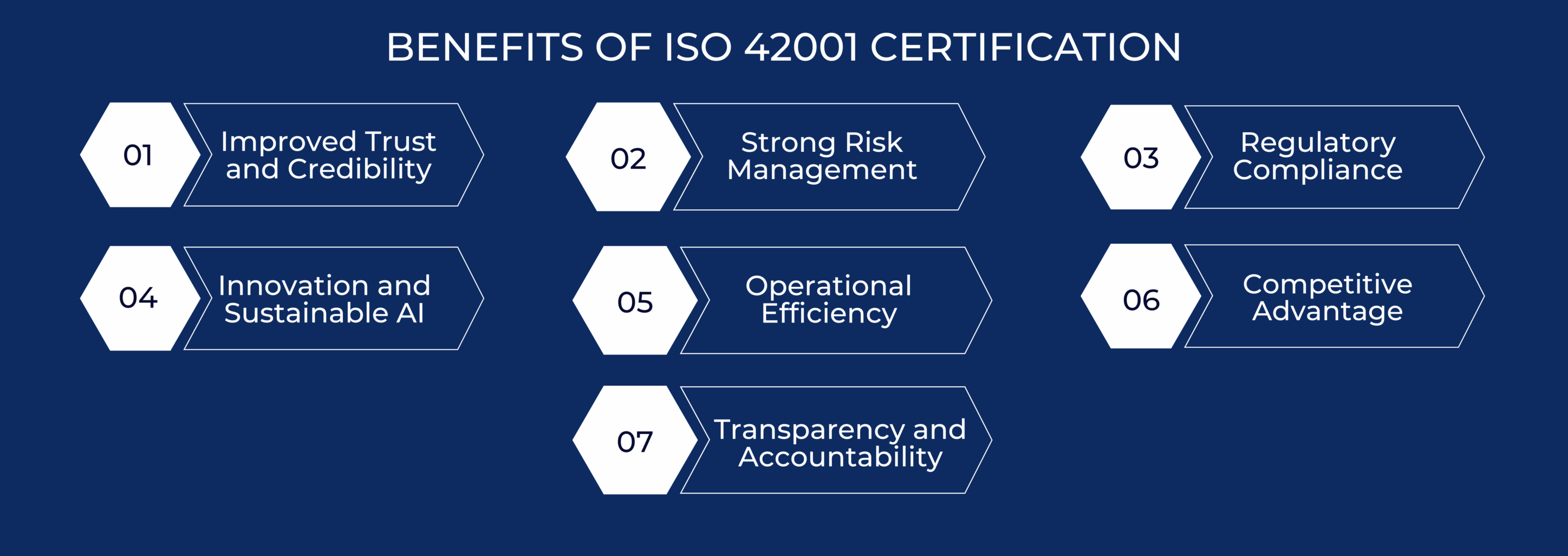
- ✓Procurement and Vendor Risk Management Recognition
- ✓Operational Discipline Through Structured AIMS Oversight
Industries in Charlotte Pursuing ISO 42001 Certification
ISO 42001 Certification demand in Charlotte spans multiple sectors reflecting the city’s diverse economic base. The following table identifies key industry categories pursuing ISO 42001 Certification in Charlotte and the primary AI governance drivers relevant to each sector. Organizations across all categories rely on ISO 42001 compliance to satisfy client, regulatory, and procurement requirements.
| Industry Sector | AI Use Cases in Charlotte | ISO 42001 Certification Driver |
|---|---|---|
| Banking and Financial Services | Credit decisioning, fraud detection, AML transaction monitoring, customer segmentation | Financial institution vendor due diligence, OCC and Federal Reserve AI governance expectations |
| Fintech and Payments | AI-powered payment processing, lending platforms, robo-advisory services | Procurement requirements from banking partners, international expansion to EU regulated markets |
| Healthcare and Health Technology | Clinical decision support, predictive analytics, diagnostic imaging AI, revenue cycle AI | HIPAA-adjacent AI accountability, health system vendor credentialing requirements |
| Energy Technology | Grid load forecasting, predictive maintenance, energy optimization ML models | Utility regulatory scrutiny, institutional client AI governance requirements |
| SaaS and Cloud Service Providers | AI-integrated SaaS platforms, cloud infrastructure hosting AI workloads | Enterprise client vendor risk management programs, multi-client AI governance credential |
ISO 42001 Certification for Charlotte Financial Services Firms
ISO 42001 Certification for Charlotte financial services organizations reflects the city’s position as a major U.S. banking center where AI deployment across credit, fraud, compliance, and customer operations is extensive and subject to regulatory scrutiny. Banks, credit unions, investment advisors, and insurance organizations operating in Charlotte face AI governance expectations from federal banking regulators — including OCC, FDIC, and Federal Reserve guidance on model risk management and algorithmic accountability — that align directly with the AIMS requirements of ISO/IEC 42001:2023. ISO 42001 Certification does not substitute for regulatory model risk management compliance, but it provides independently audited evidence of a structured AI management system. This supports regulatory examination responses and third-party risk management documentation submitted to institutional counterparties. Financial institutions evaluating AI vendors also benefit from ISO 42001 Certification held by their technology suppliers as a verified AI governance input to the vendor onboarding process.
ISO 42001 Compliance Charlotte: Ongoing Monitoring and Certificate Validity
ISO 42001 compliance in Charlotte is an ongoing obligation rather than a point-in-time achievement. The ISO 42001 Certificate issued following successful completion of the Stage 2 audit remains valid for three years, subject to the organization maintaining AIMS conformance through the annual surveillance audit cycle and notifying CertPro of material scope or control environment changes. Ongoing ISO 42001 compliance requires organizations to operate their AIMS continuously — not merely in preparation for audit periods — and to demonstrate through retained documentation that management system activities such as internal audits, management reviews, risk assessments, and corrective actions occurred throughout the certificate validity period.
Maintaining AIMS Conformance Between Surveillance Audits
Charlotte organizations certified under ISO 42001 are required to maintain their AIMS between scheduled surveillance audits through ongoing operation of documented controls, periodic internal audit activities, and management review of AIMS performance data. Material changes to AI systems within the certification scope — including introduction of new AI models, significant changes to AI system functionality, changes to AI training data sources, or changes to AI deployment architecture — must be assessed against the existing AIMS documentation. This assessment determines whether control updates, impact assessment updates, or scope amendment notifications are required. Organizations that fail to maintain AIMS documentation currency between surveillance audits risk identification of systematic nonconformities during the annual ISO 42001 audit — findings that may result in certificate suspension if corrective actions are not completed within the timeframe established by the certification committee.
Certificate Suspension, Withdrawal, and Scope Reduction
ISO 42001 Certificate suspension may occur when an organization fails to complete corrective actions within the required timeframe, refuses to permit scheduled surveillance audits, experiences material AIMS control failures that are not remediated, or makes significant scope changes without notifying CertPro. Certificate withdrawal occurs when suspension conditions are not resolved within the suspension period, or when the organization formally requests withdrawal. Scope reduction — where specific AI systems or organizational units are removed from the certification scope — may be applied when nonconformities are isolated to a defined portion of the AIMS and the remaining scope maintains demonstrable conformance. All suspension, withdrawal, and scope reduction decisions are made exclusively by the independent certification committee and are reflected in the publicly accessible certification registry to preserve the integrity of the ISO 42001 Certification in Charlotte program.
FAQ
▶
What is ISO 42001 Certification in Charlotte and which organizations need it?
▶
How does the ISO 42001 audit process work for Charlotte-based organizations?
▶
What documentation is required for ISO 42001 assessment in Charlotte?
▶
How long is an ISO 42001 Certificate valid?
▶
What is the difference between an ISO 42001 AIMS audit and a gap assessment?
▶
Does ISO 42001 Certification replace SOC 2 for Charlotte technology companies?
▶
Which Charlotte financial services organizations benefit most from ISO 42001 Certification?
▶
How does CertPro maintain independence in the ISO 42001 certification process?
ISO 42001 CERTIFIED: WHY AI GOVERNANCE CERTIFICATION IS BECOMING A BOARD-LEVEL REQUIREMENT
ISO 42001 Certified: Board-Level AI Governance Guide | CertPro CPA LLC HERO ══════════════════════════════ –> src=”https://certpro.com/wp-content/uplo…
Get In Touch
have a question? let us get back to you.