
ISO 42001 Certification in Frankfurt
ISO 42001 compliance directly supports EU AI Act conformity by providing a documented management system that captures AI risk assessments, control implementations, monitoring records, and incident response procedures — precisely the evidence that regulators and market surveillance authorities will seek during inspections. Organizations that achieve ISO 42001 Certification in Frankfurt can present their certification as structured evidence of AI governance maturity, reducing regulatory burden and supporting faster market access for AI-enabled products and services across the European Single Market.
OUR CLIENTS










What Is ISO 42001 Certification?
ISO 42001 Certification is the formal recognition awarded to organizations that have established, implemented, and maintained a conforming Artificial Intelligence Management System (AIMS) in accordance with ISO/IEC 42001:2023. Issued by accredited certification bodies, this certification confirms that an organization’s AI governance framework meets internationally defined requirements for responsible AI development, deployment, and oversight. ISO 42001 Certification in Frankfurt is increasingly relevant as the city’s financial institutions, technology firms, and cloud infrastructure providers expand their AI-driven operations under mounting regulatory scrutiny from the EU AI Act, GDPR authorities, and sector-specific supervisors.
ISO/IEC 42001:2023 — The International Standard for AI Management Systems
ISO/IEC 42001:2023 is the first internationally recognized standard specifically designed for Artificial Intelligence Management Systems. Published by the International Organization for Standardization (ISO) and the International Electrotechnical Commission (IEC) in 2023, the standard establishes a structured framework through which organizations can govern AI systems across their entire lifecycle — from design and training through deployment, monitoring, and decommissioning. The standard applies to any organization regardless of size, sector, or the nature of its AI involvement, including organizations that develop AI systems, deploy them, or procure AI-enabled services from third parties.
The standard is structured using the High-Level Structure (HLS) common to all modern ISO management system standards. This architecture — covering context of the organization, leadership, planning, support, operation, performance evaluation, and improvement — ensures that an AIMS integrates naturally with existing management frameworks such as ISO 27001 for information security and ISO 31000 for risk management. Organizations in Frankfurt that already hold ISO 27001 certification can leverage existing policies, roles, and review processes when building toward ISO 42001 compliance, substantially reducing duplication of effort and audit preparation time.
Scope and Applicability of the AIMS Standard
ISO/IEC 42001:2023 applies to any organization that plays a role in the AI value chain. This includes organizations that design and train AI models, integrate AI capabilities into products and services, or deploy third-party AI tools to support business operations. The standard defines specific requirements for establishing an AI policy, assigning organizational roles and responsibilities, conducting AI risk assessments, implementing controls, and maintaining documented evidence of conformance. Each requirement is subject to evaluation during a formal ISO 42001 audit conducted by an accredited certification body.
For Frankfurt-based companies — including multinational banks in the Bankenviertel, logistics technology firms, health data analytics platforms, and SaaS providers serving the European market — the scope of an AIMS certification directly intersects with obligations under the EU AI Act, the General Data Protection Regulation (GDPR), and oversight expectations from the Federal Commissioner for Data Protection and Freedom of Information (BfDI). ISO 42001 Certification in Frankfurt provides a documented, auditable system that supports compliance demonstration across each of these regulatory frameworks simultaneously.
Relationship to AI Governance and Responsible AI Principles
ISO 42001 operationalizes responsible AI principles by translating ethical commitments into verifiable management system requirements. The standard requires organizations to identify AI-specific risks — including algorithmic bias, lack of transparency, and inadequate human oversight — and to implement controls that address those risks in a structured, repeatable manner. Documentation of AI system objectives, impact assessments, and monitoring procedures must be maintained and made available for review during an ISO 42001 audit. This audit-readiness orientation distinguishes ISO 42001 from voluntary AI ethics frameworks, which typically lack formal verification mechanisms.
The standard explicitly addresses AI-specific concerns such as data quality governance, explainability requirements, human oversight provisions, and incident response for AI failures. These controls are organized within Annex A of the standard, which contains 38 controls grouped across nine control categories. Annex B provides implementation guidance, and Annex C maps AI-related risks to corresponding controls. Organizations pursuing ISO 42001 Certification in Frankfurt must document their application of these controls in a Statement of Applicability — a formal declaration that identifies which controls are implemented and provides justification for any exclusions.

Why ISO 42001 Certification Is Essential for Frankfurt Organizations
Frankfurt occupies a singular position in the European economy. As the seat of the European Central Bank (ECB), the European Insurance and Occupational Pensions Authority (EIOPA), and a concentration of global banking institutions, Frankfurt is one of the most heavily regulated financial centers in the world. At the same time, Frankfurt’s digital infrastructure — including major internet exchange points and a dense cluster of cloud data centers — has made it a European hub for technology-driven services. The intersection of high-stakes financial operations and rapid AI adoption creates a compelling case for formal ISO 42001 Certification in Frankfurt.
Regulatory Pressure and the EU AI Act
The EU AI Act, which entered into force in August 2024 with a phased implementation timeline extending through 2026 and beyond, classifies AI systems by risk level and imposes corresponding conformity assessment requirements. High-risk AI systems — including those used in credit scoring, employment decisions, critical infrastructure management, and healthcare diagnostics — are subject to mandatory documentation, transparency, and oversight requirements. Many Frankfurt-based financial institutions and technology companies operate high-risk AI systems as defined by the EU AI Act, making structured AI governance not merely advisable but legally necessary.
ISO 42001 compliance directly supports EU AI Act conformity by providing a documented management system that captures AI risk assessments, control implementations, monitoring records, and incident response procedures — precisely the evidence that regulators and market surveillance authorities will seek during inspections. Organizations that achieve ISO 42001 Certification in Frankfurt can present their certification as structured evidence of AI governance maturity, reducing regulatory burden and supporting faster market access for AI-enabled products and services across the European Single Market.
Frankfurt’s Financial Services Sector and AI Governance Demands
ISO 42001 Certification for Frankfurt financial services organizations addresses a specific convergence of AI adoption and regulatory obligation. Frankfurt banks, insurers, and asset managers deploy AI systems for credit underwriting, fraud detection, algorithmic trading, customer risk profiling, and regulatory reporting. Each of these applications carries material risk — financial, reputational, and regulatory — if AI systems operate without documented governance controls. ISO 42001 certification provides the audit trail that demonstrates to supervisory authorities, including the German Federal Financial Supervisory Authority (BaFin), that AI-driven decisions are governed by a structured, risk-based management system.
ISO 42001 compliance that Frankfurt fintech companies have begun incorporating into their product development and investor relations strategies reflects a growing recognition that AI governance certification is a competitive differentiator. Venture capital investors and institutional clients increasingly require evidence of AI risk management capability before entering into commercial relationships. ISO 42001 Certification provides a standardized, internationally recognized credential that satisfies due diligence requirements and supports contract negotiations with enterprise clients and public sector procurement authorities across Germany and the European Union.
Technology Companies and Cloud Providers in Frankfurt
ISO 42001 Certification for Frankfurt technology companies operating cloud infrastructure, AI platforms, and software-as-a-service solutions addresses the specific governance requirements that enterprise and public sector clients impose on their AI supply chains. Frankfurt hosts major cloud availability zones for global hyperscalers and serves as a European base for numerous AI-native technology companies. These organizations face dual pressures: demonstrating AI governance to their own customers and satisfying the AI risk management requirements imposed by the financial institutions and regulated entities that form their primary client base.
AI governance certification that Frankfurt technology providers pursue through ISO 42001 enables them to present a certified AIMS as a product feature — a verifiable assurance that the AI systems embedded in their platforms are governed in accordance with internationally recognized standards. This certification position supports sales cycles with regulated enterprise clients, simplifies third-party vendor assessments, and reduces the frequency and scope of customer-initiated audits. For Frankfurt technology companies serving clients across multiple European jurisdictions, ISO 42001 Certification provides a single, mutually recognized credential that reduces duplication of compliance effort.
Requirements for ISO 42001 Certification in Frankfurt
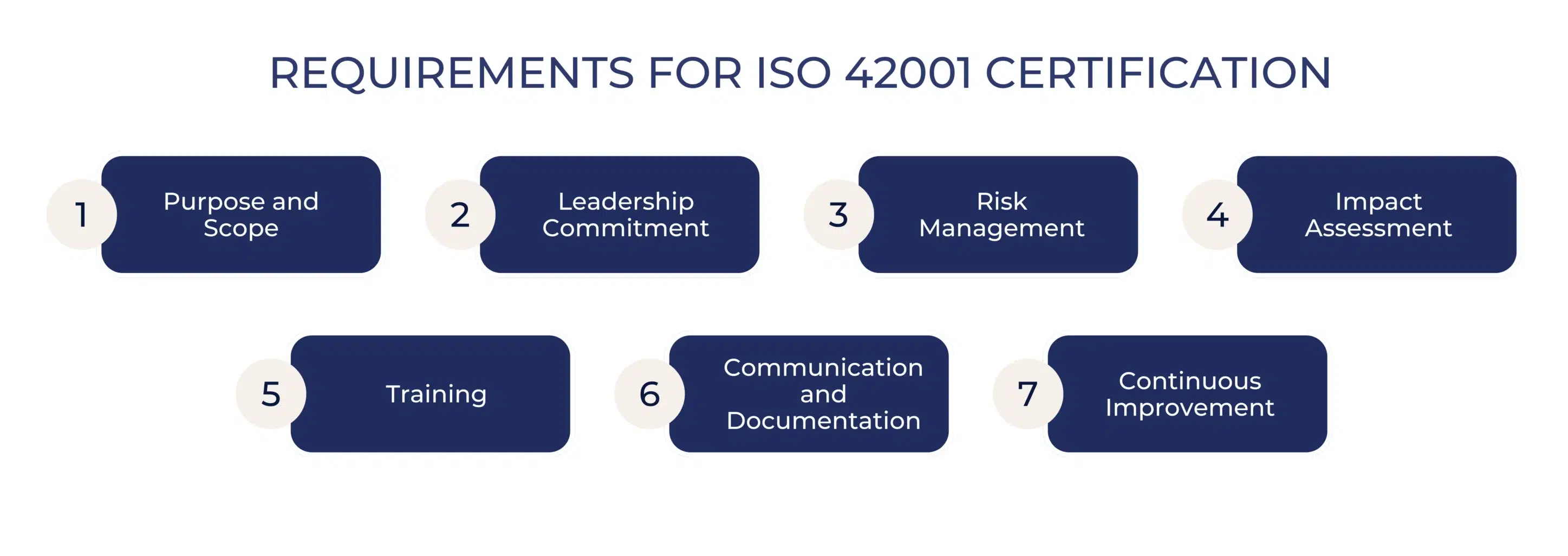
ISO 42001 Certification requires organizations to establish a fully conforming Artificial Intelligence Management System that satisfies all mandatory clauses of ISO/IEC 42001:2023. The requirements span organizational context, leadership commitment, planning, support infrastructure, operational controls, performance evaluation, and continual improvement. Each requirement area is subject to evaluation during a formal ISO 42001 audit, and organizations must maintain documented evidence of conformance across all applicable clauses. The following sections detail the core requirement categories that Frankfurt organizations must address to achieve and sustain certification.
Organizations must define the internal and external context relevant to their AI management system, including the nature of their AI systems, the sectors in which they operate, and the regulatory environment applicable to their AI-related activities. For Frankfurt organizations, this context analysis must address GDPR obligations, BaFin supervisory expectations for AI-driven financial services, EU AI Act risk classifications, and any sector-specific AI governance requirements applicable to their industry. The context analysis forms the foundation of the AIMS scope definition, which determines the boundaries of the certification and the specific AI systems, processes, and organizational units covered.
An AI policy must be established, documented, and communicated throughout the organization. The policy must express the organization’s commitment to responsible AI, define the objectives of the AIMS, and establish the principles that govern AI system design, deployment, and operation. It must be appropriate to the organization’s purpose, include commitments to satisfy applicable requirements, and provide the framework for setting AI management objectives. During an ISO 42001 audit, auditors will evaluate the policy for completeness, organizational alignment, and evidence of active communication and endorsement at the executive level.
ISO 42001 requires organizations to conduct systematic AI risk assessments that identify risks associated with each AI system within the AIMS scope. The risk assessment methodology must address AI-specific risk dimensions including algorithmic bias and fairness, transparency and explainability limitations, data quality and provenance issues, adversarial vulnerability, unintended automation of harmful decisions, and loss of meaningful human oversight. Each identified risk must be evaluated for likelihood and impact, and the organization must determine and implement appropriate controls from Annex A or from other sources identified during the risk treatment process.
The Statement of Applicability (SoA) is a mandatory document that lists all Annex A controls, states whether each control is implemented, and provides justification for any exclusions. The SoA is a primary audit artifact — during an ISO 42001 audit, the certification body will review the SoA to verify that the organization has systematically considered all standard controls and made documented decisions about their applicability. Organizations must also maintain a risk treatment plan that links each identified risk to the corresponding control, the owner responsible for implementation, the target completion date, and evidence of effectiveness monitoring.
ISO 42001 compliance requires organizations to maintain a structured documentation system that supports the AIMS throughout its operation. Mandatory documented information includes the AI policy, AIMS scope, risk assessment results, risk treatment plans, the Statement of Applicability, AI system inventory records, operational control procedures, monitoring and measurement results, internal audit reports, management review records, and records of nonconformities and corrective actions. Documentation must be controlled, version-managed, and accessible to relevant personnel, while being protected against unauthorized access or inadvertent modification.
The standard requires organizations to determine the competence necessary for personnel whose work affects AI management system performance and to ensure that those individuals are competent through education, training, or experience. For Frankfurt organizations with diverse AI teams spanning data scientists, machine learning engineers, compliance officers, and product managers, competence requirements must be documented for each relevant role. Evidence of competence — including training records, qualification certificates, and performance evaluations — must be retained and made available for review during the ISO 42001 audit.
| Requirement Area | Key Deliverable | Audit Evidence |
|---|---|---|
| Organizational Context | AIMS Scope Definition | Scope statement, stakeholder register |
| AI Policy | Documented AI Policy | Signed policy, communication records |
| Risk Assessment | AI Risk Register | Risk assessment methodology, risk register |
| Annex A Controls | Statement of Applicability | SoA document, control evidence |
| Performance Evaluation | Internal Audit & Management Review | Audit reports, review minutes |
- ✓Organizational Context and AI Policy Requirements
- ✓AI Risk Assessment and Control Implementation
- ✓Documentation, Competence, and Operational Requirements
The ISO 42001 Certification Process in Frankfurt
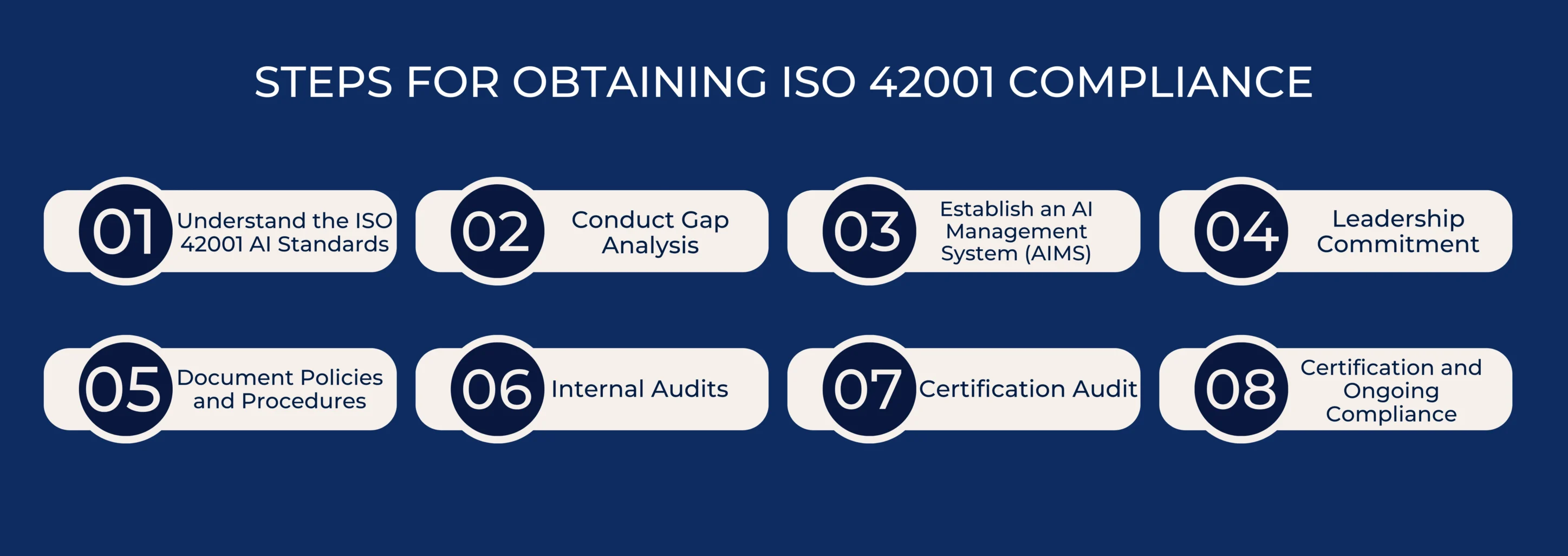
The ISO 42001 certification process follows a structured sequence of evaluation stages conducted by an accredited certification body. Each stage serves a defined audit function and produces documented outputs that support the certification decision. Organizations pursuing ISO 42001 Certification in Frankfurt should expect a process spanning several months, with duration dependent on organizational size, AIMS complexity, and the number of AI systems within scope. The following stages describe the standard certification pathway from initial scope definition through certificate issuance.
The certification process begins with a formal scope definition exercise in which the organization and the certification body agree on the boundaries of the AIMS subject to certification. The scope must clearly identify the AI systems, organizational units, geographic locations, and operational processes included within the certification boundary. For Frankfurt organizations with international operations or multi-site AI deployments, scope definition requires careful coordination to ensure that the certified AIMS accurately reflects the organizational reality and that remote sites or shared AI infrastructure are appropriately addressed.
Stage 1 of the formal ISO 42001 audit consists of a documentation review conducted by the certification body’s auditors. Auditors evaluate the AIMS documentation — including the AI policy, scope statement, risk assessment records, Statement of Applicability, and operational procedures — to determine whether the management system has been designed in accordance with ISO/IEC 42001:2023 requirements and whether the organization is ready to proceed to the Stage 2 field audit. Stage 1 typically identifies documentation gaps or areas requiring clarification before the on-site evaluation proceeds.
The Stage 2 audit is the principal conformance evaluation. Certification body auditors conduct on-site interviews, observe operational processes, test implemented controls, and verify that the AIMS is functioning as documented. During the ISO 42001 audit that Frankfurt organizations undergo at this stage, auditors will evaluate AI system inventories, examine risk treatment evidence, review training records, test monitoring procedures, assess incident response capabilities, and verify that management reviews have been conducted in accordance with the standard’s requirements.
The Stage 2 audit produces a formal audit report that categorizes findings as conformances, observations, minor nonconformities, or major nonconformities. Major nonconformities — defined as the absence of a required element or a systematic failure of an implemented control — must be resolved before certification can be granted. Minor nonconformities require a documented corrective action plan with a defined resolution timeline. The certification body reviews corrective action responses before making the final certification decision. Organizations that successfully resolve all nonconformities receive the ISO 42001 certificate, which is typically valid for three years subject to annual surveillance audits.
ISO 42001 Certification is maintained through annual surveillance audits conducted in years one and two of the three-year certification cycle. Surveillance audits are scope-limited evaluations that verify continued conformance with selected standard requirements, assess corrective action effectiveness, review changes to the AI systems or organizational context, and confirm that the AIMS continues to drive continual improvement. Surveillance audits do not cover the full scope of the initial certification audit but focus on areas of change, previously identified weaknesses, and core AIMS processes.
Recertification audits are conducted in year three of the certification cycle. The recertification audit covers the full AIMS scope and evaluates the overall effectiveness of the management system over the three-year certification period. Recertification audits assess whether the AIMS has evolved in response to changes in the organization’s AI landscape, regulatory environment, and identified risks. Organizations that maintain well-documented continual improvement records, management review minutes, and corrective action histories typically experience efficient recertification audits with minimal disruption to ongoing operations.
- Define AIMS scope and identify all AI systems within the certification boundary
- Conduct AI risk assessment using documented methodology aligned with ISO/IEC 42001:2023
- Develop and implement controls from Annex A and document the Statement of Applicability
- Establish AI policy and assign organizational roles, responsibilities, and accountabilities
- Build and maintain the required AIMS documentation set including procedures and records
- Conduct internal AIMS audit to evaluate conformance before the certification body engagement
- Hold management review meeting to assess AIMS performance and approve certification submission
- Engage accredited certification body and submit to Stage 1 documentation review
- Resolve Stage 1 findings and proceed to Stage 2 on-site audit
- Address any nonconformities identified during Stage 2 and receive certification decision
- ✓Stage 1: Scope Definition and Documentation Review
- ✓Stage 2: On-Site Audit and Control Evaluation
- ✓Surveillance Audits and Recertification
Benefits of ISO 42001 Certification for Frankfurt Businesses
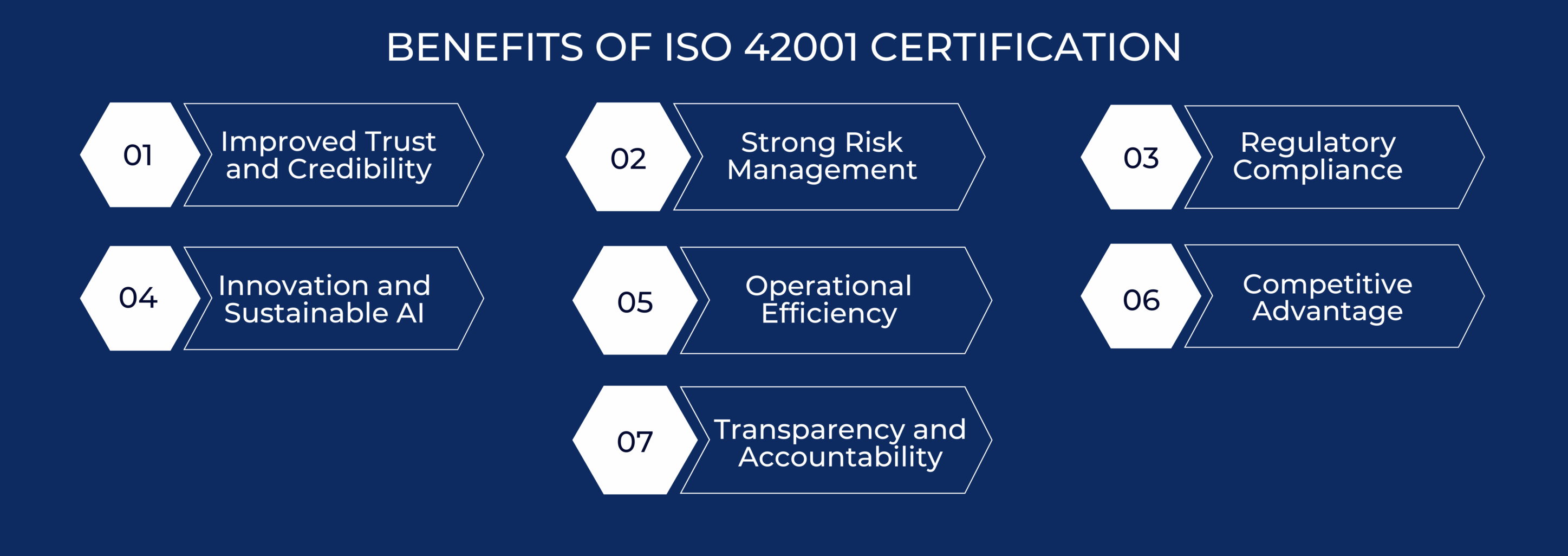
ISO 42001 Certification in Frankfurt delivers measurable organizational value across regulatory compliance, market access, operational risk management, and stakeholder trust dimensions. The certification provides Frankfurt organizations with a structured framework for governing AI systems, a recognized credential for demonstrating AI governance maturity, and audit-verified assurance that AI-related risks are managed in accordance with international standards. The following sections detail the specific benefits that Frankfurt organizations realize through achieving and maintaining ISO 42001 Certification.
ISO 42001 compliance that Frankfurt organizations achieve through certification directly supports conformity with the EU AI Act by establishing the documented risk management, transparency, and human oversight controls that the regulation requires for high-risk AI applications. The management system documentation maintained for ISO 42001 certification — including AI risk assessments, control evidence, impact assessments, and monitoring records — constitutes precisely the technical documentation that the EU AI Act requires providers and deployers of high-risk AI systems to maintain and make available to market surveillance authorities.
Organizations holding ISO 42001 Certification are demonstrably better positioned to respond to regulatory inquiries, supervisory examinations, and customer due diligence requests regarding AI governance. The certification provides a pre-established documentation trail, a defined governance structure, and evidence of ongoing monitoring — all of which reduce the time and organizational effort required to respond to external scrutiny. For Frankfurt financial institutions subject to BaFin oversight and ECB supervisory expectations, this audit readiness translates directly into reduced regulatory risk and more efficient supervisory examination processes.
ISO 42001 Certification in Frankfurt functions as a marketable credential that distinguishes certified organizations from competitors that rely on self-assessed or undocumented AI governance practices. Enterprise clients — particularly those operating in regulated sectors — increasingly require evidence of AI governance as a condition of supplier approval. ISO 42001 Certification provides a standardized, third-party-verified response to these requirements that eliminates the need for bespoke customer audits and accelerates vendor qualification processes. For Frankfurt technology companies competing for enterprise contracts with financial institutions or public sector clients, ISO 42001 Certification can be a decisive commercial differentiator.
The structured risk management framework required by ISO 42001 produces operational benefits that extend well beyond regulatory compliance. Organizations that systematically identify, assess, and treat AI-related risks experience fewer AI system failures, reduced instances of algorithmic bias affecting customer outcomes, improved data quality across AI training and inference pipelines, and more effective human oversight of AI-driven decisions. These operational improvements translate into reduced remediation costs, lower regulatory penalty exposure, and stronger customer outcomes — all contributing to the long-term financial sustainability of AI-enabled business operations.
- ✓Demonstrates EU AI Act conformity through documented risk management and oversight controls
- ✓Provides BaFin and ECB supervisory examination with pre-established AI governance evidence
- ✓Accelerates enterprise vendor qualification by satisfying third-party AI due diligence requirements
- ✓Reduces frequency and scope of customer-initiated AI governance audits
- ✓Establishes a structured framework for monitoring AI system performance and detecting adverse outcomes
- ✓Supports GDPR compliance by integrating AI data governance into the broader information management system
- ✓Creates a documented improvement cycle that evolves the AIMS in response to changes in AI technology and regulation
- ✓Strengthens board and executive accountability for AI governance through defined roles and management review processes
- ✓Builds organizational competence in AI risk management through documented training and awareness programs
- ✓Provides a recognized international credential that supports cross-border commercial relationships within the EU
- ✓Regulatory Compliance and Audit Readiness
- ✓Market Differentiation and Commercial Advantage
- ✓Operational Risk Reduction and AI System Reliability
ISO 42001 Assessment Process — Evaluation Methodology
The ISO 42001 assessment is the formal evaluation process through which a certification body determines whether an organization’s AIMS conforms to the requirements of ISO/IEC 42001:2023. The assessment methodology is defined by the certification body’s audit program, which specifies the audit objectives, scope, criteria, schedule, and the qualifications of the audit team. The ISO 42001 assessment that Frankfurt organizations undergo is conducted by qualified auditors with demonstrated expertise in AI management systems, information security, and the regulatory environment applicable to the organization’s sector.
The certification body determines the audit program based on the organization’s AIMS scope, the size and complexity of the AI systems within scope, the maturity of the management system, and any previous certification history. Auditors assigned to conduct the ISO 42001 assessment must hold qualifications in management system auditing and must demonstrate specific competence in AI governance, AI risk management, and the technical aspects of AI system operation relevant to the organization’s sector. For Frankfurt organizations in the financial services sector, auditors should additionally demonstrate familiarity with applicable financial regulation and supervisory expectations from BaFin and the ECB.
During the ISO 42001 assessment, auditors test the effectiveness of implemented controls by reviewing documented evidence, conducting structured interviews with personnel responsible for AI governance activities, observing operational processes, and — where applicable — examining AI system configurations and monitoring outputs. Control testing focuses on whether controls are implemented as documented, whether they are effective in achieving their intended risk treatment objectives, and whether they are consistently applied across all AI systems within the AIMS scope. Findings are classified as major nonconformities, minor nonconformities, or observations based on the significance and systemic nature of the identified deviation.
A major nonconformity is defined as the complete absence of a required AIMS element, a systematic failure of an implemented control that renders the control ineffective, or evidence that the organization has not addressed a mandatory standard requirement. Major nonconformities prevent certification until resolved. A minor nonconformity indicates a partial implementation or isolated failure of a required control, which the organization must address through a documented corrective action plan. Observations are noted concerns or improvement opportunities that do not constitute nonconformities but may be monitored during subsequent surveillance audits.
Following the resolution of all identified nonconformities, the certification body conducts a formal certification decision review. A person not involved in the audit evaluates the audit report and corrective action evidence to determine whether the AIMS meets all requirements for certification. The certification decision is independent of the audit team to ensure objectivity. Upon a positive certification decision, the certification body issues an ISO 42001 certificate that identifies the certified organization, the AIMS scope, the applicable standard (ISO/IEC 42001:2023), the certification body, the certificate issue date, and the expiry date of the three-year certification cycle.
- ✓Audit Program Determination and Auditor Qualification
- ✓Control Testing and Nonconformity Classification
- ✓Certification Decision and Issuance
Cost of ISO 42001 Certification in Frankfurt
The cost of ISO 42001 Certification in Frankfurt is determined by multiple factors including organizational size, the number and complexity of AI systems within the AIMS scope, the geographic spread of AI operations, and the maturity of existing management system infrastructure. Certification bodies calculate audit fees based on the number of audit person-days required to evaluate the AIMS, which in turn depends on scope complexity and the organization’s employee count within the certified scope. Organizations with existing ISO 27001 or ISO 9001 management systems typically require fewer audit person-days due to the structural commonalities between standards.
Pricing Factors for Frankfurt Organizations
For small and medium-sized Frankfurt organizations with a focused AI system scope — such as a fintech startup deploying two to three AI models in a single business unit — initial certification costs typically range from €8,000 to €15,000, encompassing Stage 1 and Stage 2 audit fees. Mid-sized organizations with broader AI system portfolios and multi-department scope should expect initial certification investments in the range of €15,000 to €30,000. Large Frankfurt financial institutions or technology companies with complex, multi-site AI deployments may require certification investments exceeding €30,000 for the initial certification cycle.
Annual surveillance audit costs are typically 30 to 40 percent of the initial certification audit fee, reflecting the reduced scope of annual evaluations. Recertification audits in year three are generally priced similarly to the initial certification audit. Organizations should also budget for internal costs including staff time for audit participation, documentation maintenance, internal audit program operation, and management review activities. These internal costs are a consistent feature of maintaining ISO 42001 compliance throughout the certification lifecycle and should be factored into the total cost of certification ownership.
| Organization Type | AI System Complexity | Estimated Initial Certification Cost |
|---|---|---|
| Small enterprise (up to 50 employees in scope) | 1–3 AI systems, single site | €8,000 – €15,000 |
| Mid-sized organization (50–250 employees in scope) | 4–10 AI systems, 1–2 sites | €15,000 – €30,000 |
| Large enterprise (250+ employees in scope) | 10+ AI systems, multi-site | €30,000+ |
| Annual Surveillance Audit (all sizes) | Partial scope review | 30–40% of initial audit fee |
ISO 42001 Compliance — Key Clauses and Annex A Controls
ISO 42001 compliance is achieved through systematic implementation of the standard’s mandatory clauses and the applicable controls defined in Annex A. The standard is organized into ten clauses, with Clauses 1 through 3 covering scope, normative references, and definitions, and Clauses 4 through 10 containing the mandatory AIMS requirements. Annex A provides 38 controls organized across nine control categories — covering AI policy, internal organization, resources for AI systems, AI system lifecycle, AI system impact assessment, data for AI, third-party AI relationships, information for interested parties, and use of AI systems. Each control must be evaluated for applicability and documented in the Statement of Applicability as part of the ISO 42001 compliance process.
Mandatory Clause Requirements
Clause 4 (Context of the Organization) requires organizations to identify internal and external issues relevant to the AIMS, determine interested parties and their requirements, define the AIMS scope, and establish the management system. Clause 5 (Leadership) requires top management to demonstrate leadership commitment, establish the AI policy, and assign organizational roles and responsibilities. Clause 6 (Planning) requires AI risk assessment and treatment planning, definition of AIMS objectives, and planning for changes to the management system. These foundational clauses establish the governance architecture within which all operational AIMS activities occur.
Clause 7 (Support) covers the resources, competence, awareness, communication, and documented information requirements necessary to operate and maintain the AIMS. Clause 8 (Operation) addresses operational planning and control requirements, including AI risk assessment procedures, AI impact assessments, and controls for AI system lifecycle management. Clause 9 (Performance Evaluation) requires monitoring and measurement, internal audit programs, and management reviews. Clause 10 (Improvement) establishes requirements for addressing nonconformities and implementing continual improvement across the AIMS. Each of these clauses is evaluated during the ISO 42001 assessment conducted by the certification body.
Annex A Control Categories Relevant to Frankfurt Operations
For Frankfurt financial services and technology organizations, several Annex A control categories carry particular significance. The AI system impact assessment controls (Category 6) require organizations to evaluate the potential societal, ethical, and individual impacts of AI system decisions — a requirement directly aligned with GDPR Data Protection Impact Assessment obligations and EU AI Act conformity assessment requirements. The data for AI controls (Category 7) address data quality, data governance, and training data management — critical considerations for Frankfurt banks and insurers that rely on proprietary data assets to train and operate AI models in regulated decision-making contexts.
Third-party AI relationship controls (Category 8) require organizations to assess and manage AI-related risks arising from their use of third-party AI systems, platforms, and data sources. For Frankfurt organizations that procure AI capabilities from cloud hyperscalers or specialized AI vendors, these controls establish the contractual and operational requirements for supplier AI governance. The information for interested parties controls (Category 9) address transparency and communication requirements — ensuring that customers, regulators, and other stakeholders receive accurate information about the AI systems that affect them. These transparency controls directly support GDPR transparency obligations and EU AI Act disclosure requirements applicable to high-risk AI systems.
ISO 42001 Integration with ISO 27001 and GDPR in Frankfurt
ISO 42001 Certification in Frankfurt operates within a broader compliance ecosystem that includes ISO 27001 information security management, GDPR data protection obligations, and emerging EU AI Act requirements. The architectural compatibility of ISO 42001 with other ISO High-Level Structure management systems enables Frankfurt organizations to build an integrated compliance program that addresses AI governance, information security, and data protection through a unified management system — rather than through separate, parallel compliance programs that duplicate effort and increase operational overhead.
Harmonization with ISO 27001 for Information Security
ISO 27001 and ISO 42001 share the same High-Level Structure, enabling direct reuse of management system elements across both standards. Organizations that hold ISO 27001 certification can leverage existing information security policies, risk assessment methodologies, internal audit programs, management review processes, and documented information controls when building their ISO 42001-compliant AIMS. The primary extension required for ISO 42001 is the addition of AI-specific risk dimensions, AI system lifecycle controls, and AI impact assessment procedures not covered by ISO 27001. Frankfurt organizations with mature ISO 27001 programs are therefore well-positioned to pursue ISO 42001 Certification efficiently and cost-effectively.
The convergence of ISO 27001 and ISO 42001 requirements is particularly relevant for Frankfurt financial institutions and technology companies that manage AI systems processing personal financial data, credit information, or health records. In these contexts, AI governance and information security controls overlap significantly — AI model training data must be protected by information security controls, AI system access must be governed by identity and access management policies, and AI incident response must be integrated with the broader information security incident management process. An integrated ISO 27001 and ISO 42001 management system ensures that these overlapping requirements are addressed cohesively rather than in isolation.
GDPR Alignment and Data Protection Integration
GDPR compliance for Frankfurt organizations intersects directly with ISO 42001 requirements in several critical areas. AI systems that process personal data for automated decision-making purposes — such as credit scoring algorithms, customer churn prediction models, or insurance risk assessment tools — are subject to both GDPR Article 22 restrictions on solely automated decisions and ISO 42001 Annex A controls on AI system impact and transparency. ISO 42001’s AI impact assessment requirements naturally complement the GDPR’s Data Protection Impact Assessment (DPIA) process, enabling organizations to satisfy both requirements through a coordinated assessment methodology.
The Federal Commissioner for Data Protection and Freedom of Information (BfDI) and state-level data protection authorities in Hesse — where Frankfurt is located — have indicated increasing interest in the AI governance practices of organizations processing personal data through automated systems. ISO 42001 Certification provides Frankfurt organizations with documented evidence that their AI data governance practices meet an internationally recognized standard. This supports a constructive relationship with data protection supervisory authorities and reduces the risk of regulatory investigations into AI-driven data processing activities.
Sector-Specific ISO 42001 Certification Considerations in Frankfurt
Different industries in Frankfurt face distinct AI governance challenges that shape the specific requirements and audit focus areas for ISO 42001 Certification. The following sections address the most significant sector-specific considerations for organizations pursuing ISO 42001 Certification in Frankfurt across the financial services, healthcare, logistics, and technology sectors. Understanding these sector distinctions helps organizations scope their AIMS effectively and prepare targeted audit evidence.
Financial Services — Banks, Insurers, and Asset Managers
ISO 42001 Certification for Frankfurt financial services institutions addresses AI governance requirements that intersect with prudential regulation, consumer protection law, and anti-discrimination obligations. AI systems used in credit underwriting must be governed by controls that address model risk, data quality, explainability of credit decisions, and fairness across demographic groups. Fraud detection AI systems require controls for false positive rate management, human review processes, and customer notification procedures. Algorithmic trading systems require specific controls for market impact assessment, circuit breaker mechanisms, and regulatory reporting. Each of these AI application areas generates specific audit evidence requirements during the ISO 42001 certification evaluation.
Healthcare and Life Sciences AI Governance
Frankfurt’s university hospital network and pharmaceutical research organizations deploy AI systems for diagnostic imaging analysis, drug discovery, patient risk stratification, and clinical decision support. These AI applications are classified as high-risk under both the EU AI Act and applicable EU medical device regulations, imposing stringent conformity assessment requirements that ISO 42001 Certification directly supports. AI impact assessments conducted under ISO 42001 Annex A for healthcare AI systems must address clinical safety, patient harm scenarios, bias in diagnostic outputs across patient populations, and the requirements for clinician oversight of AI-assisted clinical decisions.
Logistics, Transportation, and Smart Infrastructure
Frankfurt’s position as a major European logistics hub — anchored by Frankfurt Airport, one of Europe’s busiest cargo airports — creates significant AI governance requirements in route optimization, predictive maintenance, inventory management, and autonomous vehicle applications. AI systems operating in critical infrastructure or transportation contexts are categorized as high-risk under the EU AI Act, requiring documentation of safety validation, human override capabilities, and operational monitoring. ISO 42001 Certification for logistics and transportation AI provides the governance framework that supports these documentation requirements and demonstrates regulatory conformity to both national and EU-level transportation safety authorities.
CertPro — ISO 42001 Certification Services in Frankfurt
CertPro is a Licensed CPA Firm providing ISO 42001 certification audit services to organizations in Frankfurt and across Germany. CertPro’s certification activities are strictly limited to conformance evaluation, audit execution, and certification issuance — CertPro does not provide advisory services, implementation assistance, or consulting engagements that would compromise audit independence. Organizations engaging CertPro for ISO 42001 Certification in Frankfurt benefit from a certification body that maintains strict separation between evaluation activities and any form of advisory relationship, ensuring that the certification credential issued reflects independent, objective conformance assessment.
CertPro’s Certification Audit Methodology
CertPro’s ISO 42001 audit methodology applies a risk-based approach to audit planning, focusing audit attention on the AI systems and organizational processes that present the highest potential for adverse outcomes. CertPro auditors assigned to Frankfurt engagements hold qualifications in AI management system auditing and bring sector-specific expertise relevant to the organization’s industry — including financial services regulation, healthcare AI governance, and technology infrastructure assessment. The audit program is customized to the organization’s AIMS scope and incorporates sampling strategies designed to provide confidence in AIMS conformance across the full scope within a defined audit timeline.
CertPro’s ISO 42001 assessment approach for Frankfurt organizations incorporates awareness of the local regulatory environment, including BaFin supervisory expectations, Hessian data protection authority positions on AI-driven processing, and the specific EU AI Act risk classifications applicable to common Frankfurt AI use cases. This regulatory context awareness ensures that the ISO 42001 audit Frankfurt organizations undergo with CertPro is conducted with a thorough understanding of the compliance landscape within which their AI management system operates — enabling more precise assessment of control adequacy and documentation completeness.
Fixed-Fee Certification Pricing and Engagement Transparency
CertPro provides fixed-fee certification pricing for ISO 42001 Certification in Frankfurt, ensuring that organizations can budget with certainty for the full certification cycle — including Stage 1 audit, Stage 2 audit, nonconformity review, certification decision, and certificate issuance. Annual surveillance audit fees are stated clearly at the outset of the engagement. CertPro’s pricing structure is transparent and all-inclusive within the defined scope — there are no variable hourly rates, scope creep charges, or add-on fees for standard certification activities. This pricing clarity enables Frankfurt organizations to make informed investment decisions regarding ISO 42001 Certification without exposure to open-ended cost escalation.
ISO 42001 Consultants Frankfurt — Understanding the Certification versus Consulting Distinction
ISO 42001 consultants that Frankfurt organizations engage for AIMS implementation support are distinct from ISO 42001 certification bodies. Consultants assist organizations in designing and implementing their AIMS, while certification bodies independently evaluate whether the implemented AIMS conforms to the standard’s requirements. CertPro operates exclusively as a certification body and does not provide consulting services. Organizations that have engaged external consultants to support their AIMS development may engage CertPro independently for the certification audit, provided that CertPro has no prior advisory relationship with the organization that could compromise audit independence.
Secure ISO 42001 Certification in Frankfurt with CertPro
ISO 42001 Certification in Frankfurt represents a substantive organizational commitment to responsible AI governance — one that produces measurable benefits across regulatory compliance, market access, operational risk management, and stakeholder trust. As Frankfurt’s AI-intensive industries face increasing scrutiny from the EU AI Act, BaFin supervisory expectations, and GDPR enforcement authorities, a formally certified AIMS provides the documented, audit-verified governance foundation that distinguishes organizations capable of operating AI systems responsibly in a regulated environment.
CertPro, as a Licensed CPA Firm, conducts ISO 42001 certification audits in Frankfurt with institutional independence, sector-specific expertise, and a transparent, fixed-fee engagement model. The certification process — from scope definition through certificate issuance — is structured to provide Frankfurt organizations with a rigorous, defensible ISO 42001 Certification that satisfies the requirements of enterprise clients, regulatory authorities, and institutional stakeholders. Organizations that invest in ISO 42001 Certification in Frankfurt position themselves to operate AI systems with confidence, demonstrating to all interested parties that their AI governance meets the highest international standards.
To initiate the ISO 42001 certification process for your Frankfurt organization, contact CertPro to discuss your AIMS scope, organizational context, and certification timeline. CertPro’s audit team will provide a detailed engagement proposal including a fixed-fee audit plan, proposed audit schedule, and auditor qualifications relevant to your industry sector. ISO 42001 Certification in Frankfurt begins with a structured scope definition conversation — the first step in establishing a certified AI management system that meets international standards and supports your organization’s regulatory and commercial objectives.
FAQ
▶
What is ISO 42001 and why is it relevant to Frankfurt organizations?
▶
How long does the ISO 42001 certification process take in Frankfurt?
▶
What does an ISO 42001 audit involve for a Frankfurt organization?
▶
Which Frankfurt industries benefit most from ISO 42001 certification?
▶
Does ISO 42001 certification satisfy EU AI Act requirements?
▶
How does ISO 42001 relate to ISO 27001 for Frankfurt organizations?
▶
What surveillance and recertification requirements apply after initial ISO 42001 certification?
▶
What is the difference between ISO 42001 certification and an ISO 42001 assessment?

MindSec Launches AI Compliance for Law 25 & ISO 42001
Excerpt from Barchart Article, Published on December 3, 2025 Today, Canadian organizations face increasing pressure to comply with stringent privacy a…

UNDERSTANDING ISO 42001: A GUIDE FOR RESPONSIBLE AI MANAGEMENT SYSTEMS
The invention of artificial intelligence (AI) has changed the operational processes of many industries. However, the rapid growth of technology increa…
ENSURING AI DATA PRIVACY COMPLIANCE WITH ISO 42001
According to Stanford’s AI report, the private AI investment in the U.S. alone reached more than $109 billion last year, which is equal to 12 times th…
Get In Touch
have a question? let us get back to you.