
ISO 42001 Certification in Missouri
CertPro is a Licensed CPA Firm providing independent, third-party ISO 42001 Certification in Missouri through conformity assessment audits conducted against the requirements of ISO/IEC 42001:2023. Certification decisions are made by an independent certification committee based solely on audit evidence — not on consulting relationships, implementation involvement, or advisory engagements. This separation ensures that every ISO 42001 audit Missouri organizations undergo reflects a truly objective evaluation of their Artificial Intelligence Management System.
OUR CLIENTS





Independent ISO 42001 Certification by a Licensed CPA Firm in Missouri
CertPro is a Licensed CPA Firm providing independent, third-party ISO 42001 Certification in Missouri through conformity assessment audits conducted against the requirements of ISO/IEC 42001:2023. Certification decisions are made by an independent certification committee based solely on audit evidence — not on consulting relationships, implementation involvement, or advisory engagements. This separation ensures that every ISO 42001 audit Missouri organizations undergo reflects a truly objective evaluation of their Artificial Intelligence Management System.
ISO 42001 Certification in Missouri addresses the full scope of an organization’s Artificial Intelligence Management System (AIMS). Missouri’s economy spans financial services, agricultural technology, transportation and logistics, aerospace and defense, healthcare and biosciences, and a rapidly growing population of SaaS providers and cloud service organizations. Across each of these sectors, AI systems are being developed, deployed, and integrated into operational workflows at an accelerating pace.
The deployment of AI systems introduces governance, transparency, accountability, and risk management obligations that structured certification audits are designed to evaluate. Organizations pursuing ISO 42001 compliance in Missouri gain an independently verified record demonstrating that their AI governance practices meet internationally recognized requirements.
The regulatory environment framing ISO 42001 compliance in Missouri includes U.S. federal AI guidance — notably Executive Order 14110 on the Safe, Secure, and Trustworthy Development and Use of Artificial Intelligence — as well as the NIST AI Risk Management Framework (AI RMF 1.0), published in January 2023. Missouri-based enterprises operating in regulated sectors such as financial services, healthcare, and defense contracting face third-party vendor risk management obligations and procurement requirements that increasingly reference structured AI governance frameworks.
ISO 42001 Certification in Missouri provides an independently verified record of conformance against these governance requirements, distinct from any internal self-assessment or vendor attestation. This distinction carries measurable value when organizations respond to regulatory inquiries or enterprise procurement evaluations.
The ISO 42001 AIMS audit conducted by CertPro is strictly an evaluation activity. The audit does not include policy development, control design, remediation planning, or implementation support. The certification body role remains entirely separate from any advisory or consulting function.
Missouri organizations seeking ISO 42001 Certification can expect an objective, evidence-based ISO 42001 assessment of their AIMS against defined standard requirements. This process produces a certification decision grounded in documented audit findings rather than service relationships — providing a clear, reliable record of AI governance conformance.
Missouri’s technology and enterprise landscape creates specific conditions under which AI management system certification carries measurable weight. Kansas City and St. Louis each host established financial technology ecosystems, healthcare networks, logistics operations, and enterprise software organizations. Many of these entities manage AI systems that influence credit decisions, clinical workflows, supply chain routing, and customer engagement.
The ISO 42001 AIMS audit evaluates whether each organization’s management system for AI — including its risk identification processes, policy frameworks, internal accountability structures, and operational controls — conforms to the requirements of ISO/IEC 42001:2023. For Missouri organizations operating across multiple sectors, this structured evaluation provides a consistent governance benchmark.
Independent certification distinguishes an organization’s AI governance posture from uncorroborated claims. Where enterprise procurement processes, government contracting requirements, or financial sector vendor reviews require evidence of structured AI risk management, an ISO 42001 certificate issued by a Licensed CPA Firm operating as an independent certification body provides a verifiable, third-party record of conformance.
This distinction — between self-declaration and independent certification — is a defining feature of the ISO 42001 Certification in Missouri process offered by CertPro. Organizations that complete the ISO 42001 audit are positioned to respond to vendor due diligence requests with documented, independently produced evidence rather than internal assertions.

What Is ISO 42001 Certification?
ISO 42001 Certification is the formal process by which an independent certification body evaluates an organization’s Artificial Intelligence Management System against the requirements specified in ISO/IEC 42001:2023 — the first international standard establishing a management system framework specifically for AI governance. Published in December 2023 by the International Organization for Standardization, ISO/IEC 42001:2023 defines the requirements organizations must meet to demonstrate responsible development, deployment, and use of AI systems throughout their operations.
Completing an ISO 42001 audit results in a formal certificate of conformance — a third-party verified record that goes beyond self-assessment or internal declarations of AI governance maturity.
Structure of ISO/IEC 42001:2023
ISO/IEC 42001:2023 follows the High-Level Structure (HLS) used by other ISO management system standards, including ISO 9001 and ISO 27001. This structure organizes requirements across Clauses 4 through 10: Context of the Organization, Leadership, Planning, Support, Operation, Performance Evaluation, and Improvement. The standard also includes normative Annexes specifying AI system impact assessment guidance and controls for AI risk management.
Organizations seeking ISO 42001 Certification must demonstrate conformance with both the management system clauses and the applicable controls defined in the standard’s control structure. These controls are tailored to the AI systems within the organization’s defined certification scope, making the ISO 42001 assessment specific and evidence-driven.
The AIMS framework established by ISO/IEC 42001:2023 requires organizations to define the context in which AI systems operate, identify interested parties and their requirements, set AI policy objectives, assign roles and responsibilities for AI governance, conduct AI risk assessments, implement controls to address identified risks, and monitor and measure system performance.
These requirements collectively form the basis against which an ISO 42001 assessment is conducted. Certification confirms that an organization’s AIMS addresses each of these elements in a documented, operable, and verifiable manner — a standard that distinguishes certified organizations from those relying on informal governance practices.
ISO 42001 vs. Other AI Governance Frameworks
ISO 42001 certification differs from other AI governance frameworks in two critical respects: it is based on an independently auditable management system standard, and it results in a formal certificate issued by an accredited or recognized certification body. The NIST AI RMF, for example, provides voluntary guidance and a profiling methodology but does not produce an independently issued certification.
Similarly, internal AI ethics policies or vendor self-assessments do not carry the weight of a third-party ISO 42001 AIMS audit. ISO 42001 Certification in Missouri therefore occupies a distinct position in the AI governance landscape — providing externally verified conformance evidence rather than self-reported alignment with best practices.
| Framework | Type | Third-Party Certification Available | Applicability |
|---|---|---|---|
| ISO/IEC 42001:2023 | International Management System Standard | Yes — via accredited or recognized certification body | AI system governance across all sectors |
| NIST AI RMF 1.0 | Voluntary U.S. Federal Guidance | No | AI risk management profiling and framework alignment |
| EU AI Act | Regulatory Legislation | Conformity Assessment (select risk tiers) | EU market AI systems subject to regulatory requirements |
| IEEE Ethically Aligned Design | Industry Guidance | No | AI ethics framework for design practices |
| NIST CSF 2.0 | Cybersecurity Framework | No | Cybersecurity risk management (not AI-specific) |
Who Requires ISO 42001 Certification
Any organization that develops, deploys, operates, or procures AI systems should evaluate whether ISO 42001 Certification is appropriate for its operational context. In Missouri, this includes financial institutions using algorithmic credit scoring or fraud detection, healthcare organizations deploying clinical decision support tools, logistics companies using AI-driven routing systems, aerospace and defense contractors integrating AI into safety-critical processes, and SaaS providers embedding AI features into their platforms.
ISO 42001 compliance in Missouri is increasingly referenced in enterprise vendor questionnaires, government procurement evaluations, and financial sector third-party risk reviews as evidence of structured AI governance maturity. Organizations that obtain ISO 42001 Certification are better positioned to meet these growing expectations across both public and private sector markets.
ISO 42001 Certification Audit Process in Missouri
The ISO 42001 audit process conducted by CertPro for Missouri-based organizations follows a structured, multi-stage program designed to assess conformance with ISO/IEC 42001:2023 requirements. Each stage produces documented outputs that inform the certification decision. The process is strictly evaluative — the certification body reviews, tests, and documents findings. It does not provide recommendations for control design or implementation guidance, ensuring the independence that defines a credible ISO 42001 assessment.
The ISO 42001 certification process begins with an application review during which the certification body establishes the scope of the AIMS subject to audit. Scope definition includes identifying the AI systems, business functions, geographic locations, and organizational units covered by the management system. The audit program is then determined based on scope complexity, number of AI systems in scope, the organization’s size, and the nature of AI risk within the defined boundary.
Missouri organizations with AI systems spanning multiple business lines — such as a financial services firm operating both retail banking and insurance AI tools — may require expanded audit program coverage to address the full scope of AIMS applicability. Proper scope definition at this stage ensures the ISO 42001 audit produces a comprehensive and meaningful conformance record.
During this phase, the certification body also conducts a conflict-of-interest check to confirm that no advisory, implementation, or consulting relationship exists between the auditor and the organization being assessed. This structural independence is a defining characteristic of third-party ISO 42001 certification and distinguishes a CertPro ISO 42001 audit from internal audits or first-party self-assessments.
The audit program determination establishes the audit team composition, audit dates, and the documentation package required from the organization prior to Stage 1. This preparation ensures that Stage 1 fieldwork proceeds efficiently and without gaps in scope coverage.
The Stage 1 ISO 42001 audit is a documentation and readiness review conducted prior to on-site or remote Stage 2 fieldwork. During Stage 1, the audit team reviews the organization’s AIMS documentation to assess whether the management system has been established in accordance with ISO/IEC 42001:2023 requirements. Key documentation reviewed includes the AI policy, AI risk assessment records, AI system impact assessments, risk treatment plans, AIMS objectives, and records of management review.
It is important to note that the Stage 1 audit does not evaluate whether controls are operating effectively — that evaluation occurs in Stage 2. Stage 1 focuses exclusively on whether the documented management system is sufficiently established to proceed to operational testing.
At the conclusion of Stage 1, the audit team issues a Stage 1 report identifying whether the organization is ready to proceed to Stage 2 and documenting any areas of concern that require clarification or additional evidence before fieldwork begins. For Missouri organizations with complex AI deployment environments — such as healthcare systems managing patient-facing AI tools across multiple hospital campuses — the Stage 1 review may identify scope gaps or documentation deficiencies that must be addressed before the Stage 2 ISO 42001 AIMS audit proceeds.
Resolving these findings early in the process helps ensure that Stage 2 fieldwork focuses on substantive conformance evaluation rather than foundational documentation gaps.
The Stage 2 ISO 42001 audit is the principal conformity assessment activity. During Stage 2, the audit team collects and evaluates evidence of AIMS operation against each applicable clause of ISO/IEC 42001:2023 and against the controls specified in the organization’s Statement of Applicability. Evidence collection methods include document review, personnel interviews, system observation, and testing of control records.
The ISO 42001 assessment at this stage evaluates both the design of controls — whether they are capable of meeting AIMS objectives — and their operating effectiveness — whether they have functioned as designed over the audit period. This dual evaluation ensures that certification reflects actual governance practice, not merely documented intention.
Nonconformities identified during Stage 2 are classified and documented in the audit report. The organization is required to address nonconformities before a certification recommendation is issued. The audit team evaluates the organization’s response to nonconformities — including root cause analysis and corrective action documentation — as part of the certification decision process.
The Stage 2 ISO 42001 audit Missouri fieldwork may be conducted on-site at Missouri facilities, remotely, or through a combination of both modalities depending on the organization’s operational structure and the audit program plan. Flexible delivery options ensure the ISO 42001 audit can accommodate organizations of varying sizes and geographic footprints across the state.
| Audit Stage | Key Activities | Output |
|---|---|---|
| Application Review | Scope definition, conflict-of-interest check, audit program determination | Audit program and schedule |
| Stage 1 Audit | AIMS documentation review, readiness assessment against ISO/IEC 42001:2023 | Stage 1 report, readiness determination |
| Stage 2 Audit | Evidence collection, control design and effectiveness evaluation, nonconformity identification | Stage 2 audit report with findings |
| Nonconformity Review | Root cause analysis review, corrective action evaluation and closure | Nonconformity closure determination |
| Certification Committee Decision | Independent review of audit findings, evidence, and corrective actions | Certification decision and certificate issuance |
Following Stage 2, an independent certification committee reviews the complete audit package — including the Stage 1 report, Stage 2 audit report, nonconformity records, and corrective action documentation — to make a certification decision. The certification committee operates independently of the audit team to maintain objectivity throughout the decision process.
When the committee determines that the organization’s AIMS conforms to ISO/IEC 42001:2023 requirements within the defined scope, a certificate of conformity is issued. The ISO 42001 certificate is valid for three years from the date of issue, subject to satisfactory surveillance audit outcomes during that period.
Surveillance audits are conducted at defined intervals — typically annually — during the three-year certificate validity period. The ISO 42001 AIMS audit Missouri surveillance cycle evaluates whether the organization’s AIMS continues to conform to ISO/IEC 42001:2023 requirements, that corrective actions from previous audits have been sustained, and that changes to AI systems or organizational context have been appropriately reflected in the management system.
At the conclusion of the three-year cycle, a recertification audit is required to renew the certificate. Failure to maintain conformance during surveillance may result in certificate suspension or withdrawal, underscoring the importance of continuous AIMS operation between audit cycles.
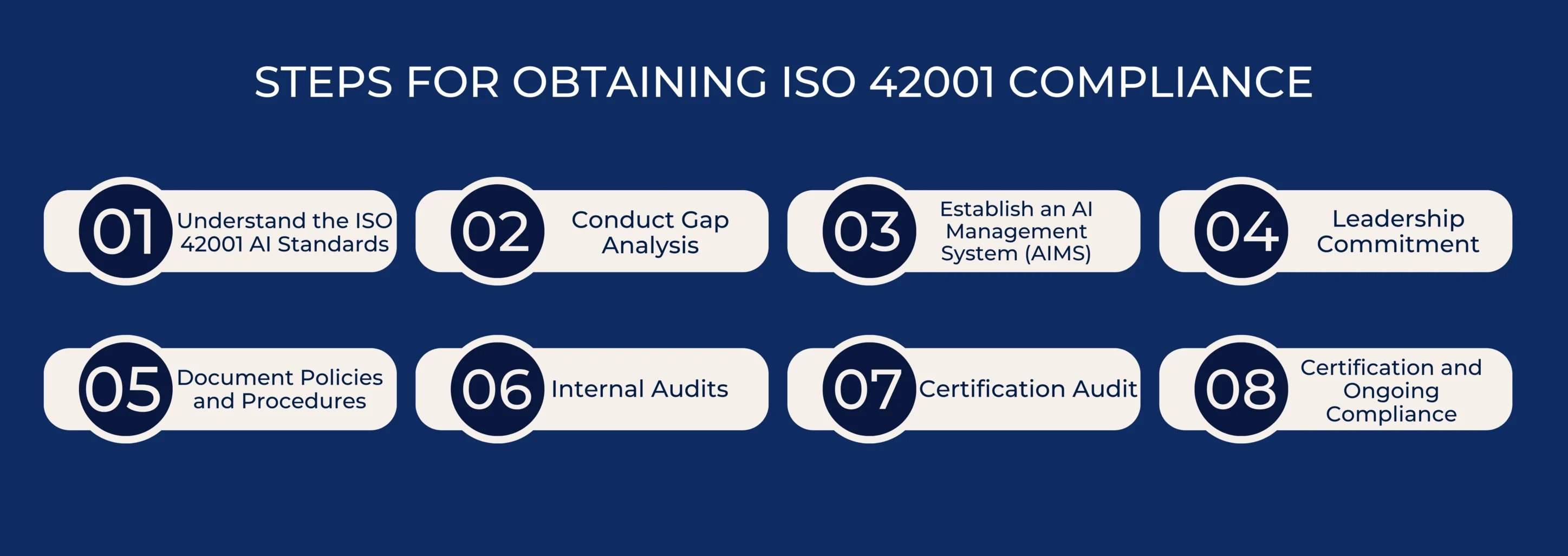
- ✓Application Review and Audit Program Determination
- ✓Stage 1 Audit: Documentation and Readiness Review
- ✓Stage 2 Audit: Evidence Collection and Control Evaluation
- ✓Certification Decision, Surveillance, and Recertification
ISO 42001 AIMS Requirements and Certification Scope
The ISO 42001 assessment evaluates an organization’s AIMS against the full set of requirements in ISO/IEC 42001:2023, organized across management system clauses and AI-specific control requirements. Understanding the scope of these requirements is essential for Missouri organizations preparing to undergo the ISO 42001 certification audit process. A clear grasp of what will be evaluated enables more focused and efficient preparation.
ISO/IEC 42001:2023 Clauses 4 through 10 establish the management system requirements that form the structural foundation of the AIMS. Clause 4 requires the organization to determine external and internal issues relevant to AI governance, identify interested parties including customers, regulators, employees, and the public, and define the scope of the AIMS. Clause 5 mandates leadership commitment, including an AI policy that articulates the organization’s approach to responsible AI and assigns accountability at the executive level. Clause 6 addresses planning — requiring AI risk assessment processes, treatment of identified risks, and the setting of AIMS objectives with measurable targets.
Together, these foundational clauses establish the governance context against which the ISO 42001 audit team evaluates an organization’s documented system design.
Clauses 7 through 10 govern operational support, implementation, performance evaluation, and continual improvement. Clause 7 requires documented competence and awareness programs for personnel with AIMS responsibilities, controlled documented information, and communication plans for AI governance. Clause 8 addresses operational planning and control, including AI system impact assessment processes. Clause 9 mandates internal audit programs and management review. Clause 10 requires the organization to identify nonconformities and implement corrective actions to maintain AIMS effectiveness.
Each of these clauses is evaluated during the ISO 42001 audit against documented evidence and operational records. Conformance across all clauses is required for a successful ISO 42001 certification outcome.
A distinctive requirement of ISO/IEC 42001:2023 is the AI system impact assessment — a structured process for identifying and evaluating the potential consequences of AI system deployment on individuals, groups, and society. The impact assessment must consider factors including fairness, privacy, safety, transparency, and accountability.
Missouri organizations operating AI systems in healthcare, financial services, or public-facing applications face heightened impact assessment obligations given the potential consequences of AI decisions in these contexts. The ISO 42001 AIMS audit evaluates whether impact assessments have been conducted, documented, and integrated into the organization’s risk treatment decisions — a requirement that distinguishes ISO 42001 compliance from general AI ethics commitments.
The standard’s control framework — detailed in Annex A — provides a set of controls addressing AI system design, data governance, model transparency, human oversight mechanisms, and AI system lifecycle management. Organizations must produce a Statement of Applicability that identifies which controls apply to their AI systems and the justification for any exclusions.
The ISO 42001 assessment reviews the Statement of Applicability as a central document in establishing whether the control selection is appropriate to the organization’s AI risk profile and operational scope. A well-constructed Statement of Applicability demonstrates that the organization has thoughtfully mapped its AI risks to the standard’s control requirements.
- ✓AI policy approved and communicated by organizational leadership
- ✓AI risk assessment records covering all in-scope AI systems
- ✓AI system impact assessments for each system with defined impact categories
- ✓Risk treatment plan documenting selected controls and residual risk acceptance
- ✓Statement of Applicability identifying applicable Annex A controls and exclusion justifications
- ✓AIMS objectives with defined targets and measurement methods
- ✓Internal audit records and management review minutes
- ✓Corrective action records addressing identified nonconformities from the ISO 42001 audit
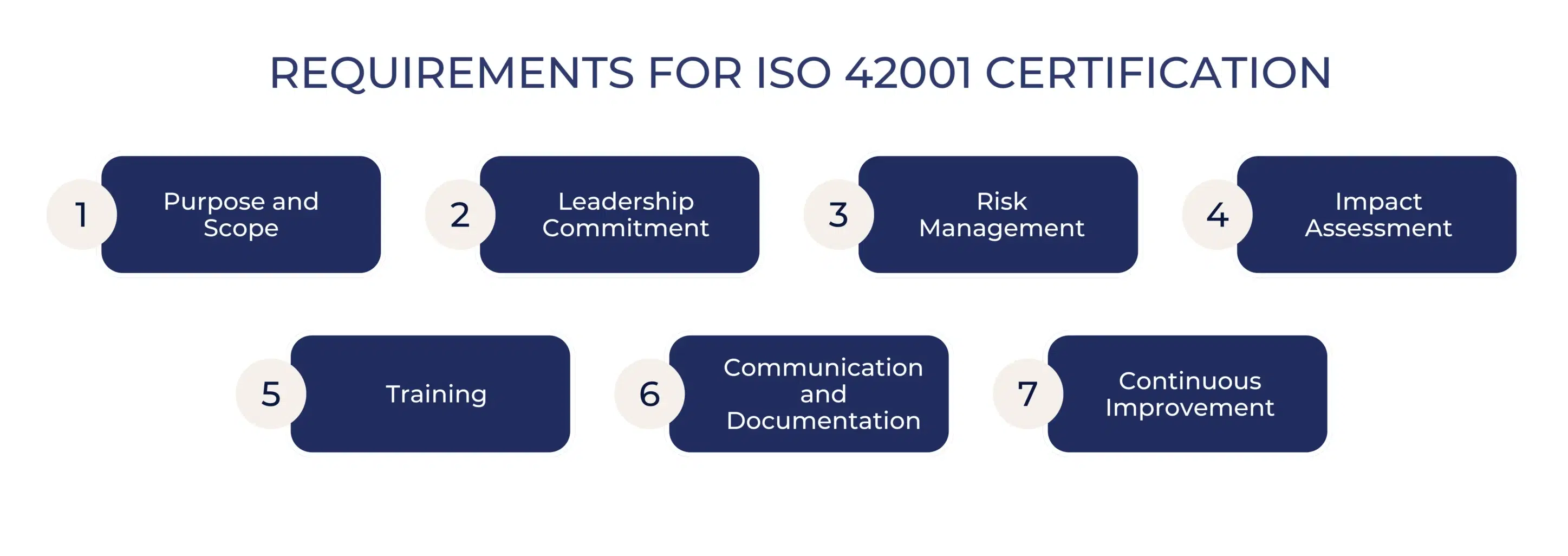
- ✓Management System Clauses 4 Through 10
- ✓AI System Impact Assessment and Control Requirements
- ✓Key AIMS Documentation Requirements
Missouri Industry Sectors Pursuing ISO 42001 Certification
ISO 42001 certification for Missouri companies spans a broad range of industries reflecting the state’s diverse economic base. Missouri’s leadership in financial services, healthcare, logistics, and agriculture — combined with a growing technology sector anchored in Kansas City and St. Louis — creates demand for structured AI governance certification across multiple verticals.
The ISO 42001 compliance Missouri landscape reflects both enterprise procurement pressure and proactive governance decisions by organizations seeking to distinguish their AI practices in competitive markets. Across sectors, ISO 42001 Certification in Missouri has become an increasingly recognized indicator of AI governance maturity.
Financial Services and Fintech
ISO 42001 certification for Missouri financial services organizations reflects the sector’s reliance on AI systems for credit underwriting, fraud detection, anti-money laundering screening, and customer behavior analysis. Kansas City is a recognized financial technology hub, hosting a concentration of payment processing companies, community banks, insurance carriers, and investment management firms.
Missouri-chartered financial institutions subject to examination by the Federal Reserve Bank of Kansas City, the Missouri Division of Finance, and federal prudential regulators face increasing expectations around AI model risk management and third-party AI vendor oversight. ISO 42001 Certification provides a structured, independently verified record of AI governance conformance that supports both internal model risk frameworks and third-party vendor risk reviews.
Fintech organizations based in Missouri that provide AI-powered lending, payment, or compliance technology services to financial institutions are subject to vendor risk assessments conducted by their bank and credit union clients. ISO 42001 certification for Missouri companies in the fintech sector enables these organizations to present a verifiable certification record in response to vendor questionnaires requiring evidence of AI governance maturity.
This capability is particularly relevant for fintech providers seeking to expand into regulated financial institution client bases where procurement due diligence includes an ISO 42001 assessment or equivalent AI management system evaluation.
Healthcare, Biosciences, and Clinical AI
ISO 42001 compliance for Missouri healthcare organizations addresses the governance requirements for AI systems deployed in clinical decision support, medical imaging analysis, patient triage, revenue cycle management, and population health management. Missouri’s healthcare sector includes major health systems headquartered in St. Louis and Kansas City, a significant pharmaceutical and biosciences research community, and a network of rural and community health providers.
AI systems used in clinical settings carry patient safety implications that require demonstrably structured governance processes — including impact assessment, human oversight controls, and accountability assignment — all of which are evaluated in the ISO 42001 AIMS audit. For Missouri healthcare organizations, completing an ISO 42001 audit represents a meaningful step toward demonstrable AI governance accountability.
Healthcare organizations in Missouri operating AI systems that intersect with FDA-regulated software as a medical device (SaMD) requirements, HIPAA privacy obligations, or ONC interoperability standards face a multi-framework governance environment. ISO 42001 Certification in Missouri provides a management system layer that addresses AI-specific governance requirements not fully covered by HIPAA compliance programs or FDA regulatory submissions alone.
The ISO 42001 assessment evaluates the AIMS independently of other regulatory compliance programs, with scope defined by the AI systems the organization elects to include in the certification boundary. This flexibility allows healthcare organizations to tailor their certification scope to the AI systems presenting the greatest governance obligations.
Transportation, Logistics, Agriculture, and Defense
Missouri’s transportation and logistics sector — shaped by its position as a major rail and trucking crossroads — increasingly relies on AI for route optimization, demand forecasting, warehouse automation, and fleet management. Agricultural technology organizations operating in Missouri’s significant farming economy deploy AI for precision agriculture, crop yield modeling, and supply chain optimization.
Aerospace and defense contractors in the St. Louis area, including those supporting major defense programs, face AI governance requirements embedded in federal acquisition regulations and Department of Defense AI ethics guidance. ISO 42001 certification for Missouri companies in these sectors provides independently verified AIMS conformance that supports both commercial procurement and government contracting contexts. Pursuing ISO 42001 Certification in Missouri positions these organizations to meet existing and emerging federal AI governance expectations.
Benefits of ISO 42001 Certification for Missouri-Based Organizations
ISO 42001 Certification in Missouri produces specific, verifiable outcomes for organizations that successfully complete the conformity assessment process. The benefits are framed in terms of what the certification record demonstrates and how it functions within enterprise procurement, regulatory oversight, and AI governance contexts — not as claims about internal operational improvements that cannot be independently verified.
Each benefit described below reflects a direct outcome of the ISO 42001 audit process and the independently issued certificate that results from a successful conformance determination.
ISO 42001 Certification provides Missouri organizations with independently verified evidence that their AIMS conforms to the requirements of ISO/IEC 42001:2023. This validation is produced through a structured ISO 42001 audit conducted by a Licensed CPA Firm operating as an independent certification body — not through internal review, self-attestation, or vendor-provided assessments.
In enterprise procurement contexts, where buyers evaluate supplier AI governance as part of third-party risk management programs, an ISO 42001 certificate issued by an independent certification body carries substantially greater evidentiary weight than internal declarations of compliance. The resulting record supports faster, more efficient vendor qualification processes.
The ISO 42001 assessment Missouri process evaluates both the design and operating effectiveness of AIMS controls, producing a certification record that documents what was tested, what evidence was reviewed, and what findings were identified. This structured audit output enables Missouri organizations to respond to vendor security questionnaires, regulatory inquiries, and procurement evaluations with a specific, independently produced record rather than general statements about AI governance practices.
The certificate itself serves as a reference point in vendor due diligence processes, reducing the need for repetitive custom assessments across multiple client relationships — a significant efficiency benefit for organizations serving multiple regulated-industry customers.
The ISO 42001 certification process requires organizations to demonstrate a structured AI risk management framework — including documented risk assessment processes, defined risk treatment decisions, and measurable AIMS objectives. For Missouri organizations that have deployed AI systems without a formally documented governance framework, the certification audit provides an external evaluation against which the adequacy of existing processes can be measured.
Nonconformities identified during the ISO 42001 audit represent documented gaps between actual AIMS practice and the standard’s requirements — a factual basis for organizational decision-making that is distinct from advisory recommendations. This evidence-based approach to AI risk management accountability is one of the most distinctive features of the ISO 42001 compliance process.
ISO 42001 Certification in Missouri provides a competitive signal in markets where AI governance maturity is evaluated as part of supplier selection. SaaS providers, managed service providers, and cloud service organizations in Missouri that serve regulated industries — including financial services, healthcare, and government — face procurement processes that require evidence of structured AI governance.
An ISO 42001 certificate demonstrates conformance to an internationally recognized standard, supporting market access in contexts where buyer organizations have established AI vendor risk programs. As AI governance requirements are formalized across U.S. federal and state regulatory frameworks, early ISO 42001 compliance positions Missouri organizations ahead of the regulatory curve — a measurable competitive advantage in procurement processes that prioritize documented AI governance maturity.
- ✓Independently verified record of AIMS conformance for use in enterprise vendor reviews
- ✓Structured evidence base for responding to AI-related regulatory inquiries
- ✓Documented AI risk assessment and treatment framework evaluated against ISO/IEC 42001:2023
- ✓Certificate recognized in financial sector and government procurement processes
- ✓Surveillance audit cycle maintaining ongoing ISO 42001 conformance verification
- ✓Differentiated market positioning based on independently audited AI governance
- ✓Alignment with NIST AI RMF and U.S. federal AI governance expectations
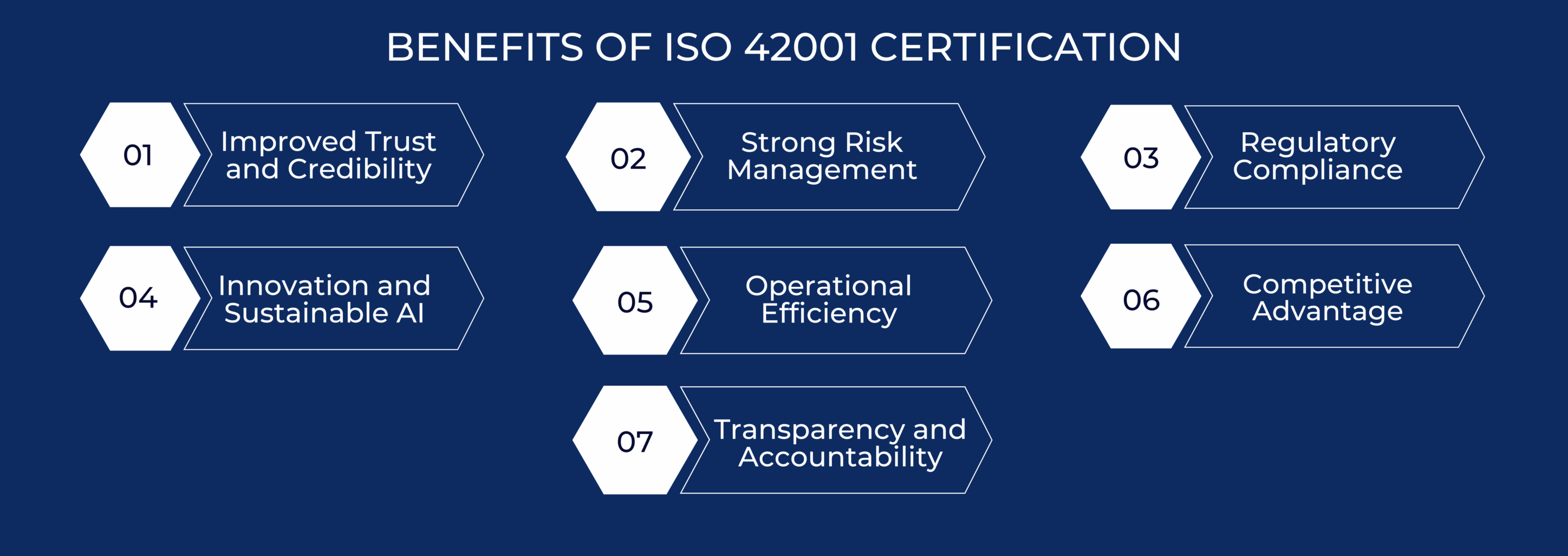
- ✓Third-Party Validation of AI Governance Controls
- ✓Structured AI Risk Management and Accountability
- ✓Competitive Differentiation and Market Access
ISO 42001 Compliance and the Missouri Regulatory Environment
ISO 42001 compliance for Missouri organizations intersects with a multi-layered regulatory environment encompassing federal AI governance guidance, sector-specific regulatory expectations, and evolving state-level technology policy. The ISO 42001 audit evaluates the AIMS in the context of the organization’s identified legal, regulatory, and contractual requirements — a scope that varies significantly by sector and operational profile.
Understanding this regulatory landscape is essential for Missouri organizations determining how ISO 42001 Certification fits within their broader compliance and governance strategy.
Federal AI Governance and NIST AI RMF Alignment
Executive Order 14110, issued October 30, 2023, establishes U.S. federal policy on the safe, secure, and trustworthy development and use of AI, including requirements for federal agencies and guidance for private sector organizations operating in regulated markets. Missouri organizations that interact with federal agencies — including those in defense, agriculture, transportation, and healthcare — operate within this federal AI governance framework.
The NIST AI RMF 1.0, published January 2023, provides a voluntary framework organized around four functions: Govern, Map, Measure, and Manage. ISO 42001 Certification in Missouri provides a management system structure that maps substantively to the NIST AI RMF’s Govern function, offering a certifiable complement to framework-based AI risk management practices that the NIST AI RMF alone cannot provide.
Missouri organizations in the financial services sector face additional AI governance expectations from federal prudential regulators, including OCC guidance on model risk management (SR 11-7) and emerging interagency statements on AI in financial services. The ISO 42001 assessment evaluates the AIMS independently of model risk management programs. However, documentation produced for ISO 42001 compliance — including AI system impact assessments and risk treatment records — may support broader model risk governance obligations.
Organizations should note that ISO 42001 certification is not a substitute for sector-specific regulatory compliance programs, but provides a complementary layer of independently verified AI governance evidence that strengthens an organization’s overall governance posture.
Third-Party Vendor Risk Management in Missouri
Missouri-based enterprises purchasing AI systems or AI-enabled services from third-party vendors face vendor risk management obligations that require evaluation of supplier AI governance practices. Financial institutions in Missouri are subject to OCC, FDIC, and Federal Reserve guidance on third-party risk management — including the June 2023 Interagency Guidance on Third-Party Relationships — which requires risk-based oversight of vendors providing AI-powered services.
In this context, ISO 42001 certification for Missouri companies that serve as AI vendors enables those organizations to present independently audited AI governance evidence as part of customer due diligence processes. This reduces the assessment burden on both parties and accelerates procurement timelines for regulated-industry clients.
The ISO 42001 audit Missouri process produces audit reports and certification records that Missouri organizations can make available to enterprise customers and procurement evaluators as structured evidence of AIMS conformance. Consider a practical illustration of cross-sector relevance: a Kansas City-based SaaS provider offering AI-driven compliance monitoring services to regional banks submits its ISO 42001 certificate and audit summary in response to the bank’s third-party risk questionnaire.
The certificate — issued by CertPro as a Licensed CPA Firm — provides the bank with independently verified AI governance evidence that satisfies the vendor due diligence requirement without requiring a custom on-site assessment. This use case reflects the practical value of ISO 42001 Certification in Missouri for technology vendors serving regulated industries.
ISO 42001 Certification vs. ISO 27001: Key Distinctions
Missouri organizations with existing ISO 27001 information security management system certifications frequently evaluate whether ISO 42001 Certification is incremental to their existing compliance posture. While both standards share the High-Level Structure and some organizational management system requirements, they address fundamentally different governance domains and are not interchangeable. Understanding this distinction is critical for organizations planning their certification portfolio and allocating audit resources effectively.
Scope and Subject Matter Differences
ISO 27001 addresses information security — the confidentiality, integrity, and availability of information assets. Its control framework focuses on access management, cryptography, physical security, incident response, and related security domains. ISO 42001, by contrast, addresses AI governance — the responsible development, deployment, and use of AI systems. Its requirements include AI system impact assessment, algorithmic transparency, human oversight of AI decisions, AI-specific risk assessment, and the management of the AI lifecycle from design through decommissioning.
An organization can hold both certifications simultaneously, with each addressing a distinct governance domain. The ISO 42001 audit and the ISO 27001 audit are conducted against their respective standard requirements and do not substitute for one another.
For Missouri organizations that have completed ISO 27001 certification, the process of pursuing ISO 42001 Certification benefits from familiarity with management system audit methodology, documented information control practices, and internal audit program structures. However, the AI-specific content of the ISO 42001 assessment — including impact assessment documentation, AI policy requirements, and AI risk treatment records — represents genuinely new requirements not addressed by the ISO 27001 control framework.
The ISO 42001 AIMS audit evaluates these AI-specific elements independently of the information security management system, ensuring that AI governance conformance is assessed on its own merits.
Integrated Audit Considerations for Multi-Standard Organizations
Organizations holding multiple ISO management system certifications may pursue integrated audit programs that address shared management system requirements — such as leadership, planning, documented information, internal audit, and management review — across multiple standards in a single audit cycle. CertPro, as a Licensed CPA Firm conducting ISO 42001 audit Missouri engagements, can structure audit programs to address shared High-Level Structure elements alongside ISO 42001-specific requirements.
This integrated approach reduces audit burden without compromising the independent evaluation of AI-specific governance controls that are unique to the ISO 42001 assessment. For organizations managing multiple certifications, integrated audit planning offers both efficiency and comprehensiveness.
FAQ
▶
What is ISO 42001 Certification in Missouri?
▶
How long does the ISO 42001 audit process take in Missouri?
▶
What does the Stage 1 ISO 42001 audit review?
▶
What industries in Missouri benefit most from ISO 42001 Certification?
▶
Is ISO 42001 Certification mandatory in Missouri?
▶
How does ISO 42001 relate to the NIST AI Risk Management Framework?
▶
What is a surveillance audit under ISO 42001?
▶
Can Missouri organizations include multiple AI systems in one ISO 42001 certification scope?
ISO 42001 CERTIFIED: WHY AI GOVERNANCE CERTIFICATION IS BECOMING A BOARD-LEVEL REQUIREMENT
ISO 42001 Certified: Board-Level AI Governance Guide | CertPro CPA LLC HERO ══════════════════════════════ –> src=”https://certpro.com/wp-content/uplo…
Get In Touch
have a question? let us get back to you.