
ISO 42001 Certification in Pennsylvania
The ISO 42001 certification audit process conducted by CertPro for Pennsylvania-based organizations follows a structured, multi-stage program designed to evaluate the conformity of an organization’s Artificial Intelligence Management System against the requirements of ISO/IEC 42001:2023. Each stage of the ISO 42001 audit produces documented findings based on objective evidence gathered through document review, interviews, and observation of operational controls. The entire audit program is administered without advisory or implementation involvement by CertPro, preserving full independence throughout.
OUR CLIENTS



Independent ISO 42001 Certification by a Licensed CPA Firm in Pennsylvania
ISO 42001 Certification in Pennsylvania is conducted by CertPro as a Licensed CPA Firm performing independent, third-party conformity assessment audits under ISO/IEC 42001:2023. CertPro evaluates organizations’ Artificial Intelligence Management Systems against the requirements of the ISO 42001 standard and issues certification decisions based solely on objective evidence gathered during each ISO 42001 certification audit. CertPro functions exclusively as an independent certification body and does not provide advisory, implementation, or readiness services to the organizations it certifies. This strict separation ensures the integrity and credibility of every ISO 42001 certification decision.
Pennsylvania holds a strategically significant position in the U.S. AI economy. The Commonwealth is home to a dense concentration of healthcare systems, academic medical centers, pharmaceutical manufacturers, life sciences organizations, financial services institutions, insurance companies, energy infrastructure operators, advanced manufacturing firms, robotics companies, software developers, and AI-focused technology startups. Organizations across these sectors are increasingly developing, deploying, and procuring AI systems — and governance expectations attached to those systems are intensifying at both the enterprise and regulatory levels. ISO 42001 Certification in Pennsylvania provides a structured, internationally recognized mechanism through which organizations can demonstrate conformity of their Artificial Intelligence Management Systems to an audited standard.
The ISO 42001 standard — formally designated ISO/IEC 42001:2023 — was published by the International Organization for Standardization in 2023 as the first internationally recognized management system standard specifically designed for artificial intelligence. The standard establishes requirements for organizations to define the scope of their AIMS, determine AI-related risks and impacts, implement controls drawn from Annex A, and maintain a documented management system subject to internal audit and management review. ISO 42001 compliance is evaluated against these requirements through a structured ISO 42001 certification audit program administered by an accredited or independent certification body.
Pennsylvania-based organizations operating under enterprise vendor assurance programs, federal procurement requirements, or sector-specific AI governance frameworks are increasingly receiving requests to demonstrate ISO 42001 compliance through independent certification. Healthcare organizations subject to AI-related expectations under HIPAA, financial services firms responding to third-party risk management requirements, and SaaS and cloud providers seeking to validate their AI governance posture to enterprise customers are among the primary drivers of demand for ISO 42001 Certification in Pennsylvania. The independent ISO 42001 certification audit conducted by CertPro produces a documented certification decision and a certificate of conformity valid for a three-year cycle, subject to annual surveillance audits.
The distinction between the organization’s responsibility and CertPro’s responsibility is fundamental to the integrity of the certification process. The organization seeking certification is solely responsible for establishing, implementing, operating, maintaining, and continually improving its Artificial Intelligence Management System in accordance with ISO/IEC 42001:2023. CertPro’s responsibility is limited to independently evaluating whether that system conforms to the requirements of the ISO 42001 standard through structured, evidence-based ISO 42001 audit activities. CertPro does not design, implement, advise on, or remediate the AIMS — it assesses and certifies it. This structural separation preserves the independence and objectivity that give ISO 42001 Certification in Pennsylvania its market and regulatory value.

What Is ISO 42001 Certification?
ISO 42001 certification is the formal process through which an independent, third-party certification body evaluates an organization’s Artificial Intelligence Management System and issues a certificate confirming that the AIMS conforms to the requirements of ISO/IEC 42001:2023. The certification is not a self-declaration or internal assessment — it is a structured conformity assessment conducted by an organization that has no advisory or implementation relationship with the entity being audited. ISO 42001 certification is distinct from ISO 42001 compliance in that certification provides externally verifiable, documented evidence of conformity, whereas compliance without certification remains an internal claim that cannot be independently validated.
The ISO/IEC 42001:2023 Standard Explained
ISO/IEC 42001:2023 is the first international management system standard specifically addressing artificial intelligence. It follows the High-Level Structure common to ISO management system standards such as ISO 27001 and ISO 9001, organized around Clauses 4 through 10 covering context, leadership, planning, support, operation, performance evaluation, and improvement. Annex A of the ISO 42001 standard provides a catalog of AI-specific controls addressing areas including AI policy, AI risk management, data governance, AI system lifecycle management, transparency, explainability, human oversight, and responsible AI practices. Organizations are required to determine which controls from Annex A are applicable and document their rationale in a Statement of Applicability — a key document reviewed during every ISO 42001 certification audit.
The ISO 42001 standard applies to any organization that develops, provides, or uses AI systems — regardless of size, sector, or geography. It is not limited to AI developers or technology companies. A healthcare system using clinical AI decision-support tools, a financial institution deploying algorithmic underwriting, a pharmaceutical company using AI in drug discovery, or a manufacturer operating AI-driven quality control systems can all seek ISO 42001 Certification in Pennsylvania provided their AIMS is established within a defined scope. The standard requires organizations to assess AI-related risks, evaluate the impact of AI systems on individuals and society, and implement controls proportionate to the identified risks.
What an Artificial Intelligence Management System Covers
An Artificial Intelligence Management System, as defined under ISO/IEC 42001:2023, is a structured management system that provides a framework for organizations to govern AI-related activities in a systematic, accountable, and auditable manner. The AIMS encompasses AI policy development, risk assessment processes, AI impact assessments, data governance controls, operational controls over AI system lifecycle stages, internal audit functions, and management review activities. The AIMS does not replace other management systems such as an Information Security Management System under ISO 27001 — it can be integrated alongside them. For the purposes of ISO 42001 certification, the AIMS must be documented, implemented, and demonstrably operational within the defined certification scope.
Core documentation elements reviewed during an ISO 42001 audit include the AI policy, the results of AI risk assessments, AI impact assessment records, the risk treatment plan, the Statement of Applicability for Annex A controls, records of internal audits, and records of management reviews. The ISO 42001 certification audit evaluates whether these documented elements exist, whether they reflect the organization’s actual AI activities, and whether the controls described in the documentation are operationally effective. Organizations that have not established this documented foundation within a defined scope cannot proceed to Stage 2 of the ISO 42001 certification audit program.
ISO 42001 Compared to Other AI Governance Frameworks
ISO 42001 certification differs from other AI governance frameworks in that it is a certifiable management system standard subject to independent third-party audit and issuance of a certificate of conformity. The NIST AI Risk Management Framework, for example, provides voluntary guidance but does not produce an independent certificate. The EU AI Act establishes regulatory obligations enforced through regulatory supervision rather than voluntary management system certification. ISO 42001 certification, by contrast, produces a documented, audited, time-bound certificate that organizations can present to enterprise customers, procurement bodies, and regulatory reviewers as evidence of independently verified AI governance conformity. For Pennsylvania organizations operating in regulated sectors or serving enterprise clients, this distinction carries significant practical value.
ISO 42001 Certification Audit Process in Pennsylvania
The ISO 42001 certification audit process conducted by CertPro for Pennsylvania-based organizations follows a structured, multi-stage program designed to evaluate the conformity of an organization’s Artificial Intelligence Management System against the requirements of ISO/IEC 42001:2023. Each stage of the ISO 42001 audit produces documented findings based on objective evidence gathered through document review, interviews, and observation of operational controls. The entire audit program is administered without advisory or implementation involvement by CertPro, preserving full independence throughout.
| Audit Stage | Key Activities | Output |
|---|---|---|
| Application Review | Scope determination, conflict-of-interest check, ISO 42001 audit program planning | Audit agreement and program schedule |
| Stage 1 Audit | Documentation review, AIMS readiness evaluation, scope confirmation | Stage 1 findings report; Stage 2 readiness determination |
| Stage 2 Audit | Operational effectiveness testing, Annex A control evaluation, evidence sampling | ISO 42001 audit report with nonconformity findings |
| Certification Decision | Independent committee review of audit report and evidence | Certificate of conformity or certification withheld |
| Surveillance Audit | Annual review of continued AIMS conformity and control effectiveness | Surveillance findings; certificate maintained or suspended |
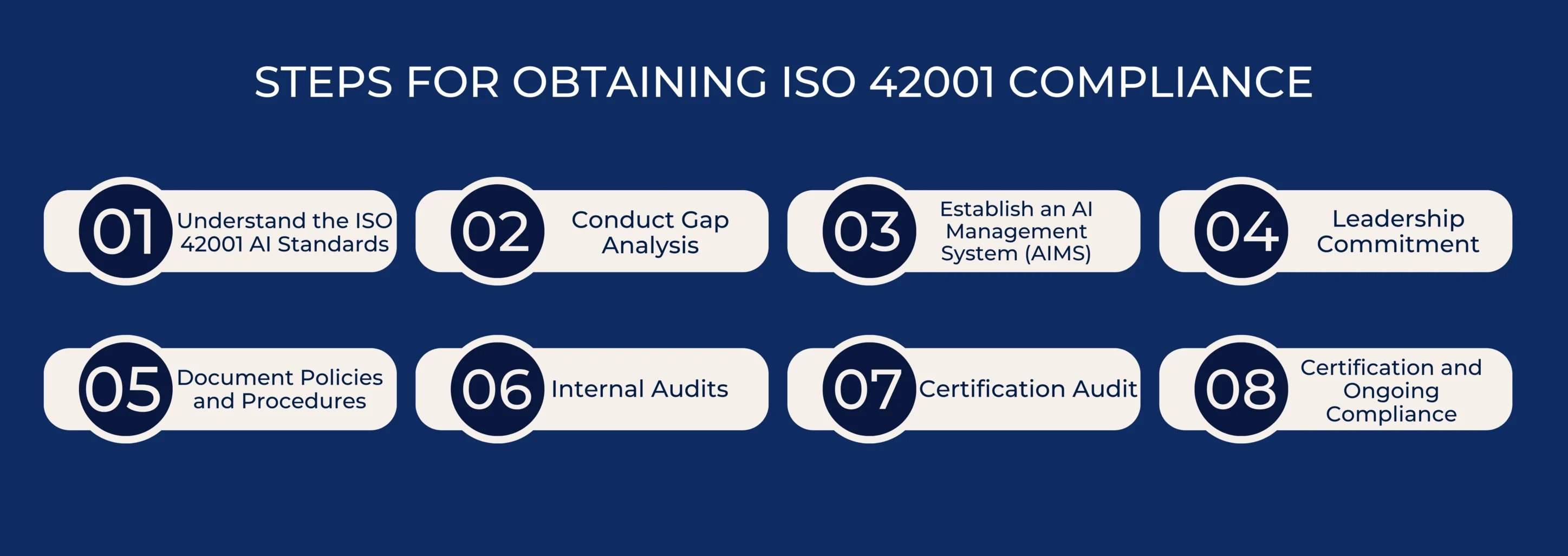
The Stage 1 audit is the first formal evaluation stage in the ISO 42001 certification audit program. During Stage 1, the auditor reviews the organization’s AIMS documentation to determine whether the management system has been established within a defined scope and whether the documented elements required by ISO/IEC 42001:2023 are present. Key documents reviewed at Stage 1 include the AI policy, results of AI risk assessments and AI impact assessments, the risk treatment plan, the Statement of Applicability for Annex A controls, records of internal AIMS audits, and records of management reviews. The Stage 1 audit does not evaluate operational effectiveness — it evaluates whether the documented foundation is in place and whether the organization is ready to proceed to Stage 2.
Stage 1 findings are documented in a formal report that identifies any areas where documentation is absent, incomplete, or inconsistent with the defined scope. Where Stage 1 findings indicate that the organization’s AIMS documentation does not meet the minimum requirements of the ISO 42001 standard, the Stage 2 audit may be deferred until the organization has addressed the identified deficiencies. CertPro does not provide guidance on how to resolve Stage 1 findings — the organization is solely responsible for closing documentation gaps before Stage 2 proceeds. The Stage 1 report serves as a formal input to the audit program schedule and informs the scope and focus of the Stage 2 evaluation.
The Stage 2 audit evaluates whether the organization’s Artificial Intelligence Management System is not only documented but operationally implemented and effective. During Stage 2 of the ISO 42001 certification audit, auditors examine objective evidence of control operation across the areas addressed by Annex A of the ISO 42001 standard. This includes evaluating evidence of AI risk management processes in practice, reviewing records of AI impact assessments for in-scope AI systems, assessing data governance controls, examining records of human oversight mechanisms, and reviewing evidence of transparency and explainability measures applied to AI systems within scope. Evidence is gathered through document review, staff interviews, and examination of operational records.
The Stage 2 ISO 42001 audit produces a formal audit report documenting all findings, including any identified nonconformities. Nonconformities are classified based on the nature and severity of the deviation from ISO/IEC 42001:2023 requirements and are reported to the organization for response. The organization’s responses — including root cause analysis and corrective actions — are reviewed by the auditor before the audit file is submitted to the certification committee. The certification committee operates independently of the audit function and makes the final determination on whether to issue, withhold, suspend, or withdraw ISO 42001 certification.
ISO 42001 certification is valid for a three-year certification cycle. Annual surveillance audits are conducted during the first and second years following initial certification to verify that the organization’s AIMS continues to conform to the ISO 42001 standard and that certified controls remain operationally effective. Surveillance audits are narrower in scope than the initial ISO 42001 certification audit but must cover a representative sample of AIMS elements, including any areas where the organization’s AI activities have changed since the previous audit. A recertification audit is conducted prior to the expiration of the three-year certificate to renew certification for a subsequent cycle. Failure to complete surveillance audits within the required intervals may result in suspension or withdrawal of ISO 42001 certification.
- ✓Stage 1 Audit — Documentation and Readiness Review
- ✓Stage 2 Audit — Operational Effectiveness Evaluation
- ✓Surveillance Audits and Recertification
ISO 42001 Requirements and Annex A Controls
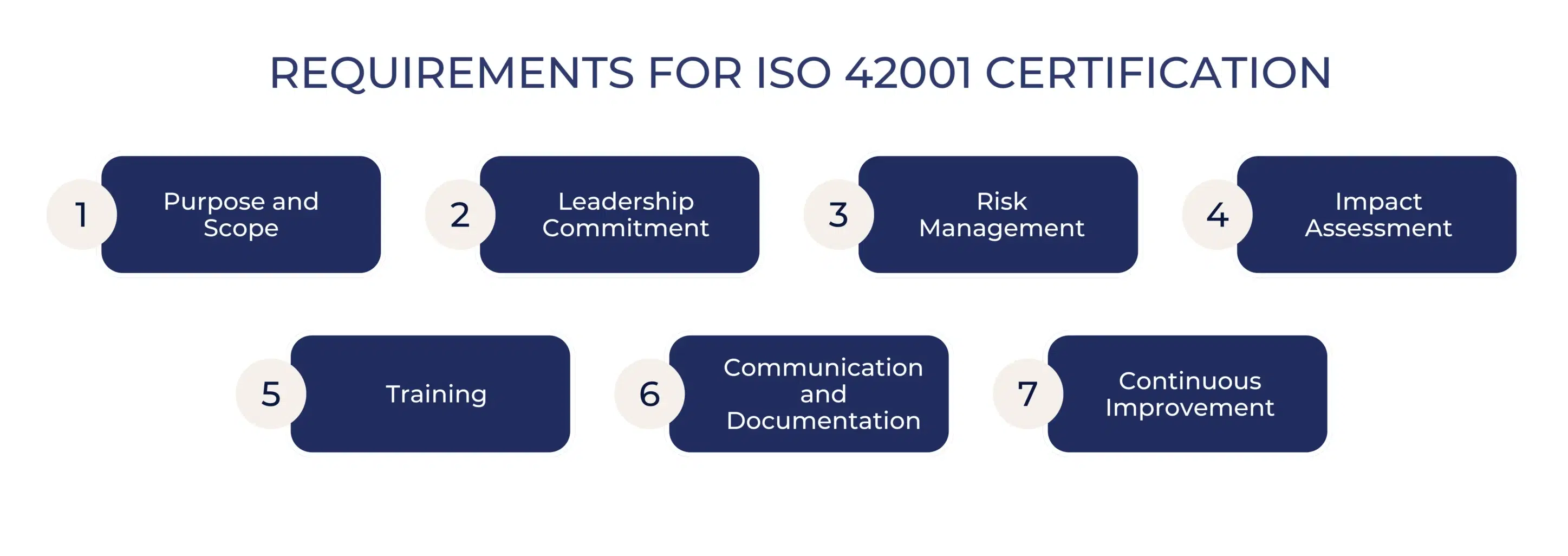
The requirements of ISO/IEC 42001:2023 are organized across Clauses 4 through 10 of the management system structure and supplemented by Annex A, which provides a catalog of AI-specific controls. During the ISO 42001 certification audit, conformity is assessed against both the management system clauses and the applicable controls from Annex A as documented in the organization’s Statement of Applicability. A clear understanding of these requirements is essential for any Pennsylvania organization preparing to undergo the ISO 42001 certification audit process.
Clause 4 requires the organization to determine the internal and external context relevant to its AI activities, identify interested parties and their requirements, and define the scope of the AIMS. Clause 5 addresses leadership, requiring top management to demonstrate commitment to the AIMS, establish an AI policy, and assign responsibilities. Clause 6 covers planning, including the AI risk assessment process and the determination of AI-related risks and opportunities. Clause 7 addresses support elements of the AIMS — resources, personnel competence, awareness, communication, and documented information management. These foundational clauses are evaluated during Stage 1 of the ISO 42001 audit to confirm the management system structure is properly established.
Clause 8 covers operational planning and control, including the implementation of AI risk treatment measures and the conduct of AI impact assessments for AI systems within scope. Clause 9 addresses performance evaluation, requiring the organization to conduct internal audits of the AIMS and hold management reviews to assess system performance and identify improvement opportunities. Clause 10 covers improvement activities, including management of nonconformities and corrective actions. Conformity across Clauses 4 through 10 is evaluated during the Stage 2 ISO 42001 certification audit through examination of operational records, interview findings, and evidence of process execution within the defined AIMS scope.
Annex A of ISO/IEC 42001:2023 provides a structured set of controls organized across domains that address the specific governance and risk management requirements associated with AI systems. Control areas include AI policy and governance, AI risk management processes, data acquisition and management, AI system design and development controls, AI system verification and validation, operational controls over deployed AI systems, transparency and explainability measures, human oversight mechanisms, and documentation and record-keeping requirements. The organization must evaluate each Annex A control for applicability within its defined AIMS scope and document justifications for any excluded controls in the Statement of Applicability — a critical input to the ISO 42001 audit.
During the ISO 42001 certification audit, auditors evaluate evidence that applicable Annex A controls are not only documented but operationally implemented. For example, a control addressing human oversight of AI decisions requires evidence that oversight mechanisms exist, are activated in practice, and that records of oversight activities are maintained. A control addressing transparency requires evidence that information about the AI system’s purpose, capabilities, and limitations is communicated to relevant stakeholders. Controls addressing data governance require evidence of data quality management, data provenance tracking, and access controls over training and inference datasets. The strength of objective evidence across these control areas directly influences the ISO 42001 certification decision.
AI impact assessment is a formal requirement under ISO/IEC 42001:2023 and a key area of evaluation during the ISO 42001 certification audit. An AI impact assessment evaluates the potential effects of an AI system on individuals, groups, and society — considering factors such as the sensitivity of the data processed, the autonomy of AI-driven decisions, the potential for bias or discriminatory outcomes, and the reversibility of AI-generated results. Organizations must document the conduct of AI impact assessments for all AI systems within the AIMS scope, demonstrate that assessment findings have informed control design and risk treatment decisions, and maintain records of the assessment process for auditor review. This documentation is a non-negotiable element of ISO 42001 compliance.
- ✓Management System Clauses — Clauses 4 Through 10
- ✓Annex A Controls — AI-Specific Control Areas
- ✓AI Impact Assessment and Risk Treatment
Pennsylvania Sectors Pursuing ISO 42001 Certification
ISO 42001 Certification in Pennsylvania is being pursued across a wide range of industry sectors reflecting the Commonwealth’s diverse and AI-active economy. Demand for ISO 42001 certification in Pennsylvania is driven by enterprise vendor assurance requirements, sector-specific regulatory expectations, and the need to demonstrate responsible AI governance to clients, partners, and oversight bodies. The following sectors represent the primary concentrations of ISO 42001 certification demand across the Commonwealth.
Healthcare, Life Sciences, and Pharmaceuticals
Pennsylvania’s healthcare and life sciences sector is among the most AI-active in the United States. Major health systems, academic medical centers, clinical AI solution providers, pharmaceutical companies, and medical device manufacturers operating in Pennsylvania are increasingly deploying AI systems for clinical decision support, drug discovery, diagnostic imaging analysis, patient risk stratification, and administrative automation. ISO 42001 compliance in Pennsylvania is particularly relevant to these organizations because AI systems used in clinical or regulated contexts carry significant impact potential and require governance frameworks that can be independently verified. ISO 42001 Certification in Pennsylvania provides healthcare and pharmaceutical organizations with a documented, audited basis for demonstrating AI governance conformity to regulators, hospital procurement teams, and pharmaceutical partners.
The Commonwealth’s concentration of banking institutions, insurance carriers, investment management firms, and fintech companies also creates substantial demand for independently certified AI governance in the financial services sector. Financial services organizations in Pennsylvania are deploying AI systems for credit underwriting, fraud detection, customer service automation, investment analysis, and insurance claims processing. These applications involve decisions with direct financial consequences for individuals and are subject to increasing regulatory scrutiny from federal banking regulators and state insurance commissioners. ISO 42001 Certification in Pennsylvania for financial services organizations provides independently audited evidence that AI governance controls are in place and operational — a requirement increasingly embedded in enterprise vendor contracts and third-party risk management programs.
Technology, SaaS, and AI Companies
Pennsylvania’s technology sector includes a growing concentration of SaaS providers, AI companies, cybersecurity firms, cloud service providers, and software developers based in the Philadelphia and Pittsburgh metropolitan areas and across emerging technology corridors throughout the Commonwealth. These organizations frequently develop or embed AI systems into products and services sold to enterprise customers, regulated industries, and government agencies. Enterprise procurement processes increasingly require evidence of AI governance maturity, and ISO 42001 Certification in Pennsylvania provides a structured, independently audited mechanism for demonstrating that conformity. Technology companies seeking to expand into regulated markets in healthcare, financial services, or government contracting benefit significantly from the independent credibility that ISO 42001 certification provides.
Manufacturing, Energy, and Advanced Industries
Pennsylvania’s manufacturing base, energy sector, and advanced industries — including robotics, autonomous systems, and industrial AI applications — represent growing markets for ISO 42001 Certification in Pennsylvania. Manufacturers using AI for predictive maintenance, quality control, process optimization, and supply chain management face AI governance expectations from enterprise clients and Tier 1 supply chain partners. Energy companies deploying AI in grid management, asset monitoring, and demand forecasting operate AI systems with significant operational impact, making structured AI governance a material risk management consideration. ISO 42001 compliance in Pennsylvania provides these organizations with a documented, certifiable framework for AI governance that aligns with enterprise and regulatory expectations — without requiring sector-specific AI regulation to be in force.
Benefits of ISO 42001 Certification for Pennsylvania-Based Organizations
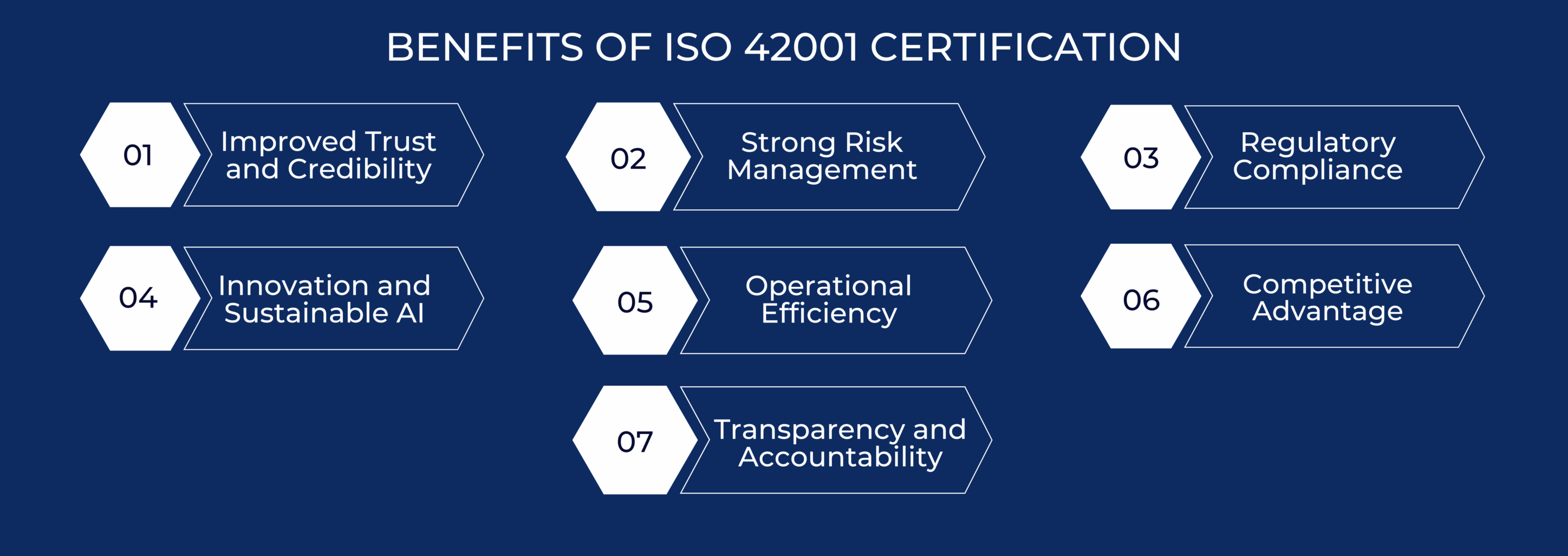
ISO 42001 Certification in Pennsylvania provides organizations with independently verified, documented evidence of AIMS conformity that carries demonstrable value across procurement, regulatory, and operational contexts. Whether responding to enterprise vendor reviews or aligning with federal AI governance expectations, the ISO 42001 standard gives Pennsylvania organizations a credible, audited foundation for AI governance. The following represent the principal areas in which ISO 42001 certification delivers recognized organizational value.
- ✓Independent third-party verification of AI governance controls through a structured ISO 42001 certification audit
- ✓Documented evidence of ISO 42001 compliance for enterprise vendor assurance and third-party risk management reviews
- ✓Internationally recognized certificate of conformity demonstrating AIMS conformity to ISO/IEC 42001:2023
- ✓Structured audit methodology that evaluates AI risk management, AI impact assessment, and Annex A control effectiveness
- ✓Recognition in regulated sector procurement processes, including healthcare, financial services, and government contracting in Pennsylvania
- ✓Annual surveillance audit oversight maintaining ongoing accountability for AIMS conformity and control operation
- ✓Competitive differentiation in markets where AI governance certification is emerging as a procurement qualification criterion
- ✓Alignment with U.S. AI governance expectations, federal agency guidance, and enterprise risk management frameworks
Enterprise organizations operating in Pennsylvania’s financial services, healthcare, and technology sectors are increasingly embedding AI governance requirements into vendor contracts and third-party risk management programs. A Pennsylvania-based SaaS provider supplying AI-enabled tools to a regional bank, a clinical AI vendor serving a major health system, or a logistics technology company embedding AI into supply chain operations for a manufacturing enterprise may each receive vendor security questionnaires, due diligence requests, or contractual obligations requiring evidence of AI governance conformity. ISO 42001 certification provides a structured, independently audited response to these requirements — the certificate of conformity and the underlying audit report document that the organization’s AIMS has been assessed against ISO/IEC 42001:2023 by an independent certification body.
For organizations serving multiple enterprise clients across different sectors, ISO 42001 certification consolidates AI governance verification into a single, annually maintained certification rather than requiring separate responses to each client’s individual AI governance questionnaire. This efficiency is particularly relevant for Pennsylvania technology companies and AI vendors serving regulated industries, where procurement cycles involve detailed vendor assessments and multiple clients may independently request AI governance evidence. The ISO 42001 certification audit conducted by CertPro produces documented findings and a certification decision that can be formally presented to enterprise customers as externally validated evidence of ISO 42001 compliance.
ISO 42001 certification aligns Pennsylvania-based organizations with the direction of U.S. federal AI governance policy, including the NIST AI Risk Management Framework, Executive Order 14110 on AI safety and trustworthiness, and emerging sector-specific AI guidance from federal agencies including the FDA, OCC, and HHS. While ISO 42001 certification is not currently mandated under U.S. law for most private-sector organizations, the structured AI governance framework it establishes is substantively consistent with the controls and practices that federal AI governance guidance recommends. Organizations that have achieved ISO 42001 Certification in Pennsylvania are well-positioned to demonstrate AI governance alignment in regulatory reviews, federal procurement evaluations, and sector-specific oversight processes where AI governance evidence is requested.
- ✓Enterprise Vendor Assurance and Third-Party Risk Management
- ✓Regulatory Alignment and U.S. AI Governance Expectations
ISO 42001 Certification Scope and Certification Decision Framework
The scope of ISO 42001 certification defines the boundaries of the Artificial Intelligence Management System subject to audit and certification. Scope determination is conducted collaboratively between the organization and CertPro during the application review phase and is formally confirmed during the Stage 1 ISO 42001 audit. The certification decision framework establishes the conditions under which a certificate of conformity is issued, maintained, suspended, or withdrawn — providing a transparent and consistent basis for every ISO 42001 certification outcome.
Defining the AIMS Certification Scope
The AIMS certification scope must be clearly defined and documented by the organization before the ISO 42001 certification audit commences. The scope identifies the AI systems, business functions, organizational units, and geographic locations covered by the AIMS. It also addresses the boundaries of the management system — what is included and, importantly, what is excluded and why. Exclusions must be justified on the basis that they do not affect the organization’s ability to meet ISO/IEC 42001:2023 requirements or deliver conforming AI systems within the defined scope. During the Stage 1 audit, the auditor evaluates whether the documented scope accurately reflects the organization’s actual AI activities and whether the scope boundary is clearly defined and maintainable.
Scope definition has direct implications for the coverage of the ISO 42001 certification audit and the representativeness of the resulting certificate. An organization that scopes its AIMS narrowly to cover only a subset of its AI systems must ensure that the exclusions are legitimate under ISO/IEC 42001:2023 and that the scoped AIMS is not artificially limited to avoid audit scrutiny of higher-risk AI systems. Auditors evaluate scope completeness as part of the Stage 1 review. A scope that misrepresents the organization’s AI activities or excludes relevant AI systems without justification may result in Stage 1 findings that prevent the ISO 42001 certification audit from proceeding to Stage 2.
Certification Decision, Suspension, and Withdrawal
The certification decision is made by CertPro’s certification committee following completion of the Stage 2 ISO 42001 certification audit and review of the organization’s responses to any identified nonconformities. The committee reviews the audit report, the evidence base, and the auditor’s findings independently of the audit function to determine whether the organization’s AIMS conforms to ISO/IEC 42001:2023 requirements. Where the evidence supports conformity, a certificate of conformity is issued specifying the certified organization, the scope of certification, the standard against which certification was evaluated, and the validity period. The certificate is the formal output of the ISO 42001 certification audit process and represents CertPro’s documented certification decision.
Certification may be suspended if the organization fails to conduct required surveillance audits within specified intervals, if significant AIMS failures raise material questions about ongoing conformity, or if the organization fails to respond to identified nonconformities within the agreed timeframe. Suspension does not immediately withdraw the certificate but places the certification in a suspended status pending resolution of the identified concerns. If concerns are not resolved within the suspension period, the certification is withdrawn. Organizations whose ISO 42001 certification is withdrawn must undergo a full certification audit to regain certified status. These conditions are specified in the certification agreement established at the outset of the certification program.
Why Pennsylvania Organizations Choose Independent ISO 42001 Certification
The demand for ISO 42001 certification among Pennsylvania companies is driven by a combination of enterprise procurement expectations, regulatory alignment imperatives, competitive differentiation, and the substantive governance value that a structured AIMS provides. Pennsylvania’s position as a major center for healthcare, financial services, manufacturing, and technology means that organizations operating in the Commonwealth face AI governance expectations from multiple directions simultaneously — from enterprise clients, regulators, international partners, and internal governance functions. ISO 42001 Certification in Pennsylvania provides a single, independently audited framework that addresses these converging expectations efficiently and credibly.
Independent Certification Versus Internal Assessment
Internal assessments and self-declarations of AI governance conformity do not carry the same evidentiary weight as ISO 42001 certification by an independent third party. Enterprise clients conducting vendor risk reviews, financial regulators examining AI governance in supervised institutions, and government procurement bodies evaluating AI vendor qualifications distinguish between self-reported governance postures and independently audited certifications. ISO 42001 compliance in Pennsylvania demonstrated through independent certification provides objective, externally verifiable evidence that the organization’s AIMS has been assessed by a qualified, independent certification body with no advisory or implementation relationship with the certified organization. This independence is the foundational element that gives ISO 42001 certification its credibility in enterprise and regulatory contexts.
For Pennsylvania-based organizations that have invested in establishing and operating an Artificial Intelligence Management System, independent ISO 42001 certification converts that internal governance investment into externally verifiable evidence. The ISO 42001 certification audit process evaluates whether the documented AIMS reflects actual organizational practices, whether Annex A controls are operationally effective, and whether the management system’s continuous improvement mechanisms are functioning. This evaluation distinguishes ISO 42001 certification from paper-based compliance exercises and provides the organization with a credible, audited attestation that its AI governance controls have been independently verified.
AI Governance as a Procurement Qualification in Pennsylvania
A representative procurement scenario in Pennsylvania illustrates the practical value of ISO 42001 certification: a regional health system in the Philadelphia area is evaluating AI-enabled clinical decision support vendors. The health system’s procurement process includes a vendor AI governance review requiring evidence that the vendor’s AI systems are governed by a documented, independently audited management system. A vendor holding ISO 42001 Certification in Pennsylvania can present the certificate of conformity, the defined AIMS scope, and the audit cycle documentation as direct responses to these requirements — enabling the procurement review to proceed on the basis of verified evidence rather than unaudited vendor representations. Organizations without ISO 42001 certification must respond to the same questions with internal documentation that has not been independently assessed, placing them at a clear competitive disadvantage where certified AI governance is a qualification criterion.
FAQ
▶
What is ISO 42001 certification and who issues it?
▶
Which Pennsylvania organizations need ISO 42001 certification?
▶
How does the ISO 42001 audit process work in Pennsylvania?
▶
What documents are reviewed during an ISO 42001 certification audit?
▶
How long is ISO 42001 certification valid in Pennsylvania?
▶
What is the difference between ISO 42001 compliance and ISO 42001 certification?
▶
Does ISO 42001 certification cover AI systems across all business units?
▶
What Annex A controls are evaluated during the ISO 42001 audit?
ISO 42001 CERTIFIED: WHY AI GOVERNANCE CERTIFICATION IS BECOMING A BOARD-LEVEL REQUIREMENT
ISO 42001 Certified: Board-Level AI Governance Guide | CertPro CPA LLC HERO ══════════════════════════════ –> src=”https://certpro.com/wp-content/uplo…
Get In Touch
have a question? let us get back to you.