
ISO 42001 Certification in Prague
ISO 42001 Certification in Prague is issued by CertPro, a Licensed CPA Firm operating as an independent certification body. CertPro evaluates an organization’s AI Management System (AIMS) against the requirements of ISO/IEC 42001:2023 through a structured, evidence-based audit methodology — entirely distinct from any consulting or implementation function. Certification scope, audit program design, and certificate issuance decisions are determined independently by CertPro’s certification committee, ensuring impartiality at every stage of the process.
OUR CLIENTS










ISO 42001 Certification for Prague-Based Technology and Financial Organizations
ISO 42001 Certification in Prague is issued by CertPro, a Licensed CPA Firm operating as an independent certification body. CertPro evaluates an organization’s AI Management System (AIMS) against the requirements of ISO/IEC 42001:2023 through a structured, evidence-based audit methodology — entirely distinct from any consulting or implementation function. Certification scope, audit program design, and certificate issuance decisions are determined independently by CertPro’s certification committee, ensuring impartiality at every stage of the process.
Prague holds a strategically significant position as Central and Eastern Europe’s leading hub for software development, IT outsourcing, financial services, automotive engineering, and shared services operations. The city hosts a dense concentration of technology startups, multinational shared service centers, SaaS providers, cloud companies, and enterprises integrating AI into operational workflows. Organizations across these sectors pursue ISO 42001 Certification in Prague as an independent, third-party verified demonstration that their AIMS meets the requirements of ISO/IEC 42001:2023.
The standard establishes requirements for establishing, implementing, maintaining, and continually improving an AI Management System — providing a structured framework for responsible AI governance, risk management, transparency, and accountability across the full AI system lifecycle.
Prague’s growing ecosystem of technology-intensive organizations faces increasing scrutiny from international enterprise buyers, U.S.-headquartered clients, and regulated financial institutions that require documented AI governance controls as part of third-party vendor due diligence. ISO 42001 Certification in Prague functions as a procurement and regulatory trust signal aligned with U.S. cybersecurity, privacy, and third-party risk management expectations.
For Prague-based SaaS providers, cloud service companies, fintech platforms, IT outsourcing firms, and automotive technology organizations, the certificate provides an independently verified demonstration of control effectiveness across AI risk, bias mitigation, data governance, and operational accountability — areas that U.S. and European enterprise clients increasingly assess during vendor qualification processes.
ISO/IEC 42001:2023 was published in December 2023 as the first international standard specifically addressing AI management systems. The standard follows the ISO High Level Structure (HLS), making it structurally compatible with ISO 27001 for information security and ISO 31000 for risk management. Prague-based organizations that have already obtained ISO 27001 certification can leverage existing policy frameworks, risk assessment methodologies, and management review processes when building their AIMS — reducing duplication of governance effort.
The standard’s Annex A provides normative controls addressing AI policy, internal use of AI, AI-related roles and responsibilities, impact assessment, data governance, system lifecycle management, and stakeholder engagement. All of these domains are evaluated during the ISO 42001 audit conducted by CertPro as the independent certification body.
CertPro’s certification body function is strictly separated from any consulting or advisory activity. The audit team collects and evaluates objective evidence against ISO/IEC 42001:2023 clause requirements and Annex A controls, issues nonconformity findings where gaps are identified, and presents audit findings to the certification committee for an independent certification decision.
For organizations in Prague operating under the EU AI Act’s emerging regulatory framework, ISO 42001 attestation provides a structured, internationally recognized reference point for demonstrating AI risk management maturity to regulators, clients, and enterprise procurement teams. The certification body does not advise organizations on how to remediate findings or design controls — those functions remain strictly outside the scope of CertPro’s certification role.

ISO 42001 Certification Audit Process for Organizations in Prague
The ISO 42001 audit process for Prague-based organizations follows a structured, stage-based examination methodology conducted by CertPro as an independent Licensed CPA Firm and certification body. The process begins with application review and audit program determination, progresses through Stage 1 and Stage 2 audits, incorporates nonconformity review, and concludes with an independent certification committee decision. The table below summarizes the key stages of the ISO 42001 audit process for organizations in Prague.
| Audit Stage | Key Activities | Output |
|---|---|---|
| Application Review & Scope Determination | Review of organizational context, AIMS scope, AI system inventory, and audit program planning | Confirmed audit scope and program |
| Stage 1 Audit | Documentary review of AIMS documentation, policies, risk assessments, and management system readiness against ISO/IEC 42001:2023 clauses | Stage 1 findings report; readiness determination for Stage 2 |
| Stage 2 Audit | On-site or remote evidence-based assessment of AIMS implementation and operating effectiveness across Annex A controls and management system clauses | Audit report with conformity findings and identified nonconformities |
| Nonconformity Review & Certification Decision | Review of nonconformity responses; independent certification committee evaluation of audit findings and corrective action evidence | Certificate issuance or deferred decision |
| Surveillance & Recertification Audits | Annual surveillance audits and triennial recertification audit to assess continued AIMS conformity | Certificate maintenance or renewal |
The Stage 1 ISO 42001 audit focuses on a structured documentary review of the organization’s AIMS documentation against the requirements of ISO/IEC 42001:2023. CertPro’s audit team reviews the AI policy, organizational context documentation, AI risk assessment records, risk treatment plans, AIMS scope statement, and management review records.
The audit team evaluates whether the organization has defined its AIMS scope appropriately — identifying which AI systems, processes, and organizational units fall within the certification boundary — and whether the documented management system addresses all applicable clauses. Stage 1 findings identify areas where documentation is incomplete, inconsistent, or insufficient, and determine whether the organization is ready to proceed to Stage 2. Importantly, the Stage 1 audit does not assess the operating effectiveness of controls — that evaluation is reserved for Stage 2.
For Prague-based organizations, Stage 1 documentation commonly reviewed includes the AI system register identifying all AI systems within scope, AI impact assessment records required under Annex A, data governance documentation addressing the quality and provenance of training and operational data, and records establishing AI-related roles and responsibilities. The audit team also reviews evidence that the organization has assessed applicable legal and regulatory requirements — including the EU AI Act, GDPR, and any sector-specific AI governance obligations relevant to financial services or critical infrastructure organizations operating in the Czech Republic. Documentation deficiencies identified at Stage 1 are recorded and communicated to the organization before Stage 2 is scheduled.
The Stage 2 ISO 42001 audit constitutes the substantive examination of the organization’s AIMS implementation and the operating effectiveness of controls across all applicable Annex A domains. CertPro’s audit team collects objective evidence through document review, interviews with personnel responsible for AI governance, and inspection of system records, logs, and process outputs.
The audit assesses whether the AIMS has been implemented as documented, whether controls are operating effectively, and whether AI systems within scope are managed in conformity with ISO/IEC 42001:2023 requirements. The Stage 2 ISO 42001 audit in Prague covers all mandatory clauses — from Clause 4 (Context of the Organization) through Clause 10 (Improvement) — and all Annex A controls selected in the organization’s risk treatment plan and Statement of Applicability.
Nonconformities identified during Stage 2 are classified and documented in the audit report. The organization must submit evidence of corrective action addressing nonconformity root causes within a defined timeframe. CertPro’s certification committee then reviews the audit report and corrective action evidence independently before issuing a certification decision.
Where nonconformities remain unresolved or audit evidence is insufficient to demonstrate conformity, the certification committee may defer the decision or require additional audit activities. This independent decision-making process ensures that ISO 42001 attestation issued by CertPro reflects an objective, evidence-based determination of AIMS conformity — not an advisory assessment or self-declaration.
ISO 42001 Certification in Prague is issued with a three-year certificate validity period, subject to satisfactory completion of annual surveillance audits. Surveillance audits assess whether the organization’s AIMS continues to conform to ISO/IEC 42001:2023 requirements between recertification cycles, with particular focus on areas where changes to AI systems, organizational structure, or regulatory context may affect the control environment.
CertPro schedules surveillance audits at defined intervals — typically at twelve and twenty-four months following initial certification — and evaluates continued conformity across a defined subset of AIMS clauses and Annex A controls. Nonconformities identified during surveillance audits are subject to the same corrective action and certification committee review process applied during initial certification.
Recertification audits are conducted in the third year of the certificate cycle to assess full AIMS conformity and renew the certificate for a further three-year term. Organizations in Prague that introduce new AI systems, expand their AIMS scope, or undergo significant organizational changes may be subject to scope extension audits between scheduled surveillance cycles.
Certificate suspension or withdrawal may occur where an organization fails to maintain the conditions of certification, does not submit required corrective action evidence within agreed timeframes, or where surveillance audit findings indicate systemic breakdown of the AIMS. These conditions are defined in CertPro’s certification body policies and communicated to certified organizations at the time of initial certificate issuance.
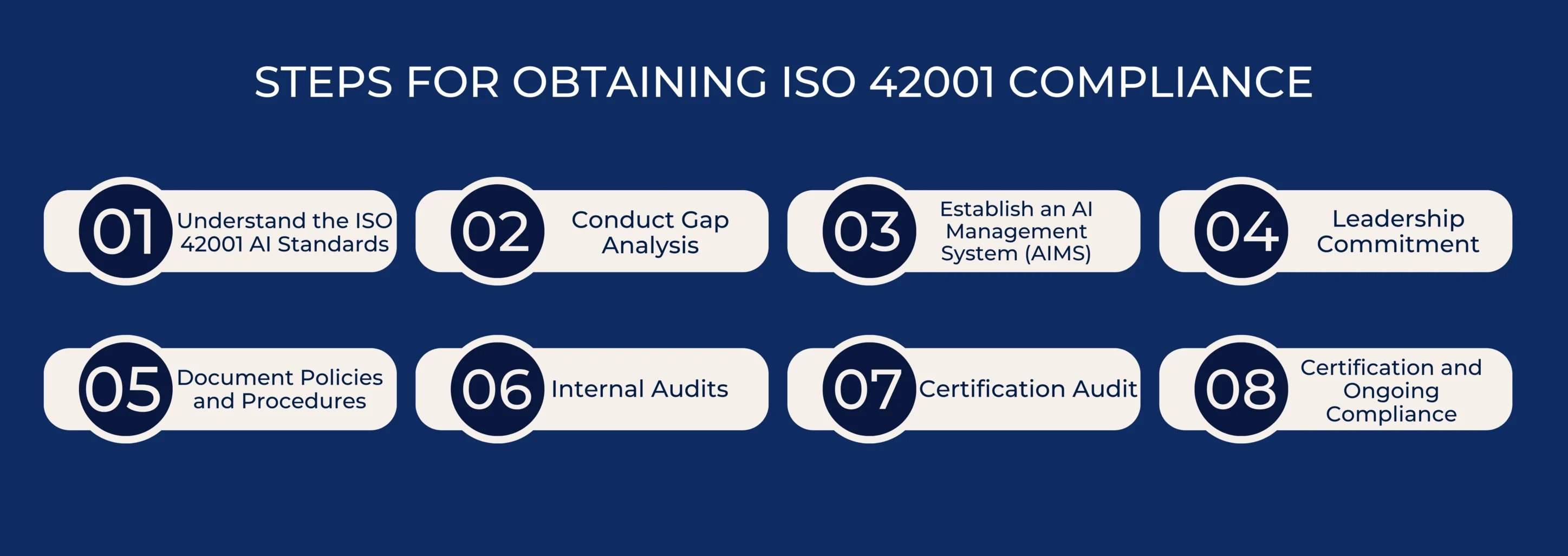
- ✓Stage 1 Audit: Documentary Review and Readiness Assessment
- ✓Stage 2 Audit: Evidence-Based Assessment of AIMS Implementation
- ✓Surveillance Audits and Certificate Validity
ISO 42001 Requirements and AIMS Control Framework
ISO/IEC 42001:2023 establishes requirements for an AI Management System across ten mandatory clauses and a normative Annex A control set. The standard’s clause structure follows the ISO High Level Structure, with Clauses 1–3 covering scope, normative references, and terms, and Clauses 4–10 establishing the core management system requirements. Organizations seeking ISO 42001 Certification in Prague must demonstrate conformity across all applicable mandatory clauses and must select and implement Annex A controls justified by their AI risk assessment — documenting selections in a Statement of Applicability.
Clause 4 requires organizations to define the internal and external context relevant to their AI systems, identify interested parties and their requirements, and establish an appropriate AIMS scope. Clause 5 establishes leadership requirements, including top management commitment, an AI policy, and the assignment of AI-related roles and responsibilities. Clause 6 addresses planning — specifically AI risk assessment and treatment, AIMS objectives, and planning for management system changes.
Clause 7 covers support requirements: resources, competence, awareness, communication, and documented information. Clauses 8 through 10 address operational planning and control, performance evaluation (including internal audit and management review), and improvement through nonconformity management and continual improvement processes. CertPro’s ISO 42001 audit evaluates objective evidence of conformity across all applicable clauses within the defined certification scope.
For Prague-based organizations, clause conformity evidence commonly includes board or executive-level AI policy approvals, documented AIMS scope statements identifying all AI systems within the certification boundary, and AI risk assessment records demonstrating systematic identification and treatment of AI-related risks. Competency records for personnel responsible for AI governance, alongside internal audit reports, demonstrate that the AIMS is being systematically reviewed.
Management review records must show that top management periodically evaluates AIMS performance, reviews audit findings, and makes decisions regarding improvements. The frequency and depth of management review is assessed as part of the ISO 42001 compliance examination conducted by CertPro.
Annex A of ISO/IEC 42001:2023 provides a normative set of controls organized across domains addressing AI policy, internal use of AI, AI-related roles, impact assessment, data governance, AI system lifecycle processes, and stakeholder and supplier relationships. Organizations must select applicable controls based on their AI risk assessment results, document the selection rationale in a Statement of Applicability, and implement selected controls within the operational scope of their AIMS.
The ISO 42001 audit evaluates whether selected controls are implemented as documented and whether control operation produces the outcomes required by the standard — for example, whether impact assessments are conducted before deploying new AI systems, whether data quality controls are applied to training and operational datasets, and whether AI system performance is monitored against defined objectives.
Prague-based organizations developing or deploying AI in financial services, automotive engineering, or SaaS environments typically engage a broad set of Annex A controls, given the volume, sensitivity, and regulatory significance of the AI applications within scope. Controls addressing AI system transparency, explainability, bias evaluation, and human oversight are particularly relevant for organizations subject to EU AI Act requirements or operating AI systems in high-risk categories.
Evidence collected during the Stage 2 audit includes system design documentation, model cards or equivalent AI system documentation, data governance records, testing and validation records, incident logs, and records of human review mechanisms for AI-assisted decisions. CertPro’s audit team assesses this evidence against the control requirements specified in Annex A and the organization’s own Statement of Applicability.
The Statement of Applicability (SoA) is a mandatory documented output of the ISO 42001 risk treatment process. The SoA identifies all Annex A controls, indicates which controls the organization has selected for implementation, provides justification for any controls excluded from scope, and records the implementation status of each selected control.
CertPro’s audit team reviews the SoA during Stage 1 to assess the completeness and logical consistency of control selection relative to the AI risk assessment results. During Stage 2, the team returns to the SoA to verify that controls documented as implemented are in fact operating within the organization’s AI governance processes. The SoA serves as a primary reference document for the ISO 42001 examination and is retained as part of the audit file supporting the certification decision.
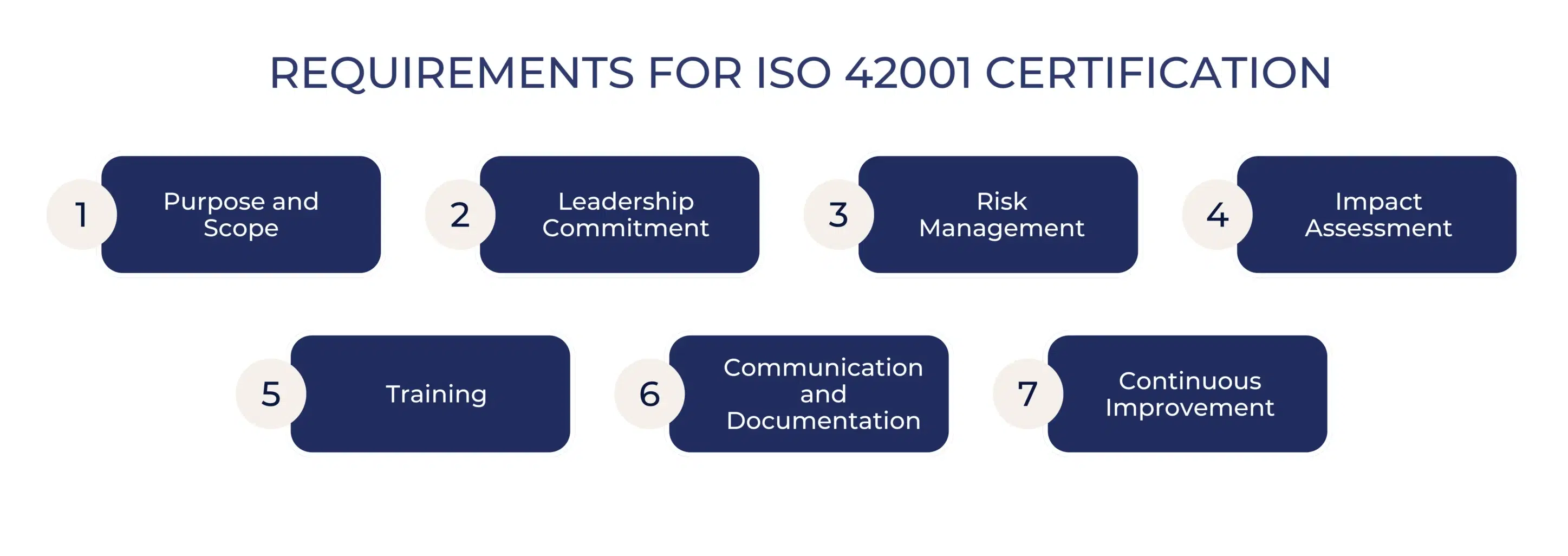
- ✓Management System Clause Requirements
- ✓Annex A Control Domains and Evidence Requirements
- ✓Statement of Applicability and Risk Treatment
Why Prague-Based Organizations Pursue ISO 42001 Certification
Prague-based organizations across software development, financial services, fintech, cloud hosting, automotive engineering, and shared services sectors pursue ISO 42001 Certification in Prague in response to distinct demand drivers rooted in the city’s international commercial relationships, regulatory environment, and competitive technology ecosystem. The following factors reflect the primary motivations reported by organizations in Prague’s technology and financial services community when initiating ISO 42001 certification processes.
Enterprise Vendor Due Diligence and U.S. Client Requirements
Prague serves as a significant delivery location for U.S.-headquartered technology companies, investment banks, asset managers, and enterprise software clients that maintain strict third-party vendor risk management programs. These organizations increasingly require AI governance certifications as part of vendor qualification and annual reassessment processes.
A Prague-based SaaS provider or IT outsourcing firm that delivers AI-powered analytics, automation, or decision-support tools to a U.S. financial institution may be required to demonstrate ISO 42001 compliance in Prague as a condition of contract renewal or expansion. ISO 42001 Certification in Prague provides an independently verified, internationally recognized credential that satisfies these procurement requirements — without requiring the Prague organization to complete separate assessments for each enterprise client relationship.
The concentration of multinational shared service centers in Prague — operated by global banks, insurance groups, professional services firms, and technology conglomerates — creates additional demand for ISO 42001 attestation. These centers increasingly operate AI systems that process sensitive client data, support regulated business functions, or influence operational decisions subject to regulatory oversight.
Internal audit functions within multinational organizations may require Prague-based shared service operations to obtain ISO 42001 Certification as evidence that AI governance controls at the delivery location meet group-level standards. This localized procurement scenario is a distinctive feature of Prague’s shared services ecosystem and drives demand for ISO 42001 certification across banking, insurance, and asset management organizations operating in the city.
EU AI Act Alignment and Regulatory Positioning
The EU AI Act, which entered into force in August 2024 and imposes obligations on providers and deployers of AI systems in phases through 2026 and 2027, creates a regulatory context in which Prague-based organizations developing or deploying high-risk AI systems face mandatory governance, transparency, and conformity requirements. ISO 42001 Certification does not constitute EU AI Act compliance certification, as the Act establishes its own conformity assessment procedures.
However, ISO 42001 compliance in Prague provides a structured, independently audited reference framework that Prague organizations can reference when demonstrating AI risk management maturity to national market surveillance authorities, notified bodies, or enterprise clients conducting regulatory due diligence. Organizations subject to both GDPR and the EU AI Act benefit from ISO 42001’s explicit alignment with the data governance and privacy principles embedded in the standard’s Annex A controls.
Competitive Positioning in the SaaS and Cloud Market
Prague’s SaaS and cloud services sector has expanded significantly as the city’s technology talent pool and digital infrastructure have attracted both local startups and international technology companies establishing European delivery hubs. ISO 42001 Certification for Prague companies operating in the SaaS segment provides a meaningful differentiator in procurement processes where multiple vendors offer functionally comparable AI-enabled products.
Buyers in regulated industries — including banking, insurance, healthcare, and critical infrastructure — increasingly evaluate AI governance certifications as part of vendor selection criteria. AI management system certification in Prague positions certified organizations as demonstrably committed to structured AI governance, providing a factual basis for procurement decisions that goes beyond vendor self-assessment or questionnaire-based due diligence.
ISO 42001 Certification Scope and Independent Decision Framework
The scope of ISO 42001 Certification in Prague defines the organizational boundary within which the AIMS is assessed and for which the certificate is issued. Scope determination is a critical input to the audit program and directly influences the extent of evidence collection, the number of audit days required, and the set of Annex A controls within the assessment perimeter. CertPro reviews the proposed scope during the application stage and evaluates its completeness against the organization’s actual AI system inventory and operational context.
Defining the AIMS Certification Boundary
The AIMS certification boundary identifies which AI systems, business functions, physical locations, and organizational units are included within the scope of ISO 42001 Certification. For Prague-based organizations, the scope may encompass a single AI product or platform, a portfolio of AI-enabled services, a specific business unit deploying AI in operational processes, or the entire organization where AI systems are pervasive across functions.
The scope must be defined with sufficient precision to allow the audit team to determine which processes, controls, and evidence sources are relevant to the assessment. Scope statements that are excessively broad without corresponding evidence of AIMS coverage — or that exclude AI systems materially interacting with in-scope systems — are subject to challenge during the Stage 1 audit.
Prague-based organizations operating AI systems across multiple legal entities, delivery locations, or client environments — a common configuration for IT outsourcing firms, shared service centers, and multinational technology companies — must carefully define scope boundaries to accurately represent the organizational and technical perimeter being certified. Where AI systems span multiple locations within the Czech Republic or extend to EU delivery partners, the scope documentation must address how AIMS controls apply across those boundaries and how supplier AI governance is managed within the organization’s control framework.
The ISO 42001 examination conducted by CertPro evaluates the accuracy and completeness of the scope definition as a foundational element of the certification assessment.
Independent Certification Committee Decision
CertPro’s certification committee reviews all audit reports, nonconformity records, and corrective action evidence submitted by Prague-based organizations before issuing an ISO 42001 certification decision. The certification committee operates independently from the audit team, ensuring that the decision to issue, maintain, suspend, or withdraw a certificate is made by personnel who were not directly involved in conducting the audit.
This independence requirement is a fundamental characteristic of accredited certification body operations and ensures that ISO 42001 attestation issued by CertPro reflects an objective, impartial determination of AIMS conformity. Organizations receive written notification of the certification committee’s decision — including the rationale for any deferred or adverse determination — and have defined mechanisms for appeals where the organization contests the outcome.
Benefits of ISO 42001 Certification for Prague-Based Organizations
ISO 42001 Certification in Prague delivers verifiable, independently assessed outcomes for organizations that develop, deploy, or govern AI systems. The following benefits reflect outcomes that certified organizations in Prague’s technology, financial services, and shared services sectors have identified as consequential to their commercial and regulatory positioning.
- ✓Independent third-party verification that the organization’s AIMS conforms to ISO/IEC 42001:2023, providing an objective basis for client and regulatory assurance
- ✓Recognition in enterprise procurement processes where U.S. and European buyers require AI governance certifications as a vendor qualification condition
- ✓Structured ISO 42001 audit methodology that identifies AIMS gaps through evidence-based examination rather than self-assessment, producing actionable nonconformity findings
- ✓Alignment with EU AI Act governance expectations, supporting Prague organizations’ positioning with national market surveillance authorities and regulated clients
- ✓Compatibility with ISO 27001 and ISO 31000 frameworks, enabling organizations to build AI governance controls within an existing management system infrastructure
- ✓Ongoing surveillance oversight through annual audits that provide continuous assurance of AIMS conformity across the certificate cycle
- ✓ISO 42001 attestation that can be referenced in client contracts, regulatory submissions, and third-party risk questionnaires as documented evidence of AI governance maturity
- ✓Demonstrated accountability across the AI system lifecycle — from development and validation through deployment, monitoring, and decommissioning
ISO 42001 Certification provides Prague-based organizations with an independent assessment of whether AI governance controls are designed appropriately and operating effectively — a distinction that self-assessment frameworks and questionnaire-based evaluations cannot reliably provide. CertPro’s Stage 2 audit collects objective evidence of control operation through document review, personnel interviews, and inspection of system outputs, providing a factual basis for the conformity determination.
This evidence-based verification is particularly valuable for organizations in Prague’s fintech and financial services sectors, where clients and regulators require documented assurance that AI systems influencing credit decisions, fraud detection, risk scoring, or customer-facing outputs are governed by controls that have been independently examined and confirmed as effective.
For Prague-based IT outsourcing firms and software development organizations, ISO 42001 compliance verification addresses a specific challenge in third-party vendor relationships: the gap between documented AI governance policies and their actual operational implementation. Clients reviewing vendor AI governance through questionnaires or self-certification statements cannot distinguish between organizations with robust, operating controls and those with documentation that does not reflect operational practice.
ISO 42001 Certification in Prague closes this gap by providing a certificate issued by an independent Licensed CPA Firm — based on direct examination of the control environment — a standard of evidence that satisfies enterprise due diligence requirements that self-assessment alone cannot meet.
ISO 42001 Certification establishes a documented, audited AI risk management framework that creates organizational accountability for AI-related decisions, outcomes, and governance processes. The standard’s requirements for AI risk assessment, impact assessment, and risk treatment plan documentation produce a structured record of how the organization has identified, evaluated, and addressed AI-related risks — including risks of bias, error, privacy violation, security failure, and operational disruption.
For Prague-based organizations operating AI systems in automotive engineering, healthcare technology, or financial services, this accountability framework is directly relevant to operational risk management and regulatory compliance obligations that require demonstrable governance of algorithmic decision-making.
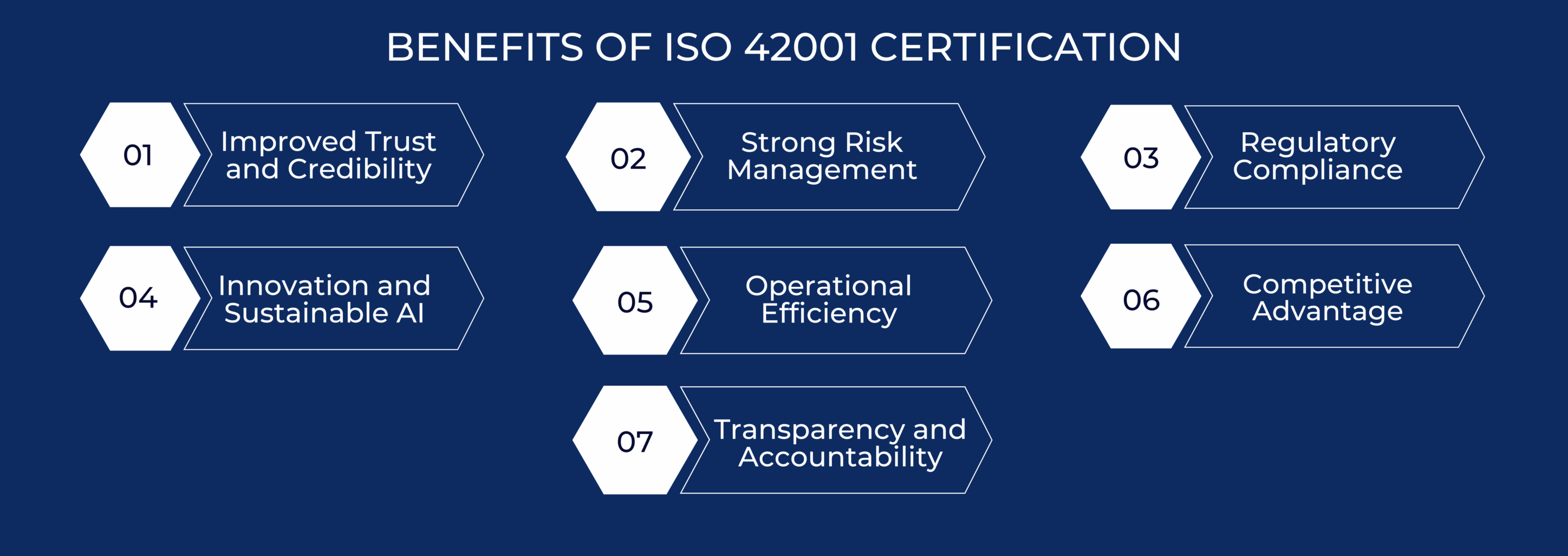
- ✓Verification of AI Governance Control Effectiveness
- ✓Structured AI Risk Management and Accountability Framework
Business Sectors in Prague Pursuing ISO 42001 Certification
ISO 42001 Certification in Prague is sought by organizations across a diverse range of industry sectors that develop, deploy, or integrate AI systems into their products, services, or operational processes. Prague’s position as Central and Eastern Europe’s technology and financial services hub creates a concentrated demand for ISO 42001 audit services across the following sectors.
Software Development, SaaS, and IT Outsourcing
Prague’s software development and IT outsourcing sector is one of the largest in Central and Eastern Europe, with hundreds of firms delivering custom software development, SaaS platforms, managed IT services, and technology consulting to clients across the EU, United States, and United Kingdom. Organizations in this sector that integrate AI components — including machine learning models, natural language processing, computer vision, or predictive analytics — into client-facing or operational systems face increasing pressure from enterprise clients to demonstrate AI governance certification.
ISO 42001 Certification for Prague companies in the software and SaaS segment addresses client due diligence requirements from regulated industry buyers who cannot accept vendor self-declarations as evidence of AI risk management.
Prague-based IT outsourcing organizations that operate as third-party AI system developers or integrators for financial institutions, insurance companies, or healthcare clients face particular scrutiny regarding AI governance. End-client organizations bear regulatory responsibility for AI systems they deploy — regardless of whether those systems were developed by a third party. ISO 42001 Certification provides IT outsourcing firms with a credential that demonstrates AI governance conformity at the development and delivery stage.
This signal is increasingly required by regulated-industry clients during vendor selection and annual reassessment processes. AI management system certification in Prague positions certified IT outsourcing firms competitively against non-certified suppliers in procurement processes where AI governance is a scored evaluation criterion.
Financial Services, Fintech, and Banking Technology
Prague hosts a significant concentration of financial services organizations including retail and corporate banks, insurance companies, investment management firms, and a growing fintech sector developing AI-powered payment platforms, credit scoring tools, fraud detection systems, and regulatory technology applications. ISO 42001 Certification for Prague fintech organizations is pursued in response to client requirements, regulatory expectations from the Czech National Bank, and international procurement standards set by EU-based banking groups and U.S. financial institution clients.
AI systems used in credit decisioning, anti-money laundering screening, customer risk classification, and algorithmic trading are subject to heightened regulatory scrutiny. ISO 42001 attestation provides documented evidence of governance controls that regulators and auditors can reference during examinations — making it a practical asset for Prague’s financial services organizations.
Automotive Engineering and Manufacturing Technology
Prague’s automotive engineering sector — which includes Škoda Auto’s headquarters and R&D operations, supplier networks, and automotive technology companies serving European original equipment manufacturers — has emerged as a significant adopter of AI systems in product development, quality control, supply chain optimization, and connected vehicle technology. AI systems deployed in automotive engineering environments carry safety-critical implications.
ISO 42001 Certification for Prague companies in the automotive sector addresses the governance requirements that automotive clients, Tier 1 suppliers, and regulatory bodies impose on organizations developing or integrating AI into vehicle systems and manufacturing processes. The standard’s requirements for AI impact assessment and human oversight controls are directly relevant to automotive AI applications where failure consequences can be severe.
ISO 42001 Compliance and Integration with Related Standards
ISO 42001 compliance in Prague is most effectively maintained when the AIMS is integrated with the organization’s existing management system infrastructure rather than operated as a standalone governance framework. Prague-based organizations that have previously obtained ISO 27001 certification for information security management are well positioned to extend their existing management system to encompass AIMS requirements, given the structural compatibility of the two standards under the ISO High Level Structure.
Integration with ISO 27001 and Information Security Controls
ISO 27001 and ISO 42001 share the ISO High Level Structure, meaning that common management system elements — including context analysis, risk assessment methodology, objectives, documented information requirements, internal audit, and management review — can be aligned across both standards without duplication. Prague-based organizations that maintain ISO 27001 certification can extend their existing risk assessment process to incorporate AI-specific risks, leverage their documented information control framework for AIMS documentation, and use their established management review cycle to assess AIMS performance.
This integration reduces the administrative burden of maintaining separate management systems for information security and AI governance, and positions organizations to respond more efficiently to the ISO 42001 audit conducted by CertPro.
Data security controls under ISO 27001 — addressing access control, encryption, incident management, and supplier security — are directly relevant to AI system security requirements under ISO 42001, particularly for organizations processing personal data or sensitive business information in AI training datasets or operational inference processes. GDPR obligations regarding lawful basis for data processing, data minimization, and individual rights are referenced in ISO 42001’s data governance control domain.
This makes integrated compliance management across ISO 27001, ISO 42001, and GDPR both practical and efficient for Prague-based organizations subject to all three frameworks. The ISO 42001 audit evaluates the integration of these controls as part of the holistic AIMS assessment, rather than treating them as separate governance domains.
EU AI Act and Regulatory Framework Alignment
The EU AI Act establishes a risk-based regulatory framework for AI systems deployed in the European Union, with obligations for providers and deployers of high-risk AI systems that include conformity assessments, technical documentation, human oversight mechanisms, and post-market monitoring. ISO 42001 compliance in Prague provides a structured management system framework that addresses several of the governance, documentation, and risk management requirements that the EU AI Act imposes on high-risk AI system providers.
While ISO 42001 certification does not constitute EU AI Act conformity assessment — which follows the Act’s own mandatory procedures — the standard’s controls for impact assessment, data governance, transparency, and human oversight align substantively with the Act’s technical and organizational requirements.
Prague-based organizations subject to both EU AI Act obligations and commercial demand for ISO 42001 Certification benefit from the standard’s alignment with the Act’s risk classification concepts. The ISO 42001 AI impact assessment process — which evaluates the potential consequences of AI system failures, biases, or misuse across affected stakeholder groups — provides a documented analytical basis that can inform both the AIMS risk treatment plan and the technical documentation required under the EU AI Act for high-risk systems.
CertPro’s ISO 42001 examination evaluates the quality and completeness of impact assessment records as a substantive element of the Annex A control review — not as an advisory assessment of regulatory readiness.
FAQ
▶
What is ISO 42001 Certification?
▶
Which organizations in Prague need ISO 42001 Certification?
▶
What does the ISO 42001 audit process involve?
▶
How long is ISO 42001 Certification valid in Prague?
▶
What is the difference between ISO 42001 attestation and ISO 42001 certification?
▶
Does ISO 42001 Certification in Prague satisfy EU AI Act compliance requirements?
▶
Can organizations with existing ISO 27001 certification integrate ISO 42001 requirements?
▶
What documentation is required for ISO 42001 Certification?
ISO 42001 CERTIFIED: WHY AI GOVERNANCE CERTIFICATION IS BECOMING A BOARD-LEVEL REQUIREMENT
ISO 42001 Certified: Board-Level AI Governance Guide | CertPro CPA LLC HERO ══════════════════════════════ –> src=”https://certpro.com/wp-content/uplo…

Get In Touch
have a question? let us get back to you.
<!-- WordPress/Divi may strip