
ISO 42001 Certification in San Antonio
The ISO 42001 standard establishes specific requirements that organizations must demonstrate through documented information and operational evidence during the certification audit. These requirements span management system clauses and Annex A control objectives, together constituting the full evaluation framework used in the ISO 42001 certification audit. Understanding what the ISO 42001 standard requires in each area is essential context for organizations in San Antonio seeking to understand the full scope of an independent ISO 42001 Certification audit.
OUR CLIENTS










ISO 42001 Certification for San Antonio’s AI and Technology Organizations
ISO 42001 Certification in San Antonio is conducted by CertPro, a Licensed CPA Firm providing independent, third-party conformity assessment audits against the requirements of ISO/IEC 42001:2023 — the international standard for Artificial Intelligence Management Systems (AIMS). CertPro evaluates whether an organization’s AIMS meets the documented requirements of the ISO 42001 standard through structured Stage 1 and Stage 2 certification audits, objective evidence review, and an independent certification committee decision. This process ensures that every ISO 42001 certification audit delivers a credible, evidence-based conformity determination.
San Antonio occupies a distinct position in the U.S. technology and defense landscape. The city hosts one of the largest concentrations of cybersecurity expertise in the country, anchored by military installations including Joint Base San Antonio — home of the 16th Air Force and numerous defense and intelligence organizations operating at the intersection of advanced technology and national security. This defense and cybersecurity concentration has attracted a substantial ecosystem of government contractors, technology vendors, AI developers, and enterprise software providers. All of these organizations increasingly develop or deploy AI systems in sensitive operational environments, making ISO 42001 compliance a critical governance priority.
Beyond defense, San Antonio’s economy includes a well-established healthcare and life sciences sector anchored by the South Texas Medical Center — the largest medical complex in the region — as well as UT Health San Antonio and Brooke Army Medical Center. Organizations in this sector are increasingly integrating AI-driven diagnostic tools, predictive analytics platforms, and clinical decision-support systems into patient care workflows. This creates clear demand for independent verification of AI governance and risk controls through ISO AIMS certification. Financial services firms, energy companies, logistics providers, and a growing SaaS and cloud computing ecosystem further expand the population of San Antonio organizations for which ISO 42001 Certification is directly relevant.
ISO 42001 Certification in San Antonio addresses this diversity of sectors by providing a single, internationally recognized framework for evaluating how organizations establish, implement, maintain, and continually improve an Artificial Intelligence Management System. The ISO 42001 standard specifies requirements for AI policy, AI risk management, AI impact assessment, human oversight mechanisms, transparency and explainability controls, data governance, and Annex A control objectives. All of these areas are evaluated through the certification audit process. Organizations seeking ISO AIMS certification in San Antonio are assessed against these requirements through objective evidence collection, structured interviews, documentation review, and control evaluation conducted by CertPro’s independent audit team.
The distinction between the organization’s responsibility and the certification body’s role is fundamental to the ISO 42001 certification process. The organization is responsible for establishing and operating its AIMS in accordance with ISO/IEC 42001:2023. CertPro’s role is exclusively to evaluate conformity with those requirements through independent audit activities. CertPro does not design, implement, or advise on AIMS structures — it assesses whether the AIMS in place conforms to the standard’s requirements and issues a certification decision based on objective audit evidence. This independence is a defining characteristic of ISO 42001 Certification in San Antonio as performed by a Licensed CPA Firm.

What Is ISO 42001 Certification?
ISO/IEC 42001:2023 and the Artificial Intelligence Management System
ISO/IEC 42001:2023 is the first internationally published standard establishing requirements for an Artificial Intelligence Management System. Published by the International Organization for Standardization and the International Electrotechnical Commission in 2023, the ISO 42001 standard defines how organizations that develop or deploy AI systems should govern AI-related risks, establish accountability structures, implement AI-specific controls, and demonstrate continual improvement. The standard follows the High-Level Structure (HLS) common to ISO management system standards, covering context of the organization, leadership, planning, support, operation, performance evaluation, and improvement under Clauses 4 through 10. This structural alignment allows organizations already certified to ISO 27001 or ISO 9001 to integrate AIMS requirements into existing management system frameworks efficiently.
Annex A of ISO/IEC 42001:2023 specifies 38 control objectives organized across categories including AI policy, internal organization, resources for AI systems, assessing impacts of AI systems, AI system lifecycle, data for AI systems, information for interested parties, and use of AI systems. These controls provide a structured basis for evaluating AI governance practices during an ISO 42001 certification audit. Annex B of the standard provides additional guidance for AI system impact assessment — a specific requirement that distinguishes ISO 42001 compliance from general information security management frameworks. ISO 42001 compliance requires organizations to assess the potential impacts of AI systems on individuals, groups, and society, an evaluation area that CertPro independently reviews throughout the certification audit process.
ISO AIMS Certification as an Independent Conformity Assessment
ISO AIMS certification is the formal outcome of a third-party conformity assessment audit conducted by an independent certification body against the requirements of ISO/IEC 42001:2023. ISO AIMS certification differs from internal audit activities, self-attestation, or readiness reviews in one critical way: it involves an independent evaluation by an external organization — in this case, CertPro as a Licensed CPA Firm — that has no involvement in the design or operation of the organization’s AIMS. The certification decision is made by an independent certification committee following a structured review of audit findings, nonconformity status, and objective evidence collected during Stage 1 and Stage 2 audit activities.
The ISO AIMS certification that San Antonio organizations receive upon successful completion of the audit process takes the form of a certificate specifying the certified organization, the certification scope, the applicable standard (ISO/IEC 42001:2023), and the certificate validity period. The certificate is valid for three years, subject to annual surveillance audits that verify ongoing conformity with the ISO 42001 standard. Recertification audits are conducted prior to the expiration of the three-year cycle. This ongoing audit structure means that ISO 42001 Certification in San Antonio represents a continuous conformity verification process — not a one-time evaluation. That characteristic makes it meaningful for enterprise vendor assessments, procurement reviews, and regulatory due diligence activities across the broader South Texas market.
Who Needs ISO 42001 Certification in San Antonio
ISO 42001 Certification is relevant to any organization in San Antonio that develops AI systems, deploys AI systems in its operations, or provides AI-enabled products or services to customers. This definition encompasses a broad range of entities across San Antonio’s economy. Applicable organizations include defense contractors and technology vendors serving Joint Base San Antonio, healthcare organizations integrating AI into clinical or administrative workflows, SaaS providers and cloud platforms using machine learning models, financial services firms employing AI-driven risk scoring or fraud detection, and energy and logistics companies applying predictive analytics. The ISO 42001 standard applies regardless of organization size or sector, provided AI systems fall within the scope of the organization’s operations.
| Sector | Representative AI Use Cases | ISO 42001 Relevance |
|---|---|---|
| Defense & Aerospace | Autonomous systems, threat analysis, AI-assisted intelligence | AI risk management, human oversight controls, Annex A evaluation |
| Healthcare & Life Sciences | Clinical decision support, diagnostic AI, predictive analytics | AI impact assessment, data governance, transparency requirements |
| Financial Services | Fraud detection, credit scoring, algorithmic trading | AI system lifecycle controls, accountability, bias evaluation |
| SaaS & Cloud Providers | AI-enabled platforms, ML model deployment, data processing | AI policy, third-party AI governance, data for AI systems |
| Energy & Logistics | Predictive maintenance, route optimization, demand forecasting | Operational AI controls, risk assessment, continual improvement |
ISO 42001 Certification Audit Process in San Antonio
The ISO 42001 certification audit process followed by CertPro for organizations in San Antonio is structured across defined stages, each with specific objectives, activities, and outputs. The process begins with application review and audit program determination, then progresses through Stage 1 and Stage 2 audit activities, nonconformity review, certification committee decision, certificate issuance, and ongoing surveillance and recertification audits. Each stage is conducted independently of any advisory or implementation role, ensuring that the ISO 42001 certification audit San Antonio organizations receive reflects a fully objective, third-party evaluation of AIMS conformity.
The Stage 1 audit in the ISO 42001 certification process focuses on reviewing the organization’s documented information and evaluating whether the AIMS documentation demonstrates conformity with the requirements of ISO/IEC 42001:2023. During Stage 1, the audit team reviews the organization’s AI policy, AI risk assessment documentation, AI impact assessment records, Statement of Applicability for Annex A controls, internal audit records, and management review outputs. Stage 1 also evaluates the defined scope of the AIMS — confirming that it accurately describes the AI systems, organizational boundaries, and stakeholder considerations within the certification boundary. All findings from Stage 1 are documented and communicated to the organization before Stage 2 activities commence.
Stage 1 outputs inform the audit program for Stage 2 by identifying areas requiring deeper evidence examination and any documentation gaps that must be addressed before Stage 2 can proceed. Areas where the ISO 42001 standard requires specific documented information — including AI risk treatment plans, records of AI system lifecycle decisions, and documented procedures for human oversight — receive particular scrutiny at Stage 1. The Stage 1 audit does not result in a certification decision; rather, it establishes the foundation for the full conformity evaluation conducted at Stage 2. Organizations in San Antonio pursuing ISO 42001 Certification should ensure that their AIMS documentation is complete, internally consistent, and reflective of actual operational practice before Stage 1 activities begin.
The Stage 2 audit constitutes the primary conformity assessment activity in the ISO 42001 certification audit process. During Stage 2, the audit team collects and evaluates objective evidence to determine whether the organization’s AIMS conforms to the requirements of ISO/IEC 42001:2023 in practice. Evidence collection methods include examination of records and documented information, structured interviews with personnel responsible for AI system development and deployment, observation of operational processes, and technical review of AI system controls and monitoring mechanisms. The Stage 2 audit evaluates both the design of AIMS controls and their operating effectiveness — assessing whether controls function as intended across the defined scope period.
Annex A control areas evaluated during Stage 2 include the organization’s AI policy, internal governance structures, resource allocation for AI systems, AI system impact assessment processes, AI system lifecycle management practices, data governance for AI training and operational data, information provided to interested parties regarding AI systems, and controls over AI system use and monitoring. The ISO 42001 audit San Antonio organizations undergo also evaluates management system requirements under Clauses 4 through 10 — including context analysis, leadership commitment, risk-based planning, operational controls, performance measurement, internal audit execution, and management review. Nonconformities identified during Stage 2 are classified, documented, and included in the audit report presented to the certification committee.
Following completion of Stage 2 audit activities, the audit report and supporting evidence are reviewed by CertPro’s independent certification committee. The committee evaluates audit findings, nonconformity status and closure evidence, and the overall conformity determination before issuing a certification decision. Critically, the certification committee operates independently of the audit team that conducted the field activities — providing an additional layer of objectivity in the ISO 42001 certification process. If nonconformities were identified, the organization must provide objective evidence of corrective action before the certification decision can be finalized.
Upon a positive certification decision, a certificate is issued specifying the organization’s name, the certified scope of the AIMS, the applicable standard (ISO/IEC 42001:2023), the certificate issue date, and the three-year validity period. Surveillance audits are conducted annually during the certification cycle to verify that the organization maintains conformity with the ISO 42001 standard. These audits review changes in the AIMS, the status of previously identified nonconformities, and the continued effectiveness of key controls. Recertification audits conducted prior to certificate expiration reassess full AIMS conformity against ISO/IEC 42001:2023, following substantially the same structure as the initial ISO 42001 certification audit, and result in a renewed certificate upon a positive decision.
| Audit Stage | Key Activities | Output |
|---|---|---|
| Application Review & Audit Program Determination | Scope review, audit program design, resource allocation | Audit plan, defined scope, assigned audit team |
| Stage 1 Audit | Documentation review, AIMS policy and records assessment, scope verification | Stage 1 findings report, Stage 2 readiness determination |
| Stage 2 Audit | Evidence collection, control evaluation, conformity assessment against ISO/IEC 42001:2023 | Audit report, nonconformity register, conformity determination |
| Certification Committee Review | Independent review of audit findings and corrective action evidence | Certification decision (grant, defer, or decline) |
| Surveillance Audit | Annual review of AIMS changes, nonconformity status, and key controls | Surveillance audit report, continued certification status |
| Recertification Audit | Full reassessment of AIMS conformity prior to certificate expiry | Renewed certificate for three-year cycle |
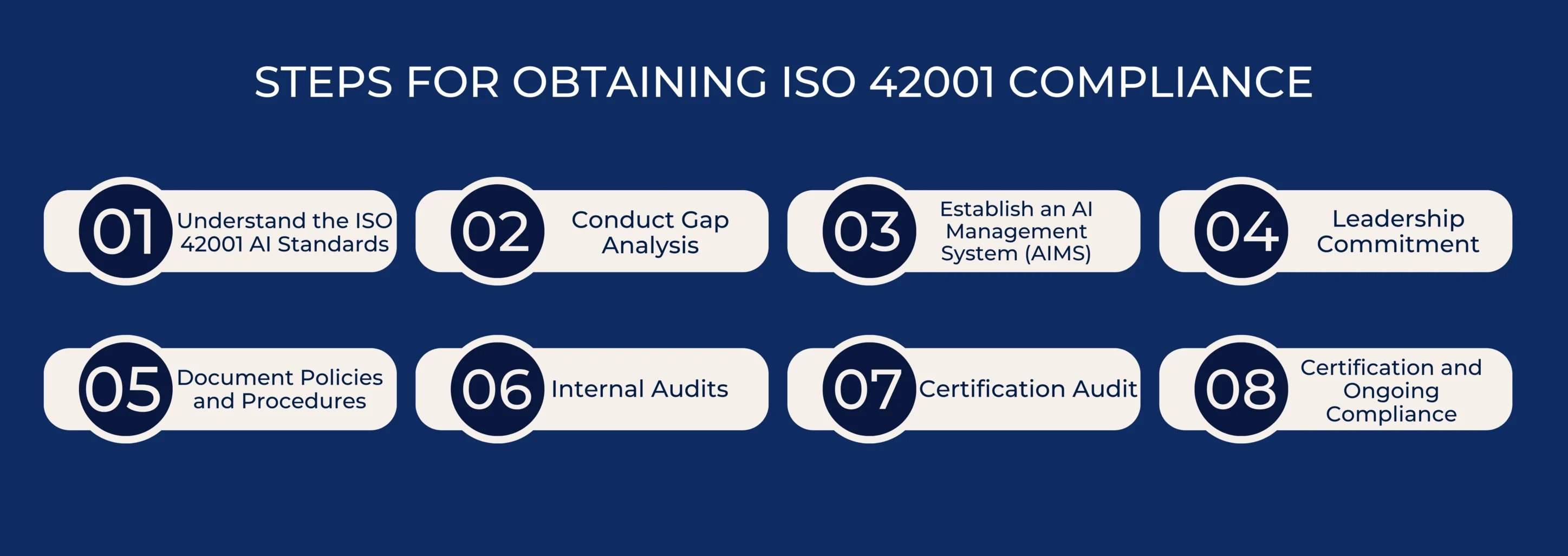
- ✓Stage 1 Audit: Documentation and Readiness Review
- ✓Stage 2 Audit: Conformity Assessment and Evidence Evaluation
- ✓Certification Decision, Issuance, and Surveillance Cycle
ISO 42001 Requirements Evaluated During Certification Audits
The ISO 42001 standard establishes specific requirements that organizations must demonstrate through documented information and operational evidence during the certification audit. These requirements span management system clauses and Annex A control objectives, together constituting the full evaluation framework used in the ISO 42001 certification audit. Understanding what the ISO 42001 standard requires in each area is essential context for organizations in San Antonio seeking to understand the full scope of an independent ISO 42001 Certification audit.
ISO/IEC 42001:2023 Clauses 4 through 10 establish the management system requirements that form the structural foundation of AIMS conformity. Clause 4 requires the organization to determine the internal and external context relevant to its AI activities, identify interested parties and their requirements, and define the AIMS scope in relation to AI systems developed or deployed. Clause 5 requires demonstrated leadership commitment to the AIMS — including an established AI policy, defined roles and responsibilities for AI governance, and top management accountability for AIMS performance. Clause 6 requires risk-based planning, including AI risk assessment processes, AI impact assessment procedures, and defined AIMS objectives with associated monitoring and measurement activities.
Clauses 7 through 10 address support activities, operational controls, performance evaluation, and continual improvement respectively. Clause 7 requires documented information management, competence assessment for personnel involved in AI activities, and awareness programs addressing AI governance obligations. Clause 8 requires the organization to plan, implement, and control the operational processes necessary to meet AIMS requirements — including AI system lifecycle management and AI impact assessment execution. Clause 9 requires internal audits and management reviews of AIMS performance, while Clause 10 requires processes for identifying and addressing nonconformities through corrective action. Each of these clauses is independently evaluated during the ISO 42001 certification audit through review of documented information and objective evidence of implementation.
Annex A of ISO/IEC 42001:2023 specifies 38 control objectives grouped into categories directly aligned with the governance of AI systems. Key control areas include AI policy documentation — requiring a formal, approved, and communicated policy addressing the organization’s AI objectives and principles — as well as internal organization, which requires defined accountability structures and governance roles for AI activities. Resources for AI systems covers computational, human, and data resources required for AIMS operation. The AI system impact assessment controls in Annex A require organizations to systematically evaluate the potential impacts of AI systems on individuals, communities, and the environment. This requirement is a defining feature of ISO 42001 compliance that distinguishes it from general information security management standards.
Additional Annex A control areas evaluated during the ISO 42001 certification audit San Antonio organizations undergo include AI system lifecycle controls addressing design, development, testing, deployment, and decommissioning; data governance controls covering the acquisition, processing, and quality management of data used in AI systems; transparency and information controls requiring organizations to provide appropriate disclosures to users and affected parties regarding AI system capabilities, limitations, and decision-making processes; and human oversight controls establishing mechanisms for human intervention, monitoring, and review of AI system outputs. The organization’s Statement of Applicability documents which Annex A controls are applicable to its AI systems and provides justification for any controls assessed as not applicable within the defined AIMS scope.
ISO 42001 compliance requires organizations to maintain and retain specific documented information as evidence of AIMS operation. The ISO 42001 standard mandates documentation of the AIMS scope, AI policy, AI risk assessment results, AI risk treatment plan, AI impact assessment records, Statement of Applicability, AIMS objectives and plans to achieve them, operational planning and control records, internal audit program and results, management review outputs, and records of nonconformities and corrective actions. This documented information forms the primary basis for evaluation during the Stage 1 audit and provides essential supporting evidence during Stage 2 conformity assessment activities. Auditors assess whether documented information is complete, current, controlled, and consistent with the organization’s actual AI operations.
- ✓AIMS scope documentation defining AI systems, organizational boundaries, and interfaces
- ✓AI policy approved by top management and communicated across the organization
- ✓AI risk assessment results and risk treatment plan with assigned ownership
- ✓AI system impact assessment records covering affected individuals, groups, and society
- ✓Statement of Applicability for Annex A controls with inclusion and exclusion justifications
- ✓Internal audit records demonstrating systematic AIMS conformity evaluation
- ✓Management review records evidencing top management oversight of AIMS performance
- ✓Nonconformity and corrective action records demonstrating continual improvement processes
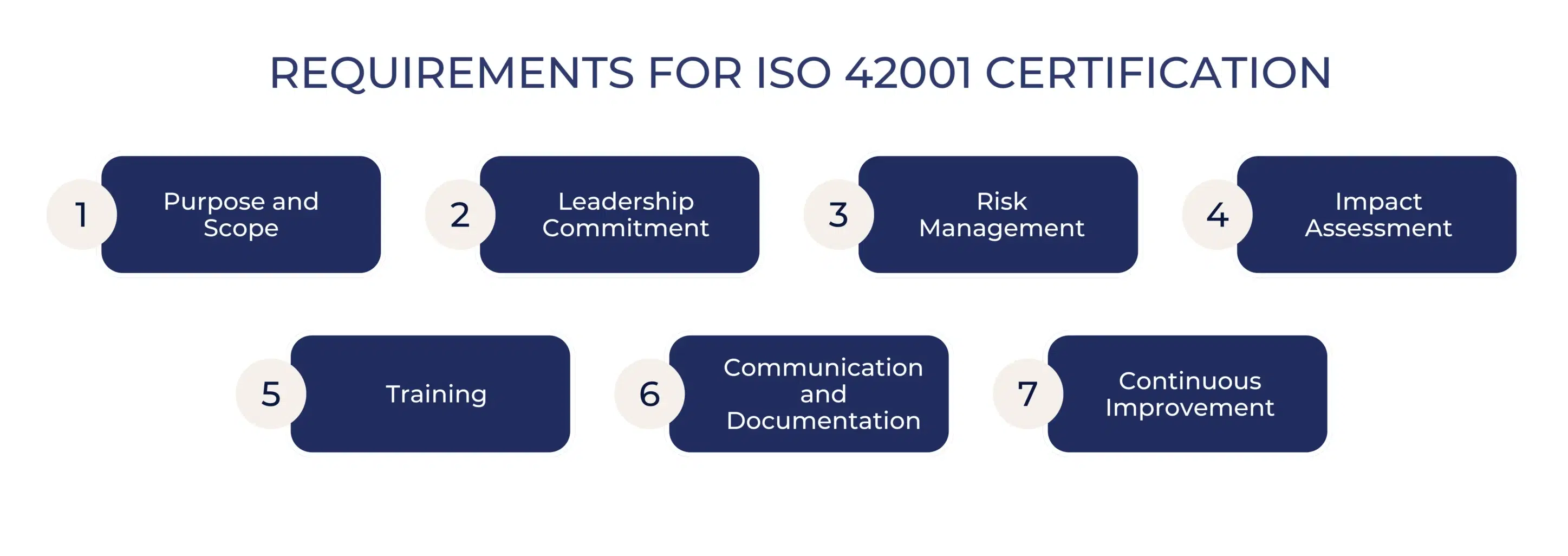
- ✓Management System Requirements: Clauses 4 Through 10
- ✓Annex A Control Objectives and AI-Specific Requirements
- ✓Documented Information Required for ISO 42001 Compliance
ISO 42001 Audit San Antonio: Sectors and Demand Drivers
ISO 42001 audit San Antonio demand is driven by a combination of sector-specific AI adoption patterns, enterprise vendor assurance expectations, and the city’s unique position as a national hub for cybersecurity, defense, and healthcare innovation. Organizations pursuing ISO 42001 Certification in San Antonio span a diverse range of industries, and the specific drivers for certification vary meaningfully by sector. Understanding these demand drivers provides important context for the scope and focus of certification audits conducted across San Antonio’s economy.
Defense, Cybersecurity, and Government Technology Sectors
San Antonio’s identity as a cybersecurity capital is anchored by the presence of the 16th Air Force, the 688th Cyberspace Wing, and numerous defense and intelligence technology organizations operating at Joint Base San Antonio. This concentration has generated a dense ecosystem of defense contractors, government technology vendors, and cybersecurity firms developing and deploying AI systems in sensitive national security contexts. For these organizations, ISO 42001 compliance in San Antonio serves multiple functions: it demonstrates to government customers that AI systems are governed through a structured, internationally recognized management framework; it supports vendor qualification processes that increasingly include AI governance criteria; and it provides a structured basis for managing AI-related risks in environments where system reliability and accountability are critical operational requirements.
Government technology vendors in San Antonio’s defense ecosystem face procurement evaluations in which AI governance documentation is increasingly scrutinized. Enterprise customers in the defense and intelligence sector conduct vendor risk reviews that assess whether AI systems used in contract performance are governed by documented risk management and oversight processes. ISO 42001 Certification for San Antonio companies operating in this sector provides an independently verified basis for demonstrating that AI governance controls meet the requirements of an internationally recognized standard. The ISO 42001 certification audit’s focus on human oversight mechanisms, transparency controls, and AI system impact assessment is particularly relevant for organizations deploying AI in contexts where automated decision-making affects national security, personnel, or sensitive government operations.
Healthcare, Life Sciences, and Clinical AI Applications
San Antonio’s healthcare sector, centered on the South Texas Medical Center — the largest medical complex in South Texas — represents one of the most active areas of AI adoption in the city. Healthcare organizations are integrating AI into clinical decision support systems, medical imaging analysis, predictive patient risk scoring, administrative workflow automation, and population health management platforms. These applications raise significant questions regarding AI system reliability, data governance, transparency, and the appropriate scope of automated decision-making in clinical contexts. ISO 42001 Certification in San Antonio provides healthcare organizations with an independently verified framework for demonstrating that these AI systems are governed in accordance with international standards for responsible AI management.
The AI impact assessment requirements of ISO/IEC 42001:2023 are directly relevant to healthcare AI applications, where the potential impacts of AI system errors, biases, or failures on patient outcomes require systematic evaluation. During the ISO 42001 audit San Antonio healthcare organizations undergo, auditors evaluate whether AI impact assessments have been conducted for clinical AI systems, whether human oversight mechanisms are established and functioning, and whether data governance controls address the quality and integrity of AI training and operational data. Healthcare organizations in San Antonio pursuing ISO AIMS certification also benefit from the standard’s requirements for transparency and information controls, which support clear communication to clinical staff and patients regarding the role and limitations of AI systems in care delivery.
SaaS, Cloud Providers, and Enterprise Technology Organizations
San Antonio’s growing SaaS and cloud computing ecosystem includes technology companies providing AI-enabled platforms to enterprise customers across financial services, healthcare, logistics, and government sectors. For these organizations, ISO 42001 Certification serves a direct commercial function: enterprise customers conducting vendor due diligence increasingly require evidence that AI systems embedded in vendor products are governed by documented, independently verified risk management and control frameworks. ISO 42001 standard certification provides this evidence in a form that is internationally recognized, auditor-verified, and maintained through ongoing surveillance audits — making it significantly more credible in enterprise procurement contexts than self-attestation or internal policy documentation alone.
ISO 42001 Compliance San Antonio: AI Governance Framework Evaluation
ISO 42001 compliance that San Antonio organizations demonstrate through certification encompasses the full range of AI governance practices required by ISO/IEC 42001:2023. The certification audit evaluates not only the existence of documented policies and procedures but the operational effectiveness of AI governance controls — whether AI systems are actually developed, deployed, and monitored in accordance with the organization’s documented AIMS commitments. This distinction between documented conformity and operational conformity is central to the value of independent ISO 42001 Certification in San Antonio as conducted by CertPro, a Licensed CPA Firm.
AI Risk Management and Impact Assessment Evaluation
AI risk management is a central requirement of ISO/IEC 42001:2023, distinguishing the standard from general information security or quality management frameworks. The ISO 42001 standard requires organizations to establish and apply a systematic AI risk assessment process that identifies risks associated with AI system development, deployment, and use — including risks arising from AI system errors, biases, unintended outputs, data quality issues, and misuse scenarios. During the certification audit, auditors evaluate whether the AI risk assessment methodology is documented, whether risk identification covers the full scope of AI systems within the AIMS, whether risks are evaluated against defined criteria, and whether risk treatment plans with assigned ownership and timelines are maintained and monitored.
AI impact assessment, as required by Annex A of ISO/IEC 42001:2023, extends beyond organizational risk to evaluate the potential impacts of AI systems on individuals, groups, communities, and society more broadly. This requirement reflects the ISO 42001 standard’s recognition that AI systems can cause harms — including discriminatory outcomes, privacy violations, and erosion of individual autonomy — that extend beyond the boundaries of the deploying organization. During ISO 42001 compliance audits in San Antonio, the assessment of impact assessment records evaluates whether organizations have systematically identified affected parties, assessed potential negative impacts, and implemented controls to mitigate those impacts. This area of the certification audit is particularly relevant for AI systems used in high-stakes decision-making contexts such as clinical diagnosis, credit scoring, hiring processes, and law enforcement applications.
Human Oversight, Transparency, and Explainability Controls
Human oversight is a specific requirement of ISO/IEC 42001:2023 reflected in Annex A control objectives addressing the monitoring, review, and intervention capabilities that organizations must establish for AI systems. During the ISO 42001 certification audit, auditors evaluate whether the organization has defined clear criteria for human review of AI system outputs, established mechanisms for human intervention when AI systems produce unexpected or erroneous results, and implemented monitoring processes that detect performance degradation or behavioral drift in deployed AI models. These controls are evaluated through review of documented procedures, examination of monitoring records, and structured interviews with personnel responsible for AI system oversight functions.
Transparency and explainability controls under Annex A require organizations to provide appropriate information to users, affected parties, and other interested parties regarding the nature, capabilities, and limitations of AI systems. This includes documentation of AI system decision-making logic at a level appropriate to the context of use, disclosure of AI involvement in decisions that affect individuals, and mechanisms for individuals to seek explanation or review of AI-assisted decisions. The audit evaluation of transparency controls assesses whether the information provided is accurate, accessible, and sufficient to enable informed use of AI systems. For San Antonio organizations deploying AI in customer-facing or regulated contexts, demonstrating conformity with these Annex A requirements through ISO 42001 Certification provides a verifiable basis for communicating AI governance practices to regulators, customers, and enterprise partners.
AI System Lifecycle and Data Governance Controls
The ISO 42001 standard establishes requirements for AI system lifecycle management that address the full continuum from initial concept and design through development, testing, deployment, operation, monitoring, and decommissioning. During the certification audit, lifecycle control evaluation assesses whether governance controls are applied consistently across AI system development phases, whether testing and validation activities are documented and results reviewed before deployment, and whether decommissioning processes address data retention, model disposal, and notification obligations. Data governance controls evaluated under Annex A address the sources, quality, representativeness, and management of data used to train and operate AI systems — a critical area given the direct relationship between data quality and AI system reliability, fairness, and overall ISO 42001 compliance.
Benefits of ISO 42001 Certification for San Antonio-Based Organizations
ISO 42001 Certification for San Antonio companies provides independently verified evidence of AIMS conformity that carries weight in enterprise procurement processes, regulatory assessments, and stakeholder assurance contexts. The benefits of ISO 42001 Certification are structural and verifiable — they derive from the certification process itself rather than from marketing claims about AI governance quality. The following sections describe the principal benefits of ISO 42001 Certification as they apply to organizations operating across San Antonio’s technology, defense, healthcare, and financial services sectors.
The primary benefit of ISO 42001 Certification is independent, third-party verification of AIMS conformity by a Licensed CPA Firm operating without commercial interest in the organization’s AI governance outcomes. This independence distinguishes ISO 42001 certification from internal audit activities, self-assessments, or vendor-provided AI governance declarations. In enterprise vendor qualification contexts — such as those encountered by San Antonio technology companies seeking contracts with defense agencies, healthcare systems, or financial institutions — independent certification provides a credible, structured, and auditor-verified basis for demonstrating AI governance maturity. Procurement officers and third-party risk management teams can review the certificate, its defined scope, and the underlying standard to assess whether the vendor’s AI governance controls meet their requirements.
A localized example illustrates this benefit concretely. A SaaS provider based in San Antonio’s technology corridor seeking to expand its customer base to include a major healthcare network in the South Texas Medical Center district may face a vendor security and AI governance review as a condition of contract execution. The healthcare network’s procurement team, evaluating multiple competing vendors, uses ISO 42001 Certification as an objective differentiator — demonstrating that the SaaS provider’s AI governance controls have been independently assessed against an internationally recognized standard. This reduces the due diligence burden on the healthcare organization and provides a structured basis for ongoing vendor oversight through annual surveillance audits.
ISO 42001 Certification validates that an organization has implemented a structured AI governance framework addressing the full range of management system requirements specified in ISO/IEC 42001:2023. This includes documented AI policy, systematic AI risk assessment and treatment processes, AI impact assessment procedures, Annex A control implementation, and management system requirements for internal audit, management review, and continual improvement. The audit evaluation of these requirements — and the certification decision based on objective evidence — provides assurance that the organization’s AI governance framework is not merely documented in policy but operationally implemented and maintained in practice.
For San Antonio organizations in regulated sectors, the ISO 42001 standard’s requirements for documented information, performance monitoring, and management review align with broader expectations for responsible AI use increasingly reflected in U.S. federal AI governance guidance, sector-specific regulatory frameworks, and industry standards. While ISO 42001 Certification does not constitute regulatory compliance with any specific U.S. law or regulation, the governance structures it validates — systematic risk assessment, documented accountability, human oversight mechanisms, transparency controls, and continual improvement processes — address the substantive requirements that regulators and enterprise risk frameworks identify as essential for responsible AI deployment.
The three-year certification cycle, maintained through annual surveillance audits, provides ongoing assurance that the organization’s AIMS continues to conform to ISO/IEC 42001:2023 as AI systems evolve, new AI applications are deployed, and organizational contexts change. Surveillance audits evaluate AIMS changes, new AI system deployments within scope, the continued effectiveness of key controls, and the status of any nonconformities identified during previous audit activities. This ongoing audit structure means that ISO 42001 Certification in San Antonio represents a continuously maintained conformity status — not a point-in-time assessment that becomes stale as the organization’s AI environment evolves. Enterprise customers and procurement teams can rely on the currency of the certification as evidence of ongoing AI governance conformity, rather than treating the certificate as a historical snapshot.
- ✓Independent, third-party verification of AIMS conformity by a Licensed CPA Firm with no advisory role
- ✓Internationally recognized ISO 42001 Certification applicable across U.S. and international enterprise procurement processes
- ✓Structured AI governance framework validation covering risk assessment, impact assessment, and Annex A controls
- ✓Human oversight and transparency control verification relevant to high-stakes AI decision-making contexts
- ✓Ongoing conformity assurance through annual surveillance audits within the three-year certification cycle
- ✓Credible basis for communicating AI governance practices to regulators, customers, and enterprise partners
- ✓Alignment with U.S. AI governance expectations across defense, healthcare, financial services, and technology sectors
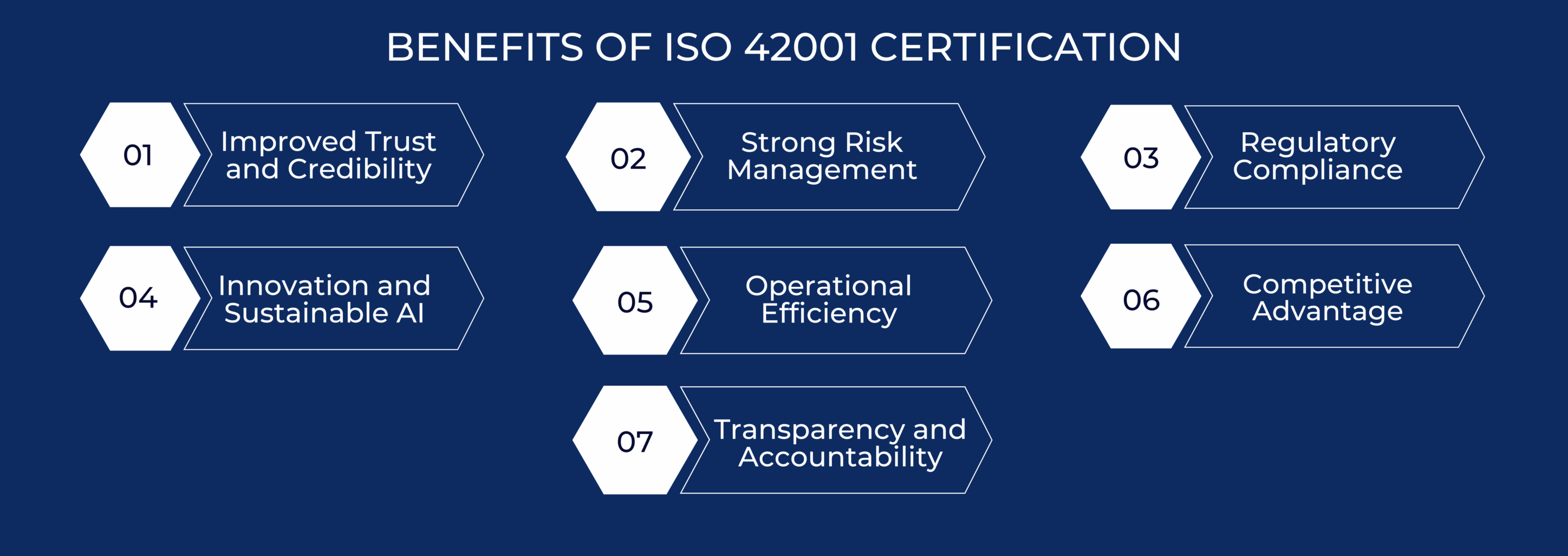
- ✓Independent Verification and Enterprise Vendor Qualification
- ✓Structured AI Governance and Risk Management Framework
- ✓Ongoing Conformity Assurance Through Surveillance Audits
ISO 42001 Standard: Key Differences From Other Management System Certifications
The ISO 42001 standard is distinct from other ISO management system standards in several important respects relevant to organizations in San Antonio evaluating whether ISO AIMS certification addresses their specific governance and assurance requirements. Understanding how ISO/IEC 42001:2023 differs from ISO 27001, ISO 9001, and other management system standards — and how it relates to them — provides essential context for organizations making decisions about the scope and structure of their certification activities.
ISO 42001 Versus ISO 27001: Complementary but Distinct Frameworks
ISO 27001 and ISO 42001 address related but distinct governance domains. ISO 27001 establishes requirements for an Information Security Management System (ISMS), focusing on the confidentiality, integrity, and availability of information assets. ISO 42001 establishes requirements for an Artificial Intelligence Management System (AIMS), focusing specifically on the governance, risk management, and responsible use of AI systems. While both standards follow the High-Level Structure common to ISO management system standards — enabling integrated implementation — their control frameworks address different risk categories. ISO 27001 Annex A controls address organizational, people, physical, and technological information security controls. ISO 42001 Annex A controls address AI-specific governance areas including AI system impact assessment, AI lifecycle management, data governance for AI, and human oversight of AI systems.
Many organizations in San Antonio pursuing ISO 42001 Certification are simultaneously certified to ISO 27001, and the two certifications can be maintained through an integrated management system audit program. However, the ISO 42001 certification audit evaluates conformity with ISO/IEC 42001:2023 requirements independently of ISO 27001 conformity — the two certifications are separate and address different aspects of organizational governance. Organizations deploying AI systems face significant information security risks that ISO 27001 addresses, but the AI-specific governance requirements of ISO 42001 — including AI impact assessment, AI system lifecycle controls, and transparency obligations — are not covered by ISO 27001 and require independent evaluation through a dedicated ISO 42001 certification audit.
ISO 42001 and the U.S. AI Governance Landscape
The ISO 42001 standard was developed in the context of a rapidly evolving global AI governance landscape that includes national AI strategies, sector-specific AI regulations, and voluntary AI governance frameworks. In the United States, AI governance expectations are reflected in documents including the NIST AI Risk Management Framework (AI RMF), Executive Order 14110 on Safe, Secure, and Trustworthy AI, and sector-specific guidance from agencies including the FDA (for AI in medical devices), FFIEC (for AI in financial services), and the Department of Defense (for AI in defense applications). ISO 42001 compliance that San Antonio organizations demonstrate through certification is not synonymous with conformity to any of these U.S. frameworks, but the governance structures evaluated during the ISO 42001 audit — systematic risk assessment, documented accountability, impact assessment, and human oversight — address the substantive governance elements these U.S. frameworks identify as essential.
For San Antonio defense contractors and government technology vendors, ISO 42001 Certification provides a structured AI governance framework that aligns with the responsible AI principles articulated in DoD AI governance documents. For healthcare organizations subject to FDA oversight of AI-enabled medical devices, the ISO 42001 standard’s requirements for AI system lifecycle management, testing validation, and post-deployment monitoring address governance areas relevant to regulatory expectations. For financial services organizations subject to FFIEC guidance on AI in banking, the ISO 42001 standard’s requirements for model risk-related documentation, human oversight, and explainability controls are directly applicable. ISO 42001 Certification does not substitute for sector-specific regulatory compliance, but the AIMS it validates provides a documented governance foundation that supports regulatory engagement across multiple U.S. regulatory contexts.
CertPro: Independent ISO 42001 Certification Body in San Antonio
CertPro is a Licensed CPA Firm providing independent, third-party ISO 42001 certification audits to organizations in San Antonio and across the South Texas market. CertPro’s role in the ISO 42001 certification process is exclusively that of an independent certification body — evaluating organizational conformity with ISO/IEC 42001:2023 through structured audit activities and issuing certification decisions based on objective evidence. CertPro does not provide AIMS design, implementation, or operational advisory services, maintaining the full independence required for credible third-party ISO 42001 Certification in San Antonio.
Licensed CPA Firm Positioning and Audit Independence
CertPro’s positioning as a Licensed CPA Firm reflects a structured approach to audit independence and evidence-based evaluation that is foundational to credible third-party certification. Licensed CPA Firms operate under professional standards that require independence from the entities they audit, structured evidence evaluation methodologies, and documented audit conclusions supported by objective findings. These professional standards reinforce the independence and objectivity of the ISO 42001 certification audit process, providing additional assurance to enterprise customers, procurement teams, and regulators reviewing ISO 42001 Certification credentials from San Antonio organizations.
The ISO 42001 certification audit San Antonio organizations receive from CertPro follows a structured audit methodology consistent with the requirements of ISO/IEC 42001:2023 and applicable audit standards. Audit teams are composed of qualified individuals with relevant technical expertise in AI systems, AI governance, and management system auditing — ensuring that the evaluation of AIMS conformity is conducted with sufficient technical depth to assess AI-specific control areas including impact assessment methodology, AI system lifecycle management, and technical controls over AI model development and deployment. The certification committee that reviews audit findings and issues certification decisions operates independently of the audit team, providing a clear separation of evaluation and decision-making functions that reinforces audit integrity.
Certification Scope and Geographic Coverage
CertPro conducts ISO 42001 certification audits for organizations headquartered in San Antonio, organizations with San Antonio-based operations forming the defined scope of certification, and organizations in the broader South Texas market including the greater San Antonio metropolitan statistical area. The defined scope of an ISO 42001 certification audit may encompass an organization’s entire AIMS or a defined subset of AI systems, organizational units, or geographic locations — provided that the scope is accurately defined, boundaries are clearly documented, and the scope statement does not mislead interested parties about the extent of certified conformity. Scope determination is a formal step in the audit program determination process and is documented in both the audit plan and the resulting certificate.
FAQ
▶
What is ISO 42001 certification and what does it certify?
▶
Which organizations in San Antonio need ISO 42001 certification?
▶
How long does the ISO 42001 certification audit process take?
▶
What is the difference between Stage 1 and Stage 2 in the ISO 42001 audit?
▶
What documented information does ISO 42001 compliance require?
▶
How does ISO 42001 differ from ISO 27001 for San Antonio organizations?
▶
What are the Annex A controls evaluated in the ISO 42001 certification audit?
▶
How long is an ISO 42001 certificate valid and what surveillance is required?
ISO 42001 CERTIFIED: WHY AI GOVERNANCE CERTIFICATION IS BECOMING A BOARD-LEVEL REQUIREMENT
ISO 42001 Certified: Board-Level AI Governance Guide | CertPro CPA LLC HERO ══════════════════════════════ –> src=”https://certpro.com/wp-content/uplo…

Get In Touch
have a question? let us get back to you.