
ISO 42001 Certification in St. Louis
CertPro is a Licensed CPA Firm providing independent, third-party ISO 42001 Certification in St. Louis through conformity assessment audits conducted against the requirements of ISO/IEC 42001:2023 — the international standard governing Artificial Intelligence Management Systems (AIMS). As a dedicated ISO 42001 certification body, CertPro operates exclusively as an independent audit and certification organization. CertPro does not provide consulting, implementation, or readiness services to the organizations it certifies, ensuring objective and unbiased ISO 42001 assessment outcomes.
OUR CLIENTS





ISO 42001 Certification for St. Louis Financial, Technology, and Life Sciences Organizations
CertPro is a Licensed CPA Firm providing independent, third-party ISO 42001 Certification in St. Louis through conformity assessment audits conducted against the requirements of ISO/IEC 42001:2023 — the international standard governing Artificial Intelligence Management Systems (AIMS). As a dedicated ISO 42001 certification body, CertPro operates exclusively as an independent audit and certification organization. CertPro does not provide consulting, implementation, or readiness services to the organizations it certifies, ensuring objective and unbiased ISO 42001 assessment outcomes.
St. Louis occupies a distinct and increasingly significant position in the U.S. AI governance landscape. The metropolitan area anchors one of the nation’s most active agtech and biosciences corridors, with organizations across plant science, precision agriculture, genomics, and life sciences research deploying AI-driven platforms for discovery, diagnostics, and operations. Alongside this corridor, St. Louis hosts a concentrated financial services sector — including insurance carriers, regional banks, wealth management firms, and fintech platforms — all of which face growing enterprise vendor due diligence requirements that increasingly include AI management system verification.
BJC HealthCare, SSM Health, and Mercy Health represent a robust healthcare provider presence in which AI-enabled clinical decision support, medical imaging, and administrative automation tools are now standard operational assets requiring formal governance documentation. The region’s geospatial and defense technology community — anchored by aerospace contractors and federal agency relationships along the Highway 40/I-64 technology corridor — operates AI systems under procurement and supply chain assurance requirements that reference international management system standards. Advanced manufacturing firms in the greater St. Louis area increasingly integrate AI-based quality control, predictive maintenance, and logistics optimization into regulated production environments. A growing ecosystem of SaaS providers, cloud service companies, and enterprise software developers based in St. Louis serves regulated industries nationwide, creating strong demand for ISO 42001 Certification in St. Louis as a condition of enterprise procurement and contract renewal cycles.
ISO 42001 Certification in St. Louis is conducted by CertPro through a structured, multi-stage audit program. The certification process evaluates an organization’s Artificial Intelligence Management System against all applicable clauses of ISO/IEC 42001:2023, including context of the organization, leadership and accountability, planning, support, operations, AI risk assessment, performance evaluation, and continual improvement.
The ISO 42001 AIMS audit examines both the design adequacy of AI governance controls and the operating effectiveness of those controls as implemented across the organization’s AI systems and development or deployment lifecycle. Organizations achieving certification receive a time-bounded ISO 42001 certificate valid for three years, subject to annual surveillance audits and a triennial recertification audit. CertPro’s certification decisions are made by an independent certification committee that reviews all audit findings, nonconformity reports, and corrective action evidence before issuing or maintaining a certificate. This structure ensures that ISO 42001 Certification in St. Louis is issued on the basis of objective audit evidence rather than organizational self-assessment or consulting engagement outcomes.
St. Louis organizations seeking ISO 42001 Certification operate across a broad spectrum of AI use cases — from algorithmic credit decisioning and insurance underwriting models in financial services, to AI-assisted clinical pathways and patient triage tools in healthcare, to crop yield prediction and genomic analysis platforms in the agtech and biosciences space. The ISO/IEC 42001:2023 standard is designed to apply across all of these contexts, providing a common framework for AI risk management, transparency, accountability, and performance monitoring regardless of the specific AI technology, development methodology, or deployment environment involved.
ISO 42001 compliance in St. Louis therefore addresses both the organizational governance layer — policies, roles, responsibilities, risk treatment plans, and management review cycles — and the operational layer, where AI system-specific controls, data governance practices, impact assessments, and incident response procedures are implemented and maintained. CertPro’s ISO 42001 assessment evaluates all of these dimensions through document review, personnel interviews, system walkthroughs, and evidence sampling during Stage 1 and Stage 2 audit phases.

What Is ISO 42001 Certification?
ISO 42001 Certification is a third-party conformity assessment that verifies an organization’s Artificial Intelligence Management System (AIMS) meets the requirements of ISO/IEC 42001:2023. Published by the International Organization for Standardization and the International Electrotechnical Commission in 2023, ISO/IEC 42001 is the first internationally recognized management system standard specifically designed to govern the responsible development, deployment, monitoring, and continuous improvement of AI systems within organizational contexts.
The standard applies to any organization — regardless of size, sector, or geography — that develops, provides, or uses AI-based products or services and seeks a structured, auditable framework for AI governance. For organizations in St. Louis, ISO 42001 Certification provides a recognized, independently verified credential that demonstrates AI management system maturity to clients, regulators, and enterprise partners.
Structure of ISO/IEC 42001:2023
ISO/IEC 42001:2023 follows the High-Level Structure (HLS) common to all modern ISO management system standards, comprising Clauses 4 through 10. Clause 4 addresses organizational context and the identification of internal and external factors relevant to AI governance. Clause 5 requires demonstrated leadership commitment and the assignment of AI governance roles and responsibilities. Clause 6 covers planning, including the AI risk assessment process, AI impact assessment methodology, and the development of risk treatment objectives.
Clauses 7 and 8 govern support and operational controls — encompassing competence, communication, documented information management, and the operational planning and execution of AI system controls. Clause 9 requires performance evaluation through monitoring, internal audit, and management review. Clause 10 addresses nonconformity handling and the continual improvement obligation. Annex A of ISO/IEC 42001:2023 provides an extended set of AI-specific controls covering data governance, AI system transparency, human oversight, and AI system impact documentation — all of which are evaluated during an ISO 42001 audit.
The Annex A controls within ISO/IEC 42001:2023 are organized across domains that address AI policies and accountability structures, AI risk and impact assessment procedures, AI system lifecycle management, data governance and provenance controls, transparency and explainability requirements, human oversight mechanisms, and AI incident and anomaly reporting processes.
Organizations undergoing ISO 42001 Certification in St. Louis are required to produce a Statement of Applicability (SoA) that identifies which Annex A controls apply to their AI systems, justifies any exclusions, and documents the implementation status of each applicable control. This SoA serves as a central reference document during both Stage 1 and Stage 2 audit phases, allowing auditors to map documented controls against implemented practices and assess whether the organization’s AIMS operates in conformance with the standard across its defined certification scope.
ISO 42001 Versus Other AI Governance Frameworks
ISO 42001 Certification differs from other AI governance frameworks in several substantive ways. The NIST AI Risk Management Framework (AI RMF), released in January 2023, provides voluntary guidance organized around four functions — Govern, Map, Measure, and Manage — but does not include a third-party certification mechanism. The EU AI Act, which entered into force in August 2024, establishes binding regulatory requirements for high-risk AI systems marketed or used within the European Union, but operates through regulatory compliance and conformity assessment processes distinct from ISO 42001 certification.
ISO/IEC 42001:2023, by contrast, is an auditable management system standard that allows organizations to obtain independent third-party ISO 42001 certification as verifiable evidence of AI governance maturity. For St. Louis organizations serving global clients, contracting with federal agencies, or operating within regulated industries, ISO 42001 Certification provides a recognized, internationally accepted credential that can be cited in vendor qualification processes, contract disclosures, and regulatory correspondence. The standard is technology-neutral and applies regardless of whether the organization develops foundation models, deploys commercial AI tools, integrates AI APIs, or uses AI within internal business operations.
| Framework | Type | Third-Party Certification | Geographic Applicability |
|---|---|---|---|
| ISO/IEC 42001:2023 | Management System Standard | Yes — independent ISO 42001 audit and certificate | International |
| NIST AI RMF | Voluntary Guidance Framework | No formal certification mechanism | United States |
| EU AI Act | Binding Regulation | Regulatory conformity assessment (not ISO 42001) | European Union |
| OECD AI Principles | Policy Guidance | No certification mechanism | OECD member states |
ISO 42001 Certification Audit Process in St. Louis
The ISO 42001 audit process conducted by CertPro for St. Louis organizations follows a structured, multi-stage program designed to evaluate AIMS conformance against ISO/IEC 42001:2023 in a systematic and evidence-based manner. Each stage of the ISO 42001 AIMS audit has defined objectives, inputs, outputs, and decision points. The overall sequence — from initial application through certificate issuance — is consistent across all organizations but is scaled in scope and depth according to the complexity and risk profile of the AI systems within the certification boundary.
The Stage 1 audit in the ISO 42001 assessment process is a documentation-focused evaluation conducted prior to the on-site or remote Stage 2 audit. During Stage 1, CertPro auditors review the organization’s AIMS documentation to assess whether the management system has been adequately designed and documented in conformance with the structural requirements of ISO/IEC 42001:2023.
Key documents reviewed during the Stage 1 ISO 42001 audit include the AIMS scope statement, AI governance policy, organizational context analysis, AI risk assessment methodology and results, AI impact assessment records, Statement of Applicability, risk treatment plan, and evidence of management review. The Stage 1 audit also evaluates whether the organization has identified its AI systems, defined the boundaries of the AIMS, and assigned roles and responsibilities consistent with the leadership requirements of Clause 5.
The output of the Stage 1 ISO 42001 audit is a documented assessment of the organization’s readiness to proceed to Stage 2. Where documentation gaps or structural deficiencies are identified — such as incomplete risk treatment plans, undefined AI system inventories, or missing Annex A control justifications in the Statement of Applicability — these are recorded as Stage 1 findings and communicated to the organization.
The Stage 2 audit does not commence until Stage 1 findings have been addressed or a documented resolution plan has been reviewed and accepted by the audit team. This sequencing ensures that the Stage 2 ISO 42001 audit can be conducted efficiently against a substantively complete AIMS documentation set, focusing evaluative effort on implementation evidence rather than foundational documentation deficiencies.
The Stage 2 ISO 42001 AIMS audit evaluates the operational implementation of the organization’s Artificial Intelligence Management System across the defined certification scope. CertPro auditors conduct the Stage 2 audit through a combination of document examination, personnel interviews, process walkthroughs, and evidence sampling. The audit assesses whether AIMS controls are operating as documented, whether AI risk treatment measures have been effectively implemented, and whether the organization demonstrates ongoing monitoring, measurement, and management review activities as required by Clauses 9 and 10 of ISO/IEC 42001:2023.
For St. Louis organizations in the financial services, healthcare, or agtech sectors, Stage 2 audit activities are scoped to evaluate AI system controls within operationally relevant contexts — for example, reviewing data governance controls applied to training datasets, assessing human oversight mechanisms for AI-assisted decision-making workflows, or evaluating transparency documentation for AI systems used in regulated processes.
Nonconformities identified during the Stage 2 ISO 42001 audit are classified and documented in the audit report. The organization is required to submit evidence of corrective action and root cause analysis addressing each nonconformity before the certification committee review proceeds. The certification committee — which operates independently of the audit team — reviews all audit findings, nonconformity records, corrective action submissions, and audit team recommendations before issuing a certification decision.
This separation of audit execution and certification decision authority is a structural requirement of accredited certification body operations and ensures that the ISO 42001 certificate issued reflects an independent, evidence-based determination of AIMS conformance.
Following the issuance of an ISO 42001 certificate, organizations are subject to annual surveillance audits conducted by CertPro to verify ongoing conformance with ISO/IEC 42001:2023. Surveillance audits are scoped to evaluate selected clauses and Annex A control domains, with particular attention to areas where nonconformities were previously identified, where AI systems or operational contexts have changed, and where management review records indicate corrective or preventive actions are in progress.
Surveillance audits do not re-evaluate the entire AIMS but focus on continued operational effectiveness and system evolution. At the conclusion of the three-year certificate validity period, a full recertification audit is conducted — equivalent in scope to the initial Stage 2 ISO 42001 assessment. Recertification audits evaluate whether the AIMS has been maintained and improved over the certificate period and whether the organization continues to meet all applicable requirements of ISO/IEC 42001:2023 within its defined certification scope.
| Audit Stage | Key Activities | Output |
|---|---|---|
| Application Review | Scope confirmation, conflict of interest check, audit program determination | Signed audit agreement and confirmed scope |
| Stage 1 Audit | AIMS documentation review, SoA evaluation, AI risk assessment records review | Stage 1 findings report; readiness determination |
| Stage 2 Audit | ISO 42001 control implementation testing, personnel interviews, evidence sampling | Nonconformity report and audit findings |
| Nonconformity Review | Corrective action submission, root cause analysis, evidence review | Closed nonconformities or escalation to committee |
| Certification Committee Decision | Independent review of all ISO 42001 audit evidence and findings | ISO 42001 certificate issued or withheld |
| Surveillance Audit (Annual) | Selected clause and Annex A control domain review | Continued certification confirmation or suspension notice |
| Recertification Audit (Year 3) | Full AIMS re-evaluation against ISO/IEC 42001:2023 | Certificate renewal or lapse |
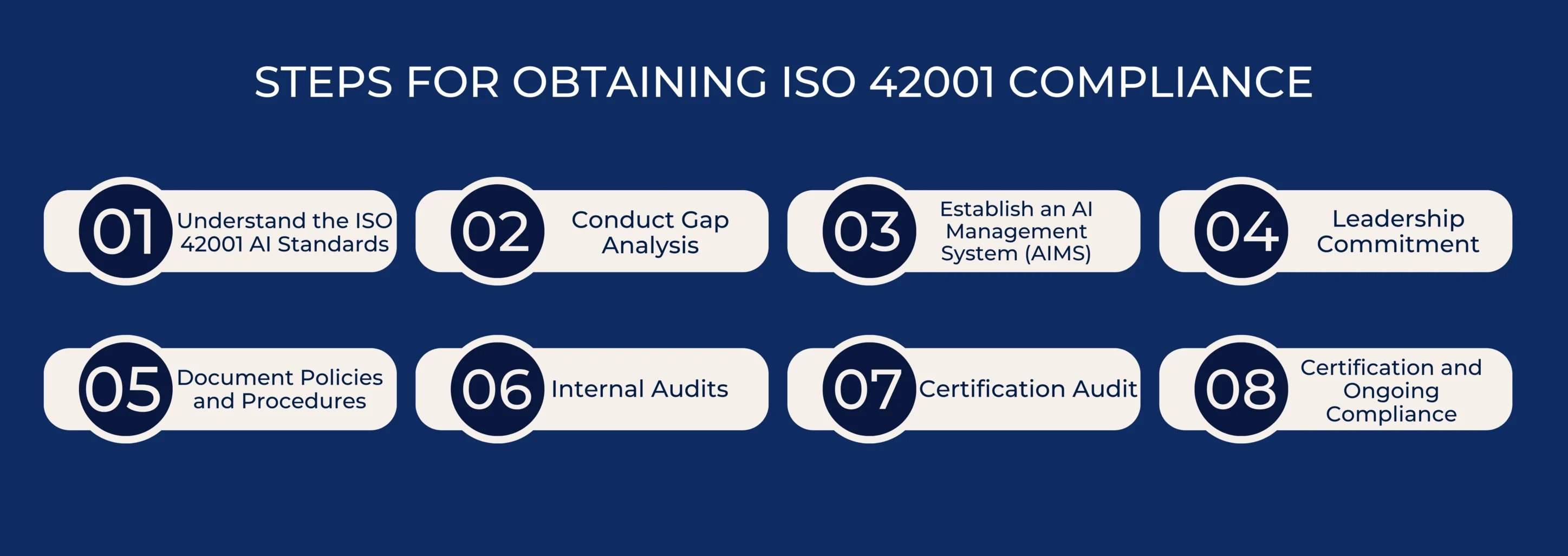
- ✓Stage 1 Audit: Documentation Review and Readiness Evaluation
- ✓Stage 2 Audit: AIMS Implementation and Control Effectiveness
- ✓Surveillance Audits and Recertification
ISO 42001 Certification Requirements for St. Louis Organizations
ISO 42001 compliance requires organizations to establish, document, implement, maintain, and continually improve an Artificial Intelligence Management System that addresses all applicable requirements of ISO/IEC 42001:2023. The standard imposes requirements across organizational context, leadership, planning, support, operations, performance evaluation, and improvement — each of which must be addressed through documented evidence that can be reviewed and tested during an ISO 42001 audit.
St. Louis organizations undergoing the ISO 42001 assessment process must demonstrate that their AIMS is appropriate to the size, complexity, and risk profile of their AI operations, and that controls are proportionate to identified AI risks and impacts.
ISO/IEC 42001:2023 specifies a set of mandatory documented information requirements that must be established and maintained as part of a conforming AIMS. These core documents form the evidentiary foundation against which CertPro auditors evaluate AIMS conformance during both Stage 1 and Stage 2 of the ISO 42001 audit.
The primary documentation requirements include an AIMS scope statement defining the boundaries and applicability of the management system; an AI governance policy endorsed by top management; an AI risk assessment methodology document and associated risk assessment records; an AI impact assessment procedure and completed impact assessment records for in-scope AI systems; a Statement of Applicability listing all Annex A controls with inclusion justifications or exclusion rationale; a risk treatment plan documenting selected controls and treatment objectives; and records of management review meetings demonstrating that AIMS performance, AI-related risks, and improvement opportunities have been systematically reviewed at defined intervals.
Beyond these core documents, ISO 42001 compliance also requires organizations to maintain operational records that demonstrate the day-to-day functioning of AIMS controls. These include AI system inventory records identifying all AI systems within the certification scope, data governance records documenting data sources and quality controls applied to AI training and inference datasets, human oversight records demonstrating that human review mechanisms are operating as designed for high-impact AI decisions, and AI incident records capturing anomalies, performance deviations, or adverse outcomes associated with AI system operation.
For St. Louis financial services organizations, these operational records frequently intersect with records already maintained under model risk management policies or fair lending compliance programs, allowing for documentation synergies during the ISO 42001 assessment. Healthcare organizations similarly find alignment between AIMS operational records and existing clinical AI governance or vendor management documentation frameworks.
ISO/IEC 42001:2023 requires organizations to establish and execute an AI risk assessment process that identifies risks associated with the development, deployment, and use of AI systems within the certification scope. The risk assessment must evaluate the likelihood and consequence of AI-related risks — including risks arising from data quality, model bias, system opacity, unintended automation outcomes, and third-party AI dependencies — and must produce documented risk treatment decisions for each identified risk above the organization’s defined acceptance threshold.
In addition to the AI risk assessment, the standard introduces an AI impact assessment requirement that specifically addresses the potential impacts of AI systems on individuals, groups, or society. The AI impact assessment is distinct from the risk assessment in that it focuses on AI system outputs and their downstream effects, rather than internal operational risks. It must be documented for each AI system within scope prior to deployment and updated when material changes occur. Both the risk assessment and impact assessment records are reviewed during the ISO 42001 AIMS audit to verify that the organization’s approach is proportionate, systematic, and consistently applied.
- ✓AIMS scope statement defining organizational boundaries and AI system applicability
- ✓AI governance policy approved and communicated by top management
- ✓AI risk assessment methodology with completed risk records for in-scope systems
- ✓AI impact assessment procedure and documented assessments per AI system
- ✓Statement of Applicability (SoA) covering all ISO/IEC 42001 Annex A controls
- ✓Risk treatment plan with selected controls, objectives, and implementation evidence
- ✓AI system inventory with classification and operational context for each system
- ✓Management review records demonstrating periodic AIMS performance evaluation
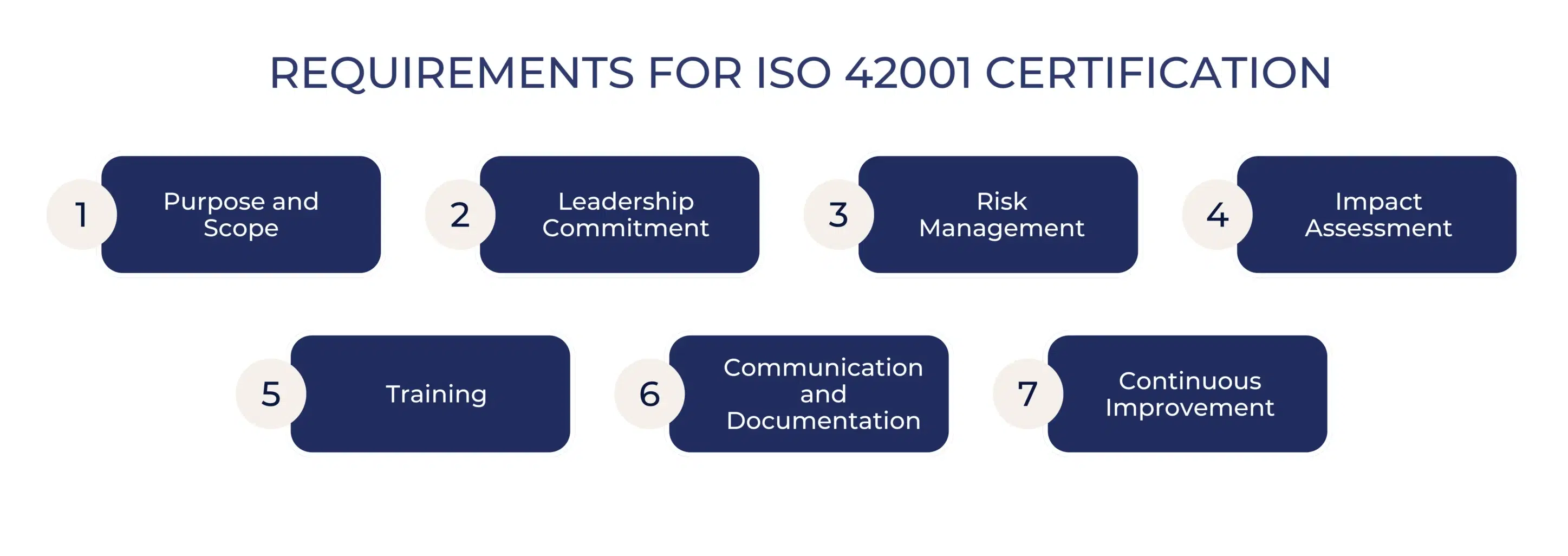
- ✓Core AIMS Documentation Requirements
- ✓AI Risk Assessment and Impact Assessment Requirements
Why St. Louis Organizations Pursue ISO 42001 Certification
Demand for ISO 42001 Certification in St. Louis is driven by a convergence of enterprise procurement requirements, regulatory expectations, sector-specific AI governance pressures, and the increasing materiality of AI risk to organizational operations and reputation. St. Louis organizations across multiple sectors report that ISO 42001 certification is being requested — or is anticipated as a near-term requirement — by enterprise clients, federal agency partners, and regulated sector counterparties as part of vendor qualification and third-party risk management programs.
Financial Services and Fintech Demand Drivers
ISO 42001 compliance in St. Louis financial services is increasingly relevant as regional banks, insurance carriers, and fintech platforms deploy AI systems for credit decisioning, fraud detection, customer service automation, and risk modeling. Federal financial regulators — including the OCC, CFPB, and Federal Reserve — have issued guidance addressing the use of AI in credit underwriting and model risk management. Major financial institutions conducting vendor due diligence are also beginning to include AI governance certification in their third-party technology provider qualification frameworks.
A St. Louis fintech firm providing AI-powered underwriting tools to regional bank clients, for example, may face a vendor security and AI governance review requirement as a condition of contract renewal. ISO 42001 Certification in St. Louis provides these organizations with a documented, independently verified credential that can be submitted in response to enterprise procurement questionnaires, RFP requirements, and vendor assurance requests — reducing the administrative burden of responding to multiple client-specific AI governance inquiries with a single recognized certification.
Healthcare, Agtech, and Defense Technology Contexts
St. Louis healthcare organizations integrating AI into clinical decision support, diagnostic imaging interpretation, or patient flow management face specific AI governance requirements arising from FDA Software as a Medical Device (SaMD) guidance, CMS conditions of participation, and internal clinical governance frameworks. ISO 42001 certification for St. Louis healthcare entities provides a structured management system foundation that documents how AI systems affecting patient care are assessed for risk and impact, how human oversight is maintained, and how incidents are captured and reviewed.
In the agtech and biosciences corridor, organizations using AI for genomic analysis, crop modeling, or laboratory data interpretation are increasingly subject to data integrity and AI governance expectations from institutional research partners and commercial counterparties. Similarly, geospatial and defense technology firms operating under U.S. Department of Defense procurement frameworks are encountering AI ethics and governance requirements in contract vehicles that ISO 42001 AIMS audit certification can help address through documented, independent third-party verification.
SaaS Providers and Cloud Companies Serving Regulated Industries
St. Louis SaaS providers and cloud companies that deliver AI-enabled platforms to regulated industry clients — including healthcare networks, financial services firms, and government agencies — are experiencing growing demand for ISO 42001 certification as an explicit criterion in enterprise procurement processes. In a representative scenario, a St. Louis-based SaaS company selling an AI-powered analytics platform to a national health system may be required to demonstrate ISO 42001 compliance as part of the health system’s vendor technology risk assessment program.
Where the SaaS vendor can present a current ISO 42001 certificate issued by an independent certification body, the procurement review process is expedited and the vendor’s AI governance posture is independently validated — without requiring the client organization to conduct its own detailed AI management system assessment. ISO 42001 Certification that St. Louis cloud providers and SaaS companies obtain can therefore serve both as a competitive differentiator and as a standardized response to enterprise vendor qualification requirements that might otherwise demand individualized, resource-intensive answers to client-specific AI governance questionnaires.
Benefits of ISO 42001 Certification for St. Louis-Based Organizations
ISO 42001 Certification delivers a range of verifiable, independently assessed outcomes for St. Louis organizations operating AI systems across commercial, research, and regulatory contexts. The benefits of ISO 42001 certification are realized across multiple dimensions — operational, commercial, regulatory, and reputational — and are substantiated through the certification audit process rather than through self-declaration or internal assessment alone.
The ISO 42001 assessment process requires organizations to systematically document, implement, and test AI governance controls across the full lifecycle of their AI systems. This process produces a structured AIMS that defines accountability for AI governance at the executive level, establishes repeatable processes for AI risk and impact assessment, and creates operational records that support both internal oversight and external audit requirements.
For St. Louis organizations that have previously managed AI governance through informal policies or decentralized practices, the ISO 42001 certification process establishes a formalized governance architecture that improves internal visibility into AI system risks, decision-making accountability, and control performance. The management review cycle required by Clause 9 of ISO/IEC 42001:2023 ensures that AI governance performance is reviewed at defined intervals by organizational leadership — creating a documented evidence trail that supports board-level or executive-level AI oversight responsibilities increasingly expected by regulators and institutional stakeholders.
ISO 42001 Certification in St. Louis provides organizations with a recognized, independently verified credential that is increasingly referenced in enterprise procurement processes, federal contract requirements, and regulated industry vendor qualification frameworks. A current ISO 42001 certificate from an independent certification body such as CertPro reduces the procurement friction associated with client-initiated AI governance reviews by providing standardized, third-party-verified evidence of AIMS conformance.
For St. Louis organizations competing for contracts with large healthcare systems, financial institutions, federal agencies, or multinational corporations, ISO 42001 certification can serve as a qualifying criterion that differentiates certified vendors from non-certified competitors. The certification is also relevant to international market access — organizations in St. Louis’s growing SaaS and technology export base that serve clients in the European Union, United Kingdom, or Asia-Pacific regions benefit from ISO 42001’s international recognition and its alignment with emerging regulatory AI governance expectations in those jurisdictions.
- ✓Independent third-party verification of AI management system conformance against ISO/IEC 42001:2023
- ✓Documented evidence of AI risk assessment and impact assessment processes for regulatory and client inquiries
- ✓Recognized ISO 42001 certification credential for enterprise vendor qualification and procurement processes
- ✓Structured accountability framework assigning AI governance responsibilities to defined organizational roles
- ✓Ongoing surveillance audit oversight confirming continued AIMS conformance between certification cycles
- ✓International recognition supporting market access to clients and partners in regulated global markets
- ✓Alignment with U.S. federal AI governance guidance and emerging regulatory expectations for AI system accountability
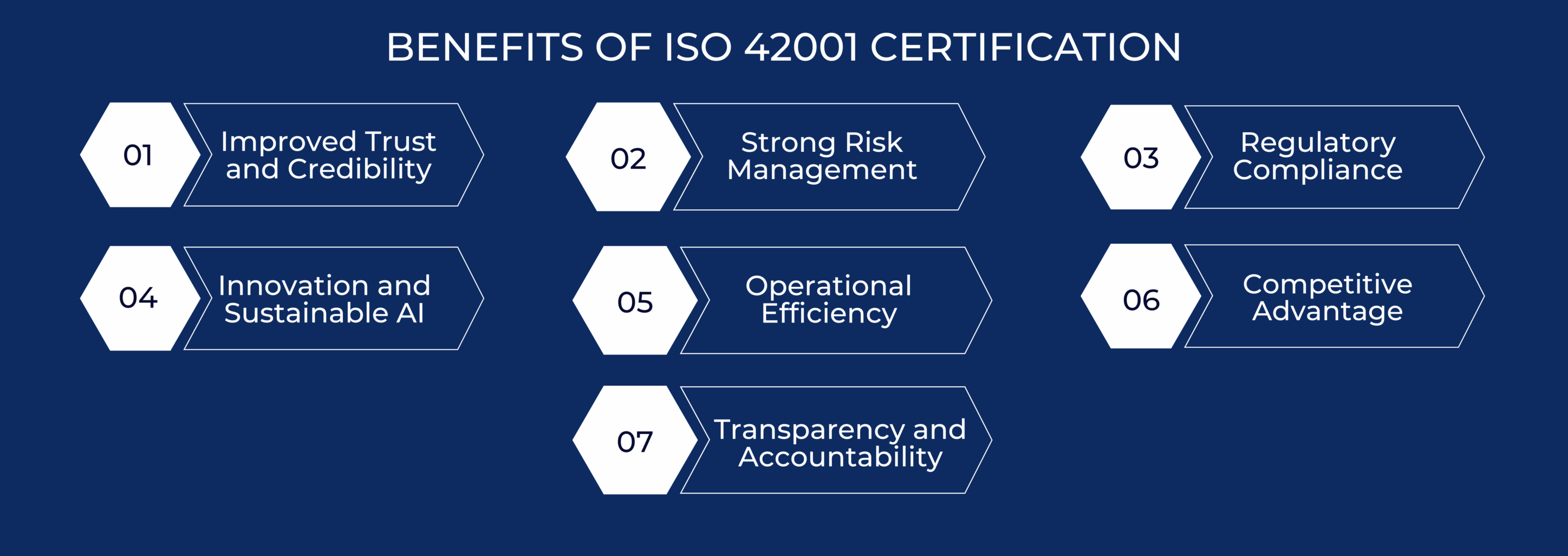
- ✓Operational and Governance Benefits
- ✓Commercial and Procurement Recognition
ISO 42001 Certification Scope and Independent Decision Framework
The scope of ISO 42001 Certification in St. Louis is defined by the organization during the application and audit program determination phase, in consultation with the CertPro audit team. The certification scope establishes the boundaries of the AIMS subject to audit, identifying the AI systems, organizational units, locations, and activities included within the assessment.
Scope determination is a substantive activity — a scope that is too narrowly defined may exclude material AI operations from governance oversight, while an overly broad scope may create operational complexity disproportionate to the organization’s current AI governance maturity. The ISO 42001 assessment evaluates the appropriateness of the defined scope as part of the Stage 1 audit review.
Evidence-Based Assessment and Nonconformity Management
CertPro’s ISO 42001 audit is conducted entirely on the basis of objective audit evidence — documented information, personnel interview records, system observation notes, and sampled operational data — rather than on organizational representations or self-assessed compliance claims. During the Stage 2 ISO 42001 AIMS audit, auditors examine whether controls described in the Statement of Applicability are implemented as documented, whether risk treatment measures have been executed in accordance with the risk treatment plan, and whether the organization’s monitoring and measurement activities produce reliable performance data.
Nonconformities are identified where audit evidence reveals a departure from an ISO/IEC 42001:2023 requirement. Each nonconformity is documented with a reference to the specific standard clause or Annex A control involved, a description of the observed gap, and the evidence on which the finding is based. The organization’s corrective action response must address the root cause of each nonconformity and provide objective evidence of remediation before the certification committee completes its review.
Certification Committee Independence and Certificate Validity
The ISO 42001 certification decision at CertPro is made by an independent certification committee that is structurally separate from the audit team that conducted the assessment. This independence requirement is fundamental to the integrity of the certification process — it ensures that the audit team’s findings are reviewed objectively by personnel who were not directly involved in the audit execution and who have no commercial interest in the certification outcome.
The certification committee reviews the complete audit file — including Stage 1 and Stage 2 audit reports, nonconformity records, corrective action evidence, and the audit team’s recommendation — before issuing a certification decision. An ISO 42001 certificate issued by CertPro is valid for three years from the date of the certification decision, subject to the satisfactory completion of annual surveillance audits. The certificate may be suspended or withdrawn if surveillance audits reveal material nonconformities that are not corrected within specified timelines, if the organization’s certification scope changes materially without notification, or if the organization fails to maintain the surveillance audit schedule required under the certification agreement.
ISO 42001 Certification for Key St. Louis Industry Sectors
ISO 42001 certification for St. Louis companies spans a wide range of sectors, each characterized by distinct AI use cases, regulatory environments, and stakeholder expectations. The applicability of ISO/IEC 42001:2023 across these sectors reflects the standard’s technology-neutral, management-system-based design — organizations in structurally different industries can apply the same standard framework to govern AI systems with very different technical architectures, operational contexts, and impact profiles. Whether pursuing ISO 42001 compliance for regulatory alignment or enterprise procurement purposes, St. Louis organizations across all major sectors benefit from the standard’s consistent, auditable governance structure.
ISO 42001 Certification in St. Louis Healthcare and Life Sciences
ISO 42001 certification that St. Louis healthcare organizations pursue addresses AI governance across clinical decision support systems, diagnostic imaging AI, predictive readmission models, revenue cycle automation, and AI-enabled patient engagement platforms. Large integrated health systems operating in the St. Louis market — including those affiliated with academic medical centers and regional hospital networks — face board-level oversight expectations for AI governance that align directly with ISO/IEC 42001:2023 requirements for executive leadership accountability, AI impact assessment, and incident response.
Healthcare AI vendors serving the St. Louis market similarly face procurement-level AI governance verification requirements from health system clients conducting technology risk assessments. The ISO 42001 AIMS audit for healthcare organizations evaluates human oversight controls applied to AI-assisted clinical workflows, data governance practices governing the use of patient data in AI model training and inference, and the documentation and review processes for AI system performance monitoring in clinical contexts. ISO 42001 certification in this sector complements — but does not replace — regulatory frameworks such as FDA SaMD guidance, HIPAA data governance requirements, and The Joint Commission standards for clinical technology oversight.
ISO 42001 Compliance St. Louis Financial Services
ISO 42001 compliance that St. Louis financial services organizations pursue reflects the sector’s well-established model risk management culture and the growing application of AI to credit, fraud, insurance, and investment operations. Regional banks, credit unions, insurance carriers, and fintech companies operating in St. Louis deploy AI systems subject to OCC model risk management guidance (SR 11-7), CFPB fair lending and algorithmic accountability expectations, and state insurance department AI use disclosure requirements.
ISO 42001 certification for St. Louis financial services organizations structures AI governance around the same principles already embedded in model risk management programs — independent validation, ongoing monitoring, documentation of model assumptions and limitations, and management review of model performance — while extending the governance framework to cover AI systems that may not fall within traditional model risk definitions. Financial technology companies providing AI-powered services to regulated institution clients find that ISO 42001 audit certification in St. Louis provides an efficient mechanism for demonstrating AI governance maturity in response to client vendor risk management reviews and third-party AI due diligence requests.
ISO 42001 Assessment: Audit Scope, St. Louis Logistics, and Engagement Structure
CertPro conducts ISO 42001 assessment activities for St. Louis organizations through a combination of on-site audit engagements and remote audit procedures, depending on the certification scope, the nature of the AI systems under assessment, and the operational context of the organization. The ISO 42001 audit engagement structure for St. Louis organizations is determined during the audit program planning phase, which follows the initial application review and scope confirmation.
For organizations with significant operational AI systems — such as production machine learning models, automated decision-making platforms, or AI-integrated enterprise systems — on-site audit activities allow auditors to observe system operations, conduct personnel interviews in context, and review operational records in their native environment.
Audit Program Determination and Scope Confirmation
The ISO 42001 assessment engagement for St. Louis organizations begins with a formal application and audit program determination process. During this phase, CertPro reviews the organization’s application documentation — including the proposed AIMS scope, the AI system inventory, and the organizational context statement — to confirm that the scope is appropriately defined and that there are no conflict-of-interest considerations that would preclude the assignment of specific auditors.
The audit program determination establishes the planned sequence of Stage 1 and Stage 2 audit activities, the estimated audit duration based on scope complexity and organizational size, the auditor qualifications required for the specific AI domains within the certification scope, and the schedule for surveillance audits following initial certification. For St. Louis organizations with multi-site AI operations — such as financial services firms with trading, risk, and customer-facing AI systems across multiple business units — the audit program determination addresses how multi-site sampling will be incorporated into the ISO 42001 audit approach.
Remote and Hybrid Audit Delivery for St. Louis Organizations
CertPro’s ISO 42001 audit program for St. Louis accommodates remote and hybrid audit delivery for organizations where secure remote access to documentation systems, video-based personnel interviews, and screen-share review of AI system dashboards and operational records can provide equivalent audit evidence to on-site procedures. Remote audit delivery is particularly relevant for St. Louis SaaS companies and cloud providers whose AI system operations are hosted in cloud environments accessible from any location and whose documentation management systems support secure remote auditor access.
The determination of whether remote, hybrid, or fully on-site audit procedures are appropriate for a specific ISO 42001 assessment engagement in St. Louis is made during audit program planning. This determination is based on the nature of the controls to be evaluated, the accessibility of audit evidence through remote means, and any specific security or operational constraints the organization applies to external access. All ISO 42001 AIMS audit procedures — regardless of delivery format — are conducted to the same evidence standards and documentation requirements as in-person assessments.
FAQ
▶
What is ISO 42001 Certification and who needs it in St. Louis?
▶
How does the ISO 42001 audit process work for St. Louis organizations?
▶
What documents are required for ISO 42001 compliance in St. Louis?
▶
How long is an ISO 42001 certificate valid, and what are surveillance requirements?
▶
What is the difference between Stage 1 and Stage 2 of the ISO 42001 audit?
▶
Does ISO 42001 certification apply to organizations using third-party AI tools in St. Louis?
▶
How does ISO 42001 certification relate to ISO 27001 certification for St. Louis organizations?
▶
Is CertPro an accredited certification body for ISO 42001 in St. Louis?
ISO 42001 CERTIFIED: WHY AI GOVERNANCE CERTIFICATION IS BECOMING A BOARD-LEVEL REQUIREMENT
ISO 42001 Certified: Board-Level AI Governance Guide | CertPro CPA LLC HERO ══════════════════════════════ –> src=”https://certpro.com/wp-content/uplo…
Get In Touch
have a question? let us get back to you.