
ISO 42001 Certification in Vienna
The ISO 42001 audit process for Vienna-based organizations follows a structured, stage-based examination methodology conducted by a Licensed CPA Firm. Each stage produces documented findings that form the evidentiary basis for the independent certification committee’s decision. The process is consistent with international management system certification practices and applies regardless of the organization’s industry sector, size, or the specific AI systems included within the defined certification scope.
OUR CLIENTS








ISO 42001 Certification for Vienna-Based Financial, Technology, and Life Sciences Organizations
ISO 42001 Certification in Vienna is issued by a Licensed CPA Firm operating as an independent certification body. The process begins with a structured audit of an organization’s AI Management System (AIMS) against the requirements of ISO/IEC 42001:2023. This formal, third-party ISO 42001 examination evaluates whether the AIMS conforms to the standard’s requirements for AI governance, risk management, transparency, accountability, and continuous improvement. The certification decision is made by an independent certification committee based solely on audit evidence — not on consulting engagements, readiness support, or advisory activities.
Vienna as a Regional AI Governance and Enterprise Technology Hub
Vienna operates as a Central and Eastern European business hub, hosting major financial institutions — including banking groups, insurance organizations, and asset management firms — alongside a growing concentration of fintech platforms, cloud service providers, SaaS developers, enterprise software companies, and life sciences and biotechnology organizations. The city serves as a regional headquarters for multinational corporations managing operations across Central and Eastern Europe, anchoring a maturing ecosystem of technology startups and AI system developers.
This concentration of regulated and technology-intensive industries creates structured demand for independent AI governance certification. ISO 42001 Certification in Vienna satisfies enterprise procurement expectations and regulatory obligations across the European Union and international markets, making it an increasingly essential credential for organizations operating in this environment.
Vienna-based organizations serving regulated sectors face procurement requirements that mandate third-party validation of AI risk management frameworks. Enterprise buyers, institutional clients, and regulatory bodies in the EU increasingly require documented evidence that AI systems are governed under a formally audited management framework.
ISO 42001 Certification in Vienna addresses those requirements by providing an independently issued certificate that demonstrates conformance of the AIMS to ISO/IEC 42001:2023. The certificate is recognized in vendor due diligence reviews, enterprise procurement processes, and regulatory submissions across financial services, life sciences, telecommunications, and cloud infrastructure sectors.
Licensed CPA Firm as Independent Certification Body
ISO 42001 Certification is issued exclusively by a Licensed CPA Firm acting as an independent certification body. The firm neither designs nor implements the AI Management System under review. The audit team collects and evaluates objective evidence during Stage 1 and Stage 2 audits, and the certification decision is made by an independent certification committee based on that evidence.
This independence is a foundational requirement of the ISO 42001 audit process. It clearly distinguishes an ISO 42001 certification engagement from consulting, implementation, or readiness activities. Organizations in Vienna seeking certification engage a Licensed CPA Firm to conduct the examination and issue the ISO 42001 attestation upon confirmed conformance.
Scope of ISO/IEC 42001:2023 and Alignment with ISO 27001 and ISO 31000
ISO/IEC 42001:2023 is the international standard governing AI Management Systems. It covers AI risk management, governance, transparency, accountability, and the responsible development and deployment of AI systems across the full AI lifecycle. The standard shares structural alignment with ISO 27001 for information security management and ISO 31000 for enterprise risk management.
This alignment allows organizations with existing management system frameworks to align governance roles, risk assessment processes, policy structures, and internal audit programs across standards — without redundant system design. The ISO 42001 audit evaluates conformance against the standard’s management system clauses (Clauses 4 through 10) and applicable Annex controls within the defined certification scope. Vienna-based organizations with existing ISO 27001 certification can leverage documented controls and governance structures when establishing their AIMS for ISO 42001 examination.

ISO 42001 Certification Audit Process for Organizations in Vienna
The ISO 42001 audit process for Vienna-based organizations follows a structured, stage-based examination methodology conducted by a Licensed CPA Firm. Each stage produces documented findings that form the evidentiary basis for the independent certification committee’s decision. The process is consistent with international management system certification practices and applies regardless of the organization’s industry sector, size, or the specific AI systems included within the defined certification scope.
The Stage 1 ISO 42001 audit involves a structured review of the organization’s AIMS documentation. This includes the AI policy, AI risk assessment records, risk treatment plans, Annex control applicability statements, internal audit records, and management review outputs. The audit team evaluates whether the documented AIMS is sufficiently developed and scoped to proceed to Stage 2 evidence testing.
The Stage 1 audit also confirms that the defined certification scope accurately reflects the AI systems, processes, and organizational boundaries under examination. Any documentation gaps or scope inconsistencies identified during Stage 1 are documented as findings and communicated to the organization prior to Stage 2 scheduling.
The Stage 2 ISO 42001 audit is the primary evidence-collection phase of the examination. The audit team tests the operating effectiveness of AIMS controls against ISO/IEC 42001:2023 requirements and applicable Annex controls. This is accomplished by reviewing operational records, interviewing process owners, inspecting AI system configurations, and examining documented evidence of control execution.
The Stage 2 audit evaluates whether controls are not only appropriately designed but are functioning as intended within the defined scope. Nonconformities identified during Stage 2 are categorized, documented, and reported to the organization for corrective action prior to the certification committee’s review.
Following the completion of Stage 1 and Stage 2 audits and the resolution of documented nonconformities, the audit findings are submitted to an independent certification committee for review. The committee evaluates the audit evidence independently of the audit team and determines whether the organization’s AIMS conforms to the requirements of ISO/IEC 42001:2023.
Upon a positive certification decision, the Licensed CPA Firm issues the ISO 42001 attestation and the associated certificate. The certificate specifies the certification scope, the applicable standard, and the certificate validity period. For Vienna-based organizations, this ISO 42001 attestation constitutes formal, third-party documentation of AIMS conformance that is recognized in enterprise procurement and regulatory contexts.
| Audit Stage | Key Activities | Output |
|---|---|---|
| Application Review | Scope definition, audit program determination, scheduling | Audit plan and scope agreement |
| Stage 1 Audit | Documentation review, AIMS readiness evaluation, scope confirmation | Stage 1 findings report |
| Stage 2 Audit | Control evidence collection, operating effectiveness testing, nonconformity identification | Stage 2 audit report with nonconformities |
| Nonconformity Review | Corrective action verification, evidence re-evaluation | Closed nonconformity records |
| Certification Decision | Independent committee review, ISO 42001 attestation issuance | ISO 42001 attestation and certificate |
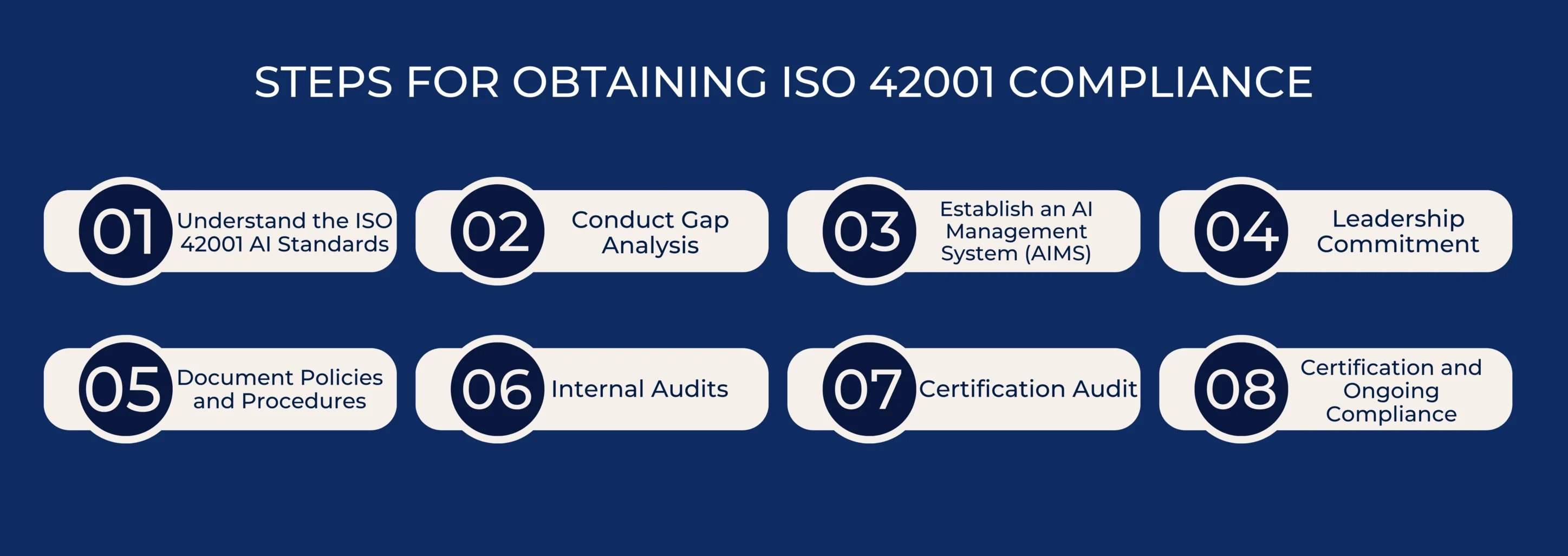
- ✓Stage 1 Audit: Documentation Review and Scope Confirmation
- ✓Stage 2 Audit: Evidence Collection and Control Effectiveness Evaluation
- ✓Certification Committee Decision and Certificate Issuance
ISO 42001 Requirements: What the Standard Evaluates
ISO 42001 compliance requires that an organization establish, implement, maintain, and continually improve an AI Management System that conforms to the requirements of ISO/IEC 42001:2023. The standard’s requirements are organized across management system clauses (Clauses 4 through 10) and a set of Annex controls applicable to the AI governance and operational context of the certified organization. The ISO 42001 audit evaluates conformance against these requirements using objective evidence collected during Stage 1 and Stage 2 procedures.
Clauses 4 through 10 of ISO/IEC 42001:2023 establish the foundational management system requirements that an organization’s AIMS must satisfy. Each clause addresses a distinct governance dimension:
Clause 4 requires the organization to define its internal and external context, identify interested parties, and establish the certification scope. Clause 5 addresses leadership obligations, including the establishment of an AI policy and the assignment of roles and responsibilities for AI governance. Clause 6 covers AI risk assessment and treatment planning, requiring the organization to identify AI-related risks, evaluate their significance, and document treatment decisions with associated controls.
Clauses 7 through 10 address support requirements — including resources, competence, communication, and documentation — as well as operational controls, performance evaluation through internal audit and management review, and the continual improvement process. The ISO 42001 examination reviews documented evidence of conformance across each of these clauses.
ISO/IEC 42001:2023 includes an Annex that specifies controls applicable to AI governance, accountability, transparency, data quality, bias management, explainability, and the security of AI systems. Organizations are required to evaluate the applicability of Annex controls to their defined scope and document their applicability determinations. Controls applicable to the organization’s AI systems must be implemented, and their effectiveness must be demonstrable through objective evidence.
The ISO 42001 audit tests whether applicable Annex controls are appropriately designed and operating effectively within the certification scope. For Vienna-based organizations in regulated sectors such as banking and financial services, controls addressing AI model accountability, bias assessment, and explainability are frequently central to the ISO 42001 examination.
ISO 42001 compliance requires that the organization maintain a defined set of documented information as evidence of AIMS implementation and operation. Core documentation required for the ISO 42001 examination includes the AI policy, AI risk assessment records, AI risk treatment plan, Annex control applicability statement, internal audit program and reports, management review records, and documented evidence of corrective actions.
The audit team reviews this documentation during Stage 1 to confirm completeness, and during Stage 2 to verify that documented processes are reflected in operational practice. Organizations in Vienna that maintain existing documentation frameworks under ISO 27001 or other management system standards may structure their ISO 42001 documentation to align with those existing frameworks. This approach reduces duplication while still satisfying the distinct requirements of ISO/IEC 42001:2023.
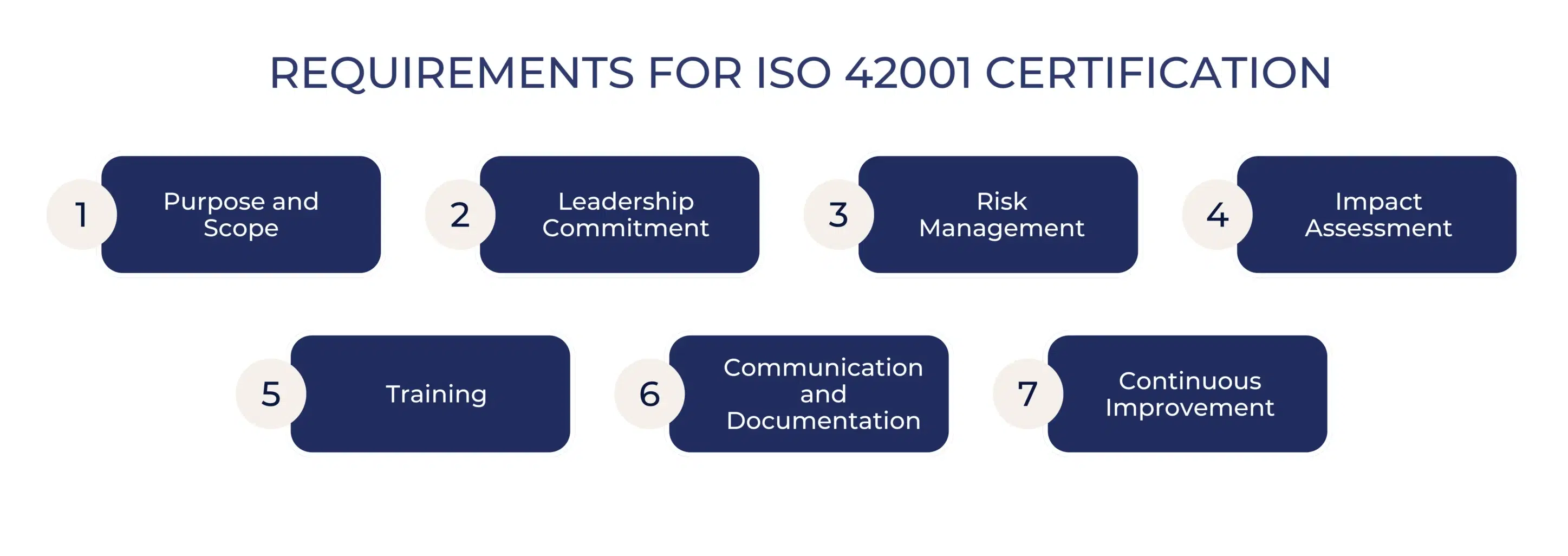
- ✓Management System Clauses: Governance and Organizational Context
- ✓Annex Controls: AI Governance, Transparency, and Risk Treatment
- ✓Documentation Requirements for ISO 42001 Conformance
Why Organizations in Vienna Pursue ISO 42001 Certification
Demand for ISO 42001 Certification in Vienna is driven by a convergence of enterprise procurement requirements, EU regulatory expectations, and international market access considerations. These factors are specific to Vienna’s position as a financial services center, regional headquarters location, and growing AI technology hub. Organizations across multiple sectors pursue ISO 42001 Certification in Vienna to satisfy third-party assurance requirements and demonstrate independently verified AI governance to clients, regulators, and institutional buyers.
Financial Services and Banking Sector Demand
Vienna’s banking and financial services sector — including major banking groups, insurance organizations, asset management firms, and fintech platforms — operates under regulatory frameworks that increasingly address AI governance and risk management. The European Central Bank, the European Banking Authority, and the Austrian Financial Market Authority have all issued guidance regarding the use of AI in financial decision-making, credit risk assessment, fraud detection, and customer-facing applications.
ISO 42001 Certification in Vienna provides financial services organizations with an independently audited evidence base demonstrating that AI systems deployed in regulated processes are governed under a formally examined management framework. Vienna-based fintech organizations also pursue ISO 42001 compliance to satisfy vendor onboarding requirements from institutional banking clients that mandate third-party validation of AI governance frameworks.
Enterprise Software, SaaS, and Cloud Service Provider Demand
Vienna-based SaaS providers, cloud service companies, and enterprise software developers that embed AI capabilities into their products or platforms face procurement expectations from enterprise buyers requiring documented evidence of AI governance. Large enterprise clients in regulated sectors — financial services, healthcare, government, and telecommunications — evaluate vendor AI governance frameworks as part of third-party risk management and vendor due diligence processes.
ISO 42001 Certification for Vienna companies in the SaaS and cloud services sector positions the certified organization’s AIMS as independently examined and formally attested by a Licensed CPA Firm. This ISO 42001 attestation satisfies procurement security questionnaire requirements that request evidence of AI governance frameworks and risk management controls across the vendor’s AI system portfolio.
Life Sciences, Biotechnology, and Regional Headquarters Organizations
Vienna’s life sciences and biotechnology sector — including pharmaceutical organizations, medical device manufacturers, and clinical research organizations — increasingly deploys AI systems in drug discovery, clinical trial data analysis, regulatory submission processes, and medical imaging. These applications are subject to regulatory scrutiny from the European Medicines Agency and national competent authorities, extending to the governance and validation of AI-assisted processes.
Regional headquarters organizations managing Central and Eastern European operations from Vienna face consolidated AI governance requirements across multiple jurisdictions and regulatory frameworks. ISO 42001 Certification in Vienna provides both regional headquarters and life sciences organizations with a single, internationally recognized attestation. This confirms that AI governance is formally structured and independently audited, satisfying multi-jurisdictional procurement and regulatory expectations from a unified certification scope.
Surveillance Audits, Certificate Validity, and Recertification
ISO 42001 certification is not a one-time event. Following the initial certification decision, the Licensed CPA Firm conducts periodic surveillance audits and a recertification audit to verify that the organization’s AIMS continues to conform to ISO/IEC 42001:2023 requirements over the certificate’s validity period. The ongoing audit program is a defined component of the ISO 42001 attestation framework and is communicated to the organization at the time of initial certification.
Surveillance Audit Schedule and Scope
Surveillance audits are conducted at defined intervals during the three-year certificate validity period, typically on an annual basis following initial certification. Each surveillance audit reviews a defined subset of the AIMS — including management review outputs, internal audit findings, corrective action records, and selected Annex controls — to verify that the AIMS continues to operate effectively and that the organization is maintaining ISO 42001 compliance with ISO/IEC 42001:2023 requirements.
Surveillance audits do not repeat the full scope of the Stage 2 examination. Instead, they focus on areas of identified risk, previous nonconformities, and changes to the organization’s AI systems or governance structure that may affect AIMS conformance. Findings from surveillance audits are documented and reviewed by the independent certification committee to determine whether the certificate remains valid.
Recertification Audit and Certificate Renewal
The ISO 42001 certificate is valid for a three-year period from the date of issuance. Prior to certificate expiration, the Licensed CPA Firm conducts a recertification audit that re-examines the full AIMS against ISO/IEC 42001:2023 requirements. The recertification audit follows a process analogous to the initial Stage 1 and Stage 2 examination, with the audit scope reflecting the organization’s current AI systems, governance structure, and any changes to the AIMS since initial certification.
Upon successful recertification and a positive determination by the independent certification committee, a new three-year certificate is issued. Vienna-based organizations that maintain continuous conformance through the surveillance audit cycle typically experience an efficient recertification process, supported by well-documented AIMS records.
Certificate Suspension and Withdrawal Conditions
The ISO 42001 certificate may be suspended or withdrawn by the Licensed CPA Firm if the organization fails to maintain conformance with ISO/IEC 42001:2023 requirements, does not facilitate scheduled surveillance audits, or fails to resolve major nonconformities within agreed corrective action timeframes. Suspension is a temporary status during which the organization’s certificate is not recognized as active. Withdrawal results in termination of the certificate, requiring a new full certification cycle for reinstatement.
These conditions are defined in the certification agreement and are consistent with international management system certification practices. Vienna-based organizations maintain active ISO 42001 certification status by sustaining AIMS operations, fulfilling audit obligations, and addressing documented findings within specified timeframes.
Benefits of ISO 42001 Certification for Vienna-Based Organizations
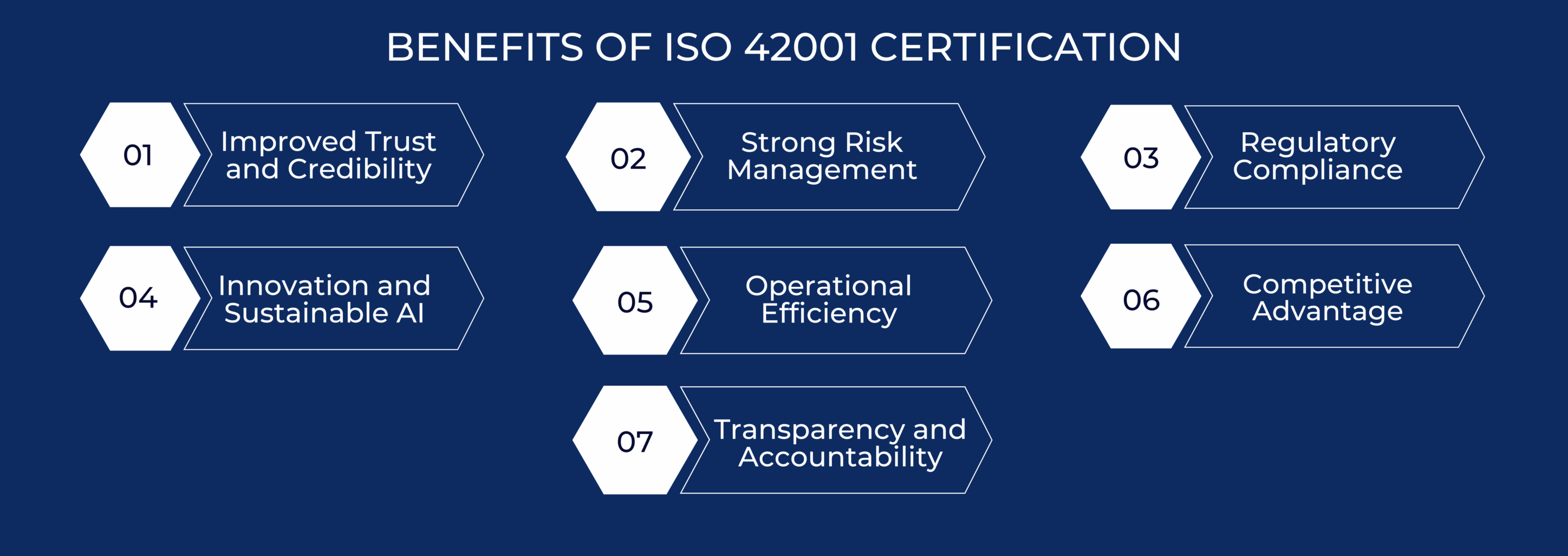
ISO 42001 Certification in Vienna delivers independently verified evidence of AI governance conformance that is recognized in enterprise procurement processes, regulatory submissions, and international market access contexts. The following benefits apply to certified organizations across Vienna’s financial services, technology, life sciences, and regional headquarters sectors.
- ✓Independently issued ISO 42001 attestation demonstrating AIMS conformance to ISO/IEC 42001:2023, recognized by enterprise buyers and institutional clients in regulated sectors
- ✓Third-party verification of AI risk management, transparency, accountability, and governance controls by a Licensed CPA Firm independent of the certified organization
- ✓Satisfaction of enterprise vendor due diligence and procurement security questionnaire requirements that request evidence of AI governance frameworks
- ✓Alignment with EU AI Act governance expectations and regulatory requirements applicable to Vienna-based organizations in financial services, life sciences, and technology sectors
- ✓Recognition in international market access processes for Vienna companies expanding into North American, Middle Eastern, and Asia-Pacific enterprise markets that require formal AI governance attestation
- ✓Structured ISO 42001 audit methodology that provides documented assurance to boards, senior management, and audit committees regarding the operational effectiveness of the AIMS
- ✓Ongoing surveillance audit program that maintains continuous ISO 42001 compliance verification and supports the organization’s internal AI governance oversight processes
- ✓Competitive differentiation in Vienna’s financial services and enterprise technology markets where AI governance attestation is an emerging qualification criterion in vendor selection
AI Management System (AIMS) Structure Under ISO/IEC 42001:2023
An AI Management System under ISO/IEC 42001:2023 is a structured governance framework that an organization establishes, implements, maintains, and continually improves to govern AI systems within a defined scope. The AIMS addresses the full AI lifecycle — from initial AI system design and development through deployment, monitoring, and decommissioning — and integrates AI-specific risk management, accountability structures, transparency mechanisms, and control frameworks into the organization’s broader governance environment.
The ISO 42001 audit in Vienna evaluates the AIMS against the standard’s requirements to determine whether the governance framework is both appropriately designed and operationally effective.
AI Risk Assessment and Treatment Framework
ISO/IEC 42001:2023 requires that the organization conduct a systematic AI risk assessment identifying risks associated with the development, deployment, and operation of AI systems within the certification scope. The risk assessment must evaluate risks to individuals, groups, organizations, and society arising from AI system outputs, decisions, and behaviors — including risks related to bias, discrimination, privacy violation, security compromise, and accountability failures.
Risk treatment decisions must be documented in a risk treatment plan specifying selected controls, responsible parties, and implementation timelines. The ISO 42001 audit evaluates the completeness and methodological rigor of the risk assessment, the appropriateness of treatment decisions, and the effectiveness of implemented controls in reducing identified AI risks to acceptable levels.
AI Governance Roles, Accountability, and Transparency Controls
ISO/IEC 42001:2023 requires that the organization assign defined roles and responsibilities for AI governance. These include accountability for AI system outcomes, oversight of AI model performance, and escalation paths for AI-related incidents. Transparency controls require that the organization maintain documented records of AI system purpose, decision logic, data inputs, training methodologies, and performance evaluation outcomes sufficient to support accountability and explainability obligations.
For Vienna-based organizations in financial services, these controls are directly relevant to regulatory expectations regarding the explainability of AI-driven credit decisions, fraud detection outputs, and customer risk assessments. The ISO 42001 examination tests whether governance roles are formally assigned, whether accountability structures are operational, and whether transparency documentation is maintained and accessible.
Internal Audit and Continual Improvement Requirements
ISO/IEC 42001:2023 requires that the organization conduct periodic internal audits of the AIMS to evaluate conformance with the standard’s requirements and the organization’s own AI governance policies. Internal audit findings must be documented, reported to management, and addressed through a corrective action process. Management review of the AIMS must occur at planned intervals to evaluate AIMS performance, review audit findings, assess AI risk treatment effectiveness, and determine opportunities for improvement.
The continual improvement requirement means that the AIMS is not a static framework but a dynamic governance system. It must evolve in response to changes in AI technology, organizational context, regulatory requirements, and audit findings. The ISO 42001 certification examination reviews internal audit records and management review outputs to verify that this improvement cycle is fully operational.
ISO 42001 Certification Scope Definition for Vienna Organizations
Defining the certification scope is a foundational step in the ISO 42001 audit process. It determines the boundaries of the AIMS subject to examination and identifies the AI systems, organizational units, processes, and geographic locations included within the certification. For Vienna-based organizations, the scope may encompass AI systems deployed across a single business unit, a specific product or service line, or the entire organization — depending on the breadth of AI deployment and the organization’s governance objectives.
Scope Boundaries and Exclusions
The certification scope must accurately reflect the AI systems and organizational boundaries subject to the AIMS. Exclusions from the scope are permissible where AI systems or processes do not interact with or affect the governance effectiveness of included systems, and all exclusions must be documented and justified. The ISO 42001 audit Stage 1 review evaluates whether the defined scope is appropriate, whether exclusions are justified, and whether scope boundaries accurately represent the organization’s AI deployment environment.
Scope definitions that exclude AI systems for which governance is relevant to the organization’s regulatory obligations or enterprise procurement commitments may require revision prior to Stage 2 scheduling. Vienna-based organizations operating across multiple legal entities or jurisdictions may define a scope that encompasses Central and Eastern European operations managed from Vienna.
Multi-Standard Scope Alignment for Vienna Organizations
Vienna-based organizations that hold ISO 27001 certification or are subject to SOC 2 examination may align their ISO 42001 certification scope with existing management system boundaries to leverage established governance infrastructure. The structural compatibility of ISO/IEC 42001:2023 with ISO 27001 allows organizations to map AI governance roles, risk assessment methodologies, and internal audit programs to existing frameworks without complete redesign.
However, the ISO 42001 examination evaluates conformance against the specific requirements of ISO/IEC 42001:2023 independently of other certifications. Existing certifications do not satisfy ISO 42001 audit requirements. The audit team assesses the AI-specific requirements of ISO/IEC 42001:2023 as a distinct examination, regardless of the organization’s existing management system certifications.
ISO 42001 and EU AI Act Alignment for Vienna-Based Organizations
The EU Artificial Intelligence Act entered into force in August 2024 and applies progressively across EU member states, including Austria. It establishes binding regulatory obligations for organizations that develop, deploy, or place AI systems on the EU market. Vienna-based organizations subject to the EU AI Act face governance requirements that overlap substantially with ISO/IEC 42001:2023 requirements, creating meaningful alignment opportunities between ISO 42001 compliance activities and EU AI Act conformance obligations.
ISO 42001 Compliance and EU AI Act Risk Classification
The EU AI Act classifies AI systems by risk level — unacceptable risk, high risk, limited risk, and minimal risk — and imposes governance, transparency, and accountability obligations commensurate with each risk classification. High-risk AI systems deployed in sectors such as financial services credit assessment, medical device decision support, employment screening, and law enforcement face the most demanding regulatory requirements. These include mandatory risk management systems, data governance practices, transparency documentation, and human oversight mechanisms.
ISO 42001 compliance frameworks that address AI risk assessment, Annex controls for bias management and explainability, and documented accountability structures align closely with the EU AI Act’s high-risk system requirements. Vienna-based organizations can reference their ISO 42001 attestation as evidence of structured AI governance in regulatory submissions and notified body engagements under the EU AI Act.
ISO 42001 Examination and GDPR AI Processing Governance
GDPR obligations applicable to AI-assisted automated decision-making — including Article 22 requirements regarding automated individual decision-making with legal or similarly significant effects — create governance obligations that intersect with ISO/IEC 42001:2023 transparency and accountability control requirements. Vienna-based organizations subject to GDPR that deploy AI systems in customer profiling, automated credit decisions, or employment screening must maintain documentation of AI decision logic, data processing justifications, and individual rights mechanisms that overlap with ISO 42001 AIMS documentation requirements.
The ISO 42001 examination does not constitute a GDPR audit. However, the documented evidence collected during the ISO 42001 audit process provides a structured evidentiary record that supports GDPR accountability obligations. Organizations in Vienna pursuing ISO 42001 Certification frequently identify alignment between AIMS documentation requirements and their existing GDPR data protection documentation frameworks.
FAQ
▶
What is ISO 42001 Certification?
▶
Which organizations in Vienna pursue ISO 42001 Certification?
▶
What does the ISO 42001 audit process involve?
▶
How long is an ISO 42001 certificate valid?
▶
What is ISO 42001 attestation?
▶
How does ISO 42001 differ from ISO 27001?
▶
What is an ISO 42001 examination?
▶
Does ISO 42001 certification satisfy EU AI Act requirements?
ISO 42001 CERTIFIED: WHY AI GOVERNANCE CERTIFICATION IS BECOMING A BOARD-LEVEL REQUIREMENT
ISO 42001 Certified: Board-Level AI Governance Guide | CertPro CPA LLC HERO ══════════════════════════════ –> src=”https://certpro.com/wp-content/uplo…
Get In Touch
have a question? let us get back to you.