
SOC 2 Certification in Frankfurt
SOC 2 Certification in Frankfurt is conducted by CertPro, a Licensed CPA Firm delivering independent, third-party attestation audits evaluated against the AICPA Trust Services Criteria. Frankfurt-based service organizations — including banking technology providers, fintech platforms, cloud infrastructure operators, and SaaS companies — obtain SOC 2 attestation to demonstrate the design and operating effectiveness of security, availability, processing integrity, confidentiality, and privacy controls.
OUR CLIENTS










SOC 2 Certification for Frankfurt-Based Financial and Technology Organizations
SOC 2 Certification in Frankfurt is conducted by CertPro, a Licensed CPA Firm delivering independent, third-party attestation audits evaluated against the AICPA Trust Services Criteria. Frankfurt-based service organizations — including banking technology providers, fintech platforms, cloud infrastructure operators, and SaaS companies — obtain SOC 2 attestation to demonstrate the design and operating effectiveness of security, availability, processing integrity, confidentiality, and privacy controls.

SOC 2 Certification for Frankfurt’s Financial and Technology Ecosystem
Frankfurt occupies a singular position in the European economic landscape. As the home of the European Central Bank, the Deutsche Bundesbank, and one of the highest concentrations of global banking institutions on the continent, Frankfurt functions as the financial capital of continental Europe. This institutional density creates a complex web of third-party service relationships, vendor procurement obligations, and information security governance expectations. These factors directly drive demand for SOC 2 Certification in Frankfurt across all technology-adjacent sectors.
Beyond traditional banking, Frankfurt has developed a substantial fintech corridor anchored by the Frankfurt Main Finance initiative. This ecosystem is supported by accelerator programs, digital payment providers, and RegTech firms operating in close proximity to their regulated financial institution clients. These organizations routinely handle sensitive customer financial data, require integration with core banking systems, and face enterprise vendor security reviews as a precondition for commercial contracts. SOC 2 compliance in Frankfurt represents the structured, independently verified assurance mechanism that satisfies these procurement requirements.
Frankfurt’s data center infrastructure reinforces its technology relevance at the European level. The Frankfurt metropolitan region hosts one of Europe’s most significant data center clusters, with facilities operated by major colocation providers, hyperscale cloud platforms, and managed service organizations. These operators serve regulated clients in banking, insurance, healthcare, and professional services — industries where SOC 2 attestation in Frankfurt is increasingly expected as evidence of control effectiveness rather than treated as optional due diligence. CertPro operates as an independent certification body, not as an advisory or consulting organization, conducting structured attestation audits under AICPA AT-C Section 205 standards.
Frankfurt’s Regulatory and Compliance Environment
Organizations seeking SOC 2 Certification in Frankfurt operate within a layered regulatory environment. The General Data Protection Regulation (GDPR) imposes binding obligations on data controllers and processors across the European Union, including Frankfurt-based entities processing personal data on behalf of enterprise clients. While SOC 2 compliance does not replace GDPR obligations — enforced by supervisory authorities including the Hessian Data Protection Commissioner — the two frameworks are complementary. A SOC 2 audit evaluates the operational effectiveness of controls relevant to data security and privacy, directly supporting an organization’s ability to demonstrate GDPR accountability principles.
The German Federal Financial Supervisory Authority (BaFin) has progressively strengthened its requirements for third-party risk management among regulated financial institutions. Both the Minimum Requirements for Risk Management (MaRisk) and the Banking Supervisory Requirements for IT (BAIT) framework address outsourcing controls and information security governance. Technology service providers and SaaS platforms serving Frankfurt banking clients frequently encounter vendor risk management questionnaires that reference SOC 2 attestation as the preferred independent evidence of control design and effectiveness. Demand for SOC 2 certification across Frankfurt’s financial services sector has grown substantially as a direct consequence of these regulatory pressures.
Licensed CPA Firm Positioning and AICPA Framework
SOC 2 attestation is governed by the American Institute of Certified Public Accountants (AICPA) and must be performed by a licensed CPA firm. This is a critical structural distinction: SOC 2 is not a self-certification, not an internal audit, and not a consulting engagement. A SOC 2 report is the product of an independent attestation examination conducted by a qualified CPA firm against the Trust Services Criteria (TSC). CertPro functions in this capacity as a Licensed CPA Firm, issuing SOC 2 Type I and Type II reports that reflect an objective, third-party evaluation of control environments for Frankfurt-based service organizations.
The SOC 2 framework differs from ISO 27001 and GDPR compliance frameworks in important structural ways. ISO 27001 is an international management system standard certified by accredited certification bodies. GDPR is a regulatory mandate enforced by supervisory authorities. SOC 2 is a structured attestation under AICPA standards, producing an independent auditor’s report that evaluates whether specific controls were suitably designed (Type I) or operating effectively over a defined period (Type II). For Frankfurt organizations marketing services to North American and global enterprise clients, SOC 2 attestation is the recognized assurance mechanism, while ISO 27001 independently addresses European and global procurement requirements.
SOC 2 Audit Process for Organizations in Frankfurt
The SOC 2 audit process for Frankfurt-based organizations follows a structured sequence of evaluation stages governed by AICPA attestation standards. Each stage is distinct, sequential, and evidence-based. The process produces a formal attestation report issued by a Licensed CPA Firm, documenting the auditor’s opinion on the design and effectiveness of controls relevant to the applicable Trust Services Criteria. Understanding the stages of a SOC 2 audit engagement helps Frankfurt organizations prepare documentation, define scope, and align their teams with the evaluation framework in advance.
The initial stage of a SOC 2 audit engagement involves defining the scope of the system under examination. Scope encompasses the service organization’s services, infrastructure, software, people, procedures, and data relevant to the applicable Trust Services Criteria. For Frankfurt-based technology organizations, scope definition frequently includes cloud-hosted infrastructure, SaaS application environments, API integrations with banking platforms, and data processing operations subject to GDPR obligations. The audit program is then determined based on which Trust Services Criteria categories apply to the organization’s services and contractual commitments to user entities.
The Security criterion (CC series) is mandatory in all SOC 2 examinations. Additional criteria — Availability, Processing Integrity, Confidentiality, and Privacy — are included when relevant to the services provided and commitments made to user entities. A Frankfurt-based cloud infrastructure provider serving financial institutions would typically include Availability and Confidentiality criteria alongside Security. A payment processing platform would likely add Processing Integrity. The audit program documents which criteria are in scope, which controls address each criterion, and what evidence will be evaluated during fieldwork.
SOC 2 audit engagements produce one of two report types, each reflecting a different evaluation objective. A SOC 2 Type I audit report evaluates the design of controls at a specific point in time. The auditor assesses whether the described controls were suitably designed to meet the applicable Trust Services Criteria as of the report date. A Type I report does not assess whether controls operated effectively over time — it addresses design suitability only. Organizations that have recently established their control environment or are pursuing SOC 2 Certification in Frankfurt for the first time frequently begin with a Type I assessment.
A SOC 2 Type II certification report evaluates both the design and operating effectiveness of controls over a defined observation period — typically a minimum of six months and commonly twelve months. During a Type II examination, the auditor reviews evidence demonstrating that controls functioned as designed throughout the observation period. Evidence types include system logs, access control records, change management documentation, incident response records, vulnerability scan results, and vendor management artifacts. SOC 2 Type II reports carry greater assurance weight in enterprise procurement processes and are the standard expected by most financial sector and large enterprise buyers in Frankfurt and internationally.
During the fieldwork phase of a SOC 2 audit, the auditor performs tests of controls using defined testing procedures. Testing methods include inquiry, observation, inspection of documentation, and re-performance. For each control in scope, the auditor determines the nature and extent of testing required based on the risk of material misstatement and the design of the control. For Frankfurt technology organizations, control testing commonly addresses logical access controls, change management processes, system monitoring and alerting, backup and recovery procedures, vendor management, and incident response protocols.
Evidence collection during a SOC 2 audit is systematic and thoroughly documented. The auditor requests and reviews specific artifacts for each control, assessing whether the evidence is sufficient and appropriate to support conclusions about design suitability and operating effectiveness. Nonconformities identified during testing are documented and reported to the service organization. The audit report reflects the auditor’s findings transparently, including any exceptions noted. This evidence-based methodology clearly distinguishes a SOC 2 attestation from self-assessments or questionnaire-based compliance programs.
Following completion of fieldwork and nonconformity review, the Licensed CPA Firm issues the SOC 2 attestation report. The report includes the auditor’s opinion, a management-prepared description of the system, the applicable Trust Services Criteria, and the results of control testing. For Type II reports, the report specifies the observation period and documents any exceptions identified during the examination. The certification decision is made independently by the CPA firm based on evaluation findings and is not influenced by organizational or commercial considerations.
SOC 2 reports are typically issued on an annual basis. Organizations maintaining SOC 2 compliance through annual examination cycles demonstrate ongoing control effectiveness rather than point-in-time assurance. Annual SOC 2 audit cycles align with enterprise vendor review schedules, insurance underwriting requirements, and financial sector procurement timelines in Frankfurt and internationally. The recertification process reviews the current period’s control environment against the prior report, identifying scope changes, system description updates, and any new control requirements arising from system or service modifications.
| SOC 2 Report Type | Evaluation Period | Assessment Focus | Primary Use Case |
|---|---|---|---|
| Type I | Point in time | Control design suitability | Initial certification; newly established controls |
| Type II | Minimum 6 months (typically 12 months) | Design and operating effectiveness | Enterprise procurement; financial sector vendor reviews |
| Type I + Type II path | Sequential engagement | Design first, then effectiveness | Organizations building toward full Type II certification |
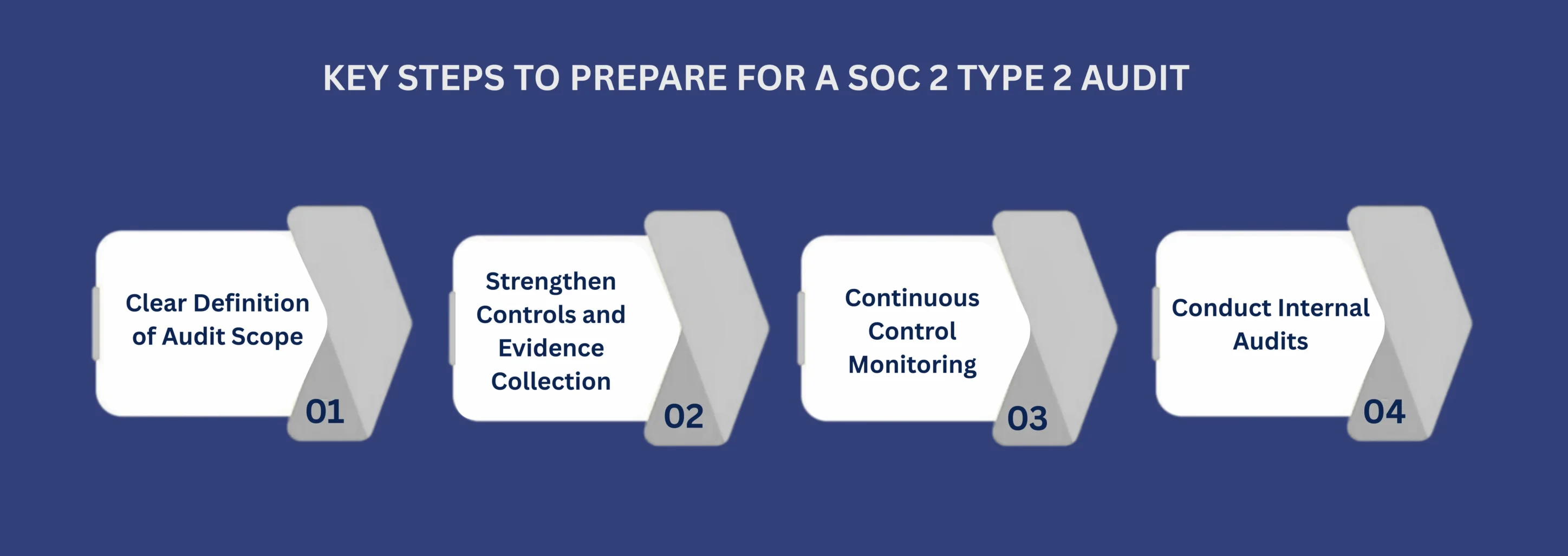
- ✓Stage 1: Scope Definition and Audit Program Determination
- ✓Stage 2: Type I and Type II Assessment Framework
- ✓Stage 3: Control Testing and Evidence Evaluation
- ✓Stage 4: Certification Decision and Report Issuance
Why Organizations in Frankfurt Pursue SOC 2 Certification
The demand for SOC 2 Certification in Frankfurt is driven by a convergence of commercial, regulatory, and risk management factors specific to Frankfurt’s position as a European financial and technology center. Organizations across multiple sectors — from cloud-native SaaS platforms to established managed service providers — pursue SOC 2 attestation because their enterprise clients, banking partners, and international counterparties require independent, third-party evidence of security and privacy control effectiveness before granting system access, sharing data, or executing commercial agreements.
Enterprise Vendor Security Reviews and Procurement Requirements
Frankfurt’s financial institutions conduct structured vendor risk management programs that evaluate the security posture of technology service providers before and during contractual relationships. A Frankfurt-based SaaS provider supplying workflow automation tools to a major investment bank, for example, will typically be required to provide evidence of its security controls as part of the bank’s third-party risk assessment process. A SOC 2 Type II report issued by a Licensed CPA Firm satisfies this requirement more comprehensively than self-completed questionnaires, because it represents independent verification of control design and operational effectiveness over a defined period.
The European Banking Authority (EBA) Guidelines on Outsourcing Arrangements require regulated financial institutions to assess the security and operational resilience of their service providers. For fintech companies and cloud service providers serving Frankfurt banking clients, SOC 2 attestation provides structured documentation that directly addresses these assessment requirements. The SOC 2 report’s system description, control matrix, and auditor’s opinion enable procurement teams to conduct efficient, evidence-based vendor security evaluations without requiring extensive on-site assessments.
International SaaS Expansion and North American Market Access
Frankfurt-based technology companies pursuing commercial expansion into North American markets encounter SOC 2 certification as a standard precondition for enterprise contracts. Large North American corporations in financial services, healthcare, and professional services routinely require SOC 2 Type II reports from cloud and SaaS vendors as part of their security review processes. Obtaining SOC 2 Certification in Frankfurt enables organizations to simultaneously pursue European and North American enterprise clients without maintaining separate regional certification programs.
The SOC 2 framework’s adoption has expanded well beyond North America. Global enterprises increasingly require SOC 2 attestation from technology vendors regardless of geographic location. Frankfurt-based managed service providers, data analytics platforms, and cybersecurity technology companies report that SOC 2 compliance has become a baseline commercial expectation in enterprise sales cycles across multiple regions. This global adoption trend reflects the SOC 2 framework’s clarity, auditability, and the credibility that attaches to AICPA-governed independent attestation.
Frankfurt Fintech Sector Compliance Expectations
The Frankfurt fintech ecosystem includes payment service providers, digital banking infrastructure companies, robo-advisory platforms, and RegTech solutions developers. These organizations frequently process sensitive financial data on behalf of regulated clients and are subject to both their clients’ vendor risk management requirements and applicable regulatory frameworks. SOC 2 compliance demand across Frankfurt’s fintech sector is accelerating as platforms scale their client bases to include institutional investors, private banks, and insurance companies operating under strict information security governance requirements.
Fintech companies operating within the Frankfurt financial center also face scrutiny from their own investors and board members, who increasingly view SOC 2 attestation as evidence of operational maturity and risk management discipline. Insurance underwriters offering cyber liability coverage to Frankfurt-based technology organizations have incorporated SOC 2 attestation status into premium assessments and policy conditions. These commercial dynamics reinforce SOC 2 certification adoption across Frankfurt’s banking and fintech sectors well beyond basic regulatory compliance requirements.
Cloud Infrastructure Providers and Data Center Operators
Frankfurt’s position as a major European internet exchange point — anchored by DE-CIX, one of the world’s largest internet exchange operators — has attracted hyperscale cloud providers, colocation facilities, and edge computing operators. These infrastructure organizations serve regulated clients across banking, insurance, and healthcare and are routinely evaluated for security control adequacy. SOC 2 audit services in Frankfurt, Germany are particularly relevant for data center operators and cloud service providers whose client contracts include data security and availability obligations enforceable through service level agreements and vendor risk programs.
Trust Services Criteria and Certification Scope
The Trust Services Criteria (TSC) established by the AICPA form the evaluative framework for all SOC 2 attestation examinations. Each criterion specifies the objectives that controls must address and the points of focus relevant to each objective. The TSC is organized across five categories: Security, Availability, Processing Integrity, Confidentiality, and Privacy. For each applicable criterion, the service organization must demonstrate that controls are designed to meet the stated objectives — and, in a Type II examination, that those controls operated effectively throughout the observation period.
The Security criterion — also referred to as the Common Criteria (CC) — is mandatory in every SOC 2 examination. The Common Criteria address logical and physical access controls, system operations, change management, risk mitigation, and incident management. For Frankfurt-based technology organizations, the Security criterion encompasses controls across the following domains: logical access management including multi-factor authentication and privileged access controls; change management processes governing software releases and configuration changes; monitoring and logging of system activities; boundary protection including firewalls and intrusion detection; and vulnerability management programs including periodic scanning and remediation tracking.
The Common Criteria are organized into control categories designated CC1 through CC9, covering the control environment, communication and information, risk assessment, monitoring activities, control activities, logical and physical access, system operations, change management, and risk mitigation respectively. During a SOC 2 audit engagement in Frankfurt, the auditor evaluates the design and effectiveness of controls mapped to each applicable CC category. Organizations must document the relationship between their implemented controls and the specific criteria points of focus to support the auditor’s evaluation.
The Availability criterion (A series) addresses whether systems and data are available for operation and use as committed or agreed. For Frankfurt cloud infrastructure providers and SaaS platforms with uptime service level agreements, the Availability criterion evaluates controls related to system capacity management, backup and recovery procedures, disaster recovery planning, and performance monitoring. Availability is a frequently included criterion for Frankfurt-based organizations serving financial institutions, where system downtime carries direct commercial and regulatory consequences.
The Confidentiality criterion (C series) addresses whether information designated as confidential is protected as committed or agreed. Controls evaluated under this criterion include data classification procedures, encryption of confidential data at rest and in transit, access restrictions to confidential information, and contractual confidentiality obligations with third-party providers. The Privacy criterion (P series) addresses the collection, use, retention, disclosure, and disposal of personal information in conformity with the organization’s privacy notice and applicable privacy regulations. For Frankfurt-based organizations subject to GDPR, the Privacy criterion is particularly relevant — it assesses privacy-related controls that align directly with GDPR accountability requirements.
The SOC 2 system description is a management-prepared document that defines the boundaries of the system under examination. It specifies the infrastructure components, software applications, human resources, procedures, and data within scope. The system description must be accurate and complete — it is evaluated by the auditor as part of the examination. For Frankfurt organizations with complex hybrid infrastructure environments combining on-premises systems with cloud services, the system description must clearly define scope boundaries and address the role of subservice organizations where relevant controls are performed by third parties.
Subservice organization treatment in a SOC 2 examination uses either the carve-out method or the inclusive method. Under the carve-out method, the system description identifies subservice organizations and their functions, and the auditor’s evaluation excludes controls at the subservice organization. Under the inclusive method, the subservice organization’s controls are included within the scope of the examination and must be independently evaluated. Frankfurt-based organizations relying on major cloud providers such as AWS Frankfurt, Microsoft Azure Germany, or Google Cloud’s European infrastructure commonly use the carve-out method, referencing the cloud provider’s own SOC 2 reports to address infrastructure-level controls.

- ✓Security Criterion: The Common Criteria
- ✓Additional Trust Services Criteria Categories
- ✓Scope Boundaries and System Description Requirements
Benefits of SOC 2 Certification for Frankfurt-Based Organizations
SOC 2 Certification in Frankfurt delivers measurable operational, commercial, and compliance-related benefits for organizations across financial services, technology, and professional services sectors. The attestation report provides independent, third-party validation of control effectiveness that serves multiple stakeholder audiences simultaneously — enterprise clients conducting vendor risk reviews, financial sector procurement teams, cybersecurity insurance underwriters, and regulatory examiners assessing third-party risk programs.
- ✓Independent verification of security, availability, confidentiality, processing integrity, and privacy controls by a Licensed CPA Firm
- ✓Structured audit methodology that evaluates both control design and operating effectiveness over defined observation periods
- ✓Recognition in enterprise procurement processes across financial services, cloud, and technology sectors in Frankfurt and internationally
- ✓Alignment with EBA outsourcing guidelines and BaFin vendor risk management expectations for Frankfurt banking sector clients
- ✓Support for GDPR accountability documentation by evidencing privacy and security control effectiveness
- ✓Enhanced position in North American and global enterprise sales cycles requiring SOC 2 Type II attestation
- ✓Annual surveillance audit cycles providing ongoing independent oversight of the control environment
- ✓Competitive differentiation in Frankfurt’s financial technology and cloud services market
- ✓Reduced enterprise client audit burden through accepted third-party attestation reports
- ✓Documented evidence supporting cybersecurity insurance applications and premium assessments
For technology organizations operating within Frankfurt’s financial services ecosystem, SOC 2 attestation directly addresses the vendor security assurance requirements imposed by banking clients, asset managers, insurance companies, and other regulated institutions. When a Frankfurt-based API infrastructure provider seeks to integrate with a major German bank’s core systems, the bank’s information security and vendor management teams will conduct a structured assessment of the provider’s security controls. A SOC 2 Type II report issued by a Licensed CPA Firm provides the structured, independently verified documentation that satisfies this assessment requirement efficiently and credibly.
The commercial benefit extends to contract negotiation dynamics. Organizations holding current SOC 2 Type II certifications typically experience shorter vendor onboarding timelines, reduced information security questionnaire burdens, and stronger negotiating positions in data processing agreement discussions. In Frankfurt’s competitive financial technology market — where multiple providers may offer comparable technical capabilities — SOC 2 Certification in Frankfurt functions as a trust signal that influences procurement decisions at the enterprise level. This competitive dynamic is particularly pronounced in the Frankfurt banking sector, where procurement teams evaluate vendor security posture as a formal risk management obligation.
The SOC 2 audit process itself generates operational value by requiring organizations to document, evaluate, and maintain their control environments systematically. Preparing and maintaining a SOC 2 control framework disciplines organizations to formalize procedures that might otherwise exist informally. This creates documented evidence of control operation that supports internal risk management, incident response, and business continuity planning. Frankfurt-based technology organizations that undergo annual SOC 2 audit cycles report improved internal accountability, clearer ownership of security controls, and more structured change management practices as operational outcomes of the certification program.
The independent auditor’s findings and observations document areas where controls performed as designed and identify any exceptions or deviations. This structured feedback supports the service organization’s internal risk management processes and provides a documented basis for control improvements between audit cycles. For Frankfurt organizations managing complex, multi-cloud environments with diverse vendor ecosystems, the annual SOC 2 compliance cycle provides a structured mechanism for maintaining visibility into control performance across all in-scope systems.
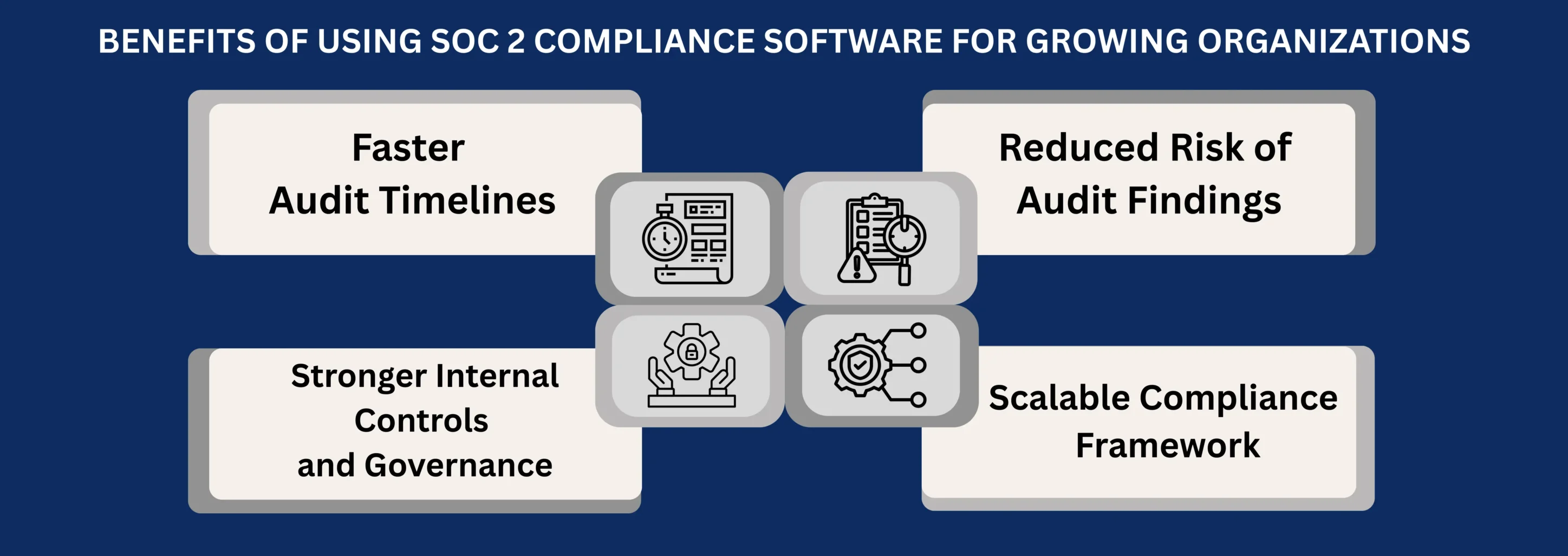
- ✓Commercial Value in Frankfurt’s Financial Sector
- ✓Operational and Risk Management Benefits
SOC 2 Certification Requirements for Frankfurt Service Organizations
SOC 2 Certification requirements define the documentation, control, and organizational prerequisites that a service organization must address before and during a SOC 2 audit engagement. These requirements are not prescriptive in the sense of mandating specific technologies or tools — the Trust Services Criteria define objectives and points of focus, and organizations demonstrate how their existing controls address those objectives. Understanding these requirements enables Frankfurt-based organizations to accurately assess the scope of an audit engagement before it begins.
SOC 2 examinations require a formally documented system description that accurately represents the service organization’s system as of the report date (Type I) or throughout the observation period (Type II). Supporting documentation includes information security policies and procedures, organizational charts and role definitions, risk assessment documentation, vendor management records, change management logs, access provisioning and deprovisioning records, and incident response documentation. For Frankfurt organizations, data processing agreements required under GDPR Article 28 frequently serve dual purposes as SOC 2 vendor management evidence.
Policy documentation must be current, approved by appropriate management, communicated to relevant personnel, and demonstrably implemented. The existence of written policies alone is insufficient for SOC 2 attestation — the auditor evaluates whether policies are operationally effective through interviews, observation, and inspection of evidence demonstrating policy adherence. Organizations that maintain policies in document management systems with version control, approval workflows, and periodic review schedules are better positioned to demonstrate control effectiveness during a SOC 2 audit engagement in Frankfurt.
Technical control requirements for SOC 2 certification address the implemented security mechanisms that protect the in-scope system. Key technical areas evaluated during a SOC 2 audit include logical access controls (user authentication, role-based access management, privileged access governance), network security controls (firewall configurations, intrusion detection and prevention systems, network segmentation), encryption implementation (data in transit and at rest), vulnerability management (scanning cadence, remediation tracking, patch management), monitoring and alerting (SIEM integration, log retention, security event alerting), and backup and recovery testing.
For Frankfurt-based cloud-native organizations, technical controls are frequently implemented through cloud provider services and platform security features. The auditor evaluates whether cloud security configurations are appropriately designed and maintained, whether infrastructure-as-code practices include security review gates, and whether cloud access management aligns with the principle of least privilege. Organizations using Infrastructure as Code (IaC) deployment practices should maintain configuration management documentation and change approval records as evidence of controlled environment management.
SOC 2 examinations evaluate controls related to personnel management, background screening, security awareness training, and role-based access assignments. Organizations must demonstrate that personnel with access to in-scope systems and data are appropriately screened, trained on security policies and procedures, and subject to access controls commensurate with their roles and responsibilities. Employee termination and access revocation procedures are evaluated as part of the logical access control assessment, requiring evidence that access is promptly revoked upon termination or role change.
Security awareness training programs must be documented, regularly conducted, and evidenced through training completion records. For Frankfurt organizations with multinational workforces, training programs should address both SOC 2-relevant security topics and any Frankfurt- or Germany-specific data protection obligations relevant to employee roles. Risk assessment processes must be documented and demonstrate that the organization identifies, evaluates, and mitigates risks to the achievement of service commitments and system requirements relevant to the applicable Trust Services Criteria.
- ✓Documentation and Policy Requirements
- ✓Technical Control Requirements
- ✓Organizational and Human Resource Controls
Sectors in Frankfurt Seeking SOC 2 Certification
SOC 2 Certification in Frankfurt serves a diverse range of industries and organizational types. Frankfurt’s economic structure — characterized by a dense financial services sector, a growing technology and startup ecosystem, significant logistics and professional services sectors, and a substantial multinational corporate presence — creates demand for SOC 2 attestation across multiple verticals. Organizations across these sectors share a common characteristic: they handle sensitive customer or transactional data as service providers and are accountable to enterprise clients, regulated institutions, or international partners for the security of that data.
- ✓Banking technology providers and core banking software vendors serving Frankfurt’s concentration of international and domestic banks
- ✓Fintech companies offering payment processing, digital lending, robo-advisory, and RegTech solutions to regulated financial institutions
- ✓Cloud service providers and infrastructure-as-a-service platforms operating Frankfurt data center facilities
- ✓SaaS companies supplying business applications, analytics platforms, and workflow automation to enterprise clients
- ✓Managed service providers and managed security service providers (MSSPs) serving Frankfurt-based corporate and financial clients
- ✓Data analytics and business intelligence platforms processing financial and operational data for enterprise clients
- ✓Cybersecurity technology companies providing threat detection, identity management, and security operations services
- ✓Insurance technology providers serving Frankfurt’s significant insurance sector including Allianz and other major carriers
- ✓Professional services platforms supporting legal, accounting, and compliance functions for regulated industries
- ✓Healthcare technology organizations providing digital health and health data management services
Financial Services Technology Sector
Frankfurt’s banking sector generates substantial demand for technology services from external providers. Core banking platforms, treasury management systems, risk analytics tools, compliance reporting software, and trading infrastructure technology are routinely procured from specialized technology vendors operating within or adjacent to Frankfurt’s financial district. These vendors are subject to intensive vendor risk management evaluations by their banking clients. SOC 2 certification in Frankfurt’s banking sector represents the structured attestation mechanism that satisfies these evaluation requirements in a standardized, auditor-verified format.
The presence of major financial institutions including Deutsche Bank, Commerzbank, DZ Bank, and the German operations of numerous international banks creates a sophisticated, demanding client base for technology service providers. These institutions’ procurement and vendor management teams are familiar with SOC 2 audit reports and use them as standard components of vendor due diligence. A Frankfurt-based technology vendor without SOC 2 attestation may be excluded from consideration for contracts involving access to banking systems or customer financial data, regardless of the vendor’s technical capabilities.
Cloud and Data Center Infrastructure Sector
Frankfurt’s status as a major European data center hub — hosting facilities from Equinix, CyrusOne, Digital Realty, and multiple regional operators alongside hyperscale cloud regions from AWS, Microsoft Azure, and Google Cloud — creates concentrated demand for SOC 2 audit services in Frankfurt, Germany among infrastructure operators. Data center operators serving regulated clients must demonstrate the security, availability, and confidentiality of the physical and logical infrastructure they provide. SOC 2 Type II reports issued by Licensed CPA firms are the standard assurance mechanism for this purpose across the global data center and cloud industry.
Frankfurt’s position as a DE-CIX interconnection hub also supports a significant ecosystem of network service providers, CDN operators, and connectivity businesses that handle data transit for regulated clients. These organizations benefit from SOC 2 attestation because their enterprise clients — including financial institutions, government contractors, and healthcare organizations — require documented security assurance from all significant technology vendors in their supply chains. SOC 2 compliance for Frankfurt network and infrastructure service providers addresses Availability and Confidentiality criteria in addition to the mandatory Security criterion.
SOC 2 Attestation vs. Other Compliance Frameworks in Frankfurt
Frankfurt-based organizations frequently evaluate SOC 2 attestation alongside other compliance frameworks including ISO 27001, GDPR compliance programs, TISAX, and PCI DSS. Understanding the structural differences between these frameworks enables organizations to determine which certifications address their specific commercial requirements and regulatory obligations. Each framework serves a distinct purpose and occupies a different position in the compliance and assurance landscape.
| Framework | Governing Body | Type | Primary Audience | Frankfurt Relevance |
|---|---|---|---|---|
| SOC 2 | AICPA | Independent attestation (CPA firm) | North American and global enterprise clients | High — enterprise vendor due diligence; fintech; SaaS |
| ISO 27001 | ISO/IEC | Management system certification | Global enterprise clients; European procurement | High — complementary to SOC 2; European standard |
| GDPR | EU Supervisory Authorities | Regulatory mandate | Regulators; data subjects | Mandatory — legal obligation for data processors in EU |
| TISAX | ENX Association / VDA | Automotive sector information security | Automotive supply chain organizations | Relevant for Frankfurt automotive and supplier ecosystem |
| PCI DSS | PCI Security Standards Council | Industry standard | Payment card data handlers | Relevant for Frankfurt payment processing organizations |
SOC 2 and ISO 27001 — Complementary Frameworks
SOC 2 and ISO 27001 are the two most commonly pursued information security certifications by Frankfurt-based technology organizations. ISO 27001 establishes requirements for an Information Security Management System (ISMS) and is certified by accredited certification bodies under the ISO/IEC accreditation framework. SOC 2 is an AICPA-governed attestation examination performed by a Licensed CPA Firm. The two frameworks evaluate overlapping control domains but differ in scope, evaluation methodology, and primary audience. ISO 27001 certification is recognized globally and is particularly valued in European enterprise procurement, while SOC 2 attestation is the standard expected by North American enterprise clients and is increasingly required by global technology companies.
Frankfurt organizations serving both European and North American enterprise markets frequently pursue both SOC 2 and ISO 27001 certifications. The two programs share significant documentation and control infrastructure, enabling organizations to leverage control evidence across both examination cycles. The key structural difference is the report format: ISO 27001 produces a certificate issued by a certification body, while SOC 2 produces a detailed attestation report documenting the auditor’s specific findings across each Trust Services Criterion. Enterprise procurement teams use the two reports for different evaluation purposes and do not treat them as direct substitutes.
SOC 2 and GDPR — Distinct but Complementary
SOC 2 attestation and GDPR compliance address different aspects of an organization’s data governance obligations. GDPR is a legally binding regulation enforced by national supervisory authorities — in Frankfurt’s case, primarily the Hessian Commissioner for Data Protection and Freedom of Information (HBDI). GDPR compliance is not optional and cannot be replaced by SOC 2 attestation. However, the Privacy criterion of the SOC 2 framework evaluates privacy-related controls that directly support an organization’s GDPR accountability obligations, including privacy notice adequacy, consent management, data subject request handling, and data retention controls.
For Frankfurt-based data processors and data controllers, a SOC 2 report including the Privacy criterion provides documented evidence of privacy control effectiveness that supports GDPR accountability documentation. Enterprise clients conducting vendor due diligence under GDPR Article 28 data processing agreement obligations frequently request SOC 2 reports as supplementary evidence alongside contractual data processing agreements. This complementary relationship between SOC 2 attestation and GDPR accountability documentation is well established in Frankfurt’s financial and technology sectors.
SOC 2 Certification Maintenance and Annual Audit Cycles
SOC 2 Certification in Frankfurt is not a permanent status — it reflects the findings of an examination conducted over a defined period. Organizations that complete a SOC 2 Type II examination receive a report covering the observation period, typically twelve months. To maintain current SOC 2 attestation status, organizations must complete annual audit cycles that produce updated reports reflecting the current observation period. Enterprise clients and financial sector procurement teams expect current reports — typically issued within the preceding twelve months — as a condition of vendor approval status.
Annual Examination Cycle Requirements
The annual SOC 2 audit cycle begins with a review of the prior period’s report findings, identification of any changes to the in-scope system since the prior examination, and determination of the observation period for the current engagement. Changes to the system description, scope additions or reductions, and new subservice organization relationships must all be documented and addressed in the current period’s audit. For Frankfurt organizations that experience significant system changes — such as migration to new cloud environments, acquisition of new service lines, or expansion into new customer segments — the scope review at the start of each audit cycle is a critical planning activity.
Evidence collection for the annual SOC 2 audit cycle should be ongoing rather than concentrated at the end of the observation period. Organizations that maintain continuous evidence collection practices — through automated log retention, regular access reviews, documented change approvals, and periodic vendor assessments — are better positioned for efficient annual audit completion. Frankfurt technology organizations that integrate SOC 2 evidence collection into their operational workflows report reduced audit burden and more consistent evidence quality compared to organizations that compile evidence reactively at audit time.
System Changes and Scope Management
Significant system changes during a SOC 2 observation period require assessment of their impact on scope and the accuracy of the system description. When a Frankfurt organization makes material changes to its infrastructure — such as deploying new application components, changing cloud providers, implementing new access management systems, or modifying data processing architectures — these changes must be reflected in the system description and evaluated by the auditor. The change management controls assessed in the SOC 2 audit provide the framework for determining whether system changes were implemented in a controlled, reviewed, and documented manner.
Organizations that withdraw from or suspend SOC 2 compliance programs — for example, due to organizational restructuring, acquisition, or strategic change — should communicate this status change to existing enterprise clients and procurement stakeholders. Enterprise vendor management programs typically require notification when a certified vendor’s certification status changes. Frankfurt-based organizations with active SOC 2 attestation programs should maintain clear internal accountability for audit cycle management, including defined ownership of the system description, evidence collection processes, and auditor relationship management.
FAQ
▶
What is SOC 2 Certification and who needs it in Frankfurt?
▶
What is the difference between SOC 2 Type I and Type II in Frankfurt?
▶
How long does a SOC 2 audit take for a Frankfurt organization?
▶
Is SOC 2 compliance required under German or EU law?
▶
Which Trust Services Criteria apply to Frankfurt fintech companies?
▶
Can a Frankfurt organization hold both SOC 2 and ISO 27001 certifications?
▶
How is SOC 2 attestation different from SOC 2 compliance?
▶
Does SOC 2 certification address cloud provider infrastructure in Frankfurt data centers?
SOC 1 VS SOC 2: WHICH REPORT YOUR CUSTOMERS ACTUALLY ASK FOR
If you sell SaaS or provide outsourced services, you have likely been asked for a SOC report. However, the follow-up question is rarely easy to answer…
SOC 2 Certified: What Does It Mean for Your Business
For companies that handle sensitive data or run cloud-based services, the question “Can you provide your SOC 2 report?” carries enormous weight. Yet, …

NEW BLOG DESIGN
Ethical Hacking for SOC 2, ISO 27001, HIPAA Audit Readiness | CertPro CPA LLC HERO Dark bg, full width, padded Image as rounded card LEFT | Info panel…
Get In Touch
have a question? let us get back to you.