
SOC 2 Certification in Hamburg
SOC 2 compliance does not replace GDPR compliance obligations, as GDPR is a legally binding regulation enforced by supervisory authorities including Hamburg’s HmbBfDI. However, SOC 2 attestation — particularly under the Security and Confidentiality Trust Services Criteria — demonstrates implementation of technical and organizational security measures consistent with GDPR Article 32 requirements. SOC 2 compliance may support GDPR accountability documentation for Hamburg organizations processing personal data, making it a valuable complementary assurance mechanism within a broader data protection governance program.
OUR CLIENTS










SOC 2 Certification for Hamburg-Based Financial and Technology Organizations
Hamburg occupies a distinctive position within Germany’s commercial and digital economy landscape. As Germany’s largest port city and second-largest city overall, Hamburg functions as a critical node for logistics, maritime operations, aviation services, manufacturing, and an increasingly prominent technology sector. Organizations across each of these verticals process substantial volumes of customer data, operate cloud-based service platforms, and maintain technology systems that support both domestic and international enterprise clients.
For these organizations, SOC 2 Certification in Hamburg has emerged as a foundational assurance mechanism. It demonstrates independent verification of internal security and data protection controls to procurement teams, enterprise clients, and regulated institutions — making SOC 2 compliance a strategic priority rather than a checkbox exercise.
Hamburg’s Technology and Services Ecosystem
Hamburg’s digital economy has expanded substantially over the past decade. The city now hosts a significant concentration of SaaS providers, cloud infrastructure companies, logistics technology platforms, maritime data systems operators, and enterprise software developers. Aviation services technology providers, port logistics digitization platforms, and financial technology companies have collectively established Hamburg as a credible technology hub within the German-speaking market.
These organizations frequently maintain relationships with global enterprise clients who require documented evidence of security control effectiveness as part of their vendor due diligence and procurement processes. SOC 2 Certification in Hamburg directly addresses this need, providing independent verification that satisfies enterprise security review requirements across multiple industries.
The logistics and supply chain technology sector in Hamburg is particularly relevant to SOC 2 compliance demand. Companies providing digital platforms for port operations, freight forwarding, customs processing, and supply chain visibility handle sensitive commercial data, customer transaction records, and personally identifiable information subject to GDPR requirements.
Enterprise clients in the retail, manufacturing, and financial services sectors that rely on these platforms increasingly require SOC 2 attestation as a condition of vendor onboarding. SOC 2 Certification in Hamburg for companies operating in this space provides a structured, independently verified demonstration of control effectiveness that satisfies these procurement expectations.
Beyond logistics technology, Hamburg’s financial services sector — which includes private banking institutions, insurance companies, asset management firms, and a growing fintech community — generates significant demand for SOC 2 examination services. SOC 2 certification Hamburg fintech organizations and financial services firms use to demonstrate to institutional clients and regulatory counterparts that their technology environments maintain controls consistent with established security and processing integrity standards.
The combination of Hamburg’s maritime heritage and its emerging digital economy creates a uniquely diverse organizational landscape. SOC 2 audit Hamburg services address a wide range of industry-specific data processing and system security requirements across this varied commercial ecosystem.
Independent SOC 2 Attestation by a Licensed CPA Firm
SOC 2 attestation is exclusively performed by a Licensed CPA Firm operating under AICPA attestation standards, specifically AT-C Section 205. This requirement distinguishes SOC 2 from self-assessment frameworks and internal audit processes. The SOC 2 engagement is conducted by an independent auditor who evaluates the design and operating effectiveness of an organization’s controls against the Trust Services Criteria.
Critically, SOC 2 Certification in Hamburg is not a self-certification or a declaration made by the organization itself. The resulting SOC 2 report reflects the auditor’s independent opinion — expressed in accordance with professional attestation standards — on whether the controls subject to examination meet the applicable Trust Services Criteria.
The independence of the Licensed CPA Firm conducting the SOC 2 examination is a defining characteristic that enterprise clients and regulated institutions rely upon when evaluating vendor assurance documentation. Unlike ISO 27001 certifications issued by accredited certification bodies, SOC 2 attestation specifically requires a Licensed CPA Firm under AICPA professional standards — giving the resulting report a distinct legal and professional standing.
For Hamburg organizations seeking to demonstrate security control effectiveness to enterprise clients in North American markets — where SOC 2 is a broadly recognized assurance standard — independent attestation by a Licensed CPA Firm is the required format for vendor assurance documentation.
GDPR Alignment and European Regulatory Context
Hamburg-based organizations processing personal data operate under GDPR requirements enforced by the Hamburg Commissioner for Data Protection and Freedom of Information (HmbBfDI), one of Germany’s most active data protection supervisory authorities. SOC 2 compliance Hamburg organizations use as a complementary assurance mechanism supports — though does not replace — GDPR compliance obligations.
The Trust Services Criteria evaluated during a SOC 2 examination, particularly the Security and Confidentiality categories, address control domains directly relevant to GDPR’s accountability and data protection by design requirements. These include access controls, encryption practices, incident response procedures, and data handling policies — all areas where SOC 2 Certification in Hamburg adds measurable governance value.
The relationship between SOC 2 attestation and European information security governance expectations is particularly relevant for Hamburg organizations serving both European and North American enterprise clients. While GDPR establishes legally binding obligations for personal data processing, SOC 2 attestation provides independent verification of security control implementation that enterprise procurement teams and information security reviewers can evaluate during vendor due diligence processes.
Organizations subject to both GDPR and contractual SOC 2 requirements benefit from the structural alignment between the two frameworks. The security controls required to satisfy SOC 2 Trust Services Criteria are substantially consistent with the technical and organizational measures required under GDPR Article 32, making a dual-compliance approach highly efficient for Hamburg-based service organizations.

SOC 2 Certification Audit Process for Organizations in Hamburg
The SOC 2 audit process follows a structured methodology defined by AICPA attestation standards and governed by the Trust Services Criteria. For organizations in Hamburg initiating a SOC 2 engagement, the process encompasses multiple distinct phases — from initial scope determination through evidence collection, control testing, and issuance of the final attestation report.
Each phase is conducted independently by the Licensed CPA Firm. The organization provides documentation, system access, and personnel interviews as required to support the auditor’s examination activities. Understanding this process in advance helps Hamburg organizations allocate appropriate resources and set realistic timelines for achieving SOC 2 Certification.
The SOC 2 engagement begins with scope definition, during which the Licensed CPA Firm and the organization jointly identify the systems, services, and infrastructure components subject to examination. For a Hamburg-based SaaS provider, this typically includes the production environment, data storage and processing systems, network infrastructure, and the personnel and processes that support service delivery.
The scope boundary must accurately reflect the systems relevant to the selected Trust Services Criteria categories. Security is mandatory for all SOC 2 reports, while Availability, Processing Integrity, Confidentiality, and Privacy are included based on the nature of the services provided and the commitments made to customers.
Audit program determination follows scope definition and involves the Licensed CPA Firm establishing specific control objectives, testing procedures, and evidence requirements applicable to the SOC 2 examination. The audit program is tailored to the organization’s technology environment, service model, and the Trust Services Criteria categories in scope.
For Hamburg organizations operating complex multi-cloud environments or providing services across multiple jurisdictions, the audit program must address the full range of relevant control domains while maintaining a focused scope. A well-defined scope produces a meaningful attestation report that accurately represents the organization’s control environment for report users.
SOC 2 examinations are conducted as either Type I or Type II assessments, and the distinction between these two report types is significant for both the organization and report users. A SOC 2 Type I report evaluates the design of controls as of a specific point in time — addressing whether the controls described in the system description are suitably designed to meet the applicable Trust Services Criteria as of the report date.
A SOC 2 Type II report evaluates both the design and the operating effectiveness of controls over a defined observation period, typically a minimum of six months. Type II is generally considered the more comprehensive and more broadly accepted form of SOC 2 attestation by enterprise clients, making it the preferred standard for ongoing vendor assurance programs.
For Hamburg organizations new to SOC 2 Certification, a Type I examination may represent an appropriate initial step. It establishes the formal attestation of control design before the organization accumulates the operating history required for a Type II report. However, many enterprise clients — particularly in the financial services and technology sectors — specifically require a Type II report as a condition of vendor approval.
SOC 2 Certification Hamburg financial services organizations and SaaS providers serving North American enterprises should therefore plan toward Type II attestation as the standard reporting format. Sophisticated procurement teams and information security reviewers consistently expect Type II reports as evidence of sustained control effectiveness.
| Report Type | Evaluation Period | Control Assessment | Common Use Case |
|---|---|---|---|
| SOC 2 Type I | Point in time | Design of controls only | Initial attestation for organizations new to SOC 2 |
| SOC 2 Type II | Minimum 6 months | Design and operating effectiveness | Ongoing vendor assurance for enterprise clients |
| SOC 2 + GDPR Alignment | Type II period | Security and Confidentiality TSC with GDPR mapping | Hamburg organizations serving European and US markets |
During the SOC 2 examination, the Licensed CPA Firm conducts evidence collection and control testing across all control domains within the agreed audit scope. Evidence collection methods include document review, system configuration inspection, personnel interviews, and observation of control procedures.
For Hamburg organizations, this phase typically involves review of information security policies, access management procedures, change management documentation, incident response records, vendor management processes, and system monitoring logs. The auditor assesses whether the evidence provided demonstrates that controls are designed and operating as described in the system description.
Control testing in a SOC 2 audit Hamburg engagement is conducted against the specific Trust Services Criteria applicable to the examination scope. For the mandatory Security category, control testing addresses the common criteria related to logical and physical access controls, system operations, change management, risk mitigation, and monitoring activities.
For organizations that have included Availability in scope, additional testing addresses system performance monitoring, backup and recovery procedures, and capacity management. The depth and breadth of control testing is determined by the audit program and is subject to the auditor’s professional judgment regarding the sufficiency of evidence obtained.
Following completion of evidence collection and control testing, the Licensed CPA Firm conducts a nonconformity review to assess instances where controls were found to be not suitably designed, not operating effectively, or where exceptions were identified during testing. Exceptions identified during the SOC 2 examination are documented in the report along with the auditor’s assessment of whether they represent deviations that affect the overall opinion on control effectiveness.
The certification decision — expressed as the auditor’s opinion in the SOC 2 attestation report — reflects the totality of evidence gathered during the examination and the auditor’s professional judgment regarding compliance with the applicable Trust Services Criteria.
SOC 2 attestation is not a one-time event. Organizations that maintain SOC 2 Certification in Hamburg typically engage in annual audit cycles to produce updated Type II reports covering the most recent observation period. Enterprise clients and regulated institutions generally require current SOC 2 reports — typically issued within the past twelve months — as evidence of ongoing control effectiveness.
The annual recertification cycle requires the organization to maintain continuous operation of the controls described in its system description throughout the year. Updated evidence must be provided to the Licensed CPA Firm during each subsequent examination period, making documentation and operational discipline an ongoing commitment rather than a periodic effort.
Maintaining SOC 2 compliance requires Hamburg organizations to establish sustainable internal processes for control documentation, evidence management, and system monitoring that support the annual audit cycle. This includes maintaining audit logs, access review records, change management documentation, and incident response records on an ongoing basis — not just accumulating evidence at audit time.
Organizations that treat SOC 2 compliance as a continuous operational practice rather than a periodic examination event are better positioned to produce consistent, high-quality evidence packages. This approach supports efficient annual examinations and maximizes the likelihood of receiving unqualified audit opinions year after year.
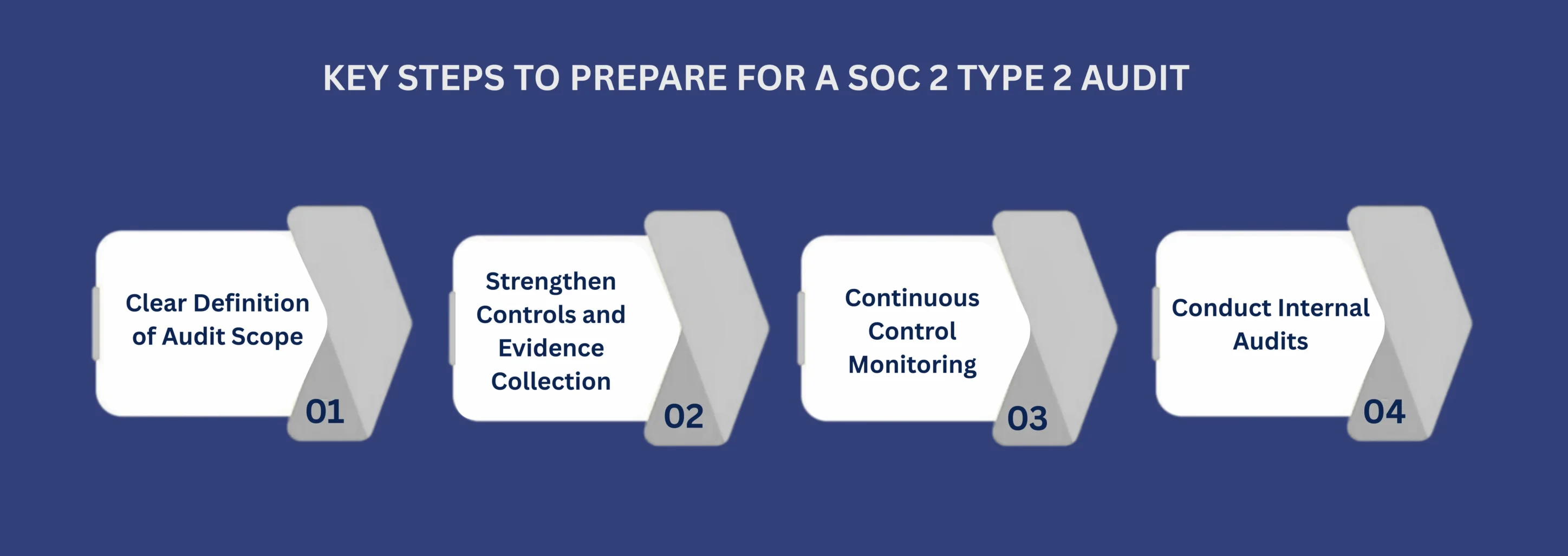
- ✓Scope Definition and Audit Program Determination
- ✓Type I and Type II SOC 2 Examination Structures
- ✓Evidence Collection and Control Testing
- ✓Nonconformity Review and Certification Decision
- ✓Surveillance, Recertification, and Ongoing SOC 2 Compliance
Trust Services Criteria: The Evaluation Framework for SOC 2 Examination
The Trust Services Criteria (TSC) established by the AICPA constitute the evaluative framework against which controls are assessed during a SOC 2 examination. The TSC is organized into five principal categories: Security, Availability, Processing Integrity, Confidentiality, and Privacy.
The Security category — also referred to as the Common Criteria — is mandatory in all SOC 2 reports. It encompasses control requirements related to logical and physical access, system operations, change management, risk assessment, and monitoring. The remaining four categories are optional and are included in the SOC 2 engagement scope based on the nature of the services provided and the commitments relevant to the organization’s service model.
The Security category of the Trust Services Criteria encompasses the common criteria that apply across all SOC 2 examinations, regardless of which additional categories are included. The common criteria address nine control domains: CC1 (Control Environment), CC2 (Communication and Information), CC3 (Risk Assessment), CC4 (Monitoring Activities), CC5 (Control Activities), CC6 (Logical and Physical Access Controls), CC7 (System Operations), CC8 (Change Management), and CC9 (Risk Mitigation).
For Hamburg organizations undergoing a SOC 2 audit, each of these domains requires documented, implementable controls that the auditor can evaluate through inspection of evidence, interviews, and system observation.
The CC6 domain — Logical and Physical Access Controls — is frequently the most evidence-intensive component of a SOC 2 examination for technology organizations. This domain requires controls related to user authentication, access provisioning and deprovisioning, privileged access management, physical access to data centers and server rooms, and transmission controls for data in transit.
For Hamburg-based cloud service providers and SaaS organizations, the CC6 criteria typically require evidence of multi-factor authentication deployment, access review procedures, least-privilege access policies, and encryption standards for data transmission and storage. These control requirements align substantially with GDPR Article 32 technical measures, making the SOC 2 examination process highly relevant for Hamburg organizations managing both sets of obligations simultaneously.
The Availability category of the Trust Services Criteria addresses whether systems are available for operation and use as committed or agreed. For Hamburg-based logistics technology platforms, maritime data systems, and supply chain software providers, Availability is frequently a relevant TSC category because enterprise clients depend on continuous system access for operational functions.
Availability controls evaluated during a SOC 2 examination include system performance monitoring, incident detection and response, backup and recovery procedures, disaster recovery planning, and capacity management. Organizations that include Availability in their SOC 2 scope must demonstrate through evidence that these controls are designed and operating effectively throughout the entire examination period.
The Confidentiality category addresses whether information designated as confidential is protected as committed or agreed. This category is particularly relevant for Hamburg organizations providing services to clients in financial services, legal services, and healthcare, where contractual confidentiality obligations are common.
The Processing Integrity category evaluates whether system processing is complete, valid, accurate, timely, and authorized — a key consideration for Hamburg fintech companies, payment processing platforms, and financial data management services. SOC 2 Certification Hamburg financial services technology providers frequently include both Confidentiality and Processing Integrity in their SOC 2 examination scope to address the full range of enterprise client expectations in the financial sector.
The Privacy category of the Trust Services Criteria evaluates whether personal information is collected, used, retained, disclosed, and disposed of in conformity with the organization’s privacy notice and applicable privacy requirements established in the criteria. For Hamburg organizations already subject to GDPR’s personal data processing obligations, the Privacy TSC category represents both a natural extension of existing compliance activities and an opportunity to demonstrate independent verification of privacy control effectiveness.
The Privacy TSC criteria address notice, choice and consent, collection, use and retention, access, disclosure and notification, quality, and monitoring and enforcement — domains that map substantively to GDPR’s core data subject rights and controller obligations. Including Privacy in the SOC 2 engagement scope can meaningfully strengthen a Hamburg organization’s overall privacy governance posture.
- ✓Security (Common Criteria) — mandatory in all SOC 2 reports; evaluates access controls, system operations, change management, and risk assessment
- ✓Availability — evaluates system uptime, incident response, backup procedures, and disaster recovery capabilities
- ✓Processing Integrity — evaluates completeness, validity, accuracy, and timeliness of system processing functions
- ✓Confidentiality — evaluates controls protecting information designated as confidential under customer agreements
- ✓Privacy — evaluates personal information handling consistent with privacy notices and applicable requirements
- ✓CC6 Logical and Physical Access — the most evidence-intensive domain, covering authentication, access provisioning, and encryption
- ✓CC7 System Operations — covers monitoring, detection of security events, and incident management procedures
- ✓CC8 Change Management — addresses change authorization, testing, and deployment controls for production systems
- ✓CC9 Risk Mitigation — evaluates vendor management and contractual risk mitigation activities with subservice organizations

- ✓Security Criteria: The Common Criteria Foundation
- ✓Availability, Processing Integrity, and Confidentiality Criteria
- ✓Privacy Criteria and GDPR Intersection
Why Organizations in Hamburg Pursue SOC 2 Certification
The demand for SOC 2 Certification in Hamburg is driven by a convergence of enterprise procurement expectations, European regulatory developments, and the growing international footprint of Hamburg-based technology organizations. Unlike regulatory certifications mandated by law, SOC 2 attestation is typically driven by market demand — specifically by enterprise clients and regulated institutions that require independent verification of vendor security controls as a condition of service provider selection and ongoing vendor management.
Understanding the specific demand drivers relevant to Hamburg’s commercial ecosystem helps organizations contextualize the business rationale for investing in the SOC 2 examination process and prioritizing it within broader compliance and security programs.
Enterprise Vendor Security Reviews and Procurement Expectations
Enterprise organizations — particularly those in financial services, healthcare, and technology — have established vendor security review processes that require third-party service providers to demonstrate control effectiveness through independent attestation. For Hamburg-based SaaS providers and cloud services organizations seeking contracts with large enterprise clients, the absence of a current SOC 2 report can become a disqualifying factor in procurement processes.
SOC 2 attestation Hamburg organizations use as vendor assurance documentation is reviewed by enterprise information security teams, vendor risk management departments, and in some cases by the enterprise’s own auditors or regulators. Having a current SOC 2 report in hand accelerates the procurement conversation and builds immediate credibility with security-conscious buyers.
Consider a representative localized procurement scenario: a Hamburg-based supply chain visibility SaaS platform seeking to expand its customer base to include German automotive manufacturers would typically encounter SOC 2 report requirements during the vendor qualification process. Tier-1 automotive manufacturers and their information security offices require documented evidence that supply chain technology vendors maintain controls consistent with established security standards.
SOC 2 attestation provides the automotive procurement team with an independent auditor’s evaluation of the SaaS provider’s security controls, access management practices, and incident response capabilities. This level of detail is difficult to obtain through questionnaire-based vendor assessment processes alone, making SOC 2 Certification in Hamburg a tangible competitive differentiator.
Financial Sector Procurement and Fintech Expansion
Hamburg’s financial services sector includes a significant concentration of private banking institutions, insurance companies, and investment management firms that maintain formal vendor management programs aligned with BaFin (German Federal Financial Supervisory Authority) regulatory expectations. BaFin’s requirements for outsourcing and cloud services — including BAIT (Banking Supervisory Requirements for IT) and the broader EBA Guidelines on Outsourcing Arrangements — establish clear expectations for financial institutions to conduct thorough due diligence on service providers.
SOC 2 Certification Hamburg financial services technology vendors use the attestation as evidence that satisfies or substantially supports these due diligence requirements, facilitating faster vendor onboarding and reducing the documentation burden on both parties.
For fintech companies operating in Hamburg — whether providing payment infrastructure, digital banking platforms, regulatory technology, or financial data services — SOC 2 certification represents a key enabler for scaling relationships with established financial institutions. SOC 2 Certification Hamburg fintech organizations pursue as part of broader strategies to demonstrate operational maturity, security control effectiveness, and regulatory alignment to potential banking partners, investors, and enterprise clients.
Importantly, the SOC 2 examination process itself drives internal governance maturity. By requiring the organization to document and demonstrate operating security controls, the SOC 2 audit delivers governance benefits that extend well beyond the attestation report itself.
International SaaS Expansion and North American Market Access
Hamburg-based SaaS companies expanding into North American markets encounter SOC 2 as the dominant third-party assurance standard among US and Canadian enterprise buyers. Unlike Europe — where ISO 27001 certification is more widely recognized as the primary information security framework — North American enterprise procurement processes are heavily oriented toward SOC 2 attestation.
A Hamburg SaaS organization that has obtained ISO 27001 certification may still be required to obtain a separate SOC 2 Type II report when pursuing contracts with US-based enterprise clients. The two frameworks evaluate controls using different methodologies and produce different forms of assurance documentation, making SOC 2 Certification in Hamburg an essential credential for organizations with North American growth ambitions.
The SOC 2 audit Hamburg process for organizations targeting international markets must address the specific control expectations of North American enterprise clients while remaining consistent with the European regulatory environment in which the organization operates. This dual-context requirement is manageable because the Trust Services Criteria are technology-neutral and organization-agnostic.
They can be evaluated against the controls of a Hamburg-based organization operating in a European regulatory context just as effectively as against a US-based organization. The independence of the Licensed CPA Firm conducting the SOC 2 examination ensures that the resulting attestation report carries the professional credibility required by enterprise procurement teams in any geographic market.
Cloud Services, Data Hosting, and Subservice Organization Considerations
Hamburg hosts a growing number of cloud infrastructure providers, managed service organizations, colocation data center operators, and managed security service providers whose clients include both local enterprises and international organizations. These subservice organizations — entities that provide services relevant to the internal controls of another organization undergoing its own SOC 2 audit — are frequently asked to provide their own SOC 2 reports as part of their clients’ audit processes.
When a Hamburg organization undergoes a SOC 2 examination and uses third-party cloud infrastructure, the Licensed CPA Firm must address how the subservice organization’s controls are considered within the examination scope. This is handled through either the inclusive method or the carve-out method, as defined in AICPA attestation standards, making subservice organization management an important planning consideration for Hamburg organizations initiating a SOC 2 engagement.
Certification Scope and Independent Decision Framework
The certification scope in a SOC 2 engagement defines the boundaries of the examination — the systems, services, personnel, and processes subject to the auditor’s evaluation. Establishing an accurate and representative scope is critical to producing a SOC 2 attestation report that is meaningful to report users and that accurately represents the organization’s control environment.
Scope boundaries that are too narrow may exclude systems or processes material to service delivery, resulting in a report that does not provide sufficient assurance. Scope boundaries that are too broad may create examination complexity disproportionate to the assurance value produced. The Licensed CPA Firm and the organization jointly determine scope boundaries based on the systems in scope, the Trust Services Criteria categories selected, and the nature of the services provided to customers.
System Description and Management Assertion
A critical component of the SOC 2 report is the system description — a document prepared by the organization that describes the services provided, the principal service commitments and system requirements, the components of the system, and the controls in place to meet the applicable Trust Services Criteria. The system description serves as the foundation for the SOC 2 examination by establishing what controls exist and how they function.
The Licensed CPA Firm evaluates the accuracy and completeness of the system description as part of the examination, assessing whether the description fairly presents the system and controls in all material respects. A well-crafted system description is therefore essential to a successful SOC 2 certification outcome for Hamburg organizations.
The management assertion — a formal written statement by the organization’s management — accompanies the system description and represents management’s assertion that the controls described were suitably designed and, for Type II reports, operating effectively throughout the examination period. The Licensed CPA Firm’s opinion, expressed in the attestation report, either supports or qualifies the management assertion based on evidence gathered during the SOC 2 examination.
This structure — management assertion evaluated by an independent Licensed CPA Firm — is the defining feature of the SOC 2 attestation model and the primary source of its credibility as a vendor assurance mechanism for enterprise procurement processes.
Conditions for Modified Opinions and Report Limitations
The SOC 2 attestation report may express an unqualified opinion — indicating that controls were suitably designed and, for Type II reports, operating effectively — or a qualified, adverse, or disclaimer opinion where the auditor has identified material deviations, scope limitations, or other conditions that prevent an unqualified conclusion.
A qualified opinion does not necessarily mean the organization’s controls are ineffective across all domains. It may reflect specific exceptions in defined control areas while affirming effectiveness in others. Enterprise clients receiving a SOC 2 report with a qualified opinion typically review the specific exceptions identified and assess whether those exceptions are relevant to the services they receive from the organization.
For Hamburg organizations, understanding the implications of modified opinions before initiating the SOC 2 engagement is important for internal planning purposes. The SOC 2 examination is an independent audit — the auditor’s opinion is determined by evidence, not by the organization’s preferences. Organizations with control weaknesses identified during the examination period will have those weaknesses documented in the SOC 2 report, which may affect the report’s utility for vendor assurance purposes.
This is a fundamental characteristic of the SOC 2 attestation model: it provides honest, evidence-based assurance rather than simply confirming what the organization asserts about its own controls. This transparency is precisely what makes SOC 2 Certification valuable to enterprise clients and regulated institutions.
Complementary User Entity Controls
SOC 2 reports frequently identify complementary user entity controls (CUECs) — controls that the service organization assumes its customers will implement in their own environments to achieve the stated control objectives. CUECs are relevant to the users of the SOC 2 report because they define the control responsibilities that rest with the customer organization rather than with the service provider.
For Hamburg-based technology organizations, clearly documenting CUECs in the system description and SOC 2 report helps enterprise clients understand their own control responsibilities. This transparency supports clear communication about the shared responsibility model inherent in cloud and SaaS service delivery, strengthening the trust relationship between Hamburg service providers and their enterprise clients.
SOC 2 Certification Requirements: Documentation and Technical Controls
Organizations pursuing SOC 2 Certification in Hamburg must establish and maintain a comprehensive set of documentation, technical controls, and operational procedures that can be evaluated against the Trust Services Criteria during the SOC 2 examination. The requirements for SOC 2 certification are not defined by a prescriptive checklist but by the Trust Services Criteria themselves.
The auditor evaluates whether the organization’s controls — whatever form they take — are designed and operating effectively to meet the criteria. This principles-based approach gives organizations flexibility in how they implement controls, but requires them to demonstrate through evidence that their chosen implementations satisfy the applicable criteria.
Documentation requirements for the SOC 2 examination encompass information security policies, procedures, risk assessments, vendor management records, access management documentation, incident response plans, business continuity and disaster recovery plans, and change management records. These documents must be current, approved by appropriate management, and reflective of the controls actually in operation within the organization.
A common challenge identified in SOC 2 evidence collection is the gap between documented policies and actual practice. Auditors evaluate controls as they operate, not as they are described in policy documents — meaning discrepancies between documentation and practice are identified and documented in the examination findings. Eliminating this gap is a key preparation activity for Hamburg organizations approaching their first SOC 2 engagement.
For Hamburg organizations initiating their first SOC 2 engagement, establishing a systematic approach to documentation management and evidence collection early in the process is critical. Evidence for the SOC 2 examination must be collected throughout the observation period for a Type II report — it cannot be reconstructed after the fact. This includes maintaining records of access reviews conducted, change approvals issued, incident response actions taken, vendor assessments completed, and security monitoring activities performed.
Organizations that establish documentation and evidence practices at the same time they implement controls — rather than treating documentation as a secondary activity — are better positioned to produce complete and credible evidence packages during the SOC 2 audit process.
Technical control requirements for the SOC 2 examination address the specific security technologies and configurations that the organization must implement and maintain within its production environment. These include multi-factor authentication for remote and privileged system access, encryption of data at rest and in transit, centralized logging and monitoring with alert capabilities, vulnerability and patch management processes, network segmentation and firewall controls, and endpoint security measures.
The specific technical requirements are determined by the Trust Services Criteria categories in scope and the nature of the systems being evaluated. A Hamburg cloud services provider operating a multi-tenant SaaS platform will have different technical control configurations than a logistics technology company operating on-premises systems, and the SOC 2 audit will be calibrated accordingly.
Centralized logging represents one of the most consistently important technical controls evaluated in SOC 2 examinations. The CC7 System Operations criteria require that the organization implements controls to detect and respond to security events — a capability that depends fundamentally on comprehensive log collection and analysis. For Hamburg technology organizations, centralized log management that collects authentication events, system access records, configuration changes, and security alerts provides the evidentiary foundation for demonstrating compliance with CC7 and related monitoring criteria.
Effective centralized logging also supports the organization’s ability to investigate security incidents, demonstrate the completeness of its monitoring activities, and provide auditors with searchable, reliable evidence of system operations throughout the SOC 2 examination period.
- Define the examination scope, identifying systems and services subject to the SOC 2 audit and selecting applicable Trust Services Criteria categories
- Establish and document the information security policy framework, risk assessment process, and control environment consistent with Trust Services Criteria requirements
- Implement technical controls including multi-factor authentication, encryption, centralized logging, vulnerability management, and access management procedures
- Maintain operational evidence throughout the observation period, including access review records, change management approvals, incident response documentation, and vendor assessment records
- Engage a Licensed CPA Firm to conduct the SOC 2 examination, including scope review, audit program determination, evidence collection, and control testing
- Provide system descriptions and management assertions to the auditor, documenting controls, service commitments, and system boundaries
- Participate in the nonconformity review process, addressing auditor findings and providing clarifications as required during fieldwork
- Receive and review the completed SOC 2 attestation report, including the auditor’s opinion, system description, and any exceptions identified
- Distribute the SOC 2 report under appropriate confidentiality restrictions to enterprise clients, prospects, and other authorized report users
- Initiate the subsequent annual examination cycle, maintaining controls and evidence collection in preparation for the next SOC 2 audit period
- ✓Documentation Requirements
- ✓Technical Control Requirements
Industry Sectors in Hamburg Pursuing SOC 2 Certification
SOC 2 Certification demand in Hamburg spans multiple industry sectors, reflecting the city’s diverse commercial ecosystem. Organizations across logistics technology, financial services, fintech, enterprise SaaS, maritime data systems, aviation services technology, healthcare information systems, and managed cloud services are engaged in SOC 2 audit processes. The common thread across all these sectors is the requirement to demonstrate independent verification of security controls to enterprise clients and regulated institutions.
Each sector presents distinct characteristics in terms of the Trust Services Criteria categories most relevant to examination scope and the specific control domains that receive the most scrutiny during the SOC 2 engagement.
Logistics and Supply Chain Technology Providers
Hamburg’s position as Europe’s largest port and a global logistics hub has generated a significant concentration of logistics technology companies providing digital platforms for freight management, customs processing, port operations, supply chain visibility, and trade finance. These organizations handle sensitive commercial data including trade documentation, cargo manifests, financial transaction records, and counterparty information subject to both contractual confidentiality obligations and GDPR requirements.
Enterprise clients in the retail, automotive, chemical, and consumer goods sectors that rely on Hamburg-based logistics platforms increasingly require SOC 2 Type II reports as part of their vendor security assessment processes. This growing demand drives SOC 2 compliance adoption among Hamburg logistics technology organizations that want to remain competitive in enterprise procurement processes.
Financial Services and Fintech Organizations
Hamburg’s financial services landscape encompasses private banking institutions, insurance groups, asset management firms, real estate finance companies, and a growing fintech sector. Financial institutions operating under BaFin supervision are required to conduct thorough due diligence on IT service providers and outsourced functions — creating a direct regulatory driver for SOC 2 attestation among technology vendors serving this sector.
SOC 2 Certification Hamburg financial services organizations use the attestation to demonstrate processing integrity and confidentiality controls to banking clients. Meanwhile, fintech companies use it to facilitate partnerships with established financial institutions and to support international expansion into North American markets where SOC 2 is the standard vendor assurance format.
SaaS Providers and Cloud Services Organizations
Hamburg hosts a growing population of SaaS providers and cloud services organizations serving enterprise clients across multiple verticals including human resources technology, enterprise resource planning, customer relationship management, business intelligence, and industry-specific workflow platforms. These organizations are among the most frequent pursuers of SOC 2 Certification, as the SaaS delivery model inherently involves processing customer data on shared infrastructure.
Enterprise procurement teams directly address this shared-infrastructure risk through vendor assurance documentation requirements. SOC 2 audit Hamburg SaaS organizations use the examination to address Security and Confidentiality criteria at minimum, with many also including Availability to address enterprise client uptime expectations and contractual service level commitments.
Aviation Services Technology and Maritime Data Systems
Hamburg Airport and the surrounding aviation services ecosystem generate demand for specialized technology platforms covering flight operations, ground handling, passenger services, cargo management, and aviation maintenance systems. Technology providers serving this sector handle safety-critical and commercially sensitive data subject to strict confidentiality and availability requirements.
Similarly, Hamburg’s maritime sector — including port authority systems, vessel tracking platforms, maritime logistics software, and offshore energy technology providers — operates data systems where availability and integrity are critical operational requirements. SOC 2 Certification in Hamburg for organizations serving these specialized sectors often emphasizes the Availability and Processing Integrity TSC categories alongside the mandatory Security criteria.
| Industry Sector | Relevant TSC Categories | Primary Demand Driver |
|---|---|---|
| Logistics Technology | Security, Confidentiality | Enterprise client vendor due diligence requirements |
| Financial Services & Fintech | Security, Confidentiality, Processing Integrity | BaFin regulatory expectations and banking partner requirements |
| SaaS Providers | Security, Availability, Confidentiality | Enterprise procurement and North American market access |
| Aviation & Maritime Technology | Security, Availability, Processing Integrity | Operational continuity and contractual availability obligations |
| Cloud & Managed Services | Security, Availability | Subservice organization reporting and client contract requirements |
Benefits of SOC 2 Certification for Hamburg-Based Organizations
SOC 2 Certification delivers measurable operational, commercial, and governance benefits for organizations across Hamburg’s technology and services sectors. These benefits reflect the value of independent, third-party verification of security controls — a form of assurance that carries substantially more weight with enterprise procurement teams and regulated institutions than self-assessment or questionnaire-based vendor assessments.
The following sections describe the principal categories of benefit associated with obtaining and maintaining SOC 2 Certification in Hamburg, framed in terms of the specific assurance value delivered to the organization and its enterprise clients.
The primary benefit of SOC 2 attestation is the independent verification of control effectiveness that the Licensed CPA Firm’s examination provides. Unlike security questionnaire responses or self-declared compliance statements, a SOC 2 report reflects an auditor’s professional judgment — based on evidence reviewed during the examination — about whether the organization’s controls are designed and operating effectively against the Trust Services Criteria.
Enterprise clients that receive a current SOC 2 Type II report from a vendor can rely on that report as independent evidence of control effectiveness. They do not need to conduct their own on-site security assessments or technical reviews of the vendor’s environment, making SOC 2 Certification in Hamburg a powerful tool for streamlining enterprise sales and onboarding processes.
This verification function has practical commercial value for Hamburg organizations competing for enterprise contracts. Procurement processes that require vendor security assessments create friction in the sales cycle — assessments take time, require resource allocation on both sides, and may delay contract execution. Organizations holding a current SOC 2 Type II report can frequently satisfy enterprise security review requirements by providing the report rather than completing lengthy questionnaires or hosting on-site security reviews.
This friction reduction represents a tangible commercial benefit of maintaining current SOC 2 certification, particularly for Hamburg technology organizations pursuing enterprise clients in multiple markets simultaneously.
The SOC 2 examination process imposes a structured audit methodology on the organization’s security and operations environment. This structure — encompassing scope definition, control documentation, evidence collection, and independent testing — drives internal governance maturity by requiring the organization to formally define, document, and demonstrate its control environment.
Organizations that undergo the SOC 2 audit process regularly develop more mature security governance practices as a direct result. These improvements include better documentation discipline, more consistent access review practices, more rigorous change management procedures, and more systematic vendor risk management activities — all of which strengthen the organization’s overall security posture beyond what is visible in the attestation report itself.
SOC 2 attestation is recognized in enterprise procurement processes across North American and increasingly European markets as the standard format for service provider security assurance documentation. For Hamburg organizations pursuing contracts with multinational corporations, investment banks, global technology companies, and other organizations with formal vendor security review requirements, SOC 2 certification provides a universally recognized credential.
This recognition is particularly valuable for Hamburg SaaS providers and technology companies competing for contracts with organizations headquartered in the United States, Canada, and other markets where SOC 2 is the dominant vendor assurance standard. Having SOC 2 Certification in Hamburg eliminates a common barrier to enterprise sales and simplifies the vendor qualification process across multiple markets simultaneously.
- ✓Independent verification of security control design and operating effectiveness by a Licensed CPA Firm
- ✓Reduction of vendor assessment friction in enterprise procurement processes through provision of current SOC 2 attestation report
- ✓Structured audit methodology that drives internal documentation discipline and governance maturity
- ✓Recognition in North American enterprise procurement processes as the standard vendor security assurance format
- ✓Support for GDPR Article 32 technical measures documentation through control evaluation aligned with Security TSC criteria
- ✓Satisfaction of BaFin-regulated financial institution vendor due diligence requirements for Hamburg financial services technology providers
- ✓Competitive differentiation in enterprise sales processes requiring third-party security validation
- ✓Annual audit cycle that maintains continuous oversight of control effectiveness and operational security practices
- ✓Transparent reporting of control exceptions and limitations that supports honest vendor-client security discussions
- ✓Foundation for additional compliance frameworks including ISO 27001, with overlapping control domains reducing incremental implementation burden
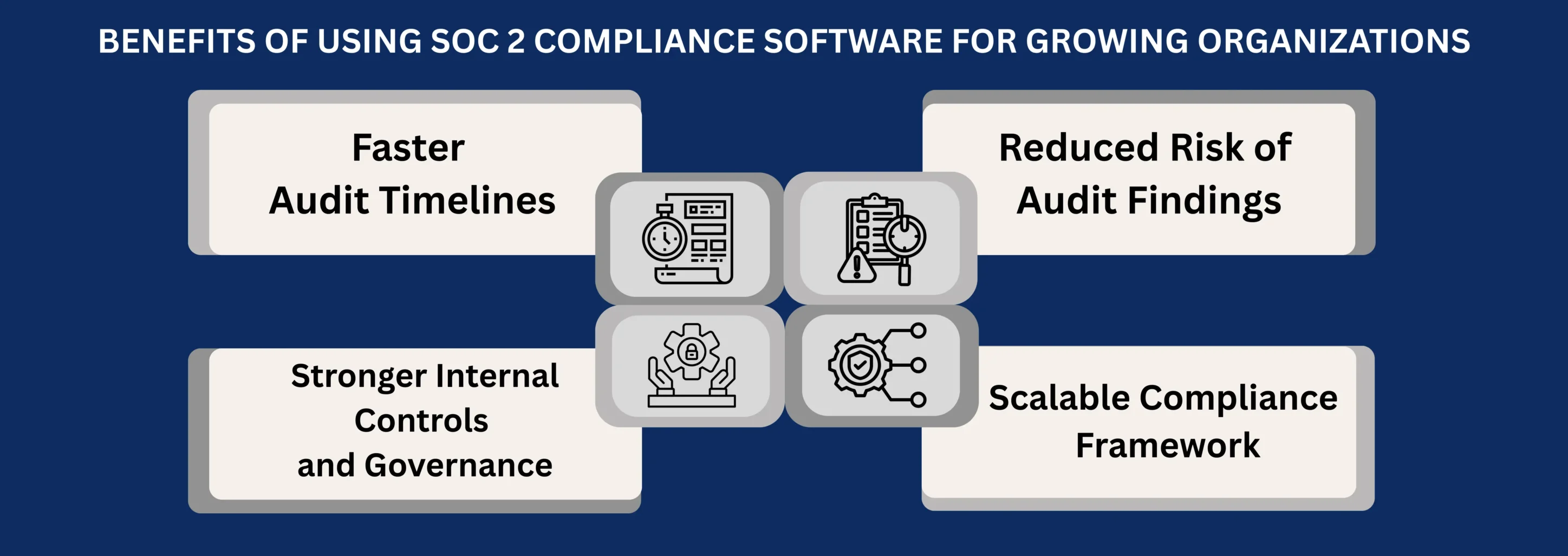
- ✓Demonstration of Control Effectiveness Through Independent Verification
- ✓Structured Audit Methodology and Internal Governance Maturity
- ✓Recognition in Enterprise Procurement and Regulated Institution Processes
SOC 2 Versus ISO 27001: Framework Considerations for Hamburg Organizations
Hamburg organizations evaluating information security certification options frequently face the question of whether to pursue SOC 2 certification, ISO 27001 certification, or both. The two frameworks differ in their structure, governance, and primary market recognition — and the appropriate choice depends on the organization’s target markets, customer requirements, and regulatory context.
Understanding the distinctions between SOC 2 and ISO 27001 is important for Hamburg organizations allocating resources to information security certification activities and for enterprise clients interpreting vendor assurance documentation. The decision should be grounded in a clear analysis of where the organization’s enterprise clients and procurement requirements are concentrated.
Structural and Governance Differences
SOC 2 attestation is conducted exclusively by a Licensed CPA Firm under AICPA attestation standards (AT-C Section 205), producing a report that expresses the auditor’s independent opinion on control effectiveness against the Trust Services Criteria. ISO 27001 certification is conducted by an accredited certification body under the ISO/IEC 27001 standard, producing a certificate that attests to conformity with the standard’s requirements for an information security management system.
The two frameworks use different evaluative criteria. SOC 2 evaluates specific controls against the Trust Services Criteria, while ISO 27001 evaluates the management system framework including risk assessment, risk treatment, and a set of Annex A controls organized into organizational, people, physical, and technological domains.
The SOC 2 examination produces a detailed narrative report that describes the organization’s system, controls, and the auditor’s testing procedures and results — including exceptions identified. The ISO 27001 certificate provides a simpler attestation of management system conformity without the detailed control testing narrative included in a SOC 2 report.
Enterprise security teams reviewing vendor assurance documentation often find SOC 2 reports more informative than ISO 27001 certificates. The SOC 2 attestation report provides specific evidence of control testing and operating effectiveness, while the ISO 27001 certificate attests to management system conformity at a higher level of abstraction — a meaningful distinction when enterprise security reviewers need detailed evidence of specific control performance.
Market Recognition and Customer Requirements
The primary determinant for Hamburg organizations choosing between SOC 2 and ISO 27001 should be the requirements of their target markets and enterprise clients. Organizations primarily serving European enterprise clients — particularly in sectors where ISO 27001 is the recognized standard — should prioritize ISO 27001 certification. Organizations serving North American enterprise clients, or seeking to expand into North American markets, should prioritize SOC 2 Type II attestation, as ISO 27001 certificates are not consistently recognized as equivalent by North American procurement teams.
Organizations serving both markets may require both certifications. The control overlap between the two frameworks makes a dual-certification approach feasible for Hamburg organizations with the organizational capacity to manage both examination processes, and many Hamburg technology companies pursue this path as part of their international growth strategies.
| Characteristic | SOC 2 Attestation | ISO 27001 Certification |
|---|---|---|
| Governing Body | AICPA (AT-C Section 205) | ISO/IEC 27001 via accredited certification body |
| Conducted By | Licensed CPA Firm exclusively | ISO-accredited certification body |
| Evaluation Focus | Specific controls vs. Trust Services Criteria | Management system conformity and Annex A controls |
| Report Format | Detailed narrative with testing results and exceptions | Certificate of conformity |
| Primary Market Recognition | North American enterprise procurement | European and global enterprise procurement |
SOC 2 Audit Hamburg: Selecting a Licensed CPA Firm
The selection of a Licensed CPA Firm to conduct the SOC 2 examination is one of the most consequential decisions an organization makes in the SOC 2 certification process. Because SOC 2 attestation is exclusively performed by Licensed CPA Firms under AICPA attestation standards, the selection criteria differ from those applicable to selecting consultants or advisory service providers.
The critical qualification criteria for a Licensed CPA Firm conducting SOC 2 examinations relate to credentials, independence from the organization being examined, expertise in Trust Services Criteria evaluation, and demonstrated experience with technology organizations similar in profile to the organization seeking SOC 2 Certification in Hamburg.
CPA Firm Credentials and Independence Requirements
The Licensed CPA Firm conducting the SOC 2 examination must be independent of the organization being examined, as required by AICPA independence standards. Independence prohibits financial relationships, management relationships, and other connections between the CPA firm and the auditee that could compromise the objectivity of the examination.
Hamburg organizations selecting a CPA firm for a SOC 2 engagement should confirm that the firm is licensed as a Certified Public Accounting firm, participates in peer review programs, and has personnel with demonstrated SOC 2 examination experience. The AICPA’s SOC 2 examination framework requires practitioners to comply with SSAE No. 18 attestation standards, and firms conducting these examinations should be able to confirm their compliance with these professional requirements.
Expertise in Technology and Industry-Specific Environments
Beyond baseline credential requirements, Hamburg organizations should evaluate a Licensed CPA Firm’s depth of expertise in the specific technology environments and industry contexts relevant to their SOC 2 examination. A firm with extensive experience examining SaaS providers will understand the specific control configurations, evidence patterns, and testing procedures relevant to a multi-tenant cloud environment.
A firm with expertise in financial services technology will be better positioned to evaluate controls in a fintech environment where processing integrity and confidentiality requirements are particularly demanding. Industry-specific expertise in the CPA firm’s SOC 2 practice reduces examination friction, produces more targeted and meaningful attestation reports, and ultimately delivers greater value for Hamburg organizations investing in the SOC 2 certification process.
FAQ
▶
What is SOC 2 Certification and who requires it in Hamburg?
▶
What is the difference between a SOC 2 Type I and Type II report?
▶
How long does the SOC 2 audit process take for Hamburg organizations?
▶
Does SOC 2 compliance satisfy GDPR requirements for Hamburg organizations?
▶
Which Trust Services Criteria categories are relevant for Hamburg SaaS providers?
▶
Who can perform a SOC 2 examination for a Hamburg organization?
▶
How does the SOC 2 attestation report differ from an ISO 27001 certificate?
▶
How often must SOC 2 certification be renewed in Hamburg?
SOC 1 VS SOC 2: WHICH REPORT YOUR CUSTOMERS ACTUALLY ASK FOR
If you sell SaaS or provide outsourced services, you have likely been asked for a SOC report. However, the follow-up question is rarely easy to answer…
SOC 2 Certified: What Does It Mean for Your Business
For companies that handle sensitive data or run cloud-based services, the question “Can you provide your SOC 2 report?” carries enormous weight. Yet, …

NEW BLOG DESIGN
Ethical Hacking for SOC 2, ISO 27001, HIPAA Audit Readiness | CertPro CPA LLC HERO Dark bg, full width, padded Image as rounded card LEFT | Info panel…
Get In Touch
have a question? let us get back to you.