
GDPR Certification in Australia
CertPro is a Licensed CPA Firm delivering independent GDPR Certification in Australia to organizations that collect, process, or store personal data of individuals located in the European Union. Operating under a structured audit methodology and applicable data protection compliance standards, CertPro conducts formal GDPR assessments for Australian businesses across SaaS, cloud, fintech, healthcare, and eCommerce sectors. Upon verified conformance with GDPR requirements, CertPro issues a formal attestation confirming each organization’s compliance status.
OUR CLIENTS










What Is GDPR Certification and Why It Applies to Australian Organizations
The General Data Protection Regulation (GDPR) is the European Union’s primary legal framework governing the collection, processing, storage, and transfer of personal data belonging to individuals located within the EU. Enacted on 25 May 2018, GDPR replaced the 1995 EU Data Protection Directive and established a unified, enforceable standard across all EU member states. The regulation applies not only to organizations physically situated within the EU, but also to any organization located outside the EU that offers goods or services to EU residents or monitors their behaviour. This extraterritorial scope — defined under GDPR Article 3 — is the foundation upon which GDPR Certification in Australia becomes directly applicable and legally relevant for Australian businesses operating in international markets.
GDPR’s Extraterritorial Scope and Australian Organizations
GDPR Article 3(2) establishes that any organization, regardless of its physical location, falls within the regulation’s jurisdiction if it processes personal data of EU-based individuals in connection with offering goods or services to those individuals, or monitoring their behaviour within the EU. For Australian organizations, this provision has direct and binding consequences. An Australian SaaS company offering software subscriptions to EU customers, an Australian eCommerce platform shipping products to EU consumers, or an Australian healthcare provider treating EU nationals all fall squarely within GDPR’s territorial reach. The regulation does not distinguish between large corporations and small businesses — any organization meeting the criteria under Article 3 is subject to full GDPR compliance obligations.
Australia’s growing digital economy has accelerated the number of businesses engaging in cross-border data flows with EU partners, customers, and affiliates. As Australian cloud platforms expand into European markets and fintech firms process payments for EU residents, the volume of personal data subject to GDPR jurisdiction continues to increase. GDPR Certification in Australia provides formal, third-party verified evidence that an organization’s data processing activities conform to the regulation’s requirements, delivering meaningful assurance to EU regulators, customers, and business partners. Without formal certification or a documented privacy compliance program, Australian organizations face exposure to enforcement actions, significant fines, and reputational damage that can materially affect their ability to operate in EU markets.
Data Controllers and Data Processors: Accountability Obligations Under GDPR
GDPR draws a critical distinction between two categories of organizations involved in personal data processing: the data controller and the data processor. A data controller is an organization that determines the purposes and means of processing personal data — for example, an Australian retail business that decides why and how it collects EU customer purchase histories. A data processor is an organization that processes personal data on behalf of a controller — for example, an Australian cloud services provider that stores EU customer data on behalf of its clients. Both categories carry distinct but equally significant compliance obligations under GDPR, and both are subject to enforcement action by EU data protection authorities.
Data controllers bear primary accountability under GDPR and are responsible for ensuring that processing activities comply with the regulation’s core principles: lawfulness, fairness, transparency, purpose limitation, data minimisation, accuracy, storage limitation, integrity, and confidentiality. Data processors, while not directly responsible for defining processing purposes, are required to process data only on documented instructions from the controller and must implement appropriate technical and organisational security measures. A Data Processing Agreement (DPA) is legally required between controllers and processors under Article 28. CertPro’s GDPR assessment evaluates both controller and processor obligations, examining documentation, contracts, and technical controls to determine whether an organization’s practices meet the full scope of applicable GDPR requirements.
Key GDPR Principles Applicable to Australian Business Operations
GDPR Article 5 establishes the core principles that govern all personal data processing activities. These principles form the normative foundation of any GDPR compliance program and are the primary reference points against which a GDPR audit evaluates organizational practices. The principles of lawfulness, fairness, and transparency require that data subjects are clearly informed about how their data is collected and used, and that a valid legal basis exists for each processing activity. The principle of purpose limitation requires that data is collected for specified, explicit, and legitimate purposes and is not subsequently processed in a manner incompatible with those purposes.
Data minimisation requires that only data necessary for the stated purpose is collected and retained. Accuracy requires that personal data is kept up to date and corrected without delay. Storage limitation mandates that data is not retained longer than necessary for its original purpose, requiring documented retention schedules. Integrity and confidentiality — the security principle — requires that appropriate technical and organisational measures protect personal data against unauthorised access, accidental loss, or destruction. The final principle of accountability, established under Article 5(2), requires that data controllers are not merely compliant but are able to demonstrate compliance to regulators. This demonstrable accountability is precisely the function that independent GDPR Certification in Australia serves.
GDPR and the Australian Privacy Act: Overlapping Obligations
Australian organizations subject to GDPR frequently operate within a dual-compliance environment, navigating obligations under both the EU General Data Protection Regulation and the Australian Privacy Act 1988 (Cth), which governs privacy practices domestically. The Australian Privacy Act applies to organizations with annual turnover exceeding AUD 3 million, as well as to health service providers, government agencies, and other entities handling sensitive personal information. While both frameworks share common values — including transparency, purpose limitation, and data security — GDPR applies significantly stricter requirements, particularly regarding consent standards, data subject rights, breach notification timelines, and cross-border data transfers.
For Australian organizations subject to both frameworks, achieving GDPR compliance effectively elevates their overall privacy governance posture beyond what the Australian Privacy Act alone requires. CertPro’s GDPR assessment framework identifies areas where GDPR requirements exceed domestic obligations, enabling organizations to address compliance gaps in a structured and documented manner. This dual-compliance approach strengthens an organization’s accountability records, reduces regulatory exposure across multiple jurisdictions, and demonstrates to EU regulators and business partners that Australian organizations are operating at the highest standard of international data protection compliance.

GDPR Certification Requirements for Australian Organizations
Achieving GDPR Certification in Australia requires organizations to demonstrate conformance across a defined set of documentation, governance, technical, and operational requirements. These requirements reflect the full scope of GDPR obligations, interpreted through the lens of an independent certification audit. CertPro evaluates each requirement category through structured evidence review, interviews with responsible personnel, and technical inspection of systems and controls. The sections below outline the principal requirement domains an organization must satisfy to achieve and maintain certified GDPR compliance status.
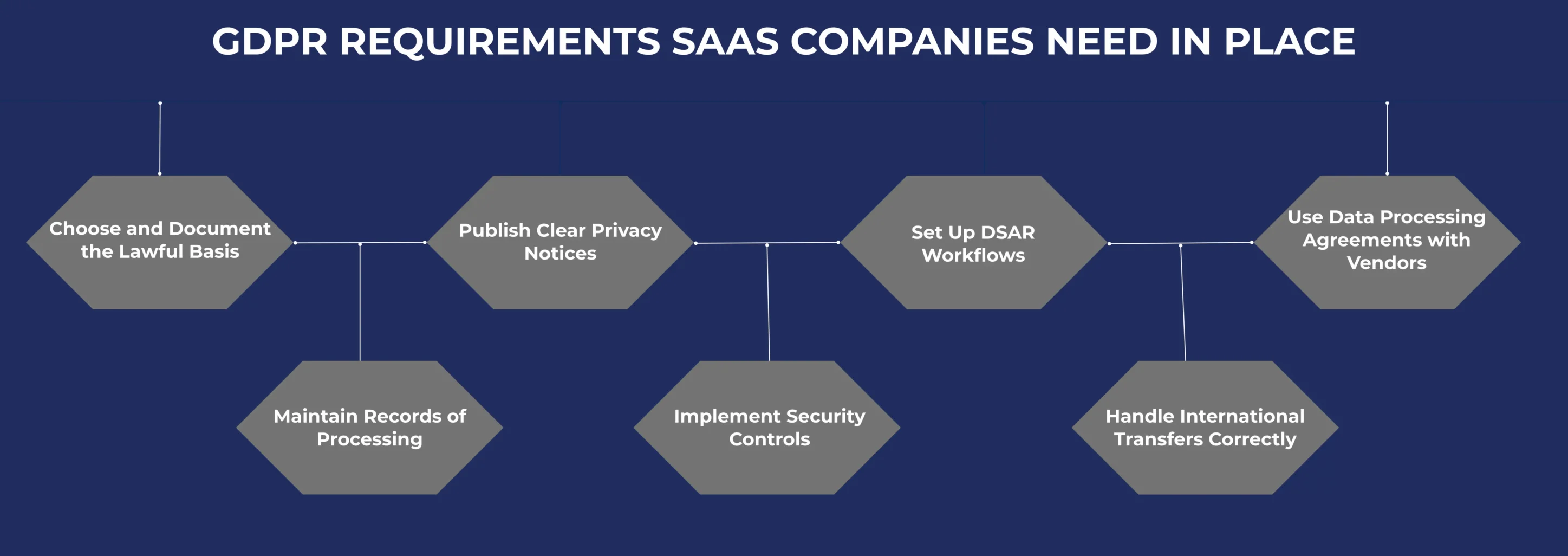
GDPR places significant emphasis on documented accountability. Organizations seeking GDPR certification must maintain a Records of Processing Activities (RoPA) as required under Article 30. The RoPA must document the name and contact details of the controller or processor, the purposes of processing, a description of the categories of data subjects and personal data, any third-country transfers, and retention schedules. For organizations with 250 or more employees — or for any organization processing sensitive data categories under Article 9 — maintaining a comprehensive RoPA is mandatory regardless of size.
Beyond the RoPA, documentation requirements extend to privacy notices and consent records, Data Processing Agreements with all third-party processors, Data Protection Impact Assessments (DPIAs) for high-risk processing activities, and documented procedures for responding to data subject access requests (DSARs). Organizations must also maintain records of security incidents, data breach notifications, and staff training completion. CertPro’s GDPR audit reviews all documentation artefacts against the specific requirements of each applicable GDPR article, assigning conformance or non-conformance findings based on the completeness, accuracy, and currency of the documentation provided.
GDPR Article 32 requires that data controllers and processors implement technical and organisational measures appropriate to the risk posed by their processing activities. This principle of security by design requires that protective measures are built into systems and processes from the outset, rather than applied retrospectively. Technical requirements assessed during a GDPR audit include encryption of personal data in transit and at rest, pseudonymisation where technically feasible, access controls and authentication mechanisms, regular testing and evaluation of security systems, and the capacity to restore availability of personal data following an incident.
GDPR Article 25 introduces the concept of data protection by design and by default, requiring that privacy-enhancing measures are embedded into product and service development lifecycles. For Australian technology companies and SaaS providers, this requirement has direct implications for software development practices, configuration management, and product architecture decisions. CertPro’s technical assessment examines system architecture documentation, security configuration evidence, access logs, encryption certificate records, and incident response procedures. This review determines whether an organization’s technical controls meet the standard of data protection compliance required by GDPR for its specific risk profile.
GDPR requires organizations to establish defined governance structures to oversee data protection compliance. Key governance requirements include the appointment of a Data Protection Officer (DPO) where required under Article 37 — applicable to public authorities, organizations carrying out large-scale systematic monitoring, or those processing special categories of data at scale. Where a DPO is not mandatory, organizations are still expected to designate a responsible individual or team accountable for data protection oversight. The DPO or equivalent role must be provided with sufficient resources to carry out their function and must report directly to the highest management level.
Governance requirements also encompass a data breach notification procedure capable of meeting GDPR’s 72-hour reporting obligation to the relevant supervisory authority under Article 33. Organizations must also have procedures for notifying affected data subjects where a breach is likely to result in high risk to their rights and freedoms. Staff training programs, data protection policies, and defined escalation procedures form additional components of the governance framework evaluated during a GDPR assessment. CertPro assesses governance structures against the accountability principle, examining whether the organization can not only comply with GDPR requirements but demonstrate that compliance through documented evidence and management oversight.
GDPR grants EU data subjects a comprehensive set of individual rights that organizations are legally obligated to respect and operationalise. These rights include the right of access (Article 15), the right to rectification (Article 16), the right to erasure or ‘right to be forgotten’ (Article 17), the right to restriction of processing (Article 18), the right to data portability (Article 20), and the right to object to processing (Article 21). Organizations must have documented procedures and technical capabilities to respond to data subject requests within the statutory one-month timeframe, with the capacity to extend to three months for complex requests with appropriate notification to the data subject.
Where consent is used as the legal basis for processing personal data, GDPR imposes strict requirements on how consent is obtained, recorded, and managed. Consent must be freely given, specific, informed, and unambiguous — expressed through a clear affirmative action. Pre-ticked boxes, bundled consent, and vague privacy notices do not meet the GDPR standard. Organizations must maintain records of when and how consent was obtained and must provide data subjects with a straightforward mechanism to withdraw consent at any time. Consent records are a primary audit artefact reviewed during CertPro’s GDPR assessment, with particular scrutiny applied to consent mechanisms embedded in websites, mobile applications, and marketing platforms.
| GDPR Requirement Category | Key GDPR Article | Assessment Focus |
|---|---|---|
| Records of Processing Activities | Article 30 | Completeness, accuracy, and currency of RoPA documentation |
| Technical Security Measures | Article 32 | Encryption, access controls, incident response capability |
| Data Protection by Design | Article 25 | Privacy controls embedded in systems and product development |
| Data Breach Notification | Article 33 | 72-hour notification procedures and incident response records |
| Data Subject Rights Procedures | Articles 15–21 | Documented DSARs processes and response timelines |
- ✓Documentation Requirements
- ✓Technical and Security Requirements
- ✓Governance and Organisational Requirements
- ✓Data Subject Rights and Consent Management Requirements
The GDPR Assessment and Certification Process in Australia
CertPro conducts GDPR Certification in Australia through a structured, phased assessment methodology that evaluates an organization’s data protection practices against the full scope of applicable GDPR requirements. The process is designed to produce a formal, evidence-based determination of conformance, resulting in the issuance of a GDPR certification attestation upon successful completion. Each phase of the GDPR assessment is clearly defined, sequenced, and documented — enabling organizations to understand exactly where they stand in the certification process at all times.
The first stage of CertPro’s GDPR assessment involves formally defining the scope of the certification engagement. Scope definition identifies the specific processing activities, systems, data categories, geographic locations, and organizational units that fall within the boundaries of the assessment. For Australian organizations, scope definition must account for the full range of data flows involving EU personal data — including data received from EU-based customers, partners, and affiliates; data transferred to EU entities or third-party processors; and data processed through cloud or SaaS platforms hosted in Australia or internationally.
Once the scope is defined, CertPro determines the audit programme — the specific GDPR articles, principles, and requirements against which the organization will be assessed. The audit programme is tailored to the organization’s role as a data controller, data processor, or both, and accounts for the nature of personal data processed. This includes whether special category data under Article 9 is involved — covering health information, biometric data, racial or ethnic origin, political opinions, religious beliefs, and trade union membership. All special category data attracts heightened privacy compliance obligations and is subject to additional scrutiny during the GDPR audit.
The documentation review phase involves a systematic examination of all records, policies, procedures, contracts, and technical artefacts relevant to the organization’s GDPR compliance position. CertPro auditors examine privacy notices, consent records, Records of Processing Activities, Data Processing Agreements, Data Protection Impact Assessments, and data breach response records. Documentation is evaluated for completeness, accuracy, regulatory conformance, and operational integration — examining not merely whether documents exist, but whether they accurately reflect actual organizational practices and are actively used by relevant personnel.
Evidence collection extends beyond document review to include structured interviews with key personnel responsible for data protection, IT security, legal compliance, and executive oversight. Technical inspections verify that security controls documented in policy are operationally implemented in systems and processes. For Australian SaaS and cloud companies, technical evidence collection focuses on access control configurations, encryption implementation, audit log management, and system architecture documentation. All evidence is mapped to specific GDPR requirements within the audit programme, forming the evidentiary basis for conformance determinations made in subsequent stages of the data protection compliance assessment.
Control testing involves the structured evaluation of the operating effectiveness of the controls and procedures identified during the documentation review phase. CertPro auditors test whether controls perform as designed, whether they are consistently applied across the organization, and whether they produce the intended data protection outcomes. Testing activities include sampling of data subject request records to verify timely and complete responses, examination of access control logs to confirm data access is restricted to authorised personnel, and review of data breach records to assess whether the organization has properly identified, escalated, and notified incidents in accordance with Article 33 requirements.
Where control testing identifies areas where documented controls are not operating effectively or where GDPR requirements are not fully met, CertPro issues formal nonconformity findings. Nonconformities are classified as major or minor depending on their nature and risk significance. Major nonconformities represent material failures to comply with specific GDPR requirements and must be resolved before certification can be issued. Minor nonconformities represent isolated or procedural deficiencies that do not fundamentally undermine compliance but require corrective action within a defined timeframe. Organizations receive a detailed nonconformity report identifying each finding, the applicable GDPR article, and the evidence basis for the determination.
Following the resolution of all major nonconformities and the verification of corrective actions, CertPro’s independent certification decision process determines whether the organization’s GDPR compliance posture meets the standard required for formal certification. The certification decision is made by a senior reviewer independent of the audit team, ensuring objectivity and impartiality in the determination. This decision is documented in a formal certification report that summarises the scope of the assessment, the evidence examined, the findings identified, and the rationale for the conformance determination.
Upon successful certification, CertPro issues a formal GDPR certification attestation confirming that the organization’s data processing practices have been independently assessed and determined to conform with applicable GDPR requirements within the defined certification scope. The attestation is issued for a defined period — typically one to three years — subject to annual surveillance assessments that verify continued conformance. GDPR Certification in Australia issued by CertPro serves as verifiable, third-party evidence of compliance for use with EU regulators, business partners, and customers requiring formal assurance of GDPR-aligned data protection compliance practices.
- Scope Definition: Identification of processing activities, data categories, systems, and organizational units within the GDPR certification boundary
- Audit Programme Determination: Mapping of applicable GDPR articles and requirements to the organization’s specific controller or processor role
- Documentation Review: Systematic examination of privacy notices, RoPA, DPAs, DPIAs, consent records, and security policies
- Evidence Collection: Structured interviews with DPO, IT security, legal, and management personnel; technical system inspections
- Control Testing: Operational effectiveness testing of data protection controls, access management, and data subject rights procedures
- Nonconformity Review: Identification and classification of major and minor findings with corrective action requirements
- Certification Decision: Independent review and formal determination of conformance by a senior reviewer independent of the audit team
- Attestation Issuance: Formal certification document confirming GDPR conformance within defined scope and for a specified certification period
- Surveillance Assessment: Annual review of continued conformance throughout the active certification period

- ✓Stage 1: Scope Definition and Audit Programme Determination
- ✓Stage 2: Documentation Review and Evidence Collection
- ✓Stage 3: Control Testing and Nonconformity Review
- ✓Stage 4: Certification Decision and Attestation Issuance
Benefits of GDPR Certification for Australian Organizations
GDPR Certification in Australia delivers measurable, strategic benefits to organizations across multiple dimensions of business operations. Beyond the fundamental objective of regulatory compliance, formal certification provides Australian organizations with competitive advantages, risk management improvements, and stakeholder trust outcomes that extend well beyond the immediate compliance context. The following sections examine the principal benefits that Australian organizations derive from achieving independent GDPR certification.
GDPR enforcement actions have increased significantly across the European Union, with data protection authorities in Germany, Ireland, France, and other member states imposing fines totalling hundreds of millions of euros annually. Under GDPR Article 83, administrative fines can reach up to €20 million or 4% of annual global turnover — whichever is higher. This scale of financial exposure represents material risk for organizations of any size. Australian organizations that process EU personal data without demonstrable GDPR compliance are exposed to the same enforcement powers as EU-based organizations, with no geographic exemption for entities located outside the EU.
Formal GDPR Certification in Australia provides documented evidence of a structured, independently verified compliance program that regulators can examine in the context of any enforcement inquiry or complaint. While certification does not guarantee immunity from regulatory scrutiny, it substantially demonstrates that an organization has taken its data protection compliance obligations seriously and has invested in a systematic approach. In practice, EU supervisory authorities frequently consider the existence of a certification program — and the documented corrective actions arising from it — as mitigating factors when determining the appropriate response to compliance incidents.
EU-based enterprises increasingly require their technology vendors, cloud service providers, and data processing partners to demonstrate GDPR compliance before entering into commercial relationships. This procurement requirement has become standard practice across EU financial services, healthcare, government, and enterprise technology sectors, where data protection due diligence is a formal component of vendor selection and contract negotiation. Australian organizations that cannot demonstrate GDPR compliance face a growing barrier to EU market access, as EU procurement teams are legally and operationally constrained from engaging processors or sub-processors that do not meet GDPR standards.
GDPR Certification in Australia issued by an independent certification body provides precisely the form of documented assurance that EU procurement requirements demand. A formal certification attestation eliminates the uncertainty of self-assessed compliance claims and provides EU partners with a structured, independently verified compliance record. For Australian SaaS companies, managed service providers, and cloud platforms seeking to expand their EU customer base, GDPR certification directly addresses the primary privacy compliance barrier to market entry — enabling faster commercial negotiations and reducing the time and cost associated with customer-driven due diligence processes.
The process of achieving GDPR certification systematically strengthens an organization’s internal privacy governance framework. As organizations work through the requirements of a GDPR assessment, they identify and address gaps in data mapping, documentation, access controls, breach response procedures, and staff training that may have existed undetected in their operations. The structured accountability framework that GDPR compliance requires — including defined roles, documented processes, and management oversight — improves overall data governance quality and reduces the operational risk of data incidents arising from inadequate controls or unclear responsibilities.
For Australian organizations that also operate under the Australian Privacy Act, ISO 27001, or other compliance frameworks, GDPR certification contributes positively to their overall governance posture by introducing additional rigour in privacy-specific controls. The documentation and procedural improvements made in achieving GDPR compliance frequently produce operational benefits that extend beyond regulatory compliance — including improved data quality, reduced storage costs from applying data minimisation practices, and clearer vendor management procedures arising from Data Processing Agreement requirements. Privacy compliance achieved through formal certification thus generates tangible organizational efficiency benefits alongside its regulatory value.
Consumer awareness of data privacy has grown substantially in recent years, driven by high-profile data breaches, media coverage of regulatory enforcement actions, and increasing public understanding of personal data rights. Australian consumers and business customers increasingly consider privacy governance as a factor in their purchasing decisions — particularly in sectors that process sensitive personal information such as healthcare, fintech, and human resources. Organizations that can demonstrate independently verified data protection compliance are well positioned to differentiate themselves from competitors who rely solely on self-declaration of privacy commitments.
GDPR Certification in Australia serves as a credible, third-party verified privacy trust signal that can be communicated to customers, investors, and business partners. The certification attestation can be referenced in contractual negotiations, displayed in privacy notices, and incorporated into marketing materials as evidence of a structured and independently audited data protection program. In competitive tender processes — particularly for government and enterprise contracts where privacy governance is evaluated as a selection criterion — GDPR certification provides a documented, verifiable advantage over competitors without formal certification status.
- ✓Documented evidence of GDPR compliance for EU regulatory authorities and supervisory bodies
- ✓Reduced financial exposure to GDPR enforcement fines of up to €20 million or 4% of global turnover
- ✓Formal compliance assurance required for EU vendor procurement and contract processes
- ✓Independently verified privacy trust signal for customers, investors, and business partners
- ✓Strengthened internal privacy governance framework with defined roles and documented procedures
- ✓Improved data mapping, retention management, and processing records across the organization
- ✓Competitive differentiation in EU market access and tender processes requiring GDPR compliance evidence
- ✓Enhanced staff awareness and organisational capability for ongoing data protection compliance
- ✓Structured breach response procedures reducing incident impact and regulatory notification risk
- ✓Foundation for multi-framework compliance alignment with the Australian Privacy Act and ISO 27001

- ✓Regulatory Risk Reduction and Enforcement Protection
- ✓Market Access and Commercial Opportunities in EU Markets
- ✓Enhanced Privacy Governance and Internal Controls
- ✓Customer Trust, Brand Reputation, and Competitive Differentiation
Who Needs GDPR Certification in Australia
GDPR compliance obligations apply to any Australian organization that falls within the extraterritorial scope defined by GDPR Article 3. The breadth of this provision means that a diverse range of Australian industries and business types are subject to GDPR requirements — often without being fully aware of their regulatory exposure. CertPro’s GDPR assessment serves organizations across multiple sectors, providing tailored certification services that address the specific data processing activities and risk profiles of each industry context.
SaaS and Cloud Technology Providers
Australian SaaS companies and cloud service providers that offer platforms to EU-based customers — or that provide data storage and processing services for EU personal data — are among the most directly exposed categories of organizations to GDPR obligations. As data processors, these organizations are required to comply with GDPR’s technical security requirements, maintain Data Processing Agreements with all controller clients, support data subject rights requests, and implement data protection by design principles in their product architectures. The scale and technical complexity of data processing in SaaS environments makes a structured GDPR assessment particularly valuable for identifying control gaps before they result in incidents or enforcement actions.
Australia’s technology sector has experienced significant growth in international market expansion, with many SaaS and cloud companies actively targeting EU markets as part of their commercial strategy. For these organizations, GDPR Certification in Australia is not merely a compliance obligation but a commercial prerequisite that enables EU market access and supports enterprise sales cycles where customer-imposed compliance requirements must be satisfied before contracts can be executed. CertPro’s GDPR certification for Australian technology companies is structured to address the specific compliance challenges of cloud-native architectures, multi-tenant data environments, and API-driven data processing workflows.
Fintech and Financial Services Organizations
Australian fintech companies and financial services organizations that process payment transactions, financial account data, or credit information for EU residents are subject to GDPR requirements across multiple processing activity categories. Financial personal data — including payment card details, bank account numbers, and credit assessment records — is processed at scale in fintech environments, creating significant GDPR exposure when EU residents are involved. The combination of large data volumes, sensitive data categories, and cross-border transfer requirements makes fintech one of the highest-risk sectors for GDPR non-compliance in Australia.
GDPR compliance for Australian fintech organizations requires careful attention to the legal bases for financial data processing, the application of data minimisation principles in transaction processing systems, and the management of cross-border data transfer mechanisms under Chapter V of the GDPR. The use of Standard Contractual Clauses (SCCs) or binding corporate rules for transfers of personal data from EU entities to Australian processors is a frequently assessed compliance requirement in CertPro’s GDPR audit for fintech clients. Data protection compliance in the financial services context also intersects with anti-money laundering (AML) and know-your-customer (KYC) requirements, creating complex regulatory layering that a structured GDPR assessment helps organizations navigate effectively.
Healthcare, Medical Research, and Life Sciences
Healthcare organizations, medical research institutions, and life sciences companies in Australia that process health data relating to EU residents are subject to the enhanced protections applicable to special category data under GDPR Article 9. Health data is explicitly listed as a special category requiring a specific legal basis for processing — beyond the standard legal bases available for ordinary personal data — and is subject to the highest level of technical and organisational protection requirements. Australian healthcare providers treating EU nationals, telehealth platforms serving EU patients, and medical researchers conducting studies involving EU participant data all fall within this elevated compliance tier.
The intersection of GDPR health data requirements and Australia’s own My Health Records Act and healthcare privacy obligations creates a complex dual-compliance environment for healthcare organizations. CertPro’s GDPR assessment for healthcare clients examines the specific legal bases invoked for processing health data, the adequacy of security measures protecting sensitive health records, the procedures for obtaining valid explicit consent from EU data subjects, and the controls governing access to health data by clinical, administrative, and technical personnel. The growing adoption of health technology platforms, remote patient monitoring, and AI-driven diagnostics in Australia’s healthcare sector further increases the importance of structured GDPR audit services for organizations in this industry.
eCommerce, Digital Marketing, and Retail Organizations
Australian eCommerce retailers, digital marketing agencies, and consumer brands that sell products or services to EU consumers — or that use digital marketing platforms to target EU individuals — are subject to GDPR obligations relating to customer data management, online tracking, and marketing communications. The use of cookies, tracking pixels, and behavioural analytics tools on websites accessible to EU users triggers GDPR’s consent and transparency requirements, including the obligation to provide clear cookie consent mechanisms and maintain records of user consent preferences. Australian retailers with EU customer bases must ensure that their eCommerce platforms, customer data platforms, and email marketing systems reflect strong data protection compliance in these areas.
Digital marketing practices involving profiling — the automated analysis of personal data to make decisions or predictions about EU individuals — are subject to specific GDPR restrictions under Article 22. These include the right of data subjects to object to profiling and to request human review of automated decisions. Australian marketing technology companies and advertising platforms conducting profiling activities involving EU individuals must assess their practices against these requirements. GDPR Certification in Australia for eCommerce and digital marketing organizations provides structured assurance that consent management, data handling, and profiling practices meet the regulatory standard applicable to EU consumer data.
Cross-Border Data Transfers: GDPR Requirements for Australian Organizations
One of the most operationally complex aspects of GDPR compliance for Australian organizations involves the lawful transfer of personal data between EU entities and Australian organizations. GDPR Chapter V establishes strict requirements governing transfers of personal data to third countries — including Australia — that do not benefit from an EU adequacy decision. Australia has not received an adequacy decision from the European Commission, meaning that Australian organizations cannot rely on a blanket determination that Australian privacy law provides equivalent protection to GDPR. Instead, organizations must implement one of the approved transfer mechanisms specified under GDPR Articles 46 and 47.
Standard Contractual Clauses (SCCs) are the most widely used mechanism for lawful cross-border data transfers between EU entities and Australian organizations. SCCs are pre-approved contractual frameworks issued by the European Commission that, when incorporated into agreements between data exporters and data importers, provide the legal basis for transferring personal data from the EU to a third country. The European Commission updated its SCC templates in June 2021 following the Court of Justice of the European Union’s Schrems II ruling, requiring that transfers also be subject to a Transfer Impact Assessment (TIA) evaluating whether the legal environment of the destination country allows for effective compliance with SCC obligations.
For Australian organizations receiving personal data from EU controllers or processors, executing updated SCCs and completing a Transfer Impact Assessment are typically required components of GDPR-compliant data transfer arrangements. CertPro’s GDPR assessment examines whether organizations have identified all cross-border data transfer relationships, whether appropriate SCCs or other transfer mechanisms are in place, and whether Transfer Impact Assessments have been documented and reviewed. Binding Corporate Rules (BCRs) represent an alternative transfer mechanism available to multinational corporate groups, enabling intra-group transfers of personal data to third countries on the basis of binding internal privacy rules approved by a lead EU supervisory authority.
Australian organizations using cloud infrastructure — whether AWS, Microsoft Azure, Google Cloud, or other providers — must carefully evaluate where EU personal data is hosted, processed, and backed up. Many cloud providers offer Australian data centre regions but also use global infrastructure for redundancy, disaster recovery, and content delivery purposes. This can result in EU personal data being temporarily or routinely transferred to data centres outside Australia. GDPR’s cross-border transfer restrictions apply to these cloud-based transfers, requiring that the cloud provider has appropriate data processing agreements and transfer mechanisms in place to maintain data protection compliance.
During a GDPR audit for Australian cloud-using organizations, CertPro examines cloud architecture documentation, data processing agreements with cloud providers, and any data residency configurations applied to restrict EU personal data processing to approved geographic locations. Where cloud providers offer data residency controls — such as region-locked storage or data residency commitments in enterprise agreements — CertPro assesses whether these controls are correctly configured and whether the organization maintains evidence of their ongoing operation. The complexity of cloud data flows makes this one of the most technically demanding aspects of a GDPR assessment for Australian technology organizations, and one where specialist audit expertise adds significant value.
- ✓Standard Contractual Clauses and Binding Corporate Rules
- ✓Data Localisation and Cloud Hosting Considerations
GDPR Audit Methodology: How CertPro Conducts Independent Assessments
CertPro’s GDPR audit methodology is structured around the principle of independent, evidence-based evaluation. As a Licensed CPA Firm, CertPro applies rigorous audit standards to the assessment of GDPR compliance, ensuring that certification determinations are based on documented evidence rather than organizational self-declaration. The methodology is designed to be systematic, reproducible, and defensible — producing audit findings that withstand scrutiny from EU regulators, supervisory authorities, and enterprise customers requiring detailed data protection compliance assurance.
Risk-Based Audit Approach and Sampling Methodology
CertPro’s GDPR audit applies a risk-based approach that directs audit intensity toward the areas of greatest data protection risk within the assessed organization. Risk factors considered in this prioritization include the volume and sensitivity of EU personal data processed, the number of data subjects affected by processing activities, the complexity of data flows and third-party processor relationships, the reliance on automated processing and profiling, and the organization’s history of data incidents or regulatory enquiries. Higher-risk processing activities receive proportionally greater audit scrutiny, ensuring that the GDPR assessment is focused on the areas where compliance failures would have the greatest potential impact.
Sampling methodology is applied to control testing activities where the population of transactions, records, or events is too large for comprehensive examination within the audit scope. CertPro applies statistically representative sampling to data subject request records, consent records, data breach logs, access control reviews, and other operational compliance records. Sample sizes are determined based on total population size, the acceptable level of audit risk, and the assessed risk profile of the specific control area being tested. All sampling decisions are documented in the audit workpapers, providing a transparent and reproducible record of the testing methodology applied to each control area.
Data Protection Impact Assessment Review
Data Protection Impact Assessments (DPIAs) are a mandatory requirement under GDPR Article 35 for processing activities likely to result in a high risk to the rights and freedoms of natural persons. DPIAs are required for large-scale processing of sensitive data, systematic monitoring of publicly accessible areas, processing involving automated decision-making with significant effects, and other high-risk processing categories identified by EU supervisory authorities. CertPro’s GDPR assessment evaluates whether organizations have correctly identified processing activities that require DPIAs, whether DPIAs have been completed to an adequate standard, and whether the outcomes have been appropriately acted upon.
A well-executed DPIA documents the nature, scope, context, and purposes of the processing activity; an assessment of the necessity and proportionality of the processing; an identification of risks to data subjects; and the measures identified to address those risks. Where a DPIA concludes that a high residual risk remains despite identified measures, the organization is required to consult the relevant supervisory authority before proceeding. CertPro’s audit review of DPIAs examines both the substantive quality of the assessment — whether risks have been correctly identified and measured — and the procedural compliance of the process — whether the DPIA was conducted before processing commenced and reviewed by the DPO where one has been appointed.
Third-Party and Supply Chain Assessment
GDPR compliance extends beyond an organization’s own internal practices to encompass the data protection practices of its third-party processors and sub-processors. Under GDPR Article 28, data controllers are responsible for ensuring that their processors provide sufficient guarantees of GDPR compliance, and processors are responsible for ensuring the same of any sub-processors they engage. For Australian organizations with complex supply chains involving multiple cloud providers, analytics platforms, marketing technology tools, and IT service providers, managing third-party GDPR compliance represents a significant operational challenge that a structured GDPR assessment helps to systematically address.
CertPro’s third-party assessment component of the GDPR audit examines the organization’s vendor management framework, the completeness and accuracy of its processor inventory, the adequacy of Data Processing Agreements with each processor, and the due diligence procedures applied when engaging new processors or sub-processors. Where processors are engaged without adequate DPAs — or where DPAs do not contain the mandatory provisions specified under GDPR Article 28 — these gaps are identified as nonconformities requiring remediation. The assessment also evaluates whether the organization has implemented oversight mechanisms to verify that its processors are meeting their GDPR obligations on an ongoing basis, rather than relying solely on contractual commitments.
GDPR Certification Cost in Australia
The cost of GDPR Certification in Australia is determined by several factors specific to each organization’s size, complexity, and data processing profile. CertPro structures its GDPR certification fees transparently, based on the specific scope of the assessment engagement rather than applying generic pricing tiers. Understanding the principal cost determinants enables organizations to budget appropriately for GDPR certification and to evaluate the cost of certification against the risk and commercial exposure of operating without independently verified privacy compliance status.
Key Factors Influencing GDPR Certification Costs
The primary cost driver for a GDPR assessment is the scope of processing activities included in the certification boundary. Organizations that process EU personal data across multiple business units, systems, and geographic locations require a broader assessment scope — increasing the volume of documentation review, evidence collection, and control testing required. Conversely, organizations with a focused and well-defined processing scope — such as a SaaS company with a single product handling a specific category of EU customer data — can achieve certification at proportionally lower cost by maintaining a tightly scoped certification boundary.
The volume and sensitivity of personal data processed also influences assessment complexity and cost. Organizations processing special category data under GDPR Article 9 — such as health data, biometric data, or data relating to criminal convictions — require additional audit focus on the elevated legal bases and security controls applicable to these categories. The number of third-party processors in scope, the complexity of cross-border data transfer arrangements, and the maturity of the organization’s existing documentation and governance framework all affect the time required to complete a thorough GDPR audit. Organizations with well-maintained data protection compliance documentation typically complete the evidence collection phase more efficiently, which can reduce overall assessment costs.
| Organization Profile | Scope Complexity | Indicative Assessment Factors |
|---|---|---|
| Small SaaS (under 50 staff, single product) | Low to Medium | Focused data flows, limited processors, straightforward consent mechanisms |
| Mid-size eCommerce (50-200 staff) | Medium | Customer data volume, marketing technology stack, cross-border transfers |
| Enterprise Technology (200+ staff) | High | Multiple systems, complex processor chains, multi-jurisdiction data flows |
| Healthcare or Fintech (any size) | High | Article 9 special category data, elevated security requirements, DPIAs required |
| Multinational Group (Australian HQ) | Very High | BCR requirements, multiple data controller entities, complex governance structures |
Surveillance, Recertification, and Ongoing Compliance Costs
GDPR certification is not a one-time event but an ongoing commitment to maintained compliance. Certification is issued for a defined period — typically one to three years — and is subject to annual surveillance assessments that verify continued conformance with GDPR requirements. Surveillance assessments are structured to be less resource-intensive than initial certification assessments, focusing on changes to processing activities, new data flows, updated third-party processor relationships, and any data incidents or regulatory developments that may affect the organization’s data protection compliance position since the last formal assessment.
Recertification assessments, conducted at the end of the certification period, involve a comprehensive re-evaluation of the organization’s GDPR compliance posture to determine continued eligibility for certification status. The investment in ongoing certification should be considered alongside the cost of enforcement and commercial consequences of non-compliance. A single GDPR enforcement action involving even a relatively modest fine can significantly exceed the total multi-year cost of a structured certification program. For growing Australian technology businesses, commercial losses resulting from exclusion from EU procurement processes can represent substantially larger financial impacts than the certification investment itself.
Industries in Australia That Require GDPR Compliance
While GDPR applies to any Australian organization processing EU personal data, certain industries in Australia have particularly concentrated exposure to GDPR obligations due to the nature and scale of their cross-border data processing activities. Australia’s growing digital economy, expanding international business presence, and increasing integration with global technology platforms means that GDPR compliance is relevant across a broad range of sectors that may not immediately recognize their exposure to EU data protection law. Obtaining GDPR Certification in Australia ensures these organizations have independently verified, documented evidence of their compliance posture.
- ✓Software as a Service (SaaS) and cloud infrastructure providers serving EU enterprise customers
- ✓Fintech companies processing payments, lending, or investment transactions for EU residents
- ✓Healthcare providers, telehealth platforms, and medical research organizations handling EU patient data
- ✓eCommerce retailers and marketplaces selling products or services to EU consumers
- ✓Digital marketing agencies and advertising technology platforms targeting EU audiences
- ✓Human resources and workforce management platforms processing EU employee data
- ✓Legal, accounting, and professional services firms with EU client relationships
- ✓Education technology and online learning platforms enrolling EU students
- ✓Travel, hospitality, and tourism companies processing EU visitor bookings and personal data
- ✓Logistics and supply chain organizations managing EU partner and customer data
GDPR Compliance in Australia: Alignment with the Australian Privacy Act
Australian organizations subject to GDPR operate within a dual regulatory environment that encompasses both EU data protection law and Australian domestic privacy obligations. Understanding how GDPR compliance aligns with and differs from Australian Privacy Act requirements is essential for organizations seeking to build an efficient, integrated privacy governance framework that satisfies both sets of obligations without unnecessary duplication. GDPR compliance programs for Australian organizations that are designed with awareness of the Australian Privacy Act can achieve significant efficiency gains by aligning overlapping requirements and addressing GDPR-specific obligations through targeted controls.
Points of Alignment Between GDPR and the Australian Privacy Act
The Australian Privacy Act 1988, as amended by the Privacy Amendment (Enhancing Privacy Protection) Act 2012, contains 13 Australian Privacy Principles (APPs) that govern the handling of personal information by Australian Government agencies and private sector organizations with an annual turnover above AUD 3 million. Several of these principles align substantially with GDPR requirements — particularly in the areas of collection transparency (APP 5 aligns with GDPR’s transparency requirements), use and disclosure limitations (APP 6 aligns with GDPR’s purpose limitation principle), data security obligations (APP 11 aligns with GDPR Article 32), and access and correction rights (APPs 12 and 13 align with GDPR Articles 15 and 16).
For Australian organizations that have already established compliance programs under the Australian Privacy Act, these points of alignment mean that a portion of the documentation, policies, and controls required for GDPR compliance may already exist in some form. CertPro’s GDPR assessment evaluates existing Australian Privacy Act compliance documentation and controls, identifying where they can be adapted to meet GDPR requirements and where GDPR imposes additional obligations that exceed the APP standard. This integration-focused approach to data protection compliance assessment enables organizations to build on their existing privacy governance investments, rather than creating parallel compliance frameworks from the ground up.
Where GDPR Exceeds Australian Privacy Act Requirements
Despite the areas of alignment between GDPR and the Australian Privacy Act, GDPR imposes significantly more stringent requirements in several key areas that Australian organizations must specifically address. The most material differences include GDPR’s mandatory 72-hour breach notification obligation to supervisory authorities, compared to the Australian Notifiable Data Breaches scheme’s requirement to notify the Office of the Australian Information Commissioner (OAIC) only when a breach is likely to result in serious harm. The GDPR’s consent standard — requiring freely given, specific, informed, and unambiguous consent expressed through an affirmative action — is substantially higher than the general notice-based approach permitted under the APPs.
GDPR’s requirement for Data Processing Agreements between controllers and processors, the mandatory Data Protection Officer appointment criteria, the obligation to conduct DPIAs for high-risk processing, and the specific cross-border transfer mechanisms under Chapter V all represent requirements that go beyond what Australian domestic privacy law prescribes. For Australian organizations seeking to demonstrate GDPR compliance, these areas of divergence require specific policy development, contractual arrangements, and governance implementations that are distinct from and additional to their Australian Privacy Act compliance obligations. The GDPR assessment process systematically identifies and evaluates each of these divergence areas, ensuring comprehensive privacy compliance across both regulatory frameworks.
Why Choose CertPro for GDPR Certification in Australia
CertPro is a Licensed CPA Firm specialising in independent certification audit services across multiple regulatory frameworks, including GDPR, ISO 27001, SOC 2, HIPAA, and other internationally recognised compliance standards. CertPro’s status as an independent third-party certification body means that GDPR certifications issued by CertPro carry the institutional authority and credibility that EU regulators, enterprise customers, and procurement bodies require. GDPR Certification in Australia conducted by CertPro reflects a structured, evidence-based assessment methodology that produces defensible, well-documented data protection compliance determinations.
Licensed CPA Firm with Independent Certification Authority
CertPro’s positioning as a Licensed CPA Firm is foundational to the credibility and regulatory value of the certifications it issues. Licensed CPA Firms operate under professional standards that require independence, objectivity, and evidence-based assessment in all audit and certification activities. These standards — analogous to those applied in financial auditing — ensure that CertPro’s GDPR assessments are conducted without conflicts of interest, commercial incentives to issue favourable determinations, or advisory relationships that could compromise the integrity of audit findings. Organizations receiving GDPR certification from CertPro can rely on the institutional independence of the assessment as a genuine representation of their compliance posture.
This independence is particularly significant in the context of EU regulatory expectations. GDPR Article 42 envisages certification as being conducted by accredited certification bodies that are independent of the organizations they certify, capable of exercising their tasks impartially, and subject to oversight by national supervisory authorities. CertPro’s audit-first, independence-focused methodology aligns directly with these regulatory expectations, ensuring that GDPR Certification in Australia issued by CertPro is structured on a foundation that EU regulators and supervisory bodies recognise as appropriate for formal data protection compliance assurance purposes.
Sector-Specific Expertise Across Australian Industries
CertPro’s GDPR certification team brings sector-specific expertise across the principal Australian industries subject to GDPR obligations, including SaaS and cloud technology, fintech and financial services, healthcare and life sciences, eCommerce and digital marketing, and professional services. This industry-specific knowledge enables CertPro’s auditors to evaluate GDPR compliance in the context of the specific data processing practices, technology architectures, and commercial relationships that characterise each sector — rather than applying a generic assessment framework that may not adequately address sector-specific privacy compliance challenges.
CertPro has conducted GDPR assessments for Australian organizations including technology companies, financial services providers, and healthcare platforms, building a proven track record of successful GDPR certification in the Australian market context. This experience informs the design of CertPro’s audit programmes for Australian clients, ensuring that assessment methodologies reflect the specific regulatory, technical, and operational environments in which Australian organizations operate. The combination of GDPR regulatory expertise, audit methodology rigour, and Australian market familiarity positions CertPro as a leading GDPR certification body in Australia for organizations across multiple sectors.
Structured, Transparent Certification Process with Fixed Scope
CertPro’s GDPR certification process is built on a transparent, clearly defined scope that organizations understand before the assessment commences. Scope documentation, audit programme specifications, evidence requirements, and assessment timelines are communicated clearly at the outset of each engagement, enabling organizations to prepare appropriately and allocate the internal resources necessary to support the assessment process. This transparency reduces uncertainty about the certification process and enables organizations to treat the engagement as a structured project with defined milestones and deliverables.
Upon completion of the assessment, organizations receive a comprehensive certification report documenting the audit scope, evidence examined, findings identified, and the rationale for the certification determination. This report serves as the primary deliverable of the engagement and provides organizations with a detailed record of their GDPR compliance posture — suitable for sharing with regulators, customers, and business partners as required. CertPro’s commitment to transparent, documented certification processes reflects its institutional positioning as an independent third-party audit firm operating to the highest standards of professional certification practice in the Australian market.
FAQ
▶
What is GDPR Certification in Australia?
▶
Is GDPR legally applicable to Australian organizations?
▶
How long does a GDPR certification audit take in Australia?
▶
What documents are required for a GDPR assessment?
▶
Does GDPR Certification satisfy both GDPR and Australian Privacy Act obligations?
▶
How is a GDPR audit different from a GDPR self-assessment?
▶
What happens if nonconformities are identified during the GDPR audit?
▶
How often must GDPR Certification be renewed for Australian organizations?


Reports Of GDPR Violations Rise Sharply
Excerpt from CSO Online Article, Published on January 29, 2026 The latest GDPR enforcement data shows that Reports of GDPR violations have surged sign…

Data Protection Hungary: GDPR Compliance for Global Firms
Excerpt from TechBullion Article, Published on November 24, 2025 Since the EU General Data Protection Regulation (GDPR) came into force, international…
Get In Touch
have a question? let us get back to you.