
ISO 42001 Certification in Australia
CertPro is a Licensed CPA Firm conducting independent ISO 42001 certification audits for organisations across Australia. Our ISO 42001 audit scope covers AI Management System (AIMS) governance, risk controls, lifecycle oversight, and operational accountability. Certification assessments are structured against ISO/IEC 42001:2023 requirements, with consideration for applicable Australian regulatory and privacy governance obligations.
OUR CLIENTS






Introduction to ISO 42001 Certification in Australia
ISO 42001 Certification in Australia represents a formal, third-party validated recognition that an organisation has established, implemented, and actively maintains a conformant Artificial Intelligence Management System (AIMS) in accordance with ISO/IEC 42001:2023. As Australian enterprises across finance, healthcare, mining, telecommunications, education, and government increasingly integrate AI into core operations, the demand for structured governance and independent certification has grown significantly.
ISO 42001 Certification in Australia provides organisations with a globally recognised framework to demonstrate that AI systems are governed responsibly, deployed ethically, and managed with clear operational accountability. For any organisation seeking to validate its AI governance maturity, ISO 42001 certification offers a credible and independently verified pathway.
ISO/IEC 42001:2023 is the first international standard specifically designed to address the governance and management of artificial intelligence systems at an organisational level. Published jointly by the International Organisation for Standardisation (ISO) and the International Electrotechnical Commission (IEC), it provides a comprehensive framework covering AI policy, risk management, transparency, accountability, lifecycle oversight, and continuous improvement.
Unlike technology-specific guidelines, ISO 42001 operates as a management system standard. This means it applies to any organisation that develops, provides, or uses AI-based products and services—regardless of sector, size, or geographic location. Its broad applicability makes ISO 42001 compliance relevant to a wide range of Australian industries.
What Is ISO/IEC 42001:2023?
ISO/IEC 42001:2023 defines the requirements for establishing an AI Management System (AIMS) within an organisation. The standard follows the High-Level Structure (HLS) common to ISO management system standards such as ISO 27001 (information security) and ISO 9001 (quality management), enabling straightforward integration across existing governance frameworks.
The standard addresses the full AI system lifecycle—from planning and design through deployment, monitoring, and decommissioning. This ensures that governance controls are applied at every stage of AI development and operation, making ISO 42001 assessment a comprehensive evaluation of end-to-end AI governance.
ISO 42001 introduces AI-specific risk management, requiring organisations to identify and assess risks and opportunities associated with AI systems in context. These include risks related to data quality, model bias, explainability, privacy, safety, and unintended consequences. ISO 42001 compliance requires organisations to document their AI objectives, define roles and responsibilities, establish monitoring mechanisms, and undergo internal and external audit processes.
For Australian organisations subject to the Privacy Act 1988, the Australian Privacy Principles (APPs), and emerging AI governance guidance from bodies such as the Department of Industry, Science and Resources, ISO 42001 compliance provides a structured mechanism for aligning AI operations with domestic regulatory expectations.
The Role of ISO AIMS Certification in the Australian AI Landscape
ISO AIMS certification in Australia serves as an independent, evidence-based attestation that an organisation’s AI governance structure meets internationally accepted standards. Australia’s technology sector has experienced rapid AI adoption—across automated decision-making in financial services, predictive analytics in healthcare, AI-driven exploration tools in mining, and intelligent automation across government and education.
Each of these applications carries governance, ethical, and operational risks that require structured management. ISO AIMS certification provides the assurance framework that organisations, regulators, clients, and stakeholders need to validate responsible AI operations and demonstrate accountability.
The Australian Government’s AI Ethics Framework, published by the Department of Industry, Science and Resources, outlines eight core principles for AI use: safety, security, reliability, transparency, fairness, privacy protection, accountability, and contestability. ISO 42001 Certification in Australia directly maps to these principles through its structured management system requirements.
Organisations that achieve ISO AIMS certification can demonstrate alignment with Australia’s national AI ethics framework—providing regulators, partners, and clients with independently verified evidence of responsible AI governance. This alignment is particularly relevant for organisations operating in regulated sectors or responding to government procurement requirements that increasingly reference AI governance standards.
Applicability Across Australian Industry Sectors
ISO 42001 Certification in Australia applies to any organisation that develops, deploys, or uses AI systems in its operations. This includes large financial institutions using machine learning for credit risk assessment or fraud detection, hospitals and health networks deploying AI diagnostic tools, mining companies using autonomous equipment and predictive maintenance systems, and telecommunications providers operating AI-driven network management platforms.
It also applies to technology firms building AI-powered SaaS products for domestic and international markets, as well as government agencies and public sector bodies that use automated decision support systems in service delivery. Across all these sectors, ISO 42001 assessment provides a consistent and credible governance benchmark.
Small and medium-sized enterprises (SMEs) in Australia’s growing technology and cybersecurity ecosystem are increasingly relevant to ISO 42001 certification. As AI capabilities become accessible to organisations of all sizes through cloud platforms and AI-as-a-service offerings, the governance obligations associated with AI deployment extend well beyond large enterprises.
ISO 42001’s scalable management system approach means the standard can be implemented proportionally. Smaller organisations can apply controls appropriate to their AI risk profile, operational context, and stakeholder requirements—making ISO 42001 compliance achievable and meaningful at every organisational scale.

Why ISO 42001 Certification Is Essential for Australian Organisations
The necessity of ISO 42001 Certification in Australia is driven by converging regulatory, commercial, and operational pressures facing organisations that develop or deploy AI systems. Australia’s regulatory environment is evolving to address the risks associated with AI, with legislative and policy activity at both federal and state levels signalling increasing oversight of automated decision-making, algorithmic transparency, and AI-related privacy risks.
Organisations that establish certified AI management systems position themselves to respond proactively to these regulatory developments—rather than reactively adjusting governance frameworks after enforcement actions or compliance failures.
Regulatory and Compliance Drivers in Australia
Australian organisations operating AI systems face obligations under the Privacy Act 1988, which governs the collection, use, and disclosure of personal information—including data processed by AI systems. The Australian Competition and Consumer Commission (ACCC) has also issued guidance on algorithmic transparency and consumer protection in AI-driven markets.
The Australian Prudential Regulation Authority (APRA) has established expectations for AI governance in financial services institutions through its prudential practice guides, including guidance on model risk management and operational resilience. ISO 42001 compliance provides a systematic approach to meeting these varied obligations through a unified management system framework, making ISO 42001 assessment a valuable tool for regulated entities.
The Security of Critical Infrastructure Act 2018 (SOCI Act) and related Australian Signals Directorate (ASD) frameworks establish risk management requirements for critical infrastructure sectors, many of which now rely on AI systems for core operational functions. For organisations in energy, water, transport, communications, and financial services, ISO 42001 assessment provides a structured mechanism for demonstrating that AI systems within critical infrastructure contexts are governed, monitored, and controlled to appropriate standards.
This is increasingly relevant as regulators assess organisational AI governance maturity during supervisory reviews and sector-specific audits—making ISO 42001 compliance a practical priority for critical infrastructure operators.
Commercial and Procurement Considerations
Beyond regulatory compliance, ISO 42001 Certification in Australia creates significant commercial value for organisations operating in competitive markets. Government procurement processes in Australia are increasingly incorporating AI governance requirements into vendor evaluation criteria. Commonwealth and state government agencies seeking to engage AI service providers are requiring evidence of structured AI governance, with ISO 42001 certification serving as a recognised attestation mechanism.
Organisations holding ISO 42001 certification are well positioned to demonstrate compliance with procurement requirements without the burden of repeated customer-specific assessments—saving time and reducing compliance overhead.
In enterprise and B2B markets, customers and partners are increasingly including AI governance provisions in contracts and due diligence processes. Organisations that have achieved ISO 42001 Certification in Australia can respond to these requirements efficiently, reducing the cost and time associated with security and governance questionnaires.
For Australian technology firms operating in international markets—particularly those engaging with European customers subject to the EU AI Act—ISO 42001 certification provides a recognised governance framework that aligns with international AI regulatory expectations, facilitating market access and strengthening cross-border commercial relationships.
Organisational Risk Management and Accountability
At the operational level, ISO 42001 assessment drives organisations to systematically identify and manage AI-specific risks that may not be adequately captured by existing risk management frameworks. AI systems introduce distinctive risk categories—including model drift, training data bias, adversarial inputs, unintended decision outcomes, and cascading system failures—that require specialised governance controls.
By establishing an AIMS aligned with ISO 42001, organisations create structured processes for identifying these risks, implementing appropriate controls, monitoring control effectiveness, and responding to incidents involving AI system failures or adverse outcomes.
ISO 42001 also establishes clear accountability structures for AI governance. The standard requires organisations to define roles and responsibilities for AI management, ensuring that senior leadership is engaged with AI risk oversight and that operational staff have clear mandates for AI system monitoring and control.
For Australian organisations where board-level accountability for technology risk is increasingly expected by regulators and institutional shareholders, the governance structures established through ISO 42001 certification provide a documented framework for demonstrating executive accountability over AI operations.
ISO 42001 Certification Requirements
Organisations pursuing ISO 42001 Certification in Australia must satisfy a comprehensive set of requirements spanning organisational context, leadership commitment, planning, support resources, operational controls, performance evaluation, and continuous improvement. These requirements collectively define the elements of a conformant AI Management System (AIMS) and form the basis against which an ISO 42001 audit is conducted.
Understanding these requirements in detail is essential for organisations planning their certification pathway and for ensuring that the AIMS established is both technically robust and operationally sustainable over the long term.
ISO 42001 requires organisations to define and document the internal and external context relevant to their AI Management System. This includes identifying the organisation’s purpose, strategic objectives, and the nature of AI systems in use. Organisations must identify interested parties—including customers, regulators, employees, and affected communities—and understand their requirements and expectations regarding responsible AI use.
The defined context informs the scope of the AIMS, which must be clearly documented. This includes the boundaries of the AI systems covered, the organisational units involved, and any exclusions applied with justification. A well-defined scope is foundational to a credible ISO 42001 audit outcome.
For Australian organisations, the context definition should specifically address applicable domestic regulatory requirements, including obligations under the Privacy Act 1988, sector-specific AI governance expectations from APRA or ASIC, and the organisation’s commitments under Australia’s AI Ethics Framework.
The scope documentation must be sufficient to enable an ISO 42001 audit to clearly determine which AI systems, processes, and organisational functions fall within the certification boundary—and to verify that the scope is appropriate given the organisation’s actual AI operations and risk profile.
ISO 42001 places explicit requirements on top management to demonstrate leadership and commitment to the AI Management System. Senior leaders must establish an AI policy that defines the organisation’s objectives for responsible AI, its commitment to compliance with applicable requirements, and its approach to continual improvement. The AI policy must be documented, communicated across the organisation, and made available to relevant interested parties.
Top management must also assign roles, responsibilities, and authorities for AI governance functions, ensuring that accountability for AI system oversight is clearly defined and operationally effective—a key area of focus during any ISO 42001 assessment.
The standard requires that AI management governance structures are integrated with the organisation’s existing management systems and decision-making processes. This includes ensuring that AI governance considerations are incorporated into strategic planning, resource allocation, and performance management.
For organisations already certified to ISO 27001 or ISO 9001, the leadership and governance requirements of ISO 42001 can be integrated with existing management system structures. This allows organisations to leverage established policy frameworks, review processes, and internal audit programs to support AIMS governance—without creating parallel or duplicative governance structures.
A central requirement of ISO 42001 is the establishment of a systematic AI risk management process that addresses risks and opportunities across the entire AI system lifecycle. Organisations must document AI impact assessments for all AI systems within scope, identify risks related to technical performance, data quality, fairness, transparency, safety, privacy, and security, and implement appropriate controls to treat identified risks to acceptable levels.
The risk management process must be proportionate to the nature and complexity of the AI systems involved. Higher-risk AI applications require more rigorous controls and monitoring—a factor that ISO 42001 assessment teams evaluate carefully during the certification audit.
Lifecycle oversight requirements address AI system planning, data acquisition and management, model development and testing, deployment, operational monitoring, change management, and decommissioning. Each lifecycle stage must have defined governance controls, with particular attention to data governance practices, testing and validation procedures prior to deployment, ongoing monitoring of AI system performance and outcomes, and processes for addressing model drift, anomalous outputs, or adverse incidents.
These lifecycle requirements reflect the dynamic nature of AI systems and the need for continuous governance throughout the operational life of AI applications—not merely at initial deployment.
ISO 42001 requires organisations to maintain documented information sufficient to demonstrate conformity with AIMS requirements and to support effective operation of the management system. Key documented information includes the AI policy, scope statement, AI impact assessments, risk treatment plans, control documentation, training records, internal audit reports, and management review outputs.
Documentation must be controlled, accessible, and maintained to ensure currency and integrity. For Australian organisations subject to records management obligations under the Archives Act 1983 or sector-specific regulatory requirements, documentation controls established for ISO 42001 compliance can be aligned with existing records governance frameworks.
Performance evaluation requirements include monitoring and measurement of AI system performance and AIMS effectiveness, internal audit at planned intervals, and management review of the AIMS. Internal audits must be conducted by competent personnel who are independent of the processes being audited, and audit findings must be documented, communicated to management, and addressed through corrective action processes.
Management reviews must evaluate AIMS performance against objectives, consider audit findings and nonconformities, assess opportunities for improvement, and document decisions and actions arising from the review. These evaluation activities generate the evidence required to demonstrate sustained AIMS conformity during external ISO 42001 audits.
| AIMS Requirement Area | Key Elements | Audit Evidence Expected |
|---|---|---|
| Organisational Context | Scope definition, stakeholder mapping, regulatory context | Scope document, context analysis, interested party register |
| Leadership & Governance | AI policy, roles and responsibilities, top management commitment | Policy documentation, governance structure, authority matrix |
| Risk Management | AI impact assessments, risk register, risk treatment plans | Risk assessment records, treatment documentation, control evidence |
| Lifecycle Controls | Data governance, model testing, deployment controls, monitoring | Process documentation, test records, monitoring reports |
| Performance Evaluation | Internal audits, management reviews, metrics and KPIs | Audit reports, management review minutes, performance data |
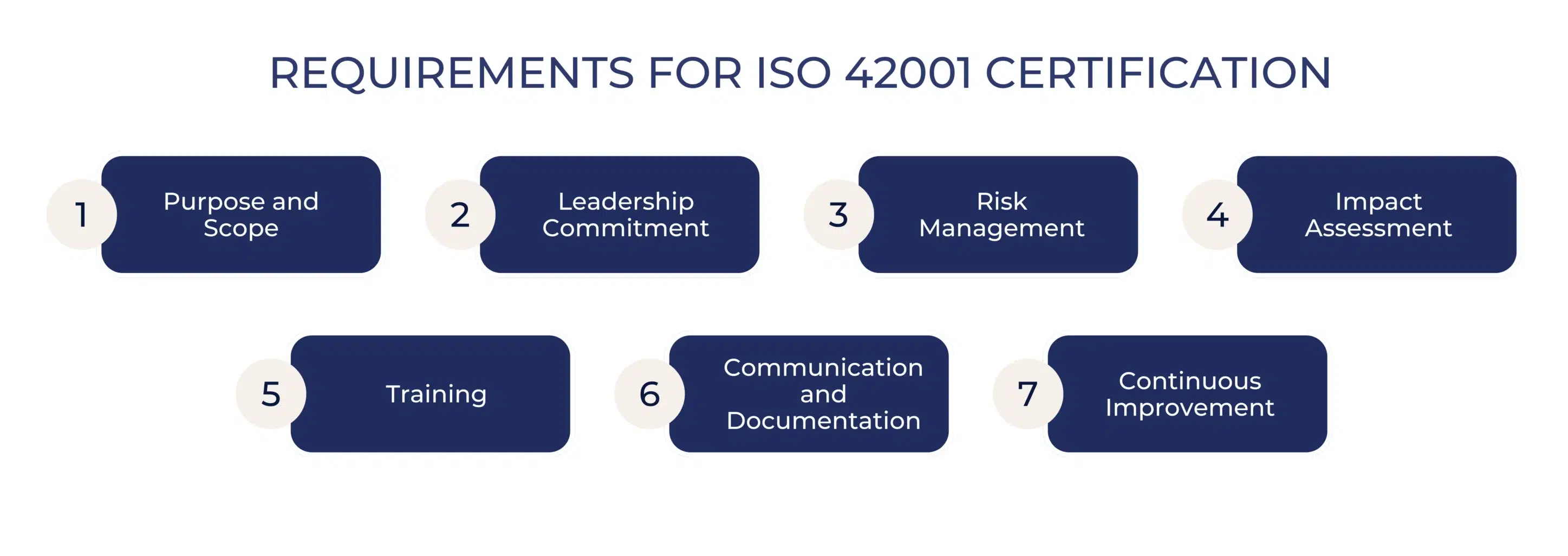
- ✓Organisational Context and Scope Requirements
- ✓Leadership, Policy, and Governance Requirements
- ✓Risk Management and AI Lifecycle Requirements
- ✓Documentation and Performance Evaluation Requirements
ISO 42001 Audit Process in Australia
The ISO 42001 audit process conducted by CertPro as a Licensed CPA Firm follows a structured, stage-based methodology aligned with internationally recognised certification audit practices. An ISO 42001 audit in Australia evaluates the conformity of an organisation’s AI Management System against the requirements of ISO/IEC 42001:2023, examining both documented system elements and operational evidence of implementation and effectiveness.
The audit process is objective, evidence-based, and independent—providing organisations and their stakeholders with a credible ISO 42001 assessment of AIMS conformity and AI governance maturity.
The ISO 42001 audit process commences with a formal scope definition phase, during which the audit boundaries are established based on the organisation’s defined AIMS scope. The audit team reviews the organisation’s AI policy, scope statement, and high-level AIMS documentation to assess whether the management system has been appropriately established and whether the organisation is ready for a full conformity assessment.
This stage identifies any significant gaps in documentation or system design that would prevent a productive Stage 2 audit, allowing the organisation to address substantive deficiencies before the formal ISO 42001 certification assessment proceeds.
The Stage 1 review includes examination of the organisational context documentation, AI policy, risk management framework, and evidence of top management engagement with the AIMS. Auditors assess the adequacy of the scope definition, verify that applicable regulatory requirements have been identified, and confirm that the organisation has established the foundational management system elements required for a conformant AIMS.
Stage 1 findings are documented and communicated to the organisation, forming the basis for audit program determination and the planning of the Stage 2 certification audit.
The Stage 2 certification audit is a comprehensive on-site or remote assessment of the organisation’s AIMS implementation and operational effectiveness. During this stage, auditors examine detailed documentation, conduct interviews with personnel at all levels of the organisation, observe operational processes, and test the effectiveness of controls established to manage AI risks.
The ISO 42001 audit in Australia evaluates whether the management system requirements of the standard are not only documented but are operationally implemented and delivering intended outcomes in practice—a critical distinction between paper compliance and genuine ISO 42001 conformity.
Control testing during the Stage 2 audit assesses the operation and effectiveness of specific AI governance controls across the lifecycle of AI systems in scope. This includes reviewing AI impact assessments for adequacy and completeness, testing data governance controls for AI training and operational data, examining model validation and testing documentation, assessing monitoring mechanisms for deployed AI systems, and reviewing incident management processes for AI-related events.
Audit evidence is collected from multiple sources—document review, personnel interviews, system demonstrations, and process observations—to provide a comprehensive ISO 42001 assessment of AIMS conformity.
Following the completion of audit fieldwork, the ISO 42001 audit team documents findings, including any nonconformities identified during the assessment. Nonconformities are classified as major or minor based on their significance and potential impact on AIMS conformity. Major nonconformities indicate systematic failures in the management system that must be resolved before certification can be granted, while minor nonconformities require corrective action within a specified timeframe after certification.
The organisation receives a detailed audit report documenting all findings, the evidence examined, and the basis for each nonconformity classification.
The certification decision is made independently by the certification body based on the audit findings, the organisation’s corrective action responses to any nonconformities, and a review of the complete audit record. Upon satisfactory resolution of any major nonconformities and acceptance of corrective action plans for minor nonconformities, the certification decision is confirmed and the ISO 42001 certificate is issued.
The certificate specifies the scope of the certified AIMS, the applicable standard (ISO/IEC 42001:2023), and the period of validity—typically three years, subject to annual surveillance audits and a recertification audit at the end of the certification cycle.
Maintaining ISO 42001 Certification in Australia requires participation in annual surveillance audits conducted by the certification body. Surveillance audits verify that the certified AIMS remains conformant with ISO/IEC 42001:2023 requirements and continues to be effectively implemented and maintained. These audits are typically more focused than the initial certification audit, concentrating on areas of known risk, previously identified nonconformities, changes to AI systems or organisational context, and internal audit and management review activities.
Organisations must demonstrate that the AIMS is dynamic and responsive to changes in AI operations, risk profiles, and applicable requirements.
Recertification audits are conducted prior to the expiry of the three-year certification period, providing a comprehensive reassessment of AIMS conformity across all standard requirements. The recertification audit follows a similar structure to the initial certification audit, examining the full scope of the AIMS and providing assurance that the management system continues to meet certification requirements.
Successful recertification extends the validity of the ISO 42001 certificate for a further three-year period. Organisations that fail to maintain adequate AIMS conformity between surveillance audits may be subject to special audits, suspension of certification, or withdrawal of the certificate.
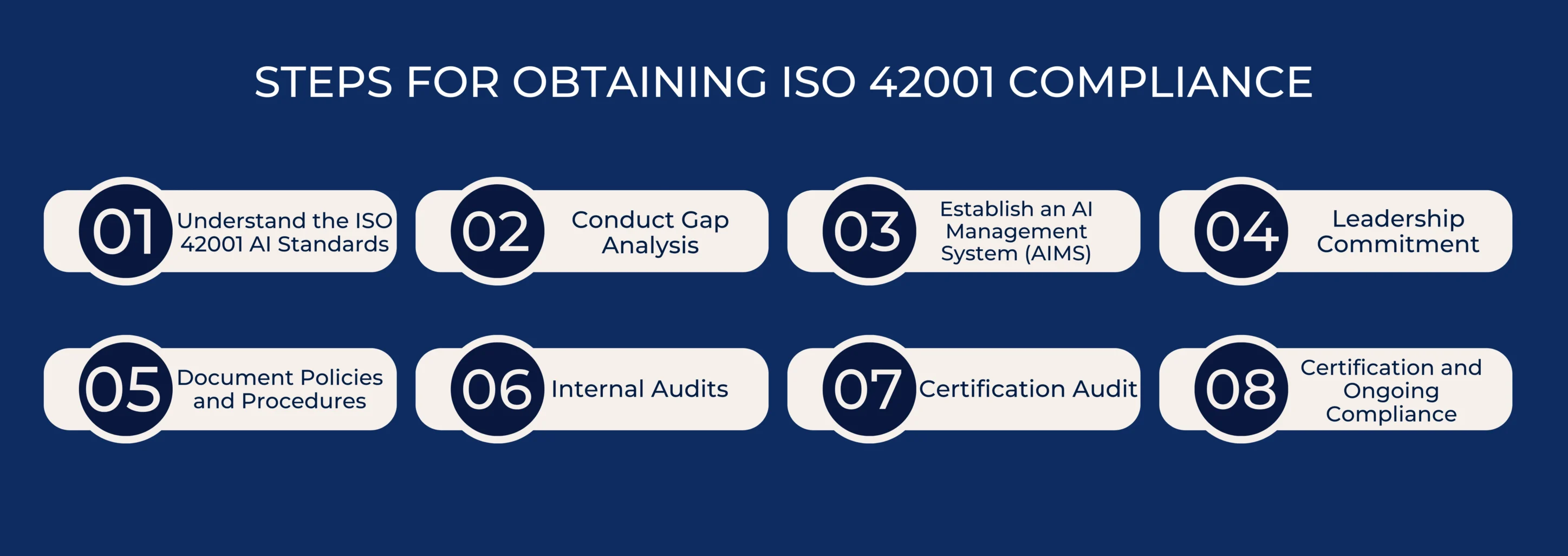
- ✓Stage 1: Scope Definition and Documentation Review
- ✓Stage 2: Certification Audit and Control Testing
- ✓Nonconformity Review and Certification Decision
- ✓Surveillance Audits and Recertification
Steps to Achieve ISO 42001 Certification
Achieving ISO 42001 Certification in Australia involves a series of structured steps that take an organisation from initial AI governance awareness through to formal certification and ongoing AIMS maintenance. The certification pathway requires systematic engagement across leadership, technology, legal, risk management, and operational functions—reflecting the cross-functional nature of AI governance.
The following steps describe the typical pathway for an Australian organisation pursuing ISO 42001 certification for the first time, from initial scoping through to successful audit completion.
- Conduct a comprehensive inventory of all AI systems in use across the organisation, documenting their purpose, data inputs, decision outputs, and operational contexts to define the AIMS scope.
- Analyse the organisation’s internal context (strategic objectives, existing governance frameworks, technical capabilities) and external context (regulatory requirements, stakeholder expectations, industry standards) relevant to AI management.
- Establish or designate leadership accountability for AI governance, including senior management sponsorship, defined roles and responsibilities for AIMS management, and integration with existing governance structures.
- Develop an AI policy that articulates the organisation’s commitments to responsible AI use, compliance with applicable requirements, and continual improvement of the AIMS.
- Conduct AI impact assessments for all AI systems within scope, systematically identifying and evaluating risks related to technical performance, fairness, transparency, privacy, safety, and security.
- Design and implement controls to treat identified AI risks to acceptable levels, including technical controls, process controls, training requirements, monitoring mechanisms, and contractual provisions for third-party AI services.
- Establish documented processes for AI system lifecycle management—covering data governance, model development and validation, deployment authorisation, operational monitoring, change management, and decommissioning procedures.
- Implement an internal audit program for the AIMS, including qualification requirements for internal auditors, audit schedules, audit procedures, and processes for documenting and communicating audit findings.
- Conduct management reviews of the AIMS at planned intervals, evaluating performance data, audit findings, stakeholder feedback, and the continuing suitability and effectiveness of the management system.
- Engage an accredited certification body to conduct a formal ISO 42001 audit in Australia, progressing through Stage 1 documentation review and Stage 2 conformity assessment to achieve ISO 42001 certification.
The timeline for completing these steps and achieving ISO 42001 Certification in Australia varies depending on the organisation’s size, the complexity and number of AI systems in scope, the maturity of existing governance frameworks, and the resources dedicated to AIMS implementation. Organisations with well-established ISO management system foundations—such as existing ISO 27001 or ISO 9001 certifications—typically achieve ISO 42001 certification more efficiently due to transferable governance structures, documented processes, and experienced internal audit capability.
For organisations without prior ISO management system experience, a more extended preparation period is typically required to establish the foundational AIMS elements before proceeding to formal ISO 42001 audit.
ISO 42001 Certification Cost in Australia
ISO 42001 certification cost in Australia is determined by multiple factors related to the scope, complexity, and current AI governance maturity of the organisation seeking certification. Unlike fixed-price services, certification audit fees reflect the actual audit effort required to assess the organisation’s AIMS against all applicable ISO/IEC 42001:2023 requirements.
Understanding the primary cost drivers enables organisations to plan their certification budgets accurately and make informed decisions about scope definition and certification timing before engaging a certification body for an ISO 42001 audit.
Primary Cost Factors for ISO 42001 Certification
The primary cost factors for ISO 42001 certification in Australia include the number and complexity of AI systems within the defined certification scope, the size and geographic distribution of the organisation, the number of operational sites included in the audit scope, the maturity of existing AIMS documentation and controls, and the audit days required to adequately assess conformity.
Organisations with a large number of complex AI systems—such as deep learning models, autonomous decision systems, or AI systems processing sensitive personal data—require more extensive ISO 42001 audit effort than organisations with simpler AI implementations, resulting in higher certification audit fees.
The audit day calculation for ISO 42001 certification in Australia follows internationally recognised methodologies that account for organisational complexity, scope breadth, and applicable risk factors. For a small-to-medium Australian organisation with a focused AI scope—for example, a fintech company with two to three AI-powered products—the initial certification audit may require four to eight audit days across Stage 1 and Stage 2 assessments.
Larger enterprises with multiple AI systems, cross-functional governance structures, and complex data environments may require fifteen to twenty-five or more audit days for an initial certification assessment. Annual surveillance audits typically require fewer audit days than the initial certification assessment.
Total Cost of Certification Engagement
The total cost of ISO 42001 certification in Australia encompasses certification audit fees paid to the certification body, internal resource costs associated with AIMS establishment, documentation development, training, and internal audit activities, and any external specialist costs incurred during AIMS design and implementation.
For organisations seeking to minimise total certification costs, investing in thorough AIMS preparation before engaging the certification body reduces the risk of major nonconformities in Stage 1 or Stage 2 audits, which would require additional audit activity and delay certification. The three-year certification cycle cost includes the initial certification audit, two annual surveillance audits, and a recertification audit at the end of the cycle.
| Organisation Type | AI Scope Complexity | Estimated Audit Days (Initial) | Surveillance Audit (Annual) |
|---|---|---|---|
| Small Enterprise (< 50 staff) | 1–3 AI systems, low complexity | 4–8 days | 2–3 days |
| Medium Enterprise (50–500 staff) | 3–10 AI systems, moderate complexity | 8–15 days | 3–6 days |
| Large Enterprise (500+ staff) | 10+ AI systems, high complexity | 15–25+ days | 6–12 days |
| Multi-site / Regulated Sector | Multiple sites, complex AI environments | 25+ days | 10–15 days |
Obtaining a formal ISO 42001 certification cost estimate for Australia requires submission of a detailed scope description to the certification body, including the number and type of AI systems in scope, relevant organisational details, existing certifications held, and any specific regulatory or operational context.
CertPro as a Licensed CPA Firm provides transparent, scope-based fee quotations for ISO 42001 audit engagements, enabling Australian organisations to understand the certification investment required before committing to the process. Detailed scoping conversations are available to assist organisations in defining an appropriate certification boundary that reflects their AI governance priorities and risk profile.
Benefits of ISO 42001 Certification in Australia
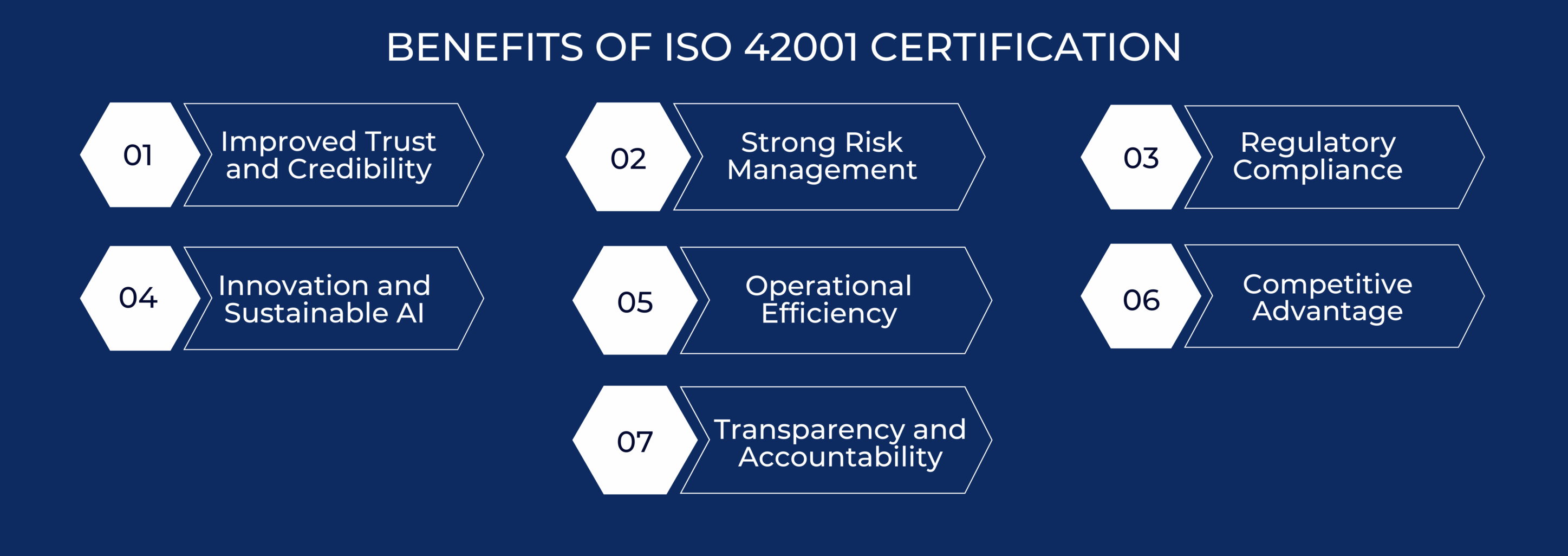
ISO 42001 Certification in Australia delivers measurable benefits to organisations across governance, commercial, operational, and reputational dimensions. While certification remains voluntary under current Australian law, the governance benefits and market recognition associated with ISO AIMS certification are increasingly compelling for organisations operating AI systems in competitive, regulated, or high-stakes environments.
The following key benefits reflect the practical value that certified Australian organisations derive from ISO 42001 certification and ongoing ISO 42001 compliance.
- ✓Independently verified AI governance credentials that demonstrate responsible AI operations to regulators, customers, investors, and the public in Australian and international markets.
- ✓Structured alignment with Australia’s AI Ethics Framework, Privacy Act 1988, and emerging AI governance regulatory expectations across financial services, healthcare, government, and critical infrastructure sectors.
- ✓Reduced AI-related incident and liability exposure through systematic risk identification, control implementation, and ongoing monitoring across the full AI system lifecycle.
- ✓Enhanced competitive positioning in government and enterprise procurement processes that require evidence of structured AI governance and responsible AI use commitments.
- ✓Facilitated access to international markets—particularly in the European Union—where AI regulatory frameworks such as the EU AI Act create governance expectations consistent with ISO 42001 requirements.
- ✓Operational efficiency through structured AI lifecycle management, including documented data governance, model validation, deployment authorisation, and change management processes.
- ✓Improved organisational culture around responsible AI use through training, awareness programs, and clear accountability structures established under the AIMS framework.
- ✓Integrated governance across existing ISO management systems, enabling organisations already certified to ISO 27001 or ISO 9001 to extend their governance framework to cover AI risks without duplicating management system infrastructure.
- ✓Board-level accountability framework for AI governance that supports director obligations related to technology risk oversight and enterprise risk management in Australian corporations.
- ✓Continuous improvement mechanism for AI governance through regular internal audits, management reviews, and the structured recertification cycle of the ISO 42001 certification program.
The reputational benefits of ISO 42001 Certification in Australia are particularly significant for organisations whose AI systems interact directly with consumers or produce decisions that affect individuals’ rights or opportunities. In sectors such as financial services, healthcare, employment, and government services, AI-driven decisions carry significant ethical and legal weight.
Holding ISO AIMS certification Australia provides independently verified assurance that these decisions are governed by a structured, accountable management system—strengthening public trust and demonstrating genuine organisational commitment to responsible AI beyond policy statements or marketing claims.
ISO 42001 and Integration with Other Management Systems
One of the structural advantages of ISO 42001 is its design using the High-Level Structure (HLS) framework, which enables seamless integration with other ISO management system standards that Australian organisations commonly hold. The HLS provides a common architecture—including shared elements such as context of the organisation, leadership, planning, support, operations, performance evaluation, and improvement—that facilitates the development of an integrated management system incorporating multiple standards.
This integration capability means organisations can extend their existing ISO governance infrastructure to achieve ISO 42001 compliance without creating redundant documentation requirements or duplicative governance structures.
Integration with ISO 27001 for AI Security Governance
ISO 27001 (Information Security Management System) and ISO 42001 share significant governance territory, particularly in areas of data governance, access controls, incident management, and risk assessment. For Australian organisations already certified to ISO 27001, integrating ISO 42001 allows AI-specific security risks to be addressed within the existing ISMS framework.
ISO 42001 extends the ISO 27001 risk management approach to address AI-specific risk categories—such as training data integrity, model security, adversarial attack resilience, and AI system availability—that may not be fully captured within a traditional ISMS scope. This integration reduces governance overhead and leverages established control environments for AI security risk management.
For Australian financial services organisations subject to APRA CPS 234 Information Security requirements, integrating ISO 42001 with an existing ISO 27001 certification creates a comprehensive governance framework covering both information security and AI management. This integrated approach enables organisations to demonstrate compliance with APRA’s information security expectations while extending governance controls to address the distinctive risks introduced by AI systems—including model risk, algorithmic transparency, and AI-driven data processing activities.
The combined certification portfolio strengthens the overall security and governance posture and provides a coherent framework for regulatory reporting and supervisory engagement.
Alignment with ISO 31000 Risk Management
ISO 31000 provides the foundational risk management principles and guidelines that underpin the risk management requirements of ISO 42001. Organisations that have adopted ISO 31000 as their enterprise risk management framework can leverage established risk assessment methodologies, risk appetite statements, and risk treatment processes to support ISO 42001 compliance requirements.
The AI-specific risk assessment requirements of ISO 42001—including AI impact assessments and risk treatment planning for AI systems—can be incorporated into the existing enterprise risk management framework. This ensures that AI risks are managed consistently with other organisational risk categories and receive appropriate senior management attention during ISO 42001 assessment.
Relationship to Global AI Regulatory Frameworks
ISO 42001 compliance provides a structured mechanism for demonstrating alignment with multiple global AI regulatory frameworks. The EU AI Act, which establishes risk-based requirements for AI systems deployed in the European market, shares significant conceptual alignment with ISO 42001 requirements—particularly in areas of risk management, transparency, human oversight, technical documentation, and quality management for AI systems.
Australian organisations exporting AI products or services to European markets can leverage ISO 42001 certification to demonstrate governance practices consistent with EU AI Act requirements, potentially reducing compliance burden and facilitating regulatory acceptance in European jurisdictions.
ISO 42001 also aligns with AI governance frameworks in other key trading partner jurisdictions, including Singapore’s AI Governance Framework, the United Kingdom’s AI governance principles, and frameworks developed by the OECD and UNESCO. For Australian technology organisations operating in global markets, ISO 42001 Certification in Australia provides a recognised governance credential that communicates responsible AI management across multiple regulatory environments.
This reduces the need for jurisdiction-specific compliance attestations and enables a unified governance approach to global AI operations—a significant efficiency benefit for internationally active Australian organisations.
Assessment and Certification Services by CertPro for ISO 42001 in Australia
CertPro is a Licensed CPA Firm providing independent ISO 42001 audit and certification services to organisations across Australia. As an independent third-party certification body, CertPro conducts ISO 42001 audit engagements under a structured, evidence-based methodology that evaluates AI Management System conformity against the requirements of ISO/IEC 42001:2023.
CertPro’s ISO 42001 certification and assessment services are strictly focused on audit, assessment, and attestation activities—maintaining the independence and objectivity required for credible third-party certification outcomes.
Why Choose CertPro for ISO 42001 Assessment and Certification?
CertPro’s ISO 42001 assessment and certification services are delivered by a team of qualified auditors with expertise in AI governance, information security management, and risk management frameworks. CertPro’s audit methodology is designed to provide Australian organisations with a rigorous, consistent, and transparent certification process that generates reliable conformity determinations and clear, actionable audit findings.
As a Licensed CPA Firm, CertPro brings the professional standards, independence requirements, and quality assurance frameworks of the accounting profession to AI management system certification—providing a level of institutional credibility and rigour that supports stakeholder confidence in ISO 42001 certification outcomes.
CertPro’s ISO 42001 certification for Australian companies is structured to accommodate the diverse range of organisations deploying AI in the Australian market—from early-stage technology companies building AI products to large enterprises integrating AI across complex operational environments. Audit scopes are defined in collaboration with the organisation, ensuring that certification boundaries appropriately reflect the AI systems, processes, and governance structures that are material to the organisation’s AI risk profile.
CertPro’s ISO 42001 audit Australia engagements are conducted with transparent fee structures, defined timelines, and clear communication throughout the certification process.
CertPro’s Audit Methodology for ISO 42001
CertPro’s ISO 42001 audit methodology is structured around eight defined audit stages that progress from scope determination through to certificate issuance and ongoing surveillance. Each stage is executed by qualified auditors following documented audit procedures, ensuring consistency, objectivity, and compliance with applicable certification standards.
The audit methodology incorporates both document review and operational evidence collection, providing a comprehensive basis for conformity determination that goes beyond paper compliance to assess actual implementation and effectiveness of the AIMS across all ISO 42001 compliance requirements.
- Scope Definition: Formal determination of the AIMS certification boundary, AI systems in scope, applicable ISO 42001 requirements, and audit program structure.
- Audit Program Determination: Calculation of audit day requirements based on scope complexity, organisational size, and applicable risk factors, with preparation of the audit plan and assignment of qualified audit team members.
- Stage 1 Audit: Documentation review and organisational context assessment to evaluate AIMS design adequacy and confirm readiness for Stage 2 certification audit.
- Stage 2 Certification Audit: Comprehensive on-site or remote assessment of AIMS implementation and effectiveness, including control testing, personnel interviews, process observations, and evidence collection across all ISO 42001 requirement areas.
- Control Testing: Targeted evaluation of specific AIMS controls including AI impact assessments, data governance, model validation processes, monitoring mechanisms, and incident management procedures.
- Nonconformity Review: Documentation and classification of audit findings, communication of nonconformities to the organisation, and review of proposed corrective actions for major and minor nonconformities.
- Certification Decision: Independent review of audit record and corrective action responses to determine conformity with ISO/IEC 42001:2023 requirements and authorise certificate issuance.
- Issuance of Attestation and Certificate: Formal issuance of ISO 42001 certificate specifying certified scope, applicable standard, and certificate validity period.
- Surveillance and Recertification: Annual surveillance audits to verify sustained AIMS conformity and recertification audit at the end of the three-year certification cycle.
Sector-Specific Expertise for Australian Industries
CertPro’s ISO 42001 assessment team brings sector-specific knowledge relevant to the industries where AI adoption is most advanced in Australia. In financial services, auditors understand APRA prudential requirements, model risk management expectations, and the governance frameworks applicable to AI-driven credit, investment, and fraud management systems.
In healthcare, CertPro’s ISO 42001 audit methodology addresses AI governance requirements specific to clinical decision support systems, medical imaging AI, and patient data management—aligned with Australian Digital Health Agency frameworks and Therapeutic Goods Administration (TGA) oversight of Software as a Medical Device (SaMD).
For government and public sector organisations pursuing ISO 42001 certification, CertPro’s audit approach addresses the specific governance requirements applicable to AI systems used in public service delivery, including automated decision-making transparency obligations, public accountability requirements, and alignment with the Australian Government’s AI Ethics Framework.
This sector-specific expertise ensures that ISO 42001 assessments for Australian organisations address the regulatory and operational context genuinely material to the organisation’s AI governance obligations—rather than applying a generic, sector-agnostic audit approach that may overlook critical compliance considerations.
ISO 42001 Compliance: Key Considerations for Australian Organisations
Achieving and maintaining ISO 42001 compliance requires sustained organisational commitment across technical, governance, and operational dimensions. ISO 42001 compliance is not a one-time documentation exercise—it is an ongoing management system obligation that requires continuous monitoring, regular internal auditing, management engagement, and systematic improvement of AI governance controls.
Australian organisations pursuing ISO 42001 compliance should understand the key considerations that determine the rigour and effectiveness of their AIMS and the factors that most influence successful ISO 42001 certification outcomes.
AI Transparency and Explainability as Compliance Foundations
ISO 42001 compliance places particular emphasis on AI transparency and explainability as fundamental governance requirements. Organisations must be able to describe and document the purposes, capabilities, limitations, and decision logic of AI systems within scope. For AI systems that produce decisions affecting individuals—such as loan approvals, medical diagnoses, recruitment screening, or benefit eligibility determinations—transparency documentation must be sufficient to support explanation of decisions to affected parties and to enable meaningful human review of AI-generated outputs.
Australian Privacy Principle 1 (APP 1) requires organisations to maintain a clearly expressed and up-to-date privacy policy, and where AI systems process personal information, ISO 42001 compliance documentation directly supports APP 1 obligations.
Explainability requirements under ISO 42001 assessment also address the technical documentation of AI models, including training data characteristics, model architecture, performance metrics, and validation results. For complex machine learning models where complete mathematical explainability may not be achievable, ISO 42001 compliance requires organisations to implement compensating controls—such as human oversight mechanisms, output monitoring, anomaly detection, and escalation procedures.
This practical approach to explainability acknowledges the technical realities of modern AI systems while maintaining meaningful governance standards that satisfy ISO 42001 audit requirements.
Data Governance Requirements for ISO 42001 Compliance
Data governance is a critical pillar of ISO 42001 compliance, given that the quality, integrity, and appropriateness of data used to train and operate AI systems fundamentally determines AI system behaviour and reliability. ISO 42001 assessment evaluates whether organisations have established appropriate controls for AI data lifecycle management—including data sourcing, quality assessment, labelling, storage, access control, retention, and disposal.
For Australian organisations, data governance controls must address Privacy Act obligations applicable to personal data used in AI training and operation, including requirements for lawful collection, purpose limitation, data quality, and data security.
Third-party data and AI model governance is also addressed under ISO 42001 compliance requirements. Where organisations use AI systems, models, or data sourced from third-party providers—including cloud AI services, pre-trained models, and AI-as-a-service platforms—ISO 42001 requires that supplier relationships are governed through appropriate contractual and oversight mechanisms.
This includes assessing the governance practices of AI suppliers, establishing contractual requirements for responsible AI use, monitoring supplier AI system performance, and managing risks associated with third-party AI dependencies. For Australian organisations relying on global cloud AI platforms, these supplier governance requirements address a significant and often underestimated area of AI risk in ISO 42001 audit scope.
Monitoring, Incident Management, and Continuous Improvement
Ongoing monitoring of AI system performance is an essential ISO 42001 compliance requirement, reflecting the dynamic nature of AI systems that can drift from expected behaviour as operational conditions evolve. Organisations must establish monitoring processes that track AI system outputs, detect anomalies or performance degradation, identify unintended consequences, and trigger appropriate responses when AI system behaviour deviates from defined parameters.
Monitoring mechanisms must be documented, regularly tested, and capable of generating reliable early warning signals for governance teams and operational management—key evidence points during any ISO 42001 audit.
AI incident management processes are required under ISO 42001 to address events involving AI system failures, adverse outcomes, data breaches associated with AI systems, or instances of AI misuse. These processes must define what constitutes an AI-related incident, establish clear escalation paths, require documentation of incidents and root cause analysis, and drive systematic corrective action to prevent recurrence.
For Australian organisations subject to the Notifiable Data Breaches scheme under the Privacy Act, AI incident management processes must integrate with existing data breach response procedures to ensure that AI-related privacy breaches are identified and notified to the OAIC within required timeframes—a key ISO 42001 compliance consideration for privacy-sensitive sectors.
Secure Your ISO 42001 Certification in Australia with CertPro
ISO 42001 Certification in Australia provides Australian organisations with the governance framework, independent verification, and market recognition required to demonstrate responsible, accountable, and trustworthy AI management. As AI systems become increasingly central to commercial operations, public services, and critical infrastructure across Australia, the governance obligations and stakeholder expectations associated with AI use will continue to intensify.
Organisations that establish certified AI Management Systems under ISO 42001 position themselves to meet these evolving requirements from a position of strength—with documented governance structures, tested controls, and independent ISO 42001 certification to support regulatory engagement and stakeholder confidence.
CertPro’s ISO 42001 certification body Australia services provide Australian organisations with access to an experienced, independent certification team capable of conducting rigorous, credible ISO 42001 audits across a wide range of industry sectors and AI application contexts. CertPro’s status as a Licensed CPA Firm ensures that certification engagements are conducted to the highest standards of professional independence, objectivity, and quality assurance.
Organisations seeking to initiate the ISO 42001 certification process in Australia are invited to contact CertPro to discuss scope definition, audit program determination, and certification timeline for their specific organisational context.
ISO 42001 Certification in Australia is not merely a compliance exercise—it is a strategic governance investment that builds organisational capability for responsible AI management, strengthens stakeholder trust, and creates a foundation for sustainable AI-driven growth. For organisations that recognise AI governance as a board-level priority and a competitive differentiator, ISO 42001 certification provides the structured, independently verified framework that transforms governance commitments into credible, demonstrable accountability.
CertPro’s independent ISO 42001 audit and certification services in Australia are designed to deliver this outcome with rigour, transparency, and professional excellence.
FAQ
▶
What is ISO 42001 Certification?
▶
Who needs ISO 42001 Certification in Australia?
▶
How long does an ISO 42001 audit in Australia take?
▶
What is the difference between ISO 42001 and ISO 27001?
▶
Is ISO 42001 certification mandatory in Australia?
▶
How does ISO 42001 assessment address AI bias and fairness?
▶
How often must ISO 42001 certification be renewed in Australia?
▶
Can ISO 42001 certification be integrated with existing ISO certifications?
ISO 42001 CERTIFIED: WHY AI GOVERNANCE CERTIFICATION IS BECOMING A BOARD-LEVEL REQUIREMENT
AI is now an inevitable component of major business activities in the current corporate world. To elaborate, it is now part of product design, custome…

MindSec Launches AI Compliance for Law 25 & ISO 42001
Excerpt from Barchart Article, Published on December 3, 2025 Today, Canadian organizations face increasing pressure to comply with stringent privacy a…

UNDERSTANDING ISO 42001: A GUIDE FOR RESPONSIBLE AI MANAGEMENT SYSTEMS
The invention of artificial intelligence (AI) has changed the operational processes of many industries. However, the rapid growth of technology increa…
Get In Touch
have a question? let us get back to you.